

review

Atty. Gen. Pam Bondi subpoenaed to answer questions from Congress about the Epstein files

Atty. Gen. Pam Bondi was subpoenaed Tuesday to answer questions from Congress about the Justice Department’s sex trafficking investigation of Jeffrey Epstein and the agency’s handling of millions of files related to the disgraced financier.

Bondi was ordered to appear for a deposition on April 14 by the Committee on Oversight and Government Reform after a vote earlier this month that five Republicans supported.

The Justice Department’s failure to fend off the subpoena from the Republican-led committee underscores widespread discontent among President Trump’s own base over Bondi’s management of the review and release of a trove of documents from the criminal investigation into Epstein.

“The Committee has questions regarding the Department of Justice’s handling of the investigation into Jeffrey Epstein and his associates and its compliance with the Epstein Files Transparency Act,” Rep. James Comer, the Republican chairman, said in a letter to Bondi.

“As Attorney General, you are directly responsible for overseeing the Department’s collection, review, and determinations regarding the release of files pursuant to the Epstein Files Transparency Act, and the Committee therefore believes that you possess valuable insight into these efforts,” he wrote.

The department on Tuesday called the subpoena “completely unnecessary.” Bondi and Deputy Atty. Gen. Todd Blanche were expected to provide a private briefing Wednesday to members of the committee.

“Lawmakers have been invited to view the unredacted files for themselves at the Department of Justice, and the Attorney General has always made herself available to speak directly with members of Congress,” the department said in a statement. The agency said it looks forward to “continuing to provide policymakers with the facts.”

The Trump administration has faced constant political headaches since the rollout of the files began in December, with critics accusing the department of hiding certain documents and over-redacting files. In other cases, victims have slammed the department for sloppy redactions that revealed their sensitive information.

The Justice Department has fiercely defended its handling of the Epstein files, saying it worked as quickly and diligently as possible to review and release millions of documents required under the law. The department has denied any accusations that it used redactions to protect certain people or improperly withheld certain materials. And it has said it immediately worked to fix any redaction errors raised by victims.

Richer writes for the Associated Press.

Source link

Center Parcs family holiday review: my kids swapped tablets for bikes and we all loved it

From bike hire to spa escapes and lodge stays, this Center Parcs review shares everything families need to know about the popular UK break

Center Parcs had been on our radar for some time; a getaway promising relaxation without the hassle of airports. However, I hadn’t anticipated just how much the experience would focus on unwinding and quality family time.

The absolute highlight for the children was cycling everywhere. We collected our bikes on site (though, if you have room you can also bring your own) and it quickly became our primary mode of transport – and some of the most unforgettable moments of our stay.

Not a mobile phone or tablet in sight. Without even trying, we slipped into a slower pace, chatting as we pedalled, pausing for snacks and savouring our time together.

Even sporadic rain didn’t dampen our spirits.

READ MORE: I visited Pureseoul’s K-beauty store and found hidden gems – it’s heaven for the skincare obsessed!’

Family time and adult time

Center Parcs is designed with families in mind, but it’s easy to carve out some adult time. I managed to escape to the Aqua Sana Forest Spa, a world away from the hustle and bustle of the village.

The treetop sauna was my standout spot, and a full body massage was the reset I didn’t realise I needed.

But what I adored was the balance. There’s an endless array of activities to keep children entertained – including the Subtropical Swimming Paradise, with indoor and outdoor pools, and rapids.

But there are also tranquil spaces to unwind without missing out on family time. In the Sports Cafe, for example, we could sneak in the Arsenal game, whilst the kids amused themselves on arcades.

Where we stayed

The lodge played a significant role in how relaxed the break felt. Luxuriating in one of the newly refurbished Grand Forest lodges, it’s clear they’re designed with families in mind.

In the kitchen, everything was designed to make cooking a breeze, with ample worktop space and storage. I realise it’s not everyone’s cup of tea (and there are plenty of other options on site if you’d rather not cook at all) but we relish cooking as a family, so having a clear, user-friendly space to do it in made a world of difference – instead of one of us being cooped up in the kitchen whilst the rest of the clan were enjoying themselves.

After action-packed days, it was lovely to cook together and settle down for an evening of board games or a film, whilst ducks would come and tap on the patio doors, much to my daughter’s sheer joy.

All the best things to eat

We stayed for three nights and cooked twice in the lodge, keeping evenings chilled and costs low (Stock up on supermarket essentials before you arrive; there’s a shop on site for extras, but it’s a bit steep).

For our dining out experience, we booked The Dozing Duck – an absolute treat. It boasts shuffleboard tables so the four of us divided into teams for some friendly rivalry.

Book ahead on the app where you plan your stay.

How to book a Centre Parcs break

Two-bedroom Grand Forest Lodge from £799 for a Mon-to-Fri stay. Three-bedroom Woodland Premium Lodge also from £799 – ideal for larger families who need a bit more space.

Breaks run Mon to Fri, or Fri to Mon. Book at centerparcs.co.uk.

Source link

‘Reminders of Him’ review: An ex-convict wants her kid and a kiss

You can’t help rooting for Colleen Hoover heroines, bless their bruised hearts. The bestselling novelist specializes in women who have been kicked around by life. She’s the new name brand of tragic romance, picking up where Nicholas Sparks’ terminal diseases left off.

“Reminders of Him,” directed by Vanessa Caswill, is the third film based on a Hoover book in three years and the first that the author herself has adapted alongside co-screenwriter Lauren Levine. Like the others, its lead suffers heartily before falling in love with a hunk. The previous two, “It Ends With Us” and “Regretting You,” were about, respectively, domestic abuse and adultery. “Reminders” adds more tarnish to the poor dear: She’s an ex-convict who served six years for killing her boyfriend in a DUI.

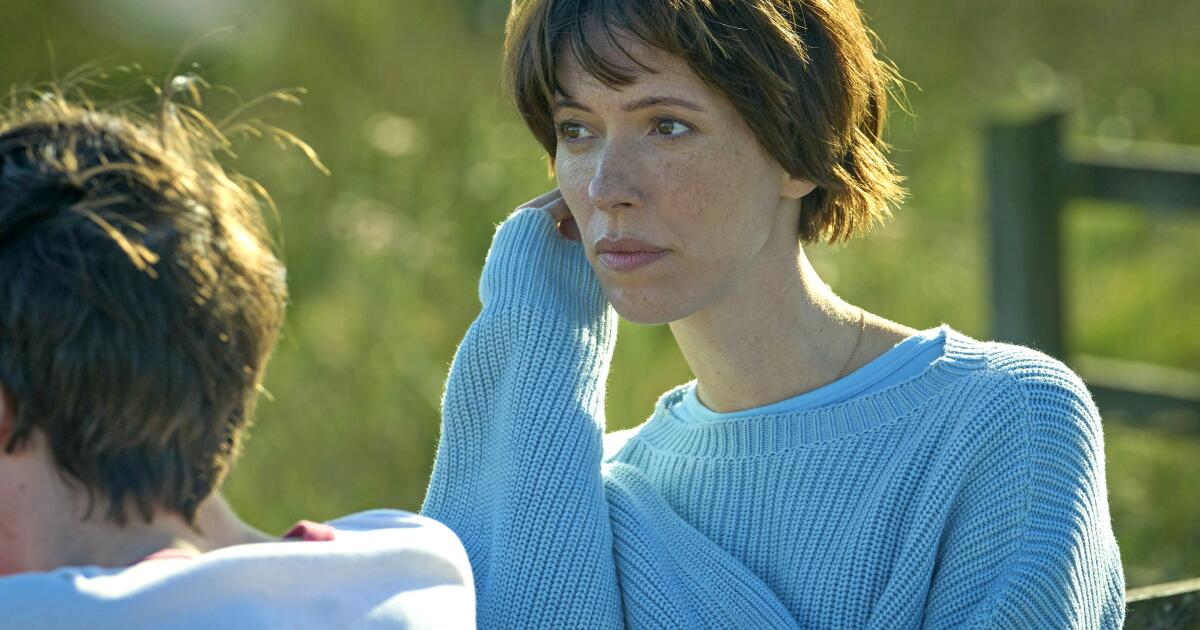
Finally freed from prison, Kenna (Maika Monroe) has returned to Laramie, Wyo., the hometown of her dead lover, Scotty (Rudy Pankow). From what we see of Scotty in flashbacks, he was a buoyant blond goofball — exactly the kind of guy that the apparently friendless and family-less Kenna would have clung to like a life preserver. But she’s not here to lay flowers at his grave. In a salty touch, the first thing Kenna does is remove his roadside cross, claiming he hated memorial shrines.

But Kenna is desperate to meet their 5-year-old daughter, Diem (Zoe Kosovic), who was born months into her incarceration. The girl’s name comes from carpe diem, as in Kenna’s vow to seize the child she never got to hold, but the script has the restraint not to make a big standing-on-a-desk speech about that. Nevertheless, the kid’s grandparents, Grace and Patrick (Lauren Graham and Bradley Whitford), who never liked Kenna to begin with, consider a restraining order in fear that Kenna might actually kidnap Diem.

The stakes are plain: Can Kenna prove herself worthy to be Diem’s mother? Her only tentative ally is Scotty’s childhood friend, Ledger (Tyriq Withers), who thinks she’s hot and intriguing until he realizes who she is. Then he wants Kenna gone too.

Caswill sets the mood with a shot of a snow-capped mountain range, fitting for a movie that proceeds at a glacial pace. (The book moves faster, with Kenna and Ledger hooking up immediately and then discovering their unfortunate connection.)

The first stretch of the movie is strong, with Kenna, who is too broke for a car or even a phone, hoofing it around town in search of any job willing to hire a broke girl with a criminal record. A grocery store manager sends her away coldly after nattering on in corporate-speak about the importance of treating people with respect — an exchange that feels so real it gives you the shivers — but his beleaguered assistant, Amy (country singer Lainey Wilson in her promising, but brief, film debut), steps in and treats Kenna like a person. “What’s your trauma?” Amy asks her and somehow Wilson delivers that line with a lilt that keeps it from sounding corny.

These female strangers share a moment of such sincere human connection that I would have happily watched a dozen more scenes of the two women leaning on each other while they endure their hard-luck lives. Alas, these nice detours don’t last long; the movie has a preordained higher parental purpose that’s bigger than anything else onscreen, from the Wyoming skies to the bond between Kenna and Ledger that’s the main reason an audience has bothered to come.

Where this is all going is as unavoidable as the fact that Scotty died on what seems to be only road in and out of town. As the title declares, there are traces of him everywhere, including Diem’s giggle.

To get anywhere with the film, you have to settle into the idea that Kenna and Ledger must slowly build trust in each other while spending most of the baggy running time talking about a little girl who is rarely around. (When Kosovic is, she’s charming.) Cinematographer Tim Ives snatches his rare opportunities to shoot the beautiful scenery, but most of the pair’s encounters take place in or near Ledger’s orange pickup truck, a totem from the book. Visually, these car chats get stagnant. At least Monroe and Withers generate decent chemistry, eyes shiny and gleaming as they try their hardest to put gas in this love story’s tank.

Ledger calls Kenna “the saddest girl in the world.” True, but the glumness of said world is central to Hoover’s zeitgeisty appeal — a point she underlines a few beats later, Kenna insisting that the radio only ever plays depressing songs. To prove her wrong, Ledger flips it on anyway and to his dismay, it plays one bummer after another, station after station, until finally, the two of them share a much-needed laugh. (Meanwhile, Tom Howe’s acoustic country score is adamantly winsome, even intercut with Coldplay covers.)

Hoover is a strong world-builder. When she writes about small towns with shuttered bookstores or dive bars with fetid pots of coffee, you feel that she truly knows these places and has made a principled choice to set her hard-earned happy endings there. Caswill gets it, keying into credible, lived-in details, like Kenna’s tiny glance at the price tag on a stuffed animal that she’s considering for Diem.

Monroe’s Kenna couldn’t be farther from the cliché romantic diva, usually a high-heeled glamazon who runs a cupcake boutique. Even her hair really does look like she fixed it in the squalid bathroom of the only apartment she can afford. The complex is called Paradise, an on-the-nose irony. The owner (Jennifer Robertson) cuts Kenna a deal if she promises to take a free kitten. (I never saw Kenna get a litter box, but the kitten’s pretty cute.)

Ledger is the fantasy: a former NFL player whose hobbies include babysitting Diem, wearing tight shirts and building himself a hilltop dream cabin that will someday belong in Architectural Digest. (He owns that dive bar but the cast stays Mormon-sober.) Withers, a former wide receiver at Florida State University, also played a football jock in the gorgeously made but narratively screwy horror film “Him,” and it’s a treat to see an actor who moves like a genuine athlete and has that “Yes, coach” politeness that comes from being humbled in a locker room. You don’t totally buy his character exists in reality, but Withers believes in it enough to get the job done.

Another Paradise tenant, Lady Diana (Monika Myers), a headstrong teenager with Down syndrome, is the closest thing the film has to comic relief. Bursting into Kenna’s quarters seemingly at will, she raids her near-empty fridge while bluntly shouldering much of the exposition. “Why are you so poor?” Lady Diana asks, following that up by wondering, “Why are you so sad?”

“Reminders of Him” could use a little more swooning, a little less of the endless middle stretch of driving and talking, interrupted by wet sprints through thunderstorms. The rain pours down so often that you can’t help but snort when the film cuts to Whitford’s granddad angrily watering his lawn.

Eventually, even the film itself seems over all of the dilly-dallying. It takes a narrative shortcut to wrap things up, leaving behind not much other than a few worthwhile scenes: Kenna and Scotty’s meet-cute at a dollar store, her and Ledger pushing through their morning-after guilt, and a powerful moment shortly after Diem’s birth when a fellow inmate gives her a friendly but stern pep talk that sums up everything this film takes nearly two hours to say.

‘Reminders of Him’

Rated: PG-13, for sexual content, strong language, drug content, some violent content, and brief partial nudity

Running time: 1 hour, 54 minutes

Playing: Opens Friday, March 13 in wide release.

Source link

‘Every Brilliant Thing’ review: The interactive Daniel Radcliffe

What makes life worth living? For hard-core “Harry Potter” fans with money to burn, it might be getting Broadway tickets to interact fleetingly with Daniel Radcliffe in “Every Brilliant Thing,” an ingenious and touching solo performance piece written by Duncan Macmillan with Jonny Donahoe on the subject of suicide — or more precisely, on the ordinary joys that militate against such a drastic step.

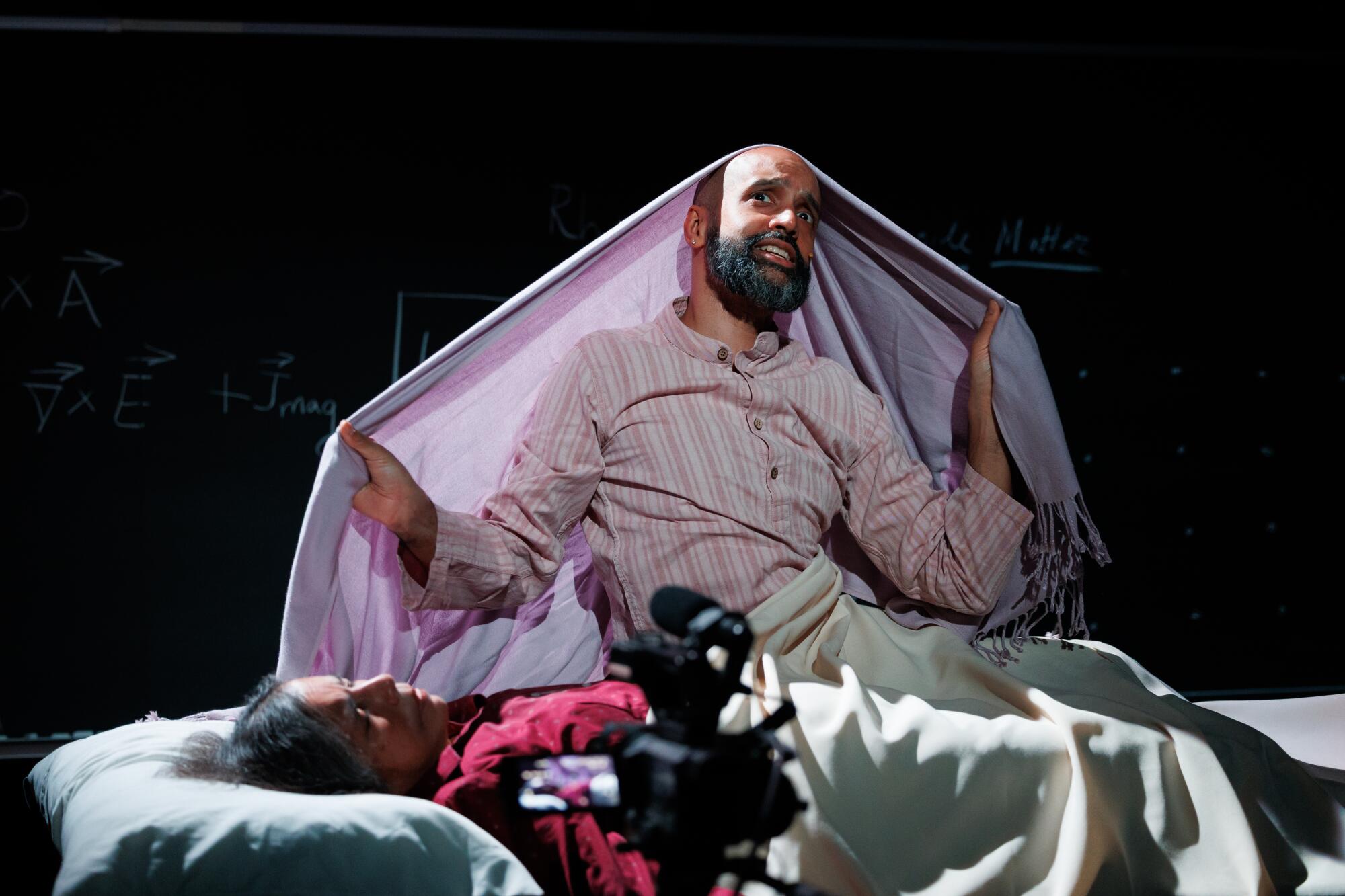
Radcliffe was breathlessly scampering up and down the aisles of the Hudson Theatre before the show began, enlisting audience members to be participants in the play. Having seen “Every Brilliant Thing” twice before, once at the Edye (the black box at Santa Monica’s BroadStage) starring Donahoe in 2017 and once at the Geffen Playhouse’s intimate Audrey Skirball Kenis Theater starring Daniel K. Isaac in 2023, I knew exactly what he was up to.

The play revolves around a list that the narrator began at the tender age of 7 after his mother first attempted suicide. While she was still in the hospital, he started compiling, as much for her benefit as for his own, sources of everyday happiness.

Ice cream, water fights, kind people who aren’t weird and don’t smell unusual. These items are given a number, and audience members assigned a particular “brilliant thing” are expected to shout out their entry when their number is called.

The list gradually grows in complexity as the narrator gets older. Miss Piggy, spaghetti bolognese and wearing a cape give way to more sophisticated pleasures, such as the way Ray Charles sings the word “You” in the song “Drown in My Own Tears” or the satisfaction in writing about yourself in the second person.

Music plays a prominent role in “Every Brilliant Thing,” which was adapted from a monologue/short story Macmillan wrote called “Sleeve Notes.” The narrator’s terribly British father takes refuge from the emotional storms of his household by listening to jazz records in his office. John Coltrane, Cab Calloway, Bill Evans, Nina Simone are favorite artists, and the narrator can tell his father’s mood simply by the record he’s decided to play.

The production, directed by Jeremy Herrin and Macmillan, involves every level of the Hudson Theatre. I assumed I would be safe, occupying an aisle seat in the murderously expensive prime orchestra during a press performance attended by critics. But I wasn’t flashing a pad as my colleague across the aisle from me was doing to ward off any intrusions. And just before the show was about to start, Radcliffe was suddenly kneeling beside my seat asking if the person I was sitting with was my partner.

I told him that we weren’t a couple, just friends, and that I would be the worst person he could possibly ask to perform anything. But Radcliffe wasn’t so easily put off. “Let’s just say that you’re an older couple who have been together for some time,” he whispered. “And all you have to do is hand me this box of juice and candy bar when I refer to the older couple.”

OK, what harm could there be? Little did I know that “older couple” was to become “old couple,” a term that seemed to be repeated incessantly, at least to my Gen X ears not yet accustomed to scurrilous millennial attacks! I composed myself by pretending that we were in the world of anti-realism. But in truth, I would like to be the kind of person who would offer an anxious kid in a hospital waiting room a juice box and a candy bar, so maybe the casting wasn’t so far-fetched after all.

Daniel Radcliffe in the Broadway production of "Every Brilliant Thing."

Daniel Radcliffe in the Broadway production of “Every Brilliant Thing.”

(Matthew Murphy)

A theatergoer was called upon to play the vet who euthanized the narrator’s childhood pet, a dog named Indiana Bones that was symbolized by a coat someone volunteered from the audience. It was the boy’s first experience of death, a difficult concept for a young mind but an important precursor for a boy not given the luxury of existential innocence.

Other audience members, particularly those seated on the stage, played much more elaborate roles. One man, first invited to serve as a stand-in for the narrator’s father, was asked instead to play the boy. He was given one word to say in reply — “Why?” — as his father tries to explain the reason his mother is in the hospital. This same enlisted actor was later called upon to play the dad giving a toast at his son’s wedding, one of the rare occasions when he was able to summon language for the kind of deep feeling he would normally only be able to express through his records.

One kind and patient spectator conscripted to play the school counselor had to remove her shoe to improvise a sock puppet, one of the tools of her empathetic practice. Another audience member sensitively played Sam, the narrator’s love of his life, a relationship that reveals the long-term toll of being raised by a parent suffering from suicidal depression.

Radcliffe’s audience wrangling was as intuitively sharp as his deeply felt performance. He has the comfort of a good retail politician, who’s not afraid of making direct contact with crowds. Two-time Tony winner Donna Murphy, in the house at the reviewed performance, gamely went along when Radcliffe briefly enlisted her luminous services.

Obviously, Radcliffe is the main reason “Every Brilliant Thing” is on Broadway. The show, which began at Britain’s Ludlow Fringe Festival in 2013, is a gossamer piece, a 70-minute curio best experienced in close quarters without the high expectations and ludicrous prices of New York’s turbo-charged commercial theater. The Hudson Theatre lends a mega-church vibe to the proceedings, but the spirits of theatergoers are nonetheless moved.

A scruffy-faced Radcliffe, twinkling accessible geniality in jeans and a sweatshirt, zips up and down the cavernous theater as though waging a one-man campaign against the isolation epidemic. There’s no denying that Harry Potter has matured into an assured stage actor. His Tony-winning performance in “Merrily We Roll Along” should have put to rest any doubts, but the glare of his fame can still obscure his serious chops.

Sincere yet never smarmy, ironic without ever being cynical, well-groomed though far from swank, he’s a more glamorous version of the character than the one originated by Donahoe, the British comedian with an everyman demeanor whose portrayal seemed so genuine at the Edye that I mistakenly thought that the play was his personal story.

Donahoe’s performance was filmed for HBO, but “Every Brilliant Thing” is meant to be experienced in a theater. The whole point of the show is to transform the audience into an impromptu ensemble, a group of strangers emotionally united through the story of one young man’s intimate knowledge of suicide, a subject that Albert Camus called the “one truly serious philosophical problem.”

I’m of two minds about “Every Brilliant Thing.” I was moved once again by the piece, but I’m grateful I didn’t have to wreak havoc on my credit card to pay for my seats. I love the interactive, gentle humanity of the play, but I was also acutely aware of how the work has been commodified. I applaud Radcliffe’s willingness to carve an independent path as an actor, but I might have been more impressed by his adventurousness had he decided to perform in a pocket venue that didn’t have the tiers of pricing I associate with airlines.

Yet launching a conversation around mental health with an audience magnet as powerful as Radcliffe is on balance an excellent thing. And Radcliffe’s compassionate portrayal of a survivor recognizing that he’s not out of the woods just because he made it into adulthood is one of those things that makes a theater lover just a little more appreciative of the humanity at the center of this art form.

Source link

Rangers & Celtic react to Old Firm fan disorder as SFA launch independent review

Rangers say “all parties must be prepared to have their actions and decision-making subjected to proper scrutiny”, with Celtic referencing “serious concerns” raised by supporters about pre-match access arrangements.

The Ibrox club have called for the review to be “thorough and wide-ranging” and to “include the broader context” around the match, from initial decisions on ticket allocation through to the post-match incidents.

Their statement adds: “The disorder that occurred on Sunday was unacceptable and we condemn it unequivocally. Safety must always come first in football, for supporters, players and everyone working in and around the game.

“There are now a number of serious issues which require proper examination. For that reason, we agree that there should be a fully independent review into the events surrounding the match.”

Rangers have vowed to represent the club and their supporters “robustly” but say they will take action – “including the potential withdrawal of ticketing privileges and stadium bans” – against anyone identified and convicted.

The club also say they are “appalled” to discover graffiti mocking the Ibrox disaster, which claimed the lives of 66 supporters in January 1971.

They add: “To desecrate their memory is vile. It is cowardly. It is shameful. This is not football rivalry and it is not banter. It is the abuse of a tragedy that claimed 66 lives.”

Meanwhile, Celtic say they are awaiting a response from the Green Brigade regarding safety and security measures – as required by the police and Glasgow City Council’s Safety Advisory Group – to allow the club “to advocate re-entry” of the banned fan group to Celtic Park.

Source link

Senators seek review of Trump administration handling of Epstein files

March 11 (UPI) — A bipartisan group of senators penned a letter to the Government Accountability Office on Wednesday calling for an investigation into the Justice Department over its handling of the Jeffrey Epstein files release.

The letter accuses the Justice Department of noncompliance with the Epstein Files Transparency Act, the bipartisan law overwhelmingly passed by both chambers of Congress last year. The lawmakers shared concern that the department has still not released all of the files it is required to by the law, despite a December deadline.

Sens. Dick Durbin, D-Ill., Ben Ray Lujan, D-N.M., Jeff Merkley, D-Ore., and Lisa Murkowski, R-Alaska, signed the letter. They also shared concerns about the files that have been released, including victims’ names not being redacted and alleged coconspirators’ names being redacted.

The Government Accountability Office is an independent and nonpartisan agency in the legislative branch. Its purpose is to operate as a watchdog over the federal government, with the authority to investigate and perform audits.

“Contrary to Congress’s explicit directive to protect victims, these records included email addresses and nude photos in which the names and faces of publicly-identified and non-public victims could be identified,” the letter said. “But when it came to information identifying powerful business and political figures who are alleged coconspirators or material witnesses, DOJ appears to have heavily redacted those.”

The senators are requesting that Comptroller General Orice Williams Brown reviews the department’s process it used to review, redact and release the files. They specify that they want the Government Accountability Office to investigate whether the release of the files “has serve to cover up child sexual abuse.”

The Epstein files have continued to be a source of contention between lawmakers and the Trump administration more than two months after the Justice Department was required by law to release the files.

Lawmakers have pushed for answers about the delayed and mistake-filled release from Attorney General Pam Bondi, leading to fiery exchanges in a House Judiciary Committee hearing last month.

The House Oversight Committee issued a subpoena for Bondi’s testimony last week. Five Republicans joined all of the Democrats in the committee in voting for the subpoena.

“This horrific scandal is one where powerful, wealthy men groomed, abused, and raped young women, men, and children,” the letter from the senators reads. “It is critical to understand what led to DOJ’s failure to redact the victims; information and re-victimize those individuals while violating the Epstein Files Transparency Act in its redactions of information related to their alleged abusers.”

Source link

‘undertone’ review: This podcast is sponsored by evil

Everyone’s getting into podcasts — even demons.

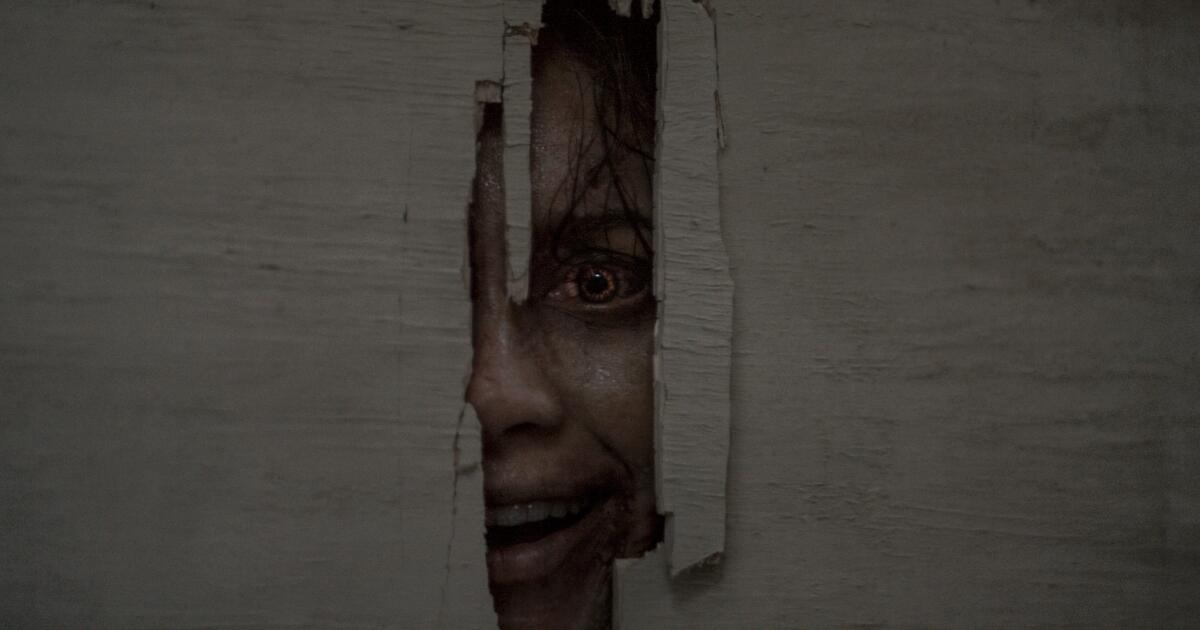
“undertone,” a muted, personal and static microbudget horror debut by Ian Tuason, takes place in the writer-director’s actual childhood home where he tended to both of his parents before they died. Both hospice and inspiration, it’s a stifling place decorated with floral wallpaper and crucifixes. The pain and exhaustion and grief are so real and oppressive, the camera never dares set a foot outside.

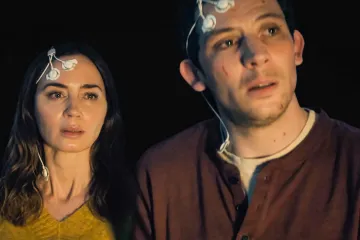
Upstairs, Evy (Nina Kiri), watches over her own terminally ill mother (Michèle Duquet). Tuason funneled his emotional gloom into this movie; Evy co-hosts a horror podcast with her overseas best friend Justin (voiced by Adam DiMarco). “This is the only thing keeping me sane right now,” she says. They’re words she’ll regret within the week.

Kiri and DiMarco have the comfortable, convincing chemistry of two old pals who have done a show for a while. One snippet seems to be an episode on Elisa Lam, the real-life tourist found dead in the rooftop water tank of Los Angeles’ Cecil Hotel. There’s also a reference to a website with a red-faced ghoul who hypnotizes victims into cutting off their ears. The latter may be Tuason seeding his idea for a sequel.

Here the central story is that Justin, who lives in London, has received an email with 10 audio files recorded by a couple named Mike and Jessa (Jeff Yung and Keana Lyn Bastidas) who are trying to understand what she’s saying in her sleep. The sender is unknown. (Possibly an evil spirit hoping for the exposure of a mattress ad?) Justin, the believer, is instantly alarmed by how these eerie tapes escalate from cute banter to ghostly crying babies and backward incantations. Evy is the skeptic who dismisses the noises as either an online hoax or bad plumbing.

Due to the time zone differential, Evy and Justin record their show just before he heads out to work in the morning, which for her is 3 a.m. Most of the movie takes place in that witching-hour window, an airlessly silent time where an at-home podcaster doesn’t worry about being interrupted by a leaf blower, an ice cream truck or a dog. Sound-designed by David Gertsman, “undertone” is so quiet that a tea kettle sounds like a fire alarm. Story-wise, it’s equally inert. One of the biggest action shots in the first hour comes when — eek! — a sink turns on.

I’d love to understand why horror films that I find excruciatingly dull give others the heebie-jeebies. My working theory is that they tap into audiences with a preexisting suspicion that the world is wicked — they prove paranoia to be well-founded. My mental default is that the world is neutral-good, and that may be why I prefer movies with active villains scaring me out of my complacency. I spent “Paranormal Activity” and “Skinamarink” restlessly admiring the production design; here, my main thrill came from the soundscape, like when a vibrating cellphone made my chair rattle like it was a tractor, or a noise that can only be described as death-rattle ASMR.

When Evy slips her on headphones, she’s so focused making sense of the latest scary tape, playing it forward, reversed and slowed-down, that she’s oblivious to the bumps in the night in her own house, upstairs near her comatose mother’s bedroom. I suspect Tuason deeply relates to Evy, to the disassociation of living with death every day, and uses her resistance to explore denial. She refuses to admit that the supernatural is real, even as she repeatedly takes a break to steady herself and, as she puts it, “get back into character.” Her stifled panic makes it obvious that fear is taking over.

The screenplay also has a passing reference to Evy’s useless, off-screen boyfriend Darren (voiced by Ryan Turner). Their miserable dynamic is compelling but overall comes off like a plot point Tuason stuffed in his pocket and never got around to using. Our one peek into it comes when Darren phones Evy to pressure her to ditch her mom and come to a party. He claims he’s throwing a kegger to cheer her up. (A frozen lasagna on the doorstep would be better, dude.)

Evy does reluctantly leave the house — we don’t follow her there — and that one moment says as much about crossed-signals communication as anything else in the movie. It’s bullseye-accurate about how isolating it is to lose a parent earlier than your peers.

The film is so committed to its rigors — the two-person cast, the glacial camera pivots, the moody lighting — that it teeters on the line of becoming monotonous. When Tuason eases up a bit, say in a scene in which Evy pops on a sleep podcast that begins by describing a babbling brook and rapidly becomes a nightmare tale of bobbing corpses, he finally shows you that he has the potential for range.

But “undertone” is rooted in that slow-and-still horror discipline that holds its breath waiting for something to happen. It requires the audience to bring their own bad vibes to shots of religious icons on the wall and long takes of Evy clacking on her laptop, unaware of a flickering light behind her. (Rumor is Tuason has already signed on to shoot the next “Paranormal Activity” sequel.)

Mostly it puts the audience in the position of watching a protagonist so passive that chunks of the running time are watching her sit at a table waiting for Justin to look up things for her on Wikipedia. Like amateur detectives, we learn alongside them as they click around pages about Sumerian devils, Catholic saints and the origin of the nursery rhymes “London Bridge” and “Baa, Baa, Black Sheep.”

As visuals go, “undertone” is so far removed from anything resembling the cinematic experience that I left with a fresh appreciation for campfire storytelling. At least then the listener gets to use their own imagination. But production designer Mercedes Coyle does dig up two satisfyingly creepy props: one, an antique speaking doll, the other, a small white statue that appears to be the Virgin Mary until we get a better look at her mouth, deformed by a hungry scream.

Despite my quibbles with how her character reacts when things really go awry, Kiri’s Evy has a clarity of purpose that holds our attention despite not having that much to do. In her strongest sequence, she and Justin take a few live callers on their podcast, some of whom bear bad news about Mike and Jessa, and another who phones up in the middle of a crisis that’s too big for these self-positioned experts to handle. Real violence is coming and these armchair ghosthunters are totally out of their depth. Yes, everyone is into podcasts. Maybe they shouldn’t be.

‘undertone’

Rated: Rated R, for language

Running time: 1 hour, 34 minutes

Playing: Opens Friday, Mar. 13 in wide release

Source link