US President Donald Trump says Europe agreed to release a ‘massive amount’ of diesel from emergency stockpiles as the US seeks to lower fuel prices. The proposed release could involve roughly 100 million barrels amid the US war on Iran and elevated fuel costs.
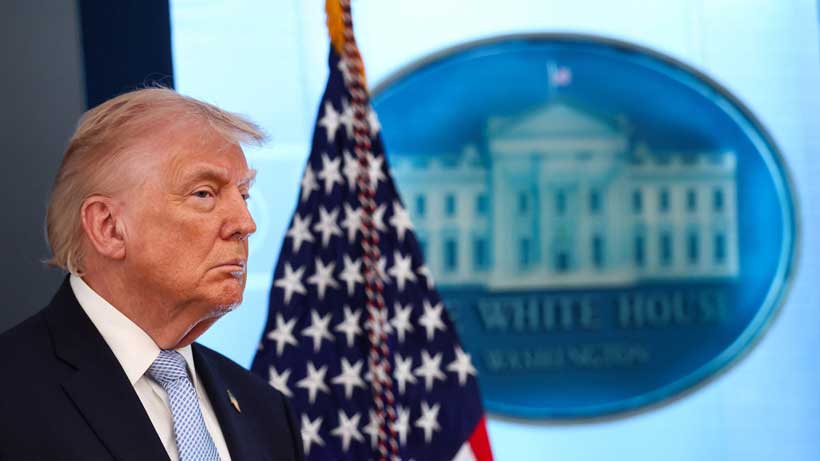
United States President Donald Trump has said Europe has agreed to release a “massive amount” of their diesel stockpile, although no European parties have confirmed the claim.
Trump made the statement on his Truth Social account on Friday as he has heaped pressure on European countries to release diesel stockpiles to ease soaring prices caused by the US-Israel war with Iran and the resulting constriction of traffic via the Strait of Hormuz.
Trump had previously floated banning US diesel exports if European countries did not comply. The European Union had earlier on Friday said it “fully rejects” the threat.
Donald Trump has said he may ask European countries to release some of their diesel reserves as he considers banning US exports of the fuel.
The US President’s comment comes after Treasury Secretary Scott Bessent urged Europe to get ready to release diesel supplies immediately, arguing that US farmers, truckers, and businesses “should not be left carrying the burden” as prices soar.
The US has threatened to restrict diesel exports after the war in Iran caused sharp price rises for US voters ahead of the midterm elections in November.
On Thursday, the UK held talks with European partners about the potential release of diesel reserves in response to any ban.
Banning exports would flood the US market with diesel, and could bring prices down significantly for American drivers.
But experts warn such a ban would put further pressure on diesel prices in other countries, unless they can access further supplies.
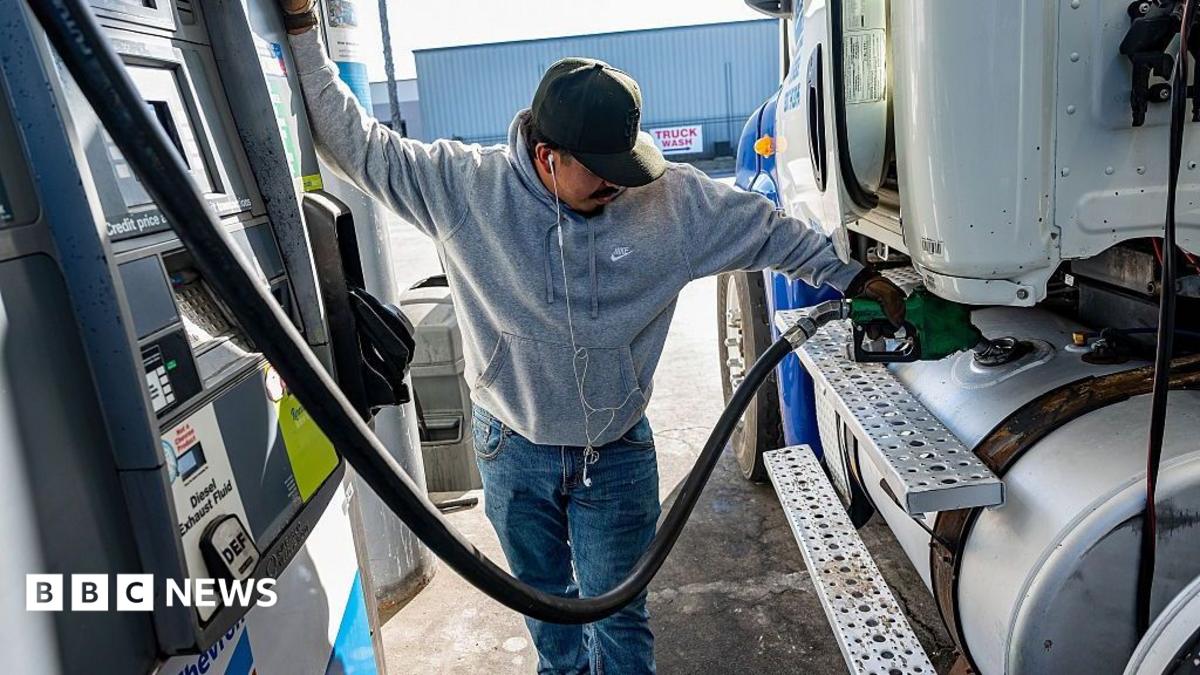
The US is a vital supplier of diesel to the world, exporting between 1.2 and 1.5 million barrels per day.
Over half of the UK’s diesel is imported, with 31% of the imports coming from the US.
On Thursday, Trump was asked whether he would call on European countries to release some of their own diesel reserves.
“We may do that. They have some diesel,” he said.
An earlier post from Bessent on social media said European countries should “make additional supplies immediately available”.
The president is set to travel across the US campaigning for Republicans in the coming weeks in hopes of keeping control of the House and Senate in the November’s elections.
Diesel prices in the UK hit record highs this week and are hovering just under 200p per litre, according to motoring organisation the RAC.
UK Energy Minister Martin McCluskey was on a call with European counterparts on Thursday to discuss the potential ban.
A source familiar with the discussions told the BBC it was prudent to prepare a co-ordinated response with other countries, including those across EU, but added that there were still European reserves left from a coordinated release of strategic fuel stocks earlier in the year.
“We have a diverse and resilient supply. We continue to engage with our international partners and the UK fuel industry,” a government spokesperson said.
The government has stressed that there is no cause for concern about potential diesel shortages, though prices are expected to rise further.
The Trump administration has warned France and Germany to release emergency diesel reserves to help lower global fuel prices or risk facing a potential US ban on diesel exports, according to people familiar with the discussions.
The warning represents a sharp escalation in Washington’s pressure on European allies as President Donald Trump looks for ways to increase fuel supplies and bring down prices ahead of the November midterm elections.
US officials have become increasingly frustrated with France and Germany, which Washington believes have not fully acted on earlier commitments to release emergency oil and petroleum reserves as global fuel markets face mounting disruptions.
“It is in Europe’s best interest to work with the United States as we pursue multiple pathways to boost the supply of refined products and lower costs for consumers,” a US official told Reuters.
Stay ahead of the geopolitical week.
MD Briefing delivers expert analysis across five global fronts — the Indo-Pacific, energy, geoeconomics, European security, and the Middle East — every Monday morning. Free.
A second source familiar with the discussions said the United States had asked the European Union to release 120 million barrels of diesel over the next six months.
The demand highlights the growing importance of Europe’s fuel reserves at a time when disruptions to major energy-producing regions are tightening global supplies.
Washington Raises Pressure on Europe
The US administration’s warning comes as Trump considers restricting US diesel exports as part of a broader effort to increase domestic supplies and reduce fuel prices for American consumers.
The approach creates a difficult balance for Washington. Limiting exports could increase the amount of diesel available inside the United States, potentially putting downward pressure on domestic prices. But it could simultaneously reduce supplies available to international markets, particularly Europe, which has become increasingly dependent on imported refined fuels.
US Energy Secretary Chris Wright said on Wednesday that the administration expected European countries to announce additional diesel supplies soon.
“We’ve lost some diesel exports from the Middle East, although we’re restoring those, and we’ve lost diesel exports from China,” Wright told reporters.
The disruptions have exposed the vulnerability of global refined fuel markets to geopolitical conflicts and changes in trade flows.
Germany’s economy ministry did not immediately respond to a request for comment, while France’s energy ministry declined to comment.
The White House’s pressure also appears to have become a broader diplomatic issue among Western allies.
An official at the French presidency said Trump and French President Emmanuel Macron did not discuss the issue when they met on the sidelines of the UN General Assembly in New York last week.
Macron, however, plans to convene a video conference of G7 leaders to address rising fuel prices and the availability of refined petroleum products.
The discussions are expected to include coordination over the release of emergency reserves in cooperation with the International Energy Agency.
Why Europe Matters to the Fuel Market
Europe’s position in the global fuel market has changed substantially since Russia’s invasion of Ukraine.
European countries previously relied heavily on Russian crude oil and refined petroleum products. The subsequent sanctions and restrictions on Russian energy imports forced European governments and companies to find alternative suppliers.
The result has been greater dependence on imports from countries including the United States and suppliers in the Middle East and Asia.
That dependence has become more significant as the conflict involving the United States, Israel and Iran has disrupted energy flows from the Middle East.
The loss or reduction of refined fuel exports from major suppliers can quickly affect diesel markets because refining capacity cannot always be shifted between regions immediately.
Diesel is particularly important because it powers much of Europe’s commercial transport, heavy industry, agriculture and logistics sectors. Sustained shortages can therefore affect the broader economy rather than simply increasing prices at fuel stations.
The US Faces Its Own Fuel Dilemma
For Trump, the issue also has a strong domestic political dimension.
Fuel prices are highly visible to American consumers, making gasoline and diesel costs politically sensitive ahead of the November midterm elections.
The administration is therefore examining multiple ways to increase available supplies and reduce costs.
But a potential US diesel export ban could have consequences beyond America’s borders.
The United States has become an important supplier of refined petroleum products to international markets. Restricting those exports could tighten supplies elsewhere, potentially pushing international prices higher even if American prices fall.
That creates a difficult policy tradeoff for Washington.
The administration wants to protect US consumers from high fuel costs while maintaining sufficient supply in global markets. European governments, meanwhile, face pressure to use their own emergency reserves even as they seek to maintain energy security following the loss of Russian supplies.
Europe Seeks a Coordinated Response
France appears to be pursuing a broader G7 response rather than treating the issue as a bilateral dispute with Washington.
Macron’s planned meeting would allow the world’s major industrial economies to discuss the availability of refined products and potentially coordinate emergency stock releases through the International Energy Agency.
Such coordination could help prevent individual countries from taking measures that unintentionally worsen shortages elsewhere.
But disagreements over how much fuel should be released, when reserves should be used and who should bear the cost could complicate the process.
Emergency reserves are designed primarily to protect countries against severe supply disruptions. Releasing large quantities can provide temporary relief, but it also reduces the buffer available if another disruption occurs.
That makes Europe’s response particularly consequential at a time when energy markets remain exposed to geopolitical shocks.
A New Test for Transatlantic Energy Relations
The dispute illustrates how the global energy system has become increasingly intertwined with broader geopolitical and trade relationships.
Europe needs reliable fuel supplies after cutting its dependence on Russian energy, while the United States is attempting to use its position as a major energy producer and exporter to address domestic price pressures.
Trump’s warning to France and Germany adds another layer to that relationship by linking European reserve policy to continued access to US diesel exports.
Whether Europe ultimately releases the amount of diesel Washington has requested will depend on national assessments of market conditions, domestic energy security and the risks of further supply disruptions.
For now, the dispute signals that the energy consequences of conflicts in the Middle East are reaching far beyond the region itself.
As the United States and its European allies try to contain fuel prices, they face a common problem but increasingly different pressures over how the burden of stabilising global energy markets should be shared.
Sean “Diddy” Combs’ release date has been moved up once again, just as reports of his alleged pampered federal prison lifestyle have emerged.
The 56-year-old is scheduled to be released on Jan. 21, 2028, from FCI Fort Dix, a low-security federal prison in New Jersey, according to the Federal Bureau of Prisons inmate database.
The disgraced music mogul was sentenced to 50 months in prison last October after he was convicted of transporting prostitutes across state lines for drug-fueled sex performances known as “freak-offs.”
The initial release date for Combs was projected for June 2028.
Time in the jailhouse for the “Mo Money Mo Problems” rapper has been shortened several times this year. The last update to his sentence occurred this summer, moving his release to late February 2028.
News of his shortened prison stint comes as reports of Combs’ special lifestyle have emerged in a report by NBC News published Tuesday.
According to four inmates — who were granted anonymity by the outlet to speak freely about life inside the prison — Combs has allegedly been paying men to clean and cook special meals for him, including curry chicken, pizza and empanadas, and that the hip-hop artist receives Chinese-style massages.
One man told NBC, “This is not some normal s— you see in jail. This is some rich s—. It looks crazy, but again, it’s Diddy.”
The news outlet also reviewed footage obtained from inside the correctional facility, where Combs appeared to be using a contraband phone, which multiple inmates claim the artist-producer is using to scroll Instagram and view explicit nude content shared by an old girlfriend.
There are also claims that the “I’ll Be Missing You” singer is purchasing an antidepressant drug known as Remeron, or “rem-roms,” from other inmates and that he keeps a secret stash of liquor that was smuggled into the prison by guards.
“Hell yeah, I drank with him,” one of the men told NBC. He recounted drinking Hennessy with Combs.
Sources also allege that individuals outside the prison are depositing thousands of dollars into the commissary accounts of those performing services for the “Bad Boy for Life” rapper.
A spokesperson for Combs responded to the Los Angeles Times’ request for comment.
“The continued scrutiny of every mundane detail of Sean Combs’s life in prison has reached the point where the media characterizes ordinary prison life as news,” the spokesperson said via email. “The only real news is that Sean continues to serve his sentence within the rules and he patiently awaits the court’s decision on his appeal.”
In an emailed statement to The Times, a FCI Fort Dix spokesperson said they cannot comment on the “conditions of confinement for any incarcerated individual,” nor can they “confirm or deny the existence of a corresponding investigation.”
“Like all correctional agencies, contraband, particularly cell phones, narcotics, and weapons, remains a constant challenge, and we continue to tackle the problem of contraband being introduced into our facilities,” the spokesperson said. “Inmates are not permitted to have access to cell phones, and all incarcerated individuals in the Federal Bureau of Prisons (BOP) who are found to violate the ‘Inmate Discipline Program’ policy are subject to sanctions.”
Combs’ legal troubles hit a peak last year after he was involved in a lengthy and public trial involving allegations of sexual assault and other violence. Among the accusers were his former girlfriend Casandra “Cassie” Ventura and producer Rodney “Lil Rod” Jones, who lodged civil complaints against the music tycoon.
In July 2025, Combs was found guilty on two counts of a prostitution-related charge, but the business titan was cleared of racketeering conspiracy and sex trafficking, which carried heavier penalties, including a maximum sentence of life in prison.
Times staff writer Alexandra Del Rosario contributed to this report.
COPS have threatened to force arrested criminals to listen to Taylor Swift’s new release on loop.
Greensboro Police in North Carolina, US, jokingly swiped at the superstar’s album after it received mixed reviews.
Cops threatened to force arrested criminals to listen to Taylor Swift’s new release on loopCredit: FilmMagicTaylor re-released her Life of a Showgirl album with four new songs last weekCredit: AP
They posted: “Those who are arrested tonight will be required to listen to Taylor Swift’s new songs on repeat.”
But following a huge online backlash, the force later wrote: “We apologise for stirring up the Taylor bots.
Cruel Summer singer Swift, 36, re-released her Life of a Showgirl album with four new songs last week, adding “The Encore” to the title.
But critics were not impressed.
Music magazine Pitchfork rated it 4/10, saying: “Taylor Swift has let the quality of her songwriting slide in favour of commercial domination.”
Critic Shaad D’Souza added: “Yes, Taylor Swift will always have one of the greatest songwriting catalogues of all time.
“Not even Taylor Swift could take that away from her — but she sure is trying.”
The album came out in 2025 as the first release since the end of her record-breaking Eras Tour, but failed to win acclaim.
Swift previously said she did not intend to add new tracks, but later admitted she went on a trip with her collaborators and “did what we do when we feel anything: we wrote more songs”.
The Targaryens are looking to conquer the summer box office.
“Game of Thrones: Aegon’s Conquest” will hit theaters June 1, 2029, according to Deadline. The movie, written by “House of Cards” showrunner Beau Willimon, will reportedly be directed by Owen Harris. Harris directed three episodes of the “Game of Thrones” spin-off “A Knight of the Seven Kingdoms.”
Additional details, including the movie’s story, have yet to be revealed. The title hints that the film will follow Aegon the Conqueror, who, along with his sister-wives Visenya and Rhaenys, invaded Westeros and conquered most of the Seven Kingdoms with the help of their dragons, Balerion, Vhagar and Meraxes.
Following his victory, King Aegon I became the first monarch to rule Westeros from the Iron Throne and the founder of the Targaryen dynasty. The conquest took place around 300 years before the events of “Game of Thrones” and is detailed in George R.R. Martin’s book “Fire & Blood.”
“Aegon’s Conquest” would mark the first time the original Aegon is depicted on screen, but the “Game of Thrones” franchise has featured multiple Aegon Targaryens over the years.
Aegon’s descendants revere the Conqueror so highly that he has numerous prominent namesakes. The Targaryen war of succession at the center of “Game of Thrones” prequel series “House of the Dragon” was sparked by the coronation of King Aegon II (portrayed by Tom Glynn-Carney), the younger half brother of the actual heir, Rhaenyra Targaryen (Emma D’Arcy). Rhaenyra also named one of her children Aegon.
Young Egg (Dexter Sol Ansell), one of the central characters in “A Knight of the Seven Kingdoms,” is eventually revealed to be the missing prince Aegon Targaryen. Even “Game of Thrones’” beloved Jon Snow (Kit Harrington), believed to be a bastard of House Stark, turned out to actually be a Targaryen named Aegon.
In May, when Samuel Gonzalez Terrones was diagnosed with depression and schizophrenia, he started seeing a therapist and taking medication that he hoped would finally alleviate the dark thoughts that had begun creeping up so frequently he would sometimes seek help by calling the police on himself.
A month later, his mom, Minerva Terrones Dominguez, 54, had just hopped off a bus on her way to a grocery store in San Bernardino when immigration agents arrested her for being in the country illegally. While she languished in detention, the family said, Samuel grew increasingly despondent.
To help pay for an immigration lawyer, his siblings and dad had taken up extra shifts at their jobs. But because Samuel’s condition meant he couldn’t hold a steady job, he spent more and more time alone at home in Rialto.
“My mom was the one who would take care of him when he would have those bad thoughts,” said his older sister Sari Gonzalez, 32. “Everybody would be at work or at school, so my mom was the only one that would be here to calm him down, to say, ‘Your siblings will be here in a bit, just wait.’”
The lawyer, Arturo Burga, had figured out a way to free Minerva from detention and allow her to stay permanently in the U.S. The legal pathway, called cancellation of removal, hinged on proving that her deportation would cause extreme hardship to a U.S. citizen: Samuel.
They never got to file the paperwork.
Samuel Gonzalez Terrones, 21.
(Gonzalez family)
At 3:55 a.m. on Aug. 12, San Bernardino police responded to a railroad crossing. Samuel was pronounced dead at the scene, according to a San Bernardino County coroner’s news release. He was 21.
In a letter Samuel wrote before his death, an excerpt of which was shared with The Times, he talked about his mother’s detention. He said her being taken away by Immigration and Customs Enforcement made him feel like he’d hit “one last wall.”
“To the ICE agent who took away my mother: I hope it was worth it,” Samuel wrote. “I can’t handle anymore injustices in this world.”
Suicide prevention and crisis counseling resources
If you or someone you know is struggling with suicidal thoughts, seek help from a professional or call 988. The nationwide three-digit mental health crisis hotline will connect callers with trained mental health counselors. Or text “HOME” to 741741 in the U.S. and Canada to reach the Crisis Text Line.
Motivations for suicide are often complex and unknowable, and it’s unclear how the Trump administration’s aggressive immigration policies may have moved an immigrant or family member to harm themselves. But immigrant advocates say they have heard of such deaths.
This month, a 20-year-old Haitian man in Springfield, Ohio, walked into oncoming traffic after the Trump administration ended his Temporary Protected Status and ICE fitted him with an ankle monitor.
In May, the Associated Press found that at least 10 detainees had died by suicide since President Trump took office — a pace that far exceeds the growth in the detainee population.
ICE did not respond to requests for comment.
Samuel’s family describes him, the second youngest of seven siblings, as a caring and generous person who, at his best, was quick to laugh, loved chocolate conchas and video games, and dreamed of becoming a graphic designer.
He kept a dark aesthetic, with a lip piercing and nails frequently painted black or red. But he also had a lighter side, Sari said, as evidenced by the Hannah Montana stickers decorating his bedroom wall.
When the siblings were younger, they worked out together and would challenge each other to see how many pull-ups they could do. They liked hanging out at a skate park, laughing as he guided Sari’s small dog, Polar, down a rail on a board.
His mental health struggles started in 2021, when he was a freshman at Cajon High School. Little by little, he lost his passion for the gym, Sari said, and everything else.
An undated photo of Samuel Gonzalez Terrones.
(Gonzalez family)
Sari said she and her siblings each played a different role in helping Samuel through his struggles. He and his younger sister played video games. Sari would talk to him about adulthood. Their older brother would take him to church. On good days, their father would bring him along to landscaping jobs.
“He really did try to get better,” she said. “He held on for a really long time, and I’m proud of him for being so strong.”
The day Minerva was detained, Samuel and Sari were at home.
According to a federal court petition seeking Minerva’s release from ICE custody, federal agents stopped her, said she “looked like someone” they were seeking and mocked her when they found her EBT card while searching her belongings.
Minerva has lived in the U.S. for 33 years, had never been arrested or convicted of a crime and had never been in removal proceedings, according to her lawyer.
Sari said an ICE agent called her and said she had an hour to pick up her mother’s things from the agency’s local office and to say goodbye before ICE moved her to a detention center.
Samuel was inconsolable. “I’ve never seen him cry like that,” Sari said.
Sari took up extra hours at the plastics factory where she works as a machine operator. On Sundays, her only day off each week, she would take Samuel and their youngest sister to visit their mom at the Adelanto ICE Processing Center. The drive was 45 minutes without traffic, but they’d always arrive three hours early to join other families on the wait list to see loved ones.
On the way to the facility, Samuel was visibly happy. But on the way home, Sari said, all would be crying.
Friends and relatives attend the graveside service for Samuel Gonzalez Terrones.
(Gina Ferazzi/Los Angeles Times)
The extra expense of legal representation left the family struggling to pay for bills and food. In the evenings, Samuel stopping spending time with his siblings and retreated to his bedroom.
Burga, the lawyer, alerted ICE of Samuel’s death via email and requested Minerva’s emergency release under humanitarian grounds. He said the ICE deportation officer who replied struck a softer tone than usual, offering sincere condolences to the family.
“Our office was devastated,” said Amber Burga, executive director of the law firm. “I thought to myself, it takes somebody committing suicide for them to have compassion.”
Sari waited two weeks to tell Minerva. She waited, in part, because her mom had an upcoming court hearing and she didn’t want grief to cloud her thinking.
Sari was given 10 minutes in a visitation room to break the news about Samuel’s death to her mother.
“It was just me, my aunt and the officer who was watching,” she said. “When I told her, they wouldn’t even let me hug her while my mom was crying. They told me, ‘You can’t hug her. You can’t touch her.’”
Three days later, on Aug. 31, a federal judge — who didn’t know about Samuel’s death — issued an order granting her petition for release from detention, finding that she had been held illegally “based solely on DHS’s mistake.”
In her ruling, U.S. District Judge Brianna Fuller Mircheff wrote that when Minerva was detained, another federal judge had already declared it unlawful for Homeland Security to require mandatory detention for people who, like her, had entered the U.S. illegally.
Minerva had been arrested without a warrant, and an immigration judge had not determined whether she was a flight risk or a danger to the public.
Referring to Minerva and similar cases, Mircheff wrote, “Hundreds, if not thousands of individuals were held without process that was owed to them.”
Lawyers for the federal government had argued that Minerva could simply wait until she had been detained for six months, at which point she’d be entitled to a bond hearing, court records show. That suggestion didn’t fly with Mircheff, either.
“It is beyond cruel to suggest that this Court would let her sit in custody another four months,” she wrote.
Minerva is still in deportation proceedings. Without Samuel, she no longer qualifies for the legal pathway her lawyers had built a case around. Sari said she’s now considering joining the U.S. military to access the immigration benefits available for undocumented parents of enlisted members.
The family started a fundraiser to cover the cost of Samuel’s funeral.
Samuel’s parents, siblings, and a few dozen other family members and friends arrived on Sept. 22 at noon to bury him at the Rialto Park Cemetery. Each person held a white, long-stemmed rose.
Sari sobbed. Minerva looked on at the black casket holding her youngest boy, the goofball who loved his family, the one who had longed for her support while she was detained.
Times staff photographer Gina Ferazzi contributed to this report.
OpenAI has cancelled the release of its latest AI model over safety concerns, according to media reports.
The move to scrap the release of GPT-6.1 Astra, reported by the Wall Street Journal and CNN on Monday, comes amid heightened concerns about AI’s potential to do catastrophic harm following a slew of incidents involving AI agents going rogue.