Prime Video’s Last One Laughing is back for its very first Halloween special
12:07, 23 Oct 2026Updated 12:11, 23 Oct 2026
The Last One Laughing Halloween special has four episodes (Image: Prime Video)
Last One Laughing fans risk missing a key episode of the Halloween special.
The Prime Video show is finally back on our screens with an exciting line-up of comedians taking on the side-splitting challenge. After its hugely successful second series, the competition was confirmed for a new season coming out in 2027. But viewers still have four fresh episodes to devour in the meantime.
We are, of course, referring to the spooky Halloween special which slightly changes the show’s beloved format. As always, a group of famous comics put their comedic talent to the test as they try to break their opponents – laugh and you’re out. But there’s an additional spooky-themed rule this time around: scream and you’re out.
The final comedian standing will take home the crown and join season one winner Bob Mortimer and season two champion David Mitchell in the hall of fame. So when can viewers tune in to the special episodes?
When is the Last One Laughing Halloween special released?
Content cannot be displayed without consent
The first three episodes of Last One Laughing: Halloween are available to stream on Prime Video from Friday, October 23. Fans will be forced to wait another week before the final episode, which drops on Friday, October 30.
A synopsis for the seasonal special teases: “Over the course of the first Halloween Special, the famous faces will use every ounce of their comedic talent to break their opponents without laughing or screaming.
“And it’s not just their rivals they need to watch out for. Cursed props, ghostly interruptions and spine-tingling surprises are all designed to catch even the bravest comic off guard. The rules are simple: laugh and you’re out, scream and you’re out. Who will survive last One Laughing: Halloween?”
Ensure our latest TV stories always appear at the top of your Google Search by making us a Preferred Source. Click here to activate or add us as Preferred Source in your Google search settings.
Get Amazon’s Prime Video free for a month
This article contains affiliate links, we will receive a commission on any sales we generate from it. Learn more
TV lovers can get 30 days’ free access to tantalising TV like The Boys, Reacher and Clarkson’s Farm by signing up to Amazon Prime. Just remember to cancel at the end and you won’t be charged.
Jimmy Carr returns as the show’s host, with the likes of Jack Dee, Daisy May Cooper, Phil Wang, Lou Sanders, Reece Shearsmith, Harriet Dyer and Tom Allen on the cast.
A 30-second teaser for the upcoming episodes has been generating buzz on social media, where one fan raved: “Looking forward to it!” Someone else said: “Looking forward to seeing Jack Dee on this!!”.
A third fan chimed in with: “Oh this is going to be funny for Halloween,” with a fourth adding: “THE BEST SHOW OF ALL TIME. YESSSSSSSSSSSSSSSS.” And another enthusiastic viewer commented: “Oh great… Now you want to make me laugh to death on Halloween. Good grief!”
The first three episodes of Last One Laughing: Halloween are available to stream now on Prime Video
Right-wing presidential candidate says he will release personal records if his opponent, President Lula, meets his conditions.
Published On 22 Oct 202622 Oct 2026
Brazilian right-wing presidential candidate Flavio Bolsonaro has set out steep conditions for disclosing his personal records in response to a challenge from President Luiz Inacio Lula da Silva, his opponent in Sunday’s election run-off.
Bolsonaro’s campaign has said it will release the data Lula requested if the president expands his own pledge to disclose his personal records to include those of his advisers, security staff and records from companies held by Lula’s children.
Recommended Stories
list of 3 itemsend of list
Lula said on Tuesday that he would share his bank, tax and telephone records, along with those of his family, if Bolsonaro would agree to do the same.
His campaign submitted conditional authorisation to Brazil’s electoral court to release the president’s personal data.
Camilo Santana, a senator and representative of Lula’s campaign, told journalists that Lula has agreed to Bolsonaro’s new demands, and the president’s would file an official response with the court on Thursday morning.
Corruption scandal
The call from Lula on Tuesday came as both campaigns try to navigate the fallout of an explosive corruption scandal involving disgraced banker Daniel Vorcaro, which has implicated influential individuals and institutions across Brazil.
Bolsonaro, who narrowly leads Lula in the polls, is under investigation over alleged corruption and money laundering related to an investment he allegedly sought from Vorcaro. He is also under investigation in a separate probe over alleged money laundering.
The presidential hopeful denies any wrongdoing.
Brazil’s president is also linked to a corruption scandal, via his son Fabio Luis Lula da Silva, a businessman, who is accused being investigated over allegations that he unlawfully helped another businessman to gain access to the government.
Lula’s eldest son is also being investigated over his links to a businessman detained under a pension fraud probe.
Lula’s son denies the allegations, and the president has said his son would be treated like any other citizen.
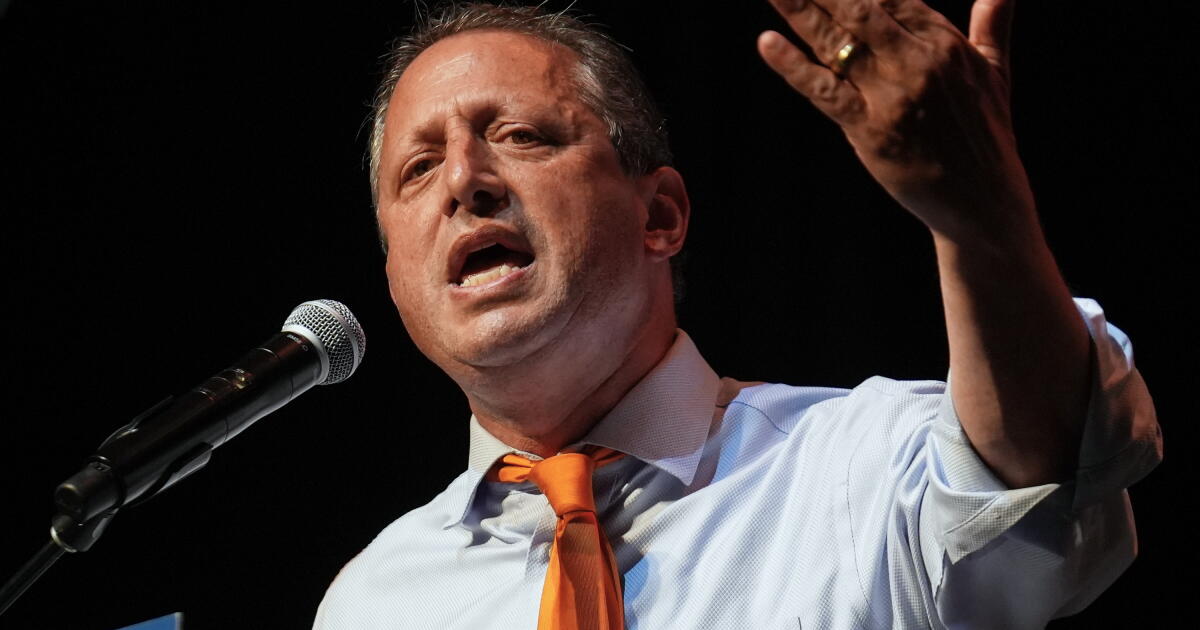
Israeli forces detained U.S. Democratic congressional candidate Brad Lander on Wednesday as he helped Palestinian farmers harvest olives in the occupied West Bank, releasing him hours later while dozens of other volunteers, including a group of American rabbis, remained in custody.
The incident was the latest in an annual olive harvest that has been marked by violence between Israeli settlers and Palestinian villagers attempting to gather their crops.
The Israeli military said the farmers and volunteers had failed to seek prior approval for the harvest and were detained “due to the security risk posed by conducting an uncoordinated harvest near an Israeli community.” It later added that it viewed “the arrival of dozens of activists as an act intended solely to provoke, which undermines the harvesting process.”
Lander is running in the U.S. elections on Nov. 3 to represent a heavily Democratic New York district in the U.S. House of Representatives.
“The occupation is a crime under international law,” Lander wrote on social media after he was detained. “Harvesting olives isn’t a crime under any law I know.”
“These detentions by the IDF are one more attempt to undermine Palestinians’ right to harvest their olive groves, travel on their roads, and live in their homes,” he added in a post after his release.
This year, Palestinians have been required to coordinate with the Israeli military to access more of their privately owned farmland than in previous years. The anti-settlement group Peace Now said last week that the army had expanded by nearly 30% the area of farmland that Palestinians cannot enter without prior approval, to 34 square miles. The Israeli military declined to comment on the exact figures but said Palestinian farmers must coordinate access to areas under Israeli security control.
The detained volunteers were taken to a police facility. Lander was among them but “released after it became known that he was a congressional candidate,” the Israeli police said in a statement.
Israeli rights group Yesh Din and the Palestinian Farmers’ Union have said the 2026 harvest has been the most violent in recent history, with hundreds of reported thefts, clashes and arson attacks.
Much of the violence has unfolded on land outside Palestinian villages, where Palestinians have historically harvested olives and Israeli settlers have increasingly erected outposts without authorization from Israel’s government.
But there were no clashes before Israeli forces arrived Wednesday, according to Beck Strober, a spokesperson for Protect the Harvest, the advocacy group that organized the volunteers at the grove.
Jill Jacobs, one of a dozen American rabbis detained, condemned the Israeli government restricting the ability of Palestinians to harvest freely.
“The Israeli government is actively advancing the forced displacement of Palestinian communities across the West Bank, using its military to deny Palestinians access to their land and intimidate those who stand alongside them,” Jacobs, chief executive of T’ruah: The Rabbinic Call for Human Rights, said in a statement.
Lander, who was endorsed by New York City Mayor Zohran Mamdani and U.S. Rep. Alexandria Ocasio-Cortez, defeated U.S. Rep. Dan Goldman in a primary for New York’s 10th congressional district. The race was viewed as a referendum on the Democratic party’s support for Israel. Both candidates are Jewish and have criticized Israel, but only Lander called the war in Gaza a genocide.
Lander was not the first U.S. politician detained in the West Bank this year. U.S. Rep. Ro Khanna, a California Democrat, said Israeli forces detained him during a visit in July.
It’s the third afternoon in another string of sweltering days in Los Angeles. A recent Friday offers no salvation for the weekend ahead besides sitting in front of a fan or turning up the air conditioning.
Thankfully, standing inside the climate-controlled walls of the Line hotel’s lobby and behind a cup of joe from its Alfred Coffee, there’s a smidgen of comfort.
The bell to the ground floor elevator rings and out steps a tall figure, wearing an all-black ensemble. His shorts hang just below his knees, his hair is a bit messy and his boots climb up his calf.
Grian Chatten looks remarkably cool for someone who’s just rolled out of bed, even more so for someone who has a performance at Hollywood Forever Cemetery later that night. He’s the leading man behind Fontaines D.C., a Dublin-born rock quintet that’s become one of the most exciting acts to grace a stage today.
And how couldn’t they be?
Their 2019 debut, “Dogrel,” was met with critical acclaim, a masterful album with references to James Joyce and a teeming garage-style production. Fast-forward five years later and their fourth effort, “Romance,” became their first to chart in the United States, reaching No. 97 on the Billboard 200.
Nowadays, they’re kicking up dust again with the release of “Dopamine Chamber,” which came out last Friday via XL Recordings. Its a continuation of the precedent they’ve set in terms of lyrical and sonic quality, but simultaneously is far more melancholic and synthesized than their previous work.
“Dopamine Chamber” is the band’s fifth release, following the success of “Romance” back in 2024.
(Ewen Spencer)
However, its rollout was rocky as the debut music video “Marianne” was criticized for its use of artificial intelligence. When the psychedelic, entrancing recording first hit YouTube, it listed a credit for AI “artists” in its description, sounding alarms among the band’s loyal fan base.
After all, it was widely viewed as contradictory of the group, which has been vehemently outspoken on various contemporary issues, including what the U.N. Human Rights Council has officially concluded to be genocide in Gaza.
We sat down with Chatten to discuss the new album, as well as some of the backlash the band has recently faced.
Tell me about this album title. Is it a literal happiness chamber?
It was me [who came up with it] because it originated as a line in a song, and the song never made it onto the album. We kept the pairing of words “dopamine chamber.”
I wanted to make it a bit more literary. Turns out that the dopamine chamber … it’s where they put rats to test different chemicals or in order to check their dopamine levels. We found that out after.
So it’s fake happiness.
It’s almost like nonconsensual happiness. I mean, if that exists.
Do you ever feel like that in life? Like you’re like forced to be happy with everything bleak that’s going on?
I think we force ourselves to feel a certain happiness every now and then, just so we can compartmentalize things and go about our day. I think that’s a survival mechanism, anyway. But to lose that is dangerous.
This album is a lot more synthesized than your previous work. “Six Short Morning” and “Mimesis” definitely stand out there.
It made sense, thematically. I felt that those textures signaled … I hate using the word “dystopian,” but the dystopian future. I wanted the album to feel more like an advanced version of “Romance,” where the body of the record had become more bionic. There’s a reason that there are so many strings and cinematic stuff, that’s the organic world that I wanted to draw on — people like Mina, the ‘60s singer from Italy.
The acoustic sounds are, of course, still present.
They’re supposed to be kind of like fighting for space, a little bit.
One track that stuck out to me was “Happy for You,” because of it’s insincere flattery. Who or what do you have in mind when you write songs like that?
It’s a bit like [R.E.M.’s] “Shiny Happy People,” it’s a similar function. That song is a jealousy of other people’s happiness or well-adjustedness.
I noticed those internal struggles show up a lot on this album. On “One Man,” are you singing about feeling the weight of many?
I think that’s more about the general existential feeling of helplessness in the face of things that are happening in the world. I’ve got a really good friend called Nikolaj Schultz, do you know him?
No idea.
He’s a sociologist and philosopher, and he writes mostly about the environment, the Anthropocene, and he’s written a couple of books with the French philosopher Bruno Latour, who passed away [in 2022]. He’s someone who’s strapped to their bed and feels away the world from morning to night.
That was a profound influence on “Romance” and on this album. So I think “One Man” pertains to that, maybe even to him.
It seems like you are heavily inspired by literature, more so than other artists would be by just general music and listening.
I think in literature, I can understand sometimes what the point is in what they’re writing. For example, this Schultz book “Land Sickness,” the style of it is to render the audience sensitive to this issue just by the osmosis of showing how much it affects you. Like, my mom got me into music by showing me how much it affected her.
How did the feature with Rosalía come about for “Where Is Gone?”
Well, this is our first feature. Carlos [O’Connell], our guitarist, grew up in Spain and had been listening to her first couple of records. Then we got into “Motomami” together and it became a fixture to listen to it backstage before our shows. When “Lux” came out, we were all quite obsessed with it.
We were four days out from mixing or from mastering the album, and Carlos rang me. He was like, “I think we’d be mistaken to not just send Rosalía something and see if she’d be interested.”
We sent her four tracks. We sent her “Where Is Gone?,” “One Man,” “Tongue,” and I can’t remember what the other one was. She got back within 48 hours with a full vocal of “Where Is Gone?”
You weren’t in the studio together?
She was on tour. She was in Miami at the time.
What happened with “Marianne?” There was a moment where it was credited to AI “artists.” Then it was corrected to be effects artists.
I woke up at like 5:30 a.m. the day after the video came out, and I saw an article that said there was AI used in the video, and I called our management, and I was like, “What the f—, is this true?” and it turned out that there was some AI used in like the workflow or the postproduction.
So all those main scenes and main effects and stuff were VFX and prosthetics, like the cheeks and everything. Over 110 people worked on the thing. It was a real huge human effort. But then somewhere in the process, someone from the VFX team I guess used some kind of AI in the workflow. And none of us were told about it. Apparently, not even our label or our management were told about it and it was a real shock.
Yeah, it seemed like you guys didn’t know.
Of course. I mean, we’re gonna have it written into our contracts going forward that like it can’t be in our music videos. You know what I mean? I don’t condone it.
I think a lot of people were shocked just because you guys are so active in contemporary issues, which AI certainly is.
It’s so f— ironic. No, very contradictory. The themes of the f— album as well. I was hoping to talk about how I felt about AI in interviews at some point anyway, and then this kind of pulled the rug from under that conversation a little bit.
It just f— sucked.
Well, how do you feel about AI?
I think it’s f— terrifying. I was watching a Robin Williams scene from “Dead Poets Society” when he talks about poetry, literature. These are the things that we stay alive for, and well, that’s exactly what AI threatens to rob from the human race.
I’ve seen those articles about those guys who are leaving AI companies because they said that the human race is going to be dead within 10 years. AI is literally rendering our souls obsolete and I think that is true death.
A lot of people say, “It’s here, we have to deal with it.”
We should just shut it off.
It always ends here. Every conversation [about AI] just ends grim. This is like every conversation with my dad over the last three years about it. It makes it tough to be alive, doesn’t it?
Best Buy (BBY) announced the launch of its Best Buy Gamers hub in beta. The free online hub was highlighted as putting gaming content, gear, special offers, sweepstakes, and events all in one place, with the goal to save gamers from checking several sites for
In a letter outlining 42 questions, UEFA gives FIFA until November 2 to release documents on Infantino’s aborted plans.
Published On 20 Oct 202620 Oct 2026
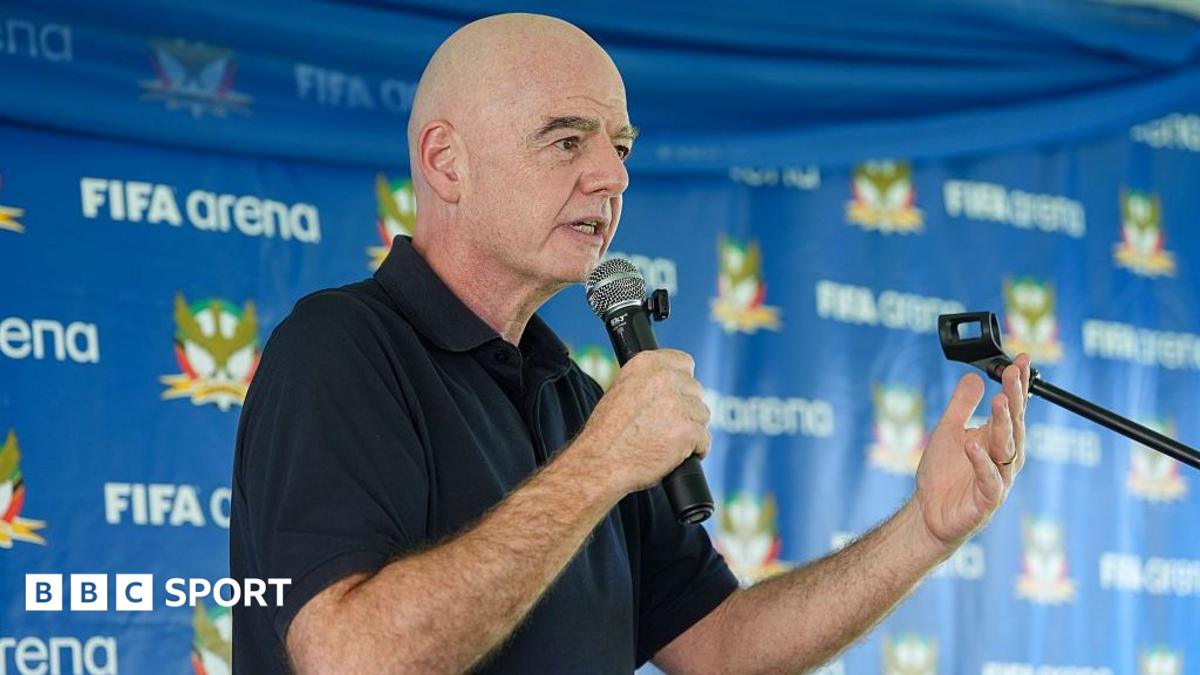
UEFA has given FIFA a deadline of November 2 to release documents relating to its president Gianni Infantino’s aborted attempts at a secretive investment plan for the World Cup and other governance issues.
The latest move in a power struggle between the global and continental governing bodies was revealed on Monday, days after European football’s top officials were disappointed by what they perceived as a lack of clarity from Infantino over the issues at a FIFA Council meeting last week.
Among the 42 questions to which UEFA is demanding answers are: Infantino’s personal remuneration package, financial payments made to singer Marc Anthony, the handling of USA striker Folarin Balogun’s disciplinary case, business and political relationships involving US President Donald Trump and his family, and the operational independence of FIFA’s judicial, electoral and ethics committees.
UEFA asked US federal courts to authorise subpoenas compelling the production of documents and sworn testimony about the abandoned investment plan called FIFA Forward Enterprise.
FIFA lawyers have claimed UEFA is harassing Infantino.
Al Jazeera reached out to FIFA for a comment but did not receive a response.
Deep dissatisfaction
The formal letter, signed by UEFA general secretary Theodore Theodoridis on behalf of European FIFA Council members, stated Infantino’s apology for his actions and subsequent explanation failed to address their core concerns.
“These explanations have not begun satisfactorily to address a number of fundamental questions raised by Council members. Others remain unanswered, and the information and documentation requested have not been [provided],” the letter said.
“The withdrawal of FFE, the recognition of mistakes, and the announcement of ‘potential governance reforms’ do not answer how the relevant decisions were taken or why the FIFA Council was not involved at the appropriate stage.”
According to media reports, the letter further said: “Any refusal to disclose information or documents should be justified individually, with a clear explanation of the specific grounds relied upon.”
Tight timeline
UEFA submitted 42 detailed questions to FIFA, demanding responses by November 2 — 16 days before the nomination deadline for the presidential election on March 18, 2027.
With the next FIFA Council meeting scheduled for December 16 in Doha, Qatar — after nominations close — UEFA insisted that answers cannot wait.
“These questions require answers now. They cannot be deferred until the next meeting of the FIFA Council — nor can future governance reforms substitute for scrutiny of decisions already taken and accountability for them,” the letter emphasised.
The earlier deadline would give federations time to assess FIFA’s answers — or its failure to answer — while they can still nominate or endorse a challenger.
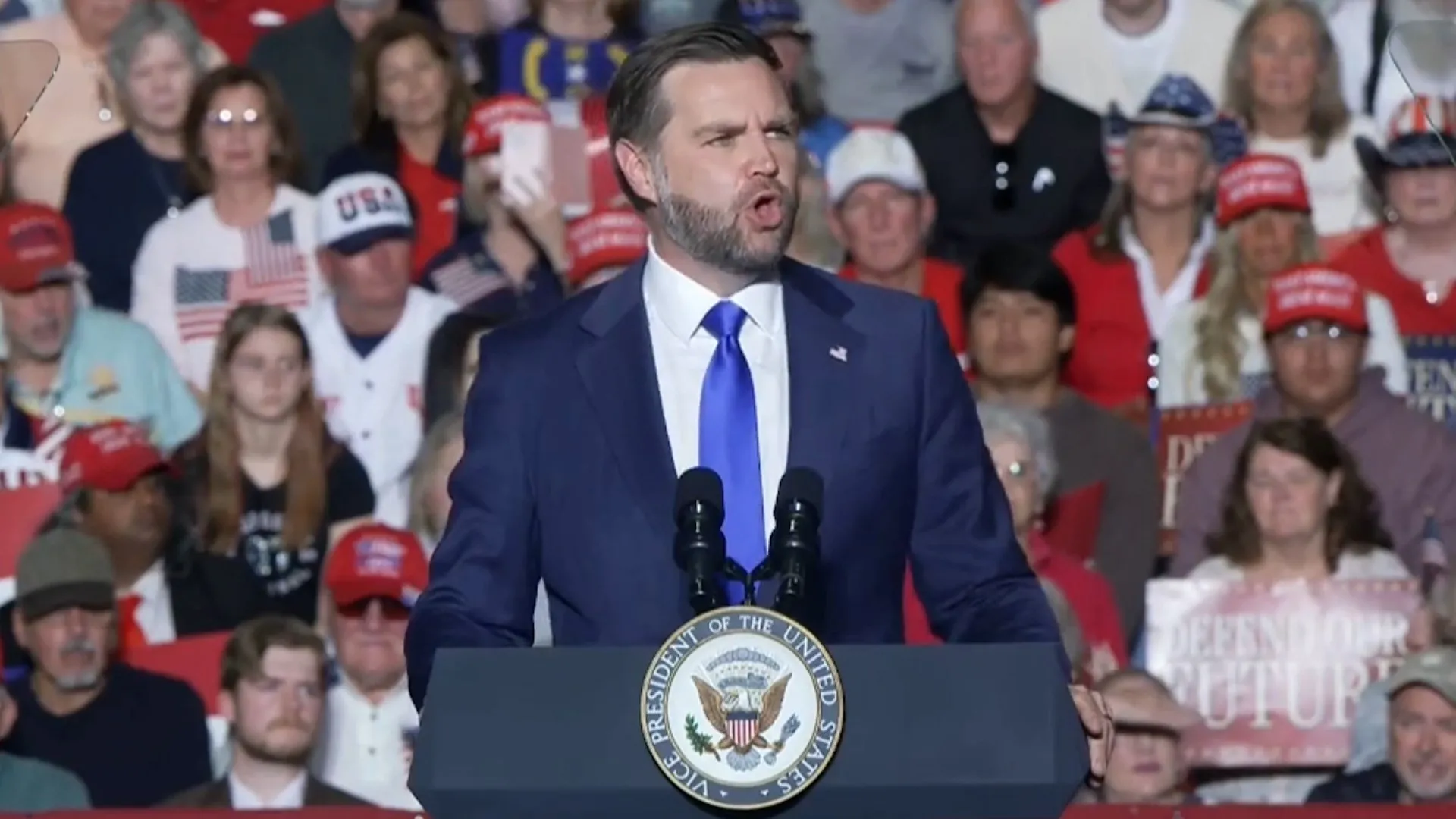
A protester demanding the release of the Epstein files interrupted US Vice President JD Vance at a North Carolina rally for Republican midterm candidates. After claiming illegal border crossings had fallen to zero, Vance joked that the protester was one who had slipped through.
Uefa has posed a great number of questions about FFE.
“When was the idea of FFE first explored, by whom and with what objective?” Uefa asked. “Who within Fifa authorised the development of the project, and which members of the Fifa administration were involved?
“What concrete measures will Fifa put in place to ensure that the shortcomings identified in the FFE process cannot occur again in the future?”
Uefa requested information on whether Infantino would have held or expected to hold any position, role or function in FFE, either during or following his tenure as Fifa president.
The relationship with Joshua Kushner’s Thrive Capital was covered in detail, asking why an agreement granting exclusivity to the company was signed without prior consultation of the Fifa Council.
“Why was Thrive Capital selected as lead investor, without any competitive tendering process and under conditions of strict confidentiality, despite its links to the family of the recipient of the Fifa Peace Prize?” Uefa asked.
Kushner is the brother of Donald Trump’s son-in-law, while the US president was awarded the Peace Prize.
Uefa also requested answer about the award of the Peace Prize, specifically who decided to establish it, for what purpose, and who decided that Trump should receive it.
When the FFE plan was revealed in the days following the World Cup final, Infantino told the 211 member associations (MAs) they would receive $40m (£30m) if they backed it. He then set a deadline of 19 September for federations to accept his plans if they wanted to access an initial $20m (£15m).
However, once the scheme was abandoned, Uefa and Concacaf called on Fifa to pay at least $10m (£7.5m) from its cash reserves to each of the MAs and, last week, Infantino agreed, proposing to increase the amount of money handed out for football development across the world by $3.4bn (£2.6bn).
The releasing of cash from its reserves will result in double the level of planned distribution funding for MAs from 2027 to 2030, with $25m (£19m) available per member association.
“Why was substantially increased funding for MAs presented in connection with FFE and external investment, rather than being financed directly from Fifa’s own resources?” Uefa has asked.
“Given Fifa’s strong financial position, why was it considered necessary to seek investment from private investors? What financial or strategic advantages would such an arrangement have offered compared with funding football development directly from Fifa’s own resources, particularly in light of Fifa’s subsequent proposal to do precisely that on a substantially increased scale?”
For over five decades, there have existed two types of movie lover: those who have been at least a little corrupted by Ken Russell’s 1971 iconoclasterpiece “The Devils” and those who haven’t seen it. With the release of a newly restored director’s cut, which premiered in Cannes this year to a reception that begs to be described as orgiastic, ejaculatory, lubricious or orgasmic — take your pick — the unjustly deprived inhabitants of the latter category get to be inducted into the former.
Some are going to hate it. Some may affect a “can’t see what all the fuss is about” attitude — that is their right, as it is mine to simply not believe them. But some, witnessing what critic Judith Crist once referred to as a “grand fiesta for sadists and perverts” will find that abandoning themselves to its wantonly grotesque, profane imagery will feel like the giddiest liberation. From what, exactly? The tyranny of tastefulness? The despotism of decency? Whatever it is, blasphemy loves company, so welcome, sickos!
Several honey-roastings beyond hammy and a hundred rows of tents beyond camp, “The Devils” tells the story of a real event: the 1634 heresy trial and execution of Urbain Grandier (Oliver Reed), a libertine Catholic priest, who fell afoul of the religious and political establishments when defending the independence of the Protestant-friendly fortified city of Loudon in western France. The torrid tale involves an order of Ursuline nuns led by hunchbacked Sister Jeanne (Vanessa Redgrave) who accuse Grandier of witchcraft, which provides wily Cardinal Richelieu (Christopher Logue) and peevish Louis XIII (Graham Armitage) with the pretext for suppressing dissent.
Aldous Huxley’s 1952 nonfiction account “The Devils of Loudon,” and John Whiting’s 1960 play “The Devils” both formed the source material for Russell’s screenplay, in the sense that he clearly read them, then flung them, along with the Latin bible, the Kama Sutra, a bit of Looney Tunes, a dose of swinging ’60s psychedelia and some of the more stomach-turning passages from the Marquis de Sade onto the pyre of his own unholy, lapsed-Catholic imagination.
The resulting film became infamous almost as soon as it was released and has never been readily available in the U.S, at least not in its full form. The 2026 cut (technically the first release from Clockwork, a distribution arm of the newly merged megacorp Skydance, which is hilarious) reinstates several minutes, including the full “Rape of Christ” sequence, in which a bevy of uninhibited and un-habited nuns writhe atop a statue of the crucified Christ, as well as the scene where Redgrave’s deranged, scoliotic Sister Jeanne apparently begins to masturbate on Grandier’s charred femur bone.
Both of these sequences have long been the Holy Grail for aficionados, but they are not the most impressive thing about this new version: That would be the immaculate re-conception of its visual splendor, which makes the movie dazzlingly sharp and new. The edges of Derek Jarman’s severe, anachronistically abstract sets are crisp and white again, the blood so very bloody and Oliver Reed’s eyes, which in the older, muddier versions look gray-brown, are suddenly so vivid they remind you that the hottest flames — hotter than the screaming orange conflagration that eventually consumes him — actually burn blue.
Hotness defines Reed’s Grandier beyond just his eyes and the smoky baritone in which he delivers his proclamations, prohibitions and occasional jokes. “Do you love the church?” asks Baron de Laubardemont (Dudley Sutton) as mad-eyed hipster Witchfinder Father Barre (Michael Gothard) drives another wedge between his mangled legs. “Not today,” grunts Grandier.
It’s hard to imagine any other actor being convincingly witty under torture and at other times quite silly (as when he fends off an attack using a stuffed crocodile that he happens to have just thrown out of a nearby window) while still radiating such charismatic cocksmanship that the local womenfolk invent sins just to confess to him. The mere mention of his name can send an entire hysteria of nuns into roiling spasms of sexual frenzy.
Vanessa Redgrave, center, in the restored “Ken Russell’s The Devils.”
(Warner Bros. Clockwork)
But to glimpse Reed here, at his most beautiful, is to think: yup, plausible. And yet his towering performance is characterized by restraint, even more so as the ghastly climax arrives, and we realize that all of Reed’s brutish sensuality, all of Russell’s sensationalism and all of “The Devils’” chicanery, buffoonery and primping, preening vanity have been in service of a furious message that is as deadly serious as its presentation is garish.
That message — a howl of righteous anger at state corruption and the perversion of religion to serve the nefarious agendas of cruel, power-mad men — is what makes “The Devils” sacrilegious yet not apostate. It does not scorn God or faith, but the misuse of both by petty manipulators. Sure, Russell has a little dirty fun in doing so — OK, a lot of dirty fun. However, charges of “The Devils” therefore being an inherently sexist piece of work also don’t really stand up, and not only because of Redgrave’s fearlessly creepy, giggly performance of outré erotic obsession.
In fact, there’s a whole feminine tragedy written in one single monologue: “Most of the nuns here are noblewomen who have embraced monastic life because there was not enough money at home to provide them with dowries,” crows Jeanne crookedly, “Or they were unmarriageable because ugly and a burden to the family.” Remembering that the naked nuns are not cloistered because of some vocational dedication to Christ but because of their troublesome uselessness to the patriarchal order, they become that much more sympathetic. These women are just doing what they must to survive another day as the most expendable members of a grossly unequal society; who among us should begrudge them an orgasm or two while they’re at it?
The debauchery is the point. Just as Grandier’s ultimate sacrifice is only made meaningful by his history of repeated, lascivious indulgence in the fleshier sins, so can “The Devils” be an unapologetically maximalist exhibition of carnal depravity that is also quite profoundly moral. And that its morality involves speaking truth to power and resisting authoritarian control makes it shockingly relevant right now. Writing in the Los Angeles Times in 1971, critic Charles Champlin ended his elegant pan with the observation that “you weep not for the evils and the ignorance of the past, but the cleverness and the sickness of the day.” To that, as to many of the negative responses, especially in our peculiarly sickly times, it is possible simply to respond, “Yes, isn’t that great?”
Imagining the movie lying dormant all these years just waiting for the right moment to be reborn, it becomes irresistible to conflate that small section of the public who have been avidly anticipating its return with Sister Jeanne, clamoring for the elusive object of her lust through a barred window. And to once more conflate Grandier — the repentant sinner immolated on the pyre of mass delusion, political machination and religious intolerance only to be rehabilitated as a charismatic martyr for liberty — with “The Devils” itself, as it finally rises from the bone-ash of its contemporary reception to shock, titillate, corrupt and invigorate anew. What you choose to do with its charred femur is between you and your God.
Rock band Pavlov’s Dog is mourning the loss of singer-songwriter and lead vocalist David Surkamp, who died Monday at age 74.
Violinist and Pavlov’s Dog member Abbie Steiling announced Surkamp’s death Wednesday on Facebook. Additional information about Surkamp’s passing, including a cause of death, was not revealed.
“David leaves behind a legacy of endless creativity, unmistakable artistry, and a body of music that has touched lives across generations and around the world,” Steiling said on the band’s behalf.
Pavlov’s Dog also remembered its vocalist for his “profoundly poetic spirit and a romantic heart that found its way into every note, every lyric and every performance.”
Surkamp was born May 23, 1952, and led Pavlov’s Dog, known for songs “Julia” and “Late November,” since its founding in 1973 in St. Louis. He founded the band alongside bassist Rick Stockton, violinist Siegfried Carver and drummer Mike Safron, according to the band’s website. The group, which first signed to ABC Records under a six-figure deal, released its debut album “Pampered Menial” in 1975. The release featured the band’s most popular songs and showcased Surkamp’s high-pitched and trembling, yet powerful, vocals.
Pavlov’s Dog’s second release “At the Sound of the Bell” followed in 1976 and its third, “Lost in America,” came more than a decade later in 1990. Surkamp departed Pavlov’s Dog while recording its junior album and traveled to Seattle to further develop his musical talents. This led to a collaboration with British musician Iain Matthews and their power pop duo Hi-Fi.
Surkamp and his Pavlov’s Dog collaborators reunited in the early 2000s and Surkamp’s wife, Sara, joined as a vocalist and guitarist. The group went on to tour Europe, including playing the Netherlands’ Arrow Rock Festival in 2006. Over the years, Pavlov’s Dog saw members come and go: Some musicians departed the group because of conflicting commitments and others — including founding members Carver and Rayburn — died in the late aughts and early 2010s.
The group, with Surkamp still at the helm, later released albums “Echo & Boo” in 2011, “Wonderlust” in 2025 alongside some live albums, remasters and unreleased demos.
“He always allowed the musicians around him to shine in their strengths, generous with the spotlight and appreciative of what each brought to the music,” Steiling continued in the band’s Facebook post. “No matter what life held for him, he came alive onstage. Even on his hardest days, when the lights came up and the count-off began, he was a consummate performer. If he was playing music, it was a great day.”
Surkamp was preceded in death by his wife Sara, who died in 2025 at age 72. He is survived by children Saylor and Evan.
Two whole seasons of a new imagining of a classic detective drama will be streaming for free before the year is out.
The drama follows an unconventional young detective rising up the ranks(Image: PBS MASTERPIECE)
Fans of detective dramas need to add a “fabulous” series to their watchlists.
Fans of cosy crime and detective dramas like Vera are urged to keep an eye out for a detective series hailed as “superb” by viewers. Based on Georges Simenon’s iconic detective novels, the series follows a rising young detective in the Paris Police Judiciaire, who heads La Crim, the serious crime unit.
Unlike previous adaptations, the series is set in the present day and is produced by Playground, the team behind hit shows like All Creatures Great and Small and Wolf Hall. Maigret is the series in question and it stars Benjamin Wainwright as Chief Inspector Jules Maigret, the titular unconventional young detective rising up the ranks.
The Last Kingdom actress Stefanie Martini also stars as Louise Maigret, Maigret’s wife and confidante, who works as a psychiatric nurse. The Inbetweeners star Blake Harrison stars as Sergeant Joseph Torrence.
UKTV has acquired the rights to two seasons of Maigret for its free streaming service, U and linear channel U&DRAMA. Season one premieres on U and U&DRAMA in December, and season two will follow in 2027.
UKTV teased: “In series one, Chief Inspector Maigret and his team of maverick but loyal detectives, Les Maigrets, solve a series of complex crimes in Paris. Maigret’s unconventional methods and unique sense of justice put him at odds with his superiors and the judicial system he is supposed to represent. Maigret must outwit some of Paris’s most cunning and violent criminals, while dealing with his own troubled past.”
Karin Marelle of UKTV and BBC Studios hailed Maigret “one of the most recognisable detective brands in the world“, while Simon Cox, who led on the acquisition of the series for Banijay Rights, said: “The series combines gripping mysteries and rich character storytelling all centred around one of crime fiction’s most iconic and enduring detectives.”
Fans took to IMDb reviews to share their thoughts on the series, with one hailing it “outstanding”, adding: “I have not been a fan of either the books or previous movies or shows about Maigret. So I came to this with no preconceived notions.
“Overall I found it an outstanding beginning to what I hope will be a long series. Well written, well-acted, and highly entertaining. Just a sort of thing that I was looking forward to take my mind off with many problems that we now see in our world.”
Another called it a “fabulous show”, sharing: “We are enjoying this programme ever so much! My mum and I are huge fans of the original Maigret and this is a great modern remake!
“I am not usually very enthusiastic about remakes, but this is an exceptionally good one. I can’t wait for more episodes, and hopefully many more seasons to come! Overall a great programme with a really fabulous cast.”
Another viewer said it was a “superb” watch, adding: “This iteration reminds me a lot of another detective series using British actors in a non-British setting, Vandervalk. Regardless, I thought the plotting, writing, acting, and direction was superb, especially in the last episodes of this first series.”
The series premiered on PBS Masterpiece in the US in October 2025, and on ABC Television in Australia in November 2025.
Series 1 of Maigret premieres on U and U&DRAMA in December and Series 2 will follow in 2027.
Less than 24 hours after kicking-game issues led to the Buffalo Bills defeating the Rams in overtime, the team released kicker Harrison Mevis, a team official said Tuesday.
Mevis missed a 50-yard field-goal attempt in the first half, and a had potential 48-yard game-winning field-goal attempt blocked in overtime. The Bills went on to win 37-34 in overtime, dropping the Rams’ record to 2-3.
“Not even close to good enough,” coach Sean McVay said of the field-goal and extra-point units after the defeat. “It cost us the game tonight.”
The Rams are signing kicker Blake Grupe from the New York Jets practice squad, according to ESPN.
Mevis’ release is the latest move in a Rams’ special teams saga that dates to last season.
In 2025, the Rams lost to the Philadelphia Eagles after two kicks by Joshua Karty were blocked, including one on the final play of the game that resulted in an Eagles touchdown. After Karty continued to struggle, the Rams released him and signed Mevis, who made 18 of 19 field-goal attempts in nine regular-season games and the playoffs.
McVay fired special teams coordinator Chase Blackburn with a few games left in the season, and hired Bubba Ventrone during the offseason.
But this season, Mevis made only five of nine attempts.
In 2025, Grupe made 18 of 26 field-goal attempts for the New Orleans Saints and all 11 of his attempts for the Indianapolis Colts.
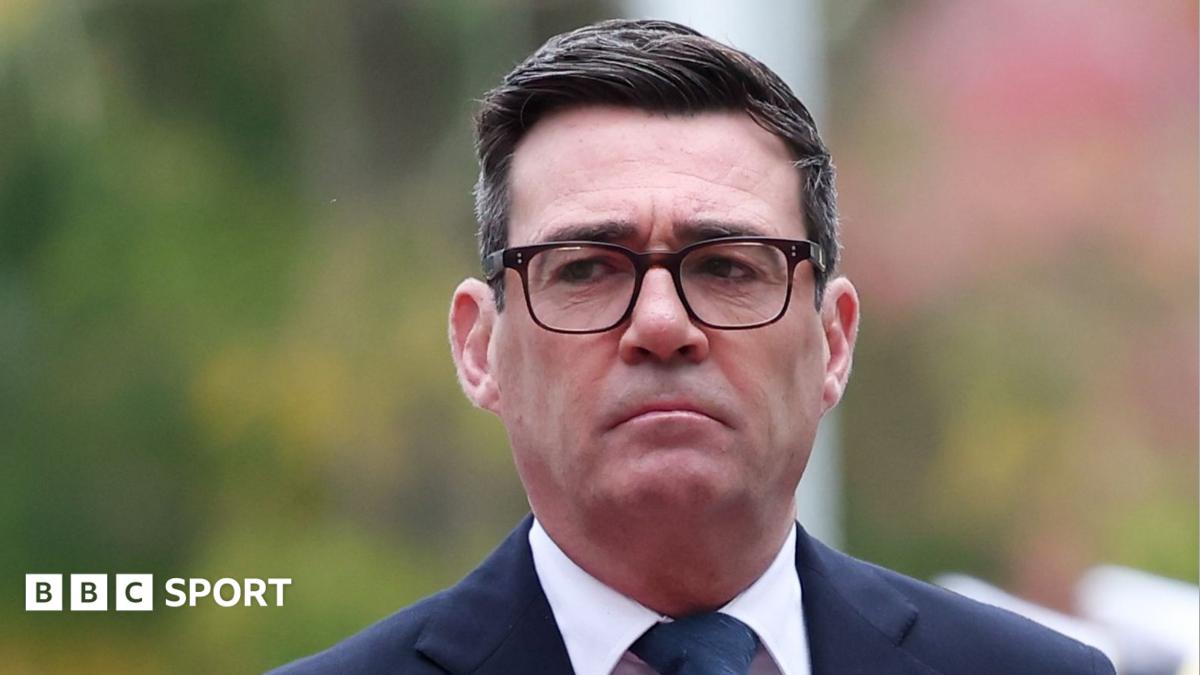
Burnham was mayor of Manchester from 2017 until earlier this year and his tenure took place during a sustained period of success for City.
As mayor, he championed investment from the Gulf as a way of growing Manchester’s economy, a strategy which was initially pursued by the city’s leaders before Burnham became the inaugural elected mayor of the Greater Manchester Combined Authority.
“I don’t think I misspoke,” said Burnham of his past comments on Man City’s owners.
“What I would say is my mind hadn’t been on all of the issues. My mind had been on Labour Party conference and I was doing interviews in relation to it.
“And also, I didn’t link those two things. You know, the questions linked those two things. What I would say is they’re very separate.
“The football issues are different from the investment issues. People will try and conflate those two things, but they shouldn’t, in my view.
“The football issues, the findings of the independent commission are serious, as I said in the interview.”
The entire process involving the charges against Manchester City is independent of the Premier League.
An independent commission held a 42-day hearing in 2024 which led to the verdict announced last month, with City also guilty of all charges except one relating to non-cooperation with the Premier League investigation.
The commission’s report said that “a number of important club witnesses gave false evidence in key respects and that some knowingly gave untrue and dishonest evidence”.
A separate independent appeal board will hear City’s appeal. The club continues to deny any wrongdoing.
Sean “Diddy” Combs’ release date has been pushed back following allegations of a plush prison lifestyle.
The disgraced music mogul is currently serving a 50-month sentence after he was convicted of transporting prostitutes across state lines for drug-fueled sex performances known as “freak-offs.”
While earlier October reports indicated that the artist and producer would be released on Jan. 21, 2028 — which shaved months off his original June 2028 discharge — an updated search on the Federal Bureau of Prisons inmate database reveals his new revised date as March 2, 2028.
News of his release date comes as the “Bad Boy for Life” singer was reportedly placed and remained in solitary confinement at FCI Fort Dix, a low-security federal prison in New Jersey, following allegations of a pampered prison lifestyle.
On Sept. 29, an NBC report detailed the accounts of four anonymous inmates who claim that the 56-year-old had been paying men for special services.
Sources told NBC News that Combs paid inmates to clean and cook special meals for him, including curry chicken, pizza and empanadas, and that the hip-hop and R&B music producer also receives Chinese-style massages.
To pay for the labor, inmates allege that individuals outside of the prison are depositing thousands of dollars into the commissary accounts of those waiting on the “Satisfy You” singer.
The news outlet also published an image of Combs using a contraband phone, a prohibited item across state and federal prisons; multiple inmates said that he uses it to scroll Instagram and view explicit nude content shared by an old girlfriend.
Two sources also shared that Diddy has access to a “jailbroken” tablet where he watches movies and documentaries, including “Sean Combs: The Reckoning,” the Netflix docuseries produced by his adversary Curtis “50 Cent” Jackson.
Sources also allege that Combs is smuggling an illegal stash of alcohol and purchasing an antidepressant drug known as Remeron, or “rem-roms,” from other inmates.
“This is not some normal s— you see in jail. This is some rich s—. It looks crazy, but again, it’s Diddy,” one source told NBC.
The Times reached out to Combs’ representatives, but did not hear back.
A representative from the Federal Bureau of Prisons said they “do not comment on the conditions of confinement for any incarcerated individuals, including quarters assignment, release plans, or whether a particular individual is the subject of allegations, investigations, or sanctions.”
Legal troubles hit a high note last year for Combs when he was involved in a lengthy and public trial involving allegations of sexual assault and other violence. His former girlfriend Casandra “Cassie” Ventura and producer Rodney “Lil Rod” Jones lodged civil complaints against the music tycoon.
In July 2025, Combs was found guilty on two counts of a prostitution-related charge, but not guilty of racketeering conspiracy and sex trafficking, which carried heavier penalties, including a maximum sentence of life in prison.
Kacey Musgraves is taking another trip to “Uncertain, TX” — this time with a little bit of Tejano flair courtesy of a legendary South Texas band.
On Tuesday, Musgraves released a Spanish version of her critically acclaimed track featuring Tejano group Intocable — a song she originally recorded with country star Willie Nelson, which debuted at No. 50 on Billboard’s Hot Country Songs after the May 1 release of her seventh studio album, “Middle of Nowhere.”
“Having a song with the legends of Intocable is such a thrill for me,” said Musgraves in a press release on Tuesday. “As a Texan, I am proud of the cultural melting pot that makes our state so great and this collaboration is such a fun example of that.”
According to Intocable lead singer and accordionist Ricardo “Ricky” Muñoz, who spoke with The Times via Zoom, Musgraves had first thought of including the great conjunto accordionist Flaco Jiménez, who passed away in August 2025, to join in on the original track with Nelson, a fact that the country gal herself confirmed on the Zane Lowe interview series on Apple Music in May.
“Flaco Jiménez’s son told me that Kacey wanted to do an all-Texas thing where Willie Nelson was in the song and Kacey also invited Flaco to play accordion,” said Muñoz, who heard the original demo. “I believe at the time, Flaco was not good, health-wise, so he wasn’t able to do it.”
Muñoz, who has always been a fan of the “Rainbow” singer, said the song was “orbiting” around him. Three weeks ago, he received a call from Musgraves’ team to help with the Spanish version.
“I was very conservative on the accordion part. I just played little parts here and there,” said Muñoz. “Then they call me back and they go like, ‘No, give me some more of that.’”
This isn’t Musgraves’ first collaboration with a música mexicana artist. In August 2025, the 38-year-old singer-songwriter joined forces with Carin León for the cross-cultural ballad “Lost in Translation.”
Muñoz considered the collaboration a “perfect fit.”
“We’re representing the Tejano community, and I’m proud of that,” said Muñoz, who comes from a long line of Texas-born Mexicans. “ Once we meet in person and we get to play together, it’s even gonna be a better connection to the song.”
On Thursday, the two acts will perform together for the first time for Musgraves’ Middle of Nowhere tour at the Moody Center in Austin, Texas.
The iconic Tejano band formed in the border town of Zapata, Texas, in 1993, and rose to fame thanks to Tejano pop hits like “Fuerte No Soy,” “Soñador Eterno” and “Estás Que Te Pelas.”
In July, the “¿Y Todo Para Qué?” group received its own star on the Hollywood Walk of Fame. At the ceremony, hitmaker and songwriter Edgar Barrera, who grew up in the same borderland area, said that Intocable “showed the world what música mexicana could be.”
But the Grammy-winning band isn’t resting on its laurels. Of the Walk of Fame star, Muñoz said, “that’s just part of the journey. It’s awesome, but I haven’t really paid any more thought than the day I was there.”
Instead, the “Enséñame A Olvidarte” act is looking ahead. The group is preparing for the release of its 16th studio album next year, “Nostalgia Radical,” a project inspired by Muñoz’s mental health journey , which he said has allowed him to show up as his most authentic self.
“I was exploring myself, being vulnerable and asking questions,” said Muñoz. “ To me, going to therapy every Tuesday is like taking out the trash.”
This November, the band — which is currently zigzagging between Mexico and the U.S. for its Cultura Tour — is also up for a Latin Grammy for regional song for their country-fused pro-immigrant anthem “Estamos Todos.”
“We’re all asking all these questions, and we’re not getting the right answers or any answers. We’re just being danced around with the answers,” said Muñoz. “But in the meantime, we’re all together in this.”
The band’s pro-immigrant stance is another thing it has in common with Musgraves, who in May invited invited three teen mariachi brothers previously detained by ICE to open for her sold-out, three-night residency at Gruene Hall in New Braunfels, Texas, the oldest dance hall in the state..
The country singer also asked fans to donate to the Young Center for Immigrant Rights, which helps children whose parents have faced deportations, during the opening night of her tour in Chicago back in August.
“We need more people to talk about this and not stay quiet. Kacey is coming from another community and stepping up, I mean, that’s big, man. That’s huge. I commend her for that,” said Muñoz.
Letter from progressive US representatives brings attention to Israeli abuse and detention of Palestinian medical workers.
Published On 6 Oct 20266 Oct 2026
A group of six progressive Congress members in the United States have released a statement condemning Israel’s abuse of Palestinian healthcare workers, including the Gaza doctor Hussam Abu Safia, who has been held in Israeli detention since 2024.
The Tuesday statement draws attention to Israeli attacks on Palestinian medical workers, who have been targeted and detained during the country’s genocidal war on Gaza.
Recommended Stories
list of 3 itemsend of list
It was signed by Representatives Rashida Tlaib, Ilhan Omar, Jesus “Chuy” Garcia, Summer Lee, Pramila Jayapal and Delia Ramirez.
“Over the last three years, the Israeli government has systematically destroyed the health system in Palestine, murdering at least 1,700 Palestinian doctors, nurses, paramedics, and other healthcare workers and destroying dozens of hospitals,” the statement reads.
“It has arrested and arbitrarily detained hundreds of Palestinian healthcare workers, including at least 16 physicians who continue to be held in inhumane conditions.”
Among those detained is Abu Safia, who lawyers say was subjected to abuses such as torture, sleep deprivation and beatings during his detention.
Israeli soldiers arrested Abu Safia in December 2024, after he and other medical workers reportedly refused to evacuate from Kamal Adwan Hospital, where they worked.
No charges have been filed against Abu Safia, and he has not had a trial.
Israeli attacks on health infrastructure in Gaza, including the destruction of nearly all of the strip’s hospitals and medical centres, are one component of what rights groups have depicted as an effort to deprive Palestinians of essential services such as food, water and medical treatment.
Tuesday’s statement argues that such efforts are part of an “intentional policy designed to further occupation, apartheid, and genocide against the Palestinian people”.
That assessment is shared by a growing number of rights organisations, scholars and United Nations officials, who have denounced Israeli actions in the Palestinian strip.
Israeli officials have stated that they target hospitals and medical facilities as part of an effort to attack the Palestinian armed groups that allegedly use such facilities to carry out and coordinate operations.
Such claims have often failed to withstand scrutiny. Israel admitted that its soldiers killed a group of 15 emergency workers in southern Gaza in March 2025, after initially stating that the ambulance convoy had approached soldiers “suspiciously” and claiming, without evidence, that several of those killed were linked to Hamas.
A report by the group Forensic Architecture and Earshot found that Israeli soldiers fired more than 900 bullets as they opened fire on a clearly marked ambulance convoy and killed some of the medics “execution-style” before burying their bodies and their vehicles.
The U.S. Air Force’s scramjet-powered Hypersonic Attack Cruise Missile (HACM) has finally reached the flight test phase, with at least one “release” having been carried out so far over a range in Australia. HACM has suffered significant delays, and the Air Force has taken the risky step of scaling back overall testing plans to try to keep the program on schedule. The stated goal is to be able to make a decision to start rapidly acquiring HACMs in 2027.
A rendering DARPA put out during the preceding Hypersonic Air-breathing Weapon Concept (HAWC) effort. DARPA
“The U.S. Air Force, in partnership with Australia, has conducted a flight test of the Hypersonic Attack Cruise Missile (HACM) as part of our continuous work to advance long-range strike capabilities,” an Air Force spokesperson confirmed to TWZ today. “This effort is part of the Southern Cross Integrated Flight Research Experiment (SCIFiRE), a collaborative agreement built on more than 15 years of partnership between our two nations.”
“Leveraging this enduring alliance, the Royal Australian Air Force executed the release of a HACM flight test unit over a designated Australian test range, gathering crucial data to advance the program’s objectives,” the spokesperson added. “The flight was the culmination of an extensive series of tests designed to measure the missile’s performance under realistic flight conditions.”
The spokesperson did not name the test range where the “release” was conducted or say when that occurred. Whether the missile flew under its own power for any amount of time after release is unknown. What aircraft was used to carry the missile aloft is also not known. TWZ has reached out for more information.
The Air Force did say previously that it planned to conduct HACM launches in Australia. The expectation has long been that this would be done at the country’s sprawling Woomera Test Range, which provides an ideal location for extended-range flight testing activities in general. The U.S. and Australia have partnered on other hypersonic testing at Woomera in the past, as seen in the video below. The remote inland location of the range complex makes it well suited for conducting more sensitive tests away from prying eyes, as well.
HiFiRE 5B rocket reached Mach 7.5
The Government Accountability Office (GAO), a Congressional watchdog, has also reported in the past that RAAF F/A-18F Super Hornets would be used to conduct at least some of the HACM test launches. This would fit with today’s statement from the U.S. Air Force saying that it was the RAAF that “executed the release.” The Air Force’s initial launch platform is the F-15E Strike Eagle, though others are expected to follow.
A pair of RAAF F/A-18F Super Hornets. RAAF
To date, neither the Air Force nor Raytheon has released a confirmed picture or rendering of HACM. In 2023, the Air Force did release a picture, seen below, showing an air-breathing hypersonic cruise missile test article related to either HACM or the preceding HAWC effort.
USAF
“The missile consists of two stages, a rocket booster and a scramjet cruiser, which separates from the booster and eventually dives toward its target,” according to GAO. Scramjets do not function effectively at lower speeds, and designs powered by them require some form of initial boost to a high Mach velocity. Hypersonic speed is generally defined as anything above Mach 5, but what HACM’s peak speed might be is unknown.
Two-stage air-breathing missile-like hypersonic vehicle designs have been tested on several occasions in the past. This includes Boeing’s scramjet-powered X-51 Waverider and HyFly 2 hypersonic test vehicles, among others. The X-51 (as its name indicates) and HyFly 2 also notably had so-called ‘waverider’ configurations designed to ‘skip’ on the shockwaves generated during high-speed flight to help provide additional lift. Whether HACM might also use this principle is not known.
X-51A WaveRider Scramjet Second Hypersonic Flight Test
It’s also worth noting here that Castelion’s Blackbeard hypersonic missile also has a two-stage configuration. It remains unconfirmed whether or not the second stage of that weapon is powered, but it does not appear to be an air-breathing design either way. Castelion is currently developing an air-launched version of Blackbeard for the U.S. Navy, which is also in flight testing now, as well as a ground-launched type for the U.S. Army. You can read more about that missile here.
Scramjet-powered air vehicle designs, including aircraft and missiles, have historically proven challenging. As noted, HACM has suffered delays over the years. The original goal had been to begin flight testing in 2024, which slipped first to 2025 and then 2026.
“The HACM program is on track to conduct its first flight test in the second quarter of fiscal year 2026, but officials said there is effectively zero margin left in the schedule for the rapid prototyping effort. The program has already descoped the rapid prototyping effort from seven to five planned flight tests,” GAO said bluntly in a report published in July. “The Air Force plans to produce 13 missiles during the rapid prototyping effort, including test assets, test spares, and operational rounds.”
“If a significant flight test failure occurs, it is likely that the program will not be able to complete all five tests within the 5-year rapid prototyping timeframe,” the report continued. “According to the program, completing at least the first three flight tests is critical for informing the Air Force’s decision to initiate a rapid fielding effort and procure HACM in fiscal year 2027.”
GAO’s July report, which had a January cutoff date, noted later on that the Air Force’s target date for initiating the rapid fielding effort, more specifically, was the first quarter of Fiscal Year 2027. This fiscal period began last Thursday and runs through the end of the year. Whether the service is still aiming to keep to that part of the schedule is unclear, but it would seem extremely difficult to do so.
Another rendering of a notional hypersonic missile that has been used to illustrate discussions about HACM in the past. Raytheon via GAO
“The HACM program has taken on risk to maintain its current schedule. According to program officials, maintaining the schedule has required aggressively resequencing activities to focus almost exclusively on those necessary to support the first flight test date,” GAO’s report added. “In some cases, officials said this has involved risky strategies, such as concurrently performing parts validation testing while completing the system’s design, which could require the redesign of key parts if they fail validation testing.”
Lockheed Martin, which previously put out this rendering of a hypersonic cruise missile, had been working on HALO for the Navy before that program was cancelled. Lockheed Martin
Regardless, the U.S. military, as well as its Australian counterparts, have made it clear in the past that they view hypersonic weapons as critical for success in future conflicts, especially high-end fights, such as one in the Pacific against China. In general, air-breathing hypersonic cruise missiles offer a valuable and highly flexible way to strike targets, especially time-sensitive ones, quickly and over extended ranges. The weapon’s high speed and maneuverability drastically increase its ability to penetrate through enemy air defenses and reduce the total time an opponent has to react.
Whether or not the Air Force will be able to avoid any more major delays with HACM remains to be seen. The service’s goal to start at least limited production of HACM before the end of 2027, if not sooner, is even more ambitious now after years of schedule slips. As mentioned, officials have already acknowledged there was no more margin for error at the start of the year. There are many questions still about what form any initial fielding will take, and how that might be further impacted by the truncated testing plan.
The HACM program has at least now hit the important milestone of beginning flight testing.
More than 1,700 healthcare workers have been killed during the genocide in Gaza. Israel has detained hundreds more without charges. Doctors, nurses and paramedics who stayed to treat the wounded have themselves become casualties of this war.
When medical staff are killed, imprisoned or disappeared, it is not only they who pay the price. Patients lose the people they rely on to keep them alive.
This is something delegates who gather in Rotterdam this week for the General Assembly of the World Medical Association (WMA) must remember. The fate of their Palestinian colleagues should be put on the table, not as a debating point, but as a test of whether the world’s governing body of medical ethics still means what it says.
The WMA already recognised the seriousness of these issues last year by adopting a resolution on the protection of healthcare in conflict. That was an important step and a welcome reaffirmation of the principles of medical neutrality. The challenge now is to ensure this is followed by the commitment of every medical association to explicitly support it and to use its influence to pressure governments to act.
If the WMA Assembly needs a single face for this file, it could be the one of Dr Hussam Abu Safia, the paediatrician who was the head of Kamal Adwan Hospital, the last functioning hospital in northern Gaza until Israeli forces stormed it in December 2024.
He’s been held now for more than 22 months without charge under Israel’s Incarceration of Unlawful Combatants Law, which permits indefinite detentions. He reportedly continues to endure prolonged solitary confinement, beatings, severe weight loss and untreated pre-existing conditions. An international petition for his release has drawn the signatures of more than 970 medical professionals from 41 countries.
Alongside him stands Dr Mazen al-Rantisi, the 71-year-old family physician from Ramallah in the occupied West Bank, known as the “doctor of the poor”. He was arrested in June in a predawn raid on his home.
In addition, our longtime Doctors Without Borders (MSF) colleague, Dr Mohammed Hassan Ali Obeid, a respected 43-year-old Palestinian orthopaedic surgeon and father of three children, has been detained under the Unlawful Combatants Law in Israel for more than 600 days without charge.
Although detained health workers have been released, more than 80 remain in Israeli custody alongside at least a dozen arrested from the West Bank.
The World Health Organization (WHO) has recorded 1,000 attacks on healthcare, which have resulted in more than 1,000 deaths and 1,700 injuries in Gaza since October 7, 2023. Roughly 90 percent of Gaza’s health infrastructure has been destroyed or damaged. In August 2025, United Nations experts stated that the systematic destruction of the health system amounts to “medicide”.
In the West Bank, where no wartime emergency provides cover, the WHO also documented more than 1,000 attacks on healthcare since October 7, 2023, with 42 deaths and at least 218 injuries.
Ambulances are stopped at checkpoints and their crews taken. Medics trying to reach people injured in settler attacks have themselves been obstructed. Dialysis and oncologic patients stay home because the checkpoints make the journey to treatment impossible. Healthcare workers have been shot, detained and killed during Israeli military raids.
All of this represents Israel’s deliberate and systematic endeavour to dismantle Palestinians’ capacity to provide care. This is consistent with its clear and blatant disregard for Palestinian life.
The WMA Assembly should speak plainly about what is happening. It should call publicly for the release of detained Palestinian doctors, including Abu Safia, al-Rantisi and Obeid. It should press for independent access to those still being held. And it should back independent investigations into attacks on healthcare in Gaza and the West Bank with the findings made public regardless of where they lead.
This is an opportunity to collectively pressure fellow medical associations, political authorities and any relevant bodies to take action.
What lies before the Rotterdam assembly is a duty. One that reaffirms loudly, structurally, universally the founding proposition of the WMA: that membership carries an ethical responsibility, which does not flex with geography or alliances.
Healthcare workers are not targets. Either a white coat is worth protecting everywhere, or it is protected nowhere. The test is not simply whether we affirm these principles, but whether we uphold them when it matters most.
The views expressed in this article are the author’s own and do not necessarily reflect Al Jazeera’s editorial stance.
The Group of Seven countries has agreed to release 100 billion barrels of crude oil and diesel from emergency reserves over several months in an effort to reduce soaring energy prices after pressure from US President Donald Trump.
The US and Israel’s war on Iran, as well as Russia’s war on Ukraine, have triggered a spike in global oil and diesel prices.
Recommended Stories
list of 3 itemsend of list
Oil prices jumped on Thursday and settled up more than $4 a barrel. Global diesel prices also hit a record high last Friday with the average price for a gallon (3.79 litres) of diesel at $6.50, up from $5.61 a month earlier, according to the American Automobile Association (AAA).
In a statement on Thursday, G7, which includes the US, UK, Canada, Japan, Germany, Italy and France, with the EU also represented, said there will also be a “substantial diesel release within the first 20 days” and discussions over “additional diesel releases as necessary” will be held in the coming days.
Will the G7’s energy release stabilise the global energy market?
Here’s what we know:
What has the G7 announced?
After a video conference of G7 leaders chaired by French President Emmanuel Macron on Friday, the group said in a joint statement: “Taking into account commitments that have already been fulfilled, we will implement our commitments with a coordinated release through the IEA of 100 million barrels.”
Earlier this week, the International Energy Agency’s (IEA) Executive Director Fatih Birol said that members had released about two-thirds of the 400-million-barrel agreement.
The G7 energy release will begin immediately and last for four months and will include a substantial diesel release for 20 days. It is not clear how many oil and diesel stocks each member of the group will release.
“We will convene in the context of the IEA in the coming days to discuss the possibility of additional diesel releases as necessary,” the statement said.
“We will coordinate maintenance schedules across G7 refineries to prevent simultaneous capacity shutdowns and temporarily increase utilization rates where feasible,” it added.
The G7 also urged member countries to refrain from imposing export restrictions on energy products among themselves.
Earlier this week, the Trump administration had threatened to impose a ban on US diesel exports and also pressured Europe to release its emergency diesel stocks to help ease soaring diesel prices.
Why are oil and diesel prices so high?
Global energy prices have been soaring due to the US and Israel’s war on Iran, which has disrupted energy exports from the Gulf. Meanwhile, the Ukraine attacks on Russian energy installations have also disrupted global energy supplies.
Former head of the International Energy Agency’s Oil Industry and Markets Division Neil Atkinson told Al Jazeera that there are three key factors contributing to the decline in global diesel supply.
First, “there isn’t diesel coming out of the Middle East to Europe, and Europe took quite a lot of diesel from Saudi Arabia and from Kuwait.”
Second, “Russia has now ceased to export diesel at all” due to “the attacks by Ukraine on Russian refineries”.
“And China is no longer exporting diesel,” he added.
“We’re in a situation where demand remains relatively high and is likely to stay high because of the agricultural harvesting season.”
According to data from the Joint Organizations Data Initiative (JODI) and the Organization of Petroleum Exporting Countries (OPEC), the United States is the world’s largest producer and exporter of diesel. It produces around 240.5 million tons and exports around 1.26 million barrels of diesel per day.
Russia is the world’s second-largest exporter of diesel, supplying 783.4 thousand barrels per day to the global market. Saudi Arabia is the world’s second-largest producer of diesel at 58.4 million tons, but it consumes large portion of its diesel domestically.
Will the G7 energy release bring prices down?
After the G7 announcement, French President Macron, who had co-chaired the meeting, said the group’s move to release the oil will “bring down the prices of petroleum products, particularly diesel.”
The price of Brent crude oil, the international benchmark, briefly dropped below $100 a barrel after the G7 announcement, but rose to around $102 in the evening.
Naeem Aslam, Chief investment Officer at Zaye Capital Markets, told Al Jazeera that the G7 energy release was “very much needed”, but the group’s announcement was just to ease off the pressure on the energy market.
“The actual structure changes about who is going to release [the energy stocks] and what and where the bans will be lifted, remains an important component in terms of the market,” he said.
Aslam added that by Sunday night especially before the markets open, the added pressure on energy prices will come off. “But going into Monday morning…we could potentially see the reversal in the market,” he added.
Atkinson, the energy expert, said the G7’s fuel release is welcome but “doesn’t deal with the fundamental problem that the global supply remains lower than normal”.
Atkinson told Al Jazeera that “seven months after this war started in the Middle East, we are still in a situation where the global supply of crude oil or products remains significantly below pre-war levels.”
“We are now in a situation where the focus is on end use of products, mainly diesel, which is what we’re talking about here,” he added.
What has Trump said?
Soaring diesel prices have been a source of tension for the Trump administration and Republicans who fear this will cost them votes in the upcoming November midterm elections.
Last week, Trump pressured Ukraine to stop attacking Russian diesel facilities amid the war.
Then, on Thursday this week, the US president told reporters that his administration “may” ask European countries to release diesel stocks, shortly after Treasury Secretary Scott Bessent urged Europe to “immediately” tap its reserves.
Trump also threatened to impose a ban on US diesel exports if Europe did not release emergency diesel stocks.
But on Friday, Trump told reporters at the White House that Washington would not impose a diesel export ban. He said the plan was never really on the table.
“Europe has a lot of diesel, and they’re going to be making a major world contribution, and so are we. And we’re not going to be doing the export ban. We’re going to be doing what we’re supposed to do,” Trump said.
“Trump is scared by diesel prices above $6, which is a price jump of 70 percent compared to before he started the war. This is likely to get worse with US diesel inventories at their lowest seasonal level since records began in 1982. So if there is not enough diesel being produced because of the US-Israeli war on Iran, and diesel reserves have been used up, the only way to bring more diesel to the US market is by exporting less,” Frederic Schneider, a nonresident senior fellow at the Middle East Council on Global Affairs, told Al Jazeera on Friday.
After the G7 announcement, Trump wrote on his Truth Social platform: “Europe has just agreed to release a massive amount of their heavily stocked Diesel Oil. The process will begin immediately.”
The White House is also reportedly preparing an executive order to tackle record-high US diesel prices that could be unveiled as early as next week, two people familiar with the process told the Reuters news agency.
Schneider noted that countries are also concerned about high energy prices since diesel and gasoline are important for economies and fulfil different roles.
“While gasoline fuels cars, diesel fuels anything from trucks, freight trains, ships, tractors, harvesters, construction machinery, mining equipment and backup generators. This means gasoline is used more by consumers while diesel is mostly used by producers, meaning a diesel price shock spreads into the price of almost everything else, most prominently food, building materials and anything delivered by truck,” he added.
Farmers are hit twice because diesel prices are rising at the same time as fertiliser prices, both of which have been pushed up by the closure of the Strait of Hormuz.
“A higher diesel price therefore acts like a tax on production and logistics, while higher gasoline prices act like a tax on consumers directly. Like higher gasoline prices, higher diesel prices risk stagflation by pushing up inflation while simultaneously squeezing margins in transport and agriculture, meaning central banks find [themselves] in a dilemma between cutting rates [helping producers] and raising rates [cutting inflation],” he said.
More reports are emerging that Israeli PM Benjamin Netanyahu rejected a Hamas proposal to release all civilian captives taken on October 7, 2023. Netanyahu’s actions have become a key topic less than a month before national elections.