reject

FCC asks court to reject ABC’s 1st Amendment claims

The Federal Communications Commission has asked a judge to toss out ABC’s 1st Amendment lawsuit, arguing that parent company Walt Disney Co. is wrongly attempting to short-circuit the agency’s review into whether the broadcaster has violated the law.

The commission, in court documents, maintains ABC’s lawsuit was premature because regulators simply were in the process of reviewing whether ABC has served the public interest in operating its eight television stations. No final determination has been reached, the FCC argued.

FCC Chairman Brendan Carr made the rare move last spring to call for an early review of ABC’s licenses as part of his yearlong look at whether Disney’s diversity and inclusion programs violate anti-discrimination laws.

The Disney-owned station licenses were not set to expire for several years. For example, the license for KABC-TV Channel 7 in Los Angeles extends to 2030.

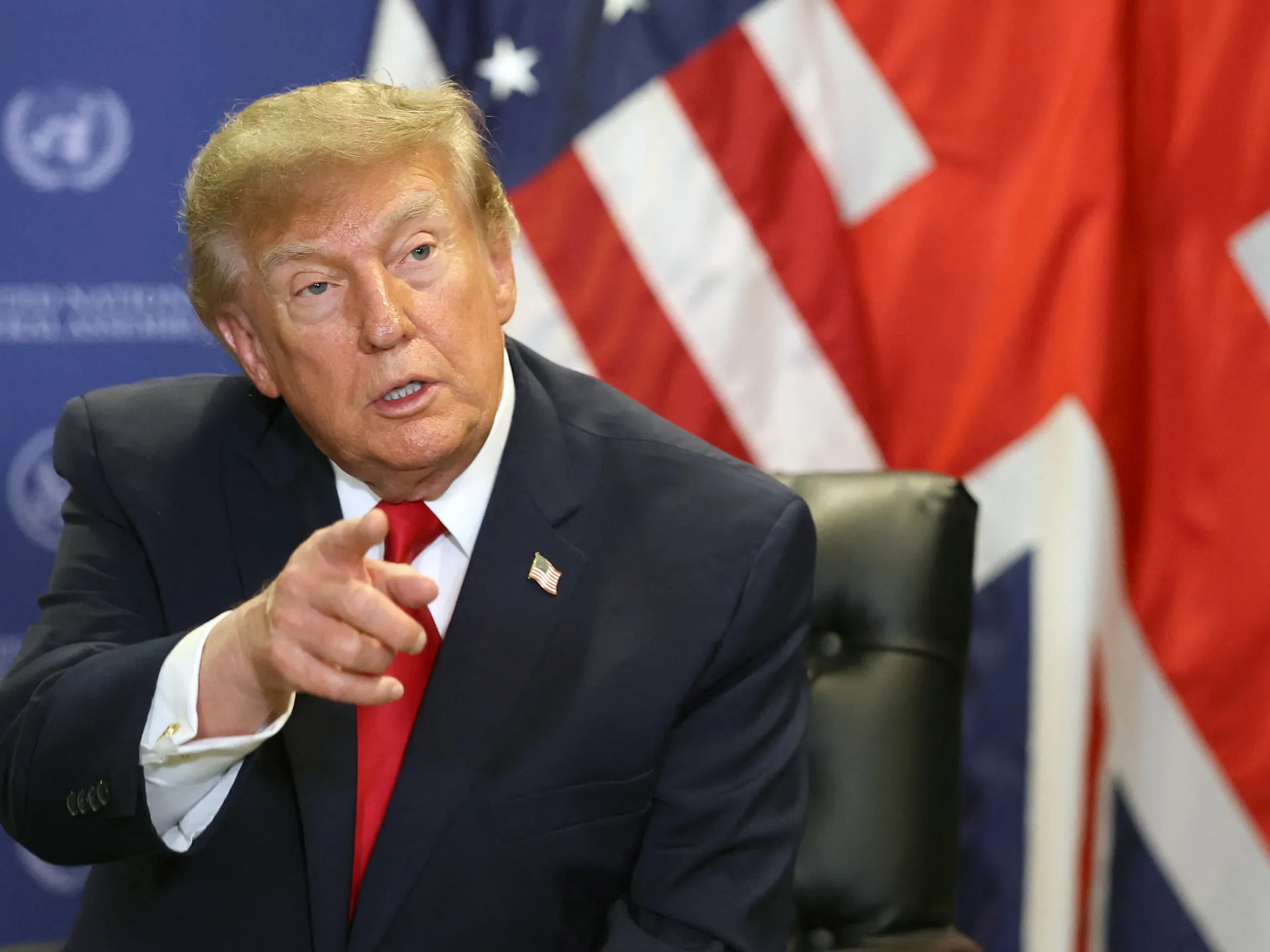
But the FCC launched the probe a day after President Trump complained about ABC late night comedian Jimmy Kimmel over a joke that upset First Lady Melania Trump.

ABC has taken an aggressive stance, arguing the FCC is wielding its enforcement powers to punish the network after Trump repeatedly agitated to have ABC’s licenses revoked. ABC maintains the FCC’s enforcement action is an attempt to quell the network’s free speech, in violation of the 1st Amendment. It asked a federal judge to issue a temporary restraining order and injunction to halt the FCC’s early station review.

ABC also is fighting an FCC review into whether its daytime talk show, “The View,” should be entitled to an exemption from the so-called equal-time rule for political candidates who appear as guests.

Disney’s lawsuit has enormous 1st Amendment implications.

ABC is the first major broadcaster to challenge the FCC’s enforcement actions since Trump returned to power, joining a small handful of news organizations, including the Associated Press and the Wall Street Journal, that have pushed back against the president’s efforts to bully outlets he dislikes.

In late December, Trump wrote on social media: “If Network NEWSCASTS, and their Late Night Shows are almost 100% negative to President Donald J. Trump, MAGA, and the Republican Party, shouldn’t their very valuable Broadcast Licenses be terminated? I say YES!”

ABC, which did not comment Friday, argued the FCC’s review is “extraordinarily early” and “that timing underscores the Commission’s true purpose: coercing and retaliating against a network that refuses to bow to the Administration’s demands.”

The FCC has scoffed at the broadcaster’s arguments.

“Disney filed a meritless lawsuit in an effort to stop the FCC’s ongoing investigation into allegations that Disney violated the law,” an FCC spokesperson said in a statement. “The FCC has developed a voluminous record, and it will continue to follow the facts and the law wherever they lead.”

The government filed its motion Thursday in Washington. The 46-page document was filed by U.S. Atty. Jeanine Pirro and signed by Assistant U.S. Atty. Dimitar P. Georgiev on behalf of the FCC.

Disney was “not content to let the Commission’s ordinary investigative processes (and, if needed, ordinary processes of judicial review) run their course. They instead ask this Court to halt the license renewal proceeding in its tracks by issuing a preliminary injunction,” the FCC said.

U.S. District Judge Loren L. AliKhan has scheduled an Oct. 6 hearing.

Disney has argued the FCC has gone well beyond an examination of its internal hiring practices — the original purpose of the agency’s review.

But, in its motion, the FCC faulted Disney’s handling of the matter, saying “Disney’s responses to Commission information requests were deficient and nonresponsive,” prompting the agency to escalate the dispute.

In late April, Carr directed the FCC Media Bureau to force ABC to apply for renewal of their licenses early.

“The Commission’s Chairman has repeatedly emphasized that, although the allegations against Disney are serious, he and the agency remain ‘open-minded,’ have ‘not made a decision,’ and are ‘going to follow the facts and the law wherever they [lead],’ ” according to the motion.

The FCC also argued Disney picked the wrong court because Congress stipulated that any review of commission orders should be heard by an appeals court.

If ABC lost its licenses, it would hobble the network by forcing its largest stations off the air. Other ABC stations at risk include those in San Francisco, Fresno, Houston, Philadelphia and New York.

KABC-TV Channel 7 is owned by Disney in Glendale.

KABC-TV Channel 7 is owned by Disney in Glendale.

(Gina Ferazzi/Los Angeles Times)

Trump on Sunday called for the FCC to “rebuke or punish” NBC’s “Meet the Press” anchor Kristen Welker after she pointed out that the president has had mixed success in endorsing political candidates in this election season.

The FCC also has an open investigation against NBC owner Comcast, also looking at the Philadelphia company’s diversity and hiring practices. The FCC has not ruled out calling NBC-owned station licenses in for an early review as well.

Source link

Iceland voters reject holding talks to join European Union

Aug. 30 (UPI) — Icelandic voters rejected restarting talks about the Nordic island nation joining the European Union.

Referendum results announced Sunday showed that 53% of people voted against the talks while 47% said yes. Overall, 68,135 were cast with 82.4% voter turnout.

Iceland had discussed joining the bloc in 2013 shortly after a banking collapse in the country and the global economic crisis. Talks ended because Icelanders were concerned about keeping sovereign control over fisheries, the country’s top export.

Iceland would not have become an EU member automatically if voters had approved the talks. The country’s representatives would have had to negotiate with Brussels, and Icelandic voters would have had to approve EU membership in a second referendum.

“This is a good day,” Prime Minister Kristrún Frostadóttir said Saturday. “We have now reached the point where this is in the hands of the nation. Either we enter these negotiations, seek a good agreement and then see what happens, or we put the discussion about the European Union aside, at least for the time being.”

Frostadóttir last month said on the British podcast, The Rest is Politics, that Iceland currently follows 75% of EU rules.

“Joining it is not going to sink the country and joining it is also not fundamentally going to change every aspect of Icelandic, you know, economy,” she said at the time.

However, there was concern that the other 27 countries in the EU would drown out Iceland and the country would have to change its currency to the euro from the króna.

Source link

Iceland votes to reject EU accession talks: What happens next? | Explainer News

With almost all votes counted, the ‘no’ side was ahead by 52.5 percent to 47.5 percent, the national broadcaster says.

Voters in Iceland have rejected a proposal to resume negotiations on joining the European Union, dealing a setback to the government’s push for closer ties with the 27-country bloc.

With almost all votes counted, the “no” side was ahead by 52.5 percent to 47.5 percent, according to national broadcaster RUV. Official results have not been announced yet.

Recommended Stories

list of 3 itemsend of list

The result is not a vote on EU membership itself, but on whether Iceland should reopen accession negotiations that were suspended more than a decade ago.

The government had argued that renewed talks could help Iceland confront growing economic and geopolitical pressures, including tensions over Arctic security.

Opponents of accession instead focused on protecting Iceland’s fishing waters and general sovereignty-related issues that would arise if the country became part of the bloc.

Here is what you need to know:

What was the vote about?

The referendum asked Icelanders a simple question: Should Iceland resume accession negotiations with the European Union?

It was not a vote on whether Iceland should actually join the EU. A “yes” result would have allowed the government to restart negotiations with Brussels. Any eventual agreement on membership would then have been put to voters in another referendum.

In 2009, Iceland applied to join the EU, following a financial crisis that severely affected its economy. Negotiations were suspended in 2013 after a eurosceptic government came to power.

Technically, the referendum result is nonbinding, but the coalition government headed by Social Democratic Prime Minister Kristrun Frostadottir has vowed to respect the result.

What was the result of the vote?

The “no” side won, according to RUV, with 52.5 percent against 47.5 percent for “yes”. Some votes from one constituency were still pending, but they were not expected to change the result.

The outcome represents a setback for Frostadottir’s government, which had presented the referendum as a “now or never” moment for the EU debate.

What’s the debate in Iceland on joining the EU?

The debate has largely centred on the economy, fishing rights and the cost of living.

The most important argument put forward by opponents against membership was the fate of the country’s fishing industry, a major part of Iceland’s economy.

Gudrun Hafsteinsdottir, the opposition leader who campaigned for the “no” vote, rejected claims that Brussels could solve Iceland’s economic problems.

“These are not problems that Brussels will solve for us. These are problems that Icelandic politicians must solve,” she said.

A supporter wearing a European Union flag attends an election-night gathering in Reykjavik, Iceland, Sunday, Aug. 30, 2026. (AP Photo/Marco Di Marco)
A supporter wearing a European Union flag attends an election-night gathering in Reykjavik, Iceland, Sunday, August 30, 2026 [Marco Di Marco/AP Photo]

Supporters, however, argued EU membership could help address Iceland’s high inflation and interest rates. Iceland’s central bank rate is eight percent, compared with 2.25 percent at the European Central Bank.

Some also saw adopting the euro as a potential source of economic stability. Nevertheless, Iceland already has close economic links with the EU.

It belongs to the European Economic Area and the Schengen free-travel zone, giving it access to the EU’s single market without being a member.

What triggered the referendum?

The EU debate gained urgency because of a changing geopolitical environment surrounding Arctic countries. Iceland is a NATO member, but has no military of its own and depends heavily on its allies for defence.

However, the country’s left-leaning coalition government, elected in 2024, moved up the EU referendum it had planned for next year after US President Donald Trump mistakenly named the country four times while speaking about his policy towards Greenland.

The government argued that closer ties with Europe could provide Iceland with greater protection and strengthen its position amid growing tensions in the region.

Frostadottir said the campaign had raised discussion about Iceland’s place in the world and its broader geopolitical position.

“We’ve been waiting for this for years to be able to have a vote,” Frostadottir said, adding ⁠⁠that her government would continue its work regardless of the outcome.

What happens next?

It is unlikely that Iceland will resume EU accession negotiations during the current government’s term, which runs until 2028.

The government had already said it would respect a “no” vote. It is also expected to refer to parliament the question of whether Iceland should formally withdraw its EU membership application.

For now, Iceland will remain outside the EU while continuing its existing relationship with the bloc through the European Economic Area and Schengen.

Source link