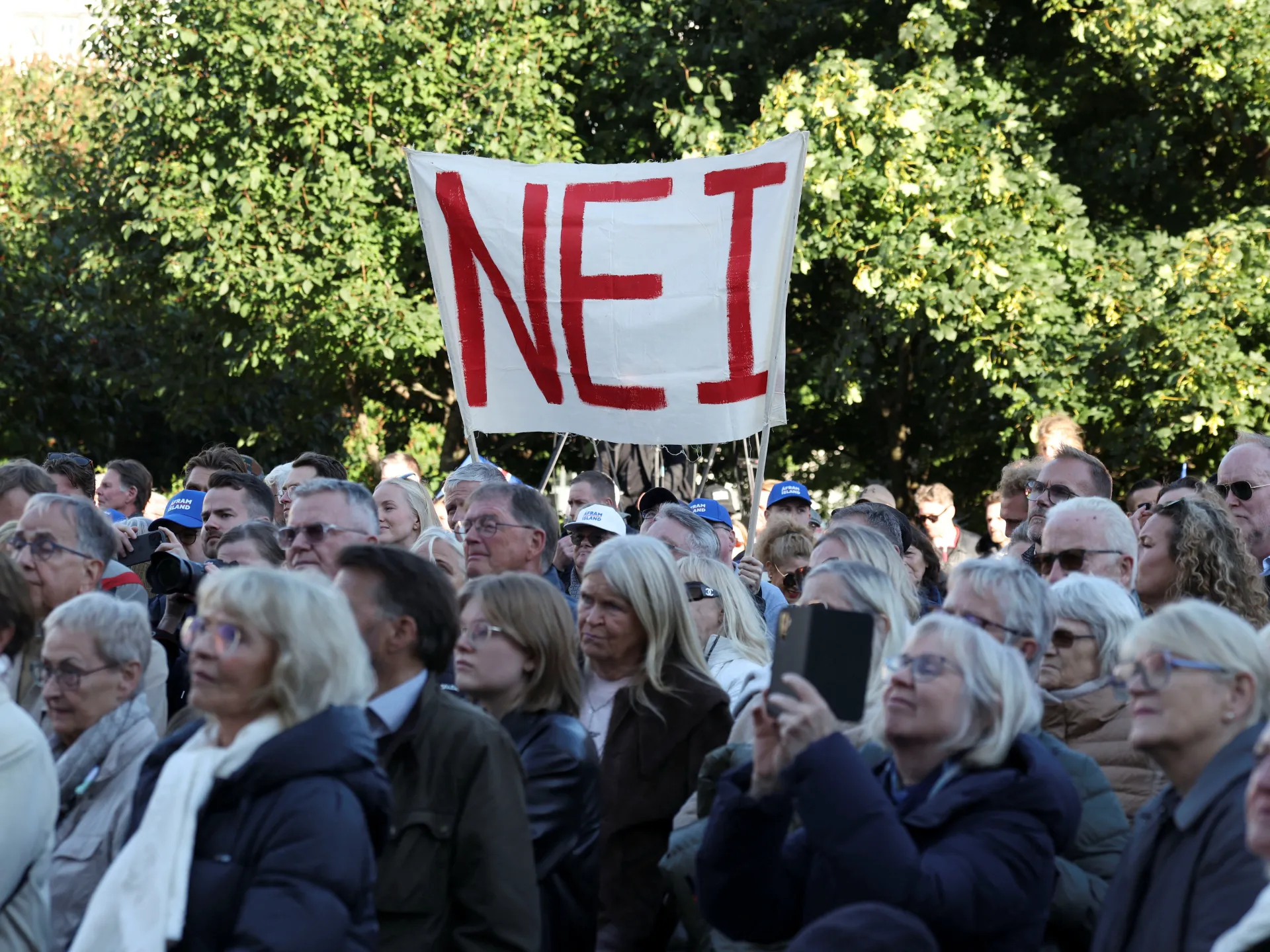
referendum

For third time, Supreme Court rejects Missouri’s bid for another GOP-leaning House district

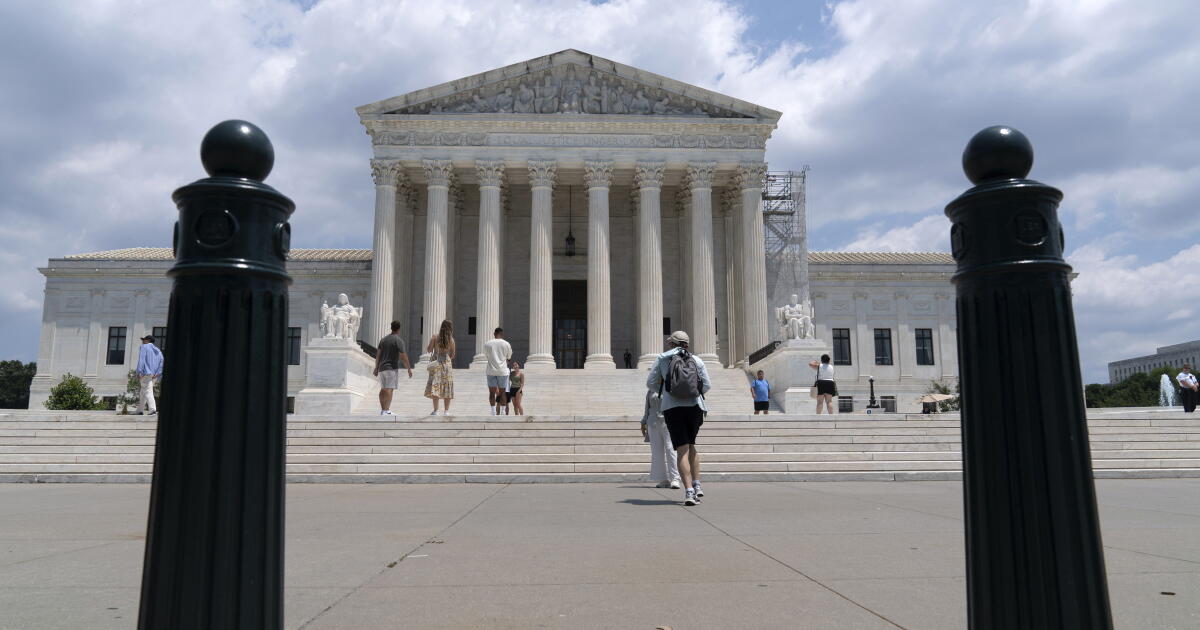
For the third time this month, the Supreme Court has rejected Missouri’s bid for one more Republican-leaning congressional district.

With no dissents, the justices upheld a state court order requiring the use of a 2022 election map, which favors Republicans in six of the eight districts.

“At this late date, ordering reversion to the 2025 map in the midst of an ongoing election would usher in electoral chaos,” the justices wrote.

The GOP, with the backing of conservative federal judges, wanted to use a new 2025 election map that redrew the district in Kansas City that had elected a Black Democrat.

That would have given Republicans a 7-1 advantage, but the Supreme Court stood in the way.

“As a matter of state law, the 2022 map — not the 2025 map — must be used in the 2026 congressional election,” the justices said in an unsigned opinion. “This Court has repeatedly cautioned that lower federal courts should not ‘alter the election rules of a state on the eve of an election.”

Each side in this messy dispute accused the other of seeking to change the voting districts on the eve of the election.

On Tuesday, the opponents of the newly drawn GOP-friendly map appealed to the Supreme Court for the third time. They said it is too late to switch the districts because ballots had gone out based on the existing map.

They said the Republicans “demand a new map after votes have already been cast. Ballots using the 2022 map have been printed and mailed, and absentee voting, both by mail and in-person, began today.”

But the state’s Republican attorneys said the primary elections took place under the new 2025 map, and that argues for keeping those districts in place for the general election in November.

Last September, the Missouri General Assembly, following President Trump’s lead, voted to redraw its eight congressional districts. In recent years, the state had sent six Republicans and two Democrats to Congress.

The Legislature’s goal was to flip one more seat in favor of Republicans. The new map would do that by breaking up the Kansas City district that had elected Rep. Emanuel Cleaver, a Black Democrat, with a new district that favored a Republican.

But a group called People Not Politicians and its executive director, Richard von Glahn, gathered more than 300,000 signatures for a referendum to challenge the new law before it took effect.

After waiting nine months to respond, Missouri Secretary of State Denny Hoskins, a Republican, denied the referendum in early August on the same day the primary elections got underway.

Von Glahn and his group of voters sued and won a unanimous decision from the Missouri Supreme Court on Sept. 3. Its judges said the state Constitution authorizes such a referendum and a new election map cannot take effect until the voters have spoken.

Hoskins filed an emergency appeal at the Supreme Court and cited the “chaotic fallout” from the state court “irresponsible decision.”

Justice Brett M. Kavanaugh, who oversees appeals from the 8th Circuit Court based in St. Louis, denied the appeal without comment on Sept. 8.

But shortly after his decision was issued, U.S. District Judge Stephen R. Clark, a Trump appointee, issued a temporary restraining order that prohibited the state from using the any voting map other than the new one.

People not Politicians appealed that decision to the Supreme Court.

On Sept. 10, Kavanaugh and the full court granted the appeal and blocked the judge’s order from taking effect.

The justices did not explain their reasoning, but the meaning of the order was clear. The state Supreme Court ruling meant the new map could not be used for this year’s election.

But that did not stop the 8th Circuit Court from ruling the state must use the new map.

Siding with several Republican candidates, a 2-1 majority said the use of 2022 map was unconstitutional because the primary elections were held under the new map. Its decision ordered the elections to be held using the new map.

This was a surprising ruling, since the Supreme Court’s order on Sept. 10 barred judges in Missouri from intervening further in the dispute over the voting maps.

But after a third trip to the court, the justices said the state must use the 2022 map.

Source link

Missouri high court blocks GOP-favor map, orders referendum

Sept. 4 (UPI) — In a setback for Republicans, the Missouri Supreme Court ruled against the use of a GOP-favored congressional map in this year’s midterms, directing that a referendum on redistricting be put on November’s ballot.

The ruling came down Thursday, two months before the Nov. 3 midterm elections, and after Missouri already using the use of the now blocked maps.

GOP-led Missouri was seeking to use a state legislature-approved redrawn map that was expected to increase the number of Republican-held districts from its 6-2 majority to 7-1, but the state’s high court on Thursday ruled that the opposition had the the right to have the issue put to a referendum.

The state’s General Assembly passed the redistricting bill in September 2025. In December, organizers who submitted a referendum petition collected more than 300,000 signatures in support of the effort.

But then last month, an hour before the statutory deadline, Missouri Secretary of State Denny Hoskins issued a “Certificate of Insufficiency of Petition,” stating that the state’s Constitution “does not authorize a referendum on congressional redistricting plans passed by the General Assembly,” prompting Missouri voters to sue.

The state’s high court ruling on Thursday overturned a circuit court’s judgment, ordering Hoskins to issue a certificate of sufficiency as to the referendum petition to place it on the November general election ballot and enjoining him from implementing the General Assembly-approved map.

“The referendum petition was legal, sufficient and timely, and the secretary incorrectly concluded otherwise. HB 1 did not go into effect and will not go into effect unless and until approved by the voters,” Judge Ginger Gooch wrote in the ruling. “The congressional redistricting the General Assembly established in 2022 remains in full force and effect for the November 2026 general election.”

Missouri Attorney General Catherine Hanaway, a Republican, said the state will appeal to the conservative-leaning Supreme Court.

“Never before in American history has a court overturned a congressional map after a primary and before a general election. This unprecedented decision clearly violates federal law and has thrust our state into a full-fledged constitutional crisis,” she said in a statement.

“We are confident that the federal courts will not allow every Missouri voter to be disenfranchised — which is what today’s decision does.”

President Donald Trump also lambasted the decision on his Truth Social media platform.

“Not only was the ruling horrible, ridiculous and unConstitutional, but there won’t be enough time to change the map back with the Election coming up in a very short period of time,” he said in a statement.

“The Election Process, as usual, is being disturbed in America! Missouri must be able to use the map that was in effect just a couple of months ago, in the Primary. This is a Dark Day for ‘Justice’ in Missouri!”

The midterms have been a focus of Trump, who has warned Republicans that if they lose control of the House, Democrats will impeach him.

To improve their chances of holding on to the House, Trump has encouraged GOP-led states to conduct unorthodox mid-decade redistricting efforts, with Texas last summer being the first to redraw its maps to create additional GOP-favored districts. This kicked off a gerrymandering arms race, with Democratic-led states saying they would do likewise to counter the Republican efforts.

To date, 10 states — all but one being Republican-led — have changed their congressional maps, according to the National Conference of State Legislatures, though several others have tried or are in the process of redistricting.

Source link

Vote count starts in Guinea-Bissau referendum on strengthening presidency | Elections News

Ten months after a coup, military leaders say the referendum is designed to stabilise future civilian governments.

Ballot counting is under way in a referendum in Guinea-Bissau that could significantly boost the presidency’s power.

Citizens of the West African nation took to the polls on Sunday to vote on a new constitution that would reform the country’s political system ahead of elections later this year.

Turnout “exceeded” 55 percent and the poll took place “without any incidents that would call into question the credibility of the vote”, Idrissa Djalo, executive secretary of the National Electoral Commission, told a news briefing on Sunday.

Results are expected on Tuesday.

The referendum comes less than 10 months after the military seized power in a coup.

The military government says it seeks to stabilise institutions before presidential and parliamentary elections, scheduled for December 6, designed to hand power back to a civilian government.

The new constitution, which citizens were asked to approve on Sunday, would switch Guinea-Bissau’s political system from a parliamentary to a presidential one.

It would abandon the system by which prime ministers came from the parliamentary majority, an approach that has led to uncomfortable power-sharing.

The new system would also allow the head of state to appoint and dismiss the prime minister and members of the government, and to dissolve parliament.

On Sunday, voters answered “yes” or “no” to the question: “Do you agree with the entry into force of the new constitution approved by the National Transitional Council?”

“What we want after this referendum is to allow whoever wins the elections to see out their mandate without hindrance,” military leader and transitional President General Horta Inta-A Na Man said.

Under the transitional charter he upholds, Inta-A Na Man is barred from running in elections.

The referendum follows years of political instability. In the November 2025 presidential election, both candidates declared victory and accused each other of electoral interference. The coup happened one day after.

Source link