‘Instead of scuba diving on shrinking reefs, we helped regrow them’: readers’ best conservation tourism experiences | Volunteering holidays
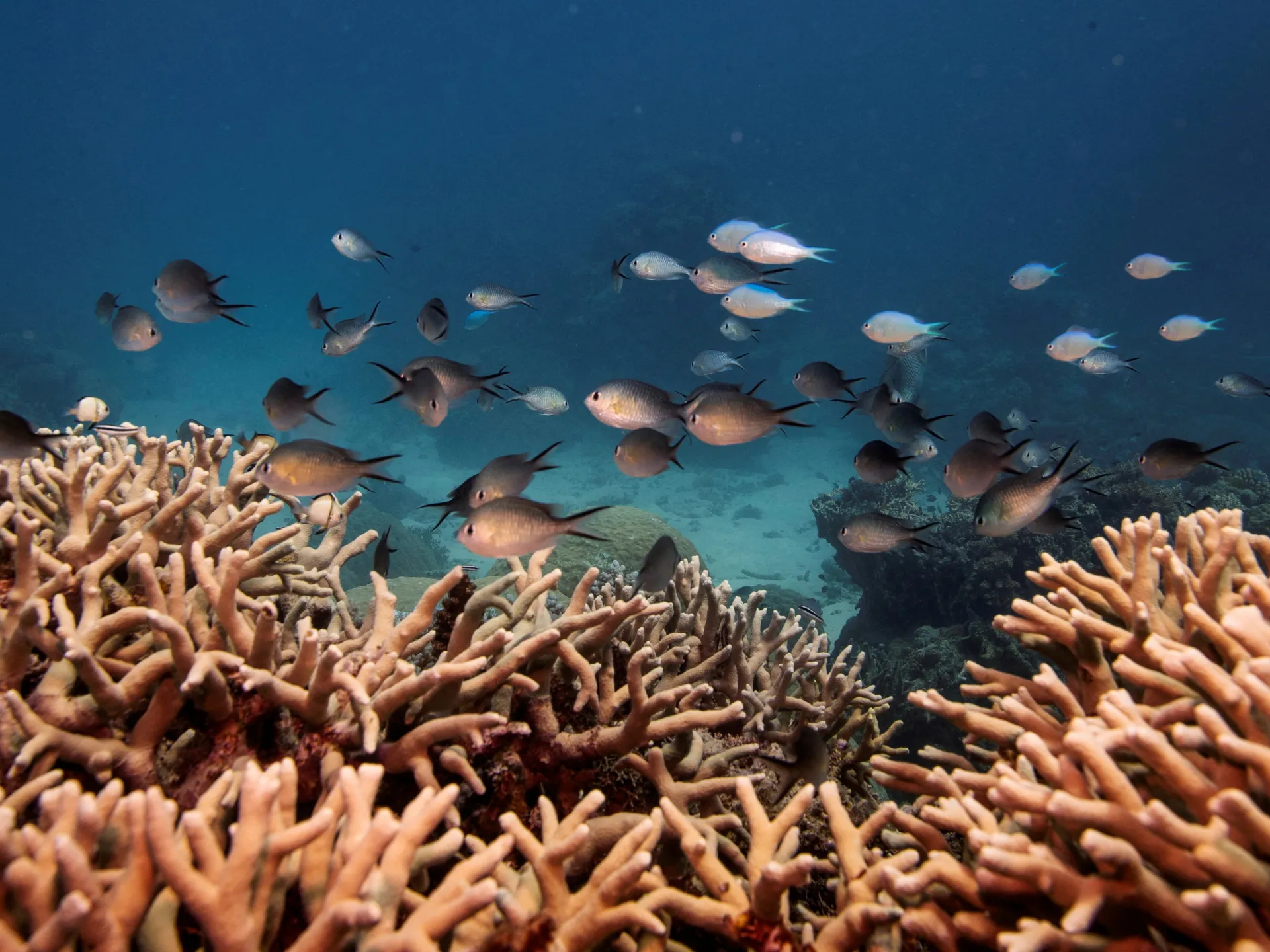
Coral reef restoration in Tanzania
The Ropes of Hope works for coral reef restoration in the Mafia Island marine park, off Tanzania. Instead of scuba diving to see shrinking reefs, we got involved with a project regrowing them. It’s the brainchild of Jean de Villiers, a South African molecular biologist who talked my teenagers through the underwater coral gene bank research and community involvement. Our ocean-view tree house accommodation didn’t hurt, with hot chocolate and cake hoisted up fresh each morning. In an educational U-turn, our eldest now studies sustainable development – Jean is doing something right.
Claire
Rewilding in the Scottish Highlands
Trees for Life, founded 40 years ago, is a rewilding project aiming to restore the glorious Caledonian forest across the Scottish Highlands. Typical volunteer weeks involve groups of up to 10 adults staying in bothies where you live and cook together and spend days on tasks such as planting, monitoring wildlife, surveying vegetation and maintenance work. They take place in some of the most beautiful and remote locations in the Highlands such as Glen Affric, one of the largest wild native forests in the UK where my partner and I spent a week we’ve never forgotten. There’s no wifi or fancy frills but a life-changing opportunity to work and live in a truly wild and beautiful part of Scotland, make new friends and feel your body and mind respond to hard but vital work.
Cal
Closer to nature in the Netherlands
The Holenberg forest in a remote corner of the Netherlands is the gateway to the Maashorst nature reserve, where I stayed in a Cabin Anna – an eco-aware experience that is as much an ethos as it is accommodation. Tucked away among a canvas of trees, heather and wetlands, the focus of these self-sufficient woodland cabins is on reducing man’s negative impact on the landscape, from the bed linen to the recycled waste-product cups, knives and forks. The simple wooden cabins are candlelit and sleep two – outside nights on the terrace gazing at stars are encouraged. You can hire bikes or hike through the forest to explore, including seeing and sensitively interacting with cows, goats, sheep and bison to enhance awareness of the natural world.
April
A buzzy experience in Italy’s South Tirol
Thanks to a stay at the Rinner Hotel in the South Tirol, my young teenagers and I discovered the generous contribution that bees make to our planet in terms of life, sustainability and conservation. Everything at this family-run Alpine hotel is centred on apiculture and the bee. There is an api wellness experience, including the inhalation of healthy beehive air while listening to the meditative buzzing of bees, hands-on sessions, beekeeping courses and a delicious dining menu of organic honeys – including a gala honey feast, with each course connected to sweet nectar produced on site. All electricity is generated from waste wood products that would have been thrown away, and the food, including organic wheat and barley, all comes from the green fields of the South Tyrol. My wife said I came back as a more relaxed, cooperative, sweeter person – a fine compliment to the bees.
Nigel
Walking with rhinos in Uganda
At Uganda’s Ziwa Rhino and Wildlife Ranch, conservation comes with mud, nerves and a very wet ending. Our guide, SP, treated rhino trekking like a game: he was captain, and victory meant spotting three rhinos. Walking silently along the winding “rhino highway”, we encountered mothers and calves just 25ft away, watching them graze in the wild. Ziwa is Uganda’s only place to see wild rhinos, part of a project to restore these endangered giants. SP called their favourite muddy wallow and salt lick the “rhino supermarket”. We even found the alpha male. Then the heavens opened. Game won; dryness lost!
Roy
after newsletter promotion
Swap plastic for cat food in Montenegro
Last summer, while exploring Kotor, Montenegro, a local person’s recommendation led me to a cat park just inside the Old Town’s North Gate. In this quiet corner, sun-drowsy cats sprawled across the warm ground, while mischievous kittens tumbled over one another. Beside them, a curious recycling machine offered an irresistible exchange: feed it empty plastic bottles in exchange for cat food for the town’s feline residents. After collecting my plastic waste for a week, I brought it here, a simple way to give something back to Kotor.
Lucy
Wild spaces teeming with life in Kent
We love Elmley Nature Reserve on the Isle of Sheppey in Kent for its remote, windswept landscapes and the long, seemingly barren stretches of land that are in fact teeming with life. One of my favourite memories is getting out and about at dusk, listening to the little owls hoot to one another as the gloom closes in. There’s something special about being somewhere so exposed and yet quiet, surrounded by owls (and other wildlife) going about their own lives. Elmley makes you slow down, pay attention and realise that even the emptiest-looking landscape is full of life.
Matt
Winning tip: a sea turtle hospital in Calabria, Italy
We spent September bicycle touring in Sicily and Calabria and one of the highlights was a few days in Brancaleone, a typical Italian working town. We visited the Sea Turtle Recovery Centre in the old railway station. The centre is manned entirely by volunteers and since 2006 they have rescued and rehabilitated more than 700 turtles. The staff are enthusiastic, friendly and informative. They charge a small entry fee and it’s by appointment only, but it is a joy to visit.
Anne