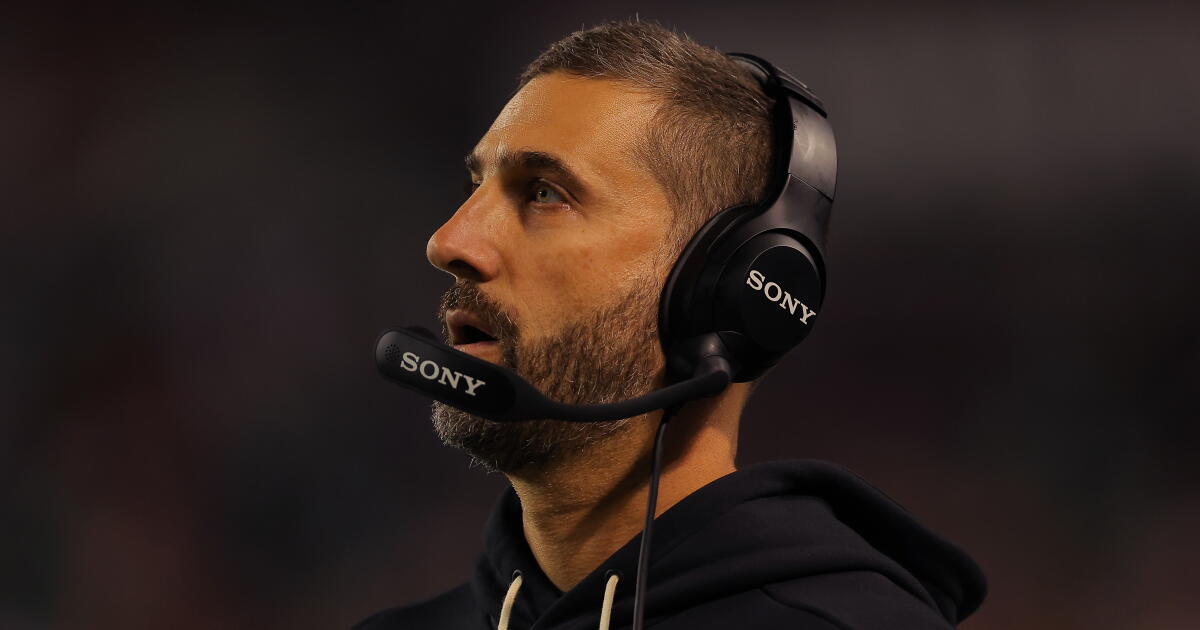
reaction

Call the Midwife icon reveals co-star wife’s reaction as he’s replaced on BBC show

Stephen McGann has opened-up about his character, Dr. Turner, being played by a new actor for the drama’s prequel

Call the Midwife wraps up in emotional finale

Call the Midwife legend Stephen McGann has claimed he “cannot see” the resemblance as a new actor steps into the role of Dr. Turner.

The 12th season of the much-loved BBC period drama, based on the memoirs of Jennifer Worth, concluded earlier this year with a heartbreaking finale. The death of Sister Monica Joan (Judy Parfitt) left viewers devastated, while the future of Nonnatus House remained uncertain due to advances in the NHS.

Before the show returns with season 16, a prequel titled Sisters in Arms is set to air this festive season. The three-part mini-series will be set during the London Blitz and follow familiar characters in the early stages of their careers, including Dr. Patrick Turner.

The adored GP first arrived in Poplar during the debut episode of Call the Midwife, which aired in 2012, and has since remained a favourite among fans. The character will appear in the prequel, with This Town actor Ben Rose portraying a young Patrick Turner.

Speaking about Sisters in Arms, Stephen, 63, has offered a playful glimpse into his marriage with the show’s creator, Heidi Thomas, who thinks Ben Rose is the spitting image of her husband. “I think he’s the image of Steve,” Heidi told Radio Times. “Steve can’t see any resemblance, so the audience are going to have to draw their own conclusions.”

Stephen was quick to chime in: “Do you know what happened? I’m in my house, and when the final casting was confirmed, my good lady wife and my son were conferring, going, ‘Oh, he looks like Dad, doesn’t he? Doesn’t he look like Dad?'”

Heidi laughed: “He does, he does, but you can’t see it, can you, love?” Stephen then confirmed: “I can’t see it at all.”

Stephen and Heidi first crossed paths in 1988 and exchanged vows two years later, when they were both 27. They spent their honeymoon in Tuscany before settling down in a quaint cottage in rural Essex, before moving to Cambridge. The couple share one son, Dominic. As per Stephen’s memoir, A History of My Family in Seven Maladies, he first encountered Heidi when he auditioned for her new play at the Liverpool Playhouse.

What is Sisters in Arms about?

Call the Midwife will turn back the clock to World War II as bombs rain down in Poplar, East London, at a time when the National Health Service was non-existent. Set in 1939, it will see three familiar nuns in the early stages of their careers.

According to the BBC’s synopsis: “In September 1939, Sister Monica Joan is in her prime, Sister Julienne and Sister Evangelina are young and zealous, and Nonnatus House is the beating heart of Poplar.

“Together with Sister Alice, and local GP Dr Kit, the nuns dedicate their lives to mothers, babies and those in need. But there is no gas and air, no penicillin, no cure for TB, and no welfare state. Then war is declared – and life gets even harder.”

It adds: “While bombs rain from the sky, women give birth underground, families are shattered, children run wild, and whole streets are reduced to rubble. But courage, compassion and resilience triumph as the community unites in its efforts to survive.”

Created, written, and executive produced by Heidi Thomas, Sisters in Arms welcomes a new cast, including Coronation Street’s Hayley Cropper star Julie Hesmondhalgh as Sister Alice.

Theatre star Helena Wilson is taking on the role of a young Sister Julienne, though the original actress, Jenny Agutter, will be narrating the miniseries. Ami Metcalf, who played Lynette in the first Christmas special, is returning as Betty Buckle, the first wife of Fred Buckle, now played by Ciaran Bowling. Ben Rose also takes on the role of Dr. Turner.

The BBC has confirmed that Sisters in Arms will air on BBC One and iPlayer this Christmas, though the exact days and times are yet to be confirmed.

Call the Midwife is available to stream on BBC iPlayer

Source link

City Proved Too Peaceful to Merit Inclusion in Riot Reaction TV Talk

The home front.

* Television adage: When it bleeds, it leads.

“The MacNeil-Lehrer Newshour” on Monday decided to do a round-table talk with big-city mayors to ask about the reaction in their locales after the Rodney King case verdict. Screening calls went out.

Mayor Maureen O’Connor told MacNeil-Lehrer reporter Shannon Bradley that San Diego had managed to avoid major problems through the efforts of local officials, cops and community leaders, as well as an overall improvement in police-community relations in recent years.

At first, Bradley, a former San Diegan, was enthusiastic. Later, she called back with the letdown.

Co-anchor Robert MacNeil thought it would be “unfair” to include O’Connor on the same panel with mayors whose cities suffered violence and looting after the verdict.

Hey, isn’t that what critics say about the media: that they only want to report bad news?

“There’s a certain amount of truth to that,” Bradley says. “Sad to say, but true.”

* T-shirt being sold at London Underground clothing store in Fashion Valley: “NOT GUILTY? B.S.”

Done up graffiti style. Black lettering on white.

Store owner Dean Mostofi says he sold 300 over the weekend, nearly all to affluent white kids.

* So far, the $5,000 reward has not brought a single tip about the identity of the sniper(s) who shot at (but missed) two San Diego cops on Thursday night.

* One of the calls to the San Diego hot line established to let people sound off about the verdict was collect from Los Angeles: A distraught woman asking why L.A. doesn’t have a similar hot line.

* Venting the venters.

San Diegans who manned the hot line will gather May 13 to compare notes on what they heard.

* San Diego hotels and motels report a slight uptick in occupancy from tourists and others fleeing Los Angeles.

The flip side: Some Angelenos with reservations canceled because they needed to protect their homes.

* T-shirt being hawked on street corners in Los Angeles: “My Parents Looted Ralphs and All I Got Was This Lousy T-Shirt.”

Robbed of a Protest

Other stuff.

* A thief has stolen the bedsheet cross that Hugh and Elaine Willner draped down the canyon hillside behind their Clairemont home.

The Willners’ cross, meant to show solidarity with the City Council’s fight to save the Mt. Soledad cross, was highly visible from Interstate 5.

The thief is thought to have scaled the steep hill from Morena Boulevard under cover of darkness.

* Yes, the Tinker Bell impersonator on page T10 of the Disneyland supplement included in The Times on Sunday did seem to have a mustache. Nice legs, though.

* Sticker on the toilet-paper dispenser in the men’s room at Bazaar del Mundo: “Recycle Congress.”

* A joint fund-raiser is planned for tonight at Rumors Cafe in Ocean Beach for former Gov. Jerry Brown and congressional hopeful Bill Winston.

Interesting since both of Winston’s major opponents in the Democratic primary, Byron Georgiou and Lynn Schenk, worked for the Brown Administration.

* A San Diego audience will help choose the $100,000 winner for television’s “America’s Funniest Home Videos” on May 17. Also audiences in L.A., Orlando, Fla., and Hartford-New Haven.

* Political activism by the ton.

A Save the Rhino Walk is set for 8 a.m. Saturday in Balboa Park.

* Newly formed in San Diego: A social group for former New Yorkers.

No, they do not sit around and compare mugging stories. I checked.

In the Eye of the Beholder

As you know, the hottest political issue in Carlsbad is the beachfront sculpture done by a New York artist.

Some see art. Others see a bunch of bars.

And now an untitled limerick by Charles Nordin in a mobile home park’s newsletter:

A Carlsbad artist, enraged

At an Easterner’s being engaged

To design a new park

Said, “She misses the mark

For she, not an ape, should be caged.”

Source link

‘I’m a female pilot – customers have same reaction if they see me on short-haul flights’

EXCLUSIVE: A female pilot has shared the way she’s experienced sexism in the workplace, saying it’s probably not in the way you think, and shared a common misconception about pilots

Female pilot shares her experience

Raja Katz was around 12 or 13 years old when she realised being a pilot was the “only thing” she wanted to do as a career. But it wasn’t because she wanted to follow in any family members’ footsteps, as she “didn’t know any pilots, let alone a female one” – it was just a gut feeling she had.

To test out her theory, at 15 she “started flying gliders,” which is how she managed to “turn the fascination into something concrete”. She explained: “Looking back, not having a role model or mentor of my own is a big part of why I now spend so much time trying to help increase representation for female pilots.”

Now, speaking exclusively to the Mirror, Raja has lifted the lid on what life as a female airline pilot – and how passengers react when they realise there’s a woman in the cockpit.

How did Raja become a pilot?

Raja, who posts on social media as @raja_in_the_sky, explained: “Broadly, there are two ways in. You can go through an airline’s own cadet programme, where you’re selected and trained specifically for that airline, which is comparatively rare and highly competitive. Or you go through a private flight school that you fund yourself, which is the far more common route.

“Either way, you start with classroom training, the theoretical side covering things like air law, meteorology, navigation and aircraft systems, and you sit a set of legal exams for that, either alongside or before your practical flying. The practical side starts on small, single-engine aircraft and builds up from there.

“You then add a multi-engine rating, which qualifies you to fly aircraft with more than one engine, along with an instrument rating and multi-crew training. Once you’ve completed the required theory exams, you hold what’s called a “frozen” ATPL (Airline Transport Pilot License), which becomes a full license once you’ve built up enough flight hours.

“The final and most specific step is the type rating: the license for one particular aircraft type, an Airbus A320 or a Boeing 737, for example. This is most often provided or paid for by your employer once you’re hired.”

A typical day

Raja explained that there’s no such thing as a typical day at work as a pilot, and “every day is different”, but that’s what she loves about it. She explained: “Flying long-haul, you start your working day at your home base anywhere between early morning and late evening, depending on the flight.

“You report for duty and meet your fellow pilots, and depending on the flight time, there can be more than two of us on duty for a flight. Shortly after, you meet the cabin crew and go over the particulars for that flight: safety-relevant aspects and procedures, often for the first time, since it’s frequently the first time most of us have met at all.

“Then we take the crew bus out onto the apron (the area of the airport where planes are parked), boarding the aircraft, and once all checks are complete, the passengers board too. We finish our flight preparations: entering the route into the onboard computer, calculating our takeoff speeds, and thoroughly briefing the crew on that specific departure.

“Once loading is done and everyone’s on board, we get pushed back, taxi to the runway, run through our checklists, and we’re ready to take off. During cruise, we’re constantly monitoring weather, routing and terrain, and building contingency plans in case we ever need to land immediately.

“My long-haul sectors typically run between seven and 14 hours. As we get closer to our destination, we brief the entire approach and descent procedure in detail. After landing, we taxi to the gate, the passengers disembark, we hand the aircraft over to maintenance for its routine checks, and we head off to clear immigration and get to the hotel.”

Her experience with sexism

Raja has experienced sexism, but probably not “in the way people expect”. She explained: “The pilots and cabin crew I actually fly with have never questioned my competence, not once, and my colleagues take me seriously. Where I do notice it is with passengers, and it happened more often when I was flying short-haul.

“On those smaller aircraft, there’s barely any physical distance between where passengers board and the cockpit door, so people would see me walk in and react on the spot. Long-haul jets are bigger, and there’s simply much less contact between passengers and the flight crew, so I hardly ever get those moments now.

“Any form of discrimination is, of course, unacceptable. Sometimes, however, it’s more of a surprise on some faces when a woman is flying rather than rejection, and I understand that reaction, because it’s still rare”.

What Raja wishes people knew about pilots

Raja explained there’s “one thing” that she’d “love to clear up”. “It’s the difference between ‘pilot’ and ‘co-pilot’, because a lot of people assume the co-pilot is somehow the backup, someone who’s there just in case and doesn’t really fly the plane”, she said.

She continued: “That’s not how it works. Both the captain and the first officer, which is the correct term for what most people call the co-pilot, hold the same type rating for that aircraft and are both fully qualified to fly it.

“We take turns being ‘pilot flying’ and ‘pilot monitoring’ from one leg to the next, so on any given flight, it might be the first officer’s hands on the controls for takeoff and landing, not the captain’s. I’m a first officer myself, so I fly plenty of those sectors, take-offs and landings included, exactly like a captain would.

“The real difference between the two roles is seniority and responsibility. Captains have more experience and additional command training, and they carry the final legal authority and responsibility for the flight. But day to day, both of us are pilots in every sense of the word”.

For more information on learning to become a pilot, including the qualifications needed and the costs involved, visit the Civil Aviation Authority website.

Source link