races

AFCON 2027: East Africa races to get tournament-ready | Africa Cup of Nations News

Nairobi, Kenya – With less than nine months until the 2027 Africa Cup of Nations kicks off, Kenya, Uganda and Tanzania are entering the most demanding phase of preparations: completing and testing the stadiums, training grounds and supporting infrastructure needed to host the tournament.

The tournament, scheduled for June 19 to July 17, 2027, will be the first Africa Cup of Nations jointly hosted by three countries and the competition’s return to East Africa since Ethiopia staged the finals in 1976.

A Confederation of African Football (CAF) delegation spent eight days inspecting facilities across the three host countries earlier this month, assessing stadiums, training grounds, hotels, airports and other infrastructure. The delegation included officials responsible for competitions, safety and security, transport, media, television and logistics.

Kenya: Talanta takes centre stage

In Kenya, the biggest project is the newly built Talanta Sports International Stadium in Nairobi.

The 60,000-capacity stadium is intended to be the country’s flagship AFCON venue and was inspected by CAF earlier this month. During a subsequent visit, CAF President Patrice Motsepe said he was impressed by the progress at Talanta. He also visited Kasarani Stadium, where work remains to be completed.

But Kenya’s preparations extend well beyond its new flagship stadium.

CAF’s inspection also covered training venues, hotels, airport infrastructure and other sites supporting the Nairobi tournament operation.

Nicholus Musonye, chairman of Kenya’s AFCON 2027 Local Organising Committee, told Al Jazeera that the country was addressing the outstanding requirements.

“I want to assure Africa, and I want to assure the world, that Kenya, Uganda, Tanzania, we are ready to host AFCON,” Musonye said.

He said work on Kasarani’s pitch should be completed by the end of October, with the venue planned to be ready for handover in December.

But concerns remain about some of the facilities that will support the tournament.

Kelvin Kimaru, a Kenyan football fan, told Al Jazeera that training grounds remained a concern.

“We are not yet ready because the training grounds for the coming teams are not yet ready,” Kimaru said.

Moses Kamalik, an executive member of the Boxing Federation of Kenya, said other venues also needed work, including Nyayo Stadium and Kipchoge Keino Stadium in Eldoret.

The challenge for Kenya is broader than completing Talanta; it needs a network of match venues, training grounds and supporting facilities capable of operating together when teams and supporters arrive.

Tanzania: the race extends beyond stadiums

Tanzania is also entering the final stretch, with preparations covering stadiums, training grounds and the infrastructure connecting them.

Neema Msitha, chief executive of the country’s AFCON 2027 Local Organising Committee, told Al Jazeera that the country’s stadiums were more than 80 percent complete on average and expected to be ready for handover to CAF in January.

“All these stadiums are almost ready. If you grade them on average, all of them are almost above 80 percent,” Msitha said.

Training facilities are being developed alongside the main venues, with five facilities being prepared in each host location. Msitha said they were about 75 percent complete.

The three East African hosts are moving from construction to testing and operational preparations as the 2027 tournament approaches.
The three East African hosts are moving from construction to testing and operational preparations as the 2027 tournament approaches [Hafsa Abdiwahab Sheikh/Al Jazeera]

The Tanzanian government has also applied pressure to accelerate the work.

In August, Prime Minister Mwigulu Nchemba ordered work on AFCON training grounds to speed up, saying the facilities needed to be completed on time and meet CAF standards. He issued the directive after inspecting the Farasi and Leaders Club training grounds in Dar-es-Salaam.

Road infrastructure is also part of the preparations. In June, Works Minister Abdallah Ulega ordered contractors working on roads linked to the tournament in Arusha to operate around the clock to meet deadlines and international standards.

Msitha pointed to regional airlines, Air Tanzania and ferry services between Dar-es-Salaam and Zanzibar as part of the transport arrangements being developed for teams, officials and supporters.

CAF’s September inspection included Benjamin Mkapa Stadium in Dar-es-Salaam and other key facilities in Tanzania as the governing body continued to assess preparations across the three hosts.

Uganda faces its own deadlines

Uganda is working towards the same year-end push.

Patrick Ogwel, a CAF infrastructure monitoring officer, told Al Jazeera that infrastructure development was expected to be ready by December 31.

Hoima City Stadium has been completed and commissioned, he said, while Akii-Bua Olympic Stadium in Lira is due to be completed and commissioned by December.

Uganda’s Local Organising Committee has identified Akii-Bua, Hoima City Stadium and Mandela National Stadium as its three main stadiums. It expects 10 of the country’s 12 training facilities to be ready by the end of the year.

The organising committee said after CAF’s latest inspection that all three stadiums remained on course for completion by the end of December, while some training facilities were planned to be completed in January 2027.

But the deadlines are not without pressure.

On September 24, Uganda’s State Minister for Sports Peter Ogwang directed the Uganda People’s Defence Forces to accelerate work on several AFCON training facilities, citing concerns about the pace of construction at sites including Pece Stadium in Gulu, Lira and Gulu University.

After its September inspection, the CAF delegation also briefed President Yoweri Museveni, with challenges outside Kampala among the issues raised during the assessment.

From construction to tournament readiness

The coming months will test whether the three hosts can turn construction progress into a functioning tournament operation.

AFCON requires stadiums and training grounds that can handle teams and spectators while meeting requirements for broadcasting, media, security, transport, hospitality and match operations.

A completed stadium is only one part of the equation.

CAF inspections are now focusing on whether venues and supporting facilities can meet the operational demands of the continental tournament.
CAF inspections are now focusing on whether venues and supporting facilities can meet the operational demands of the continental tournament [Hafsa Abdiwahab Sheikh/Al Jazeera]

Kenya, Tanzania and Uganda have already gained experience from jointly hosting the 2024 African Nations Championship, which allowed the three countries to work together on a major continental tournament. CAF has also involved representatives from the three local organising committees in an observer mission at the recent AFCON in Morocco.

But AFCON will be a larger undertaking, with 24 national teams competing across the three countries for almost a month.

The coming months will determine whether the work under way across the three countries can be completed, verified and brought into operation before teams and supporters begin arriving.

For supporters in East Africa, the tournament represents more than a test of stadiums and infrastructure. It is also a chance to experience Africa’s biggest national-team competition on home soil.

Gilbert Okeya, a Kenyan football fan and Football Kenya Federation referee, told Al Jazeera:

“We are happy because we are going to host, and we are going to have an opportunity to have live matches for AFCON in our country.”
Source link

Can Democrats flip the House? Here’s the latest in key races

After two years of struggling to slow down the Trump administration agenda under a Republican governing trifecta, Democrats are hoping to capture both chambers of Congress in the upcoming midterms.

All 435 House of Representatives seats are up for election, with 37 considered competitive, 21 of them toss-ups, by the Cook Political Report — a respected polling analysis site. Republicans currently hold a 218-214 edge over Democrats, with two seats vacant and one independent in the chamber.

To control the House, Democrats need a net gain of four seats.

Recent polls have shown Democrats creeping up on or surpassing their Republican opponents as President Trump’s approval rating hovers under 40%, which may offer an opening in unexpected places. But still, in a time when a more progressive wing has risen in popularity on the left, even some moderate Democrats are suffering from associations with the current administration.

Here is a look at five competitive races:

Ohio 7th: Miller vs. Poindexter

Incumbent Republican Max Miller, mired in controversy, will face union ironworker Brian Poindexter in a 7th Congressional District race that went from solidly Republican to a toss-up in the matter of weeks.

Miller, a second-term congressman, is facing a House Ethics Committee investigation after his ex-wife, Emily Moreno — daughter of Ohio Republican Sen. Bernie Moreno — accused Miller of extreme physical abuse, which he has denied.

Miller also faced accusations from former White House press secretary Stephanie Grisham that Miller had abused her during their relationship. An Ohio judge recently ordered both parties to remove social media posts about each other that were considered disparaging.

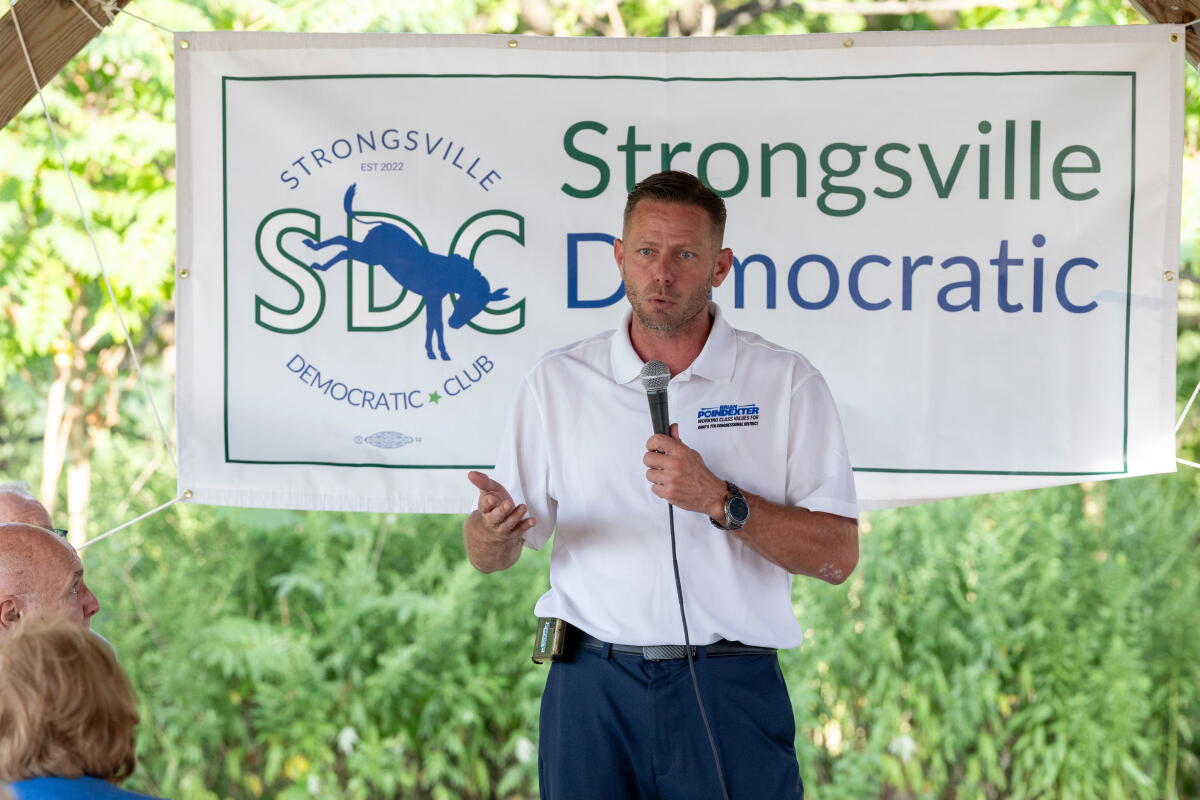
Brian Poindexter, Democratic nominee for Ohio's 7th Congressional District, speaks.

Brian Poindexter, Democratic nominee for Ohio’s 7th Congressional District, speaks at the Strongsville Democratic Club meeting on Aug. 5 in Strongsville, Ohio.

(Nate Manley / Associated Press)

Poindexter, a relative unknown, has surged in the meantime. According to a Co/efficient poll last month, Poindexter was leading Miller by 14 points, with 86% of respondents claiming they were aware of allegations against Miller.

Poindexter has centered his campaign on strengthening unions, retaining healthcare benefits for retirees and injured workers and raising wages.

Miller has attacked his opponent for a 1998 arrest in which Poindexter, a teenager at the time, allegedly tried to swallow a rock of crack cocaine during a traffic stop. Miller also homed in on an instance of alleged assault at a baseball game in 2013 by Poindexter.

Texas 34th: Gonzalez vs. Flores

Incumbent Democrat Vicente Gonzalez Jr. is attempting to retain his seat against challenger Eric Flores, an Army veteran endorsed by Trump.

Elected in 2016, Gonzalez held the 15th Congressional District for three terms until 2021, when a Texas redistricting shift absorbed his McAllen home into the 34th district. He is currently serving his second term under a new map, which favors Republicans and has shed many of his Latino constituents.

Flores, a political newcomer, made his first national appearance at the Republican National Committee’s midterm convention in Dallas, touting his commitment to border security and accusing Gonzalez of allowing migrants to make the community unsafe.

Immigration looms as an issue in the race. Gonzalez has introduced bills to prevent federal and state immigration enforcement officers from entering homes without an official warrant, and to force agents to wear clear identification. He has publicly criticized raids targeting hospitality, medical and construction workers.

Gonzalez has scored endorsements from several progressive organizations in the state, including LUPE Votes — a subsidiary of La Unión del Pueblo Entero.

In a Barbara Jordan Public Policy Research and Survey Center poll from August, Gonzalez was leading Flores, 45% to 42%, with 8% undecided.

North Carolina 1st: Davis vs. Buckhout

Incumbent Democrat Rep. Donald Davis will have to contend with a district that has grown more conservative to retain his seat against Republican challenger Laurie Buckhout.

North Carolina’s 1st Congressional District was the state’s only swing seat held by a Democrat before last year’s redistricting, which made the area lean Republican. This will be a rematch of the 2024 race, which Davis won by less than 2 points, or around 6,000 total votes.

Laurie Buckhout speaks as President Trump and North Carolina Rep. Jennifer Balkcom look on.

Laurie Buckhout speaks as President Trump and North Carolina Rep. Jennifer Balkcom look on during a campaign rally at the Gastonia Municipal Airport on Sept. 16 in Gastonia, N.C.

(Matt Kelley / Associated Press)

Cook Political Report ranked this race as leaning Republican, calling Davis “the most vulnerable House Democrat in the country.”

It is unclear whether the gerrymandering effort will have been effective enough to make the district flip to Republican. Trump endorsed Buckhout in March and reiterated his support last week.

New York 17th: Lawler vs. Conley

New York Republican incumbent Rep. Mike Lawler is attempting to fend off a challenge from Democrat Cait Conley, a former White House director of counterterrorism on the National Security Council.

Cook Political Report rankings showed that early this year, the 17th Congressional District race went from likely Republican to a toss-up.

Pete Buttigieg went on the campaign trail last week with Conley to promote the candidate’s bid to unseat Lawler.

“Cait is as serious as it gets about keeping our country safe,” Buttigieg said on a rally stage in Tarrytown, “just like she is serious about bringing down the cost of housing, healthcare and energy.”

Lawler has presented a bipartisan image in Congress, but has come under fire in his purple district for aligning himself with the Trump administration on several issues, including his support for the Iran war.

At the Republican National Committee’s midterm convention, Lawler focused much of his speech on lambasting “socialist” Democrats and attempting to appeal to the more “common sense” wing of the opposition party.

“Radical socialists are winning Democratic primaries,” he said. “They claim to be well-meaning, but there is nothing kind-hearted about protecting criminals at the expense of American families … nothing compassionate about prioritizing illegal immigrants.”

Conley, however, has publicly refused to campaign with New York Mayor Zohran Mamdani or Rep. Alexandria Ocasio-Cortez — without condemning either figure — to avoid the open conflict between establishment figures and the more progressive wing of the party.

A July poll from co/efficient showed Lawler leading Conley 50% to 45%, with a nearly 3% margin of error.

Dr. Amish Shah, shown in July, is a Democrat running in Arizona's 1st Congressional District.

Dr. Amish Shah, shown in July, is a Democrat running in Arizona’s 1st Congressional District.

(Ross D. Franklin / Associated Press)

Arizona 1st: Shah vs. Feely

A Democratic PAC plans to invest nearly $1 million to support Democrat state Rep. Amish Shah against Republican Jay Feely, a former NFL player with close ties to the president.

The 314 Action Fund — which seeks to elect Democrats with backgrounds in science, technology, engineering and mathematics — has made a big bet on the Democrat running in the 1st Congressional District, Arizona’s wealthiest, according to the Arizona Mirror.

Former professional football player Jay Feely, shown in April, is the Republican nominee in Arizona's 1st District.

Former professional football player Jay Feely, shown in April, is the Republican nominee in Arizona’s 1st District.

(Ross D. Franklin / Associated Press)

Subsequent ads have brought attention to Feely’s close association with Trump and his recent attendance at the Republican National Committee’s midterm convention in Dallas. Trump won the state by five points in 2024.

Elon Musk has also figured in this race, with his America PAC giving $24,000 to Republican candidates Feely in the 1st District and Juan Ciscomani in the 6th District, according to the Copper Courier.

The Cook Political Report called the 1st District “one of the most competitive … in the country.”

Source link

Trump’s trade war with Canada adds a challenge in Senate races

President Trump’s trade war with Canada could intensify the headwinds Republicans are navigating ahead of the November midterms, with its effects poised to reverberate in northern battleground states with crucial Senate races.

With the election less than six weeks away, Republicans are facing an increasingly bleak outlook, as new polls this week showed voters favoring Democrats by as much as 12 points amid widespread cost-of-living anxiety and low approval for Trump.

The escalating beef with Canada — Trump attacked the country anew on social media Wednesday — stands to heighten voters’ economic worries and add to the GOP’s political challenge in dead-heat races, analysts said.

“It doesn’t make things easier. It’s not helping,” said Rusty Hills, a University of Michigan public policy professor and onetime chair of the Michigan Republican Party.

The president’s unpopular policies on the war in Iran, the economy and data centers have already handed Republican candidates the tough task of appearing responsive to Americans’ frustration with cost-of-living issues without alienating Trump and his voter base.

The trade war, said Lance Dutson, a Maine Republican media strategist, puts “another log on the fire” of the affordability issue.

The tariffs have appeared unpopular in recent polling, including among a majority of independent voters. Though they are not expected to dramatically increase consumer prices, they could affect voters’ perception of the economy — and even small economic impacts on certain industries, such as auto manufacturing in Michigan, could have an effect in very close midterm races, experts said.

Trump’s new import bans on some Canadian goods are set to begin next week, a response to retaliatory tariffs Canada levied earlier this month. Trump argues that Canada has “been ripping off” the United States and that tariffs will help domestic manufacturers.

On Wednesday, the president inaccurately claimed on Truth Social that Canada is allowing “millions and millions” of immigrants into its country.

“It is a Liberal takeover that will end very badly. Already showing up in their numbers. Big unemployment. ‘Oh Canada!” the president wrote on social media Wednesday morning.

Five of the nine states most likely to decide Senate control border Canada — Alaska, Ohio, Michigan, New Hampshire and Maine. Two more, Texas and Iowa, also do substantial trade with Canada.

Democrats must retain their Senate seats including New Hampshire and Michigan and flip four of the other states to win a majority, a tall task. As the landscape worsens for Republicans, however, some are testing how much they can distance themselves from Trump.

“It’s a tightrope, there’s no question,” Hills said. “[Candidates] are looking for some wiggle room on some of these issues like the war and prices and Canada tariffs, because they need every independent and swing voter they can get.”

A majority of Americans oppose raising tariffs on Canadian goods, including 64% of independents, an Economist/YouGov poll found. Only 14% of independents said they supported additional U.S. tariffs on Canada in a late August Ipsos poll.

And in Michigan, 68% of independent voters disapprove of the tariffs, a poll this month from the Washington Post and Schar School found.

“The more we put tariffs on stuff, the more they put tariffs on stuff … prices are just ultimately going to go up for all of us,” said one Michigan swing voter in a Sept. 9 focus group conducted by the firm Engagious, in which 11 of 13 participants said the trade war was bad for the state.

The highest costs of the tariffs will be concentrated within a few industries, including auto and other manufacturing, dairy, and alcohol and spirits, said Alex Durante, a senior economist at the Tax Foundation. The tariffs likely won’t create a major change for consumers, but the general impression that tariffs can contribute to higher prices might turn off voters who are already worried about inflation, he said.

Counter-tariffs imposed by Canada in response to U.S tariffs last year resulted in a 6% increase in the prices of affected goods, researchers found in paper published by the Journal of Monetary Economics.

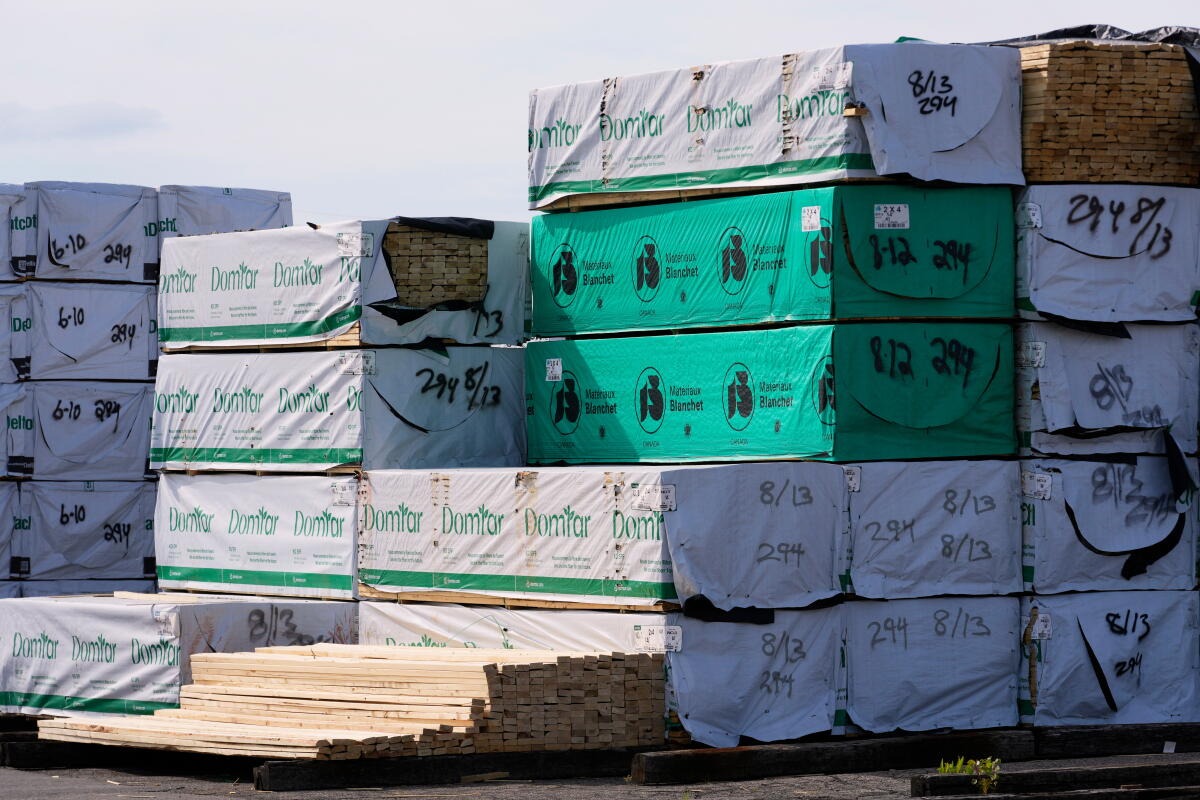
Canadian lumber products at Gutherie Lumber in Livonia, Mich., in August.

Canadian lumber products at Gutherie Lumber in Livonia, Mich., in August.

(Paul Sancya / Associated Press)

“This trade war is certainly not helping the president and his party in the midterms,” Durante said. “What’s weighing on the top of people’s minds is this general affordability crisis … and they realize that tariffs are another factor that is impacting affordability.”

The latest escalation of the trade dispute began in July, when Trump threatened new 50% tariffs on some Canadian goods, reinvigorating a conflict that began with tariffs the president imposed in 2025.

The two countries began trade talks, but the negotiations fell apart in late August, and Trump imposed tariffs on about $20-billion worth of Canadian goods. Canada retaliated with tariffs on about $20-billion worth of American goods that took effect Sept. 8. Trump then announced import bans on some Canadian goods, including certain alcohol and dairy products, which go into effect next week.

Construction and farm equipment in Illinois, aluminum and pipe products in New York, and iron and steel products in Ohio are among the goods targeted by Canada’s counter-tariffs, the Canadian Broadcasting Corp. reported. In California, about 10.5% of the state’s Canadian imports are exposed to the counter-tariffs imposed by Canada.

Democrats have seized on the issue as another way to tie Republican candidates to Trump’s policies, something that analysts said may have varying degrees of success in different swing states.

Susan Collins stands in front of a red and white bus with her name on it while holding a megaphone as a man looks on

Maine Republican Sen. Susan Collins campaigns in August in Kittery, Maine.

(CJ Gunther / Getty Images)

In Maine and New Hampshire, where the Republican Senate nominees have criticized Trump’s move, the tariff issue may be less likely to stick. Efforts to tie Republicans to Trump have historically been less successful in the region because of its independent streak, said Jim Merrill, a veteran Republican strategist in New Hampshire.

Maine Republican Sen. Susan Collins warned the White House against imposing tariffs and successfully pushed for the administration to exempt road salt and cement this month. She told Politico that the Trump administration had “very much underestimated” the effect of the tariffs on Maine residents.

Republican John Sununu, a former senator who is running to retake the seat in New Hampshire, has also criticized the tariffs, saying a trade war with Canada “doesn’t make any sense.” He indicated he would support legislation in Congress to restrain the president’s tariff powers.

Elsewhere, Senate nominees have walked a careful line on tariffs. In Alaska, Sen. Dan Sullivan has largely avoided the issue, even as Democrats there have used it to ramp up attacks on his record in recent days. In Ohio, former Sen. Jon Husted told the National Review in August that the public “would like to understand the strategy behind what the president’s trying to do.”

Former Rep. Mike Rogers of Michigan, the Republican Senate nominee, told reporters over the weekend that he was in favor of “good” tariffs that would help Michigan and opposed to “bad” tariffs that would hurt the state.

Focusing on issues other than tariffs may be the right strategy on the campaign trail, Hills said.

“He’d much rather be talking about the Republican plan for affordability,” Hills suggested. “There’s interesting things we need to be talking about in order to win this election, and this isn’t one of them.”

Source link

Can Democrats flip the Senate? Here’s the latest in key races

As Republicans contend with President Trump’s deep unpopularity, Democrats are attempting to seize the opening to take the U.S. Senate in the Nov. 3 midterm elections. Polls have shown Trump with an approval rating consistently below 40%, with no end in sight to the Iran war and voters expressing deep economic anxiety.

Republicans currently hold a 53-47 edge in the Senate, and 35 seats are on the November ballot.

Months of polling indicate that eight Senate seats — six of which are currently held by Republicans — are now up for grabs. Democrats will need to win at least four of them, while holding on to two contested seats currently held by their party, in order to flip the chamber.

Five key races are unexpectedly close, with some polls giving Democrats a better edge than expected, but the outcomes are still in doubt, as swaths of voters remain undecided. The Cook Political Report, a leading forecaster, rates each one a toss-up. Here’s how they are shaping up:

Michigan: El-Sayed vs. Rogers

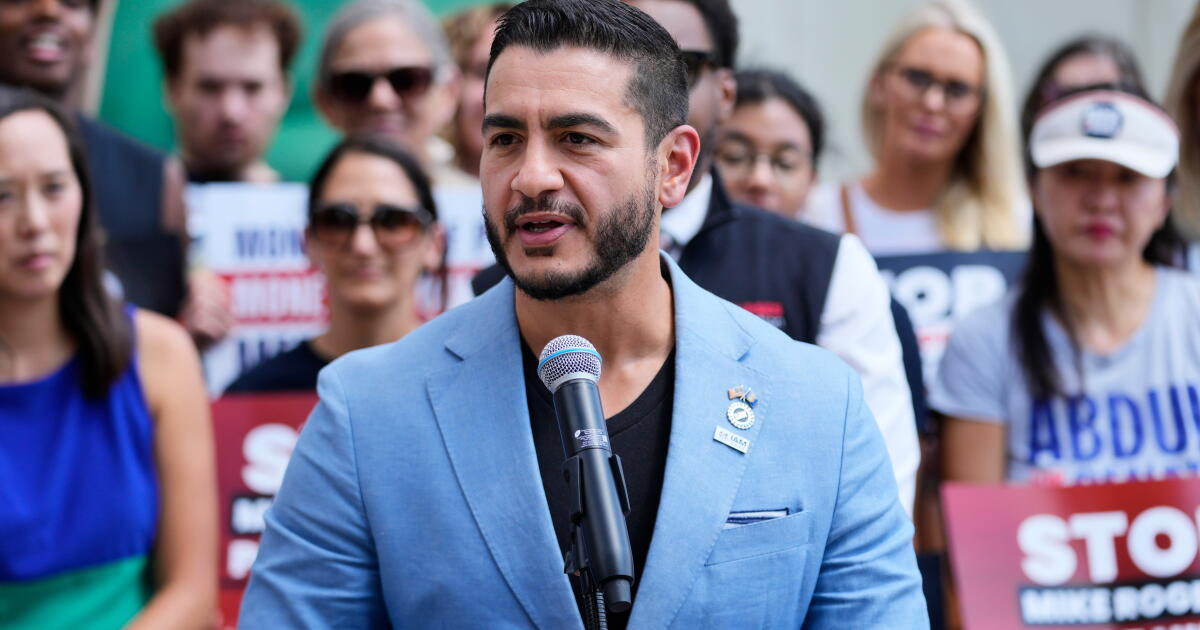
In perhaps the highest-profile contest, former public health official Abdul El-Sayed is facing Republican Mike Rogers for the seat being vacated by retiring Democratic Sen. Gary Peters.

El-Sayed, aligned with the party’s progressive wing, narrowly defeated moderate Rep. Haley Stevens in a heated Democratic primary. He is looking to rally her supporters as well as disaffected Republican voters.

Rogers is courting independents and a cohort of Jewish Democrats who view El-Sayed’s desire to reduce funding to Israel’s military as a dangerous proposition.

According to a CNN/SSRS poll of likely voters released Sept. 9, El-Sayed led Rogers 47% to 44%, a result within the margin of error. Notably, 26% of respondents said they could still be persuaded to vote for either candidate, leaving the race wide open.

The barbs in this race have become deeply personal, with anti-Muslim rhetoric taking center stage.

In a series of ads and artificial-intelligence-generated images, Republican groups — including the National Republican Senatorial Committee and Front Line Action — have cast El-Sayed as a supporter of terrorism. During speeches and interviews, members of the Trump administration, including the president, have repeatedly referred to the candidate by his full name, Abdulrahman Mohamad El-Sayed.

Rogers has continually drawn attention to a campaign event hosted by El-Sayed that included Hasan Piker — a Los Angeles-based online political commentator who recently drew widespread attention for a 2019 comment that “America deserved 9/11” while discussing blowback against U.S. foreign policy in the Middle East.

El-Sayed has railed against Rogers for refusing to debate and for his endorsement by Trump.

This week, El-Sayed stood alone on the Fox 2 Detroit debate stage after Rogers declined an invitation, dubbing his opponent “Mike Dodgers” on several occasions.

Rogers later accused the moderator of bias toward the Democratic candidate. The candidates have agreed to debate on Oct. 8 and 21.

Texas: Talarico vs. Paxton

State Rep. James Talarico is seeking to become the first Texas Democrat elected to the Senate since 1993.

His Republican opponent, state Atty. Gen. Ken Paxton, received Trump’s endorsement and defeated four-term incumbent Sen. John Cornyn in the primary.

While gaining a seat in Texas has long been a far-off dream for Democrats, Paxton’s controversies have dogged him during the race. A Mason-Dixon Research poll showed the Democrat leading Paxton 46 to 43, in a state that Trump won by nearly 14 points in 2024. Other polls, including one from Insider Advantage, had the margin at a single point.

Paxton is seen as a prominent fixture in the MAGA movement, using his position as attorney general to contest Obama-era clean energy and healthcare acts and launching lawsuits against the Biden administration for its immigration policy.

Talarico has made Paxton’s association with the president a key piece of his campaign, slamming Paxton as “the most corrupt politician in Texas” and spotlighting his impeachment by the Texas House of Representatives in 2023 over allegations of bribery, breach of public trust and misuse of his office to aid a donor. (Paxton survived the impeachment vote and denied wrongdoing.)

Several attack ads on Talarico, launched by Republican political action committees, have focused on his past support for transgender youth and accused him of exaggerating his faith to garner the Christian vote.

Maine: Jackson vs. Collins

Six-term incumbent Republican Sen. Susan Collins is hoping to retain her seat as Democratic challenger Troy Jackson attempts to replicate the grassroots success of former nominee Graham Platner’s campaign.

Jackson, a former state lawmaker, was chosen by Maine Democratic Party delegates to run in place of Platner, who dropped out in July after sexual misconduct allegations against him. A former lumberjack, Jackson shares Platner’s working-class background and is running on Medicare for All and increased taxes for billionaires.

Collins has repeatedly demonstrated her staying power and won reelection in 2020 even as the state went blue in the presidential race. Her willingness to stand up to Trump could become a deciding factor this time around; Collins is working to highlight her votes to block Trump’s $1.8-billion Department of Justice anti-weaponization fund and against the Iran war.

She has mostly stuck to promoting her decades-long record on the campaign trail, which has recently focused on increased healthcare access for seniors, workforce development and Social Security benefit increases.

She has faced criticism from Jackson and others over her vote to confirm Supreme Court Justice Brett M. Kavanaugh, who faced sexual assault allegations, which he denied, and later voted to strike down Roe vs. Wade, which had granted a constitutional right to choose an abortion.

Jackson has had difficulty generating the same enthusiasm among voters as his predecessor, Platner, who consistently held town halls across the state and had a viral social media presence. Over Labor Day weekend, Jackson hosted at least a dozen events up and down Maine to make his first public introductions to voters deep into the cycle.

A recent poll from YouGov shows Jackson narrowly leading the incumbent, 46% to 44%, with a crucial 9% undecided.

Alaska: Peltola vs. Sullivan

Former Democratic Rep. Mary Peltola and incumbent Republican Sen. Dan Sullivan are leading a field of candidates — including another Dan Sullivan — ahead of a ranked-choice general vote.

Alaska hasn’t elected a Democratic senator since 1995, giving Peltola an uphill battle in a state that Trump won by 13 percentage points in 2024.

A late July poll by Change Research showed Peltola in the lead by six percentage points. A more recent poll from Alaska Survey Research had the race within 1 point in favor of Peltola.

Much of the media attention surrounding this race, however, has focused on the third-place candidate, who only received 2.5% of the primary vote — and also happens to be named Dan Sullivan.

Dan J. Sullivan, a retired teacher who made the top four in ranked-choice voting, has been accused by Republicans of being a Democratic plant that could potentially confuse voters. Sullivan has denied these accusations and the Alaska Supreme Court decided to keep him on the ballot.

If none of the candidates receive over 50% of first-place ranked-choice votes — which is likely in this race — the last-place candidate will be eliminated, with their vote distributed to their next choice until one candidate receives a majority of the total.

Iowa: Turek vs. Hinson

In a race that has seen the candidates trade political jabs in separate speeches on the same state fairgrounds, Republican Rep. Ashley Hinson and Democratic state Rep. Josh Turek are nearly neck and neck.

According to a Suffolk University poll, Hinson is leading Turek 45% to 40%, in a state where Trump won by 13 points in 2024. A poll conducted by YouGov, however, has Turek in front by a single point.

GOP incumbent Sen. Joni Ernst elected not to run this year, leaving the seat open for a potential flip.

Turek, a two-time Paralympics gold medalist, has attacked Hinson for past campaign ads in which she said: “I don’t trade stocks, and no one else in Congress should either.” Tucker pointed to the fact that Hinson purchased and sold stocks in Amazon, Tesla and insurance firms after she was elected, according to financial disclosure forms.

In return, Hinson criticized Turek for missing over half of his state Legislature floor votes, and labeled him an “anti-ag” activist.

Source link

Iowa Republicans in battleground House races vote to halt the Iran war

Mike Catalini and Hannah Fingerhut

Two House Republicans in battleground Iowa districts, including one who recently campaigned alongside Defense Secretary Pete Hegseth, changed their position on an Iran war powers resolution, joining with Democrats and a few other dissident members of their party in an attempt to halt President Trump’s ability to continue military action without congressional approval.

The shift reflects the political pressure on Republicans before midterm elections that will decide control of Congress. The war remains unpopular and has led to soaring fuel prices.

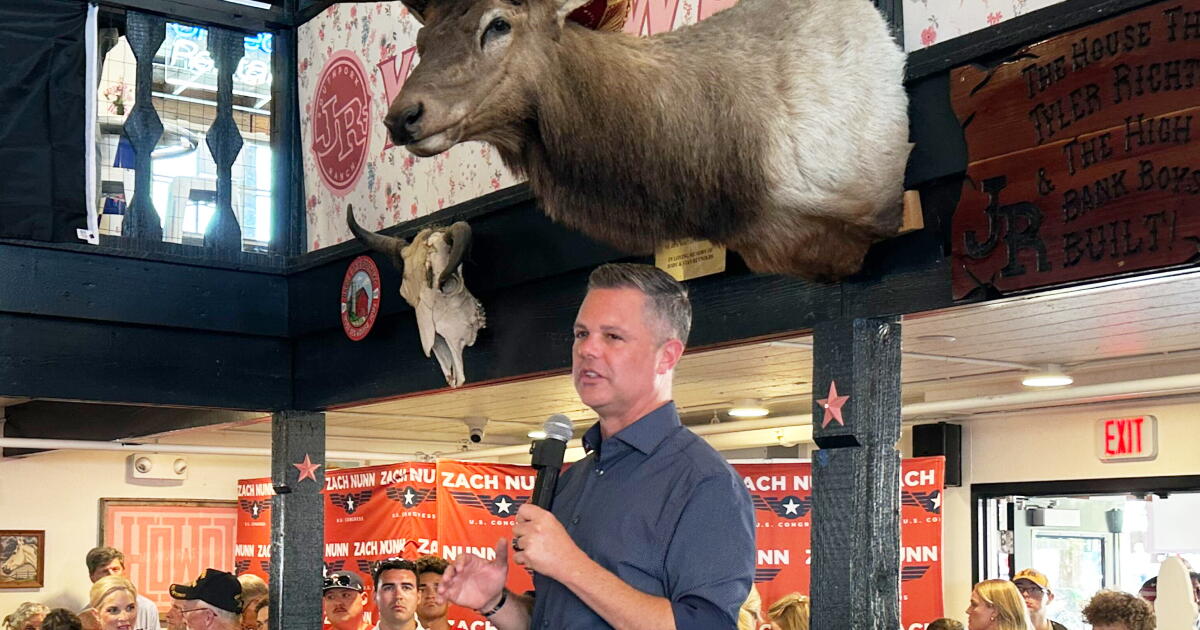
Reps. Zach Nunn and Mariannette Miller-Meeks voted for the resolution with five other Republicans on Tuesday after previously voting against it.

“With the negotiating window closed, sustained combat operations now require congressional authorization,” Nunn, an Air Force veteran, posted on social media. “I will not support another open-ended war.”

Nunn campaigned with Hegseth last month in Iowa, and the Pentagon chief had lauded Nunn as an ally who didn’t need any last-minute, late-night phone calls from Trump to persuade him to support the president’s agenda.

“Zach Nunn is not a 3 a.m. congressman,” Hegseth said at a fundraiser for Nunn during the Iowa State Fair. “He’s willing to take the tough votes to do the right thing on behalf of our war fighters.”

Nunn is up against Sarah Trone Garriott in November’s election.

Miller-Meeks, an Army veteran, said in a statement the president needs to present a plan to Congress and the public showing how the war ends so “we can focus on bringing our soldiers home and lowering prices.”

“Americans do not want another forever war,” she said. “I will not vote to keep our soldiers in an open-ended war, with Iowans paying too much at the pump.”

She faces a reelection rematch against Christina Bohannan, whom she has defeated twice before.

Eighteen U.S. service members have died in the war with Iran. Two are from Iowa, and one used to live in Iowa.

National polling indicates that the Iran war remains unpopular with Americans overall. Only about 3 in 10 U.S. adults approved of Trump’s handling of Iran in a July AP-NORC poll, and a September New York Times/Siena poll found that most likely voters, about 6 in 10, think Trump’s decision to go to war with Iran was the wrong one.

Tuesday’s House vote was the third time lawmakers voted to end the war in Iran. The margin was similar to earlier efforts, with a few more Republicans joining all Democrats in voting to bring an end to the conflict.

In addition to Nunn and Miller-Meeks, retiring Rep. Nancy Mace of South Carolina joined Republican Reps. Tom Barrett of Michigan, Warren Davidson of Ohio, Brian Fitzpatrick of Pennsylvania and Thomas Massie of Kentucky in voting for the resolution.

Rep. Ashley Hinson, who represents northeast Iowa but is running to replace retiring Sen. Joni Ernst, voted against the resolution.

Republicans have been optimistic that Iowa will remain a red state, but the competitive races have gotten attention even from the White House. Trump visited suburbs of Des Moines in January and dispatched Vice President JD Vance in May to campaign for Nunn.

After Hegseth campaigned with Nunn, a group of over 400 former national security officials filed a complaint asking for an investigation into whether the secretary violated the Hatch Act, which restricts political activities by federal officials.

Hegseth’s office did not immediately respond to a request for comment.

Catalini and Fingerhut write for the Associated Press. Catalini reported from Morrisville, Pa.

Source link

Arab News | After outrunning Usain Bolt, China’s robot champion races towards real-world work

BEIJING: A week after his robot outran humanity’s fastest man, Jack Guo is already chasing a harder goal.

TianGong Ultra stunned spectators at the World Humanoid Robot Games ​when it covered 100 meters in 8.64 seconds, almost a full second faster than Usain Bolt’s world record. Behind the feat were days of round-the-clock testing and repairing battered robots between races.

“When it started smoothly and got past 50 meters, that was when I finally relaxed,” said Guo, who leads development of Ultra and Omni, a smaller model used in 400m races, at the Beijing Humanoid Robot Innovation Center, known as X-Humanoid.

Just a week later, the bespectacled 34-year-old engineer is already focused on a bigger challenge.

“We want to turn high performance into high reliability and high usability,” he told Reuters in his first interview with foreign media.

The record-breaking run offers a rare window into China’s growing lead in humanoid robotics, where state-backed research, deep supply chains and intense competition are accelerating advances in machine mobility. Yet Guo’s next goal underscores a harder task facing the industry as it struggles to turn dazzling demonstrations into useful workers.

Inside the workshop

X-Humanoid sits in Yizhuang, a high-tech development ‌zone in Beijing’s southeast ‌and one of China’s main robotics clusters. Long home to automakers, the district now boasts a robot ​sales center ‌and ⁠even a ​robot-themed ⁠restaurant, part of the capital’s push to showcase the industry.

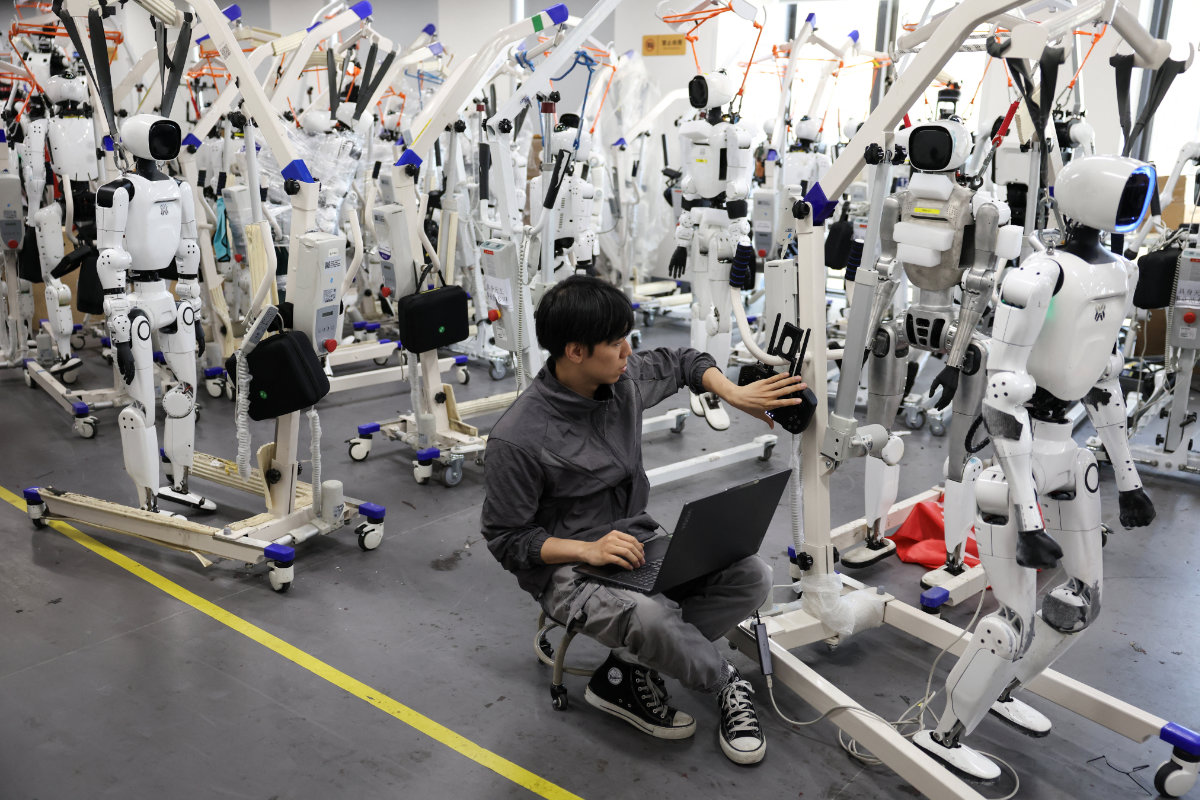
An engineer works near Tiangong Omni humanoid robots in the research and testing area of the Beijing Humanoid Robot Innovation Center, also known as X-Humanoid, in Beijing, China, September 4, 2026. (Reuters)

The first-floor showroom traces generations of TianGong robots, including one that still wears the vest from a winning half-marathon run last year.

On the ninth floor, white Ultra and Omni humanoids stand suspended in metal frames. One wears a red “Champion TianGong” headband.

During a Reuters visit, engineers repaired and tested robots, with one removing a head cover, another tightening a leg, and others running walking trials.

In the adjoining office, Guo’s team develops software before testing it on physical machines.

Established in November 2023, X-Humanoid is backed by state-owned and private investors including robotics firm UBTech, along with domestic tech giants Xiaomi and Baidu. It develops hardware, motion-control software and AI for the wider industry while commercialising its own robots.

X-Humanoid has not disclosed how many of its own robots it has sold or deployed commercially.

Its customers include universities, research institutes and companies ⁠exploring industrial applications. At Foton Cummins’ engine factory in Beijing, the company’s robots have been trialled moving boxes, with its ‌Tianyi 2.0 robot lifting 8-12 kg boxes onto shelves in what the factory described as an early-stage ‌exploration.

Useful work begins

Ultra was not originally designed to win a race. It started as an experiment to ​push the boundaries of humanoid movement.

Guo likens today’s humanoids to the ‌earliest cars: first make them controllable, then pair reliable bodies with smarter AI “brains” capable of handling complex tasks on their own.

He said the immediate challenge was ‌making the robot body and movement-control system stable and reliable for everyday use. Developing the AI needed for more complex autonomous tasks would take longer.

Making a robot run develops generalized mobility, improving its ability to cope with different terrain.

An engineer works near Tiangong Omni humanoid robots in the research and testing area of the Beijing Humanoid Robot Innovation Center, also known as X-Humanoid, in Beijing, China, September 4, 2026. (Reuters)

The smaller Omni has already shown what that can mean in practice. In an internal test this year, it climbed from the first floor to the 17th floor of X-Humanoid’s headquarters.

Guo expects smaller humanoids to find early roles in commercial services and light industry, while Ultra could eventually perform outdoor inspection or emergency ‌rescue.

One major challenge is braking. Ultra weighs 75kg and at top speed can exceed 17 meters per second. At the Games, a crash mat sat beyond a short run-off area, leaving sprinting robots in the 100m races ⁠to slam into the barrier.

Future versions could ⁠be lighter, brake harder and adopt a safer posture, Guo said.

Conquering speed

Ultra arrived at the Games armed with three running strategies trained in simulation. One was battle-tested, two faster on paper but less proven.

Each strategy is a trained motion-control system that continuously adjusts joints and balance, allowing the robot to sprint upright without an operator directing every step.

Ultra used a different program in each race, running 9.39 seconds in the preliminary, 8.86 in the semifinal, and 8.64 in the final.

Between races, engineers returned to their test site to push faster programs harder and adjust navigation and running controls. Engineers pulled several all-nighters, sometimes testing into the following day before returning to the venue.

Pushed to their limits, robots stumbled, lost balance and crashed, forcing teams to roll out backup machines while repair crews scrambled to fix the damaged ones.

Earlier in development, the breakdowns were even more dramatic. “Legs broke, waists broke,” Guo said.

A late surge

Even on the morning of the final, the team was testing a newly trained running program. It worked repeatedly during trials, but not on the competition track. Differences between individual robots also created headaches, leaving Guo uneasy before the race.

Ultra’s heavier legs limited early acceleration, but once it passed about 10 meters per second, it could keep building speed and reel in rivals.

The team had shaved roughly ​half a second from its starting response by the semifinal, Guo estimated. ​From there, attention shifted to outright speed.

In the final, a faster reaction time and late acceleration allowed Ultra to pull off a more decisive overtake.

Backstage, the team celebrated. At the closing ceremony, a row of TianGong humanoids donned red capes emblazoned with “Champion,” some waving pom-poms.

“Finally, I could get a good night’s sleep,” Guo said.

Source link