WHEN the temperature drops and the nights get darker, booking a holiday in to look forward to feels all the more important.
Luckily, if you know where to look, Britain is packed with brilliant holiday parks that actually get better in the winter months.
Finlake Resort offers super glamorous wooden lodges for more affordable rates than places like Center ParcsCredit: Supplied
We’re talking massive, 30C indoor water worlds for warming up from the frost, to luxury log cabins and magical woodland light trails.
Plus, avoiding the peak summer rush means you can bag incredible deals for a fraction of the usual price, so here’s our winter holiday park favourites from a tiny £3.06pp per night.
Warmwell Holiday Park, Dorset
Treat yourself to a hot tub lodge at Parkdean Resorts’ Warmwell Holiday Park in DorsetCredit: Warmwell Holiday Park
This cosy woodland holiday park in Dorset is made up of timber lodges only, with lakeside, hot tub and pet-friendly options sleeping up to eight people.
But don’t let the tranquil woodland setting fool you: Warmwell is packed with adrenaline. The park actually has its own 110m all-weather ski slope where you can ski, snowboard, or hurtle down in a rubber ring.
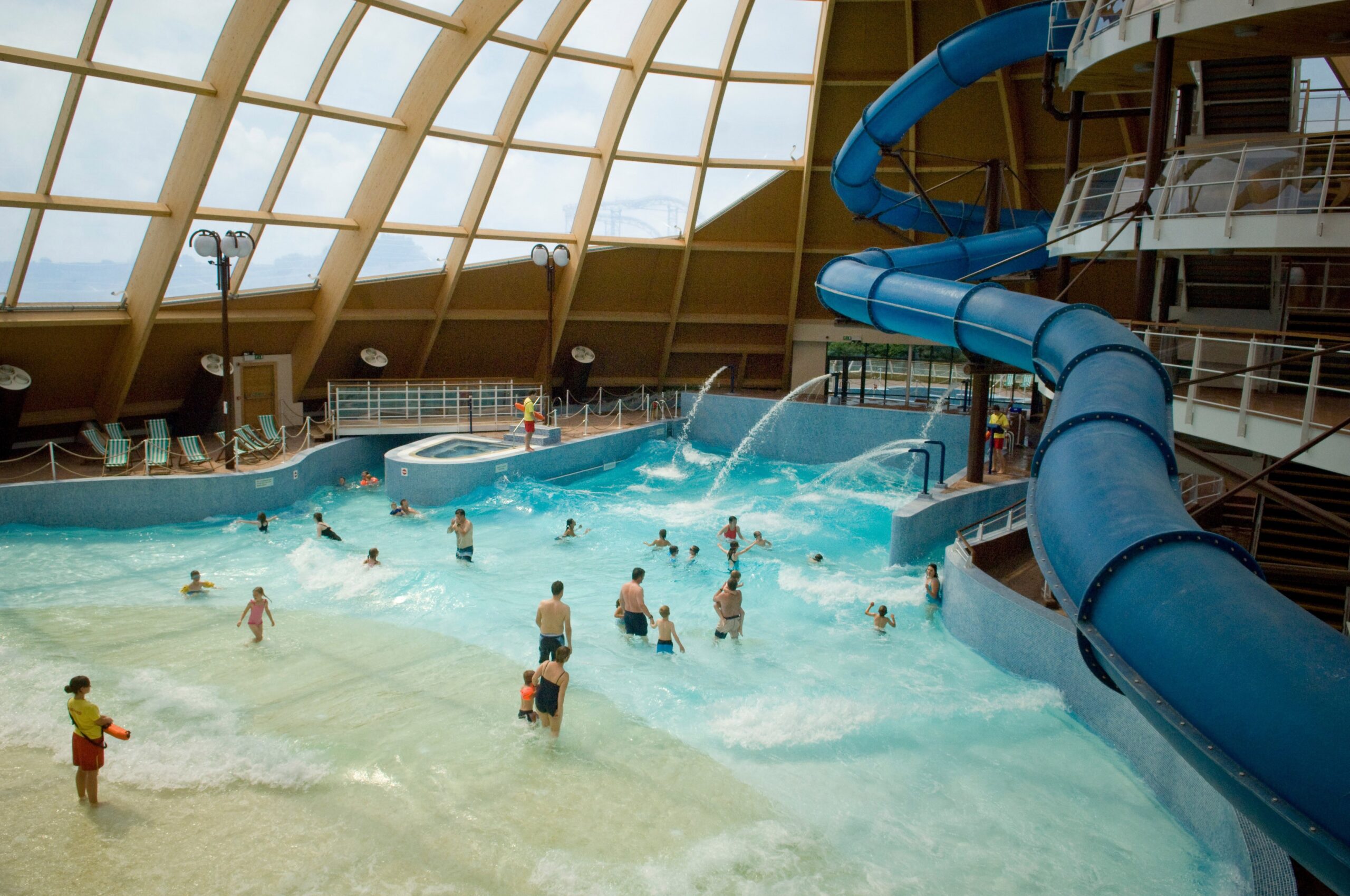
If you’d rather stay inside, the massive heated indoor pool has a thrilling, twisting water flume and a mini wave pool for little ones.
We found a three-night break in a superior lodge sleeping eight for £263, working out to £10.96pp per night.
Tattershall Lakes Country Park, Lincolnshire
Winterfest at Tattershall Lakes sees candlelight concerts, festive evening entertainment and moreCredit: Away Resorts
While this action-packed holiday park is famous for its summer watersports, you’ll get a completely different experience in the winter.
This park puts on its very own ‘Winterfest‘, where from November 20 – December 20 you’ll find special events like candlelight concerts, kids house party events and the ‘Winterfest Spiegletent’ full of festive live entertainment.
There’s also the massive indoor pool and kids splash zone with slides for the kids, plus a luxurious spa and the cosy Tattershall Park Pub for Mum and Dad.
You can bag a four-night midweek break in a superior caravan sleeping eight from £168, or £5.25pp per night.
Sandy Balls Holiday Village, Hampshire
The Forest Of Light event at Sandy Balls sees the New Forest lit up ready for ChristmasCredit: Away Resorts
For a dose of woodland magic this winter, book in for a lodge retreat at Sandy Balls Holiday Village in Hampshire.
With The New Forest on your doorstep, you’ll have plenty of time for family bike rides, woodland alpaca walks or even strolling through the ‘Forest of Light’ festive display which arrives at the park in November.
Kids can head indoors to warm up with pottery painting or slime factory sessions, while grown-ups might prefer the evening’s Boombox Bingo, quiz or karaoke sessions.
We found a deal for a four night break in a luxury caravan sleeping six for £264, working out to £11pp per night.
Bluestone Wales, Pembrokeshire
Bluestone Wales in Pembrokeshire has a giant subtropical waterpark with slides and a gentle wave machineCredit: Refer to Source
Head to Pembrokeshire in Wales this winter to escape the cold and drizzle for a site with a giant, subtropical temperature waterpark.
Spend rainy afternoons in the Blue Lagoon Water Park, which is totally free for guests. There’s a wave machine, four waterslides, plus a relaxing lazy river and bubbling pools.
There’s plenty more weather-proof activities like an indoor zipline, climbing wall and a bear-making boutique.
We found a deal for a four-night break in a spacious wooden lodge for four for £540, working out to £33.75pp per night. Or if you want to book ahead for Jan or Feb, there’s an early bird offer on where you can save 10-20 per cent on 2027 breaks.
Seashore Holiday Park, Norfolk
Enjoy Great Yarmouth’s flat, golden sands on a breezy winter beach walk – with far less crowds than peak seasonCredit: Getty
If you love a winter beach break away from the crowds of the summer, you’ll love Great Yarmouth‘s only beachfront park: Seashore Holiday Park.
The flat, golden sands of Yarmouth are perfect for a winter stroll, before coming back to warm up in the heated indoor waterpark with two 11 metre flumes.
Once you’re done making a splash, you can retreat to a double-glazed, toasty heated caravan for a movie night.
We found a deal for a four night break in a saver caravan sleeping four for £49, working out to £3.06pp per night.
Finlake Resort & Spa, Devon
Finlake Resort has A-frame timber lodges set among the woods that make for a scenic winter breakCredit: Supplied
Finlake feels like a glamorous forest retreat with A-frame timber lodges with hot tubs, a woodland spa and sauna offering hot stone massages, and a glimmering fishing lake.
Kids will love the on-site waterpark Finlake Falls, which is heated to around 30C and packed with waterslides, fun sea scooters and a beach-like area with gentle waves for little ones.
Compared to somewhere like Center Parcs, where the cheapest seven-night lodge break we found this winter was £1,548 you’re getting much better value for money here.
At Finlake, you can bag a seven-night stay in a traditional, two-storey wooden lodge from £239 for the week.
Craig Tara, Ayrshire, Scotland
Craig Tara in Ayrshire, Scotland has a huge subtropical waterpark called Splashaway BayCredit: Haven Holidays
From the snow-dusted peaks of the Isle of Arran to the rugged clifftops of the Ayrshire coast, Scotland is beautiful in winter.
But it’s even better when you can retreat back to a cosy, centrally heated caravan or luxury lodge to thaw out.
Haven’s Craig Tara offers not only luxurious lodges and warm, affordable caravans, but one of the biggest heated indoor waterparks in Scotland, Splashaway Bay.
As for indoor activities, there’s also a giant indoor Airspace facility loaded with interactive darts, shuffleboard, and a climbing wall to wear the kids out.
You don’t even need to head out and brave the cold for dinner with an on-site Burger King, Papa Johns, and a sea-view restaurant just steps away.
We found a deal for a four night break in a saver caravan sleeping four for £49, working out to £3.06pp per night.
Stay in Hampshire’s New Forest in a woodland lodge at Sandy Balls Holiday VillageCredit: Visit Hampshire
This town has gorgeous coastal walks as well as plenty to explore
15:06, 12 Oct 2026Updated 15:07, 12 Oct 2026
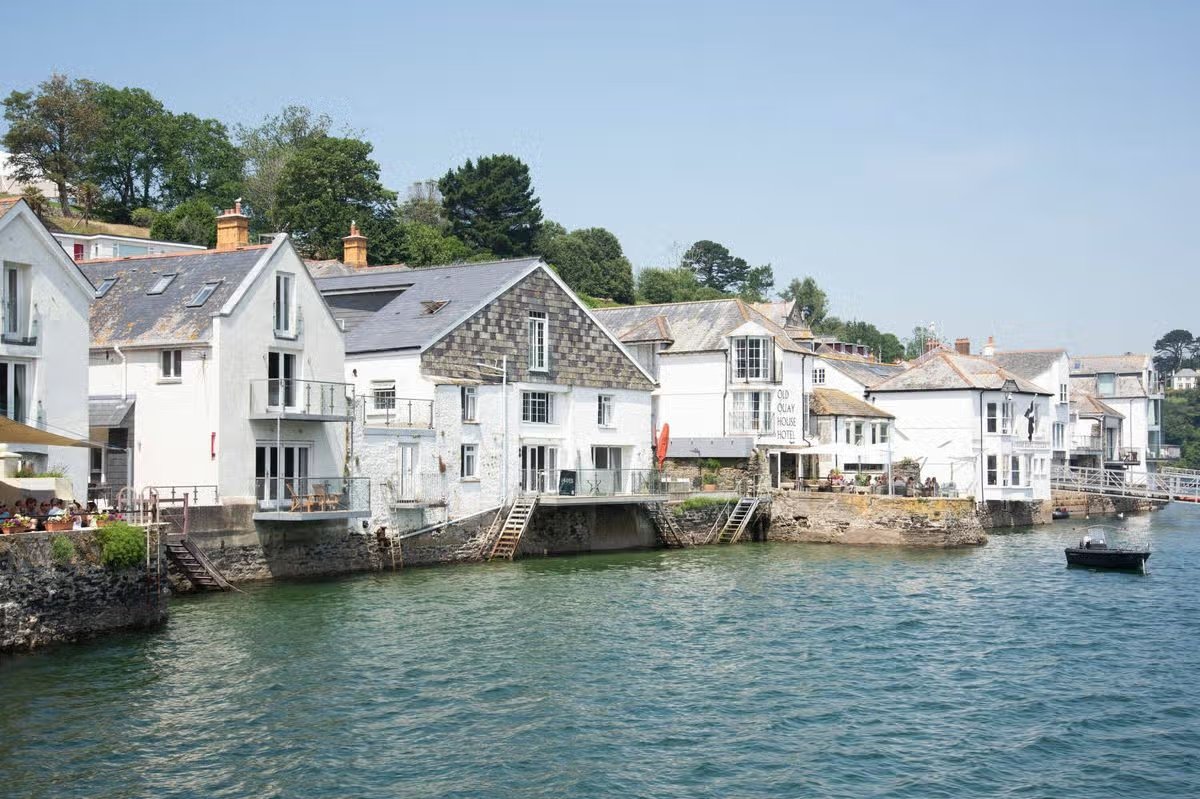
This gorgeous coastal town is perfect for a weekend away(Image: Getty)
Summer has drawn to a close and autumn has arrived. While summer is a wonderful season for getting away, there’s no reason the enjoyment has to end when temperatures drop.
Indeed, autumn ranks among the most spectacular times of year across the UK.
The foliage transforms into golden hues, tourist numbers dwindle and settling into a welcoming pub following a lengthy ramble epitomises the perfect autumn pursuit.
If you’re seeking a UK destination that truly comes alive during autumn, there’s a delightful seaside town in Cornwall that might tick all the boxes.
According to research conducted by credit card firm Zable, Fowey in Cornwall emerges as the best value location for an autumn staycation. It’s not merely affordable though – it’s also a charming harbour town brimming with things to discover.
The town sits proudly on the banks of the river Fowey and traces its roots back to medieval times.
Its naturally deep water harbour established it as a significant historical port and commercial hub throughout the centuries, while the streets showcase magnificent Victorian and Edwardian architecture.
The region surrounding Fowey also holds Area of Outstanding Natural Beauty status.
If you fancy exploring the town’s surrounding landscape, then the creeks and coves walk is absolutely essential. This four-mile circular route incorporates two ferry crossings and highlights the magnificent woodlands and coastal pathways that cradle the town.
The walk requires two to three hours including ferry journeys and looks absolutely stunning at this time of year. However, if you’d prefer to remain in the town itself then you certainly won’t be short of things to do.
Fowey boasts a thriving high street brimming with independent shops and boutiques that are ideal for an afternoon of browsing.
Fore Street serves as the town’s main high street and its twisting alleyways offer a wonderful way to while away an afternoon.
Make sure to pop into Jo Downes Handmade Glass for locally blown glass artworks, or Heather Jane and Co., which features art from 180 local makers.
Round off your day at a quintessential Cornish pub, the Ship Inn on Trafalgar Square. This historic establishment was built in 1570 and features a huge open fire ideal for a relaxing autumn pint.
Few pubs boast a more idyllic setting. As I emerge from the woods after a 15-mile hike, The Bridges, on the banks of the Onny River, in the rolling south Shropshire hills, glistens in the late afternoon sun. Inside it’s all wooden beams, with light streaming through stained glass and huge bunches of homegrown flowers adding splashes of colour. There’s time for a pint before general manager Sam Thompson shows me to my room in the recently converted stables.
I’m here exploring part of the 185-mile (297km) Shropshire Way, on a two-day Heart of the Hills hike – one of the county tourist board’s new Rail-Ready Short Breaks. Designed for people who don’t have time to tackle the whole route, the itineraries focus on loops that are easy to access by train, with illustrated PDF downloads, GPX files, accommodation suggestions and highlights of what to do along the way. My route will take me from Shrewsbury to Bishop’s Castle via Ratlinghope – about 27 miles, perfect for a weekend.
The Bridges pub in Ratlinghope.
Shrewsbury itself is worth lingering in – the historic market town is crammed with independent shops and restaurants (I loved Csons for its creative small plates) and impressive Tudor architecture. But I’m most intrigued to learn that beavers have been reintroduced here by the council and the Shropshire Wildlife Trust. The first kit in the county in 400 years was born late last year and the Trust’s Tom Freeland shows me around the site, the Old River Bed nature reserve, just two miles north of the town centre. A boardwalk crossing wetlands allows an up-close view of the rewilding project. Although we don’t spy the elusive creatures (we see heron and plenty of moorhen), there’s still lots to learn. “It’s been a great success in inspiring the community to find out more about our local wildlife,” says Tom. Nature talks and guided tours of the beaver enclosure are in the pipeline, too.
Back at my base, the 16th-century Lion + Pheasant townhouse hotel, I dine on pan-roasted trout in the beamed restaurant (there’s a popular wine and tapas bar on site too) and the next morning set off to walk the first leg to Ratlinghope. Crossing the River Severn, the city soon peters out and quiet country lanes lead to Lyth Hill Country Park where expansive views open up across Shropshire.
It’s a steady climb to Wilderley Hill, past fields of rape, bright patches of yellow in a sea of green, and I stop under an oak tree to picnic. There’s no one around, just the songs of wren and chaffinch filling the air. The landscape changes on the approach to Ratlinghope as the route traces a brook, crosses wooden bridges and winds through pretty woodland. Just off the path lies the 12th-century St Margaret’s Church, the burial place of 19th-century farmer Richard Munslow, the last known “sin-eater”, whose job it was to eat bread and drink ale over corpses to absorb their sins.
I enjoy a drink instead in the pretty beer garden at The Bridges. The seven immaculate, minimalist rooms are round an adjacent courtyard – and guests have access to a lounge above the pub, too. The food in the bar includes Guinness rarebit and duck terrine, while the light-filled restaurant focuses on organic fare from the owners’ regenerative farm on the Linley Estate and the Welsh Marches. I feast on huge radishes with anchoïade, and hake with fennel, capers and crispy polenta. Breakfast the next morning – homemade granola and poached rhubarb – is equally delicious. It’s such a lively, friendly place I’m tempted to move nearby for the pub alone. They’ll even drive locals home if they’ve had one too many, Sam tells me.
Blue skies and gentle sunshine greet me for day two of the hike, a 12-mile yomp across rugged moorland and pastures to Bishop’s Castle. The pub lies on the edge of the Long Mynd, a heath and moorland plateau, but I’m heading north to the Stiperstones, a national nature reserve with a wild, dramatic ridge of quartzite rock formations that pierce the ground. I climb higher, passing Devil’s Chair tor, watching skylarks and buzzards soar overhead.
The Devil’s Chair on the Stiperstones Ridge, Shropshire. Photograph: Vincent Lowe/Alamy
It’s a beautiful walk. After several hours, a magnificent avenue of Linley Beeches line the descent into Bishop’s Castle, a pretty town of half-timbered houses. Bank House B&B, a Georgian renovation with an oak-panelled drawing room and five antique-filled rooms, is my home for the night. I pop into the Poetry Pharmacy where prescriptions are poems chosen to spark specific emotions, to be “taken” when required (I leave with a bottle of Joy). Although little remains of the medieval castle that once stood here and gives the town its name, the grand Castle Hotel, with its pretty gardens and welcoming restaurant, is worth a visit.
With more time, I could, of course, carry on and add another loop of the trail. But the train back home beckons – Craven Arms station is a short bus or taxi ride away – and I leave feeling pleased to have dipped my toe into a small segment of the Shropshire Way. As far as rambling weekends go, it’s ticked all the right boxes, and whetted my appetite to discover more.
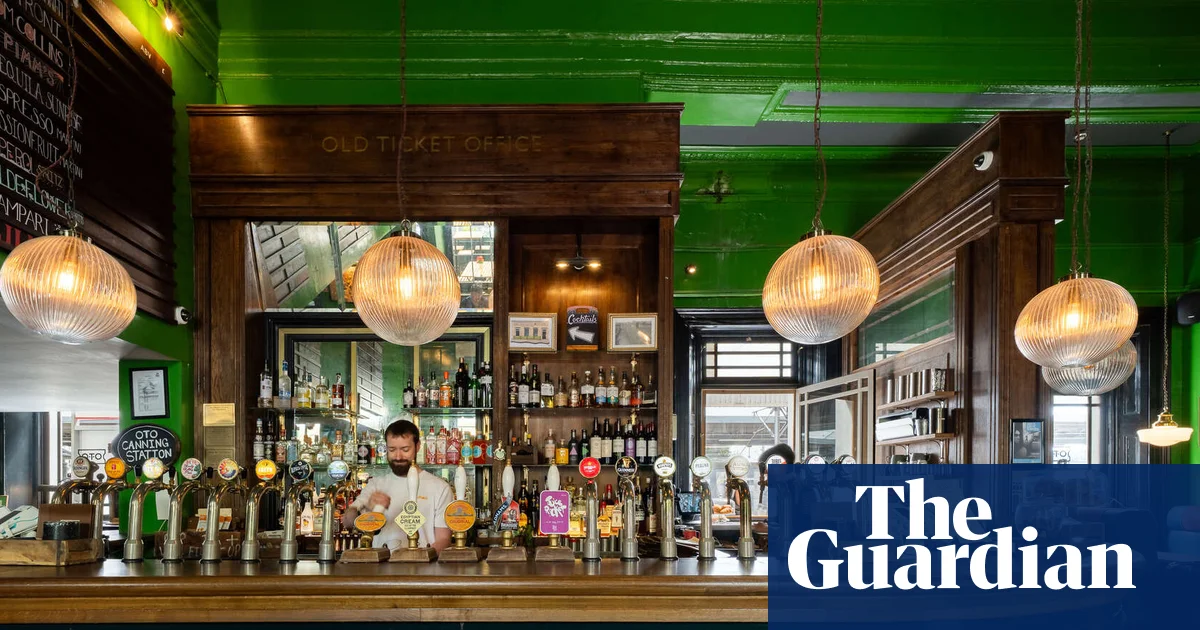
No prizes for guessing what this pub used to be… The Old Ticket Office has high ceilings, walls painted shades of locomotive green and booths resembling train carriages; there are outdoor tables on Station Square. A live train departures board theoretically prevents passengers lingering too long, and a canning machine means any draught beer is also available to take away (the hatch on platform 4 also does takeaway orders). There are five handpulls plus Young’s usual spritz menu and other drinks, plus light bites and pizzas. The pub is currently closed for roof repairs and expected to reopen by the end of October.
Kew Gardens is the only tube station with a pub attached. Photograph: Sunshine/Alamy
London’s various railway stations have many fine pubs (shout out to the Euston Tap), but Kew Gardens is the only tube station that still has a pub directly attached. When the station opened in 1869, the building was the timber steaming hall, and later become the buffet rooms before becoming a pub. It was bought by Fuller’s in 2012 and reopened the following year after refurbishment. It has high oak beams, picture windows looking on to the platform, an arched glass atrium and a pretty paved outdoor area. It serves two Fuller’s ales and a guest ale, among other drinks, has a full food menu and shows live sport.
Stalybridge station has one of the few remaining Victorian buffet bars. Photograph: Anthony Devlin/Getty Images
The pub on platform 4 at Stalybridge station, east of Manchester, is one of the few remaining Victorian buffet bars. Built in 1885, it features the original marble bar top, fireplace and fixed seating, plus lots of railway memorabilia. It serves up to 10 changing real ales, plus a cider or perry; bar snacks include hot pork scratchings, with more substantial food in autumn and winter, such as corned beef hash, pies and local black peas. There is a weekly quiz and folk singalong, regular live bands and food pop-ups in the beer garden, and periodic crisp butty pairing events and beer festivals. Camra awards it two stars for “a pub interior of very special national historic interest”. The buffet bar is now part of the Beerhouses group, which also runs the fantastic West Riding Reception Rooms at Dewsbury station, and the two pubs are on the TransPennine Real Ale Trail.
The Sheffield Tap is in a restored Edwardian first-class refreshment room.
For a great night out in Sheffield, visitors don’t even need to leave the train station. The Grade II-listed Sheffield Tap opened in 2009 in the Edwardian former first-class refreshment room. The original 1904 fixtures and fittings have been repaired where possible – including the mahogany bar top, Minton tiles and terrazzo floors – and replicated if not, as with the ornate barrel plaster ceiling. In 2013, the pub expanded into the adjacent tiled and mirrored former first-class dining room, and added a microbrewery. Today it serves 11 cask and 14 keg beers, plus hundreds of bottles and cans; food is limited to locally made pork pies and sausage rolls. The Sheffield Tap has Camra’s highest rating of three stars, for “a pub interior of outstanding national importance”. It is now operated by a small group that also runs the excellent York Tap and Harrogate Tap station pubs.
The Draughtsman Alehouse serves local real ale, gin and coffee
Delays are always welcome in Doncaster, for the chance to visit the lovely little alehouse on platform 3b. The former Victorian buffet bar had been empty for 18 years when the pub opened in 2017. It is a family business, named after engineering draughtsman grandfather Barry and run by son Russ with help from grandson Nick. The decor features original wall tiles, old photographs and draughtsman’s drawings of steam locomotives; Camra has designated it an “outstanding conversion and restoration”. The Draughtsman serves real ale from Yorkshire breweries, gin distilled in Harrogate and coffee roasted in Sheffield.
Carlisle station’s Grade I listed former waiting room is now home to Scott & Brassey. Photograph: Yasmin Platt/Lancaster Brewery
Those lamenting the loss of the 301 Miles From London pub at Carlisle station, which closed in 2023, had reason to celebrate in February, when Scott & Brassey opened on the same site. This Grade II-listed former first-class waiting room dates from 1848, and became the station buffet in the 1950s. Now it has had a slick makeover, but still retains the original wooden entrance lobby on platform 4, the hammerbeam roof and Tudor-style stone fireplaces. There is a mahogany bar, a feature wall full of clocks (no excuse for missing your train) and some platform-side seating. As well as eight handpumps, it serves a host of keg beer, wine, spirits and soft drinks.
The opulent, Grade I listed Centurion bar inside Newcastle station. Photograph: Graeme Peacock/Alamy
The Grade I-listed Centurion has a colourful history. It was designed by the architect John Dobson and opened in 1893 as a particularly luxurious first-class waiting lounge. By the 1960s, it had been turned into prison cells used by the British Transport Police. It then became a storage facility, but thankfully was restored and reopened as a pub in 2002. It has incredible tiling by Burmantofts Pottery said to be worth £3.8m. Columns, a marble fireplace and a high ceiling with a huge tiled skylight add to the air of opulence. The pub serves everything from real ale to cocktails, has an all-day food menu, shows sport on a gigantic screen and has live music every Friday.
The Head of Steam outside Huddersfield railway station. Photograph: Gary Calton/The Observer
Lucky passengers at Huddersfield have a choice of two great pubs, both accessible from platform 1, sitting on either side of the station’s grand neoclassical entrance (opened 1847). The independent King’s Head, in the former waiting room, has a mosaic floor, wood panelling and wood-burning stoves, and serves about a dozen cask ales. There is live music on Sunday afternoons. The Camerons brewery-owned Head of Steam, in the former ticket office, is now a four-room pub: a bar, a lounge, a family room and a buffet room. It serves up to 14 cask ales and Pieminister pies. Both pubs appear in Camra’s Good Beer Guide.
The Steamworks pub is in the former waiting room of Seaford station
This micropub opened in Seaford station’s former waiting room (built 1864) in 2017. Passengers can go straight from platform 2 (now the only platform!) into the pub, where there are Sussex real ales on rotation, ciders, sandwiches and other snacks, plus regular live music. After it proved a hit, the husband-and-wife owners opened a second Steamworks at nearby Glynde, where the station is even older (1846). They are just two of the micropubs that have opened in old station buildings in the past decade, including the Track & Sleeper in Knaresborough, North Yorkshire; the Little R’Alehouse in Wellingborough, Northamptonshire; the Waiting Room in Durham; and the Hexham Station Platform Bar in Northumberland.
Codsall station’s bar occupies the old waiting room, offices and stationmaster’s house
Codsall is a village on the Shrewsbury to Wolverhampton line. In 1997, the station’s Grade II-listed waiting room, offices and stationmaster’s house were converted into a pub. It has a bar, lounge, conservatory and snug with a fireplace, and steps leading up to a patio area overlooking the platforms. The pub serves three regular beers and two changing ones from Dudley’s Holden’s brewery, while food comprises cobs and pork pies. There are occasional pizza pop-ups and live music, and Cask Club Tuesdays with beer at bargain prices. It is a Camra outstanding conversions and restorations pub.
Named among the world’s five coolest neighbourhoods, it packs cafés, international food and welcoming pubs into a small pocket of a major city.
The neighbourhood is jam-packed full of coffee shops, pubs and restaurants(Image: Nicola Roy)
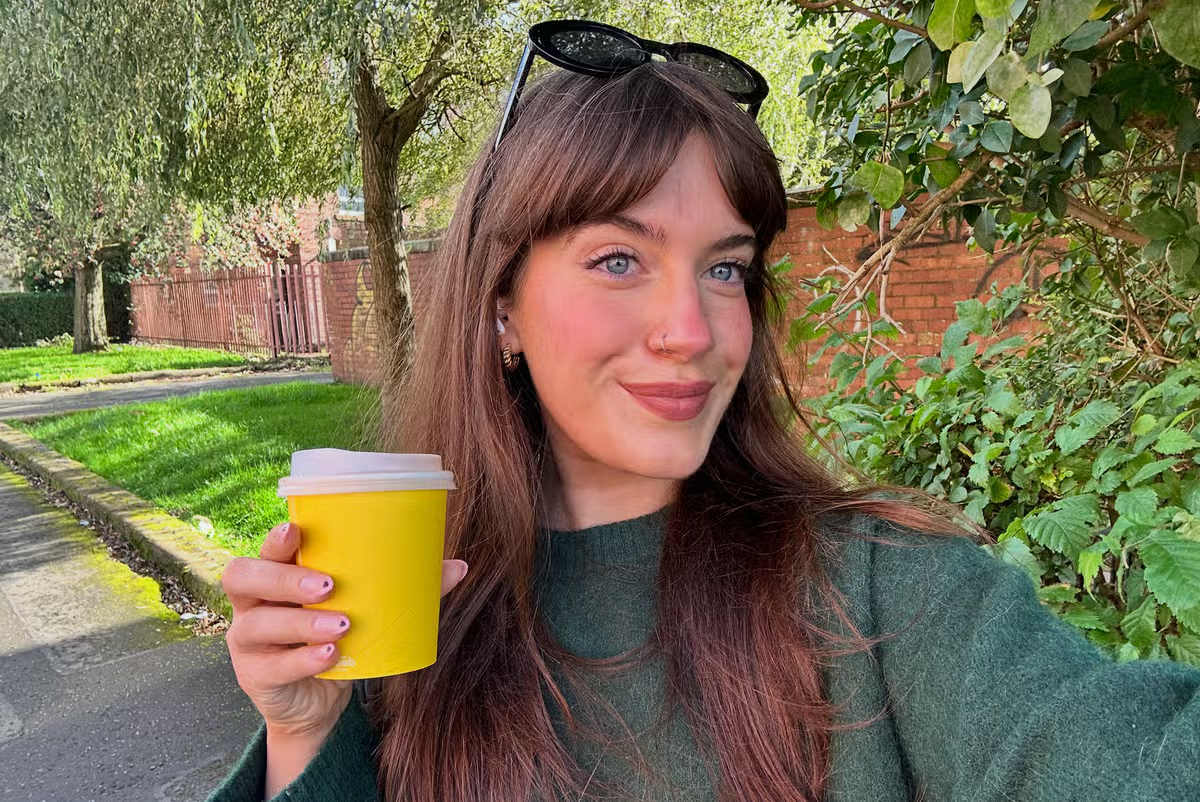
A £4.60 oat milk mocha might not be everyone’s idea of a bargain. But at Zennor in Govanhill, I’d argue it’s worth every penny – and the surrounding streets offer plenty of reasons to stay after the last sip.
The neighbourhood on Glasgow’s south side earned a place among the world’s five coolest neighbourhoods in Time Out’s annual list. Its appeal goes well beyond fashionable coffee shops, with a diverse mix of people, cultures and businesses shaping the area.
From Turkish börek to Pakistani street food, independent cafés to a pub named after a footballing legend, there’s plenty to explore. Some may say it’s all new coffee shops and no substance, but they couldn’t be more wrong.
A neighbourhood best explored on foot
Victoria Road is a natural starting point. Busy with dog walkers, friends catching up and people carrying takeaway coffees, it leads towards the green space of Queen’s Park.
Govanhill is one of Scotland’s most diverse neighbourhoods, reflected in its cafés, bakeries, takeaways and gift shops. You could easily spend hours browsing and stopping for something to eat.
Options include a flat white from a Transylvanian coffee shop or traditional Turkish börek from Pistachio. For me though, Zennor was the destination of choice.
On the corner of Langside Road and Dixon Avenue, Zennor’s second Glasgow location combines Scandi-inspired light wood and stainless steel décor with paper lanterns and the smell of freshly ground coffee.
Zennor’s seasonal specials are really where they excel, but I didn’t spot anything on there that caught my eye on this occasion, so I opted for a mocha. And you can’t pop in here without grabbing a sweet treat, such as their dark chocolate and sea salt cookie – utter bliss.
With oat milk, my coffee order totalled £4.60. It pains me to admit, but I don’t think that’s too steep these days, particularly when it’s this good. And it’s worth every penny in my opinion.
Where to head for a pint or a plate of pasta
Directly opposite Zennor is the Rose Reilly, my favourite pub in Govanhill. Named after the legendary footballer, it offers a welcoming atmosphere, a good choice of drinks and plenty of outdoor seating for sunny days.
For something more substantial, I recommend Pakistani Street Food for a samosa, Bar Vini for a generous serving of pasta and Errol’s Hot Pizza for the best pizza you’ll ever eat.
Together, these venues offer plenty of scope to turn a quick coffee visit into a longer afternoon or weekend exploring the neighbourhood.
More than a ‘coolest neighbourhood’ label
Govanhill’s fashionable reputation is only part of its story. The area faces challenges, and residents hold differing views about how it has changed, with gentrification a particularly contentious issue.
My view, however, is that its mix of people and cultures is what makes it such a lively and fascinating place to discover. The coffee may provide a reason to stop, but it is far from the only attraction.
There’s also libraries, craft spaces, workshops, community projects and events, and with great public transports links too, you’re never too far from other parts of the city. Other nearby neighbourhoods in Glasgow’s south side, like Pollokshields, Strathbungo and Mount Florida, are also full of fun things to do.