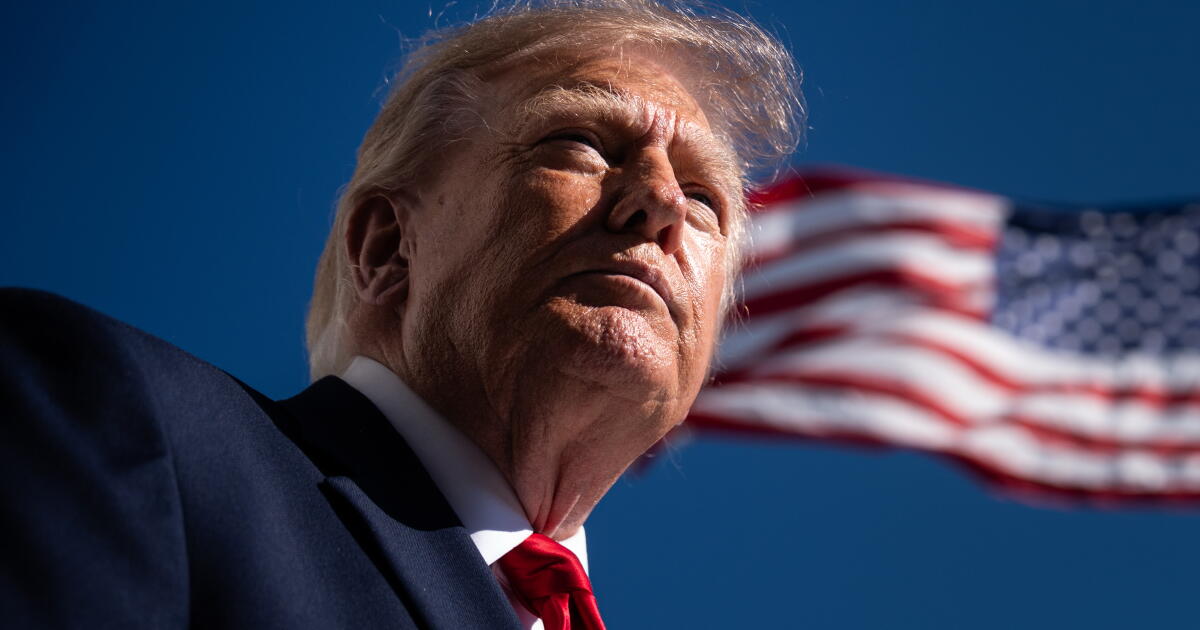
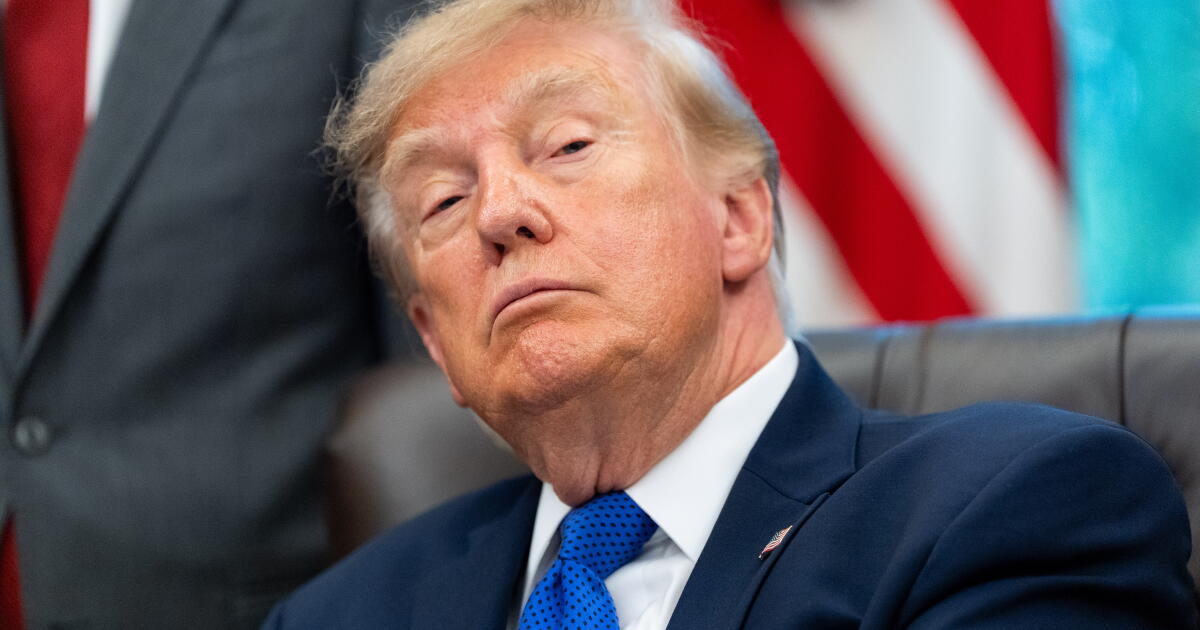
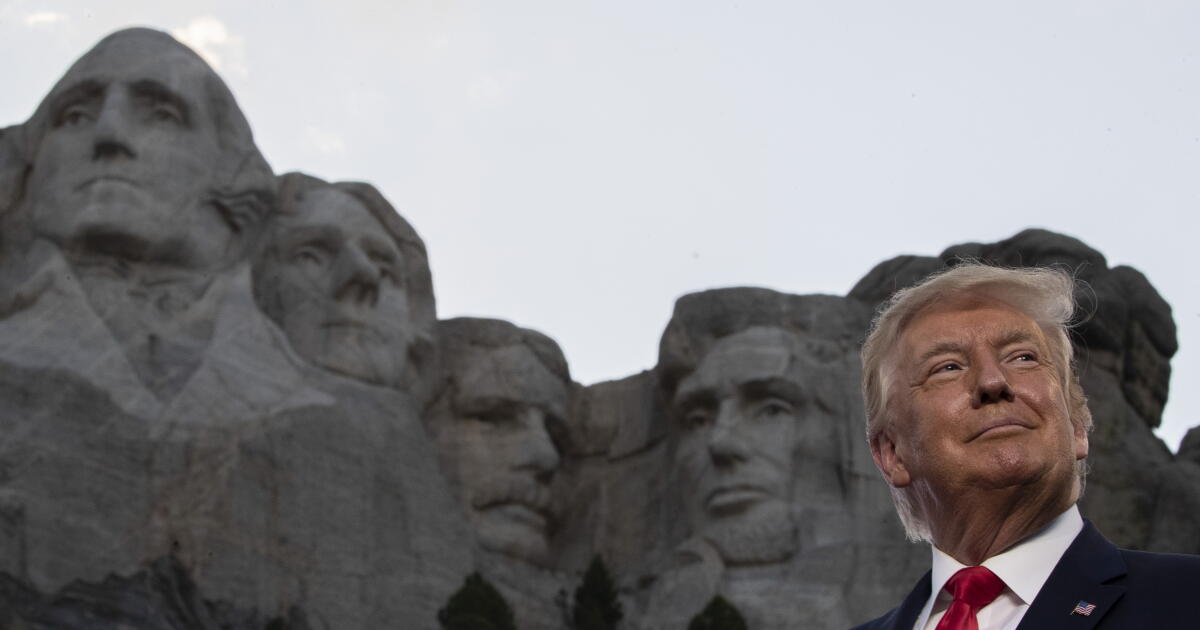
propaganda

A Month After the Disaster, Chavismo Tries to Control the Narrative

This is one pic Telesur picked to try to make Delcy look competent. Draw your own conclusions.

On July 7th, Delcy Rodríguez presented her “Venezuela Reborn” (Venezuela Renace) plan to recover all buildings and areas hit by the earthquakes. The promise is not only rebuilding infrastructure but also offering economic assistance to those affected thanks to funds from the IMF and other multilateral organizations.

This happened just a week after her press conference on July 2nd, in which she faced multiple questions from foreign reporters about the government’s late and disorganized response to the disaster in La Guaira. Rodríguez denied those claims, blaming disinformation from “media labs” while defending the military.

The “media labs” argument was immediately taken up by State outlets and Interior Minister Diosdado Cabello on his weekly TV show Con El Mazo Dando, in which he insulted international correspondents who covered the disaster.

The saying “old habits die hard” can be applied here: the Rodrigato has been unable to avoid and hide the public backlash over its management of the earthquakes’ aftermath, which has been front and center of the reporting made by mainstream international media, like when a crew of Norway’s TV2 recorded La Guaira resident Damely Díaz, who lost both her daughter and her home, openly berating Nicolas Maduro Guerra.

Now, the regime is once again blaming the messenger, taking advantage of the actual problem of disinformation on social media to point at “political interests that want to take advantage of the humanitarian tragedy.” 

This comes as the official attempt to establish the narrative that Delcy Rodríguez is in full control has been undermined by self-imposed limitations. TalCual editor Víctor Amaya offered a glimpse: “Outside of fleeting visits to collapsed areas, (Delcy) Rodríguez has appeared almost always indoors, meeting rescue workers who she interrupts in their labor to thank them in from of the camera, decorating government officers, greeting Hernán Gil (a security guard rescued after eight days trapped in Catia La Mar) and more recently, in visits to stokepile centers and shelters. His brother Jorge became the de facto spokesperson for official figures of dead and wounded.”

The Great Mission Venezuela Renace actually merged three existing infrastructure-related government programs: Barrio Nuevo Barrio Tricolor, Juntos Todo es Posible and Venezuela Bella. It also shares its name with an online initiative launched back in May to register young Venezuelans with diverse skills to return and help out. The difference is that the word order changes.

Venezuela Renace doubles down on the “stateswoman” role Delcy tried to carve for herself in her public showings while adapting it to the current circumstances. 

It can be said to some extent that Venezuela Renace works as a reboot of the government’s communicational strategy, even if that’s not its main purpose. And taking in consideration what’s been seen so far, it couldn’t be more different from the previous one: Venezuela Vuela Libre.

While Venezuela Vuela Libre was like a trial balloon of what Delcy’s election campaign could look like in a hypothetical snap presidential election, Venezuela Renace doubles down on the “stateswoman” role that she has tried to carve for herself in her public showings while adapting it to the current circumstances. 

Unlike in Venezuela Vuela Libre, where Delcy’s image was absent, she’s front and center in Venezuela Renace, supervising works or in official meetings. Even their visuals differ drastically: Venezuela Vuela Libre’s iconography was mostly related to peace and faith, while its main logo showed color (with blue, not red, dominating the palette). 

Venezuela Renace is clearer on its communication goals than whatever Venezuela Vuela Libre was trying to achieve (before it was minimized and later unceremoniously dropped after June 24 for quite obvious reasons). But which audience is it going to appeal to? The Venezuelan people? International media? Maybe it targets the biggest supporter of the Rodrigato since January 3 and one of the most (if not the biggest) sources of assistance after the quakes: the Trump administration. No wonder, in their “media labs” response, State propaganda avoided mentioning Trump or the US, instead blaming María Corina Machado and Edmundo González Urrutia.

Most probably, Delcy Rodríguez only interested in convincing the Americans that her government is doing things right.

Source link

Venezuela’s Rodriguez blames ‘propaganda’ for quake response backlash | Earthquakes

NewsFeed

Venezuela’s acting president Delcy Rodriguez, whose 180-day mandate ends Friday, dismissed criticism of the government’s earthquake response, saying rescue crews were deployed immediately with adequate equipment. Residents have said they were on their own for the first 48 hours.

Source link

Venezuela’s Rodriguez blames ‘propaganda’ for quake response backlash | Earthquakes

NewsFeed

Venezuela’s acting president Delcy Rodriguez, whose 180-day mandate ends Friday, dismissed criticism of the government’s earthquake response, saying rescue crews were deployed immediately with adequate equipment. Residents have said they were on their own for the first 48 hours.

Source link

Delcy’s Dark Blue Rebrand Goes Beyond Erasing Maduro

The photo is from Workers’ Day in Venezuela, when Delcy Rodríguez, wearing a blue Ronald Acuña baseball jersey, announced a long-awaited minimum income increase after several days touring the country, campaigning for a land of peace and prosperity, free of sanctions.

Us Venezuelans know that chavismo loves a propaganda makeover. They can be good at it too, in all honesty. The aftermath of the capture of one of the world’s most loathed autocrats, and the takeover by his supposedly pragmatic, corporate-like vice president was never going to be an exception when it comes to PR reinvention.

Media outlets have noticed the changes in the Caracas landscape: the image of Nicolás Maduro (and to some extent, that of former First Combatant Cilia Flores) is starting to disappear from view. Large billboards featuring the couple, including the phrase “we want them back” (los queremos de vuelta), are getting withdrawn.

This occurs as there’s serious discomfort inside chavismo about how close the Delcy-Trump relationship has become: from the drastic U-turn in the Alex Saab case to increased “supervision” from the US embassy in Caracas and the joint military operation targeting the Tren de Aragua leader, it looks like Washington’s tutelage keeps expanding and deepening at great speed.

Delcy herself is not the main focus. The idea is to convince Venezuelans that things are improving, to encourage them to imagine how the country could thrive if sanctions are lifted.

The official strategy now seems to put Maduro on the back burner, letting him fade away from short-term memory. Getting rid of his image entirely won’t be easy, of course. After all, his face and personal brand—his Super Mustache, and the tricolor M letter from his 2018 presidential campaign which became an official emblem of sorts—can still be seen on public signs, painted in walls and even in official vehicles.

This mirrors what happened earlier with the visual trademarks of the late Hugo Chávez, like his famous eyes and rabo e’ cochino signature. Maduro had reduced their public use and replaced them with his own iconography, for better or for worse. 

Blue-hued efficiency

This sudden shift in dropping Maduro’s image brings an important question to mind: what will replace it? 

One option would be to have Delcy’s face in huge billboards across avenues and highways. But that has not been the case so far. 

Two elements are noticeable. First, Delcy herself is not the main focus. Instead, the idea is to convince the Venezuelan people that things are improving, and to encourage them to imagine how the country could thrive if (more) US sanctions are lifted.

She has embraced a more traditional “head of state” role, prioritizing highly-publicized formal meetings where she signs letters of understanding (often disguised as actual contracts) with foreign investors as signs that the country is back on track and open for business. That completely aligns with how the Trump administration and POTUS himself sell their role here.

Political advertising from the Delcy Rodríguez government tries to project a nation of diverse, forward-looking citizens, which is a huge departure from the Chávez-era exaltation of the all-red masses. Note the Star of David on the left-hand side of the image above, a nod to both the US and a Jewish community famously insulted by Chávez. 

Even Miraflores Palace got its own new styling for such occasions: the Cabinet Room was stripped of not only anything related to both Chávez and Maduro but also the pictures of the late Argentine President Néstor Kirchner. The room was named in his honor in 2011. In its place there’s now a large, White House-styled logo for Miraflores, which has been in use since 2018.

Then there’ the blatant decision of dropping chavismo’s traditional rojo-rojito red for a dark blue. 

Curiously enough, the Rodrigato has taken advantage of the full visual rebrand of the government launched last year by Maduro, which dropped the term Gobierno Bolivariano and related symbols used since the mid 2000s. 

The national flag and formal country name are front and center. The use of a broader institutional look is another stark contrast with the more personalized presentation from the Maduro years.

Delcy has used social media and trips both inside and outside the country in order to compensate for her brand-new stateswoman persona. But she doesn’t go as far as doing an Aló Presidente-style TV show or starting her own podcast like Maduro did with Con Maduro + (where Delcy was once a guest).

Delcy probably knows she is not exactly the most marketable presidential candidate. This rebrand is also an attempt to push her image in that direction while her aides and consultants still have time to sketch something viable.

So far, Delcy´s deeper involvement in mass events this year happened in late April, during the so-called “Great National Pilgrimage for a Venezuela Free of Sanctions,” better known for its shorter slogan Venezuela vuela libre (Venezuela flies free). At its core, it looks like an early balloon trial for what her campaign could look like in a snap election. On the surface, it seemed like an appropriation of the religious frenzy around the canonization of two Venezuelan saints—several months after that event, when Maduro was not in Brooklyn—and of the symbols and rituals of the Machado campaign: rosaries, people embracing a politician’s caravan across a village, blue and white clothes.

This particular change didn’t go unnoticed by former state television host Mario Silva, a longtime supporter of the revolución who has become Delcy’s most outspoken critic within chavismo. Silva recently told the Wall Street Journal: “Red used to mean combat… The pale blue is to put the masses to sleep.” The campaign itself became part of a heated debate between Silva and other figures related to the chavismo’s media ecosystem, such as Indira Urbaneja and the Argentine influencer known as Michelo last month.

Its launch was linked with the grand minimum wage announcement on May 1st after a four-year wait. It wasn’t really the real wage increase that teachers, healthcare workers and public officials were hoping for. Since January 3rd, Jorge Rodríguez regularly takes over for her sister in public events. By the looks of the recent lack of activity in the official YouTube channel, it’s currently not at the same level of the spring period. The amount of related outdoor ads and street banners seemingly will do heavy lifting this summer.

Presidential disguise

Uncertainty hangs over Venezuela’s political future for the second half of 2026, but Delcy Rodríguez is clearly capitalizing on her position, using every resource at her disposal without facing any pushback from Washington. Yet, when it comes to the raw talent of a traditional politician, her shortcomings are no secret. Her speeches tend to be quite brief and dry. She has sounded nervous when caught off guard. She lacks the charismatic oratory of Chávez and the brazen rhetoric of her brother or her predecessor. She probably knows she is not exactly the most marketable presidential candidate. This rebrand is an attempt to push her image in that direction while her aides and consultants still have time to sketch something viable.

Coming back to Maduro, the little sympathy he had outside the most hardcore chavista supporters won’t improve. People are not missing him, never mind care that Delcy is shedding his old propaganda. Ordinary Venezuelans are generally too busy, dealing with their everyday problems, to pay attention to the politics of chavista PR.

In the end, this stealth attempt to erase Maduro’s image isn’t as simple as turning the page and moving on. Delcy needs to build a whole new persona that fits both the mainstream chavismo she wants to rally (and that still represents her voter base), and the one Donald Trump can be happy with.

She may not be able to deliver the rousing speeches of Chávez in his prime, or pull off the theatrical antics that Maduro leaned on for years, but playing the dignified role of “the President” may just work for her. At least for the foreseeable future.


Source link

Trump’s UFC Freedom 250 birthday bash was MAGA propaganda plus fights

Well, that just happened.

The president held a cage fight on the White House South Lawn, complete with flyovers, fireworks, mini-skirted “octagon girls” and the surrealistic sight of mixed martial arts fighters striding through historic White House rooms flanked by National Medal of Honor winners.

Despite wide public disapproval for Sunday’s event and much scathing commentary about the political and psychological messaging of Donald Trump’s choice of a Vegas-like spectacle to celebrate his 80th birthday, and the country’s 250th, the sky did not fall, the original Constitution in the nearby National Archives did not tear in two and none of the fighters passed out from the heat or bug bites.

Things didn’t even get bloody until the final match in the fifth hour, when Justin Gaethje kicked and punched the crap out of widely favored Ilia Topuria.

Even so, it was impossible to emerge from watching UFC Freedom 250 without feeling punch-drunk.

Not because of the fighting; because of almost everything that was not the fighting.

Beginning with Paramount+, owned by the Trump-friendly Ellison family’s Paramount Skydance, which recently received Justice Department clearance for its highly controversial acquisition of Warner Bros. Discovery.

The jarring sight of past UFC matches being seemingly projected onto the Jefferson Memorial and the Capitol gave way to a series of poorly produced “historical” moments in which UFC fighters were cast as inheriting the same “fighting spirit” that motivated this nation’s Founding Fathers, past presidents and war veterans. Down to the inevitable strains of the Village People’s “Y.M.C.A.” (the baffling anthem of MAGA), the event projected a macho-man view of patriotism that was just as ghastly as many feared it would be.

UFC fighters are indeed dedicated and talented athletes who have overcome all manner of personal obstacles. But to compare them with Thomas Jefferson or American soldiers storming the beaches of Normandy is absurd and more than a little insulting.

The tens of thousands of UFC and Trump fans who gathered on the South Lawn and the Ellipse, however, were clearly having a very good time. Proceedings were delayed an hour by the threat of storms, but the weather cooperated in the end. “The President’s Own” United States Marine Band, and in particular, soloist Staff Sgt. Hannah Davis, gave masterful performances throughout. And while the Claw, the 600-ton steel structure arching above the Octagon, certainly looked like the first stage of an alien attack during the day, it put on a pretty terrific (if more than a little Vegasy) light show at night.

For those watching from home, however, these bright spots were glimpsed and heard infrequently, drowned out by the endless hyperbolic intonations of commentators (including Joe Rogan, who initially criticized the event), the long and invariably self-aggrandizing introductions of the various participants and the onslaught of frequently militaristic commercials, more than a few of which, included ads for Ram, featured UFC President and Chief Executive Dana White.

Which isn’t surprising when you think about it. White’s longtime support for the president culminated in his organization covering the event’s $60 million in production costs, and from the moment a smiling White joined Trump as he made his way through the White House to the front row, the event served as an almost-six-hour ad for the UFC.

Though I am not a UFC fan, I realize that showmanship is key to the sport’s wild and increasingly broad popularity. Championship matches, which rarely last longer than 30 minutes and sometimes much less, are inevitably preceded by hours of participants making all manner of florid claims and trash-talking their opponents. (Which may explain Trump’s fondness for the UFC.)

But when all of this strutting, preening and wild-eyed reaction revolves around what was, for better and worse, a series of rules-free brawls being force-fed into a narrative about this country’s enduring strength, what emerges is not so much a sporting event as it is a piece of naked and nationalistic propaganda.

Which came to a head in the final fight. After the six previous matches concluded rather quickly with bloodless knockouts (a UFC record), the fight between American Gaethje and the German-born, Georgia and Spain-representing Topuria lasted much longer. Gaethje, introduced as “the most violent man in the most violent sport,” left the lightweight champion’s face such a mess that even Rogan was shocked.

By all metrics, including Topuria’s refusal to go down, it was the best fight of the night. But hearing the crowd chant “USA, USA” as the bloody blows fell … well, let’s just say it was not everyone’s notion of a presidential birthday celebration.

Some have suggested that Trump staged the event in the hope of regaining the support of young men who helped him win the last election. Even if that was not the case, it was difficult to view UFC Freedom 250 in any way nonpartisan (especially after British former heavyweight champion Tyson Fury strode out of the White House wearing a “Trump for Prime Minister” hat).

Yes, several of the six non-American participants entered to Spanish or Portuguese songs (why so much fuss then about Bad Bunny at the Super Bowl?) but some of the winners are longtime MAGA supporters and made that very clear — Bo Nickal thanked Trump for being the only one “to have the balls” to stage such an event while Josh Hokit followed up his thanks to “my lord and savior Jesus Christ” with “Michelle Obama is a man. Am I right, America?”

Because it was Trump’s birthday after all.

Source link