One in five holidaymakers say they are less likely to visit a destination if they cannot pronounce its name correctly – here’s some of the ones people often get wrong

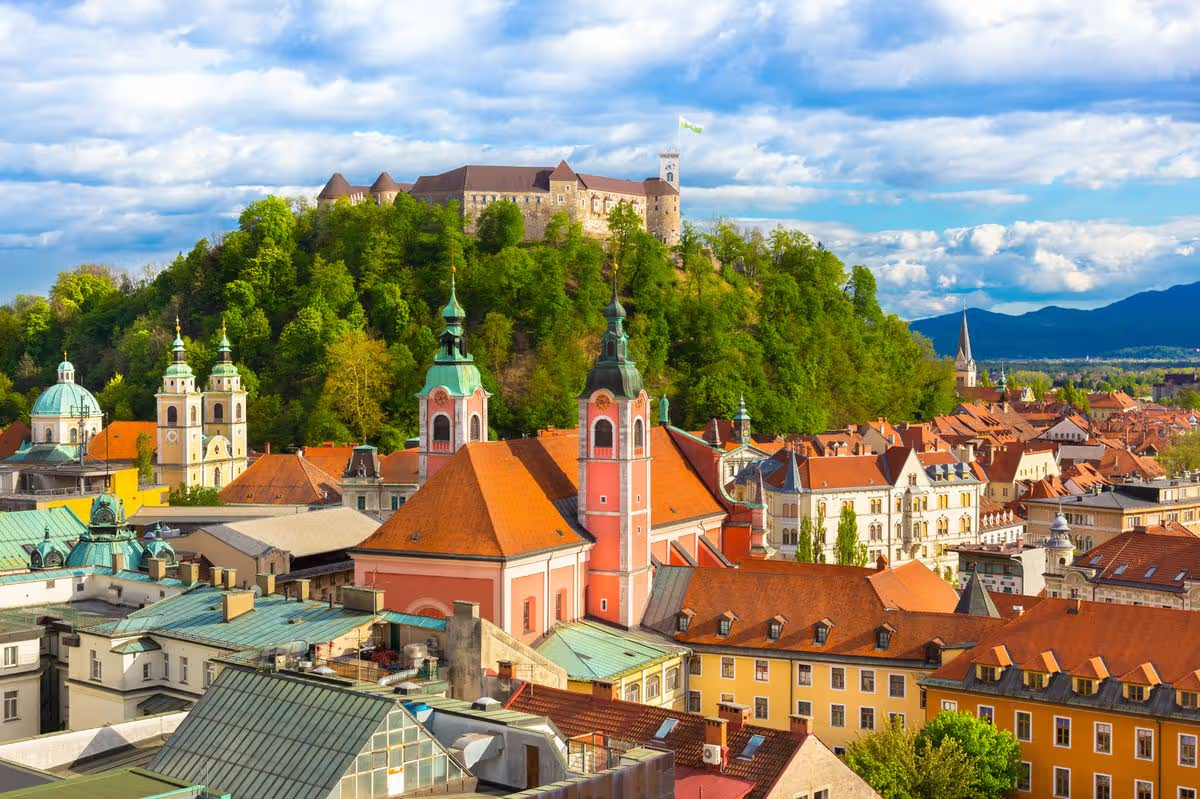
The Slovenian capital Ljubljana is one of the hardest names to pronounce(Image: Getty Images/iStockphoto)
Millions of British travellers are limiting where they go on holiday due to a surprisingly simple barrier – not knowing how to pronounce the destination.
One in five holidaymakers (22%) are less likely to visit destinations like Ljubljana and Reykjavik because they are afraid of getting their names wrong while 23% avoid booking the trip altogether.
One in three meanwhile, are worried about sounding rude when they mispronounce a foreign destination, while 26% said they are embarrassed, according to multi-modal travel booking platform Omio.
From Ljubljana (lyoo-BLYAH-nah) to Reykjavik (RAKE-yah-vik) and Montjuïc (mon-zhwEEK), many of the world’s most culturally rich locations are being overlooked.
Anxiety about language barriers goes beyond place names. Half (48%) of British travellers admit they avoid ordering dishes they can’t confidently pronounce while travelling, often missing out on tasty dishes such as bouillabaisse, tzatziki and mille-feuille and açai.
Omio has partnered with language expert and polyglot Alex Rawlings to launch a pronunciation guide to help British travellers travel abroad with confidence.
From understanding how certain letters and sounds change across languages to focusing on using tools like AI and pronunciation apps, the guide highlights easy ways to improve communication while travelling.
Alex said: “Pronunciation can feel like a barrier, but it doesn’t need to be perfect. The key is to focus on the sounds rather than trying to replicate every letter exactly.
“Breaking words into smaller parts and practising them slowly can make a big difference. Even a small effort is often appreciated by locals and can help travellers feel far more confident when exploring a new destination”.
Veronica Diquattro, president B2C Europe at Omio, added: “At Omio, we believe travel should feel exciting and accessible, not intimidating. With so many incredible destinations reachable by train, bus, ferry or plane, we want to give people the confidence to explore beyond the obvious.
“We know that even small barriers, like unfamiliar place names, can make travel feel daunting, so pairing up with Alex to produce the guide will help keen travellers to discover new destinations with ease.”
Tips for mastering hard-to-pronounce place names
Tip 1: Don’t read it like your own language Even when languages use the same alphabet, letters often sound completely different. In German, Dutch, Scandinavian and many Eastern European languages, “j” is pronounced like a “y”, while in French, Portuguese and Catalan it becomes a soft “zh” sound.
Tip 2: Use technology to help If you can’t ask a local, use tools like AI or Google Translate’s listen function to hear pronunciations and identify unfamiliar sounds or stress patterns.
Tip 3: Focus on the stress Getting the emphasis on the right syllable is often more important than perfect pronunciation. Think about the word Birmingham – people are far more likely to understand “BIR-ming-ham” than “bir-MING-ham”, even if the individual sounds aren’t perfect.
Tip 4: Learn the pattern Many languages follow consistent pronunciation rules, meaning once you learn one pattern, you can apply it to lots of other place names too. In French, Spanish, Italian, Portuguese and Catalan, for example, the letter “c” is pronounced like a “k” before “o”, “a” or “u”, but changes sound before “i” or “e” – becoming “ch” in Italian, “th” in Spain, and “s” in French and Portuguese.
Tip 5: Some letters are silent French is famous for silent letters, especially at the ends of words. That’s why places like Calais and Bordeaux are pronounced much more simply than they look. As a rule of thumb: if you’re in France and not sure whether you should pronounce the letter at the end of a word, you probably shouldn’t.
Tip 6: Don’t let language put you off Some of the world’s most exciting destinations – from Poland to Thailand – can also be the hardest to pronounce. Don’t let unfamiliar names stop you from exploring somewhere new.
Tip 7: Don’t be afraid to get it wrong Nobody expects perfect pronunciation – locals usually appreciate the effort more than accuracy. You might make a few mistakes, and you might earn yourself a few knowing smiles. But give it a go and see for yourself what worlds you might unlock!
The pronunciation guides are available to download now via Omio.