The U.S. government seems to be coming for California (again). Big surprise.
But scratch the surface of the recent Department of Justice voter fraud blitz and the ugly truth peeks through — this is an attack on immigrants of color, no different than accusing the Haitians of Ohio of eating cats and dogs or the aggressive escalation of detaining and deporting Black and brown people with no criminal record.
Just a few days ago, the White House posted on social media that “If you import the third world, you become the third world.” Not be be outdone, the fine Americans at the Department of Homeland Security responded with what seems to be a problematic mission statement that may wind up in court documents: “Reject the third world. Export the third world.” So far in President Trump’s second term, only 20% of the nearly 1 million people deported had a criminal record, according to the Migration Policy Institute.
Speaking of court documents, wow, do we have a lot to go through. Turns out not a lot of judges are into voter suppression.
There’s the U.S. Justice Department case claiming California is somehow stopping the feds from enforcing federal voting laws, despite those 28 cases. There’s a ruling in a different case that prevents the Department of Homeland Security from going door-to-door in California and other places checking on immigration status and voter registration — a terrifying overreach of power meant to intimidate legal voters.
And there’s the ongoing lawsuit from the UCLA Voting Rights Project and the Coalition for Humane Immigrant Rights in a Washington courtroom — a case that could take the lead in protecting the midterms.
Here’s what you need to know about all three, and what comes next.
Stop the knocks
Starting around August, Homeland Security began knocking on the doors of residents in California and eight other states in what it dubbed a “surge” in investigations on voter fraud.
These in-person checks were based on lists of folks the government thought might not be legally allowed to cast a ballot — and focused on naturalized citizens, according to court documents. They were also, according to the court, unreliable and included “instances where DHS simply did not have data to determine that the individual did not engage in voter fraud,” the California judge in the case wrote, meaning it was a giant fishing expedition.
In addition, Homeland Security was apparently investigating nonprofits and other organizations that help get out the vote, including interrogating the staff and covertly infiltrating their operations, according to court documents.
That’s McCarthyism-level scary. The California Nurses Assn. and its parent union, National Nurses United, filed a lawsuit to stop the Homeland Security surge, arguing in part that one of their core missions is political organizing and turning out voters, and that the operation directly harmed them by scaring their members away from that work.
They also have a lot of members who are naturalized citizens. Four union members told the court that they didn’t want to participate in the union’s election work because they were afraid of being targeted by the government, citizens or not.
The court found that fear “objectively reasonable” and ordered Homeland Security to stop the door-knocking until after the election. The judge then stayed that order until Friday to give the government time to appeal. So far, the government hasn’t filed that objection.
“So many people in the United States are suffering under Trump’s corrupt and cruel policies on behalf of the billionaire class that he knows cannot hold onto power in these upcoming elections without illegally suppressing our vote through outright harassment, intimidation, and even detention,” said Puneet Maharaj, executive director of the two nurses groups.
Emergency relief
At the same time, the Department of Justice this week filed a suit against California seeking an emergency order to force the state to segregate 20,000 ballots of folks it claims may not be citizens — an unprecedented ask in furtherance of the long-running conspiracy theory that immigrants who lack legal status are in a scheme with Democrats to vote en masse.
State Atty. Gen. Rob Bonta has asked the court to throw out the case, in part because the federal government can’t prove it’s actually being harmed in any way by state law. The feds have already filed charges in those 28 cases claiming voter fraud, so it’s hard to argue that state law is preventing them from going after illegal voters.
But the feds are arguing that the state is aiding and abetting illegal voting by not segregating those ballots, even though there is no proof they are in the hands of noncitizens. A review by the Los Angeles County registrar’s office found that about 40% of those on the list were born in the United States.
Attorneys general from other states filed a friend of the court brief siding with California, arguing that the Justice Department is basically trying to create a new law where “the executive branch can invent new election requirements, unmoored from any constitutional or statutory authority, and demand that States enforce them in the middle of an election.”
The court will rule on that next week.
Beyond Nov. 3
Our final case takes us to Washington, where the UCLA Voting Rights Project and the Coalition for Human Immigrant Rights, or CHIRLA, are asking for their own temporary restraining order — this one stopping the government from carrying out its ballot segregation scheme and from using its flawed, janky methods for supposedly identifying noncitizen voters.
I’ve written about this lawsuit before, and how the Voting Rights Project beat back Riverside County Sheriff Chad Bianco’s attempt to snatch ballots. The court will probably make a ruling in that one next week as well.
But election day is less than two weeks away, and many have already voted. So what does it all mean?
It means we’re in for a rough ride. The Trump administration is not dumb. Midterms might not go the way Republicans would like, potentially even giving control of both the House and Senate to Democrats. Some experts and legislators are concerned that all these ballot drama is posturing for that midterm loss — creating a reason to potentially question results or even refuse to seat newly elected Democrats when the time comes.
And almost certainly, no matter what voters decide, Trump will spin it back to that white nationalism — the idea that “true” Americans are being replaced through fraud, violence and vote stealing, a trio of conspiracies glued together by the sticky, tricky manipulations of a man who will do anything for power.
KATIE PRICE has been left furious after she was snubbed by the Pride of Britain Awards as she admitted she “didn’t get an invite.”
The former glamour model’s kids, Princess, 19, and Junior Andre, attended the Awards on Monday and were seen posing up on the red carpet.
Katie has revealed she wasn’t invited to the Pride of Britain Awards despite her kids making the cutCredit: GettyPrincess and Junior Andre attended the Pride of Britain Awards on Monday nightCredit: Getty
But, Katie didn’t quite make the cut.
While discussing their booming careers on her podcast, The Katie Price Show, she confessed they were invited to the prestigious event – but she wasn’t.
KATIE Price has revealed her eldest son Harvey has moved out to a temporary residential home after he wrecked her kitchen.
The 24-year-old, who has Prader-Willi Syndrome, a complex condition that causesobesityand learning difficulties, has re-located – and is “loving” his new surroundings.
Katie Price has revealed eldest son Harvey, 24, has moved to a temporary residential care homeCredit: Paul EdwardsHarvey suffers from Prada-Willi Syndrome and complex needsCredit: PA
Now his proud parent Katie, 48, who has always sent her eldest to residential care home in order to let him learn vital skills and his own independence, has given an update.
Sign up for the Showbiz newsletter
Thank you!
On her podcast with sister Sophie she admitted: “This week I am chilling now.
“So Harvey has gone to a residential temporary place now, because after three kitchen cabinets and just everything I’m just like, honestly, he is ruining my house.
Katue, 48, said Harvey had been ‘ruining my house’ after breaking three cabinetsCredit: Paul EdwardsHe will soon move into a permanent facilityCredit: Paul Edwards
“I’ve said he’s got to go into this place, the place we have been waiting a year and a half for.
“So he’s gone somewhere else up the road, he’s loving it, he’s got his own little flat until his place is ready”.
Katie added: “He FaceTimed me this morning while he was in the swimming pool, showing me the bubbles, when he saw trains.
“I set it all up for him, done his food shop for the week and he’s got the carers there so he can get into the routine for when he moves to Little Hampton.
“So fingers crossed he likes it”.
Everything you need to know about Katie Price
Step inside the life of former glamour model Katie Price
For truckers, that’s a crisis. Their big rigs get about a paltry six miles to the gallon and filling their tanks in the Golden State now costs up to $2,500 a pop. For the guys who own a single truck or the small companies (which is the majority of trucking businesses), it can be hard to pass along those extra fuel costs to customers — which, as my colleague Nilesh Christoper wrote about, is causing a lot of pain in the industry.
Truckers everywhere are stomping mad, and it’s a problem for President Trump and Republicans heading into the midterms. Eventually, higher diesel prices are going to mean higher prices on the goods those trucks are transporting, and that’s an even bigger problem.
Trump has been throwing spaghetti at the wall trying out one limp solution after another to bring prices down — cutting taxes, brokering deals with Russia, telling us it’s just not a problem. But of course, it is.
Truck drivers fill they diesel tanks at United Oil in Long Beach on Wednesday, Oct. 7, 2026.
(Christina House / Los Angeles Times)
One Southern California energy expert has spent recent days in Washington, D.C., trying to convince the administration that the solution lies in California, in the vast oil reserves under our cities and farms that we largely leave untapped for environmental reasons. Environment aside, it’s a long-running and compelling (to some, anyway) argument that may have found its moment, meaning California might become Trump’s next solution — or at least scapegoat — to a costly problem.
More on that, but first, a recap of where we are.
The red dye ploy
Three thousand years ago in Trump time, but which I mean earlier this month, the president signed an executive order that allowed truckers to use red dye diesel as a way to lower costs.
Red dye diesel is, you guessed it, my genius readers, diesel that has been dyed red — to differentiate it from the stuff at truck stops. Farmers and other agricultural types are allowed to buy red dye diesel without certain taxes to use in tractors and other equipment that doesn’t run on our roads.
The Trump order allows truckers to buy red dye and defer paying the roughly 25-cent-per-gallon federal tax on it. So it’s not really saving them money, just delaying payment.
President Trump signs an executive order to lower the cost of diesel fuel during a campaign rally on Oct. 5, 2026, in Grand Island, Neb.
(Win McNamee / Getty Images)
But there’s a problem with Trump’s red dye plan. States have their own laws about red dye diesel, and the feds can’t change them. So even if truckers could find a place to buy red dye diesel (again, not sold at regular gas stations), and even if the incentive of paying taxes later made the search seem worthwhile, they would often be breaking state laws.
Eric Sauer, chief executive of the California Trucking Assn., a trade group that advocates for the industry, said his group has been advising members not to use the crimson fuel until it’s clear that states are going to change their rules. Some, like Missouri, have. California has not.
Either way, Sauer said, allowing truckers to use diesel dyed red really doesn’t increase the overall supply, just shifts it around — which is unlikely to bring prices down.
“It’s still the same supply of diesel fuel out there,” Sauer said.
Global supply
The global supply of crude oil, has been, shall we say, negatively affected by our war with Iran. Despite Trump’s assurances that the conflict is winding down, two container ships in the Strait of Hormuz were attacked this week, highlighting that perhaps Iran is unaware the war is over. Fears of that conflict and others sent energy prices soaring even higher.
The PCK petroleum refinery stands illuminated at twilight on April 28, 2026, in Schwedt, Germany. The refinery, which produces gasoline, diesel, kerosene and bitumen, receives 20% of its oil from Kazakhstan through the Russian Druzhba pipeline.
(Sean Gallup / Getty Images)
That deal could bring 36 million barrels of Russian diesel, at most, to American shores, which sounds like a lot until you realize we use about 4 million barrels of the stuff every day. So Trump essentially sold out Ukraine and demolished what was left of our European standing for nine days of diesel — an amount unlikely to lower prices.
In California, that’s especially true because, as UC Berkeley professor Aaron Smith points out, about 70% of our diesel “is actually not made from crude oil and coming from oil refineries. It’s made from vegetable oils and animal fats.”
Yes, the Golden State relies heavily on so-called renewable diesel that, Smith says, “introduces, I think, another wrinkle” when trying to lower costs.
California’s fault
But let’s get back to Mische, the USC professor. For years, he’s been arguing that California’s refusal to pump more oil should be viewed as a national security concern.
California actually imports the majority of its crude oil, more than 60% from other countries, and our refineries for a number of debated reasons have been closing. Our imports have been growing in recent years. We also have no pipelines connecting us to the rest of the U.S., unlike many other states. That means we can’t easily get oil except what’s shipped in through our ports.
At the same time, the West Coast with its many military installations is undeniably pivotal to national security. Mische argues that without adequate fuel reserves for a shortage — like during a war — our military readiness could be jeopardized. He wants to see California not only pump more, but for the federal government to store more of that California crude.
A train of tank cars enters the Chevron EL Segundo refinery, one of the largest petroleum processing facilities in California, on April 8, 2026. California imports approximately 75% of its crude oil, with nearly one-third of the crude supplied from the Middle East. Prices at the pump in the state are averaging $5.93 per gallon today amid the war in Iran.
(Mario Tama / Getty Images)
These arguments haven’t gained much traction in our heavily Democratic state, which has moved forcefully away from fossil fuels and toward renewable sources in recent years and which has little interest in increasing drilling. But Mische and his colleagues may have found their moment.
Earlier this year, they wrote draft executive orders about California’s oil industry that he says the Trump administration is considering — one would attempt to force California to pump more oil using the authority of the Defense Production Act of 1950.
Trump has used that wartime act several times in the last few months, and Tuesday, Vice President JD Vance announced it would be used to expand production at a Texas oil refinery.
Mische said he spent last week in conversations with the administration on the proposed orders and is “confident” Trump will “issue additional executive orders under the Defense Production Act for California” by the end of the year.
Beyond the national security argument, such orders could please Trump because they do two things. First, if California pumps its own oil, it could free up some imported oil for other states, which could lower prices — though it would certainly take time and require more refinery capacity.
Second, and likely of more interest to the White House, it makes California — and Newsom — the villain for this sticky Republican problem. California will sue, of course, which would just help the Trump political narrative.
Kevin de León, a California Senate president emeritus and author of SB 100, California’s landmark 100% clean energy law, said he can easily envision Trump claiming that “we have lots of cheap oil in the United States that can lower your gas prices — but crazy lefty California is blocking us.”
Actually, it’s hard to imagine Trump not grabbing the chance to blame gas prices on the Golden State — or Newsom.
SCHOOL holidays – two words guaranteed to make any parent’s bank account start sweating.
The moment the school gates close, holiday prices normally launch straight into orbit, leaving us staring at a rainy weekend in Morecambe rather than a gloriously sunny break abroad.
You can still get some great cheap holidays in October during half termCredit: On the Beach
But if you know where to look, you can find some mega October half term breaks without having to remortgage your house.
I’ve dug up eight cracking five-night breaks with direct return flights starting at £295pp – and every single one is in October half-term.
We’re not talking about the bottom of the barrel here either – I’ve found Spanish beach favourites, theme-park thrills, Italian lakes and Croatian coastlines, all coming in under £334 each.
So you can get a proper change of scenery for the family without dipping into your overdraft.
1. Alicante, Costa Blanca – from £295pp
Alannia Costa Blanca is our biggest bargain destinationCredit: On the Beach
If your main mission this October is keeping the kids from tearing the wallpaper off while keeping costs down, this is a strong contender.
Alannia Costa Blanca is inland near Crevillente, where October daytime highs average around 24C – warm enough for spending time outdoors without the fierce summer heat.
You’re staying in cabin-style accommodation with kitchen facilities, (a lifesaver when the little ones demand a third bowl of Weetabix at 5.30am).
And the resort has tropical pools and slides, playgrounds and an indoor pool, plus an on-site supermarket for when you inevitably run out of snacks.
This is my biggest bargain, as I found five nights self catering and direct return flights from East Midlands from £295pp.
It is a good shout for families who want plenty to do around their accommodation and the flexibility to keep some meals cheap.
2. Salou, Costa Dorada – from £297pp
Inter2 Apartments is simple but affordableCredit: On the Beach
Salou is a must-stay if you want options beyond staring at the same resort pool for five days.
You’ve got broad seafront promenades for a wander, big family-friendly beaches and PortAventura World nearby if you want to brave the big rides.
October daytime highs average around 22C, making it a good time for mixing exploring with beach afternoons when the sun’s out.
And my pick of hotel, Inter2 Apartments, is simple, affordable and practical.
You get kitchen facilities to keep breakfast costs down, a balcony for a quiet drink once the kids are asleep, and you’re around 500 metres from the beach and coastal path.
At £297pp for five nights self catering, including direct return flights from London Luton, it leaves a bit more in the holiday budget for ice creams and days out.
Just remember to budget separately for theme-park tickets.
Manilva is right by Gibraltar so expect great viewsCredit: On the Beach
For southern Spanish warmth without staying in the thick of a busy resort, head west along the coast to Manilva.
It’s a quieter option that suits families who want to slow the pace down.
It sits right on the edge of the Costa del Sol, near Gibraltar, so expect great beaches without huge tourist numbers.
October daytime temperatures typically reach the mid-20s, which is comfortable weather for exploring, coastal walks and long lunches outside.
And Pierre & Vacances Terrazas Costa del Sol gives you spacious apartments with balconies or terraces and overlooking the water.
There are outdoor pools, a playground and a sports court, and plenty of options for transport down to the beach and exploring the surrounding area.
The five-night self-catering stay I spotted comes in at £298pp with direct return flights from East Midlands.
It makes for a super-practical option if you want room to spread out without spending a fortune on accommodation.
4. Lloret de Mar, Costa Brava – from £305pp
Skip the expensive resorts for your own apartment with a kitchenCredit: On the Beach
Lloret de Mar is an absolute staple for October half-term.
You’ve got beaches, coastal scenery and opportunities for days out, including nearby Tossa de Mar and its old town.
Plus, October daytime highs average around 23C, making this a good choice for getting out and exploring with a light jacket to hand.
Condado Apartments gives you equipped kitchens, living space to spread out and balconies.
There are also two rooftop pools, including one for children, and a sun terrace.
Having a kitchen means you aren’t forced to pay restaurant prices three times a day when the kids decide to eat two bites of dinner and declare themselves full.
With five nights on self catering and direct return flights from London Luton from £305pp.
It’s a straightforward way to keep holiday costs down while still getting a proper break.
5. Fuengirola, Costa del Sol – from £310pp
This Fuengirola hotel has a fantastic rooftop pool areaCredit: On the Beach
Fuengirola does the familiar Spanish family holiday incredibly well.
There are loads of beaches, a seafront prom and plenty of places to stop for food or coffee.
So you don’t need a complicated itinerary when a walk, some sand and a decent lunch can comfortably fill the day.
October daytime highs average around 23C, so there’s still a good case for eating every meal outside and enjoying the beach every day.
Las Palmeras Affiliated by FERGUS sits on the seafront promenade opposite the marina, with the beach and plenty of restaurants within easy reach.
But the real win: the hotel also has a pool and rooftop sun terrace overlooking the harbour. And it’s gorgeous.
It’s £310pp for five nights with return flights from East Midlands.
A great price and a decent hotel which I’d treat as a base for getting out and enjoying Spanish town life, rather than spending the whole holiday there.
6. Lake Garda, Italy – from £319pp
Why not skip beaches for Italy’s Lake GardaCredit: On the Beach
Here’s the wildcard: swap the sand for lakeside scenery in Italy.
Peschiera del Garda gives you canals, waterfront walks and plenty of opportunities for pizza and gelato, which tend to work well as encouragement when the kids have decided they’ve finished sightseeing.
Late October is a little cooler here, so you might not be out sunbathing.
But Gardaland theme park is nearby if you fancy a bigger family day out, (just make sure to check opening dates and budget separately for tickets).
Residence Eden has apartment accommodation in green surroundings outside the town centre.
Kitchen facilities make it easy to knock together a quick pasta dinner without taking tired children out to a restaurant at 8pm.
And it leaves plenty of time for trips into town and around the lake.
With five nights and direct return flights from East Midlands from £319pp, it’s a wicked alternative to the usual half-term beach break.
7. Cala Galdana, Menorca – from £315pp
Menorca is a great island to visit for a half term holidayCredit: On the Beach
Cala Galdana is a proper postcard setting.
It has a curved sandy bay backed by pine-covered surroundings, with coastal walking routes for when you fancy stretching your legs.
It’s a good choice for families who want a slower few days away.
Menorca’s October daytime highs average around 22-25C, so I’d come for beach walks and exploring, with swimming as an added bonus.
Alta Galdana is a simple budget base with a pool and sun terrace.
The bay and surrounding scenery are the main draw here, rather than a big programme of hotel entertainment.
At £315pp for five nights on room only, including direct return flights from London Luton.
It’s definitely worth a look if you’re happy heading out for meals and letting the destination do most of the entertaining.
8. Seget Donji, Croatia – from £334pp
Croatia is a great alternative to SpainCredit: On the Beach
If you fancy something totally different from the usual Spanish escape, Croatia’s Dalmatian coast is well worth a look.
You’ve got Trogir nearby, Split as another option for a day out, and seaside walks around Seget.
October daytime highs around Trogir average roughly 22C, making this more of an exploring-and-long-lunches holiday than a guaranteed week of swimming.
Apartmani Medena is an apartment complex near the beach, around four kilometres from Trogir.
A seaside promenade connects it with Seget’s old fishing village, giving you an easy option for getting out for a walk.
The five-night stay I found comes in from £334pp with direct return flights from London Gatwick.
Food is extra but cheap enough around Seget, and this deal gives you a base for exploring a different stretch of Europe at a very, very reasonable half-term price.
Katie Price has taken a subtle social media swipe at Lee AndrewsCredit: wesleeandrews/InstagramLee has been scrubbed from the former glamour model’s Instagram pageCredit: Instagram – Katieprice/Backgrid
Katie ended their marriage over WhatsApp last monthCredit: InstagramShe is bracing herself for a ‘messy divorce’ as Lee vows to return to the UKCredit: Getty
A source previously said: “Katie is determined not to be in financial trouble again.
“She’s been working really hard to get enough income to be comfortable – with her OnlyFans and various other projects, but she is all to aware of how easily it can be lost.
Price says her focus is simply on Kotaskova, who took Cameron the distance in London in April.
Her loss on the scorecards at light-middleweight is her only defeat in a 15-fight career and will present a tough challenge for Price in her 11th fight since giving up her amateur status.
At one stage it had seemed as though all roads led to a showdown with Shields, with the two facing off after Price’s win over Pineiro earlier this year.
Shields called out Price as recently as August having reclaimed titles at middleweight.
A two-fight deal had been speculated but, when pressed on what happened, Price told BBC Sport Wales: “There was nothing on my side. The money wasn’t great, I wanted to fight in America and in Wales, but she wouldn’t come here, and there was no rematch clause.
“Everything basically was stacked against me and it just didn’t make sense.
“I have to stand on my own two feet and think: ‘I’m Lauren Price, I’m unified champion, Olympic gold medallist.’
“If I was towards the end of my career or if I had a few losses, absolutely you jump on it.
“But there’s no rush and there’s equally exciting fights out there.
“That fight will definitely happen, but only when it’s the right time and it makes sense.”
JUNEAU, Alaska — In the thick of Alaska’s primary election season this summer, independent Bill Hill took a break from his U.S. House campaign to return home to Bristol Bay.
The world’s biggest sockeye salmon run was beginning, and that meant he needed to get back to work.
“I told my team that I have got to fish,” he said, adding: “Commercial fishing is the way that we pay the bills.”
Hill, 57, grew up in a tiny southwest Alaska village where he said his family had no phone and had to haul water from a nearby lake for cooking and bathing. Today, while he no longer has to fetch water, his lifestyle is not much different. He lives in a remote fishing community of about 430 people that he has called home for nearly half his life.
A retired teacher and school administrator, Hill has positioned himself as a working-class candidate who can relate to Alaskans’ frustrations with high fuel and other costs. He has made affordability and pushing back against billionaires a central theme in his campaign against Republican Nick Begich, who’s seeking a second term in Congress.
“We are pedal to the metal, making sure that every Alaskan knows about this campaign, every Alaskan knows what we stand for and every Alaskan knows that it’s really one of them going to Congress,” Hill told people at a campaign event this week in Juneau, wearing his standard campaign uniform of jeans, a zip-up vest and cap with a fishing company logo. “I need your help getting there.”
The race has become a concern for Republicans as they are trying to hold onto their majority in the U.S. House. Vice President JD Vance held a rally this week for Begich and Dan Sullivan, the U.S. senator who also is in a tight reelection race. President Trump is scheduled to do another in the coming week.
Begich and Republican political action committees have ratcheted up ad spending in the House race since the primary.
Planes, ferries and four-wheelers on the campaign trail
Hill, a first-time candidate who is Alaska Native, faces an incumbent from a prominent family long associated with the state’s politics. Begich’s late grandfather once held the state’s only U.S. House seat. Begich’s uncle Mark was a U.S. senator. Both were Democrats. Nick Begich is a lifelong Republican and has aligned himself with Trump, who has carried Alaska in his White House runs.
Hill’s campaign said he has traveled more than 20,000 miles in the state, including by plane, ferry and all-terrain vehicle, to introduce himself to voters and promote his message.
Begich’s name recognition presents a hurdle for Hill’s campaign, but some Democrats tried to clear a better path for Hill. One suspended his campaign before the August open primary and endorsed Hill. Two other Democrats with virtually no name recognition withdrew after the primary despite being in line to advance.
One candidate registered as a Democrat remains in the top four, Eric Hafner. He has no apparent ties to the state and is incarcerated in New York.
Hafner received 3.8% of the vote, enough to qualify for the ranked vote general election on Nov. 3. His submitted candidate biography appearing in state election materials makes no reference to his stint in federal prison, where he is serving time for making threats against police officers, judges and others.
Hill’s campaign has shared stickers showing Hafner in an orange jumpsuit and calling him a “fake ‘Democrat.’”
“We want to make sure that the Alaskan people are well-informed,” Hill said.
Begich gets support from Trump and the U.S. House speaker
The contest has received national attention, with spending by groups that include the National Republican Congressional Committee and House Majority PAC, which seeks to flip the U.S. House to Democrats.
In early August, U.S. House Speaker Mike Johnson, R-La., held a rally for Begich that was closed to reporters. Vance called Begich a “machine” and effective legislator during his rally in Fairbanks, where Vance also gave support to Sullivan, who faces a challenge from Democrat Mary Peltola, a former congresswoman.
Trump has cited Begich’s support of his signature package of tax breaks, social service cuts and immigration enforcement that was passed last year. The president plans to headline a rally Tuesday in Wasilla, hometown of Sarah Palin, the party’s 2008 vice presidential nominee.
Hill said the visits show Republicans are nervous.
“I was not going to get into this race to waste people’s time, to waste people’s money,” he said. “I did my due diligence before jumping in to ensure that there was a path to victory.”
Begich’s campaign did not respond to messages from the Associated Press. On social media, the campaign has highlighted events such as Begich’s visit to the Alaska State Fair and recently has taken swipes at Hill.
Zach Bannon, an NRCC spokesperson, said Begich has delivered “commonsense wins for Alaska,” including support of expanded oil and gas development. He called Hill a “far-left Democrat.”
Hill was endorsed by Democrats but asserts his independence
Hill, who was endorsed by the Alaska Democratic Party, said he is a lifelong independent. He said he will not be beholden to a “party boss” or party line, and he rankled some voters earlier in the campaign by not explicitly saying which party he would caucus with in the House if he were elected.
He has said he is willing to work with anyone on what is best for Alaska. He also has called for bans on congressional stock trading and for limiting the influence of money in elections.
Hill said he wants to help build coalitions, saying he “can be a big part of a small group that makes big changes.”
Democrat Bill Brown came to the Juneau event planning to vote for Hill but wanting to talk with him directly. He said they aligned on numerous issues, including support for the environment, schools and ending “forever” wars.
The retired economics professor said policy is important, but in this political moment he finds himself “most interested in the integrity of the candidate. Bill Hill convinced me on that issue.”
Hill, who is Dena’ina Athabascan, said the top concerns he hears about from Alaskans are the price of fuel and overall cost of living. He said he had to fly home earlier this year and pump fuel oil from the textile manufacturing business he runs with his wife and bring it back to his house in a barrel because the community had run out.
He said fuel prices jumped from about $6.70 per gallon to about $9 per gallon after a barge shipment to his town earlier this year. Prices also have been higher elsewhere, particularly in communities accessible only by air or water. On social media, Hill’s campaign calls out Begich for his support of the Iran war as it posts photos of fuel prices around the state.
Steve Davis, a voter at Hill’s Juneau event this week, called him authentic and a “really good dude.” He said he was drawn to Hill in part because he wants to see Congress reclaim its oversight role. Hill drew applause during the gathering when he said Congress must reassert itself as a separate but equal branch of government.
“We don’t need a unified executive, we don’t need kings,” Davis said. “We need a Congress that actually functions.”
WASHINGTON — President Trump said that he has struck a deal to obtain diesel from Russia, a stunning reversal of years of U.S. pressure on Moscow over its war with Ukraine and an attempt to address high fuel prices ahead of the U.S. midterm elections.
Trump said on social media on Friday that he struck the deal with Russian President Vladimir Putin in a phone call in which he was expected to discuss a suspected case of plague in Russia. Instead, Trump announced that Russia will immediately supply more than 300,000 tons of diesel, followed by an additional 500,000 tons in November and 1 million tons “immediately thereafter.” Russia will deliver another 3 million tons “within a short period of time” after that, he wrote.
Trump’s shocking announcement comes after he signed a sweeping Russia sanctions law last month that aimed at clamping down on Russia’s energy economy, among other areas, that fuel its war against Ukraine.
His move casts doubt on the likelihood of the White House imposing sanctions on Russia this month, given that a bipartisan law passed by Congress directs the administration to target the top importers of Russian oil and gas.
Trump, in his announcement, did not address the sanctions or Russia’s war but said, “Lower prices for Americans, especially our Great Farmers, Ranchers, and Truckers, is my Greatest Priority.”
The White House did not immediately respond to questions about who was paying for the diesel from Russia and when the fuel being supplied under the agreement would become available. It also did not clarify whether subsequent supplies of Russian diesel set to come next month would be supplied prior to Election Day on Nov. 3.
Gas prices globally have surged as the war in Iran upends the energy sector. The national average for a gallon of diesel in the U.S. was $6.23 on Friday, according to AAA, after hitting a record $6.52 on Sept. 22.
Russian presidential envoy Kirill Dmitriev reposted the Treasury Department’s announcement on X Friday and said that “Russia-US cooperation on diesel and energy will benefit the world.”
Rep. Don Beyer, the senior House Democrat on the Joint Economic Committee, called Trump’s announcement, “infuriating.”
“This is what we warned anyone who would listen: Trump isn’t the slightest bit trustworthy when it comes to Russia,” Beyer said in a statement on X. “Giving him expanded tariff powers in hopes he would use them to help Ukraine was a mistake. Now he’s lifting sanctions on Russian fossil fuels.”
The law Trump signed last month envisions sanctions on Russian officials, banks and a shadow fleet of tankers and bans all new U.S. investment in Russia and the handling of sovereign debt.
It also directed Trump to impose tariffs of up to 100% on the top five importers of Russian oil or natural gas, with an exception for countries that import less than 15% of Russia’s natural gas exports and have taken significant steps to reduce those imports.
The U.S. has not imported Russian oil or gas since 2022, when the Biden administration banned them because of Moscow’s invasion of Ukraine, according to the U.S. Energy Information Administration.
Shortly after Trump made the announcement, the Treasury Department said it was immediately issuing a temporary license allowing Russian diesel to be supplied to the global market.
This is the latest in several licenses the U.S. Treasury has issued regarding Russian fuel shipments since the start of the Iran war earlier this year. But it is the first such license to ease sanctions on diesel for a period lasting longer than the standard 30-day window since the start of the Ukraine war.
The new so-called general license means U.S. sanctions will not apply until April 2027 on deliveries of Russian diesel that has been loaded onto tankers as of Friday. The department extended similar easing of sanctions in March and April even though Treasury Secretary Scott Bessent had ruled out such a move earlier in the year.
The extensions continue to underscore how the fallout from the Iran war has boosted Moscow’s ability to profit from its energy exports, which had been restrained by the U.S. and other allies since the invasion of Ukraine.
Price and Binkley write for the Associated Press. AP writer Will Weissert in Washington and Farnoush Amiri in New York contributed to this report.
KATIE Price told social services she feared her then husband Kieran Hayler had groomed and sexually abused his alleged child rape victim, a court has heard.
The 39-year-old is accused of three counts of rape and one count of sexual assault against the girl between June and October 2016, when she was 13.
Katie Price told social services she feared her then husband had groomed and sexually abused his alleged child rape victim, a court has heardCredit: GettyKieran Hayler, arriving at Lewes Crown Court for trial, is accused of three counts of rape and one count of sexual assaultCredit: Darren Fletcher
Katie told a social worker in 2018 that Hayler, 39, had been grooming the girl since she was 13 in a list of agreed facts read in Lewes Crown Court yesterday.
She alleged that Hayler had been grabbing the teen’s bottom, trying to kiss her and said he was falling in love with the girl, jurors heard.
Sign up for the Showbiz newsletter
Thank you!
The social worker then informed Sussex Police about the allegations.
Authorities contacted the mother soon after but she told police her daughter did not want to talk about it or take the allegations any further.
Katie alleged Hayler had been touching and trying to kiss the girl and was falling in love with her, jurors were toldCredit: PAKatie Price and Kieran Hayler in 2017Credit: Getty
Defence barrister Arlette Piercy asked the mother if she had betrayed her daughter’s trust by going to Katie Price with her allegations in 2017 – nearly a year before she reported them to social services.
She asked: “You said you felt you had to tell Katie Price. “You went behind your daughter’s back?
The mum – who cannot be named for legal reasons – responded: “Yes, she probably didn’t want anyone to ever know.
“It probably did cause arguments. We did have a big fall out.”
Asked if the girl was “OK” about her telling Ms Price, the mum said: “No, she wasn’t OK about it.
“But I said to (the girl) because the marriage situation (with Kieran) had broken down, it was only fair that I let Katie know.”
The child told her mum that Hayler had “done everything” to her during a conversation in 2017 – almost a year after his last alleged attack, jurors were told.
The woman then informed former glamour model and mum-of-five Ms Price, 48, weeks after she was told.
Speaking about when she told Ms Price, the woman said she told her: “I think Kieran has done something to (the girl).”
She told the court: “She was shocked and probably swore.”
The mum said she felt “like I have to” tell Ms Price, who was having marriage problems with Hayler at the time.
She added: “She was quite angry and I didn’t feel that she was particularly upset for (the girl).
“I just felt that she was angry and feeling revengeful towards Kieran for the situation they were in.
“And she said, ‘Well, you could get him into trouble if you told somebody’.”
The woman – who said her daughter did not want to tell authorities about the allegations – continued: “I said we have to respect her wishes, she doesn’t want anybody to know, we have to just look after (the girl).”
The girl – now aged in her 20s – denied making up the claims and became emotional, leaving the courtroom at one point as she faced questions from Hayler’s legal team.
The court was shown a video of her police interview from 2021 where she recalled the alleged abuse, sobbing as she said “I thought it was my fault for ages”.
Jurors previously heard Hayler allegedly begged the girl to not tell anyone and told her to “take it to the grave”.
The court also heard previously that before the first alleged rape, Hayler told the schoolgirl he really liked her and began speaking to her about sex – he is accused of raping the girl again on two further occasions.
The girl, who is not a member of Hayler or Katie’s family, contacted the NSPCC in December 2021 when she was aged 18, which prompted an investigation, it was said.
Former stripper Hayler denies all the allegations, which are said to have happened at an address in West Sussex.
In a world with increasingly volatile economics and changing consumer habits, broadcasting live sport has been one of the more reliable ways for companies to generate revenue.
And live sport – and entertainment – is one of the few industries whose financial success is unlikely to be significantly compromised by artificial intelligence in the coming years.
That means more and more companies have taken an interest in buying the rights to show sports events, which means more TV subscriptions than ever before are necessary for fans wanting to watch all of the action.
A football fan in the UK, for example, must subscribe to Sky Sports, TNT Sports, Amazon Prime and Premier Sports, if they want to watch all of the matches across the Premier League, Champions League and Scottish Premiership.
And they must pay for an annual TV licence to watch other matches on the BBC and ITV.
Without taking advantage of special offers, other sports can require even more subscriptions and even more money.
“It certainly helps when you can say to a fan that they only need to buy one subscription to see everything in one sport,” says Pete Oliver, CEO of growth markets for DAZN, a global sports streaming service.
“If a sport is very fragmented, we would say it’s not going to be a great proposition for the fan [for us to be involved], and it’s probably not going to be a great commercial prospect for us.
“The cost of entertainment [subscriptions] generally will increase over time.
“There is natural inflation in the market, there is a lot of competition for sports rights, the athletes want to be paid more money, and the leagues want to do what is right for them, and if they can get somebody to pay more for the content, they will”
KATIE Price told her ex-husband Kieran Hayler’s alleged child rape victim she would “make her a little star”, a court heard today.
The former glamour model, 48, made the comment in a message while quizzing the girl about whether she had kissed Hayler, jurors were told.
Katie Price said she would make Kieran Hayler’s alleged child rape victim a ‘little star’Credit: GettyHayler has denied the allegationsCredit: Gary Stone
The message exchange happened in May 2017 – eight months after the last alleged attack by Hayler, it was said.
The former stripper is accused of three counts of rape and one count of sexual assault against the girl between June and October 2016 – when she was 13 and Hayler and Katie were married.
Sign up for the Showbiz newsletter
Thank you!
In the May 2017 exchange, mother-of-five Katie asked the girl if she and Hayler, 39, had kissed.
Katie wrote: “I WON’T say anything and I PROMISE I’ll protect you!
HHS has finalized an update to Transparency in Coverage (“TiC”) rules intended to help health plan enrollees better understand how much they will pay before receiving care.
The new rules provide more context about in-network prices, boost out-of-network pricing information, and improve
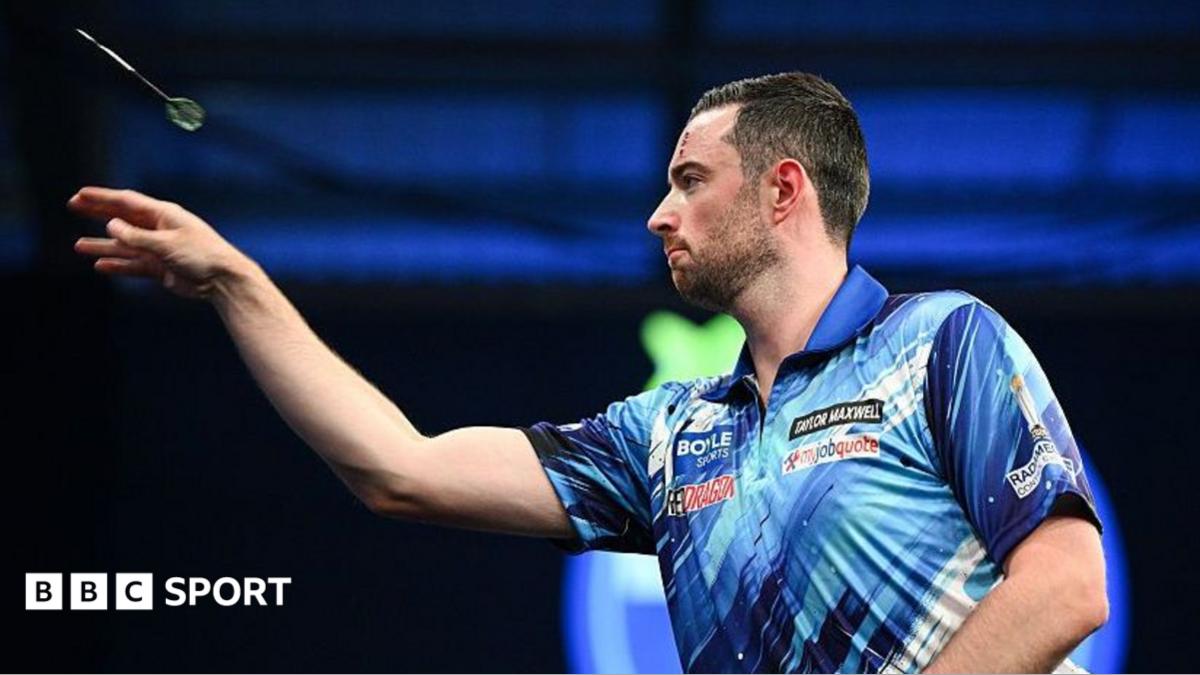
Price, who was playing in a fourth Grand Prix final, claimed the first set with a stunning 132 three-dart average.
He raced into a 3-0 lead and Humphries admitted afterwards that avoiding a 6-0 clean sweep was on his mind such was the brutality that Price was producing.
The fourth set saw the momentum swing however. With Price waiting on tops to move to within two sets of victory, Humphries nicked it by taking out a brilliant 105, with what he said “felt like the biggest shot of my career”.
From there his levels started to rise and he claimed the following three sets to lead.
Price rallied in set eight and won three successive legs to force a best-of-three finale, but, after a short break, Humphries found another gear.
Set nine went to a deciding leg, but unlike the previous four sets in the match where that had happened, there was a break of throw, with Humphries finishing in 10 darts.
That left Price dejected and Humphries won three unanswered legs to claim a ninth major PDC title.
“The sport is in such a special place that when you pick these trophies up they mean a lot more,” said Humphries.
“When I was winning, I don’t think there were so many good players. I’m happy to win a couple a year – one a year is great.
“To go on and win like I did is going to be tough. I don’t think I can’t do it, I’m just trying to pick up as many titles as I can.
“I worked incredibly hard, showed a lot of grit and determination. I think these are a lot sweeter than the ones you win with ease.”
World number two Luke Humphries secured his place in the World Grand Prix final with a 5-3 victory over James Wade.
Humphries averaged 96.92 and threw 10 180s as he reached the final for the fourth successive time.
The 31-year-old Englishman will face Welshman Gerwyn Price on Sunday evening in Leicester after he beat Nathan Aspinall in the other semi-final.
“I’ve got to do it again because there’s so many major finals I’ve let slip. Gezzy [Price] is playing well but if I play like that again, it’s going to be a cracking game and I hope it is,” Humphries told Sky Sports.
“To make four Grand Prix finals on the trot is super special. It’s history for myself and I’m proud of that but unless I pick that trophy up, unfortunately that history doesn’t mean anything.”
Humphries, who won this title in 2023 but has lost in the past two finals, took the opening set of the semi-final but Wade produced a brilliant 141 checkout en route to drawing level.
The pair exchanged the next two sets before Humphries took control of the contest to move 4-2 ahead.
Wade refused to go quietly and pulled one back to keep the match alive but Humphries held his nerve in the eighth set to seal victory on double top.
In the other semi-final, Price beat a spirited Aspinall 5-2.
The Welshman took a three-set lead as Aspinall struggled to reproduce the form that had seen him average 105.15 in his quarter-final win over Ryan Joyce.
Aspinall briefly rallied and produced a superb 132 checkout – the highest of the match – to get a set on the board.
The 35-year-old then threatened to turn the match around when he reduced the deficit to one set at 3-2.
However, Price regained his composure and closed out the next two sets without reply to secure his place in the final.
Price said he was “frustrated” by Aspinall’s antics during the match as he interacted with a partisan crowd at the Mattioli Arena.
“I’m glad to come through the game. Nathan was complaining about the crowd, but they were on his side,” Price said.
“He’s performing a little bit on stage. I’m great friends with Nathan, but take it on the chin sometimes when you’re losing.”
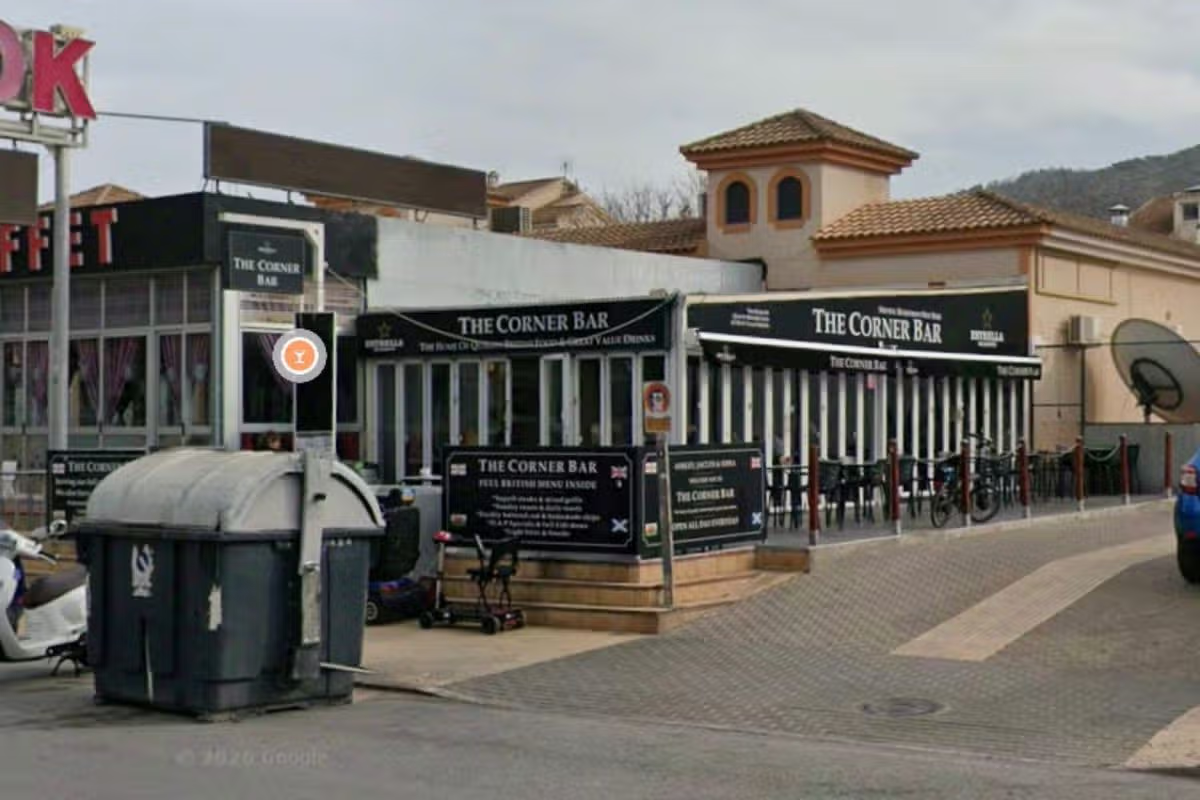
A bloke moaned that his full English breakfast at a cafe in Benidorm, which was under five pounds, was too expensive, and it led to a brutal response from the owner
The Corner Bar Benidorm (Image: GoogleMaps)
The family behind a British-owned restaurant in Benidorm have hit back at a customer’s damning one-star review — after being floored by the price of his full English breakfast.
The Corner Bar is a favourite for both expats and holidaymakers looking for a taste of home but one customer, Peter Jones, recently shared his disapproval. He wrote: “Careful of the OAP discounts, especially at breakfast (€5.50). You can get a full English breakfast elsewhere for €4.50 (£3.86) or less.”
However, Ashley, who runs the cafe, shared the review online, before telling Peter to “have a day off” because she was “not having that” about the cost.
Defending her business in a Facebook post, she wrote: “I’m sure Peter is “fishing” here…surely he’s got to be…and I’m gonna be honest…he’s caught me. I mean. You can maybe not like our food. Not like our service. Not like us… maybe all 3, and honestly, I don’t mind, we try our best, every day, and that’s all you can do…
“But to give us a 1 Star Review on our prices…to suggest to the public you need to be careful of our prices. Nah, not having that. The breakfast in question…a No4 (pictured below).
“That’s 1 English Bacon, 1 Irish Sausage, 1 Black Pudding, 1 Fried Egg, 1 Roberts Bread Toast, Heinz Beans, Fresh Mushrooms & Tinned Tomatoes…and it’s €5.50.
“Cooked Fresh to Order by the Owner or the same 2 British Cooks who have been on The Corner for years…And apparently you need to be careful of our prices! Have a day off, Peter!”
The post soon took off and led to hundreds of comments from loyal customers who also defended the prices. One man, who has had the €5.50 (approx £4.70) full English before, wrote: “You cannot beat a No 4 at the Corner for value.”
Another person added: “Peter needs to give his head a shake! He wants €4.50 then bye bye mate! It will certainly not be as good.”
One person sarcastically said “wow a whole €1 less” before Ashley wrote another post in the comments thanking everyone for the support.
She said: “Cheers Everyone. Some lovely comments. We know we’re well supported and it’s massively appreciated. Just sometimes them review sites after a hard days work can be hard to read. We’re a small family business, currently have 5 WORKING members of staff plus us. We do our best. Thankfully, clearly the majority appreciate what we do.”
The Corner Bar has received 585 reviews on TripAdvisor with an average score of 4.2 out of five. They’ve also had 1,170 reviews on Google with an average score of 4.5 out of five.
And after the viral post, Michelle Baker, who has lived in Benidorm for more than 40 years, also shared it to her Benidormforever Facebook page. She said: “LOVE that Ashley from The Corner Bar Benidorm called this chap out… there’s just no pleasing some people!”
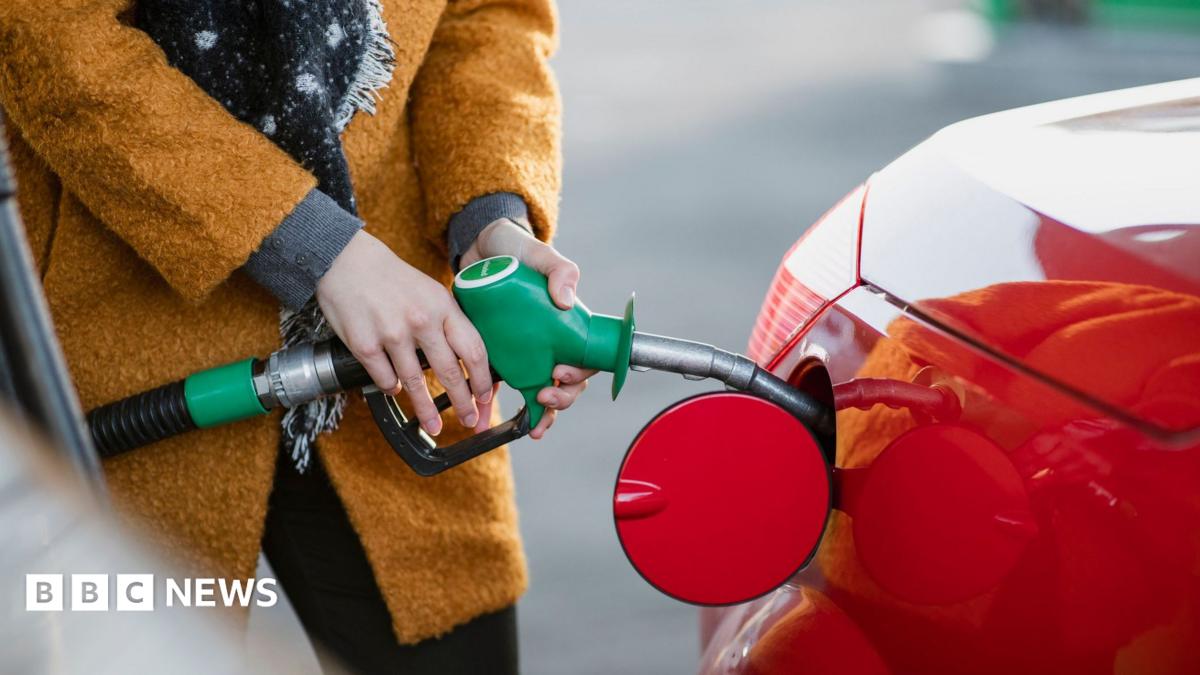
Diesel prices have hit an all-time high of 199.18p per litre, according to the motoring organisation RAC, as the war in the Middle East continues to push up the cost of fuel.
Petrol prices are also still rising, with a litre currently costing 174.13p.
Over the past seven months, the Iran war has severely disrupted the production and transportation of wholesale oil across the region, causing the price of fuels made from oil to surge.
RAC said diesel prices had entered “uncharted territory” and served as a reminder of “just how exposed the UK is to events occurring far away”.
WASHINGTON — President Trump’s trade war with Canada could intensify the headwinds Republicans are navigating ahead of the November midterms, with its effects poised to reverberate in northern battleground states with crucial Senate races.
The escalating beef with Canada — Trump attacked the country anew on social media Wednesday — stands to heighten voters’ economic worries and add to the GOP’s political challenge in dead-heat races, analysts said.
“It doesn’t make things easier. It’s not helping,” said Rusty Hills, a University of Michigan public policy professor and onetime chair of the Michigan Republican Party.
The president’s unpopular policies on the war in Iran, the economy and data centers have already handed Republican candidates the tough task of appearing responsive to Americans’ frustration with cost-of-living issues without alienating Trump and his voter base.
The trade war, said Lance Dutson, a Maine Republican media strategist, puts “another log on the fire” of the affordability issue.
The tariffs have appeared unpopular in recent polling, including among a majority of independent voters. Though they are not expected to dramatically increase consumer prices, they could affect voters’ perception of the economy — and even small economic impacts on certain industries, such as auto manufacturing in Michigan, could have an effect in very close midterm races, experts said.
Trump’s new import bans on some Canadian goods are set to begin next week, a response to retaliatory tariffs Canada levied earlier this month. Trump argues that Canada has “been ripping off” the United States and that tariffs will help domestic manufacturers.
On Wednesday, the president inaccurately claimed on Truth Social that Canada is allowing “millions and millions” of immigrants into its country.
“It is a Liberal takeover that will end very badly. Already showing up in their numbers. Big unemployment. ‘Oh Canada!” the president wrote on social media Wednesday morning.
Five of the nine states most likely to decide Senate control border Canada — Alaska, Ohio, Michigan, New Hampshire and Maine. Two more, Texas and Iowa, also do substantial trade with Canada.
Democrats must retain their Senate seats including New Hampshire and Michigan and flip four of the other states to win a majority, a tall task. As the landscape worsens for Republicans, however, some aretesting how much they can distance themselves from Trump.
“It’s a tightrope, there’s no question,” Hills said. “[Candidates] are looking for some wiggle room on some of these issues like the war and prices and Canada tariffs, because they need every independent and swing voter they can get.”
A majority of Americans oppose raising tariffs on Canadian goods, including 64% of independents, anEconomist/YouGov poll found. Only 14% of independents said they supported additional U.S. tariffs on Canada in a late AugustIpsos poll.
And in Michigan, 68% of independent voters disapprove of the tariffs, a poll this month from the Washington Post and Schar School found.
“The more we put tariffs on stuff, the more they put tariffs on stuff … prices are just ultimately going to go up for all of us,” said one Michigan swing voter in a Sept. 9 focus group conducted by the firm Engagious, in which 11 of 13 participants said the trade war was bad for the state.
The highest costs of the tariffs will be concentrated within a few industries, including auto and other manufacturing, dairy, and alcohol and spirits, said Alex Durante, a senior economist at the Tax Foundation. The tariffs likely won’t create a major change for consumers, but the general impression that tariffs can contribute to higher prices might turn off voters who are already worried about inflation, he said.
Counter-tariffs imposed by Canada in response to U.S tariffs last year resulted in a 6% increase in the prices of affected goods, researchers found in paper published by the Journal of Monetary Economics.
Canadian lumber products at Gutherie Lumber in Livonia, Mich., in August.
(Paul Sancya / Associated Press)
“This trade war is certainly not helping the president and his party in the midterms,” Durante said. “What’s weighing on the top of people’s minds is this general affordability crisis … and they realize that tariffs are another factor that is impacting affordability.”
The latest escalation of the trade dispute began in July, when Trump threatened new 50% tariffs on some Canadian goods, reinvigorating a conflict that began with tariffs the president imposed in 2025.
The two countries began trade talks, but the negotiations fell apart in late August, and Trump imposed tariffs on about $20-billion worth of Canadian goods. Canada retaliated with tariffs on about $20-billion worth of American goods that took effect Sept. 8. Trump then announced import bans on some Canadian goods, including certain alcohol and dairy products, which go into effect next week.
Construction and farm equipment in Illinois, aluminum and pipe products in New York, and iron and steel products in Ohio are among the goods targeted by Canada’s counter-tariffs, the Canadian Broadcasting Corp. reported. In California, about 10.5% of the state’s Canadian imports are exposed to the counter-tariffs imposed by Canada.
Democrats have seized on the issue as another way to tie Republican candidates to Trump’s policies, something that analysts said may have varying degrees of success in different swing states.
Maine Republican Sen. Susan Collins campaigns in August in Kittery, Maine.
(CJ Gunther / Getty Images)
In Maine and New Hampshire, where the Republican Senate nominees have criticized Trump’s move, the tariff issue may be less likely to stick. Efforts to tie Republicans to Trump have historically been less successful in the region because of its independent streak, said Jim Merrill, a veteran Republican strategist in New Hampshire.
Maine Republican Sen. Susan Collins warned the White House against imposing tariffs and successfully pushed for the administration to exempt road salt and cement this month. She told Politico that the Trump administration had “very much underestimated” the effect of the tariffs on Maine residents.
Republican John Sununu, a former senator who is running to retake the seat in New Hampshire, has also criticized the tariffs, saying a trade war with Canada “doesn’t make any sense.” He indicated he would support legislation in Congress to restrain the president’s tariff powers.
Elsewhere, Senate nominees have walked a careful line on tariffs. In Alaska, Sen. Dan Sullivan has largely avoided the issue, even as Democrats there have used it to ramp up attacks on his record in recent days. In Ohio, former Sen. Jon Husted told the National Review in August that the public “would like to understand the strategy behind what the president’s trying to do.”
Former Rep. Mike Rogers of Michigan, the Republican Senate nominee, told reporters over the weekend that he was in favor of “good” tariffs that would help Michigan and opposed to “bad” tariffs that would hurt the state.
Focusing on issues other than tariffs may be the right strategy on the campaign trail, Hills said.
“He’d much rather be talking about the Republican plan for affordability,” Hills suggested. “There’s interesting things we need to be talking about in order to win this election, and this isn’t one of them.”
THERE’S a specific point during every peak-summer holiday when even the most committed sun worshipper has to admit it’s all getting a bit much.
The beach is shoulder-to-shoulder, the sand is hot enough to cook an egg and you’ve started timing dinner around whether you can secure a table without joining a queue.
Holiday expert Rob Brooks has hunted down seven destinations that are seriously cheap in OctoberCredit: Rob BrooksThe cheapest resort Holiday Expert Rob found was an underrated stretch of coastline in SpainCredit: Getty
That’s why I’ve become a massive advocate for the October break.
Across the Mediterranean, daytime temperatures comfortably hover in the mid-twenties and, even in October, there are hours and hours of proper sunshine every day.
Meaning you can still pack your swimwear, bring the sun cream and expect to come home a lot more tanned.
And my favourite part is: you enjoy all of that without the intense August heat, peak-season crowds or, most importantly, peak-season prices.
I crunched the booking data across our most popular summer resorts and found that October breaks are up to 49 per cent cheaper than their peak-August counterparts.
So these are the seven classic summer spots where October can genuinely be a better and much cheaper time to travel.
7. Hersonissos, Crete – 40 per cent cheaper
Bag a week-long stay at the 4* Hotel Heronissos in Crete for £320ppCredit: Trip Advisor/Hotel Heronissos Management
Crete is one of the best places to squeeze a final dose of proper Greek sunshine out of the year.
As one of Greece’s most southern major holiday islands, it holds onto summer far longer than many of its northern neighbours.
October in Hersonissos still serves up highs of 24°C and warm seas, keeping proper beach-and-pool days firmly on the menu.
Hersonissos also stays lively well into autumn, and the gentler heat also means exploring Heraklion or visiting the Palace of Knossos doesn’t turn into a sweaty endurance test.
Matched booking data shows that October packages here are, on average, 40 per cent cheaper than in August.
It has a huge outdoor pool and puts you within walking distance of the resort centre, while your meals, snacks and local drinks are all included.
The full package works out at £320pp for 7 days – roughly £46pp a day – including the flights. Bargain.
Book a 7-night all-inclusive stay at Hotel Heronissos from 8 October 2026, with direct return flights from Bristol, for £320pp.
6. Cala Millor, Majorca – 40.1 per cent cheaper
Cala Millor in Majorca can still hit highs of 25°C in SeptemberCredit: Trio Advisor/Garbi Cala Millor Management
Majorca doesn’t just pull down the blinds the second September finishes, you know?
October in Cala Millor can still hit highs of 25°C earlier in the month, with sea temperatures sitting at a very swimmable 23°C.
But the biggest win in October, by far, is the elbow room.
In August, finding a towel-sized patch on Cala Millor’s huge sandy bay feels like bidding for a London flat – but in October, you can just walk down and lay your towel out.
Booking data shows that October packages are, on average, 40.1 per cent cheaper than in August, which is a pretty crazy saving for Majorca.
I found a four-star, half-board stay at Bakour Garbi Cala Millor, which sits just 400m from the beach, has a large outdoor pool, kids’ club and playground, and its heated indoor pool and spa area is ideal for an October break.
It gives your family a built-in back-up plan if an autumn cloud briefly rolls past.
Book a 7-night half-board stay at Bakour Garbi Cala Millor from 14 October 2026, with direct return flights from Bournemouth, for £340pp.
5. Afandou, Rhodes – 43.7 per cent cheaper
You could be soaking up the sun in Rhodes for £185pp with the deal our expert Rob foundCredit: Getty
Rhodes is arguably the strongest weather bet on the entire list for autumn.
October brings highs of 25°C, around nine hours of sunshine a day and sea temperatures of approximately 24°C.
That is still proper tanning weather, and feels particularly nice when everyone back home has already turned the central heating on.
Afandou is ideal for a quieter escape, with one of the longest beaches on Rhodes and a traditional village centre.
The slightly gentler heat also means you can explore the island properly without spending the entire day desperately seeking shade.
My booking data shows that October packages are, on average, 43.7 per cent cheaper than in August – another massive saving.
I tracked down a room-only stay at Golden Days Aparthotel, a simple, cheap-and-cheerful base with an outdoor pool, a separate children’s pool and a tourist train running down to Afandou Beach.
Getting a full week on one of Greece’s warmest islands for under £190pp is an absolute steal. In fact, I’ve paid more than that for a train ticket to London this year.
Book a 7-night room-only stay at Golden Days Aparthotel from 2 October 2026, with direct return flights from East Midlands, for £185pp.
4. Albir, Costa Blanca – 44 per cent cheaper
A stay at Sun Palace Albir delivers Costa Blanca glamour away from the business of BenidormCredit: Trip Advisor/ Sun Palace Albir Management
Albir delivers Costa Blanca sunshine without putting you in the middle of Benidorm.
That being said, Benidorm is still close enough for waterparks, nightlife and an emergency tribute act, but Albir itself stays super-relaxed.
October brings highs of 24°C and around eight hours of sunshine a day, alongside a palm-lined promenade overlooking the pebble beach.
The cooler autumn breeze also makes it a far better time to tackle the scenic walk up to Albir Lighthouse without desperately searching for shade every five minutes.
Booking data shows that October packages are, on average, 44 per cent cheaper than in August.
It has an outdoor pool, a big sunbathing terrace and a spa area for when you fancy taking relaxation very seriously.
The stand-out feature here, though, is its restaurant terrace, which has panoramic views across the mountains and out to sea, a far better spot for breakfast than a rainy motorway service station – speaking from experience.
Book a 7-night bed-and-breakfast stay at Sun Palace Albir from 20 October 2026, with direct return flights from Manchester, for £305pp.
3. Kusadasi, Turkey – 44.3 per cent cheaper
The Marbel Hotel in Kusadasi has a roomy pool. tennis courts, a gym, hammam and moreCredit: Trip Advisor/Marbel Hotel Management
Kusadasi stays properly hot into October, with daytime temperatures reaching highs of 26°C along the Aegean coast – and I have to say it’s absolutely gorgeous.
You could easily spend seven days flitting between the pool and the buffet, but October’s gentler heat also makes exploring the ancient marble streets of nearby Ephesus infinitely more enjoyable than during the height of summer.
When I took a peek, matched booking data showed that October packages to Kusadasi are, on average, 44.3 per cent cheaper than in August.
It has a huge outdoor pool, tennis court, gym and Turkish hammam bath house, with your meals and drinks wrapped into the price.
It’s a great choice if you want plenty to do at the hotel while remaining close enough to dip into the centre of Kusadasi.
Book a 7-night all-inclusive stay at Marbel Hotel from 7 October 2026, with direct return flights from London Stansted, for £365pp.
2. Laganas, Zante – 45.7 per cent cheaper
Stay at the Atlantis Hotel in Zante from £255pp for a whole weekCredit: Trip Advisor/Atlantis hotel Management
Laganas in August and Laganas in October feel like two completely different worlds.
Peak summer brings wall-to-wall crowds and full-throttle nightlife, but by October, the volume turns right down, but temperatures can still reach highs of 25°C.
You get to enjoy Laganas’ vast golden-sand beach and the clear Ionian Sea without sharing them with thousands of foam-party-obsessives.
Some seasonal bars and clubs begin closing as the month progresses, but for me that’s part of the appeal.
You still get the sunshine, warm sea and beautiful coastline – just with considerably less people around.
And booking data shows that October packages are, on average, a whopping 45.7 per cent cheaper than in August.
That means you can be beside the pool remarkably quickly instead of spending the first afternoon touring every hotel on the island aboard a transfer coach.
The hotel has an outdoor pool, a separate children’s pool and a Jacuzzi, while the rooms include a mini fridge, kettle and toaster to keep the snack admin easy.
Book a 7-night bed-and-breakfast stay at Atlantis Hotel Zante from 13 October 2026, with direct return flights from London Stansted, for £255pp.
1. Oropesa del Mar, Costa del Azahar – 48.6 per cent cheaper
Magic Sports Oroposa del Mar has themed rooms, huge swimming pools and an on-site waterparkCredit: Trip Advisor/Magic Sports Hotel Management
Taking the top spot for the biggest seasonal saving is Oropesa del Mar on Spain’s underrated and underdiscovered Costa del Azahar.
October temperatures here can still climb to highs of 25°C, allowing summer to stretch on long after the UK has descended into grey drizzle.
This purpose-built Spanish resort has broad beaches and wide promenades that feel calm and effortless once the July and August rush clears out.
The slightly gentler temperatures also make October a much better time to explore the coastline or head towards Castellon and Valencia.
My booking data shows that October packages are, on average, a staggering 48.6 per cent cheaper than in August – nearly half the price for the same Spanish coastline.
It has sports simulators, themed rooms, huge swimming pools and an on-site waterpark with slides inspired by everything from Formula 1 to winter sports.
Finding seven nights here with direct return flights for £265pp feels, quite frankly, ridiculous – and it’s my pick of the deals, for sure.
Book a 7-night bed-and-breakfast stay at Magic Sports Hotel from 3 October 2026, with direct return flights from London Stansted, for £265pp.