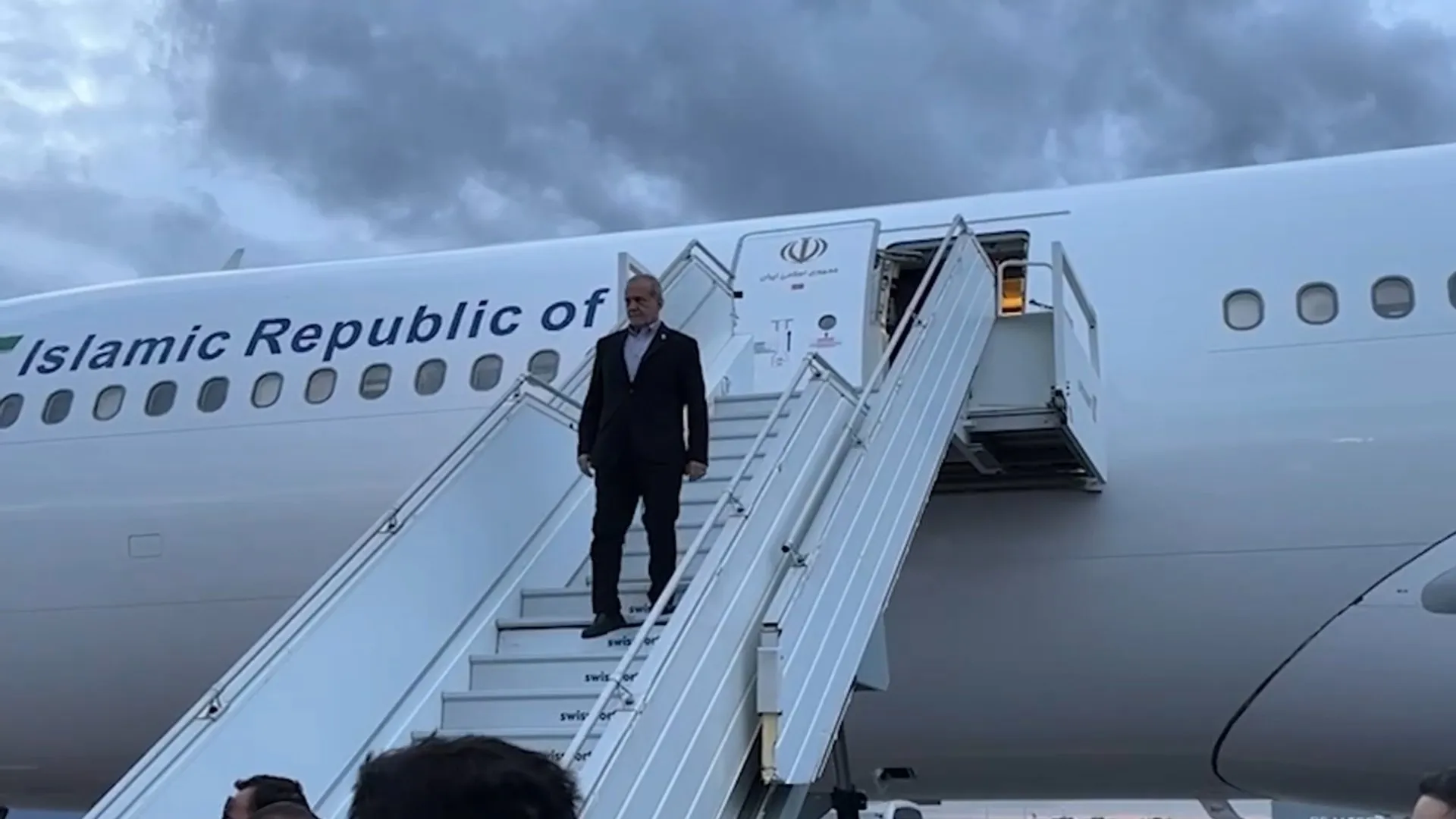
Iranian President Masoud Pezeshkian has arrived in New York as the US-Iran war continues. He’s due to address the UN General Assembly, where Iran is expected to press its case over the conflict and seek diplomacy aimed at easing tensions.
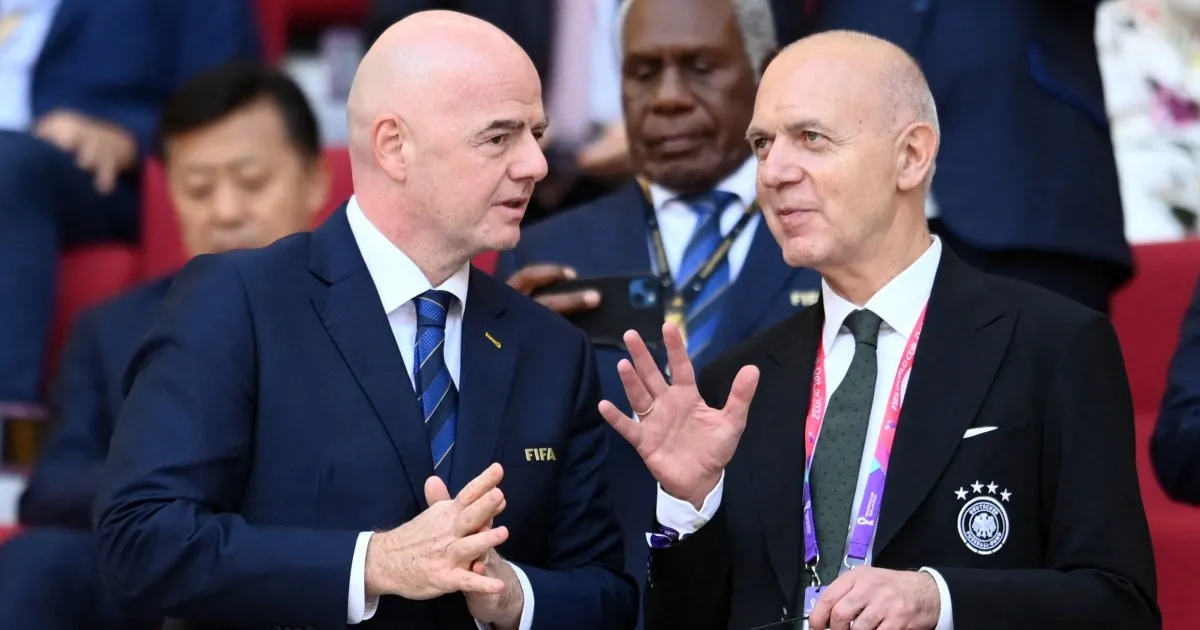
Infantino proposed an independent review of FIFA’s decision-making process amid criticism to his leadership.
Published On 22 Sep 202622 Sep 2026
A letter from FIFA President Gianni Infantino this week to all 211 members, offering to discuss reforms within world football’s governing body – amid an ongoing crisis over his failed plan to sell a stake in the World Cup – is a mere ploy to get himself re-elected, Germany’s Football Association (DFB) President Bernd Neuendorf has said.
In Monday’s letter seen by the Reuters news agency, Infantino proposed an independent review of FIFA’s decision-making process, in a move that could help him regain support after the withdrawal of his controversial private investment plan.
Striking a conciliatory tone, he also said he would propose consultations with confederations, member associations and other stakeholders about strengthening FIFA’s decision-making.
Infantino faced a fierce backlash over his proposal to sell a 20 percent stake in FIFA’s commercial rights, including the World Cup, to private investors.
The plan was abandoned in July after strong opposition and boycott threats, with UEFA, the Asian Football Confederation and CONCACAF calling for changes to FIFA’s leadership.
They said there had been no consultation with any continental confederation at any stage, with Infantino acting alone. UEFA has said a change in leadership was now necessary, with the European body having lost faith in the current president.
“I regard Gianni Infantino’s letter as a transparent ploy to secure his re-election next year,” said DFB President Neuendorf on Tuesday. “Fundamentally, FIFA now seems to have recognised that changes are essential.
“However, Gianni Infantino is definitely not the right person to lead a reform process. He has squandered all credibility.”
Neuendorf is also a member of the FIFA Council, the organisation’s main decision-making body.
Infantino said in the letter that member associations’ positions on proposals or governance matters would not affect their treatment by FIFA, whose development and solidarity programmes would continue under existing rules.
The Swiss is up for re-election in March next year, with his opponents struggling to find a candidate to challenge the president. Sources familiar with the discussions told Reuters this month that he still had enough votes to win, prompting opponents to focus on curbing his powers.
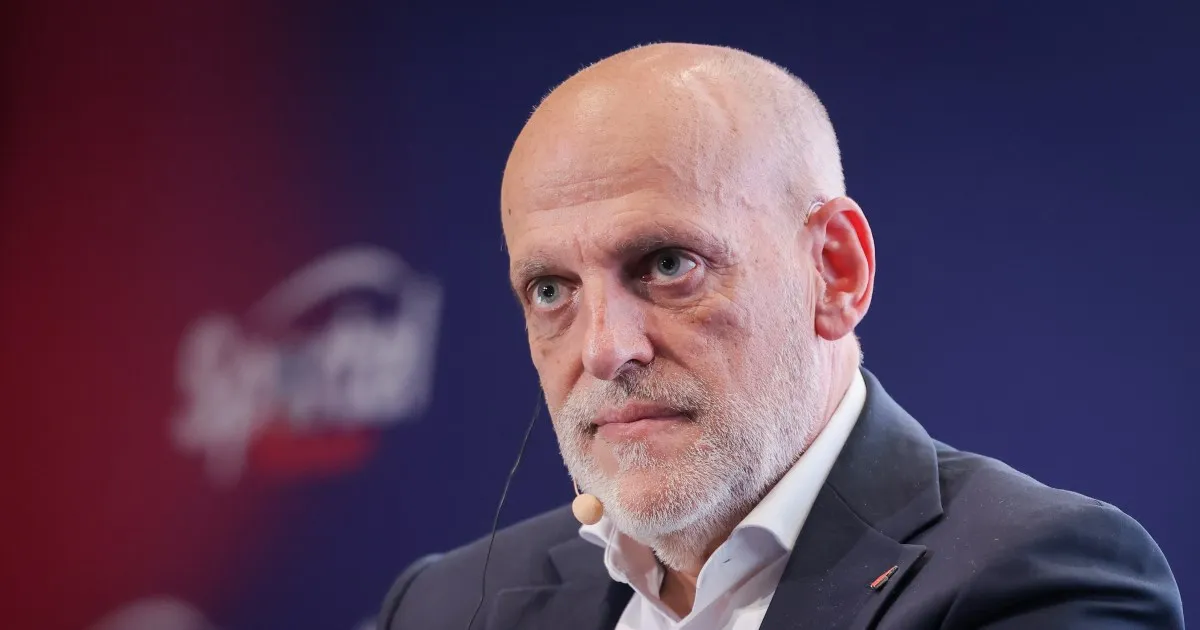
Madrid boss Jose Mourinho accuses officials of bias after his side’s 2-1 derby defeat by Atletico Madrid.
Published On 22 Sep 202622 Sep 2026
La Liga President Javier Tebas has hit out at what he calls accusations of a refereeing “conspiracy” by Real Madrid after their derby loss to Atletico Madrid.
Real Madrid coach Jose Mourinho brought two printed screenshots of what he thought were red-card tackles committed by Atletico players to his post-match news conference after Sunday’s 2-1 defeat.
Tebas responded to a pro-Real article on social media with a lengthy riposte on Tuesday to allegations of a “conspiracy” against the 15-time European champions.
“Here they go again, the mouthpieces and the regime’s television, building the same old narrative – the permanent conspiracy,” said Tebas, who has often been at odds with Real Madrid and the club’s outspoken president, Florentino Perez.
“This article goes further. It claims that referees harm ‘the business that feeds them’.
“What exactly is it asking for? Refereeing based on revenue, viewership or the badge? What a way to understand equality in the competition.
“Real Madrid are crucial to La Liga. But claiming that ‘La Liga is worth nothing’ without them reveals the disdain for the other clubs, their fans and their history. The competition belongs to no one.”
Madrid have made a stuttering start to the season and already sit six points behind reigning champions and early leaders Barcelona in the La Liga table.
“Claiming that referees are directed against Real Madrid is living in another galaxy,” Tebas added.
“That narrative serves as an excuse to cover up other shortcomings that are plain to see in these first matches of the season.
“It’s more comfortable to point to a conspiracy than to explain what’s happening on the pitch.”
Mourinho returned for a second spell in charge at the Santiago Bernabeu in the close season, tasked with ending a two-year spell without a major trophy.
After the heated capital derby on Sunday, Mourinho was furious that Atletico defender Cristian Romero was not sent off for a stamp on Jude Bellingham and also complained about a challenge by Lee Kang-in on Federico Valverde before the visitors were themselves reduced to 10 men five minutes after half-time.
Valverde finished the match but was later diagnosed with “severe trauma to his left ankle”, the club said in a statement. The midfielder will undergo further tests, it added.
“We could skip the press conference because the story of the match is right here,” Mourinho said, holding up the images in what was the start of a near five-minute rant.
“Those were two clear red cards. The difficulties we’ve faced since the sending-off: 11 against 10. Well, we can imagine what 50 minutes of 11 against nine would have been like if justice had been done.”
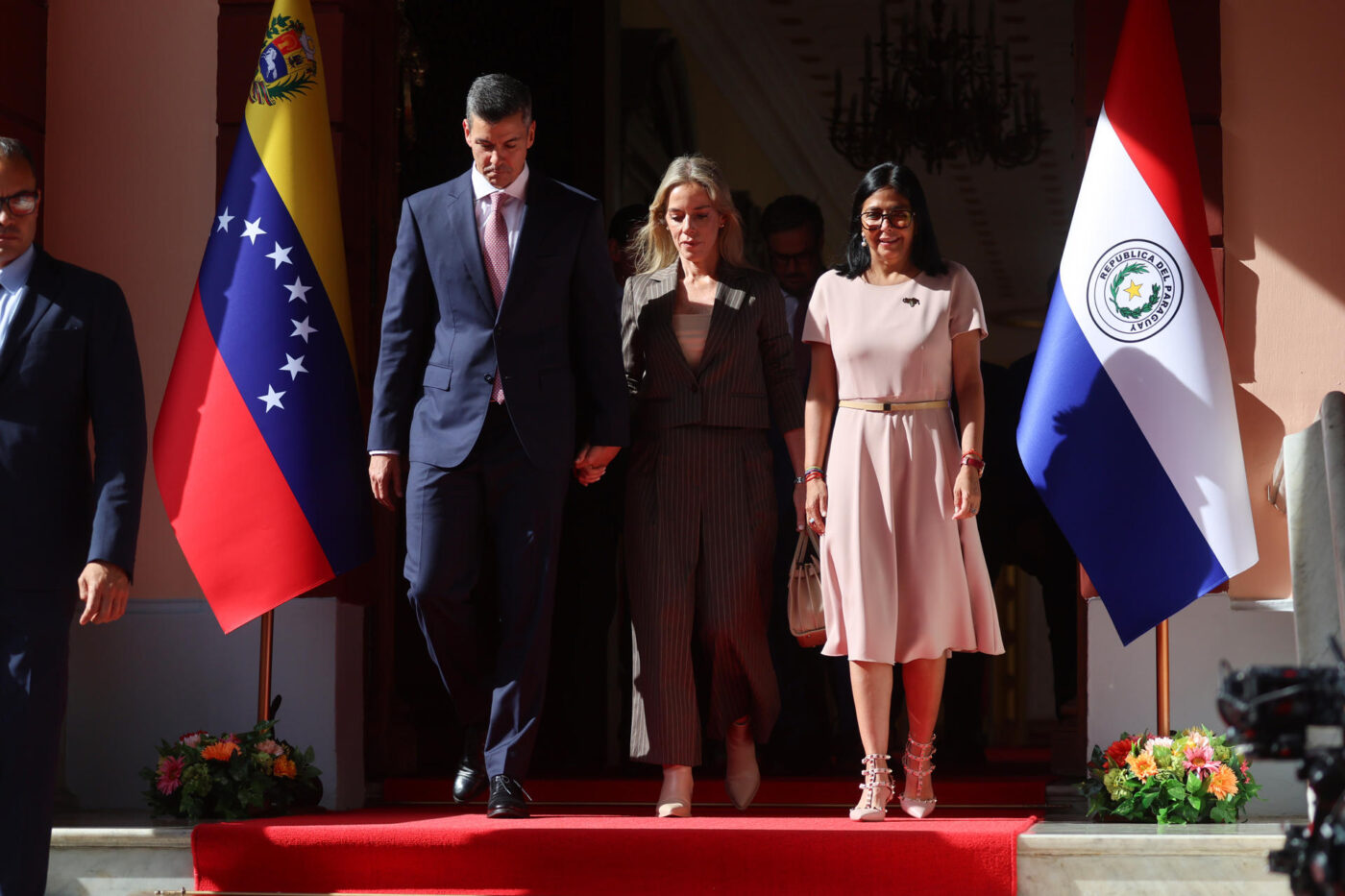
Caracas, September 21, 2026 (venezuelanalysis.com) – Venezuelan Acting President Delcy Rodríguez hosted Paraguayan counterpart Santiago Peña at the Miraflores Presidential Palace in Caracas on Saturday as the two South American nations relaunch bilateral diplomatic and consular relations.
The high-level working meeting reportedly focused on establishing a shared agenda centered on trade expansion, energy cooperation, consular assistance, and joint efforts to combat transnational organized crime.
The summit concluded with a joint statement announcing the renewed bilateral relations, signed by foreign ministers Félix Plasencia and Rubén Ramírez Lezcano for Venezuela and Paraguay, respectively.
Following the signing ceremony, Rodríguez and Peña expressed optimism regarding the reestablished cooperation.
“We are working together for a more integrated Paraguay,” Peña declared in a press conference, emphasizing that the dialogue was focused on “the well-being of citizens” from both countries.
For her part, Rodríguez claimed the accord did justice to principles of sovereignty, dialogue, and South American integration in Venezuela’s foreign policy.
“Venezuela continues to advance a sovereign diplomacy of peace, rooted in mutual respect, self-determination, and constructive dialogue among our nations,” she stated. “This meeting opens a new stage of cooperation aimed at addressing shared challenges and serving the concrete interests of both our peoples.”
The Caracas meeting reversed years of political friction and diplomatic tensions between the two nations. Bilateral ties were initially severed in January 2019 under former Paraguayan President Mario Abdo Benítez, who aligned Asunción with Washington’s regime-change strategy by recognizing opposition figure Juan Guaidó’s self-proclaimed “interim government.”
Relations experienced a brief thaw in late 2023 under Peña’s incoming administration before breaking down again in January 2025. The Venezuelan government formally severed diplomatic channels after Peña supported far-right opposition candidate Edmundo González’s victory claim in the July 2024 Venezuelan presidential elections. The Paraguayan president further backed Venezuelan anti-government forces by attending María Corina Machado’s Nobel Peace Prize ceremony in December 2025.
A central point on the reopened diplomatic agenda was the resolution of a long-standing debt owed by Paraguayan state oil company Petróleos Paraguayos (Petropar) to Venezuela’s state energy company, Petróleos de Venezuela S.A. (PDVSA).
The financial dispute stems from fuel shipments received by Petropar under the 2004 Caracas Energy Accord, an energy integration initiative launched under President Hugo Chávez to provide favorable financing conditions for oil imports across Latin America and the Caribbean. Paraguay currently maintains an outstanding principal debt estimated at approximately US $300 million.
Addressing the issue ahead of the summit, Paraguayan Foreign Minister Rubén Ramírez Lezcano acknowledged the core obligation but highlighted technical disagreements regarding accumulated interest calculations.
“The differential of that debt is linked to interest that applies outside the commercial agreement that exists with that country,” Ramírez explained during a press conference last week, noting that the specific arbitration over interest rates remains before the International Chamber of Commerce (ICC) in Paris.
The resolution of the debt has been paralyzed for years primarily due to the severing of diplomatic ties, compounded by unilateral sanctions imposed by the United States against PDVSA.
With diplomatic channels now reopened, both governments signaled their intention to structure a viable settlement mechanism outside of imperial financial restrictions.
Since the January 3 US military strikes and kidnapping of President Nicolás Maduro, the acting Rodríguez government has aligned its foreign policy with Washington, mending or expanding ties with US partners in Latin America and beyond while scaling back support for long-term allies such as Cuba and Iran.
Following Saturday’s summit in Caracas, Acting President Rodríguez departed Venezuela for New York City, where she will attend the 81st Session of the United Nations General Assembly (UNGA) this week.
According to Reuters, Rodríguez is slated to hold discussions on energy and mining agreements, as well as Venezuela’s ongoing debt restructuring process.
On Monday, the Venezuelan acting president met with IMF Managing Director Kristalina Georgieva, though no details of the talks were disclosed. Caracas has sought to unblock around $4.5 billion in IMF-issued Special Drawing Rights (SDR) for recovery efforts following the June 24 double earthquake.
Likewise on Monday, Rodríguez held talks with World Bank President Ajay Banga.
Is President Trump holding the Kennedy Center hostage? The allegation has been made at least twice, most recently by John F. Kennedy’s niece Kerry Kennedy, and earlier by Rep. Joyce Beatty (D-Ohio), an ex-officio member of the board, who has sued to keep Trump’s name off the building.
The Merriam-Webster dictionary defines “hostage” as, “a person taken by force to secure the taker’s demands.” Swap, “person” for the “Kennedy Center” and “taker” for “Trump,” and you have a pretty straightforward “yes.”
The ongoing Kennedy Center dumpster fire points to an unusual presidential obsession with the nation’s premier performing arts venue that dates back to Trump’s first term when he became the first sitting president in history to twice miss the annual Kennedy Center Honors.
In his second term, Trump turned that snub upside down by firing the board and strong-arming his way into being named chairman. If he expected to be welcomed into the arts community with open arms, he was gravely mistaken. His takeover resulted in a wave of high-profile cancellations that ultimately led to a massive dip in ticket sales. The exodus became even worse when the Trump-appointed board voted to add Trump’s name to the building late last year. The reaction, it seems, injured the president’s fragile ego and incurred his wrath.
By early February the president announced he would close the center for a two-year, $257-million renovation. Calling the historic venue “dilapidated,” Trump said he would be the one to restore it to glory. Behind the scenes another story was unfolding, and six months later the Washington Post reported that “ticket sales and fundraising collapsed” after Trump’s name was added to the building, “even as the center’s leaders publicly touted a financial turnaround.”
This week saw chaos at the venue that even the most seasoned journalists struggled to keep up with as the board voted to close the building on the same day that a federal judge upheld an order that Trump’s name could not be restored to its facade after he ordered it removed in late May.
Trump took to social media to decry the decision, threatening to withhold his support for the renovation and noting that the center could be “ripped down” if he wasn’t formally honored with his name on the building. Despite a preliminary injunction barring the venue from closing, people were kicked out of the building and barricades erected in the name of public safety that same day.
Those prone to hyperbole might be tempted to call this presidential tantrum disguised in procedural clothes a constitutional crisis. Or you could just say that Trump has taken the Kennedy Center hostage. The taker wants his name on the building, and the center will not be released for renovation or reopening if that doesn’t happen.
In the meantime an image of Trump on Air Force One was captured that shows him holding a large placard that reads, “Kennedy Center DEMO[LISHED],” leaving concerned parties to wonder just what exactly the chairman of the board has in mind. Is he using a Sharpie at this very moment to slash a line through the image at the center on that board, or is it just a prop to be trotted out in a cruel bit of future social media hazing?
Getting lost in all the drama: a beloved arts venue has gone pointlessly dark, and the people who loved it are heartbroken. If no one is inside to hear the wind whistle, does it make a sound?
I’m Arts editor Jessica Gelt, willing to rustle up a ransom. This is your arts and culture news for the week.
You’re reading Essential Arts
Our critics and reporters guide you through events and happenings in the SoCal arts scene. In your inbox every Friday.
By continuing, you agree to our Terms of Service, which include arbitration and a class action waiver. You agree that we and our third-party vendors may collect and use your information, including through cookies, pixels and similar technologies, for the purposes set forth in our Privacy Policy such as personalizing your experience and ads.
The week ahead: A curated calendar
FRIDAY
Oliver Lee Jackson: Form Follows Feeling The Bay Area painter, sculptor, and printmaker’s work, created over decades, is inspired by the human figure in its composition and structure. Opening reception, 6-8 p.m. Friday; 10 a.m.-6 p.m. Tuesday-Saturday. Lisson, 1037 N. Sycamore Ave. lissongallery.com
“Vitruvian Figure (Los Angeles Memorial Coliseum),” 2026, 3D model by Paul Pfeiffer.
(Paul Pfeiffer/Perrotin)
Paul Pfeiffer: Olympia In new work focused on Los Angeles, the artist explores the intersection between media, spectacle, architecture and the body ahead of the city hosting the 2028 Olympic Games. Opening reception, 6-8 p.m. Friday; Pfeiffer in conversation with Britt Salvesen, 3 p.m. Saturday; exhibition, 10 a.m.-6 p.m. Tuesday-Saturday, through Nov. 7. Perrotin, 5036 W Pico Blvd. perrotin.com
SATURDAY
“Couple walking, Park Avenue,” 1960.
(Estate of Roy DeCarava)
Roy DeCarava: the sound i saw The exhibition presents more than 130 images created between the late 1940s and 1960s, depicting the photographer’s intense interest in the relationship between the visual and the aural. Accompanying the exhibition, in the gallery next door, will be “SIDE B: the sounds,” a listening room featuring DeCarava’s personal playlists and favorite jazz album. Opening reception, 6-8 p.m.; exhibition runs through Oct. 31. David Zwirner Gallery, 606 and 6166, N. Western Ave. davidzwirner.com
Sutton Foster The two-time Tony winner and TV star performs Broadway hits and standards with Pacific Jazz Orchestra, featuring new arrangements by conductor Chris Walden. 8 p.m. The Soraya, 18111 Nordhoff St., Northridge. thesoraya.org
Mia Middleton: Summoning Cleo New work by the artist explores interpreting familiar forms through a surreal lens. Opening reception, 5-7 p.m. Saturday; exhibition runs through Oct. 24. Roberts Projects, 442 S. La Brea Ave. robertsprojectsla.com
Mrs. Warren’s Profession Real-life mother and daughter Cyndy Fujikawa and Nell Murphy star in this production of George Bernard Shaw’s 1893 play about a Victorian woman coming to terms with how she built a business empire. Directed by Michael Rothaar. Opening night, 8 p.m. Saturday; 8 p.m. Thursdays, Fridays and Saturdays; 3 p.m. Saturdays and Sundays (check website for exceptions), through October 25. Pacific Resident Theatre, 707 Venice Blvd, Venice. pacificresidenttheatre.org
Grammy Award-winning composer and bandleader Arturo O’Farrill and Afro Latin Jazz Orchestra open the Segerstrom Center for the Arts’ Jazz series.
(John Abbott)
Arturo O’Farrill & Afro Latin Jazz Orchestra The pianist and composer, a six-time Grammy winner, and his ensemble kick off the Segerstrom Center for the Arts’ 2026-27 Jazz series with Afro-Cuban rhythm, modern jazz harmony and big-band sounds. 8 p.m. Segerstrom Center for the Arts, 600 Town Center Drive, Costa Mesa. scfta.org
Other Places An alternative art fair devoted to contemporary art spaces and projects, plus workshops, readings, talks and performances. Noon-7 p.m. Angels Gate Cultural Center, 3601 S. Gaffey St., San Pedro. opaf.info
Karma The gallery presents solo exhibitions by painters Randy Wray (“Hothouse”) and Felipe Suzuki, one featuring vivid abstractions, and the other, work created through the lens of memory . Opening reception 6-8 p.m. Saturday; 10 a.m.-6 p.m. Tuesday-Saturday, through Oct. 24. Karma, 7351 Santa Monica Blvd. karmakarma.org
SUNDAY
Alexander Apóstol “Regime: Dramatis Personae” (2017), a series of black-and-white portraits of archetypal figures in both populist and authoritarian governments, uses photography to analyze the intertwining of art and political power in Latin America. 11 a.m.-5 p.m. Tuesday, Wednesday and Friday; 11 a.m.-8 p.m. Thursday; 11 a.m.-6 p.m. Saturday-Sunday; through Jan 3, 2027. Museum of Contemporary Art, 250 S. Grand Ave., downtown L.A. moca.org
Textile Alchemy: The Art of Reiko Sudō and NUNO More than 100 limited-edition textiles, along with numerous objects, including drawings, sketches, raw materials, tools, mock-ups, and prototypes, are part of the largest retrospective ever of the Japanese designer’s work created with her textile collective and other collaborators from throughout Japan, Through March 7, Los Angeles County Museum of Art, Resnick Pavilion, 5905 Wilshire Blvd. lacma.org
TUESDAY
The entrance of the Lucas Museum of Narrative Art in Los Angeles in Exposition Park.
(Ron De Angelis/For The Times)
Lucas Museum Of Narrative Art Where else will you see Luke Skywalker, Vincent Van Gogh, Norman Rockwell, Gordon Parks and Charles Schulz under one roof? The new museum officially opens Tuesday, featuring 100,000 square feet of space spread across more than 30 galleries, exhibiting a mind-bending range of visual storytelling. Check out our full coverage. Public opening, 10 a.m.-5 p.m. Tuesday; regular hours, 10 a.m.-5 p.m. Mondays, Wednesdays and Thursdays; 10 a.m.-5 p.m. Fridays; 9 a.m.-9 p.m. Saturdays; 9 a.m.-5 p.m. Sundays. Lucas Museum of Narrative Art, Exposition Park, 3800 S. Vermont Ave. lucasmuseum.org
THURSDAY
Bilal The Grammy Award-winning singer-songwriter delivers a blend of soul, funk, and jazz. Queens-born R&B musician Yaya Bey is the opening act. 8 p.m. Carpenter Center, 6200 E. Atherton St., Long Beach. carpenterarts.org
Each Other’s Hands: Trans Mutual Aid, 1966—1996 Oxy Arts, Occidental College’s community-based arts hub, presents an exhibition featuring the work of six L.A. artists. curated by Umi Hsu. The opening reception marks the launch of the 2026 CIRCA Queer Histories Festival hosted by One Institute. Opening reception, 7 p.m. Thursday; 11 a.m.-4 p.m. Monday-Saturday. Oxy Arts, 4757 York Blvd. oxyarts.oxy.edu
Arts Anywhere
Robert Wilson and the Civil Wars The newly remastered 4K version of Howard Brookner’s 1987 documentary, the essential yet long elusive film about the 1984 L.A. Olympics Arts Festival, can finally be streamed courtesy of Criterion Channel. It is everything LA28 doesn’t want you know. criterionchannel.com
— Mark Swed
Culture news and the SoCal scene
Christian Barillas, Melinda Page Hamilton and John Lavelle in “The Visit” at Pasadena Playhouse.
(Jeff Lorch)
Pasadena Playhouse opened a new production of Swiss dramatist Friedrich Dürrenmatt’s revenge tragicomedy “The Visit,” and The Times got in on the action. Contributor Jenelle Riley wrote a preview about how the new show features more than a dozen creatives behind the Playhouse’s production of Peter Shaffer’s “Amadeus” earlier this year, including director Darko Tresnjak and actor Jefferson Mays. “Amadeus” was a major hit, so Artistic Director Danny Feldman welcomed the team back with open arms.
Meanwhile, Times theater critic Charles McNulty attended opening night and declared the play a refreshing success (with a few caveats), and expressed “gratitude for the high-level production, gratitude for making the case for why the play still matters, and gratitude for the opportunity of allowing us to make up our own minds about whether the work earns its designation as a modern classic.”
Castulo Guerra as Tlahtoani Klion in a dress rehearsal ahead of its premiere of “Antigone: In the Language of the Kings” by the Latino Theater Company at the Getty Villa.
(Ariana Drehsler/For The Times)
McNulty also headed to the Getty Villa for its annual outdoor theater production. This year, the Villa’s outdoor stage marks its 20th anniversary with a co-production with Latino Theater Company of Sophocles’ “Antigone,” reimagined to take place in pre-conquest Tenochtitlan and performed in English, Spanish and Nahuatl. “If the drama is oversimplified, it nonetheless makes for a gripping spectacle,” McNulty writes.
Finally, a very busy McNulty checked out out a revival of José Rivera’s “Marisol” in an Open Fist Theater Company production at Atwater Village Theatre. The play originally opened in the early 1990s around the same time as Tony Kushner’s “Angels in America,” and McNulty says this new staging is gratifying because it allows a new generation to “embrace the play’s kinetic freedom.”
There are as many acrobats as actors in “Water for Elephants,” which is running at the Hollywood Pantages Theatre through Sept. 27 before heading to Segerstrom Center for the Arts (Nov. 10-22, with stops in Portland, Seattle, Reno, Sacramento, Tempe, Fresno and Eugene in between). Contributor Jenelle Riley headed backstage before opening night to watch the high-stakes performers warm up with poles, hoops, ropes and more. When the curtain raises, there’s a real circus onstage.
Enjoying this newsletter? Consider subscribing to the Los Angeles Times
Long Beach Opera will perform its 2026-27 season aboard the Queen Mary.
(Allen J. Schaben / Los Angeles Times)
Long Beach Opera announced its 2026-27 season, which is slated to be performed aboard the historic Queen Mary. First up: three works by composer Georges Aperghis, with vocal performances from coloratura soprano Habin Kim. Next: soprano Amanda Forsythe and Opera Prima in a performance of “Tormento Seicento.” Four additional productions include: an Anna Schubert recital, Peter Brook’s “Impressions of Pelleas,” Handel’s “Tolomeo” and Ana Sokolović’s “Svadba.”
The Jewish Federation of Greater Los Angeles and Daniel Gryczman, the federation’s board chair, sued Pasadena’s Norton Simon Museum for the return of the diptych “Adam and Eve,” a pair of 16th century masterpieces by Lucas Cranach the Elder. The suit was one of two filed in the state “since California and Congress passed a pair of laws bolstering U.S.-based claims to Nazi-looted artwork around the world,” reports the Times’ Kevin Rector.
EDINBURG, Texas — Quinten Martinez, pumping gas under a hot south Texas sun, remembers a time when fueling up didn’t require difficult decisions.
“Is it going to be groceries this week?” said the 28-year-old Amazon delivery driver as he watched the numbers tick higher. “Is it gonna be getting gas in our tank to go to work?”
He shook his head when asked about President Trump’s assertion last week that higher gas prices are a small price to pay for the war with Iran.
“I don’t feel like it’s a good trade-off,” Martinez said. “I don’t feel like this is good for anyone.”
Voters across the country, and across the political spectrum, tend to agree.
Interviews with voters in several states, along with a fresh round of national polling, reveal an overwhelming sense of frustration that skyrocketing gas prices — a direct result of Trump’s war — are creating serious and sustained financial hardships for America’s working class.
The acute concerns are adding to a bad political environment that may be worsening for Trump and his Republican Party as early voting gets underway in the November midterm elections.
Historically, the party holding the White House has suffered major losses in midterms. About seven weeks before election day, Republican candidates at all levels are struggling with the additional burden of Trump’s weak approval ratings, an unpopular war and an affordability crisis that Trump and his congressional allies had promised to fix.
But when Trump campaigned in North Carolina on Wednesday, he played down the effect of surging gas prices.
“You have a little higher. It’s a very inexpensive price to pay for what we’ve done,” Trump said of the war, which he describes as necessary to prevent Iran from obtaining a nuclear weapon. “Remember that. It’s a little more. Frankly, even if it was a lot more.”
‘Gas prices matter’
Despite what Trump says, there are few things that may matter more this election year than the price of a gallon of gasoline, according to political operatives in both parties.
Gas prices are moving sharply in the wrong direction at a time of year when drivers typically get some relief. The national average for a gallon of gas reached $4.48 on Friday, according to the American Automobile Assn., up roughly 17 cents over the last week, 40 cents in a month and $1.27 from a year ago.
“Gas prices matter because they’re one of the few economic indicators voters experience and see in real time,” said veteran Republican strategist Chris Wilson. “The price is literally staring them in the face several times a week. So I wouldn’t minimize the frustration we’re seeing, particularly among working- and middle-class voters.”
Interviews with voters last week found bipartisan frustration and disappointment.
Democrats and unaffiliated voters were especially motivated to punish Republicans at the ballot box for their economic hardship, while some of Trump’s working-class supporters pledged to support Republicans this fall, even if they weren’t happy with the president’s leadership on the economy.
Some Republicans say they’re disappointed
Dan Lloyd, who voted for Trump, lamented the president’s leadership as the 63-year-old carpenter paid $4.39 a gallon to fill up his pickup truck in Mesa, Ariz.
“He hurt himself stepping into this,” Lloyd said of Trump. “Where’s all this oil from Venezuela? I thought we were flush with gas and everything, but no. The American people eat it every time, whether it’s interest rates, food, gasoline.”
Still, he expects to vote Republican in the midterms.
“I think the Democratic Party has lost its way,” Lloyd said. “I just feel like the whole system’s on the verge of collapse.”
In sweltering Edinburg, Texas, 52-year-old Kristin Jimenez shrugged off the rising price of gas after filling up her Mercedes.
“We’ve paid the same price under Republican presidents, we’ve paid this price under Democrat presidents,” said Jimenez, a mother who runs a small business. She plans to vote for a Republican because they’re the “lesser of two evils.”
She said gas prices aren’t part of her calculation.
“We don’t mind paying $8 for a cup of coffee at Starbucks, but we have a problem paying four bucks at the pump?” she said. “Make it make sense.”
More than 1,500 miles to the north in central Michigan, 35-year-old Garth Johnson is trying to make ends meet running a deep-cleaning business with several gas-powered vehicles and one machine fueled by diesel, which was $6.79 a gallon as he filled up his SUV.
Johnson voted for Trump, but doesn’t know what he’s going to do in November. He said he doesn’t feel qualified to second-guess the president’s evaluation of the war, but he’s feeling financial pressure in his own life.
“I like a lot of the things he’s done,” Johnson said, but added, “I’m a little guy and I’ve got to live my life.”
Other voters are less forgiving
Midterm voting was already underway Friday in Virginia, where Alan Johnson said Trump seems to have “no empathy” for Americans who are struggling financially.
“With the gas prices being what they are and continuing to grow, we’ve got to do something. Hopefully the Democrats can get into office and turn the ship around,” said the 60-year-old engineer, who cast ballots in the morning for Democrats for the U.S. Senate and House.
In Raleigh, N.C., teacher Brittney Bivins sees surging gas prices as evidence that Trump and his Republican Party aren’t dealing with the issues that matter most to people like her.
“He really doesn’t care about everyday people,” the 45-year-old said. “He can afford the gas, but most of us can’t. So it feels like he’s not even connected to his own people.”
Bivins, who described herself as an independent, said she’s eager to support Democrats this fall — especially the party’s emerging democratic socialist wing.
At a gas station in Lansing, Mich., Rina Risper spent $50 on eight gallons of premium gas.
“When I rolled up I was in shock, actually, and said, well, maybe I should drink water instead of having that $4.99 bottle of whatever it was I was gonna get,” Risper said. She thinks Trump’s tariffs will make affordability even worse.
“We’re not in Miami. We’re in Lansing, Michigan,” she said. “It’s really going to impact our people.”
Polls reflect economic distress
Nationwide, more than three times as many voters say they are falling behind financially as getting ahead, according to a Fox News survey released Wednesday. By a 15-point margin, Democrats are considered the party that would better handle inflation and prices at a time when the cost of living and the economy are voters’ top concerns.
The Fox poll found that 61% of voters say gas prices are a major problem for their household, compared with 48% two years ago, while 52% say the same for healthcare costs, compared with 44% in 2024. Majorities also view housing costs and grocery prices as major problems, although neither has increased.
Overall, nearly two-thirds of voters (63%) say the administration has made the economy worse, compared with 52% in September 2025, including one-quarter of Republicans. Only 46% of Republicans say the administration has improved the economy, while about one-quarter don’t see an impact.
Back in rural south Texas, an area where Trump’s GOP made gains in recent elections, Martinez, the Amazon delivery driver, could not contain his frustration.
Trump “likes to tout that we are the best economy in the world,” said Martinez, but in rural towns, “you don’t see any of the winning, you don’t see any of the ups that he’s talking about.”
“You just see struggles for day-to-day life,” he said.
Peoples, Bedayn and Cooper write for the Associated Press. Peoples reported from New York and Cooper from Mesa. AP writers Allen G. Breed in Raleigh, Jacqueline GaNun in Lansing, Sarah Rankin in Richmond and Nicholas Riccardi in Mason, Mich., contributed to this report.
President Trump announced Friday he intends to ban CNN, MS NOW, Politico and other news outlets from covering the White House, his strongest threat yet against a free press.
In a statement on Truth Social, Trump attacked the the reporting of the three outlets which he described as “FAKE NEWS!”
“Media Outlets shouldn’t be able to constantly write or report FICTION and LIES when they’re covering the President of the United States of America,” Trump said.
How a ban would be enacted remains to be seen. In 2018, the White House tried to ban journalist Jim Acosta, then working for CNN, but a court ordered that his press credential be restored.
Trump has stepped up his attacks on the press during his second term. Federal Communications Commissioner Brendan Carr has threatened the broadcast licenses of outlets Trump dislikes. Carr has called for a review of ABC’s TV licenses, which the Walt Disney Co.-owned network is challenging in court.
After the post circulated, Trump held a press briefing from the Oval Office to discuss drug pricing. According to the pool reporter, no journalist was removed from the press room.
Trump was asked about the Truth Social post. He responded by further attacking the three outlets. He did not cite any specific report that led to his call for a ban.
“I dislike dishonest press,” he said.
Trump’s remarks generated an an immediate outcry from press freedom groups.
“It’s difficult to imagine a more blatant violation of the First Amendment than Trump banning news outlets from the People’s House for criticizing the government,” Seth Stern, chief of advocacy at Freedom of the Press Foundation, said in a statement.
“It’s also hard to imagine a dumber move. The historically unpopular president has been retaliating against the press for years, but it hasn’t helped him.”
Real Madrid stars including Kylian Mbappe rolled up T-shirts showing support for Ceuta, but President trip ‘unrelated’.
Published On 18 Sep 202618 Sep 2026
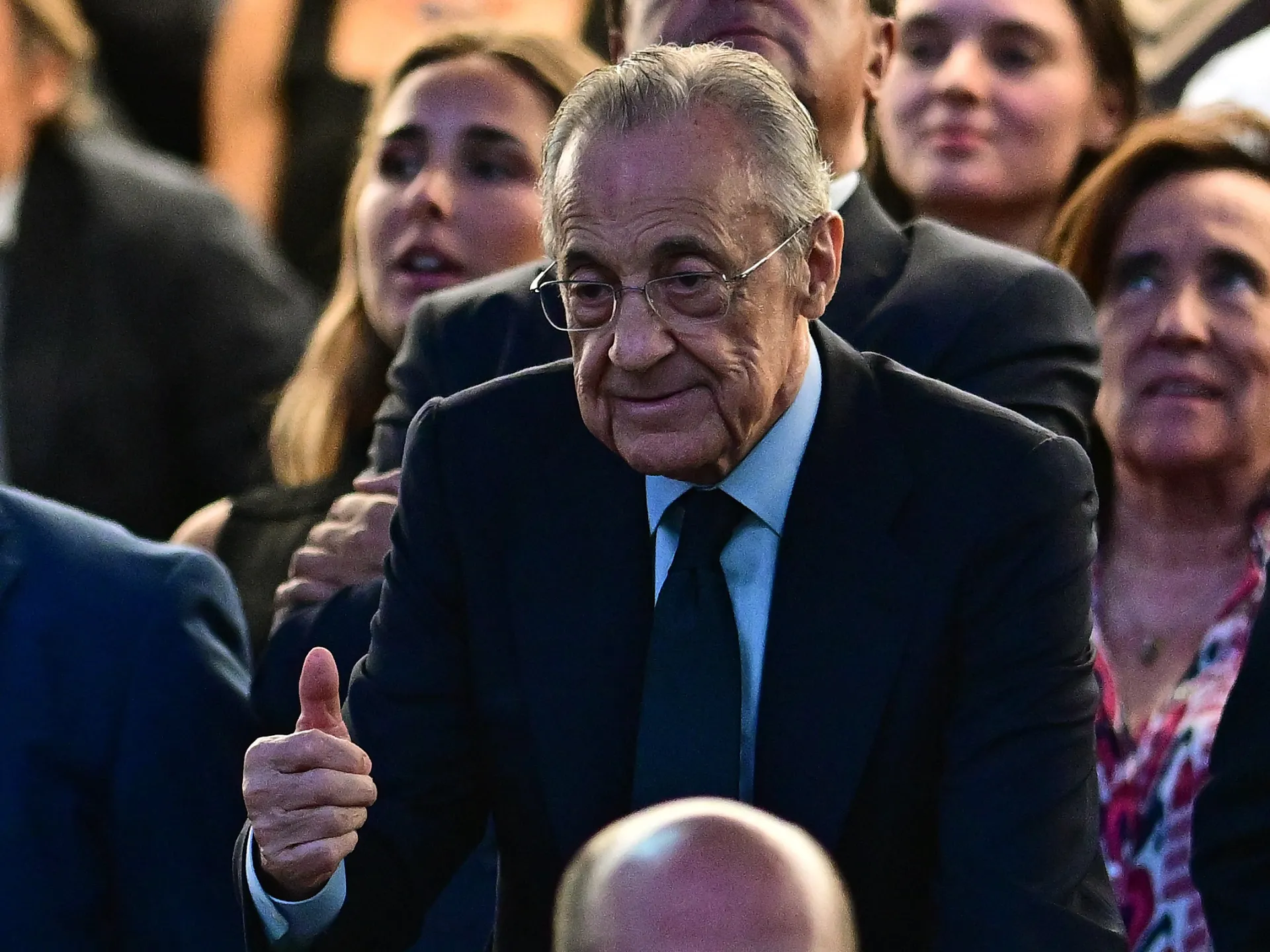
Real Madrid President Florentino Perez attended an event at Ceuta city hall on Friday in a visit to show solidarity with the Spanish territory, saying that it was not related to any recent developments.
On Tuesday, before Real’s La Liga match with Elche, Kylian Mbappe, Vinicius Jr and Ibrahima Konate obscured the message “We are all mackerels”, which appeared on T-shirts worn by the rest of the players. “Mackerels” is a nickname for people from Ceuta, and the shirts were designed to show support for them.
Recommended Stories
list of 4 itemsend of list
Mbappe said on Wednesday that he did not want to prioritise the suffering of one group over another. Real told the news agency Reuters that they respected their players’ freedom to make their own decisions, but noted that they had shown support for Ceuta a week earlier with a tifo during their Champions League match with Inter Milan.
Perez was accompanied by honorary Real Madrid President Jose Martinez Pirri, a native of Ceuta. They were welcomed by Regional President Juan Jesus Vivas.
“I want to emphasise, to avoid any doubts, that today’s event has been prepared over several weeks with the president of Ceuta, not due to any recent news,” Perez said at the city hall.
“And I also take this opportunity to convey all our support, all our affection, and our solidarity during these very difficult times to all Ceutans. It is our wish that normality resumes as soon as possible in Ceuta.”
In July, more than 70,000 irregular crossings into Ceuta from Morocco took place, causing disruption in the territory. Real Madrid’s show of solidarity is one of many gestures that have taken place across Spain since the mass crossings.
WASHINGTON — Atty. Gen. Todd Blanche is blurring traditional boundaries between politics and federal law enforcement with recent speeches at political events that mark a sharp departure from norms meant to protect the Justice Department from the appearance of partisan bias.
Blanche took the stage this week at an event for a Republican Senate candidate in North Carolina days after speaking at a GOP midterm convention, where he praised Trump and touted the administration’s tough-on-crime approach.
Blanche’s participation at the rallies has drawn scrutiny from critics who say it threatens to undermine public faith in law enforcement decisions that are supposed to be made free of political interference. It has added to critics’ concerns about Blanche’s loyalty to Trump and White House influence on Justice Department matters against the backdrop of investigations into numerous perceived foes of the president.
“It lends credence to the arguments that the Justice Department is hopelessly politicized,” said Richard Painter, who was a White House ethics lawyer in the George W. Bush administration. “And that’s not where we want to be right now.”
Blanche has brushed aside norms
Attorneys general have typically stayed away from political rallies and at arm’s length from the White House to prevent the appearance of law enforcement interference in elections and to protect the perception of impartiality in prosecutions.
Blanche, a former personal lawyer for Trump, has brushed aside such norms and fiercely defended the president’s interests in the department, which brought two criminal cases against Trump under President Joe Biden. Blanche has rejected allegations that the Trump administration has politicized the agency and accusations that the White House is improperly involved in department matters.
Blanche has used his speeches at the rallies to promote the administration’s efforts to bring down violent crime, illegal border crossings and drug trafficking as Republicans put their tough-on-crime policies at the center of the midterm elections. In another unusual move, he held a press briefing at the White House this week, fielding questions from reporters on a host of matters including the Iran war.
At an event Wednesday in North Carolina for Republican Senate nominee Michael Whatley, Blanche told the crowd, “More of your family, more of your friends, more of your community members, more of your loved ones are safer than they were just two years ago.”
“And that’s President Trump and Vice President Vance delivering on a promise that they made to you,” said Blanche, calling Trump “the greatest president of our generation.” His speech also veered into topics outside his law enforcement portfolio such as the stock market, inflation and wage growth.
Blanche says he is not endorsing candidates at political events
The Justice Department said Blanche’s appearances at political events are made in his personal capacity, and noted that his speeches have addressed the administration’s efforts broadly but do not get into agency policies or official business.
“His appearances are reviewed and cleared by the Department’s ethics officials,” spokesperson Kiersten Pels said in an email Thursday. “Travel expenses are reimbursed by the Attorney General in accordance with federal law, regulations, and policies.”
In a recent interview with The Associated Press, Blanche dismissed criticism about his appearance at a Long Island event where Trump sought to boost Republican candidates in closely contested races.
The watchdog group Public Citizen filed a complaint accusing Blanche of violating a law that limits political activity by government workers by participating in that event alongside Nassau County Executive Bruce Blakeman, the Trump-endorsed Republican challenging Democratic Gov. Kathy Hochul.
“I will always say yes to speak when the president of the United States asks me to,” Blanche told the AP last month. “I was there purely thanking cops, law enforcement, for doing their jobs. The idea that that’s turned into somehow criticism is laughable.” Blanche said he was not endorsing political candidates but instead “talking about the great work that President Trump is doing.”
Federal law and Justice Department policy limit political activity
The Hatch Act prohibits government officials from using their official positions to influence elections. That includes supporting candidates while acting in their official capacities. Watchdog groups have long complained that the law isn’t a strong deterrent and enforcement has been inadequate and uneven.
The Justice Department under Biden in 2022 tightened its restrictions on employees’ attendance at political events after then-Massachusetts U.S. Attorney Rachael Rollins attended a fundraiser that featured first lady Jill Biden. Attorney General Pam Bondi, who was fired by Trump in April, later rescinded those restrictions.
Rollins’ attendance at the fundraiser sparked an outcry from Republican Sen. Tom Cotton, who sought an investigation and wrote a letter asserting that U.S. attorneys are supposed to act as nonpartisan law enforcement officials rather than as partisan politicians. Rollins resigned in 2023 after the Justice Department’s internal watchdog accused her of broad misconduct.
Before those changes, longstanding department policy had allowed political appointees — who are hired under presidential administrations rather than making long careers at the agency — to attend political events in their personal capacities if they participated “passively” and obtained prior approval.
Biden’s attorney general, Merrick Garland, barred their attendance at fundraisers and other campaign events altogether, saying it was necessary to ensure that politics “both in fact and appearance” won’t affect how the law is enforced or inquiries are carried out.
Hans-Joachim Watzke, one of German football’s vice presidents, adds to list calling for Gianni Infantino’s resignation.
Published On 18 Sep 202618 Sep 2026
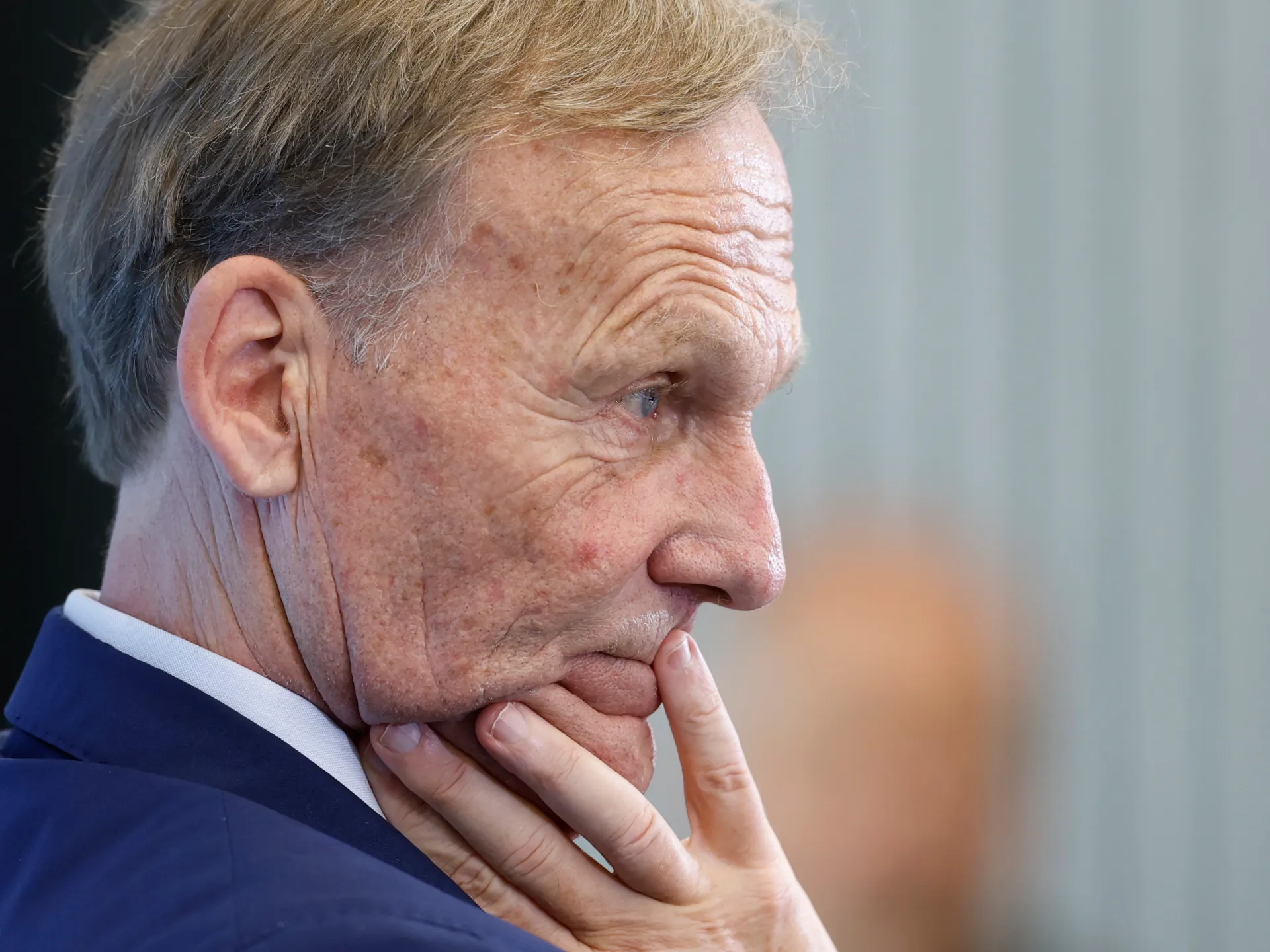
Gianni Infantino must leave the FIFA presidency “no ifs or buts”, according to Hans-Joachim Watzke, one of the vice presidents of the German Football Association (DFB), as he spoke at a festival dedicated to artificial intelligence in Berlin.
The DFB was one of the few federations not to sign a letter of support for Infantino’s re-election as FIFA president in six months’ time.
Recommended Stories
list of 4 itemsend of list
“He has to go, no ifs or buts,” declared Watzke, who said late on Thursday that three points in particular counted against the Swiss.
The first was the FIFA Peace Prize, launched by Infantino and awarded in December 2025 to US President Donald Trump, to whom Infantino is close, during the draw for the 2026 World Cup.
Infantino “created this prize himself, and he decided on it himself,” said Watzke.
“You can’t just invent something on your own and then announce it, it’s madness,” said Watzke.
Watzke also condemned the controversial handling of the Folarin Balogun red card during this year’s World Cup, which was hosted in the US, Canada and Mexico.
The American forward was sent off in the last 32 but his automatic one-match suspension was lifted after a phone call from Trump to Infantino.
“It can’t be that when someone gets sent off, the head of state calls the FIFA president, and, remarkably, the whole thing is immediately overturned. That’s madness,” said Watzke.
The third issue was the project, unveiled on July 28 and dropped four days later, to create a commercial company that would have been open to private investors and became a focal point of the rebellion against Infantino.
“It’s completely insane,” said Watzke. “Nobody knew about it, his vice presidents in FIFA knew nothing, the Council knew nothing.”
DFB president Bernd Neuendorf said earlier in the week in an interview with RTL/ntv television that it was also time for Infantino to depart.
“The relationship of trust with Gianni Infantino, under this FIFA leadership, has of course been completely shattered,” he said.
“It’s important that this Infantino system comes to an end.”
For now, Infantino is the only candidate for the FIFA presidency in the election scheduled for March 18, 2027, with candidacies open until November 18.
Donald Trump Jr. has a lot more in common with his dad than just a name, sharing the president’s penchant for shady dealings and for kleptocratic Russians. Sometimes the two proclivities go together. That was the case in May, we learned this week from ProPublica, when Don Jr. married his second wife during a three-day Bahamian bacchanal bankrolled partly with hundreds of thousands of dollars from a Putin-allied oligarch the Trump scion met only recently.
I had to wonder — recalling Don Jr.’s response in 2016 on learning Russia helpfully wanted to dump dirt on Hillary Clinton — whether he replied in kind when his new Russian friend, Umar Kremlev, offered the wedding grift, er, gift: “If it’s what you say I love it.”
My second thought was that Don Jr. is just like his dad in wanting to spend other people’s money, even as the Trump family has accrued billions since President Trump has been back in office. (Cue the continued silence from the sleuths of Hunter Biden’s laptop.)
Just days before ProPublica’s exposé, at last week’s midterm Republican convention in Dallas, the elder Trump proffered a gift of $5,000 to every one of the roughly270 million adult Americans. But the eponymous “Trump dividend” would come only if Republicans keep their House and Senate majorities after the November midterm elections.
The tab? More than $1 trillion, roughly $1.3 trillion. How generous Trump is with the U.S. Treasury, despite the news just last month that rattled bond markets and raised interest rates: The United States’ gross debt has exceeded $40 trillion. As Trump told CNBC in 2016: “I love debt. I love playing with it.” We can’t say he didn’t warn us. Even before his proposed 5K giveaway, Trump was on track to break his first-term record for adding to the unsustainable U.S. debt ($8.4 trillion).
Trump’s unprecedented offer of a post-election payout provoked predictable cries of “bribery” from Democrats and other critics. But legality aside, even the appearance of a bribe isn’t what bothers me most about the proposal.
For one thing, it won’t happen. No one will be receiving a $5,000 Trump dividend, just like no one received the DOGE dividend or $2,000 tariff refund he previously promised. Even if Republicans pull off a miracle and retain control of Congress, those in power show no zeal for his budget-buster, not after their complicity in adding trillions to the debt since last year with tax cuts, war costs and this, that and the other Trump pet project. And Congress indeed would have to act, under the Constitution, despite suggestions from the obsequious Treasury secretary, Scott Bessent, that Trump could act alone. (But “I’m not ready to discuss it at present,” Bessent told a House committee on Tuesday.)
No, what bothers me most about Trump’s idea — what outrages me — is the damnable fiscal irresponsibility of it.
Trump has turned much of historical Republican orthodoxy on its head, including on immigration, trade and policy toward Russia. But his utter disregard for annual deficits — a record $2 trillion for this fiscal year that ends Sept. 30 — and his shameful profligacy with taxpayers’ money is something Americans haven’t seen in their lifetimes, in either party. Worse, Trump implies otherwise, that he is fiscally responsible, and he does it with lies that are so easily refuted, so often contradicted by his own words, that it’s a marvel that even such a chronic prevaricator as himself can utter them.
This week Trump is still claiming that the $5,000 dividend will be paid for because “we’re taking in trillions and trillions of dollars” in revenue from his inflationary tariffs on more than half of the goods imported into the country. The actual number isn’t even close to that, and he should know it: The data that nonpartisananalysts are crunching are from the government he supposedly runs.
In 2026, tariff revenue through August was just under $200 billion, but more than half of that already has been spent on refunds to big corporations including Amazon, Walmart and Home Depot, in keeping with a Supreme Court ruling against some of Trump’s tariffs. And as if Trump’s dividend proposal weren’t mendacious enough, in making it he seems to have forgotten his claim in his State of the Union address in February that he would use the tsunami of tariff revenue to abolish the federal income tax.
And one last thing: Even if each adult American got $5,000, subtract from that the nearly $2,000 that each household has paid, on average, because of higher tariffs since Trump took office, according to the nonpartisan Tax Foundation.
In this one dumb idea, in sum, the giveaway manifests just about all that is wrong with Trump as president: The lying, of course. Fiscal recklessness. The trashing of commendable Republican doctrines. The Trump bubble of sycophantic yay-sayers. And, in turn, the seat-of-his-pants policy idiocy, from war-making to White House demolishing.
The lack of any actual policy deliberation behind Trump’s $5,000 shocker was clear in his lackeys’ flailing and contradictory reactions — not just Bessent’s specious claim of presidential authority, but also Commerce Secretary Howard Lutnick’s inane insistence the administration could somehow “earn the money that Donald Trump wants to pay out” and National Economic Council Director Kevin Hassett’s comment, contrary to Bessent’s, that the White House is indeed looking to Congress for funds.
The good news? Americans get it. Recentpolls have the percentage approving of Trump’s handling of the economy as low as 28%. Significant majorities say they are worse off since he became president again.
Such numbers portend an election result that isn’t likely to be changed by a promise of $5,000. Especially from a serial promise-breaker.
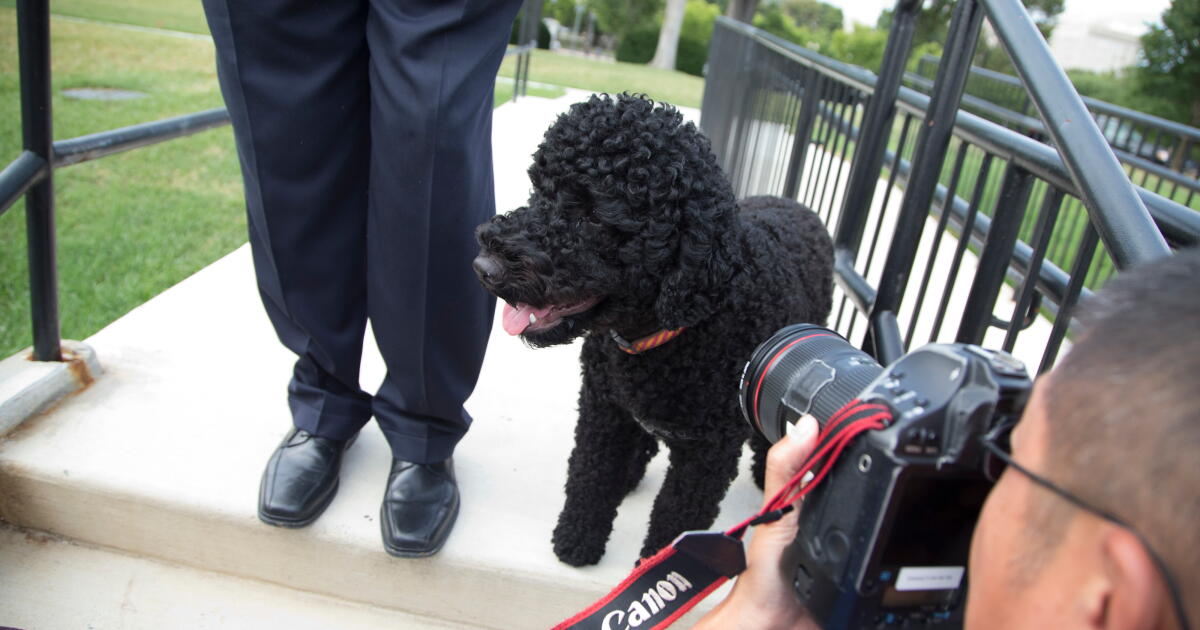
WASHINGTON — The Obamas’ pet dog Sunny has died, former President Obama said Wednesday.
Sunny, a 13-year-old Portuguese water dog the Obamas got in 2013 while living in the White House, died Tuesday.
“We got Sunny at the start of our second term in the White House, and all of us — including our first dog, Bo — immediately fell in love,” he said on social media.
He remembered Sunny as athletic, full of energy and protective of Bo. Despite Sunny’s breed, she hated getting wet.
“We will miss her terribly, and imagine she’s with her big brother now, making sure he’s okay,” Obama said.
Bo died in 2021.
While many presidents have kept dogs as companions, President Trump does not have any pets at the White House.
George H.W. Bush’s English springer spaniel, Millie, “wrote” the bestseller “Millie’s Book.” President Clinton’s chocolate Labrador retriever, Buddy, was in the family as Clinton weathered the scandal over his affair with White House intern Monica Lewinsky.
George W. Bush’s Scottish terrier, Barney, had an official web page and starred in “Barneycam” videos that were filmed by a camera around his neck. Lyndon B. Johnson angered animal lovers by lifting his beagle, Him, by the ears in front of news photographers.
Harry S. Truman famously advised: “If you want a friend in Washington, get a dog.”
Hashim Thaci, former President of Kosovo and KLA leader, has been found guilty of war crimes by the Specialist Court in The Hague. Al Jazeera’s Marah Rayan explains how the ruling came about.
Prosecutors have requested a 45-year jail sentence for Thaci and three wartime commanders accused of war crimes.
Published On 16 Sep 202616 Sep 2026
The Kosovo war crimes tribunal will on Wednesday deliver its verdicts in the case of former President Hashim Thaci and several wartime commanders accused of murder and torture during the self-declared republic’s break from Serbia.
Thaci, 58, is facing several counts of war crimes and crimes against humanity, including murder, torture and persecution, along with three former commanders from the ethnic Albanian Kosovo Liberation Army (KLA), a separatist militia that fought Serbian troops.
Recommended Stories
list of 3 itemsend of list
Thaci and the other former high-ranking commanders, Jakup Krasniqi, Rexhep Selimi and Kadri Veseli, deny the charges.
Prosecutors have requested 45-year prison sentences for each of the men.
The case is extremely contentious within Kosovo, where Thaci remains a revered figure for many Kosovan Albanians due to his role in the 1998-99 independence war.
On Saturday, tens of thousands gathered in the capital, Pristina, to call for their acquittal in the latest of several rallies since the trial began. Portraits of the four former KLA fighters have been plastered across the city along with a huge digital clock counting down to the verdicts.
“In the name of the people, declare them innocent,” one banner read.
According to prosecutors, the men targeted political opponents and civilians perceived as collaborators and traitors during their time in the KLA.
Thaci’s lawyers argued in February there is no evidence that directly links him to any of the crimes.
“There are no orders in the record from Thaci to perpetrators of crimes. There are no reports from perpetrators of crimes to Thaci,” lawyer Luka Misetic told judges at the Kosovo tribunal in February.
Most of the 13,000 people who died in the war in Kosovo were ethnic Albanians. A 78-day campaign of NATO air attacks against Serbian forces ended the fighting. About one million ethnic Albanian Kosovars were driven from their homes.
In 2008, Kosovo declared its independence from Serbia, a move that Belgrade refuses to recognise. Ties between Kosovo and Serbia remain tense, despite years of negotiations mediated by the European Union.
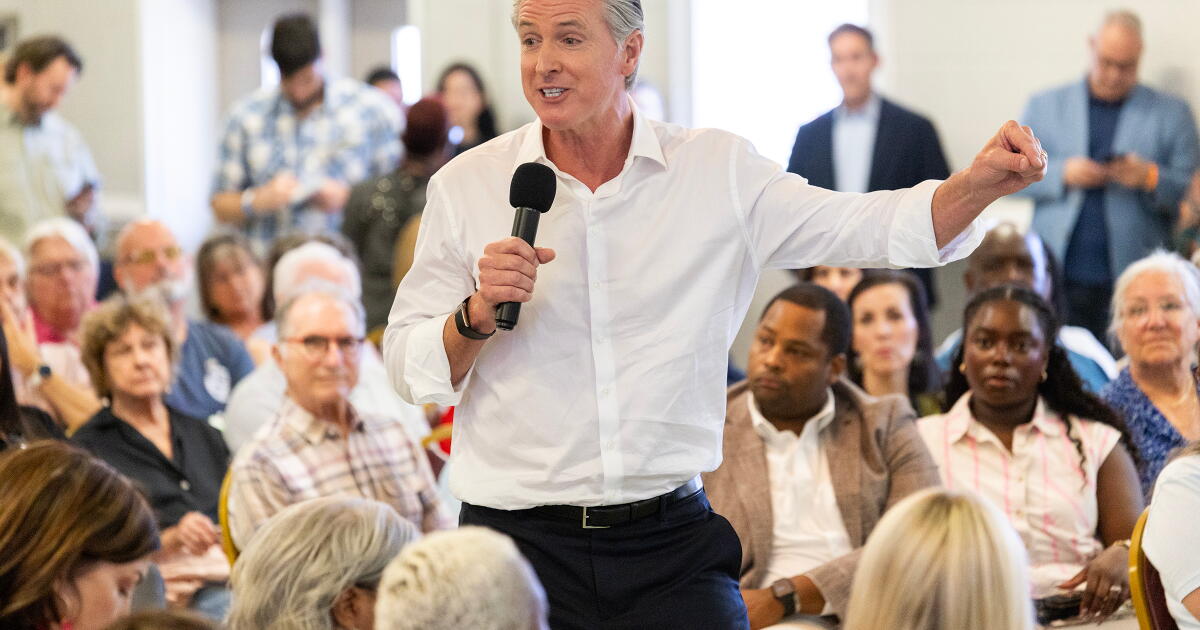
WASHINGTON — Gov. Gavin Newsom said he would not run for the Democratic presidential nomination in 2028 if Kamala Harris does so, appearing to offer deference to the former vice president ahead of a race that could draw a historically crowded field of candidates.
“I wouldn’t run if she ran,” Newsom told CNN’s Jake Tapperin an interview posted Monday. “Why would I? I wouldn’t do that to her. … I wouldn’t do it to you, I wouldn’t waste everyone’s time.”
Newsom appeared to acknowledge a desire to avoid the possibly messy fight for California backers that could ensue if both were to run, saying there would be “pure crossover” between Harris’ supporters and his.
The governor’s effective yield to Harris diminishes the possibility of a showdown between two of California’s most powerful political figures in an election whose stakes are viewed by the Democratic Party as existential. The possibility of Harris making a second attempt at the presidency after her loss to President Trump in 2024 has hung as the biggest question over the potential Democratic field.
Both Newsom and Harris have acknowledged they are considering presidential bids in 2028, but Harris has closely held her intentions. She said last week that she had not decided whether to run, telling former soccer player Megan Rapinoe in a podcast interview that she was focused on working full time to help Democrats win the midterms.
A spokesperson for Harris declined to comment. Representatives for Newsom did not immediately respond to a request Monday afternoon.
Harris has appeared as the party front-runner in multiple polls about 2028, including one in July that showed herbeating Newsom by double digits. But questions have continually circulated within the party about whether voters who are scarred from the party’s 2024 loss would be enthusiastic about a Harris run.
Several California donorstold The Times in May that they did not plan to support Harris or did not want to discuss a possible bid by her; in a few corners, more enthusiasm came through for Newsom.
The dynamics around the 2028 Democratic primary continue to evolve as party hopefuls jockey for the spotlight, and they shifted notably with the selection of South Carolina as the party’s first primary state. That choice could give Harris a boost if South Carolina’s Black voters move in her favor.
Harris and Newsom came up in politics in the same era and have never before run in an election against each other, operating their political careers largely in parallel rather than in competition. In February, Newsomsaid on CNN that he had “never gotten in the way of her ambition” and he didn’t “imagine I would in the future,” saying “fate” would determine whether they ran against each other.
Newsom swung through South Carolina this month, the type of move generally interpreted as laying the groundwork for a presidential bid. In the CNN interview, Newsom noted that he did not know whether Harris would run and agreed it was a “pretty good case” to make when Tapper raised the argument that Harris had had her chance at the presidency and Newsom had not yet.
The governor suggested that a fight between him and Harris would split their supporters’ vote in a way that would be “a gift from God for everybody else” in the race, saying “it services no greater good” for both of them to run. He also nodded to their overlapping political circles.
“I know her base of supporters, I know her friends. The [Venn] diagram on that is just pure crossover,” Newsom said. “I wouldn’t do that.”
The interview was filmed in Montana, where Newsom’s in-laws own a ranch, as Newsom and Tapper fly-fished together. The full segment was set to air Tuesday.
Newsom said that in order to decide to run, a candidate needs to be able to “meet the moment.”
“You gotta be honest with yourself,” he said. “Do you represent the zeitgeist of the moment or are you wasting everybody’s time?”
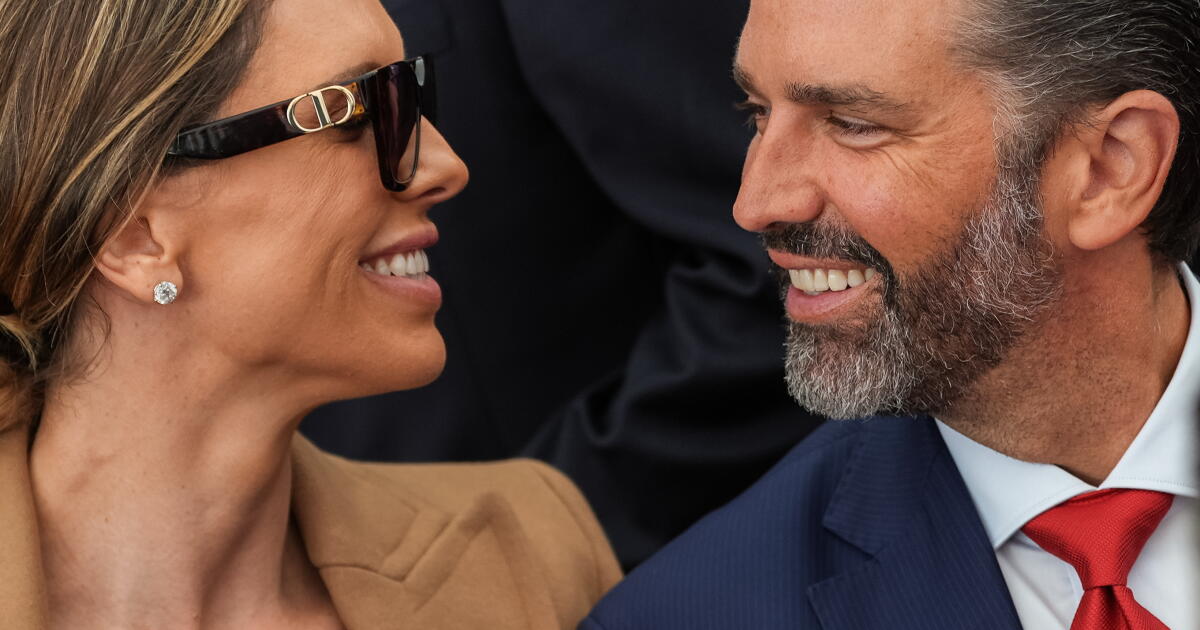
NEW YORK — Donald Trump Jr.’s new wife, Bettina, is confirming that her May wedding weekend celebration was partially funded by a man with close ties to Russian President Vladimir Putin.
In a post on her Instagram page Monday morning signed by the couple, Bettina Trump wrote that the man, Umar Kremlev, was a “dear friend,” who “very generously hosted two incredible nights of celebrations for us AFTER our wedding.”
“It was an extraordinarily generous wedding gift from a friend, and something for which we were and remain incredibly grateful,” it went on.
ProPublica, a nonprofit investigative website, reported earlier Monday that the wedding between Trump Jr. and socialite Bettina Anderson in the Bahamas was heavily funded by Kremlev, a Russian oligarch who heads the International Boxing Association. ProPublica reported that Kremlev “footed the bill for hundreds of thousands of dollars of wedding expenses,” including paying to rent out one of two private islands where the three-day party was held and a fireworks show.
In the post, Bettina Trump said that she and the president’s son were married in a private ceremony “surrounded ONLY by our family,”
“The weekend that followed had actually been planned well in advance as a fun weekend with friends. It was never intended to be our wedding weekend. When our original wedding plans changed, we simply decided to get married before it and arrived at an already planned weekend as newlyweds,” it went on. “It’s unfortunate that something so personal and happy can be recast as something political or sinister simply because of who someone is or where they come from. Friendship doesn’t require a political motive. Generosity doesn’t automatically come with an agenda. And sometimes a wedding gift is simply a wedding gift.”
That gift comes as Russia remains at war following its invasion of Ukraine and as the president has failed to broker a promised peace deal between the nations.
Kremlev was recently honored with the Order of Friendship by Putin, according to the International Boxing Association, and accompanied Putin to China as part of a Russian delegation, according to the Chinese state media cited by the outlet.
Trump Jr. has previously been scrutinized over his Russian ties. During the 2016 campaign, his meeting with Russian attorney Natalia Veselnitskaya in Trump Tower was the subject of intense scrutiny by federal and congressional investigators probing whether the Trump campaign coordinated with Russia to meddle in the election.
The meeting had been billed as an opportunity to discuss potentially incriminating information about the president’s then-Democrat opponent, Hillary Rodham Clinton, as part of the Russian government’s efforts to help Trump Jr.’s father win the White House.
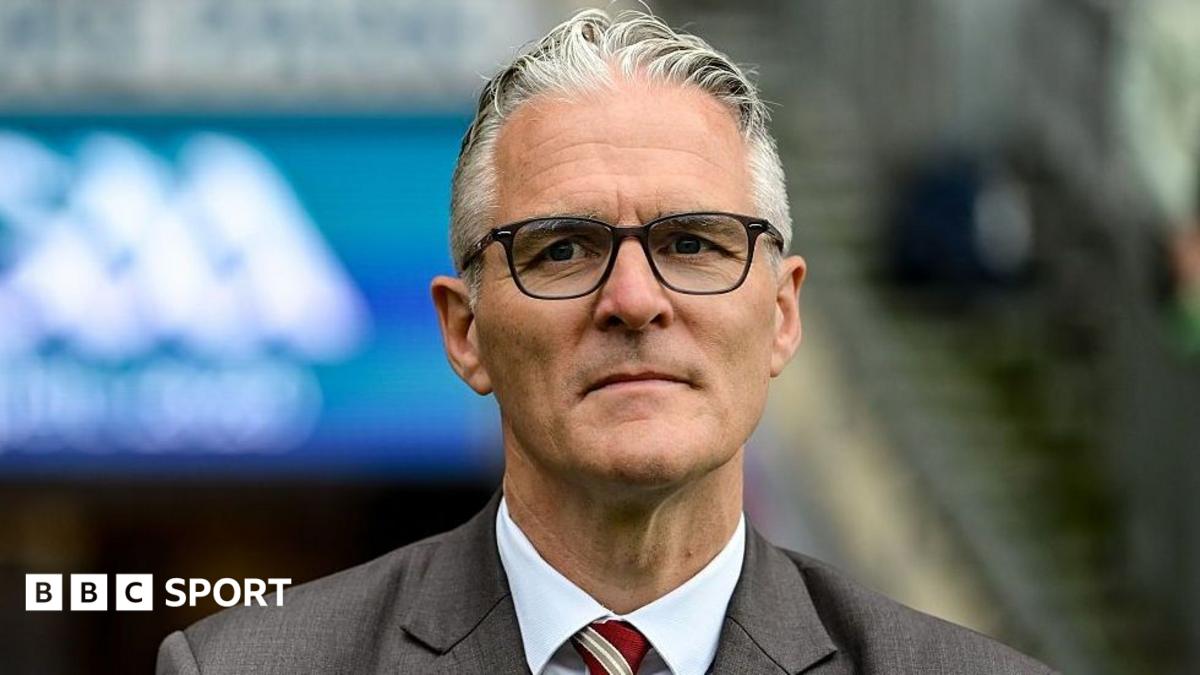
GAA President Jarlath Burns insists the process of integration between Gaelic games’ three bodies is not over but the key is to ensure the outcome is “sustainable and robust”.
Dr McAleese said she was “dubious” whether there was real desire from the GAA to make it happen but the current GAA president – speaking at the Hurling Development Committee’s starter pack launch for 2026 in Belcoo – denies the issue is dead in the water.
“There was an idea going around last week that integration had stopped – it hasn’t,” Burns told BBC Sport NI’s Mark Sidebottom.
“Integration is happening every day. We see examples here where boys and girls are playing hurling and camogie together. That’s going on in every club every day and every decision we make at the moment, we’re making it from an integrated perspective.
“The three organisations are still very committed to integration, but we want to achieve an integration that is sustainable and robust, and something we can be very proud of.”
Last week, GAA director general Tom Ryan said the initial timescale had proven to be “a little bit too ambitious” and Burns says the missed deadline is “disappointing”, it “doesn’t end the process”.
“We will get back up and running and we have already been in talks with Camogie [Association] and LGFA last week,” he confirmed.
“We will continue to do so until we get the integration where every boy and every girl has the equality of opportunity and can enjoy Gaelic games in the future.”
RIYADH: The President of Somalia Hassan Sheikh Mohamud received the Secretary-General of the Muslim World League Sheikh Dr. Mohammed Al-Issa on Monday.
During the meeting at the presidential palace in Mogadishu, the two officials discussed various topics regarding MWL contributions to Somalia across religious, intellectual, and humanitarian spheres.
The president commended the efforts of the league in supporting the Somali people.
Earlier during his visit to the country, Al-Issa met with leading Somali scholars for an intellectual gathering and attended a forum where participants discussed efforts to confront extremist ideologies.
Seoirse Comerford owns the Comerford bar in Doonbeg. He described the tournament as “unbelievable”.
“If you look at the red double decker buses going up and down the street full of people, we never thought we would have seen the like of that.”
He said the golf course is a big employer and is keeping Doonbeg “alive”.
“Most rural villages in west Clare are all dying a death, young people going away to college, they don’t come back.
“Like there’s over 300 people employed up there at the golf course , it’s a big boost to the local economy. You’ve got big companies in Dublin, like Intel, the golf course is our Intel down here.
“I probably wouldn’t have taken over the bar business other than the golf course being up there.
“We would have had 1,000 plus through the pub on Saturday night and the same Friday night, so there’s a lot of people around the village, which is great to see.”
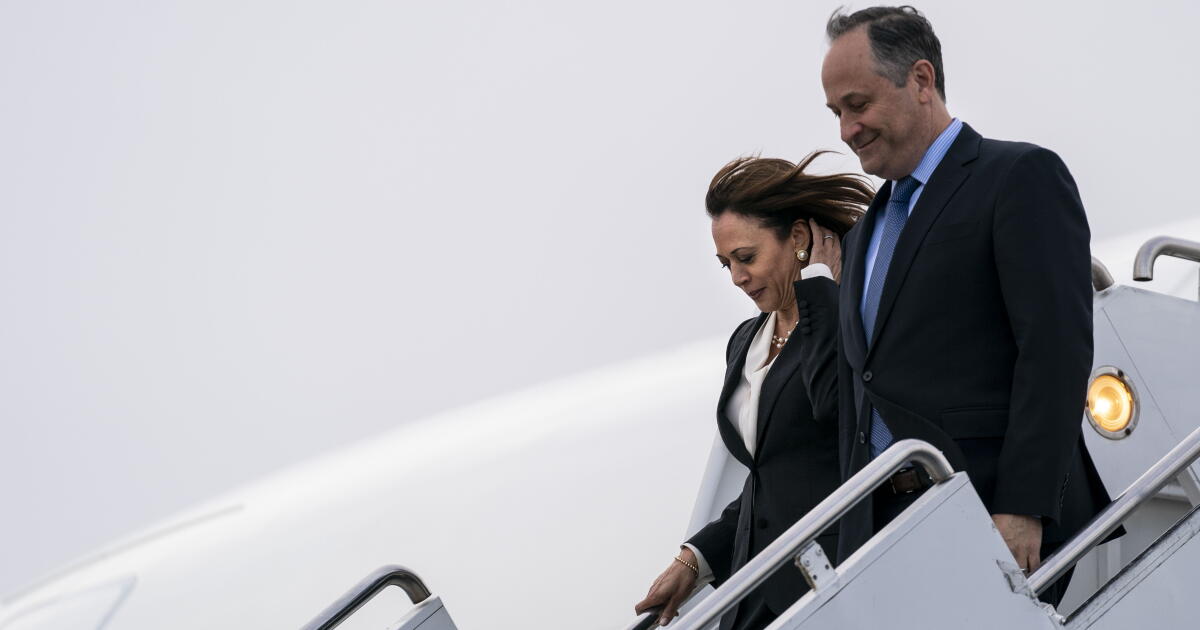
A trespasser tried to enter former Vice President Kamala Harris’ cliffside home in Malibu on Friday evening, according to the Los Angeles County Sheriff’s Department and a Harris spokesman.
Harris and her husband, Doug Emhoff, were not home at the time, according to Eduardo Negrón, a spokesperson for Harris. He did not respond to a question about the couple’s whereabouts.
“Last night, security personnel stopped an individual who illegally entered Vice President Harris and Second Gentleman Emhoff’s property before the individual reached the home,” he said in a statement. “They are grateful to the security and law enforcement personnel who responded swiftly.”
Harris’ on-site security contacted the Los Angeles County Sheriff’s Department, which has jurisdiction over Malibu.
Lt. Jason Duron, a watch commander at the Malibu/Lost Hills sheriff’s station, said his department was contacted by Harris’ security detail when a woman made it to Harris’ front door. Sheriff’s deputies responded around 10:30 p.m., and the woman, who has not been identified, agreed to leave voluntarily. She was not arrested.
“We are stepping up patrols of the property to be safe,” Duron said.
Harris’ level of security has previously been scrutinized. Former vice presidents typically receive six months of Secret Service protection after leaving office, but former President Biden extended the coverage. President Trump, who beat Harris in the 2024 election, revoked the extension in August 2025.
That led Los Angeles and California law enforcement agencies to scramble to protect Harris. The Los Angeles Police Department quickly discontinued its involvement amid criticism that shifting manpower to protect the former vice president was hampering the agency’s ability to fight crime.
It’s unclear whether the California Highway Patrol is still helping to guard Harris, or whether the security personnel who called the Sheriff’s Department were private guards.
BEIRUT: Lebanese President Joseph Aoun made a surprise visit to Nabatieh on Saturday, with videos showing his convoy entering the southern city.
The visit comes amid heightened tensions in southern Lebanon following renewed Israeli strikes and increased security deployments in the area.
Aoun said that Israel’s withdrawal, the return of displaced residents and the reconstruction of affected areas were non-negotiable priorities that Lebanon was committed to achieving.
SACRAMENTO — Labor leader Dave Regan claimedFriday that he was the victim of a “smear” campaign orchestrated in part by wealthy Californians and said he has been falsely accused of attempting to “extort” an endorsement of the billionaire tax ballot measure and of physically assaulting a female union leader.
Investigations commissioned by the Service Employees International Union and SEIU California, and conducted by outside law firms, determined the allegations against Regan were credible, along with reports that he threatened and intimidated other female labor leaders. Regan, who is president of SEIU-United Healthcare Workers West, vehemently denied the allegations, which were first reported by The Times Friday morning.
During a video news conference hours after the allegations were published, Regan claimed the probes were launched by opponents of Proposition 40 — the billionaire tax measure he helped place on the Nov. 3 ballot — as well as members of the SEIU California labor council with whom he had clashed in the past.
Regan, joined by other SEIU-United Healthcare Workers West union leaders and members, also criticized Gov. Gavin Newsom for opposing the proposed one-time 5% tax on billionaires’ assets.
Newsom is “trying to curry favor with the richest people in the state to fund [his] presidential campaign,” Regan said. “That is shameful behavior.”
Newsom and other opponents of the measure, including Democratic gubernatorial candidate Xavier Becerra, Planned Parenthood Affiliates of California and the California Teachers Assn., have expressed concern that Proposition 40 could push many of the state’s biggest taxpayers to relocate and destabilize state finances.
“The Governor supports a national tax on billionaires and is proud to stand with teachers, firefighters, reproductive health clinics, and others in opposing this poorly written state measure that will harm California,” said Newsom’s spokesperson Izzy Gardon.
Regan also criticized The Times’ reporting on the allegations, and an editorial opposing Proposition 40. He alleged that Dr. Patrick Soon-Shiong, the Times’ owner, influenced coverage about the measure because he is a billionaire.
“We stand by our reporting,” said a Times spokesperson.
David Huerta, president of SEIU-United Service Workers West, and three other labor leaders filed a rare formal union charge against Regan in February. The SEIU investigation report, which was reviewed by The Times, supported Huerta’s claim that in December, Regan suggested the state council could be investigated for “governance issues” if the council did not endorse the proposed billionaire tax. Huerta was then president of SEIU California, which along with their national arm, did not endorse Proposition 40.
In July, the executive board for SEIU California voted to take a neutral position on the proposed wealth tax.
The investigation and a second inquiry conducted on behalf of SEIU California substantiated allegations that Regan threatened and intimidated women who worked for the state council. The investigation also determined an allegation that Regan physically assaulted a former executive director of the state labor organization, Courtni Pugh, in 2009, was credible.
Regan called the allegation that he assaulted Pugh a “complete fabrication.” Regan and other SEIU-United Healthcare Workers West members downplayed Pugh’s allegations against him because of her political consulting firm’s role opposing Proposition 40.
Pugh called his remarks “offensive” to the women who participated in the independent investigation.
“My testimony and the testimony of the other women were substantiated by investigators,” she said. “His claims were not.”
Regan remains in his job as the SEIU administrative process moves forward with hearings. Regan will get a chance to make his case before SEIU determines any appropriate disciplinary action.
Times Staff Writer Phil Willon contributed to this report.