president

Trump family deal spree could open door for future presidents to profit from office

For decades, presidents avoided even the appearance of profiting from their office.

Harry Truman refused to lend his name to any business, even in retirement. Richard Nixon so feared a brother might profit off their ties, he had his phone tapped. And George W. Bush dumped his individual stock holdings before taking office.

President Trump is taking a different approach.

The family real estate business is undergoing the fastest overseas expansion since its founding a century ago, each deal potentially shaping everything including tariffs and military aid.

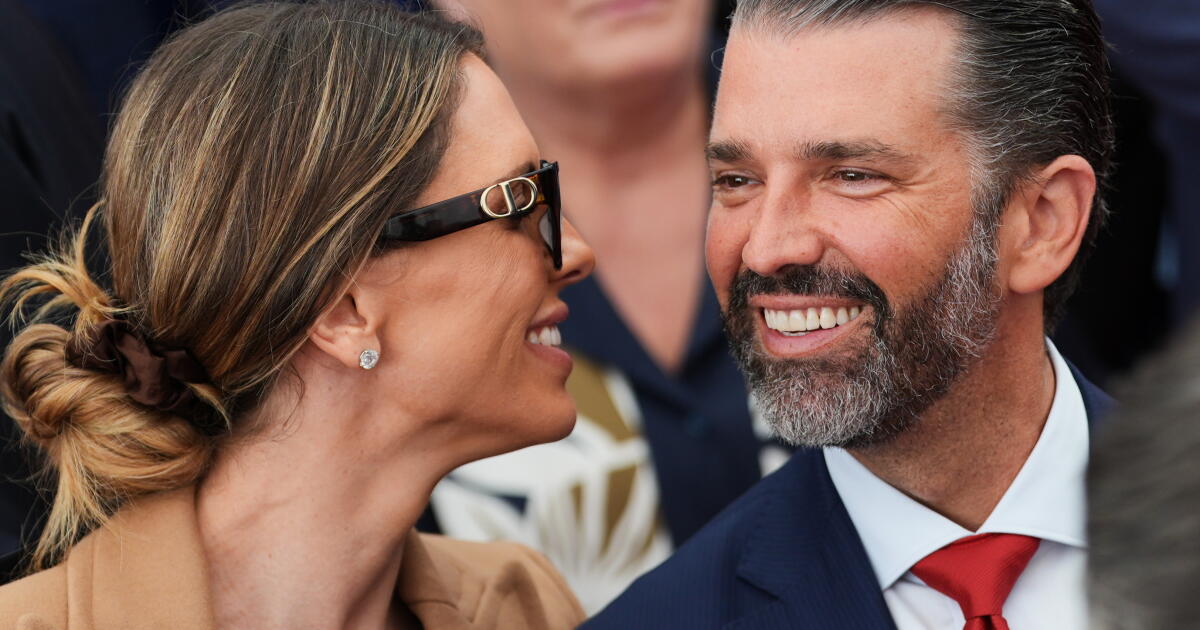
Led by Eric Trump and his brother, Donald Jr., the family business has expanded into cryptocurrencies with ventures that brought in billions of dollars but raised questions about whether some big investors received favorable treatment in return.

The brothers have also joined or invested in a number of companies that aim to do business with the government their father runs. Last month, they struck a deal giving them stakes worth millions in an armed drone maker seeking contracts with the Pentagon and with gulf states under attack by Iran and dependent on the U.S. military led by their father.

The White House and the Trump Organization deny there are any ethical problems. Asked about the issue at a recent crypto conference, Donald Jr. said, “Frankly, it’s gotten old.”

The problem of conflicts of interest goes back a decade to when Trump first ran for office, but some government ethics experts and historians argue it’s more pressing than ever as conflicts pile up in his second term that they consider unprecedented, blatant and dangerous to democracy.

“I don’t think there’s any line right now between policy decisions and political calculations and the interest of the Trump family,” said Julian Zelizer, a presidential historian at Princeton University.

Deal-making spree abroad

In Trump’s first term, the Trump Organization did zero deals in foreign countries. In a little over a year into his second term it did eight, all ostensibly complying with the Trump Organization’s self-imposed rule not to do business directly with foreign governments.

But governments in authoritarian and one-party states rarely take a hands-off approach — especially when the business belongs to a sitting president.

In Qatar, a Trump golf club and villa project is being developed in part by a company owned by the Qatari government. In Vietnam, where The New York Times reported the government pushed farmers off their land to make way for a Trump resort, the country’s deputy prime minister signed off on the deal at a ceremony. And in Saudi Arabia, a planned “Trump Plaza” resort on the Red Sea is being built by a Saudi real estate developer close to the ruling family.

Whether the deals played any role in changing U.S. policies in ways these countries sought is nearly impossible to know, but the countries did get what they wanted — access to advanced U.S. technology for Qatar, tariff relief for Vietnam and fighter jets for Saudi Arabia.

And the Trump Organization got something too: tens of millions in fees.

Asked about those projects, the Trump Organization said it has done no deals with governments so far, noting that the Saudi company was private, and has said it is “collaborating” with the Qatari business and had not struck a “partnership” with it that would have broken its self-imposed rules.

The UAE, crypto and Binance

Another deal raising conflicts of interest questions first came to light in a Wall Street Journal article in January — a year after it was struck.

Days before the inauguration, the Trump family sold nearly half of its World Liberty Financial crypto business to a UAE government-linked company run by a member of the UAE royal family for $500 million.

A second UAE entity, a government fund, invested in the offshore cryptocurrency exchange Binance using $2 billion worth of a digital currency called a stablecoin issued by World Liberty. That allowed the Trump company that received the dollars to put it in safe investments such as bonds or money market funds and keep the tens of millions of dollars in interest for itself.

Shortly after, the Trump administration reversed a Biden-era restriction and granted the UAE access to advanced U.S. chips. Binance’s founder, Changpeng Zhao, later got a pardon from Trump, despite having pleaded guilty to failing to stop criminals from using his platform to move money connected to child sex abuse, drug trafficking and terrorism.

A lawyer for Zhao denied any connection between Binance’s business with the Trump family and the pardon.

“Any claim of a quid pro quo by Binance or CZ, or preferential financial treatment by Binance, is a clear misstatement of the public record,” said Teresa Goody Guillen in a email to the AP, referring to Zhao by his initials.

Asked about the pardon, the White House said federal authorities had unfairly punished Zhao in what it called “The Biden Administration’s war on crypto.”

World Liberty dismissed the notion of a conflict, saying the UAE deal had no connection to the president’s chips policy.

Crypto billions

World Liberty has also provided a separate income stream to a new Trump limited liability corporation through sales of “governance tokens” that give owners certain voting rights in its business, though not equity stakes, raising $2 billion last year. That translates into hundreds of millions of dollars for the Trumps through their World Liberty ownership stake and a separate side deal allowing them a cut of these sales.

One big token investor was Justin Sun, a cryptocurrency billionaire who as a foreign citizen would be banned under U.S. law from making political donations to U.S. politicians. Between Trump’s election and inauguration, Sun spent $75 million on the tokens.

In February last year, a federal lawsuit charging Sun with duping investors was paused before being settled last month for a $10-million fine.

Then there are the souvenir-type “meme” coins stamped with Trump’s face that went on sale days before he took the oath of office last year.

Over the next four months, the coins generated $320 million, mostly going to Trump-related entities, according to blockchain tracker Chainalysis. That is more than double the money collected in four years running his Washington hotel in Trump’s first term.

Unlike the lobbyists or campaign donors trying to influence Trump, the coin buyers can buy anonymously. One who chose to make his purchase public was Sun, who spent $200 million on the coins and got access to Trump at a gala party he held for the biggest buyers.

Another family cryptocurrency business, American Bitcoin, went public in September, giving Donald Jr. and Eric about $1 billion in paper wealth at that time. Months earlier, their father announced a new national bitcoin reserve, sending the price for the cryptocurrency soaring to a record.

The Trump businesses aren’t completely immune to crypto’s notorious volatility. The value of bitcoin and other digital tokens has since plunged and rattled investors. Both American Bitcoin stock and the value of Trump’s souvenir meme coins have collapsed 90% from their highs.

Last month, Trump announced he would hold another dinner with new top holders of his meme coins, giving the coin a boost before it fell back again.

“Whatever constraints there were in the first term appear to have completely disappeared,” says Columbia University historian Timothy Naftali. “Do you want future presidents to be open to the highest bidder?”

Trump thinks people don’t care

Asked to comment for this story, the White House said Trump acts in an “ethically-sound manner” and that any suggestion to the contrary is either “ill-informed or malicious.” It reiterated that his assets are in a trust managed by his children and stated he has “no involvement” in family business deals.

“There are no conflicts of interest,” said spokesperson Anna Kelly.

In a separate statement, the Trump Organization said it is “fully compliant with all applicable ethics and conflicts of interest laws” and added, “The implication that politics has enriched the Trump family is unfounded.”

Trump in January told the New York Times that when it comes to potential conflicts of interest, “I found out that nobody cared, and I’m allowed to,” alluding to an exemption the president gets from the federal statute banning federal officials from holding financial interests in businesses impacted by public policy they help shape.

It’s not clear he’s wrong about American attitudes, though they appear to be changing even among Republicans. In a Pew Research Center poll in January, 42% of those voters said they were confident that Trump acts ethically in office, down from 55% at the start of his second term a year ago.

Change of fortune

Forbes estimates Trump’s net worth is now $6.3 billion, soaring 60% from before he returned to office, a striking development given how much the Trump Organization struggled before.

The Trump International Hotel in D.C. never turned a profit before being sold. Two Trump hotel chains catering to middle-class travelers in his first term shut down for lack of demand. Condominium buildings stripped the Trump name off their facades after discovering that instead of attracting buyers, it was repelling them.

No new U.S. condominiums are putting the Trump name above their entrances in his second term, but his name is prized in Washington, where people have business before the federal government.

Donald Jr., Trump’s oldest son, opened a private club in the Georgetown section of Washington that is charging initiation fees as high as $500,000 for founding members.

One of the few clubs with comparable fees, the Yellowstone Club in Montana, offers access to multiple resorts, 50 ski trails and more than a dozen restaurants across a members-only area the size of Manhattan.

Donald Jr.’s club is in the basement of a building but offers something else — proximity to power.

The club’s name is “Executive Branch.”

Bibles, guitars and sneakers

Other presidents and their families have done things in pursuit of profit that stained that high office.

Hunter Biden got paid as a director of a Ukrainian gas company while his father was vice president. The Clinton Foundation got foreign donations, though after Bill Clinton had left office. And Jimmy Carter’s brother Billy cashed in on the family name by selling beer.

In Trump’s case, the president himself is hawking goods, including $59.99 “God Bless the USA” Bibles, $399 sneakers stamped “Never Surrender” and electric guitars priced up to $11,500 — shipping not included — for a model autographed by the president.

New year, new profits

In the first months of Trump’s second year back in the White House, the momentum hasn’t let up.

In January, the Trump Organization announced its third deal involving Saudi Arabia in less than a year, this time a “collaboration” with a company more directly tied to the government because it is owned by the country’s sovereign wealth fund chaired by its crown prince, Mohammed bin Salman. Asked by the AP whether the project outside Riyadh for Trump mansions, a hotel and golf course violated the company’s pledge not to strike deals with foreign governments, the Trump Organization said it doesn’t “conduct business with any government entity” but didn’t address the project specifically.

Meanwhile, as the two oldest brothers’ new drone company seeks Pentagon contracts, other government contractors in which one or both have gotten ownership stakes this past year are taking in tens of millions of dollars of new taxpayer money. That includes a rocket motor maker, an AI chip supplier and a data analytics company, according to government contracting records.

Asked about potential conflicts after the drone deal was announced, Eric said, “I am incredibly proud to invest in companies I believe in.” A spokesman for Donald Jr. said he doesn’t “interface” with the government on companies in his portfolio, adding that “the idea that he should cease living his life and making a living to provide for his five kids just because his dad is president, is quite frankly, a laughable and ridiculous standard.”

A new investment firm that the brothers joined as advisors last year has raised $345 million in an initial public offering to buy stakes in U.S. companies designed to help their father revive America’s manufacturing base. After the AP asked Trump’s chief business lawyer about language in a regulatory filing stating the firm would target companies seeking federal grants, tax credits and government contracts, he filed a new document with that language removed.

Zelizer, the Princeton historian, says he expects future presidents will show more restraint in enriching themselves, but worries about the message Trump is sending.

“He has shown politically there is no price to be paid to making money,” he said. “You know you can go there.”

Condon writes for the Associated Press.

Source link

President Trump dismisses entire Presidio Trust board in San Francisco

April 12 (UPI) — President Donald Trump has dismissed all six members of the Presidio Trust board, removing the leadership of the federal entity that manages San Francisco’s Presidio.

Trump previously targeted the Presidio Trust in a February 2025 executive order that described the agency as an “unnecessary governmental entity” and called for it to be reduced.

The trustees, who were appointed during the Biden administration, were notified of their removal this week, Lisa Petrie, spokeswoman for the Presidio Trust, said.

Chairman Mark Buell told The San Francisco Standard that the White House sent him a short email saying the termination was “effective immediately.”

“I was surprised that this didn’t happen sooner,” he said.

The other board members include Charles M. Collins, Lenore Eccles, Patsy Ishiyama, Bonnie LePard and Nicola Miner.

Former House Speaker Nancy Pelosi helped create the trust, established in 1996 to rehabilitate the former Army post after it closed. The national park is in her district.

The Trump administration has been reshaping the federal bureaucracy and has fired numerous government workers.

The Presidio, now a national park near the Golden Gate Bridge, includes museums, campgrounds, trails, hotels and a golf course.

Source link

Peru votes for ninth president in less than decade | Elections News

Voters to choose from 35 presidential candidates, including a comedian, a media baron and a political dynasty heiress.

Polls have opened in Peru’s presidential and legislative elections, with no clear frontrunner amid years of political instability.

Since 2018, Peru has seen eight presidents, with a high turnover rate marred by impeachments and corruption scandals, leading to voter disillusionment with weak governments.

Recommended Stories

list of 3 itemsend of list

Some 27 million Peruvians are eligible to vote on Sunday to pick the country’s ninth leader in a decade, with polling stations across the country opening at 7am (12:00 GMT) and closing at 5pm (22:00 GMT), with preliminary results expected shortly afterwards.

With 35 candidates on the presidential ballot, Peruvians will choose from a wide range of potential leaders, including a comedian, a media baron, a political dynasty heiress, and a hard‑line ex‑mayor who likens himself to a cartoon pig.

However, all major candidates continue to poll well below the 50 percent needed to win the election, making a June 7 run-off appear likely.

A fruit seller in Lima told the Reuters news agency that she was still undecided on who to vote for.

“Peru is a mess, and there’s no candidate worth voting for,” Gloria Padilla said.

Clothing merchant Maria Fernandez, 56, also shared the same sentiment.

“I wouldn’t vote for anyone. I’m so disappointed with everyone in power,” Fernandez told the AFP news agency.

“We’ve been governed by nothing but corrupt, thieving scoundrels,” she added.

The most well-known candidate is conservative Keiko Fujimori, who will make her fourth presidential bid after reaching the run-off in all three previous races.

While Fujimori has taken a position of guarantor of order and economic stability, her candidacy remains polarising due to her family legacy. Her father, former President Alberto Fujimori, was convicted of human rights abuses and corruption before he died in 2024.

On the eve of the election, Fujimori told the AFP news agency that she would “restore order” in her first 100 days if she were to win, sending the army into jails, deporting illegal migrants and strengthening security at the border.

At the other end of the political spectrum, Ricardo Belmont – a former mayor of the capital, Lima, running for the centre-left Civic Party Obras – was polling in second place.

Popular comedian Carlos Alvarez follows behind Belmont in pre-election polls and has campaigned on a platform of being tough on crime, as Peru’s homicide rate has more than doubled in the past decade.

Source link

President Lee Jae Myung says AI in workplaces cannot be avoided

South Korean President Lee Jae Myung (C) speaks during a meeting with representatives of the Korean Confederation of Trade Unions, one of the country’s two major umbrella labor unions, at Cheong Wa Dae in Seoul, South Korea, 10 April 2026. Photo by YONHAP / EPA

April 10 (Asia Today) — South Korean President Lee Jae Myung said Thursday that the spread of artificial intelligence in workplaces cannot be avoided, while urging labor groups to help develop safeguards for workers affected by the technology. Lee is South Korea’s president, and the Korea.net government portal uses the spelling “Lee Jae Myung.”

Lee made the remarks during a meeting at Cheong Wa Dae with 24 officials from the Korean Confederation of Trade Unions, or KCTU, after its leader raised concerns about job losses tied to automation and what he called “physical AI.” The labor group’s chairman is commonly rendered in English as Yang Kyung-soo.

“The question is how to respond,” Lee said. “Simply saying it should not happen is not a solution. It cannot be avoided.”

Yang said workers could accept AI if it takes over dangerous, difficult or overnight work, but warned that automation has historically been linked to job losses. He said the emergence of “physical AI” raises deeper concerns because it may not just change jobs but eliminate them altogether.

Yang called for a broader response that goes beyond employment policy alone, saying discussions should also cover the social safety net, labor rights and ways to recover excess corporate profits generated through AI.

Lee said the government is already pursuing policies to accelerate the adoption of digital AI through public investment in an effort to stay globally competitive. At the same time, he acknowledged that a government push to replace labor too aggressively could be seen as anti-labor.

He urged the labor sector to propose alternatives and additional protections, saying the government would accept as much as possible where feasible.

Lee also said workers do not need to be overwhelmed by fear over AI, pointing to the example of smart factories. He said there had been similar concerns when those systems were introduced, but several years later more workers were needed to improve and operate them.

He proposed joint research by the government and industry on how AI should be understood and used in workplaces.

“If skilled labor is replaced by robots, workers’ cooperation and management will still be needed,” Lee said. “This is not something we should try to avoid.”

— Reported by Asia Today; translated by UPI

© Asia Today. Unauthorized reproduction or redistribution prohibited.

Original Korean report: https://www.asiatoday.co.kr/kn/view.php?key=20260410010003172

Source link

Kamala Harris says she ‘might’ run for president in 2028

Former Vice President Kamala Harris said Friday she was considering running for president in 2028, offering the clearest signal yet that she could seek to lead Democrats back to the White House.

“I might, I might,” she told an audience in New York. “I’m thinking about it.”

Harris was asked about her plans by the Rev. Al Sharpton during a conversation at a convening of his civil rights organization National Action Network, where several other likely Democratic hopefuls also were appearing this week. Some in Harris’ audience chanted “Run again!” before Sharpton asked whether she might do so.

“I served for four years being a heartbeat away from the presidency of the United States,” Harris said. “I know what the job is and I know what it requires.”

Harris’ loss to President Trump in 2024 was gutting for Democrats, who have faced persistent questions about the party’s direction and what type of candidate would be best positioned to retake the presidency.

Democrats have notched some wins against Republicans in recent state-level races as Trump’s popularity has declined and have set their sights on gains in this year’s midterm elections. Even if the party’s popularity rises, however, the 2028 race likely will be a tooth-and-nail fight as the country determines who will succeed Trump.

“Democrats can win in the midterm through protest votes against [Trump’s] direction of the country, but they’ll clearly need a vision for 2028 and beyond to win the presidency,” said Thad Kousser, a political science professor at UC San Diego.

The number of Democrats vying to put forth that vision is set to be high. Other potential 2028 candidates, including Gov. JB Pritzker of Illinois, Gov. Josh Shapiro of Pennsylvania, Sen. Mark Kelly of Arizona and former Transportation Secretary Pete Buttigieg, also spoke or were scheduled to speak with Sharpton before the conference ends Saturday.

California Gov. Gavin Newsom, who is considering a presidential run, was not on the convention schedule. A recent poll found that Newsom would have a wide lead over Harris among Democratic voters in California for the party’s next nominee.

Whether Harris would seek the nation’s highest office again after a fast, truncated 2024 campaign following former President Biden’s withdrawal from the race has been the subject of speculation for months.

She announced in July that she would not run for California governor — leaving the door open for a presidential run or something else — then published a book in September rehashing her campaign.

Voters’ familiarity with Harris gives her both a strength and a liability — her name recognition and experience have helped put her at the top of recent national polls, Kousser said, but voters often turn to fresher faces by the time primary elections come around. Her loss to Trump also could cause voters to balk ahead of an election that will be largely a referendum on his leadership.

At a time when Democrats are in particular need of a bold vision, that ultimately could give Harris a challenge, Democratic strategist Joe Caiazzo said.

“Elections are about the future, and I think it’s really tough for people who are part of our past to make that case. There’s a yearning for something fresh, new, exciting,” he said.

On Friday, Harris said she was considering who could do the best job for the American people.

“I’ll keep you posted,” she said.

Source link

Eric Adams, former ‘international mayor’ of New York City, becomes an Albanian citizen

Former New York City Mayor Eric Adams announced Friday that he had become a citizen of Albania, putting him one step closer to his oft-repeated dream of leaving politics behind for a life abroad.

Adams, a Democrat, received the honorary citizenship “at his request,” according to an official decree from the country’s president, Bajram Begaj.

The news was first reported in the Albanian press and confirmed by a spokesperson for Adams, who said the ex-mayor had “long been a friend and ally of the Albanian-American community.”

“The decision by the Republic of Albania to grant Mayor Adams citizenship reflects that enduring relationship and mutual respect,” the spokesperson, Todd Shapiro, said in a text message, adding that the recognition “further strengthens the bond between New York and Albania.”

Adams, who once described himself as an “international mayor,” has previously expressed an affinity for the small Balkan nation. His adult son lived in the country while competing in Albania’s version of “American Idol” and Adams traveled there himself in October — one of several international trips taken in his final months in office.

The purpose, he said at the time, was “to say hello to a friend and learn from a friend and build a relationship with the friendship that would not allow our oceans or seas to divide us.”

It wasn’t immediately clear what, if anything, Adams planned to do with his new citizenship. But he has previously expressed a desire to move far from his hometown of New York City.

“When I retire from government, I’m going to live in Baku,” Adams, then Brooklyn borough president, said at an event honoring the Azerbaijan community in 2018. A few years later, in an interview with a Jewish publication, Adams said he would like to retire in the Israeli-occupied Golan Heights.

As mayor, Adams’ penchant for international trips to Turkey prompted a federal indictment focused, in part, on allegations that he accepted improper travel benefits from foreign nationals.

Adams denied the allegations, and the case was later ordered dropped by President Trump’s Justice Department. Adams later met with Trump administration officials about the possibility of taking an ambassadorship, which did not materialize.

Shortly after dropping his ailing bid for reelection, Adams embarked on a four-day trip to Albania, meeting with the country’s Prime Minister Edi Rama and members of his Cabinet, along with local business leaders. The trip was paid for in part by the Albanian government.

Since leaving office, Adams has been spotted in Dubai and the Democratic Republic of Congo, though his day-to-day activities remain a source of some speculation.

In January, he launched a cryptocurrency coin that he said would beat back antisemitism and “anti-Americanism,” but it drew scrutiny after losing millions of dollars in value.

Offenhartz writes for the Associated Press.

Source link

A president and a pope: The world’s most influential Americans are at odds over Iran

Donald Trump is accustomed to criticism from coast to coast — Democrats, disaffected Republicans, late-night comedians, massive protests. Yet in his second presidency, Trump’s most influential American critic doesn’t live in the country but at the Vatican.

It’s an unprecedented situation, with the first American pope directly assailing the American president over the war in Iran, where a fragile ceasefire took hold this week. The announcement came after Pope Leo XIV declared that Trump’s belligerence was “truly unacceptable.”

Never before has the relationship between Washington and the Vatican revolved around two Americans — specifically, a 79-year-old politician from Queens and a 70-year-old pontiff from Chicago. They come from the same generation and share some common cultural roots yet bring jarringly distinct approaches to their positions of vast power. And the relationship comes with risks for both sides.

“They’re two white guy boomers but they could not be any more different in their life experiences, in their values, in the way they have chosen to live those values,” said theology professor Natalia Imperatori-Lee of Fordham University. “This is a very stark contrast, and I think an inflection point for American Christianity.”

Polar positions on Iran among U.S. Christians

Experts on the Catholic Church emphasized that Leo’s opposition to the war reflects established church teachings, not the reflexive politics of the moment.

“For the last five centuries, the church has been involved in a project of helping develop strong international norms,” including the Geneva Conventions in recent centuries, said Catholic University professor William Barbieri. “It is a very long-standing tradition rooted in Scripture and theology and philosophy.”

Yet the U.S. administration, which has close ties to conservative evangelical Protestant leaders, has claimed heavenly endorsement for Trump’s war on Iran.

Defense Secretary Pete Hegseth urged Americans to pray for victory “in the name of Jesus Christ.” When Trump was asked whether he thought God approved of the war, he said, “I do, because God is good — because God is good and God wants to see people taken care of.”

The Rev. Franklin Graham, son of iconic Baptist evangelist Billy Graham, said of Trump that God “raised him up for such a time as this.” And Graham prayed for victory so Iranians can “be set free from these Islamic lunatics.”

Leo countered in his Palm Sunday message that God “does not listen to the prayers of those who wage war, but rejects them.” He referenced an Old Testament passage from Isaiah, saying that “even though you make many prayers, I will not listen — your hands are full of blood.”

While it’s not unusual for popes and presidents to be at cross purposes, it’s exceedingly rare for the leader of the Catholic Church to directly criticize a U.S. leader, and Leo later named Trump directly and expressed optimism that the president would seek “an off-ramp” in Iran.

An even stronger condemnation came after Trump warned of mass strikes against Iranian power plants and infrastructure, writing on social media that “an entire civilization will die tonight.” Leo described that as a “threat against the entire people of Iran” and said it was “truly unacceptable.”

Experts: Leo doesn’t see himself as a Trump rival

Imperatori-Lee said Leo’s direct criticism stands out from the church’s more general critiques of political and social systems. For example, Pope Francis urged U.S. bishops to defend migrants without specifically mentioning Trump or his deportation agenda. Leo also previously called for humane treatment of migrants.

“Popes have critiqued unfettered capitalism before, very robustly. The popes have critiqued the Industrial Revolution, right? Things that the U.S. has been at the forefront of,” Imperatori-Lee said, “but it’s never been this specific and localized.”

She said Leo’s commentary resonates in the U.S. — with Catholics and non-Catholics — because he is a native English speaker.

“There’s no question about his inflection and meaning,” she said. “It removes any ambiguities.”

Trump welcomed Leo’s election last May as a “great honor” for the country, and he hasn’t responded to the latest criticisms. The White House did not respond to a request for comment.

“What Pope Leo and Donald Trump have in common is they both lived through the post-war polarization,” including the political upheaval of the Civil Rights Movement and Vietnam War, said Steven Millies, a professor at Chicago’s Catholic Theological Union, one of the pope’s alma maters.

He noted that Leo is a subscriber to The New York Times, plays the “Wordle” game, keeps up with U.S. sports and talks regularly with his brothers, including an avowed Trump supporter.

“In some ways he’s just like us,” Millies said, someone “who understands where our domestic political crisis came from,” unlike the Argentinian Francis, “who did not fully understand the peculiarities of the United States” even as he offered implicit criticism.

Barbieri said Leo’s American savvy still does not change an underappreciated reality of Catholicism and the papacy. “The Catholic Church doesn’t neatly fit into either right or left boxes as they’re understood in U.S. politics,” he said.

Leo’s global focus vs. Trump’s ‘transactional’ politics

Leo spent much of his pre-papal ministry, including all his time as a bishop and cardinal, outside the U.S.

He was educated in Rome as a canon lawyer within the church. He was a bishop in poor, rural swaths of Peru. He led the Augustinian order and served as Francis’ prefect for recommending bishop appointees around the world.

Imperatori-Lee said that global reach gave him a first-hand perspective on how Washington’s economic and military policies — including backing dictators in Latin America — have negatively affected less powerful nations and their citizens.

His varied experiences made then-Cardinal Robert Prevost uniquely suited to be elected pope despite the College of Cardinals’ traditional skepticism toward the U.S. and its superpower status. Millies argued that Trump and his advisers, even Vice President JD Vance, a Catholic convert, may not appreciate those distinctions.

“This is an administration that seems to think only in terms of transactional politics — who’s for us and who’s against us,” he said.

Polarization poses risks for Leo and Trump

Relations between Washington and the Vatican have become so strained that a report of an allegedly contentious meeting involving Pentagon and Catholic Church officials sent shockwaves through both cities.

According to the report in The Free Press, a member of Trump’s administration warned the church in January not to stand in the way of U.S. military might.

The Vatican on Friday issued a statement rejecting the report’s characterization of the meeting, saying it “does not correspond to the truth in any way.”

The U.S. Embassy to the Holy See also pushed back, writing on social media that “deliberate misrepresentation of these routine meetings sows unfounded division and misunderstanding.”

Millies, meanwhile, questioned whether anything the pope or U.S. bishops say can sway individual Catholics. Trump is likely to lose support among Catholics as he loses support across the broader electorate, Millies said, but that’s not necessarily because members of Leo’s flock are applying church doctrine.

“Partisan preferences always trump the religious commitments,” Millies said, describing a “disconnect” between church leaders and many parishioners who look to other sources, politicians included, when shaping their views of faith and politics.

“The icon of Catholicism in American politics now is JD Vance, and it’s more about winning an argument,” he said. “It’s a very different emphasis, but it’s one that may suit the Trump administration very well.”

Barrow writes for the Associated Press. AP reporters Nicole Winfield in Rome and Konstantin Toropin in Washington contributed to this report.
Source link

Myanmar’s coup leader Min Aung Hlaing sworn in as president | Elections News

Min Aung Hlaing seeks to ‘enhance’ international relations and ties with ASEAN after coup plunged Myanmar into chaos.

Myanmar’s coup leader Senior General Min Aung Hlaing has been sworn in as the country’s new president, five years after he ousted an elected government and triggered a civil war.

In his inauguration address in the capital Naypyidaw on Friday, he said that “Myanmar has returned to the path of democracy and is heading towards a better future”, while acknowledging the country still has many “challenges to overcome”.

Recommended Stories

list of 3 itemsend of list

Min Aung Hlaing was voted to the top office last week in a landslide victory by the pro-military parliament, formalising his grip on power. He was among three candidates nominated for the post; the two runners-up became vice presidents.

The 69-year-old general seized power in 2021 from Aung San Suu Kyi, a Nobel Peace Prize laureate, placing her under arrest and causing violence, protests and demonstrations that sent Myanmar spiralling into chaos.

The coup prompted a mass civil disobedience movement and the formation of anti-coup armed groups, to which the military responded with brutal force. Myanmar was subsequently suspended from the Association of Southeast Asian Nations (ASEAN).

In his address on Friday, Min Aung Hlaing said they “will ‌enhance ‌international relations and strive to restore normal relations” with ASEAN.

Friday’s inauguration ceremony was attended by representatives from the neighbouring nations of China, India and Thailand as well as 20 other countries, according to the AFP news agency.

Portrait of Aung San Suu Kyi in red traditional dress with flowers in her hair
Min Aung Hlaing seized power in 2021 from Aung San Suu Kyi [File: Ann Wang/Reuters]

Lopsided parliamentary election

Min Aung Hlaing’s election has been decried as a farce by democracy watchdogs.

The new president’s pledge to “grant appropriate amnesties to support social reconciliation, justice and peace”, with political prisoners pardoned and civil servants who quit in protest invited back to their posts, has similarly been dismissed as cosmetic.

Min Aung Hlaing’s transition from top general to civilian president followed a lopsided parliamentary election in December and January, won in a landslide by an army-backed party and derided by critics and Western governments as a sham.

The pro-military Union Solidarity and Development Party won more than 80 percent of parliamentary seats contested, while serving members of the armed forces occupy unelected seats making up a quarter of the total.

Voting did not take place in swaths of the country, which have been seized by rebels battling the military and rejecting the vote, further undermining Min Aung Hlaing’s mandate, according to rights monitors.

Meanwhile, the civil war that has racked Myanmar for much of the last five years rages on, with anti-military groups, including remnants of Aung San Suu Kyi’s party and longstanding ethnic minority armies, forming a new combined front to take on the military.

But the human cost is staggering; the International Conflict Monitor (ACLED estimates more than 96,000 people have been killed, while the United Nations says at least 3.6 million have been displaced since the coup in 2021.

Source link

Column: We’re stuck with an unchecked mad king until January

Amid all the alarming and unhinged comments of the president of the United States in recent days threatening Iran with genocide — remarks beyond even the usual cray-cray blather from Donald Trump — it was a statement from his spokesperson on Tuesday that really put the madness in the White House in perspective.

“Only the President knows where things stand and what he will do,” Karoline Leavitt said.

She issued those words just hours before Trump’s 8 p.m. Tuesday deadline for Iran to either reopen the Strait of Hormuz to international shipping or face Armageddon — that is, war crimes by the United States. The statement from the White House press secretary was as clear a description as Americans could get of governance under Trump these days: A mad king reigns, virtually unchecked.

And as a practical matter, there is nothing under the Constitution, neither impeachment nor removal under the 25th Amendment, that can be done about him. There’s only voters’ opportunity to eject the complicit Republican majorities in the House and Senate in November’s midterm elections, to install a Democratic — and democratic — check on Trump for the remaining two years of his term.

By now we know that, just before Trump’s deadline to Iran warning “a whole civilization will die tonight,” he announced a fragile two-week ceasefire for negotiations. The commander in chief declared victory, natch. But so did Iran. And it had the better of the argument: Iran continued to control and monetize passage through the strait, unlike before Trump’s war began Feb. 28, and already on Wednesday it flexed that power by closing the route in retaliation for Israeli strikes. The ceasefire also lets Iran retain possession of its enriched, nearly bomb-grade uranium, and the nation won Trump’s offer of possible tariff and sanctions relief.

So much for the “UNCONDITIONAL SURRENDER!” he demanded in a post a month ago.

I’m writing these words on Wednesday. Who knows where things will stand by the time you’re reading this? “Only the president knows.”

Trump has fluctuated, reversed and contradicted himself repeatedly — even within a single social-media screed or chest-thumping performance for the press — since he ordered war against Iran nearly six weeks ago, without notice to Congress, let alone its authorization. Since Sunday, he’s variously called Iran’s leaders “crazy bastards” and “animals” and taken credit for “Total Regime Change, where different, smarter, and less radicalized minds prevail.”

Presidential rule by fiat and whim would be wrong in any case under the Constitution’s checks and balances of power, and specifically of war power. But in Trump’s case, America has a president who lately has piled on the evidence that he is mentally unstable, unfit for the office.

And spare us the cheerleaders’ claims on Fox News about how he’s playing multidimensional chess. When even Alex Jones likens Trump to “crazy King Lear” and calls for invoking the 25th Amendment to remove him from power — echoing former Trump promoters including Marjorie Taylor Greene and Candace Owens, among others — you know he’s crossed a line by his unilateral war-making and profane threats (on Easter Sunday!) of genocidal apocalypse.

The evidence of Trump’s dangerous instability has been there from his political genesis. In his first term, he warned he’d unleash “fire and fury like the world has never seen” against nuclear-armed North Korea then declared that he “fell in love” with dictator Kim Jong-un (without achieving any diminution in Kim’s arsenal). He celebrates the deaths of political enemies and prosecutes those still living. He repeatedly interrupts himself on some policy question to bloviate about his ballroom plans.

He’s ordered armed agents into American neighborhoods on immigration raids, then expressed neither responsibility nor remorse when citizens died and legal residents got deported. The national security leaders of his first term let it be known that they’d prevented him from acting on his worst impulses, but there’s no chance of that from Defense Secretary Pete Hegseth. Retired Gen. Mark Milley, former chair of the Joint Chiefs of Staff, in 2021 described first-term Trump as being in mental decline and “fascist to the core.”

You’d be hard-pressed to find anyone who thinks Trump has gotten better in the intervening five years.

The country “can’t be a therapy session for … a troubled man like this,” Trump’s first-term attorney general, William P. Barr, told CBS in 2023 as Trump campaigned to return to office.

If only the presidency were therapy for Trump. Instead he’s like a power addict in the world’s most powerful job, mainlining its intoxicants, and no one will stop him. Only people with extraordinary egos seek the White House in the first place, but when an actual egomaniac inhabits that warping bubble of butter-uppers, there’s danger. I remain haunted by the words of retired Gen. John F. Kelly, Trump’s first-term Homeland Security secretary and then White House chief of staff, who in 2023 said of Trump’s potential reelection: “God help us.”

Having failed twice to convict and remove Trump in his first term, Democrats have shied from a third attempt, until now. Scores in Congress have called for impeachment or invocation of the 25th Amendment to oust him. There’s some value in sending a message. But Democrats are offering supporters false hope. A Republican-led Congress and a Cabinet of clownish sycophants will not exercise the powers they have, even against a mad king.

The authors of the Constitution, having thrown off a king, debated at length how to guard against a power-crazed president. But they didn’t anticipate political parties that put tribal loyalty over the country. That partisanship has rendered the high bars to a president’s removal — a vote of two-thirds of the Senate for conviction after impeachment, or, under the 25th Amendment, action by the vice president and a Cabinet majority — all but insurmountable.

That leaves the voters, who in special and off-year elections as recently as Tuesday have shown their zeal to punish Trump’s party. We can hope that a new Congress will check him come January.

And we can pray.

Bluesky: @jackiecalmes
Threads: @jkcalmes
X: @jackiekcalmes

Source link

Jeff Shell to step down as Paramount president after legal battle

Paramount President Jeff Shell is expected to exit the company after being entangled in a legal battle with a controversial Las Vegas gambler and self-styled “fixer.”

Shell has been negotiating his exit and is expected to leave imminently after just eight months on the job, said two people familiar with the matter who were not authorized to comment publicly.

The veteran entertainment executive officially joined the media company with David Ellison’s takeover in August, though he had been a key member of Ellison’s team for nearly two years as the group worked to assemble the pieces of the tech scion’s growing empire. Ellison’s Skydance Media acquired Paramount and then pulled off a stunning $111-billion deal to buy Warner Bros. Discovery in late February.

Shell brought substantial experience running a media company to Ellison’s inner circle, a group that included former investment bankers and others who haven’t run a large-scale enterprise. Shell also served as a member of Paramount’s board and is expected to leave that role, too.

His exit comes after the high-roller, Robert James “R.J.” Cipriani, sued Shell in Los Angeles County Superior Court on March 9, alleging fraud and breach of an oral contract. Cipriani claimed that he provided Shell with “sophisticated, high-value crisis communications services,” according to his suit. He alleged Shell spilled corporate secrets, which Shell has denied, and also failed to deliver on a verbal pledge to help Cipriani develop an English-language version of a Roku TV Spanish music show.

Shell maintains Cipriani fictionalized the two men’s dealings, then spread “false and salacious lies to extract a massive payday.” Cipriani has been seeking $150 million in damages. Shell filed a counterclaim, saying the two men met only twice and that Shell owed him nothing.

The legal skirmish cast a cloud over Shell’s tenure helping lead the company because the Ellisons wanted to stay focused on their Warner Bros. takeover and lining up regulators approvals in the U.S. and abroad. The Cipriani controversy made Shell’s future at Paramount untenable, the sources said.

Shell’s departure comes three years after he was ousted as NBCUniversal chief executive.

NBCUniversal-owner Comcast hired a law firm to investigate him after a CNBC anchor filed an internal sexual harassment claim against him. Shell stepped down, acknowledging that he’d had an “inappropriate relationship” with the journalist, who has since left the company.

The job at Paramount was envisioned to be his second act.

Shell’s dealings with Cipriani began with an August 2024 meeting at litigator Patty Glaser’s Century City office. At the time, Glaser represented both men and urged Cipriani to “cease” his efforts to drum up damaging stories about Shell, who was trying to recover from the scandal that cost him his job at NBC.

Jeff Shell, Paramount Skydance president.

Jeff Shell, Paramount Skydance president.

(Paramount / Skydance)

The most serious of Cipriani’s allegations was that he made a report about Shell to the U.S. Securities & Exchange Commission that Shell had discussed highly sensitive Paramount information with him: Paramount’s proposed $7.7-billion deal with the UFC owner to bring the mixed-martial arts fights to CBS and other Paramount outlets. Shell, in his lawsuit, denied the allegation.

Robert James "R.J." Cipriani in Amazon Prime Video's 2025 series, "Cocaine Quarterback."

Robert James “R.J.” Cipriani in Amazon Prime Video’s 2025 series, “Cocaine Quarterback.”

(Courtesy of Prime)

Paramount’s brass hired the Gibson Dunn law firm to investigate Shell’s surreptitious dealings with Cipriani. Investigators have been reviewing whether Shell had divulged any secrets. The review is still pending.

“Nobody believed me,” Cipriani said Wednesday. “The best thing I did was cooperate with Gibson Dunn and showed them that the texts were real.”

It’s unclear whether Ellison will look to bring in other experienced media executives or look to senior Warner Bros. Discovery executives following Paramount’s proposed takeover of that company.

Source link

President Trump endorses Steve Hilton in the California governor’s race

President Trump endorsed conservative commentator Steve Hilton for California governor late Sunday night.

The endorsement could have a major impact on a race that remains up for grabs, with recent opinion polls showing Hilton and his top Republican rival, Riverside County Sheriff Chad Bianco, as top contenders in the 2026 contest.

“He is a truly fine man, one who has watched as this once great State has gone to Hell,” Trump posted on Truth Social, adding that he has known Hilton for many years.

Trump in his endorsement praised Hilton while attacking the record of California Gov. Gavin Newsom, using a derogatory name for the governor. Newsom is serving the last year of his final term as governor as he weighs running for president in 2028.

“Gavin Newscum and the Democrats have done an absolutely horrendous job. People are fleeing, crime is increasing, and Taxes are the highest of any State in the Country, maybe the World. Steve can turn it around, before it is too late, and, as President, I will help him to do so! With Federal help,” Trump said.

Despite California’s solidly Democratic electorate, a recent poll by UC Berkeley’s Institute of Governmental Studies found Hilton and Bianco leading the crowded field of candidates just months before the June 2 primary — leading to the possibility of Democrats being shut out of a November election that will determine California’s next governor. The crowded field of Democrats in the race has splintered their party’s voters, providing an opening for the Republicans, the poll showed.

Under the state’s top-two primary system, the top two candidates advance to the general election, regardless of their party affiliation.

If Trump’s endorsement leads to California Republican voters coalescing behind Hilton, severely damaging Bianco’s campaign, that likely would reduce the odds of two GOP candidates finishing in first and second place in the primary.

Trump’s endorsement came the day after Hilton and Bianco squared off in a testy debate in Rancho Mirage that was moderated by Richard Grenell, Trump’s former ambassador to Germany, and days before the state GOP meets in San Diego to consider an endorsement in the race.

On Saturday, Bianco said he suspected that Trump would weigh in on the race and that his team had been in talks with the president’s advisors.

“Of course, I would want him to support me. He’s the president of the United States,” Bianco said in an interview.

Hilton on Saturday questioned whether the president would weigh in on the race.

“I’ve said that I’d be honored to have the President’s endorsement. I think that the California Governor’s race is pretty low on his [agenda] right now,” he said in an interview. “I haven’t asked for that, and I’m not expecting him to weigh in.”

Jon Fleischman, the former executive director of the California Republican Party, wrote on Substack late Sunday that he believes that Trump’s endorsement will significantly boost Hilton’s support among GOP voters.

“This Timing Is Not Accidental,” he wrote, noting that while it was previously unclear whether either candidate could receive the 60% of delegate votes to secure the party nod at its upcoming convention. “Well, obviously this endorsement from the President for Hilton will supercharge his momentum going into the weekend convention”

Source link

Trump loses across courts in bruising week of immigration and legal setbacks

President Trump spent much of last week railing against the courts. The courts, in turn, spent it ruling against him.

While Trump made history as the first sitting president to attend oral arguments at the Supreme Court, where he stared down justices as they questioned his bid to end birthright citizenship, quieter courtrooms across the country were challenging his agenda.

The challenges came in on immigration, on his White House ballroom project, on his own liability in the run-up to Jan. 6.

“Dumb Judges and Justices will not a great Country make!” he wrote on Truth Social on Monday.

By Friday, judges had served him loss after loss, each finding the administration had taken executive authority too far, too fast.

Immigration rulings

On immigration, the keystone of Trump’s policy platform, he faced a number of setbacks.

On Monday, a federal judge in California took a step that would allow a class-action lawsuit against the administration’s handling of certain asylum claims. The case concerns thousands of asylum seekers who had made appointments with immigration officials by using a Biden administration phone app called CBP One.

In many cases, migrants from around the world had waited months in Mexico for their turn to speak with border agents after securing appointments through the app.

Those appointments were suddenly canceled after Trump took office. The judge certified those asylum seekers as a class that can challenge the administration’s action in court.

In a similar case, a federal judge in Boston ruled Tuesday that the administration had unlawfully terminated the temporary legal status of as many as 900,000 immigrants who entered the country after using the phone app. Tens of thousands of those told by the administration to leave the U.S. “immediately” have since left or been deported.

It was an awful week for Donald Trump. It’s not that the courts are anti-Trump. In fact, he wins a lot.

— Adam Winkler, constitutional law professor

The judge ordered the administration to reinstate the legal status and work authorization of those remaining.

“Today’s ruling is a clear rejection of an administration that has tried to erase lawful status for hundreds of thousands of people with the click of a button,” said Skye Perryman, president and CEO of Democracy Forward, a legal organization that represented the migrants.

Sanctuary laws

Also Tuesday, a federal judge threw out a Justice Department lawsuit that accused Denver and Colorado of interfering with immigration enforcement and claimed that the city and state’s “sanctuary” laws violated the Constitution.

The ruling found that the federal government had not shown it could override state and local decisions about how to use their own resources. The Constitution, the judge said, does not let Washington commandeer local governments.

“Colorado gets to make a choice: How will our law enforcement operate in Colorado. The federal government, they don’t get to make that choice for us,” Colorado Atty. Gen. Phil Weiser said.

Birthright citizenship

The next day, the Supreme Court justices appeared skeptical of Trump’s claim that birthright citizenship doesn’t apply to babies born in the U.S. to parents who are here unlawfully or temporarily.

Conservative and liberal judges alike questioned the arguments of Solicitor Gen. John Sauer, who represented the administration, saying he relied on “some pretty obscure sources,” including precedents that dated back to Roman law.

Trump, sitting feet from the proceedings, left the Supreme Court building halfway through.

“We are the only Country in the World STUPID enough to allow ‘Birthright’ Citizenship!” he wrote shortly after departing.

Austin Kocher, a Syracuse University professor who studies immigration enforcement, wrote on Substack after the Supreme Court hearing that, on immigration policy, there is always a gap between what an administration says it will do and what the government can actually deliver. That gap, he argued, is particularly evident in the second Trump administration.

“The White House has built its political identity around the promise of mass deportation, and the rhetoric has been relentless: record arrests, expanded detention, military flights, the spectacle of enforcement as governance,” Kocher wrote.

“But over the past several days,” he added, “developments from multiple fronts suggests that the operational foundations of the mass deportation campaign are more fragile than the administration would like anyone to believe.”

Defying judicial orders

In some cases, the Trump administration has been undeterred by judicial orders to stop certain practices. In a March ruling unsealed Thursday, a federal judge found that Border Patrol agents had continued making illegal arrests in California’s Central Valley without reasonable suspicion.

The government’s explanations for the arrests, wrote Judge Jennifer Thurston in Fresno, “rely on unsupported assumptions, hunches and generalizations about the relationship between a person’s apparent status as a day laborer and their immigration status.”

White House ballroom

Trump had kicked the week off March 29 by touting his 90,000-square-foot ballroom project, showing designs to reporters on Air Force One.

“I think it’ll be the greatest ballroom anywhere in the world,” he said. Two days later, U.S. District Judge Richard Leon ordered a temporary halt to construction.

Leon stated that the president is the “steward” of the White House, not its “owner,” and ruled that he cannot proceed with such a massive structural change without express authorization from Congress.

In response, Trump raged on Truth Social: “In the Ballroom case, the Judge said we have to get Congressional approval. He is WRONG! Congressional approval has never been given on anything, in these circumstances, big or small, having to do with construction at the White House.”

His administration filed a motion Friday to block the judge’s ruling.

Jan 6. liability

On the same day, a judge ruled that Trump remains personally liable in a civil lawsuit tied to the Jan. 6, 2021, attack on the Capitol, allowing those claims to move forward.

It is among the most consequential legal threats he faces.

Trump entered the presidency on the heels of a major Supreme Court win that found former presidents have criminal and civil immunity for official acts during their term.

But Tuesday, U.S. District Judge Amit Mehta deemed Trump’s Jan. 6 speech — in which he directed supporters to march to the Capitol and “fight like hell” — was a political act, not a presidential one, and therefore not shielded by immunity.

“President Trump has not shown that the speech reasonably can be understood as falling within the outer perimeter of his Presidential duties. The content of the ellipse speech confirms that it is not covered by official-acts immunity,” Mehta wrote.

The week ended with yet another setback for Trump when a federal judge on Friday blocked the administration from forcing universities to submit extensive data on applicants and students to prove they don’t illegally consider race in admissions.

Reading the losses

For Adam Winkler, a constitutional law professor at UCLA who has tracked the administration’s legal battles closely, the losing streak had a clear through line.

“It was an awful week for Donald Trump,” he said. “It’s not that the courts are anti-Trump. In fact, he wins a lot. It’s really that he takes such an aggressive approach to policy making that he runs afoul of existing precedents.”

Taken together, last week’s rulings signaled that the courts are insisting that the president is as accountable for his actions as anyone, and that states have constitutional powers he alone cannot override.

“The Trump administration’s recent court losses illustrate that there is still much that the other branches of government can do — in connection with civil society — to uphold the rule of law and mitigate the harms of the administration’s destructive agenda,” said Monika Langarica, deputy legal director at the Center for Human Rights and Constitutional Law.

“They are one more reminder,” she added, “that the administration will not always have the last word with respect to its unlawful and unconstitutional actions.”

Source link

Bondi and Noem were incompetent. But that’s not the only reason they’re gone

Remember when our president attacked a female journalist for asking uncomfortable questions with a casual, sincere, “Quiet, piggy”?

That was five months ago, a lifetime in the chaos of the Trump administration, but it was a telling moment about how not just our president but those crafting his policy view women and their place in society. Hint: It’s not at the top.

While I have not a bit of pity or dismay that Pam Bondi and Kristi Noem — the former U.S. attorney general and the former secretary of Homeland Security, respectively — were given the ax by President Trump in recent days, it shouldn’t be lost that this is another “quiet, piggy” week in an administration that is increasingly openly hostile to women in power.

“I see a theme,” Texas Rep. Jasmine Crockett wrote on social media. “He will throw the incompetent women under the bus a lot faster than the incompetent men.”

When democracies decay, and especially when movements like Christian nationalism rise, an erosion of women’s equality almost always comes first. Bondi and Noem are part of a U.S. erosion that should alarm us all, whatever your gender identity.

First, the obvious. Good riddance. Noem seemed to relish cruelty, and treated her job like a costume party, constantly mugging for cameras with guns and faux toughness as if the dismantling of lives and imprisoning even children was a game. Never mind the grift.

Bondi, meanwhile, always seemed like the football team’s third-favorite cheerleader, desperately vying for the attention of the jock-gods around her, even if it meant groveling for approval, even if it meant selling out all women with her ultimate censoring of the Epstein files.

But while Bondi and Noem were obviously incompetent, incompetence has never been a fire-able offense for Trump. Just ask Pete Hegseth, whose Thor fantasies are currently playing out in an all-to-real war. Or Robert F. Kennedy Jr., who has dismantled American science while glorifying beef tallow and workouts in jeans. Don’t even get me started on Kash Patel.

It’s no accident that women at the top of Trump’s administration are being purged. They were useful in the first days of the regime, while power was still being consolidated and shimmers of diversity were helpful. But as the sexist and racist nature of the MAGA machine has gained mainstream acquiescence if not acceptance, the need to keep up the appearance of diversity is less and less.

Take, for example, the far-right attacks on Supreme Court Justice Amy Coney Barrett after her pointed and skeptical questions recently on Trump’s attempt to end birthright citizenship.

“A woman as a mother is a precious gift, but a woman as a civil magistrate is the death of the nation,” wrote far-right pastor and increasingly popular anti-equality influencer Joel Webbon on social media.

This is the same Texas gentleman who went viral recently for proclaiming, “Women, shut up! Of course. It is literally an offense to God” for women to have influence in the governing of society.

He’s also part of a group of far-right religious leaders — including a pastor associated with Hegseth — who support ending women’s right to vote and replacing it with a single “household” vote cast by, you guessed it, men.

Bondi and Noem may be the most high-profile examples of how this misogyny is playing out in MAGA reality, but they aren’t the only women forced out of power by Trump and his cronies this year. It’s a push that is far more systematic and insidious than we are giving them credit for. Hegseth has all but wiped women out of the top ranks of the military — just recently personally knocking two women off a promotions list.

RFK Jr. and others, meanwhile, are busy pushing women out of science. The Washington Post pointed out that last year at this time, the feds purged women and people of color from the boards that review the science and research happening at the National Institutes of Health— 38 out of 43 experts that were fired were women and minorities.

A report out last month also found that all those attacks on universities last year, with the cutting of grants even in areas such as cancer research — disproportionately affected female scientists. Many of these female scientists, especially younger ones, will never recover from those quashed research projects and lost jobs in a field that demands results and published work, meaning we are looking at a generational loss of female scientific talent.

And let’s not forget Renee Nicole Good, shot by an ICE officer in Minneapolis who, with as much casualness as Trump’s “quiet, piggy,” said “f—ing b—” after shooting her and walking away.

Bondi and Noem aren’t just unqualified villains shown the door. They are villainesses.

The Trump administration knows the difference, and so should we.

Source link

Venezuela: Trump Administration Lifts Sanctions on Acting President Rodríguez

The Venezuelan acting leader called the decision “a step for the normalization” of bilateral relations. (RTVE)

Caracas, April 2, 2026 (venezuelanalysis.com) – The US Treasury Department removed Venezuelan Acting President Delcy Rodríguez from the Office of Foreign Assets Control (OFAC) “Specially Designated Nationals” list on Wednesday, April 1.

Rodríguez had been on the list since 2018. The sanctioned individuals are barred from any sort of economic or financial relationship with US entities and have any US-based assets frozen.

The Venezuelan acting head of state reacted to the decision with a message on her X account, calling it “a step in the direction of normalizing and strengthening relations between our countries.”

Rodríguez added that she is confident this step will lead to the lifting of all sanctions currently in place against Venezuela “in order to guarantee an effective binational cooperation agenda” that benefits both Washington and Caracas. In recent weeks, the Trump administration has issued licenses allowing Western corporations to engage with the Venezuelan energy and mining sectors, but wide-reaching coercive measures remain in place.

The US government targeted Rodríguez in September 2018, Trump’s first presidential term, alleging that the then–vice president was part of a group that contributed “to the destruction of democracy.” The same round of sanctions targeted First Lady and Deputy Cilia Flores, as well as Vladimir Padrino López and Jorge Rodríguez, who respectively served as defense and communications ministers at the time.

Delcy Rodríguez denounced the 2018 measures as “illegal” and “unjust,” arguing that they were part of an “economic blockade” that undermined her country’s right to food, health, and sovereignty.

The Venezuelan leader’s sanctions removal opens the door for direct engagement with US entities and multilateral organizations such as the IMF. Creditors have likewise expressed intentions to launch renegotiation efforts surrounding Venezuela’s sizable foreign debt.

The Trump administration’s move comes on the heels of a fast-tracked rapprochement with Washington that Rodríguez has spearheaded since the January 3 attacks and kidnapping of President Nicolás Maduro. Rodríguez, who took over the acting presidency, has hosted a number of high‑ranking US officials, among them Trump Energy Secretary Chris Wright.

Similarly, last week Rodríguez took part via videoconference in a business gathering in Miami organized by Saudi Arabia’s Future Investment Initiative Institute. During her address, she touted the country’s recent pro-business reforms and urged investors to come to Venezuela.

Caracas and Washington formally reestablished diplomatic ties on March 5, with the Trump administration recognizing the acting president as Venezuela’s “sole” leader days later.

Regaining control of CITGO

The lifting of coercive measures against the Venezuelan acting president raised the possibility of the Rodríguez acting government retaking control of US-based assets that had been frozen and placed under the control of the hardline opposition. According to Reuters, Venezuelan authorities are preparing to take control of the boards of directors of the US subsidiaries of state oil company PDVSA, including refiner CITGO. However, the US State Department must also sign off on the appointments.

This past March, PDVSA’s board ratified Asdrúbal Chávez, cousin of the late Venezuelan President Hugo Chávez, as director of all its US subsidiaries. Nonetheless, Chávez, who was previously denied a US visa to run Houston-based CITGO, has been unable to manage the companies for more than seven years.

CITGO has been administered since 2019 by boards of directors appointed by a defunct Venezuelan opposition‑led National Assembly whose term expired in January 2021. The company, which is Venezuela’s most valuable foreign asset, underwent a long and protracted court-mandated auction to satisfy creditor demands which concluded with a winning bid from vulture fund Elliott Management.

The CITGO sale requires a US Treasury license in order to conclude. The Trump administration has not publicly disclosed whether it will greenlight or halt the ownership transfer.

Edited by Ricardo Vaz in Caracas.

Source link

Tiger Woods said he ‘talking to the president’ just after crash

After crashing his SUV last week in Florida, Tiger Woods took out his phone and told a deputy, “I was just talking to the president,” according to body camera footage released Thursday showing Woods’ arrest on a DUI charge.

The phone conversation was not captured on video, but Woods could be heard saying, “Thank you so much,” as he hung up and the deputy approached. It wasn’t clear if Woods was referring to President Trump, whose former daughter-in-law, Vanessa Trump, is dating Woods.

Shortly after the golfer’s March 27 arrest, Trump was asked about Woods and told reporters: “I feel so badly. He’s got some difficulty. Very close friend of mine. He’s an amazing person. Amazing man. But, some difficulty.”

The White House did not immediately respond to a request for comment on whether Trump spoke to Woods after the crash.

The footage also shows how Woods appeared to be astonished as he was handcuffed after failing a sobriety test and a video from the back of the patrol car shows the handcuffed golfer hiccupping, yawning and repeatedly appearing to nod off during the 15-minute ride.

Woods told authorities he was looking at his phone and changing the radio station when his speeding Land Rover clipped the back of a truck and rolled onto its side on a residential road on Jupiter Island. No one was injured.

“I looked down at my phone, and all of a sudden — boom,” Woods told an officer as he knelt on a lawn, prior to his arrest.

Tiger Woods performs a field sobriety test following a car crash in Jupiter Island, Fla., on March 27.

In this image from police body camera video released by the Martin County Sheriff’s Office, golfer Tiger Woods performs a field sobriety test following a car crash in Jupiter Island, Fla., on Friday.

(Associated Press)

Body camera footage shows Martin County Sheriff’s Deputy Tatiana Levenar then conducting a roadside sobriety test and telling Woods: “I do believe your normal faculties are impaired, and you’re under an unknown substance, so at this time you’re under arrest for DUI.”

“I’m being arrested?” Woods responded.

“Yes, sir,” Levenar said.

After handcuffing Woods, authorities searched his pockets and found two white pills.

“That’s a Norco,” Woods said after an officer pulled out the pills, referring to a painkiller that contains acetaminophen and the opioid hydrocodone. Authorities would later confirm that Woods was in possession of hydrocodone.

In the body camera footage, Woods told Levenar that he had not drunk any alcohol and that he had taken “a few” medications earlier in the day, though Woods’ words are muted in the released video as he describes some of the drugs.

At the sheriff’s office complex, after Woods was escorted into the “DUI room” where drivers are tested for being under the influence, Woods said, “I’m not drunk. I’m on a prescription medication,” according to a supplemental sheriff’s office report released Thursday.

Woods, 50, pleaded not guilty on Tuesday to suspicion of driving under the influence. He posted a statement Tuesday night saying that he was stepping away indefinitely “to seek treatment and focus on my health.”

Woods agreed to a Breathalyzer test that showed no signs of alcohol, but he refused a urine test, authorities said. Under a change to Florida law last year, refusing an officer’s request to take a breath, blood or urine test became a misdemeanor, even for a first offense.

During the field sobriety test, deputies noticed Woods limping and that he had a compression sock over his right knee. Woods explained he had undergone seven back surgeries and over 20 surgeries on his right leg, and that his ankle seizes up while walking.

Tiger Woods is strapped into a police vehicle after his arrest in Florida.

Tiger Woods is strapped into a police vehicle following a car crash in Jupiter Island, Fla., on Friday in image from video provided by the Martin County Sheriff’s Office.

(Associated Press)

Woods, who was hiccupping during questioning, continuously moved his head during one of the sobriety tests and deputies had to tell him several times to keep his head straight, according to an arrest report.

“Based on my observations of Woods, how he performed the exercises and based on my training, knowledge, and experience, I believed that Woods normal faculties were impaired, and he was unable to safely operate the motor vehicle,” Levenar wrote.

Woods is the most influential figure in golf and has become as recognizable as any athlete in the world. The first person of Black heritage to win the Masters in 1997, he has captivated golf fans with records likely never to be broken.

His injuries have kept him from accomplishing more, including from a 2021 Los Angeles car crash that damaged his right leg so badly he said doctors considered amputation. He has not played an official event since the 2024 British Open. He was recovering from a seventh back surgery in October and was trying to return at the Masters, where he is a five-time champion.

Rico writes for the Associated Press.

Source link

Trump’s gold statue at presidential library is a terrible idea

The recently revised food pyramid may put fruit as a medium priority, but there is nothing the Trump administration likes more than the apple of discord.

Every news cycle, the president seems intent on introducing something new for Americans to argue about: the wisdom (and legality) of war in Iraq; the term “affordability”; the efficacy of mail-in ballots (which the president recently used); the meaning of birthright; the legitimacy of a vice president who has been publicly admonished by two popes for writing a book about his conversion to Catholicism — heck, we’re still arguing about that new food pyramid.

But there is one recent development upon which we really should all agree — erecting a gold statue of President Trump in the middle of his proposed presidential library is a No Good, Very Bad Idea.

On Tuesday, the president’s son Eric posted a first-look video for said library, which will reside on the waterfront in Miami. While questions were raised about the inclusion of the Boeing 747-8 the president controversially accepted as a gift from Qatar and the apparent lack of space in the sky-scraping library for, you know, books, it was the enormous gold statue of Trump towering over the stage in a proposed auditorium that drew the most immediate attention.

That Trump chose to reveal this little (well, actually quite big) beauty mere days after millions of Americans across the country participated in a coordinated No Kings march can be taken as either breathtaking irony or, more probably, a rage-baiting metaphoric middle finger.

As he has been recently wont to do, California Gov. Gavin Newsom quickly responded on his press office X account with photos of gold statuary depicting former chairman of the Chinese Communist Party Mao Zedong, North Korea’s Kim Il-Sung and Turkmenistan’s Saparmurat Niyazov and the observation that “The gold statue in Trump’s new library (of himself) looks awfully familiar to a few others from around the world.”

Trump’s obsession with gold will no doubt obsess future generations of historians, artists, psychoanalysts and Wikipedia editors — the guerrilla art group Secret Handshake on Monday put up a gold toilet statue on the National Mall mocking the president’s plans to renovate the Lincoln bathroom during a time of war and strife, as tribute, according to the statue’s plaque, “to an unwavering visionary who looked down, saw a problem and painted it gold.”

But even allowing for personal taste, a big golden statue of Trump is a terrible idea. For him.

In times of trouble and/or leadership changes, statues are often the first to go — as Trump knows well, since he’s working to replace the Confederate generals displaced after the Black Lives Matter movement and recently erected, near the White House, a replica of the Christopher Columbus statue thrown into Baltimore’s Inner Harbor during 2020 protests.

After hearing the Declaration of Independence read publicly for the first time, members of the Sons of Liberty tore down a statue of King George III from Bowling Green; during the French Revolution, the kings all across Paris came down; ditto Napoleon when he fell out of favor. In Russia, tsarist monuments were replaced by statues of Communist leaders, which in turn were torn down — statues of Stalin also fell in Hungary, Georgia and Albania. More recently, a statue of Saddam Hussein famously met the same fate.

As Robert Frost might have put it: Something there is that doesn’t love a statue of a divisive leader. Especially if it’s gold.

OK, I added that last bit.

There are plenty of famous and popular gold statues — Thailand’s Golden Buddha; the Golden Madonna of Essen in Germany; Jeanne d’Arc in Paris; Prometheus at Rockefeller Center in New York; even Tutankhamun’s death mask and solid gold coffin, which travel the world. But, as perhaps you have noticed, they trend toward the religious, mythic or historic, i.e. dead.

In the lavish memorial erected by his grieving widow, Queen Victoria, Prince Albert is golden, but few world leaders are permanently gilded, and certainly not before their deaths. (London’s golden statue of King Charles II was erected during his lifetime but originally in bronze — the gold was added later. It also depicts Charles in Roman garb, so I suppose the Trump statue could be worse — at least we don’t see his naked knees.)

In the United States, golden statuary is rare and usually metaphoric — the Oregon Pioneer, the Golden Driller, the Spirit of Communication. Gold remains captivating, an aspirational symbol of success (“gold standard”) and wealth (“golden touch”), but it can also bring with it an air of mockery (“golden boy”) and warning. The original golden touch belonged to King Midas, who loved it until he accidentally killed his daughter by turning her into a gold statue.

Displays of it, particularly in architecture or public art, are often perceived as tacky, kitschy or, heaven forbid, nouveau riche. Trump is fine being perceived as all of these things; he has long embraced the gleaming excesses of Versailles — the golden elevator will also be featured in the new proposed library.

His personal taste is his right and is shared by many.

In terms of statuary, however, “golden” is most typically associated with “idol,” figures that are erected specifically to be worshiped — the Golden Calf that made God and Moses so angry comes to mind — and Americans, historically, have not been big fans of idolatry.

Hence the separation of church and state, a three-branch government and a president with a limited term. The early colonists were very much anti-idol worshippers and even modern Catholics, as Vice President Vance surely knows, have long been criticized by their Protestant counterparts for a love of statuary, reliquaries and other iconography that some have argued fall into idolatry.

Trump clearly has no problem with idolatry, as long as he is the idol in question — he has long characterized his supporters as people who will love him no matter what he does. So no one should be surprised that his son would anchor the Trump presidential library with an enormous golden statue of his father — Trump is not a man to be satisfied with bronze or, heaven forbid, a marble bust.

No doubt, any criticism of that statue will be met with derision from Trump supporters. In its many guises, idolatry has survived, despite regular and often cataclysmic proof of its dangers, for centuries and many people will consider a much-larger-than-life golden statue of a president to be perfectly splendid.

But someone might want to mention to the president that flashing a big gold statue of himself while cities are still doing cleanup from enormous No Kings marches might seem funny to some. But to others … well, Versailles was once a dazzling royal residence.

Until it wasn’t.

Source link

Trump signs executive order limiting mail-in ballots; California leaders say they’ll fight

President Trump signed an executive order Tuesday purporting to place new federal controls on voting by mail in states such as California, repeating his long-held but unsubstantiated claim that mail-in ballots are a source of widespread fraud in U.S. elections.

California leaders immediately responded with promises to fight the order in court. They said mail ballots are a safe and secure method for voting relied on by millions of Californians, that Trump’s order infringes on the state’s constitutional right to administer elections as it sees fit, and that it amounts to an “illegal power grab” ahead of midterm elections in which his party is poised to suffer substantial losses.

The order directs the United States Postal Service to take control of mail balloting by designing new envelopes with special bar codes that will allow the federal government to ensure that such ballots go out only to eligible voters, and that only eligible voters return such ballots.

It requires states to submit to the USPS process if they plan to use the federal mail system for sending or receiving ballots, and to submit to the USPS lists of eligible voters in advance of such ballots passing through the mail system.

It also requires the Department of Homeland Security, U.S. Citizenship and Immigration Services, and the Social Security Administration to “compile and transmit to the chief election official of each State a list of individuals confirmed to be United States citizens who will be above the age of 18 at the time of an upcoming Federal election and who maintain a residence in the subject State.”

Those lists will be drawn from federal citizenship and naturalization records, Social Security records and “other relevant Federal databases,” and the USPS will be barred from transmitting ballots that do not match those lists, the order says.

“Secure ballot envelope identifiers provide a reliable, auditable mechanism to enforce Federal law without unduly burdening or infringing on the rights of eligible voters,” the order reads. “Unique ballot envelope identifiers, such as bar codes, enable confirmation that only citizens receive and cast ballots, reducing the risk of fraud and protecting the integrity of Federal elections.”

Trump — who recently voted by mail himself in Florida — framed the order as a solution to “massive cheating” in U.S. elections currently, which he did not back up with evidence.

“The cheating on mail-in voting is legendary. It’s horrible what’s going on,” Trump said.

“He’s going to make sure that mail-in ballots are safe secure and accurate,” said Commerce Secretary Howard Lutnick, who appeared alongside Trump and whose agency the order requires to be involved in the coordination of the new voting measures.

California officials blasted the president for attacking and undermining election integrity, rather than shoring it up, and said they would fight the order from taking effect.

“President Trump’s Executive Order marks a dangerous and unprecedented escalation in his ongoing attacks on our elections. The power to regulate elections belongs to the States and to Congress — he has no role to play. We blocked his previous Executive Order on elections in court, and we are prepared to stop him again,” said California Atty. Gen. Rob Bonta.

“The reality is that President Trump and Congressional Republicans see the writing on the wall — that they are likely to lose in the upcoming midterms — and they are pushing to make it harder for people to vote,” Bonta added. “We won’t stand idly by.”

Sen. Alex Padilla (D-Calif.), in a statement to The Times, said Trump’s actions were “a clear and present threat to our democracy,” that he will “use every tool I can to stop him,” and that he expects “immediate legal challenges in order to protect our free and fair elections.”

“Instead of focusing on lowering the cost of energy, groceries, and health care, Donald Trump is desperately attempting to take over and rig our elections and avoid accountability in November. This executive order is a blatant, unconstitutional abuse of power,” said Padilla, the ranking Democrat on the Senate Committee on Rules and Administration.

“The President and the Department of Homeland Security have no authority to commandeer federal elections or direct the independent Postal Service to undermine mail and absentee voting that nearly 50 million Americans relied on in 2024,” he said. “A decade of lies about election fraud does not change the Constitution.”

“In the middle of an unauthorized war abroad and an escalating authoritarian crackdown by ICE here at home, Trump is attempting another illegal power grab,” Padilla said.

A vast majority of Californians vote by mail. In the state’s 2025 special election on Proposition 50, the state’s mid-decade redistricting measure, nearly 89% of votes were cast by mail, according to California Secretary of State Shirley Weber’s office — or nearly 10.3 million out of about 11.6 million votes cast.

Trump has long criticized mail-in ballots — without evidence — as a source of fraud and a factor in his losing the 2020 election to President Biden, which he still contends was illegitimate.

Election experts, voting rights advocates, local elections officials and other California leaders have all dismissed those claims as unfounded and inaccurate. They have also been preparing for Trump to act to curtail such voting.

Padilla previously warned colleagues that he would force a vote on any effort by Trump to declare a national emergency in order to seize control of this year’s midterm elections from the states, forcing them to either co-sign on the power grab or resist it.

Critics of mail ballots have also been actively working to end or curtail the practice. Just last week, the U.S. Supreme Court heard arguments in a case in which the Republican Party challenged a Mississippi law that allows ballots to be accepted and counted if they arrive up to five days after election day.

During those arguments, the court’s six conservatives sounded ready to rule that federal law requires ballots to be received by election day in order to be counted as legal.

Weber, California’s top elections official, has warned that attacks on mail-in voting risked undermining a system the state has spent years building around universal mail voting.

Trump’s executive order is the latest front in a years-long campaign he has led attacking the integrity of U.S. elections — which has contributed to a steep decline in voter trust in U.S. elections.

On Tuesday, Trump said his order was drafted by “great legal minds,” and will survive any legal challenges unless “rogue” judges rule against it inappropriately.

“We want to have honest voting in our country,” he said.

Rick Hasen, an election law expert and director of the Safeguarding Democracy Project at UCLA Law, argued otherwise in a post Tuesday, noting that an earlier executive order purporting to place new federal controls on elections was blocked in court, and “this one is likely to fare no better.”

“To put this in plain terms: the order would use the USPS, which is not under the direct control of the President, to interfere with a state’s lawful transmission of ballots. If the state does not comply with these rules, federal law would purport to interfere with a state’s conduct of its own elections,” Hasen wrote. “The President does not have the authority to do this.”

Source link

Citing First Amendment, federal judge blocks Trump order to end funding for NPR and PBS

Citing the First Amendment, a federal judge on Tuesday agreed to permanently block the Trump administration from implementing a presidential directive to end federal funding for National Public Radio and the Public Broadcasting Service, two media entities that the White House has said are counterproductive to American priorities.

The operational impact of U.S. District Judge Randolph Moss’ decision was not immediately clear — both because it will likely be appealed and because too much damage to the public-broadcasting system has already been done, both by the president and Congress.

Moss ruled that President Trump’s executive order to cease funding for NPR and PBS is unlawful and unenforceable. The judge said the First Amendment right to free speech “does not tolerate viewpoint discrimination and retaliation of this type.”

“It is difficult to conceive of clearer evidence that a government action is targeted at viewpoints that the President does not like and seeks to squelch,” wrote Moss, who was nominated to the bench by President Barack Obama, a Democrat.

Punishment for ‘past speech’ cited in decision

The judge noted that Trump’s executive order simply directs that all federal agencies “cut off any and all funding” to NPR, which is based in Washington, and PBS, based in Arlington, Virginia.

“The Federal Defendants fail to cite a single case in which a court has ever upheld a statute or executive action that bars a particular person or entity from participating in any federally funded activity based on that person or entity’s past speech,” the judge wrote.

Last year, Trump, a Republican, said at a news conference he would “love to” defund NPR and PBS because he believes they’re biased in favor of Democrats.

“The message is clear: NPR and PBS need not apply for any federal benefit because the President disapproves of their ‘left wing’ coverage of the news,” Moss wrote.

NPR accused the Corporation for Public Broadcasting of violating its First Amendment free speech rights when it moved to cut off its access to grant money appropriated by Congress. NPR also claims Trump wants to punish it for the content of its journalism.

“Public media exists to serve the public interest — that of Americans — not that of any political agenda or elected official,” said Katherine Maher, NPR’s president and CEO. She called the decision a decisive affirmation of the rights of a free and independent press.

PBS chief Paula Kerger said she was thrilled with the decision. The executive order, she said, is “textbook” unconstitutional viewpoint discrimination and retaliation. “At PBS, we will continue to do what we’ve always done: serve our mission to educate and inspire all Americans as the nation’s most trusted media institution.”

Last August, CPB announced it would take steps toward closing itself down after being defunded by Congress.

A victory, though incremental, for press freedom

Plaintiffs’ attorney Theodore Boutrous said Tuesday’s ruling is “a victory for the First Amendment and for freedom of the press.”

“As the Court expressly recognized, the First Amendment draws a line, which the government may not cross, at efforts to use government power — including the power of the purse — ‘to punish or suppress disfavored expression’ by others,” Boutrous said in a statement. “The Executive Order crossed that line.”

The judge agreed with government attorneys that some of the news outlets’ legal claims are moot, partly because the CPB no longer exists.

“But that does not end the matter because the Executive Order sweeps beyond the CPB,” Moss added. “It also directs that all federal agencies refrain from funding NPR and PBS — regardless of the nature of the program or the merits of their applications or requests for funding.”

While Trump was sued in this legal action, the case did not include Congress — and the legislative body has played a large role in the public-broadcasting saga in the past year.

Trump’s executive order immediately cut millions of dollars in funding from the Education Department to PBS for its children’s programming, forcing the system to lay off one-third of the PBS Kids staff. The Trump order didn’t impact Congress’ vote to eliminate the overall federal appropriations for PBS and NPR, which forced the closure of the Corporation for Public Broadcasting, the entity that funneled that money to the TV and radio networks.

Kunzelman writes for the Associated Press. AP writer David Bauder contributed to this report.

Source link

Celine Dion announces comeback concerts September-October in Paris

Céline Dion is officially coming back to the stage.

The singer announced on Instagram that she will return to the stage this fall, performing 10 shows at the Paris La Défense Arena. In 2022, Dion canceled her North America tour due to muscle spasms. She was later diagnosed with stiff-person syndrome, an autoimmune neurological disorder, which prevented her from performing.

The concert announcement comes after speculation last week by fans in Paris who spotted posters around the city referencing Dion’s songs, including “Power of Love” and “Pour Que tu M’aimes Encore.”

Dion, who turned 58 on Monday, called this news “the best gift” of her life.

“I’m so happy. I’m so ready to do this. I’m feeling good. I’m strong,” Dion said. “I’m feeling excited, obviously. Of course, a little nervous, but most of all, I am grateful to all of you. I can’t wait to see you again.”

While Dion performed at the opening ceremony of the 2024 Olympics in Paris and at an Elie Saab fashion show in Saudi Arabia, she has not headlined her own concert since her Courage World Tour in 2020. In her video, Dion thanked her fans, who supported her in the “most difficult times.”

“Over these last few years, every day that’s gone by, I felt your prayers and support, your kindness and love,” Dion said. “You’ve helped me in ways that I can’t even describe, and I’m truly so fortunate to have your support. I’ve missed you so much.”

Dion will perform twice a week — on Wednesdays and Saturdays — from Sept. 12 to Oct. 14. In a press statement, Frédéric Longuépée, president of La Défense Arena, called Dion’s residency a major milestone for the venue, which opened in 2017.

Fans can register for presale tickets until April 2, and general ticket sales will go on sale April 10.

Dion discussed her battle with stiff-person syndrome in her 2024 documentary, “I Am: Celine Dion.” In the film, the singer explained how SPS causes a vocal strain that makes it difficult for her to perform. Before her 2022 diagnosis, she had already experienced symptoms for 17 years.

While SPS has no known cure, Dion did not lose motivation to continue performing.

“If I can’t run, I’ll walk. If I can’t walk, I’ll crawl, but I won’t stop,” Dion said.


Source link