president trump

Homeland Security Secretary Markwayne Mullin refuses to commit to following court orders

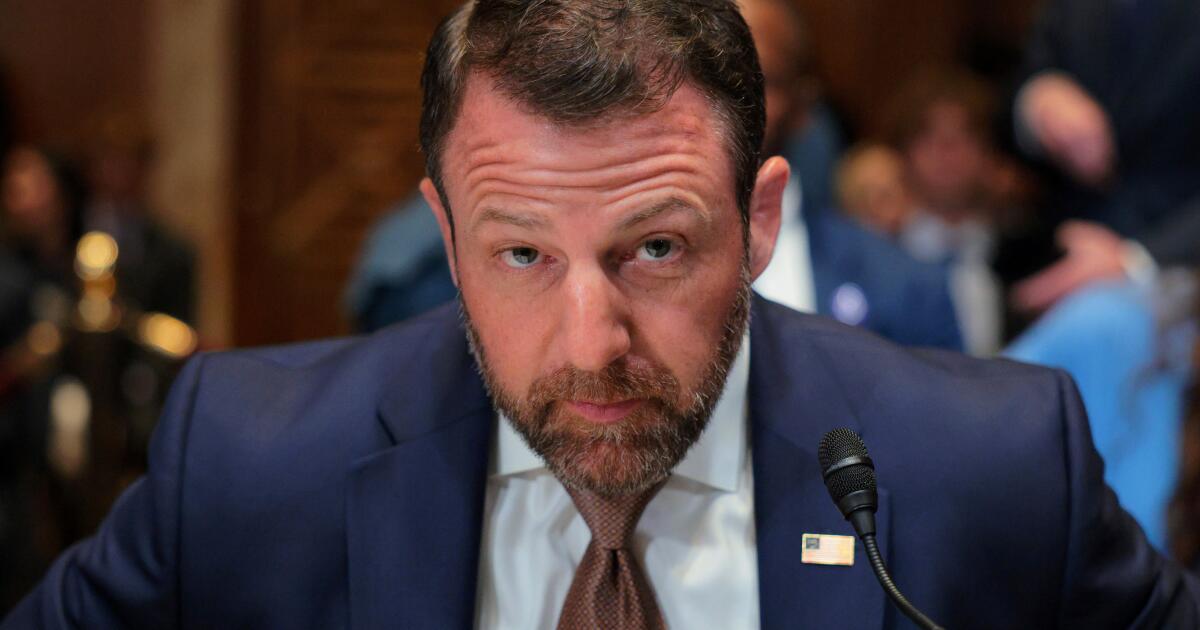
Homeland Security Secretary Markwayne Mullin, under intense grilling at a Senate hearing Tuesday, refused to commit to abiding by federal court orders.

Mullin also conceded that his predecessor as secretary, Kristi Noem, had inaccurately described two shootings involving immigration officers in Minneapolis.

His refusal to commit to complying with court orders came during a testy exchange with Sen. Chris Murphy (D-Conn.). Murphy quoted Chief U.S. District Judge Patrick Schiltz in Minnesota — a Republican appointee — who said Immigration and Customs Enforcement had violated nearly 100 court orders and had “likely violated more court orders in January 2026 than some federal agencies have violated in their entire existence.”

When Murphy asked Mullin to commit to complying with court orders in the future, Mullin replied that his agency would not break the law.

So you’ll pick and choose which court orders you’ll obey?

— Sen. Chris Murphy

“But that doesn’t sound like the same thing as committing that you will obey a court order,” Murphy said.

“If we didn’t think the courts were politicized, then I would probably be able to answer that. But we see courts over and over again that use their bench for political opinion and not just the rule of law,” Mullin said.

“So you’ll pick and choose which court orders you’ll obey?” Murphy asked,

Mullin told Murphy not to put words in his mouth.

Addressing his fellow senators, Murphy said, “If you’re a Democrat or a Republican on this committee, you should be really, really freaked out.”

Murphy later returned to the court orders question, saying that ignoring judges erodes democracy.

“I agree that there is politics involved in judicial decisions,” he said. “I do not think that gives an excuse to either Democratic or Republican administrations to ignore those court orders. I think that’s actually the end of our republic, if the administration willfully ignores a court order because they disagree with it or its motivation.”

Mullin faced the Senate Appropriations Committee amid scrutiny over the agency’s budget and immigration enforcement ahead of the World Cup. President Trump tapped Mullin to take over leadership of the embattled Department of Homeland Security after Noem was fired in March.

Mullin’s appearance came as the Senate is considering legislation that would fund immigration enforcement agencies through the end of Trump’s term. Republicans intend to use a legislative maneuver that would bypass the need for support from Democrats, who have pushed for reforms since two U.S. citizens were killed by immigration agents in Minneapolis.

During his previous appearance before senators, Mullin projected himself as diplomatic, saying he would work to bring confidence to the agency and keep it out of the news. But recently, he has set the travel industry on edge by threatening to remove Customs and Border Protection officers from airports in so-called sanctuary cities, which limit collaboration with immigration enforcement agents.

Millions of people are preparing to visit the United States for the World Cup, which starts June 11 and includes host cities such as Los Angeles, San Francisco and Seattle. Mullin said he will attend his first soccer game June 12 in Los Angeles.

Murphy, the committee’s top Democrat, made note of Mullin’s promise to keep Homeland Security out of the news. He said the agency has repeatedly broken the law, wasted billions in taxpayer dollars and lined the pockets of private prison corporations.

“Nothing has really gotten better,” he said. “In fact, you spent the first two months of your tenure threatening to suspend international arrivals in states represented by Democrats. Not only would that throw our entire air travel system into chaos, it’s completely illegal.”

Mullin took issue with Murphy’s characterization of the agency’s behavior, calling it political theater. Murphy sat with his head propped up on his hand, looking directly back at his former Senate colleague.

Mullin said threats against immigration agents are up significantly and that Murphy’s “reckless tone is getting people hurt.”

Protests erupted last month outside an immigrant detention facility in New Jersey after detainees launched a hunger and labor strike over what they called inhumane conditions such as rotten food and medical neglect. Tensions have escalated over several days as protesters clashed with law enforcement and counterprotesters.

On Monday in Dallas, Mullin said he would pull Customs officers from airports around the country to help with the security in Newark, if it became necessary.

Addressing the issue of officer training, Mullin said Tuesday that the agency will return next month to 72 days of training for new recruits, including training on crowd control. Last year, then-acting ICE Director Todd Lyons told Congress the agency had reduced the number of training days to 42.

He also said the agency is not “actively patrolling” sensitive locations, such as schools, and said that the agency has stopped relying on administrative warrants to enter a residence by force and is now seeking judicial warrants before doing so in most cases.

Asked by Sen. Patty Murray (D-Wash.) about body-worn cameras, Mullin said the agency doesn’t have the money to supply enough body cameras for every immigration officer. Homeland Security received an unprecedented windfall last year of $170 billion under Trump’s sweeping tax bill, the One Big Beautiful Bill Act.

Mullin said the agency suffered a blow to morale because of the historic 76-day shutdown of ICE and CBP after a congressional stalemate over funding.

“Some people couldn’t sustain it,” he said. “We lost a tremendous amount of workforce, about 8%.”

During an exchange with Sen. Chris Van Hollen (D-Md.), Mullin acknowledged that Noem had unfairly and inaccurately described two shootings involving immigration officers in Minneapolis.

An ICE agent was recently arrested over the nonfatal shooting of a Venezuelan man, whom Noem had called an attempted murderer.

“That’s an untrue statement, isn’t it?” Van Hollen said.

“From what we have been briefed on, yes,” Mullin replied.

Next, Van Hollen brought up Alex Pretti, who was shot and killed by CBP agents. Noem called him a domestic terrorist.

“You agree the facts don’t support that statement?” Van Hollen said.

“The investigation would say that’s probably not accurate,” Mullin replied.

Mullin was scheduled to appear before the House on Wednesday.

Source link

In deep blue California, frustration with Democratic status quo fuels governor, L.A. mayor race

As primary voters head to the polls Tuesday to determine which candidates will face off in November to become California’s governor and Los Angeles’ mayor, both races are wide open, with a new crop of candidates challenging the Democratic status quo.

For Democrats, little clear consensus has emerged so far on who should lead the city and state into the future.

In California’s crowded gubernatorial race, Democrats have struggled in recent months to settle on a candidate to succeed term-limited Gov. Gavin Newsom.

After former Rep. Eric Swalwell suspended his campaign in April amid allegations of sexual misconduct, Xavier Becerra, a former Biden cabinet member, inched ahead by positioning himself as the safe, experienced Democratic candidate. Another Democrat, billionaire climate activist Tom Steyer, and Republican Steve Hilton, a former Fox News commentator, trail close behind.

In L.A., experience seems to be as much a liability as an advantage.

Mayor Karen Bass finds herself in the extraordinary position, as an incumbent, of fighting to make the runoff as she is assailed from the left and the right. The latest UC Berkeley-L.A. Times poll shows Bass leading with just 26% of the vote, one point ahead of City Councilmember Nithya Raman, a wonkish Democratic socialist, and four points ahead of Republican Spencer Pratt, a former reality TV star.

“There’s a clear sense of frustration with the Democratic Party,” said Sara Sadhwani, a professor of politics at Pomona College. The reason a wave of conservative outsiders like Pratt and Hilton are doing so well in such a solidly liberal city and state, Sadhwani said, is that they’re more willing to spell out the challenges that L.A. and California face.

“Democrats tend to be very concerned about not upsetting one coalition or another, so it’s politics as usual with many of the Democratic candidates,” Sadhwani said. “Spencer Pratt has blown a hole in that by just naming the problems that everyday residents and voters are seeing and feeling on the ground.”

On homelessness, many Angelenos are frustrated Bass hasn’t significantly moved the needle.

“We can point to facts and figures that might suggest that things have changed,” Sadhwani said. “But when you walk down the streets of Los Angeles, it doesn’t feel like it, so she hasn’t passed the field test. That’s the problem.”

A growing segment of Angelenos also chafe at the city’s high cost of living. And many are angry about the Bass administration’s lack of preparation and response to the 2025 Palisades fire.

“The Democrats have to account for those challenges,” Sadhwani said. “They have been in power for all of this time.”

California, of course, remains a Democratic stronghold, and polls show state voters are overwhelmingly opposed to President Trump. His second-term agenda — including a sweeping immigration crackdown, tariffs and the war in Iran — only seems to have cemented California’s status as a resistance state.

But after so many years of Democratic dominance, in Sacramento and at Los Angeles City Hall, leaders have to answer for voter frustrations.

The top two vote-getters in California’s nonpartisan primaries will advance to theNovember runoff, unless one candidate manages to pick up more than 50% of the vote.

Republicans have turned out at higher rates than Democrats in early voting. Paul Mitchell, vice president of the Sacramento-based bipartisan firm Political Data Inc., said that older Democrats who reliably turn in their ballots were slower to vote this year, likely because two Republicans were on the gubernatorial ballot and the Democratic field was fractured.

“That has caused them to dive into a lot more strategic voting,” Mitchell said, noting many seemed to be waiting to cast their ballots for the Democrat who looks to have the best chance of moving on to November.

For the GOP, getting a candidate on the November ballot for governor means more than just demonstrating Republicans are players in California. A GOP candidate would bring out more Republicans to vote in the general election, raising the party’s prospects of winning down-ballot races and passing a GOP-led ballot initiative on voter ID.

For Democrats, the midterm races offer the party its first major chance to chart a new path for the future.

As polls show Trump cratering in popularity, Democrats in California and beyond are struggling a year and a half after Kamala Harris’ bruising 2024 defeat to agree on what went wrong.

The Democratic National Committee’s long-awaited autopsy of that election — which said Harris “wrote off rural America,” wrongly assumed identity politics would win over voters of color and failed to develop “defined or consistent” strategy against Trump — has only generated more hand-wringing.

“There is not a clear vision, there is not a clear policy agenda, and the Donald Trump presidency upended the policy world as we knew it,” Sadhwani said. “It’s unclear how any Democrat, including any of the individuals in these two races, is going to navigate the waters into the future. One thing is for certain: We aren’t going back. So, which of these candidates is going to lead us into an uncertain future?”

Referendum on Bass

In L.A., the election is a referendum on Bass, who pledged in 2022 to solve homelessness, cut crime and make the city more affordable.

“How has L.A. changed in four years?” said Christian Grose, a professor of political science and public policy at USC. “The Bass campaign is saying it has changed for the better and she still needs more time. All the other candidates, from very different perspectives, are saying that it’s much worse than it was four years ago, and it’s time for new leadership.”

Bass told The Times she plans to win in November by demonstrating her administration’s progress in clearing homeless encampments and accelerating the building of affordable housing. She has also noted that data shows homicides in the city are at their lowest since 1966.

Challenging Bass from the left is Raman, who was elected in 2020 as the first DSA-backed L.A. City Council member. Pitching herself as the viable progressive in the race, Raman has accused Bass of not doing enough to make the city affordable and critiqued Bass’ spending on Inside Safe, her program to move unhoused people into stable housing. Although Raman presents herself as an outsider, she is a former Bass ally who has chaired the council’s Housing and Homelessness Committee for more than three years.

“She’s absolutely a part of the establishment,” Sadhwani said. “She’s been in City Hall longer than Karen Bass.”

As Raman tacked to the center during the campaign to appeal to more moderates and distanced herself from past calls to defund the police, she alienated some DSA members who complained they didn’t know what she stood for. Her three fellow DSA City Council members endorsed Bass.

Pratt is challenging Bass and the entire Democratic status quo.

A former star of “The Hills” who lost his home in the Palisades fire, he has surprised many political observers with his success assailing the city’s handling of the 2025 firestorms. He has called unhoused people drug-addled “zombies” and argued that L.A.’s housing crisis requires heavy-handed policing.

Pratt has raised vastly more campaign contributions than Bass and Raman. He has also generated national online buzz by waging an aggressive social media campaign and inspiring supporters to post a stream of viral AI election campaign ads.

Still, most political experts agree that Bass has the most viable path to victory, starting with a solid base of Black voters and a large share of Latino voters, plus support from powerful unions.

“Under normal circumstances, or at least under historic circumstances, that would be plenty to get her over the finish line,“ said Jim Newton, executive director of UCLA Blueprint magazine and a former political journalist for The Times. “What’s problematic for her is that there are people who are angry with her.”

A reset in California

Newsom has emerged in recent years as the national face of Democratic resistance to Trump, bolstering California’s status through a barrage of lawsuits and all-caps trolling against Trump.

Whatever candidate replaces Newsom, things are going to be different.

The emerging front-runner, Becerra, is a safe-bet career politician who has served as California attorney general and U.S. secretary of Health and Human Services. Asked recently why he had climbed in the polls, Bercerra said he thought voters wanted experience, not “glitz and sizzle.”

He has pledged to issue executive orders declaring California’s housing shortage a state of emergency and directing state agencies to maintain coverage for every Californian affected by federal or Medi-Cal cuts. He also touts his record, as the state’s attorney general, of suing Trump 122 times.

Steyer, a hedge-fund billionaire, calls himself “the most progressive candidate on the ballot.” He has pledged to build one million affordable homes, make the wealthy pay more taxes, and defend the environment — stances that are certain to unsettle Sacramento lobbyists and test the limits of California’s progressivism. But his past investments in coal plants and ICE prisons raise questions for some voters.

“His wealth is in one way his Achilles heel in the election,” Grose said. “Voters think of him as a billionaire more than progressive.”

Republicans seem to have rallied around Hilton — a British immigrant and former top strategist forconservative prime minister David Cameron — who has secured Trump’s backing and is campaigning on the message that California is a failed state in need of radical reform.

Hilton has pledged to cut government spending, make housing more affordable and bring gas prices down. But to achieve some of his goals he would scale back public services and environmental regulations and ramp up domestic production of oil and natural gas — strategies that many Californians might hesitate to get behind.

Whichever candidates make it to the runoff, the California Democratic Party will face questions about its strategy and vision. Less than two months ago, the party chair had urged Becerra to drop out of the race to make way for Swalwell.

“Clearly, the party itself has lost its way in California,” Sadhwani said. “I would not be surprised if the California Democratic Party looks for new leadership after this election.”

Can a Republican win?

Because the top two spots in each contest are up for grabs, elections experts warn that the vote results may not be known for days.

If Republicans make it to the runoff, they face steep odds of being elected in November in a state where Democratic registered voters outnumber Republicans by more than 20 percentage points.

Rob Stutzman, a GOP strategist, said neither Hilton nor Pratt was likely to win. But if they made the runoff they could have a huge impact on the political environment by advancing “grievance issues that really put up a spotlight on what I call the blue state incompetence.”

Of all the candidates, Mitchell said, Pratt as an outsider adept at Instagram and TikTok has the greatest opportunity to create a new surge electorate. But he’s also going after the hardest voters to get to turn out: disaffected voters who are upset at the system.

Pratt had more retweets and viral videos than any other candidate, Mitchell said. “But that doesn’t buy him the vote of the disaffected DoorDash driver who believes that the system is broken, and who hasn’t voted in the last five elections.”

If Republicans don’t make it past the primary, Mitchell said, Democrats would likely hit the reset button.

“Pratt running has kind of obfuscated the differences between Raman and Bass,” Mitchell said. “It’s like a WWE match versus a chess match. I think Raman versus Bass would be more of a strategic and nuanced election than Spencer Pratt trying to hit Karen Bass over the head with a chair.”

Source link

Trump signs an executive order to vet top AI models for national security risks

President Trump signed an executive order on artificial intelligence Tuesday, less than two weeks after postponing a White House ceremony over his concerns that a similar policy could dull America’s edge on AI technology.

The order establishes a framework for the federal government to vet the national security risks of the most advanced AI systems for up to a month before their public release. The government will be able to work with trusted partners “that will have early access to covered frontier models to promote secure innovation and strengthen the cybersecurity of critical infrastructure,” the order says.

It was not immediately clear to what extent the order differed from the one he declined to sign on May 21.

Trump canceled an Oval Office event with tech industry executives last month because he did not like what he saw in the earlier version of the order’s text. “We’re leading China, we’re leading everybody, and I don’t want to do anything that’s going to get in the way of that lead,” Trump told reporters at the time.

That directive was characterized as a voluntary collaboration with participating U.S.-based tech companies, including Anthropic, OpenAI and Google.

O’Brien writes for the Associated Press.

Source link

Pentagon policy illegally banned transgender troops from military service, appeals court panel rules

A Trump administration policy illegally banned transgender troops from military service, a divided panel of federal appeal court judges ruled on Monday.

The majority opinion by a three-judge panel from the U.S. Court of Appeals for the District of Columbia circuit largely upholds a March 2025 ruling by U.S. District Judge Ana Reyes in Washington, D.C. Reyes concluded that President Trump’s executive order to exclude transgender troops from military service likely violates their constitutional rights.

The administration appealed after Reyes issued a preliminary injunction requested by attorneys for six transgender people who are active-duty service members and two others seeking to join the military. The appeal court’s majority decided that the injunction should be narrowed to the plaintiffs currently serving in the military but not those seeking to join.

The ruling won’t immediately go into effect, allowing the administration time to ask the full appeals court to hear the case.

The U.S. Supreme Court allowed the transgender military ban to go into effect last year, as litigation continues to play out. Another lawsuit challenging the ban was filed in Washington state and led to a ruling in favor of the plaintiffs challenging the policy in that case.

In January 2025, Trump signed an executive order that claims the sexual identity of transgender service members “conflicts with a soldier’s commitment to an honorable, truthful, and disciplined lifestyle, even in one’s personal life” and is harmful to military readiness.

In response to the order, Defense Secretary Pete Hegseth issued a policy that presumptively disqualifies people with gender dysphoria from military service. Gender dysphoria is the distress that a person feels because their assigned gender and gender identity don’t match. The medical condition has been linked to depression and suicidal thoughts.

The policy “appears to be driven by the bare desire to harm a politically unpopular group: persons who identify as transgender,” Judge Robert Wilkins wrote for the majority. Wilkins was nominated to the court by Democratic President Obama.

In a dissenting opinion, Judge Justin Walker said judges lack the power to second-guess the decision to exclude transgender troops.

“We have neither the expertise nor the authority to decide whether the military can exclude the plaintiffs from its ranks. The Constitution assigns that authority to Congress and the Commander in Chief,” wrote Walker, who was nominated by Trump, a Republican.

Judge Judith Rogers, who was nominated by Democratic President Clinton, joined Wilkins’ opinion but also partially dissented.

Kunzelman and Whitehurst write for the Associated Press.

Source link

Colorado elections clerk released from prison after governor commutes sentence

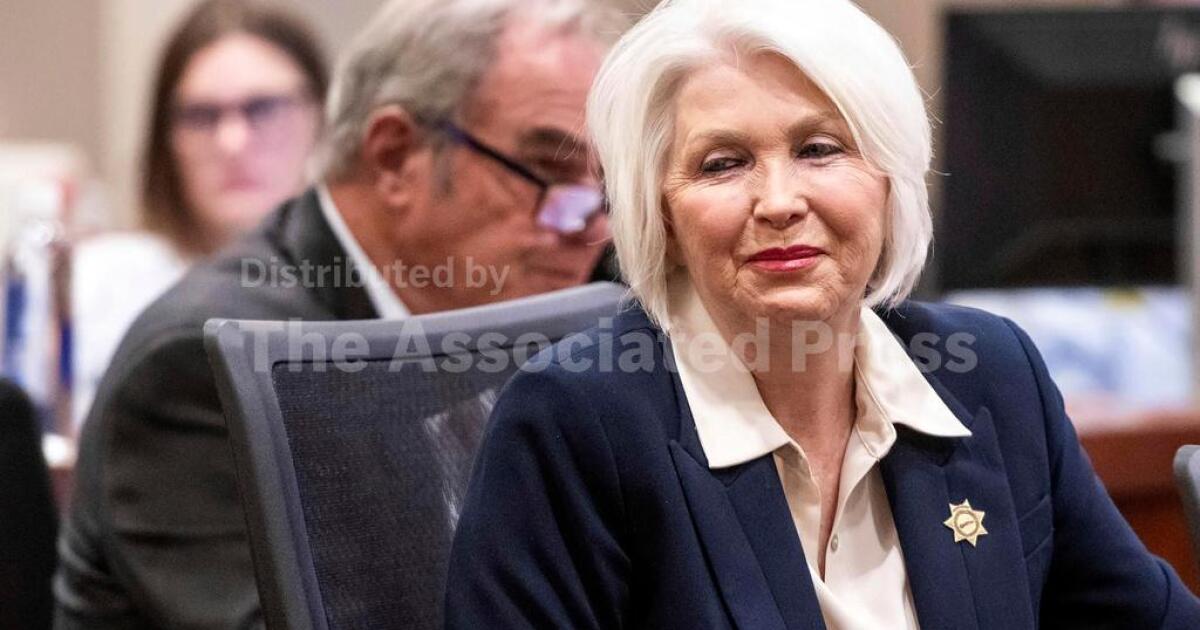
Tina Peters, the former clerk convicted of participating in a scheme to chase election conspiracy theories promulgated by President Trump, was released from prison Monday after the president successfully pressured Colorado’s Democratic governor into commuting her sentence.

Peters’ release was confirmed by the Colorado Department of Corrections. The state agency said it would have no more information about the 70-year-old inmate. Her sentence was shortened by Gov. Jared Polis last month after Trump waged a lengthy pressure campaign against the governor and his state.

Peters served less than a quarter of her nine-year sentence.

Peters was the first local election official to be charged with breaching security after the 2020 election. She snuck in an outside computer expert affiliated with My Pillow Chief Executive Mike Lindell — who himself denied that Trump lost the White House in 2020 — and the person copied the county’s Dominion Voting Systems computer server as it was updated in 2021.

Peters then joined Lindell onstage at a “cybersymposium” that promised to reveal proof that the election was rigged. Video and photos of the computer system upgrade, including passwords, were posted online. The move stoked false claims that voting machines were manipulated to steal the election from Trump.

Peters was convicted in 2024 of attempting to influence a public servant, conspiracy to commit criminal impersonation, violation of duty and other crimes by jurors in Mesa County, a Republican stronghold that supported Trump. An appeals court upheld her conviction in April, but ordered Peters to be resentenced because it said the judge who sent her to prison wrongly punished her for speaking out about election fraud.

Trump had championed Peters’ case, but because she was convicted under state law, he did not have the power to pardon her. Instead, the president pressured Polis to do so, lambasting him on social media and disinviting him to a White House meeting with other governors. The Trump administration also announced plans to dismantle the National Center for Atmospheric Research in Colorado and relocated the U.S. Space Command to Alabama.

Polis commuted Peters’ sentence on May 15. In a letter, he wrote that although Peters was convicted of serious crimes and deserved to spend time in prison, the sentence was “extremely unusual and lengthy” for a first-time non-violent offender.

Colorado Secretary of State Jena Griswold, a Democrat, called the move a “dark day for democracy” and said it amounted to ”selling out our state’s justice system for Trump.”

Source link

Paramount’s Delrahim slams ‘fear-mongering’ and partisan politics clouding Warner Bros. deal

Paramount Chief Executive David Ellison has been circling the globe, meeting government regulators who will ultimately decide the fate of his controversial $111-billion takeover of Warner Bros. Discovery.

Last week, Ellison spent two hours answering questions from U.S. Justice Department antitrust lawyers in a bid to secure a key government approval — one that few people believe is in doubt because of President Trump’s strong support of tech billionaire Larry Ellison and his son’s ambitions to amass more power.

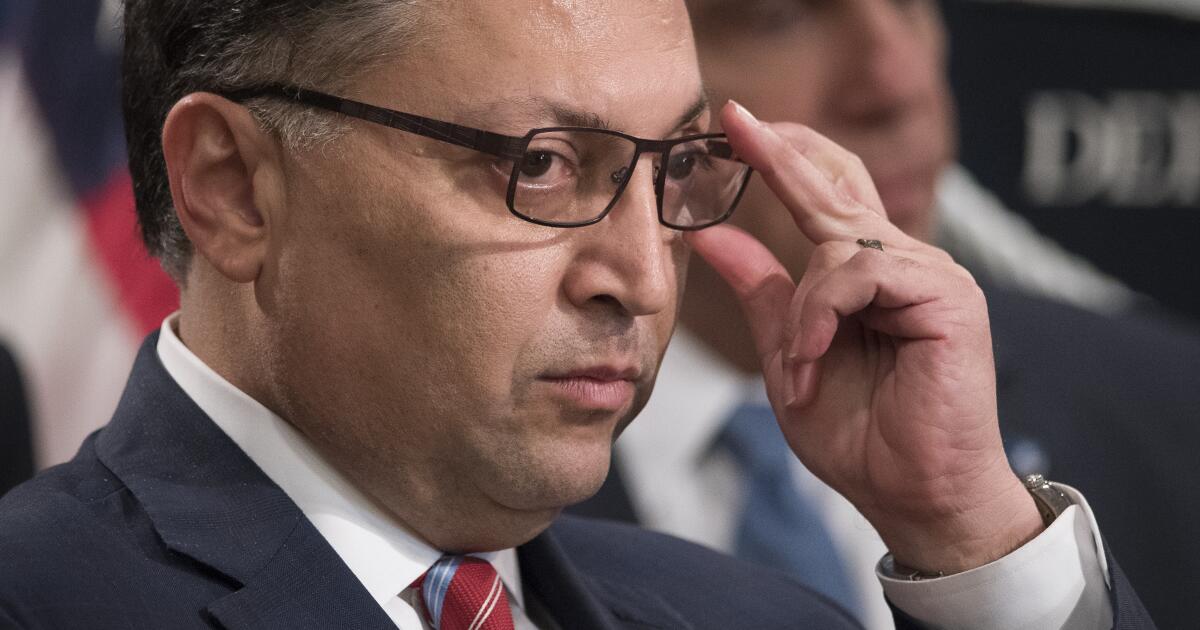
Throughout his travels, David Ellison has been accompanied by a savvy wingman: Makan Delrahim.

Delrahim, Paramount’s chief legal officer, served as the nation’s top antitrust regulator in the Justice Department during Trump’s first term. The 56-year-old Iranian American, who grew up in Los Angeles, is the architect of shrewd moves that have brought Paramount within reach of its blockbuster merger that would redefine Hollywood.

Politics have permeated the process — even before Trump announced he would get involved. Opponents have been suspicious of the Ellisons, given the family’s ties to Trump and programming changes to redefine Paramount’s CBS, including last month’s departure of late-night comedian Stephen Colbert and a shakeup at “60 Minutes,” CBS’ newsmagazine.

Buying Warner Bros. Discovery would give the Ellisons control of both CBS News and CNN.

Paramount’s bid for Warner Bros. has sparked dread in Hollywood for another reason, too: Thousands of jobs already have vanished through a string of media mergers.

More than 5,000 artists and entertainment industry workers have signed an open letter, calling on California Atty. General Rob Bonta to try to block the deal on antitrust grounds.

In an interview with The Times, Delrahim responded to concerns and criticisms. This interview has been edited for length and clarity:

Where does the regulatory process stand?

We are still going through the regulatory approval process. We actually started planning for the regulatory approval filings last summer. We knew we were going to be pursuing this transaction but it took a few months longer to sign the transaction than we thought. There were some interveners [Netflix, Comcast], but we planned ahead.

Do you have a commitment from Trump or his administration that you’ll get a thumbs up?

There are no deals with the president. We have a deal with the Warner Bros. shareholders. We’ve submitted [applications] to the governments of Europe, Canada, U.K. and the U.S., and that’s where it is.

You got a head-start because you filed a regulatory approval in December — months before Paramount had a deal with Warner. Why so soon?

We were always very skeptical [the Netflix deal] would ever go through. The only way to really show the [Warner] board that our deal would get through — because it doesn’t have antitrust problems — was to move as fast as we could.

One of the benefits being a former [DOJ] enforcer and having a team of outside lawyers who are also former colleagues and enforcers was that we anticipated what the government would ask for. Those were questions that we would have asked, and so we provided those answers.

Your timeline is aggressive. Some suggest Paramount wants this deal done before the mid-term elections.

I don’t think it’s aggressive. It has nothing to do with the midterms. The midterms do not change the officials at the Justice Department or the FCC — we have that minor application there. The midterms have no effect on the European Commission or anybody else. We’ve been very transparent and proactive with members of Congress and with the state attorneys general and the federal authorities.

Are you preparing to defend a potential antitrust challenge from Atty. General Bonta?

Well, no matter what field you’re in, whether it’s antitrust or whether you’re preparing for a football game, you always prepare the best you can for the worst, and you hope it never gets there. So, we’re preparing for challenges from anybody and everybody. But I don’t think any serious antitrust enforcer who looks at the facts, the law, the economics of this transaction will see an antitrust violation.

Why are you so confident?

There’s no element of this merger that is anti-competitive. Once you look at it, it’s incredibly pro-competitive. It increases output, it increases jobs, and it lowers the cost to the consumers. If you actually try to block this deal, you’re going to harm consumers, you’re going to harm creative talent, because you’re going to harm the creative ecosystem — the vision that David [Ellison] is trying to deploy here. It’s transformative from the efficiencies that it creates.

David Ellison has promised to release 30 films a year. Was that commitment to show that this merger will not be a repeat of Walt Disney Co.’s 2019 purchase of Fox?

I’m quite familiar with that one because I was at the Justice Department and reviewed it. Disney-Fox was a transaction with a different thesis. Disney wanted to get into streaming and they wanted to get scripted series. It wasn’t about studios trying to increase output.

Our transaction, as David has described, is motivated to create more content to feed the theaters, then streaming. We have a natural economic incentive to create more content. We’ll still be in fourth place after this transaction on the streaming side — almost half the size of Netflix.

David Ellison hasn’t made any commitments on the television side or pledged pledge to keep the various TV studios intact. Why?

I don’t think there’s much of an overlap on the television studios. Look, you have incredible studios in HBO, Warner Bros. Television, certainly our own studio. We’re not paying money to limit supply. It’s the exact opposite.

There is overlap between CBS News and CNN. How are regulators looking at that issue?

We’re very proud of CBS News and hopefully CNN, post-transaction. There is very limited overlap. Why? Because CBS News only airs a few hours a week of programming whereas CNN is 24/7, and it has international reach.

Antitrust regulators are going to see that it’s going to create synergistic effects. You might be able to cross-program and more people will be exposed to the incredible programming of CBS News. They’ll benefit from each other’s independent strengths.

During the first Trump administration, you said merger conditions were problematic because it’s difficult for the government to enforce behavioral remedies. Has your thinking changed?

No, I’ve been quite consistent. If there’s an antitrust problem, you need a divestiture [selling assets]. I don’t think there’s a remedy needed in this transaction. But having said that, we’re happy to engage with regulators to discuss where they see a problem and a possible solution. We’re always wanting to engage in constructive dialogue.

Would Paramount spin off CNN?

I don’t see that. I can’t see any antitrust reason to do so. That would be a weaponization of the antitrust law, and that would not be appropriate.

Many people in Hollywood view the merger with trepidation because of the prospect of more job losses. Others see it through a political lens. How do you evaluate the politics?

Politics is part of life. It’s part of the beautiful process of democracy. Generally, we are very empathetic to the folks in Hollywood, but this transaction will actually create more and better and exciting jobs. David is an absolute lover of films; he’s a filmmaker himself. For the first time, you are getting an owner who comes from the creative side.

Let’s be honest. There’s a lot of fear-mongering, particularly from people in Washington, D.C. They are running a political campaign. Some of these people are trying to inflict harm on this transaction really because of their own antisemitic views. Regulators and law enforcement officials will see right through that.

Do regulators share others’ concerns about the merger debt — $79 billion — for the combined company?

Some regulators appropriately have asked about it. They say: ‘This is what we have heard, that you guys are not going to be around because of this debt,’ which is just silliness. David and his family are owner-operators. They’re not rented CEOs. They have over 50% ownership. They put their money at stake and my money is on them.

Source link

Congressman sees parallels to WWII Japanese detention in today’s raids

The congressman returned home last Fourth of July to startling stories in Southern California as immigration patrols swept through communities, and one constituent told him about starting to carry a passport as proof of the right to be in the country.

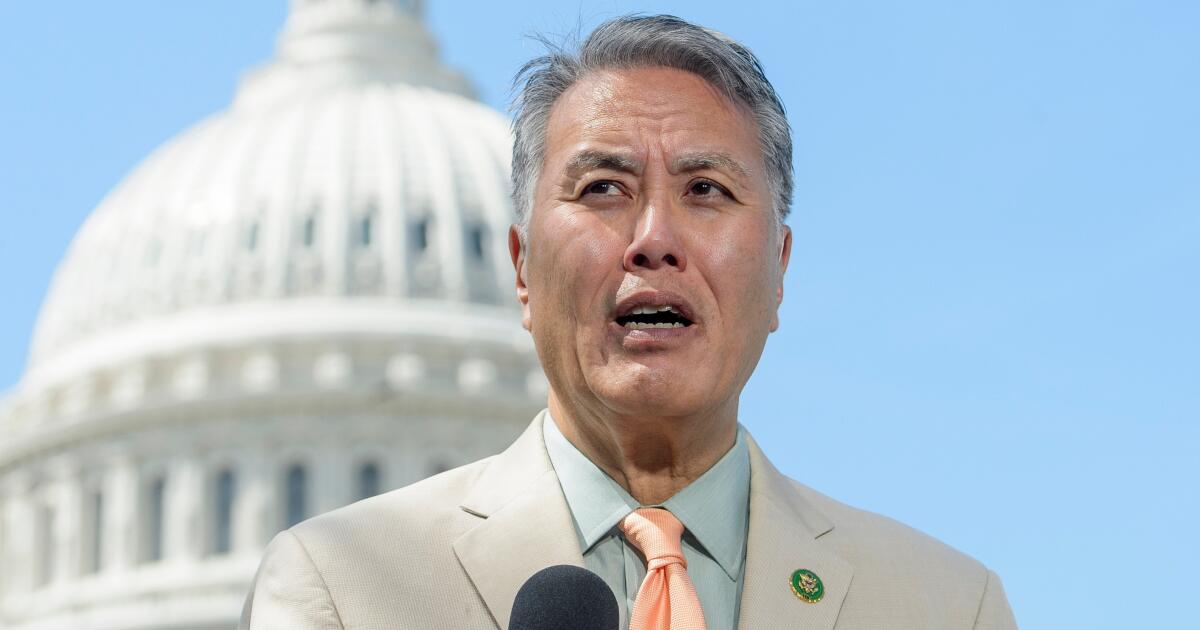
Rep. Mark Takano, whose American-born parents were both incarcerated as young children with their families during the forced relocation of Japanese Americans during World War II, could not help but see the parallels between that chapter of American history and this one.

“I do feel like there’s a similarity of circumstance of my own 2-year-old father and my 1-year-old mother being labeled as enemy aliens and they’re considered a danger to national security,” the Riverside Democrat told the Associated Press in a recent interview.

“They’re put into these incarceration camps,” he said. “Similar arguments have been made by this administration — that immigrants pose a grave danger to our country and it’s for the security of our country that we’re doing this.”

Echoes of history

President Trump’s campaign to achieve the largest mass deportation operation in U.S. history is at an inflection point. Americans are seeing what it looks like to round up, detain and deport thousands of people, particularly in the aftermath of the deaths this year of Renee Good and Alex Pretti, U.S. citizens protesting the federal crackdown in Minneapolis.

The White House changed the leadership at the Department of Homeland Security as it reframes its approach. New Secretary Markwayne Mullin promised to keep the department off the front pages.

But Trump is also under mounting pressure from conservative groups not to let up on the goal of deporting 1 million people a year. The president’s Republican allies in Congress are fueling the immigration and deportation actions with billions of dollars in special funds.

Takano, the ranking Democrat on the House Veterans’ Affairs Committee, has drawn from his own family history — and the country’s eventual redress to Japanese Americans who were detained — to challenge Trump’s approach.

“We look back on that era of history as a shameful one, as a time when our political leaders failed the Constitution, failed the American people,” he said.

One family’s story among many

A high school history teacher before being elected to Congress in 2012, Takano grew up in Southern California and came to understand the family stories.

His grandfather Isao Takano arrived in the U.S. from Hiroshima and married Kazue Takahashi, a U.S.-born citizen. Together they settled in Bellevue, Wash., and started a business growing tomatoes, strawberries and chrysanthemums for the marketplace in Seattle.

When the U.S. entered the war after the Japanese attack on Pearl Harbor, they were among some 120,000 people of Japanese ancestry, immigrants and those born in the U.S., forcibly relocated.

His father, William, was 2 years old when his family was sent in 1942 to the incarceration camp at Tule Lake in Central California. His mother, Nancy Tsugiye Sakamoto, born in California to American-born parents, was a year old when she was relocated to the detention facility in Heart Mountain, Wyo.

Then, as now, he said, people are being swept up in the anti-immigrant detentions.

“Will Americans generations from now visit ‘Alligator Alcatraz’ and think to themselves, how could our government do this?” Takano said during a House floor speech, referring to the Trump administration’s immigration detention facility in Florida.

“These future generations of Americans will look to us, the Congress, to see what we did to try to stop it.”

A Reagan-era law seen as model

Takano remembers his father taking him to see the land the family once owned. He learned about his great-uncles who served in the Army’s 442nd Regimental Combat Team of Japanese American soldiers; one was killed in action in Italy. He recalls his own father later collected donations for the national redress campaign.

In 1988 Congress passed the Civil Liberties Act, which sought to apologize for the “grave injustice” that had been done and provide $20,000 to each person detained. President Reagan signed it into law.

Takano’s parents were among those who received a letter of apology from the federal government, he said, and a payment.

Talks are underway among some in Congress, he said, for a similar redress to the people who have had their car windows smashed in, their homes raided and livelihoods upended as part of Trump’s immigration enforcement operations.

“Remarkably the country did come to realize the mistake,” he said. “I believe we’re living through one of those eras of mistakes, and I believe we can come out of this moment stronger.”

Mascaro writes for the Associated Press.

Source link

ABC files applications ‘under protest’ for early renewal of TV station licenses

Walt Disney Co.’s ABC has filed renewal applications with the Federal Communications Commission “under protest” after an order mandating a years-early review of the network’s eight television station licenses.

The criticism was part of the network’s applications for the FCC review, which were filed ahead of a deadline Thursday. In an objection to the early renewal, Disney’s New York station WABC called the FCC order “unlawful, arbitrary and unconstitutional” and said it was “legally indefensible.”

“The Commission had not demanded early renewal in over five decades,” the station wrote in its filing. “And it has never before demanded simultaneous license renewal applications from a group of stations commonly owned with a network as it has here. The order has no legitimate purpose.”

The licenses for the eight ABC-owned TV stations, including KABC in Los Angeles, were originally scheduled for renewal between 2028 and 2031.

The FCC order came shortly after ABC late-night host Jimmy Kimmel made a joke about First Lady Melania Trump looking like an “expectant widow” days before a gunman tried to breach the White House Correspondents’ Assn. gala last month that President Trump attended.

Trump has frequently threatened to have TV station licenses pulled when he is unhappy with their coverage, but the order is the first time the government has acted on his wishes, sparking anger from free speech advocates. The FCC has said the order is part of an investigation into whether Disney’s diversity and inclusion policies violate federal law and the agency’s rules against “unlawful discrimination.”

In its response, WABC said the “only plausible reason” to issue the order was to “punish the station for speech the government does not like.”

“The ultimate injury here is not to the station or its parent company. It is to the public,” WABC wrote. “When a broadcaster must weigh regulatory retaliation before making editorial decisions, the public loses access to journalism that is free from government influence.”

FCC Chairman Brendan Carr said in a statement Thursday that Disney filed its applications to renew its broadcast licenses only after the company was told its previous answers were “disingenuous, deficient and improper.”

“Contrary to Disney’s claim that the FCC called in their broadcast licenses for early renewal for no reason, the record shows something very different,” Carr said. “Broadcast licensees have a unique obligation to operate in the public interest. The FCC will follow the facts and law wherever they may lead.”

FCC Commissioner Anna M. Gomez, the panel’s only Democrat who has backed Disney in its fight, cheered the Burbank media and entertainment company’s filing, saying in a post on X that she was “glad to see them expose the FCC’s actions as nothing more than naked political retribution and an unlawful assault on free speech and a free press.”

Times staff writer Meg James contributed to this report.

Source link

Here are the big cases the Supreme Court will decide in June

The Supreme Court heads into the final month of its yearly term facing decisions on birthright citizenship, gun rights, transgender athletes and President Trump’s power over independent agencies.

Unlike in years past, the term’s most significant rulings were not left for the last week in June.

The court dealt Trump a major defeat in February by striking down his sweeping worldwide tariffs. The president is likely to suffer a second defeat when the justices reject his plan to revise the citizenship laws via an executive order.

Republicans won when the court struck down a Louisiana congressional district that favored a Black Democrat.

That decision has already shifted several congressional districts toward the GOP, but its greatest impact will be seen in 2028 and 2030.

Republicans are likely to prevail in two other pending cases.

One would free party committees to raise and spend more money to support their candidates. A second would change state laws to bar counting of mail ballots that arrive after election day.

The justices have 26 cases waiting to be decided before they go on a summer recess. Here are the major cases due for decision:

Trump and birthright citizenship

Does the 14th Amendment of 1868 mean what it says about who is a citizen?

It declares: “All persons born or naturalized in the United States and subject to the jurisdiction thereof are citizens of the United States.”

The Supreme Court upheld that understanding in 1898, ruling that Wong Kim Ark, who was born to Chinese parents in San Francisco, was a U.S. citizen at birth. Congress adopted birthright citizenship in the Immigration and Nationality Acts of 1940 and 1952.

But on his first day back in the White House, Trump issued an executive order to deny citizenship to the newborns of parents who in the country unlawfully or temporarily on a student, work or tourist visa.

Judges blocked the order from taking effect, and in April, the justices gave a skeptical hearing to Trump’s lawyers as the president sat in the gallery.

The best outcome for Trump would be a ruling that rejects his executive order based on U.S. immigration law alone. Although a defeat, that could in theory permit Congress to revise the law and deny citizenship to the newborns of so-called “birth tourists.” (Trump vs. Barbara)

Guns and drugs

Can the government make it a crime for “habitual users of unlawful drugs” to have a gun, or does that violate 2nd Amendment rights?

Since 1968, federal law has prohibited gun possession by anyone who is an “unlawful user of or addicted to any controlled substance.”

The 5th Circuit Court of Appeals in a Texas case struck down this provision as unconstitutional, except for someone who is “under an impairing influence” of drugs at the time of his arrest.

The Trump administration appealed and urged the Supreme Court to uphold the law against “habitual users of unlawful drugs,” including regular users of marijuana. (U.S. vs. Hemani)

In a second gun rights case, the court will decide whether Hawaii, California and three other states led by Democrats may forbid licensed gun owners from carrying a firearm into stores or private businesses open to the public unless they have the “express authorization” of the owners. (Wolford vs. Lopez)

Transgender athletes and school sports

Can states maintain separate sports teams for boys and girls “based on biological sex determined at birth” or does excluding transgender girls violate the Title IX law or the Constitution’s guarantee of equal protection?

The justices heard appeals from West Virginia and Idaho after lower courts ruled they had discriminated against transgender girls, and most of them sounded ready to rule for the states.

The only question was whether the court will rule narrowly to uphold laws in the red states or go further to decide how Title IX applies nationwide. (West Virginia vs. B.P.J. and Little vs. Hecox)

Trump and independent agencies

Can the president fire the leaders of special agencies who were given a fixed term by Congress?

For most of American history, Congress created new boards or commissions with a specific mission, such as regulating railroad rates in the 1880s or nuclear power in the 1970s. By law, these agencies are led by a bipartisan board of experts who had a fixed term and could be fired only for cause.

But Trump and the court’s conservatives believe the president has the executive authority to control the government and to fire agency officials — but with one exception. The majority wants to preserve the independence of the Federal Reserve Board. (Trump vs. Slaughter)

Separately, the court will rule on whether Trump had the power to fire Fed Governor Lisa Cook for cause. He alleged she engaged in mortgage fraud and dismissed her in a social media post. The justices blocked her removal and sounded ready to rule she deserved due process of law and a full hearing to contest the allegations. (Trump vs. Cook)

Temporary Protected Status

Can the Trump administration cancel legal protection for more than 300,000 Haitians and Syrians who are living and working in this country?

In 1990, Congress created this protected status for foreign nationals who could not return home safely because of armed conflicts or natural disasters.

The Obama administration extended protection to Haitians and Syrians. Last year, Trump’s then-Homeland Security Secretary Kristi Noem sought to terminate it, but judges blocked her orders because it was still dangerous and unsafe in those countries.

Before the Supreme Court, Trump’s lawyers argued the law forbids “judicial review” of these executive decisions. (Mullin vs. Doe)

Campaign funds and political parties

Do the 50-year-old limits on how much political party committees can raise and spend to directly support their candidates violate the 1st Amendment?

During the Watergate era, Congress adopted limits on money in political campaigns, but the court has struck down the spending limits on free speech grounds. Left standing were the limits on direct contributions to candidates, including from political parties.

Republicans led by then-Sen. JD Vance sued, arguing the party limits were outdated and unwise in an era when super PACs are free to spend huge sums on campaigns. (National Republican Senatorial Committee vs. FEC)

The court also will rule on the GOP’s bid to strike down laws in California and most states that allow for counting mail ballots that were postmarked by election day but arrive a few days later. (Watson vs. Republican National Committee)

Source link

Fired ’60 Minutes’ reporter Cecilia Vega speaks out against CBS

After a complete shakeup at CBS’ “60 Minutes,” ousted correspondent Cecilia Vega said she had been facing pressure to insert political bias into her stories and dealing with censorship.

“I very much fear what comes next for … the future of the legendary broadcast,” Vega said in a social media post on Thursday referring to “60 Minutes.”

Vega, who had worked at the newsmagazine for three years, was fired alongside the program’s executive producer, Tanya Simon, and fellow correspondent Sharyn Alfonsi, who notoriously clashed with CBS News Editor in Chief Bari Weiss over a segment on President Trump’s immigration policies.

The latest shakeup follows multiple controversial moves by Weiss, who’s set on remaking the institution long defined by tradition. She arrived at CBS News in October with no television experience, installed by Paramount Chief Executive David Ellison after he acquired her digital news outlet, the Free Press, with a mandate to change the network.

Ellison’s political intent has been brought into question as he owns CBS’ parent company. The billionaire and his father, Larry Ellison, built a friendly relationship with the Trump White House as Paramount’s acquisition of Warner Bros. Discovery still needs regulatory approval.

Ellison’s pronouncements that CBS News needs to move more to the political center has led to the perception that the network is trying to placate Trump with more positive news coverage, even as “60 Minutes” has remained tough with its White House reporting.

“Our responsibility is to preserve that legacy and vital mission by building a show that thrives in the 21st century,” wrote Weiss in her note to staff. “That requires a new approach: expanding ’60 Minutes’ beyond a one-hour television broadcast, deepening its role across CBS News.”

Vega claims, in her statement, that “in recent months, my producing teams and I have experienced efforts to insert political bias into our stories.” She also said that reporting teams are holding back on submitting specific story pitches, due to the “fear of the internal repercussions.”

“Let’s call this what it is: censorship, both imposed and self-driven,” Vega wrote. “It is dangerous for the show and dangerous for democracy.”

She said that in working at “60 Minutes” she’s had to keep stories rooted in fact and away from “questionable editorial suggestions.”

“I know from many conversations with colleagues that many producing teams and correspondents working on the show today have had to fight to maintain editorial independence with regularity,” Vega said. “I am far from the only ’60 Minutes’ correspondent who has asked herself, ‘What is my personal red line? How much can I push back before I pay the price?’”

In a statement, a CBS News representative said, “We respect Ms. Vega and her contributions, but her claims are not based in reality.”

Vega joined the newsmagazine in 2023, becoming the program’s first Latina correspondent. Before that, she worked for over a decade at ABC as the network’s chief White House correspondent and co-anchoring “Good Morning America.”

Several journalists like ABC’s John Quiñones and former Univision anchor Jorge Ramos offered words of support for Vega’s remarks. Quiñones commented, “Journalism is stronger because of your voice, your courage and your story-telling, Cecilia,” and Ramos wrote in Spanish that he respects and admires her.

Source link