port

Russia says hit Ukrainian railway and port facilities in new strikes | News

Kyiv targets Baltic oil hub and warehouse near Moscow with drones, as regional alerts prompt security measures in Latvia and Finland.

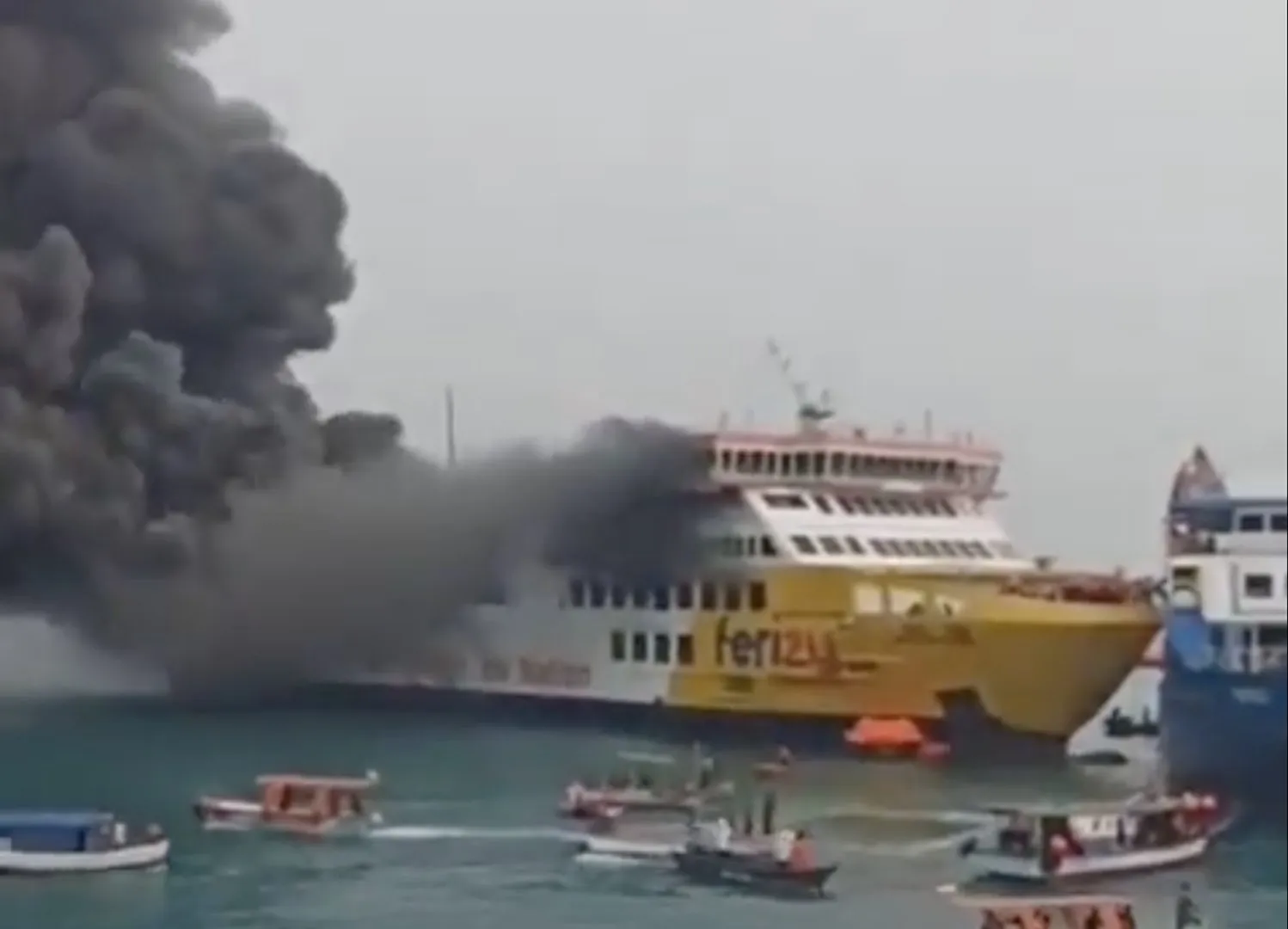
Russia says its forces have struck a railway station at the Ukrainian Danube port of Izmail and two vessels near Mykolaiv, as Ukrainian drones hit targets inside Russia, including a Baltic oil export hub and a warehouse near Moscow.

The Russian Ministry of Defence said on Friday that the railway station in Izmail was being used to load, store, and transport military cargo and fuel for Ukraine’s armed forces, according to state news agency TASS.

Recommended Stories

list of 4 itemsend of list

The ministry added that Russian forces struck two tugboats off the coast of Mykolaiv that it claimed were escorting cargo vessels carrying weapons to Ukrainian ports.

The developments follow Russian attacks a day earlier that damaged port infrastructure and caused power cuts in Izmail, a vital export hub on the Danube River near the Romanian border.

Ukrainian drones target Ust-Luga and Tver

Meanwhile, Russian authorities said a Ukrainian drone attack triggered a fire at Ust-Luga, a major Baltic Sea oil export port in the Leningrad region.

Regional Governor Alexander Drozdenko said the fire had been brought under control and cleared with no casualties reported. He added that more than 50 drones had been shot down overnight in the region surrounding St Petersburg.

Ukraine has repeatedly targeted Russian refineries, ports, and energy infrastructure to raise the economic cost of Moscow’s war effort. More than a dozen major Russian refineries have been hit, contributing to domestic fuel shortages.

Further south, the governor of Russia’s Tver region said drone debris damaged a warehouse wall belonging to online retailer Wildberries northwest of Moscow. No injuries were reported. Wildberries facilities have been hit more than 20 times over the past month.

Due to the drone activity, Russia’s Federal Air Transport Agency, Rosaviatsia, temporarily restricted flights at all Moscow-area airports to ensure flight safety, according to TASS.

The overnight drone activity also prompted defensive measures elsewhere in the Baltic region.

Latvia’s armed forces said fighter jets shot down a drone that entered its airspace. Meanwhile, Finland temporarily restricted maritime movement in parts of the Baltic Sea as a precaution against potential drone incidents.

Source link

Russian strike sparks fire at Ukraine port; Zelenskyy seeks interceptors | Russia-Ukraine war News

Ukraine has reported an acute shortage of Patriot interceptors since the US went to war with Iran in February.

Russian forces have struck Ukraine’s Izmail port in southern Odesa, setting off a fire, authorities said, a day after Kyiv pounded Russia’s Novorossiysk port.

In a statement on the Telegram app early on Thursday, the Izmail Regional State Administration said Russian forces struck “port infrastructure”, causing damage and a fire.

Recommended Stories

list of 4 itemsend of list

It said emergency personnel were at the scene to extinguish it.

Izmail, close to the Romanian border, is home to Ukraine’s largest Danube port, handling grain and other commodities.

The attacks came as Ukraine’s President Volodymyr Zelenskyy told CNN that the country needs 5 percent of the United States’s Patriot interceptor missiles to get through the winter and 10 percent to destroy all of Russia’s ballistic projectiles.

Russia has recently been firing barrages at the Ukrainian capital, Kyiv, roughly once a week, killing civilians and damaging or destroying homes.

In one attack, Ukraine failed to intercept any of the 28 ballistic missiles launched at it.

Zelenskyy said Ukraine this year “had two and a half times less interceptors than we had in 2025”.

“Russia has two times more ballistic missiles per month than they had before,” he said. “This year, I’m asking American partners to sell me 5 percent of missiles [that] they have in their stocks.”

“If they sell us 5 percent, we will go through the winter and save people’s lives,” he added. “If they can sell us 10 percent, we will destroy all the Russians’ ballistic missiles. I have 1 percent.”

Ukraine has reported an acute shortage of Patriot interceptors since the US and Israel launched the war on Iran in February, diverting supplies of the advanced systems.

Ballistic missiles are much harder to intercept than cruise missiles or drones because they move faster and follow steep trajectories.

On Wednesday, Ukraine’s air force said it would stop publishing detailed figures on Russian ballistic missile strikes as Ukrainian forces struggle to intercept Russia’s heightened attacks.

The restrictions concern “the number of targets launched, shot down, suppressed or those that failed to reach their targets,” air force communications chief Yurii Ihnat said on Facebook. Real-time warnings would continue unchanged, he added, and the air force would keep providing generalised figures on Russian missile launches.

Last month, Russia fired more than 450 missiles at Ukraine, nearly 200 of them on ballistic trajectories.

Asked if the US had responded to his requests, Zelenskyy said he hopes that he gets the interceptors.

“From 1 percent to 5 percent, I have some months and millions [of] phone calls and anything else,” he said. “I do some things which I can’t even share. It doesn’t mean that it’s out of the law. But I can’t speak about it.”

Source link

Houthis renew missile and drone attacks on Yemen’s port of al-Makha | News

The latest Houthi attacks come less than 24 hours after an earlier barrage struck al-Makha (Mocha) and its commercial port.

Yemen’s Houthis have launched a new wave of missile and drone attacks on the Red Sea port city of al-Makha (Mocha), extending an assault on government-held areas along Yemen’s western coast and killing at least 11 people.

The latest attacks came on Sunday evening, less than 24 hours after an earlier barrage struck al-Makha and its commercial port. Yemeni government forces said air defences intercepted six drones during the renewed assault, while two ballistic missiles fell into the sea without hitting their targets.

Recommended Stories

list of 4 itemsend of list

Footage broadcast by the Houthi-affiliated Al Masirah TV showed several ballistic missiles and drones being launched. Houthi military spokesman Yahya Saree said the operation targeted Saudi troop concentrations and weapon depots in the area, according to the Reuters news agency.

At least 11 killed

Earlier on Sunday, Attacks on al-Makha killed at least 11 people, including eight military personnel and three civilians, and wounded 32 others, according to the latest toll cited by the AFP news agency.

The strikes also caused extensive damage at al-Makha’s port. Government authorities said buildings and commercial facilities were hit, while The Associated Press reported damage to port infrastructure, commercial goods and food supplies.

Government forces also said they intercepted and destroyed an unmanned explosive boat approaching the commercial port.

During the renewed attacks later on Sunday, the National Resistance Forces, which are aligned with Yemen’s internationally recognised government, urged residents of al-Makha to remain indoors, accusing the Houthis of carrying out indiscriminate shelling.

Smoke rises during Houthi missile and drone strikes on the Red Sea port city of Mocha, Yemen, August 9, 2026. Picture taken with a mobile phone. REUTERS/Stringer
Smoke rises during Houthi missile and drone strikes on the Red Sea port city of al-Makha (Mocha), Yemen, August 9, 2026 [Reuters]

Houthis say Saudi military buildup prompted attack

The Houthis said the operation involved a large number of ballistic missiles and drones and was launched in response to an alleged continued Saudi military buildup, including the reinforcement of allied forces with weapons and equipment along Yemen’s western coast and in Taiz province.

Houthi political council member Hizam al-Assad separately claimed that continuing explosions, fires and columns of smoke from the port were caused by large quantities of weapons and military equipment stored there.

Attacks extend to al-Khokha

The escalation was not limited to al-Makha, but also targeted the al-Khokha district, south of the coastal city of Hodeidah.

Al-Jumhuriya television, which is affiliated with the National Resistance Forces led by Presidential Leadership Council member Tareq Saleh, said the government-appointed governor of Hodeidah, al-Hassan Taher, survived an assassination attempt on Sunday after a Houthi ballistic missile struck his residence in the district.

Source link

Beirut port blast anniversary overshadowed by new wave of destruction | Israel attacks Lebanon News

Zawtar al-Gharbiyeh, Lebanon – Every year on August 4 since 2020, families of the victims of a massive explosion at Beirut port gather outside the site of what was one of the largest non-nuclear blasts in modern history.

They continue to press Lebanese authorities for justice and accountability for the explosion of ammonium nitrate that was unsafely stored with highly inflammable materials.

Yet there has been none, despite a change in leadership that promised to support an independent judiciary into the blast that killed more than 200 people.

This year I couldn’t attend the commemorations because I was covering another tragedy – only the latest to devastate Lebanon.

I was in Zawtar al-Gharbiyeh, a small town in southern Lebanon that lies in ruins after weeks of Israeli air attacks, shelling and at times deliberate demolitions of people’s homes amid fighting with the Lebanese group Hezbollah.

Residents are trying to start again – but they can’t.

Israel and Hezbollah have been fighting since October 2023, with different levels of intensity, but the former has twice escalated the conflict – first in September 2024 and then in early March this year, after the start of the US-Israel war on Iran.

People in Zawtar al-Gharbiyeh had not recovered from the first escalation before they found themselves escaping bombing and displaced yet again.

The majority of houses in the town are so badly damaged they are uninhabitable.

I watched a man in his 80s cry as he showed me the mountain of concrete that used to be his home. “I feel humiliated,” he said. “I have no choice but to collect the scrap metal from my destroyed home to sell in order to be able to survive.”

In 2019, Lebanon’s economy, local currency and the banking sector all but collapsed, leaving people unable to access their savings. And little if anything has been done by the political class to carry out required financial reforms to bring in much-needed international funds.

A photograph shows the damage in Zawtar al-Gharbiya on July 28, 2026, as residents return to inspect their homes after the Lebanese army deployed to the southern village last week as part of a framework deal reached with Israel
Damaged buildings in Zawtar al-Gharbiyeh [File: Joseph Eid/AFP]

The reconstruction bill for the latest escalation is in the billions of dollars. Officials do not have an exact figure but say it could climb to $20bn.

It might be a conservative estimate. I have been visiting villages across southern Lebanon since the reduction in violence a few weeks ago. The devastation is unprecedented. Basic services are no longer available. In some areas, there are no telecommunication networks.

And then there are the dozens of villages that we cannot access because they are occupied by the Israeli military.

There, homes continue to be demolished, water facilities destroyed, and agricultural land and olive groves torched. The deliberate destruction continues regardless of what is supposed to be a ceasefire, a framework agreement with Lebanon and condemnations by Lebanese officials who took the controversial and divisive decision to engage in direct talks with Israel.

Reconstruction as a card

When hostilities escalated in March this year, reconstruction from the previous round of fighting in 2024 had not even begun. Then, the World Bank estimated losses at $11bn – money the nearly bankrupt Lebanese government did not have.

Then, like now, there was no offer to help by international donors. Reconstruction aid was and continues to be used as leverage to force the disarmament of Hezbollah.

It was not just the lack of funds.

During the 15 months following a November 2024 ceasefire and the latest escalation, the Israeli military maintained pressure by systematically targeting all recovery and rebuilding efforts in southern Lebanon.

They bombed heavy machinery and construction equipment, destroyed factories and prefabricated house units, and attacked workers clearing rubble to prevent displaced residents from returning. Nearly 100,000 people were already displaced before this year’s war that forced more than a million people from their homes.

More destruction

On the sixth anniversary of the port blast, Lebanon has had to face more destruction.

I remember writing the same words last year, on the fifth anniversary. Like in 2025, this year’s destruction came from outside the country – from Israel. Areas where Hezbollah has influence remain covered in rubble following Israel’s attacks.

Yet again, there is a need to rebuild. Yet again, many Lebanese have to pick up the pieces of their lives on their own.

While they try, they live in fear. In the front-line town of al-Mansouri, we met the head of the municipality, Haidar Mudayhi, who told us not to approach the hills around the town’s centre.

“The Israelis drop stun grenades every time someone tries to reach those areas … every day there is machinegun fire around the village … the other day there were air strikes in the hills … there is no stability,” he said.

It is a story we hear time and time again in villages north of the occupation zone.

The relative calm is fragile. No agreement exists that guarantees Israel and Hezbollah will not go to war again.

Israel acts as if there is no ceasefire, while the signed agreement between Lebanon and Israel, which the United States has called “historic”, does not include a commitment or a timeline for an Israeli withdrawal from southern Lebanon.

Source link

Drone Strike On Egyptian Port On Mediterranean Stokes Concerns Iran Conflict Will Widen (Updated)

Egyptian officials have now confirmed that the port facility of Damietta was hit by a drone strike yesterday, the first public acknowledgment that the country has come under fire during this conflict. Though Cairo did not say who launched the attack, it raises the specter of another part of the region being brought into fighting that is largely centered on the flow of energy supplies.

The attack came as the Houthis began to consider imposing tolls on shipping through the Bab al-Mandeb Strait, where they have already established a blockade on Saudi shipping and attacked its vessels and energy infrastructure. Meanwhile, Iran continues to lob missiles and drones across the region as tit-for-tat strikes have resumed after a short pause.

“Following the successful containment of the fire, the relevant authorities conducted initial investigations into the incident, which indicated that a drone was responsible,” the Egyptian cabinet said in a statement on Thursday, according to state-funded Middle East News Agency. The cabinet added that “no party has claimed responsibility for the attack.”

“The competent authorities are continuing their investigations to determine the full circumstances surrounding the incident and to take the necessary measures to safeguard Egypt’s interests and national security,” the official government outlet added.

As we reported yesterday, the Ambrey maritime security firm said two vessels were struck by drones at Damietta. One of the ships was a U.S.-owned and operated, Marshall Islands-flagged liquefied natural gas (LNG) floating storage facility and the other was a Greek-owned and operated, Bermuda-flagged LNG tanker, Ambrey stated.

A maritime security specialist told us that the U.S.-owned and operated, Marshall Islands-flagged floating gas storage facility was the Energos Winter while the other ship was the Gaslog Salem.

While there has been no official claim or attribution, U.S. President Donald Trump hinted that it was an Iranian attack.

Asked during a press conference whether Iran was behind the drone attack on the Egyptian port, Trump said “it’s a little more of the same, but it’s going to be straightening out, it’s going to be straightening out. But in the meantime, we are going to be hitting them very hard, because it is our turn to hit ’em. They know it’s coming, they are asking us not to do it.”

The New York Times later reported that two Iranians, who asked not to be named to discuss security matters, “said the explosion was a drone attack designed to show that global shipping and energy supplies could be more deeply disrupted if Iran chose to escalate. The individuals did not say whether Iran or an Iran-allied militia in the region had launched the attack, or from where.”

The Iranians are not the only ones targeting energy facilities in the region. Several of their proxies have as well. It is part of a larger effort to impose cost on the U.S. and its allies.

The Saudis claim their oil infrastructure has been attacked by Iranian-backed militias in Iraq in addition to actions by the Houthis in Yemen. That in part prompted a joint U.S.-Saudi strike on militia targets across that country. It was the first publicly confirmed instance where U.S. and Saudi forces worked in concert.

The Iranian-backed Houthis, who, as we noted above, are striking Saudi oil infrastructure, on Thursday denied involvement in this incident.

“There is no truth to the rumors about Yemen targeting a ship in the port of Damietta in the Arab Republic of Egypt,” the group stated on Telegram. “The Yemeni position is clear, declared, and explicit, and it only targets the Saudi regime for its unjust blockade and ongoing aggression against the Yemeni people.”

U.S. Central Command, which oversees American military operations in the Middle East, deferred questions about the incident to Egypt.

Regardless of who attacked Damietta, expanding the conflict to Egypt’s Mediterranean ports marks a significant potential escalation. The region’s two main sea arteries for energy shipments are already being choked off. The Iranians have largely closed down the Strait of Hormuz and there is an ongoing U.S. blockade on Iranian ports. The Houthis, as previously noted, have halted Saudi transits through the BAM, which has had a cascading effect on other nations not wanting to risk attack.

As the Iranian threats to the Strait of Hormuz increased, the kingdom diverted millions of barrels of oil per day through pipelines to its Yanbu port on the Red Sea in an effort to minimize the energy shortages due to the hostilities in the Persian Gulf. 

That workaround served its purpose until the Houthi blockade, at which point Saudi Arabia began boosting shipments through the Suez Canal. Exports via that route “rose 106% for the week of the embargo announcement to 1.06 million barrels per day, up from the week starting July 13, according to Kpler data,” The National News recently noted.

The port of Damietta, where yesterday’s attack took place, is 33 miles west of Port Said, which is at the northern entrance to the Suez Canal. Closure of the canal, or even a significant drop in traffic through it, would add to the pressures on the global economy already reeling from what is taking place in the Strait of Hormuz and the BAM.

The Egyptian port of Damietta, struck by drones, is about 33 miles west of the entrance to the Suez Canal. (Google Earth)

In a post on X, the Windward maritime intelligence firm called the attack on Damietta “a third front, separate from the Gulf and Red Sea.”

“The strike is assessed as separate from the Houthi Saudi-blockade campaign. Iranian state television had named Damietta as a retaliation target two days earlier, citing Ukraine’s strike on an Iranian vessel in the Caspian Sea, pointing toward an Iranian-directed operation rather than a Houthi one,” Windward explained in a related analysis.

Operation Aspides, the European-led task force created to provide security to shipping in the Red Sea region, told us it is monitoring reports that the Houthis are considering placing a toll on transits through the BAM, similar to what Iran has tried to impose in the Strait of Hormuz.

“At this moment, there has been no official statement from the Houthis confirming such a measure,” a spokesman told us Thursday morning. “We continue to monitor developments closely and are going to implement our mandate within our means and capabilities.”

On Thursday, Aspides posted an image of one of its member warships, the Italian frigate Bergamini, escorting merchant vessels in the Red Sea region.

Meanwhile, Iran is continuing to lash out across the region.

Kuwaiti officials said one person was killed in an Iranian barrage today.

“The sinful Iranian aggression targeted a building belonging to one of the Chinese companies in the north of the country, resulting in the death of one worker and causing serious material damage to the building,” the Kuwait Defense Ministry (MoD) stated on X. “The Armed Forces affirm that they will continue carrying out their tasks and duties with high efficiency, and taking all necessary measures to protect national sovereignty and preserve its security and stability, in coordination with the competent authorities, in a way that safeguards the safety of citizens and residents.”

The Jordanian military said it foiled an Iranian attempt to target the kingdom with five missiles. There were no casualties, officials said.

The Islamic Revolutionary Guard Corps (IRGC) claimed missiles made it through and that three F-35 Joint Strike Fighters were destroyed and three more damaged at Muwaffaq Salti Air Base (MSAB) in Jordan. The IRGC said it was in response to deaths caused by yesterday’s attacks by CENTCOM. However, the IRGC frequently fabricates claims or greatly exaggerates them and we cannot independently confirm this one.

As we have pointed out in the past, the base has been frequently targeted by Iranian missiles and drones. Three U.S. Army soldiers were killed in a strike there on July 17.

We reached out to CENTCOM for comment, which a short while later put out a statement on X denying the IRGC claim.

Regardless of the claims, the constant Iranian bombardment is beginning to stir unrest in Jordan, where public dissent is banned.

“Hundreds of Jordanian political, legal and other figures signed an open letter last week calling for the withdrawal of U.S. forces from Jordan,” The New York Times reported. “People who signed the letter said they were driven by a sense of national responsibility and concern that the troop presence endangered Jordanian sovereignty.”

“We maintain that their presence exposes Jordan to security, political, and economic risks that serve no national interest and increases the likelihood of our country being dragged into a regional conflict to which it is not a party,” the letter said.

As this conflict drags on, CENTCOM commander Adm. Brad Cooper, “has prepared an option for a punishing air campaign against Iran that could take up to two weeks,” The Wall Street Journal reported, citing people familiar with the matter.

“Now, as Trump moves to strike back after Iran’s surprise missile attack Tuesday, the president will decide how far to go,” the newspaper noted. “He could greenlight Cooper’s option of 10 to 14 days of intensive airstrikes intended to cripple Iran’s missile capability despite warnings that the U.S. is running low on air-defensive munitions. Or, he could opt for a more limited military strike in the hopes diplomacy could be pursued.”

Iran, working to rearm as the fighting continues, is expected to receive “a first shipment out of up to 400 Chinese-made shoulder-fired air-defense missile launchers,” Reuters reported, citing three sources familiar with the deal.

“The purchase, valued at $60-70 million, is one of Tehran’s largest-known efforts to strengthen its short-range air defenses since the outbreak ‌of its war with the U.S. and Israel, which exposed gaps in Iran’s ability to protect military sites and strategic infrastructure,” the outlet noted.

That’s it for now. We’ll update this when there is more information to share.

UPDATE: 4:58 PM EDT –

Iranian Foreign Minister Abbas Araghchi addressed the drone strike on Damietta. In a post on X, he hinted at Israeli involvement but did not explicitly deny that Iran carried it out.

“Egypt is considered a friend and important partner in the region, and its security constitutes an utmost priority for us,” Araghchi stated. “We must all remain vigilant toward Israeli schemes and ‘false flag’ operations that aim to undermine regional peace. The threat is clear, shared, and fears Muslim solidarity.”

Contact the author: howard@twz.com

Howard is a Senior Staff Writer for TWZ. He writes frequently about conflict, focusing heavily on the Middle East and Ukraine, and interviews with military and intelligence officials and industry leaders from around the globe. He lives near Tampa, Florida, home of U.S. Central Command, U.S. Special Operations Command.


Source link

Five Americans arrested after scuffle at cruise port in Bahamas

Five Americans were arrested earlier this week after getting into a physical altercation with cruise ship passengers at a Bahamas port and then causing a melee at a police station after they were arrested. File Photo by Justin Lane/EPA-EFE

June 11 (UPI) — Police in the Bahamas arrested five U.S. nationals at a port after an altercation with cruise passengers and law enforcement earlier this week.

The five people were involved in a physical altercation on Monday with passengers on a cruise ship in the Nassau Cruise Port area and, after they were arrested, started a second altercation with police officers, the Royal Bahamas Police Force said in a news release.

Four police officers were injured in the second melee, with one hospitalized with a “serious injury” to his left shoulder.

One person who informed police about the initial altercation with the ship’s passengers was asked to come to the police station to give a statement but declined the interview, police said.

“Due time constraints related to their cruise ship’s scheduled departure, the complainants were unable to provide official statements,” the RBPF said in the release.

“Nevertheless, the five suspects remain in police custody and are being investigated in connection” with the initial altercation and the violence while they were being arrested, the police force said.

Law enforcement was called when the five people — three women and two men — got into some type of altercation with passengers from a cruise ship that was in port, with officers intervening in the scene and detaining them.

At the police station, while searching the five suspects, a “violent struggle” started between the officers and suspects — one of the women reportedly threw a chair through a glass door and one of the men then kicked out the rest of the glass before trying to escape.

During the confrontation, two officers were hit in the body, a third was cut near the mouth and a fourth officer’s shoulder was seriously injured, the RBPF said.

The five Americans remain in police custody on charges of assaulting a police officer, fighting in a public place, resisting arrest, malicious damage and disorderly behavior in a police station.

The Ultimate Fighting Championship (UFC) arena is seen as preparations continue for the UFC Freedom 250 event on the South Lawn of the White House on Thursday. Photo by Bonnie Cash/UPI | License Photo

Source link

Drone explosion in Romanian port spurs Ukraine war spillover fears | Russia-Ukraine war News

European Commission President Ursula von der Leyen warned that the maritime drone was a ‘direct consequence’ of the Russia-Ukraine war. 

A maritime drone has exploded in Romania’s Constanta port, with several other drones discovered nearby.

The Romanian Ministry of National Defence said on Friday that the drone had self-detonated at 10:30am local time (07:30 GMT). The incident is just the latest incursion along NATO’s eastern flank, raising concern over the increasing spillover from Russia’s war on Ukraine to neighbouring states that are part of the Western military alliance.

Recommended Stories

list of 3 itemsend of list

The drone exploded near an oil terminal, without causing injuries. Interior Minister Raed Arafat said the port was evacuated after the detonation, and residents along the Black Sea coast were warned to take cover as helicopters surveyed the area for other vessels.

Kyiv later said it had informed Bucharest that Friday’s incident involved a Ukrainian maritime drone that was knocked off course by Russian electronic interference.

“While carrying out missions in the Black Sea operational area, one of the Ukrainian Navy’s unmanned surface vessels came under the influence of the enemy’s electronic warfare systems, lost control, and ended up near the coast of Romania,” the Ukrainian navy said.

Romanian President Nicusor Dan noted on Facebook that this was the “second security incident this week on the Romanian seaside”.

Earlier this week, Romania’s navy detonated a Russian YaRM-type anti-landing mine that had drifted to its Black Sea shore.

Last week, a Russian drone crashed into an apartment building in Romania, increasing fears that the war started by Russia’s invasion of Ukraine in February 2022 increasingly risks spilling over to the region.

European Commission President Ursula von der Leyen warned on Friday that the maritime drone was a “direct consequence” of the Russia-Ukraine war.

“It is increasingly becoming a direct threat to countries on our Eastern border. Our solidarity with every Member State exposed to these threats is absolute,” von der Leyen wrote.

“And our response must match the urgency. Europe is investing massively in anti-drone capabilities, air defence and early warning systems,” she added.

Romania, which shares a 650km (400-mile) land border with Ukraine, has reported dozens of airspace breaches amid the four-year war, generally blaming Russia, and has asked NATO to help it bolster air defences.

The spillover of the war is also affecting non-NATO countries.

Azerbaijan’s Ministry of Foreign Affairs reported on Friday that five of its citizens were killed and three injured after attacks on two cargo vessels, which did not belong to Baku, in the Sea of Azov.

Kyiv said earlier that its drones had hit five ships in the ports of Mariupol and Berdyansk – which sits between Russia and the Russian-occupied eastern regions of Ukraine.

Commander of the Ukrainian drone forces, Robert Brovdi, asserted that the vessels were involved in “stealing” Ukrainian grain and transferring military cargo.

Source link

France intercepts sanctioned tanker that departed Russian port

June 1 (UPI) — French President Emmanuel Macron said the country’s navy intercepted a sanctioned crude oil tanker that departed from a Russian port.

Macron wrote on X that a ship called the Tagor was seized Sunday by the French navy “in international waters, with the support of several partners including the United Kingdom, in strict compliance with the law of the sea.”

The Tagor, registered in Madagascar, departed from the Russian port of Umba and appeared on ship tracking sites in the North Atlantic last week, CNN reported.

The European Union, Britain and the United States have all sanctioned the Tagor.

“It is unacceptable for ships to circumvent international sanctions, violate the law of the sea, and fund the war that Russia has been waging against Ukraine for more than four years,” Macron wrote. “These vessels, which fail to adhere to the most basic rules of maritime navigation, also pose a threat to the environment and to everyone’s safety.”

The Tagor is the third ship to be seized on suspicion of being part of a Russian shadow fleet. An oil tanker was intercepted by France between the southern coast of Spain and the northern coast of Morocco in Morocco. Another was intercepted by Belgium with French assistance in March.

Kremlin spokesman Dmitry Peskov released a statement that Sunday’s seizure was “illegal, bordering on international piracy.”

“We absolutely disagree that they are being carried out in full compliance with international law,” Peskov said of the seizures.

The Russian embassy in Paris told Russian state-run news agency TASS that the captain of the Tagor is believed to be a Russian citizen, and the embassy has requested information from French officials about whether other Russian citizens were present on the vessel.

Wreathes are seen amongst the statues at the Korean War Veterans Memorial during Memorial Day weekend in Washington on May 27, 2023. Memorial Day, which honors U.S. military personnel who died while in service, is held on the last Monday of May. Photo by Bonnie Cash/UPI | License Photo

Source link

Israel airstrike kills at least two Palestinians at Gaza port | Gaza News

NewsFeed

At least two Palestinians were killed and around a dozen wounded when an Israeli air strike hit a crowded cafe at Gaza’s seaport. Witnesses said people had gathered there to escape the heat and enjoy a public holiday, as attacks continue despite an October ceasefire.

Source link

US attacks Bandar Abbas again: Why is the port so important for Iran? | US-Israel war on Iran News

The United States has carried out strikes near Bandar Abbas, the second attack in less than a week on Iran’s strategically important port city, escalating tensions around the Strait of Hormuz despite a fragile ceasefire that has been in place between Washington and Tehran since April 8.

Reuters and The Associated Press, quoting unnamed US officials, reported that US forces shot down four Iranian drones and struck a ground control station for drones on Wednesday in Bandar Abbas.

Recommended Stories

list of 4 itemsend of list

The strikes followed explosions in Bandar Abbas on Tuesday. Iran’s Ministry of Foreign Affairs accused Washington of violating the ceasefire through “aggressive acts” in Hormozgan province, where the port city is located.

The semiofficial Iranian news agency Tasnim also reported that Iranian forces had fired on an “American airbase” in the region in response to a US attack near Bandar Abbas.

The escalation came after US President Donald Trump said during a cabinet meeting in Washington, DC, on Wednesday that “nobody’s going to control” the Strait of Hormuz as he spoke about ongoing negotiations between Tehran and Washington.

Bandar Abbas, home to key Iranian naval forces, occupies one of the most strategically sensitive positions in the Gulf. Its location on the Strait of Hormuz has made it central to both Iran’s military position and the wider confrontation with the US. Here is what we know:

Where is Bandar Abbas?

Bandar Abbas lies on Iran’s southern coast, on the northern side of the Strait of Hormuz, the narrow waterway linking the Gulf to the Gulf of Oman and Arabian Sea.

The city, which had a population of more than 526,000 people at the time of Iran’s 2016 census, sits roughly 60km to 70km (35 to 45 miles) north of the strait’s narrowest point.

Its position gives Iran oversight of one of the world’s most important shipping lanes. About one-fifth of global oil and gas supplies transit through the Strait of Hormuz during peacetime.

Since the ceasefire was announced on April 8, Iran has continued to control shipping through the Strait of Hormuz while US forces have imposed a blockade on Iranian ports.

Map

What is the military significance of Bandar Abbas?

Bandar Abbas is the headquarters of both Iran’s conventional navy and the naval arm of the Islamic Revolutionary Guard Corps (IRGC).

The conventional navy has used it as its base since 1977 when Iran moved much of its fleet from Khorramshahr at the western edge of Iran’s Gulf coastline, to Bandar Abbas, transforming the city into the country’s main southern naval command centre.

According to the Middle East Institute, the IRGC navy later relocated its headquarters from Tehran to Bandar Abbas to improve operational control along the Strait of Hormuz.

Although Trump and Israeli officials claimed Iran’s naval capabilities have been heavily damaged in their recent attacks, Tehran still maintains a fleet of fast attack boats operated by the IRGC navy.

The vessels are designed for “swarm” tactics and are being used against commercial ships that do not have authorisation from Iran to sail through the narrow Strait of Hormuz. They were used recently against two Indian ships and two foreign container vessels, the Panama-flagged MSC Francesca and the Liberian-flagged Epaminondas, which Iran said had not been given approval to transit the waterway.

INTERACTIVE - IRGC releases map of control over Strait of Hormuz - May 5, 2026-1777975253
(Al Jazeera)

Why is Bandar Abbas important to Iran’s economy?

The Strait of Hormuz is not just a military chokepoint but also an economic lifeline.

Analysts estimated that more than 90 percent of Iranian crude shipments transit through the strait.

That makes Bandar Abbas and nearby Gulf infrastructure critical to government revenues, including the trade networks that help Iran circumvent sanctions, particularly by exporting oil to China.

Why are the US attacks significant?

Samir Puri, a visiting lecturer in war studies at King’s College London, told Al Jazeera the ceasefire has not yet formally collapsed despite these latest exchanges of fire.

He described those incidents as “limited” compared with strikes carried out before April 8. These attacks can be characterised as “tit-for-tat military-to-military engagements rather than attacks on infrastructure or widespread destruction en masse”, he said.

“What the US military is attempting to do is explore whether it can physically deny the IRGC and Iran the ability to control the Strait of Hormuz,” he said.

“Iran, of course, wants to show it cannot be denied that capability.”

What does this mean for peace negotiations?

Diplomatic and military operations are unfolding simultaneously as Iran and the US have exchanged a volley of proposals and counterproposals for peace since the ceasefire began.

“This is unfolding on parallel tracks. There is a military track and a negotiating track all unfolding at the same time,” Puri said. These limited strikes are, therefore, ultimately being launched as part of the negotiations, he said.

“The negotiators can only present the leverage they have from the field of battle. Is the US going to put itself into a position in which it can say to Iranian negotiators that they do not control the Strait of Hormuz? Because if you try to amass forces around Bandar Abbas and launch attacks from that coastal area, we can strike back.

“But Iran will not want to be pushed into that position and will want to say it retains the ability to strike shipping and US bases hosted by Gulf allies and partners. So that’s the duality that’s unfolding right now.”

Puri said both Washington and Tehran still appeared to have incentives to continue mediation but the two sides are approaching negotiations with very different objectives.

“Trump and the US administration want to impose a victor’s peace on Iran. Iran’s reading of the same script that they’re being handed is very different, and Iran probably wants to stretch out these negotiations for as long as possible without conceding.”

“So again, you end up in a situation that wars elsewhere have seen – negotiations without an endpoint or even the promise of an endpoint but still an incentive for both parties to participate, for now.”

Source link