Pope

Contributor: Trump’s empty bluster worked until he took on the pope and Iran

Until recently, President Trump always found a way to fail forward, through a combination of spin, threats, payoffs and bluster.

OK, that’s the simplistic interpretation. The fine print tells a less-glamorous story: a man born on third base who spent decades insisting he’d hit a triple.

Still, it’s hard to argue with success. When Trump entered politics, he redefined the rules of the game. Rivals who tried to outflank him on policy detail, ideological consistency and institutional norms found themselves either vanquished or assimilated by the Borg.

By my lights, only once during Trump’s admittedly chaotic first term did he run into something that his playbook couldn’t at least mitigate or parry: the COVID-19 pandemic. For the final year of his presidency, reality refused to negotiate, and political gravity reasserted itself. It turns out, viruses aren’t susceptible to the Art of The Deal.

But then, miraculously, Trump wriggled through legal jeopardy, bulldozed his way past more conventional Republicans and Democrats, and re-emerged victorious in 2024.

If anything, that comeback reinforced the idea that Trump could survive anything by virtue of his playbook.

By the start of his second term, he’d made impressive headway in co-opting not only individuals but also major institutions within big tech, the media and academia.

Even in foreign affairs, Trump’s sense that any problem could be solved via force, intimidation or money was confirmed when he captured Venezuelan President Nicolás Maduro and installed Maduro’s vice president, Delcy Rodríguez, as a sort of puppet leader. Everyone has a price, right?

Unfortunately for Trump, no. Not everyone does.

Lately, the president has encountered a different kind of resistance — adversaries motivated by something bigger and more transcendent than money, power or the avoidance of pain.

In dealing with Iran, for instance, Trump has confronted people operating under a wholly different set of incentives. It’s a regime guided by a mix of ideology, radical religious doctrine and long-term strategic interests that don’t always align with short-term material gain.

(Now perhaps, having punished Trump enough already, Iran will finally come to the negotiating table. But even if that happens, it will have occurred after exacting a steep price — so steep, in fact, that it may already be too late for Trump to plausibly claim a win.)

It turns out, you can’t easily intimidate or pay off a true believer who isn’t afraid to die and believes they have God on their side.

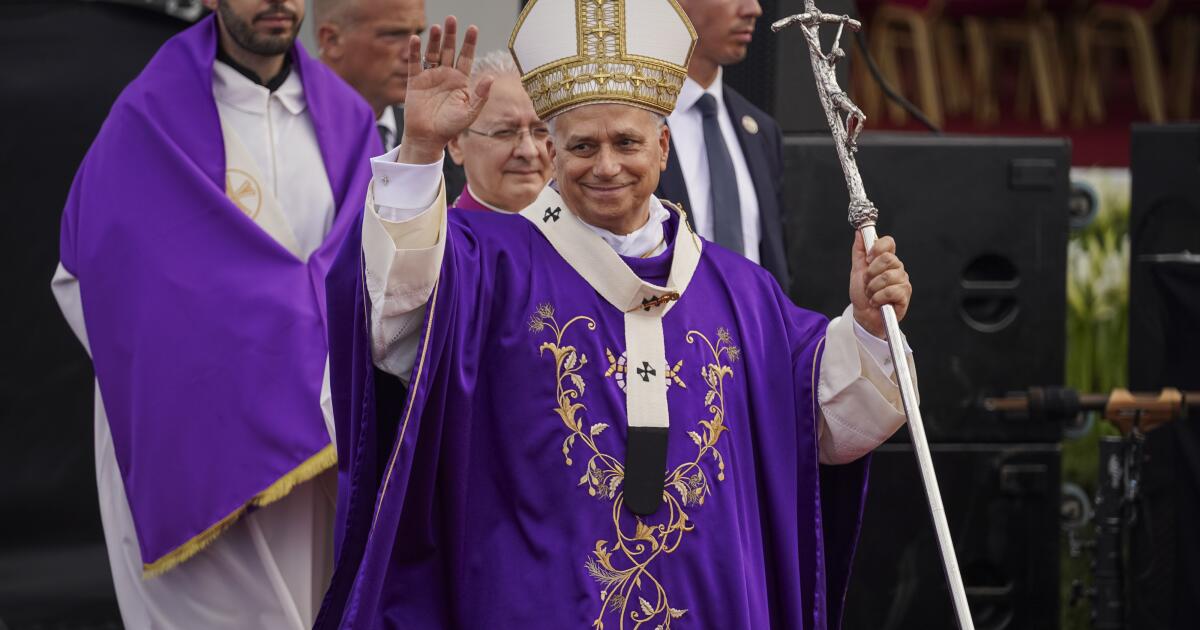
A similar (though obviously not morally equivalent) dynamic is now also on display in the form of Trump’s skirmish with Pope Leo XIV, a man who commands moral authority. He opposes the war in Iran (“Blessed are the peacemakers”) and has demonstrated a stubborn refusal to back down to Trump’s attempts at bullying.

“Woe to those who manipulate religion and the very name of God for their own military, economic and political gain, dragging that which is sacred into darkness and filth,” Leo said during a tour of Africa. It’s a remark that the American pope seemed to implicitly be aiming at the American president.

Here’s what Trump doesn’t understand: There are still pockets of the world where concepts like faith and national identity outweigh tangible incentives. Where sacrifice and suffering are an accepted part of the plan.

When facing these sorts of foes, Trump’s usual operating system starts to look less like a cheat code and more like a category error.

But he can’t see this because Trump is always prone to a sort of cynical projection — of assuming everyone views the world in the same base, carnal, corrupt way he sees it.

Whether it was his incredulity that Denmark wouldn’t sell Greenland, rhetoric that seemed to discount the motivations of those who serve and sacrifice in the military, or his affinity for nakedly transactional gulf states, the pattern is familiar: a tendency to view decisions through a cost-benefit lens that not everyone shares.

To be fair, that lens has often served him well. In arenas where power, money and leverage dominate, Trump’s approach is eerily effective.

But after years of taming secular, “rational” opponents, he is fighting a two-front war against people who see their struggles as moral and spiritual.

They aren’t stronger in a conventional sense. But they are, in a very real sense, less susceptible to Trump’s methods.

For perhaps the first time in his life, Donald Trump finds himself facing adversaries who aren’t just immune to his usual Trumpian playbook but are playing a different game altogether.

Matt K. Lewis is the author of “Filthy Rich Politicians” and “Too Dumb to Fail.”
Source link

Huge crowds greet Pope Leo in Cameroon 20 years after outreach trip | Religion

NewsFeed

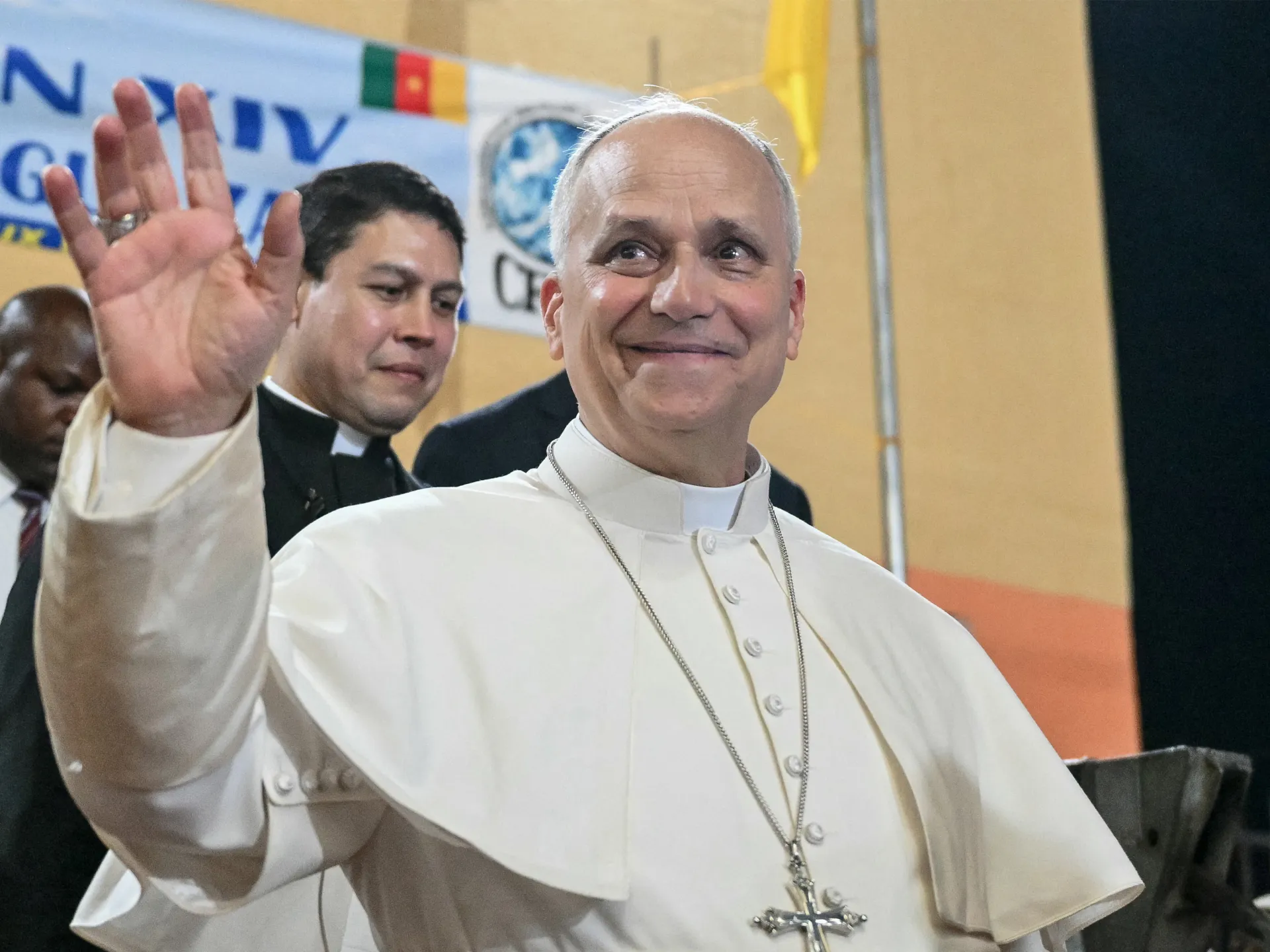
Huge crowds have greeted Pope Leo in Cameroon, returning to a country he visited 20 years ago as ‘Father Bob’. Al Jazeera’s Nicolas Haque was there, and explains how the Roman Catholic leader is transforming the church as congregations shrink in Europe but expand in Africa.

Source link

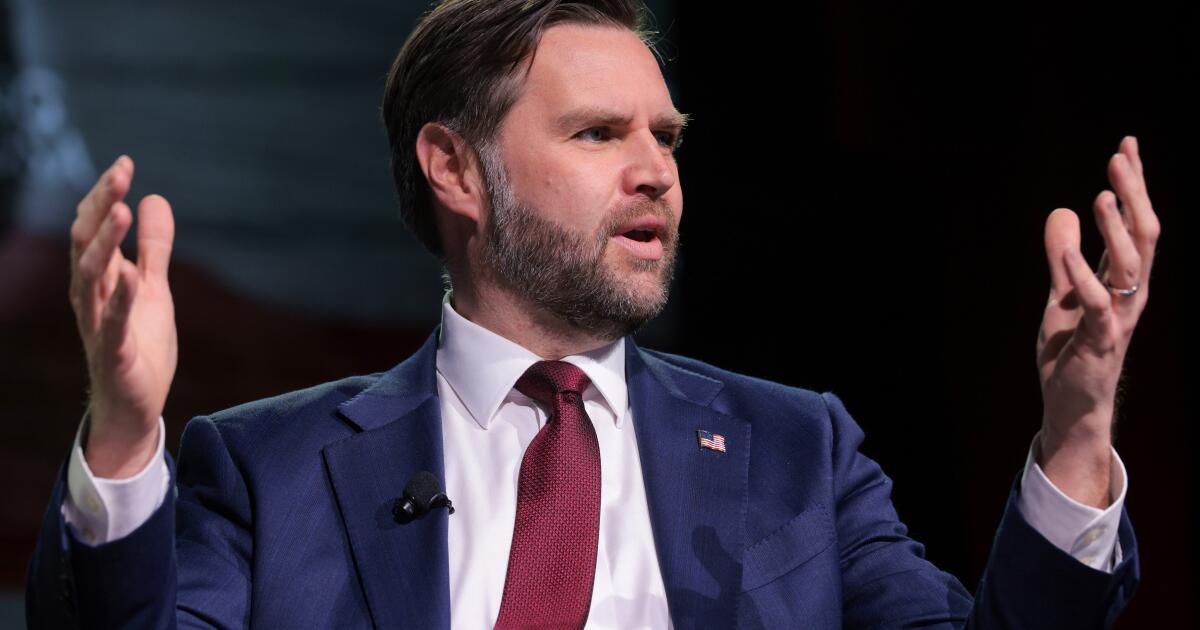
As Vance rallies with Turning Point, some supporters bristle at Trump’s war, memes and feuds

Fresh from a marathon trip to Pakistan that failed to reach a deal for ending the war with Iran, Vice President JD Vance jetted to this Georgia college town for a campus tour organized by the conservative powerhouse Turning Point USA.

But instead of showcasing the youthful energy that the organization harnessed to return President Trump to the White House less than two years ago, there was a mostly empty arena, awkward questions and unusually sharp criticism.

The event affirmed Trump’s difficulty selling the war and how much he’s complicated his own political fortunes by assailing Pope Leo XIV and posting a social media meme that depicted himself as Jesus.

“I did vote for Trump. I am not a Trump supporter anymore,” said Joseph Bercher, a Catholic who said he was glad that Leo has expressed opposition to the war with Iran.

Bercher said the Jesus meme, which the president took down Monday after a rare conservative backlash, was a “red flag” indicating Trump’s true character.

“He sees himself as like a demagogue or someone to be worshipped,” Bercher said.

C.J. Santini, a recent graduate of Liberty University, an evangelical school in Virginia, said he didn’t have an opinion on whether Iran was truly close to manufacturing a nuclear weapon and thus needed to be attacked. But he laughed and shook his head when asked about Trump attacking Leo.

“It’s just stupid. Stupid,” he said, calling it a “distraction” from Trump’s agenda in Iran and at home.

Mostly empty arena contrasts with 2024 rallies

Many of the college-age attendees donned Turning Point attire, Trump hats and red-white-and-blue paraphernalia for the event. Yet they were outnumbered more than 2-to-1 by empty seats in what is not even the largest arena on this sprawling campus that sits about a 90-minute drive from downtown Atlanta.

A Marine veteran who served in Iraq, Vance acknowledged that not all young conservatives are enamored with another U.S. war in the Middle East.

“I’m not saying you have to agree with me on every issue,” Vance told the young crowd. “What I’m saying,” he added, “is don’t get disengaged.”

The vice president took questions from Turning Point executive Andrew Kolvet instead of Erika Kirk, who began leading the organization after the assassination of her husband Charlie Kirk. Kolvet said Erika Kirk canceled her plans to be on stage because of unspecified threats she had received.

Vance, whose presence ensured significant Secret Service and other law enforcement protection around the venue, said he’d been worried that the event would be canceled altogether.

Kolvet asked Vance directly about the war and Trump’s back-and-forth with Leo. Audience questions were more aggressive. Vance jousted with at least one heckler over the war in Gaza, and he was pressed by another person over the administration’s handling of the Jeffrey Epstein case files.

In the audience, even some of Vance’s sympathetic listeners offered caveats and critiques.

“The pope needs to stay out of politics,” said Jessie Williams, a Methodist. But he noted his mother is Catholic, and he said he understands why Catholics recoil at Trump calling the pope “weak” and suggesting that the first U.S.-born pontiff was chosen only as a counter to Trump.

Williams called Trump’s meme distasteful.

“I don’t like it, but it’s — what can we do?” Williams said. “He’s a grown man, he’s gonna do what he wants.”

Blake McCluggage, a Baptist, said he did not approve of the meme or Trump’s profane Easter Sunday message that threatened widespread destruction of Iran’s civilian infrastructure.

The threat, plus Trump’s follow up message that a “whole civilization” would die, prompted escalating criticism from Leo, with the pope calling the president’s comments “truly unacceptable.”

However, McCluggage said, “you can still be a Republican” despite disagreeing with Trump.

A day before coming to Georgia, Vance tried to laugh off the meme as a joke that “a lot of people weren’t understanding.” The vice president also seemed to echo Trump’s assertion that Leo should concentrate less on global affairs.

“It would be best for the Vatican to stick to matters of morality, to stick to matters of what’s going on in the Catholic church and let the president of the United States stick to dictating American public policy,” Vance said in a Fox News interview.

On stage in Athens, he shifted his arguments, saying he welcomes Leo’s comments even if he disagrees with them.

“At the very least, it invites conversation,” said Vance, who converted to Catholicism as an adult.

Still, Vance questioned Leo anew, pushing back specifically at the pope’s Palm Sunday assertion that God does not hear the prayers of those who make war. Leo was quoting scripture from the Old Testament book of Isaiah. Vance asked whether God was on the side of Allied forces in World War II as they liberated Jewish survivors of Nazi extermination camps.

“I certainly think the answer is yes,” Vance said. When Leo mixes global affairs and complex theology, Vance said, “it’s very important for the pope to be careful.”

Barrow and Megnien write for the Associated Press.

Source link

In 1960, fears over papal sway. In 2026, a president attacks a pope

It was hard to miss President Trump’s very public spat with Pope Leo XIV this week.

The split was the first time in modern memory that an American president has so openly badmouthed a sitting pontiff, or, for that matter, distributed an image depicting himself as Jesus Christ. Critics cried “blasphemy!” even as supporters continued to stand behind the man whose presidency, some argue, was God sent.

Students of American history will recall an earlier incident that pitted papal and presidential authority against each other. The concern: that a president would align himself too closely to the church, or even take orders from the pope.

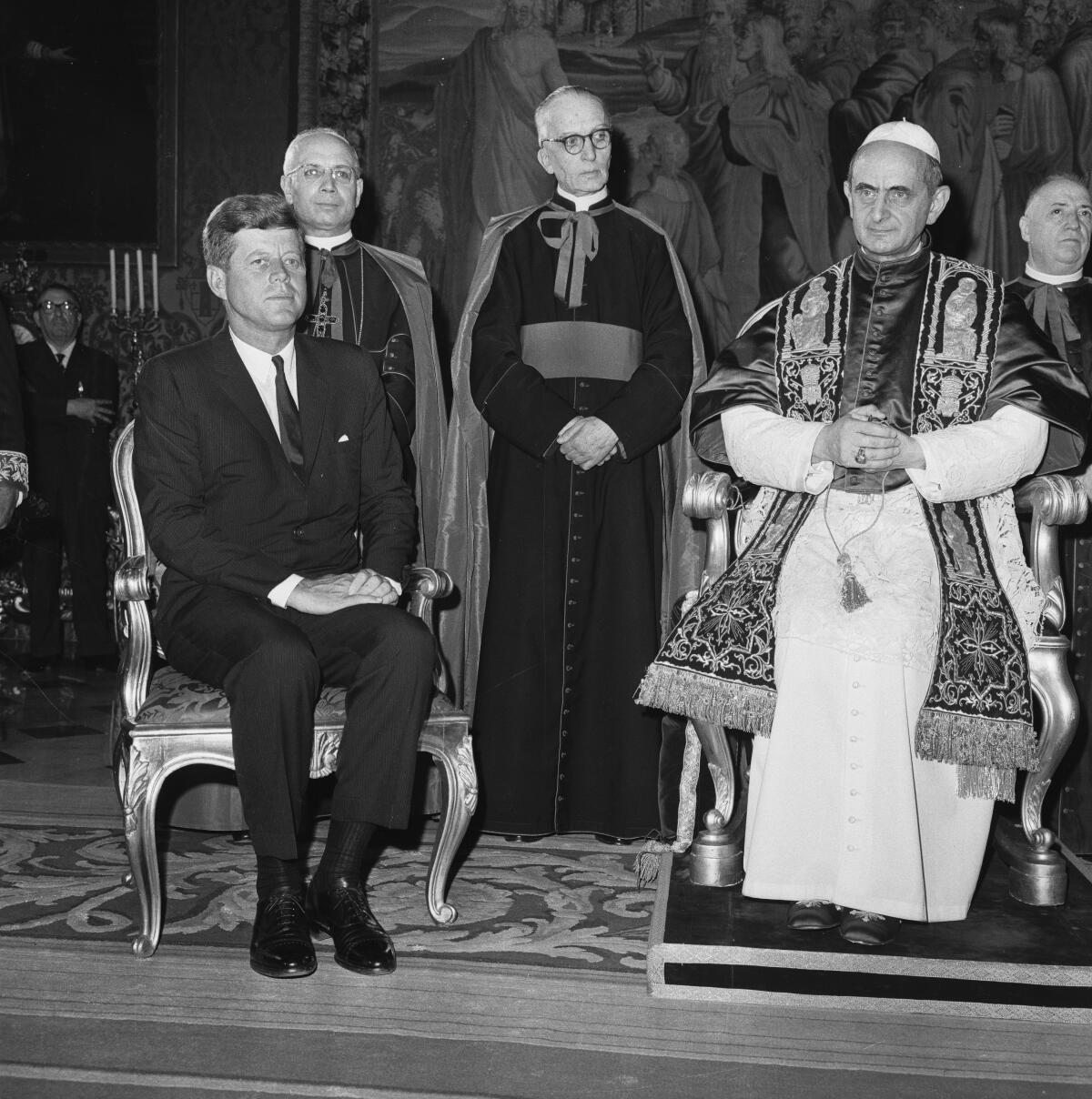
That anxiety seeped into the 1960 presidential campaign of John F. Kennedy, whose eventual victory would make him the first Catholic president.

Back then, Kennedy was constantly fending off accusations from Protestant ecclesiastic types who were wary that his nomination meant the pontiff, John XXIII, was already packing his bags for a move into the White House.

A black-and-white photo of a man in dark suit and tie seated next to a man in ornate religious vestments and a white skullcap

President John F. Kennedy meets with Pope Paul VI at the Vatican in July 1963, one month after Paul succeeded John XXIII as pontiff.

(Bettmann Archive / Getty Images)

The issue was so pronounced that 150 clergymen and laypeople formed Citizens for Religious Freedom, which in a pamphlet warned, “It is inconceivable to us that a Roman Catholic President would not be under extreme pressure by the hierarchy of his church to accede to its policies and demands.”

One particularly loud voice among the ministers was the Rev. Norman Vincent Peale, a popular and influential pastor and author. Peale was especially disturbed by Kennedy’s prospects.

“Our American culture is at stake,” he said at a meeting of the ministers. “I don’t say it won’t survive, but it won’t be what it was.”

The group asked Kennedy to “drop by Houston” to make clear his views on faith and government. He agreed, making a televised speech at the Rice Hotel, where he famously spelled out his firm opinions on the separation of church and state.

“I am not the Catholic candidate for president,” Kennedy told the group. “I am the Democratic Party’s nominee for president who happens to be Catholic.”

Time magazine reflected on the address some years later, concluding that the speech had gone so well for Kennedy “that many felt the dramatic moment was an important part of his victory.”

Since then, modern presidents have occasionally found themselves at odds with the Vatican. Typically Republican presidents would hear from the pope about foreign wars, while Democratic presidents were derided over abortion policies.

But such disagreements tended to be handled with the decorous language of diplomacy.

A man in a dark suit presents a medal on a ribbon to a man in white skullcap and religious robes, seated in an armchair

President George W. Bush presents Pope John Paul II with the Presidential Medal of Freedom in Rome on June 4 , 2004. The pope reminded Bush of the Vatican’s opposition to the war in Iraq. Bush praised him as a “devoted servant of God.”

(Eric Vandeville/Gamma-Rapho via Getty Images)

Then came Trump, who is now being accused of openly mocking the Catholic faith and the 1st Amendment. He called Leo weak on crime and foreign policy, among other things. A self-described nondenominational Christian who says his favorite book is the Bible, Trump’s hasn’t shied from bashing the pontiff, nor has he hesitated to blur the line separating church and state.

Where Kennedy argued for an absolute separation, Trump has advanced a model of religious resurgence, promising “pews will be fuller, younger and more faithful than they have been in years.” Through initiatives including the “America Prays” program launched last year, the White House has sought to bring “bring back God” by inviting millions of Americans to prayer sessions. The webpage for the program focuses features only Christian Scripture.

“From the earliest days of the republic, faith in God has been the ultimate source of the nation’s strength,” Trump said at a National Prayer Breakfast in February.

A man in a dark suit, hands clasped on a desk, is surrounded by other people standing near windows with gold curtains

President Trump, then-Vice President Mike Pence and faith leaders say a prayer during the signing of a proclamation in the Oval Office on Sept. 1, 2017. .

(Alex Wong / Getty Images)

In the United States, the Catholic Church historically has “loved the 1st Amendment” and its guarantee of religious liberty and, as a result, largely kept some distance from government, according to Tom Reese, a Jesuit priest and religious commentator. After its failures attempting to influence monarchs and politicians in Europe, the Catholic Church “didn’t want the government interfering with them and knew that it wasn’t their right to interfere with the government,” Reese said.

Kennedy loved the 1st Amendment too. He put it above his own religious beliefs, and said as much on his way to the White House.

“I would not look with favor upon a president working to subvert the 1st Amendment’s guarantees of religious liberty,” he said. “Nor would our system of checks and balances permit him to do so.”

A man with glasses, in red vestments, holds out his hands in prayer in a room with ornate blue and yellow mosaic walls

Pope Leo XIV meets with members of the community in Algiers at the Basilica of Our Lady of Africa on April 13, 2026.

(Vatican Pool via Getty Images)

Source link