Democratic socialists are looking to extend their power in Los Angeles City Hall this fall with their biggest prizes yet: mayor and city attorney.
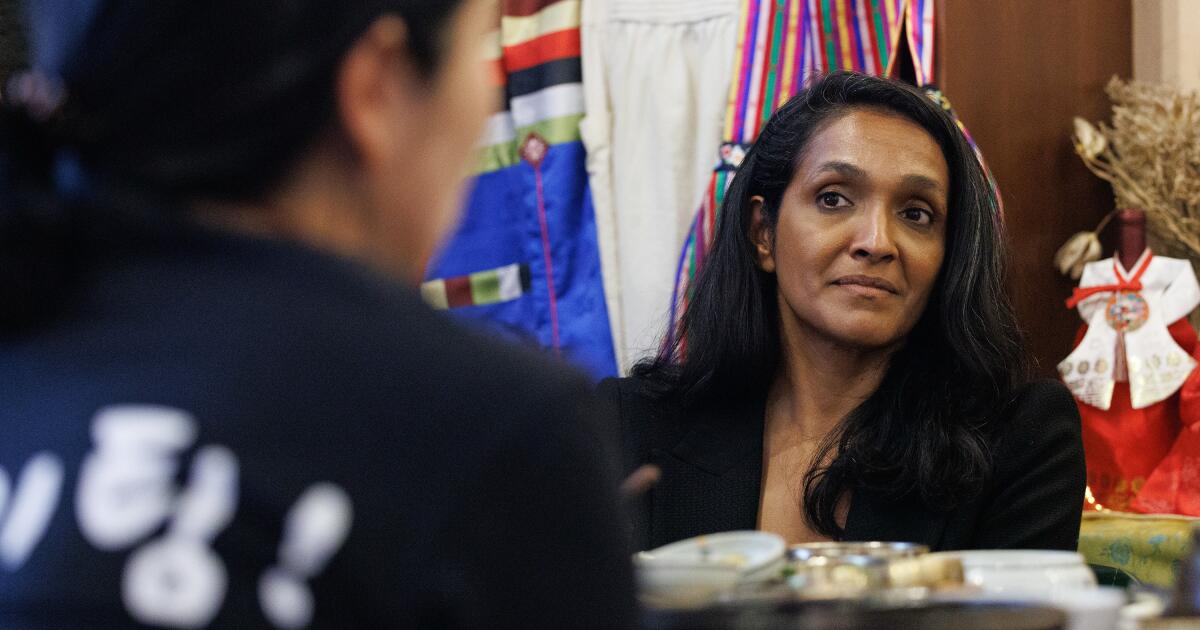
Mayoral candidate Nithya Raman and city attorney hopeful Marissa Roy, both members of the Los Angeles chapter of the Democratic Socialists of America, are heading into the Nov. 3 general election with strong showings in the June 2 primary as tailwinds.
If she prevails in November, Raman would join the ranks of democratic socialists leading big U.S. cities, including New York’s Zohran Mamdani and Seattle’s Katie Wilson. Washington, D.C., looks to be next: Janeese Lewis George won the Democratic primary for mayor there this month, all but ensuring her a general election win in that deep-blue city.
In Los Angeles, a democratic socialist mayor and city attorney could mean added clout because of an ideological lockstep between the two offices, said Fernando Guerra, a political science professor at Loyola Marymount University. In such a scenario, he said, the city attorney’s office is less likely to be a check against the mayor’s authority to set policy on issues such as land use and public safety.
“It’s incredibly substantive that the city attorney will interpret much of the policy that the mayor may push to be the right policy, and not challenge it,” Guerra said.
The election of Raman and Roy would also underscore the leftward tilt of Los Angeles, which has four City Council members, including Raman, who are DSA members — two of whom were reelected in the primary. City Controller Kenneth Mejia, who was recommended (although not formally endorsed) by DSA, was also reelected.
The DSA champions ideas sharply to the left of more establishment Democrats, such as incumbent L.A. Mayor Karen Bass. The L.A. DSA chapter, for example, says its objectives include abolishing prisons and defunding the police.
DSA-L.A. co-chair Sean Wakasa said his organization is thriving in L.A. and across the country because it has destigmatized the concept of socialism.
“Democratic socialism ultimately, at the end of the day, is about making the politics that working-class Americans can see themselves in,” Wakasa said.
In Los Angeles, Wakasa said, a DSA mayor would be expected to build more public transit, strengthen protections for renters, fight for workers’ rights, raise the minimum wage and defend local immigrants from the federal government.
The city attorney, he said, would be expected to defend working-class Angelenos by enforcing renter protections, resolving wage-theft issues and enforcing sanctuary city policies.
Business groups and public safety advocates have voiced concerns over the prospects of DSA members calling the shots at City Hall.
“They would run roughshod over the city,” said Stuart Waldman, president of the Valley Industry and Commerce Assn. He said Raman and Roy “don’t just drink the DSA Kool-Aid, they live it.”
Waldman said he would expect Los Angeles under democratic socialist leadership to adopt overzealous tenant protection policies that would discourage new rental development. He said they would also seek to weaken the police, leading to a “free-for-all for crime.”
“They would run business out,” Waldman said.
Roy, who has promised to turn the city attorney’s office into “the largest public interest law firm in the city,” targeting wage theft, tenant harassment and other issues, disputed Waldman’s assertion.
“Allowing corporate bad actors to violate our laws doesn’t make L.A. safer or more affordable — enforcing protections for renters, workers, and consumers does,” Roy said in a statement.
Raman said in a statement that she shares “DSA’s commitment to fighting for working people and those who have been left behind by a political system that too often serves powerful interests instead of everyday Angelenos.”
But she also said “there is no liberal or conservative way to fill a pothole.”
“I’ve always believed the most progressive thing you can do is actually make government deliver,” Raman said. “Every time City Hall fails to do that— potholes that don’t get fixed, streetlights that stay dark, 911 calls that go unanswered — it erodes people’s faith that government can solve problems at all.”
Rick Cole, a former deputy mayor of L.A., said the DSA label for both candidates doesn’t mean they’ll adhere to the most dramatized versions of what DSA stands for. Neither candidate is an ideologue, he said.
Raman’s membership in DSA “is a signifier she’s going to be more skeptical of current policing,” said Cole, a Pasadena City Council member. “She’s going to be more focused on affordable housing. She’s going to be more focused on a humane approach to getting people off the streets.”
A poll by the UC Berkeley Institute of Governmental Studies that was co-sponsored by The Times showed that in a head-to-head runoff, Raman was supported by 32% of the registered voters polled, compared with 28% for Bass.
Bass finished first in the primary, ahead of Raman, with former reality TV personality Spencer Pratt finishing in third place.
With Pratt now out, the race is on for both campaigns to appeal to his voters, who are generally considered more conservative. Even so, the Bass campaign said it doesn’t plan to focus on Raman’s DSA affiliation.
“What’s important isn’t labels — it’s what her [Raman’s] record shows, and that’s voting over and over and over to allow encampments near schools and to shrink our police force. It goes against what L.A. needs and what most of L.A. believes,” Bass campaign spokesperson Alex Stack said in a statement.
One irony is that the three other members of the DSA on the City Council — Eunisses Hernandez, Ysabel Jurado and Hugo Soto-Martínez — have all endorsed Bass, citing the mayor’s fierce resistance to the Trump administration’s immigration raids last year, among other factors.
In the primary, DSA’s L.A. chapter recommended Raman but didn’t endorse her, with the distinction being that an endorsement comes with active canvassing and support from DSA members. DSA-LA co-chair Leslie Chang said it wasn’t yet clear whether her group would endorse Raman in the runoff.
A DSA endorsement for Raman now might be a mixed blessing, given that Pratt’s support came from more conservative parts of the city, said Christian Grose, a political science professor at USC.
“Karen Bass is not popular with Pratt voters, and the DSA is not popular with Pratt voters, but that’s who will decide the mayor’s election,” he said.
Roy, a deputy state attorney general, finished first in the city attorney primary by a wide margin and will compete against John McKinney, a deputy district attorney, in the runoff.
McKinney said electing Roy to the city attorney’s office would be like “going back in time” to when George Gascón was the top prosecutor in Los Angeles County, which police and prosecutors said was a disaster for public safety.
In the recent City Council primaries, DSA-endorsed incumbents Hernandez and Soto-Martinez both won reelection easily, while DSA-endorsed Faizah Malik failed to push incumbent Traci Park into a runoff in her Westside district.
In the Council District 9 race, DSA-endorsed community organizer Estuardo Mazariegos will be in a runoff with Jose Ugarte, a former aide to termed-out incumbent Curren Price.
DSA leaders are pleased overall with how their candidates have performed.
“DSA has really claimed a foothold for ourselves in L.A. County politics,” Chang said.
The Prime Minister announced he would be leaving his role
11:19, 22 Jun 2026Updated 13:36, 22 Jun 2026
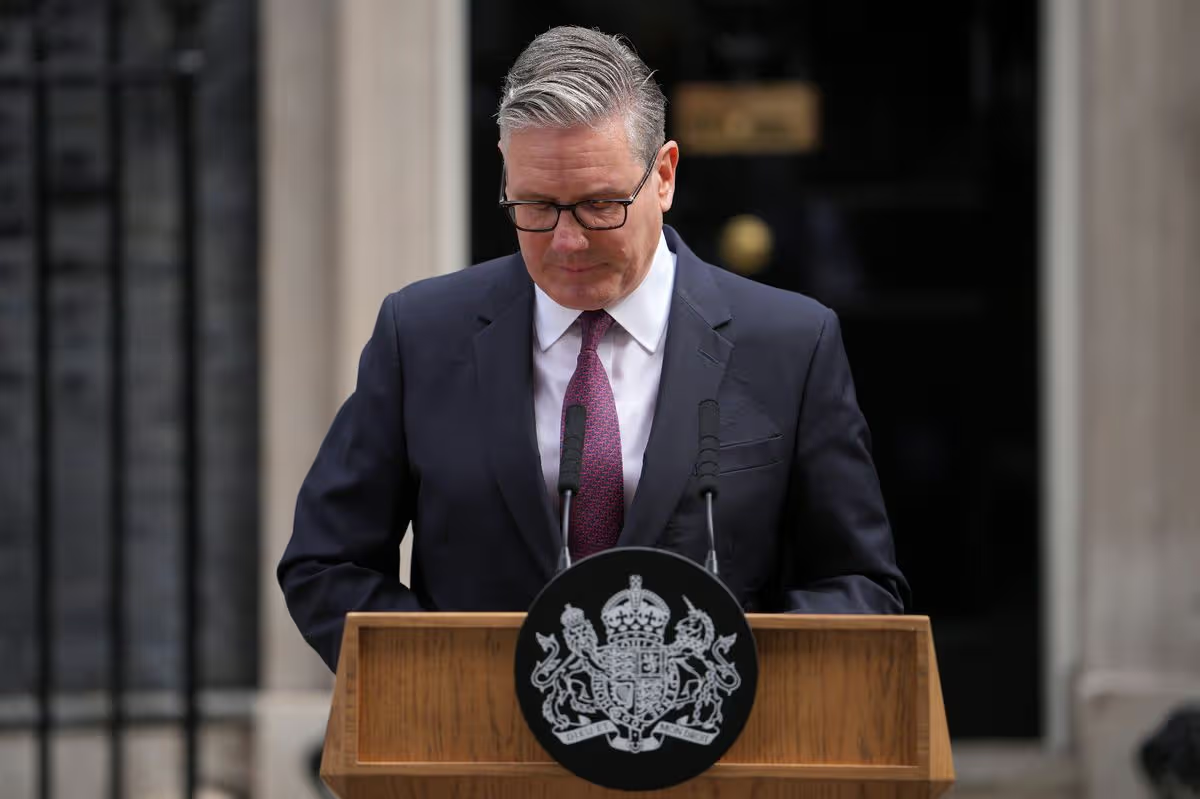
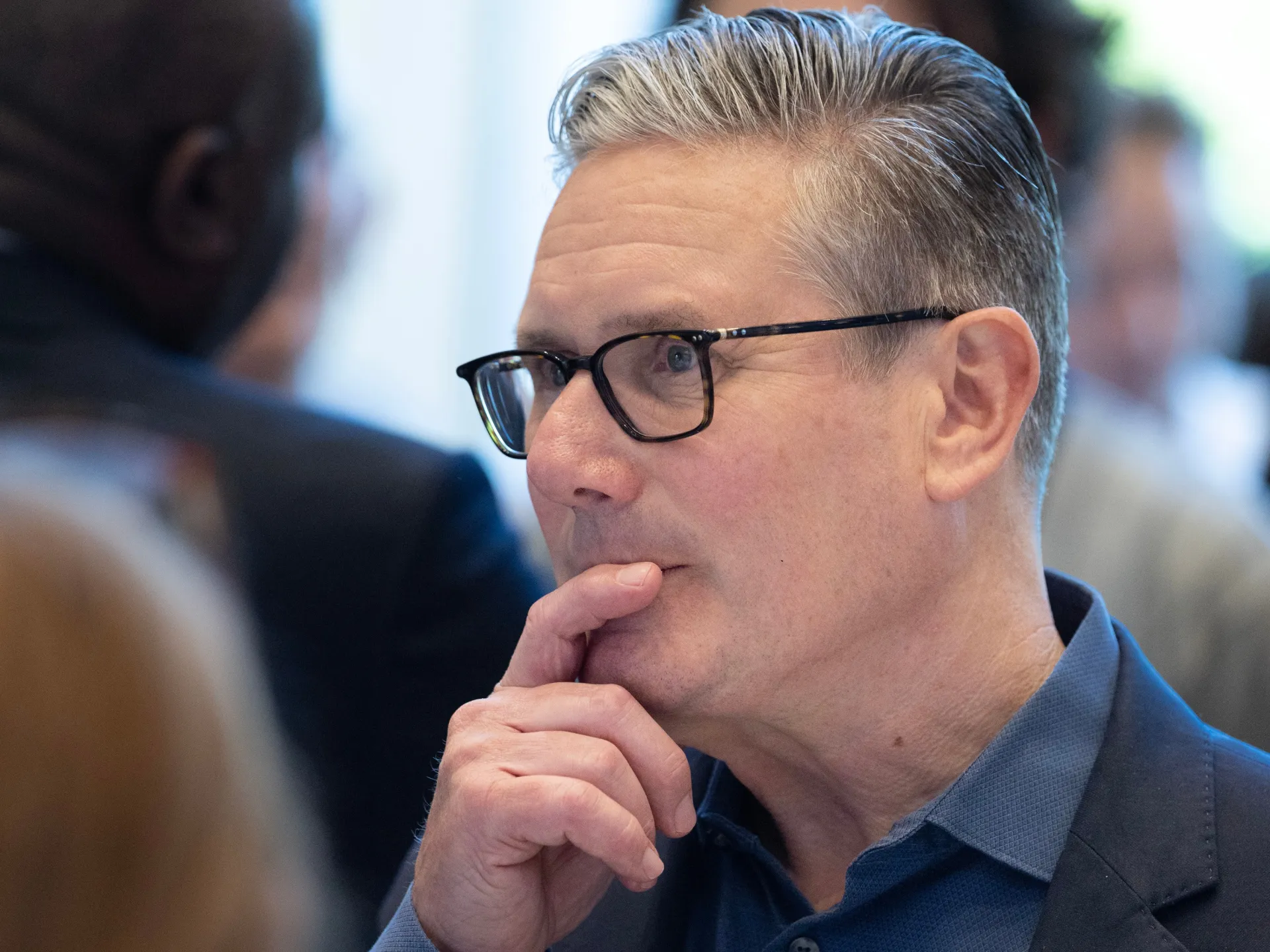
Keir Starmer has confirmed he will resign as Prime Minister(Image: AP Photo/Kin Cheung)
Martin Lewis has moved swiftly to rule himself out of any political role following Sir Keir Starmer’s resignation. Sir Keir confirmed earlier today that he will ‘resign as leader of the Labour Party‘.
The announcement follows a slump in poll ratings and Andy Burnham’s resounding win in the Makerfield by-election. In an emotional address outside Downing Street, Sir Keir announced his departure less than two years after sweeping to power in a landslide victory.
As has happened before, the news prompted widespread calls for money-saving expert Mr Lewis to be put forward as a potential Prime Minister. Fresh data from Focaldata indicates the 54 year old would prove an enormously popular pick amongst the British public, alongside the much-loved Sir David Attenborough.
However, in a post on social media, Mr Lewis firmly ruled himself out of the running by saying, ‘I don’t want to join any political party’. He said: “After a few “throw your hat in the ring!” messages…
1. I don’t want to join any political party
2. I’d rather wire my nipples to electrodes (& not in a good way)
“Tho the geekdom of this pop-culture politics piece is a mix of flattering, funny & scary.”
Content cannot be displayed without consent
The Focaldata research revealed that Sir Keir, Reform leader Nigel Farage, and Green Party leader Zack Polanski were amongst the least favoured candidates for PM. Kemi Badenoch was the sole major party leader to achieve a positive approval rating (+2), pointing to wider cross-party appeal.
It read: “Martin Lewis and David Attenborough, who would immediately surpass William Gladstone’s record for oldest serving Prime Minister, are the breakout leaders. They sit head and shoulders above everyone else with best-worst scores of +37 apiece, practically putting them in their own “national treasure status” sub-quadrant.
“Both command cross-party consensus, recording positive scores across every voting intention group. Stephen Fry, Big John, and Louis Theroux also have positive best-worst scores across every major party.
“Piers Morgan, Jeremy Clarkson, and Gary Lineker, somewhat unsurprisingly, varied a lot from party to party. While Piers Morgan and Jeremy Clarkson are viewed positively by Conservative voters, Reform voters, and those intending not to vote, they are viewed negatively by parties on the left.
“Gary Lineker is almost the exact opposite, doing better among Green, and Labour voters although he is still viewed as a good candidate for PM by those saying they won’t vote.”
The survey presented 1,060 Brits with the names of 25 celebrities, TV personalities, politicians, and sports stars. These were then matched up against each other in groups of five, with participants asked in each round who they would most and least like to see as PM.
Keir Starmer is under intense pressure from his own Labour party to announce plans to step down as Prime Minister.
By AFP, Reuters and The Associated Press
Published On 22 Jun 202622 Jun 2026
Prime Minister Keir Starmer could shortly announce a plan to step down, according to UK media reports, as his likely successor Andy Burnham is expected to be sworn in as a member of parliament.
Government ministers said the Labour leader was reflecting on his political future over the weekend.
Recommended Stories
list of 4 itemsend of list
Starmer could set out an exit timetable on Monday, conceding to pressure from his Labour Party to hand over the reins of power.
The threat to the British leader, which has been building for months, increased sharply on Friday when Burnham, the Greater Manchester mayor, decisively won a parliamentary election to return to Westminster, beating a candidate from Nigel Farage’s Reform UK party, which has led national opinion polls for more than a year.
That victory gave hope to Labour lawmakers that Burnham, a career politician known for his communication skills, could transform the fortunes of a party that has lost support under Starmer, whose popularity ratings have sunk.
If Starmer does announce his exit, he will be the sixth prime minister in a decade to stand outside 10 Downing Street and announce a premature departure.
The beleaguered leader “is expected to announce on Monday that he will step down as prime minister after overwhelming pressure from Labour MPs to make way for Andy Burnham”, The Guardian said.
The BBC said “signs are growing” that Starmer could set out a plan to resign on Monday, while newspapers splashed with headlines like “Game Over”.
But the widely expected change of leader is not without risk.
Beyond saying that the country needs fundamental change and to bring down the cost of living, Burnham has yet to make clear his approach to foreign affairs, the economy and defence.
Like Starmer, he could find he has little room to manoeuvre, hemmed in by bond market investors opposed to any additional government borrowing, and confronted by an angry electorate who believe the country is not working properly.
Starmer had pledged to fight
Starmer had said on Friday he would stand in any formal Labour leadership contest that sought to replace him.
While Starmer’s team believes his landslide national election win in 2024 gives him the mandate to stay in post until 2029, business minister Peter Kyle said on Sunday the prime minister was reflecting on “the political challenges that he faces in this moment”.
If Starmer does step aside, it is unclear whether Burnham would face a coronation or a challenge. Wes Streeting, who resigned as health secretary last month to protest against Starmer’s leadership, has said that he will run in a contest if there is one.
Burnham, if he succeeds, would become Britain’s seventh prime minister since the Brexit vote to leave the European Union, which took place 10 years ago this week.
That level of turnover – the highest in Britain in nearly two centuries – underlines the struggle of maintaining the support of voters angry at successive failures to improve living standards, public services and tackle undocumented immigration.
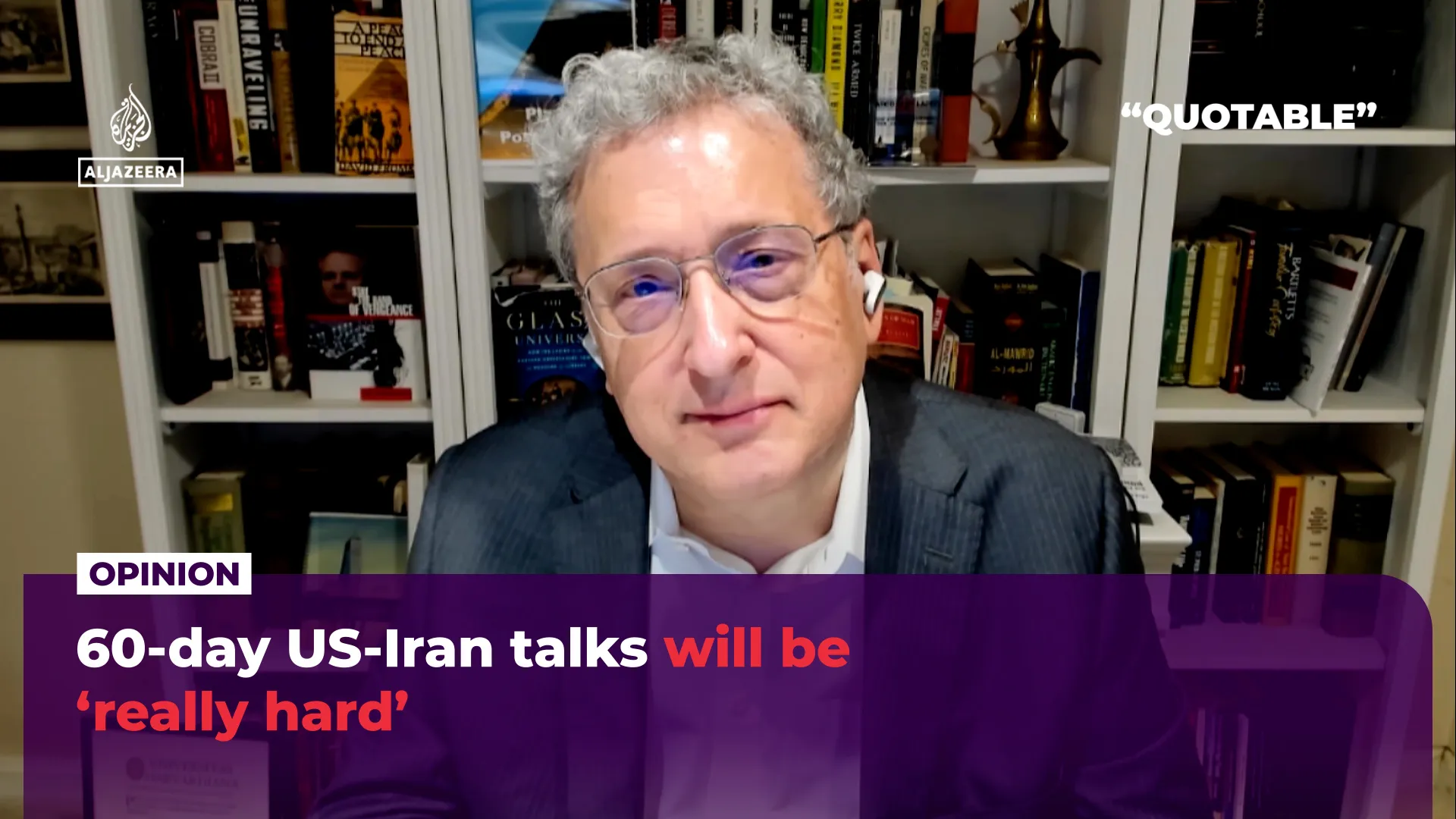
Thomas Warrick, a nonresident senior fellow at the Atlantic Council, says the 60-day US-Iran talks face hurdles with regards to nuclear issues and sanctions, and will require time, willingness, and patience to achieve lasting results.
WASHINGTON — Bobby Ray Inman’s bizarre withdrawal as the defense secretary nominee provides a glimpse into a peculiar Washington phenomenon–the insider who has spent so long behind the scenes that he is unprepared for the glare of the public limelight.
For more than 20 years, first as a Navy admiral and later as director of the National Security Agency and then deputy CIA director, Inman was part of a cadre of people who exercise great power in government but are insulated from the give-and-take of daily political life.
Inman’s remarks in announcing his withdrawal Tuesday and interviews with some of his friends suggest that the retired admiral was unequipped to step into the public arena. Despite his stated reasons, that lack of exposure to public life has emerged as the most plausible explanation for Inman’s abrupt turnabout.
“We thought: ‘He’s an insider–he probably knows the rules of the game.’ But he didn’t,” said Stephen H. Hess, a Brookings Institution political analyst. “We were all caught off guard by that.”
William Safire, the New York Times columnist accused by Inman of mounting unfair attacks, said Wednesday that he suspects Inman withdrew because he and other journalists were working on stories that might have damaged Inman’s chances for winning confirmation.
In his column appearing today, Safire wrote that Inman might have been worried by probes into reports that Inman had used a source on the Senate Intelligence Committee staff to help “manipulate” unsuspecting senators during Inman’s time at the CIA.
Inman had blamed a “new McCarthyism” in the press and the threat of a “partisan attack” by Republicans for his decision, but the media coverage and the GOP were overwhelmingly favorable toward him.
There were other ingredients as well: By Inman’s own admission, he did not thirst for the post. “I did not want a job in Washington,” he said in an interview.
He said he accepted Clinton’s offer because, as a career military officer, he found it difficult to refuse a presidential request.
Friends suggest that Inman’s longtime insecurities, apparently stemming from his days as a clumsy, bespectacled youngster, may have played a part by prompting him to overreact to fears that his reputation was being besmirched.
Inman’s experience is not unique in Washington politics. Others who have made the transition–notably Dwight D. Eisenhower, who went from five-star general to President, have had similar adjustments to make, although Eisenhower managed it more deftly.
Being an admiral or general provides a degree of insulation that often is a handicap for a would-be politician. Few are willing to criticize a senior military officer, especially in public.
And someone who has spent the bulk of his career as an intelligence officer is even more protected. By nature, the chiefs of the nation’s intelligence agencies stay in the background, even while advising presidents, briefing congressional leaders and influencing policies.
Especially during the Cold War, the bulk of their contact with the outside was behind closed doors–with lawmakers or reporters respectfully grateful for any morsel of information they were given.
Inman’s circumstances, and his own talents, accustomed him to receiving nothing but plaudits. Presidents, lawmakers and even the press praised him lavishly, extolling his brilliance and wisdom. Hardly an unkind word was to be found.
What Inman actually had to face during his few short weeks as defense secretary-designate was mild:
* A potential flap over his failure to pay Social Security taxes for a housekeeper peaked a few hours after it was announced, leaked by the White House to head off any serious brouhaha. The issue had been a major element in toppling two candidates for top Justice Department posts.
* News stories, backed up by bankruptcy records, noted his mixed performance in various business ventures. The articles were brought on mainly by Inman’s statements that he planned to bring more business techniques to government.
As Inman eventually admitted, the only real criticism came from a handful of columnists. News coverage and most editorials were heavy with praise; Inman said Tuesday that the working press had treated him fairly.
Inman did “more to besmirch his own reputation in his press conference than the press or the Republicans ever did,” Hess said. “Most people think his response bordered on the bizarre.”
Senate Minority Leader Bob Dole (R-Kan.), whom Inman accused–apparently without foundation–of spearheading a GOP attack against him, offered perhaps the unkindest cut of all:
“I think it’s probably a break for President Clinton that he didn’t get the job, the way he carried on yesterday,” the senator said Wednesday on CBS-TV’s “This Morning” program, in a view shared by some White House aides.
Times staff writer James Risen contributed to this story.
Instead of the usual phalanx of cars and buses, Saturday evening traffic on Wilshire Boulevard was replaced by massive balloons, mobile sculptures, gaggles of gallerists and an endless array of elaborate costumes.
The first-ever Los Angeles Art Parade, a collaboration between the Los Angeles County Museum of Art (LACMA) and famed gallerist Jeffrey Deitch, transformed the stretch of Wilshire known as Museum Row into a human-powered exhibition of the city’s dynamic art scene.
About 146 groups, made up of more than 1,400 participants, marched in the parade, with projects ranging from larger-than-life marionette dolls to squads of children in do-it-yourself costumes to mobile re-creations of LACMA’s most iconic art pieces.
The parade followed an all-day block party thrown by LACMA as part of its Grand Opening Weekend, celebrating the new David Geffen Galleries and the completion of the 20-year-long, $724-million campus construction project. Together, the block party and art parade attracted an estimated 60,000 attendees, who swarmed the galleries, danced to explosive DJ sets, and lined the streets to watch the eclectic procession of artists.
People dance during Flying Lotus’ DJ set at the Los Angeles County Museum of Art (LACMA) in Los Angeles.
(Ariana Drehsler/For The Times)
According to LACMA Director and Chief Executive Michael Govan, the event was a long time coming and “just the beginning” of how his team plans to use the campus space, which he previously called the city’s “living room.”
“We’re not gonna close Wilshire every weekend, but it’s an example of what we can do,” Govan said. “It’s really exciting to see the building work.”
Following a crowd-drawing DJ set from electronic low-fi hip-hop artist Flying Lotus, Govan introduced L.A. County District 2 Supervisor Holly J. Mitchell. She said the event made her “proud to represent LACMA” and to be a Metro board member, referencing the recently-opened Metro D-line extension, which dropped attendees off a quick stroll from LACMA’s entrance.
“Just seeing you all at this amazing public facility does my heart good,” she said. “This is your local government at work.”
1
2
3
1.Silhouettes of people watching the parade.2.A man and woman wearing tulle over them walk in the parade. 3.The crowd at the Los Angeles County Museum of History, Science, and Art (LACMA) Block Party.(Ariana Drehsler/For The Times)
As the party raged on LACMA’s campus, hundreds of parade participants hurriedly prepared for their debuts in the corners of nearby streets and parking lots. One group inflated a giant disco ball, while another smeared themselves with body paint next to a line of rehearsing dancers. Elsewhere, a megaphone-wielding leader herded dozens of black cats in the style of artist Gary Baseman into some semblance of order.
Deitch originally staged the first Art Parades in New York City’s SoHo neighborhood between 2005 and 2008. While those took a more art-world-exclusive approach, Deitch said the Los Angeles version was designed with inclusion in mind. The call for parade proposals was open to “emerging and established artists and creatives of all ages and backgrounds,” according to guidelines, as long as the work was appropriate for all ages and didn’t require a motorized element.
“The New York one was much more oriented toward people in the art community. We didn’t put out this kind of open call,” Deitch explained. “This is very different in its openness and its diversity. There are some famous artists and famous choreographers, L.A. legends. But there are also mothers from the San Fernando Valley with their children. I really love that.”
Artist Jordan Rountree’s rolling woodcut-sculpture called the Devil Jack in a Box with Crocodile appeared in Saturday’s Block Party and Art Parade hosted by the Los Angeles County Museum of Art’s (LACMA).
(Ariana Drehsler/For The Times)
“It’s just a very open platform, so you don’t have to have an M.F.A. to express yourself as an artist,” he added.
The procession was dizzying in its variety and scale. While many projects leaned into beauty and whimsy, others took a more overtly political approach, displaying anti-ICE messages on T-shirts and signs, sporting trans pride flags, or, in the case of performance artist Amy Kaps, wearing an unraveling U.S. constitution.
Some even referenced local causes, such as the “Boo Boo Bandage Brigade for Safe Streets,” which advocated for fixing sidewalks and increasing accessibility downtown. One particularly moving display by the Pali-Altadena Collective featured participants carrying miniature models of buildings and landmarks lost in the 2025 fires.
Chicana artist Nao Bustamante and Track 16 Gallery brought “Brown Disco” to the streets, which featured a giant gold disco ball and figures from decades of L.A. queer nightlife.
The crowd at the Los Angeles County Museum of Art (LACMA) Art Parade.
(Ariana Drehsler/For The Times)
“As a brown, queer person, I think that this really brought a light into our community, and now its presence [creates] an intergenerational conversation,” said Track 16 Assistant Director Steve Galindo. “The nightlife scene is how we come out as queer people, so it’s really special to be in the parade.”
“Puppetry has been part of the arts for so many years,” added Daisy Hernandez, the theater’s production manager. “It’s a way that people express themselves, just like every other art form. So that’s what we’re here to do: express ourselves through puppetry.”
WASHINGTON — The question hangs in the halls at the Capitol: Was it worth it?
Congress, which never authorized the war against Iran yet never fully objected to it, now must grapple with the consequences of President Trump’s nearly four-month conflict: the lives lost, the billions spent and the national security fallout that has reordered the political dynamics in the Middle East.
Ask senators what they think about the deal Trump struck to end the war, and they do not search too far for words.
“Pathetic. Failure. Inevitable conclusion of a combination of never making the case to the American people, flawed strategic vision, lack of grasp of the regional dynamics,” said Delaware Sen. Chris Coons, a Democrat on the Senate Foreign Relations Committee.
“How many ways, can I say, bad, bad, bad?”
Many Republicans too have been critical. Sen. Lisa Murkowski of Alaska said it’s hard to see what leverage the U.S. gained to force Iran to a better negotiation.
“You want to be able to give the benefit of the doubt,” she said. But, she said, “I think we’re in a place where there is a deal that has been signed, but it doesn’t appear to me that it puts us in that much of a different position than prior to the beginning of the war.”
Others in the GOP remain supportive of Trump’s efforts. Sen. Ron Johnson of Wisconsin, a past chairman of the Senate Homeland Security and Governmental Affairs Committee, said that because of the president’s actions, “We are safer today.”
“You can criticize — oh, he didn’t totally win,” Johnson said. “Well, that was always going to be very difficult.”
As Trump moves on to the next phase, it is left to the Congress to pick up the pieces: explaining the war to voters back home, restocking the military arsenal that has run low from bombing runs and trying to ensure the fragile ceasefire holds as the United States seeks to halt Iran’s nuclear ambitions and work toward an uneasy peace.
More money for the Pentagon
Defense Secretary Pete Hegseth made the rounds on Capitol Hill last week as lawmakers consider Pentagon funding as part of the Republican majority’s next big budget package.
The White House has asked for a remarkable $1.5 trillion for the Defense Department this year, on top of the extra money the GOP delivered as part of the Trump’s tax cuts package last year.
Republicans are considering a sizable, $350-billion-plus increase in Defense spending on par with the White House’s budget request that the GOP could pass on its own, through the reconciliation process that allows Senate majority rule over potential objections from Democrats.
Senators, meanwhile, are seeking to set some guardrails on Hegseth with a provision to block a portion of his travel fund until the Pentagon delivers various reports. One such report is on an investigation into the strike on an elementary school in Iran that killed more than 165 people on the first day of the war, most of them children.
Officials have acknowledged that they believe the U.S. was responsible for the strike and say it was based on faulty intelligence.
What’s next in Iran?
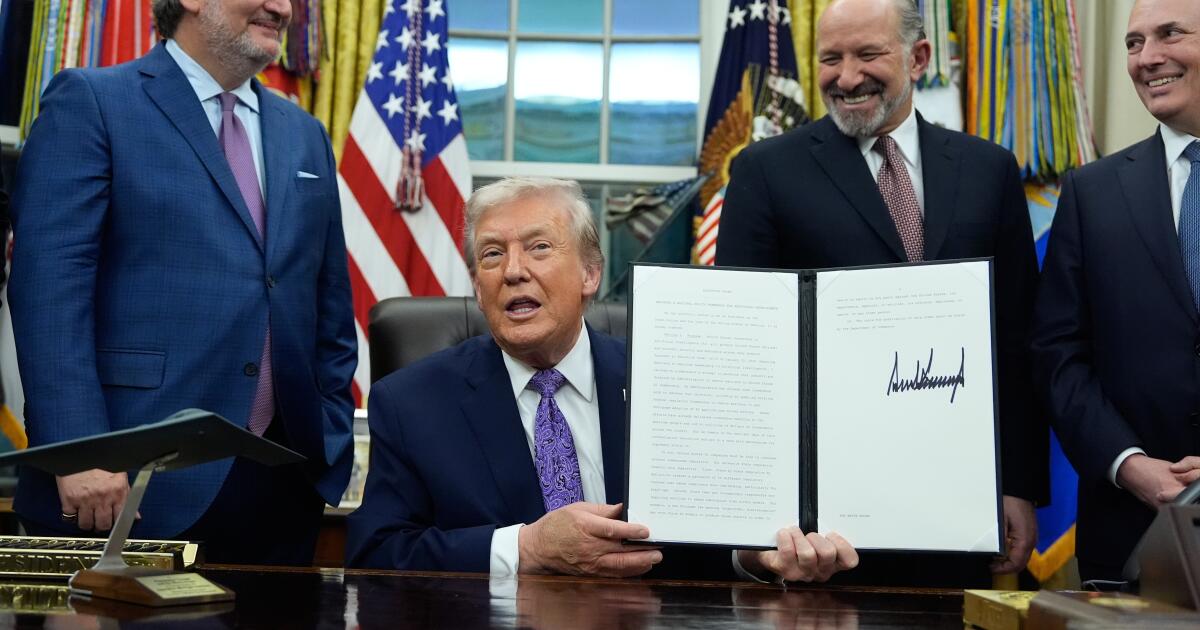
Lawmakers are still processing what just happened after Trump swiftly signed a memorandum of understanding with Iran and opened a window of 60-day talks toward ending Tehran’s nuclear program, which got underway Sunday in Switzerland.
“I understand the president’s trying to find a peaceful solution to this,” said Sen. Mike Rounds (R-S.D.), who serves on the Senate Armed Services and Intelligence committees. “I commend him for that. But we’ve got a lot of questions.”
Senators are particularly concerned about the tentative deal’s provision for a potential $300-billion fund for the “reconstruction and economic development” of Iran.
To many skeptical Republicans, that money sounds similar to the “planeloads of cash” narrative they used against the Obama-era Iran nuclear deal, which offered a slim fraction of that amount, some $1.7 billion overall. To this day, Trump tells an exaggerated story of how that payment to Iran, for U.S. military equipment it never received, was made.
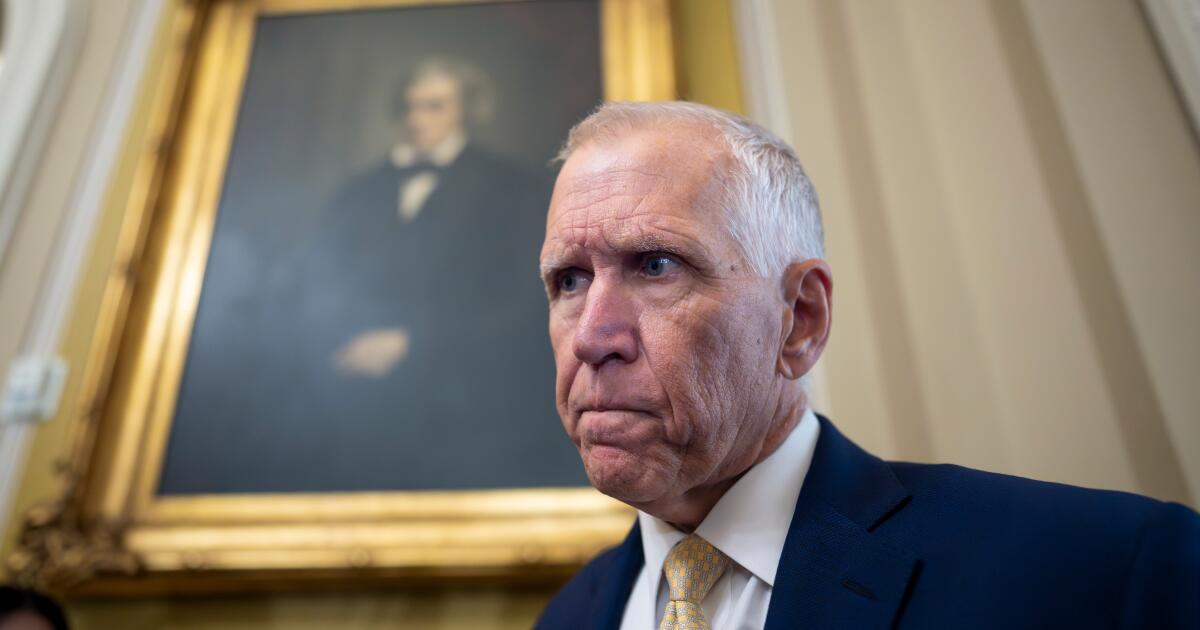
“The only concerns I have are the money and the conditions,” said Sen. Thom Tillis (R-N.C.).
“If we send a trainload, a shipload, it’s gonna age as well as that,” he said, referring to the Obama-era issue.
What was gained and lost
Over and again Congress tried and failed to exert its authority under the war powers act to halt the U.S. military action in Iran.
The House ultimately passed a war powers resolution that sought to force an end to the war after a small number of Republicans joined the Democratic measure last month. The Senate has voted nine times, including last week, but failed to reach the majority needed.
At the same time, Congress did not affirmatively authorize the war with a use-of-force resolution, as has been done in certain other conflicts, including the Iraq war.
“I’m glad that the conflict has finally ended and hope the ceasefire holds,” Sen. Jeanne Shaheen of New Hampshire, the top Democrat on the Senate Foreign Relations Committee, said in a statement.
But she said the country must be clear-eyed about what has come about. Not one of the president’s objectives has been achieved, she said, and Iran won significant concessions.
“The American people are paying the price with higher costs in every aspect of life and tens of billions in tax dollars spent,” she said.
Mascaro writes for the Associated Press. AP writer Mary Clare Jalonick contributed to this report.
CHICAGO — A spate of shootings in Chicago has led to seven deaths and at least 38 injuries since Friday evening, police say, prompting President Trump to renew his call for a military intervention in the nation’s third-largest city.
It is the latest in a series of threats made and interventions ordered by the Republican president against a Democratic-led city, including Los Angeles.
“Why isn’t Governor Pritzker calling me for help. I could make Chicago a safe City in ONE MONTH, in ONE YEAR, it would be one of the safest!!!” Trump said in a Sunday morning post on social media.
The office of Illinois Gov. JB Pritzker, a potential 2028 Democratic presidential contender who has repeatedly rebuffed Trump’s calls for a military intervention, did not immediately respond to a request for comment.
Under Trump, National Guard troops have been deployed on crime-fighting missions in Democratic-led cities including New Orleans, Washington and Memphis, Tenn.; and Marines and Guardsmen were sent to L.A. last year amid protests over federal immigration raids.
Although Chicago Police Department data show a slight increase in shooting incidents compared with the first half of last year, violent crime rates have generally dropped in the city over the last few years, in parallel with national trends.
Preliminary information shared by Chicago police indicate there have been at least two dozen shooting incidents since 5 p.m. Friday. Those killed by gunfire include a 21-year-old shot in the chest Sunday, an 18-year-old shot in the armpit Saturday evening and a 50-year-old shot in the chest Friday.
At least 12 people in a crowd on a Chicago street suffered gunshot wounds Friday evening after an SUV pulled up and two people inside started shooting, police said.
The eight men and four women in the group ranged in age from 17 to 47. They were being treated at four hospitals. Police said another man suffered unknown injuries and refused medical treatment.
That shooting happened on Juneteenth, a holiday that celebrates the end of slavery in the U.S. Earlier Friday, former President Obama and former First Lady Michelle Obama welcomed the first visitors to his presidential center on the South Side.
“What should have been a night of celebration and community reflection for Juneteenth was shattered by a horrific act of violence,” Mayor Brandon Johnson said in an X post Saturday. “My thoughts and prayers are with the victims and their loved ones.”
“Violence has no place in our city, and those responsible will be held accountable,” he said.
In Alameda County, Sharon Ford, a Medi-Cal recipient, was turned away from two private hospitals last December while in labor, because a hospital computer erroneously showed that she did not have insurance. Hours later, her baby was born dead at Highland General Hospital in Oakland, the county facility.
The Alameda County district attorney decided against filing criminal charges in the case, but concluded “it is unmistakably clear that this transfer should not have been attempted.”
Economic Reasons
In San Bernardino last winter, a patient with a stab wound to the heart was sent to the San Bernardino County Medical Center after being examined and declared “stable” by a cardiac surgeon at another hospital, according to Dr. Max Lebo, the clinical director of emergency services at the county hospital. The patient arrived moribund, had a cardiac arrest and died.
In each case, the patient was shifted from one emergency room to another not for medical reasons, but for economic ones–the fear by the receiving hospital that it would not be paid for treating the patient.
Health care officials call such transfers hospital “dumping,” and it is a problem that is drawing increasing attention in California and across the nation.
Attention will be focused on the dumping issue Tuesday, when the state Assembly’s Health Committee meeting in Sacramento considers a bill that if enacted would give California one of the toughest “anti-dumping” laws in the nation.
“Lives are being lost every month this goes on,” said Assemblyman Burt Margolin (D-Los Angeles), who introduced the bill. “It is a violation of every code of ethical behavior one can imagine.”
The patients who are “dumped” are almost always the indigent, the uninsured and those on Medi-Cal. Hospitals are motivated to transfer them out of fear that the patients won’t be able to pay for their care or that the Medi-Cal payments won’t cover the hospital’s actual costs. In addition, some specialists, on call to back up the emergency room doctor, refuse to care for such patients.
The patients are usually transferred to public hospitals, where their unpaid bills are absorbed by local taxpayers.
The dumping problem has become more acute in recent years as competition among hospitals has increased and state and federal support for health care has been cut back. Margolin’s bill would supplement a federal “anti-dumping” law, approved by Congress March 20 as part of a deficit reduction measure and awaiting President Reagan’s signature. It details appropriate transfer procedures, mandates reporting of all violations and establishes stricter enforcement procedures.
The federal bill specifies civil penalties up to $25,000 per case against a hospital or doctor when patients are transferred inappropriately. Hospitals can be excluded from the Medicare program for violations.
Margolin’s bill, AB 3403, would require that all hospital emergency rooms in the state provide needed emergency treatment, regardless of the patient’s “insurance status, economic status or ability to pay.” A similar requirement would be imposed on individual doctors with hospital staff privileges.
Existing regulations specify these responsibilities, according to Margolin. But the possible penalties for abuses–a letter of reprimand or revoking the license of a doctor or an emergency room–are usually either too mild or too harsh, he said.
The Margolin bill would impose new penalties–including fines of up to $25,000 and jail terms of up to one year. A summary of all violations would be published quarterly by the state Department of Health Services and be available to the public.
The California Medical Assn. opposes the bill, according to a spokesman.
The California Hospital Assn. supports the “intent” of the Margolin bill, said C. Duane Dauner, its president, despite reservations about some of the provisions.
“Economic transfers are a way of life today,” according to Dauner, who characterizes dumping as just one symptom of a larger issue–providing medical care for the poor and uninsured.
The dumping problem was documented in a recently completed study by Lebo, the physician at the San Bernardino County Medical Center. It showed that in a three-month period last fall, 423 patients were transferred to the San Bernardino County Medical Center from other hospitals–91% for financial reasons. Of these patients, 31 were in unstable condition, including nine with stab wounds and three with gunshot wounds, Lebo said.
“The great majority of these patients were sent from hospitals that had the facilities to take care of them,” said Lebo, who declined to identify these hospitals.
One patient died during the study–a man in his 50’s, suffering from alcoholism, anemia and pneumonia. He stopped breathing in the ambulance after being declared stable for transfer by physicians at another hospital. “He might have survived if they had cared for him,” Lebo said.
Despite a regulation of the Joint Commission on the Accreditation of Hospitals that patients not be transferred until the receiving hospital has consented to the transfer, 40% of the transferred patients arrived unexpectedly.
“It is frustrating and exasperating,” said Dr. Francis Communale, the hospital’s medical director.
“Sometimes the receiving hospital would call up and we would tell them the hospital was full, but the patient would be sent to our emergency room anyway.”
Problems in 38 Cases
Even within Los Angeles County, which enacted widely praised transfer procedures in 1982, 87 inappropriate transfers were investigated between March, 1985, and February, 1986, according to Robert Karp, of the health facilities division of the county Department of Health Services. Problems were confirmed in 38 cases, he said.
Under Los Angeles County regulations, a medical alert center, staffed 24 hours a day at County-USC Medical Center, must approve all transfers from private hospitals based on guidelines developed in conjunction with the Hospital Council of Southern California.
Violations are reported by emergency room doctors to the county Department of Health Services for investigation. If neglect or abuse is found, the offending hospital is contacted and asked to submit a plan to correct the problem.
In the last year, five cases were also sent to the state Board of Medical Quality Assurance, which licenses physicians, according to Karp.
The county system is credited with cutting the number of inappropriate transfers by more than half, according to Geraldine Dallek, of the National Health Law Program in Los Angeles, who has investigated the issue. Of about 80 transfers arriving each day at County-USC Medical Center, more than 90% receive prior approval and meet all protocol requirements, she said.
But a National Health Law Program study also pointed out the county system’s weaknesses. “Hospitals which violate transfer provisions know that the penalty for doing so is light,” it concluded. “The county has no authority to fine a hospital and the likelihood of a license revocation is almost nil.”
A National Trend
The California bill reflects a national trend toward legislation to ensure that the poor receive adequate emergency care. In addition to the federal bill, both South Carolina and Texas enacted tough “anti-dumping” laws in 1985. Alameda County is preparing transfer procedures similar to those in Los Angeles County.
The California Hospital Assn., however, asserted that the larger issue of so-called “uncompensated care,” must be tackled as well. Uncompensated care exceeds $1 billion out of the more than $12 billion spent on hospital care in the state each year, the association’s Dauner estimated, with 12% of the hospitals bearing 60% of the burden.
To provide relief for these institutions, the hospital association has proposed the creation of a fund, to be jointly financed by the state and federal governments and the hospitals.
Supporters of Margolin’s bill, however, believe the transfer issue should be dealt with on its own terms. “I want to get the whole damn thing stopped,” said Lebo, who was on duty the night the patient stabbed in the heart died.
WASHINGTON — Blunt-spoken Donald T. Regan testified today that he repeatedly urged President Reagan to break off arms sales to Iran, once telling him, “We’ve been snookered again.”
And when it became known late last year that money from those sales had been diverted to the Nicaraguan contras , Regan said, he pushed for making a clean breast of the story despite the opposition of former National Security Adviser John M. Poindexter and the doubts of the late CIA Director William J. Casey.
Regan, who was fired in February as Reagan’s chief of staff after being blamed by the Tower Commission for allowing “chaos” to descend on the White House, was the next-to-last public witness in the long congressional Iran-contra hearings. He is to be followed by Defense Secretary Caspar W. Weinberger on Friday.
Kept in the Dark
Regan said he never knew that Lt. Col. Oliver L. North, a member of the National Security Council staff, was conducting covert operations, including the transfer of Iranian arms sales profits to the contras.
Asked his reaction when he learned last November, he replied in a single word–”horror.”
Recounting his version of the arms-sales history, Regan said that on Dec. 7, 1985, at a meeting with the President, Secretary of State George P. Shultz and Weinberger, he had said “we weren’t getting anywhere” with Iran despite the arms sales and had recommended: “Why bother, cut your losses, get out of it.”
Enter McFarlane
Instead, he said, the President sent former National Security Adviser Robert C. McFarlane to London to talk with Iranian representatives to see whether the attempt at better relations could be salvaged. He said McFarlane returned “quite disgusted with the sleazy type of characters that he had met there.”
Yet, when the matter of arms shipments came up again the following month, Regan endorsed further shipments. “It seemed again a worthwhile effort,” he testified.
One thousand TOW missiles then were shipped to Iran from the United States, but the hostages were not released.
Then, said Regan, he told the President that “I thought we ought to break it off, that we’d been snookered again. And how many times do we put up with this rug-merchant type of stuff? Or words to that effect.”
Seemed to Understand
Regan said the President seemed to share his view.
“Did he instruct anyone to terminate their activities?” asked Terry A. Smiljanich, the associate Senate committee counsel.
“No,” Regan said.
“There was a pause then, and I sort of lost track of what was going on.” He said the budget then occupied his time.
Among Regan’s disclosures and quips:
–Iran was running a “bait-and-switch” operation, with hostages the bait and Reagan the victim.
–He is certain that Reagan did not know of the diversion of arms-sales proceeds until Meese told the President last Nov. 24, the day before Meese announced discovery of the fund diversion on television.
“This guy was an actor and he was nominated at one point for an Academy Award,” Regan said of the President. “But I’d give him an Academy Award if he knew anything about this” and hid that knowledge so skillfully.
–He said he doubted Reagan would have approved of the fund diversion if he had known about it.
–”It didn’t occur to me that men of that caliber (Poindexter and North) would be destroying documents or . . . clean up the record.”
Under plans by the local authority, work on the link road was expected to finish this year and open to traffic in early 2027 – eight years after the junction was originally built
The M49 junction near Bristol(Image: National Highway (formerly Highways England))
The opening of a £50m ‘dead-end’ motorway junction near Bristol that was built seven years ago and has never been used could face further delays, it has been announced.
National Highways completed the bulk of the work on the two-bridge junction off the M49 – a stretch of road between Avonmouth and Severnside – in 2019. But plans to link the junction with a nearby industrial estate used by companies such as Tesco and Amazon stalled after a dispute arose over who was responsible for building the connecting road.
Now “defects” have been identified at the junction, National Highways has revealed. The body responsible for England’s roads said it was looking at options for remedial work following an engineering survey carried out by independent specialists.
“Discussions with our contractor are ongoing,” National Highways said in a statement. “We expect this will impact the opening of the South Gloucestershire Council link road, which is in construction.
“We remain committed to opening the junction as this will benefit the regional economy and communities. For safety reasons these defects must be addressed before we can connect it to local authority roads.
“We realise how frustrating this news will be to communities and businesses and we are working with the council and other partners on next steps.”
A spokesperson for South Gloucestershire Council said the news was “incredibly frustrating”.
“We share the anger and disbelief felt by local residents and businesses,” they said. “The council has committed to deliver the link road to connect to the M49 junction, and we remain on track to do so by the end of 2026.
“However, the opening of the junction once the link road is complete is solely a matter for National Highways.”
Under plans by the local authority, work on the link road was expected to finish this year and open to traffic in early 2027 – eight years after the junction was originally built.
But, according to South Gloucestershire Council, National Highways has not confirmed a programme or timeline for resolving issues affecting the junction and does not expect to provide an update until the autumn of this year.
“This uncertainty is deeply concerning for residents in nearby communities, who are affected by significant numbers of large vehicles using local roads,” the council spokesperson said.
“The delay is also a problem for businesses in Severnside, an area we all want to see grow and which needs to be properly connected to the strategic road network as soon as possible, in order to attract the investment to create jobs.
“We are pressing National Highways to provide as much information as possible, as soon as possible, about how and when they will make the junction ready for traffic and when we can expect the link road to be connected to the motorway in the way we have long planned. We will continue to press for answers and share updates as soon as further information becomes available.”
When the M49 junction was first proposed, it was hoped it would create an economic boost for the region and ease congestion on local roads by connecting the Port of Avonmouth and the Avonmouth and Severnside Enterprise Area.
But the project, which secured another £7m from the Department for Transport last year, has been hampered by delays, much to the chagrin of local residents and businesses.
Landownership issues, disagreements over responsibilities and navigating ecological challenges have all contributed to slowing up the opening of the so-called “ghost junction”, reports BusinessLive.
‘It is farcical’
The MP for Thornbury and Yate, Claire Young, has slammed National Highways for taking so long to disclose the issue.
“It is farcical that National Highways has waited until now to tell us there is a problem with the M49 junction they built,” she said.
Ms Young said National Highways was “unable” to reveal what the problem was.
“It means that the opening of this long awaited ‘ghost junction’ will almost certainly be delayed. My thoughts are with the long suffering local residents who will have to continue to deal with lorries thundering down their roads from massive warehouses that were located specifically to use this motorway junction.
“The surrounding roads are being ripped to shreds by lorries they were never designed to carry. Communication throughout has been poor; businesses and some local people are only now being told about the issue. I will continue to press National Highways and the government to sort out this mess as quickly as possible.”
Peter Tyzack, chair of Pilning and Severn Beach Parish Council, said it was “very disappointing and frustrating”. “Residents and businesses have waited a long time for the junction to open,” he said. “The parish council has made clear that, while safety must come first, the local community cannot simply be expected to absorb the impact of further delay without support.”
The land owner of the distribution park, Delta, has also been contacted for comment.
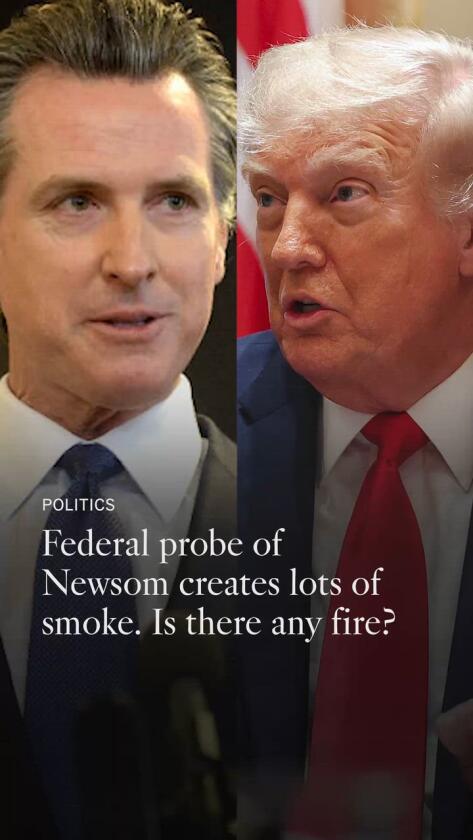
This is widely seen as a throw-me-in-the-briar-patch gift from President Trump, coming as California’s governor edges ever closer toward a 2028 run for the White House. The presumed effort to cut down a political foe could instead boost Newsom’s chances of winning the Democratic nomination, or so it’s being suggested.
After all, look at how Trump’s verbal bludgeoning elevated former Rep. Adam Schiff. The House has typically been a dead end for lawmakers seeking statewide office in California. Today, the former Burbank congressman and Trump tormentor is a United States senator.
In truth, however, it’s far too early to say how the investigation of Newsom and his wife plays out politically, not least because it’s unclear whether there’s merit to the probe or if it’s merely a fruitless search-and-destroy mission by Trump’s Department of Retribution, Vengeance and Settling Old Scores
Beyond that, the first ballots of the 2028 campaign won’t be cast for roughly a year and a half. The Democratic National Convention, where the party will install its nominee, doesn’t begin for another 778 days.
Your friendly political columnist won’t resort to that hoariest of cliches about such-and-such duration being a lifetime in politics. But for some perspective, let’s go back 778 days.
President Joe Biden was running for reelection and about to challenge Trump to a pair of early debates. Trump was sequestered in a New York City courtroom being prosecuted on 34 felony counts.
A lot happened in the weeks and months that followed, including Biden’s self-immolation on the debate stage and Trump’s criminal conviction. A lot more will happen in the weeks and months to come. There’s no telling what. But it’s safe to say the fight for the 2028 Democratic presidential nomination will not be decided by anything that’s taken place in June 2026.
With his exquisitely tuned political antennae, the governor jumped out front of the president by announcing last week the feds were targeting him and his wife. (Naturally, Newsom’s revelation was accompanied by a rage-bait email — subject line: “Because I am thinking of running for president” — that denounced the “political witch hunt” and asked for money.)
“After calling for my arrest last year, Donald Trump directed his Department of Justice to investigate me,” Newsom said in a 4 ½-minute, direct-to-camera video that framed the investigation before prosecutors had the chance. “And just in the last week, I’ve learned his campaign has reached my own home: To get me, he’s coming after my wife, Jen.”
Share via
Newsom and his wife both adamantly denied any wrongdoing and, of course, they must be presumed innocent until and unless proven otherwise.
But there was something a bit disingenuous about the governor’s chivalrous defense. Siebel Newsom, a documentary filmmaker who calls herself California’s “First Partner,” is no mere housewife baking cookies and holding teas, in the famous words of Hillary Rodham Clinton. (Hold the outrage, folks, this is not some retrograde criticism of career-seeking women.)
Among her many public-facing activities, Siebel Newsom heads The Representation Project, a nonprofit focused on challenging gender stereotypes. The organization has faced criticism for accepting donations from companies that lobby the governor, so it’s not unreasonable to ask whether those interests have improperly sought to influence Newsom by giving money to Siebel Newsom’s causes.
My Times colleagues reported that an investigation related to Siebel Newsom has been underway for about a year and was launched by federal prosecutors in Sacramento based on whistle-blower information provided in California. It was not, their source said, the result of a directive out of Washington.
“This is a huge problem,” Randall Eliason, former chief of the Public Corruption Section of the U.S. Attorney’s Office in Washington, told Politico. “In any political corruption prosecution, the defense almost always claims it is a ‘political witch hunt,’ that prosecutors are targeting him or her for some political reason.
“The best defense to that has always been [the Justice Department’s] tradition of independence from politics and long track record of pursuing corruption cases based only on the facts and law, without regard to political considerations,” Eliason said. “The Trump administration has abandoned that independence without even trying to hide it.”
The probe of Newsom and his wife presents more questions than answers.
It’s grody, but not criminal on its face, for lobbyists to curry favor with the governor by throwing cash at his wife’s endeavors — if, in fact, that’s been the case. Special interests spending money to gain access and influence is about as common in Sacramento and other capitals as statues, domed buildings and manicured lawns.
So why then are the feds investigating Newsom? Why now? Is there any fire, or is it all a lot of smoke?
Perhaps most important, where can you turn to get an impartial answer?
HARRISBURG, Pa. — Six months after President Trump warned states not to regulate artificial intelligence, they are increasingly doing just that.
Congress has stalled on producing federal regulations of artificial intelligence as states forge ahead and scrutinize how chatbots interact with children, how AI systems are used by employers and what developers must do to try to prevent an AI-caused catastrophe.
State lawmakers have stepped back from earlier, wider-ranging attempts to regulate AI that were vetoed or otherwise derailed by governors who viewed the measures as too onerous toward the industry’s development, including efforts to hold developers accountable for bias in AI systems.
But they are returning with legislation that is more targeted and, often, probes the corners of life where Americans interact with AI but may not know it.
Presidential power versus state power
Trump’s move to restrain states’ actions on AI drew criticism from members of both political parties and civil liberties and consumer rights groups who worried that banning state regulation would amount to a gift to AI giants, who enjoy little to no oversight.
Trump has made AI a top national and economic security priority, and he said that letting states clutter the regulatory playing field for an industry that’s spending trillions of dollars and driving the economy is too risky in the race with China for AI superiority.
Trump issued an executive order that directed the attorney general to create a task force to challenge state laws that are more than “minimally burdensome,” and directed the Commerce Department to draw up a list of problematic regulations. It also threatened to restrict funding from a broadband deployment program and other grant programs to states with AI laws.
The White House said it wouldn’t target state laws that seek to prevent fraud and protect consumers and children.
In the meantime, the Trump administration released a “national policy framework” in which it urged Congress to preempt state AI laws that are out of step with its regulatory worldview and to pass legislation to protect children, intellectual property rights and free speech. A recent bipartisan draft proposal in the House was met with withering criticism from key Democrats and Republicans.
The White House has given no indication that it has made good on its threat to enforce the president’s executive order by going to court against a state’s AI law or withholding money. In a statement, it said the Trump administration is “eager to work with partners” to enact its policy framework.
States seem largely unrestrained by Trump
Trump’s executive order didn’t seem to discourage states from trying to regulate how AI is used. More bills have been introduced this year than last, including by Republicans, said Justine Gluck, policy director of the Future of Privacy Forum, a nonprofit that advocates for data privacy in technology and whose members are from industry, academia and civic groups.
In Illinois, legislation on the desk of Democratic Gov. JB Pritzker piggybacked on elements of laws passed last year in California and New York that require developers of large advanced AI models to create protocols to prevent their systems from causing catastrophes such as a biological weapons attack, power outage or large-scale hack.
Illinois added a requirement that AI developers must get an independent auditor to review whether they are complying with their own policies. Analysts see it as a step toward requiring AI developers to take greater accountability for their products.
The bill’s sponsor, Democratic state Sen. Mary Edly-Allen, brushed aside Trump’s threat.
“I don’t know if you’ve met Illinois, but we’re pretty independent,” Edly-Allen told the Associated Press.
The bill drew nearly unanimous support, signaling a willingness by members of Trump’s party to cooperate with Democrats in filling the AI regulatory vacuum left by the federal government.
This kind of legislation is expected to expand to other states.
Regulating chatbots, especially for children
A growing number of states are imposing restrictions on how AI chatbots can interact with people, especially children. A mix of Republican- and Democratic-led states have passed such laws this year, including Colorado, Connecticut, Idaho, Iowa, Nebraska and Oregon.
In many cases, states want companies to tell people when they are interacting with AI instead of a human. Many want chatbots to be restricted in how they interact with minors, parents to have control over their child’s access, and data given to chatbots to be kept private.
In recent weeks, Connecticut enacted provisions for companion chatbots that sustain an ongoing relationship with a human. Under them, a chatbot must not be able to interact with someone under 18 unless it is programmed against encouraging self-destructive behavior and provides parents with tools to manage the child’s use.
Transparency in AI and decision-making
In California, lawmakers are advancing the “No Robo Bosses Act of 2026” to prohibit employers from relying solely on AI to fire or discipline workers, and an expansion of how the state regulates AI chatbots, including banning chatbot outputs to children from being used for advertising.
Colorado in May required companies that deploy AI systems in important areas such as employment, education, housing or banking to tell people when AI is being used to influence a decision made about them.
It was a stab at regulating what researchers say is the bias inherent in AI systems that sort through a consumer’s data and render consequential decisions — including who gets hired, a home loan or medical care. But it watered down a 2024 law aimed at preventing AI’s penchant to discriminate, amid pressure from Democratic Gov. Jared Polis.
In Connecticut, lawmakers required employers who are using employment-related AI systems to tell employees or job applicants that they are interacting with AI.
Meanwhile, Connecticut, Washington and Utah required AI developers to embed data into digital content that will allow users to determine whether the content — such as photos or video — has been created or altered by AI.
More laws are possible this year.
Some Republican-led states hold back
In Florida, the state House refused to advance what Republican Gov. Ron DeSantis called his AI “Bill of Rights” legislation. It included provisions to give parents control over their children’s access to companion chatbots and to require companies that use chatbots to tell consumers when they are interacting with AI instead of a human.
Florida House Speaker Daniel Perez, a Republican, said Trump had made it clear that the federal government should be in charge of AI regulation. DeSantis panned that idea, noting that the federal government isn’t acting.
In Utah, progress stalled on legislation modeled on laws in New York and California after the White House sent a one-sentence memo to lawmakers there to warn that it was “categorically opposed” to the bill.
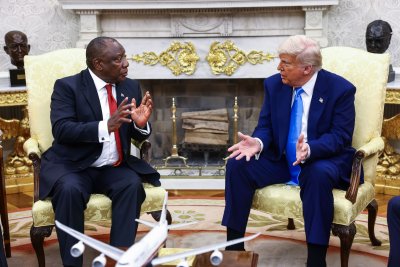
President Donald Trump, pictured meeting with South African President Cyril Ramaphosa in May 2025, plans to end U.S. funding for HIV programs in South Africa over political differences, State Department officials said on Friday. File Photo by Jim Lo Scalzo/UPI | License Photo
June 19 (UPI) — The Trump administration plans to stop funding HIV programs in South Africa under the President’s Emergency Plan for AIDS Relief over policy differences.
The U.S. State Department is winding down the funds South Africa receives from PEPFAR to care for the roughly 8 million people there who are living with HIV, Semafor, Politico and The BBC reported.
PEPFAR was launched in 2003 by former President George W. Bush and, over the last two decades, has partnered with health authorities in more than 50 nations to save 25 million lives and prevent millions of new HIV infections, State Department figures show.
President Donald Trump in a February 2025 executive order accused South Africa of permitting discrimination against white Afrikaners and has slowly pulled back U.S. funding for its HIV programs over the last year.
“The United States has decided to initiate a phased drawdown of PEPFAR programming in South Africa following South Africa’s failure to make demonstrable progress on policy requests by the administration,” State Department officials told Semafor.
Upon retaking office in 2025, President Donald Trump took aim at the program as part of his administrations efforts to slash federal government spending, with specific attention paid to South Africa, which has the largest number of people living with HIV in the world.
Since 2003, more than $8 billion has been sent to South Africa to both care for people living with HIV and distribute medications that can prevent spread of the virus, though funds sent there have been halved in each of the last two years.
South African President Cyril Ramaphosa earlier this month announced that the country was working Gilead to launch the company’s twice-yearly HIV prevention drug Lenacapavir, generic versions of which are set to be manufactured and sold there.
Experts have raised concerns that ending support for PEPFAR programs could lead to millions more HIV infections globally, potentially canceling out 20 years of progress against the virus.
The Trump administration and some of its Republican allies in Congress have said, however, that the program was never meant to be permanent and should be wound down.
An old clip has resurfaced showing Andy Burnham saying Israel would be his first overseas visit if elected as UK Prime Minister. The new MP for Makerfield is under the spotlight amid expectations he’ll challenge Labour leadership. Here’s what he’s previously said about Israel-Palestine.
WASHINGTON — Colombian presidential candidate Abelardo de la Espriella has vowed to crush criminal groups and slash government programs. He promises to bomb “narco-terrorist” camps and build sprawling mega prisons if he wins Sunday’s runoff election.
De la Espriella’s views have earned him the vociferous backing of President Trump, who has broken with White House tradition by publicly seeking to tip the scales in foreign elections — particularly in Latin America.
After Trump gave his “complete and total endorsement” to De la Espriella, whom he referred to by his nickname, “El Tigre,” the candidate posted an AI-generated image of a bald eagle and a tiger, with American and Colombian flags waving side by side.
“You have paved the way for the people to defeat the entrenched powers that have long held sway,” he wrote to Trump. “In Colombia, we have now begun to follow the same path.”
De la Espriella, a political newcomer who built his campaign around gym workout videos and vows to “disembowel” the left, is part of a new wave of far-right, MAGA-aligned politicians in Latin America openly borrowing from Trump’s playbook, presenting themselves as outsiders who will trim the government, curtail immigration and militarize law enforcement.
In a region that remains plagued by high crime and inequality after a decades-long period of leftist domination known as the “Pink Tide,” the playbook appears working.
More Latin Americans now identify with the right than at any time over the last two decades, according to polling firm Latinobarómetro. A series of conservatives have won presidential elections in recent years, giving Trump a slate of willing partners as he seeks to expand U.S. power in the region, combat drug cartels and counter growing Chinese influence.
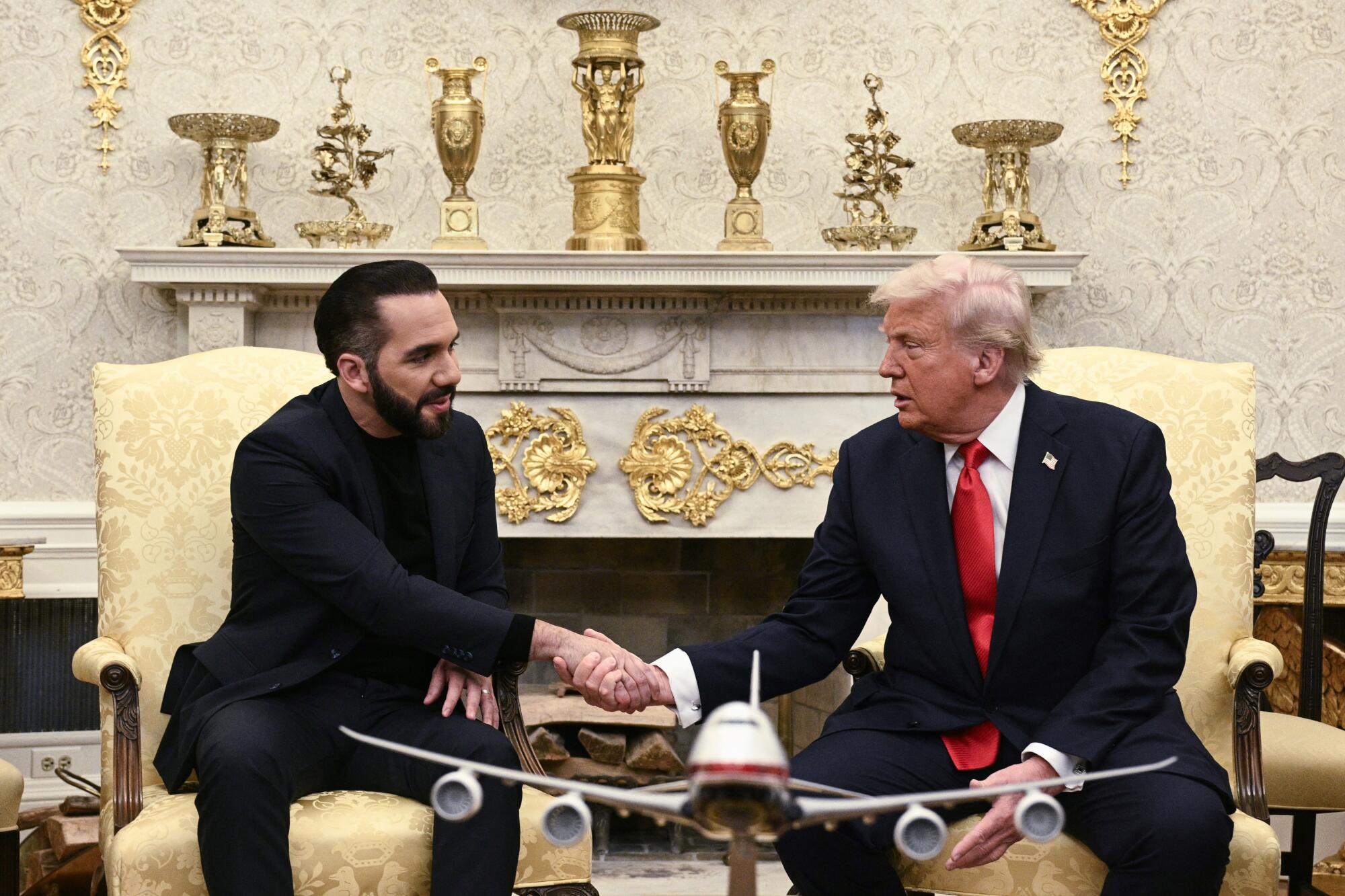
President Trump meets with El Salvador’s president, Nayib Bukele, in the Oval Office of the White House on April 14, 2025.
(Brendan Smialowski / AFP via Getty Images)
Among Trump’s many allies are Argentina’s Javier Milei, a libertarian firebrand whose dramatic cuts to state services were a blueprint for Elon Musk’s so-called Department of Government Efficiency, known as DOGE; and El Salvador’s Nayib Bukele, a mano dura autocrat who housed U.S. deportees in his notorious prisons to assist Trump’s immigration crackdown.
Ecuador’s Daniel Noboa has welcomed U.S. Special Forces, who are attacking drug traffickers in his country, and Chile’s José Antonio Kast has pledged a border wall along his country’s frontier with Peru and Bolivia in his quest to “make Chile great again.”
Trump might soon gain another ideological bedfellow in Peru with the election of Keiko Fujimori, the daughter of late autocrat Alberto Fujimori. With ballots still being counted, Fujimori was on track for a narrow victory
In a sea of nations led by conservatives, the left now retains power in just three key countries: Mexico, Colombia and Brazil.
It faces serious challenges in two of them.
Ahead of October’s presidential election in Brazil, incumbent Luiz Inácio Lula da Silva, a leftist stalwart and one of the last vestiges of the Pink Tide, has been polling even with Flávio Bolsonaro, the son of former President Jair Bolsonaro, a Trump ally convicted of convening a Jan. 6-style insurrection.
Brazil’s President Jair Bolsonaro, right, with President Trump during a dinner at Trump’s Mar-a-Lago estate in Palm Beach, Fla., on March 7, 2020.
(Alan Santos / Associated Press)
And then there’s Colombia, where De la Espriella, a criminal defense attorney, surged ahead in the first round of voting and this weekend faces off against Sen. Iván Cepeda, an ally of leftist President Gustavo Petro.
Petro drew Trump’s ire by denouncing the U.S. military campaign to oust leftist President Nicolás Maduro of Venezuela and a spate of lethal U.S. attacks on alleged drug boats.
Petro slammed Trump’s endorsement of De la Espriella, calling on Colombians to “vote freely and not allow ourselves to become either slaves or anyone’s colony.”
Mexican President Claudia Sheinbaum also accused Trump of electoral interference after the U.S. announced drug trafficking charges against several members of her ruling Morena party and The Times revealed that two more sitting governors are under investigation.
“Is it truly a legitimate interest to combat organized crime?” Sheinbaum asked of the U.S. investigations. “Or are we perhaps witnessing how sectors of the American far right … intend to influence the 2027 election in our country?”
President Trump meets with Argentine President Javier Milei during the United Nations General Assembly on Sept. 23, 2025, in New York.
(Evan Vucci / Associated Press)
The White House has declined to comment on Sheinbaum’s criticism. But Trump earlier this month warned Mexico that his administration is “focused on coming in by land” to deter drug trafficking.
“President Trump has been clear that Mexico must do more to combat the drug cartels running rampant in their country,” a White House official told The Times when asked whether Trump is planning a military operation there.
Trump, who publicly backed Kast and President Nasry Asfura of Honduras, as well as Milei’s political party ahead of Argentina’s midterm elections last fall, has openly mused that he should charge money for endorsement of leaders in foreign countries.
Guillaume Long, who served as foreign minister in Ecuador under leftist President Rafael Correa and who is now a fellow at the Center for Economic and Policy Research, criticized Trump’s “unprecedented, unabashed interventionism in Latin American politics.”
“There are a number of taboos that have been broken,” he said.
Long added that Latin America is mirroring the United States in its political divisions. “I think we’re likely to see in the coming decades a very polarized politics,” he said. “And that doesn’t bode very well for political stability.”
Much of Trump’s activity in the region, including the deposing of Maduro, has been presented as part of a war on drug cartels, which the White House has formally declared terrorist organizations. Long described that rationale as a “pretext” for expanding U.S. political and economic influence in the region.
Nicolás Maduro and his wife, Cilia Flores, are escorted by federal agents as they make their way to an armored car for a trip to a federal courthouse in Manhattan on Jan. 5.
(XNY/Star Max/GC Images)
He said he believed that focus on cartels had pushed some Latin American politicians to the right “because they think being security hawks will make them popular with the Trump administration.”
But James Bosworth, the founder of Hxagon, a company that provides political risk analysis in Latin America, said many leaders in the region have come to tough-on-crime policies on their own.
“I think that some of the hemisphere is willing to play along with it because the hemisphere has issues, including security issues, where the U.S. can be of assistance,” Bosworth said. “Many Latin Americans do want a greater military focus, so there’s certain alignment that’s occurred.”
Conversely, Mexican journalist Alex González Ormerod said he believes Trump has been influenced by Latin American leaders, including Bukele, who suspended civil liberties and began locking up alleged gang members en masse in 2021.
“I think there’s a lot of cross-pollination going on,” he said, crediting groups like the Conservative Political Action Conference, a gathering of right-wing activists and elected officials that has hosted events in Brazil and Argentina.
Many analysts cautioned that Latin America operates on a pendulum, swinging every few years between right and left.
“There’s a lot of evidence that voters are just unhappy and voting for the opposition, and then losing patience very quickly with whoever is in office,” said Benjamin Gedan, director of the Latin America Program at the Stimson Center.
Voters dissatisfied with the status quo so often vote out incumbents there is a phrase for it: voto castigo, or “the punishment vote.”
Ceballos reported from Washington and Linthicum from Mexico City.
UK minister says Starmer considering ‘political realities’ after Labour rival Andy Burnham secured decisive by-election win.
British Prime Minister Keir Starmer is weighing whether to resign within days, according to media reports, amid mounting pressure from his own Labour Party following a decisive by-election win by his rival, Andy Burnham.
Expectation is growing that Starmer could announce a resignation timetable as soon as Monday, the same day Burnham is sworn in as a lawmaker after winning Thursday’s vote by a wide margin – a result that has reportedly emboldened Labour figures, including Foreign Secretary Yvette Cooper, to call for Starmer to step aside.
Recommended Stories
list of 4 itemsend of list
A resignation would lead to the United Kingdom’s seventh prime minister in a decade, a rapid rate of churn in the country’s modern history.
Starmer has been under growing pressure to step down after months of declining popularity, policy missteps and scandals.
In February, the premier came under fire when revelations from the Epstein files about Peter Mandelson, whom Starmer appointed as the UK’s ambassador to the US in December 2024, came to light.
Burnham, Greater Manchester mayor since 2017, has made clear he intends to challenge to lead the slumping centre-left party, warning in his by-election victory speech that it had a “final chance to change”.
If successful, he would become prime minister by default, given that the governing Labour has a huge parliamentary majority.
Starmer is deeply unpopular with voters, according to polling.
YouGov, a global public opinion and data analytics firm, reports that only 19 percent of British people have a positive opinion of the prime minister, and he ranks as the ninth most popular Labour politician.
Starmer has insisted he will fight any attempt to oust him.
But the emphatic nature of Burnham’s win in the Makerfield constituency in northwest England, where he nearly doubled Labour’s majority, has increased the internal pressure on Starmer to quit.
Business Secretary Peter Kyle said on Sunday that Starmer was “making time to reflect on the political realities, challenges and opportunities that he finds himself in”.
“He has been engaging in conversations with a wide, wide range of people,” Kyle told the Sky News broadcaster after having what he said was a “frank” conversation with Starmer on Friday.
The Observer newspaper headlined on its cover on Sunday that Starmer was “expected to resign” the following day, while the Sunday Telegraph also reported he was “ready” to go, citing allies of the embattled British leader.
The Observer said Starmer would “set out a timetable for his departure”, noting he had been holding weekend talks at Chequers, the countryside retreat for prime ministers.
Labour’s drubbing in local and regional polls in England, Scotland and Wales last month intensified the pressure on him.
The fallout from the polls saw Makerfield’s previous Labour MP resign to allow Burnham to stand there.
Burnham, a former MP and government minister under ex-prime ministers Tony Blair and Gordon Brown, is due to be sworn back into parliament on Monday.
From the so-called soft-left wing of Labour, he reinforced his reputation as the party’s most popular figure by easily beating the hard-right populist Reform UK party’s candidate in this week’s by-election.
Reform, led by Brexit architect Nigel Farage, had won all of Makerfield’s wards in last month’s local elections.
SACRAMENTO — Gov. Gavin Newsom vetoed legislation to require proposed data centers to provide estimates of their water usage last year, saying he was “reluctant to impose rigid reporting requirements” without understanding the impact on businesses and consumers.
Opposition to the mammoth tech hubs and their massive thirst of water, power and land has only escalated throughout the state and nation ever since. In just a matter of months, Newsom again could find himself in the political crosshairs.
Several bills to regulate the facilities and increase public transparency on their impacts are progressing in the California Legislature, which could create a conundrum for a governor who has long aligned with the tech industry but also paints himself as an environmental and social justice advocate.
“I think the governor is in a fragile position,” said Megan Mullin, a public policy professor at UCLA. “Tech has been a long backer of his, but at the same time there is this growing national outcry against data centers.”
Data centers have existed for decades but are rapidly expanding due to the worldwide boom in artificial intelligence. The newer centers built to power AI are far larger than their original counterparts and require immense amounts of water and energy.
The facilities also contribute to fossil fuel emissions, with Cornell University researchers estimating last year that AI growth could add 24 to 44 million metric tons of carbon dioxide to the atmosphere annually by 2030. Fossil fuel emissions are drivers of climate change and linked to a range of health conditions, including asthma, various cancers and birth defects.
Environmental Protection Agency Administrator Lee Zeldin announced last week that the Trump administration will not set national environmental requirements or recommendations for the data center industry, leaving it to state lawmakers to determine best policies.
Thad Kousser, a political science professor at UC San Diego, said the nation will likely look to the Golden State for guidance.
“California’s laws will create a national model,” he said. “We’re the home of Silicon Valley and we’re just a massive state — the way we regulate data centers will set the tone.”
The political landscape around data centers has since changed since Newsom’s veto in October, said Dan Schnur, a political science professor who teaches at UC Berkeley and USC.
“No one should assume he will automatically act in the same way,” Schnur said. “Newsom is an incredibly savvy politician so he is clearly aware that voters are a lot more upset or concerned about data centers than they were a year ago.”
A Gallup poll released last month found 7 out of 10 Americans oppose data centers being built in their area.
The facilities can create thousands of jobs for construction workers and generate significant revenue for local governments due to sales and property taxes. The artificial intelligence they power is also — at least temporarily — boosting the stock market, leading to more tax dollars for California.
But residents who live near hyperscale centers have expressed outrage over a range of issues, including health impacts, spiking utility bills, constant noise, dropping water pressure and concerns about potentially losing their land through eminent domain. Meanwhile, community meetings about data centers are growing contentious, with police arresting a farmer in Oklahoma, three women in Wisconsin and a man in California.
“Six months ago, politicians of both parties were falling all over each other to bring data centers into their states,” Schnur said. “Now that the public backlash has erupted, they are working just as hard to distance themselves from these projects.”
With Newsom eyeing a presidential bid in 2028, he might be reluctant to brand himself as a defender of an increasingly unpopular industry.
But Schnur said the governor likely also has concerns about angering one of his biggest backers.
“The tech community is a critical part of Newsom’s donor base, so he has to keep fundraising in mind when he makes these decisions,” Schnur said.
A spokesperson for the governor’s office declined to comment on data centers or pending legislation.
Newsom, during an interview at a Center for American Progress conference in May, said the concern that data centers may drive up electricity costs for Californians is a “legit issue,” but not the main one.
“The tech genie is not going to go back in the bottle,” Newsom said. “Just saying that you should not or cannot build a data center is not going to slow this technology down. What can be, will be. Nature of technology. And so we just have to steer it and not make the mistakes we made with social media.”
Among the measures in the Legislature are two bills from Sen. Steve Padilla (D-San Diego). SB 886 would create a corporate tariff to cover the cost of data center-related grid upgrades. SB 887 would ban data centers from receiving ministerial exemptions from the California Environmental Quality Act, known as CEQA.
Neither bill picked up support from Republicans, but both cleared the Senate and were recently referred to the Assembly Utilities and Energy Committee.
Padilla represents Imperial County, a farming community near the border of Mexico where plans for a 950,000–square–foot data center face fierce opposition from residents. The county exempted the proposal from CEQA, which requires projects to undergo an extensive state environmental review before breaking ground.
The city of Imperial sued the county earlier this year, arguing the project should not have received an exemption. The San Diego Chapter of the Sierra Club joined the lawsuit last month. The county board of supervisors last week approved a 45-day moratorium on all new data centers to allow the county to evaluate proposed data center development.
Two other data center-related bills recently passed the Assembly, each picking up support from a few Republicans. They now await action from the Senate.
AB 2619 from Assemblymember Diane Papan (D-San Mateo) would require data center owners to provide an estimate under penalty of perjury about expected water usage and sources before applying for a business license. AB 1577 from Assemblymember Rebecca Bauer-Kahan (D-Orinda) would require data center owners to submit monthly information to a state commission about water and fuel consumption.
Ben Green, an assistant public policy professor at the University of Michigan who is researching how data centers impact communities, said reporting requirements are a “bare minimum” type of regulation, making it especially noteworthy that Newsom vetoed a similar measure last year.
For comparison, several states are weighing more restrictive bills — New York recently sent legislation to the governor’s desk that would enact a one-year moratorium.
“It seems that there was a ton of lobbying pressure that he was getting,” Green said. “The tech industry doesn’t want to have any restrictions.”
Green said data centers could be a hot topic in upcoming elections, as Americans on both sides of the aisle are expressing valid concerns.
“There’s not an easy fix for getting the public on board with data centers because their critiques are grounded in reality,” he said. “This is not just some sort of reactionary NIMBY-ism or pearl clutching.”
US and Iranian delegations have arrived for high-level talks at a hotel in Switzerland. JD Vance, Steve Witkoff and Jared Kushner met Pakistani mediators, while Iranian officials including Foreign Minister Abbas Aragchi and chief negotiator Bagher Ghalibaf met their Swiss hosts.
A new commission made up of legislators, public defenders, academics and advocates seeks to push California — one of just two states that don’t pay for basic public defense — to begin providing resources and enforcing minimum standards for county public defender systems.
The California Independent Commission on Public Defense includes three assemblymembers and two senators — among them Jesse Arreguín and Nick Schultz, chairs of the Senate and Assembly Public Safety Committees — as well as chief public defenders from several counties, retired judges, the directors of criminal justice nonprofits, and the heads of organizations representing thousands of defense attorneys in the state.
“We have discussed the problem of our public defense system for years,” said Schultz, a Democrat from Burbank and former prosecutor who has sponsored legislation to improve public defense.
The goal is to “move past discussion and study, and come up with an actionable road map of what we need to do to really build out the robust public defense infrastructure that Californians are rightfully entitled to,” he said.
The commissioners plan to develop a five-year plan to phase in state funding, along with enforceable standards like caseload limits and access to defense investigators.
A CalMatters investigation last year found that criminal defendants across the state are routinely convicted without anyone investigating the charges against them, significantly increasing the likelihood of wrongful convictions. Many California counties do not employ a single defense investigator who can interview witnesses, review police reports, visit crime scenes and retrieve video surveillance footage. CalMatters also found that lawyers in some rural counties are handling caseloads that far exceed even the most permissive standards, making them less likely than other defense attorneys to challenge the prosecution’s evidence in legal motions and take their cases to trial.
But the state has resisted stepping in. After a proposed bill that would have created an official state commission to address the issue was abandoned, two advocacy groups, the Wren Collective and UC Berkeley’s Criminal Law and Justice Center, decided to form an independent commission and began assembling participants who could develop and act on reforms. These types of commissions, which have facilitated significant improvements in other states’ public defender systems, are usually established by the governor.
“It became clear that this was an issue that was not a high priority for Sacramento, especially during a budget crisis,” said Chesa Boudin, the Berkeley center’s founding director and a former San Francisco district attorney. It also became clear, Boudin said, that “there was a tremendous gap between what experts understood to be the crisis and the public perception of California government as a kind of progressive leader in the country.”
In the decades since the U.S. Supreme Court established the right to an attorney in state court criminal proceedings, California has saddled its counties with the responsibility of providing lawyers to poor people accused of crimes. Many of those counties have opted for the cheapest path: paying private lawyers and firms a flat fee to represent indigent defendants, regardless of how many cases they handle or how much time they spend on each case.
“You’ve got some offices that have an incredibly high caliber of representation that they can provide, and you have other offices that are doing these flat-fee contracts where the quality has been documented to be pretty bad,” said Eve Brensike Primus, a law professor at the University of Michigan.
Primus is the only member of the new commission from outside of California. She was asked to join because of her extensive research and writing about the structure of indigent defense.
An indigent defense commission in Michigan, which was formed by the legislature in 2013, has led to significant reforms and a substantial influx in state funding.
The California commission’s work, Primus said, can serve “as a catalyst for political actors to do the right thing and start to fund and improve indigent defense delivery, or as fodder for lawsuits that then can try to get the judiciary to push the political actors to do what is necessary to provide for effective representation.”
The commission is scheduled to hold its first in-person meeting, which will be open to the public, in Berkeley in October, with additional meetings planned for Los Angeles, the Central Valley and Northern California over the next 12 months. Commissioners say they will work in subcommittees in between these quarterly sessions to develop a concrete fiscal plan for the state, draft legislative language, and establish minimum standards for how counties should structure their public defender offices, compensate their attorneys, provide access to experts, and report on their work.
WASHINGTON — In congressional races across the country, a new crop of super PACs is taking to the air with millions of dollars worth of advertisements to sway voters.
“President Trump said it best, ‘Celeste Maloy will never let you down,’” says one advertisement supporting the Utah Republican representative in her upcoming primary election.
“Standing up to big pharma, fighting for local jobs, Val Hoyle doesn’t back down,” says an ad backing the Oregon Democratic representative ahead of her primary victory last month.
The super PACs have nondescript names — such as Jobs and Democracy PAC and American Mission — and the text is so generic that it almost seems to have been created by artificial intelligence.
That isn’t so far off the mark. The AI industry has funded the ads.
One network of super PACs is linked to Anthropic, maker of the popular AI tool Claude, and the other to Open AI, maker of ChatGPT.
They have been among the most prolific political spenders so far in the 2026 midterm elections, splashing out more than $37 million to date to influence races across the country and making the groups among the biggest outside spenders so far in congressional races. That number could grow exponentially as campaign season heats up closer to the November election — and as the Silicon Valley giants prepare initial pubic offerings that are poised to raise billions of dollars for the companies and their executives.
The AI political spending boom comes as emerging technology companies have become increasingly “comfortable with using their power to achieve a political goal,” said Adam Kovacevich, a former Google public policy executive and founder of Chamber of Progress, a technology trade group with a progressive orientation.
The leading AI companies have a history.
Anthropic was formed by former OpenAI employees who were concerned that the company was less focused on its original mission to safely harness the power of AI.
The companies are now the leading drivers of the burgeoning AI industry, and their competing views about how the technology should be regulated are playing out in a wide-ranging political ad spending war that has targeted congressional races in big cities and rural areas alike.
Anthropic calls for more stringent regulation and supports efforts by states such as New York and California that have passed more aggressive AI laws.
The groups spending in these races are super PACs, which are able to raise and spend unlimited amounts of money in federal races thanks to the 2010 Citizens United Supreme Court decision.
In some races, the AI-backed political groups have spent more than the candidates they are backing.
“There was no way as a grassroots person that I could compete with that kind of money,” said Al Olszewski, whose opponent in a Montana Republican congressional primary beat him by 30 points after getting a boost from $877,000 in ads from a super PAC backed by OpenAI’s co-founder. “I got crushed.”
The AI behemoths have emphasized that they are independent from the political groups.
One group counts $25 million in support from OpenAI co-founder Greg Brockman and his wife, Anna, alongside $100 million tied to one of Silicon Valley’s biggest venture capital firms, which holds a large stake in OpenAI. The global policy chief for OpenAI was reportedly involved in conceiving the group.
The other side has gotten $20 million from Anthropic and millions more from donors whose identities are not public.
This anonymous political cash is commonly known as dark money, and its prevalence is growing.
(Los Angeles Times photo illustration; source photos courtesy of the Tech Oversight Project)
“This has become very normalized now,” said Brendan Glavin, director of insights at OpenSecrets, which tracks campaign spending. “In 2024, we tracked over $1 billion in dark money.”
The political activity of these AI companies and executives reflects a dramatic shift from how emerging technology companies have historically engaged with politics.
Google, for example, didn’t hire its first in-house Washington lobbyist until after the company had gone public in 2005.
“I think that for a long time, the tech industry lobbying strategy was just ‘leave us alone,’” Kovacevich said.
He sees the spending by these AI-linked super PACs as following the recent playbook developed by the cryptocurrency industry, which has funded the only network of political groups that has spent more on congressional races this year than those linked to OpenAI.
“I think what the crypto industry realized was that there’s no substitute for building up political power,” Kovacevich said.
The political stakes for these technology companies are significant.
“AI policy is far from settled,” said Asad Ramzanali, the former deputy director for strategy in the White House Office of Science and Technology Policy during the Biden administration and the director of artificial intelligence and technology policy at the Vanderbilt Policy Accelerator.
Earlier this month, the Trump administration banned foreign nationals from using the most powerful AI model developed by Anthropic — and even banned the company’s own employees from it — which forced the company to restrict access for all users.
Manhattan matchup
The two super PAC networks have largely shied away from producing ads that mention AI and have mostly chosen to avoid competing against each other in the same races.
There’s one big exception.
In the marquee Manhattan Democratic congressional primary to replace retiring Rep. Jerry Nadler (D-N.Y.), each side has spent millions of dollars.
While the field includes Kennedy scion and social media star Jake Schlossberg and former Republican turned Trump critic George Conway, the target of all the AI-backed spending has been Alex Bores, a former Palantir data scientist who now serves in the New York state Assembly.
New York congressional candidate sponsored a state measure Bores requiring major AI companies to be transparent about their safety protocols and promptly report safety incidents.
(Yuki Iwamura / Associated Press)
That’s because Bores sponsored a state bill, known as the RAISE Act, that requires major AI companies to be transparent about their safety protocols and promptly report safety incidents. The bill was signed into law in December 2025.
The ads sponsored by the group tied to OpenAI, which has spent more than $7.5 million in the race, paint Bores as someone who can’t be trusted.
They cite his support from other tech billionaires, including former crypto mogul and convicted financial fraudster Sam Bankman-Fried, whose super PAC spent $100,000 to support Bores in 2022 when he first ran for New York Assembly.
“Is that really who should be shaping AI safety for our kids?” one ad asks.
An ad sponsored by the Anthropic-backed network, which has also spent more than $7.5 million supporting Bores, makes the case that the bill he sponsored is exactly why he should be elected.
“As a computer engineer, Alex Bores saw how dangerous unregulated AI could be and he wrote New York’s RAISE Act to put real safeguards on A.I. and hold big tech accountable,” the ad says.
The AI ad barrage in New York has even included what might be considered a kumbaya moment in the ad wars — another super PAC created to support Bores is most heavily backed by both an employee of Anthropic and an employee of OpenAI, who both focus on AI safety.
The group, Dream NYC, has spent more than $1.7 million supporting Bores.
Bores and fellow New York State Assemblymember Micah Lasher have been atop the most recent polls in the race ahead of the June 23 primary.
A general view of businesses in St. George, Utah, on Wednesday.
(Ian Maule / For The Times)
Rural Republicans
For voters in many parts of the country, the debate over AI policy has played out locally as a debate over the massive data centers required to power the technology.
In Utah, a proposed data center in Box Elder County, backed by “Shark Tank” television personality Kevin O’Leary, has generated controversy because of questions about its impact on resources in the drought-prone state and its environmental effect on the nearby Great Salt Lake.
In the state’s most competitive Republican congressional primary — the vast, newly drawn 3rd Congressional District — both candidates expressed concerns about how the project has been developed and called for greater transparency in this plan and for future data centers in the state.
Utah congressional candidates Phil Lyman and Celeste Maloy in a debate on June 1. A super PAC backed by Anthropic has spent more than $920,000 to support Maloy.
(Rick Egan / Pool / The Salt Lake Tribune Via Associated Press)
Despite their similar position on the project, a super PAC backed by Anthropic has spent more than $950,000 to support Maloy, who is running in the new district after the boundaries of her old district changed.
“It’s a lot of money to throw at a race,” said her opponent, Phil Lyman, a former conservative Republican state Representative who ran to the right of Utah Republican Gov. Spencer Cox in an unsuccessful primary challenge in 2024.
Lyman insists he is no AI skeptic.
“I’m not anti data centers, I’m pro-transparency,” he said. “I think the future is bright with AI.”
The group said it is backing Maloy because it sees her as “someone who’s worked the issue” of AI regulation and who “has demonstrated leadership” with Republicans in Congress.
Maloy’s campaign didn’t respond to request for comment.
Utah congressional candidate Phil Lyman speaks during a Cottage Meeting at the SunRiver Community Center Ballroom in St. George, Utah, on Wednesday.
(Ian Maule / For The Times)
But Lyman suspects the group’s support for Maloy ahead of their June 23 primary has more to do with old-fashioned politics than any emerging technology.