June 26 (UPI) — A Federal Emergency Management Agency official who claims he was once teleported to a Waffle House has been ousted from the agency, unnamed sources familiar with the situation told media outlets Friday.
Gregg Phillips, who was appointed to lead the Office of Response and Recovery in December, was asked to vacate his position because of concerns about how he’s publicly perceived, anonymous sources told The New York Times, The Washington Post and CNN.
Phillips, the associate administrator for FEMA’s Office of Response and Recovery, posted on social media in April doubling down on his teleportation claim. He said it really happened and that it is connected to his Christianity.
“God will not be mocked,” Phillips posted on Truth Social. “People can debate me. Question me. Even ridicule what they don’t understand.”
He clarified that it happened while he was heavily medicated during cancer treatment.
“The word ‘teleportation’ was not mine,” Phillips posted on Truth Social. “It was used by someone else in the conversation reaching for language to describe something with no easy name. The more accurate biblical terms are ‘translated’ or ‘transported’ — not new ideas for people of faith.”
The Department of Homeland Security confirmed Thursday that Phillips is leaving the agency, saying he is taking leave for personal reasons. But sources told CNN the departure was not by his choice.
New DHS leadership was tired of his public image and clashes with department leadership, the sources said. David Arnold, a senior official who left FEMA earlier this year, will fill in as an acting leader of the Office of Response and Recovery.
The office has more than 1,000 employees and a budget of nearly $300 million. It’s critical to the mission of responding to disasters.
Phillips was known as a conspiracy theorist, particularly concerning election fraud. He said millions of noncitizens had voted in the 2016 election. Trump also boosted those claims.
Some agency staff were unhappy with his ouster, saying he wanted to help improve the agency.
“He showed interest in preserving the mission of the agency and helping us serve citizens,” one current agency official told The Post.
Another agency official told The Post that Phillips was one of the only political appointees who supported staff and would push back against leadership such as former Homeland Security Secretary Kristi Noem or Karen Evans, who briefly led FEMA.
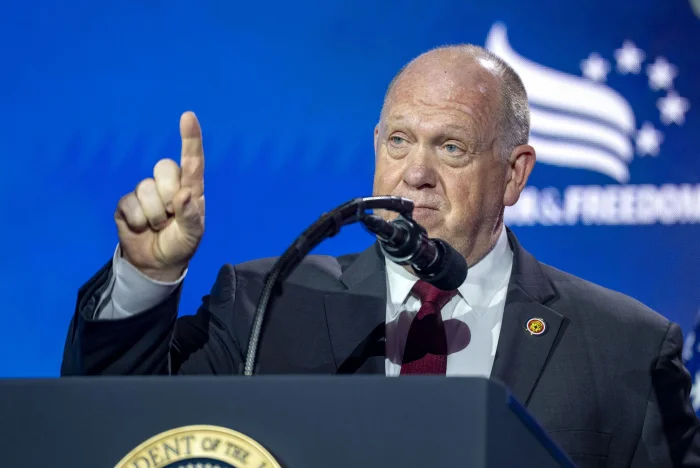
White House Border Czar Tom Homan speaks during the Faith and Freedom Coalition 2026 Road to Majority Policy Conference at the Washington Hilton on Friday. Photo by Bonnie Cash/UPI | License Photo
Los Angeles property owners voted against an increase in an assessment for maintaining streetlights that would have collected an additional $80 million a year, as the city faces a backlog of broken streetlights due to stagnant funding and a rise in vandalism.
The assessment has not changed since 1996. Property owners had until June 2 to submit their votes, which were weighted by the amount of their parcel’s proposed assessment. According to results released Thursday, nearly 80% of the weighted vote went against raising the assessment, which currently generates about $45 million a year.
For the average single-family home, which make up the majority of parcels, the current payment is $58 annually, or about $5 a month, according to Miguel Sangalang, executive director and general manager of the Bureau of Street Lighting. The increase would have brought the average annual bill to $117, or about $10 a month.
The proposed increase would have brought the total amount collected by the assessment to $125 million a year.
In a joint statement Thursday, Mayor Karen Bass, Council President Marqueece Harris-Dawson and City Councilmembers Eunisses Hernandez and Katy Yaroslavsky said that despite the result, the “critical work will continue” to address the broken streetlights that have plunged neighborhoods into darkness across the city.
“Despite this outcome, the City remains committed to improving streetlight reliability, repairing outages faster, and building a sustainable funding path for streetlight operations and maintenance,” the group statement said. “Every Angeleno deserves to feel safe walking their dogs, returning home from work, and parking their cars at night, and the City is committed to delivering the reliable street lighting that makes that a reality.”
The Bureau of Street Lighting owns and operates nearly 225,000 streetlights across the city, which have historically been covered by the assessment. The average repair time for a streetlight was one year, bureau officials said in February.
Without more revenue from the assessment, city officials have been looking for alternative funding. The City Council has said it will finance $65 million for solar-powered streetlights.
Bass recently announced an initiative to repair and replace 60,000 streetlights over the next two years, and several council members have turned to their district’s discretionary funding to fix broken streetlights in their districts.
Hernandez, who chairs the council’s Public Works Committee, said in a statement that the result doesn’t change the fact that the city is trying to maintain a 21st century lighting system with an outdated funding model.
“If this assessment isn’t the path forward, then it’s our responsibility to build one through better leveraging City assets like light poles, exploring new revenue opportunities, and pursuing reforms to outdated state laws like Proposition 218 that make it extraordinarily difficult for cities as large as Los Angeles to maintain basic public infrastructure,” she said.
Broken streetlights have emerged as an issue in the mayoral election, with Councilmember Nithya Raman citing broken lights as an example of how the city “can’t seem to manage the basics.” Raman is facing Bass in a Nov. 2 runoff.
In February, city council members announced a plan to replace streetlights with solar-powered versions, in an attempt to deter copper wire theft. About 1 in 10 streetlights are out of service because of disrepair or copper wire theft, according to the city.
A well-known example is the Sixth Street Bridge, where thieves stole seven miles’ worth of wire.
WASHINGTON — The Democratic National Committee is organizing hundreds of community events across the country this weekend in hopes of harnessing the same concerns about affordability that President Trump capitalized on to return to the White House.
The events include school supply giveaways, food bank drives, neighborhood door knockings and organizer trainings.
“Everything costs too damn much under Donald Trump and the Republicans,” Democratic National Committee Chair Ken Martin said in a statement.
Martin said party members planned “to reach, engage, register, and mobilize voters who will make the difference in races up and down the ballot.”
Two years ago, Democrats were the ones accused of being indifferent to Americans’ anger about rising prices. Now they’re pointing the finger at Trump, who has downplayed the effect of lingering inflation.
He has described affordability concerns as a “hoax” and recently said, “I love the inflation” because he expects costs to drop as he tries to resolve his war with Iran.
About one-third of U.S. adults approve of how Trump is handling the economy, according to an AP-NORC poll from June. That’s down from the start of his second term, when 40% approved.
About 7 in 10 U.S. adults say the country’s economy is “poor,” according to an AP-NORC poll from June. That’s up from 65% in March, and underscores Americans’ ongoing unhappiness with the cost of living, which is being compounded by high gas prices because of the war in Iran.
Slightly more U.S. adults say the Democratic Party would do a better job than the Republican Party in handling inflation and the cost of living, according to a Marquette Law School/SSRS poll from May. Roughly one-third of U.S. adults — 35% — said the Democrats would do a better job, while 28% believe the Republicans would. Roughly one-third say the parties would be the same, or neither would be good.
This weekend’s events vary by region.
In New Mexico, Gov. Michelle Luján Grisham will convene a training for 150 potential campaign staffers. Nevada’s statewide campaigns will knock on doors in rural and working class neighborhoods. Others will call voters in swing districts with competitive U.S. House races to talk about the rising price of gas.
Some events are geared toward directly helping voters to persuade them that Democrats are concerned about affordability.
For instance, the local party in Kenosha County, Wis., plans to collect and distribute school supplies to poor families. And canvassers will fan out to discuss affordability issues in Arizona, Pennsylvania and Wisconsin.
The Republican National Committee dismissed the weekend’s events.
“Despite being millions of dollars in debt, the DNC is choosing to throw pitiful pep rallies to distract from the fact they created the inflation crisis,” said Delanie Bomar, an RNC spokeswoman. “Meanwhile, Republicans are hard at work fixing the economic mess Joe Biden and the Democrats created.”
Democrats hope that the events will show that their time in the political wilderness has made them more serious and effective at tackling kitchen table issues. But some fear their agenda may not be heard by voters in an increasingly fractured media environment.
“One of Donald Trump’s greatest strengths is that he’s so loud,” said Brian Derrick, a Democratic strategist. He said that events like the weekend’s itinerary help Democrats focus on an “Achilles’ heel” issue for Trump, “which right now is his lack of interest in addressing everyday costs for people.”
June 26 (UPI) — President Donald Trump said Friday that Iran has attacked ships in the Strait of Hormuz and that it’s a violation of the cease-fire between the United States and Iran.
A cargo ship in the strait was attacked Thursday, but it’s unclear if this is the attack about which the president was speaking.
“The Islamic Republic of Iran shot at least four One Way Attack Drones at Ships transversing the Strait of Hormuz. One of the Drones solidly hit the upper deck of a large and very expensive Cargo Carrying Ship. Damage was done, but the Ship was able to proceed on its way. We knocked down three other Drones. Obviously, this is a foolish violation of our Ceasefire Agreement. President DONALD J. TRUMP,” the post on Truth Social said.
Trump did not address the negotiations with Iran.
Iranian Deputy Foreign Minister Kazem Gharibabadi posted a statement on X Friday emphasizing Iran’s control of the strait.
“Safe passage through the Strait of Hormuz, with ambiguous arrangements, parallel routes, or decision-making outside of Iran’s considerations as the coastal state, cannot be guaranteed. Any credible framework must be based on coordination with Iran and the provisions of paragraph five of the Islamabad Memorandum of Understanding. Otherwise, the outcome will be the suspension of the designated parallel route,” the post said.
The memorandum of understanding that Trump and Iran’s president signed on June 17 established the cease-fire and opened passage through the strait. In the fifth paragraph, it said Iran will use its “best efforts” to ensure the safe passage of commercial vessels with no charge for 60 days, The Hill reported.
On Thursday, the United States issued a joint statement with the Gulf Cooperation Council saying that “free, unconditional, and unrestricted navigation” through the strait is guaranteed under international law.
“The Ministers rejected any tolls, fees, or attempts to assert control over the strait,” the statement said. The council includes Bahrain, Kuwait, Oman, Qatar, Saudi Arabia and the United Arab Emirates.
A missile identified as “Khorramshahr-4” was on display during a public rally in Tehran’s Enghelab Square on April 21, 2026. Photo by Behnam Tofighi/UPI | License Photo
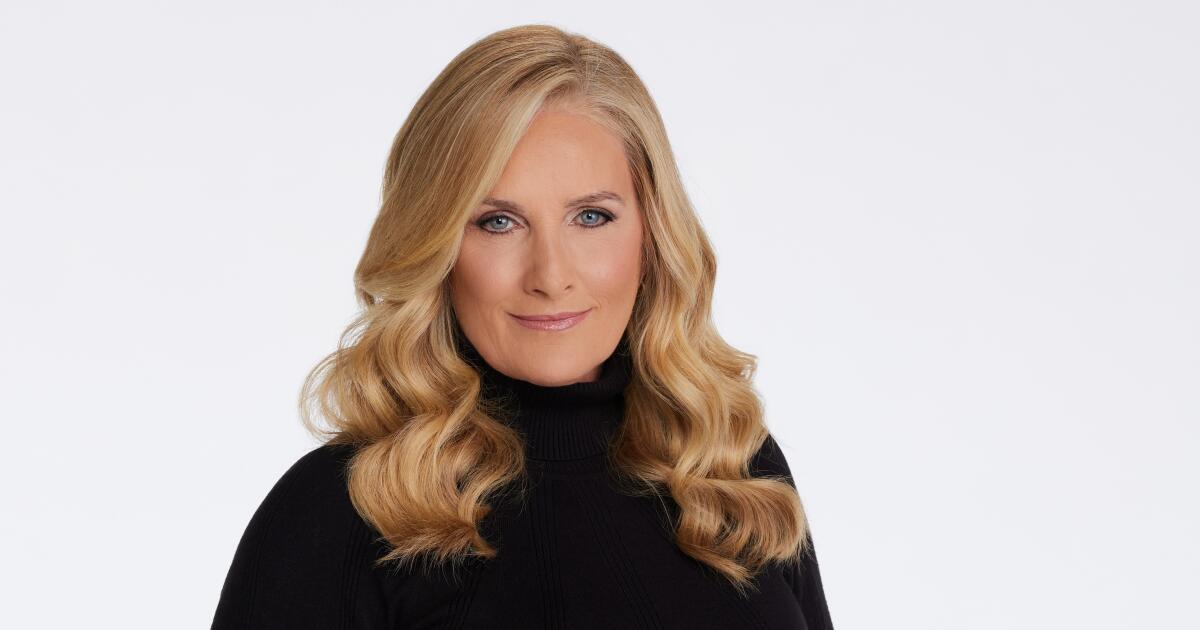
Veteran MS NOW anchor Alex Witt is leaving the news network, which is moving away from live programming on the weekends.
The new weekend programming strategy announced Friday is a cost-saving measure that will give parent company Versant more resources for a new direct-to-consumer streaming offering that makes MS NOW available to consumers without a pay-TV subscription. The company is also looking to expand its live event business.
According to a memo from MS NOW President Rebecca Kutler, “The Weekend: Primetime,” a live discussion program launched last year, will have its final airing Saturday.
One of the program’s co-hosts, Antonia Hylton, will take over Witt’s midday shifts later this year. Hylton’s co-hosts Ayman Mohyeldin, Catherine Rampell, and Elise Jordan, will remain with MS NOW and continue to appear on other programs.
Kutler said job losses from the moves are minimal and encouraged staffers who lose their current roles to apply for 40 current job openings at the company with more on the way. MS NOW has been staffing up its news operation since separating from NBC News last year.
Weekends have long been a ratings weak spot for MS NOW, which while a distant second to Fox News, has seen audience growth in 2026 and remains ahead of CNN. The network has started to rely on podcasts such as “Pod Save America, from Crooked Media to fill some hours. The episodes have performed strongly enough for MS NOW to try similar deals with outside podcast producers.
“Throughout the summer, we will expand our taped strategy and announce new content partnerships,” Kutler said in her memo.
With the changes, MS NOW will still have 20 hours of live programming each weekend and will be staffed to handle breaking news.
Witt joined the network formerly known as MSNBC in 1999, long before it began its strong tilt toward progressive political commentary. Over the years, Witt’s weekend newscast became one of the few programs on the network that delivered straight news without opinion.
Kutler called Witt “a beloved longtime member of our MS NOW family” and “a continued, trusted, and steady presence for our audiences.”
Venezuela woke up this morning to scenes of destruction and grief that not even three decades of political and economic collapse could have prepared us for. On June 24, two of the strongest earthquakes ever recorded in Venezuelan history struck the country’s northern coastline.
At the time of writing, over 39,000 people have been reported missing, and the interim government of Delcy Rodríguez has confirmed at least 164 deaths. Yet images of flattened residential buildings across Caracas and La Guaira suggest that this number will continue to rise in the days ahead.
The aftermath is even more devastating when one considers how profoundly unprepared Venezuela is to respond to a disaster of this magnitude. Natural disasters are catastrophic by definition, posing immense challenges even for wealthy countries with competent institutions. For the battered nation that is post-Maduro Venezuela, responding to a crisis of this scale may prove overwhelming.
Venezuela has faced what the United Nations defines as a complex humanitarian emergency, a prolonged and multidimensional collapse of the state’s ability to perform its core functions. This has been the status since at least 2016. Few sectors have suffered more than healthcare. Years of mismanagement, systemic corruption, and chronic underinvestment have devastated the country’s health system, compounding the deterioration of the electrical grid and other essential public services.
Since at least 2022, the Venezuelan state has increasingly adopted a hands-off approach to governance. This shift, shaped by a post-socialist form of laissez-faire economic policy, reduced state control over large parts of the economy and contributed to a modest but visible revival in business activity. In many ways, the tate appeared to retreat from major areas of public administration while preserving absolute control over others, particularly the security apparatus and the machinery of censorship and political repression.
The corruption and mismanagement that destroyed Venezuela’s health system, combined with the dangerous belief that the state could simply step aside, help explain why the country now lacks even minimally functional search-and-rescue capacity.
These dynamics, though somewhat altered, have largely persisted after January 3. Following Operation Absolute Resolve, which culminated in the arrest of Nicolás Maduro, the interim administration of Delcy Rodríguez (with the backing of the United States) introduced reforms aimed at attracting American investment in the oil and mining sectors, fueling cautious optimism about eventual economic recovery.
From a public health perspective, however, the economic liberalization first embraced under Maduro and now continued by Rodríguez marks the culmination of a much longer process: the gradual withdrawal of the state from its responsibility to protect the health and welfare of Venezuelans.
The liberalization of recent years also triggered a rapid expansion of private health insurance. For those able to afford plans, often costing thousands of dollars, private coverage has offered an attractive alternative to Venezuela’s chronically underfunded and dysfunctional public hospitals. This produced a deeply unequal arrangement: those with resources could secure healthcare privately, while most Venezuelans remained dependent on a system that had largely ceased to function.
But this model can only take a country so far.
The private sector (particularly one as small and fragile as Venezuela’s) cannot replace the functions of a public health system. Private clinics in Caracas, however modern, cannot conduct nationwide vaccination campaigns, build epidemiological surveillance networks, or address child malnutrition at scale.
Nor can private healthcare alone care for the thousands of victims created by disasters such as these earthquakes. It cannot train sufficient first responders, coordinate nationwide rescue efforts, or provide the ambulances, heavy equipment, and emergency infrastructure required in the immediate aftermath of a catastrophe.
This may become the clearest test yet of how committed the Trump administration truly is to supporting Venezuelans, not merely safeguarding its economic interests in the country.
The corruption and mismanagement that destroyed Venezuela’s health system, combined with the dangerous belief that the state could simply step aside, help explain why the country now lacks even minimally functional search-and-rescue capacity. They also explain its overwhelming dependence on foreign aid.
For that reason, many Venezuelans are watching statements from Marco Rubio as closely as those from Rodríguez. All signs suggest that meaningful large-scale assistance will need to come from Washington rather than Miraflores. Rubio has already promised a “big, fast, and effective whole-of-government response,” offering a measure of hope to an exhausted and grieving population.
This disaster may become the clearest test yet of how committed the Trump administration truly is to supporting Venezuelans, not merely safeguarding its economic interests in the country. Recovery without explicit and substantial American support appears highly unlikely.
Other countries across the globe and the ideological spectrum—including Mexico, El Salvador, Cuba, Iran, France, Germany, Italy, and Spain—have also offered assistance. All such support is welcome. In these first critical hours, every resource matters if lives are to be saved.
The images circulating on social media, people trapped beneath rubble in La Guaira, surrounded by exhausted neighbors refusing to abandon them, or volunteers searching debris with only the flashlights of their mobile phones, amount to a testimony of the solidarity of the Venezuelan people and an urgent plea for help, one that both Venezuelan authorities and the international community must answer.
They also serve as a painful reminder that public health and disaster preparedness are responsibilities that governments simply cannot outsource.
If you want to know more about ways to help, or need information on missing people, please visit the following link.
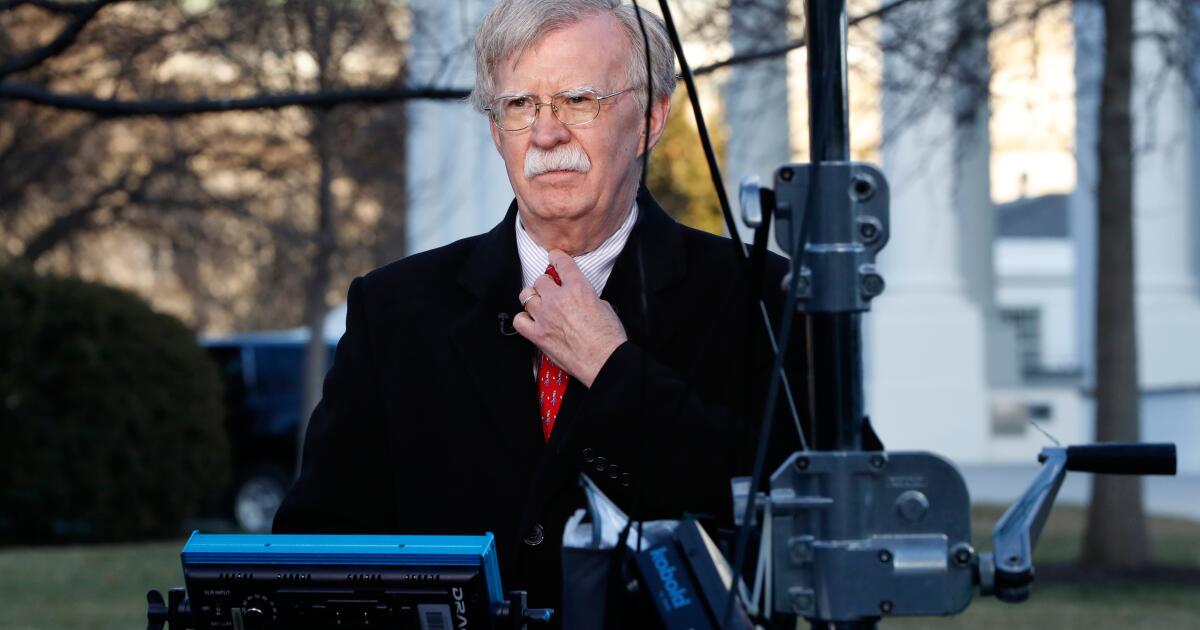
GREENBELT, Md. — Former Trump administration national security adviser John Bolton pleaded guilty on Friday to illegally retaining classified information, sealing a deal with federal prosecutors that could allow him to avoid a prison term.
Bolton, who became an outspoken critic of President Trump after serving in the Republican’s first administration, is scheduled to be sentenced on Oct. 28 by U.S. District Judge Theodore Chuang in Greenbelt, Md.
Bolton pleaded guilty to a single count of illegally retaining classified information. His plea agreement with the Justice Department may enable him to avoid time behind bars, but the judge ultimately will decide his punishment.
The plea agreement recommends capping any prison sentence at five years but the judge isn’t bound by that part of the deal. Bolton can withdraw his guilty plea if the judge issues a longer prison sentence or a fine greater than $2.25 million.
Bolton was charged last October with 18 counts of either retaining or disseminating classified information, including diary-like notes that he shared with relatives as he wrote a memoir about his career in government.
Other Trump adversaries have been charged with federal crimes during his second term in the White House. While some of those cases have collapsed under judicial scrutiny and amid claims of political retribution, Bolton didn’t mount a vigorous defense against his charges before cutting a deal.
FBI agents searched Bolton’s Maryland home and Washington, D.C., office last August, but the investigation began before Trump returned to the White House in January 2025.
Bolton served for more than a year in Trump’s first administration before getting pushed out in 2019. He later published a book called “The Room Where it Happened” that presented an unflattering portrait of Trump’s leadership.
The Trump administration fought unsuccessfully to block the book’s release, claiming it contained classified information that could jeopardize national security. Trump derided Bolton as a “crazy” warmonger who would have led the country into “World War Six.”
Bolton’s indictment focused on notes that he shared with his wife and daughter rather than the contents of his book. After sending one document, Bolton wrote in a message to his relatives, “None of which we talk about!!!” In response, one of his relatives wrote, “Shhhhh,” prosecutors said.
For decades, Californians have generally said immigrants, who make up more than a quarter of the state’s population and a third of its labor force, are beneficial to the state and its economy. But budget instability and concerns about rising costs are spilling into a debate over the controversial and expensive policy of allowing low-income immigrants without legal status to receive state-funded health coverage.
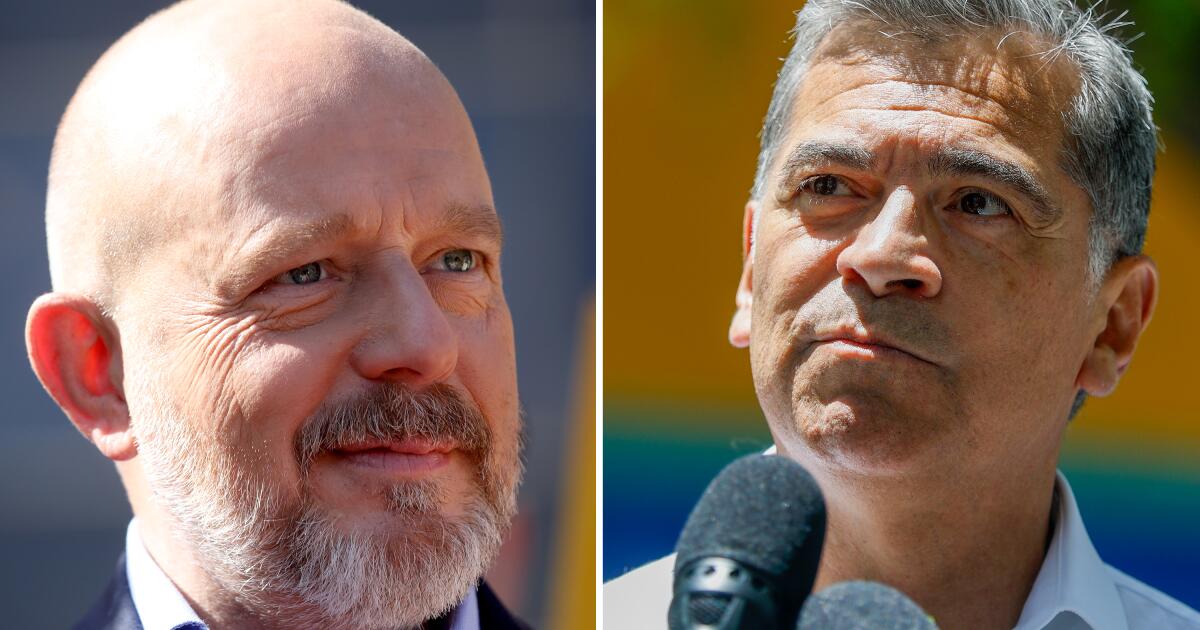
Now, Democrat Xavier Becerra and Republican Steve Hilton present a stark choice to voters in the race to be the next governor at a moment when public support for the state’s generous safety net is starting to fray.
Both frame the choice as an economic one.
Becerra, former secretary of Health and Human Services under President Biden, has said it would be “foolish” to exclude the poorest immigrants from routine care and push them into expensive emergency rooms on the taxpayer’s dime. Hilton, a conservative commentator backed by President Trump, has promised to eliminate their coverage and has echoed national Republicans who have skewered California’s expansions to bolster their claims of fraud and abuse in the Medicaid program.
With voters nationwide worried about inflation and the rising cost of living, some Californians might feel less inclined to provide full healthcare coverage to those lacking legal status. What the state does next could have profound implications for its healthcare system and sprawling economy.
Over the past decade, California lawmakers used state dollars to expand Medi-Cal, offering all low-income residents comprehensive coverage regardless of immigration status. But enrollment surpassed initial projections, as did the cost. Medi-Cal coverage of immigrants without legal status costs the state roughly $10 billion a year, according to California’s nonpartisan Legislative Analyst’s Office, more than double the initial estimates.
California lawmakers and Democratic Gov. Gavin Newsom, who championed the program, have approved major rollbacks of benefits for those residents. They said the state can’t afford ballooning healthcare costs amid massive federal cuts from the GOP tax-and-spending law known as the One Big Beautiful Bill Act; the California Health and Human Services Agency projected up to 3.4 million Medi-Cal enrollees could lose coverage and the state could lose more than $30 billion a year in federal funding under the law, causing major disruptions in the safety net health program.Medi-Cal’s budget for fiscal year 2026-27 is $217 billion, and the program serves more than 14 million Californians.
Meanwhile, many legal U.S. residents and citizens have seen their health premium payments skyrocket this year after Congress let enhanced federal Affordable Care Act subsidies expire at the end of December.
As the state grappled with a deficit last year, a majority of likely voters in California said — for the first time in nearly a decade — they opposed providing health insurance to immigrants without legal status, according to a poll by the Public Policy Institute of California.
“The state faces major challenges, and healthcare is one of the major expenditures,” said Mark Baldassare, the institute’s survey director. “People have become more selective about how they want to see those limited healthcare dollars spent.”
Hilton, running on a platform of affordability and lowering taxes, has seized on the sentiment, casting health coverage for immigrants without legal status as deeply unfair and a direct threat to the state’s ability to help citizens.
“Stop taking money from California taxpayers who can barely afford their healthcare to give free healthcare to citizens of other countries who shouldn’t even be here,” Hilton said in a Facebook video the morning of the June 2 primary.
In campaign stump speeches, Hilton promised to use the savings to lower healthcare costs for other Californians without detailing how. Hilton did not respond to requests from KFF Health News for comment.
“Their messaging is very, very simple: It’s an us vs. them,” said Roger Salazar, a Democratic political consultant who represents a coalition of healthcare advocates who argue providing coverage to people who can’t afford it strengthens the workforce and, as a result, the economy. “It’s just a question of convincing the average voter that it’s much better economically.”
A son of immigrants, Becerra for decades pushed to extend safety net benefits in Congress and has made a similar pitch in his campaign for governor. He did not respond to requests for comment.
“Immigrants, whether documented or not, work hard. They pay taxes, and sometimes they get injured on the job or their children get sick,” Becerra said during a debate last month. “It would be foolish to tell a family that they don’t have access to the pediatrician or the family doc.”
Becerra, who could become California’s first elected Latino governor, objected last year when Newsom and legislative leaders decided to freeze Medi-Cal enrollment for adults without legal status, cut benefits, and impose monthly premiums.
“Stop treating coverage as a budget variable that expands in good years and contracts when revenue dips,” Becerra wrote last month in response to an Orange County Register candidate questionnaire. He has vowed to pursue new, steady revenue to fund basic services, such as by upping taxes on corporations and the wealthiest Californians.
In 2023, California was home to about 2.3 million people without legal status, representing roughly 8% of the state’s labor force, according to the Pew Research Center. And 1 in 5 California children live in a family that includes at least one member without legal status, according to the California Department of Education. Healthcare economists say giving people access to preventive healthcare saves taxpayers money in the long run by keeping the workforce healthy and relieving pressure on an overburdened system.
That, Baldassare said, wasn’t a hard argument to make during the COVID-19 pandemic, when immigrants were celebrated as essential workers and the link between individual well-being and public health was more obvious.
But Medi-Cal costs to cover roughly 1.4 million immigrants have ballooned, according to the latest estimates from the Department of Health Care Services. Because only some lawfully present immigrants are eligible for federal Medicaid benefits, states like California that cover other populations must do so exclusively with state funding.
California’s budget experts have warned that maintaining full Medi-Cal coverage for immigrants without seeking additional revenue would destabilize the state’s long-term fiscal outlook.
In a legislative hearing last year, Republican Assemblymember Carl DeMaio questioned whether California taxpayers would prioritize the expansions, saying he doubted “illegal immigrant healthcare in the general fund would be at the top of their list.”
After lawmakers approved the spending reductions, support for immigrant health coverage dropped, Baldassare said. Now lawmakers and Newsom are negotiating further cuts.
David Hayes-Bautista, who has spent his career studying the economic contributions of Latinos and immigrants, said Californians without legal status have higher labor force participation and tend to work in industries and occupations that don’t offer employer-based health insurance. As a result, many resort to Medi-Cal, saddling the state with the healthcare costs instead of employers.
“California, as a state, has the world’s fourth-largest GDP, which is true thanks to Latinos,” Hayes-Bautista, director of the Center for the Study of Latino Health and Culture at UCLA, said. Without contributions from Latinos, many without legal status, it drops to eighth place, about the size of Italy’s economy, he added.
Immigrant advocates hope to have a more vocal champion in Becerra, the favorite to become governor in a state where Democrats outnumber Republicans nearly 2 to 1.
“He will fight, he will push back, he will do all that he can,” said state Sen. María Elena Durazo, a former labor leader who has championed the immigrant healthcare expansions. “That’s the most we could expect.”
Mai-Duc writes for KFF Health News, anational newsroom that produces in-depth journalism about health issues and is one of the core operating programs at KFF — an independent source of health policy research, polling, and journalism.
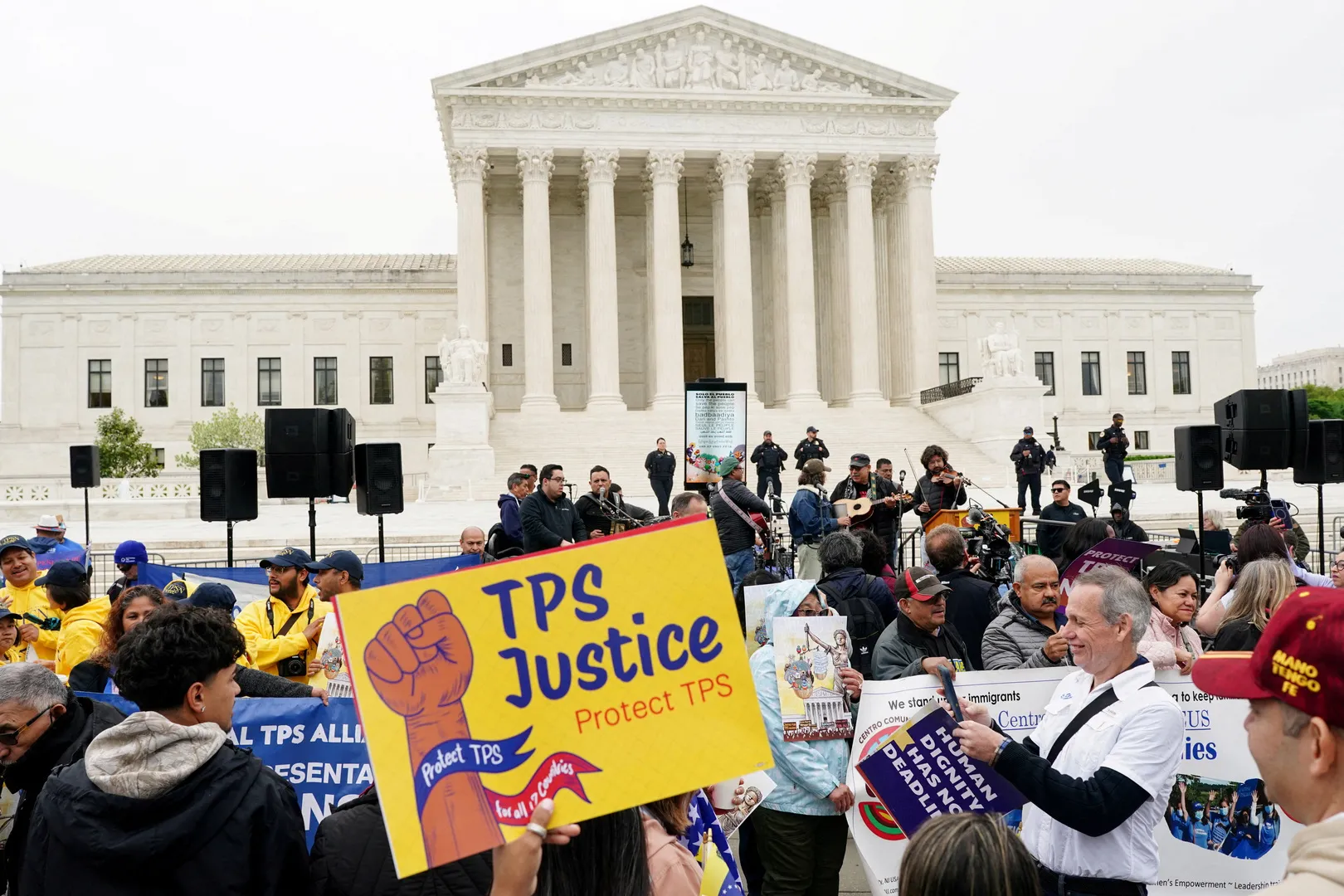
The US Supreme Court has sided with the Trump administration in its bid to end Temporary Protected Status (TPS) for Haitians and Syrians. The ruling allows the policy to take effect before the courts have reached a final decision on its legality.
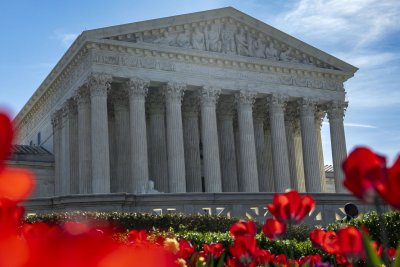
WASHINGTON — Licensed gun owners have a right to carry a concealed firearm into stores and other private places unless the owner objects, the Supreme Court ruled Thursday.
The 6-3 decision extends gun rights and strikes down laws in Hawaii, California, New York, New Jersey and Maryland.
Those measures would prohibit carrying guns onto private property that is open to the public unless the owner has expressly authorized them.
“This regime hobbles what the 2nd Amendment protects: the right of Americans to carry arms for self-defense as they go about their daily lives. We hold that the law is unconstitutional,” Justice Samuel A. Alito Jr. said for the court.
The new laws, if upheld, would “impose severe restrictions on the daily activities of residents who have satisfied the state’s rigorous requirements for the issuance of a carry permit. When these permit holders leave home in the morning, … they may also be barred from entering many places that people routinely visit in the course of their daily routines, such as gas stations, convenience stores, restaurants, coffee shops, drug stores, grocery stores, ‘big box’ stores, home improvement stores, barber shops or hair salons, dry cleaners, and laundromats.”
The three liberals dissented, saying the law would protect property owners who don’t want guns in their stores.
“There is no constitutional right to enter private property without the owner’s permission, let alone with a firearm,” said Justice Ketanji Brown Jackson.
Trump administration lawyers had joined a coalition of Hawaii gun owners in urging the court to strike down these blue state laws in the case of Wolford vs. Lopez.
They said the laws, if enforced, would mean “a person carrying a handgun for self-defense commits a crime by entering a mall, a gas station, a convenience store, a supermarket, a restaurant or a coffee shop.”
This litigation is part of much broader debate over where guns may be permitted or prohibited.
Four years ago, the justices ruled that law-abiding persons had a right to obtain a permit to carry a concealed gun when they left home. They also agreed there are “sensitive places” where guns may be prohibited, such as schools, courts and other government buildings.
In response, lawmakers in California and Hawaii adopted their own lists of “sensitive places.” They imposed restrictions on concealed weapons at parks, beaches, playgrounds, places of worship and public transit as well as bars and restaurants that serve alcohol.
Gun owners sued but the 9th Circuit Court refused to block most of those restrictions in a single 83-page opinion covering Hawaii and California. Both states would prohibit carrying guns onto private property open to the public without the owner’s consent.
The 9th Circuit upheld that measure in principle but said California went too far by requiring the owner to post a prominent sign expressly authorizing guns.
“While today’s ruling in Wolford is disappointing, owners still have every right to decide whether firearms are allowed in their stores and businesses,” said Janet Carter, managing director of Second Amendment Litigation at Everytown Law. “The Supreme Court may have changed the default rule, but it cannot take away a private property owner’s authority over their own land.”
The Firearms Policy Coalition said the court had properly protected gun rights and barred states from carving out their “own regional version of the 2nd Amendment.”
“The historical record does not support forcing peaceable people to obtain advance permission before carrying for self-defense in places held open to them,” the group said.
Last week, the court upheld gun rights in a Texas case and said the government may not make it a crime for an “unlawful user” of a drug such as marijuana to own a gun.
Gov. Gavin Newsom signed a law Thursday to crack down on inflated profits stemming from car crash lawsuits, blessing a hard-fought compromise between Uber and the state’s trial attorneys that averts a November showdown between two of California’s most powerful and moneyed lobbying forces.
The deal, the fruit of months of negotiations, takes aim at the lucrative way doctors can charge for procedures on patients referred to them by personal injury lawyers.
If a law firm has a client who was hurt in a car accident, the lawyer will often send them to a doctor who will perform surgery on a “lien” basis, meaning the doctor will be paid from money that comes from a lawsuit settlement rather than through insurance.
Uber contends this arrangement has created an incentive for doctors and attorneys to collude to dramatically inflate medical bills. The more expensive the bill, they say, the bigger the resulting payout.
The law, SB 623, caps how much these doctors can charge when their patient is involved in a lawsuit against a ride-share company, which are frequent targets of litigation due to their top-of-the-line insurance policies. The new law will also require Uber to ramp up background checks of its drivers.
“We’re going to have a much safer state both for medical patients and passengers in Ubers,” said Nicholas Rowley, a prominent Texas attorney who helped bankroll the fight and took a leading role in the negotiations.
The law only applies to cases that involve ride-share accidents that take place after Jan. 1, 2027.
“This legislation puts meaningful guardrails in place to better protect accident victims, increase transparency and accountability in the medical lien system and strengthen safety,” said Ramona Prieto, Uber’s head of public policy for the Western U.S., in a statement.
For months, Uber and lawyers from across the state poured tens of millions into dueling ballot measures that threatened to devastate the profits of whichever side lost.
Uber fired the first shot with a ballot measure that sought to cap how much attorneys can earn in lawsuits involving auto accidents. The company argued attorneys were swindling their own clients, inflating medical bills of car crash victims to increase the value of the settlement and then pocketing a hefty chunk of the payouts.
The state’s trial attorneys countered that the fee cap would make small or difficult cases a money-losing endeavor and block scores of accident victims from the courts. They shot back with their own ballot measure that would increase legal liability for ride-share companies if a passenger or driver is sexually assaulted while on a ride, seizing on investigative reporting that highlighted assaults in Ubers.
“They were waiting for us to blink and we didn’t,” said Douglas Saeltzer, the head of the Consumer Attorneys of California, the lawyer trade group that pushed for the measure against Uber. “Their starting place, I don’t believe, was in the interest of protecting victims — it was in the interest of protecting Uber.”
With the passage of Thursday’s law, both sides have agreed to pull their respective measures from the November ballot, halting campaigns that had both parties amassing tens of millions in funding and blanketing the airwaves with ads.
“Now we can stop seeing all the commercials,” said Assemblymember Blanca Pancheo (D-Downey) at a Tuesday hearing.
The law, put forward by Assemblymember Diane Papan (D-San Mateo) and Sen. Thomas Umberg (D-Santa Ana), also caps the amount that can be earned by third-party investors who buy out a doctor’s lien in a personal injury case. These companies will purchase a doctor’s stake in the case at a reduced rate, then pocket a share of the payout if the case settles.
“Private equity and hedge funds buy them at a steep discount, then turn around and collect the full inflated amount,” Saeltzer said at a Tuesday hearing on the bill. “That’s money flowing to Wall Street investors, not patients.”
The law will require annual background checks for ride-share drivers and expand the list of offenses that disqualify someone from the job.
In addition to the ballot battle, has Uber sued two of LA’s most well-known personal injury firms — the Law Offices of Jacob Emrani and Downtown L.A. Law Group — accusing them of inflating medical bills and forcing clients to undergo needless and expensive surgeries to inflate the value of the claim. The firms asked the judge to dismiss the case Wednesday, arguing Uber had failed to prove fraud. Both firms have vehemently denied wrongdoing.
The lawsuit, filed last year, has put the plaintiff lawyers in the unusual position of playing defense. Listening in the audience at Wednesday’s hearings were the partners of Downtown L.A. Law Group and Jacob Emrani.
“Let’s be clear about what this Uber case really is,” said John Hueston, outside counsel for Emrani. “It’s brought by a $150 billion dollar company … to intimidate the plaintiff’s bar, exhaust its resources and chill the suits that hold Uber accountable.”
Michael Huston, one of the lawyers who represents Uber, countered that the case is “not an attack on the plaintiff’s bar.”
“We have brought suit against the two in this state … that are engaged in naked fraud,” he said.
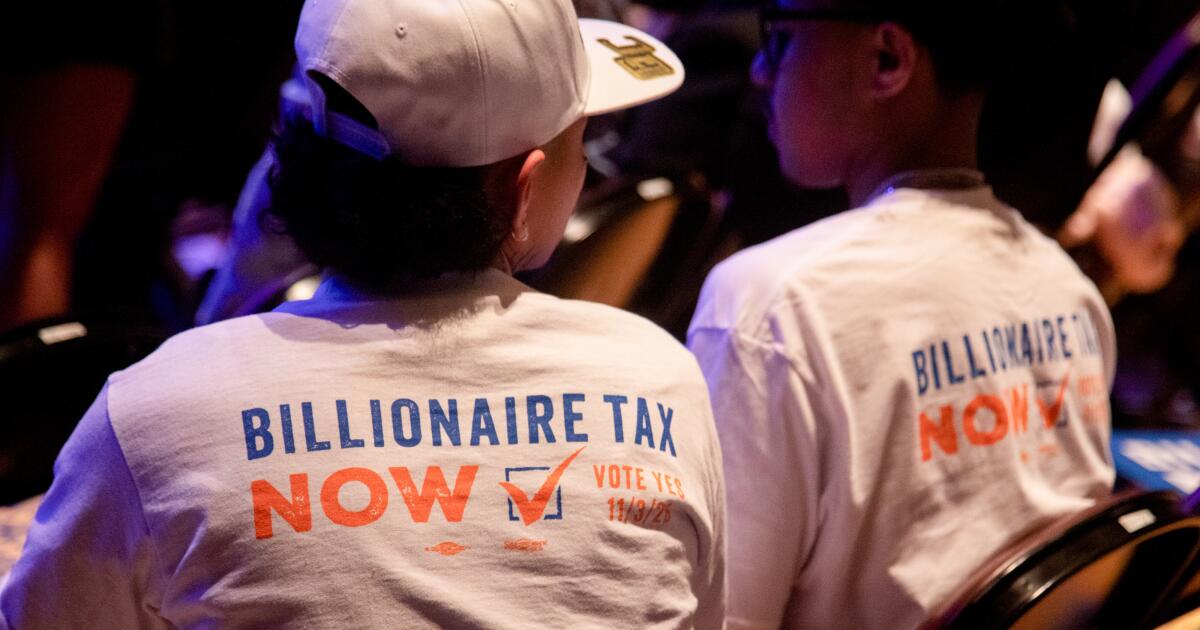
Proponents of a tax on California billionaires vowed on Thursday to move forward with their November ballot measure despite mounting opposition from many of the state’s most powerful political forces.
A labor union spent $31 million gathering signatures to qualify the measure for the ballot in an effort to offset federal healthcare funding cuts that will affect millions of California’s most vulnerable residents. A representative for the campaign supporting the ballot measure pushed back at opposition to the effort as self-entitled wealthy Californians and entrenched Sacramento interests.
“While a few morally bankrupt billionaires and their buddies in Sacramento want to see California’s hospitals close, and tax breaks for billionaires protected — I assure you, the vast majority of voters do not,” said Debru Carthan, a spokesperson for the Billionaire Tax Now Coalition, which is funded by the Service Employees International Union-United Healthcare Workers West, the sponsor of the proposal.
The California secretary of state is expected to officially certify the measure for the Nov. 3 ballot on Thursday evening.
Carthan said their effort has support in public opinion polls, and from lawmakers, unions, community organizations and volunteers across the state, “something the billionaires and their buddies will never have.”
However, a coalition of healthcare, education, public safety, housing, business and labor leaders opposed to the proposal warned that it would make the state’s notoriously unstable budget even more unpredictable.
“The dangerous wealth tax directly threatens vital funding for education and schools, healthcare and clinics, public safety, and infrastructure projects by making California’s revenue even more volatile,” the leaders of the California Medical Assn., the California Primary Care Assn. and the California School Boards Assn. said in a statement. “That’s why so many leaders – both Democrats and Republicans – are joining us and saying NO. We look forward to ensuring voters have the facts, know the stakes, and resoundingly reject this reckless experiment in November.”
Supporters of the one-time proposed 5% tax on the assets of the state’s wealthiest residents pitched the effort as a stop-gap measure to offset devastating federal healthcare funding cuts passed by the GOP-led Congress and signed by President Trump nearly one year ago. The federal legislation is expected to result in $100 billion in cuts that would affect California’s most vulnerable residents.
The proposed tax, which would be retroactive to billionaires who lived in the state as of Jan. 1, drew predictable opposition from the wealthy, notably Silicon Valley tech leaders.
But it notably divided liberals. While Sen. Bernie Sanders (I-Vt.) and Rep. Ro Khanna (D-Fremont) supported the proposal, Gov. Gavin Newsom was among the Democrats who opposed it because of fears about the potential impact on the state’s volatile budget.
Despite being the fourth largest economy in the world — the home of Hollywood and Silicon Valley — California’s budget is extremely dependent on the state’s most prosperous residents.
Newsom and others who generally support increasing taxes on the wealthiest Americans also argued that the proposed billionaire tax in California was poorly crafted and that any such levies ought to be enacted nationally, because varying state policies would be ineffective.
Opponents also argued that the political priority in the 2026 midterm election should be squarely focused on efforts to make sure Democrats regain control of Congress to serve as a counter balance during the final two years of Trump’s presidency.
“It’s disappointing. This is a critical election where we need to concentrate on flipping the house and undoing the damage that was done” by Trump’s legislation that led to the healthcare funding cuts, said Jodi Hicks, chief executive and president of Planned Parenthood Affiliates of California. The wealth tax “is short term and doesn’t address what is the long-term problem. And I’m not even sure the policy is a viable solution. It’s so critical to be sending the right message — holding Congress accountable and how we need to find long-term solutions to make sure Californians have access to healthcare.”
Rob Lapsley, co-chair of Californians Against Tax Increases and president of the California Business Roundtable, argued that the proposed wealth tax would ultimately affect every Californian.
“Strip away the spin, and this measure forces every California taxpayer, not just billionaires, to file a sworn declaration of their net worth with the Franchise Tax Board under penalty of perjury,” Lapsley said in a statement. “And it hands the Legislature the power to extend the wealth tax to all Californians and every kind of property, including home equity, retirement savings without ever returning to the voters – effectively gutting” voter-approved caps on property tax increases.
Supporters of the tax submitted nearly 1.6 million signatures in April to qualify the proposal for the ballot, roughly double the number required. However, support for the effort has grown increasingly shaky. Newsom’s team created a broad coalition of opponents, including healthcare and education activists, that undercut the foundational argument for the tax.
The union that crafted the proposal responded last week by proposing a legislative alternative that would create a 2% tax on billionaire’s assets. It was flatly refused by the Newsom administration. No deal was reached by the Thursday evening deadline for the union to withdraw the proposal from the November ballot.
Two efforts that were crafted to sink the proposed billionaire tax — dubbed as poison pills — also qualified for the Nov. 3 ballot, according to the California Secretary of State’s office. One would bar new state taxes on personal property, while the other prohibits any new taxes being exempted from existing state spending rules and to be regularly audited. If the billionaire tax proposal is approved by voters but either of the other proposals receives more votes, the tax measure would be voided.
The proposed billionaire tax would apply to more than 200 Californians, some of whom proactively left the state or moved their companies out of California because of the proposal.
The prospect of the wealthy fleeing the state is among the reasons that prominent Democrats such as Newsom opposed it, given California’s budget being so reliant on the state’s most prosperous residents.
Sergey Brin, a co-founder of Google, is among the billionaires who have reportedly moved out of California because of the tax proposal. He donated at least $82 million to an organization that is funding efforts to invalidate the proposed billionaire tax.
Ballot measure proponents had a Thursday evening deadline to withdraw their proposals.
Other policy proposals that will appear on the Nov. 3 ballot include:
Requiring government-issued voter identification to cast ballots in elections.
Reforming the California Environmental Quality Act, once a third-rail in Democratic politics that has become increasingly scrutinized in the rebuilding in the aftermath of the Palisades and Eaton wildfire.
Creating a $11.3-billion affordable housing bond.
Two notable proposals were pulled off the ballot after negotiations between the California Hospital Assn. and labor unions:
An effort to limit healthcare executives’ compensation.
A union proposal by the same union backing the billionaire tax that would have required many healthcare clinics to spend 90% of their revenue to serve low-income and underserved residents.
BOSTON — A federal judge on Thursday halted President Trump’s executive order that sought to create a federal voter list and limit who can receive a mail ballot.
U.S. District Court Judge Indira Talwani, who was nominated by Democratic President Obama, sided with a coalition of nearly two dozen states that challenged the Republican president’s order in granting a summary judgment. Her ruling applies to this year’s midterm election cycle.
Plaintiffs argued in two lawsuits, both filed in federal court in Boston, that Trump’s order should be found unconstitutional because the states and Congress, not the president, have the power to set election rules. The judge agreed, noting in her ruling that the provisions of Trump’s order “unconstitutionally violate the separation of powers.”
It was the second ruling in as many days against executive orders Trump has signed seeking oversight of the nation’s elections. A separate ruling Wednesday prohibited an executive order he had signed last year that would have required people to show documents proving their citizenship when registering to vote.
The administration, in its motions to dismiss the lawsuits challenging the order seeking to establish a federal voter list, argued that the motions are premature and that plaintiffs lacked the legal basis to bring their claim based on the Administrative Procedure Act, which governs how federal agencies develop and issue regulations.
But in an interim order before Thursday’s ruling, Talwani said the motions pertaining to this year’s election cycle were relevant: “In light of the EO’s specific deadlines over the next three months, and the reality that elections will be occurring throughout this period with the November 3, 2026 midterm occurring in just five months, postponing judicial review is impracticable and may inflict significant hardship on Plaintiffs,” she wrote. That order denied the Trump administration’s motion to dismiss the challenges.
Trump’s executive order, the second one aimed at elections during his second term, comes as he continues to raise the specter of widespread voting by noncitizens as a reason to change election rules. But states already have detailed processes aimed at keeping their voter rolls accurate, and voting by noncitizens has been shown to be rare. It also is a felony that can be punishable by deportation.
Trump issued his second order in March after a bill he supported to overhaul voting stalled in Congress. The order would have had the federal government create a list of eligible voters and then directed the U.S. Postal Service to deliver mail ballots only to those on the list. Election officials argued that it was ripe for abuse and could cause chaos, and the postal union has objected to the idea of mail carriers policing ballots.
The Postal Service has published a proposed rule required by Trump’s executive order in the Federal Register. Among other things, the rule would not apply to primary elections or overseas ballots.
The lawsuit seeking summary judgment was filed by Democratic attorneys general representing 22 states and the District of Columbia. Also signing on were attorneys representing Democratic Gov. Josh Shapiro of Pennsylvania, which has a Republican attorney general.
The states also told the court that the move imposes a costly burden on election officials to comply and would spread fear about the possibility of prosecution. Stephen Pezzi, a lawyer for the Trump administration, had argued that no one would be prosecuted for violating the order.
In a separate lawsuit filed against the executive order, a federal judge in Washington, D.C., in May agreed with the Trump administration that it was too early to block the order because it had yet to be implemented. That lawsuit was brought by Democratic and civil rights groups, who have appealed.
Since his 2020 presidential election loss to Democrat Joe Biden, Trump has groundlessly claimed mail voting is rife with fraud and has launched a federal investigation into that year’s vote, even though repeated audits and investigations, including ones run by Republicans, found it was free of widespread fraud. Trump also has said he wants to “take over” election administration in Democratic areas.
OCHOPEE, Fla. — The immigration detention center in the Florida swamps known as “Alligator Alcatraz” is closing after nearly a year, Gov. Ron DeSantis said Thursday.
DeSantis said the center was always supposed to be temporary and now federal officials have enough ability to handle detention and deportation in more permanent facilities.
“It served its purpose for the time,” the Republican governor said.
Officials announced a temporary closure of the facility earlier in June, saying hurricane season made it unsafe to keep the detainees in the Florida Everglades. All the of people kept at the isolated airstrip had been sent to other facilities.
Immigration advocates said the tents were never humane or safe to hold people. Detainees at the facility have talked about their difficulty accessing lawyers and have described poor physical conditions, including worms in the food, toilets that don’t flush, flooding floors with fecal waste, and mosquitoes and other insects everywhere.
The detention center was built by DeSantis’ administration in a matter of days in 2025, and President Trump came to visit site.
DeSantis and Trump said the detention center was critical to Republican efforts to return people in the country illegally back to their home countries. The Republican governor said 21,000 people were deported through the facility.
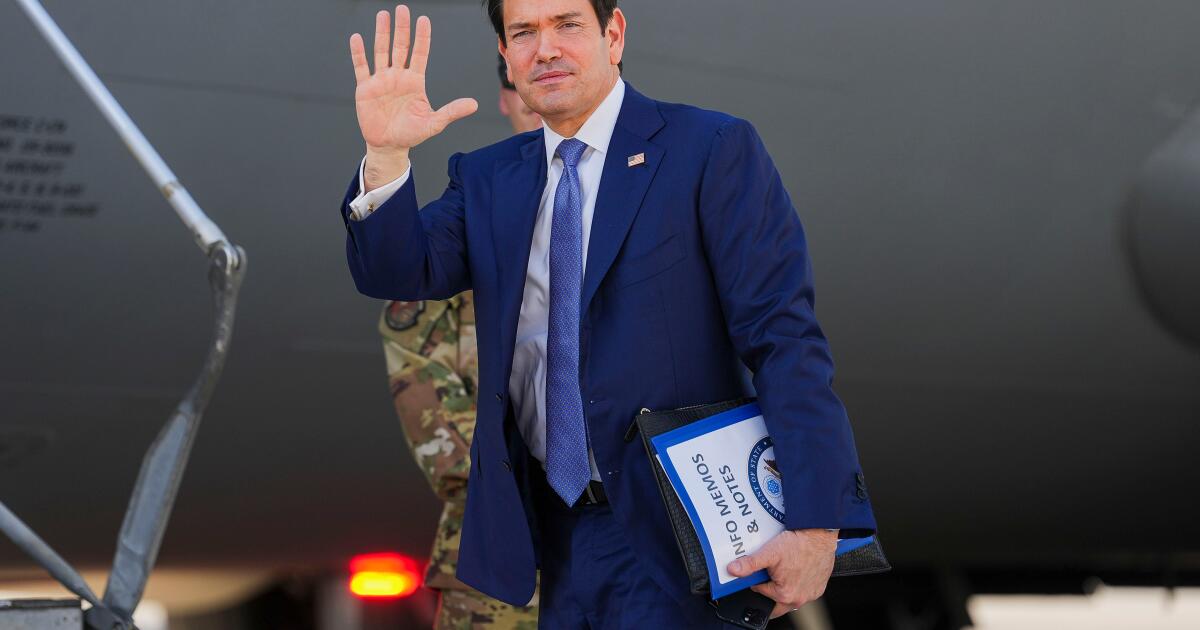
MANAMA, Bahrain — U.S. Secretary of State Marco Rubio said Thursday that relations between the United States and its gulf Arab partners are rock solid, despite fears by some of them that they might be left out of discussions aimed at ending the war with Iran.
Rubio used a three-day, three-nation trip to the United Arab Emirates, Kuwait and Bahrain this week to try to convince all the members of the Gulf Cooperation Council that the Trump administration does indeed have their backs in negotiations to end the war President Trump and Israel launched on Feb. 28.
That conflict sharply curtailed the region’s oil exports and saw several gulf countries take direct retaliatory Iranian missile and drone hits.
“They’ve shared with us some very concrete concerns, ideas,” Rubio said in Bahrain, the last stop on the trip. “And when I say concern, the biggest concern is that they really just want to be informed every step along the way as we enter these negotiations at both the technical and political levels.
“We want them to be involved and we want the views of all these countries to be reflected,” he said. “We don’t want to and will not be making any decisions or commitments that in any way undermines the prosperity, stability or security of our gulf partners.”
Although the U.S. and the gulf council members — Bahrain, Kuwait, Oman, Qatar, Saudi Arabia and the United Arab Emirates — eventually released a joint statement after the meeting that extolled areas of agreement about the end goals of the Iran deal, there were small signs of potential discontent.
The joint statement said the two sides “stressed the need to maintain momentum and unity as negotiations proceed toward a more permanent end to hostilities and the shared objective of preventing Iran from ever developing or otherwise acquiring a nuclear weapon.”
They also expressed opposition to any attempt by Iran to impose tolls or fees, or assert control over the Strait of Hormuz. They welcomed an Omani initiative to create a safe lane to evacuate stranded sailors from the waterway and stressed that any economic benefit Iran might realize “is conditional and reversible, contingent on Iran’s compliance” with the temporary agreement and a final deal.
The joint statement painted a rosy picture, yet the council secretary, Gen. Jasem Mohamed Albudaiwi, suggested in a statement that doubts remain.
He said it was emphasized during the meeting that any future understandings or arrangements must incorporate the requirements of the gulf council countries to safeguard their interests and ensure “their security and stability.” His statement, released by the group, hinted that the gulf council members felt snubbed in the earlier talks.
“Such arrangements must be based on the principles of international law, respect for state sovereignty, good neighborliness, and non-interference in internal affairs, thereby contributing to the consolidation of regional security and stability,” he said.
Before Rubio spoke to the group, the meeting host, Bahraini Foreign Minister Abdullatif bin Rashid Al Zayani, said that although the memorandum of understanding is welcome, many questions remain outstanding.
“While this progress is encouraging, it is critically important that Iran fully adheres to its obligations,” including under the memorandum, he said.
He said that means preventing Iran from getting a nuclear weapon, preserving freedom of navigation, ending all missile and drone attacks, halting support for proxy groups and abandoning attempts to interfere with Iran’s neighbors.
June 25 (UPI) — The U.S. Supreme Court on Thursday struck down a Hawaiian law that required people to ask permission to carry a concealed firearm onto a private property.
The Court’s majority, in a 6-3 ruling, said that Hawaii cannot block a properly licensed person from carrying a concealed weapon on private properties that are open to the public.
Hawaii was one of five states that enacted similar laws after the Court in a 2018 ruling said that states could not limit gun licenses to “exceptional cases” because it violated the 2nd Amendment right to carry a firearm.
The law required people who wanted to carry their firearm in places such as gas stations, restaurants, grocery and other stores, dry cleaners and other properties that are “open to the public” to get permission to carry their gun.
“Under the new Hawaii law, no one carrying a firearm may enter without the property owner’s express authorization,” Justice Samuel Alito wrote in the majority opinion.
“The effect of this new rule is to impose severe restrictions on the daily activities of residents who have satisfied the State’s rigorous requirements for the issuance of a carry permit,” Alito wrote.
In a dissenting opinion, Justice Ketanji Brown Jackson disagreed with the majority that the Hawaii law is an “attempt to end-run our Second Amendment precedents,” suggesting instead that it applies the first principle of property law, the right to exclude.
In addition to noting that Hawaii has a long history of restrictive gun laws, Brown Jackson said it enacted the permission law in order to prevent confusion among property owners that federal law had affected traditional expectations in the state.
“The public might well have an implied license to enter private property open to the public, and such permission might generally include the ability to enter armed,” she wrote in the dissent.
“But,” she wrote, “any such license is not a matter of right — a license is a creature of state law and custom, and it can vary accordingly.”
WASHINGTON — California’s two Democratic senators on Thursday criticized the Trump administration after it requested $87.6 billion from Congress to address some of the nation’s most “urgent needs” but omitted funding for victims of last year’s Los Angeles wildfires.
“Donald Trump’s desire to punish Los Angeles and the state of California for not voting for him, means once again that thousands of Angelinos are left watching this administration fight for anything but them, their businesses, and their communities,” Sens. Alex Padilla and Adam Schiff said in a joint statement.
“These fires did not discriminate based on party or political preference. Neither should this administration,” they added.
The omission is the latest strain in a yearlong standoff between California leaders and the Trump administration over federal disaster aid, and it comes after Los Angeles Mayor Karen Bass and Los Angeles County Supervisor Kathryn Barger met with President Trump at the Oval Office in April to request the funding.
At the meeting, Trump signaled his commitment to working with local officials to help with disaster recovery efforts. The officials asked for $16 billion that would be split between the city and county. The money would consist primarily of disbursements from the Federal Emergency Management Agency flagged for communities hit by the fires, part of a $33.9-billion wildfire relief funding request made by Gov. Gavin Newsom.
Two months later, those talks have yet to yield results sought by local leaders.
The budget request, submitted by the Office of Management and Budget on Wednesday, mostly seeks funding for the Pentagon to address costs related to the Iran war. It also includes $11.1 billion in economic assistance for American farmers, $1.4 billion to address the Ebola virus outbreak in Central Africa, $500 million to support “ongoing efforts to complete restorations and construction projects” across the nation’s capital and $1 billion to boost the pensions of workers at General Motors that were cut as a result of the automaker’s bankruptcy.
“I urge the Congress to take action on these important and urgent requests as soon as possible,” White House budget director Russell Vought wrote in a letter addressed to House Speaker Mike Johnson (R-La.).
Vought said the administration was open to discussing “additional relief for other urgent matters.” The White House did not immediately respond when asked why the budget request did not mention the Eaton and Palisades disaster relief funds.
State leaders, including Newsom, have repeatedly accused the Trump administration of stonewalling billions in wildfire aid. The governor visited Washington in December to meet with lawmakers, including three who serve on the Senate and House appropriations committees, to push for the funding.
The governor also attempted to meet with FEMA about the matter, but said his request was denied. Newsom, a political foe of Trump’s, would not say whether he had attempted to meet with Trump to talk about the recovery efforts.
For as long as I’ve been a journalist, which is a really long time, public entities have hated public records requests, even while claiming they don’t.
Ask your typical elected or hired official, from the governor to the animal control folks, and they’ll tell you transparency is vital and sunshine in government a key value.
Then turn in the most benign of public records requests — access to a calendar, for example — and prepare for weeks of delays and excuses. Want emails or financial records or, heaven forbid, anything from the police? Months or even years may pass before a single page is delivered, no joke.
That’s why I am deeply concerned about a bill winding its way through the California Legislature that would definitely slow down public records requests and likely make them more difficult and expensive. At its worst, it could push people into costly court battles just for having the audacity to ask for information.
Pacheco’s office told me Wednesday that the troubles with the bill are far from what Pacheco set out to do.
“It was never the author’s intention to take away people’s rights to a [Public Records Act] request,” said her chief of staff, Nikki Johnson.
Johnson said the bill was meant to curtail malicious records requests, which do happen, where a citizen goes after copious amounts of records just to be a jerk and cost the government time and money.
It was also meant to address the growing problem of artificial intelligence and other for-profit businesses requesting thousands of records with the intent of using the information to create money-making products — think of sites that already sell publicly available personal information as “background checks.”
I believe Johnson on the good intentions of the bill in addressing those real if nebulous difficulties, but you know what they say about the best-laid plans.
The bill passed through the Assembly recently with ease, largely because most of its problematic portions (I’ll get to those in a minute) were removed — though not all. Even in a watered-down form, which basically gave government more time to answer requests, I found myself in the unlikely position of agreeing with conservative Republican Assemblymember and Trump supporter Carl DeMaio of San Diego, who offered some of the only opposition from elected leaders during the Assembly vote.
“We cannot police the public’s right to know, and we want to err on the side of transparency in how government agencies operate,” DeMaio said.
Amen, brother.
But the Democratic-controlled Assembly erred on the side of secrecy and slowdown instead, and the measure sailed to the Senate, where seemingly out of the blue, a bunch of new provisions were added that fill it with loopholes, vague language and tons of room for abuse.
David Snyder, executive director of the First Amendment Coalition, said the bill as written now was “comprehensively bad for transparency and therefore for government accountability.”
Sean McMorris, transparency, ethics and accountability program manager for the advocacy organization California Common Cause, put it even more forcefully. He pointed out that “public records are the public’s records.”
“They’re not owned by the government,” he said. But this bill would shift that paradigm and make the public “prove why you need them.”
“It’s going to chill people who want to make requests, and it’s going to complicate the process, and it’s just wrong,” McMorris said.
In its new form, the bill basically allows government entities to decide if they feel a public records request is malicious or for commercial gain. If they do, they can petition a court to intervene — potentially sparking both legal costs and new fees associated with fulfilling the request.
It would also, Snyder said, force a requester to explain why they wanted the records — something California law has repeatedly avoided because it gives power to government to treat those it perceives as enemies differently.
In this age of fairness and reason, it’s hard to imagine a government official misusing power to keep secrets, but I’m told it happens. That makes it all the more crucial that people not be forced to explain why they want information, or if they will use it to, say, expose corruption — be it wrongdoing by a single individual or the entire system.
Faced with unintended consequences, Assemblymember Blanca Pacheco (D-Downey), shown in 2023, will seek to scale back the bill to its original form, according to her chief of staff.
(Rich Polk / Getty Images for Equality California)
“I have little doubt that some agencies will use that provision to overburden requesters that they view as political opponents, requesters that they view as just a hassle, requesters that ask for things the government doesn’t want to disclose,” Snyder said. “They can bring the requester into court, and at a minimum, slow down the process, and probably more likely get the requester to simply withdraw.”
As written, the bill also gives a shoddy carve-out meant to protect journalists, but which in reality could be used to curtail requests from freelancers, student journalists and more.
McMorris said access to public records is a “moral issue,” and fixing any problems with the current law requires “a scalpel, not a meat ax.”
This bill, he warned, is a meat ax.
“I don’t discount that there are abusive requests, and that there are requests that really are a burden on government agencies, but the law right now has ways for government agencies to address that,” he pointed out. “Once these laws go into place, they’re going to be hard to roll back.”
It could “fundamentally change” our access to public records, he said.
Johnson, Pacheco’s chief of staff, told me that faced with all these unintended consequences, the Assembly member is going to ask for the amendments to be removed, and for the bill to progress as it was written when it passed the Assembly. That could happen as early as next week, when the bill with the new provisions is scheduled to come up again in a Senate committee for debate.
Reverting to the bill the Assembly voted on would be better, but slowing down public records is in government’s best interests, not the people’s. The bill does nothing to address the problems it seeks to fix, but stretches out the time officials have to simply tell a requester if any records do exist — never mind delivering them.
So even back to its watered-down form, the bill remains a meat ax for a scalpel problem, chopping up transparency with good intentions.
Polish Prime Minister Donald Tusk, center, European Commission President Ursula von der Leyen, left, European Council President Antonio Costa, second from right, and Ukrainian Prime Minister Yulia Svyrydenko, second from left, pose for a group photo at the opening session of the Ukraine Recovery Conference 2026 at the European Solidarity Centre in Gdansk, Poland, Thursday. Photo by Adam Warzawa/EPA
June 25 (UPI) — The European Union released $3.6 billion in funds of the Ukraine Support Loan for budget and defense needs, the bloc said Thursday.
The funds were released at the Ukraine Recovery Conference, where European Commission President Ursula Von der Leyen announced the funding, which is the first instalment of the new macro-financial assistance. The MFA is a segment of the Ukraine Support Loan, under which $102 billion will be offered to Ukraine in 2026 and 2027.
“As a country at war, Ukraine’s capaicty to defend its territory depends on the rapid availability of critical products in the required quantities and within very short timeframes,” a press release said. “The first instalment of the [$6.8] billion defense package to support drone procurement will be disbursed in the coming days.”
“This is indeed solidarity in action,” Von der Leyen said. “It shows Europe’s support for Ukraine is here to stay.”
The original plan in December was to use Russia’s frozen assets to fund the loan, but the Russian Central Bank sued a Belgian bank over the plan, so the EU had to find a new way to finance the loan.
Instead, they agreed to create the loan through joint debt. Hungary, Slovakia and the Czech Republic negotiated an exemption.
The payments are conditional on Kyiv’s reforms. If Ukraine reverses its ongoing fight against corruption, the EU could suspend the funds, Euro News reported.
The loan also requires Ukraine to buy weapons and ammunition made in Europe, with some exceptions depending on availability.
“Ukraine has the opportunity to analyze the situation on the battlefield and identify the range of products that they need, and then they have to inform us in the form of product schedules,” a Commission spokesperson told Euro News. “The priority remains to make purchases within the EU and Ukraine.”
“We continue to call on all our partners to maintain their support, because a strong and independent Ukraine is in all our interests,” Von der Leyen said Thursday. “Our ambition is not only to help Ukraine endure, it is also to help Ukraine grow and prosper as a free and European country.”
The United States is not expected to contribute funds to the loan.
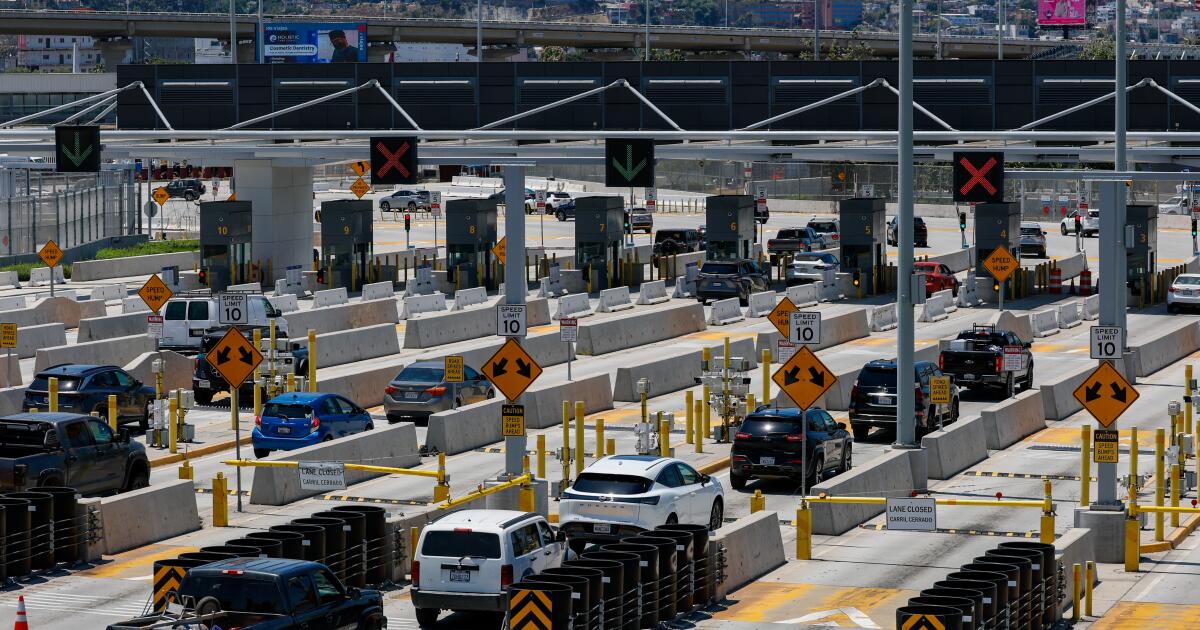
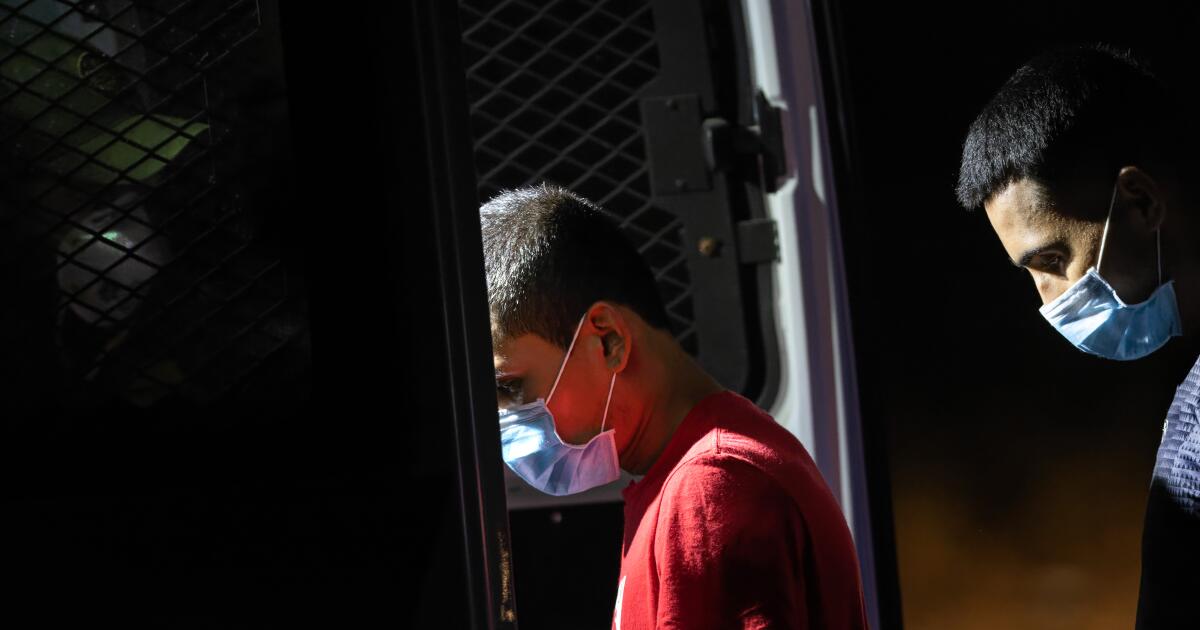
WASHINGTON — Asylum seekers may be turned away without a hearing at the southern border, the Supreme Court ruled Thursday in a historic retreat from the promise of relief for those who say they are fleeing persecution.
The justices split over whether this was a simple dispute over legal wording or a moral question involving desperate families.
Siding with the Trump administration, the court’s conservatives said the Refugee Act of 1980 offers a right to seek asylum to migrants who “arrive in the United States” but not those who are turned back when they approach a border crossing or a port of entry.
“This case presents a straightforward question” that turns on the word “in,” said Justice Samuel A. Alito Jr. “In ordinary speech, no one would say that a person ‘arrives in’ a place — for example, a house, a city, or a country — before the person enters that place.”
The liberal dissenters agreed with immigration rights lawyers who saw this as a nonsensical reading of the law.
Justice Sonia Sotomayor said the asylum law arose from the “international moral reckoning that followed the Holocaust and World War II.”
She cited the infamous voyage of the MS St. Louis in 1939. More than 900 Jewish refugees attempted to flee persecution in Nazi Germany by setting sail aboard the ship, which was turned away from Cuba and the United States.
Most of the passengers were returned to Europe, and several hundred died in the Holocaust, she said.
“Congress passed the Refugee Act in 1980 because it did not want this country to repeat the mistakes of its past. Yet if the refugees on the M.S. St. Louis were to walk up to a port of entry on our southern border today, the majority’s interpretation would allow immigration officers to refuse even to consider their asylum applications by physically blocking them from stepping foot onto U. S. soil,” Sotomayor wrote.
Justices Elena Kagan and Ketanji Brown Jackson agreed.
The Department of Homeland Security said these asylum seekers must wait on the Mexican side of the border until they could return for a scheduled interview. The policy was extended to other border crossings, but it was challenged as illegal in federal court in San Diego.
Last year, a divided 9th Circuit Court of Appeals ruled that those restrictions were illegal if they prevented migrants from applying for asylum.
“To ‘arrive’ means ‘to reach a destination,’” wrote Judge Michelle Friedland. “A person who presents herself to an official at the border has ‘arrived.’”
She said the “government’s reading would reflect a radical reconstruction of the right to apply for asylum because it would give the executive branch vast discretion to prevent people from applying by blocking them at the border.”
The 2-1 decision upheld a federal judge in San Diego who ruled for migrants who had filed a class-action suit and said they were wrongly denied an asylum hearing.
But Solicitor Gen. D. John Sauer urged the Supreme Court to review and reverse the appellate ruling, noting 15 judges of the 9th Circuit joined dissents that called the decision “radical” and “clearly wrong.”
The administration argued federal immigration law “does not grant aliens throughout the world a right to enter the United States so that they can seek asylum.”
From abroad, they may “seek admission as refugees,” Sauer said, but the government may enforce its laws by “blocking illegal immigrants from stepping on U.S. soil.”
Defenders of the asylum system denounced the decision.
“We believe that today’s ruling violates international law, as well as the express intent of Congress,” said Erika Pinheiro, executive director of the migrant support organization Al Otro Lado, which led the legal fight. “For decades, the United States has allowed individuals and families who are fleeing persecution, torture and death to ask for protection at U.S. borders.”
“Cruelty is not a substitute for real solutions. Blocking people from seeking asylum at official ports of entry will do nothing to fix our broken immigration system, said Rebecca Cassler, senior litigation attorney at the American Immigration Council. “It only makes things more chaotic and dangerous for vulnerable families.”
The Federation for American Immigration Reform applauded the decision.
“Our immigration laws are written to be pro-enforcement, not-anti-enforcement,” said Christopher J. Hajec, deputy general counsel of FAIR. “Because of this, courts that hamstring enforcement are often forced to violate basic logic, as the 9th Circuit did here. We are pleased the Supreme Court saw that the lower court’s reading would make immigration law incoherent, and reversed.”
Six countries – Saudi Arabia, the United Arab Emirates (UAE), Qatar, Kuwait, Bahrain and Oman – form the Gulf Cooperation Council (GCC), which was created in 1981 following fears of the perceived expansionist ambitions of the new Iranian government.
Recommended Stories
list of 4 itemsend of list
Since the 1979 Islamic revolution, Israel has attempted to isolate Iran and its wide network of regional proxy groups. But in a twist of irony, Israeli aggression in this pursuit has pushed some Gulf states closer to Tehran.
When Israel and the US launched strikes on Iran on February 28 – and Tehran responded by attacking Gulf states – they were again forced to reassess their relationship with their neighbour.
Gulf relations with Iran, at present, appear more shaped by realism than reconciliation, but this approach could help them navigate the uncertain road ahead.
“The ongoing conflict … compelled the Gulf states to pursue a more pragmatic relationship with Tehran, one that will include enhanced dialogue to deter conflict,” Farah al-Qawasmi, a researcher at the Gulf Studies Center at Qatar University, told Al Jazeera.
Embracing de-escalation – not Iran
All six GCC member states have welcomed a memorandum of understanding (MoU) signed by Iran and the US last week. But this is shaped more by the Gulf states wanting the war to end rather than a newfound trust of Iran.
“An agreement between the two parties is being [highly] advocated by the Gulf states in [an] attempt to prevent and contain regional conflicts,” al-Qawasmi said.
Shortly after the US and Iran agreed in 2015 to the Joint Comprehensive Plan of Action (JCPOA) – putting guardrails on Tehran’s nuclear programme – Gulf states remained sceptical about their neighbour.
The current war has only heightened these suspicions, but it has also seen regional states seek diplomacy with Tehran rather than military confrontation, despite Iran directly attacking Gulf cities.
“The Gulf states still feel like diplomacy is better than using force to get a deal … to change Iran’s behaviour and to insulate them from Iran’s destabilising actions,” Rob Geist Pinfold, a lecturer on security studies at King’s College London, told Al Jazeera.
Pinfold points out that Iran closed the Strait of Hormuz via drones and missiles, not nuclear weapons, making dealing with that threat a priority for Gulf states rather than Tehran’s nuclear programme.
Gulf states will want a more comprehensive agreement between Iran and the US, rather than the nuclear-focused JCPOA, said Pinfold.
“If you talk to people in Gulf capitals, they will tell you that the nuclear programme is a tomorrow problem for them,” he said.
“The today problem is Iran’s use of drones and proxies to destabilise and undermine the sovereignty of Gulf states, but also states throughout the region.”
US Secretary of State Marco Rubio’s three-day tour of the Gulf, which ends Thursday, is seen as a way of allaying these fears and assuring the GCC that Tehran will not be strengthened by the agreement.
US Vice President JD Vance, left, looks on as Pakistan’s Prime Minister Shehbaz Sharif, centre, speaks and gestures towards Qatar’s Prime Minister and Minister of Foreign Affairs Sheikh Mohammed bin Abdulrahman bin Jassim Al Thani, right, at the start of a quadrilateral meeting between the US, Iran, Pakistan and Qatar [File: Nathan Howard/Pool via Getty Images]
Seat at the table
Mehran Haghirian, the director of research and programmes at the Bourse & Bazaar Foundation, believes Gulf states are in a better position to guide the outcome of the current US-Iran talks than in 2015.
“They are at the heart of the negotiations,” Haghirian said regarding the Gulf states’ role in the current talks.
In its role as a co-mediator, Qatar is essentially representing the GCC and their interests during the talks, while articles five and six of the Iran-US MoU place Gulf states at the centre of the agreement.
Among the biggest concerns for the GCC are the future of the Strait of Hormuz, with Tehran demanding tolls on shipping, and calls for the creation of a regional investment fund for Iran.
“There really cannot be any new Hormuz authority by Iran that would not include other GCC countries,” Haghirian told Al Jazeera.
US Vice President JD Vance claimed last week that the investment fund would be financed by the Gulf coalition, but Rubio said this week that regional allies would not be asked to contribute to any reconstruction fund for Iran.
Qatar’s Prime Minister Sheikh Mohammed bin Abdulrahman bin Jassim Al Thani has described the reported $300bn figure as “aspirational” in an interview with the Financial Times, while no Gulf state has yet said if it will contribute to the fund.
‘Maximum pressure era’
The analysts stress that the GCC is not a monolith – with Gulf states having contrasting and changing approaches towards Iran.
Oman, Qatar and Kuwait were broadly supportive of the JCPOA. Saudi Arabia, the UAE and Bahrain were more sceptical, but even these states publicly backed the agreement, said Haghirian.
When Trump pulled the US out of the JCPOA in 2018, Saudi Arabia, the UAE and Bahrain believed they had “found a partner in DC”.
That led to a “maximum pressure era” that brought a period of brinkmanship in the region, said Haghirian.
Suspected Iran-linked attacks on Saudi Arabia’s Abqaiq-Khurais oil facilities and vessels off the coast of Fujairah in 2019 were “the initial reaction by the Iranians to that maximum pressure” campaign, he added, but paradoxically, this also triggered a recalibration of relations.
“That was enough of a reason for Saudi Arabia [and] the UAE, particularly, to basically restructure their approach towards Iran,” Haghirian said.
The war and accelerated pragmatic rapprochement
While Israel has used war to attempt to increase its presence in the Gulf region – reportedly sending an Iron Dome battery to the UAE – other Gulf states view both Iran and Israel as unsettling forces in the region.
“Israel started the war, which was a destabilising act, and then Iran escalated by targeting the Gulf states, which was in turn a destabilising act,” Pinfold said.
Despite this, the Gulf states targeted by Iran still demonstrated patience and pragmatism in dealing with their neighbour.
Qatar, for example, has played a leading role in mediating between the US and Iran, even after being on the receiving end of Iranian drone and missile attacks.
“All six got attacked, and that’s really a level of foreign policy decision-making that is very difficult for any state to be able to really undertake, considering the fact that it was a military attack,” Haghirian said.
“But again, this pragmatism came out within this context to engage Iran and to actually speak for themselves at these negotiations. This war has really initiated a complete rebalancing of the entire region.”
WASHINGTON — A Democratic U.S. senator warns the Trump administration is getting ready to round up 500 immigrant children in a hasty effort to remove them from the country, bypassing legal protections. It would be their second attempt after a federal court intervened last year in an overnight plan to fly out hundreds of children on Labor Day weekend.
Sen. Ron Wyden of Oregon wrote in a letter Wednesday to U.S. Health Secretary Robert F. Kennedy Jr., which oversees the Office of Refugee Resettlement caring for unaccompanied migrant children, that he had “credible information” that the Trump administration had a list of more than 500 migrant children it was targeting for a fast-track removal process and that the department was racing to act in days. He warned that the administration was abdicating “core humanitarian and child welfare mandates” and demanded an immediate halt to any plans to remove the children.
Wyden, who is the ranking member and senior Democrat of the Senate Finance Committee, which has jurisdiction over ORR, did not detail how he came by his information. His office declined to provide further details. ORR falls under the Department of Health and Human Services.
An HHS spokesperson denied any such plans.
“The new information I obtained leads me to believe that the Department is laying the groundwork for another lawless deportation effort, this time on a greater scale, across more countries of origin,” Wyden wrote.
“You have been entrusted with the care and safety of the children placed within the ORR network. Proceeding with this plan knowingly endangers their lives and violates your duty to these vulnerable children.”
Wyden also issued an early warning last August ahead of what eventually became a chaotic weekend of efforts by the Trump administration to remove Guatemalan children in its care and send them home.
HHS spokesperson Emily Hilliard said in “there are no plans to target these children,” calling Wyden’s claims ”irresponsible fearmongering.”
“The Trump Administration is working to identify the parents or legal guardians of unaccompanied alien children in our care because ensuring every child is placed with a properly vetted sponsor is our top priority,” she said.
Over the Labor Day weekend, dozens of migrant children either staying in government-supervised shelters or with foster families were taken from their homes and bused to airfields in Texas bound for Guatemala. A federal judge woken up in the middle of the night eventually stopped the planes. Lawyers for the children — many who had fled violence at home to come to the U.S. — later described how traumatic the middle-of-the-night removal effort was for them.
The administration insisted it was reuniting the Guatemalan children — at the Central American nation’s request — with parents or guardians who sought their return. Lawyers for at least some of the children said that wasn’t true and argued that in any event, authorities still would have to follow a legal process that they did not.
Migrant children traveling alone are usually entrusted to U.S. government care, and there are various legal protections designed to protect them once they’re in the U.S. and navigating the immigration system.
The Trafficking Victims Protection Reauthorization Act of 2008 is one of the key pieces of legislation designed to protect them. With some limited exceptions, it requires that children be placed in the “least restrictive setting possible,” which generally means that they can be released to a sponsor such as a relative in the U.S. while their immigration proceedings play out.
The children can apply for a specially protected status if they can’t return to their home country because of abuse or neglect and they can also apply for asylum.
The Trump administration has made it increasingly difficult for those children to be released to sponsors though. The administration says that they are doing due diligence to make sure that sponsors are thoroughly vetted and that in the past, children were released into dangerous situations.
But advocates say that the result has been children lingering for months in government shelters.
This time, Wyden said the children at risk of being removed come from various countries, potentially including Guatemala, Honduras, El Salvador, and Afghanistan, and have been in U.S. custody — mainly in foster care — for at least 180 days. He said they were described as not having any “viable sponsor” who could come forward and take care of them in the U.S.
Not having an identified sponsor could mean the child’s parents are in their home countries, are deceased or are too afraid to claim their children after ICE started arresting some parents who are not in the country legally during their reunification efforts.
Gonzalez and Santana write for the Associated Press.