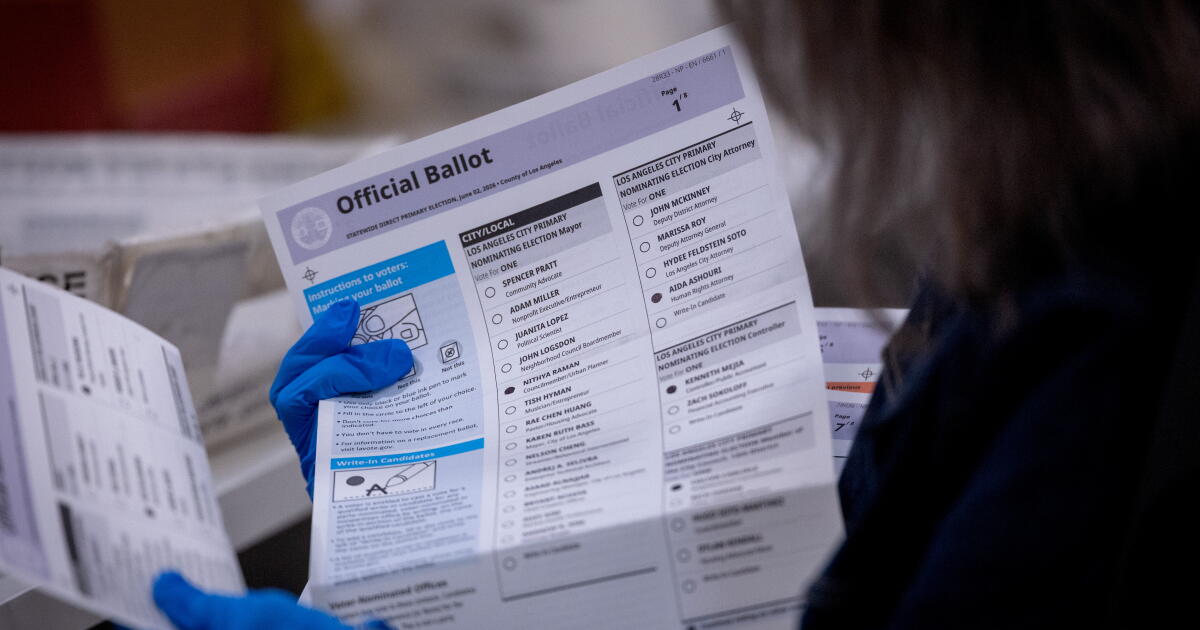
Colombia has loosened gun laws after more than a decade of restrictions. The government says it will help people protect themselves, but some fear it will lead to an increase in even more violence.
Ministers demand an end to maritime shipping attacks and urge Iran to stop arming the Yemeni group.
Published On 22 Sep 202622 Sep 2026
The foreign ministers of the Group of Seven (G7) nations have condemned what they called “unacceptable continued strikes” by Yemen’s Houthis against Saudi Arabia.
The ministers issued the statement on Monday following an informal meeting on the sidelines of the United Nations General Assembly in New York.
Recommended Stories
list of 3 itemsend of list
“We condemn in the strongest terms the unacceptable continued strikes carried out by the Houthis in Yemen and against the Kingdom of Saudi Arabia,” the ministers of the UK, Canada, France, Germany, Italy, Japan and the United States said in the statement.
The ministers urged the Houthis “to immediately cease all military actions, all threats and attacks against civilian shipping, and to return to the political process in good faith”.
They also called on Iran to stop arming and supporting the group, saying Tehran is in violation of past UN Security Council resolutions. They added that Iran’s backing of the Houthis constituted a dangerous pattern of escalation that risked undermining international trade and creating global instability.
The latest escalation in the Arab region’s most impoverished nation follows a period of relative calm that had largely held since the UN-brokered ceasefire in 2022 between the Iran-aligned group and the Saudi-backed Yemeni government.
On Tuesday, nearly 130 heads of state and government are expected to begin taking the podium at the annual United Nations General Assembly (UNGA) in New York as the high-level general debate opens.
The debate is the key event of the UNGA’s annual session, which began on September 8, when Khalilur Rahman of Bangladesh took office as president.
In this visual explainer, Al Jazeera looks at what happens at the UNGA, who will speak, and the key moments to watch.
When is UNGA 2026?
The debate opens on Tuesday, September 22, runs through Saturday, September 26, and resumes on Monday, September 28, as no sessions are held on Sunday.
It runs in two daily sessions: from 9am to 2:45pm local time (13:00 GMT to 18:45 GMT) and from 3pm to 9pm (19:00 GMT to 01:00 GMT the next day).
Statements are expected to observe a voluntary 15-minute limit, though many run longer, and meetings continue until all scheduled speakers have spoken.
Who is speaking at UNGA 2026, and when?
The session opens with UN Secretary-General Antonio Guterres, who introduces his annual report and is expected to give his final address, followed by UNGA President Khalilur Rahman, who formally opens the debate.
By tradition, Brazil is always the first country to speak, a practice that began in 1955 when it volunteered to open the debate, when no other country would. The United States, as the host country, usually speaks second, and President Donald Trump is expected to take the podium after Brazil on Tuesday morning, likely around 9:45am local time (13:45 GMT).
For all other member states, the speaking order is determined by the level of representation (head of state, head of government, or minister), expressed preferences, and geographic balance.
The Holy See (Vatican City), the State of Palestine, and the European Union are also invited to participate, with their speaking slots set according to their representation.
Speakers for day one are shown in the graphic below. The speaking schedule for the remaining days will be published in the coming days.
Where is the UNGA held?
The UNGA is held at the UN headquarters, which is located along the East River in Manhattan, New York.
The complex, built between 1949 and 1952, is owned by the UN and is considered international territory. It serves as the main hub for international diplomacy.
The UNGA has not always been held in New York. The first six UNGA sessions took place in different cities, beginning in London and later including Paris. Since 1952, however, nearly all sessions have been held at the UN headquarters in New York.
Some notable exceptions include 1988, when the UNGA met in Geneva, Switzerland, after the US denied a visa to Palestinian leader Yasser Arafat.
This time, for the second year running, the US has denied visas to Palestinian officials, so President Mahmoud Abbas will address the UNGA by prerecorded video after member states voted to allow it.
The Trump administration’s decision has drawn widespread criticism, with the UN asserting that it violates the Host Country Agreement, which obligates the US to allow heads of state and government to travel to New York for annual meetings and other diplomatic business, with full diplomatic immunity.
What is on the UNGA 2026 agenda?
The 81st UNGA has the theme “Restoring trust, managing transformation: a United Nations that delivers for all”, which is set out in the UN’s information note on the arrangements for the high-level week.
Alongside the speeches, the UN has scheduled high-level meetings on climate action and a just transition and on the 40th anniversary of the Declaration on the Right to Development (September 23), on sea level rise (September 24), on pandemic preparedness (September 25), on the 25th anniversary of the Durban Declaration against racism (September 28), and on eliminating nuclear weapons (September 29).
Many speeches are also expected to focus on the wars in the Middle East and Ukraine, artificial intelligence and the UN’s funding squeeze, while diplomats watch the race to succeed Guterres, whose term ends on December 31.
Who will be the next UN chief?
The UNGA formally appoints the secretary-general, but the choice is not expected to be made this week. The UN Security Council (UNSC) is still holding straw polls and must recommend a candidate first.
Guterres’s second and final term ends on December 31, and the race to succeed him is under way. There have been nine secretaries-general since the UN was founded in 1945, all of them men. Several UNSC members have said they want a woman to lead the organisation for the first time.
Seven candidates remain in the running, four women and three men, but more could still enter the race:
Rebeca Grynspan (Costa Rica): Secretary-general of UNCTAD and former vice president of Costa Rica
Carolyn Rodrigues-Birkett (Guyana): Guyana’s permanent representative to the UN and former foreign minister
Ivonne Baki (Ecuador): Diplomat and former minister of foreign trade
Maria Fernanda Espinosa (Ecuador): Former president of the UNGA and former foreign minister
Rafael Grossi (Argentina): Director general of the International Atomic Energy Agency
Macky Sall (Senegal): Former president of Senegal
Olara Otunnu (Uganda): Former foreign minister and ex-UN undersecretary-general
Former Chilean President Michelle Bachelet withdrew on Saturday after winning support from only one of the 15 UNSC members in the latest informal vote. The same vote put Costa Rica’s Grynspan narrowly ahead, with nine of the 15 members encouraging her candidacy, five discouraging it, and one with no opinion. Guyana’s Rodrigues-Birkett came second, with eight votes to encourage, six to discourage and one with no opinion, diplomats and sources close to the process said.
The UNSC must settle on one candidate with no veto from its five permanent members before recommending them to the UNGA.
When did each nation join the UN?
The UN was established after World War II, growing from 51 members in 1945 to 193 today, with two non-member observer states: Palestine and the Holy See (Vatican City).
The aim of the UN was to prevent future conflicts, promote international peace and security, foster cooperation among nations, protect human rights and support social and economic development worldwide – goals that many critics say it is increasingly failing to deliver on.
Each member has one vote in the UNGA, whose resolutions are generally nonbinding recommendations. That sets it apart from the 15-member UNSC, where five permanent members hold a veto and decisions can be legally binding.
Use the table below to find out when each country joined the UN.
Luiz Inacio Lula da Silva is running in October’s election for a fourth non-consecutive mandate as Brazil’s president.
Published On 22 Sep 202622 Sep 2026
Brazilian President Luiz Inacio Lula da Silva and Senator Flavio Bolsonaro remain deadlocked in the latest polls, with the first round of Brazil’s election less than two weeks away.
Two new polls on Monday showed that the pair are statistically tied in simulated runoffs ahead of next month’s election. If no candidate wins more than 50 percent of valid votes in the October 4 first round, the two frontrunners advance to a runoff on October 25.
Recommended Stories
list of 3 itemsend of list
Lula is seeking a fourth non-consecutive term as Brazil’s president, but faces a challenge from the political right in Flavio Bolsonaro, the son of former far-right President Jair Bolsonaro, an ally of US President Donald Trump.
Brazilian presidential candidate Flavio Bolsonaro speaks at an agribusiness fair as he campaigns in Esteio, Brazil, on September 2, 2026 [Diego Vara/Reuters]
The elder Bolsonaro was ruled ineligible for office after Brazil’s top electoral court found he had abused his power while in office. He was later convicted separately over a plot to overturn his 2022 election loss to Lula.
A Quaest poll released on Monday showed Bolsonaro with 42 percent of voter support in a potential runoff, versus 41 percent for Lula.
Meanwhile, a BTG Pactual/Nexus poll has Lula receiving 46 percent of voter support, compared with 45 percent for Bolsonaro in a potential runoff.
The latest polls mark a narrowing from an earlier Quaest poll on August 5, which put Lula ahead by a wider five-point margin, 44 percent to 39 percent.
New York City Mayor Zohran Mamdani and Brazilian President Luiz Inacio Lula da Silva speak to reporters after a meeting in New York on September 21, 2026 [Dave Sanders/Reuters]
US pressure looms over election
Lula launched his re-election bid on August 2 at the Workers’ Party convention in Sao Paulo, casting himself as a defender of Brazilian “sovereignty” as pressure from the US administration looms over the race.
The US imposed two fresh rounds of tariffs on Brazilian products in July, which Lula denounced as an attempt to influence the elections through economic pressure.
The Brazilian leader is currently in New York, where he is preparing to address the United Nations General Assembly.
Lula met New York City Mayor Zohran Mamdani for the first time on Monday. In a brief statement to reporters after the meeting, the Brazilian president said the two had talked about problems common to both Brazil and the United States, particularly the rising cost of living.
NEW YORK — Imelda Marcos made a cash payment of $50,000 to then-Gov. George Ariyoshi of Hawaii when she visited Honolulu in 1982, three days after the Democrat announced that he was running for reelection, according to logs of the former Philippine first lady’s travel expenses.
A record of the previously undisclosed cash payment to Ariyoshi was found amid voluminous evidence recently introduced here by federal prosecutors in the fraud and racketeering trial of Mrs. Marcos.
It was unclear from the document whether the $50,000 cash payment was intended to aid the Ariyoshi campaign or was tendered for some other reason. Ariyoshi did not list it among his campaign contributions, which by law were limited to $2,000 from any one source in the primary election.
Although unrelated to any of the criminal charges pending against Mrs. Marcos, the Ariyoshi payment discovered in the Marcos expense logs raises new questions about how the former first lady spent what the U.S. Justice Department asserts were Philippine government funds.
No explanation for the $50,000 expenditure was listed in the court documents, and Ariyoshi did not respond to numerous requests by The Times for an interview.
In the past Ariyoshi has acknowledged receiving gifts from the Marcoses but has declined to describe the extent or nature of those offerings, calling gift giving “a private act of courtesy” that he would not discuss publicly.
The recently admitted court documents are notebooks in which a private secretary to Mrs. Marcos, identified in testimony as longtime aide Fe Roa Gimenez, maintained a running log of expenses incurred by the Philippine first lady and her entourage during trips abroad. Many of the handwritten entries record payments for art, jewelry and shopping trips that federal prosecutors contend were financed with money looted from the Philippine national treasury.
Prosecutors submitted the expense logs to support charges in the federal indictment that Mrs. Marcos spent great amounts of Philippine public money for non-governmental and other personal expenses. For instance, some of the recorded art and jewelry transactions have been confirmed by other documents and testimony.
Ariyoshi’s name appears in the log of a July, 1982, trip that Mrs. Marcos made to the Soviet Union, Morocco and the United States.
On a page listing “cash disbursements” for July 20, 1982, is the brief handwritten entry: “$50,000–Given to Gov. Ariyoshi.”
Also on July 20, Ariyoshi’s lieutenant governor, Jean King, announced that she would challenge him for the Democratic gubernatorial nomination. It would be, according to local news accounts, the toughest campaign of Ariyoshi’s political career.
The Marcoses’ possible financial interest in U.S. political campaigns became the object of a federal investigation in 1986, soon after the deposed couple arrived in Honolulu after fleeing a popular revolt that February.
U.S. customs agents, going through more than 300 boxes and suitcases filled with cash, jewelry and documents, found a financial statement indicating that the Marcoses may have made illegal contributions in excess of $175,000 to 10 U.S. politicians, including then-President Ronald Reagan and former President Jimmy Carter. The document was dated 1982 and purported to recount spending of Philippine military intelligence money in the United States as approved by Fabian C. Ver and Irwin Ver, former leaders of military and security forces under Marcos.
Based in part on discovery of that document, the Federal Election Commission launched an inquiry into whether the Marcoses had secretly funneled intelligence funds into American political campaigns through a California company owned by a Philippine businessman.
The investigation was dropped in 1988 for lack of evidence, over the objection of one commission member who complained that investigative leads had not been thoroughly pursued. How the document came to be among Marcoses’ private papers was never established.
Although contributions from foreign sources are not permitted in federal elections, Hawaii state races were not subject to such restrictions in 1982. The names of contributors who gave more than $100 had to be reported to the Hawaii Campaign Spending Commission, however, and a limit of $2,000 from any single source in both the primary and general gubernatorial campaigns was set.
State records show that Ariyoshi, who was governor from 1974 to 1986, did not report the $50,000 payment from Mrs. Marcos as a campaign contribution.
The former governor and his wife, Jean Ariyoshi, are longtime friends of the Marcoses, and Mrs. Ariyoshi has been a regular shopping companion of Mrs. Marcos on the former Philippine first lady’s frequent stopovers in Hawaii.
When the Marcos regime fell in 1986 and the Marcoses were forced to go into exile, Ariyoshi invited them to make their new home in Hawaii.
When the Marcoses stepped from an American military aircraft at Hickham Air Force Base in Honolulu, the governor was the highest-ranking American official to meet them, offering a traditional red carpet and Hawaiian lei greeting.
Soon after the Marcoses arrival, reports surfaced that the Ariyoshis had received unspecified gifts from the Philippine leader over the years. Under pressure from local media, Ariyoshi issued a statement in which he called gift giving by officials “a custom which prevails among people as private citizens or formal representatives.”
“The govern engages in this custom with government officials and other dignitaries, national and international,” the statement continued. “This is done in a variety of settings and is an especially traditional custom in Asia and the Pacific.
“Because the governor regards the bestowing and receiving of gifts a very personal matter, it will remain a private act of courtesy between himself and others.”
Ariyoshi is now an attorney in private practice in Honolulu. A secretary said he was traveling on business in Japan but that she had forwarded The Times’ interview requests to him.
Honolulu freelance writer Susan Essoyan contributed to this story.
Marvin Reid can’t say how many pedestrians he’s seen get hit while trying to brave the North Hollywood intersection of Magnolia Boulevard and Tujunga Avenue. He gave up keeping count long ago.
One afternoon last spring, he watched a man get run over while walking toward a 7-Eleven on the corner. Fortunately, the man popped to his feet “like nothing ever happened” and hustled into the store, Reid said. A week or two prior, he said, an out-of-control motorist nearly plowed into the statue of Amelia Earhart that sits next to a library bearing the famous aviator’s name.
“This is really a bad spot,” said Reid, who has helped run a Jamaican food pop-up at the busy street corner for the past five years. “It doesn’t matter if it’s an old lady crossing the street with a walker.”
The number of Angelenos who die in traffic crashes now regularly outpaces those killed by homicide. From 2016 to 2023, the annual traffic death toll rose nearly 29% overall, and pedestrian deaths jumped roughly 54%. Fatal crashes fell slightly last year, but deaths still exceeded 300 in each of the last three years.
The city is rolling out 125 speed cameras in school zones, known street-racing corridors and places where speeding has contributed to a high rate of collisions — including Reid’s intersection.
But for him, the cameras aren’t a replacement for police traffic enforcement, which he said seems virtually nonexistent.
Even though LAPD squad cars are posted up outside the library “everyday,” he says, they rarely do anything about the drivers who come careening off the exit ramps from the nearby 170 Freeway.
Similar complaints are being echoed around the city. Historically, Los Angeles — like other places across the U.S. — has relied on police stops to produce road safety. But in recent years, public pressure has compelled city leaders to think more critically about whether enforcement can continue without the historical harms that has come along with it.
LAPD data show the department is far less proactive than it used to be.
In 2019, LAPD officers made about 713,000 stops across the city; by 2025, that number had decreased to roughly 308,000 — a roughly 57% decline. A Times analysis of police stop data found that the drop-off was especially pronounced in the Central, West Valley, 77th Street and Southeast police divisions.
In some ways, the decline in stops is unsurprising. Other large U.S. cities have seen similar changes in enforcement strategies by police since the pandemic. As the department continues to shrink, LAPD commanders say they have fewer resources to devote to traffic duty. Officials have been under pressure to curb the use of so-called “pretext stops,” in which officers use a minor violation — a broken turn signal, say, or a cracked windshield — as justification to stop someone in order to investigate whether a more serious crime has occurred.
The largest declines were in the Central and 77th Street areas
Change in police stops, 2019 to 2025
LAPD
Hailey Wang LOS ANGELES TIMES
Reform activists and some city leaders argue the stops are fishing expeditions that lead to police abuses — while failing to deliver safer streets.
The practice of pulling over random vehicles, often based on little more than a hunch, has been a cornerstone of the city’s crime-fighting strategy for decades. The tactic is especially prevalent among the department’s elite Metropolitan Division and anti-gang units, several of which have come under investigation in recent years for failing to document the stops and improper searches.
Since 2019, when a Times investigation found significant racial disparities in LAPD crime suppression tactics, officials have slowed — but never abandoned — the practice of flooding neighborhoods with tactical officers to pull people over and search their vehicles.
Four years later, stops for minor violations began dropping again after LAPD overhauled its policies to limit the circumstances under which officers can make pretext stops, joining law enforcement agencies in cities like Philadelphia, Seattle and Berkeley, Calif.
Yet a report published last year found that officers are still disproportionately targeting Black and Latino drivers.
LAPD Chief Jim McDonnell and other department leaders have fought against more restrictions, arguing they risk losing an essential weapon against serious crime.
But in May, the Los Angeles City Council passed a measure urging the Police Commission, the LAPD’s policy-making body, to further limit arbitrary pull-overs for non-moving traffic violations.
While LAPD officials had acknowledged issues in a handful of police divisions, the latest audit found that gang units citywide routinely flouted the department’s rules on pretext stops, including by often failing to obtain proper consent to search the vehicles they stopped. The inspector general’s office also found that gang officers didn’t always turn on their body-worn or dashboard cameras as required during these encounters and at times failed to properly log who they were stopping — resulting in an undercount of “both the number of detentions and the enforcement actions taken,” the report said.
The review, based on a sample of 300 stops as well as interviews with current and former gang officers, also highlighted ongoing confusion about what the department expects its officers to do when pulling someone over.
The findings of the second report — which reviewed pretext stops by officers from other units in January — are expected to be presented at an upcoming commission meeting.
The Los Angeles Police Protective League, the union for rank-and-file officers, and other proponents of pretext stops argue that elected leaders don’t grasp the consequences of doing away with the tactic, which the U.S. Supreme Court has deemed lawful.
Reform advocates have fought to deploy unarmed civilians instead of LAPD officers for traffic enforcement — as the city has already started doing for certain mental health-related calls — but the union has warned that the work is too dangerous. A state bill that would have allowed trained civilian workers to make traffic stops failed to make it through the state assembly.
With the death toll from speeding on the rise, more enforcement is needed, not less, department leaders say. The city, they argue, can’t afford to wait on alternative programs that require study, money and public buy-in that could take years.
Amid the debate over how to proceed, LAPD enforcement hasn’t vanished completely.
Even though the department no longer dispatches officers to the scenes of minor accidents, LAPD statistics show that enforcement the department’s 308-member traffic bureau has gone up. As of July, the number of traffic tickets issued had climbed 44% from the same time last year — increasing to more than 14,600 from around 10,100. Citations for impaired driving have also risen, and the department continues to crack down on street takeovers.
Still, progress toward new, non-police approaches to traffic enforcement has been frustratingly slow in Los Angeles, advocates say.
Advocates have pointed to mounting research in other cities that showed road improvements along high-injury street corridors were more effective than police at changing driver behaviors, ultimately reducing the number of traffic-related deaths and serious injuries more than the threat of being ticketed.
Supporters of so-called “self-enforcing” roads say narrowing lanes can lead to a considerable decline in crashes as drivers reduce their speed and move more cautiously than when the road is less wide. Such changes also reclaim space for protected bike lanes, public transit lines, or safer walkways — after long prioritizing convenience for cars, advocates say.
Car accidents are dangerous for everyone involved, but they have become even more hazardous for pedestrians and cyclists.
Experts cite speeding and cellphone distractions as two of the biggest problems.
Another factor is the proliferation of larger vehicles — a phenomenon known as “autobesity” — which have bigger blind spots and more likely to seriously injure a pedestrian or bicyclist.
Andres Ramirez, executive director for the transportation advocacy nonprofit People for Mobility Justice, said he’s cautiously optimism that the mayor’s promise of a “No Car” 2028 Olympic Games will help fast-track some of the most pressing road safety projects.
“The streets needs to be a lot safer for pedestrians, for bicyclists, different modes,” Ramirez said. “The most obvious way is ensuring that infrastructure projects are prioritized in communities that have long been ignored.”
That’s the question everyone is trying to figure out, as the 32-page agreement is parsed, with pundits pouring over minutiae of cable streaming and tax credits. I’ll leave that to the business experts, but I’m here to give you a big picture of politics, power and possibilities — and one short but unsatisfying answer about whether this deal is good for the Golden State: Yes and no.
I’ll start with this: Did California win is the wrong question. There was always something bigger at play here that was lost behind the fear of further decimation to an industry so central and crucial to the state. The question the lawsuit asked is, “Do we live in an America where government institutions are so broken that power makes its own rules?”
The settlement might not give the entertainment industry all it hoped for but it was “a fight worth fighting,” said George Hay, a professor at Cornell Law School and a former attorney with the U.S. Department of Justice’s Antitrust Division, because it sought to answer that question in favor of consumers, and showed that states like California can and will step up to fill a dangerous void.
Under the Trump administration, the U.S. Department of Justice hasn’t so much abdicated its responsibility to enforce antitrust laws — it has embraced an oligarchic ethos that seems happy to feed the American economy into the mouths of behemoths, allowing companies such as Paramount free reign to gobble up whatever lies in their paths like an old-school Pac-Man.
Our president personally invests in industries he’s supposed to regulate (I’m looking at you, Silicon Valley). Corporations dump money into elections that average people can never hope to match. The free press is under increasing attack with multiple outlets banned from the White House — including CNN, which Paramount hopes to own along with CBS and whose editorial independence is at least addressed in this settlement, albeit weakly.
States, even powerful states such as New York and California, don’t have the muscle or money of the federal apparatus, and were never meant to play the role of national enforcer on issues such as these.
The fact that Bonta and the 11 other states involved in the antitrust litigation pulled together not just a credible, but effective team is a victory for all American consumers, and a message to other Pac-Man companies out there that even if federal regulation is on life support, there are still rules.
The states “showed that they could quickly and effectively put together a formidable litigation team, and achieve significant initial success. That’s a big deal. That that changes the role of the states for a long time into the future,” said William Kovacic. He’s a law professor at George Washington University and a former chair of the Federal Trade Commission, so like Hay, he knows a bit about antitrust enforcement.
“This has a ripple effect that goes through the entire federal enforcement system because they showed they could do something that was very difficult,” Kovacic said. “That’s a big institutional win for the states.”
To hear Bonta describe it, California is absolutely a winner in its own right, though, and this will be “very good” for the state. Which to be fair, is exactly what any decent politician would say.
“It will be good for consumers, good for prices, good for jobs, good for choice, quality, competition,” Bonta told me Monday afternoon.
Kovacic is a bit more measured, calling it a “modest win.”
The deal has many parts, but it covers a five-year period in which the new Paramount mega-studio must release between 30 to 32 films each year, many in theaters and some independent. It also has to keep open and running both the Paramount and Warner Bros. lots, a not-insignificant source of L.A. jobs — and maybe one of the most visible wins for the city.
The new company also must spend at least $1.5 billion over the five years on production in the U.S., and increase that figure if there are certain, uncapped federal or state tax credits available to them.
In California, where the budget deficit is in the billions, creating uncapped credits may be a hard sell, but Bonta told me he’s making it a priority in the next legislative session and will push the next governor — likely Xavier Becerra, who once held his job — to back them.
“I think we’re going to get it in California,” he said. It’s somewhat important because the settlement doesn’t specifically address production in California — and tax credits from other states have been drawing production away for years.
We’ll see how successful Bonta is on that endeavor — he hasn’t always gotten what he wants from governors.
Much has been made about the recent threats from Paramount Skydance Chief Executive David Ellison to move business operations out of California. That pressure has been cited as one of the factors pushing the state to settle, and it probably was — but not just because of Ellison.
Gov. Gavin Newsom made it clear that he preferred a settlement to a drawn-out court case, especially after that threat.
You may recall our governor has presidential aspirations, and is in a long-running battle with Trump over whether California is a wasteland for business beset by fraud and regulation, or a utopia of economic activity fueling the world’s fourth largest economy. Paramount reupping its threat to leave, or even worse, decamping for someplace such as Nashville, is not a great look.
So this case, which was never going to be a slam-dunk to win in court and which could easily have run into 2028 if it proceeded, was never a winning issue for Newsom.
Newsom Monday called the deal “a practical path forward,” which it definitely is — for him.
Hay, of Cornell, said it was a “big blow” when the governor failed to back Bonta and go all-in on litigation.
“Once [Newsom] once came out on the other side, it made things really, really difficult,” Hay said.
So there was pressure on Bonta to make a deal even from his friends, though Bonta told me that “what you call pressure was just noise to me. I never felt pressured in this process.”
But of course, nearly everything that happens in politics and litigation is about pressure — who has the power to apply it and who has the power to withstand it. Bonta, to his credit, applied pressure where Paramount never expected it.
“If I were in California, I’d be proud of the attorney general. At the end of the day, he got the best he could,” Hay said. “I’m glad they were there when the government bailed out because it made Paramount tow the line, and maybe that’s all that we could hope for.”
The Paramount settlement is more about possible than perfect, but it proved that states — and consumers — are not powerless, and every brawl that proves that is, as Hay said, a fight worth fighting.
WASHINGTON — President Trump on Monday headed into a week full of high-stake meetings with world leaders after spending a 72-hour period banning reporters from the White House, mulling whether it was time to “blow … up” Iran, and proposing to house military drones and snipers in his triumphal arch in the nation’s capital.
The weekend — which also included the announcement of a security deal over Greenland and the creation of a new “A.I. Force” — captured an American president operating unpredictably across multiple fronts even as each one drew friction. The actions now stand to color the backdrop of a week that will feature meetings with world leaders at the United Nations General Assembly in New York and a state visit by Chinese President Xi Jinping in Washington.
Each of those moves carries its own political weight ahead of the diplomatic talks, but also ahead of the midterm elections, where these topics are front and center in key races.
Trump’s handling of the Iran war, its subsequent shocks to the global economy, his push to fast-track the development of artificial intelligence and the Greenland agreement are likely to come up in meetings with world leaders. His deal with Denmark to bolster U.S. military presence in Greenland, a territory Trump has repeatedly tried to annex, is expected to be signed Tuesday in New York, though action is still needed by the Danish and Greenland governments before it can be enforced.
While all the details of the Greenland deal are not public yet, Trump has said it is a “dream come true for the United States of America.”
“This solution is a great one for the United States of America, Denmark, Greenland and all of our Allies,” Trump wrote on social media Friday. “We look forward to working with the wonderful people of Denmark and Greenland toward a magnificent future with respect to this large, and highly strategic, parcel of land. We will be very protective of it.”
In an interview Sunday, Trump also indicated that he was trying to make a decision on Iran as the war stretches into its eighth month. The president said he would “probably be open” to meeting with Iranian President Masoud Pezeshkian during the U.N. General Assembly.
“My question is, if and when do I blow the entire nation up?” Trump told Fox News. “They better behave.”
Of all the actions Trump took, the press dispute has become the most contentious and drawn an immediate legal response. Three major news outlets — CNN, MS NOW and Politico — sued the Trump administration Monday for banning their reporters from the White House grounds, and major television networks suspended their pool coverage of the president’s activities.
In a joint statement, the organizations said the White House has acted “without notice or process” and called the arbitrary decision a “blatant violation” of the 1st Amendment.
Trump, meanwhile, argued Monday that the banned news outlets are “corrupt” and a “threat to our national security.”
Vice President JD Vance defended the press ban.
“He’s not banning media outlets. What he’s doing is saying we’re not going to give you special access to the White House if you engage in what is effectively propaganda,” Vance said Monday, arguing that the three outlets push out “negative” coverage of Trump.
The tense showdown between Trump and the White House press corps led to audio problems during the president’s ribbon-cutting ceremony for a new helipad on the South Lawn. Without television cameras and microphones set up by the major TV networks, it was impossible to hear what Trump was saying through the White House’s official YouTube stream, signaling further technical difficulties in the week ahead.
Behind the public displays of control, news reports have painted a picture of a president increasingly frustrated by the lack of credit he feels he is owed. At a recent closed-door meeting, reported by the Wall Street Journal, Trump told advisors he was aggravated that his allies hadn’t lauded him enough for his efforts to take over the Kennedy Center or other accomplishments made during his second term.
Trump has tried to put his name on the building’s facade and run into resistance from Democrats, arts patrons and a federal judge who blocked the move last week. Trump was then photographed aboard Air Force One looking at a large printout appearing to show demolition plans for the center.
Over the weekend, Trump posted on social media a link to a news article that claimed he was seeking to fix “safety hazards” at the performance center. He then posted an image of him watching the Western Hemisphere with the words, “His Hemisphere,” and wrote that his proposed triumphal arch near the National Mall would be used as a military complex for drones and snipers.
Trump also announced that he would be creating the “A.I. force,” modeled after the Space Force he launched during his first term, to ensure the country does not “in any way hinder or stifle the growth of the industry.” The announcement came amid growing backlash to data centers and the fast-paced development of artificial intelligence, an issue that in recent weeks has prompted stark warnings about the technology’s power and its threats to humanity.
Tech executives, including Dario Amodei and Sam Altman, have even called for a slowdown on the technology’s advancement and last week, four leading AI companies — Anthropic, OpenAI, SpaceXAI and Google — faced a lawsuit claiming they made an illegal deal to slow the pace of their respective AI development.
Trump’s announcement over the weekend comes as lawmakers, including congressional Republicans in tight races, have called for new guardrails on the technology.
Despite technology becoming a political flashpoint during the midterms, Trump has dismissed concerns about AI as a hoax and asserted that those who oppose data centers are intent on being “backwards and poor.”
Sen. John Kennedy (R-La.) is among the lawmakers who have called for action on regulating the technology, and he has warned that not doing so could come at a cost on Nov. 3.
“We really need to send a memo around explaining we’ve got midterm elections coming,” Kennedy told Politico. “I may send that out.”
Victory of United Russia party strengthens Putin’s hand even as the war with Ukraine grows more unpopular.
President Vladimir Putin’s United Russia party has won a record supermajority in tightly orchestrated parliamentary polls that excluded virtually any genuine opposition, near complete official results show.
With over 58 percent of votes secured, United Russia, which has dominated Russian politics for 25 years, is on track to win more than three quarters of the seats in the lower house, the State Duma, according to the results announced on Monday after three days of voting that ended on Sunday.
Recommended Stories
list of 4 itemsend of list
The polls were the first parliamentary vote since Russian forces invaded Ukraine in 2022 and the first to include residents of four Ukrainian regions that were seized and illegally annexed by Moscow later that year.
Reporting from Moscow, Al Jazeera’s Dmitry Medvedenko said the results, along with a high voter turnout of almost 60 percent, “is likely to be seen by Moscow as emboldening, as public support for what it is doing, especially for what it’s doing in Ukraine for the continuation of the war”.
Ella Pamfilova, chair of the Central Electoral Commission, said Yabloko, the only registered anti-war party in Russia, did not win any seats at the national level. It had been removed from the ballot last month by Russia’s Supreme Court and only had a few dozen candidates in single-seat races.
A billboard in western Moscow promoting contract army service and reading ‘Time to Decide’, September 21, 2026 [AFP]
Yabloko did enter the regional parliament in western Russia’s Novgorod region. It said on social media that it received about 12,000 votes – just over six percent of votes and enough to enter the regional legislature.
Yabloko and the Communist Party, which has criticised some aspects of government policy but carefully avoided any criticism of Putin, said many of their observers were turned away from polling stations.
The Communists made it into parliament with 13.8 percent of the vote, securing 40 Duma seats. The nationalist LDPR party won 25 seats and the New People party 20.
Russia did not invite observers from the Organization for Security and Cooperation in Europe (OSCE), which the Foreign Ministry has accused of “double standards” for its criticism of the country. OSCE Parliamentary Assembly President Pere Joan Pons said the decision to exclude observers violated Russia’s commitments as a member.
‘Surprise to nobody’
Many Russians appeared unsurprised by the poll results.
“In the morning, I saw that United Russia was winning. It probably comes as a surprise to nobody,” said Moscow resident Tatyana.
Asked what she would like to change, she said: “Well, I guess everyone knows the most acute thing – the conflict in Ukraine. I’d like to see it end sooner, with peaceful methods if possible”.
The continuation of the war risks entrenching policies, which are increasingly affecting average Russians and the parliamentary supermajority may struggle to change the dynamic.
“Putin, of course, will interpret United Russia’s results as confirmation of the (public) support of the war, even though it is not the case: The overall demand for ending the war is growing,” said Tatyana Stanovaya of the Carnegie Russia Eurasia Center in an online commentary.
“The main question is: What now? There are great concerns about mobilisation, new repressions, harsher measures and escalation,” she wrote.
Western criticism
The EU’s top diplomat Kaja Kallas dismissed Russia’s “so-called” election.
“The Kremlin silenced dissent, barred the only registered party that opposed its war in Ukraine and shut out international election monitors. The veneer of democracy is all that remains in Russia,” Kallas said.
In a joint statement, five countries, including Australia, Britain and Canada, condemned Russia’s “sham” parliamentary elections in areas of occupied Ukraine, branding them “part of a wider system of occupation”.
AUSTIN, Texas — A Venezuelan man shot by a U.S. Immigration and Customs Enforcement officer was in custody Monday at an ICE detention center in Texas after he was released from a hospital with a bullet still lodged in his back, according to a spokesperson for the man’s attorney.
Wilber Rafael Garces Perez, 28, was making a DoorDash delivery in Austin, the state capital, on Sunday before he was shot during a traffic stop, said Fabiana Meléndez Ruiz, a spokesperson for immigration attorney Kate Lincoln-Goldfinch.
Ruiz said Perez called his wife around 12:30 p.m. Sunday to tell her that he had been shot. She said Perez’s wife hasn’t spoken with him since then.
Perez was being detained at the South Texas ICE Processing Center in Pearsall, about 130 miles southwest of Austin, Ruiz told the Associated Press. She said Lincoln-Goldfinch spoke by phone with Perez, who told her that he was being interrogated while a bullet remained in his back. Perez also said he had no pain medication, according to Ruiz.
The Department of Homeland Security, which oversees ICE, has released little information and has not said what prompted the shooting. In a statement early Monday, the department said it was investigating the shooting of a Venezuelan man in the U.S. illegally who “had a final order of removal.”
Perez is an asylum seeker and entered the United States through a parole program, and he has no criminal history, Ruiz said.
“Regardless of his status, the use of force was unwarranted,” Ruiz said. “As far as we understand, he was here legally.”
The shooting occurred amid a surge in ICE enforcement across the U.S. during President Trump’s second term. During the summer, it reported more than 50,000 monthly arrests in July and August — a first for the agency.
Immigration officers have come under intense scrutiny amid a series of shootings during the crackdown. At least four people have been fatally shot by federal officers during immigration enforcement operations this year.
Austin Police Chief Lisa Davis told reporters Sunday that the shooting occurred after a traffic stop. She said local police were not involved. Local officials said the man was shot once in the torso and had been hospitalized in serious but stable condition.
Perez’s wife and attorney were unable to get information on his condition from the hospital Sunday until hospital attorneys told them about 6 p.m. that he had been discharged 90 minutes earlier, Ruiz said.
She said ICE had not confirmed any information to Lincoln-Goldfinch, who used legal databases and other means to discover where he was being detained.
Austin Mayor Kirk Watson said Sunday he wants local police to have a role in investigating the shooting. Watson said it wouldn’t be appropriate for ICE to investigate on its own.
At the scene of the shooting, a dark blue Toyota Corolla was parked under an overpass with damage to its passenger-side door and what appeared to be bullet holes before it was towed away Sunday evening.
About 100 anti-ICE protesters gathered Sunday in the shooting’s aftermath.
Wilder and Bedayn write for the Associated Press. AP writer Russ Bynum in Savannah, Ga., contributed to this report.
SACRAMENTO — California’s growing data center industry will have more oversight after Gov. Gavin Newsom signed seven bills to regulate the industry’s electricity costs and track water consumption.
The new laws come amid growing public concerns about environmental and economic impacts of the massive facilities, and are aimed at protecting consumers from growing electricity costs and tracking the centers’ immense energy and water consumption.
Newsom on Monday criticized President Trump for dismissing calls to curtail or regulate the facilities and heralding them as “money machines,” even as states and communities across the nation take action to ban or regulate the centers.
“While the Trump administration moves toward deregulation, communities are left to deal with the consequences — higher electricity demand, grid constraints, water use, and pollution,” Newsom said in a written statement Monday. “With these laws, we are ensuring that Californians remain in the driver’s seat — and that those profiting from data centers aren’t doing so at our expense.”
Senate Bill 886 by Sen. Steve Padilla (D-Chula Vista) and Assembly Bill 2383 by Assemblymember Rick Chavez Zbur (D-Los Angeles) establish special rules for data centers’ electrical use. The law orders California Public Utilities Commission to create special requirements and rates for data centers’ use of electricity, including the costs for new power and for infrastructure upgrades.
Scores of other states have already passed similar legislation, according to utility groups.
Two bills by Assemblymember Diane Papan (D-San Mateo) will require oversight of data center water consumption. One measure will require data center operators, when applying for a business license or permit, to disclose an estimate of their water use and the expected source of water. Another will bar cities and counties from approving a new or expanded data center unless the developer submits a water assessment and a water scarcity plan, and will require developers to cover the cost of any water system upgrade that is necessary.
Newsom vetoed a similar Papan bill last year that would have required new data centers to disclose their expected water use. The governor said he was “reluctant to impose rigid reporting requirements” on “this critically important digital infrastructure” without understanding the full impact on the businesses.
But over the past year, a wave of data center pushback has swept the nation, including California, where dozens of cities and counties have proposed or adopted moratoriums on the facilities. While California lawmakers have hesitated to pursue outright moratoriums and bans that the public is calling for, the political tide has nevertheless turned against the facilities.
Data centers have existed for decades but are rapidly expanding because of the rise of artificial intelligence, or AI. The centers help power everything from streaming services to videoconferencing calls.
Data centers in California are typically smaller than the mammoth, 500+-megawatt AI facilities making headlines in other parts of the country. Electricity costs and state regulations on gas-powered generators limit the vast majority of them to under 100 megawatts.
But as proposals increase in number, opposition has been fierce and growing. A Public Policy Institute of California poll from July showed that 73% of residents oppose the construction of data centers in their communities.
WASHINGTON — As Republicans contend with President Trump’s deep unpopularity, Democrats are attempting to seize the opening to take the U.S. Senate in the Nov. 3 midterm elections. Polls have shown Trump with an approval rating consistently below 40%, with no end in sight to the Iran war and voters expressing deep economic anxiety.
Republicans currently hold a 53-47 edge in the Senate, and 35 seats are on the November ballot.
Months of polling indicate that eight Senate seats — six of which are currently held by Republicans — are now up for grabs. Democrats will need to win at least four of them, while holding on to two contested seats currently held by their party, in order to flip the chamber.
Five key races are unexpectedly close, with some polls giving Democrats a better edge than expected, but the outcomes are still in doubt, as swaths of voters remain undecided. The Cook Political Report, a leading forecaster, rates each one a toss-up. Here’s how they are shaping up:
Michigan: El-Sayed vs. Rogers
In perhaps the highest-profile contest, former public health official Abdul El-Sayed is facing Republican Mike Rogers for the seat being vacated by retiring Democratic Sen. Gary Peters.
El-Sayed, aligned with the party’s progressive wing, narrowly defeated moderate Rep. Haley Stevens in a heated Democratic primary. He is looking to rally her supporters as well as disaffected Republican voters.
Rogers is courting independents and a cohort of Jewish Democrats who view El-Sayed’s desire to reduce funding to Israel’s military as a dangerous proposition.
According to a CNN/SSRS poll of likely voters released Sept. 9, El-Sayed led Rogers 47% to 44%, a result within the margin of error. Notably, 26% of respondents said they could still be persuaded to vote for either candidate, leaving the race wide open.
The barbs in this race have become deeply personal, with anti-Muslim rhetoric taking center stage.
In a series of ads and artificial-intelligence-generated images, Republican groups — including the National Republican Senatorial Committee and Front Line Action — have cast El-Sayed as a supporter of terrorism. During speeches and interviews, members of the Trump administration, including the president, have repeatedly referred to the candidate by his full name, Abdulrahman Mohamad El-Sayed.
Rogers has continually drawn attention to a campaign event hosted by El-Sayed that included Hasan Piker — a Los Angeles-based online political commentator who recently drew widespread attention for a 2019 comment that “America deserved 9/11” while discussing blowback against U.S. foreign policy in the Middle East.
El-Sayed has railed against Rogers for refusing to debate and for his endorsement by Trump.
This week, El-Sayed stood alone on the Fox 2 Detroit debate stage after Rogers declined an invitation, dubbing his opponent “Mike Dodgers” on several occasions.
Rogers later accused the moderator of bias toward the Democratic candidate. The candidates have agreed to debate on Oct. 8 and 21.
Texas: Talarico vs. Paxton
State Rep. James Talarico is seeking to become the first Texas Democrat elected to the Senate since 1993.
His Republican opponent, state Atty. Gen. Ken Paxton, received Trump’s endorsement and defeated four-term incumbent Sen. John Cornyn in the primary.
While gaining a seat in Texas has long been a far-off dream for Democrats, Paxton’s controversies have dogged him during the race. A Mason-Dixon Research poll showed the Democrat leading Paxton 46 to 43, in a state that Trump won by nearly 14 points in 2024. Other polls, including one from Insider Advantage, had the margin at a single point.
Paxton is seen as a prominent fixture in the MAGA movement, using his position as attorney general to contest Obama-era clean energy and healthcare acts and launching lawsuits against the Biden administration for its immigration policy.
Talarico has made Paxton’s association with the president a key piece of his campaign, slamming Paxton as “the most corrupt politician in Texas” and spotlighting his impeachment by the Texas House of Representatives in 2023 over allegations of bribery, breach of public trust and misuse of his office to aid a donor. (Paxton survived the impeachment vote and denied wrongdoing.)
Several attack ads on Talarico, launched by Republican political action committees, have focused on his past support for transgender youth and accused him of exaggerating his faith to garner the Christian vote.
Maine: Jackson vs. Collins
Six-term incumbent Republican Sen. Susan Collins is hoping to retain her seat as Democratic challenger Troy Jackson attempts to replicate the grassroots success of former nominee Graham Platner’s campaign.
Jackson, a former state lawmaker, was chosen by Maine Democratic Party delegates to run in place of Platner, who dropped out in July after sexual misconduct allegations against him. A former lumberjack, Jackson shares Platner’s working-class background and is running on Medicare for All and increased taxes for billionaires.
Collins has repeatedly demonstrated her staying power and won reelection in 2020 even as the state went blue in the presidential race. Her willingness to stand up to Trump could become a deciding factor this time around; Collins is working to highlight her votes to block Trump’s $1.8-billion Department of Justice anti-weaponization fund and against the Iran war.
She has mostly stuck to promoting her decades-long record on the campaign trail, which has recently focused on increased healthcare access for seniors, workforce development and Social Security benefit increases.
She has faced criticism from Jackson and others over her vote to confirm Supreme Court Justice Brett M. Kavanaugh, who faced sexual assault allegations, which he denied, and later voted to strike down Roe vs. Wade, which had granted a constitutional right to choose an abortion.
Jackson has had difficulty generating the same enthusiasm among voters as his predecessor, Platner, who consistently held town halls across the state and had a viral social media presence. Over Labor Day weekend, Jackson hosted at least a dozen events up and down Maine to make his first public introductions to voters deep into the cycle.
A recent poll from YouGov shows Jackson narrowly leading the incumbent, 46% to 44%, with a crucial 9% undecided.
Alaska: Peltola vs. Sullivan
Former Democratic Rep. Mary Peltola and incumbent Republican Sen. Dan Sullivan are leading a field of candidates — including another Dan Sullivan — ahead of a ranked-choice general vote.
Alaska hasn’t elected a Democratic senator since 1995, giving Peltola an uphill battle in a state that Trump won by 13 percentage points in 2024.
A late July poll by Change Research showed Peltola in the lead by six percentage points. A more recent poll from Alaska Survey Research had the race within 1 point in favor of Peltola.
Much of the media attention surrounding this race, however, has focused on the third-place candidate, who only received 2.5% of the primary vote — and also happens to be named Dan Sullivan.
Dan J. Sullivan, a retired teacher who made the top four in ranked-choice voting, has been accused by Republicans of being a Democratic plant that could potentially confuse voters. Sullivan has denied these accusations and the Alaska Supreme Court decided to keep him on the ballot.
If none of the candidates receive over 50% of first-place ranked-choice votes — which is likely in this race — the last-place candidate will be eliminated, with their vote distributed to their next choice until one candidate receives a majority of the total.
Iowa: Turek vs. Hinson
In a race that has seen the candidates trade political jabs in separate speeches on the same state fairgrounds, Republican Rep. Ashley Hinson and Democratic state Rep. Josh Turek are nearly neck and neck.
According to a Suffolk University poll, Hinson is leading Turek 45% to 40%, in a state where Trump won by 13 points in 2024. A poll conducted by YouGov, however, has Turek in front by a single point.
GOP incumbent Sen. Joni Ernst elected not to run this year, leaving the seat open for a potential flip.
Turek, a two-time Paralympics gold medalist, has attacked Hinson for past campaign ads in which she said: “I don’t trade stocks, and no one else in Congress should either.” Tucker pointed to the fact that Hinson purchased and sold stocks in Amazon, Tesla and insurance firms after she was elected, according to financial disclosure forms.
In return, Hinson criticized Turek for missing over half of his state Legislature floor votes, and labeled him an “anti-ag” activist.
Madrid, Spain – Thirteen minutes into La Liga’s Madrid derby on Sunday, a banner was unfurled in the Metropolitano Stadium’s south stand stating: “Ceuta es Espana. Ni se arruga, ni se tapa.” (Ceuta is Spain. It is neither rolled up, nor covered.)
It was a reference to the controversy involving Real Madrid players Kylian Mbappe, Vinicius Junior and Ibrahima Konate, who in a previous football match against Elche had rolled-up shirts carrying a solidarity message linked to Ceuta, the Spanish enclave at the centre of growing political tensions between Spain and Morocco over the influx of migrants and refugees.
Recommended Stories
list of 4 itemsend of list
A record 72,000 migrants crossed from Morocco to Ceuta over the course of two days in late July, overwhelming local resources and creating a humanitarian crisis. The Spanish NGO Caminando Fronteras documented 141 deaths across both sides of the border in the immediate aftermath.
Mbappe and Konate have strong ties to the African continent. Konate was born and raised in Paris by parents who migrated from Mali, while France captain Mbappe grew up in Bondy, outside Paris, to parents who came from Cameroon and Algeria.
Mbappe said his gesture did not reflect a lack of support for Ceuta.
“I also wanted to think about all the people who are suffering, because in the end I am human and I don’t want to prioritise the suffering of one group over another,” he said.
He also said he wanted to acknowledge migrants who had suffered or lost their lives during the crisis.
Real Madrid later said it respected each player’s freedom to participate in the initiative. A day earlier, Barcelona had chosen not to wear the shirts before their La Liga game against Levante.
La Liga president Javier Tebas, meanwhile, criticised the three Real Madrid players and said he did not regard the campaign as political. David Aganzo, president of Spanish footballers’ union AFE, said players instead needed to be properly informed about what they were being asked to wear and why.
While the debate over Spanish football’s support for Ceuta followed Real into their derby against fierce rivals Atletico Madrid on Sunday, it also united supporters from both sides for two minutes as they joined in chants of “Ceuta no se vende, Ceuta se defiende” (Ceuta is not for sale, Ceuta must be defended) before the usual hostility of the derby resumed.
Mbappe and Vinicius were also the target of whistles from both sets of fans when Real’s starting XI was announced prior to kickoff.
Jorge Garcia, a 32-year-old Atletico Madrid supporter, believed they deserved the jeering.
Speaking to Al Jazeera after the match, Garcia termed the players’ move “disrespectful” to both Ceuta and Spain.
Fans hold a banner during the Atletico Madrid vs Real Madrid La Liga match at the Metropolitano Stadium in Madrid, Spain on Sunday, September 20, 2026 [Leyla Hamed/Al Jazeera]
The campaign was launched on September 11 by Asociacion Valenciana de Empresarios (AVE), a non-profit business association, which described the move as an expression of solidarity with Ceuta’s residents and businesses amid an influx of migrants and a message of “territorial and social cohesion in Spain”.
AVE is chaired by businessman Vicente Boluda, a former interim Real Madrid president whose maritime group also operates in Ceuta.
Spain coach Luis de la Fuente travelled to Ceuta with the World Cup trophy, declaring: “This is Spain, this is Ceuta.” Real Madrid president Florentino Perez later visited and said the trip had been organised weeks earlier and was not a response to the controversy involving his players.
Youssef Temsamani, a Spain-based Moroccan journalist, believes the players found themselves in a difficult position: wearing the shirt could be interpreted as taking a political position, but declining to do so could be portrayed as showing a lack of solidarity.
Temsamani said migrants should also form part of discussions about solidarity with Ceuta, and criticised descriptions of the crossings in parts of Spain’s political and media debate as an “invasion” or “occupation”.
Luhay Hamido, president of AD Ceuta football club, defended the right of individual players to make their own decisions and said he respected those who wore it and those who did not.
“We cannot force anyone to identify with a cause they do not understand,” he told Al Jazeera, suggesting footballers are sometimes simply told to put on a shirt in the tunnel without having received a full explanation.
The scale of the crisis that prompted the solidarity campaign remains difficult to quantify precisely. Spain’s Interior Ministry put the number of people who irregularly crossed into Ceuta on July 30 and 31 at 72,000, saying more than 70,000 initially returned to Morocco.
Seven weeks later, the government estimated that 9,000 to 10,000 migrants remained in Ceuta. RTVE reported on September 20 that around 8,300 people were being accommodated in different facilities while more than 4,000 remained on the streets, reflecting discrepancies between estimates compiled at different stages of the crisis. The new temporary centre at the port reached its capacity of 1,700 people within hours of opening.
Hamido said the crisis had also directly affected AD Ceuta, with several advanced signings collapsing because players and their families were worried by what they had seen on television. The club began paying for prospective signings to visit the city before making their decision.
At the same time, he described the support from Spanish football as “pure fuel for us”, giving Ceuta “strength, hope and energy”, and said AD Ceuta could act as an “amplifier” so the city was not forgotten.
Away from the stadiums and political arguments, football is also played in the neighbourhoods in Ceuta, where migrants had gathered in the largest numbers.
There, children could be seen playing barefoot in the street, marking out makeshift goals against walls and turning whatever space they could find into a football pitch. Some wore shirts bearing the names of Yamal, Hakimi or Mbappe – players whose own family histories stretch across borders.
For Hamido, ordinary people caught in the crisis should not be castigated.
“[These] people, in the end, are not to blame,” he told Al Jazeera.
U.S. Immigration and Customs Enforcement has stopped publicly revealing where it is holding thousands of detainees who are subject to final deportation orders, an unannounced move that has made it far more difficult for lawyers and relatives to find them, according to current and former officials familiar with the practice.
ICE removed those detainees from its online detainee locator system on Sept. 15, according to three current and former ICE officials who spoke on condition of anonymity because they were not authorized to discuss the change. Several lawyers contacted by The Associated Press confirmed their clients vanished from the system this week, and the American Immigration Lawyers Association warned its members about the situation Friday.
The move represents a stark departure from previous practice and highlights the hardline nature of President Trump’s immigration crackdown, leaving thousands of detainees exceedingly hard to trace and potentially unable to exercise all of their legal options.
The practice, which applies to detainees who have received final orders of removal from an immigration court, could speed deportations by making last-minute legal challenges harder to pursue, immigration lawyers said. Nearly 16,000 people who were arrested and booked into ICE detention in July were subject to final removal orders, more than a third of the overall bookings, according to ICE data obtained by the Deportation Data Project based at U.C. Berkeley and UCLA.
The practice does not apply to detainees held at a detention facility in Adelanto, California or at temporary holding facilities in Minneapolis, New York City or suburban Chicago, the sources said. Judges have ordered ICE to list detainees in those facilities in the online locator promptly upon their arrival, as part of litigation over their detention practices.
Lawyers and relatives distressed by lack of information on detainees
The effort to hide their locations adds to the ways in which the Trump administration has made life harder for detainees and their families as it has increased pressure on them to waive appeals and agree to deportation.
ICE did not publicize the move and in a statement issued to the AP, the agency did not confirm or deny it. The statement said detainees with final removal orders were being prioritized for deportation, even as ICE faces a “historic number of injunctions” from courts stopping individual removals.
As a result of the change, lawyers and relatives lost track of their clients and loved ones without explanation, which is especially concerning because detainees are frequently moved to new facilities before deportation, said Greg Chen, senior director of government relations at the American Immigration Lawyers Association.
“Families are freaking out because they think the person has been deported and they don’t know where the person might be,” he said. “On the attorney side, this has serious implications for the ability to contact their client. It certainly has implications about how it will interfere with the attorney-client relationship.”
The Department of Homeland Security, ICE’s parent agency, has argued that people who are subject to final removal orders have received due process. That usually means an immigration judge has ordered their removal after a hearing, including cases when immigrants fail to show up, and the decision was affirmed on appeal or not appealed.
Detainees with final removal orders still have options to appeal
Still, those detainees have options to challenge their detention and removal, including seeking to reopen the case or by bringing what’s known as a habeas petition asking a judge to release them on constitutional grounds. Federal judges have granted thousands of rulings ordering that detainees be released or granted bond hearings.
ICE detention facilities held more than 65,000 people as of early July, the most recent available data. Around 30% of them likely have final removal orders, said Michelle Mendez, legal director at the National Immigration Project.
More people have been issued final removal orders after failing to show up for hearings in recent months because the administration’s immigration courts have taken steps to make it harder to participate and to reopen such cases, she said.
“To me, it’s just another iteration of disappearing people,” she said. “Why would we do that in the United States of America? It’s something we’d hear about in another country and be concerned about individual rights and due process.”
Some with final removal orders also have legal protections against deportation to their countries of origin based on the likelihood they would be tortured or persecuted. Many of them are facing removal to third-party countries where they have no ties and their disappearance in ICE’s system will make legal challenges harder, lawyers said.
Lawyers say clients have vanished from ICE locator system
ICE initiated the online detainee locator system in 2010 to allow relatives, lawyers and the public to search for people in custody. Previously they had to call ICE regional offices or individual facilities to try to track them down.
Many advocates and lawmakers have complained that the system updates too slowly and contains too much inaccurate or missing information, allowing ICE to shield the locations of detainees for days or weeks. Minors, people who have been held by U.S. Customs and Border Protection for less than 48 hours, and detainees who are being transported are not in the system, among others.
But the exclusion of detainees with final removal orders has no apparent parallel, several immigration lawyers said. Atenas Burrola Estrada, a deputy program director with the Amica Center for Immigrant Rights, said that “every single one of our clients who has a final order has disappeared from the locator,” including 17 in all as of Monday.
Among those disappeared from the locator system are eight Somali men being detained at the U.S. military base in Guantanamo Bay, Cuba, according to one of their attorneys, My Khanh Ngo, of the American Civil Liberties Union. She said the change could make it “nearly impossible” for people to challenge their removals in some cases.
“If you can’t find your client, don’t know what’s happening to your client, you can’t get that information to the court to stop their removal,” she said.
California Atty. General Rob Bonta and Paramount Skydance Chief Executive David Ellison have reached an agreement to end the state’s antitrust fight, paving the way for Ellison to complete his $111-billion purchase of Warner Bros. Discovery, said a person familiar with the matter.
The two sides have agreed to resolve antitrust claims that Bonta and 11 other state attorneys general brought in late July, said the source, who was not authorized to comment publicly on the settlement.
As part of the deal, Paramount agreed to pay a penalty if the company fails to make good on a promise to distribute 30 films per year in theaters and to spend $1.5 billion on film production in Hollywood over the next five years, said the source who was not authorized to comment.
Representatives of Paramount and Bonta did not respond to a request for comment.
A federal judge must approve the agreement. Paramount would then be poised to quickly finalize its purchase of Warner Bros. Discovery — a blockbuster combination that will reshape Hollywood by collapsing two historic film studios with rights to Batman, Harry Potter, “Top Gun,” and Bugs Bunny and by combining the HBO Max and Paramount+ streaming services.
In addition to CBS, Paramount would own dozens of cable television channels, including CNN, TBS, HGTV, Food Network and Comedy Central.
The road to a resolution was fraught. Bonta abruptly canceled a negotiation session with Paramount in late August after potential deal terms leaked. Then, after talks restarted and the settlement began taking shape, several powerful Bonta allies, including New York Atty. Gen. Letitia James and Connecticut Atty. Gen. William Tong, signaled their displeasure with proposed deal terms.
They felt the deal points didn’t go far enough to mitigate the potential clout Paramount would wield over the film and television industries if it was allowed to swallow its larger industry rival, according to three people familiar with the matter but not authorized to comment.
Ellison’s goal had long been to complete the Warner takeover by the end of September — before midterm Congressional elections and prior to a key deadline for Paramount to increase its payout to Warner Bros. Discovery shareholders. Ellison received a boost from California Gov. Gavin Newsom, Los Angeles Mayor Karen Bass and Xavier Becerra, the Democratic nominee for California governor, who pressed Bonta to end the dispute rather than take the case to trial in Oakland in March.
Newsom said he took “seriously” Paramount’s threat to leave the state. He advocated for a settlement behind the scenes, according to two people close to the matter who were not authorized to comment.
State Attorney General Rob Bonta in 2025. (Genaro Molina/Los Angeles Times)
(Genaro Molina/Los Angeles Times)
Ellison was highly motivated to strike a deal because his company’s expenses will soon accelerate. Beginning Oct. 1, Paramount is on the hook to pay Warner investors a “ticking fee” of 25 cents per quarter, per share until the deal closed. That obligation is expected to add $7 million a day to the cost of the $31 a share that Paramount agreed to pay Warner shareholders when it won the bidding war back in February.
Paramount’s takeover will be heavily leveraged. The company’s bankers have lined up nearly $80 billion in debt to finance the merger. Ellison’s father, billionaire Larry Ellison, late last year agreed to backstop the $47-billion in equity needed to complete the acquisition. Royal families from Saudi Arabia, Qatar and Abu Dhabi have agreed to chip in $24 billion for an equity stake by assuming some of Ellison’s financial commitments.
Late last week, the Federal Communications Commission approved Paramount’s request to allow the foreign investors to own nearly 50% of the merged company. The Ellison family, however, will retain its voting control.
Paramount has promised Wall Street that it would make more than $6 billion in cost cuts. A recent Los Angeles County economic report predicted the merger could lead to an estimated 4,500 workers in the Los Angeles region losing their jobs as Ellison works to combine the two companies.
The truce comes after Paramount received clearances from regulators around the world, including the European Commission, Canada and the U.S. Justice Department.
Larry Ellison separately announced plans to switch the headquarters of his software behemoth Oracle to Nashville from Austin, Texas (after Oracle relocated from Silicon Valley six years ago).
Paramount also enlisted major Hollywood unions, the Directors Guild of America and the International Alliance of Theatrical Stage Employees, and prominent cinema chains to drop their opposition to the deal.
Bonta’s suit had leaned heavily into potential harms to theatrical distribution and lawyers for the states had been banking on theater executives’ testimony at trial.
The parties also were facing a key court hearing Thursday. Paramount was poised to ask U.S. District Judge Araceli Martínez-Olguín in Oakland to make the states and the Writers Guild of America post a $1.88-billion bond that would cover some of Paramount’s delay-related deal costs should the company eventually prevail.
The states and the WGA, which also sued to block the merger, have balked at the request, which was designed by Paramount to create fissures within the coalition of states by raising doubts about the strength of their case.
Paramount’s high-profile lobbying campaign reached a crescendo in late August after Paramount called out activist-actor Mark Ruffalo, accusing him of resorting to “antisemitic tropes” to argue against the merger.
Prominent Jewish groups rushed to Paramount’s aid. Ruffalo, who frequently works with HBO, denied the allegation, saying he had a 1st Amendment right to speak against the deal as well as Oracle’s business ties to Israel. Numerous Jewish artists came to Ruffalo’s defense, saying his free speech rights were being squelched.
Bonta abruptly canceled a settlement conference, accusing Paramount of leaking confidential information.
“If you want to have an adult, legitimate, serious settlement discussion — no problem,” Bonta said during an Aug. 25 appearance in Los Angeles. “But if you want to play games, we’ve got better things to do.”
The states’ 37-page lawsuit, filed in the U.S. District Court for Northern California, claimed the Paramount-Warner combination would violate the U.S. Clayton Act, a century-old antitrust law to prevent mergers that weaken competition and raise costs for consumers.
The states, which also included Nevada, Colorado, Oregon, Washington, New Jersey and New Mexico, had argued the tie-up of two legacy movie studios would give Paramount-Warner too much marketshare in two categories — wide-release movies and potential blockbusters.
Paramount Skydance CEO David Ellison has pressed to get his blockbuster deal done before his company must make higher payouts to Warner Bros. Discovery shareholders and before the mid-term elections, which could change the makeup in Congress.
(Mark Schiefelbein / Associated Press)
The states also said Paramount-Warner would control nearly 30% of the cable television channel space with more than 50 networks.
Paramount has been facing a June 4 deadline to complete the deal — or owe Warner Bros. Discovery a $7-billion breakup fee. Paramount has already paid $2.8-billion to cover a termination fee paid to Netflix after the streamer withdrew from the auction in February.
WASHINGTON — FBI Director Kash Patel on Tuesday defended the bureau’s loosening of hiring standards regarding an applicant’s past experience with prostitution and bestiality, insisting that the changes were meant to enable victims of those acts to be considered for employment without fear of automatic disqualification.
The subject arose during a contentious Senate Judiciary Committee hearing in which Patel clashed with Democrats over his firing of agents who participated in investigations of President Trump, a spate of media leak probes, and whether employees would be dispatched to the polls on Election Day in light of the bureau’s ongoing election-related investigations and Trump’s repeated and false claims about the existence of pervasive voter fraud.
The hearing featured the name-calling and bitingly personal exchanges that have come to define Patel’s appearances on Capitol Hill, with Democrats characterizing the Trump appointee as unqualified, criticizing him for politically charged investigations into Trump’s enemies and highlighting travel that has included a trip to the Winter Olympics in Italy during which he partied with U.S. hockey players and a snorkeling excursion at the Pearl Harbor memorial in Hawaii.
“He’s an incompetent lackey. He’s like an 18-year old-kid who wants to join a fraternity that he could never be a member of, doing keg stands and chugging with friends. He’s an embarrassment to the agency and wouldn’t qualify even to be an FBI agent,” said an exasperated Sen. Cory Booker (D-N.J.), his voice rising in anger.
Given a chance to respond, Patel replied: “I don’t have much to say. This guy called me a thug. It’s kind of ironic. He’s running for president of the United States. He just got his 20-second ad campaign.”
Booker ran for president in 2020. He has not announced a candidacy for 2028.
Patel was pressed on the FBI’s hiring standards
The FBI quietly issued guidance this spring lifting a categorical hiring ban on applicants who had previously engaged in prostitution. The bureau made a similar change with regard to past experience in bestiality as a child.
Under questioning, Patel denied that the changes reflected a lowering of employment standards and insisted they were designed to prevent victims who’d been forced to engage in that conduct from being automatically disqualified.
“We did not want to punish victims of bestiality, victims who were trafficked. We did not want to make it an automatic disqualification for the FBI to consider you if were a victim of these awful, heinous acts,” Patel said. “We are not going to target victims and prevent them from serving in their capacity to serve this country.”
The questioning spanned partisan lines, with Sen. John Kennedy (R-La.) grilling Patel about the rationale for a change that the FBI director said was proposed to him by subordinates.
“When you saw bestiality, I say this with respect: The person who recommended it, why didn’t you just say, ‘What planet did you parachute in from?’” Kennedy asked. Patel conceded that that was his initial reaction.
The Associated Press reported last month that the FBI still intends to disqualify some applicants who are revealed to have previously engaged in prostitution, including if they’ve done so within the last 10 years.
Patel faced questions about the FBI’s role on Election Day
The hearing unfolded two months before the midterm elections in November and at a time when the FBI has opened investigations related to the 2020 contest, including by seizing voter data in Fulton County, Ga.
Trump regularly makes false claims that elections are rigged and riddled with fraud, especially in the months before an election. But there is no widespread fraud in American elections. Local election officials have detailed processes for auditing the accuracy of the vote after ballots are tallied. Even as he disputed his loss in 2020, audits, reviews and recounts in the battleground states where he challenged the outcome all affirmed President Biden’s win.
Democrats repeatedly pressed Patel on whether the FBI would be dispatching agents to polls. The director said the FBI has an election coordinator in each of its 56 field offices to respond to issues at polling places, including alleged election interference. He did not rule out the idea that agents could be dispatched to the polls if problems arose.
“Do you pledge that you will not in any way interfere in the will of the America people when they go to the polls in November?” asked Sen. Peter Welch (D-Vt.) in one of the more combative exchanges.
“I pledge unequivocally that I will not participate in your charade of lies,” Patel said, later calling Welch a “total fraud.”
FBI firings were also a featured topic of the hearing
Patel repeatedly touted what he asserted was his record-breaking success at the FBI, proclaiming the “most prolific reduction in crime in U.S. history” even though murder rates in American cities had begun dropping even before Trump took office last year.
The Republican-led panel tried through its questioning to keep the focus on Patel’s crime-fighting efforts from his perch at the nation’s premier federal law enforcement agency. But Democrats seized on the tumult inside the FBI over the last year, including sweeping firings of agents who participated in investigations of Trump, the bureau’s aggressive efforts to investigate media leaks by serving subpoenas at reporters’ home and Patel’s travel schedule that has blended private leisure with professional responsibilities.
Sen. Richard Blumenthal (D-Conn.) pressed Patel on the firing of national security agents with expertise in Iran shortly before the U.S. launched attacks on the country last February. He noted that the agents had participated in an FBI investigation into Trump over his retention of classified documents at his Mar-a-Lago estate in Florida.
“Do you think firing the president’s political opponents is more important than retaining the decades of experience and expertise monitoring intelligence threats from Iran?” Blumenthal asked.
“I think what’s most important is to not have a weaponized FBI, and I will endeavor every single day to make sure we have no one there that is doing that,” Patel responded. He did not say why their participation in the Mar-a-Lago investigation represented “weaponized” law enforcement.
Patel later suggested that the firings had been overblown, saying many agents had retired on their own. And he defended his personal travels by pointing to numbers that he said showed that two recent predecessors, Chris Wray and James Comey, had traveled more.
SACRAMENTO — Three state bond measures are on California’s November ballot. You probably haven’t paid much attention to them. So here’s my read on these big-ticket proposals.
One is a no-brainer “yes.” It would help middle-class Californians buy a new home by allowing them to borrow most of the down payment. And it wouldn’t cost taxpayers a dime. That’s Proposition 37.
Another housing measure is probably worthwhile, but gives me pause because it accommodates too many interests in order to attract broad political support. And it burns a barrel of money. That’s Proposition 1.
The third proposal would fund important medical research. But I wince because it was written to largely benefit one institute that was co-founded and is headed by the measure’s chief backer. That’s Proposition 38.
You’re reading the L.A. Times Politics newsletter
Expert columnists cover the insights, legislation, players and politics you need to know.
By continuing, you agree to our Terms of Service, which include arbitration and a class action waiver. You agree that we and our third-party vendors may collect and use your information, including through cookies, pixels and similar technologies, for the purposes set forth in our Privacy Policy such as personalizing your experience and ads.
Propositions 1 and 38 combined would add $18.4 billion to the state’s general fund bond debt, which already is about $80 billion, according to the nonpartisan Legislative Analyst‘s Office.
Plus, there is $40 billion in previously authorized bonds waiting to be sold. The new bond proposals would cost the state at least $1 billion annually for 20 to 25 years. Taxpayers are paying about $6 billion annually to retire state bonds.
Bonds are boring, but they’re also tax eaters. So we should pay some attention before voting on them.
“People think about bonds as free money. And, of course, they’re not,” says Mark Baldassare, polling director for the Public Policy Institute of California. “People don’t think bonds are going to raise their taxes.”
But most bonds are repaid by the state’s general fund, the main cash box that finances major programs such as education, healthcare, prisons and fighting wildfires. Bond debt has No. 1 dibs on the money. When revenue runs short — a common dilemma in Sacramento — other programs must be cut or taxpayers are hit harder. So bonds aren’t necessarily tax-free.
Baldassare released a PPIC poll last week that found a majority of likely voters supporting all three bond measures — especially Proposition 37 to ease homebuyers’ down payments.
The pollster noted that fall election campaigns are just starting and opposition arguments could reduce support for the measures.
But there’s no organized opposition to the two housing proposals. And although the medical research measure has some outspoken critics, there’s no money for an opposition campaign.
OK, a few specifics on each measure.
Proposition 37 is a taxpayer freebie, a $25-billion bond repaid solely by homebuyer beneficiaries. Here’s how it would work:
Middle-income people could pay 3% down on their home purchases rather than the normal 20%. They’d borrow the other 17% as a second mortgage and repay it along with the first mortgage.
The proposition defines middle class as household income that’s less than double the median for the area. Statewide, that income ceiling would be around $200,000 but would vary greatly by locale.
The purchased dwelling must be a brand-new home, whether stand-alone or a condo. That’s to increase the housing supply and create construction jobs. Politically, it gains the support of developers and unions.
No vacation home. It must be owner-occupied full-time. And the buyer must be a California resident.
The state’s sale of revenue bonds would create the down-payment pot. Regular lending institutions would arrange the loans and charge minimum fees. Loan repayments would replenish the pot and make it self-sustaining.
This was the brainchild of Bob Hertzberg, a former Democratic Assembly speaker and Senate majority leader from the San Fernando Valley.
Hertzberg tried several times to sell his proposal to the Legislature, but lawmakers wanted to juice it up with their own pet ideas. “I couldn’t get something just focused on the middle class,” he says. So he crafted this citizen initiative.
Proposition 1 proposes $11.25 billion in bonds for a smorgasbord of affordable housing.
This is the political establishment’s creation — Gov. Gavin Newsom, the Democratic-controlled Legislature and housing interests. There’s no organized opposition.
It was dressed up with $1.25 billion in popular CalVet loan bonds for military veterans. They repay their home loans through mortgages, costing the state nothing.
But the remaining $10 billion in bonds would be repaid through the state general fund, costing at least $500 million annually for 25 years.
The measure is mainly designed to generate affordable rentals for poor people. But to assure legislative passage, money was added for affordable student and farmworker housing, plus other goodies.
It’s a lot of money and makes only a small dent in California’s unaffordable housing plague. Moreover, it seems too scattershot.
But it could spare more people from becoming homeless — living in their cars or on sidewalks, ultimately costing taxpayers even more.
Then there’s Proposition 38, the problematic $8.4-billion general fund bond for medical research, including cures for cancer, heart disease and Alzheimer’s.
The hang-up for me and others is that the ballot initiative was crafted to virtually assure that half the bond money would go to one outfit, the UCLA-affiliated California Institute for Immunology and Immunotherapy. The institute was co-founded and is headed by the proposition’s originator and chief backer, billionaire Gary Michelson.
“I know opponents want to create a billionaire boogeyman, but isn’t curing cancer and other terrible diseases exactly what we want billionaires to spend their money on?” says Robin Swanson, a campaign spokesperson.
Sure. But being backed by a billionaire isn’t the problem. It’s being written to substantially benefit one research institute that’s led by the billionaire.
Two cancer survivors and political opposites — conservative consultant Jon Fleischman and liberal consultant Steve Maviglio — co-authored an op-ed that declared:
“Imagine either major political party proposing to borrow billions of dollars and writing the qualifications so narrowly that an organization founded and chaired by a principal campaign benefactor appears positioned to collect half the money. The other party would rightly howl. So should voters.”
Political parties in Morocco are intensifying campaign efforts before legislative elections on September 23, which will ultimately decide Morocco’s next government.
Twenty-seven political parties are competing for 395 seats in the House of Representatives and the vote comes at a crucial time for the country.
Recommended Stories
list of 4 itemsend of list
Rising living costs, pressure on public services, and high youth unemployment – currently at 37.3 percent for Moroccans aged 15 to 24 – are all issues being hotly debated.
Party headquarters across Morocco and sites at packed city neighbourhoods and markets have been transformed into electioneering operation rooms. Campaign teams navigate crowded streets with loudspeakers, music, and leaflets to catch the attention of Morocco’s 15.8 million registered voters.
“We choose communication locations carefully; we start from a field map where we define the spaces where citizens meet naturally, then we divide the team according to tasks between direct communication and recording observations,” al-Wali al-Shtouki, campaign manager for the Justice and Development Party (PJD) in the Medina-Sidi Youssef Ben Ali district, told Al Jazeera.
“We also hold small meetings at the headquarters because they allow a calm and direct dialogue to understand what the citizen actually expects. What we hear in the field is what guides our daily work. After every tour or meeting, we collect observations and repeated questions and discuss them within the team, then we distinguish between local issues that need follow-up and those related to public policies and parliamentary work.”
Campaigners and supporters of the Istiqlal Party (PI) chant slogans during a rally at the weekly souk in the rural commune of Ait Ikkou, in the Khemisset region, on September 19, 2026, before Morocco’s legislative elections [AFP]
While physical headquarters serve as hubs for election campaigns, a party’s success ultimately relies on its roots within a community, Jawad al-Shafdi, head of the Moroccan Observatory for Political Participation, said.
“In the Moroccan case, the strength of the candidate, their local extension, their network of relationships, and their electoral record also play essential roles,” al-Shafdi told Al Jazeera.
“We may find a party with limited organisational presence in a specific district achieving a significant result thanks to a strong candidate, and vice versa. Winning votes is achieved through a more complex system that combines party organisation, candidate strength, local extension, networks of elected officials, direct and digital communication, in addition to the party’s image and political offering.
“Therefore, the true criterion is not the number of people who enter the headquarters, but its ability to convert organisational movement into electoral mobilisation, mobilisation into votes, and votes into seats.”
Digital, direct engagement
The competition has forced political groups to adopt multi-channel strategies that balance street-level outreach with digital campaigns to reach a broader audience.
Fatima al-Tamni, a candidate for the Left Alliance in the Ain Sebaa – Hay Mohammadi district in Casablanca, highlighted the necessity of direct engagement with voters rather than superficial campaign displays.
Campaigners for the Popular Movement (MP) hand out leaflets to merchants at the weekly souk in the rural commune of Ait Ikkou, in the Khemisset region, on September 19, 2026, before Morocco’s legislative elections [AFP]
She believes that party campaigns should serve as a space to listen to the concerns of the electorate and propose solutions, while building a strategic vision for transport, housing, pollution and other issues.
“We do not want to speak to the citizen from above, nor turn the campaign into a festival of pictures and slogans… We want to speak with them in clear language, and hear from them before we speak in their name,” she said. “[It] is not an end in itself, but the beginning of a new political relationship with citizens based on clarity, accountability, and fulfilling commitments.”
Youssef Ait Sidi Said, a political activist with the Progress and Socialism Party in the Chichaoua province, said campaigning remains an evolving process.
“For the party, this campaign is no longer just a specific period to introduce candidates and the electoral programme, but has become an opportunity for direct and continuous communication with the population and listening to their concerns and expectations,” Ait Sidi Said told Al Jazeera.
“Digital platforms allow reaching broad groups, especially youth, and grant them the possibility to interact, ask questions, and express their opinions. However, we do not consider that digitisation can replace direct communication. On the contrary, we see that each tool has its function.”
Ultimately, direct engagement with voters should remain the hallmark of party campaigns, he said.
“Field communication allows direct listening to the citizen, while digital platforms allow expanding the reach, interaction, and documenting activities,” Ait Sidi Said added.
With the deadline for mailing out millions of California ballots nearing, Los Angeles County’s top election official welcomed the U.S. Postal Service’s recent assurance that it will process those ballots as normal — not under the untested new vetting system backed by President Trump and rejected as unworkable by the U.S. Supreme Court.
“That certainly serves as a stabilizing force, as we’re literally weeks away from mailing the ballots,” said Dean Logan, head of the L.A. County Registrar-Recorder/County Clerk’s office.
Still, there are other Trump administration challenges to deal with, he said — including unsubstantiated public claims of widespread voter fraud, refusals by top-ranking officials to rule out deployments of armed federal agents to polling places, and behind-the-scenes criminal probes into local voter lists.
Since March, Logan’s office has received a series of federal grand jury subpoenas demanding voter registration and other information on dozens of individuals who the Trump administration says may not be U.S. citizens, Logan confirmed to The Times.
Logan said his office is now in the “interesting place” of having to comply with the subpoenas despite suspecting that the Department of Homeland Security relied on inaccurate or outdated voter information to compile the names to investigate.
“We’re responding appropriately as directed through a subpoena, but that doesn’t afford the dialogue for us to get the background on what they’re looking for and how they came up with the names that they did,” Logan said. “There’s really no information being provided to us on that.”
In July, Homeland Security Secretary Markwayne Mullin publicly claimed, again without evidence, that there may be more than 190,000 such voters on California rolls. On Friday, the Justice Department announced it had charged 16 noncitizens in six states with illegal voting and other election-related crimes following investigations alongside its Homeland Security partners.
California Secretary of State Shirley Weber dismissed Mullin’s claims. Independent elections experts and Democratic officials say voter fraud should be taken seriously, but is exceedingly rare. California has more than 23 million registered voters.
Mullin’s remarks and the subpoenas appear part of a much larger and unprecedented federal effort to bolster allegations from Trump that the upcoming Nov. 3 elections are unsafe and corrupted by noncitizen voters.
Trump issued two executive orders, one requiring voters to provide additional identification and proof of citizenship, and one ordering the Postal Service to refuse mail ballots it deems illegitimate. The Justice Department has sued California and other states for their voter rolls, and Homeland Security has threatened state elections officials with criminal sanctions if they don’t purge noncitizens from their rolls.
Trump gave a speech in July alleging that the American election system is “so vulnerable that no one can possibly defend it.” Earlier this month, he encouraged his supporters to “cheat like hell” to keep Republicans in power, and told them they would receive $5,000 each if they succeed — which many experts derided as a “bribe.”
Last week, FBI Director Kash Patel refused to rule out sending federal agents to polls.
Despite all that, California officials and independent elections experts have maintained the election will be safe — in part because Trump’s executive orders and the Justice Department’s many lawsuits seeking state voter rolls have all been blocked by the courts.
“The bottom line for voters in California right now is nothing has changed. We’ve had safe and secure elections, and we will continue to do so,” said Sen. Alex Padilla (D-Calif.).
Logan said it “is clear that the administration is aggressively pursuing their narrative” about voter fraud being widespread as part of Trump’s old “playbook” of questioning votes he expects to lose — but that the election in California will nonetheless “be fair and secure and transparent.”
The fight over fraud
At least three subpoenas have been issued to Logan’s office — one in March, one in July and one this month — including from the U.S. attorney’s office for the Southern District of California, The Times confirmed.
U.S. Atty. Adam Gordon, who leads the federal prosecutor’s office in San Diego, did not respond to a request for comment. First Assistant U.S. Atty. Bill Essayli, who leads the federal prosecutor’s office in Los Angeles and has announced two voter fraud cases in recent weeks, also did not respond to questions about his office’s election work.
Essayli did say Saturday, in response to Gov. Gavin Newsom touting new state laws aimed at safeguarding California elections from Trump administration interference, that no state law can prevent the Justice Department from investigating voter fraud and that his office “will continue to investigate, arrest, and prosecute all violations of federal election laws.”
Additional information, including how the subpoenas may relate to Mullin’s claims, wasn’t immediately available.
Mullin in July alleged in a letter to Weber that a federal review of unspecified data found “as many as 190,832 non-citizens registered to vote in California.”
Weber responded in writing that she had “serious doubts about the reliability” of that analysis, as California election officials “work every day to maintain accurate voter rolls” and have never shared their rolls with the Trump administration — despite the administration’s failed lawsuit demanding them.
Weber criticized Mullin for having made such claims with “no detail whatsoever that my office can use to evaluate the veracity of your allegations,” and asked that he provide a “detailed description” of the data and methodology used to reach such conclusions.
Weber’s office said Mullin’s letter was “part of a broader effort to intimidate Californians and make it burdensome to participate in our democracy.”
In a statement to The Times, a Homeland Security spokesperson said the department offered to meet with Weber and her staff “to engage in a collaborative good faith discussion” about identifying noncitizens on state rolls, which she declined.
The spokesperson said Mullin’s count of potential noncitizens on California rolls was based on “publicly available data from states’ voter rolls” that was cross-referenced with its own lists of “known” noncitizens. “It’s not rocket science; it’s an easy step to secure our elections.”
Independent experts also have questioned Mullin’s claims, pointing to investigations elsewhere — including in Texas — that found Homeland Security data on alleged noncitizen voters were substantially inaccurate. A federal judge recently blocked the use of a Trump administration database known as the Systematic Alien Verification for Entitlements program based on the likelihood that it could lead to legitimate voters being purged from rolls.
Last week, Padilla and Senate Majority Leader Chuck Schumer (D-N.Y.) released a Homeland Security whistleblower report alleging that department leaders, under a new “Unlawful Voter Initiative,” were requiring poorly trained employees to identify at least five potentially illegal voters per hour — one every 12 minutes — using questionable data the department said it compiled using “magic.”
In a letter to Mullin, the senators demanded the initiative be halted, arguing that work at such a “breakneck pace” is bound to produce errors and that agency officials appeared to be circumventing court orders blocking their access to state vote rolls by gathering such information “by any means, regardless of state laws.”
Padilla on Friday asked California Atty. Gen. Rob Bonta’s office to investigate the whistleblower’s claims. A spokesperson for Bonta’s office said the allegations “describe yet another fishing expedition by the Trump Administration to uncover evidence of widespread voter fraud despite repeated findings that there is none,” but otherwise declined to comment.
The Homeland Security spokesperson rejected the whistleblower claims, saying its work has been “conducted diligently and professionally” as part of a “commonplace law enforcement” effort. The spokesperson said that the agency cannot comment on active investigations, but that its investigative branch — Homeland Security Investigations, or HSI — is “actively rooting out and investigating election fraud wherever it can be found.”
“There is no quota on criminality. DHS will pursue each and every illegal voter to the fullest extent of the law,” the spokesperson said.
Election experts said some of the worst threats have already been blocked, but acknowledged remaining worries.
Rick Hasen, director of the Safeguarding Democracy Project at UCLA Law, said he is concerned the Trump administration will try to deny the outcome or seize ballots in close congressional races — but only if control of the House or Senate rests on them.
Brendan Nyhan, a political scientist at Dartmouth College and co-director of Bright Line Watch, said he worries that isolated incidents of federal agents intimidating voters or seizing ballots in key races will throw the legitimacy of the entire election into question — and that the Trump administration will capitalize on that to serve its own agenda.
Sen. Adam Schiff (D-Calif.), part of a Democratic task force preparing for such issues, said that Trump and other administration officials are trying to interfere in the election because they know they have “failed to deliver for the American people” and the Republican Party stands to lose power as a result.
Schiff said that Democratic leaders are fighting back “and largely succeeding,” but that “the best way to uphold the integrity of our elections” remains voters making their voices heard.
Padilla said the attempt by Homeland Security to push its way into elections has been “shoddy” in part because “they don’t have the expertise [and] it’s not their charge,” but also because Trump has put Mullin and other election “conspiracy theorists” in charge.
“If you install a conspiracy theorist into these roles, then they’re gonna come out with these claims that are not based on facts, not based on evidence, not based on any data,” he said.
Padilla said Trump and his supporters are “absolutely laying the groundwork” to question November election results they don’t like, but voters should know that “there’s even more of us standing up and fighting back and protecting their right to vote.”
CNN, MS NOW and Politico are headed to court to challenge the constitutionality of President Trump’s order to ban the three news organizations from the White House.
The three outlets announced Monday they are jointly filing a lawsuit in U.S. Federal Court in Washington, D.C. asking for a temporary restraining order that restores their access immediately while the case is heard.
“This morning we notified the government that we are filing a lawsuit today to protect our First Amendment rights and defend the principle that the government does not decide what the press reports and publishes,” CNN, MS NOW and Politico said in a statement. “Without notice or due process, the White House revoked our journalists’ credentials because it objected to our reporting. Left unchallenged this threatens press freedom and the public’s right to indpendent journalism free from government interference.”
The lawsuit against the Trump Administration will allege that the ban violates the 1st Amendment by retaliating against protected newsgathering as punishment for unfavorable coverage, as well as blocking reporters from a “nonpublic forum” for unlawful reasons.
The suit notes precedent is a case from 1977 that ruled the White House cannot arbitrarily restrict press credentials for reporters on grounds that there’s retaliation for viewpoint discrimination.
Trump announced the ban Friday in a Truth Social post, describing CNN, MS NOW and Politico as “fake news.” He did not cite any specific story that prompted the action, claiming the outlets have long been unfair to him and never provide any positive coverage.
Trump was asked Friday how his ban will hold up in court.
“I don’t think a court should allow fake news to be written day after day after day,” he said. “I think that somebody has a right to keep them away if they’re going to write false stories all the time.”
Trump’s asserts that the ban is the result of unhappiness with the coverage he receives from the three outlets. Trump’s statements are likely to be used against him in court.
The ban has already raised questions on how the public will be able to monitor the president’s activities. CNN was scheduled to provide the video feed of Trump’s Monday trip to New York for the United Nations General Assembly. The pool feed, as it’s called, provides video to all other press outlets.
CNN’s assignment does not appear on the press schedule issued Sunday by the White House.
On Saturday, journalists from CNN, MS NOW and Politico were barred from entering White House grounds as they learned their press credentials were no longer valid. Some were asked to hand them over to Secret Service.
Trump has tried twice to deny news organizations White House access. In 2018 during his first term, the White House tried to ban journalist Jim Acosta, then working for CNN, but a court ordered that his press credential be resinstated.
Last year, the Trump White House issued a ban on the Associated Press when the news organization refused to recognize the president’s renaming of the Gulf of Mexico by executive order. A federal judge ordered that the AP’s access to the White House be restored on the grounds that the government cannot punish a journalistic outlet over the content of its speech.
A divided appeals court panel later paused that ruling for the Oval Office, Air Force One and other restricted spaces, allowing the White House to keep the AP out of them while the case proceeds.
Trump has railed against outlets that he considers unfriendly to his administration, calling for the Federal Communications Commission to pull the TV station licenses of the broadcast networks. He has also asked the FCC to take action against individual journalists who irk him, the last being “Meet the Press” moderator Kristen Welker.
FCC Chairman Brendan Carr has tried to act on Trump’s behalf by calling for a review of ABC’s TV licenses, which the Walt Disney Co.-owned network is challenging in court.
“This is about more than the rights of journalists. It is about the right of the American people to receive a full and independent account of the activities, policies and decisions of whoever occupies the nation’s highest office,” Heinrich said in a statement.
Trump has also lashed out at individual reporters in person or over social media, sometimes in strikingly personal terms — insulting them in briefings, or in his recent speech at the White House Correspondents’ Assn. dinner.
Trump’s press attacks have spread to other parts of his administration. The Department of Defense tried to restrict journalist access to the Pentagon.
The department also recently fired three journalists at the military’s newspaper Stars and Stripes for insubordination after they appeared in a CBS News report on how the Trump administration has tried to restrict their reporting.
Within hours of a Feb. 28 missile attack that hit an Iranian school, some Pentagon personnel knew the U.S. was responsible, according to officials involved in an internal investigation of the incident. That probe found what the officials now describe as a cascade of preventable failures.
Two Tomahawk missiles struck the building and its grounds that Saturday, killing more than 150 people, including at least 123 children. The strikes devastated the two-story school, which was built on land that was part of a military compound in the southern Iranian town of Minab. In terms of child casualties, it’s the deadliest American military targeting error of the 21st century.
United Nations investigators said Thursday that there were reasonable grounds to conclude that the strike on Minab and another U.S. attack that took place on the same day amounted to war crimes. The U.S. has yet to publicly accept responsibility for the school strike, and President Trump has previously suggested it was Tehran’s fault. As recently as July 14, he told Fox News, “I don’t think anybody’s going to ever be able to say what happened there.”
But in interviews, officials with direct involvement in the Pentagon’s internal investigation have offered some of the first accounts of the probe. The strike didn’t result from a single catastrophic decision but an accumulation of smaller ones, they said, and their review has identified a series of missed opportunities to prevent the disaster. The officials, like more than two dozen others who provided descriptions of targeting procedures or background information for this story, asked not to be named to discuss sensitive matters.
In the final days of February, the Trump administration demanded an overwhelming aerial assault. More than 1,000 Iranian targets were hit within the first 24 hours alone. That order compressed the time frame for finalizing targets, the officials said, instilling an urgency that — combined with gaps in underlying information about the site, cuts in civilian protection personnel and an overreliance on artificial intelligence technology — set the stage for the deadly error.
Full details from the investigation remain tightly held. Officials who described it said they faced constraints on the amount of information they could share. Previous news reports have indicated that by early March, a preliminary internal review determined the U.S. was likely responsible for the Minab strike.
A report on the full Pentagon investigation, which commenced in March, hasn’t been released — though the officials said it has been all but complete for several months.
Adm. Brad Cooper, who heads U.S. Central Command and ordered the investigation, told members of Congress in May that he’s committed to providing transparency. Yet it’s not clear how much detail will be included, nor how much of the report ultimately will be released to the general public.
A child runs past a banner strung across the rubble of Shajarah Tayyebeh Elementary School showing portraits of the children and teachers killed there by a U.S. missile strike.
(Vahid Salemi / Associated Press)
A Pentagon spokesperson said the incident remains under investigation and declined to comment further.
In response to questions, including about when the White House was informed that the strike was a mistake, a senior administration official also cited the ongoing probe and added: “The United States does not target civilians.”
Last week, a report from the United Nations’ Independent International Fact-Finding Mission on Iran said that the U.S. had “failed in its obligation to do everything feasible to verify” that the school was a military target and that the failure “went beyond negligence.” The U.S. Department of Defense has declined to comment on the report.
U.S. officials have said that outdated intelligence was a problem. Although the site in Minab had been identified years earlier as a military compound, there was clear evidence that it had been modified and undergone a change of purpose, the officials said. Physical changes reflecting new construction — visible on satellite imagery — dated back almost a decade, they said, and the site operated openly as a school.
Analysis of commercially available satellite images shows construction of walls and entrances that separate the school site from the military base, work that appears to have been completed by 2017. An image from 2018 shows brightly painted walls alongside a soccer pitch, assembly rows and play markings on the ground.
Some U.S. intelligence analysts took notice, the officials said. Bloomberg reported in June that one analyst detected changes to the site as early as 2019, and logged remarks about the modifications in a system that wasn’t connected to the primary military intelligence database, which informs targeting.
Inside Centcom, which conducted the U.S. attack, some personnel relied too much on the artificial intelligence embedded in Maven Smart System, the officials said. Maven, which is made by Palantir Technologies Inc., allows users to view and coordinate complex military operations — from targeting to command and control — using AI-enabled software that fuses more than 150 different data inputs into a coherent set of information to inform commanders’ decisions.
In the past year, the Defense Department has rapidly made Maven a cornerstone of the U.S. military apparatus. Several former senior U.S. military officials now work for Palantir, including some with high-level security clearances in Centcom’s Tampa headquarters. Their role is to keep the software functioning inside secure military environments.
Some Centcom personnel expected Maven to flag stale information or inconsistencies in the underlying intelligence assembled for potential targets, the officials said. It’s not clear why they had such expectations.
A Palantir spokesperson said that the company “is not responsible for the underlying data nor identifying intelligence deficiencies” and that there’s no evidence that its software was at fault in the Minab strike.
Two people familiar with the firm’s Pentagon contracts said the government retains primary responsibility for the quality of the information that’s fed into Maven. But they said it’s not uncommon for personnel who use tools such as Maven to develop operational understandings that differ from contractual terms.
After the Minab strike, Palantir built new capabilities into Maven that “re-review underlying intelligence to identify factors that would disqualify a target and flag inconsistencies and inaccuracies that human review may have missed,” according to a person familiar with the matter. That work has already caught some anomalies, the person said.
The ‘kill chain’
As Feb. 28 approached, Pentagon officials were tasked with identifying strikes they thought would paralyze Iran’s military before Tehran had a chance to respond, the officials said.
High on Centcom’s list: the naval division of the Islamic Revolutionary Guard Corps, the most powerful force across the country’s military, economy and politics. It’s tasked with defending — and at times, disrupting — the Persian Gulf and the Strait of Hormuz. The Minab school site — with its uncorrected classification as a Revolutionary Guard facility — was fed into Maven along with other potential targets. It ultimately emerged as one of the recommended Day 1 targets, people involved in the investigation said.
As all targets do, the Minab site moved through a multi-stage assessment process known by the military as the “kill chain.” Steps in that process have traditionally involved intelligence analysts, imagery specialists, targeteers, lawyers, operational commanders and launch crews, according to U.S. military doctrine and interviews with current and former Defense officials. Today, Maven sits at the heart of those operations — between the initial intelligence inputs and the latter review stages, officials said.
In past conflicts, preparing lists of proposed targets — work that includes assessing how they align with an operation’s objectives — had taken hours for staffers to complete. Ahead of the U.S. attack on Iran, much of that work was condensed into several minutes via Maven, people involved in the Pentagon’s internal review said.
Officials involved in the investigation pointed to gaps that they said were left after Defense Secretary Pete Hegseth dismantled most of the Pentagon’s civilian harm mitigation, or CHM, units — cutting headcount across a number of teams by roughly 90% to fewer than 20 staff members, people with direct knowledge of the matter said. Centcom’s team was reduced from 10 to 1.
No CHM team member reviewed the Minab site before the strike, according to officials involved in the internal investigation. That was a consequence of the cuts in staffing but also a decision not to involve the group in planning and operations, the officials said. While not mandatory, that sort of review had become routine in recent years, they added. It’s unclear whether such checks, which include mapping the civilian environment, assessing noncombatant presence and developing lower-risk strike options, would have been enough to raise questions about the Minab site.
The Biden administration had built up civilian-harm-prevention capabilities within the Pentagon after an August 2021 drone strike in Kabul killed 10 civilians — based on the misidentification of an aid worker as a threat. Hegseth has characterized his subsequent cuts to those efforts as a shift away from “Biden-era, non-lethal programs.”
“America, regardless of what so-called international institutions say, is unleashing the most lethal and precise air power campaign in history,” Hegseth said at a news conference March 2, days after the Minab attack. “All on our terms with maximum authorities. No stupid rules of engagement, no nation-building quagmire, no democracy-building exercise, no politically correct wars.”
Under Hegseth’s leadership, the U.S. military has prioritized speed of delivery. People involved in the Pentagon probe said a rush to finalize targets shortly ahead of Feb. 28 contributed to the tragedy.
“Haste can lead to errors,” said Laurie Blank, who was appointed a special counsel at the Pentagon’s general counsel during the Biden administration from 2022 to 2024. She drew a distinction between planned targets and those that arise in the heat of battle. “A rush to hit pre-planned targets just isn’t the same thing,” she said, “especially when the operations are launched by choice and not in response to an attack where you are responding without time to plan.”
Why Minab?
A little more than 800 miles south of Tehran, the city of Minab sits on the critical Strait of Hormuz, at the crossroads of centuries-old trade routes and the nation’s modern military might. As the U.S. attack on Iran began, it was deemed a high-value target, according to people involved in the investigation.
As the strait’s significance grew in the 1980s, so did the number of military assets devoted to protecting it and projecting power into the Persian Gulf. The Revolutionary Guard’s missile units, naval facilities and logistics compounds operate alongside neighborhoods where fishermen, teachers and civil servants have lived for generations in the city of 76,000.
Shajarah Tayyebeh Elementary School was built almost a decade ago on land originally occupied by a Revolutionary Guard naval unit. The Pentagon had cataloged the site as a military base several years earlier — a determination that wasn’t updated before the February attack. The New York Times reported in June that targeting officials used satellite imagery that hadn’t been updated in seven years and that did not show a school at the site. Investigators have focused on the Defense Intelligence Agency’s failure to reclassify the location, officials involved in the inquiry said.
On Feb. 28, Minab awoke to clear skies. Shopkeepers unlocked their storefronts. Fishing crews unloaded ice chests along the docks. Children in green-plaid uniforms walked through the gates of the 260-student school, before heading into classrooms.
Firsthand descriptions of the events that took place in and around the school that day have been gathered by a group of human rights advocates, lawyers and digital forensics experts who’ve spent months reconstructing the attack. Members of the informal consortium — including some based in the U.S. and Europe — asked not to be named given the sensitivity of their outreach efforts with victims’ families. Their work and an assessment by the U.K.-based watchdog group Airwars — viewed as a highly reliable source by some Pentagon officials — provides the following account:
After the first reports of attacks on Iran emerged that Saturday morning, teachers called parents and asked them to collect their children, saying the school planned to close early. Shortly after 11 a.m., a first missile hit part of the school, triggering an explosion that reverberated across the neighborhood. Panicked shrieks filled the air. Teachers ushered children from the playground back inside to take cover in a prayer room.
Within minutes, a second missile struck, sending metal fragments across the school. Part of the roof collapsed. Only a few children inside the prayer room survived, buried beneath the rubble.
Rescue vehicles rushed to the scene while passersby helped the wounded. Some injured children were pulled from the rubble while dozens more, deceased, were slowly identified. One rescue crew member stumbled upon a child’s hand, detached and laying on the ground. He wept as colleagues continued to hunt through the debris alongside him.
Some parents were left to identify their dead children by fragments of clothing or belongings — a pencil case, bracelet or shoe — as many faces were no longer distinguishable. The father of Arash Gol-Azin didn’t learn the fate of his 7-year-old son until reaching the morgue. Only then did he spot him by identifying his sock.
Payam Akhavan, a Toronto-based lawyer who has practiced before the International Criminal Court and is an expert on civilian protection, said it’s important for investigators to determine what efforts U.S. officials made to try to ensure they were targeting a military installation.
“The Geneva Convention says you must take all feasible measures to determine that this is, in fact, a military objective,” said Akhavan, who spoke before Thursday’s U.N. report was published. “This does not mean that every mistake is a war crime, because mistakes will be made, even if you take all feasible measures.
“But if all feasible measures were not taken,” he added, “then that raises a question of criminal responsibility.”
At least 1,701 civilians were killed in the opening 39 days of the war, according to data compiled by the U.S.-based group Human Rights Activists in Iran. That’s an average of 43 people a day, and the group — viewed by some in the Pentagon as an authoritative source for Iranian casualty figures — said it’s a low estimate.
“We should be asking how so many civilians were killed amid an unprecedented tempo of strikes over just a matter of weeks,” said Skylar Thompson, the group’s deputy director.
More recently, Iranian officials and a United Nations body said the U.S. was responsible for a Sept. 1 strike on Kuhestak — some 20 miles south of Minab — that hit a residential area where a wedding party was underway and killed at least five people with dozens more injured. The U.S. is investigating the incident, Vice President JD Vance said earlier this month.
Target libraries
For decades, American military planners had maintained extensive target libraries in anticipation of potential conflict with Iran, encompassing everything from limited strikes to maritime war and major air campaigns. The list stretched into the thousands and included air bases, missile factories, nuclear facilities and ports, according to current and former U.S. officials familiar with the plans.
Some potential targets had remained on the books for years, accumulating layers of satellite imagery, intelligence reports and legal reviews.
But these catalogs can age quickly, according to people who’ve dealt with them. Buildings appear and disappear. Headquarters switch locations. Where a military barracks once stood, schools, hospitals and mosques may now exist. So the libraries’ contents require close and continual review well before any particular building or site winds up on a target list.
Maintaining the lists is critical but labor-intensive. Officials involved in the internal investigation of the Minab incident described gaps in vetting — or checking whether the underlying information is accurate, reliable and timely — that came well before the school site was selected.
Some of the most sensitive sites, such as Iran’s nuclear facilities — attacked by Israel in its 12-day war with Tehran in June 2025 — faced relentless attention from U.S. intelligence analysts ahead of the 2026 war, according to officials with direct knowledge of the matter. Less prominent locations, such as Minab, went months without receiving another close look, the officials added.
War planners start to think they’ll have time to revisit the less urgent sites, current and former Pentagon officials said.
That assumption evaporated during the final days of February as diplomatic talks between U.S. and Iranian officials in Geneva faltered and then collapsed on Feb. 26.
Work that had unfolded in previous conflicts over weeks or months — matching sites from the library, such as buildings, airfields or bases — was completed in a matter of days, according to officials involved in the inquiry. More than a thousand potential targets had to be reassessed and approved.
By the time the first Tomahawk missile bound for the Minab site left its launcher on a ship operating in the Arabian Sea, roughly three dozen people were involved along the kill chain, the officials said.
Most sat in secure facilities more than 7,000 miles away in Tampa, Fla., studying maps, imagery and databases in preparation for a war that, until 48 hours before the Minab attack, many officials had believed for decades wouldn’t occur.
Typically, part of their work entails refining a list based on satellite imagery and on-the-ground intelligence that’s used to create a pattern-of-life analysis reflecting human movements on the site and changes over time. In Iran, a bitter U.S. adversary for almost half a century, such intelligence was limited, especially in the south of the country, people involved in the probe said.
Additional steps in the kill chain address other types of issues. Lawyers assess whether each proposed target is a lawful military objective. Specialists estimate potential collateral damage. Weapons experts debate not only which missiles to fire but when.
Every stage leaves a record. Analysts sign off on each piece of the chain. They’re told to report any inconsistencies to superiors.
Then a series of questions is asked by the senior commander: Is the target lawful? Is there sufficient intelligence? And have reasonable precautions been taken to minimize civilian harm? In the early hours of Feb. 28, the answer to each question about the Minab site was yes, according to the officials involved in the probe.
The Pentagon’s internal investigators, who examined the satellite imagery, intelligence databases, targeting materials, operational chat logs and computer records that analysts used, concluded that there was high confidence throughout the kill chain that the Minab site was a Revolutionary Guard facility, according to people involved in the probe.
“Insufficient intel wasn’t really viewed as a concern before the war,” said one Pentagon official involved in the internal probe. “We were confident in our intel. Minab proved you should never be too confident.”
Political pawns
Government researchers and auditors have noted deficiencies in the primary intelligence database that’s used to develop strike targets, and the Pentagon is working to replace it with one that will introduce more automation. And Minab isn’t the first time that flawed intelligence has directed U.S. precision weapons toward the wrong target.
The accidental bombing of the Chinese Embassy in the Serbian capital Belgrade in 1999 killed three people and injured 27 others. A mistaken 2015 airstrike on a Doctors Without Borders hospital in Kunduz in Afghanistan killed 42 people. More recently, soon after the Pentagon’s civilian-harm-mitigation teams were disbanded, a strike on the Ras Ina port in Yemen in April 2025 resulted in at least 80 civilian deaths.
In the months since the attack, the children of Shajarah Tayyebeh Elementary have become symbols. Their faces were plastered on the backs of the seats of Iranian planes ferrying diplomats to Islamabad for talks with the U.S. in April. They adorn memorials on the streets of Minab. Some families have complained that their injured children haven’t received the treatment they need. Critics accuse Iranian officials of leveraging the school attack to their political advantage.
In the U.S., the disaster has become a different sort of political touchstone. Democratic lawmakers, who are seeking to take control of the Congress in the November election, are asking how the attack could have happened.
Sen. Jack Reed of Rhode Island, the ranking member on the Senate Armed Services Committee, accused the Pentagon of deliberately withholding the results of the investigation, and his Republican counterpart, Thom Tillis of North Carolina, called for congressional briefings on what went wrong.
That call is echoed by Sen. Richard Blumenthal, who also sits on the committee, which helps set spending caps for the Pentagon’s roughly $1-trillion annual budget.
“The administration should have been forthcoming within hours or days, and here we are months later and nothing has been provided,” Blumenthal said.
Italian Prime Minister Giorgia Meloni is planning to ban the burqa and niqab in schools and cap the number of foreign students per class. The move comes as Meloni seeks to boost her popularity ahead of Italy’s election next year.
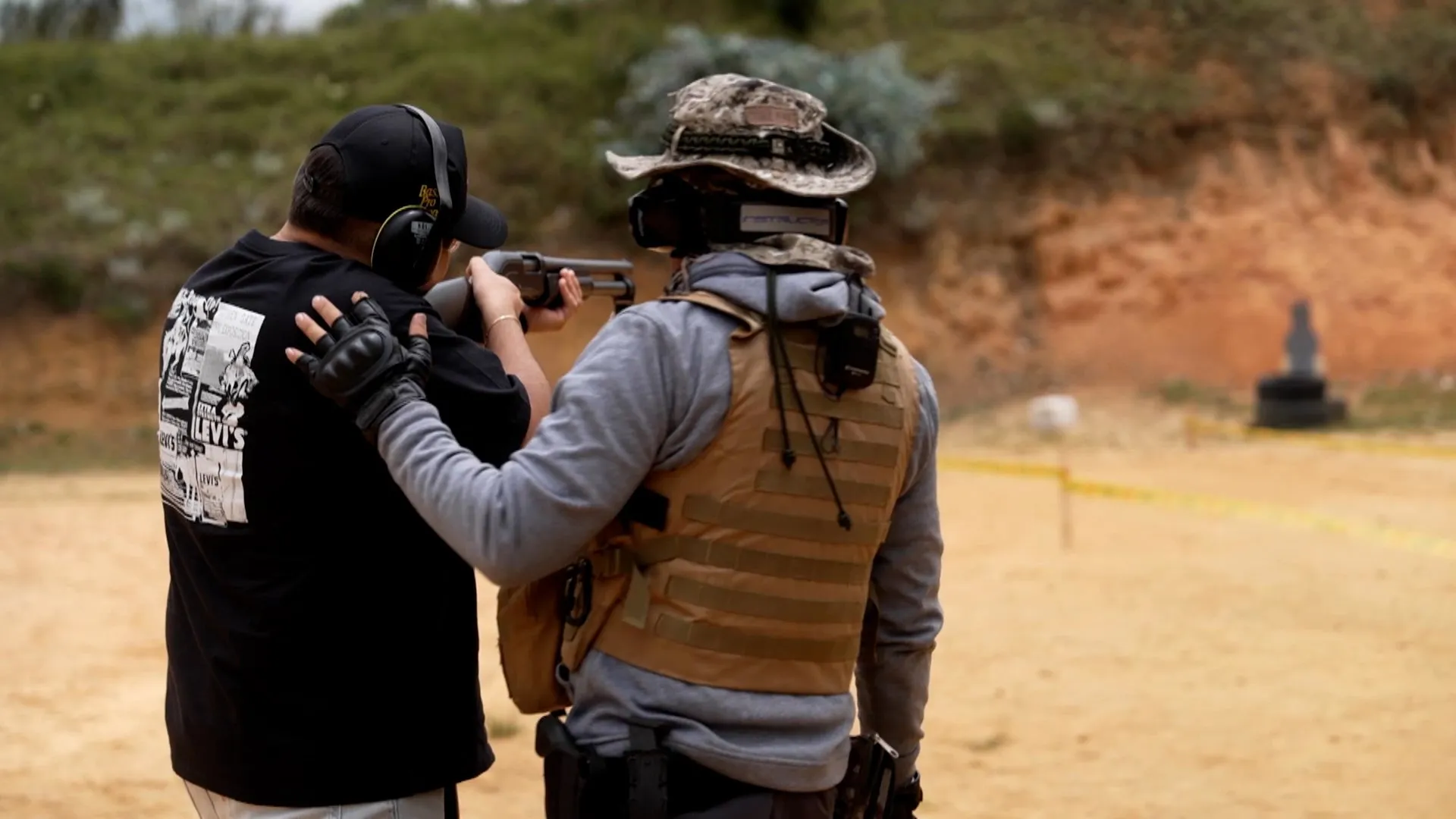
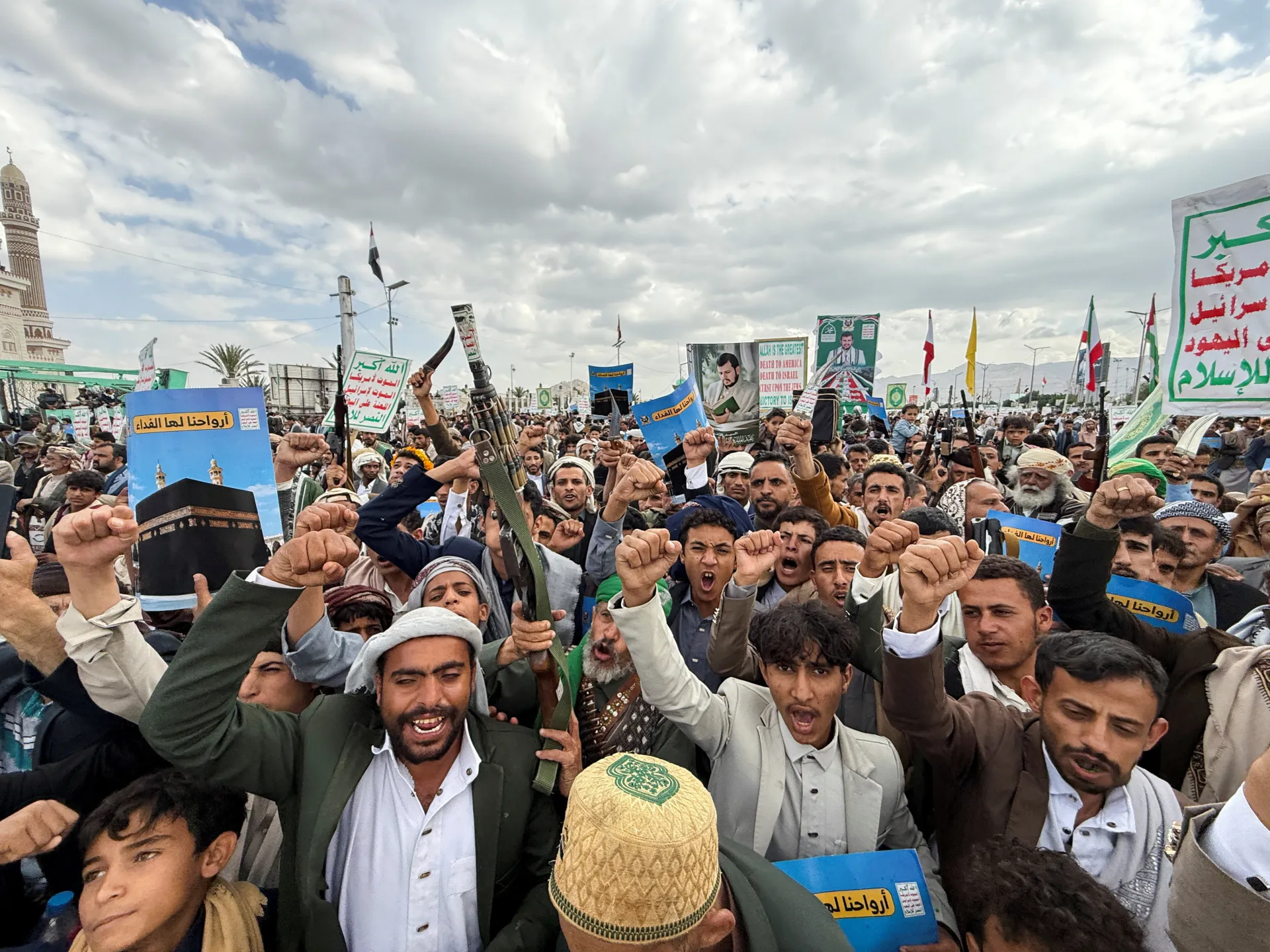







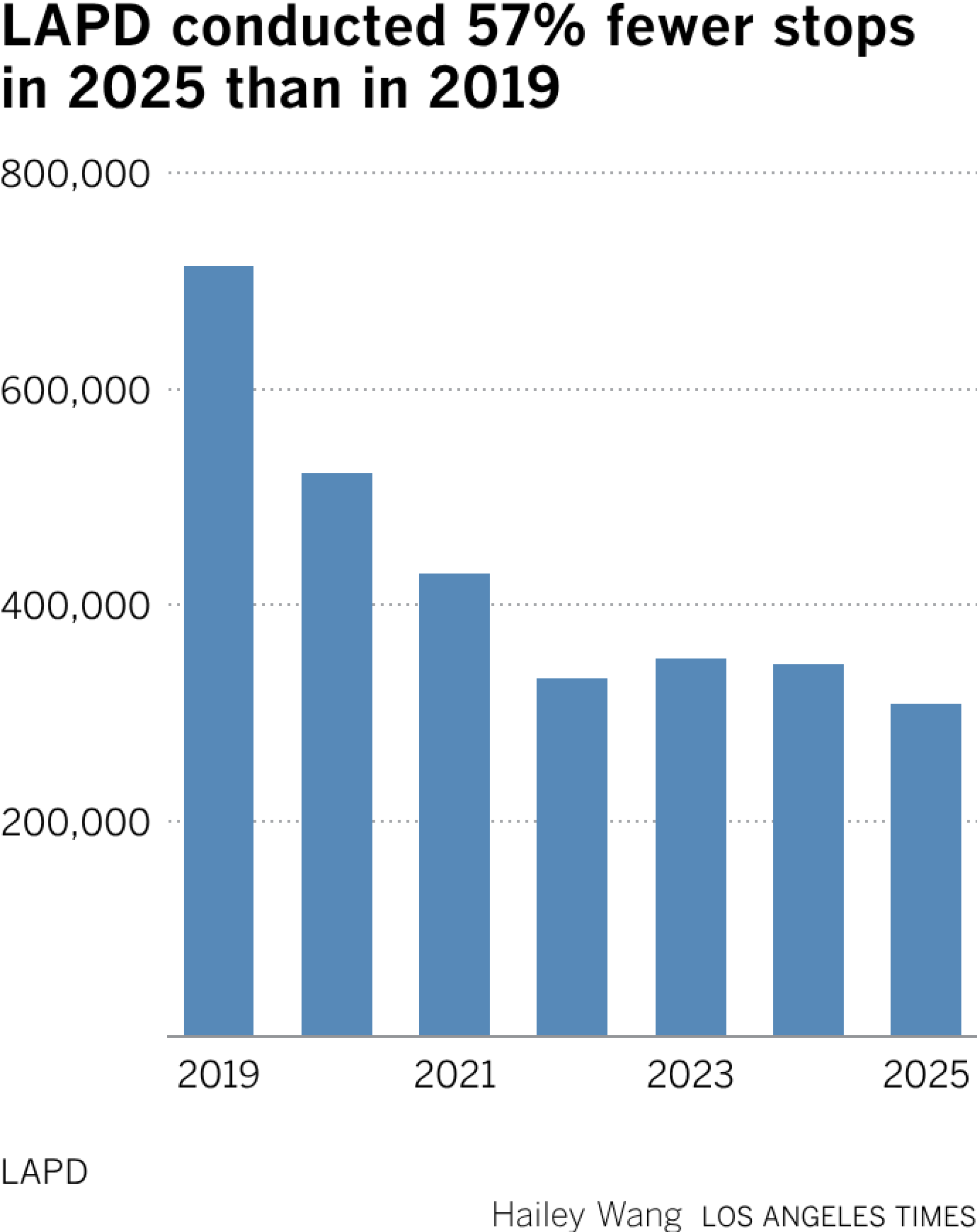

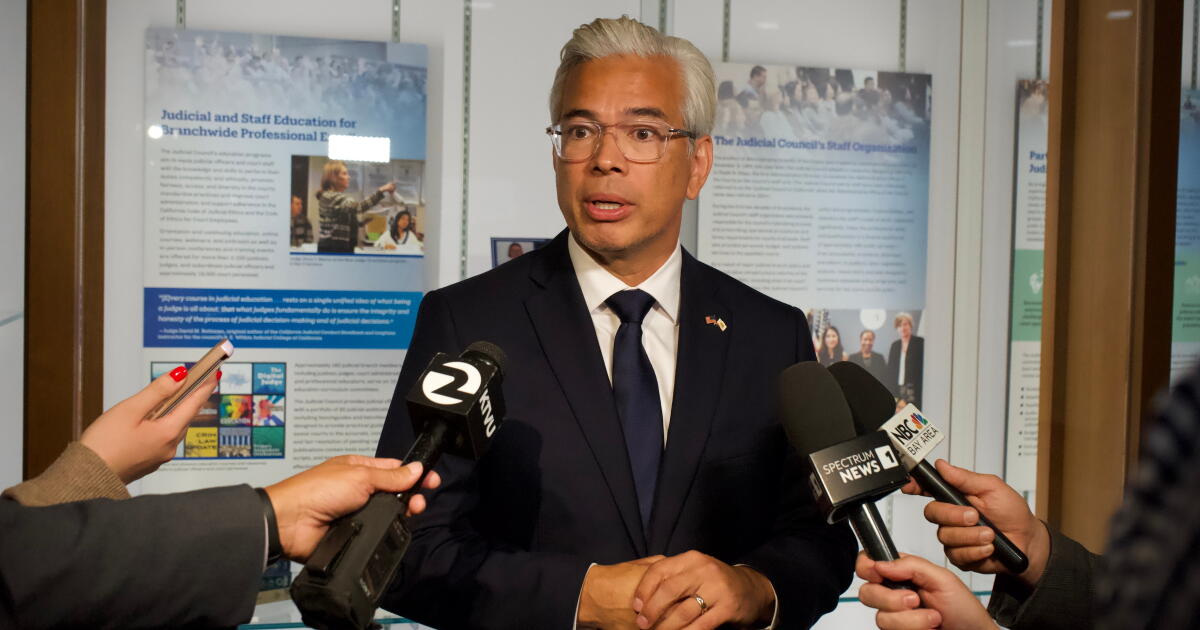
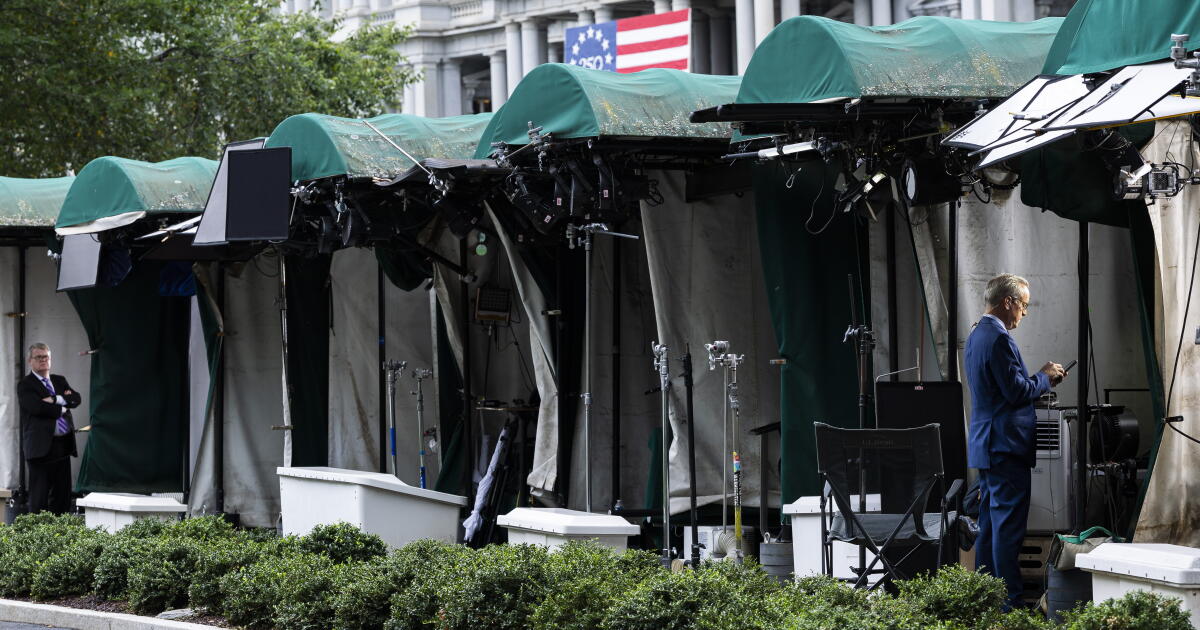


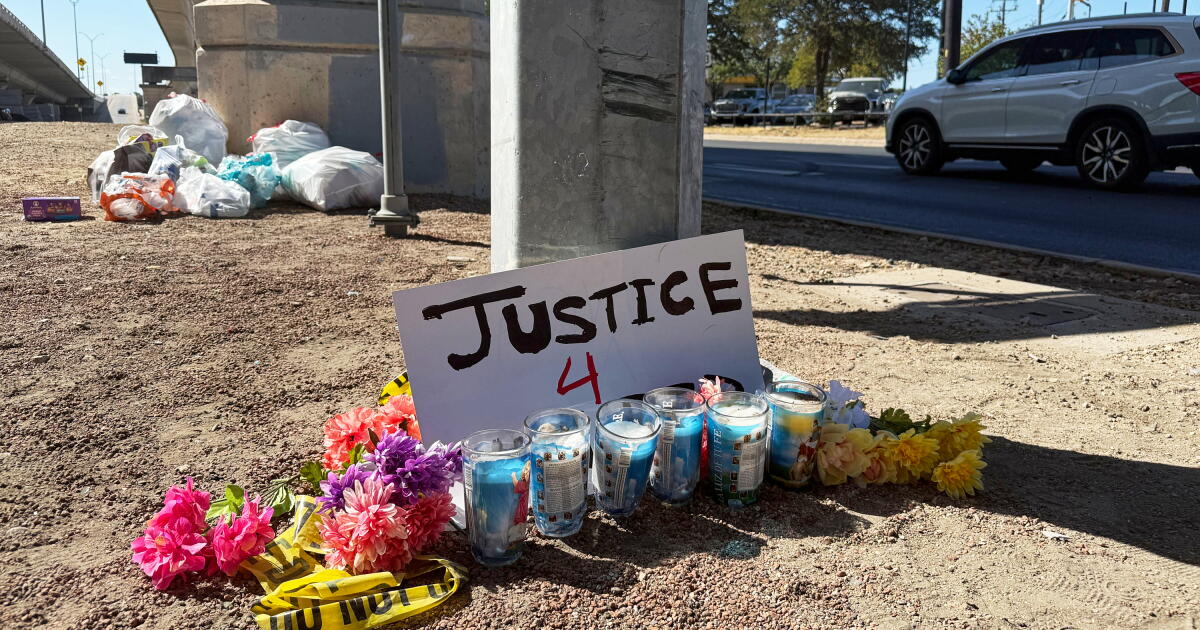
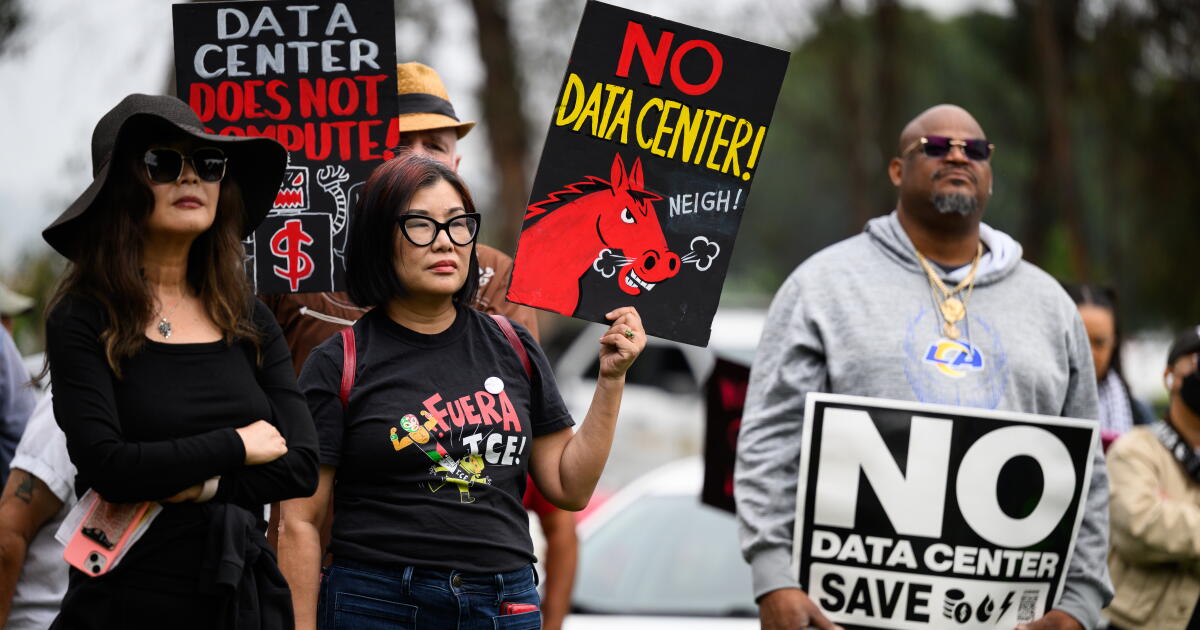
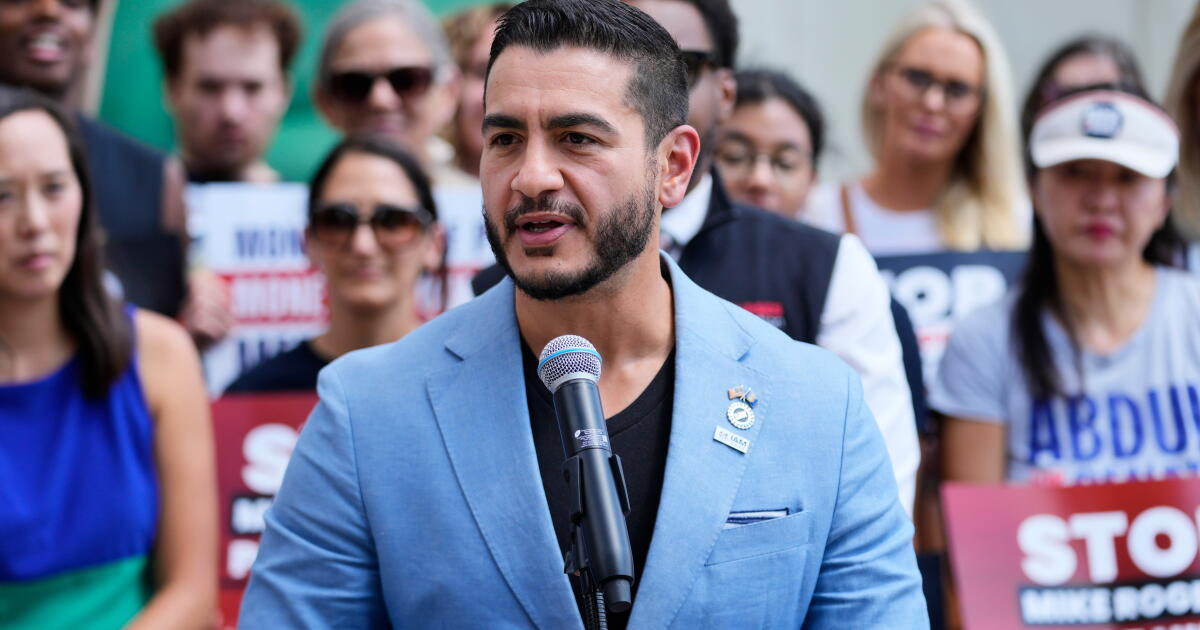
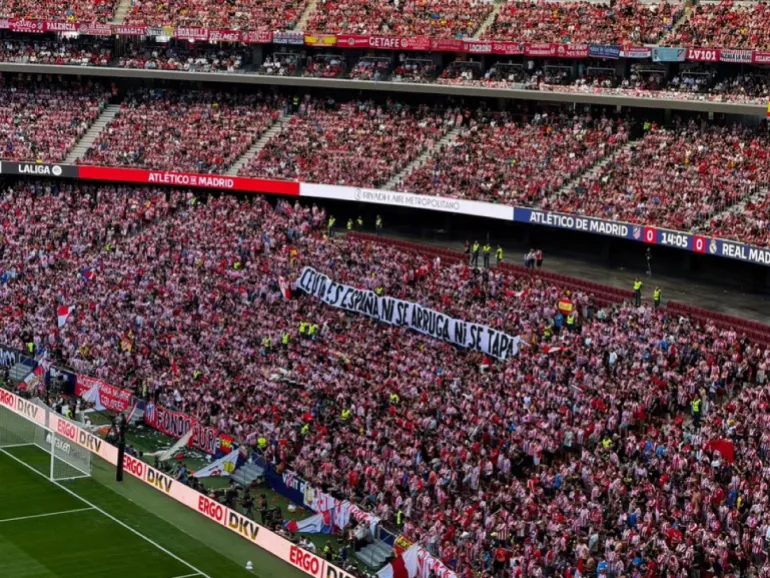
![Fans hold a banner during the Atletico Madrid vs Real Madrid match in the Spanish La Liga at the Metropolitano Stadium in Madrid on Sunday, September 20, 2026 [Leyla Hamed/Al Jazeera]](https://i0.wp.com/occasionaldigest.com/wp-content/uploads/2026/09/Ceuta-banner-Atletico-Madrid-vs-Real-Madrid-Leyla-Hamed-1789993641.jpeg?w=640&ssl=1)

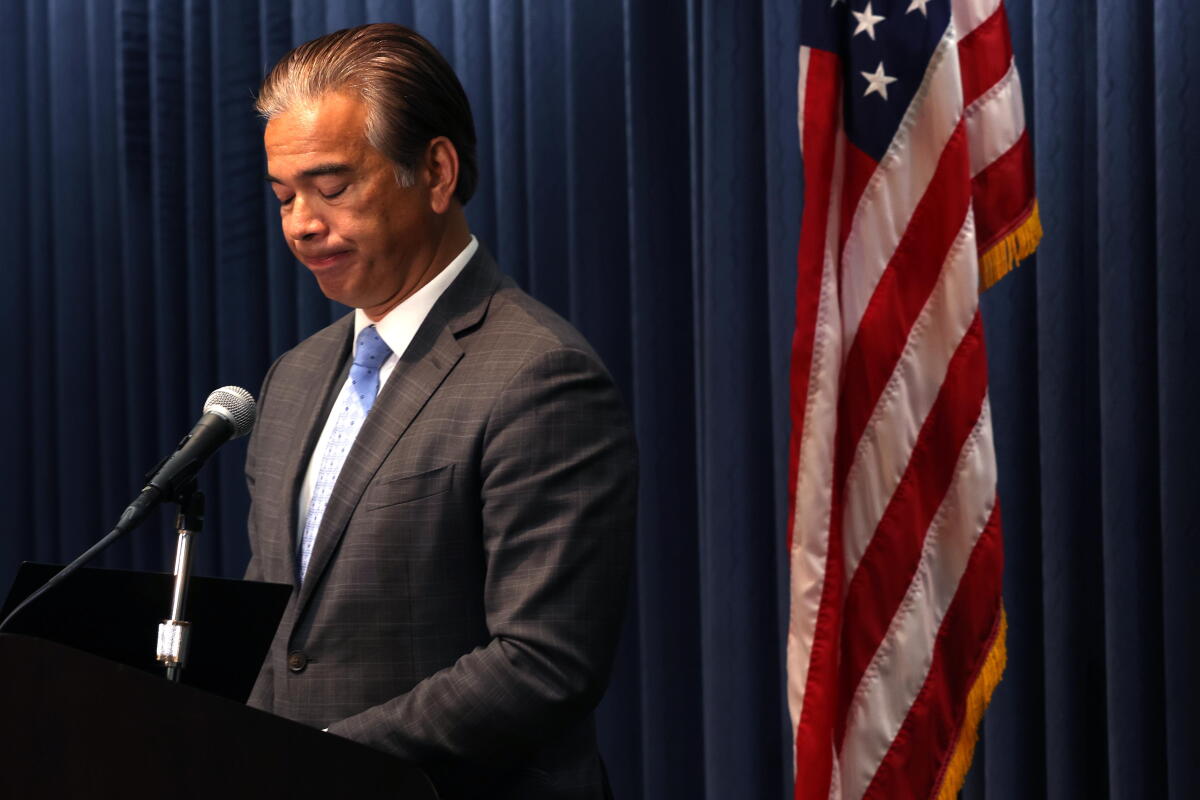


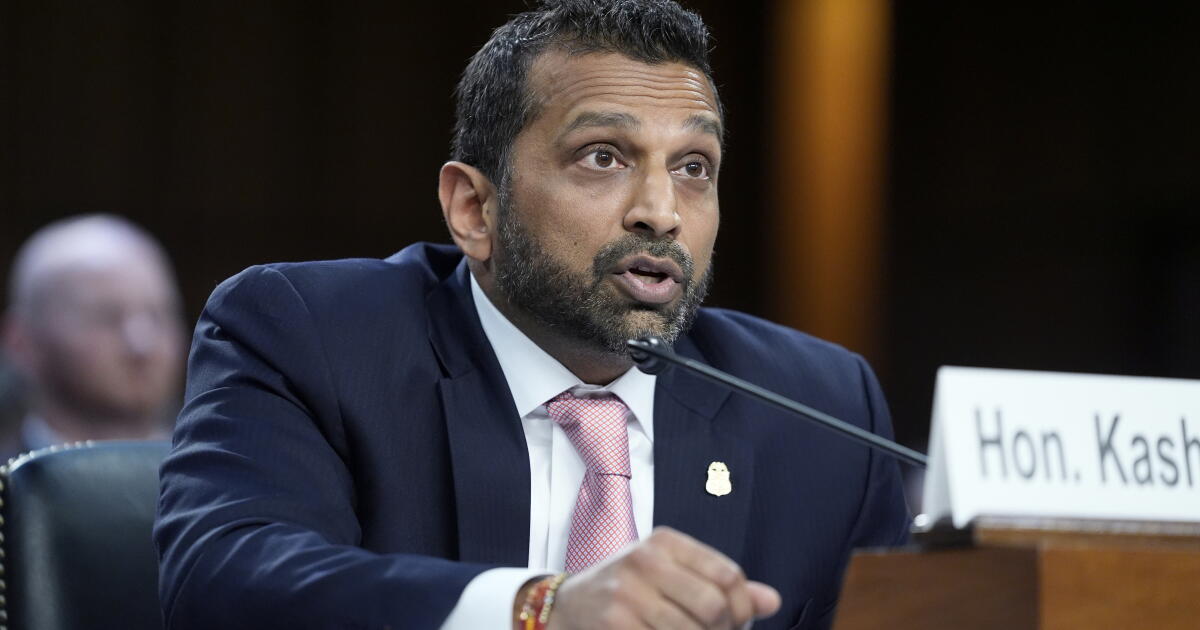

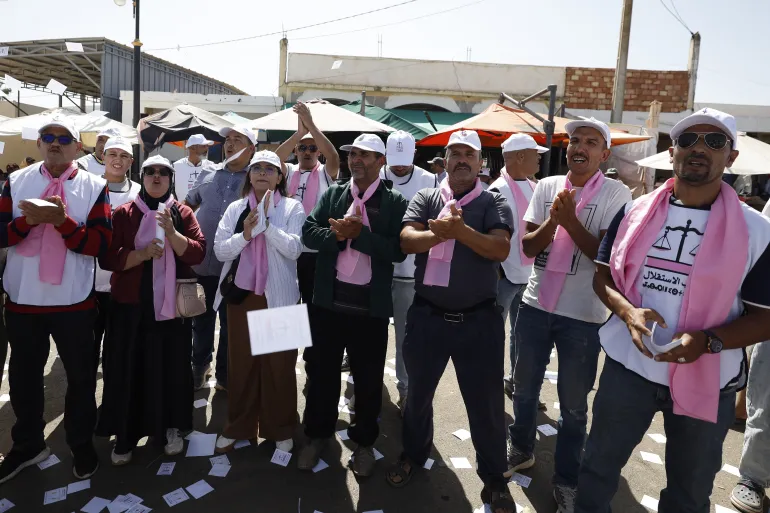
![Campaigners and supporters of the Istiqlal Party (PI) chant slogans during a rally at the weekly souk in the rural commune of Ait Ikkou, in the Khemisset region, on September 19, 2026, before Morocco’s legislative elections [AFP]](https://i0.wp.com/occasionaldigest.com/wp-content/uploads/2026/09/afp_6ab11af2690d-1789991666.jpg?w=640&ssl=1)
![Campaigners for the Popular Movement (MP) hand out leaflets to merchants at the weekly souk in the rural commune of Ait Ikkou, in the Khemisset region, on September 19, 2026, before Morocco’s legislative elections [AFP]](https://i0.wp.com/occasionaldigest.com/wp-content/uploads/2026/09/afp_6ab11b21c12e-1789991713.jpg?w=640&ssl=1)