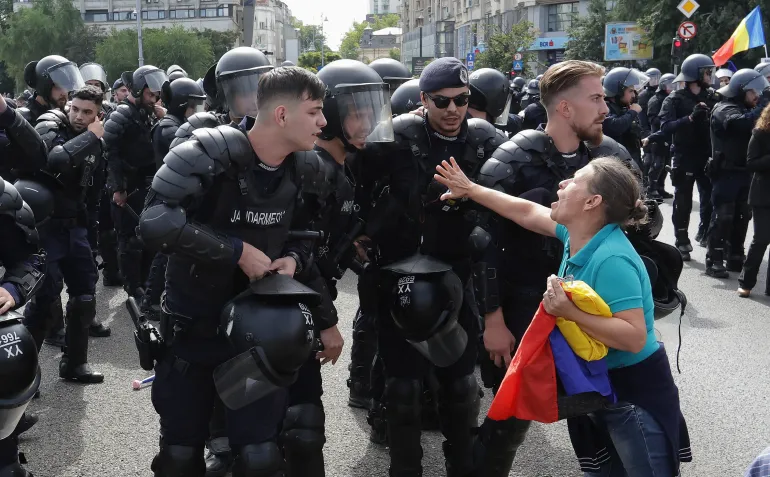
Nigeria’s security crisis is not only unfolding in forests, highways, villages and cities. It is unfolding inside the institutions responsible for confronting it.
The Nigeria Police Force faces a threat that receives far less attention than inadequate funding, obsolete equipment or personnel shortages: the gradual erosion of merit as the basis for advancement.
Every institution reveals its values through what it rewards. When competence, courage, and sacrifice are rewarded, then professionalism grows. But when proximity to power is rewarded, a different culture emerges.
Across Nigeria, police officers are risking their lives daily against insurgents, terrorists, organised armed groups, kidnappers, and violent criminals. Yet many are watching a different reality unfold. They see colleagues whose careers were built around powerful politicians, governors, ministers, and other influential figures rise rapidly through the ranks, often ahead of officers who spent years in dangerous operational theatres.
Some officers remain Superintendents of Police (SPs) while coursemates have risen to Assistant Commissioners of Police (ACPs). Similarly, some officers are Deputy Superintendents of Police (DSPs) while their contemporaries have become Chief Superintendents of Police (CSPs), largely as a result of special promotions granted at different times. Due to these irregularities, an Assistant Commissioner of Police who has spent years on the frontlines can find themselves taking orders from a coursemate who has advanced higher than them, largely because of political connections and privileged appointments rather than demonstrated operational excellence.
Promotions signal to young officers and the outside world what behaviour the institution values. If political visibility matters more than operational excellence, ambitious officers will pursue access instead of experience. Dangerous assignments become career risks rather than opportunities for leadership. No security institution can survive such incentives.
This is not the time for a leadership pipeline shaped by patronage, but a time for leaders tested under pressure and promoted because they have demonstrated competence.
The Police Service Commission exists to protect the integrity of promotions and shield them from political influence. That responsibility has never been more important. The Commission has tried to tie promotion to examination, but has not been able to completely resist the pressure to award “special promotions”. Consequently, officers have questioned promotion outcomes that appear disconnected from performance, operational achievements and professional record. Whether every complaint is justified is not the point. Confidence in the system is eroding.
As thousands of police officers converge in Abuja for promotion examinations, this conversation must be a wake-up call for the institution. The credibility of the process matters as much as the process itself.
The consequences extend beyond morale. A police force that ceases to reward merit eventually ceases to attract and retain its best leaders. When this happens, strategic thinking suffers, professional standards decline, operational effectiveness weakens, and public trust erodes.
These concerns are compounded by longstanding allegations of corruption, extortion, abuse of authority and weak accountability. The EndSARS protests reflected years of public anger over police brutality and impunity. Although reforms were promised, many Nigerians remain unconvinced that accountability has become deeply embedded within the institution.
Merit is not only about promoting the best. It is about ensuring that leadership positions are occupied by individuals whose conduct strengthens public trust. Officers who demonstrate integrity, discipline, and excellence must see those qualities rewarded. Officers whose records are tainted by corruption, abuse, or chronic underperformance should not continue advancing without scrutiny.
Citizens are also noticing a troubling pattern. Some officers attached to powerful political figures are increasingly perceived as beneficiaries of privileges unavailable to most of their colleagues.
The reforms required are straightforward. Promotion criteria should be transparent and publicly accessible. Exceptional promotions should remain exceptional and be clearly justified. Service in high-risk operational environments should carry significant weight. Promotion records should face greater scrutiny. The Police Service Commission must demonstrate visible independence from political pressure.
Nigeria is moving steadily toward state police. If we do not fix the obvious gaps in the federal police before 36 states establish their own police services, the consequences could be chaotic. State policing requires a strong, disciplined, and professional federal police capable of setting standards, enforcing accountability and preventing abuse. A weak federal police cannot effectively keep state police in check.
The future leadership of the Nigeria Police Force is being determined today. Every promotion creates tomorrow’s commanders, investigators, and strategists.
A system built on merit produces leaders. A system built on influence produces loyalists. Nigeria cannot afford a police force where political proximity outranks professional excellence. The country is already paying too high a price for failure.
The editorial highlights a critical issue within the Nigeria Police Force: the diminishing role of merit in promotions, overshadowed by political connections.
It contends that rewarding political proximity over operational excellence weakens the institution’s integrity and deters talented officers, ultimately endangering public trust and operational effectiveness.
To restore credibility, the editorial advocates for transparent and merit-based promotion criteria, emphasizing the importance of recognizing officers who demonstrate integrity and competence. It warns of the dire consequences if the federal police fail to address these issues before state police services are established, as current leadership decisions shape future command and strategic capabilities.
Get our in-depth, creative coverage of conflict and development delivered to you every weekend.
Subscribe now to our newsletter!
CHICAGO — A spate of shootings in Chicago has led to seven deaths and at least 38 injuries since Friday evening, police say, prompting President Trump to renew his call for a military intervention in the nation’s third-largest city.
It is the latest in a series of threats made and interventions ordered by the Republican president against a Democratic-led city, including Los Angeles.
“Why isn’t Governor Pritzker calling me for help. I could make Chicago a safe City in ONE MONTH, in ONE YEAR, it would be one of the safest!!!” Trump said in a Sunday morning post on social media.
The office of Illinois Gov. JB Pritzker, a potential 2028 Democratic presidential contender who has repeatedly rebuffed Trump’s calls for a military intervention, did not immediately respond to a request for comment.
Under Trump, National Guard troops have been deployed on crime-fighting missions in Democratic-led cities including New Orleans, Washington and Memphis, Tenn.; and Marines and Guardsmen were sent to L.A. last year amid protests over federal immigration raids.
Although Chicago Police Department data show a slight increase in shooting incidents compared with the first half of last year, violent crime rates have generally dropped in the city over the last few years, in parallel with national trends.
Preliminary information shared by Chicago police indicate there have been at least two dozen shooting incidents since 5 p.m. Friday. Those killed by gunfire include a 21-year-old shot in the chest Sunday, an 18-year-old shot in the armpit Saturday evening and a 50-year-old shot in the chest Friday.
At least 12 people in a crowd on a Chicago street suffered gunshot wounds Friday evening after an SUV pulled up and two people inside started shooting, police said.
The eight men and four women in the group ranged in age from 17 to 47. They were being treated at four hospitals. Police said another man suffered unknown injuries and refused medical treatment.
That shooting happened on Juneteenth, a holiday that celebrates the end of slavery in the U.S. Earlier Friday, former President Obama and former First Lady Michelle Obama welcomed the first visitors to his presidential center on the South Side.
“What should have been a night of celebration and community reflection for Juneteenth was shattered by a horrific act of violence,” Mayor Brandon Johnson said in an X post Saturday. “My thoughts and prayers are with the victims and their loved ones.”
“Violence has no place in our city, and those responsible will be held accountable,” he said.
NEW YORK — A 51-year-old man fell to his death from an upper deck of Madison Square Garden during a rock concert Saturday night, police said.
Officers responding to a 911 call around 9:51 p.m. found the man unconscious and unresponsive with injuries indicating a fall from an “elevated position,” New York City police said. Police did not say how far the man fell, but said he was in Section 300. They declined to release his name.
The man was with his wife, according to police. He was taken to a hospital, where he was pronounced dead.
The rock band Goose was performing. In a statement on Facebook, the band said it was “deeply saddened and heartbroken to learn of the tragic event that occurred.”
“Officer, abeg! I go tell you everything. Na my friend na him deceive me. E de Sapele, I go carry you go the place. I no know anything concern. Officer!”
These were the last words of 28-year-old Oghenemine Ogidi before he was shot at close range by Usman Nuhu, an Assistant Superintendent of Police (ASP), on April 26, 2026, in Effurun, Delta State, South South Nigeria. Oghenemine died instantly from the gunshot.
A disturbing video had captured him speaking Nigerian Pidgin while begging for mercy from the police officer with his hands and legs tied. He was said to have visited the Effurun Main Park along the Warri-Sapele Expressway to collect a waybill for a friend. However, transport union workers intercepted the parcel, which allegedly contained a Beretta pistol and ammunition. The transport workers informed the Uvwie Area Police Command.
At the park, the police, led by ASP Usman, a former member of the disbanded Special Anti-Robbery Squad (SARS), arrived in a 2010 Toyota Sienna with other officers, supposedly to intervene and arrest the suspect, who had already been restrained by the transport unionists. The police whisked him away from the scene and took him to the front of the Ekpan Police Station in the state, where Usman allegedly shot him three times, while the other officers watched.
The horrific incident triggered a cascade of criticism against the police on the internet, with many condemning the extrajudicial operations of ASP Usman and other officers in the country. Before his death, Oghenemine was an up-and-coming musical artist and the second child in the family to have been killed by the police. The mother of the slain artist said his elder brother was also killed in 2022 by a high-handed police officer.
Human rights defenders and lawyers have condemned the incident, stressing that it betrayed Nigeria’s judicial system. Abba Hikima, a human rights lawyer, told HumAngle that it is unjust for a police officer to execute the most severe form of criminal justice without a fair trial or proper judicial process in any case. He emphasised the need for swift justice for the victim.
“If someone is found culpable or liable for the allegations against him and a judgment of a death sentence is passed, even the court has to hand that out to the executors of the judgment, which is a department of its own; even the judge cannot do that. It is the sheriffs of the court and the executors that execute the judgment of the court,” Abba said, noting that Usman’s job was to arrest, investigate, and charge the suspect in court so that justice could be administered accordingly.
Oghenemine’s murder forms a part of the troubling pattern of extrajudicial killings that have plagued Nigeria for decades, eroding public trust in law enforcement and fuelling cycles of protest and repression.
A disturbing pattern
Many civilian lives have been lost to police extrajudicial killings, ill-treatment, and abuse of power. Oghenemine only fell victim to a policing system enmeshed in impunity and brutality. Far worse cases have occurred in the past, and disturbing incidents of police officers unleashing cruelty against civilians continue to disrupt Nigeria’s civic spaces.
In 2005, for instance, six young traders were killed by some police officers during a supposed anti-robbery patrol. The traders were said to be returning from a nightclub in Abuja, North Central Nigeria. One of them, Augustina, had allegedly rejected the advances of a senior police officer, Danjuma Ibrahim, leading to a bitter confrontation. The angry Danjuma then told officers at a nearby police checkpoint that armed robbers were approaching. When the group arrived in their car, the police blocked them and opened fire. Four died instantly, while two survivors were taken away and left to die. The police had reportedly planted weapons on their bodies to frame them as criminals.
The killings sparked outrage across Nigeria, with widespread condemnation of police brutality and impunity. Then-President Olusegun Obasanjo ordered a panel of inquiry, which confirmed that the victims were innocent traders and not armed robbers. Findings from the panel revealed the deliberate framing of the victims and exposed the systemic abuse of power within the police force. The case became emblematic of the dangers of unchecked authority and the lack of accountability in Nigeria’s law enforcement system.
Image of ‘Apo six’ killed by police in 2005. Photo: Family members.
It took more than 11 years for justice to be partially served. In 2017, two of the six policemen involved, Ezekiel Acheneje and Baba Emmanuel, were sentenced to death for their roles in the killings, while others were discharged.
The Apo Six case remains a relevant example of extrajudicial killings in Nigeria, projecting a system that harbours police misconduct and the long struggle for justice faced by victims’ families. Between 2020 and 2023 alone, 848 Nigerians were victims of extrajudicial killings, according to Global Rights’ Mass Atrocities Tracker.
During the #EndBadGovernance protests in 2024, several protesters were killed in Kano, Jigawa, Katsina, and Kaduna, with experts raising concerns over growing police brutality. In Oghenemine’s case, however, the Nigerian Police Force seems to have moved swiftly to dismiss the officers involved and hand them over for prosecution.
“The Force does not shield officers who violate the law. No rank, no position, and no circumstance will be permitted to place any officer above accountability,” DCP Anthony Placid, the Police spokesperson, said in a statement at the time.
On June 1, a High Court in Delta State ordered the detention of five police officers over the alleged killing. The officers – ASP Usman Nuhu, ASP Onoloko Dauroupamo, ASP Okoh Kelechi, Inspector Goodluck Kingsley, and Inspector Omonigho Ahweyevu – were arraigned before Justice Marshal Onome Umukoro under Suit No. THC/ASB/CR/M/66C/2026. The court directed that they be remanded at the Ogwashi‑Uku Correctional Centre pending legal advice from the Directorate of Public Prosecutions (DPP) and adjourned the matter until June 15, 2026, for further proceedings.
On the scheduled hearing date, Harrison Gwamnishu, a human rights activist who has closely followed the case and was present at the High Court in Asaba, revealed that the DPP had filed the necessary information before the court. He noted that the matter is now awaiting legal advice before proceedings can continue.
The court document. Photo: Harrison Gwamnishu.
“The burial date has not yet been fixed, pending the conclusion of the trial,” he noted.
The activist emphasised that the murder of Oghenemine symbolises Nigeria’s ongoing challenges with police reform, noting that this incident shows the critical need for reform, accountability, and the protection of human rights. He added that moving forward, the Nigerian police should begin to use body cameras, as they will help reduce the incidents of extrajudicial killings of suspects who are supposed to be charged in court in the country.
“Even though Nigeria stands at a crossroads, I believe that justice will be served, and the judge has ordered that some of the hearings be delivered online to avoid technicalities, even right from the correctional centre. When there is accountability, justice is possible,” the activist said.
Get our in-depth, creative coverage of conflict and development delivered to you every weekend.
Subscribe now to our newsletter!
Nigeria’s policing system has long been associated with excessive use of force. SARS, for example, was established in 1992 as a branch of the police under the Criminal Investigation Department (CID) and was designed to find a lasting solution to violent crimes, specifically armed robbery, kidnapping, and carjacking across the country. However, it became notorious for torture, extortion, and unlawful killings.
Despite repeated promises of reform, the culture of impunity persisted. Amnesty International, a global human rights organisation, described the promises of Nigerian leaders to reform the police as “ineffective”. In its 2016 investigation, the organisation painted a damning portrait of SARS, exposing how the unit had strayed far from its original mission of tackling violent crime. SARS officers were accused of turning torture and extortion into a profitable enterprise, routinely brutalising detainees to extract confessions or money.
The report documented harrowing abuses, including beatings, shootings, starvation, and mock executions. Detainees were held in notorious centres such as the “Abattoir” in Abuja, where overcrowding and inhumane conditions compounded the suffering. Despite clear evidence, officers implicated in torture were rarely suspended or prosecuted; instead, they were transferred to other stations, perpetuating a cycle of impunity.
Beyond violent crimes, SARS extended its reach into civil disputes and business disagreements, exploiting its power to intimidate and extort. Victims reported theft of property, raiding of homes, and confiscation of valuables, with families describing how officers stole cars, emptied bank accounts, and looted homes during arrests.
The #EndSARS protests of October 2020 were a watershed moment in Nigeria’s struggle against police brutality. Sparked by years of abuses by SARS officers, the protests drew thousands of young Nigerians into the streets, demanding an end to extrajudicial killings, torture, and extortion. The movement culminated in the Lekki Toll Gate massacre, where security forces opened fire on peaceful demonstrators, killing and injuring dozens. According to Amnesty International, the government’s denial and lack of accountability deepened public mistrust.
“These shootings clearly amount to extrajudicial executions. There must be an immediate investigation, and suspected perpetrators must be held accountable through fair trials. Authorities must ensure access to justice and effective remedies for the victims and their families,” Osai Ojigho, former country director for Amnesty International in Nigeria, said.
The death of Oghenemine highlights the same issues that triggered the EndSARS protests: unchecked police violence, lack of accountability, and the erosion of public trust. However, extrajudicial killings are not confined to SARS alone. Regular police units, military detachments, and other security agencies have been implicated in unlawful killings during routine patrols, protests, and even minor disputes.
For instance, in April 2026, Abdulsamad Jamiu, a youth corps member, was shot in Abuja by Guards Brigade personnel. A similar incident occurred elsewhere on January 1, when Timothy Daniel, a 13-year-old boy, was killed by a soldier in Akwa Ibom. In May 2025, Japhet Njoku, a security guard, died in police detention at Tiger Base, Imo State, after severe beatings. Experts say this systemic problem reflects weak accountability structures, inadequate training, and a justice system that rarely prosecutes officers for abuses.
“If the lives of human beings can be taken by security personnel, whether or not they have been found guilty of any crime or not and no matter how harsh that crime is, someday somewhere, somebody may be framed for a similar offence, and his life will also be taken unjustifiably,” human rights lawyer Abba warned.
Syrian journalist Mousa al-Omar reportedly filed a complaint about Akkad’s social media comments prior to his arrest.
British Syrian activist Hassan Akkad has been detained by security forces in Damascus, in an alleged response to his online comments criticising a prominent journalist.
Akkad, founder of the Give Us the Money That You Owe! campaign, was taken into custody on Wednesday at about 9:45pm local time (18:45 GMT) while at a cafe in the capital’s al-Malki neighbourhood, the statement said.
Recommended Stories
list of 3 itemsend of list
His detention appears to be related to a legal complaint filed by Syrian journalist and presenter Mousa al-Omar in relation to “Hassan’s social media activities and public comments”, the campaign reported.
It added that he was summoned by the cybersecurity branch on June 4. Al Jazeera understands that Akkad is still detained.
“He later became aware that additional cases had also been filed against him, although he was not informed of the identities of the complainants,” the campaign said.
Al Jazeera reached out to the Syrian government regarding he case but has yet to receive a response regarding the activist’s arrest. Public Prosecutor Judge Hossam Khattab confirmed that Akkad had been detained due to a search warrant being issued for him, but that the case against him had been dropped.
Al-Omar told Al Jazeera that he had instructed his lawyer to tell the police that he had dropped the case against Akkad and said he was “saddened” by what had happened.
“I am sorry for what happened to Hassan as a result of his mistakes; I followed the legal path under the cybercrime law… Everything I pledged, amounting to $700,000 in projects and cash, was paid in the donations,” he said.
Akkad’s campaign tracks financial commitments related to a public drive for donations to fund Syria’s reconstruction since the ouster of President Bashar al-Assad.
The activist reportedly criticised al-Omar on social media in recent weeks for allegedly failing to deliver on his financial pledges to the country’s rehabilitation efforts, pledges he claimed were worth thousands of dollars.
The campaign said after Akkad was summoned, he paused his online activities related to the case, to “allow the investigation and legal process to proceed”.
Akkad, a refugee and former English teacher in his late 30s, previously won BAFTA and International Emmy awards for documenting his journey from Turkiye to Europe after fleeing the Syrian civil war that began in 2011, during which he was arrested by the al-Assad’s authorities.
He eventually settled in the United Kingdom in 2015, returning to Syria after years in exile when al-Assad fled the country.
According to witness accounts cited in the statement, five plainclothes security officers entered the coffee shop where Akkad was meeting with several journalists.
Witnesses said the officers initially requested Akkad’s mobile phone before informing him that he was being arrested.
His lawyers said the arrest raises questions about whether authorities followed established legal procedures.
“No legal basis for the arrest … was presented at the time of his detention,” the statement said,
It added that since the allegations appear to be related to his online commentary, the arrest raises “broader concerns regarding the protection of freedom of expression”.
The statement further questioned the reported use of a cybersecurity law enacted during the rule of al-Assad, arguing that reliance on such legislation “appears inconsistent with the interim government’s commitments to expand protections for freedom of expression following the collapse of the previous regime”.
The United Kingdom’s Court of Appeal has ruled that the British government was right to proscribe the Palestine Action activist group as a “terrorist” organisation last year.
Palestine Action is a British protest group which was founded six years ago and describes itself as a movement “committed to ending global participation in Israel’s genocidal and apartheid regime”.
On Monday, police made more arrests of protesters demonstrating in support of Palestine Action outside the Court of Appeal in London.
Since the group’s proscription, which also bans support for proscribed groups, about 3,000 people have been arrested.
The Metropolitan Police welcomed the ruling and said it would continue to arrest those who protest in support of the group.
Here is what we know about the ruling:
What has the Court of Appeal ruled?
The judgement released on Monday states: “The proscription of an organisation like Palestine Action is highly controversial. But it is a fundamental mistake to overlook the fact that Palestine Action overtly promotes unlawful violence amounting to terrorism”.
The ruling was made by a five-strong panel, including the two most senior judges in England and Wales.
Palestine Action, which was formally proscribed by the UK last July, is a British protest group founded six years ago. It says it uses “disruptive tactics” to target “corporate enablers” and companies involved in the manufacture of weapons for Israel, such as Israeli group Elbit Systems, Italian aerospace company Leonardo, French multinational Thales and Teledyne from the United States. The group has targeted British facilities linked to those companies.
In all, British police say action by the group has resulted in millions of pounds of criminal damage.
A court in London ruled on June 12 that four Palestine Action members convicted of criminal damage at a British facility owned by Israeli weapons group Elbit Systems near Bristol, west England, would be sentenced on the basis that their actions had a “terrorist connection”.
Why was this case brought?
Following the proscription of Palestine Action last year, the group’s co-founder, Huda Ammori, challenged the decision in the High Court. In February, the High Court ruled that the government’s “terror group” ban was unlawful and disproportionate.
The government immediately said it would appeal. “I am disappointed by the court’s decision and disagree with the notion that banning this terrorist organisation is disproportionate,” Home Secretary Shabana Mahmood said.
The judgement on Monday agreed with her. Its ruling states: “The Home Secretary had the institutional competence and the democratic accountability to make the decision. The Proscription Decision was consistent with the Home Secretary’s Proscription Policy and was proportionate. It was not unlawful.”
Days after the Brize Norton attack, members of parliament voted in favour of proscribing the group. That classified Palestine Action as a “terrorist” organisation, bringing it into the same category as armed groups such as al-Qaeda and ISIL (ISIS).
Critics decried the vote, arguing that while members of the group have caused damage to property, they have not committed violent acts that amount to terrorism. More than 130 high-profile public figures have spoken out against the proscription.
Other previous actions the group has taken include:
In 2021, members protested for six days on the roof of Elbit Systems’ subsidiary, UAV Tactical Systems in Leicester, until some were arrested by police.
In 2022, the group broke into a Thales equipment factory in Glasgow, causing damage to weapons worth more than a million pounds ($1.3m).
In 2024, 10 months into Israel’s genocidal war on Gaza, Palestine Action activists broke into an Elbit Systems UK facility near Bristol in southwest England, causing another million pounds of damage.
How has Palestine Action responded to the ruling?
In a statement read by a representative following the ruling, Palestine Action’s Ammori said the group will challenge the judgement in the UK’s Supreme Court.
“We will fight this all the way. We will seek permission to appeal to the Supreme Court and, if need be, take this to the European Court of Human Rights,” Ammori said.
The European Court of Human Rights (ECHR), established by the Council of Europe, allows individuals to hold member states accountable for rights violations through a dedicated court. When the ECHR finds a violation, its judgements are legally binding on the state concerned under the European Convention on Human Rights.
“We will not stop fighting to overturn one of the most extreme attacks on free speech and the right to protest in modern British history,” Ammori added.
“This unprecedented abuse of power has devastated the lives of thousands of people while silencing dissent over Israel’s slaughter of the Palestinian people during the genocide, when that dissent could not be more urgent.”
How have others reacted to the ruling?
Anas Mustapha, Head of Public Advocacy at CAGE International, said: “This ruling tells us exactly what these powers are for. They are not safeguards against violence, they are authoritarian tools for crushing dissent.”
Mustapha added: “No ruling from any court is going to convince people that their conscience is wrong, and no amount of legislation will make support for Palestine disappear. The only sustainable outcome is the abolition of these laws in their entirety.”
Thomas Bell, acting UK Director of Human Rights Watch, said: “This disastrous decision further cements the UK’s place among countries that are backsliding on human rights by classifying acts of protest as terrorism.”
“When Palestine Action members have committed criminal damage, that should be dealt with under normal criminal laws, not by misusing overbroad and poorly defined terrorism powers. Defining a protest group as terrorists has created an absurd situation where thousands of people peacefully holding up signs have been arrested,” Bell added.
NEW YORK — It was bedlam on Broadway as the New York Knicks won their first NBA championship in 53 years on Saturday night, with exuberant celebrations marred by mayhem and violence, including a shooting in Times Square.
Outside Madison Square Garden, a crowd watching on a big screen roared as the Knicks rallied from a 16-point deficit to beat the Spurs in San Antonio in Game 5 of the NBA Finals.
Soon after, tens of thousands of people filled the streets and the rowdiest among them were clashing with police, smashing windshields, scaling scaffolding, light poles and a statue, climbing into and atop school buses in Times Square and trying to hitch a ride on a moving fire truck.
Around 2 a.m., a 17-year-old was shot near 42nd Street and Broadway, police said. Bystander video captured the sound of at least seven shots and showed people crouching and running for cover. Police took the victim to the hospital because an ambulance could not get through the crowds, police said. A gun was recovered and three people were taken into custody.
Four people were stabbed or slashed, and one of the school buses, which was being used for World Cup transportation, was set on fire and engulfed in flames, police said. Other buses and five police cars were also damaged, police said.
In all, 63 people were arrested, with charges including assault on a police officer, criminal possession of a weapon, criminal mischief and disorderly conduct.
Knicks owner James Dolan, speaking in San Antonio after the game, urged fans to stay calm.
“We need to tell everybody in New York that we know that they’re celebrating, we want them to have a great time,” said Dolan, interrupting guard Josh Hart’s news conference. “Please be safe. Don’t get hurt; don’t hurt anybody.”
The city will officially celebrate the Knicks on Thursday with a parade and City Hall ceremony.
As the clock ticked to the final buzzer on Saturday night, anxiety that had dominated the game’s first three quarters gave way to euphoria. An orange-and-blue-tinted fever dream that started with the Knicks’ first playoff game two months ago ended in the third title in their 80-year history.
Fireworks boomed over Brooklyn and Central Park. Fans flocked to Times Square and ran through the streets. Outside the Garden, they sang the team’s anthem: “Go New York, Go New York, Go!”
Police officers and ambulance workers shouted, “Let’s go Knicks!” over loudspeakers in Brooklyn. Strangers shook hands and hugged. In the Lincoln Tunnel, where people were riding buses back from the World Cup at MetLife Stadium in New Jersey, drivers honked their horns in celebration.
“I’m so overwhelmed. I’m so happy,” said Mathieu Ogno of Long Island, who fought back tears as he soaked in the victory at a team-sanctioned watch party at Wollman Rink in Central Park.
Ogno wore the jersey of Knicks captain Jalen Brunson, whose 45 points propelled his team to victory and him to the NBA Finals MVP. Brunson’s gritty determination and chip-on-his-shoulder style have made him a fan favorite, embodying New York’s working-class ethos.
The Knicks’ championship — 19,392 days since their last — capped an extraordinary postseason for a franchise that hadn’t been to the NBA Finals since losing to the Spurs in 1999. Since April 23, the team has won 15 of 16 games, with its lone loss coming Monday in Game 3.
Their last title, in 1973, was also won on the road in a Game 5. Their first, in 1970, was won at home in a Game 7 thriller. Neither was celebrated with a parade.
“I’m happy to see my Knicks finally make it over the hump,” said Shawn Muoneke, 26. “I’ve seen them knock on the door. They were knocking on the door the past few years. But they finally made it over the hump, and I’m so happy to see it and I’m so happy I’m in the city to experience it.”
Muoneke, born a year after the Knicks’ last trip to the NBA Finals, started rooting for them when he was 10. He drove from Maryland to be in the city for Game 5 at the team’s Central Park watch party.
“I saw the ups, the downs and I watched the team come back up, and I was so happy to see them finally reach the highest echelon of stardom as a team,” Muoneke said.
After the Knicks’ win, he said, the vibes in the city “are the highest they’ve ever been.”
President Trump, a longtime Knicks fan who attended Game 3 at the Garden with Dolan, congratulated the team in a post on social media.
“What a year it has been but, even more so, what incredible playoff wins we have all witnessed, especially the last four — Maybe the greatest in the history of basketball,” Trump wrote.
With Brunson’s clutch performance, he added, “a superstar was born.”
After several dozen arrests throughout the playoffs and violence after Games 3 and 4 in New York that left officers injured and a teen in a coma, police girded for unrest as Saturday turned to Sunday.
“As we celebrate, be responsible, look out for one another, stay safe, be smart, and make this a night that reflects the very best of our city,” Mayor Zohran Mamdani said on social media. “Let’s go Knicks.”
Sisak and Lum write for the Associated Press. AP writer Emily Wang Fujiyama contributed to this report.
WASHINGTON — The interim chief of the Capitol Police apologized Tuesday for failing to prepare for what became a violent insurrection despite having warnings that white supremacists and far-right groups would target Congress.
Yogananda Pittman, in prepared testimony before Congress, said the Capitol Police “failed to meet its own high standards as well as yours.” She listed several missteps: not having enough manpower or supplies on hand, not following through with a lockdown order she issued during the siege, and not having a sufficient communications plan for a crisis.
“We knew that militia groups and white supremacists organizations would be attending,” Pittman wrote. “We also knew that some of these participants were intending to bring firearms and other weapons to the event. We knew that there was a strong potential for violence and that Congress was the target.”
Her admissions come as U.S. law enforcement investigates a number of threats aimed at members of Congress and as the second impeachment trial of former President Trump gets underway. A law enforcement official told the Associated Press that authorities have detected ominous chatter about killing legislators or attacking them outside the Capitol.
Trump supporters tore down fences and broke through doors and windows after an event in which the now-former president called on them to “fight” and “stop the steal.”
Inside the building, Congress was certifying the victory of President Biden. Five people died, including Capitol Police Officer Brian Sicknick, who was hit in the head with a fire extinguisher. A sixth person, another Capitol Police officer, later died by suicide.
The day after the riot, then-Capitol Police Chief Steven Sund said his force “had a robust plan established to address anticipated 1st Amendment activities.” Sund has since resigned, as have the sergeants at arms for the House and Senate.
Officers who have spoken to the AP described being overrun by insurrectionists who in many cases were more armed than they were. The officers said they were given next to no plan beforehand or communication during the riot.
There are conflicting accounts of why the Capitol Police did not have more backup. Pittman’s statement provoked a new round of finger-pointing.
In her testimony, Pittman said Sund asked the Capitol Police Board, which oversees the department, to declare a state of emergency and allow him to request National Guard support, but the board declined. The Defense Department has said it asked the Capitol Police if it needed the Guard, but the request was denied.
A member of the Capitol Police Board denied Pittman’s claim after her testimony was released. J. Brett Blanton, the architect of the Capitol, said that Sund didn’t ask him for help and that there was “no record of a request for an emergency declaration.”
Several law enforcement and congressional reviews are underway.
Both Pittman and Timothy Blodgett, the acting House sergeant at arms, told Congress on Tuesday that they need stronger communications and more fortifications around the Capitol building. Blodgett called on Congress to prepare for future emergencies and offered training for any offices that requested it.
“You want people to have some level of access to the government,” said Rep. Tim Ryan (D-Ohio). But he noted that it’s also important that lawmakers feel protected and positioned to respond quickly to anything that might happen.
Anti-immigration protesters have torched buildings and vehicles in the capital of Northern Ireland, a day after a knife attack was captured in a graphic video.
Hundreds of protesters, many of them masked, gathered at several locations across Belfast on Tuesday evening. A bus and several cars were set alight, while a building on the edge of the city centre caught fire and its residents had to be evacuated.
Police helicopters patrolled above the city, and shops closed early.
British Prime Minister Keir Starmer described the initial knife attack, which took place in north Belfast late on Monday evening, as “sickening”.
The attack comes at a time of heightened tensions in the United Kingdom following the murder of a student who was handcuffed by police as he lay dying from stab wounds after his killer falsely alleged a racist attack.
It also follows repeated protests over immigration, with populist parties saying the UK’s asylum policy has allowed dangerous men into the country. There was anti-immigration rioting in Northern Ireland last year amid anger over an alleged sexual assault.
Immigration has become a highly charged political issue and has helped fuel the rise of the hard-right Reform UK and Restore Britain parties in opinion polls.
Northern Ireland’s political leaders and the region’s chief constable have urged people not to incite hate and fear or target particular communities.
An Air Canada plane is shown in 2025 at a gate at Montreal-Trudeau International Airport in Montreal, Quebec, Canada. Police said a former Air Canada captain faces fraud charges after flying without the correct license for 17 years. File Photo by Graham Hughes/EPA
June 9 (UPI) — A former pilot and captain for Air Canada faces fraud charges after an investigation showed he flew hundreds of flights over 17 years without a proper license, police said Tuesday.
Wall, who’d started his career with Air Canada in 1998, did not obtain the required airline transport pilot license in 2009 when he was promoted to captain, Deputy Chief Nick Milinovich said at a press conference.
That license requires a series of written exams. Instead, Wall allegedly used fraudulent licenses for Air Canada and Transport Canada (the country’s federal transportation department)and then attempted to conceal that in a false police report, Milinovich said.
“This is very similar to a doctor who that is licensed to practice family medicine but is doing brain surgery in their office,” Milinovich said.
Air Canada said that Wall was immediately removed from duty when the fraud was discovered, The BBC reported. Airline officials said passengers were never at risk and that Wall was completely trained with a valid commercial pilot license, just not the ATPL.
Police said Wall flew several types of airplanes in a total of 900 domestic and international flights. The investigation through Transport Canada started when officials noticed inconsistencies with his license documentation in a routine evaluation. The Peel Regional Police then started a criminal investigation. The charges include fraud, forging documents and possession of counterfeit mark.
Rams offensive lineman Alaric Jackson was arrested on suspicion of felony domestic violence Monday night in Los Angeles, according to a person with knowledge of the incident not authorized to speak publicly.
Jackson was arrested shortly before 11 p.m. after police responded to a call at a home in West Hills. Upon arrival, police determined that the woman involved in the incident had recorded the interaction and noticed scratch marks on her arms. Jackson was arrested and later booked into jail on a $50,000 bond, according to jail records.
The specific charge Jackson was arrested for is for a person who “willfully inflicts physical or corporal injury resulting in a ‘traumatic condition’ [such as a bruise, scratch, swelling, or internal injury] on an intimate partner.”
The Los Angeles County District Attorney’s Office is reviewing the case for potential charges.
“We are aware of the incident regarding Alaric Jackson, and we take these matters very seriously,” the Rams said in a statement. “Due to this being an ongoing legal situation, we cannot comment further at this time.”
Jackson, 27, entering his sixth season with the Rams as one of their anchors on the offensive line, was suspended by the NFL in 2024 for violating its personal conduct policy.
In November, a woman filed a lawsuit against Jackson alleging he recorded her without her consent during sex. The woman alleged that Jackson repeatedly refused to delete the video and then taunted her with it. The woman reported the incident to the NFL, but the civil case was dismissed.
Jackson, who joined the Rams as an undrafted free agent in 2021, signed a three-year deal with the team in February 2025 that included $35 million in guarantees.
Times staff writers Richard Winton and Gary Klein contributed to this report.
Gunshots, water cannon and tear gas have been used by Kenya’s police in the central town of Nanyuki, where hundreds of protesters lit fires and hurled stones at law enforcement officers as they demonstrated against a quarantine centre for US citizens exposed to Ebola.
Tuesday’s violence came as the proposed quarantine centre at the town’s Laikipia Air Base has caused anger among Kenyans who accuse the United States of shifting the risks of caring for people exposed to the Ebola outbreak in eastern Democratic Republic of the Congo and Uganda onto Kenya.
Kenya has never recorded a case of Ebola, and many residents oppose bringing potential carriers of the virus into the country.
The centre is designed to have 50 isolation beds, run by US staff, and was nearing completion late last week.
Construction has continued despite a temporary halt order from Kenya’s High Court and vocal opposition from local politicians.
President William Ruto’s government has pledged to press ahead with the project, arguing that Kenya owes Washington for years of financial and technical support.
The US has committed $13.5m to support Kenya’s Ebola preparedness efforts.
At least 11 people were killed on Sunday during clashes between police and protesters in Pakistan-administered Kashmir’s Rawalakot city, capital of Poonch district, before a major demonstration scheduled by a banned civil society group for Tuesday.
Authorities in Pakistan-administered Kashmir deployed federal paramilitary troops and issued a strict travel advisory before the Tuesday protest, which has gone ahead despite the restrictions.
Recommended Stories
list of 4 itemsend of list
Here is what we know about the latest unrest.
What’s happening in Pakistan-administered Kashmir?
Eleven people have been killed in clashes between the police and protesters, while more than 70 have been injured. The ban on the organisation, alongside regional grievances, set off the protests.
On Tuesday, Sardar Waheed Khan, commissioner of the Pakistan side of the Poonch district, a militarised region shared between Indian-administered and Pakistani-administered Kashmir, told the news agency Reuters that four police officers and a passer-by died “after miscreants shot at them”. Six protesters were killed, he said.
Police Chief Liaqat Malik said 23 security officials and 50 protesters were among those injured in Sunday’s clashes.
On Friday, local authorities issued an advisory urging visitors to avoid travelling to the area.
“The measure is advised to save intending visitors from any unexpected situation or inconvenience,” an unnamed official said in a statement issued by the region’s Press Information Department (PID).
“The government also requests those already in the territory for sightseeing or any other purpose to leave by Friday evening so that they do not confront any unpleasant situation,” the statement added.
Kashmir is a disputed Himalayan region which is claimed in full by both India and Pakistan, with China also controlling a portion of the territory. Pakistan-administered Kashmir – known locally as Azad Jammu and Kashmir (AJK) – is governed under a semi-autonomous system, with its own prime minister and legislative assembly, but ultimate authority resting with Islamabad. Its population exceeds four million people, according to the 2017 census. It is separated from India-administered Kashmir by what is known as the Line of Control (LoC).
The LoC is the 740km (459-mile) military border dividing the disputed Kashmir region between Indian-administered and Pakistan-administered territories.
Who is behind the protests?
The Jammu Kashmir Joint Awami Action Committee (JAAC) is a grassroots umbrella organisation that emerged in 2023 as the leader of a protest movement across the Pakistani-administered part of the region. The JAAC, led by activist Shaukat Nawaz Mir, represents traders and civil society groups.
On Friday, the local government proscribed the JAAC under a regional legislative framework in Pakistan-administered Kashmir called the Anti-Terrorism Act of 2014.
In a circular, the government’s home department claimed the JAAC “is engaged in terrorism, acted in a manner prejudicial to the peace & security of the State, involved in creating anarchy in the State by intimidating public, promoting hatred & creating sense of insecurity in society and public at large, etc”.
In the past, protests organised by the JAAC have led to violent clashes between protesters and security forces, leading to casualties.
In a video message on X responding to Sunday’s incident, Mir accused the authorities of unleashing violence in Rawalakot, saying, “The state has begun a massacre of our people in Rawalakot.”
In response, Khan, the commissioner of Pakistani Poonch, said, “The JAAC leadership is misleading the masses by terming it a massacre. The state’s action was meant to restore law and order.”
On Tuesday, the internet monitoring group NetBlocks said that its data showed that access to the web remained severely restricted in Pakistan-administered Kashmir for a third day in a row.
What is the trigger behind these protests?
These protests are against the reservation of 12 seats in Pakistan-administered Kashmir’s legislature for refugees from Indian-administered Kashmir who now live in other parts of Pakistan. If the refugees live in Pakistan-administered Kashmir, they are not eligible to contest for these reserved seats.
The region votes on July 27 to elect its next legislature, which has 45 seats in all — including the 12 reserved ones.
The JAAC is calling for the abolition of the reserved seats, arguing that all seats in the legislature must go to those who actually reside in Pakistan-administered Kashmir, and not those living in other constituencies scattered across Pakistan.
Abdul Jabbar Nasir, a journalist currently based in Karachi, but originally from a village near the LoC in the Gilgit Baltistan area, which is the majority of the Pakistan-administered Kashmir region, told Al Jazeera that the seats are reserved for those who migrated from Indian-administered Kashmir to Karachi or any other part of Pakistan in 1947.
Nasir explained that the reserved seats have existed in various forms since the late 1940s and were formalised in Pakistan-administered Kashmir’s 1974 interim constitution, which treats the region as a self-governing, autonomous state, with its own prime minister, president and courts, while defence, foreign affairs, currency and communications remain under Pakistan’s control.
“If the constitutional protection provided begins to be changed by these protesters, then I don’t think things can function,” Nasir said.
“It is essential for these seats to exist. If we abolish them, on one hand, Pakistan’s own case for Kashmiri statehood in the United Nations will be weakened, and India’s case will be strengthened,” he added.
He drew a parallel with India, noting that New Delhi historically kept a number of seats vacant in its parliament and the former Jammu and Kashmir assembly as a way of asserting that those bodies represented the entire former princely state, including areas under Pakistani control. If Pakistan now dismantles refugee representation in Pakistan-administered Kashmir, he warned, India could argue that both countries have effectively “regularised” their control over their respective portions of the disputed region.
Marathon talks between a federal ministerial team, including leaders from Pakistan and Pakistan-administered Kashmir, and JAAC leadership in late May failed to yield a breakthrough. This resulted in the JAAC announcing that the protest on Tuesday would proceed as planned.
On Sunday, a top court in Pakistan-administered Kashmir, called the Supreme Court of Azad Jammu and Kashmir, ruled that the 12 reserved seats are constitutionally protected, and a constitutional amendment would be needed to abolish the reservation.
“This ruling effectively closed the legal route for groups seeking to challenge the existing arrangement and intensified calls for protest by the [JAAC],” Raja Qaiser Ahmed, director for the Area Study Centre for Africa, North and South America at the Islamabad-based Quaid-i-Azam University, told Al Jazeera.
What are the deeper issues?
Experts say the current crisis is part of a deeper, long-running debate about governance, political representation, resource allocation and regional autonomy in Pakistan-administered Kashmir. The protest on Tuesday is the fourth such protest led by the JAAC.
“The current crisis reflects a broader and longer-term debate about governance, political representation, resource distribution, and regional autonomy in AJK,” Ahmed said.
“While the refugee-seat issue has become the focal point of the present mobilisation, it is intertwined with wider grievances that have surfaced repeatedly over the past several years.”
In September and October 2025, the JAAC officially released a comprehensive 38-point charter of demands and initiated a lockdown. The government, in response to a lockdown initiated by JAAC, imposed a complete communications blackout.
The protests had their roots in May 2023, when residents first protested skyrocketing electricity bills alongside widespread flour smuggling and acute shortages in subsidised wheat supplies. The movement hit its first major flashpoint in May 2024, when protesters set off on a long march towards Muzaffarabad. The ensuing violent clashes left at least five people dead, among them a police officer.
The 38-point charter remains the focal point of current tensions. The demands of the charter include economic subsidies, investigation of corrupt officials, social welfare and infrastructure, as well as the abolition of the 12 reserved seats.
Bilawal Bhutto-Zardari, chairman of the Pakistan Peoples’ Party (PPP), the party with the most seats in Pakistan-administered Kashmir’s Legislative Assembly, said on Sunday that he would meet Prime Minister Shehbaz Sharif to discuss the ongoing tensions in the region.
“Thirty-five out of 38 demands have been implemented,” Bhutto-Zardari said during a news conference in Islamabad, explaining that the rest of the demands are not feasible or have court orders barring their implementation.
“More fundamentally, the protests reveal an ongoing tension between constitutional arrangements linked to the broader Kashmir dispute and growing demands for greater local accountability and political participation,” Ahmed said.
“The debate is therefore not only about a specific set of assembly seats but also about competing visions of representation, governance, and the future political trajectory of the region.”
Emmerdale’s Charity Dingle made the brave decision to report her abuser to the police in powerful scenes, after Dr Todd’s disgusting assault left fans sickened on Sunday
15:19, 08 Jun 2026Updated 15:25, 08 Jun 2026
Charity Dingle vowed to stop Emmerdale villain Dr Todd in powerful and moving scenes on Monday(Image: ITV)
Charity Dingle vowed to stop Emmerdale villain Dr Todd in powerful and moving scenes on Monday.
This article contains details from the latest episode now available on ITVX, while it airs on ITV1 on Monday at 8PM. The character had been subjected to a horrific sexual assault moments earlier by the former doctor. After Todd continued to blackmail Charity for money over her baby lie, Charity spiralled.
After getting drunk she confronted Todd, and was cruelly made to believe they had come to a truce. Todd had comemnted on why she was really targeting Charity, while Charity passed out on the sofa.
It’s then that in dark scenes, Todd took advantage of Charity while she was out of it, and after hurling insults at her she sexually assauted her. Charity realised what was happening and woke up, left numb as Todd smirked before leaving the room.
During Monday’s episode, Charity was visibly distraught by her ordeal, and sat in silence. As her family and friends continued celebrating her granddaughter Sarah’s birthday at the pub, Charity soon decided to join them.
Saying nothing about what had happened, she put on a brave face and joined her loved ones. She made her excuses and left, and we saw her approaching the outside of Vanessa Woodfield’s house, where Todd is staying.
But Charity didn’t enter the house, and instead she made the brave decision to report Todd to the police. A shaken Charity confirmed she was there to report a crime, before she was led into a room by a detective.
As Charity relived the horrifying assault that had just happened, she was told she would need to give full details and a statement, as well as undergo a full medical examination. The detective said they believed her, and they needed to gather as much evidence as possible.
They also revealed they would need to arrest and question Dr Todd about Charity’s accusations, and it would later be determined if there was enough evidence for Todd to be charged. As Charity returned home alone, she broke down in tears.
Emotional viewers praised Charity’s bravery, and shared they were glad the soap had taken this route. One fan said on social media: “Very glad #emmerdale went in the direction they did with Charity immediately going to the police.”
Another fan posted: “Charity went to the police that was unexpected,” as a third added: “I did a little cheer when Charity went to the police station, and when they said they believed her.” A fan then replied: “Yeah I did a little cheer as well!”
A final comment read: “I was surprised Charity went to the Police at this stage but definitely the correct way for the show to go.”
* If you’ve been the victim of sexual assault, you can access help and resources via www.rapecrisis.org.uk or calling the national telephone helpline on 0808 802 9999
THE heartbroken girlfriend of James Handy has spoken out in anguish after her own son was accused of brutally stabbing the veteran actor to death.
Wendy Gledhill, 76, fought back tears as she broke her silence outside her home, reeling from the horror of losing her partner and the devastating allegations against her son.
Sign up for the Showbiz newsletter
Thank you!
James Handy, pictured in TV series NYPD Blue, has been stabbed to deathPolice swarmed round James’ home early on Wednesday morning after receiving a chilling 911 call
“I’m just trying to make it through one day at a time, a minute at a time,” she said.
“I loved James and my son. I still can’t believe it….I can’t believe my son did it. I’m just trying to …,” she added, before retreating inside, overcome with emotion.
Her son, Michael Gledhill, 44, stands accused of fatally stabbing the 81-year-old actor multiple times in the chest in a shocking attack at the family home in Tarzana, Los Angeles.
Authorities say the horror unfolded on Wednesday morning when police were called to the property on the 19200 block of Erwin Street following a disturbing 911 call.
A voice reportedly told dispatchers: “I am the son of man, I just killed the man of sin.”
“We also need [a rescue ambulance] for a male, not conscious, not breathing, suffering from a stab wound,” a responding officer said in chilling dispatch audio.
The beloved actor was rushed to hospital but was later pronounced dead.
Most read in Entertainment
Chilling doorbell footage has captured a man casually strolling past the home of veteran actor James Handy around the same time he was killedThe suspect appeared to walk up to the home of the Hollywood star
In a dramatic twist, Gledhill himself allegedly waved down officers as they approached, telling them he was the suspect they were looking for.
He was arrested at the scene and charged with murder. He is currently being held on a $2,000,000 bond.
He was dressed in a purple or pink shirt and blue trousers, at times touching his face before returning to the property and flagging down police.
Another clip showed him walking back towards the house where Handy’s body was later found, with footage also appearing to capture him leading officers across the lawn.
Neighbours described Gledhill as acting erratically in the past, with one claiming his behaviour raised alarm.
“He looked really rugged … he looks like he doesn’t really change his clothes,” said neighbor Joheina Quibol.
She also recalled a bizarre encounter in which he allegedly questioned her father about cameras inside their home, describing him as “paranoid” and suggesting he may have struggled with mental health issues.
The actor, far left, also starred in Arachnophobia in 1990James Handy was found unconscious and suffering from stab wounds to his chestCredit: Fox11
Other neighbours claimed the suspect and Handy had been overheard arguing overnight before the fatal attack.
Despite the brutal nature of the killing, the Los Angeles Police Department said they believe it to be an isolated incident, adding there is no ongoing danger to the public.
A motive for the attack has not yet been established.
Handy’s death has sent shockwaves through Hollywood, with his talent agent Pam Ellis-Evenas confirming the tragedy in a statement.
“With great sadness I can confirm that the gentleman who was attacked and killed on Wednesday in Tarzana was the actor James Handy.”
The New York City-born star enjoyed a glittering career spanning nearly five decades, racking up close to 150 screen credits across film and television.
He was most recently seen as bartender Jimmy in Top Gun: Maverick alongside Tom Cruise.
Handy also appeared in the 2017 superhero film Logan, starring Hugh Jackman, playing a doctor treating an ageing Wolverine.
One of his most memorable roles came in the 1995 classic Jumanji, where he starred alongside Robin Williams, Bonnie Hunt and Kirsten Dunst.
His extensive television career included appearances in hit series such as The West Wing, 9-1-1, NCIS: Los Angeles, CSI: NY, The Young and the Restless, Castle, Criminal Minds, Cold Case, Without a Trace, ER and The X-Files.
He also had notable roles in Alias as Arthur Devlin, and recurring appearances in Melrose Place and NYPD Blue.
Handy’s brutal killing comes less than a year after another shocking Hollywood tragedy involving Rob Reiner, 78, who was found with his throat slit inside his Los Angeles home.
His son, Nick Reiner, 32, has been accused of killing both him and his mother Michelle, 68, while they were in bed on December 14, 2025. He has pleaded not guilty and is awaiting trial.
Hamas says it will not hand over its weapons right now, resisting ongoing disarmament demands and stating that the ultimate fate of its military arsenal will be decided following comprehensive discussions with other Palestinian factions.
Husam Badran, a member of the Hamas political bureau, spoke exclusively to Al Jazeera about the group’s vision for a long-term ceasefire in Gaza [Mohammad Mansour/Al Jazeera]
In an exclusive interview with Al Jazeera, Husam Badran, a member of the Hamas political bureau, offered an inside look into the group’s proposed solutions to the stalled negotiations, introducing the concept of a long-term hudna (truce).
“When this Palestinian committee [the National Committee for the Administration of Gaza (NCAG)] comes to take over the Gaza Strip, there will be no visible weapons in the streets and alleys of Gaza except the official weapons belonging to this committee, which is the official Palestinian police, ” Badran told Al Jazeera. “There will be no armed manifestations like the ones we were accustomed to in the Gaza Strip.”
But he clarified that this did not mean a formal surrender of arms.
“We are not talking about handing them over; we are talking about, at least, weapons not being visible except for the official weapons of the Palestinian police,” he said. “The details of this matter will be discussed within a national framework.”
The Hamas stance comes as an informed source told Al Jazeera that the group is preparing to send its delegation to Cairo for renewed talks, which are set to begin this weekend. Hamas had briefly delayed its participation to demand a halt to ongoing Israeli assassinations—such as the recent killings of military commanders Izz al-Din al-Haddad and Mohammed Odeh—to ensure a more favourable negotiating environment.
The disarmament of Hamas and the withdrawal of Israeli troops from Gaza remain the biggest sticking points in the United States-brokered October 2025 ceasefire plan.
Factional consensus in Cairo
The upcoming Cairo meetings will gather eight key Palestinian factions to form a unified national stance. Badran confirmed the attendance of representatives from Hamas, Palestinian Islamic Jihad (PIJ), the Popular Front for the Liberation of Palestine (PFLP), the Democratic Front for the Liberation of Palestine (DFLP), the PFLP-GC, the National Initiative, the Popular Resistance Committees (PRC), and the Democratic Reform Current affiliated with the Fatah movement.
These talks aim to salvage the ceasefire originally proposed by United States President Donald Trump. However, Badran noted that Israel has failed to implement even 30 percent of its phase one obligations, making any transition to subsequent phases impossible.
“We are talking about humanitarian aid … the Rafah crossing mechanism, the infrastructure, and the assassinations,” Badran explained. “The idea was a comprehensive ceasefire, but around 1,000 people have been killed. Saying Israel implemented even 30 percent is an overstatement.”
Only 150 to 250 aid trucks are entering the Gaza Strip daily instead of the agreed-upon 600, while the critical infrastructure for electricity, hospitals and fuel remains completely decimated.
The ‘disarmament’ deadlock
While Palestinian factions demand the fulfilment of these phase one survival metrics, Israeli officials and Nickolay Mladenov, the high representative for Gaza on Trump’s “Board of Peace”, are conditioning the transition to phase two on the disarmament of armed groups.
To break the deadlock, Mladenov recently presented a 15-point “roadmap” built by the ceasefire guarantors. In a May 2026 briefing to the United Nations Security Council, Mladenov defended the plan, emphasising that its architecture rests on a strict principle of reciprocity and verification. Addressing Palestinian concerns, Mladenov clarified that the roadmap explicitly dictates that “no Palestinian armed group will be required to transfer its weapons to Israel”. Instead, the decommissioning of weapons would be gradual, sequenced, and Palestinian-led, with all arms transferred to the NCAG.
Mladenov outlined that this disarmament process is tied directly to an Israeli military pullback. The plan commits Israel to a phased withdrawal of its forces to Gaza’s perimeter on an agreed timetable, conditional upon verified progress on decommissioning and the deployment of an International Stabilization Force (ISF) to act as a buffer.
Mladenov warned the UNSC of the severe consequences of rejecting the roadmap. With 85 percent of Gaza’s buildings damaged or destroyed, he stressed that “reconstruction financing will not follow where weapons have not been laid down”. Without an agreement, he cautioned, Gaza will remain divided, with Hamas holding administrative control over less than half the territory.
‘Negotiation time’ and Israeli expansion
However, Palestinians view this 15-point framework as a stalling tactic designed to extract concessions while Israel deepens its occupation. Palestinian political analyst Wissam Afifa told Al Jazeera that Israel is exploiting “negotiation time” to exhaust the population through continuous escalation.
“They shifted from Trump’s 20 points to a new square, the 15-point square, which revolves entirely around one single clause: disarmament,” Afifa explained. He noted that the Palestinian resistance has been cornered and asked to make major concessions without real guarantees, while the Israeli government uses the talks to advance its territorial goals.
According to Afifa, Prime Minister Benjamin Netanyahu is weaponising the negotiations for domestic electoral gains, expanding Israel’s control from 60 percent of Gaza to 70 percent or more. This expansion is happening while oversight mechanisms, such as the Civil-Military Coordination Center (CMCC), have completely failed and paralysed the monitoring process.
“We are facing a scenario where the occupation has reshaped the ceasefire on its own terms,” Afifa said, adding that Mladenov has in effect adopted the Israeli and American vision by demanding disarmament without offering a clear political horizon for “the day after”.
The National Committee hurdle
This ongoing expansion complicates the transition of power. Amid accusations that Hamas is clinging to power, the group’s spokesperson, Hazem Qassem, reiterated that Hamas is fully prepared to hand over all governance and security responsibilities to the Cairo-based National Committee. Badran confirmed that Hamas has prepared all necessary administrative and security files for the transfer.
However, the NCAG itself faces massive operational barriers and has become, as Afifa described, a “hostage” to Israeli pressure.
A member of the committee, speaking to Al Jazeera on condition of anonymity, firmly denied reports that the body would enter Gaza soon, outlining strict conditions for assuming power. The committee categorically refuses to operate behind the Israeli-controlled “Yellow Line” or to cooperate with Israeli-backed armed militias currently operating in the Strip, the source said.
Furthermore, the source stressed that the committee will not enter Gaza until the International Stabilization Force is deployed in the buffer zones separating Israeli forces from Palestinian areas.
While the political deadlock continues, the human toll mounts. Mladenov acknowledged in his UN briefing that ceasefire violations continue to kill civilians and obstruct humanitarian access.
Since the ceasefire took effect, ongoing Israeli military actions have killed 933 Palestinians and injured 2,868, raising the total death toll since October 2023 to 72,942, with 172,967 people injured.
Officials remove ballot boxes from a polling station in southern Seoul on Friday after breaking up protesters who had gathered in protest of a shortage of ballots during the June 3 local elections. Photo by Yonhap
Police on Friday secured remaining ballot boxes at a polling station in southern Seoul, two days after protesters gathered to prevent election officials from removing them in protest of a shortage of ballots during the June 3 local elections.
Police officials broke through a crowd of protesters to remove the two ballot boxes at the polling station in Jamsil, Songpa Ward, after deploying around 1,000 officers to the scene earlier in the day to break up the rally.
The boxes, said to contain around 2,000 ballots, were transported to a ballot counting center at nearby Olympic Park.
Authorities said multiple people suffered minor injuries at the polling station and the vote counting center, where protesters also gathered to demand election officials to stop the count.
The polling station was one of over a dozen locations in Seoul that experienced ballot shortages Wednesday, prompting the temporary suspension of voting at the affected stations.
Angry protesters gathered at the Jamsil polling station, accusing the election watchdog of having committed election fraud and blocking election officials from removing the ballot boxes.
The standoff had prevented the National Election Commission from completing vote counting and officially declaring election winners in the affected areas.
A group of protesters attempted to block the police from entering the polling station, resulting in physical clashes as officers dragged them out. Some protesters claimed the police used excessive force.
Fire authorities said they had treated six people for minor injuries at the polling station and the vote counting center since Thursday night.
Three of them, including a woman in her 40s who complained of a headache, were sent to the hospital.
Copyright (c) Yonhap News Agency prohibits its content from being redistributed or reprinted without consent, and forbids the content from being learned and used by artificial intelligence systems.
TOP Gun: Maverick actor James Handy has been stabbed to death with his girlfriend’s son telling cops in a 911 call: “I just killed the man”.
The 81-year-old, who also starred in Logan and Jumanji, was found unconscious with multiple stab wounds to his chest on his front yard.
Sign up for the Showbiz newsletter
Thank you!
James Handy, pictured in TV series NYPD Blue, has been stabbed to deathCredit: GettySurveillance footage from outside the home caught an unknown man walking past around the time of the stabbingCredit: FOX 11
Authorities rushed to the scene in Tarzana, Los Angeles on Wednesday morning at around 9.30am after receiving a chilling 911 call.
Police revealed a voice at the end of the line said: “I am the son of man, I just killed the man of sin.”
Officials rushed to James’ home on Erwin Street and raced him to hospital where he was pronounced dead.
Some time later, 44-year-old Michael Gledhill – the son of James’ partner – waved down officers as they searched near the home.
James, pictured in TV show X files, was found with multiple stab wounds outside his homeCredit: Channel 4Police swarmed round James’ home early on Wednesday morning after receiving a chilling 911 callCredit: ABC7Police are continuing to investigate the deathCredit: ABC 7The actor (far left) also starred in Arachnophobia in 1990Credit: Alamy
Gledhill confessed to carrying out the fatal attack and said he was the one who phoned the police, according to the Los Angeles Police Department.
Gledhill was arrested for murder and taken to Van Nuys Jail with his bail set at $2,000,000.
The LAPD statement said: “Detectives believe this is an isolated incident and there appears to be no danger to the public at this time.”
A motive for the attack remains unclear.
Most read in Entertainment
James (far right) in NYPD BlueCredit: GettyJames (center) had a major role in 1986’s Popeye DoyleCredit: Alamy
Neighbors have claimed Gledhill and James were overheard arguing overnight.
The star’s talent agent, Pam Ellis-Evenas, paid tribute saying: “With great sadness I can confirm that the gentleman who was attacked and killed on Wednesday in Tarzana was the actor James Handy.”
James’ career spanned almost five decades with his most recent major role being in Tom Cruise’s Hollywood sequel Top Gun: Maverick in 2022.
He played the role of bartender Jimmy.
Another memorable role for James came in 2017 superhero flick Logan as he played the doctor who treated lead man Hugh Jackman.
James also starred in 1995 cult classic Jumanji alongside Robin Williams, Bonnie Hunt and Kirsten Dunst.
His career featured several TV credits such as the role of Arthur Devlin in eight episodes of Alias and recurring stints on Melrose Place and NYPD Blue.
Los Angeles police are investigating the fatal stabbing of actor James Handy, who officials said was killed by his girlfriend’s son Wednesday at a home in Tarzana. The suspect was apprehended after he made a bizarre 911 call.
On Thursday, authorities identified the 81-year-old stabbing victim as the actor, who appeared in the films “Logan,” “Jumanji,” “Top Gun: Maverick” and “Arachnophobia.”
Representatives for the actor confirmed the news to The Times.
On Wednesday morning around 9:30 a.m., West Valley area patrol officers responded to an emergency call in a residential neighborhood of Tarzana. The 911 caller stated, “I am the son of man. I just killed the man of sin.”
When police arrived, they found Handy in the front yard of the Erwin Street home, unconscious and suffering from a stab wound to his chest. According to law enforcement, Handy was taken to a local hospital by paramedics, where he was pronounced dead.
A news release said that Michael Gledhill, the man suspected of stabbing Handy, flagged down officers who were responding to the incident and told them he was the one they were looking for.
Gledhill, 44, lives at the Erwin Street home with his mother, who police said was in a relationship with Handy.
Detectives said they believed this was an isolated incident and there appeared to be no danger to the public at this time.
Gledhill was arrested and transported to Van Nuys Jail, where he was booked on suspicion of murder. His bail was set at $2 million.
Handy has more than 150 acting credits to his name and had acted across television and film since the 1970s. Most recently, he played a bartender alongside Jennifer Connelly in the 2022 sequel “Top Gun: Maverick.” In 2017, he played opposite Hugh Jackman in “Logan” as a doctor who pleads with Wolverine to heal up.
In 2021, he portrayed Father MacGuffin in the comedy “Senior Entourage.” The film’s director, Brian Connors, posted on Facebook last year that Handy was one of the “finest character actors I know.”
Handy also acted in numerous television crime dramas, including “Alias,” “Criminal Minds,” “NCIS: Los Angeles,” “Rizzoli & Isles,” “CSI: NY,” “Cold Case” and more.
The police are asking anyone with additional information about this incident to contact the Robbery-Homicide Division, Valley Section, Dets. Simonyan or Lopez, at (818) 374-9550.
Los Angeles police are investigating the fatal stabbing of actor James Handy, who officials said was killed by his girlfriend’s son Wednesday at a home in Tarzana. The suspect was apprehended after he made a bizarre 911 call.
On Thursday, authorities identified the 81-year-old stabbing victim as the actor, who appeared in films “Logan,” “Jumanji,” “Top Gun: Maverick” and “Arachnophobia.”
Representatives for the actor confirmed the news to The Times.
On Wednesday morning around 9:30 a.m., West Valley area patrol officers responded to an emergency call in a residential neighborhood of Tarzana. The 911 caller stated, “I am the son of man, I just killed the man of sin.”
When police arrived, they found Handy in the front yard of the Erwin Street home, unconscious and suffering from a stab wound to his chest. According to law enforcement, Handy was taken to a local hospital by paramedics, where he was pronounced dead.
A news release said that Michael Gledhill, the man suspected of stabbing Handy, flagged down officers who were responding to the incident and told them he was the the one they were looking for.
Gledhill, 44, lives at the Erwin Street home with his mother, who police said was in a relationship with Handy.
Detectives said they believed this was an isolated incident and there appeared to be no danger to the public at this time.
Gledhill was arrested and transported to Van Nuys Jail, where he was booked on murder charges. His bail was set at $2 million.
The police are asking anyone with additional information about this incident to contact the Robbery-Homicide Division, Valley Section, Dets. Simonyan or Lopez, at (818) 374-9550.
While it might be true that the cases are progressing, families of the missing argue they are moving at a snail’s pace.
Since early December, Fault Lines has spent time with families who are pushing for accountability and pleading with the government to learn what happened to their loved ones.
In some cases, they have spent years without receiving any direct response.
“It gets harder every time my nephew asks when his father will come home and I don’t have any answers,” said Rosario Villon, whose brother, Jonathan Villon, has been missing for almost a year and a half.
The 31-year-old father of three was last seen on December 9, 2024, when he left to pick up groceries in his hometown of Guayaquil.
Addressing a vigil for Jonathan last December, Rosario explained the toll his disappearance has taken on her family.
“Seeing my mother cry for her son, not knowing what to do next to bring him home — it isn’t easy,” she said.
Jonathan Villon, who disappeared in the custody of Ecuadorian soldiers, leaves behind a partner and three children, pictured here [Fault Lines/Al Jazeera]
Fault Lines has reviewed footage of the day Jonathan was detained. Security cameras show soldiers patrolling Jonathan’s neighbourhood, Nueva Prosperina.
A neighbour’s mobile phone video also captures the moments after Jonathan was forced into the truck’s bed, under a wooden bench. The truck then drives off, and he has not been seen since.
The family recorded the licence plate numbers of the municipal vehicle the soldiers were using, but the military has refused to respond to requests about Jonathan’s case.
“We have the evidence, we have videos, we have the licence plates of the truck, and they won’t give us a concrete and exact answer. What happened to my husband?” asked Jonathan’s partner, Yadira Bohorquez.
Lawyers representing the family say the military simply declared that it had no operations in that area on that date, despite the video evidence.
“The case of Jonathan Villon is completely paralysed by the refusal of the Ministry of Defence to cooperate in handing over information that the Prosecutor’s Office has already requested,” said Fernando Bastias, a lawyer with CDH Guayaquil, a human rights nonprofit representing the family.
CONVICTED murderer Mackenzie Shirilla showed tell-tale signs she was trying to force emotion during her arrest and in her bombshell Netflix interview, a body language expert has claimed.
Shirilla, 21, has been languishing behind bars in Ohio after being found guilty of murdering her boyfriend, Dominic Russo, and their friend, Davion Flanagan.
Her case has sent true crime fans into a tailspin after the success of the Netflix documentary, The Crash, in which she broke her silence and maintained her innocence.
Shirilla’s TikToks and Instagram posts have resurfaced, showing her regularly posing in the mirror, showing off designer clothing, and even smoking weed in her car.
Text messages revealed by police showed her toxic relationship with Dominic, her boyfriend of four years, whose family claims had tried more than once to break up with her.
She reportedly threatened to harm him during arguments before purposefully plowing into a brick wall while driving her Toyota Camry on July 31, 2022.
Renowned body language expert Logan Portenier, host and creator of the popular YouTube channel Observe, spent hours breaking down her movements in dozens of social media clips and footage.
Here he gives The U.S. Sun his biggest takeaways from the case.
TikTok star
Shirilla was a social media-obsessed teen before the crash and shared daily posts on TikTok of her and Dom, both at home and out and about, as she was often the center of attention.
Reviewing one clip of them in the car together, Logan said, “He doesn’t seem to be as stoked for this video that she’s filming as she does.
Most read in Entertainment
“It didn’t seem as though they were quite on the same page emotionally.
“She’s doing her different poses and expressions for the sake of the video and for his side of things, he seems much more reserved and subdued.
“Because he’s not performing as much for the camera as she is, we’re seeing a fair bit of synchronization across the upper half of his face and the lower half of his face, which lets us know that anything that we’re kind of seeing on that is probably going to be forced. It’s performative.
“And he does, a little lackluster kind of asymmetrical smile on the bottom half of his face.”
Mackenzie Shirilla pouts in a TikTok video with her boyfriend, Dominic RussoCredit: TikTok/kenzshirillaThe then-teenage Shirilla is seen posing in a mirror as her boyfriend Dominic stands awkwardly in the backgroundCredit: TikTok/kenzshirilla
Uncomfortable posing
In another clip from Shirilla’s TikTok, the couple is at home, and she is trying to get him to pose in a full-length mirror as he is seen hiding behind her.
“Mackenzie is doing a lot of the posing,” Logan said. “She’s hitting her different looks that she wants to do during this.
“In the background, you could see initially Dom’s nonverbal communication.
“He’s doing a self hug. You can see him holding both of his arms there.
“That is misconstrued in a lot of areas as exclusively defensive,” but Logan feels this is more about comfort.
“What I do find more interesting is that he does shift later on to holding both hands in front.
“So both of those clusters there, he has one in front and then he has his hands clasped in front like that. Both of those signal a level of discomfort.”
Logan added, “We’re seeing again this dichotomy between the two of them.
“He’s kind of there and he’s being present, albeit uncomfortable, reserved, and needing to do a little bit of self-soothing to be able to make it through.”
Distracted driving
Shirilla, who made no secret of being image-conscious before her arrest, frequently posed for TikTok videos — even when she should have been concentrating on the road.
In hindsight, clips showing her filming herself while driving are especially unsettling, given that two young men would later lose their lives in a crash while riding in a car with her behind the wheel.
“It’s very focused on the phone and what she appears like on it, hitting her specific facial expressions as well,” Logan said.
Mackenzie Shirilla is seen in shades posing while driving her car in one disturbing clipCredit: TikTok/kenzshirillaMackenzie Shirilla looks distressed as she is cuffed in the back of a police carCredit: Strongsville Police Department
“And on those facial expressions, this helps us understand how she will behave and appear when she’s performing.
“There might be some of that lip pursing that we kind of see in there.
“There are some head tilts in there as well as she’s trying to be perceived in a very specific way, so that performative non-verbal communication comes in handy in future situations, because then you can keep an eye out for some of those patterns that may or may not show up in the future.”
Cuffed and anxious
Shirilla survived the crash and police launched an investigation, as evidence slowly proved it was not an accident and she recovered from multiple surgeries.
Fast-forward to November 2022, and Shirilla’s life blows up in smoke as she’s finally arrested and later charged with murder.
“I don’t know that she’s aware that there’s a camera pointed at her, that she’s going to be perceived in this area, and so what we’re going to be able to see is more of her unfiltered nonverbal communication,” Logan pointed out.
“And with this, she is feeling what would be considered in that vein of the universal emotion of sadness.
“There’s grief, there’s panic, and stress, everything that can go into that.
“What really gives it away is the action in her forehead area.
“What we’re seeing predominantly is unit one activation, which is the middle portion of your eyebrows when they go upward during genuine sadness and grief.
“You can see that happening symmetrically, but if it’s more performed, a lot of people will end up having light asymmetrical activation because it’s not genuine.”
Frozen with fear
In further footage of Shirilla in the back of a police car after her arrest, Logan said she appears frozen with fear despite not shedding a tear as she heads to the station.
“She has fairly relaxed eye positioning in general when she’s not panicked,” he said.
“And so this widening of her eyes, it indicates, genuinely, that she’s feeling anxious. This would be considered fear.”
Logan added that while Shirilla “might not be terrified, it would at least trigger as fear to the anxiety levels” as she rides in the police car.
“So we’re seeing both the combination of the grief across the upper half of her forehead and her eyes are showing the fear as well,” Logan said.
She relaxed before suddenly looking distressed again, but Logan feels it may not have been genuineCredit: Strongsville Police DepartmentMackenzie Shirilla is seen in a mugshot after her arrest in November 2022Credit: ohio.gov
“Then when we get down to the rest of her face, some things that show more physiology rather than just physical movements, is a lot of the inflammation around her nose and upper lip,” which Logan claims “[lets] us know that this is coming from an authentic place.”
Putting on an act
Logan explained that emotional states have a profile, and things can usually shift after around four and a half seconds.
During the journey, Shirilla seems to relax, despite the situation that she’s in, and is seen rolling her head back and looking bored.
But as they approach the station, Logan feels she starts to perform as she realizes she should be more upset than she is if she’s not guilty of murder.
“When you’re watching somebody who’s performing, you’ll see a lot of crashes in between,” he told The U.S. Sun.
“So they’ll be emoting a specific way and then it’s almost like they remember like, ‘Oh, I should be sad right now.’ And then they’ll crash into sadness, something like that.
“You can see it start to kind of creep through the cracks of her rather reserved expression beforehand.”
This is where Logan returns to Shirilla’s “eyebrow activation.”
He claims Shirilla’s outer and inner eyebrows are working together at this point to show sadness, stress and anxiety.
Again, the corners of her nose are also activated, not in disgust, but trying to show she is upset, something he says he doesn’t often see.
Oscar-worthy performance
She is later seen sobbing during her trial before being locked up for 15 years to life on murder charges.
Shirilla starts to mix with people from different walks of life, and it’s years later when we see her sit down with film producers for her bombshell interview.
She is seen walking into the frame and sitting down at a table wearing her prison scrubs, her hair tied up in a large bun.
“The fact that she’s sitting down, crossing her arms, immediately lets us know that she’s probably feeling uncomfortable about what’s about to happen there and needs to block off and self-soothing a little bit,” Logan said.
Shirilla then activated her glabella – the smooth area of skin on her forehead located directly between the eyebrows and just above the bridge of her nose, Logan said.
He claims this was to give the impression she is empathetic, but instead of it being symmetrical, she delivered asymmetrical activation.
“Her right eyebrow does not have the same activation as her left eyebrow.
“Her left eyebrow is doing the exact same expression that we saw in the cruiser. Her right eyebrow is not.
“It’s an asymmetrical expression which lets us know this isn’t authentic empathy.
“This isn’t authentic pain or fear or grief that she’s feeling here. It’s forced.”
Logan said this was also visible further down the vein on the bottom half of her face.
She also began pursing her lips – something she would do in her performative TikTok videos, where she wanted to control how she was being perceived.
He said she is trying to convince the audience she is upset about the situation she is in, and victims’ deaths, but “her body is betraying her.”
“And then when we get to this specific interview she’s talking at a lower register, she has a little bit more husky to her voice,” he said.
“Some of the verbal tics that she uses as well have shifted. And my immediate thought was, this has to be something about the performance that she’s obviously performing.
“She wants people to feel a certain way. And so she shifted her tone, her speaking differently as well to perhaps support that.”
He feels not only her voice will have changed in prison, but her body language as she mixes with other inmates.
“I have no doubt in my mind that she’ll be adjusting her overall nonverbal behavior as well to better fit in and get to where she wants to be in that social circle as well,” he said.
To see the full interview with Logan, and other exclusive videos on Mackenzie Shirilla, visit our YouTube channel.