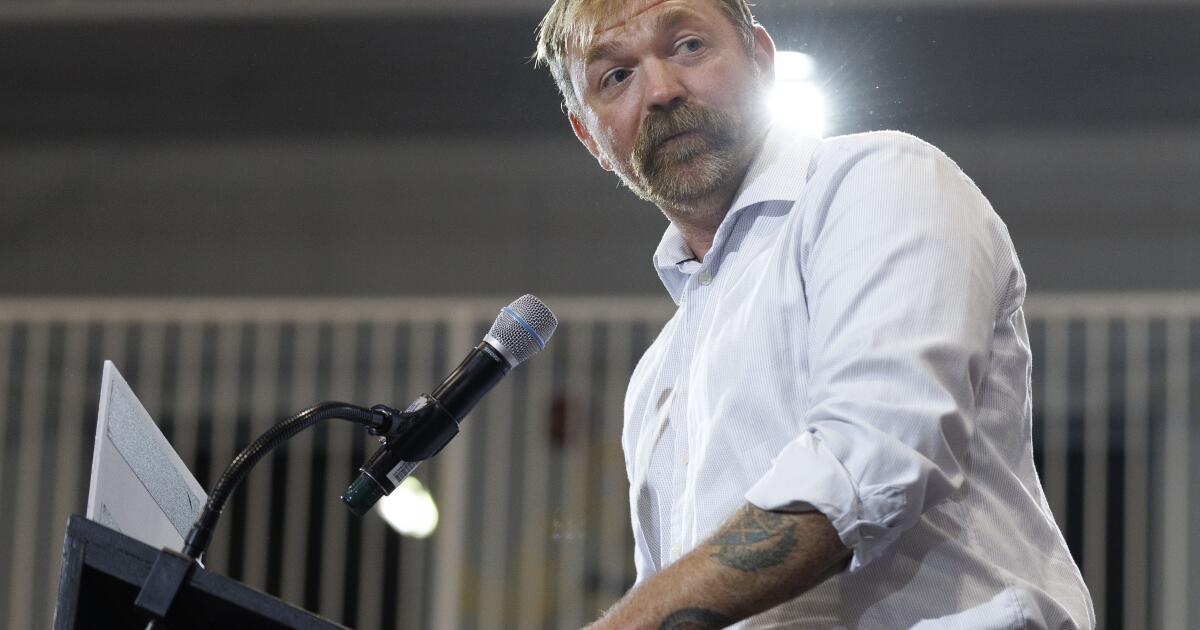
Platners

Troy Jackson surges as Maine Democrats’ likely Senate pick after Graham Platner’s exit

Troy Jackson, a former Maine lawmaker and fifth-generation logger from the North Maine Woods, has emerged as the likely new replacement for the state’s Democratic Senate nominee after former candidate Graham Platner quit the high-stakes race less than two weeks ago.

Platner’s departure came after a sexual assault allegation that he denied but forced his exit anyway. It sparked a wave of potential candidates eager to prove to Mainers that they could take on longtime Republican Sen. Susan Collins.

But by Sunday, the field had largely been cleared after Jackson supporters spent the weekend securing hundreds of delegates who promised to back him at the upcoming state convention.

Under a never-before-used system to replace Platner, delegates will vote Saturday in Bangor on a new Senate nominee. Out of the 601 delegates who will gather this weekend, Jackson’s campaign says it has 481 delegates committed to supporting him.

Top opponents — including Secretary of State Shenna Bellows and Nirav Shah, former director of Maine’s Center for Disease Control and Prevention — have since dropped out, and Jackson announced Monday that he was focusing his attention on ousting Collins.

“I’m grateful to Democrats across Maine for putting their faith in me and in what we’re fighting for,” Jackson said in a statement.

“This didn’t happen because of one person,” he added. “It happened because hundreds of volunteers put in the hours, knocked on doors, made phone calls, and believed we could build something bigger than ourselves.”

Yet securing the nomination is only just the beginning of challenges facing Jackson. There’s little more than 100 days until the general election, meaning Jackson faces an uphill battle raising campaign funds when Collins already has millions. Jackson also must implement a statewide campaign network and woo over the state’s large independent base.

As former state Senate president, Jackson may be more politically vetted than Platner was running as a first-time candidate, but the logger’s backing of progressive policies will leave him open to plenty of attacks by Republicans, said Nicholas Jacobs, a political scientist at Colby College in Maine.

“The guy does have some pretty interesting positions,” Jacobs said. “Positions that are pretty far to the left of the median voter.”

Jackson supports ‘Medicare for All’ and eliminating ICE

Like Platner, Jackson has said he wants to “get rid of” Immigration and Customs Enforcement, which has become top of mind for many Mainers after an ICE officer fatally shot a driver last week. Democrats have rushed to connect Collins to the embattled federal agency, while Jackson has reiterated his support of dissolving ICE altogether.

Jackson has also called for “Medicare for All,” which would replace job-based and individual private health insurance with a government-run plan that guarantees coverage for all with no premiums, no deductibles and only minimal copays for certain services.

Republicans were already criticizing Jackson as a “socialist” Monday.

“This entire process is just as bad as Kamala’s rigged coronation,” said Republican National Committee spokesperson Kristen Cianci, nodding to former President Biden’s decision to drop out of the presidential race in July 2024, leaving Vice President Kamala Harris to head up the Democratic ticket and ultimately lose to Republican Donald Trump.

“Maine voters have had their voices stolen by party insiders,” Cianci added.

Jackson first ran for office as a Republican

However, unlike the scrutiny Platner faced from a series of controversies, Jackson’s background coming from “old Maine” and his decades of working in the logging industry will help him, Jacobs said.

“He’s the real deal,” Jacobs said.

In 1998, Jackson helped lead a weeklong blockade along the Quebec border in an effort to protest the hiring of Canadian loggers who were coming into Maine and driving down pay rates. The standoff ended with Jackson being escorted away by police, but resulted in Jackson fighting for better logger and wood hauler protections as a state lawmaker.

Jackson initially ran as a Republican in 2000 when he sought a seat inside Maine’s House of Representatives. He lost, but won two years later when he ran as an independent. He switched to the Democratic Party in 2004, and eventually became the Maine Senate president before leaving the statehouse in 2024.

He came in third while running for governor in this year’s Democratic primary election, but had the backing of Platner, U.S. Sen. Bernie Sanders and Our Revolution, the political organization founded by Sanders.

Democrats must net four Senate seats to gain control of the 100-member chamber, and party leaders viewed Maine as a crucial piece of the puzzle, along with Alaska, Ohio and North Carolina.

Kruesi writes for the Associated Press.
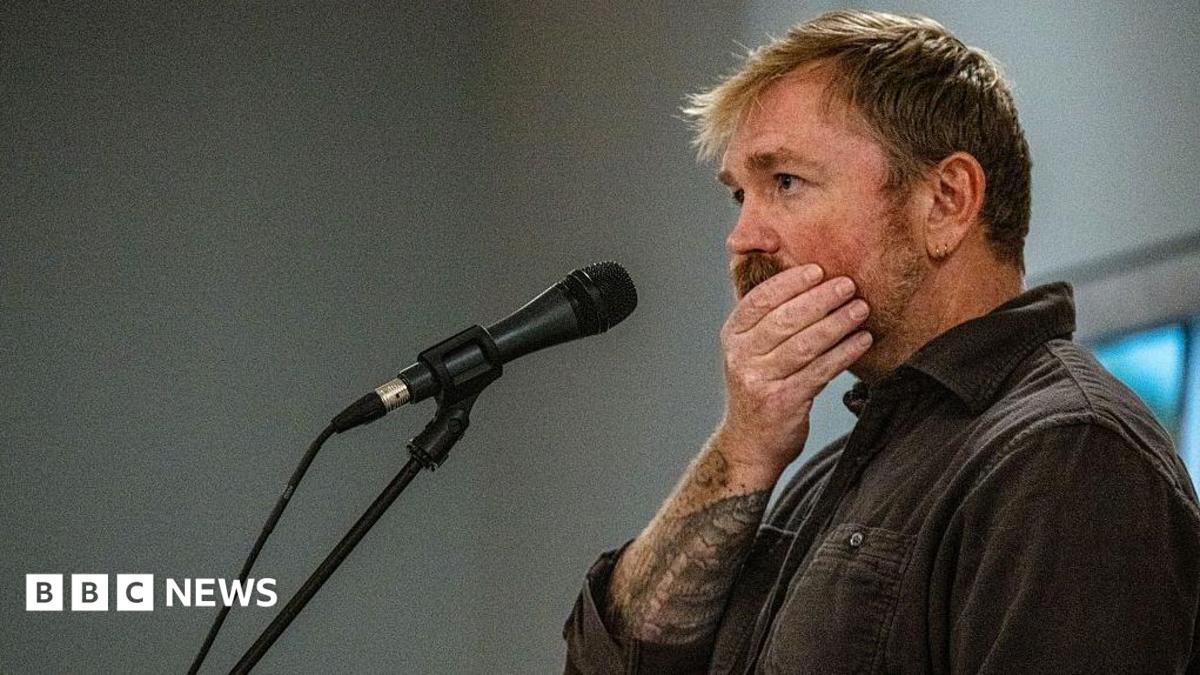
Source link

Graham Platner’s exit throws a must-win race for Democrats into tumult

She is concerned, however, that it will be difficult for voters to coalesce around any new candidate in just three months.

“The thing I’m the most worried about is we run somebody and he or she loses, and then we spend the next four years pointing fingers at whose fault that was,” she said.

In primary contests across the country this year, Democrats regularly opted for outsider congressional candidates offering a vivid vision for what the party should stand for and promising to fight for their beliefs in the face of Republican resistance.

Platner was one of the earliest and most prominent examples of this trend. With his gravelly voice, scruffy appearance and working-class back story, he gained a passionate following both in Maine and nationally.

He presented himself as a candidate who could advocate for liberal policies – like universal healthcare, wealth taxes, and low-cost housing – in a way that appealed to the kind of rural voters who have moved away from Democrats recently.

A win in November would have given Democratic progressives a chance to see blue-collar liberalism triumphing in battleground states like Maine.

And that, in turn, could have become a compelling argument for nominating a left-wing presidential candidate in 2028.

Now, that opportunity is likely dashed.

That Platner survived the series of scandals as long as he did was in part a testament to Democrats’ hunger for a different kind of candidate. It also, however, underlined the risks of opting for charismatic political neophytes who haven’t received close scrutiny before they run for higher office.

With Platner’s exit, a group of more traditional candidates are already expressing interest in stepping in – including a handful who unsuccessfully ran for governor and one of the state’s open House seats last month. They have recent campaign experience and some name recognition.

Troy Jackson, a former Maine Senate leader, campaigned side-by-side with Platner during his bid for governor, and came in third.

Nirav Shah, a state epidemiologist who gained prominence through regular public appearances during the Covid pandemic, finished a close second.

Shenna Bellows, the Maine secretary of state, is known for her lawsuit to block Trump administration attempts to gain access to state voter data. She was the party’s nominee in 2014 but was soundly beaten by Collins.

According to Melcher, many Platner supporters will be hit hard because of the connection they made with their unconventional candidate. He believes they will ultimately back his replacement, however, because of the high stakes in this race.

Many Maine Democrats supported Platner with some reluctance because of his past scandals, he added, and this latest twist might end up a blessing in disguise for the party.

“If they play their cards right, I think that they will be fine and, with some voters, even better than they would have been before,” he said, “as long as the party doesn’t handle this in a way they see as disrespectful or a cabal taking things over.”

The clock is ticking, however, and Collins awaits whoever emerges from whatever process Democrats ultimately follow. She has proven a formidable adversary for Democrats for 30 years, most recently defeating a better-funded opponent in 2020 despite polls showing her trailing right up to election day.

“It’s not as though it was going to be easy before, and now it’s hard,” said Melcher. “Beating Collins was always going to be hard.”

Source link

Graham Platner’s ruined campaign in Maine adds pressures for Democrats

The campaign of U.S. Senate nominee Graham Platner was buckling in Maine on Tuesday after he was accused of rape, injecting uncertainty into a contest that is central to determining which party wins Senate control in November’s midterms.

The situation set off swift debate about how state Democrats would choose Platner’s replacement if he were to withdraw, and which Maine figures might be best positioned to play off the progressive messaging he used to win over voters.

With Maine viewed by Democrats as a key seat to win in their long-shot bid for a Senate majority, the decision would be high stakes, analysts said. In the meantime, with uncertainty clouding the race, the shake-up could put additional pressure on the party to win Senate races in states seen as more difficult to flip.

Platner has denied the rape allegation, which came in a Politico report Monday from a woman who said Platner forced her to have sex with him when he was intoxicated. Platner said Monday that he would “reflect” on his candidacy but has not withdrawn.

“The calculation that almost everyone on the Democratic side is making is that with Platner in it, it is an unwinnable race,” said John Cluverius, director of survey research for the Center for Public Opinion at UMass Lowell, “and without Platner in it, they have a much better chance.”

An oyster farmer and Marine veteran, Platner had entered the race to challenge Republican Sen. Susan Collins as an outsider and was seen as riding an anti-establishment wave of support.

His candidacy highlighted the split within his party between progressives and establishment Democrats and represented a matchup between an older incumbent and a younger outsider candidate.

By Tuesday afternoon, Platner’s financial backing was disintegrating and prominent Democrats had withdrawn their support — including Sen. Bernie Sanders (I-Vt.), a key endorser of Platner’s, who said Tuesday afternoon that he had told Platner to withdraw.

A spokesperson for Platner’s campaign did not immediately respond to a request for comment Tuesday.

Rep. Ro Khanna (D-Fremont), who had been one of Platner’s most visible backers, quickly withdrew his endorsement Monday.

“I’ve been very clear that sexual assault or violence against women is a red line. These allegations are very serious and credible,” Khanna, who has been a prominent supporter of victims of the late sex offender Jeffrey Epstein, wrote on X.

The California congressman had been among progressives, including Sanders and Sen. Elizabeth Warren (D-Mass.), who previously stood by Platner. Khanna had rallied for Platner at a pre-primary event in June after a set of allegations about the candidate’s “unsettling” conduct from his exes reported by the New York Times and the revelation that he had sent sexually explicit messages to women outside his marriage.

Platner’s collapse comes after the fall of former California Rep. Eric Swalwell, whose ascendant campaign for governor was ended in April after he was accused of sexual assault.

As in Swalwell’s case, Platner’s support has unraveled quickly, leaving him with little path forward.

The Democrats’ formal Senate campaign arm and the Senate Majority PAC, which is aligned with Senate Minority Leader Chuck Schumer, both pulled investment from the race, their leaders said in statements. Swing Left, an organization working to flip seats for Democrats, removed Maine from its target Senate races for now.

“We continue to believe this seat is winnable if Platner is not on the ballot,” said Senate Majority PAC spokesperson Lauren French.

Under state law, Platner has until Monday to withdraw in order for the Maine Democratic Party to be able to nominate a replacement. The committee would have until July 27 to do so.

For Collins, facing a new candidate could make for a harder race than going up against Platner, analysts said.

The fifth-term senator has survived reelection repeatedly, including in 2020, when the state went blue in the presidential election, but drawn ire from some moderate and left-leaning voters who want her to push back more forcefully against President Trump.

Without Maine, Democrats would have to pick up an additional race in a state that went for Trump in 2024 in order to flip the four seats required to win a majority.

To get to four, the party needs to win some mix of Maine, North Carolina, Ohio, Texas and Iowa and must also retain its seats in Michigan, Georgia and New Hampshire.

That scenario could be within reach for Democrats but they face a steep climb, a New York Times/Siena poll released last week found.

“This does put enormous pressure on Democrats across the country with every viable race,” said David Niven, who teaches American politics at the University of Cincinnati. “The margin of error was already slim, and it’s approaching none.”

In Texas, a heated and expensive race has shaped up between Democrat James Talarico, a state representative who is facing Republican Ken Paxton, the state attorney general.

“I would suspect that Democrats are going to be relatively all-in on Texas simply because they can no longer rely on Maine in the way they thought they were going to be able to,” said Mark Jones, a political science professor at Rice University.

The Politico report came after a string of other controversies for Platner, who had successfully batted them away ahead of the state’s June primary.

His quick rise in the campaign excited Democrats looking for younger, non-establishment leaders. His primary opponent, Maine Gov. Janet Mills, suspended her campaign in late April, clearing his path.

But questions about the rushed vetting of Platner soon arose.

He faced scrutiny over a tattoo on his chest that was widely recognized as a Nazi symbol, which he then said he had covered up, and a tranche of deleted Reddit posts that he said were “stupid” comments from a time when he had post-traumatic stress disorder.

Ahead of the primary, the report of his extramarital texts and the allegations by exes about volatile behavior revived questions about his candidacy; Platner described them as politically motivated and privately assured Democratic leaders that nothing else was coming.

The situation “reinforce[s] the need for more careful vetting [of] first-time outsider candidates,” said Dan Schnur, who teaches political communications at USC, UC Berkeley and Pepperdine.

“Every political professional knows that the most important type of candidate research is not opposition research — it’s research on your own candidate,” Schnur said.

Progressive leaders on Monday sought to validate the success of Platner’s campaign in energizing Maine voters while disavowing Platner. They urged Democratic leaders to stick with a candidate who shares Platner’s working-class image if he withdraws — something Platner may hope to influence, the New York Times reported.

“To the Democratic establishment: this is not your opening,” Joseph Geevarghese, executive director of the progressive organization Our Revolution, said in a statement. “Whoever leads this movement forward must be someone who has actually lived the fight Graham Platner ran on.”

Some Democrats were already looking to the party’s gubernatorial primary candidates as possible replacements, including Maine Secretary of State Shenna Bellows, former state Sen. Troy Jackson and former state health official Nirav D. Shah.

The July deadlines would leave enough time before November for Democrats to persuade voters of a new candidate, said Mark Brewer, a political science professor at the University of Maine, but how the party chose to select a replacement would probably be as important as whom it chose.

“Having a 100-person executive committee select it on their own would probably not sit well with Platner’s supporters,” Brewer said. “A caucus they could pull off; if they want to be as open and inclusive as possible, that’s probably their best option.”

McDaniel reported from Washington and Kwok from Los Angeles.

Source link