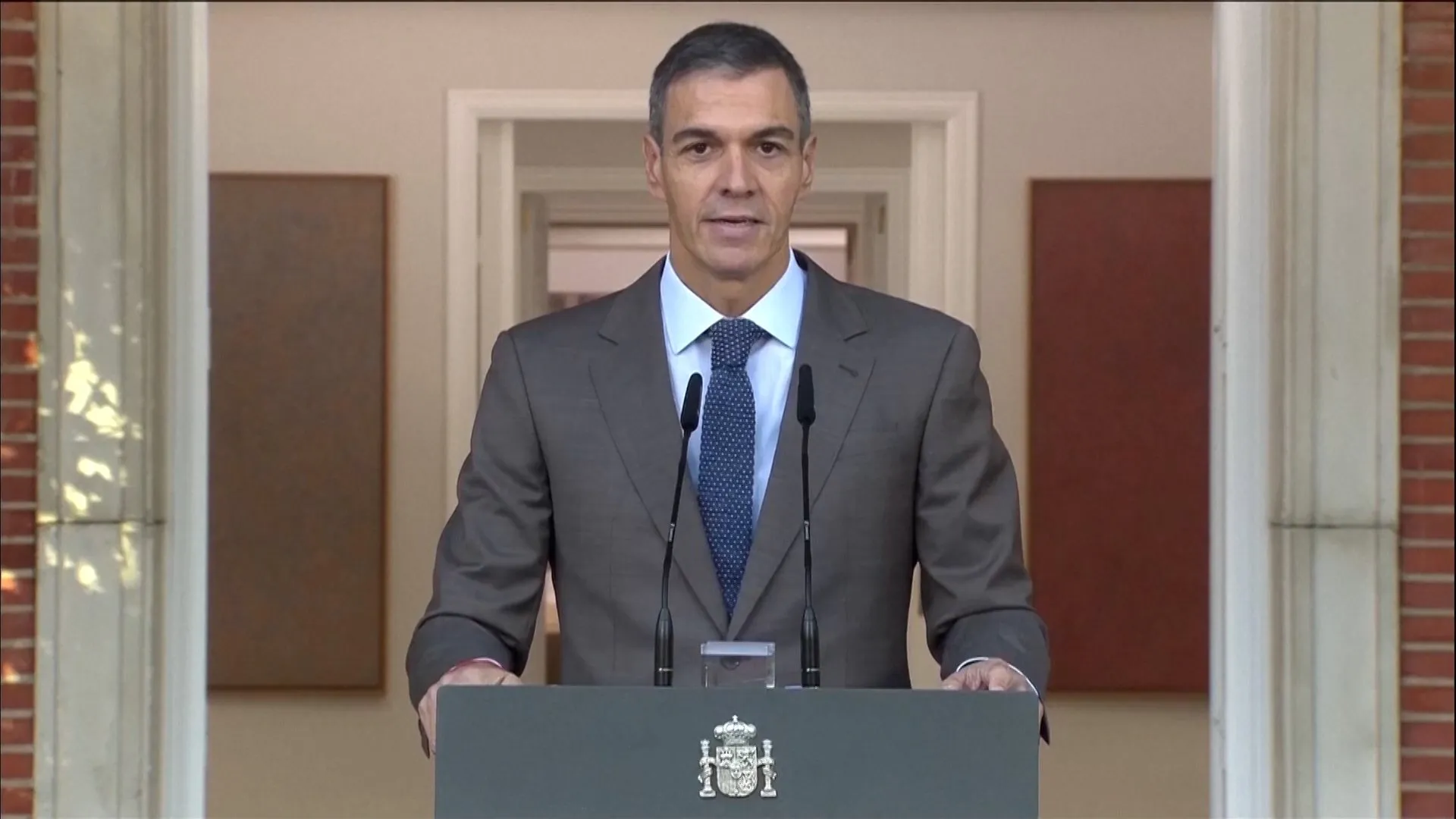
Spanish Prime Minister Pedro Sanchez has called a snap election for November 29. He’s seeking a renewed mandate after parliament rejected proposed measures aimed at easing Spain’s housing crisis amid growing public anger.
Sanchez calls early vote after Parliament rejected housing relief measures proposed by his minority government.
Published On 5 Oct 20265 Oct 2026
|
Updated: a few seconds agoUpdated: a few seconds ago
Spanish Prime Minister Pedro Sanchez has announced a snap general election after Parliament rejected housing relief measures proposed by his minority government.
Sanchez said on Monday the vote would take place on November 29. “We need to renew people’s support,” he said in a televised address.
Recommended Stories
list of 3 itemsend of list
“We need to mobilise and win a much larger progressive majority in Parliament, one that will allow us to overcome vested interests, deliver new social advances and continue transforming Spain.”
He also acknowledged having made mistakes and falling short of previous campaign promises.
“I also know that part of that social majority is dissatisfied today,” Sanchez said.
The government’s defeat in Parliament on Friday was the latest in a series of political setbacks for the centre-left leader, followed by mass protests across the country over the housing crisis.
The government said more than 70,000 people took part in a housing protest in the capital, Madrid, on Saturday.
Anger had been building since late last month, when an 87-year-old woman, Marai del Carmen Abascal, was evicted from her home of 70 years in Madrid after an international investment fund bought her building and increased the rent.
Far right gains ground
But facing the electorate is a risky move for Sanchez. Opinion polls suggest that a coalition led by the conservative People’s Party (PP), with support from the far-right Vox party, is the most likely outcome in the election.
If they win, it would be the first time since the death of dictator Francisco Franco that a far-right party has entered central government.
If Sanchez loses the election, it would also mark the end of one of Europe’s last left-leaning governments as the far right continues to gain ground across the continent.
Sanchez has stood out worldwide for his strong stance on progressive ideas, from defending the rights of Palestinian people to defending multilateral institutions and cracking down on tech oligarchs.
The prime minister, who has never won enough votes to form a majority government, has brought together a series of fragile and seemingly impossible coalitions, ranging from the far left to the separatist right, to remain in power for three successive terms, lasting eight years.
The election was due next year before Sanchez brought it forward.
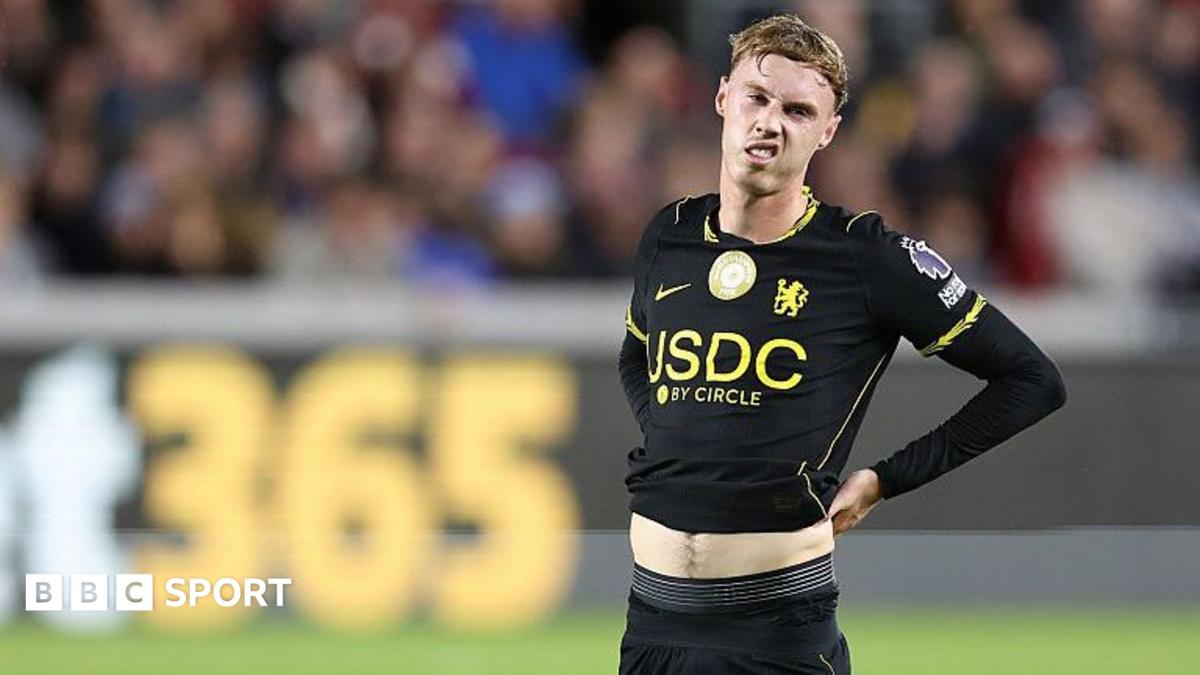
Chelsea signed a striker from Brighton for the second successive summer, bringing in Welbeck to reunite him with Joao Pedro and provide support in attack.
Welbeck, 35, was tidy in possession but, with little service, managed only 17 touches before being substituted in the 71st minute.
Unlike Joao Pedro, who is capable of creating chances for himself, Welbeck found it difficult to influence the game in the same way.
Joao Pedro came into the weekend with the most goal involvements in the Premier League, having scored three and provided three assists in four appearances this season.
His impact extends beyond goals and assists, with the Brazilian linking well with Palmer and Rogers. Against Brentford, however, Rogers arguably produced his quietest performance since arriving from Aston Villa in the summer.
Rogers eventually moved up front with fellow striker Emmanuel Emegha sidelined through injury and still waiting to make his Chelsea debut.
Before Brentford‘s opener, it was a closely contested match that appeared likely to be decided by the first goal. Chelsea, however, made victory a certainty for the hosts with a dramatic collapse.
Alonso has not managed to cure Chelsea‘s set-piece weaknesses. They have conceded 23 goals from set-pieces since the start of last season – no Premier League side has let in more. And Anthony’s simple header from a corner took this season’s total to five.
Set-piece defending was an area Chelsea sought to address when they appointed Bernardo Cueva from Brentford two years ago. This summer, he was replaced by another highly regarded specialist in Austin MacPhee.
Asked about Chelsea‘s defending from set-pieces, stand-in captain Levi Colwill told Sky Sports: “Not good enough. At times we have been bullied in the box and we definitely need to improve.
“We have full trust in our set-piece coach and are still adjusting to new ideas, but we need to improve as a team.”
Like many of his predecessors, Alonso has been attempting to instil a stronger competitive edge within his squad and improve the mentality of his players.
That issue has often been linked to the relatively young age profile of the squad, but Chelsea fielded their oldest starting XI since May 2023. Henderson, in making his debut on Friday, lined up alongside fellow over-30s Welbeck and goalkeeper Emiliano Martinez.
“I would say that we have dropped our consistency and our competitive mentality in the second half. We know that small details can be decisive,” Alonso said after Brentford added two late goals.
It is also fair to say Alonso is still experimenting with systems and personnel, and has yet to settle on a style of play that gives his side control throughout a match.
“It’s not about looking for excuses,” the Spaniard told Sky Sports. “We need to look at each other and know that we have to work and improve because there is still a long way to go.”
After the initial excitement – and victories – provided by Alonso’s attacking football, Chelsea head into the international break with serious questions to answer.
Two unbeaten high school football teams, San Pedro and Bell, played on an old-school unmowed grass field on Friday night at Bell. The football disappeared at times when placed among the thick grass before the snap.
“Hey coach, do you need me to bring my lawn mower,” a Bell player joked.
San Pedro assistant coach Andres Srsen was pulling grass before the game to clear an area so kicker Dylan Moreno could practice field goals. “This is crazy,” Srsen said.
No one showed up to mow the field this week, coach Noel Padilla said.
It was the perfect environment for two blue-collar communities: San Pedro, known for its bustling port and dock workers, and Bell, known as a densely packed working class industrial city.
San Pedro (4-0) had little trouble navigating the thick grass, rolling to a 49-7 victory behind quarterback Seth Solorio, who completed 13 of 17 passes for 303 yards and four touchdowns.
Braeden Villegas caught touchdown passes of 52 and 17 yards. Solorio rarely faced defensive pressure because of strong blocking from his offensive line. He was 10 of 11 for 175 yards in the first half when San Pedro led 35-7.
If any player proved he was in shape, it was San Pedro punt returner Chazz Fugatti, who returned a punt 80 yards for a touchdown and easily ran through the thickest part of the grass. The only question was how tired he felt pumping his legs as the grass got thicker.
“Yeah, I was pretty exhausted after the touchdown,” he said. “Honestly, it was surreal. I was just excited to be out here and excited to play. It does feel like a corn field. It was fun.”
Another player having no issues running was tight end Joaquin Fernandez, who took a screen pass and ran 94 yards for a touchdown.
Solorio, who has 14 touchdown passes in four games, said of his team’s progress: “We’re really building chemistry. I love my guys. I love my receivers.”
Jaxon Brown and Villegas were Solorio’s primary targets.
San Pedro is considered a strong contender to be one of the final four teams in the City Section Open Division playoffs but will be gearing up for its annual Marine League rivalry game at defending champion Carson on Oct. 23, when the Pirates will really find out where they stand.
San Pedro players hoist Braeden Villegas after his touchdown reception against Bell.
(Craig Weston / For The Times)
San Pedro had too much size and strength on its offensive and defensive lines for Bell (3-1), which hopes to offer competition to Garfield in the Eastern League. The Eagles’ only touchdown came on a 15-yard Aaron Hernandez touchdown reception in the first quarter after the Pirates lost possession by touching a punt and not recovering the ball. Or maybe they couldn’t find the ball?
Bell has five baseball players playing football, including quaterback/pitcher Manuel Pasillas, who showed off his toughness, being sacked only once in the first half by San Pedro’s Jaxon Moore.
Bell is supposed to get a new field and new scoreboard, with construction scheduled to begin as early as this month for a two-year project. Until then, the Eagles will need someone to keep cutting the grass.