Peace

Iran dismisses Trump’s peace plan as ‘deceptive,’ as U.S. deploys more troops to Mideast

The Trump administration has offered Iran a 15-point ceasefire plan aimed at temporarily halting the war in the Middle East, as the Pentagon simultaneously orders thousands of Marines, paratroopers and a warship to the region.

The plan presented to Iranian leadership Tuesday broadly included a 30-day ceasefire and sanctions relief for Iran in exchange for a laundry list of U.S. demands, according to the Associated Press and other outlets.

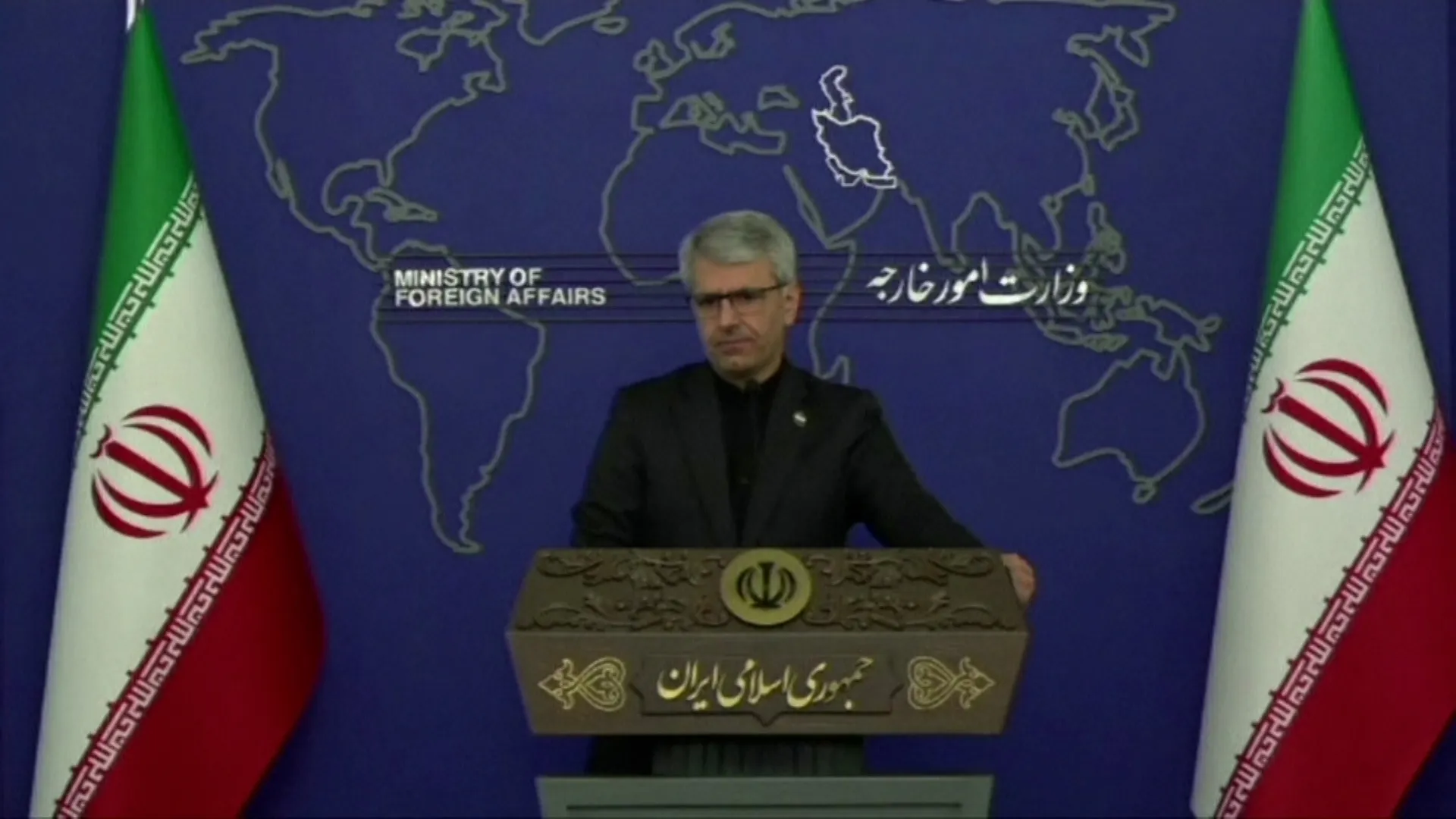
But Iran dismissed the proposal Wednesday, criticizing the White House’s terms as “excessive” and out of step with reality, according to Iranian state-run media.

Those terms included limitations on Tehran’s missile stockpiles, and the permanent end to its nuclear program, its support for regional militias including Hezbollah, and of its blockade of the Strait of Hormuz, various outlets reported, citing Pakistani officials mediating the negotiations.

Several of those provisions have long been considered nonstarters for Iran, which sees its missile stockade and regional alliances as central to national security.

Iranian officials responded with defiance and skepticism.

“Iran will end the war when it decides to do so and when its own conditions are met,” an Iranian official told state media. “Not when Trump envisions its conclusion.”

The official outlined the Islamic Republic’s terms for ending the conflict, which included a halt to “aggression and assassinations,” an end to fighting on all fronts, enforceable guarantees that hostilities will not resume, compensation for war damages and a formal recognition of Iran’s sovereignty over the Strait of Hormuz.

Iranian Foreign Minister Abbas Araghchi has stated that Iran is not interested in a ceasefire but rather a comprehensive “end of war” on all fronts, including the lifting of sanctions and guarantees to allow Iran to pursue peaceful nuclear enrichment for energy and medical applications.

Iranian officials told state media that they believed the Trump administration’s diplomatic efforts were deceptive.

“You have reached a stage where you are negotiating with yourselves,” Iranian military spokesman Ebrahim Zolfaqari said in a televised address Wednesday. “Do not call your defeat an agreement.

Since the start of the conflict, Iranian leaders have voiced suspicion of any diplomatic talks with the Trump administration, pointing to prewar diplomatic efforts as evidence they were “tricked.” The Islamic Republic says it made clear in those talks that it had no interest in developing nuclear weapons, but Trump launched his military campaign nonetheless.

There have been conflicting media reports over Tehran’s exact position. Statements from Iranian officials and state-linked outlets have left open the possibility that elements of the proposal are still under review, while some reports frame the response as an outright refusal.

The Iranian response also conflicts with President Trump’s insistence that negotiations were progressing.

“We have had very, very strong talks,” he said Sunday in Florida. “We have points, major points of agreement. I would say almost all points of agreement will at some point very, very soon meet.”

Compounding the issue, Israel — which continues to carry out routine bombing campaigns over Iran — has stayed out of the talks.

Trump and Israeli Prime Minister Benjamin Netanyahu spoke about the peace deal in a phone call Tuesday. In a televised address, Netanyahu said that Trump “believes there is an opportunity” to realize U.S.-Israeli war objectives in an agreement “that will safeguard our vital interests.”

“At the same time, we continue to strike both in Iran and in Lebanon,” Netanyahu said. “We will safeguard our vital interests in any scenario.”

The negotiations are being facilitated by Pakistan, with support from Egypt and Turkey — countries that have pushed to contain a conflict that has killed more than 2,400 people, further destabilized the embattled region and disrupted global oil markets.

As Washington pursued a diplomatic end to the conflict, the Pentagon deployed an additional 2,000 troops from the 82nd Airborne Division to the Mideast. An additional 5,000 Marines and thousands of sailors are already en route to the region, where 50,000 more Marines are currently stationed.

House Speaker Mike Johnson (R-La.) told reporters on Wednesday that the deployment “sends a signal to Iran that they need to get their act together,” but denied any coming escalations by the American side. Johnson instead said that he believes “Operation Epic Fury is almost done.”

Now in its fourth week, the operation began with a series of intensive airstrikes that killed Iran’s Supreme Leader, Ali Khamenei, and dozens of other high-ranking officials. Since then, the U.S. and Israel have carried out over 9,000 strikes targeting Iranian military infrastructure and nuclear program.

Defense Secretary Pete Hegseth told reporters in the Oval Office Tuesday that while the president’s diplomatic envoys seek a peace deal, his department of war will continue to “negotiate with bombs.”

“The president has made it clear that you will not have a nuclear weapon. The War Department agrees,” Hegseth told reporters Tuesday in the Oval Office. “Our job is to ensure that, and so we’re keeping our hand on that throttle.”

Iranian retaliatory strikes have hit Gulf infrastructure and halted energy production and shipping in the region, spurring global fears of an enduring supply crunch. Meanwhile, Israel has expanded operations in Iran and sought to expand its borders into Lebanon.

Oil prices, which had surged above $120 per barrel earlier in the conflict, fell sharply this week on hopes that a ceasefire could ease supply woes.

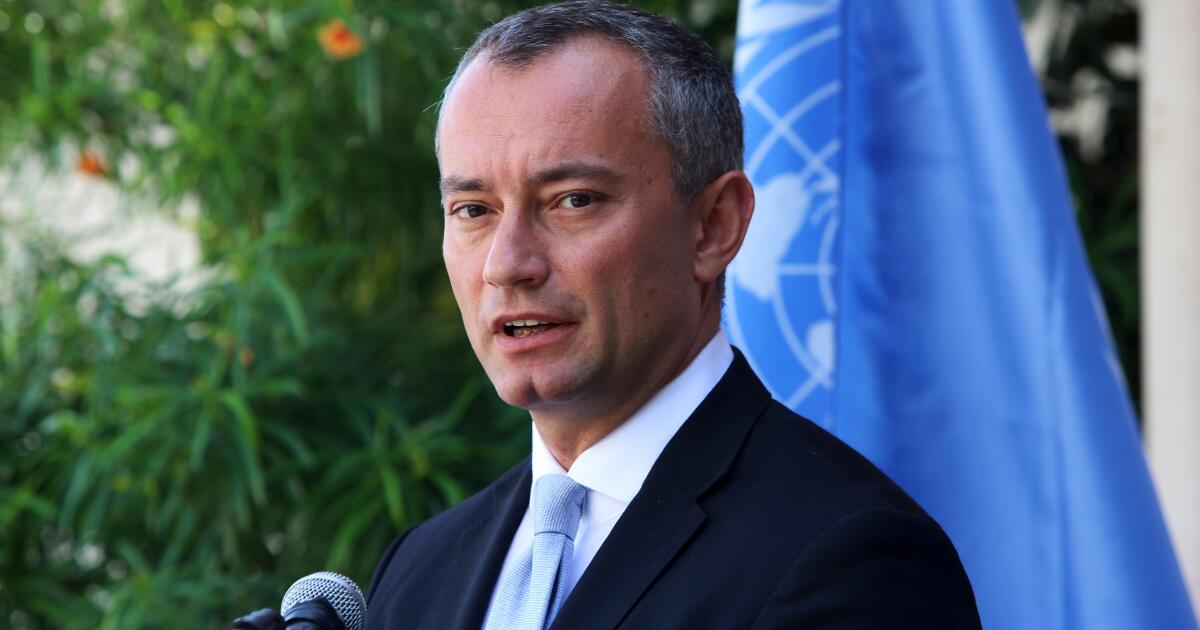
In a statement Wednesday, U.N. Secretary-General António Guterres demanded an end to the fighting, which he said “has broken past limits even leaders thought imaginable.”

He specifically called on the U.S. and Israel to end the war, as “human suffering deepens, civilian casualties mount, and the global economic impact is increasingly devastating.”

Times staff writers Ana Ceballos, in Washington, D.C., and Nabih Bulos, in Beirut, contributed to this report.

Source link

Hiltzik: Doing the math on Trump’s war budget

Governing, the political sages tell us, is all about making choices, particularly when leadership faces finite resources and the choices are between war and peace; this is the “guns or butter” balancing raised by Lyndon Johnson’s pursuit of the Vietnam War and, appropriately, by President Trump’s Iran war.

Thus far, according to budget experts and the Trump administration itself, the war has cost Americans about $25 billion, with the White House reportedly preparing to seek $200 billion more in military funding. That points to the obvious question of what the U.S. could buy if it stopped spending on the Iran adventure.

Here’s the short answer: Medicaid coverage, free school lunches, and housing, child care and community college assistance for tens of millions of Americans. Those estimates come from Bobby Kogan, senior director for federal budget policy at the liberal Center for American Progress.

$11.3 billion would have fully funded the training of 100,000 new nurses to solve our staffing crisis. Instead, it was spent in just six days on an illegal war with no endgame.

— Rep. Diana DeGette (D-Colo.)

Kogan is not alone in doing the math. Similar estimates have been published by the Century Foundation and Mother Jones.

Democrats in Congress have offered their own juxtapositions: “$11.3 billion would have fully funded the training of 100,000 new nurses to solve our staffing crisis,” Rep. Diana DeGette (D-Colo.) observed on social media. “Instead, it was spent in just six days on an illegal war with no endgame.” (She wrote when that was the government’s estimate on spending in only the first week of the Iran war.)

Get the latest from Michael Hiltzik

Commentary on economics and more from a Pulitzer Prize winner.

Details will follow. But first, a reminder that the “peace dividend” — that is, the surge of available resources for socially beneficial spending after the cessation of hostilities — has always been an elusive concept.

In part that’s because it invariably gets tied up in conflicts over precisely what peacetime programs political leaders wish to fund, and that often involves tougher decisions than whether to mount a bombing campaign against a perceived adversary.

“What happened to the peace dividend?” economist Augusto Lopez-Claros asked last year, referring to the supposed surfeit of funds that was to flow after the end of the Cold War. His answer was that there were always alternatives, many of them militaristic in nature, in the wings to suck up the funds that had been spent in the past.

The issue has especially acute significance today, not merely because of the Iran war. The Trump administration and Republicans in Congress have been campaigning to cut federal spending, almost entirely on social programs such as Medicaid and on Social Security and Medicare benefits, ostensibly because they contribute heavily to our “unaffordable” federal budget deficits.

Never mind that the largest single contributor to the deficit is the massive tax cut enacted by Republicans in 2017, during the first Trump term, which were made permanent by the GOP’s budget bill last year.

Placing military spending in the context of alternatives is typically shunned by Republicans and conservatives. The Wall Street Journal editorial board derided the exercise as “dorm room politics,” referring specifically to an estimate by Rep. Ro Khanna (D-Fremont) that the $200 billion reportedly sought by the White House “would pay for free college for every American,” and more.

That doesn’t mean the exercise isn’t worthwhile, however. Kogan acknowledges that it wouldn’t be up to the Pentagon to redirect its budget to the social programs that could be funded with its funding request, but his point in making the comparisons is “to get a sense of scale.”

So let’s dive in, starting with Kogan’s work. He matched the cost of several social services against the $25 billion estimated to be spent on the war through the end of this week and the $200-billion new request. He also broke down some of the spending by ordnance. The price of one Tomahawk missile, invoiced about $3.5 million each, could cover Medicaid for a year for 275 people, for example; the U.S. has fired an estimated 300 of them in the Iran war so far, for more than $1 billion.

Kogan calculated that more than 3.1 million people could be covered by Medicaid for $25 billion, and 24.8 million could be covered for $200 billion. He based this estimate on the Congressional Budget Office’s finding that the federal share of Medicaid came last year to $668 billion to cover about 82 million adult and child enrollees, or about $8,048 per person annually.

Then there’s free school lunches, which the government has pegged at up to $4.69 per day for about 30 million children receiving meals in school. If they all received free lunch, that would come to a little over $25 billion, based on a 180-day school year. (Only about two-thirds of those children receive free meals, with the rest receiving cut-price meals or paying full price.)

Child care isn’t typically a governmental responsibility (though it should be); Kogan uses an estimate from the nonprofit organization Child Care Aware that care cost Americans about $13,128 on average in 2024; inflating that to a 2026 figure yields an average of $14,048, meaning that 1.78 million households could be covered for about $25 billion, and about 14.2 million for $200 billion.

Tuition for a two-year path to an associate degree in community college, that portal to higher education for millions of Americans, will cost an average of $8,700 this year by Kogan’s reckoning, based on the College Board’s estimate of $8,300 for 2025. That means that about 2.87 million Americans could have their tuition fully covered for about $25 billion, and nearly 23 million students could be covered for $200 billion.

The progressive Century Foundation contributed estimates of how much in social program spending could be accommodated for $200 billion. Its roster includes the cancellation of all medical debt for the 100 million Americans shouldering about $194 billion in medical debt. The enhanced Affordable Care Act premium subsidies that expired this year could be continued for almost six years for about $200 billion, extrapolating from the 10-year, $350-billion estimate produced by the CBO. “Ensuring health coverage for all Americans,” the foundation noted, “could save an estimated 68,000 lives per year.”

The foundation also notes that $200 billion could ameliorate the draconian cuts in Medicaid imposed by the preposterously named One Big Beautiful Bill that the GOP enacted as a budget measure in July. The work requirement in that bill is estimated to reduce Medicaid spending by $326 billion over 10 years, according to the CBO, mostly by throwing enrollees out of the program. The work rules, which as I’ve reported do nothing to enhance employment, could be deferred for six years, preventing the loss of coverage for about 5.2 million Americans.

Mother Jones reported soberly that $200 billion would cover the wages of 2.8 million public school teachers, based on an average salary of $72,030, as reported by the National Education Assn.

The publication took a rather more fanciful approach for some calculations. It reported that $200 billion would pay for 2,666 sequels to the “Melania” documentary, based on the $75-million reported cost of its production and marketing by Amazon, its sponsor. And 500 more White House ballrooms, based on the latest projection of $400 million for just one.

Obviously all these calculations are somewhat chimerical. No one really believes that if Congress rejects the $200-billion ask, that money would be redeployed for any of these social programs, at least while the GOP remains in control of the government purse strings. The basic arithmetic itself is subject to cavils resulting from the murkiness of some of the cost calculations and projections.

But they’re not far wide off the mark in terms of orders of magnitude. Millions of dollars in social spending could be covered by billions of dollars in military spending, and much more productive investments could be made in the years and decades to come.

The lost “peace dividend” encompasses not just domestic needs, but also “the potentially catastrophic risks that we are taking on in the future because we are misallocating resources now,” Lopez-Claros observed — “spending massively on defense while leaving unattended climate change mitigation, pandemic preparedness, the shamefully high levels of malnourishment in the world, among others. We may well come to regret this and by then, unfortunately, it might be too late.”

Even before the first bombs fell on Iran, after all, the U.S. was shortchanging all those imperatives. “Just last July, Trump signed into law the biggest cuts to the social safety net in all U.S. history,” Kogan says, including “the biggest cuts to Medicaid ever, and the biggest cuts to SNAP, ever.” (The GOP budget bill cut SNAP, the food stamp program, by $186 billion, leaving “nearly 3 million young adults ages 18 to 24 who receive SNAP vulnerable to losing that assistance,” the Urban Institute estimated after the bill was signed.

At their heart, these calculations are not really about dollars and cents. The financial figures just help us keep score of the choices that define us as a nation.

Source link

Fun social clubs and events to meet new friends in L.A.

p]:text-cms-story-body-color-text clearfix”>

Keeping and maintaining friends as an adult is hard, especially with the demands of life, travel and work. In volunteering, I encounter more people like myself, which is nice, but sometimes it’s difficult to participate without a lot of commitment to the organizations. I’m wanting to explore smaller, intimate groups to build community with people who I share similar values with. I’m interested in self-growth, psychology, games, mindfulness and yoga. I loved the L.A. Times story “Awaken your inner child at this welcoming collage club for adults” and I would love to know about similar activities. Thanks! —Marlen I.

Looking for things to do in L.A.? Ask us your questions and our expert guides will share highly specific recommendations.

Here’s what we suggest:

Marlen, I couldn’t agree more. As we get older, it can feel more and more difficult to sustain friendships, especially in Los Angeles, where people live so far apart and have busy lives. This struggle is exactly why so many social clubs have been sprouting up in L.A. over the last few years. From board game clubs to junk journaling meetups, there’s so many different ways to connect and maybe try something new. I’ve compiled a list of social clubs and community spaces that I think you’ll enjoy.

Since you’re already familiar with Art+Mind Studios, you should definitely check out Junk Journal Club. Junk journaling is essentially a craft practice that combines elements of collaging, journaling and scrapbooking. With the rise of junk journaling content on social media, the once solo pastime has turned into a lively social scene. Junk Journal Club, dubbed “the original junk journal club,” hosts monthly meetups, which can be found on its Instagram page. When my colleague Malia Mendez went to an event recently, people told her that attending Junk Journal Club “has made befriending strangers easy,” and many of them stay in touch.

Another craft-centered event that’s worth exploring is the Crafters Clubhouse, which founder Victoria Ansah calls “a creative third space for adult makers.” She hosts monthly arts and crafts workshops including activities like scrapbooking, punch needle embroidery and clay art.

Given that you’re interested in yoga and mindfulness, you may like WalkGood LA, a community-centered wellness organization that hosts a variety of activities including a run club and accessible yoga classes. During the pandemic, I found solace in attending their weekly yoga classes called BreatheGood. The outdoor sessions take place every first Sunday at Kenneth Hahn State Recreation Area and feature free chiropractic adjustments and healthy food vendors. The vibe of the intergenerational event feels warm and welcoming. All you have to do is show up with your yoga mat. The organization also hosts various classes including yoga, breath work, mindful meditation, mat Pilates and step aerobics at their studio, the WalkGood Yard, in Arlington Heights.

Another social club I recommend is Love, Peace & Spades, which my friend Kevin Clark started in 2022, to create a space where people could play the card game with others. With music provided by a live DJ, the monthly game night feels like being at a family cookout. Spades can be extremely intimidating to start as a beginner playing with pros. But don’t worry. Love, Peace & Spades has instructors who can teach you how to play.

If you’re interested in chess, L.A. Chess Club is “an event with the laid-back ease of a chill game night and all the social and romantic possibility of a night out on the town,” according to Times contributor Martine Thompson, who wrote a story about the event. At the weekly gathering, which features a food vendor, cocktails, tattoo artists and DJs, you can “competitively play chess, learn the game, meet new friends or mingle as a single person,” Thompson shares. Another fun event is RummiKlub, a monthly Rummikub game night that takes place in elevated, design-forward spaces across the city.

L.A. also has several fun creative venues that regularly bring people together, such as Junior High, a nonprofit art gallery and inclusive gathering space that hosts artist showcases, comedy nights, pottery workshops and more. There’s also Nina in Atwater, which holds a variety of gatherings including a monthly series that focuses on mindfulness called “Be Here Now: Simple Tools for an Everyday Nervous System Reset.”

I hope that these suggestions are a good starting point for finding the group, or several groups, that are an ideal fit for you. Just by putting yourself out there and being open, you are bound to build and find community. Best of luck on your journey!


Source link

Rwanda, DRC Renew Commitment to Execute Washington Peace Accord

The Democratic Republic of Congo (DRC) and Rwanda have agreed on specific measures to expedite the implementation of the Washington peace accords. This agreement was reached during meetings held in Washington on March 17 and 18. 

A joint declaration released by both countries and the United States on March 18 outlines these developments. The two parties have outlined a series of coordinated actions aimed at “defusing the tensions” and “pushing forward the situation on the ground”. 

The measures include a mutual agreement to respect the sovereignty and territorial integrity of each country, as well as the disengagement of Rwandan forces and the lifting of defensive measures in certain zones of eastern DRC. The authorities in Kinshasa are making some reinforced yet limited attempts to neutralise the Democratic Forces for the Liberation of Rwanda (FDLR) rebels.

The protection of civilians was reaffirmed as a priority. Both DRC and Rwanda reiterated their commitment to achieving lasting peace in the Great Lakes Region within the context of the Washington Accords.

This announcement comes amid persistent tensions in the eastern DRC. The Kinshasa authorities on Monday praised the sanctions imposed by the United States on the Rwandan Defence Forces (RDF) and several members of their officers accused of “direct involvement” on the side of the M23 rebels.

According to the Congolese government, these American measures constitute “a clear signal” in favour of the respect of the DRC’s sovereignty and the effective implementation of engagements taken within the context of the Washington Accords. It also insisted on the necessity for “coherence between diplomatic engagements and the operational realities on the ground”.

The government expressed its recognition of the United States’ role in the peace efforts and called for pursuing initiatives to ensure the respect of commitments and the re-establishment of a durable peace in the region.

The Democratic Republic of Congo and Rwanda have agreed on measures to implement the Washington peace accords, aiming to reduce tensions and improve the situation in eastern DRC.

Key actions include respecting each country’s sovereignty, Rwandan forces’ disengagement, and the protection of civilians. This agreement was supported by a joint declaration with the United States on March 18. Amid ongoing tensions, the DRC lauded U.S. sanctions against the Rwandan Defence Forces and officers accused of siding with M23 rebels, interpreting this as a commitment to respecting DRC’s sovereignty.

The Congolese government emphasized the importance of diplomatic coherence and applauded the U.S. role in peace efforts, urging further initiatives towards achieving lasting peace in the region.

Source link