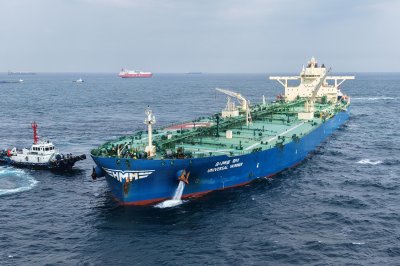
South Korea is consulting with the United States and Iran about navigation through the Strait of Hormuz, the Foreign Ministry said Tuesday. In this photo, the South Korean oil tanker Universal Winner arrives near Ulsan on June 10 after exiting the Strait. Photo by Yonhap
South Korea has begun consultations with the United States, Iran and other relevant countries regarding navigation through the Strait of Hormuz following the signing of a preliminary deal aimed at ending the monthslong war in the Middle East, the foreign ministry said Tuesday.
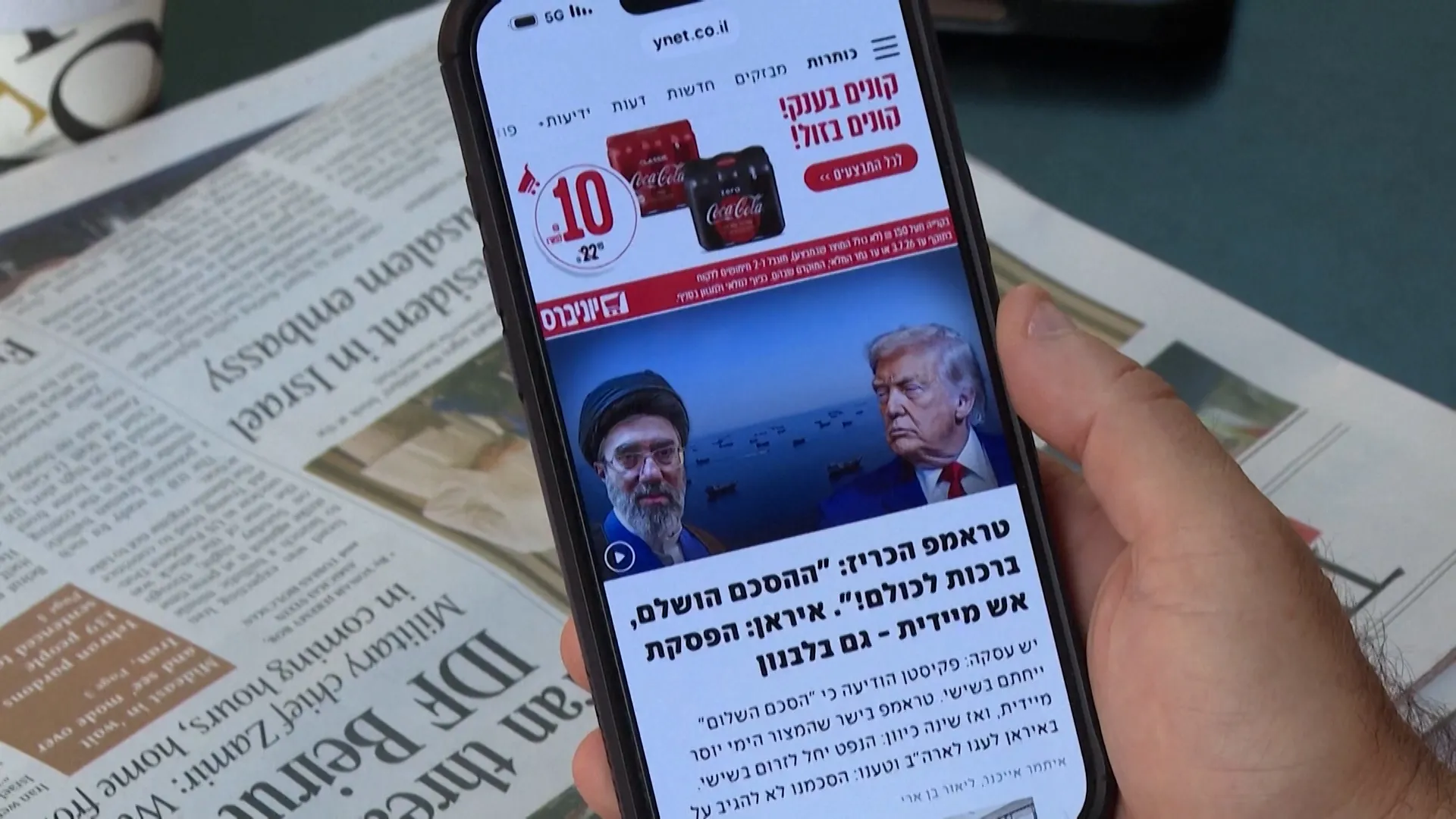
According to U.S. officials, President Donald Trump, Vice President JD Vance and Iran’s parliamentary speaker Mohammad Bagher Ghalibaf inked the memorandum of understanding (MOU) that would extend the countries’ ceasefire for 60 days, during which negotiations will take place to address nuclear and other issues to reach a final peace deal.
A large number of vessels, including two dozen South Korea-linked ships, have been stranded in the waterway, which Iran has effectively choked off with threats of missile and drone strikes amid the war.
“We are assessing the details related to maritime transit and have begun necessary communication with relevant countries, including the U.S. and Iran,” ministry spokesperson Park Il said during a regular press briefing.
According to Park, the government is closely monitoring a range of factors before making judgments on passage operations, including the presence of naval mines, the overall security situation in the strait and shipping traffic conditions.
He said the government will continue to prioritize the safety of South Korean vessels and sailors while working to ensure the smooth resumption of shipping.
Park added the government will also maintain close consultations with shipping companies in assessing developments in the region.
Copyright (c) Yonhap News Agency prohibits its content from being redistributed or reprinted without consent, and forbids the content from being learned and used by artificial intelligence systems.
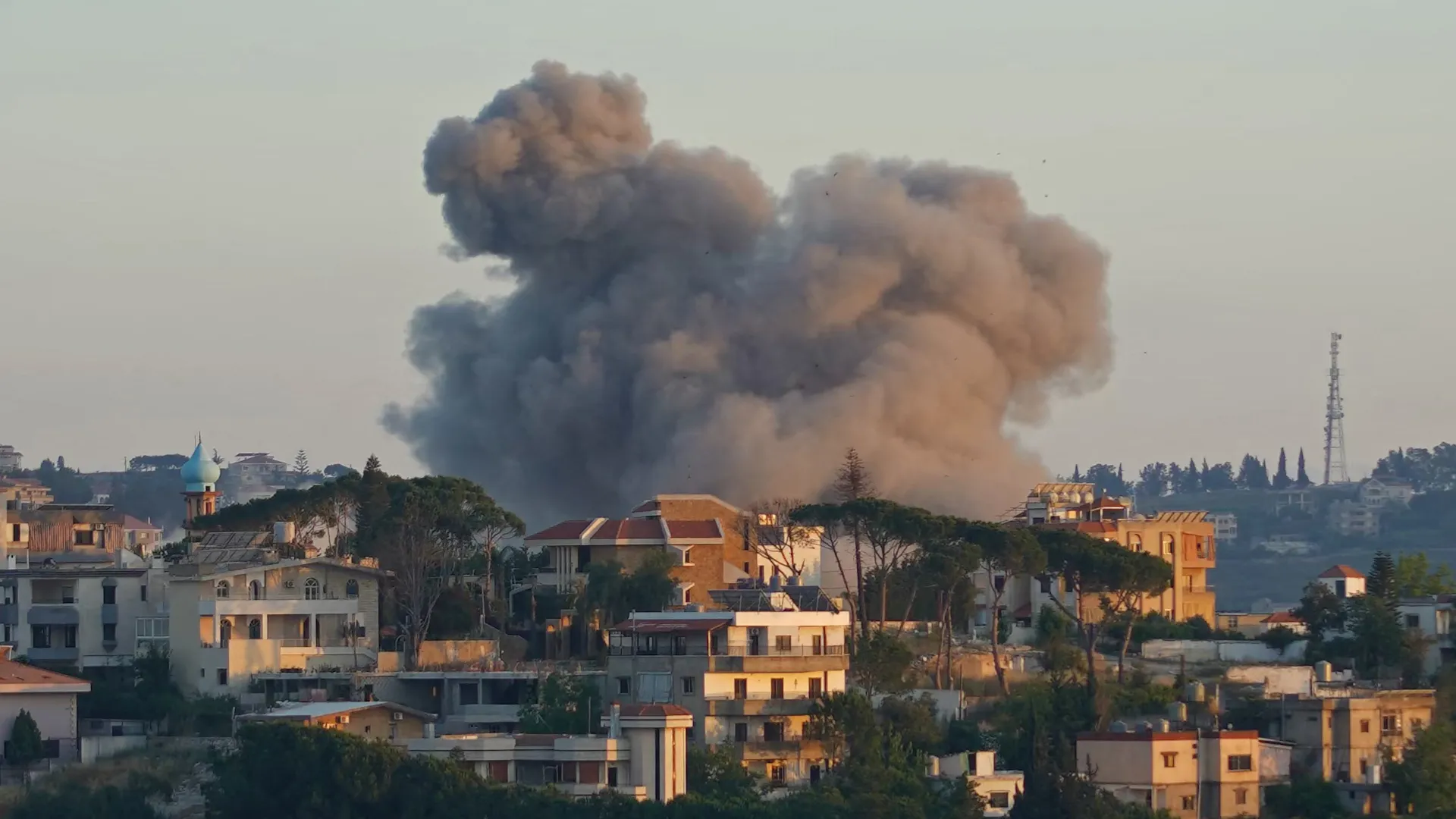
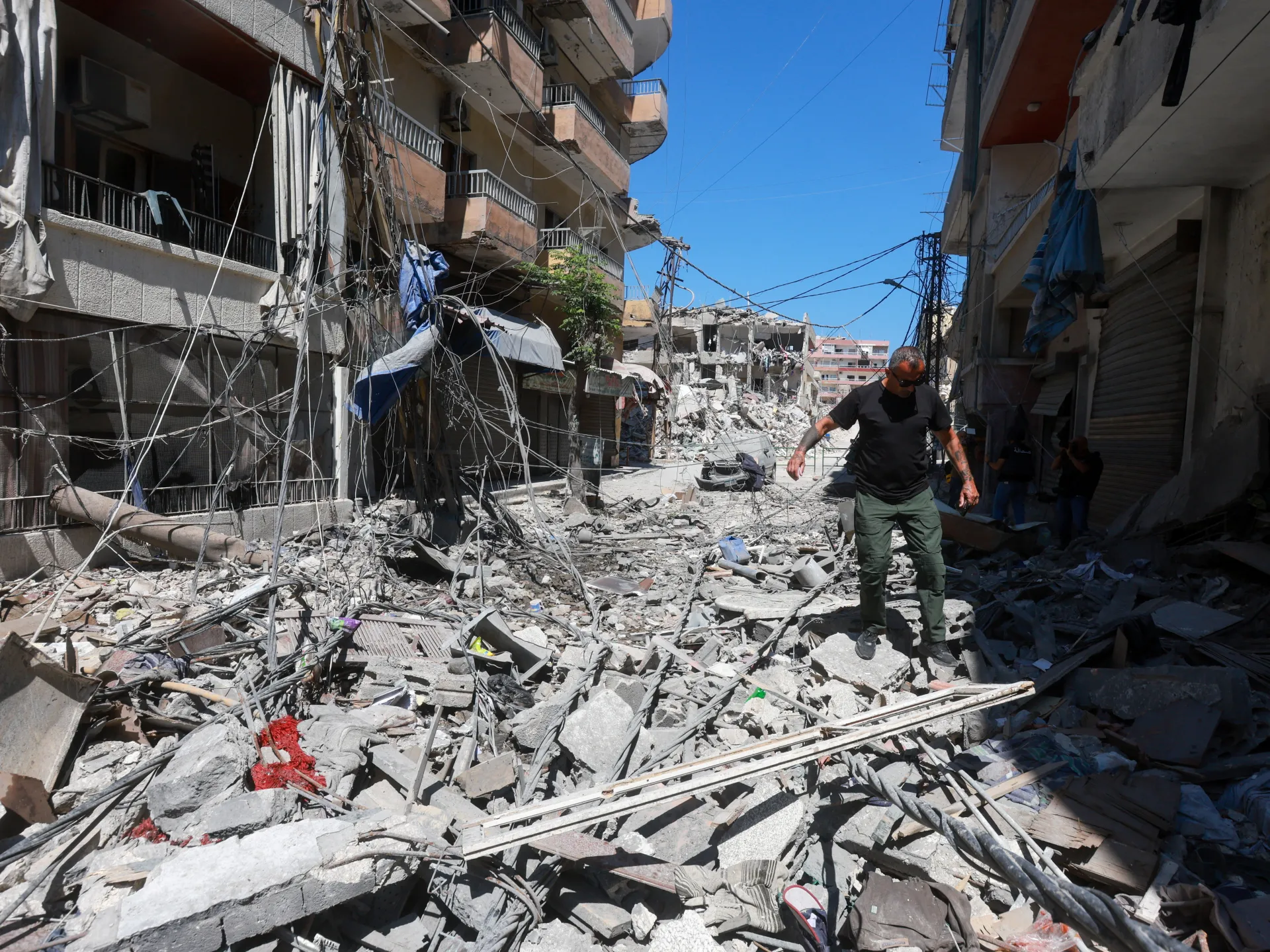
The announcement of a preliminary US-Iran agreement has generated cautious optimism in Lebanon, where months of conflict have displaced large portions of the population and devastated communities across the south.
While the framework reportedly calls for the immediate cessation of military operations, Lebanese authorities are warning residents against assuming that conditions are safe enough for a rapid return.
The caution reflects uncertainty over how the agreement will be implemented and whether all parties will abide by its terms.
Adding to those concerns, Israel has made clear that it does not consider itself bound by the agreement and intends to maintain security zones in southern Lebanon.
Lebanon became one of the principal battlegrounds of the wider regional conflict after Hezbollah opened a front against Israel in support of Iran following the outbreak of hostilities.
The resulting escalation led to extensive Israeli military operations across southern Lebanon, causing widespread destruction and one of the largest displacement crises in the country’s recent history.
Entire communities were uprooted as residents fled bombardment and military activity.
Iran consistently pushed for any agreement with Washington to include provisions addressing Lebanon, viewing the conflict there as inseparable from broader regional tensions.
The inclusion of Lebanon in the framework agreement therefore represents a significant diplomatic concession and a central element of Tehran’s negotiating position.
Why This Matters
Lebanon has become one of the clearest examples of how regional conflicts can produce devastating humanitarian consequences.
The conflict has:
Displaced more than a million people.
Damaged homes, infrastructure, and businesses.
Increased pressure on Lebanon’s already fragile economy.
Deepened political and social instability.
A durable ceasefire could allow reconstruction efforts to begin and reduce the risk of further regional escalation.
However, the humanitarian benefits will depend on security conditions improving on the ground rather than merely on diplomatic declarations.
The Challenge of Returning Home
For displaced families, peace announcements do not automatically translate into confidence.
Many residents remain uncertain about:
Whether military operations have truly ended.
The presence of Israeli forces in southern areas.
The condition of homes and infrastructure.
Future security guarantees.
The hesitation expressed by displaced residents reflects a broader reality in conflict zones: trust often takes much longer to rebuild than physical infrastructure.
Even if active fighting stops, communities may remain reluctant to return until they believe the risk of renewed conflict has genuinely diminished.
Israel’s Position Complicates the Picture
A major obstacle to immediate normalization is Israel’s position.
Israeli officials have indicated they will continue maintaining security zones and reserve the right to conduct operations they deem necessary for national security.
This creates ambiguity regarding implementation of the broader agreement.
While the US-Iran framework may establish a diplomatic foundation for reducing violence, the practical situation on the ground will depend on decisions made by actors who were not direct participants in the negotiations.
This distinction could prove crucial in determining whether the agreement produces lasting stability.
A Test of Regional Diplomacy
The inclusion of Lebanon in the agreement demonstrates how interconnected Middle Eastern conflicts have become.
The war was never confined solely to the United States and Iran. It involved multiple regional actors, proxy groups, and overlapping security concerns.
As a result, success will be measured not only by whether Washington and Tehran uphold their commitments but also by whether the agreement influences behavior across the broader region.
Lebanon is likely to become one of the first and most visible tests of that process.
Key Stakeholders
Lebanon and its government institutions
Displaced Lebanese civilians
Israel and its military leadership
Hezbollah
Iran
The United States
Regional mediators including Pakistan
Humanitarian organizations operating in Lebanon
What to Watch Next
Whether military activity in southern Lebanon decreases in the coming days.
Israeli decisions regarding security zones.
Hezbollah’s official response to the agreement.
The pace of civilian returns to southern communities.
International support for reconstruction and humanitarian assistance.
Broader negotiations during the 60-day ceasefire period.
The agreement creates an opportunity for Lebanon to move toward greater stability after months of destruction and displacement.
If implemented successfully, reduced hostilities could pave the way for reconstruction, humanitarian relief, and the gradual return of displaced populations.
Yet significant uncertainty remains. Security concerns, damaged infrastructure, and competing interpretations of the agreement could slow progress and complicate efforts to restore normalcy.
For many Lebanese families, the end of active conflict would represent only the beginning of a much longer recovery process.
Analysis
The most revealing aspect of Lebanon’s reaction is the disconnect between diplomacy and reality.
International leaders may celebrate ceasefires and framework agreements, but people living through conflict judge peace by different standards. They look not at official statements but at troop movements, security conditions, and whether it is safe to return home.
That gap is already visible in southern Lebanon. While diplomats describe the agreement as a breakthrough, local authorities are warning residents against rushing back. Israel’s decision to maintain security zones further reinforces uncertainty about how quickly conditions can normalize.
This highlights a recurring challenge in conflict resolution. Agreements can stop wars on paper, but rebuilding trust often takes far longer than negotiating a ceasefire.
Lebanon’s experience may therefore become a key measure of whether the US-Iran agreement delivers meaningful change beyond diplomatic symbolism. If displaced communities can safely return, reconstruction begins, and violence declines, the agreement will gain credibility. If insecurity persists despite the deal, questions will quickly emerge about its effectiveness.
Ultimately, Lebanon represents the human dimension of the broader regional settlement. The success of the agreement will not be judged solely by geopolitical outcomes or energy markets but by whether ordinary people feel secure enough to rebuild their lives after months of war.
Governments across the world have welcomed the tentative deal between the US and Iran to end the war, calling it a major diplomatic breakthrough. But Israeli politicians have been quick to criticise it, claiming it would undermine Israel’s security.
Crude prices retreated on Monday as US President Donald Trump confirmed a peace agreement with Iran and both sides announced a lifting of their respective blockades of the Strait of Hormuz.
ADVERTISEMENT
ADVERTISEMENT
At the time of writing, the front month contract on US West Texas Intermediate (WTI) crude was down almost 6% from Friday’s close to roughly $80 per barrel, while Brent crude, the international standard, dropped around 5% to about $83 per barrel.
The specific concessions made by each side are still unclear and there are questions surrounding whether the Prime Minister of Israel will respect the withdrawal of troops from southern Lebanon, which, according to the Prime Minister of Pakistan is included in the deal.
Benjamin Netanyahu has yet to publicly address the US-Iran deal, or the issue of Lebanon, and CNN has reported that the Prime Minister of Israel is seeking an urgent meeting with US President Donald Trump after this week’s G7 summit.
Nonetheless, markets are reacting swiftly to the prospect of the Strait of Hormuz slowly reopening and the potential that the Iran war is closer to ending than reigniting.
The freshly announced peace deal is currently expected to be signed on Friday.
European, Asian and US markets
At the open, European markets also rose on the news that there is meaningful progress in ending the Iran war.
Both the Euro Stoxx 50 and the broader pan-European Stoxx 600 traded over 1% higher at the start of Monday’s session.
The UK’s FTSE 100, Germany’s DAX 30, Italy’s FTSE MIB, Spain’s IBEX 35, the Netherlands’ AEX and Switzerland’s CH20, all traded between 0.5% and 1% higher than their Friday close.
France’s CAC 40 led the pack and rose almost 1.5%.
In the US, S&P500 futures traded over 2% higher and the teach-heavy Nasdaq 100 rose more than 3%.
In other trade dealings on Monday, Asia-Pacific markets jumped overnight with South Korea’s Kospi climbing over 5%, recovering from a 4% drop on Friday, while Japan’s Nikkei 225 also traded roughly 3% higher.
Australia’s S&P/ASX 200 rose 0.8%, while Hong Kong’s Hang Seng Index jumped about 0.5% and Shangai’s SSE climbed over 1.5%.
The US and Iran say they have reached a deal to end fighting on all fronts and open the Strait of Hormuz. Al Jazeera’s Osama Bin Javaid explains how both sides are claiming victory, even as tough negotiations over the details still lie ahead.
June 13 (UPI) — President Donald Trump and Pakistan have said that a memorandum of understanding extending the cease-fire between the United States and Iran will be virtually signed Sunday, though Iran has not confirmed the meeting.
Trump posted on Truth Social at 12:45 p.m. EDT Saturday: “The Deal is scheduled to get signed tomorrow, and immediately after it is signed, the Hormuz Strait is OPEN TO ALL.”
He also posted a screenshot of a Saturday morning tweet by Pakistani Prime Minister Shehbaz Sharif: “We are closer to a peace deal than ever before. With finalization expected in the next 24 hours, Pakistan is preparing for the electronic signing of the peace deal immediately after, followed by technical level talks next week.”
The Pakistani foreign minister confirmed that the signing was set for Sunday, Axios reported.
But Iran said there were no talks planned for Sunday. Iranian Foreign Ministry Spokesperson Esmail Baghaei said there were no plans for an Iranian negotiating team to travel to Geneva or elsewhere in the next day or two, according to IRIB, Iran’s state broadcaster, The New York Times reported. While Iran could also sign electronically, it’s unclear if the signing event will happen.
One of the main reasons the signing will be virtual is that Vice President JD Vance, who has been negotiating the peace deal, wouldn’t be able to go to the signings and be back in the United States before Trump leaves for the G7 summit in France Monday, Axios said.
Also, Sunday is the president’s 80th birthday and the day of the UFC fight on the White House lawn.
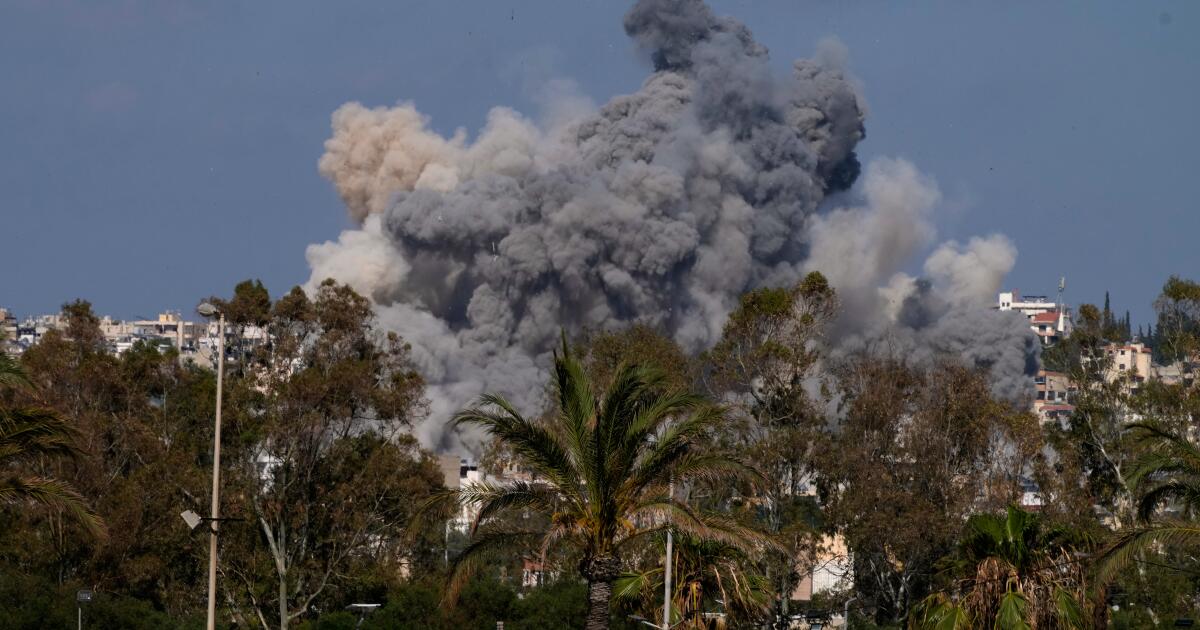
Israel has continued to attack Lebanon, despite Iran saying it was included in a potential memorandum of understanding with the US. Fresh forced displacement orders were issued on Saturday morning, following Israeli bombardment throughout Friday night on towns and villages in the south.
June 12 (UPI) — Iran said it had yet to make a final decision on an agreement with the United States to end the war, despite U.S. President Donald Trump saying it was a done deal that could be signed as early as this weekend.
Speaking on Thursday night, Iranian Foreign Ministry spokesman Esmaeil Baqaei said Tehran was reviewing a proposal brokered by Qatar and Pakistan but dismissed reports agreement had been reached as “speculation,” adding that “nothing has been finalized.”
“So far, Iran has not reached a final conclusion on the agreement. Whenever we reach a conclusion that the text of the [memorandum of] understanding is in the interest of the Iranian nation, we will announce it.
“The status of negotiations was clear to us from the beginning and a major part of the text had been finalized, but the Americans kept changing their positions,” said Baqaei who stressed Iran would never retreat from or compromise “on what it defines as its red lines.”
Baqaei’s comments came hours after Trump called off planned large-scale strikes against Iran, including Kharg Island, from which 90% of Iran’s crude oil exports are shipped, saying the Iranian leadership, and other regional powers, had approved “final points” of a deal to end the war.
“Based on the fact that discussions with the Islamic Republic of Iran have been brought to the highest level of Iranian leadership and approved, I have, as President of the United States of America, cancelled the scheduled strikes and bombings against Iran this evening,” Trump said Thursday afternoon.
Trump later said the deal was “subject to finalization of documents, which should get done, over the next few days” and that there would “probably” be a signing ceremony, with Europe the most likely location.
The status of the Strait of Hormuz was also in contention with an announcement by U.S. Central Command that the key shipping route was not controlled by Iran and was “open for transit” to all vessels not in breach of the U.S. blockade of Iran, contradicted by Baqaei.
“The Strait of Hormuz remains closed due to illegal U.S. actions,” he said.
Trump has stated an agreement to end the fighting was imminent on multiple occasions since a cease-fire, originally for two weeks, came into force on April 28.
The deal being negotiated is a memorandum of understanding extending the cease-fire for 60 days to allow larger negotiations on the main issues, including Iran’s stockpile of enriched uranium and its nuclear program.
Oil prices reacted strongly to the developments overnight with both Brent crude, the international benchmark, and West Texas Intermediate, falling sharply in the global market. The Brent contract for August delivery was down $3.83 a barrel at $86.54 in mid-morning trade in London on Friday while American crude for July delivery was changing hands at $83.88 a barrel, down $3.83.
Wall Street and Asian markets rally on hopes for an end to the US-Israel war on Iran.
Published On 12 Jun 202612 Jun 2026
Stock markets have surged following US President Donald Trump’s announcement that he called off planned strikes against Iran and a peace deal with Tehran is imminent.
Wall Street’s benchmark S&P500 index finished nearly 1.8 percent higher on Thursday, ending a three-day streak of losses for the biggest single-day gain since April.
Recommended Stories
list of 4 itemsend of list
The tech-focused Nasdaq Composite jumped 2.5 percent, while the older, blue-chip Dow Jones Industrial Average gained about 1.9 percent.
The rally continued in the Asia Pacific on Friday, with markets in Japan, South Korea, Taiwan, Hong Kong, and Australia racking up gains.
South Korea’s Kospi, the best-performing major index this year, surged more than 8 percent in morning trading, while Japan’s benchmark Nikkei 225 rose as much as 4 percent.
Taiwan’s TAIEX gained about 2.4 percent, and Australia’s ASX 200 rose about 1.8 percent.
In Hong Kong, the Hang Seng Index was up more than 1 percent.
Brent crude, the primary international benchmark for oil prices, fell about 1 percent to below $89.50 a barrel on hopes for a return to normality in the Strait of Hormuz, which in peacetime carries about one-fifth of global energy supplies.
The market rebound came after Trump on Thursday suggested that a deal to end the war on Iran could be signed as soon as this weekend.
“We just made a great settlement of the war with Iran… subject to finalisation of documents,” Trump told reporters in the Oval Office of the White House.
Iran has not publicly confirmed Trump’s claims, but a Ministry of Foreign Affairs spokesman told reporters a memorandum of understanding with the US is “under consideration”.
“For the rally to be sustained, investors will want to not only see the actual deal being signed, but a complete reopening of the Strait of Hormuz,” Khoon Goh, head of Asia research for ANZ Bank, told Al Jazeera.
“Only then will we see the gains extend.”
Fabien Yip, a market analyst at the online broker IG Group in Sydney, Australia, said the rally reflected a “meaningful easing of geopolitical risk”, as well as anticipation over Friday’s market debut of SpaceX, set to be the largest of its kind in history.
“The broader read on today’s Asian follow-through is that dip-buying interest remains genuine,” Yip told Al Jazeera.
“That matters for how you characterise what’s happened over the past week.
“This looks less like a structural break in the bull market and more like a healthy reset after a rapid, near-straight-line advance, the kind of consolidation that can potentially extend a rally’s longevity.”
Residents were thrown into despair after a terrorist leader, Jammo Smally, abducted 39 community leaders who had gone to discuss a peace deal with him. The dramatic incident occurred on Sunday, June 7, in the Maradun Local Government Area (LGA) of Zamfara State, North West Nigeria.
Jammo had been sending messages to the leaders in the Magamin Diddi community for over two months, calling for a meeting to discuss the terms of the peace deal as the rainy season approached. The terrorist leader, whose parents live in a hamlet not far from Magamin Diddi, had claimed he was tired of the hostility between his terror group and the community.
Following another invitation a few days after the Islamic Eid al-Kabir celebrations, the traditional and religious leaders decided to meet Jammo and his gang members in the forest. The two parties agreed to meet on Sunday to reach what the community leaders thought would be a peaceful solution to the recurrent attacks on their farms and homes.
“The first thing he asked when we reached there was the whereabouts of the three rifles the Askarawa took away from his boys two months ago,” Malam Aliyu, one of those who went to strike the deal, told HumAngle over the phone on Monday. He had joined 46 other community leaders to strike the deal. “We were confused at first, because we were told that we would be discussing only a peace deal. We thought that he would ask us to give him money, but the first thing he asked was for his rifles.”
“Askawara” is a local term for security volunteers of the state-backed Community Protection Guards (CPG) in Zamfara State. Local sources told HumAngle that towards the end of March, terrorists from the Jammo group had a gunfight with the CPG fighters and other vigilante group members, leading to the killing of two terrorists. Three rifles belonging to the terrorists were taken away by the CPG fighters.
“We didn’t take his guns, but it’s obvious he has made up his mind,” Aliyu said. The terrorist leader released seven community leaders, instructing them to report back to the district head with his demands. He has one condition for the release of the 39 elders: either the rifles are returned, or an equivalent amount of money must be paid to him.
The terrorist leader also set ₦50 million for the peace deal. “He said if we’re still interested in negotiating with him, we should add ₦50 million to the rifles we’re returning. The money is for us to be able to live in peace, go to local markets, and go to our farms,” the community leader said.
Negotiations between terrorists and local communities aiming to establish peace are not uncommon in the ongoing crisis plaguing the northwestern region for over a decade. Typically, these discussions involve communities paying substantial sums to the terrorists under the guise of a peace agreement. However, such negotiations often yield little result, as terrorist attacks continue unabated even after agreements are reached, as seen in various regions of the state.
The Zamfara State government has consistently maintained its stance against negotiating with terrorists. Yazid Abubakar, the Zamfara State Police spokesperson, stated that they have initiated a rescue operation to free the captured individuals.
“Upon receipt of the report, the Zamfara State Police Command immediately initiated efforts to trace the victims’ whereabouts and secure their safe rescue. Operational assets have been deployed, and security operatives are working on available intelligence to locate the abducted persons,” Yazid Abubakar said in a statement on Monday.
Residents of Magamin Diddi, Zamfara State, Nigeria, have been thrust into turmoil after the abduction of 39 community leaders by terrorist Jammo Smally.
These leaders were negotiating a peace deal with Smally, who had been reaching out for over two months, desiring an end to hostilities.
However, during the meeting, Smally demanded the return of rifles taken by local security volunteers or payment in cash, along with an additional ₦50 million for peace.
This incident is emblematic of a broader crisis in northwestern Nigeria, where communities often pay terrorists under the guise of peace deals, yet attacks continue unabated. The Zamfara State government, adhering to a policy of non-negotiation with terrorists, has initiated a rescue operation for the abducted leaders, deploying operational assets based on available intelligence to ensure their safe return.
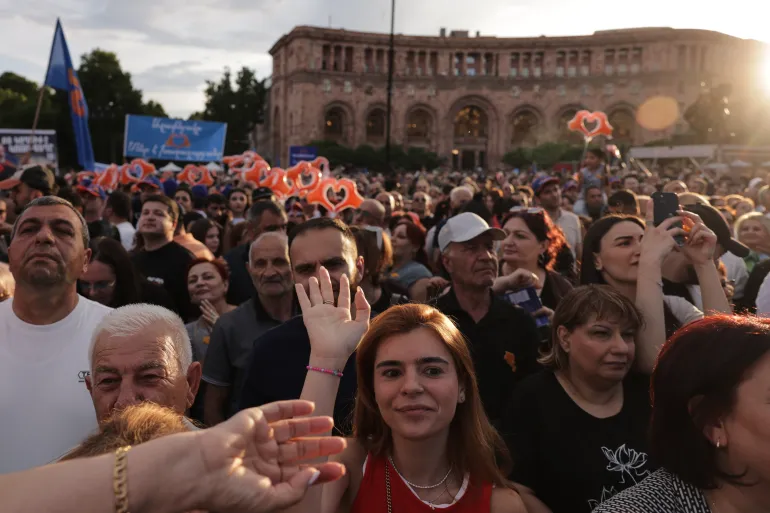
At a campaign rally in Armenia’s capital, Yerevan, on Saturday, one day before Armenia’s election, Prime Minister Nikol Pashinyan, outfitted in a white button-up shirt and a red-brimmed baseball cap, held a look of determination.
Flanked by supporters waving their arms and flashing his campaign’s signature heart-shaped hand gesture, Pashinyan was perched centre stage, pounding away on a drum kit for the crowds – literally drumming up support.
Recommended Stories
list of 4 itemsend of list
By election day, his governing Civil Contract party appeared to have drummed up something more consequential: public backing for his vision of Armenia’s future following the loss of the disputed region of Nagorno-Karabakh to a crushing military defeat by Azerbaijan in 2023.
Pashinyan, who formed a band earlier this year and campaigned with a series of concerts around the country, secured 49.8 percent of the vote in Sunday’s ballot, enough to retain a parliamentary majority.
His victory is seen as a test of his handling of the loss of the Nagorno-Karabakh region and his ability to steer the country away from Russian influence.
He has ultimately prevailed despite Russian meddling in Armenian politics, and the country now looks set to reorient itself away from its former ruler – signalling Armenians’ willingness to embrace a new direction, analysts say.
“Many Armenians are prepared to give his new vision a chance: an Armenia less defined by conflict, more open to normalising relations with Azerbaijan and Turkiye, and increasingly focused on building its future within its internationally recognised borders,” Zaur Shiriyev, an analyst at the Carnegie Russia Eurasia Center, told Al Jazeera.
‘Tired of conflict and war’
The loss of Nagorno-Karabakh could have spelled political doom for Pashinyan. By handing him a second term, Armenians have signalled that they are ready to put the conflict that has intermittently reared its head for decades behind them, analysts say.
“Nationalism no longer resonates among the public, which is demonstrably tired of conflict and war,” Richard Giragosian, director of the Yerevan-based Regional Studies Center, told Al Jazeera, even if the loss of the region remains an “open wound”, he said.
Nagorno-Karabakh, meanwhile, no longer features at all in the Armenian government’s defence reform, nor in its national security strategy, “a final confirmation of the new strategy of diversification”, Giragosian explained.
Peace efforts instead took centre stage in Pashinyan’s campaign, including the agreement he signed at the White House last August with Azerbaijan, finally ending the on-again-off-again war that had raged since the late 1980s.
Unlike in 2021, when Pashinyan’s campaign was shaped by the immediate aftermath of war and questions of political survival, Sunday’s vote became a clearer test of public support for his peace agenda, Shiriyev said.
Peace over nationalism
The result also demonstrates that the nationalist mantras peddled by opposition leaders have not been able to sway the majority of Armenians, said Svante Cornell, director of the Institute for Security and Development Policy and its Central Asia-Caucasus programme.
“The opposition represented a return to oligarchy, nationalism and forever conflict,” Cornell told Al Jazeera.
“While the Pashinyan government has its flaws, it represents something different than the past.”
The election saw the two main opposition forces – Strong Armenia and Armenia Alliance – win 41 seats combined in the new parliament, against the 64 seats the government holds, out of a total 105.
But Giragosian cautioned against overstating the opposition’s strength as, he said, the two opposition parties are unlikely to cooperate given the friction between their leaders – Russian-Armenian oligarch Samvel Karapetyan, whose Strong Armenia took 29 seats, and former President Robert Kocharian, whose Armenia Alliance won just 12.
“The division and dissent within the opposition will present a profound obstacle,” he said.
Although united in their shared pro-Russian leanings, Karapetyan is seen by Kocharian as an “interfering interloper”, with Kocharian himself resenting his third-place position behind Karapetyan, the analyst said.
“This is further exacerbated by Kocharian’s sense of entitlement, and his frustration of being rebuffed by Moscow in his prior attempts to gain direct Russian backing and support,” Giragosian added.
Still, Cornell said, the persistence of pro-Russian, nationalist sentiment in Armenia generally should not be taken lightly.
Until 2020, Armenia was governed by successive administrations that spent three decades pushing a nationalist identity, he said.
“To expect such views, such sentiments would just disappear – would be unrealistic,” Cornell noted.
Supporters of Armenia’s ruling Civil Contract party led by Prime Minister Nikol Pashinyan gather in Republic Square in Yerevan, Armenia, Friday, June 5, 2026, for the party’s final campaign rally [Anthony Pizzoferrato/AP]
Russian influence weakened – but not gone
In the lead-up to Sunday’s election, international observers had accused Russia of attempting to interfere – but its inability to change the result reflects Moscow’s limited reach in the country today, analysts say.
“Moscow still has tools in Armenia, but it no longer has the authority it once had,” Shiriyev said.
“In today’s Armenia, being seen as Russia’s preferred candidate can mobilise voters against you as much as for you.”
As Armenia strives to resist what Shiriyev refers to as the “gravitational pull” of the “Russian orbit”, a window of opportunity has been created by Moscow’s preoccupation with its invasion of Ukraine and a new openness from Western partners.
“The larger risk is from not altering strategy, and the benefits of a pivot to the West are both demonstrable and popular in Armenia today,” Giragosian said.
Russia, he added, is now increasingly viewed in Armenia as a “dangerously undependable so-called partner”.
Benyamin Poghosyan, an Armenia analyst at the Italian Institute for International Political Studies, argues that the primary foreign policy drivers of the election, however, were regional actors – not Russia or the West.
“The reality on the ground is far more nuanced,” Poghosyan told Al Jazeera. Armenia’s future relations with Azerbaijan and Turkiye, as well as the regional fallout from the conflict in Iran, are far greater influences, he said.
There are good reasons not to count Moscow out completely, however. While pro-Russian forces did not prevail this time, they will continue to assert their influence, Cornell said. He referred to the cautionary tale of another Caucasus country.
“In Georgia, the work of undermining a reformist and pro-Western government and turning the country around to a more pro-Russian line took over 15 years,” he said.
At the same time, Moscow still holds massive economic leverage over Yerevan, said the analysts.
Russia remains the primary export destination for Armenian agriculture and wine, is the main source of critical imports like wheat, and supplies the country with heavily discounted gas, Poghosyan noted.
“Because Russia has the capacity to inflict severe economic pain, Yerevan must tread carefully to protect its core interests without completely rupturing its relationship with Moscow,” he said.
Shiriyev added that many Armenians work in Russia, with families depending on remittances, and business ties running deep.
“By contrast, Western integration can still feel abstract and uncertain to many voters. That is why pro-Russian forces can still gain traction, even as Russia’s political image in Armenia has weakened,” he said.
A constitutional hurdle
But while Pashinyan’s re-election has strengthened his hand in the country’s peace process, it has not resolved one key sticking point for constitutional change to ensure it, said Shiriyev.
Azerbaijan has demanded a change to Yerevan’s constitution as a means of guaranteeing that no future Armenian government might revive claims related to Nagorno-Karabakh or Azerbaijan’s territorial integrity.
“But Pashinyan lacks the two-thirds majority needed to move easily toward a referendum, and even a referendum would be politically uncertain,” said Shiriyev.
This election, Cornell said, was “a necessary but not sufficient condition for the peace process to advance”.
Poghosyan warned that if Baku refuses to drop these preconditions, “the peace agreement will remain stalled, leaving both nations trapped in a volatile state of ‘no war, no peace’”.
On the question of regional normalisation, however, the outlook has shifted.
Since the bilateral peace treaty was signed at the White House last August, Azerbaijan has lifted restrictions on trade and transit with Armenia and restarted talks on border demarcation – moves that Giragosian said have also accelerated the opening for Armenia-Turkiye normalisation.
“For Armenia,” said Shiriyev, “the West may offer the road, Russia increasingly acts as the roadblock, and normalisation with Azerbaijan and Turkiye is the real prize.”
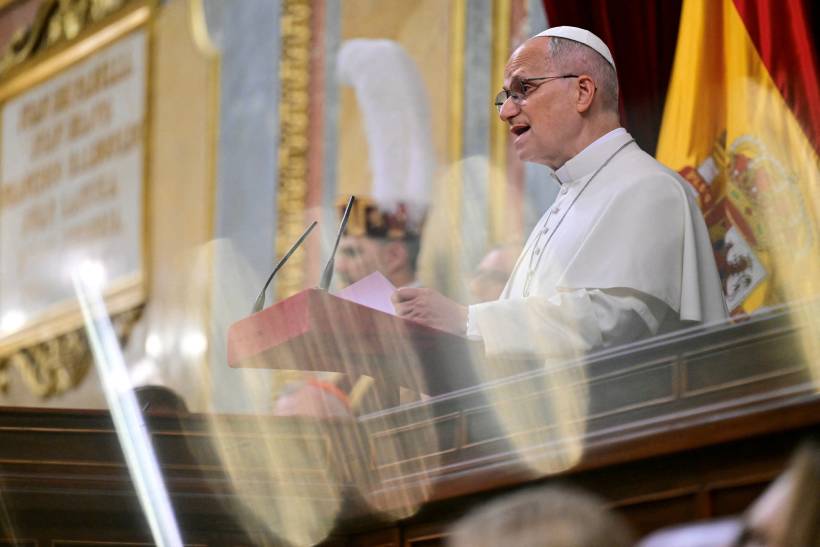
Pope Leo delivered a landmark address to Spain’s parliament, warning that the world is facing a profound spiritual, cultural, and political crisis marked by escalating conflicts, deepening polarization, and growing disregard for human rights.
The speech, the first by a pope before the Spanish legislature, formed a central part of his week long visit to Spain. Coming amid renewed hostilities between Israel and Iran and ongoing debates over migration and European security, the address reflected the Vatican’s increasing engagement with major geopolitical and humanitarian issues.
Leo used the occasion to reiterate long standing Catholic concerns regarding war, social fragmentation, migration, and the ethical implications of technological development. He also addressed the relationship between religion and public life, defending religious freedom and the confidentiality of confession.
Key Themes
Peace Over Militarisation
A central theme of the pope’s address was opposition to the growing militarisation of international politics. He argued that military force may suppress conflict temporarily but cannot create lasting peace.
His remarks came as European governments continue increasing defence expenditures in response to heightened security concerns following Russia’s invasion of Ukraine and broader geopolitical instability. The pope warned that excessive reliance on military solutions risks deepening rather than resolving global tensions.
Migration and Human Dignity
Leo devoted significant attention to migration, describing inadequate responses to displaced populations as a challenge to the ethical foundations of the international order.
He urged governments to move beyond border management policies and address the underlying drivers of migration, including conflict, poverty, and climate change. His comments coincided with plans to meet migrants in Spain’s Canary Islands, a major entry point for migrants attempting to reach Europe from Africa.
The pontiff framed migration as both a humanitarian and moral issue, arguing that the treatment of vulnerable populations serves as a measure of a nation’s moral character.
Artificial Intelligence and Ethics
The pope also expanded on concerns he has raised previously regarding artificial intelligence. He called for stronger ethical oversight of emerging technologies, particularly their application in military contexts.
As governments and defence industries increasingly integrate AI into weapons systems and military planning, Leo argued that technological progress must remain subject to moral and humanitarian considerations.
Religion in Public Life
Another notable aspect of the speech was the pope’s defence of religious participation in public affairs. He argued that faith should not be excluded from public discourse and stressed the importance of protecting religious freedoms.
Leo also defended the confidentiality of confession, a topic that has generated debate in several countries considering legal requirements for clergy to report abuse disclosed during confessions.
Why It Matters
The speech signals a more assertive Vatican engagement with global political debates at a time of mounting international instability.
Unlike purely theological addresses, Leo’s remarks directly addressed issues shaping contemporary international relations, including war, migration, technological governance, and democratic cohesion. His intervention places the Catholic Church within broader discussions regarding the future direction of global governance and international cooperation.
The address also highlights the Vatican’s growing concern that rising geopolitical competition, nationalism, and social polarization are weakening international institutions and undermining collective approaches to global challenges.
Stakeholders
The Vatican
Seeking to shape global debates on peace, migration, ethics, and human rights.
European Governments
Balancing security concerns with humanitarian responsibilities and social cohesion.
Migrants and Refugees
Directly affected by immigration policies and international responses to displacement.
Technology Sector
Facing increasing scrutiny over the ethical implications of artificial intelligence.
Religious Communities
Monitoring debates surrounding religious freedom and the role of faith in public life.
Human Rights Organisations
Engaged in discussions regarding migration, conflict resolution, and protections for vulnerable populations.
Strategic Implications
The address reflects the Vatican’s effort to position itself as a moral counterweight to rising geopolitical competition and militarisation. By linking war, migration, technology, and social division within a single framework, the pope presented these issues as interconnected symptoms of a broader crisis affecting the international order.
His criticism of increased military spending places the Vatican at odds with many Western governments currently prioritising defence expansion. At the same time, his focus on migration challenges increasingly restrictive immigration policies adopted across Europe.
The pope’s intervention on artificial intelligence also signals that ethical governance of emerging technologies may become a more prominent area of Vatican diplomacy in the coming years.
Analysis
Pope Leo’s address represents one of the clearest articulations yet of his vision for the Church’s role in contemporary global affairs. Rather than limiting his remarks to spiritual concerns, he framed international conflict, migration pressures, technological change, and democratic fragmentation as interconnected challenges requiring moral as well as political responses.
The speech suggests a papacy willing to engage directly with policy debates at a time when many governments are prioritising security, strategic competition, and economic interests. While the Vatican lacks conventional political power, its ability to shape public discourse and influence ethical debates remains significant.
By positioning peace, human dignity, and ethical governance at the centre of his message, Leo is seeking to reassert the relevance of moral leadership in an increasingly fragmented international environment. Whether governments embrace those arguments remains uncertain, but the address signals that the Vatican intends to remain an active participant in debates over the future of the global order.
June 5 (UPI) — Ukrainian President Volodymyr Zelensky challenged Russian President Vladimir Putin to meet him face-to-face to try to bring the four-year-long war between their two countries to an end.
In an open letter to Putin late Thursday, Zelensky said Ukraine wanted to end the conflict through “direct engagement,” adding that it was incumbent on the sides to act, rather than waiting for Washington to take the lead — but other agreed participants such as the United States and European nations “could join the bilateral track” once it was established.
“We see that the United States is fully focused on the issue of Iran, and it would be wrong to simply wait until the war in Europe returns to the center of its attention. Ukraine proposes ending this war through direct engagement between us — and you. This must be done honestly, with dignity, and with guarantees that the war will not be reignited. I am proposing a meeting,” wrote Zelensky.
Russia was on the back foot, on the front and from daily Ukrainian drone and missile strikes, and Putin was running out of time and resources while fuel shortages and constantly rising prices from his endless war were testing the patience of the Russian people, Zelensky said.
“Life without war is infinitely better. And we want to achieve that. I am convinced that the majority of Russians would respond positively to this as well — and you know it. Do not be afraid to take the path out of this war,” he added.
Zelensky rejected suggestions made by Russian officials that he was welcome in Moscow any time, saying any meeting should be held in a country with a track record of mediating in conflicts such as Switzerland, Turkey or nations in the Arab world.
In a wind-ranging 1,800-word missive, the bulk of which was a critique of Putin’s 26-year rule, Zelensky said he wanted to set a clear date for the meeting and that there should be a cease-fire for the duration of the negotiations.
Putin, responding before he had seen the letter, said he was “certainly prepared and willing to reach an agreement with Ukraine,” provided there were compromises, but rejected the idea of a cease-fire.
That was in line with his long-standing position that Russia would only sign up to a fully-formed peace agreement and that it would not stop the fighting until such time as it came into force.
At the same time, Putin reiterated doubts regarding Zelensky’s legitimacy, due to the fact he remains in office two years after his presidential term expired in May 2024.
Elections cannot be held in Ukraine due to martial law, which was declared on the day Russia launched its full-scale invasion in February 2022.
Speaking to reporters in the Oval Office on Thursday, U.S. President Donald Trump endorsed the possibility of a Zelensky-Putin summit but didn’t address Zelensky’s claim he was too busy with Iran.
“I’m glad they’re maybe talking about meeting. I think we had a lot to do with it. I think it would be great if they met. They should get it done,” said Trump.
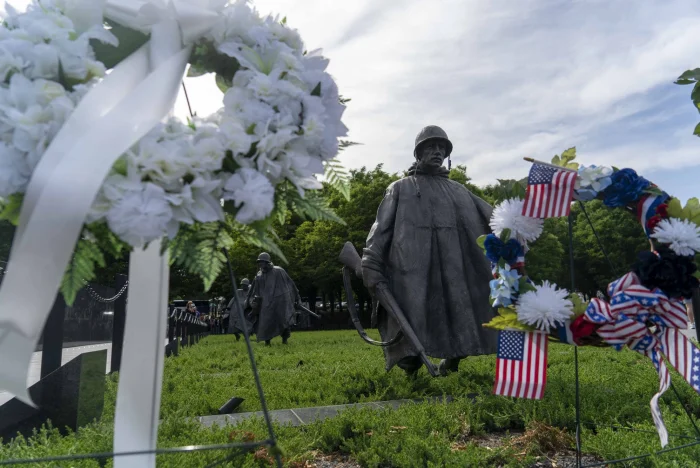
Wreathes are seen amongst the statues at the Korean War Veterans Memorial during Memorial Day weekend in Washington on May 27, 2023. Memorial Day, which honors U.S. military personnel who died while in service, is held on the last Monday of May. Photo by Bonnie Cash/UPI | License Photo
BEIRUT — President Trump acknowledged criticizing Israeli Prime Minister Benjamin Netanyahu as “crazy” in a phone call that involved expletives, saying he was “a little bit perturbed” that Israel’s fighting with Hezbollah militants in Lebanon was holding back peace talks with Iran.
But even as the president conceded the tensions in an interview released Wednesday, he insisted that his relationship with Netanyahu was solid and that they connected, in part, because they are both “wartime” leaders.
“We’ve worked very well together. I like Bibi a lot. And I work very well with him,” Trump told the New York Post’s “Pod Force One.”
In an interview on the American business-news channel CNBC, Netanyahu responded that he and Trump sometimes have “tactical disagreements” but have “common goals” and “agree on the main things.”
“He respects me. I respect him. We always find a way to work out our differences,” the prime minister said.
The president’s comments about the Monday call offered a sign of the growing pressure he faces to resolve the Iran war as higher energy prices and economic uncertainty threaten Republican prospects in the midterm elections and hamper global commerce.
Talks have dragged on for weeks as mediators seek to extend a fragile ceasefire into a more enduring truce. The negotiations are further strained by Israel’s broadening war with the Iranian-backed militia group in Lebanon. The conflicts have become increasingly intertwined as Iran insists that any potential truce in the war there must also quell the fighting in Lebanon.
Trump does not commit to timeline for ending Iran war
Trump remained noncommittal about a timeline for settling the Iran conflict, saying the Strait of Hormuz might stay blocked through the Labor Day holiday on Sept. 7. He has insisted that Iran stop any efforts that could lead to a nuclear weapon and that the strait be reopened for shipments of oil and natural gas.
“I don’t know. I mean, I think it could be [closed through Labor Day], but I think it’s unlikely. I think that we’ll have it. I think this will resolve itself fairly quickly,” Trump said.
Iran’s Supreme Leader Mojtaba Khamenei, who succeeded his late father, is “involved” in peace talks, Trump added.
“They have a lot of respect for him,” the president said in the interview.
Trump said that Khamenei is not doing well due to wounds sustained in an airstrike, but “they say he’s giving approval because that’s the way it has been for a long, long time.” Khamenei’s father was killed in an airstrike when the U.S. and Israel attacked Iran at the end of February.
Meanwhile in the Persian Gulf region, Kuwait briefly shut its main airport Wednesday after Iranian drones hit a passenger terminal building, killing one person and wounding dozens. It was the latest in the back-and-forth attacks by Tehran and Washington that have tested the ceasefire.
The strike again brought home the risks to residents and travelers in Gulf countries that had considered themselves relative safe havens before the war, now in its fourth month.
Path to a lasting ceasefire in Lebanon is obscured by new strikes
The path toward a lasting ceasefire between Israel and Hezbollah remained unclear as hostilities continued in Lebanon.
An Israeli strike Wednesday hit a car on a busy highway just south of Beirut, hours before the second day of talks between Lebanon and Israel in Washington were set to take place.
The strike in Khaldeh came without warning, and it was not immediately clear if the person targeted was killed.
Israel and Lebanon on Monday reached a U.S.-brokered agreement in which Israel would not strike Beirut’s southern suburbs and Hezbollah would end its attacks on northern Israel.
The agreement was made hours after Israel announced that it was going to launch strikes across the sprawling urban neighborhoods near the Lebanese capital in what would have been the most intense strikes since a nominal ceasefire went into effect on April 17.
The State Department said progress was made during the first day of talks on Tuesday. Lebanon hopes to widen the scope of the ceasefire so it becomes comprehensive across the country. Israel wants to disarm Hezbollah immediately before the Israeli military ends its operations in Lebanon and withdraws its troops from dozens of villages and towns.
Not long after the strike on Khaldeh, the Israeli military said it intercepted what it called a hostile aircraft coming from southern Lebanon, but it did not immediately blame Hezbollah. Hezbollah has not claimed a cross-border attack since the agreement.
Israeli military warning rattles coastal city
Israeli strikes over southern Lebanon continued, especially in and around the battered cities of Tyre and Nabatiyeh. Two overnight strikes near Tyre, a coastal city, killed four Syrians and two Palestinians.
Israel warned the Christian neighborhoods in Tyre that Hezbollah members were among them. Many Lebanese Shiite Muslims fled to those areas in recent days because they were spared from the aerial bombardment along the Mediterranean coast.
After the warning, the Lebanese army deployed to the Christian district of Tyre in an effort to prevent Israeli attacks there and to show that Hezbollah has no armed presence in the area.
Israel launched an invasion of southern Lebanon days after the latest war was sparked on March 2, when Iran-backed Hezbollah fired rockets toward northern Israel in solidarity with Iran. Israeli troops have pushed deeper into Lebanon over the past week, as Hezbollah continues to claim rocket and drone attacks.
The latest round of fighting between Israel and Hezbollah has killed 3,468 people in Lebanon and displaced 1.2 million people. According to Netanyahu’s office, at least 27 Israeli soldiers and a defense contractor have been killed in or near southern Lebanon. Two civilians have also been killed in northern Israel.
Strike on village kills most of a family
Many residents of southern Lebanon remained in villages near the hostilities or returned to areas where strikes occurred after evacuation warnings.
The Al-Abdallah family returned to their home in Marwanieyh, which they left because they thought the village was unsafe following earlier strikes. A day later, two rockets hit the home, bringing down the three-story building and killing six family members, said the brother of Hassan Al-Abdallah, who was killed.
Ahmed Al-Abdallah, 13, was thrown away from the building by the force of the blasts and was the only member of his family to survive. His uncle, Eissa Al-Abdallah, said the boy has two broken legs and shrapnel wounds all over his body.
“What good is talking now? They are gone, and nothing will bring them back,” the uncle told the Associated Press in a phone call Tuesday. “This land costs blood.”
Chehayeb, Boak and El Deebwrite for the Associated Press. Boak reported from Washington.
Iranian Commander of the Mohammad Rasoolullah Corps Hassan Hassanzadeh attends an event with Iranian officials, military commanders, families of war victims and their supporters at the Imam Khomeini Mosque in Tehran, Iran on May 24. Photo by Behnam Tofighi/UPI | License Photo
June 1 (UPI) — Iran has stopped peace negotiations with the United States as it alleges the terms of its cease-fire agreement have been violated, Iran state media reported Monday.
The Tasnim News Agency cited Israel’s continued military operations in Lebanon as a violation of its cease-fire terms, calling for a cease-fire in Lebanon.
The Iranian news agency added that Iran will block the Strait of Hormuz and is looking to “activate” its “resistance front” in other areas.
“The United States and Israel bear responsibility for the consequences of any breach of the truce,” Abbas Araghchi, Iranian foreign minister, wrote on social media.
Despite the cease-fire between the United States and Iran, both sides have continued to exchange fire through the weekend. U.S. Central Command reports striking down two Iranian drones that were threatening ships. The United States has also been enforcing a blockade on the Strait of Hormuz, confronting any ships going to and from Iranian ports.
While Iranian news reports Iran is ending peace talks, President Donald Trump claimed early Monday morning that Iran “really wants to make a deal,” in a post on social media.
“Just sit back and relax, it will all work out well in the end — It always does!” Trump wrote.
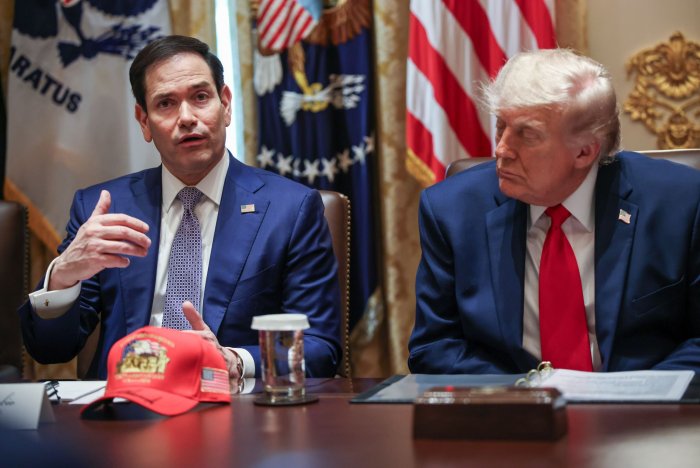
Secretary of State Marco Rubio and President Donald Trump participate in a Cabinet meeting in the Cabinet Room of the White House on Wednesday. Photo by Samuel Corum/UPI | License Photo
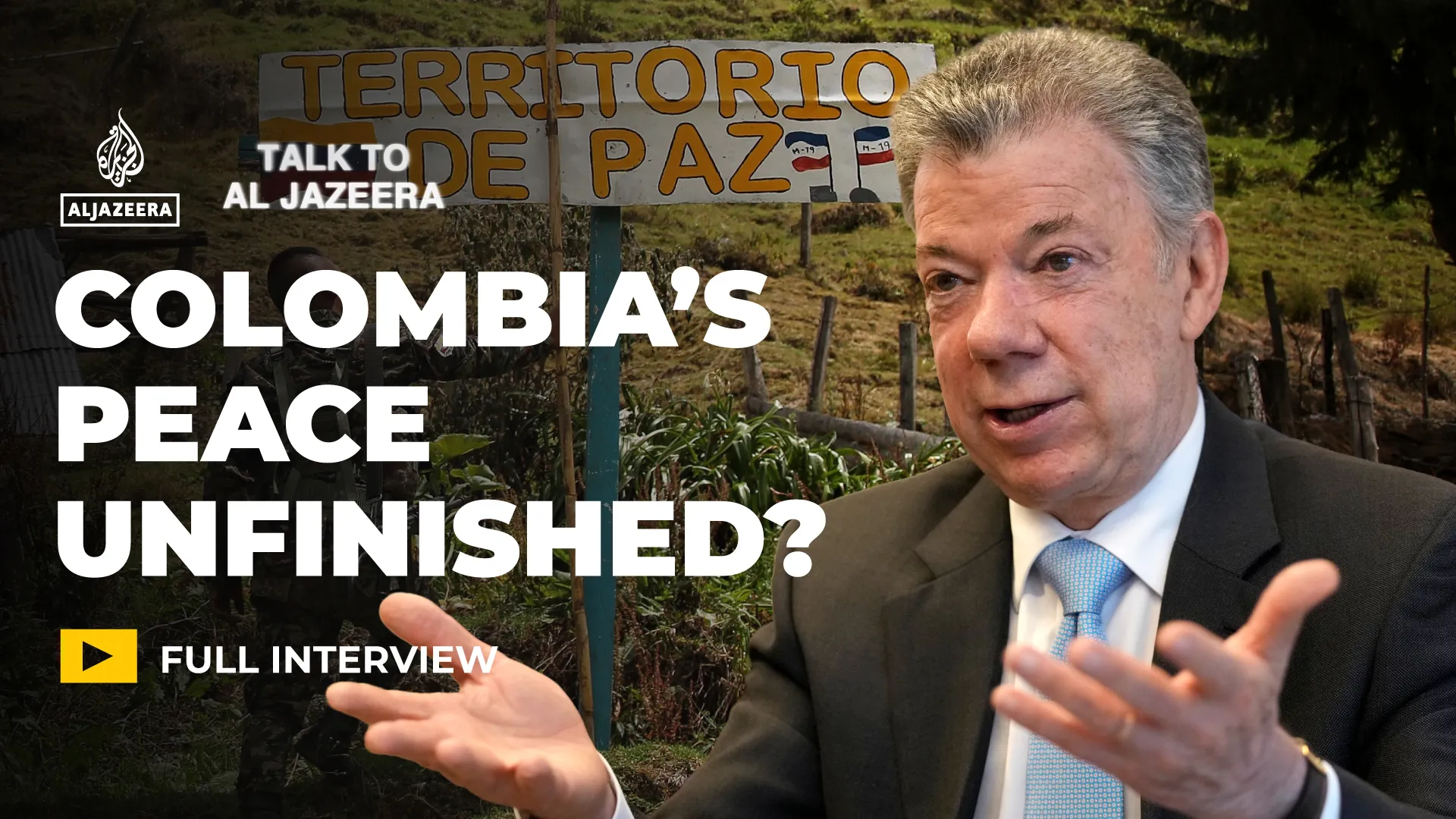
Ten years after Colombia’s landmark peace agreement, former president Juan Manuel Santos assesses its legacy. The Nobel Peace Prize laureate discusses renewed violence, political divisions and what Colombia’s experience can teach a world facing growing conflict.