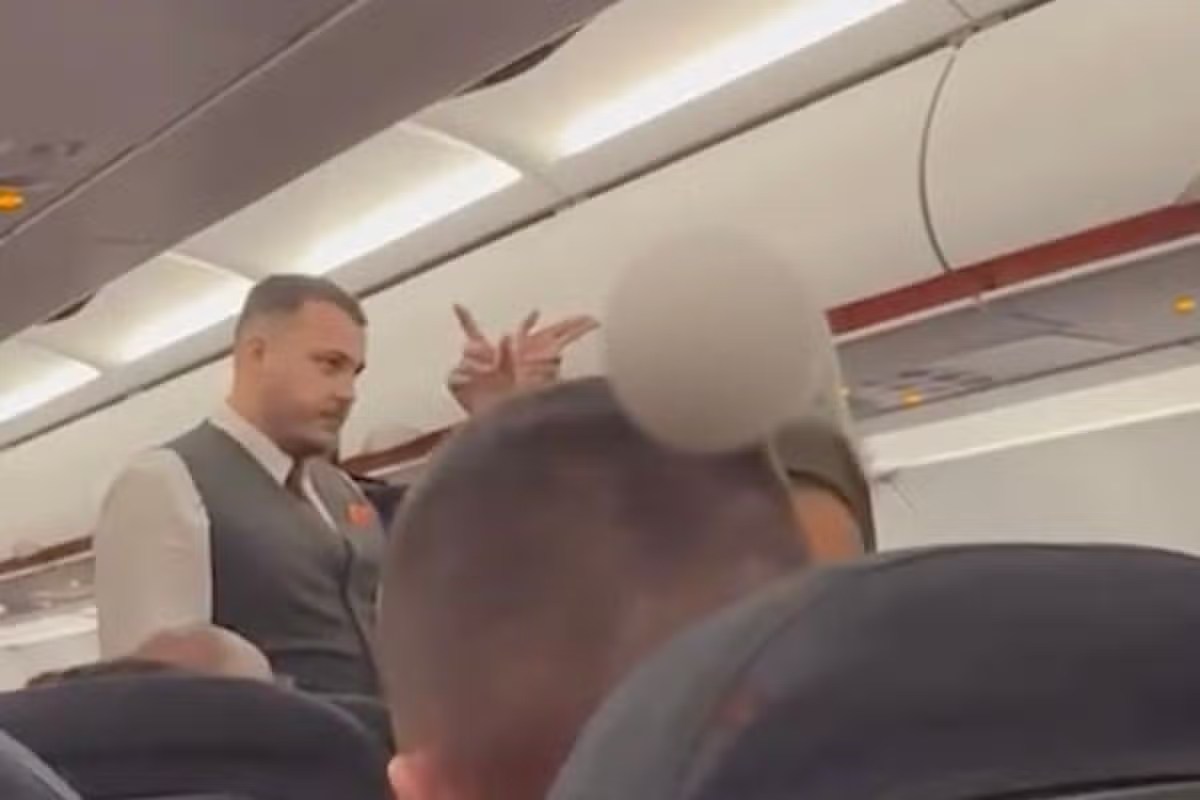
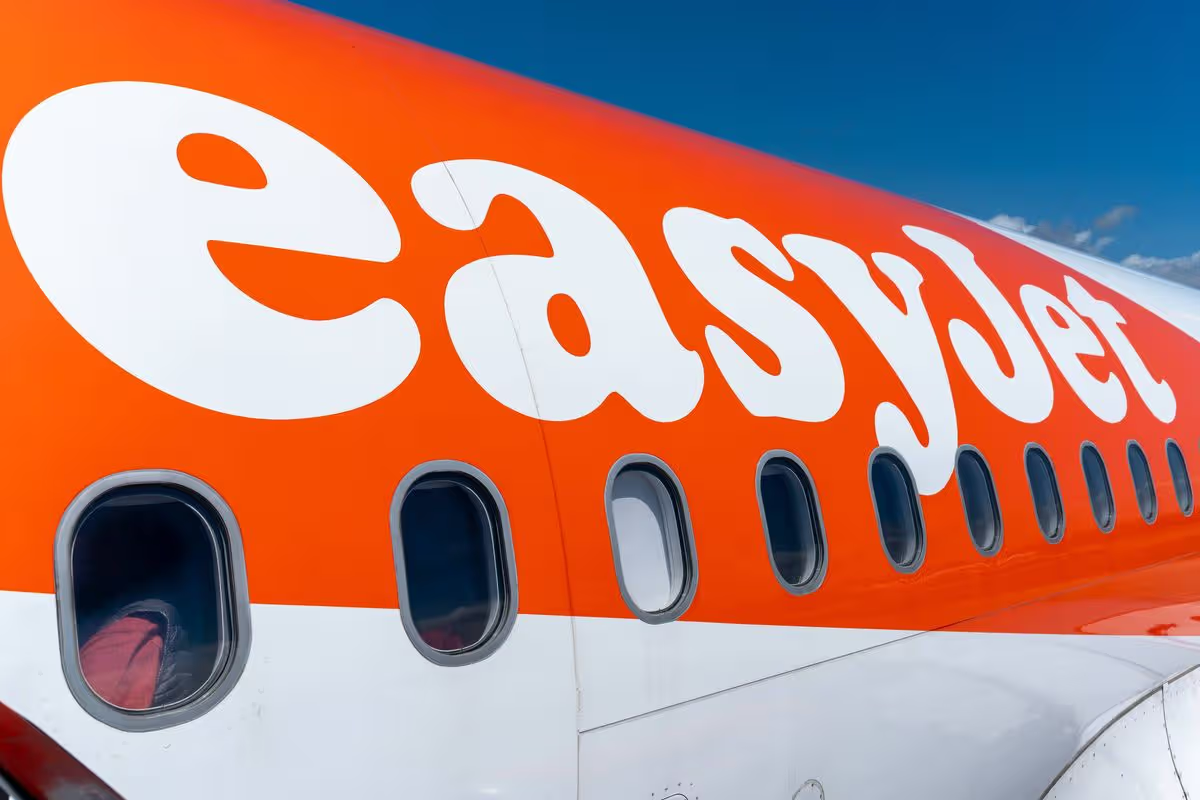
After the aircraft touched down in Birmingham, airport police boarded the plane and escorted the four adults off
08:39, 23 Sep 2026Updated 08:40, 23 Sep 2026
Moment police escort passengers off UK easyJet flight
A group of adults were escorted off an easyJet flight by police after allegedly vaping throughout the five-hour journey. Passenger Annalise Galstaun captured the moment four adults were removed from the plane by airport police after it landed at Birmingham Airport.
Annalise was travelling from Larnaka International Airport in Cyprus to Birmingham on the evening of September 16 when the incident unfolded. Sitting just two rows behind the group, she said she saw EasyJet cabin crew warn them multiple times to stop vaping during the flight.
But despite the repeated warnings, Annalise claimed the passengers continued to vape discreetly, hiding the devices behind their legs while sitting in their seats.
After the aircraft touched down in Birmingham, airport police boarded the plane and escorted the four adults off, causing a 25-minute delay on the tarmac.
Annalise said: “They were warned a few times by EasyJet staff but continued to vape on the sly throughout the journey, hiding the vapes behind their legs on the seat.
“I felt quite annoyed as we were delayed around 20/25 mins grounded on the floor waiting for them to be escorted.
“There were children on board crying as it was about 11pm and we were just stuck on the tarmac.”
EasyJet said in a statement: “Flight EZY6610 from Larnaca to Birmingham on 16 September was met by police on arrival due to a group of passengers behaving disruptively onboard.
“Our cabin crew are trained to assess all situations and to act quickly and appropriately to ensure that the safety of the flight and other customers is not compromised at any time.
“We take these incidents seriously and do not tolerate disruptive behaviour onboard.
“The safety and wellbeing of our customers and crew is always easyJet’s highest priority.”
MAJOR railway lines are closed due to a gas leak leaving commuters stranded in rush hour – with the disruption expected to last all day.
Passengers are urged not to travel between Reading and Swindon as engineers frantically attempt to fix the issue, while other routes are seeing significant delays.
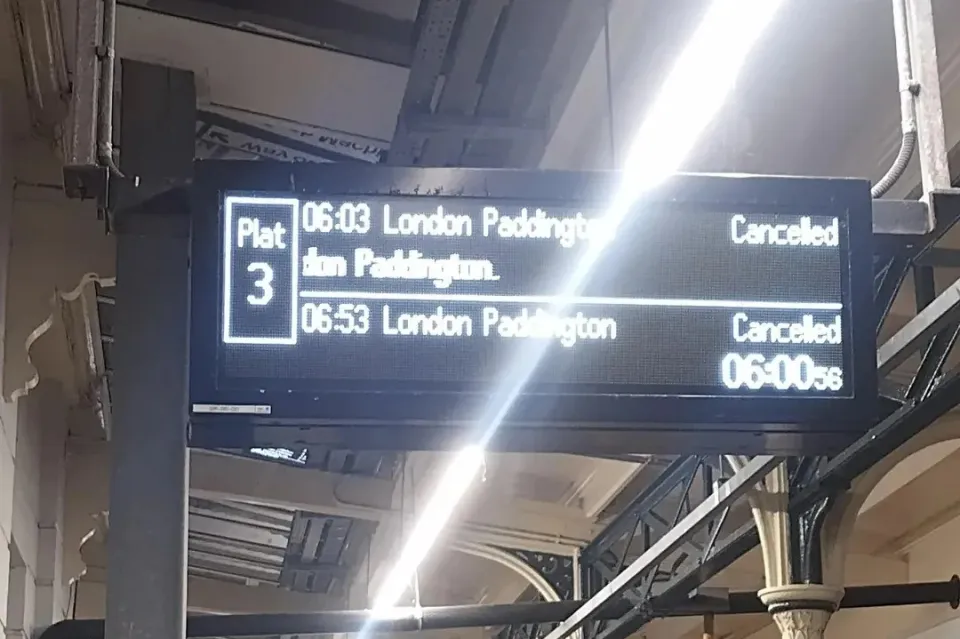
Trains to Paddington from Reading cancelled at 6am this morningCredit: RedditThe station is among those affectedCredit: Getty
The gas leak close to railway land at Didcot Parkway in South Oxfordshire is expected to cause severe disruption throughout Wednesday.
The Reading-Didcot section of the route is the gateway from Paddington towards Swindon, Bristol, Bath, South Wales, Cheltenham and other parts of the West Country.
Sign up for the Travel newsletter
Thank you!
Diversions are in place but Great Western Rail is cancelling some services outright because trains can’t get through Reading-Didcot.
A total of 72 services to and from Didcot are cancelled, while 39 have been axed at Oxford and 45 at Reading.
One social media user posted a photo from Swindon showing trains to Paddington cancelled at 6am.
They wrote: “Apparently there’s been a gas leak around Didcot Parkway so they’ve cancelled most of the services, and no replacement bus services running either.
“The staff at Swindon reckon this will last all day and probably tomorrow.”
Another person responded: “Absolutely ridiculous… not good enough.”
GWR is running roughly one train an hour Paddington-Bath/Bristol via a diversionary route – a fraction of the normal capacity.
It has warned only to travel if absolutely necessary.
Replacement buses are running between Swindon, Didcot and Reading but Network Rail says capacity won’t be enough for everyone.
CrossCountry is also telling passengers not to travel between Reading and Oxford – with one person responding to the company’s X post with: “Thanks for ruining my whole day.”
Network Rail said: “Engineers from gas distribution company SGN are on site working to rectify the problem as quickly and safely as possible.
“Network Rail and train operators are working together to manage the impact on passengers, but normal services cannot operate until the leak has been repaired because the railway falls within the safety exclusion zone.
“Severe disruption is expected to long-distance services that would usually travel through Didcot, and passengers are being warned that trains able to run either side of the affected area will be extremely busy.
“GWR will continue to operate as many trains as possible either side of the incident.”
GWR expects to be able to operate services between:
Reading and London Paddington
Swindon and Cheltenham Spa
Swindon and Chippenham/Bath/Bristol
South Wales to Bristol Temple Meads
Worcester and Oxford
An hourly service between London Paddington and Bath/Bristol via an alternative, diversionary route
Oxford and Didcot
An hourly service Bristol Temple Meads and Didcot
Usual timetabled services that do not run between Reading and Didcot
A limited bus replacement service will operate between Swindon, Didcot and Reading
A EUROPEAN airline that carries thousands of British passengers every week has filed for bankruptcy.
The travel company organises flights to the Baltic region from both London Gatwick and Aberdeen airport.
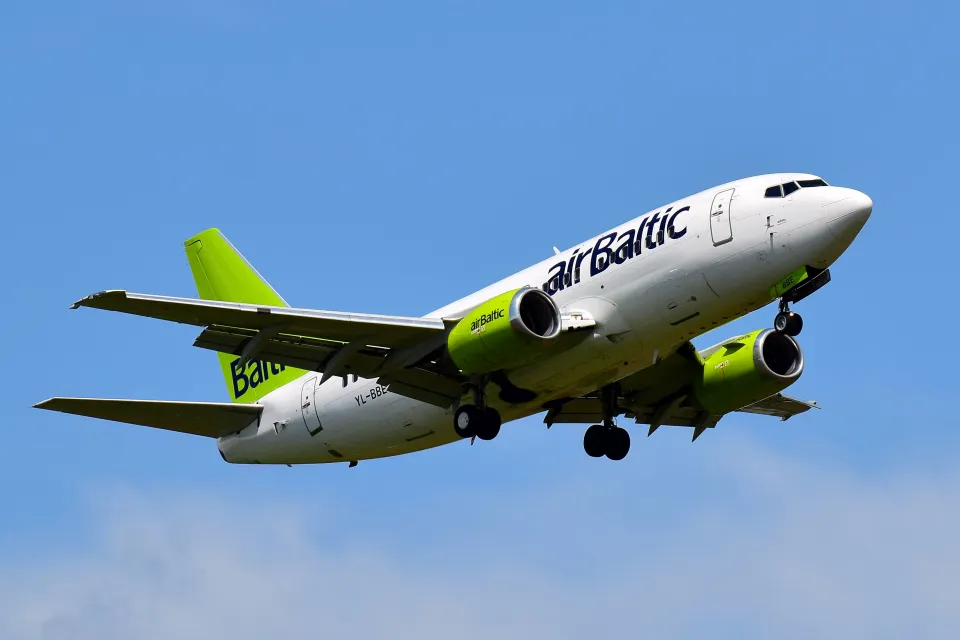
AirBaltic, which carries thousands of passengers from the UK every week, has entered voluntary bankruptcyCredit: Getty
The national airline of Latvia, airBaltic, has had its bankruptcy protection approved in a move that hopes to cut mounting costs.
Around 4,000 British passengers fly on AirBaltic flights weekly, with the airline operating direct flights between London Gatwick and Riga, along with seasonal twice-weekly routes from Aberdeen to the capital.
Sign up for the Travel newsletter
Thank you!
The voluntary decision saw the carrier file for Chapter 11 bankruptcy protection in the United States, later securing $405million in financial commitments from various financial groups.
Despite the filing, experts have warned passengers not to interpret bankruptcy as cancellation and to wait before considering changing bookings.
Anton Radchenko, CEO of AirAdvisor, said: “Cancelling voluntarily could leave the passenger subject to the ticket’s normal restrictions, whereas waiting for the airline’s decision preserves their statutory rights if the service is later changed or cancelled.”
AirBaltic has confirmed that operations would continue as usual during the bankruptcy process, which is expected to finish by June 2027.
This includes scheduled flights, ticket sales, reservations and customer service, with all existing tickets, vouchers and credits remaining valid.
AirBaltic flies to over 70 destinations around the Baltics, including Europe, North Africa and the Middle East out of its main hub in Riga, Latvia.
The carrier is majority-owned by the Latvian government and has agreements with major international airlines such as Air France, KLM and Delta Airlines.
It currently operates a fleet of 54 aircraft, but announced a business plan in August to reduce its fleet to 36 planes to improve its financial stability.
POWER banks are an essential when it comes to travel – but there are strict rules in place for them.
Most know the main ones – like it cannot be used inflight – but here’s one some of you might not know about which could see it taken off you before boarding.
Power banks are allowed on airplanes but must be of a certain WhCredit: GettyJapan Airlines is another that is very strict on its power bank allowanceCredit: Getty
Most airlines allow power banks up to 100Wh without special approval onboard.
But anything over that, without the say-so from the airline, and they could be confiscated for being too big and some countries being particularly strict.
Sign up for the Travel newsletter
Thank you!
The Wh – which translates to watt-hours – should be printed on the label of your power bank and if travelling on most planes it needs to be under 100Wh or less.
In places like China and Japan, some passengers have had their large power banks taken off them.
Someone on Reddit explained: “Accidentally brought a power bank that was larger than 100 watt-hour on my international trip.
“It passed US TSA as under 100, clocked 106 and 136 watt-hour in two airports in China and refused on board as over 180Wh at Guangzhou International Airport.”
Rules are strict in Japan too with Japan Airlines currently allowing two power banks with 160Wh or less in hand luggage – but that is going down to 100Wh from January 2027.
A lot have warned that the label with the Wh must be clear or risk it being taken off you as well.
Someone else said: “It is the label that matters and if you have old ones that is too faint, it is almost foregone conclusion that it will be taken.
“Friends encountered in Korea and China recently where their older power banks were taken as it wasn’t clear enough.”
The popular item has been banned in some casesCredit: Alamy
For those travelling to China, there is another requirement and this is that all power banks must be marked clearly with the mark ‘CCC’.
The 3C mark is a China Compulsory Certification and the power banks must also be 100Wh or under for all flights.
Any power banks over 160Wh require airline approval – and anything over that is banned.
Most airlines will also only allow one power bank onboard – but check prior to flying as some do allow two.
Power banks must be stored in hand luggage during a flight but not used while in the air as the lithium battery inside is a fire risk – and storing them in the wrong way can cause huge disruption.
In May of this year, aneasyJetflight travelling fromEgyptto the UK was forced to divert to Rome after a passenger revealed they had left a phone connected and charging via a power bank in their checked luggage
TRAVEL chaos caused by a major tech outage across all UK airports earlier this week has left thousands stranded – with many left out of pocket when booking back up flights and hotels.
An Air Traffic Control failure in the UK on Tuesday saw thousands of flights cancelled, resulting in travel chaos across the globe.
An Air Traffic Control issue in the UK left thousands of travellers stranded this weekCredit: EPA
Many have since been asking if they can claim compensation back, with flights both delayed and cancelled for days.
However, as the NATS issue was classed as an “extraordinary circumstance” travellers are not entitled to cash compensation.
Sign up for the Travel newsletter
Thank you!
The maximum compensation you can get is for long-haul flights which are delayed four hours or more, which would be £520.
This is only for when the problems are the caused by the airline, directly, however.
Lisa Minot, Head of Travel said: “Airlines are only required to give you compensation if the delay or cancellation is the airline’s fault, as in a technical failure on a plane or issues with crew.
“In this situation, where ATC is the reason for the chaos, there is unfortunately no compensation due.”
Yet, airlines do have a duty of care, so you can recoup some of your costs.
When affected by flight delays, airlines must provide travellers with food and drink as well as accommodation.
‘Care’ you should receive includes food and drink, two phone calls, accommodation and transport between the airport and where you are staying.
Usually, an airline will provide you with a voucher to get food or drink, however if a voucher isn’t provided, make sure you keep your receipts to claim back expenses incurred.
As the issue was outside of airlines’ control, it is class as an “extraordinary circumstance” meaning passengers cannot claim cash compensationCredit: EPA
While an airline might automatically book your accommodation when your flight is delayed or cancelled, sometimes you might be asked to book it yourself via its website or a dedicated app.
Although, it is advised to always ask airport staff before booking a hotel yourself.
If you pay for your own hotel, you must make sure to keep all your receipts so you can claim back your costs.
Airlines will cover a hotel with a reasonable price though, so don’t go booking a five-star stay.
Then head to your airline’s website and find their expenses claims page and fill out the form with the relevant details.
The CAA also recommends asking for an itemised receipt to show what you purchased and how much was spent on each thing.
Lisa added: “Check your insurance policy to see if you have any redress if you have incurred additional costs like missing a concert or unable to pick up car hire. You may be able to claim for that.
“Generally for delays, if an airline looks after you or provides you with food and drink or hotels, you cannot claim for the same costs against your travel insurance.”
“You’ve left everyone here stranded. You could’ve cancelled this flight hours ago which would’ve given many vulnerable people here half a chance,” one passenger wrote on X
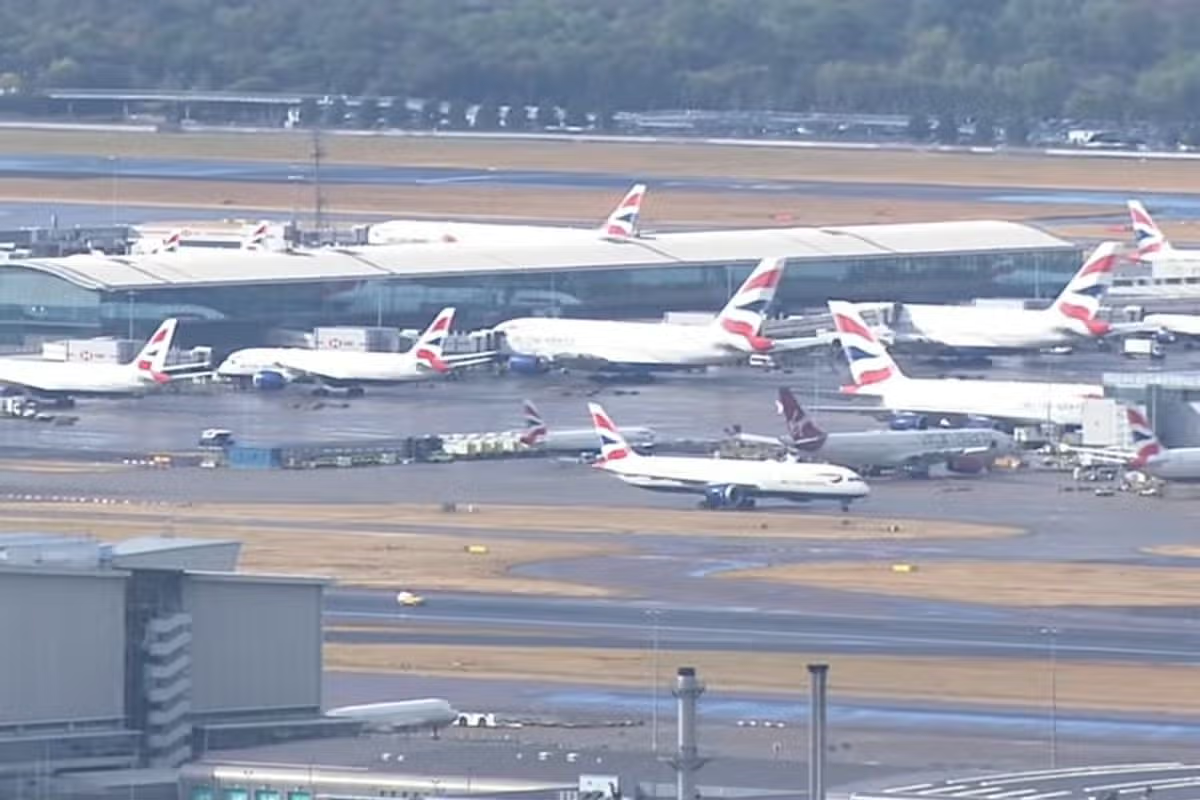
British Airways planes at Heathrow Airport(Image: Sky)
British Airways has been accused of leaving passengers stranded in Italy after thousands of flights were cancelled across the UK.
Tens of thousands of people were impacted on Tuesday after a technical issue by National Air Traffic Services (Nats) grounded flights.
Among the carriers affected by the air traffic control issue was British Airways (BA) – with a number of passengers taking to social media to complain about the situation.
Among them was Simon Weeks, who said he, along with others, had been left stranded in Italy for hours without any update from the airline.
Sharing a letter he received from BA late in the evening, the Brit claimed “all hotels” in the port city of Brindisi were now “fully booked”.
He added: “You’ve left everyone here stranded. You could’ve cancelled this flight hours ago which would’ve given many vulnerable people here half a chance.”
BA said it was forced to cancel or divert more than 100 flights on Tuesday, which had impacted “tens of thousands of customers”.
Passengers received a letter from the carrier apologising for the inconvenience, but were left to find a place to sleep themselves.
The statement read: “We’re sorry that your flight has been delayed overnight… We don’t underestimate the inconvenience this will cause.”
It continued: “We’re sorry, but we’re unable to provide you with accommodation, and you need to make your own arrangements.”
“You can submit a claim to us with your receipts and we will reimburse reasonable accommodation costs.”
The disruptions, expected to continue into Wednesday, impacted travel at airports including Heathrow, Gatwick, Manchester and Stansted.
Transport Secretary Heidi Alexander is set to speak with Nats’ chief executive officer Martin Rolfe on Wednesday before she addresses MPs in the Commons for the second reading of the Civil Aviation Bill.
Rolfe has said he “always accept(s) full responsibility” when asked if he was considering his position after the incident.
He told Sky News: “I am the CEO of a piece of critical infrastructure, so it is my job to take responsibility for that.
“What I absolutely take responsibility for is keeping people safe and delivering the best service we possibly can on a day like today.
“You will understand my focus is entirely about how we actually resolve this issue, get things back to normal, help our airlines, our airport customers and the travelling public.”
ALL departing flights from UK airports including both Heathrow and Gatwick are majorly disrupted due to an “air traffic control failure”.
Thousands of passengers have been stranded across the country as flights are grounded.
Passengers have been stranded as all departing flights face major disruption including at HeathrowCredit: AlamyUK airports are in chaos as departing flights are disrupted or cancelledCredit: @flightradar24/ X
The country’s air traffic control service NATS has a “technical issue” causing widespread chaos for departing flights.
Planes arriving into airports are not impacted.
Sign up for the Travel newsletter
Thank you!
A Heathrow spokesperson said: “The air traffic control service NATS is experiencing a technical issue which is affecting departing flights at UK airports.
“We are supporting our local NATS team in their efforts to resolve the issue as quickly as possible.
Major airports like Gatwick are included in those affectedCredit: AlamyPassengers have been warned to expect disruption (stock image)Credit: Getty
“We will provide updated information when we have it.
“We apologise to those disrupted and advise passengers to check with their airline for the latest flight information.
“This is affecting all UK airports, not just Heathrow and Gatwick.”
Fuming passengers told The Sun they’re stuck abroad because their flights are unable to leave over the issue in the UK, and have been warned they may have to get hotels for the night.
A National Air Traffic Services spokesperson said in a statement: “We are investigating a technical issue which is causing some disruption to flight departures.
“Our engineers are on site and we will provide an update as soon as we can.
“We apologise for the delay this will cause to journeys, passengers should check with their airline on the status of their flight.”
Are you affected? Email emily.davies@thesun.co.uk
It said in an update: “We have identified that the issue was in our flight processing system. Our engineers are on site and working urgently to resume normal operations as quickly as possible.
“We recognise the ongoing disruption to travel, for which we sincerely apologise. Flights are still departing and airspace is open, but recovery will take some time.
“We will provide further updates as soon as possible. Passengers should check the status of their flight with their airline.
“We will provide further updates as soon as we have confirmed information, at http://www.nats.aero and on X at @NATS.”
Airport management at Heathrow said all outgoing flights have been temporarily halted.
Belfast City Airport also warned of “some disruption” to flights.
Manchester Airport Group, the company that operates Manchester Airport, Stansted Airport in Essex and East Midlands Airport in Leicestershire, said flights from all three had been affected by the air traffic control issue.
It grounded 500flightsacross the UKand Brits were stuck for hours on a Bank Holiday.
The “one in 15 million” event led to thousands of flights being cancelled and delayed.
An investigation launched by NATS revealed that a flight plan errorresulted in the failure, which meant the air space was forced to close down – and only resumed 10 hours later.
In the aftermath, the Civil Aviation Authority (CAA) said NATS could raise the amount it charges airlines by 25 per cent to ensure “safety and quality service”.
The fee increased from £47 to £64 per flight, an increase of 43p per passenger to £2.08 on average.
Sarah, from Manchester, said that people were left “confused and upset” by the chaos while at Lisbon Airport.
She told Sun Travel: “We arrived at the correct time for our 4.30pm flight to Heathrow but were then told our flight was four hours delayed.
“The queues are backing up at the BA check in desks with confused and upset people and crying babies.”
A spokesperson for Jersey Airport said: “UK air traffic control is currently experiencing issues which is impacting flights across the UK including services between Jersey and UK.
“Passengers are advised to check the latest flight information directly with their airline.”
Gatwick Airport added: “We are aware of a NATS technical issue that is currently affecting a number of UK airports, including London Gatwick.
“Passengers are advised to check with their airlines for more information regarding their flights.”
Disgruntled travellers have flocked to social media following the disruption.
One said: “Still stuck next in line on the runway at LHR. 90 minutes in.” Another said: “BA 742 back to engines off and waiting. Approaching 2 hour mark in 15 minutes.”
Another person posted on X: “We are currently sat on Alicante tarmac going to Manchester and this is affecting us. Not just London!”
A third said: “Luton airport too! We’re stranded on the actual plane.”
Four tips to help you claim back compensation if your flight is delayed or cancelled
MORE than seven million of us are expected to fly to European holiday spots this summer.
As peak holiday season hits, some delays are unavoidable.
If you’re one of those whose flight is disrupted, knowing your rights will help you claim back compensation.
GROUNDED: If your flight is cancelled less than 14 days before you fly, you are entitled to a new flight or refund and possibly compensation.
This applies to flights departing from a UK or EU airport, regardless of airline, and to flights arriving at a UK or EU airport, if operated by a UK or EU airline. In other cases, you’ll probably be entitled to a refund or an alternative flight, but you may not get compensation.
LATE LEAVING: Again, for EU or UK flights or airlines, if your arrival is delayed by more than three hours, you’re usually entitled to compensation — unless the delay was caused by circumstances beyond the airline’s control, like severe weather or air traffic control strikes.
Email or phone the airline, providing flight details and booking references, as well as the length of the delay. The amount you’ll get depends on the delay length and journey distance.
MEAL MATHS: If a flight is delayed by at least two hours for short flights or three hours for medium-distance, or four hours for long-haul, the airline must provide free meals and refreshments.
If the delay means you have to stay overnight, the airline must provide hotel accommodation and transport between the airport and the hotel.
If it doesn’t provide these and you end up paying for food, a hotel or transport yourself, keep all receipts so you can claim back reasonable expenses later.
PAPER TRAIL: Airlines often dispute compensation, so arm yourself with clear evidence.
Take photos of delay announcements on departure boards, and gate changes.
Keep emails, text alerts and boarding passes.
You can claim for delays that happened up to six years ago.
AN airport that was closed for almost three days after a volcanic eruption has finally reopened.
But hundreds of thousands of passengers are scrambling to get home with flights still being delayed or cancelled.
As many as eight airports were forced to close over the weekend – but have since reopenedCredit: EPAAn eruption on Anak Krakatau caused major disruption to flights in IndonesiaCredit: Shutterstock Editorial
On Monday, Indonesia’s Transport Ministry reported on Monday that as many as 270,000 travellers were stranded with their flights “cancelled, delayed, or diverted” – including those at Jakarta’s Soekarno Hatta International Airport which has since reopened.
Now it’s believed as many as 370,000 passengers are said to have been affected by the disruption across the last three days, with 3,000 flights cancelled.
Sign up for the Travel newsletter
Thank you!
It started on Friday when there was an eruption on Anak Krakatau.
An ash cloud drifted into the city of Jakarta and the Lampung province, halting flights at its airports with seven being forced to close.
The biggest airport to close was Jakarta’s Soekarno Hatta International which grounded flights from Sunday until early this morning.
The current FCDO advice reads: “Soekarno Hatta Airport and Halim Airport in Jakarta were temporarily closed due to the volcanic ash clouds from Mount Anak Krakatau on 5 September.
“Both airports have reopened, but there are continued flight disruptions and many flights are cancelled or delayed.”
For anyone due to travel, it advises to check with your airline or travel provider for up to date information on your flight status.
On Flightradar24, Soekarno Hatta Airport has had 9 per cent of its flights cancelled today with 20 per cent delayed.
Lots of travellers were told they wouldn’t be able to fly for a few more days, including a newlywed couple on a honeymoon in Bali.
Flight continue to be delayed or cancelled in the aftermath of the eruptionCredit: Shutterstock Editorial
Talking to Bernama, they asked: “What are we going to do here for another five days? We only prepared enough money for our honeymoon and [were supposed] to go home yesterday.
They continued: “We thought we would just sleep at the airport for a few hours and then take the morning flight home [on Monday]. We never thought we would end up being stuck here for days.”
Yesterday, another passenger told AFP how they had not heard any updates from the airline and were seeking out hotels only to find most of them have been fully booked.
Airlines like Qantas are offering anyone who booked to go to or from Jakarta before September 5 the chance for a free refund on travel up to September 11.
But its services are resuming as scheduled from today.
Indonesia’s Geological Agency has warned however that “the probability of further eruptions in the coming periods remains high”.
Flight compensation rules
A look at your rights if a flight is delayed or cancelled, when your entitled to compensation and if your travel insurance can cover the costs.
What are my rights if my flight is cancelled or delayed?
Under UK law, airlines have to provide compensation if your flight arrives at its destination more than three hours late.
If you’re flying to or from the UK, your airline must let you choose a refund or an alternative flight.
You will be able to get your money back for the part of your ticket that you haven’t used yet.
So if you booked a return flight and the outbound leg is cancelled, you can get the full cost of the return ticket refunded.
But if travelling is essential, then your airline has to find you an alternative flight. This could even be with another airline.
When am I not entitled to compensation?
The airline doesn’t have to give you a refund if the flight was cancelled due to reasons beyond their control, such as extreme weather.
Disruptions caused by things like extreme weather, airport or air traffic control employee strikes or other ‘extraordinary circumstances’ are not eligible for compensation.
Some airlines may stretch the definition of “extraordinary circumstances” but you can challenge them through the aviation regulator the Civil Aviation Authority (CAA).
Will my insurance cover me if my flight is cancelled?
If you can’t claim compensation directly through the airline, your travel insurance may refund you.
Policies vary so you should check the small print, but a delay of eight to 12 hours will normally mean you qualify for some money from your insurer.
Remember to get written confirmation of your delay from the airport as your insurer will need proof.
If your flight is cancelled entirely, you’re unlikely to be covered by your insurance.
A MASSIVE £4.3billion ‘superhub’ that will connect passengers to over 100 locations is edging closer to completion.
The huge train station will welcome 250,000 travellers every day and will connect London, the Midlands, the North and Scotland.
Old Oak Common will serve as a hub for HS2 railwayCredit: UnknownA total of 14 platforms will be constructed at the station, six of which will be underground and eight will be built above groundCredit: Unknown
Old Oak Common station in West London is part of the new High Speed 2 (HS2) line, which aims to connect London to Birmingham and the West Midlands.
The station has been under construction for the past five years, but an important milestone has been completed in recent days, according to Secret London.
Sign up for the Travel newsletter
Thank you!
HS2 has now finished construction of six underground platforms at the station.
All of these platforms are 450-metres long and will be used by HS2’s high speed trains.
A total of 14 platforms will be constructed at the station, six of which will be underground and eight will be built above ground.
Kim Kapur, HS2’s Old Oak Common Area Director, told the outlet said: “The scale of the work – and the station now taking shape – is remarkable.
A public green space is also going to be constructedCredit: UnknownConstruction of the train station first began back in 2021Credit: Unknown
“However, there is much more to do. This includes construction of the conventional, surface level platforms, completion of tunnels either side of the underground box and installation of the impressive station roof, which will begin next year.
“Old Oak Common will be transformative for the local area, providing a new transport hub, with a new vibrant neighbourhood developing around it.”
A public green space is also being constructed, which will include pocket gardens and a wetlands.
The station is not expected to open until between 2036 and 2039, so passengers have a while to wait before they can enjoy the features.
What is HS2?
HS2, which stands for High Speed 2, is a project that aims to create a high-speed rail network between London and major cities in the Midlands and Northern England.
It is the biggest rail investment ever made in the North of England and is Europe’s largest infrastructure project.
New trains will run on HS2 lines with a top speed of 225 miles per hour – the aim is to cut journey times and make it easier to travel across England.
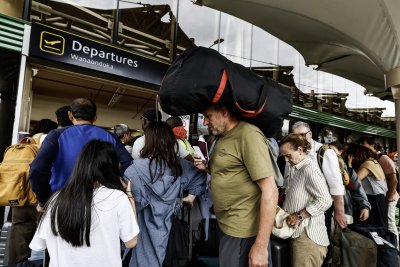
Stranded passengers wait Monday outside Jomo Kenyatta International Airport after operations were paralyzed for the second day by the Kenya Aviation Workers Union strike. International and local flights were disrupted and thousands of passengers were left stranded after KAWU members went on strike over pay and the lack of implementation of previous agreements. Photo by Daniel Irungu/EPA/
Aug. 31 (UPI) — Flight issues continued Monday at Jomo Kenyatta International Airport in Nairobi, Kenya, and other Kenyan airports, in which a workers’ strike has left hundreds of people stranded or delayed.
Kenya’s aviation workers started a “go-slow” strike Sunday, saying the government failed to honor the terms of a memorandum of understanding with the union.
“They have never committed to the negotiations and have failed to cooperate and show effort in resolving our grievances,” said Moss Ndiema, Kenya Aviation Workers Union secretary-general.
This has led to flight delays and cancelations, Kenya Airways said. It advised customers to travel to the airport only if they have been advised to do so or if their flight has been confirmed as operating.
“We sincerely apologize for the inconvenience this situation has caused to travel plans,” the airline said in a statement. “The safety of our customers and crew remains our highest priority. Our teams are working with the relevant aviation stakeholders to ensure safe operations and minimize the inconvenience and disruption to our customers’ travels.”
At times, the airline reported delays of more than 6 hours.
Talks between aviation worker unions and the airport were expected to continue Monday after they ended without resolution Sunday.
Meanwhile, Kenya Railways announced it is adding special Nairobi-Mombasa trains Monday and Tuesday to cope with “increased passenger demand.”
“Passengers are encouraged to make their bookings early and take advantage of the additional train services,” it said in a notice.
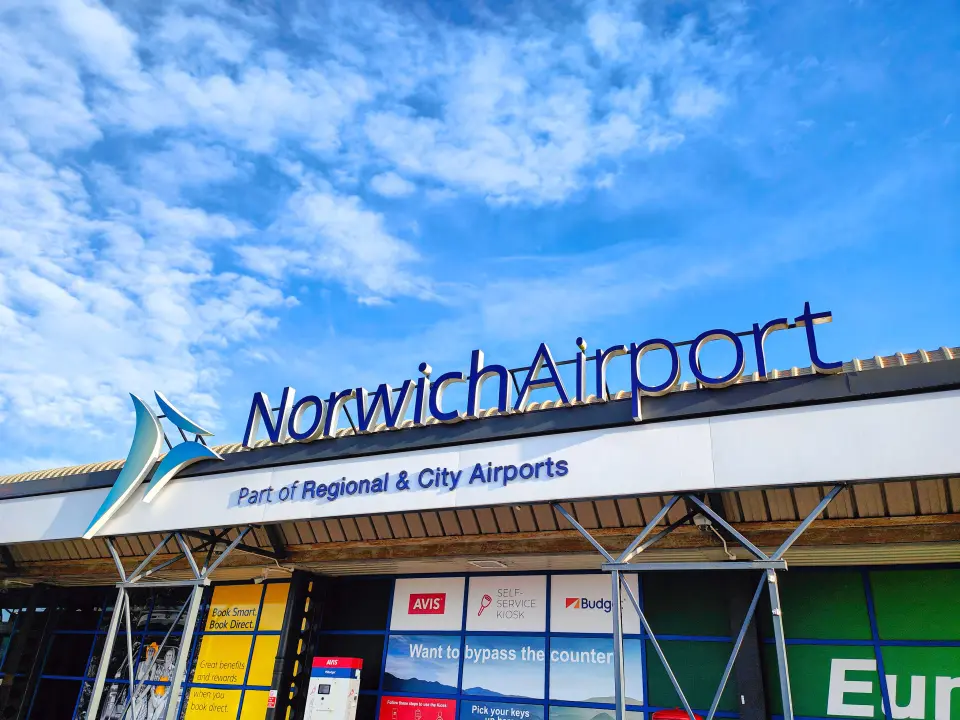
Passengers have been told to head to Norwich Airport, where they will then be taken on a coach to Southend.
Strike action comes as Prospect union continues an ongoing dispute over pay, terms and conditions.
Strike action started last Monday after the airport failed to make an offer to resolve the dispute, with several cancellations on Friday including Loganair flights to and from Aberdeen.
In a statement on the airport’s website, it says: “Due to the 24-hour strike by Prospect union members in Air Traffic Control, Norwich Airport will be closed to air traffic on Friday 28 August and no flights will operate to or from the airport that day.
All flights have been cancelled with travellers having to head 101 miles to catch a flightCredit: Skyworks Places / Getty
“Airlines have been informed.
“Passengers due to travel on Friday should check with their airline for the latest information about their flight and the options available to them.
“We apologise for the disruption and inconvenience this will cause to passengers.
“We remain firmly committed to resolving this dispute through constructive dialogue and will continue to engage with Prospect with the aim of reaching agreement.”
Jet2 continues to remind passengers(Image: trevorbenbrook via Getty Images)
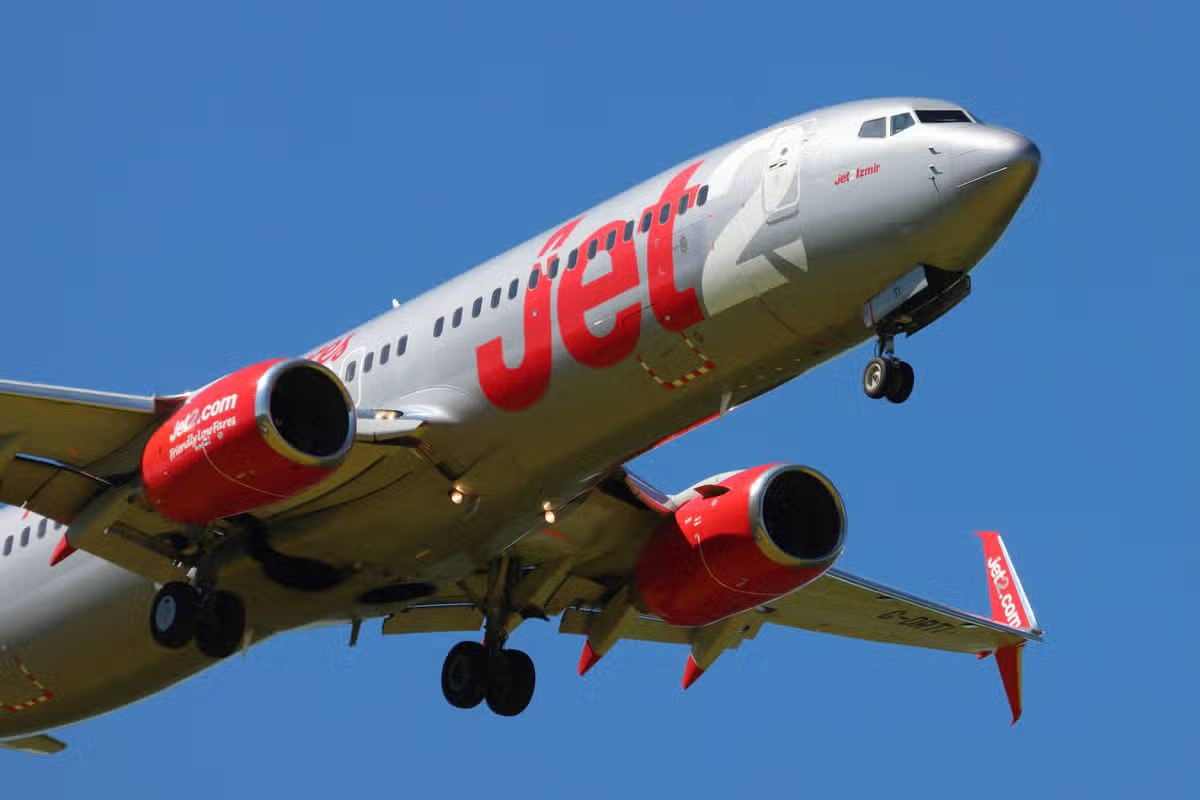
Jet2 has reissued a “12 hours” update to all passengers who have flights and holidays booked with the carrier.
The travel operator regularly keeps passengers informed, including flagging any events likely to cause disruption or delays, and the latest travel information section of its website continues to update travellers. The alert reads: “Please check this section of the website at least 12 hours before your flight for the latest flight information. Customers are advised to arrive at their departure airport at least 2 hours before their scheduled departure time.
“In the event of any flight delays further information can be found by using the above search panel by entering your flight number or route. As a reminder check in desks will close 40 minutes before your scheduled departure time. Rest assured, in the event of flight disruption our dedicated Operations teams are always working hard behind the scenes at our UK-based HQ to get you on your way as soon as possible.”
Jet2 check-in desks typically open a minimum of two hours and 30 minutes before your scheduled departure time. Passengers are advised to arrive at the airport with plenty of time to spare, as the check-in process must be completed at least 40 minutes before take-off.
At certain UK airports, Jet2 provides a Twilight Check-in service, allowing you to drop off your luggage the evening before your flight if it’s scheduled to depart before midday. You can also check in online anytime from 28 days up to six hours before departure via the website or app.
Should you opt to check in online, you’ll need to either print your boarding passes or download them to your device. Jet2 reminds passengers that online check-in is not available for flights departing from Turkey.
“You can still complete the process and get your pre-allocated seats, but you’ll need to visit our airport check-in desks to collect your boarding pass before you go to security.”
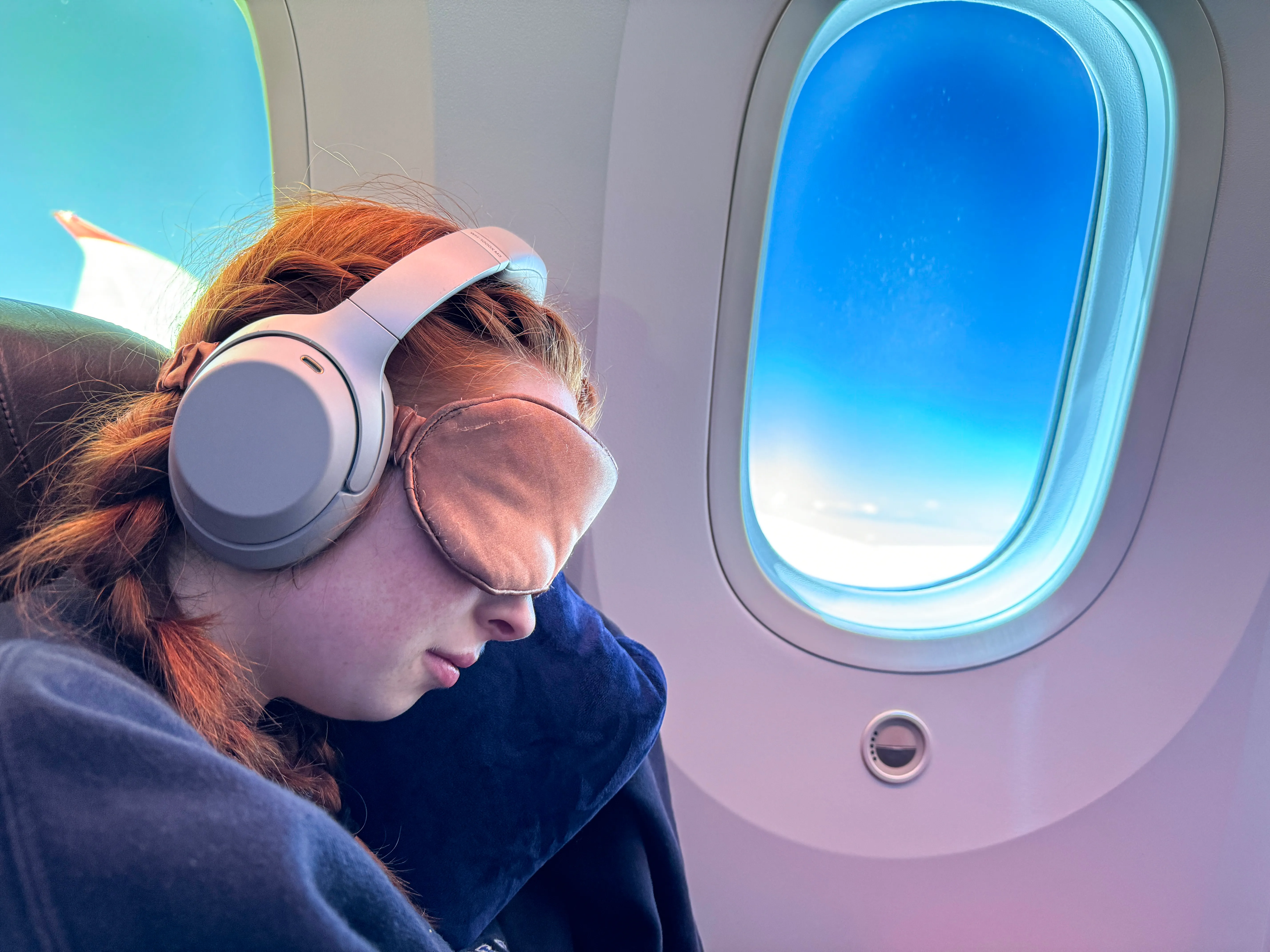
“If you wish to bring a neck pillow on board, it must be packed inside your cabin bag.
“If it does not fit within your permitted baggage allowance, it may be treated as an additional item and be subject to the applicable oversized or excess baggage charges.”
Additional charges are around €65 (£55).
While most people online claim they haven’t been charged at the airport – it all depends on the staff.
If it fits in your luggage, you’ll be able to avoid a potential fineCredit: Getty
One person wrote on Reddit: “It depends how lucky you are and what instruction received the crew at the gate, do they need to be more strict about rules or not.
“For example, most of the time they just leave you holding the pillow outside of the backpack but last time my girlfriend has been asked to put her pillow back inside and measure the backpack.
“Because there was no space for it, they charged 50€ just for the pillow.”
MORE THAN 100 passengers were left stranded in Tunisia after their easyJet flight home was cancelled.
A number of travellers from Northern Ireland were due to fly back from Tunisia Enfidha-Hamamet Airport three days ago, when easyJet cancelled their flight and told them they had no other flights available for 10 days.
Passengers were left stranded in Tunisia after a cancelled easyJet flightCredit: EPASome passengers even ran out of medicationCredit: Getty
According to BBC News Northern Ireland, one man claimed to have spent £4,000 just to get home, having to fly via Brussels, while another passenger branded the situation “an absolute nightmare”.
Other passengers have noted how they have run out of medication for health issues.
Sign up for the Travel newsletter
Thank you!
The airline has since been heavily criticised for not offering enough support to the travellers and arranged a ‘rescue’ flight yesterday at 9:20pm.
According to the airport’s website, an easyJet flight to Belfast departed at 10:25pm.
Around 100 people were booked onto the original flight which was cancelled.
One passenger, Martine Murray, said: “There has been a complete blackout of communication.
Another passenger, Natasha Dovbijenko, revealed that the hotel easyJet provided was very dirty as well.
Passengers were arranged a two-night stay at a nearby hotel, with the airline adding that other passengers who had sought alternative transport or accommodation would be reimbursed.
EasyJet launched a rescue flight to the airport last nightCredit: Enfidha-Hammamet Airport
The original flight was cancelled due to a “technical issue and was unable to operate” according to the airline.
A spokesperson for the airline said: “We have been doing everything we can to support our customers, providing hotel accommodation and meals and we will be reimbursing expenses that may have been incurred.
“As alternative flight options including with other carriers are very limited at this busy time of year, we will be operating an additional direct flight from Enfidha to Belfast this evening and providing onward transfers home where needed.”
“The welfare of our customers is our highest priority and we are very sorry for the inconvenience caused.”
STRIKES at one of Spain’s busiest airports have already caused problems for holidaymakers – and could continue into next month.
Groundforce workers who cover ground-handling services, check-in and boarding started indefinite industrial action in early August with no end date in sight.
Barcelona El Prat Airport has been impacted by indefinite strikesCredit: AlamyThe indefinite strikes began on August 4 and there is no end dateCredit: Getty
The strikes have been heavily impacting Barcelona El Prat which is Spain’s second busiest airport.
Due to the strike action by Groundforce, it’s been estimated that 11,600 flights and close to two million passengers could be exposed to the action across the two months.
Sign up for the Travel newsletter
Thank you!
Indefinite industrial action started on August 4 and has continued across the summerholidays with warnings that it’s set to continue.
Groundforce workers at Barcelona El Prat cover ground-handling services including check-in, boarding, ramp operations and flight coordination for 20 airlines at the airport.
Airlines that use Groundforce include Lufthansa, Air France/KLM, Turkish Airlines and Finnair.
Many airlines fly from the UK to Barcelona including Ryanair, Wizz Air, easyJet and Vueling.
While they don’t use Groundforce, passengers could still be impacted by delays and queues in the airport.
The strike has had an impact on services with the CGT union reported 250 cancelled flights and 6,000 affected bags between August 4-18.
Talking to Breaking Travel News, Jürgen Himmelmann, Co-Founder of Global Work & Travel, said: “The important thing for anyone with a Barcelona trip coming up is that this strike doesn’t currently have a fixed end date.
“If you’re travelling in September, don’t assume that because your holiday is a few weeks away the issue will have been resolved by then.
“That doesn’t mean your flight will be disrupted, but it does mean it’s worth preparing now. Check which airline you’re travelling with, keep monitoring your booking and think about what you’d need with you if your checked luggage was delayed.”
A minimum service requirement has been set by Spain’s Ministry of Transport during the months of August and September.
Barcelona El Prat Airport has been impacted by Groundforce strikesCredit: Getty
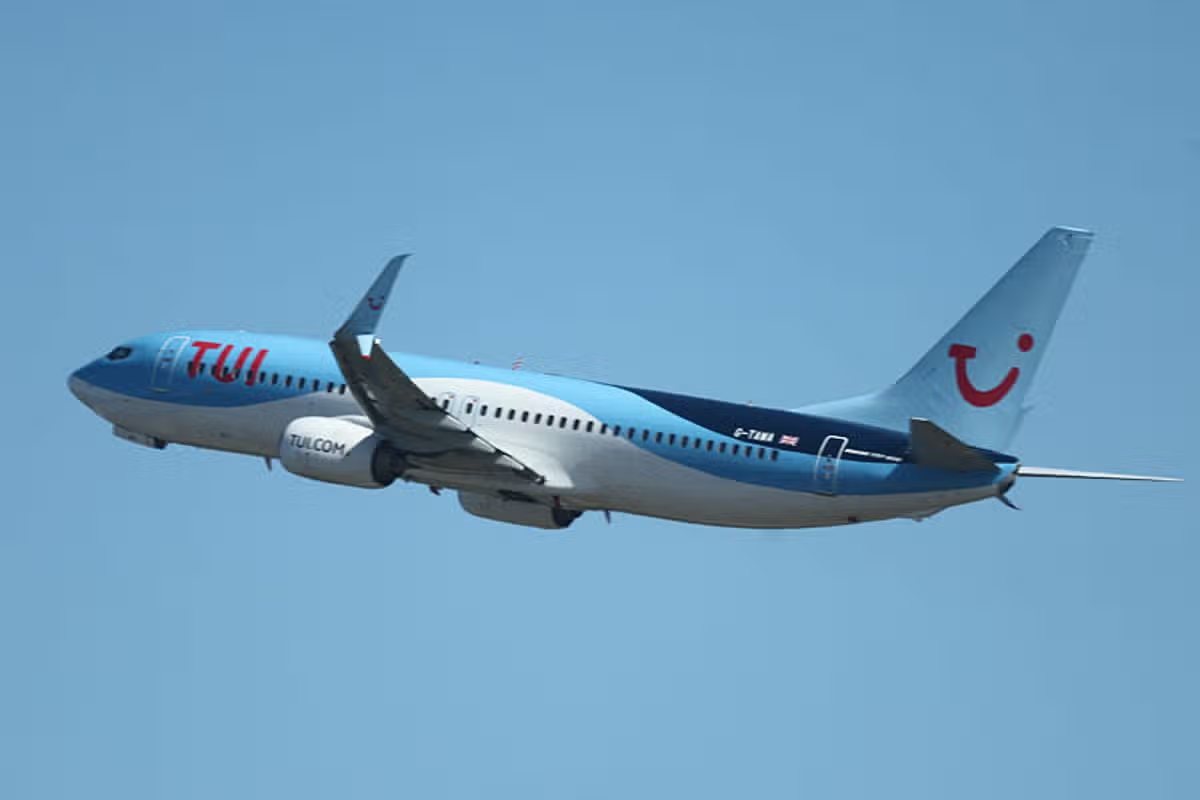
A TUI cabin crew member is urging holidaymakers to ensure they take one extra step before heading to the airport
TUI cabin crew urges bank holiday travellers to photograph every room before going away(Image: Getty)
With the August Bank Holiday this weekend, thousands of Brits will be doing last-minute packing, checking passports and heading for the airport. However, TUI cabin crew are warning that one of the easiest holiday mistakes can happen before travellers even reach the airport.
Faye Whittaker, a TUI cabin crew member, is urging holidaymakers to photograph every room in their home before going away, after years of seeing how small oversights can quickly turn into holiday stress. She has also revealed four other checks that cabin crew do before every trip.
From food left in the fridge and missed deliveries piling up outside, to the dreaded airport panic of wondering whether the oven, straighteners or a window has been left on or open, Faye says it’s often the things left behind at home that cause the biggest headaches once a trip is underway. She said: “As cabin crew, I’m regularly away from home for days at a time and over the years I’ve learnt that some of the biggest travel mistakes happen before you have even left for the airport.”
She added: “Most people are so focused on their packing and travel arrangements that they forget about what’s happening back at home. From missed deliveries and food left sitting in the fridge to worries about whether a window was left open, small oversights can quickly become a source of stress once you’re away. These are the checks I always carry out before a trip, whether I’m travelling for work or heading away on holiday myself.”
Not taking photos before you leave
Faye says the quick photo trick takes less than a minute. The cabin crew member also says she sees it as a “non-negotiable” before any trip, helping travellers check their phones and put their minds at ease if they start second-guessing themselves.
“Once you have done your final walkaround, take a quick photo or video of each room before you leave,” she explained. “We’ve all had that last-minute panic of wondering whether we left the iron, straighteners or oven on. I’ve even been on my way to the airport before and found myself trying to picture whether I definitely switched everything off.
“After travelling so much for work, taking a quick video before I leave the house has become a non-negotiable for me. It takes less than a minute, but it means that if I suddenly start second-guessing myself, I can check my phone and put my mind at ease straight away.
“It can also be useful if you ever need to check something while you are away. While nobody likes to think about something going wrong, having recent photos or videos of your home and possessions may be helpful information to have available if you ever need to make an insurance claim or show what was inside your property.”
Forgetting to pause or rearrange deliveries
“It’s also worth checking whether you have any food deliveries, parcels or subscription boxes scheduled while you are away,” she said. “Meal kit services such as HelloFresh or Gousto, grocery deliveries and regular household subscriptions can easily slip your mind when you are focused on packing.
“Before you travel, search your emails for words like ‘delivery’, ‘subscription’, ‘grocery’ or ‘parcel’ so you can quickly spot anything due to arrive while you are away. Nobody wants fresh food sitting on the doorstep for a week, and visible parcels can also make it obvious that nobody is home.”
Leaving food and bins until the last minute
Faye says: “One of the biggest mistakes people make is focusing on what’s going into their suitcase and forgetting what’s being left behind at home. Milk, leftovers, fruit and food waste can quickly create unpleasant smells, particularly during the warmer summer months.
“Before leaving, check your fridge, throw away anything likely to expire and take the bins out so you don’t return to an unwelcome surprise. A simple trick is to set a reminder on your phone for the evening before you travel, called ‘fridge, bins and food waste’. It means you are not trying to remember everything while also dealing with last-minute packing.”
Not telling somebody you’re going away
“If you’re away for longer than a few days, it’s always worth letting a trusted neighbour, friend or family member know. Whether it’s moving a parcel, watering plants, putting a bin out or spotting an issue early, having somebody nearby who knows you’re away can provide real peace of mind,” Faye added.
“If you’re away for a week or longer, consider using timer switches or smart lighting so your home appears occupied in the evenings. It’s also worth asking someone you trust to move any post, parcels or bins that could make it obvious the property is ’empty’.”
Skipping the final five-minute walkaround
“One of the most important things I do before every trip is a final walkaround of the house,” she said. “Even when you’ve checked everything earlier in the day, it’s surprisingly easy to miss an open window, unlocked door or appliance left running when you’re rushing to leave for the airport.
“I always recommend doing it in the same order every time – for example, starting upstairs and working down, so you are not wandering from room to room and forgetting what you’ve already checked. Look at windows, doors, plugs, taps and appliances, and make sure keys are not left in locks, window locks or somewhere visible from outside.”
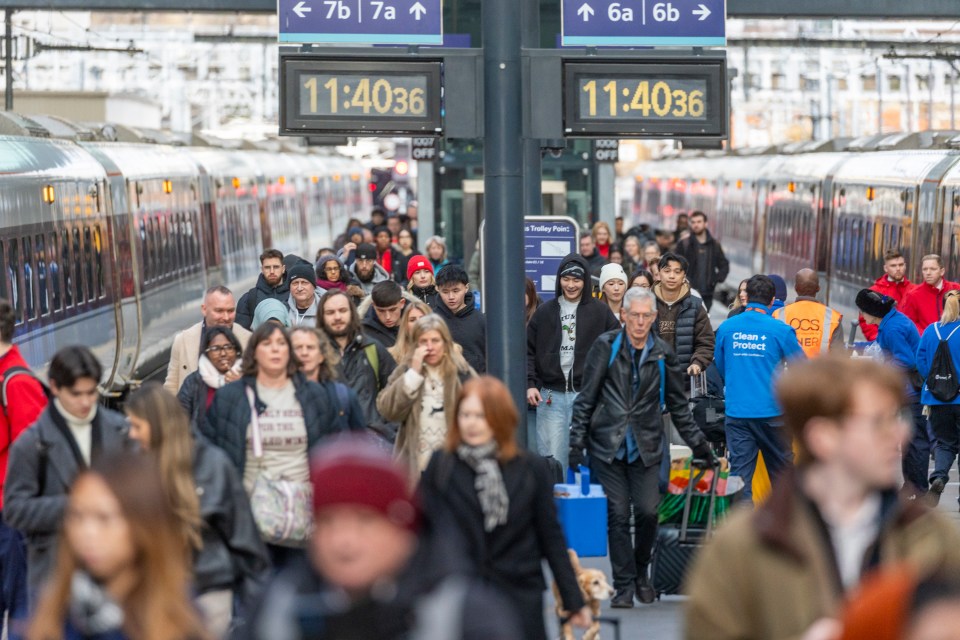
RAIL commuters have been warned of disruption to services over the bank holiday weekend.
With strike action set to take place, a number of services will be effected on Sunday and Monday.
A number of rail disruptions will take place over the upcoming bank holiday weekend (stock image)Credit: LNPTravel chaos is expected this weekend as East Midlands Railway announces plans for a ‘significantly reduced’ timetable in response to strike action (stock image)Credit: East Midlands Railway
EMR has confirmed plans for a “significantly reduced” timetable for services to and from London on both days.
Sign up for the Travel newsletter
Thank you!
It has advised passengers to check details before embarking on their journeys and to only travel if absolutely essential this bank holiday weekend.
This Sunday (August 30) will see even further disruption, with no LNER trains running between London King’s Cross and Peterborough as digital signalling upgrades are carried out by Network Rail.
EMR services to and from London St Pancras are expected to be extremely busy on Sunday, with the increase in demand coinciding with the reduced services.
Meanwhile, Sheffield station and Nottingham station will be very busy, with queues to board services set to be in place.
The strike action comes as the RMT continues to voice concerns about safety issues on some trains.
EMR said it is holding “constructive discussions” with the RMT, meeting with the union six times as it works towards resolving the issues.
Philippa Cresswell, customer experience director at EMR, said the company recognise “how frustrating this disruption will be for customers”.
“We are very sorry for the impact this will have on August bank holiday plans,” she said.
“We strongly advise customers to only travel to or from London if their journey is essential on Sunday, August 30 and Monday, August 31, and to check their full journey, including first and last trains, before setting out.”
Meanwhile, the RMT said its members have been instructed to refuse to work a Class 810 train if a list of specified faults continue, including lack of air-con, door faults, and non-working toilets.
The union’s general secretary Eddie Dempsey said it would ensure representatives will be permanently involved in discussions with both EMR and manufacturers Hitachi to try to improve the situation.
“RMT is demanding that whilst these faults exist and until these trains are shown to be operating properly, they should be taken out of service,” he said.
“It is now time for EMR management to act on the safety concerns of our members.”
Money Saving Expert – MSE – is founded by Martin Lewis
People have been urged to try this handy money saving trick(Image: Cerise HUA via Getty Images)
Money Saving Expert (MSE) has urged people to visit Boots before boarding the plane. While talking about easyJet specifically – although it may work for any airline – MSE urge people to “avoid sky-high food prices” and “pack a mile-high picnic instead.” They explain on their easyJet tips blog: “Mid-air picnics are perfectly within the rules. It’s only liquids over 100ml that are banned for security reasons.”
Because of this, MSE, founded by Martin Lewis, writes: “When we checked, an Easyjet meal deal (sandwich, soft drink and snack) cost £9.75. Even at inflated airport prices, a Boots meal deal is around £5.” MSE’s blog was updated on July 27, 2026, easyJet’s prices are subject to change.
Finding that a meal deal at Boots or other supermarkets like Sainsbury’s, Tesco, or Morrisons could be cheaper than what you get on board the plane, it notes that “bringing your own food may mean you win on taste as well as price” – and it doesn’t have to be boring, either.
You can make it part of the holiday by tailoring it to your destination. Think chorizo and olives for Spain, cold pizza for Italy, sausages and sauerkraut for Germany. The list is endless.
Save your pennies by planning ahead, says MSE as part of its pre-holiday tips list. Picking up snacks in advance can work out far cheaper than paying airline prices, or even the cost of food and drink in the shops after security.
30 days
In further helpful advice, the MSE team have said that easyJet passengers can check in earlier than most. And it could help people secure a better seat.
It explains: “Unlike other airlines, Easyjet lets you check in and allocates you a seat 30 days before you fly, free. You’ll have to pay if you want a specific seat, but the earlier you check in, the more likely it is that you get allocated a better seat.
“If you don’t want to take the risk and would prefer to reserve a seat when you book, Easyjet charges “from 99p” for a basic seat on a short flight. We’ve seen it cost up to £39.99 to stretch out in the front row on a longer trip (for a list of costs, see Easyjet’s fees and charges).”
Whether you’re paying for a seat or using the free check-in 30 days before, passengers are urged not to leave it to the last minute. By then, many seats may already be taken, increasing the chances you’ll end up separated from your family, partner or friends.
MSE concludes: “The best bet is to check in online (and secure your seats) as early as possible.”
For a full list of easyJet tips and tricks, visit the MSE blog here.