office

Top NHL prospect Gavin McKenna won’t face felony assault charge

Penn State hockey star Gavin McKenna will not face a felony assault charge after allegedly striking another man in the face twice during an altercation last weekend.

A criminal complaint filed Wednesday by the State College Police Department charged McKenna with first-degree felony aggravated assault — which in Pennsylvania is punishable by up to 20 years in prison and $25,000 in fines — as well as misdemeanor simple assault, summary harassment and summary disorderly conduct.

The District’s Attorney’s Office of Centre County, Pa., said Friday that it is withdrawing the felony assault charge against the 18-year-old Canadian, who is expected to be one of the top picks in this year’s NHL draft,

“In order to establish probable cause for the crime of Aggravated Assault, the Commonwealth must establish that a person acted with the intent to cause serious bodily injury or acted recklessly under circumstances showing an extreme indifference to the value of human life,” the DA’s office said in a news release.

“Both the District Attorney’s Office and the State College Police Department have reviewed video evidence of this incident and do not believe that a charge of Aggravated Assault is supported by the evidence.”

The office added that “prosecution will go forward with the misdemeanor Simple Assault and other summary charges as they relate to the serious injuries suffered by the victim.”

The alleged incident took place around 8:45 p.m. Saturday near the Penn State campus, hours after McKenna had a goal and two assists during the Nittany Lions’ 5-4 overtime loss to Michigan State in an outdoor game played at Beaver Stadium.

“The complaint alleges that the victim was punched twice on the right side of his face by the defendant following an exchange of words between the alleged victim’s group and the group of people with Gavin McKenna,” prosecutors wrote. “The complaint further alleges that the victim sustained fractures to both sides of his jaw which would require surgery and that he was missing a tooth.

“Follow-up by State College Police has confirmed that the victim suffered two fractures to one side of his jaw, as opposed to both sides of his jaw, and that he is not missing a tooth. The victim has had surgery and is recovering.”

Source link

Minneapolis man is arrested on suspicion of threatening and cyberstalking ICE officers

A Minneapolis man was arrested Thursday on suspicion of cyberstalking and threatening to kill or assault Immigration and Customs Enforcement officers involved in the crackdown in Minnesota.

Federal prosecutors said in a statement that Kyle Wagner, 37, of Minneapolis, was charged by complaint, and that a decision to seek an indictment, which is necessary to take the case to trial, would be made soon.

Court records in Detroit, where the case was filed, did not list an attorney who could speak on Wagner’s behalf. The complaint was filed Tuesday and unsealed Thursday.

Atty. Gen. Pamela Bondi alleged in a statement that Wagner doxed and threatened law enforcement officers, claimed an affiliation with antifa and “encouraged bloodshed in the streets.”

And at the White House on Thursday, press secretary Karoline Leavitt held up Weber’s photo at the daily briefing and said such conduct by “left-wing agitators” won’t go unpunished.

“And if people are illegally obstructing our federal law enforcement operations, if they are targeting, doxing, harassing and vilifying ICE agents, they are going to be held accountable like this individual here who, again, is a self-proclaimed member of antifa. He is a domestic terrorist, and he will be held accountable in the United States,” Leavitt told reporters.

President Trump announced in September that he would designate antifa a “major terrorist organization.” Antifa, short for “anti-fascists,” is an umbrella term for far-left-leaning militant groups and is not a singular entity. It consists of groups that resist fascists and neo-Nazis, especially at demonstrations.

When Trump administration border policy advisor Tom Homan announced Wednesday that about 700 federal officers deployed to Minnesota would be withdrawn immediately, he said a larger pullout would occur only after there’s more cooperation and protesters stop interfering with federal personnel.

According to prosecutors, Wagner repeatedly posted on Facebook and Instagram encouraging his followers to “forcibly confront, assault, impede, oppose, and resist federal officers” whom he referred to as the “gestapo” and “murderers.”

The complaint alleges Wagner posted a video last month that directly threatened ICE officers with an obscenity-laden rant. “I’ve already bled for this city, I’ve already fought for this city, this is nothing new, we’re ready this time,” he said, concluding that he was “coming for” ICE.

The complaint further alleges that Wagner advocated for physical confrontation in another post, stating: “Anywhere we have an opportunity to get our hands on them, we need to put our hands on them.”

It also details how Wagner used his Instagram account to dox a person identified only as a “pro-ICE individual” by publishing a phone number, birth month and year, and address in the Detroit suburb of Oak Park. The complaint says Wagner later admitted that he doxed the victim’s parents’ house.

Federal prosecutors didn’t immediately respond to a request for comment on why the case was filed in Michigan instead of Minnesota. The alleged doxing was the only Michigan connection listed in the complaint.

The U.S. attorney’s office in Minnesota has been hit by the resignations of several prosecutors in recent weeks amid frustrations with the surge and its handling of the shooting deaths of two people by government officers. One lawyer, who told a judge that her job “sucks,” was removed from her post.

Trump’s chief federal prosecutor for Minnesota, Dan Rosen, told a federal appeals court in a recent filing that his office is facing a “flood of new litigation” and is struggling to keep up just with immigration cases, while his division that handles civil cases is down 50%.

Rosen wrote that his office has canceled other civil enforcement work “and is operating in a reactive mode.” He also said his attorneys are “appearing daily for hearings on contempt motions. The Court is setting deadlines within hours, including weekends and holidays. Paralegals are continuously working overtime. Lawyers are continuously working overtime.”

Karnowski writes for the Associated Press. AP reporters Eric Tucker and Nathan Ellgren in Washington contributed to this report.

Source link

UN rights chief warns his office is in ‘survival mode’ over funding crisis | United Nations News

Volker Turk appeals for $400m after cuts to operations in 17 countries.

The human rights chief of the United Nations says his office has been pushed into “survival mode” as he appealed for $400m to cover its funding needs this year.

UN High Commissioner for Human Rights Volker Turk said on Thursday that budget cuts last year reduced operations in 17 countries, including Colombia, Myanmar and Chad.

Recommended Stories

list of 4 itemsend of list

Turk warned the cuts are undermining global human rights monitoring as he outlined his agency’s funding needs after the United States and other major Western donors last year reduced their humanitarian spending and support for UN-linked agencies.

“These cuts and reductions untie perpetrators’ hands everywhere, leaving them to do whatever they please,” he told diplomats at his office’s headquarters in Geneva, Switzerland. “With crises mounting, we cannot afford a human rights system in crisis.”

While the US government under former President Joe Biden was the top single donor to Turk’s agency in voluntary contributions at $36m in 2024, the current administration under President Donald Trump halted its contributions in 2025.

“I am thankful to our 113 funding partners, including governments, private and multilateral donors, for their vital contributions,” Turk said. “But we are currently in survival mode, delivering under strain.”

Trump has repeatedly said the UN has potential but has failed to live up to it. During his time in office, the US has withdrawn from UN bodies such as the World Health Organization and UNESCO and cut funding to dozens of other agencies.

Last month, UN Secretary-General Antonio Guterres warned in a letter sent to all UN member nations that the world body faces “imminent financial collapse” unless its financial rules are overhauled or all 193 member nations pay their dues.

Last year, the Office of the High Commissioner for Human Rights had appealed for $500m in voluntary contributions but received $257m. It received $191m through the regular budget, about $55m less than initially approved, The Associated Press news agency reported.

Source link

Government lawyer is yanked from immigration detail in Minnesota after telling judge ‘this job sucks’

A government lawyer who told a judge that her job “sucks” during a court hearing stemming from the Trump administration’s immigration enforcement surge in Minnesota has been removed from her Justice Department post, according to a person familiar with the matter.

Julie Le had been working for the Justice Department on a detail, but the U.S. attorney in Minnesota ended her assignment after her comments in court on Tuesday, the person said. The person spoke on the condition of anonymity to discuss a personnel matter. She had been working for U.S. Immigration and Customs Enforcement before the temporary assignment.

At a hearing Tuesday in St. Paul, Minn., for several immigration cases, Le told U.S. District Judge Jerry Blackwell that she wishes he could hold her in contempt of court “so that I can have a full 24 hours of sleep.”

“What do you want me to do? The system sucks. This job sucks. And I am trying every breath that I have so that I can get you what you need,” Le said, according to a transcript.

Le’s extraordinary remarks reflect the intense strain that has been placed on the federal court system since President Trump returned to the White House a year ago with a promise to carry out mass deportations. ICE officials have said the surge in Minnesota has become its largest-ever immigration operation since ramping up in early January.

Several prosecutors have left the U.S. attorney’s office in Minnesota amid frustration with the immigration enforcement surge and the Justice Department’s response to fatal shootings of two civilians by federal agents. Le was assigned at least 88 cases in less than a month, according to online court records.

Blackwell told Le that the volume of cases isn’t an excuse for disregarding court orders. He expressed concern that people arrested in immigration enforcement operations are routinely jailed for days after judges have ordered their release from custody.

“And I hear the concerns about all the energy that this is causing the DOJ to expend, but, with respect, some of it is of your own making by not complying with orders,” the judge told Le.

Le said she was working for the Department of Homeland Security as an ICE attorney in immigration court before she “stupidly” volunteered to work the detail in Minnesota. Le told the judge that she wasn’t properly trained for the assignment. She said she wanted to resign from the job but couldn’t get a replacement.

“Fixing a system, a broken system, I don’t have a magic button to do it. I don’t have the power or the voice to do it,” she said.

Le and spokespeople for DHS, ICE and the U.S. attorney’s office in Minnesota didn’t immediately respond to emails seeking comment.

Kira Kelley, an attorney who represented two petitioners at the hearing, said the flood of immigration petitions is necessary because of “so many people being detained without any semblance of a lawful basis.”

“And there’s no indication here that any new systems or bolded e-mails or any instructions to ICE are going to fix any of this,” she added.

Kunzelman and Richer write for the Associated Press.

Source link

Bass directed watering down of Palisades fire after-action report, sources say

For nearly two months, Mayor Karen Bass has repeatedly denied that she was involved in altering an after-action report on the Palisades fire to downplay failures by the city and the Los Angeles Fire Department in combating the catastrophic blaze.

But two sources with knowledge of Bass’ office said that after receiving an early draft, the mayor told then-interim Fire Chief Ronnie Villanueva that the report could expose the city to legal liabilities for those failures. Bass wanted key findings about the LAFD’s actions removed or softened before the report was made public, the sources said — and that is what happened.

The changes to the report, which was released on Oct. 8, came to light through a Times investigation published in December.

The sources told The Times that two people close to Bass informed them of the mayor’s behind-the-scenes role in watering down the report. One source spoke to both of the people; the other spoke to one of them. The sources requested anonymity to speak frankly about the mayor’s private conversations with Villanueva and others. The Times is not naming the people who are close to Bass because that could have the effect of identifying the sources.

One Bass confidant told one of the sources that “the mayor didn’t tell the truth when she said she had nothing to do with changing the report.” The source said the confidant advised Bass that altering the report “was a bad idea” because it would hurt her politically.

According to the source, the two confidants said that Bass held onto the original draft until after the changes were made. The source added that both confidants said they are prepared to testify under oath to verify their accounts if the matter ends up in a legal proceeding.

Both sources said they did not know if Villanueva or anyone else in the LAFD or in the mayor’s office made line-by-line edits at Bass’ specific instructions, or if they imposed the changes after receiving a general direction from her.

“All the changes [The Times] reported on were the ones Karen wanted,” the second source said, referring primarily to the newspaper’s determination that the report was altered to deflect attention from the LAFD’s failure to pre-deploy crews to the Palisades before the fire, which killed 12 people and destroyed more than 6,000 homes and other structures, amid forecasts of catastrophically high winds.

Bass did not respond this week to a request for comment for this article.

The mayor has previously rejected several requests by The Times to be interviewed about the report. In response to written questions, a spokesperson for Bass’ office said in an email in December: “The report was written and edited by the Fire Department. We did not red-line, review every page or review every draft of the report.”

The spokesperson, Clara Karger, said the mayor’s office asked only that the LAFD fact-check any findings regarding the effect of city finances and high-wind forecasts on the department’s performance in the fire.

In a brief interview last month, Bass told The Times that she did not work with the Fire Department on changes to the report, nor did the agency consult her about any changes.

“The only thing that I told them to do was I told them to talk to Matt Szabo about the budget and the funding, and that was it,” she said, referring to the city’s administrative officer. “That’s a technical report. I’m not a firefighter.”

Villanueva declined to comment. He has made no public statements about the after-action report or any conversations he might have had with Bass about it.

After admitting that the report was altered in places so as not to reflect poorly on top commanders, Fire Chief Jaime Moore said last month that he did not plan to determine who was responsible, adding that he did not see the benefit of doing that.

In an interview last month, Fire Commission President Genethia Hudley Hayes said Villanueva told her in mid-August or later that a draft of the report was sent to the mayor’s office for “refinements.” Hudley Hayes said she did not know what the refinements were, but she was concerned enough to consult a deputy city attorney about possible changes to the report.

Hudley Hayes, who was appointed by Bass, said that after reviewing an early draft of the report as well as the final document, she was satisfied that “material findings” were not altered.

But the changes to the after-action report, which was meant to spell out mistakes and suggest measures to avoid repeating them after the worst fire in city history, were significant, with some Palisades residents and former LAFD chiefs saying they amounted to a “cover-up.”

A week after the Jan. 7, 2025, fire, The Times exposed LAFD officials’ decisions not to fully staff up and pre-deploy all available engines and firefighters to the Palisades or other high-risk areas ahead of the dangerous winds. Bass later ousted Fire Chief Kristin Crowley, citing the failure to keep firefighters on duty for a second shift.

An initial draft of the after-action report said the pre-deployment decisions “did not align” with policy, while the final version said the number of companies pre-deployed “went above and beyond the standard LAFD pre-deployment matrix.”

The author of the report, Battalion Chief Kenneth Cook, declined to endorse the final version because of changes that altered his findings and made the report, in his words, “highly unprofessional and inconsistent with our established standards.”

Before the report was released, the LAFD formed an internal crisis management team and brought in a public relations firm to help shape its messaging about the fire, though it’s unclear what role each played, if any, in editing the report.

Moore, an LAFD veteran whom Bass named as chief in November, said he is focused on the future and not interested in assigning blame for changes to the report. But he said he will not allow similar edits to future after-action reports.

Asked last month how he would handle a mayor’s request for similar changes, he said: “That’s very easy, I’d just say absolutely not. We don’t do that.”

The after-action report included just a brief reference to the Lachman fire, a small Jan. 1, 2025, blaze that rekindled six days later into the Palisades fire.

The Times found that a battalion chief ordered firefighters to roll up their hoses and leave the Lachman burn area the day after the fire was supposedly extinguished, despite complaints by crew members that the ground still was smoldering. The Times reviewed text messages among firefighters and a third party, sent in the weeks and months after the fire, describing the crew’s concerns, and reported that at least one battalion chief assigned to the LAFD’s risk management section knew about them for months.

After the Times report, Bass directed Moore to commission an independent investigation into the LAFD’s handling of the Lachman fire.

LAFD officials said Tuesday that most of the 42 recommendations in the after-action report have been implemented, including mandatory staffing protocols on red flag days and training on wind-driven fires, tactical operations and evacuations.

Pringle is a former Times staff writer.

Source link

Dodgers pledged $100 million to wildfire relief fund. So far? $7.8 million

Not long after Pacific Palisades and Altadena had burned, Gov. Gavin Newsom summoned reporters and television cameras to Dodger Stadium. Newsom stepped behind a podium dropped within a stadium parking lot, with a commanding view of Los Angeles as the backdrop.

He was there to unveil LA Rises, a signature initiative under which the private sector and philanthropists could unite to help Southern California rebuild and recover.

The most valuable player that day: Mark Walter, the Dodgers’ chairman and controlling owner. The big announcement: Walter and two of his associated charities — his family foundation and the Dodgers’ foundation — would contribute up to $100 million as “an initial commitment” to LA Rises.

“We should clap for that,” Dodgers co-owner Magic Johnson told the assembled media. “A hundred million dollars, that’s an outstanding thing.”

One year later, Newsom’s initiative has struggled to distinguish itself amid a panoply of wildfire relief efforts. LA Rises has delivered $20 million to date, including $7.8 million from Walter’s family foundation, according to Newsom’s office.

“If it’s a number of 20 million after one year, after such a severe occurrence, and with Los Angeles having the giving capacity to meet that goal, I would have expected to hear that there had been more commitments, at a minimum,” said Casey Rogers, founder of Santa Barbara-based Telea Insights, which advises philanthropists and leaders of nonprofit organizations.

“Maybe not all of those commitments would have been paid. Maybe they would have been commitments over a number of years. But it would have been closer to the goal.”

Walter stands by his pledge, Dodgers president Stan Kasten said. A representative of Newsom’s office said Walter’s pledge did not come with a timeline.

“I know we haven’t spent the full 100 yet,” Kasten said, “but this is a long-term commitment.”

Rather than solicit large donations up front and determine how to use the money later, LA Rises prefers to identify “impactful opportunities for investment” as they arise and then “coordinate financial support from a variety of private, public and philanthropic donors, including the Walter Family Foundation,” said Dee Dee Myers, director of Newsom’s office of business and economic development.

Of the Walter foundation contributions, $5 million went toward grants for impacted small business, workers and nonprofits, with $2.8 million to Pasadena City College for modernizing and expanding technical education programs to train workers that can help rebuild their own communities.

LA Rises also funded programs that include day camps and mental health intervention to children affected by the fires; streamlined architectural planning and permits for survivors wishing to rebuild; and support for Habitat for Humanity in building new homes and rebuilding damaged ones.

“The administration is incredibly grateful for any philanthropic dollars that have gone towards the rebuilding efforts in Los Angeles,” Myers said.

The competition for those dollars is fierce. The Milken Institute reported that private giving toward wildfire relief — from individuals, corporations and other entities — hit nearly $1 billion last year.

“I know there has been a lot of money that has been paid to various programs,” Kasten said, “and there has also been some rethinking about how LA Rises is deployed and what foundational money from the Dodgers is used for. We continue to work hard with a lot of groups on that tragedy.

“There are talks ongoing about a variety of programs and a variety of ways of funding things. We are still very involved with this, both with LA Rises and other entities.”

Kasten did not rule out Walter shifting some or all of his remaining funding commitment to an organization outside LA Rises.

“I don’t know exactly what entity we will be formally engaged with — or doing it separately — but we’re absolutely committed to helping out those programs that need that kind of help,” he said. “We’ve done a lot of it already, and we can do a lot more.”

Source link

New Foreign Office alert as holiday hotspot bans alcohol this week, February 7, 2026

The FCDO has issued a new travel alert for Brits before the ban starts on February 7

The Foreign, Commonwealth and Development Office (FCDO) has released fresh guidance for Brits planning trips to a much-loved holiday hotspot this week. In Wednesday’s update, the FCDO has warned UK travellers about nationwide restrictions in Thailand.

A firm favourite with sun-seekers and backpackers alike, the Southeast Asian nation is preparing for its General Election later this week. While tourists might not anticipate any disruption, those fancying an alcoholic beverage could be in for a shock.

The FCDO stated: “Thailand will hold a General Election on 8 February 2026. A nationwide ban on the sale and distribution of alcohol will be in place from 6pm on 7 February until 6pm on 8 February.

“During this period public consumption of alcohol is prohibited, including at social gatherings. The restrictions apply to convenience stores, bars, restaurants, and entertainment venues, both public and private. If you do not comply with these restrictions, you could face fines of up to 10,000 baht (around £230) and up to six months’ imprisonment.”

Regions to steer clear of

The FCDO is also recommending against all but essential travel to several parts of Thailand, particularly border regions. The FCDO advises against all but essential travel to areas in the south near the Thailand-Malaysia border, including Pattani Province, Yala Province, Narathiwat Province, and the districts of Chana, Thepa, Na Thawi and Saba Yoi in southern Songkhla Province.

The FCDO has issued guidance recommending against all but essential journeys on the Hat Yai to Padang Besar railway route which passes through these regions. This warning stems from frequent attacks occurring in provinces along the Malaysian frontier. Additionally, travellers should avoid venturing within 20km of Thailand’s land border with Cambodia.

According to the FCDO: “In July 2025, Thailand and Cambodia fought along parts of the border. The fighting included the use of rocket and artillery fire. Tensions remain and fighting erupted again at various points along the border in early December. Land borders and crossings between Thailand and Cambodia continue to be suspended.

“Some tourist destinations in border areas such as the Khao Phra Wihan/Preah Vihear temple, the Ta Kwai/Ta Krabey temple and the Ta Muen Thom/Tamone Thom temple are closed. There are also unexploded landmines in the border area. We advise against all travel to the affected land border areas.”

The FCDO has also issued a stark reminder to British tourists about attempting to take cannabis outside Thailand’s borders, stating: “British nationals have been caught carrying cannabis out of Thailand. There have been arrests of British nationals caught transiting through airports in other countries. Many international airports have excellent technology and security for detecting illegal items, which may be used to scan the baggage of transiting passengers.”

Source link

Spain and Portugal red alert as UK Foreign Office warns British holidaymakers

The Foreign Office has issued a travel warning to British tourists as Spain and Portugal face a red weather alert for extreme conditions this half term

The Foreign Office has issued an urgent warning to British holidaymakers heading to two of the nation’s most beloved destinations. A red alert has been declared by state meteorological agencies for Spain and Portugal, with hazardous weather conditions forecast for the coming weeks as thousands of Brits prepare to travel during half term.

Spain’s State Meteorological Agency (AEMET) has issued a red warning for severe rainstorms across Malaga Province on Wednesday, 4 February, with predictions suggesting rainfall accumulations could exceed 150 litres per square metre within 12 hours and surpass 200 litres per square metre over 24 hours in inland regions.

Schools throughout Andalucia will remain shut on Wednesday as a precautionary measure against the extreme weather. The red alert, indicating “extraordinary danger”, will remain active in the Ronda region from midnight onwards for the entire day.

AEMET has warned that storm conditions are anticipated to persist until mid-February. The Foreign Office stated: “Heavy rain, thunderstorms and strong coastal winds are expected across the country until Sunday 8 February, with an increased risk of flash flooding, landslides and travel disruption. Follow advice of local authorities and monitor weather updates on the European Meteorological Services website. “

In its guidance to travellers, the Foreign Office stated: “Once the event has happened, you should be aware of possible risks relating to damaged buildings or other infrastructure. Be aware that events in places away from where you are can still cause disruption, such as through loss of power, communications or transport services.”

“It may take time for airports to re-open and there may be serious shortages of accommodation, food, water and health facilities. It may be harder for you to receive help from humanitarian workers if it is difficult to access the area due to transport infrastructure damage or flooding.

“The Foreign, Commonwealth and Development Office’s (FCDO) ability to help British nationals may be limited (perhaps severely) in these circumstances. We cannot ensure your safety and security in another country. The relevant authorities in the country or territory you are in are responsible for your safety and security.”

Storm Leonardo, the sixth significant low-pressure system to strike in 2026, is set to batter Andalusia once more, with Malaga squarely in its sights. In its most recent bulletin, AEMET has escalated the rainfall alert to red for the province.

According to weather experts at Meteored, “By the end of the coming early morning, very intense rain will begin in the west and far south of Andalucia. It will continue throughout the morning, spreading to the rest of the southern community. In the afternoon, the most intense precipitation will occur in the eastern area, from the Strait to Almeria, with a strong westerly maritime storm.”

In Malaga, the Costa del Sol, the Guadalhorce region, and Axarquia, Spain’s meteorological agency AEMET has issued an orange warning for rainfall accumulations of between 90 and 100 litres in 12 hours. The agency warned: “Accumulations exceeding 150 litres in 24 hours may be reached in the western half of the zone. In the rest, accumulations of 40 litres in 12 hours are expected,”.

AEMET has also issued its highest level of alert, a Red Advisory, for heavy rain in Cádiz and parts of Málaga province for Wednesday, February 4. The advisory warns of 150mm of rain in 12 hours and 200mm in 24 hours in some inland areas.

Due to the severe weather threat, all schools in Andalusia will be closed on Wednesday. Additionally, a series of yellow alerts and amber warnings have been activated, as the regions brace for a battering.

The alerts arrive as Portugal and Spain prepare themselves for additional downpours with Storm Leonardo set to hit this week, meteorologists have confirmed. Following several weeks of damp and occasionally blustery conditions, Storm Leonardo is forecast to deliver further precipitation to the Iberian Peninsula, with particularly severe rainfall anticipated throughout Andalusia, weather experts have warned.

Source link

Jill Biden’s first husband charged in killing of wife in domestic dispute at their Delaware home

The first husband of former First Lady Jill Biden has been charged in the killing of his wife at their Delaware home in late December, authorities announced in a news release Tuesday.

William Stevenson, 77, of Wilmington was married to Jill Biden from 1970 to 1975.

Caroline Harrison, the Delaware attorney general’s spokesperson, confirmed in a phone call that Stevenson is the former husband of Jill Biden.

Jill Biden declined to comment, according to an emailed response from a spokesperson at the former president and first lady’s office.

Stevenson remains in jail after failing to post $500,000 bail after his arrest Monday on first-degree murder charges. He is charged with killing Linda Stevenson, 64, on Dec. 28.

Police were called to the home for a reported domestic dispute after 11 p.m. and found a woman unresponsive in the living room, according to a prior news release. Lifesaving measures were unsuccessful.

She ran a bookkeeping business and was described as a family-oriented mother and grandmother and a Philadelphia Eagles fan, according to her obituary, which does not mention her husband.

Stevenson was charged in a grand jury indictment after a weekslong investigation by detectives in the Delaware Department of Justice.

It was not immediately clear if Stevenson has a lawyer. He founded a popular music venue in Newark called the Stone Balloon in the early 1970s.

Jill Biden married U.S. Sen. Joe Biden in 1977. He served as U.S. president from January 2021 to January 2025.

Source link

Santa Clarita hockey team wins title after player’s dad is killed

A father driving his daughter and two other families from the Santa Clarita Flyers hockey club to a tournament in Colorado was killed last week in a horrific crash in treacherous weather.

Three days later the Flyers won the Western Girls Hockey League 12U title with a 1-0 victory in overtime Sunday, their fifth win of the tournament.

The players met for two hours the night of the accident and decided they would participate rather than pull out and head home.

“We knew that the families in the crash would want us to play and decided not just to do it for ourselves, but do it for them mostly,” Flyers captain Sophia Boyle told Denver 9News. “We are more than a team. It’s like we are a giant family.

“We knew what we wanted, we tried our hardest and we got it.”

The driver of a Colorado Department of Transportation plow truck traveling on snow-covered and wet roads Thursday morning lost control on Interstate 70, drove through the median and hit the Flyers’ Ford Transit van head-on, according to the Clear Creek County Sheriff’s Office.

The van was knocked down an icy embankment before coming to rest, and the driver, Manuel Lorenzana of Chatsworth, was pronounced dead at the scene. Four children were treated for minor injuries at a local hospital; a fifth was flown to a trauma center with critical injuries. Three adults were admitted to the hospital, one in serious condition.

Lorenzana, 38, a noted tattoo artist and lifelong San Fernando Valley resident, was remembered as “a hero and the epitome of what an amazing man, father, partner and friend should be,” his family wrote on a GoFundMe page.

“He was the most thoughtful, loving and supportive man to his soulmate April, and the most caring, involved, fun, kind and loving parent, and best friend, to his daughter Brody.”

Brody was released from the hospital and joined her teammates Saturday. After opening the double-elimination tournament with two victories Friday and a loss in their first game Saturday, the Flyers advanced with a 14-0 win.

Santa Clarita Valley residents gathered at the Flyers’ home rink, the Cube Ice and Entertainment Center, to watch a stream of the game that unfortunately malfunctioned. Still, the crowd stayed, with several people refreshing the league’s website to keep up with the game and shouting when the Flyers scored.

Two victories Sunday — both shutouts — gave the Flyers the title. Moments before the championship game, the Flyers raised their sticks in a silent nod to Manny Lorenzana. Khaleesi Bewer scored the winning goal in overtime, and afterward the Flyers sang Katy Perry’s “California Gurls. ”

“It’s unbelievable how much people have rallied behind these girls,” said Prescott Littlefield, president of the Flyers organization. “If there is a silver lining to this, the amount of support they’ve gotten is beyond my ability to comprehend. The families are so grateful.”


Source link

Sorting fact from fiction in fraud allegations surrounding Newsom, California

The year opened with President Trump declaring that “the fraud investigation of California has begun,” a move that quickly set off a barrage of allegations from his administration and Republican allies questioning the integrity of state programs and the leadership of Gov. Gavin Newsom.

The accusations, amplified across social media and conservative outlets, have pushed California and its Democratic leadership to the center of a broader national political fight over waste, fraud and abuse.

Newsom has dismissed the claims as politically driven, arguing that the administration is singling out Democratic-led states while ignoring similar problems elsewhere. The governor also responded by highlighting fraud cases in Republican-led states and by criticizing Trump’s own record and business dealings.

Against that backdrop, it has become increasingly difficult to separate substantiated fraud from fabricated or recycled claims, to distinguish old findings from newly raised allegations and to determine who can credibly claim credit for uncovering wrongdoing — all amid a toxic and deeply polarized political climate.

Dan Schnur, who teaches political communications at USC and UC Berkeley, said allegations of malfeasance in California is a particularly ripe target for Republicans because Democrats have controlled the state Legislature and governor’s office for years.

Democrats hold a supermajority in both the Assembly and the Senate, meaning they hold at least two-thirds of seats in both houses, and not a single Republican has been elected to statewide office in California since 2006, when Gov. Arnold Schwarzenegger and Insurance Commissioner Steve Poizner were reelected.

“There is no shared responsibility here for Republicans,” Schnur said. “If you had a state in which Republicans were actually competitive, they would bear some responsibility for these problems.”

Audits and prosecutions show that California has experienced its share of fraud, particularly in complex programs involving emergency aid, healthcare and unemployment insurance. The state paid out billions of dollars in fraudulent unemployment claims during the COVID-19 pandemic, and the California State Auditor has issued repeated warnings about state agencies that are “at high risk for waste, fraud, abuse, or mismanagement.”

Along with recycling a barrage of years-old allegations of financial malfeasance in California and other Democratic states, the Trump administration elevated claims of child-care fraud in Minnesota last month, prompting Gov. Tim Walz to drop his reelection plans to focus on the growing political crisis in his state.

Fraud allegations are increasingly being deployed as a political weapon against Newsom, a leading Trump critic and a potential 2028 Democratic presidential contender. Politicians have always railed against government waste, fraud and abuse, but now those issues are being “weaponized into a partisan issue,” Schnur said.

For the public, it can be hard to discern the truth. Here is a look at three of the central fraud allegations — and what the evidence shows.

Child-care funding

President Trump used his social media platform, Truth Social, to accuse California of widespread fraud last month, drawing a link between his administration’s investigation into child-care spending in Minnesota and programs in the Golden State, and announcing a major federal “fraud investigation” into the state’s actions.

“California, under Governor Gavin Newscum, is more corrupt than Minnesota, if that’s possible???” wrote Trump, using a disparaging nickname for the governor.

The Trump administration then moved to freeze $10 billion in federal funding for child care in five Democrat-led states — California, New York, Colorado, Illinois and Minnesota — over “serious concerns about widespread fraud and misuse of taxpayer dollars.”

In a trio of Jan. 6 letters addressed to Newsom, the U.S. Department of Health and Human Services said it was concerned there had been “potential for extensive and systemic fraud” in child care and other social services programs that rely on federal funding, and had “reason to believe” that the state was “illicitly providing illegal aliens” with benefits.

The letters did not detail evidence to support the claims. The governor’s office dismissed the accusation as “deranged.”

A federal judge subsequently blocked the Trump administration temporarily from freezing those funds. In that ruling, U.S. District Judge Vernon Broderick said he didn’t understand why the government was making it harder for states to access child-care money before any wrongdoing had been discovered.

“It just seems like the cart before the horse,” he said.

Hospice funding

Days after Trump’s social media post about alleged corruption under Newsom’s watch, Dr. Mehmet Oz, administrator for the Centers for Medicare & Medicaid Services, and Bill Essayli, the top federal prosecutor in Los Angeles, held a joint news conference on public benefits fraud, but offered few details about the scope of their investigation.

The officials accused “foreign actors” of draining billions from public healthcare programs in California, referencing bogus hospice providers first exposed by The Times in 2020 and later investigated by California Atty. Gen. Rob Bonta.

Essayli placed the blame for bad actors squarely on Newsom, calling him “the fraud king.”

Weeks later, Oz released a video of himself walking in the Los Angeles neighborhood of Van Nuys as he questioned why dozens of alleged hospices were operating along four blocks. He blamed the “Russian Armenian Mafia” and made his remarks while pointing to an Armenian bakery, prompting accusations of racism from the Armenian community.

Newsom’s office last week hit back by highlighting state efforts to fight fraud, while pointing to a 2025 Axios story on the Trump administration’s decision to pause a federal program to crack down on bad hospice operators.

Bonta’s office said it has filed criminal charges against 109 individuals over hospice fraud-related offenses and launched dozens of civil investigations.

Newsom, speaking at a Bloomberg event Thursday in San Francisco, said the allegations have been recycled and misrepresented. Later that day, he filed a civil rights complaint against “baseless and racist allegations against Armenian Americans in California” made by Oz.

“Hospice, we’ve been after that for years and years before Oz was even on the scene,” Newsom said. “In 2021, we did a moratorium on new hospice programs, 280 we shuttered.”

The Center for Medicare & Medicaid Services said earlier this year that — in addition to California — Arizona, Nevada, Texas, Ohio and Georgia are being monitored following allegations of fraud and waste.

EDD fraud

The state’s Employment Development Department, known as EDD, reported in 2021 that approximately $20 billion was lost due to fraud, largely in the federal Pandemic Unemployment Assistance (PUA) program.

While unemployment fraud was rampant across country during the pandemic as governments rushed to provide support, California’s problems stood out.

The state itself admitted in 2021 that it failed to take precautions that had been implemented in other states, including using software to identify suspicious applications and cross-checking benefit claims against personal data on state prison inmates.

Rep. Kevin Kiley (R-Rocklin) said department mismanagement and fraud often overlap and cited EDD as a prime example.

“When there is a lack of internal controls, a lack of diligence of how funds are used, that makes it easier for those who want to take advantage of the system to profit,” Kiley said.

EDD’s own tracker said the state has recovered more than $6 billion in stolen funds and opened more than 2,300 unemployment fraud investigations since the pandemic began, leading to nearly 1,000 arrests and more than 670 convictions.

The department said it has expanded fraud enforcement through partnerships with law enforcement, new identity-verification technology and a dedicated fraud task force.

But, reports of mismanagement at EDD have continued. A recent audit also found EDD wasted $4.6 million by paying monthly service fees for more than 6,200 cellphones that went unused for at least four consecutive months between November 2020 and April 2025 — including some devices that were inactive for more than four years.

At the same time, “EDD continues to have high rates of improper [unemployed insured] payments, including fraudulent payments, and it needs to improve the customer service it provides to UI claimants,” another report found.

What’s next?

Newsom said there is a reason the Trump administration is not pointing to fraud in Republican-led states.

“This is about polarization, politicalization, weaponization,” Newsom said Thursday.

Asked what the Trump administration will discover in probing California for fraud, Newsom said investigators will find a state “taking that issue very, very seriously.”

“We absolutely are here to be a partner, to go after waste, fraud and abuse,” Newsom said.

State audits show vulnerabilities persist. The California State Auditor has repeatedly flagged Medi-Cal eligibility discrepancies that have exposed the state to billions of dollars in questionable payments, while also warning that weaknesses in information security across state agencies remain a high-risk issue.

Curtailing waste could be particularly important during the upcoming year as California and its state-funded programs head into a period of volatile fiscal uncertainty, driven largely by events in Washington and on Wall Street. Newsom’s own optimistic budget proposal projects a $3-billion state deficit for the next fiscal year despite no major new spending initiatives.

The nonpartisan Legislative Analyst’s Office warned in November that California faces a nearly $18-billion budget shortfall.

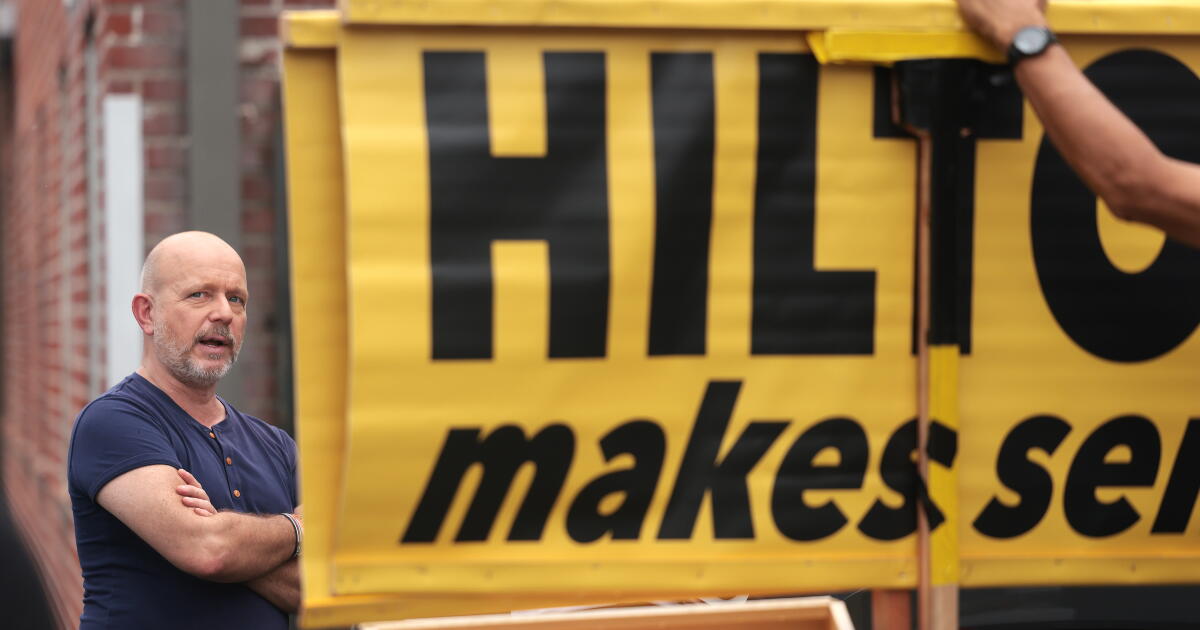
It will also be a key issue in upcoming elections. A group of Republicans running for statewide offices, including California gubernatorial candidate Steve Hilton, pegged that the state’s annual estimate of fraud, waste and abuse across state programs at $250 billion, an estimate that includes unverified public tips submitted to a campaign-run website.

The group cited the estimate as justification for creating their own “California Department of Government Efficiency,” or CAL DOGE, a nod to a similarly named federal initiative promoted by Elon Musk that generated headlines but has not produced documented savings or formal audit findings. CAL DOGE is not currently a state department, despite its name.

Who deserves credit when fraud is prosecuted has also become a point of contention. After a man was arrested last month for fleecing L.A.’s homeless services program for $23 million, critics of Newsom were quick to blame the governor. Newsom responded by saying the case was uncovered by local investigators working with law enforcement, which he added is “exactly the kind of accountability and oversight the state has pushed for.” (The Los Angeles district attorney’s office ran a parallel, independent investigation.)

Essayli responded on social media by saying no one made an arrest until Trump and Atty. Gen. Pam Bondi “appointed me to investigate and charge fraud offenses in California.”

Kiley, the California Republican congressman, said despite the partisan fighting over fraud, the issue should rally both parties.

The “easiest” way to solve the state’s budget problems and improve government services for taxpayers is to “minimize and eventually eliminate fraud,” said Kiley.

Source link

FBI disciplinary office recommends firing former deputy director Andrew McCabe

The FBI office that handles employee discipline has recommended firing the bureau’s former deputy director over allegations that he authorized the disclosure of sensitive information to a reporter and misled investigators when asked about it — though Justice Department officials are still reviewing the matter and have not come to a final decision, a person familiar with the case said.

The recommendation from the FBI’s Office of Professional Responsibility is likely to add fuel to the political fire surrounding former deputy director Andrew McCabe, who abruptly stepped down from his post earlier this year but technically remained an FBI employee.

McCabe was hoping to retire in days, when he becomes eligible for his full benefits. If he is fired, he could lose his retirement benefits. President Trump has long made McCabe a particular target of his ire, and the recommendation to fire the former No. 2 FBI official could give him new ammunition.

Through a representative, McCabe declined to comment. A Justice Department spokeswoman said in a statement: “The Department follows a prescribed process by which an employee may be terminated. That process includes recommendations from career employees, and no termination decision is final until the conclusion of that process. We have no personnel announcements at this time.”

An FBI spokeswoman declined to comment.

Justice Department Inspector General Michael Horowitz has for some time been working on a report that blasts McCabe for allowing two high-ranking bureau officials to sit down with the Wall Street Journal as the news outlet prepared a story in 2016 on an investigation into Hillary Clinton’s family foundation, then misleading the inspector general’s team about his actions. A person familiar with the matter said Horowitz’s findings are what sparked the Office of Professional Responsibility’s recommendation, which was first reported by The New York Times. Horowitz’s report has not yet been released.

McCabe, 49, had long been expected to retire March 18, though he abruptly left his post earlier this year after his boss, FBI Director Christopher Wray, was told of what the inspector general had found.

The situation now seems fraught for all involved. If the Justice Department does not move on the recommendation, conservatives might view officials there as unfairly protecting McCabe. Trump — who already has a strained relationship with Justice Department leaders — might be particularly displeased.

But if the FBI fires McCabe with just days to go before his retirement, it could be viewed as bending to the will of a vindictive president. Trump has previously suggested McCabe was biased in favor of Clinton, pointing out that McCabe’s wife, who ran as a Democrat for a seat in the Virginia Legislature, received hundreds of thousands of dollars in donations from the political action committee of Terry McAuliffe, the former governor of Virginia and a noted Clinton ally. The president remarked in December that McCabe was “racing the clock to retire with full benefits.”

The inspector general has since last January been investigating the FBI and Justice Department’s handling of the politically charged probe into Clinton’s use of a private email server while she was secretary of State, which is separate from the foundation inquiry. McCabe represents but a piece of that work.

Horowitz is also examining broad allegations of misconduct involving former FBI Director James Comey, including the public statement he made recommending that the Clinton email case be closed without charges and his decision 11 days before the election to reveal to Congress that the FBI had resumed its work. McCabe briefly took over as the FBI’s acting director after Trump fired Comey in May.

The story for which McCabe authorized FBI officials to discuss came just as the bureau announced it was resuming its look at Clinton’s use of a private email server while she was secretary of State, though it focused more on a different case involving her family’s foundation.

The story presented McCabe as a complicated figure — one who lower-level officials felt was stymieing their work, even though it detailed McCabe pushing back against Justice Department officials so the case could move forward.

The inspector general was interested in McCabe’s role in authorizing officials to talk about the matter, people familiar with the case said, because the story detailed ongoing criminal investigative work, which law enforcement officials are not normally allowed to discuss.

The Wall Street Journal story was written by Devlin Barrett, who is now a reporter at the Washington Post. Recently released text messages show that Barrett had talked with the FBI’s top spokesman, Michael Kortan, and FBI lawyer Lisa Page, who worked for McCabe, two days before it was published.

Background briefings with reporters are common in Washington, particularly when reporters have information that officials feel compelled to respond to or add context. In this instance, though, it might have been viewed as inappropriate because the discussion was focused on an ongoing criminal investigation.

Source link

L.A. County pauses some payouts amid sex abuse settlement investigations

Los Angeles County will halt some payments from its $4-billion sex abuse settlement, leaving many plaintiffs on edge as prosecutors ramp up an investigation into allegations of fraud.

L.A. County agreed last spring to the record payout to settle a flood of lawsuits from people who said they’d been sexually abused by staff in government-run foster homes and juvenile camps. Many attorneys had told their clients they could expect the first tranche of money to start flowing this month.

But the county’s acting chief executive officer, Joseph M. Nicchitta, said Thursday that the county would “pause all payments” for unvetted claims after a request by Dist. Atty. Nathan Hochman. These are claims that have been flagged as requiring a “higher level of scrutiny,” according to a joint report submitted Thursday by attorneys in the settlement.

The district attorney announced he would investigate the historic settlement after reporting by The Times that found some plaintiffs who said they were paid to sue. Investigators have found “a significant number of cases where we believe there is potential fraud,” according to a spokesperson for the prosecutor’s office. The State Bar is spearheading a separate inquiry into fraud allegations.

On Jan. 9, Hochman formally requested the county pause the distribution of funds for at least six months, which he said would give his office “a reasonable opportunity to complete critical investigative steps.”

“Premature disbursement of settlement funds poses a substantial risk of interfering with the investigation by complicating witness cooperation, obscuring financial trails, and impairing my office’s ability to identify and prosecute fraudulent activity,” Hochman wrote in a letter to Andy Baum, the county’s main outside attorney working on the settlement.

Plaintiff lawyers argued the county was required to turn over money by the end of the month.

The county said it came to an agreement Thursday and plans to turn over $400 million on Friday, which would “cover claims that have already been validated,” according to a statement from Nicchitta. That money will go into a fund where it will be distributed when judges are finished vetting and deciding how much each claim is worth.

“No plaintiff was getting paid until the allocation process is completed,” said the county’s top lawyer, Dawyn Harrison. “The County is not overseeing that intensive process.”

The rest of the payments, Nicchitta said, will be on hold until the claims can “be appropriately investigated.”

“The County takes extremely seriously its obligations to provide just compensation to survivors. Preventing fraud is central to that commitment,” he said. “Fraudulent claims of sexual assault harm survivors by diluting compensation for survivors and casting public doubt over settlements as a whole.”

The uncertainty has sparked a sense of despair among those who spent the last few years wading through the darkest memories of their lives in hopes of a life-changing sum.

Andrea Proctor, 45, said the last few years have been like “digging into a scar that was healed.”

“The whole lawsuit just blew air out of me,” said Proctor, who sued in 2022 over alleged abuse at MacLaren Children’s Center, an El Monte shelter where she says she was drugged and sexually abused by staff as a teenager. “I’m just sitting out here empty.”

Proctor said she desperately needs the money to stabilize her life, the first part of which was spent careening from one crisis to the next — an instability she traces partially to the abuse she suffered as a minor.

Since a 2020 law change that extended the statute of limitations to sue over childhood sexual abuse, thousands have come forward with claims of abuse in county-run facilities dating back decades. The county resolved claims it faced last year through two massive payouts — the first settlement for $4 billion, which includes roughly 11,000 plaintiffs, and a second one last October worth $828 million, which includes about 400 victims.

Now, according to court filings made public Tuesday, the county faces an additional 5,500 claims of the same nature, leaving the prospect of a third hefty payout looming on the horizon.

“They’re telling me the ship has sailed,” said Martin Gould, a partner with Gould Grieco & Hensley, who said he wants this next flood of litigation to focus on pushing for arrests of predatory staff members still on the county’s payroll. “I don’t believe that.”

Gould says his firm, based in Chicago, represents about 70 victims in the new litigation. James Harris Law Firm, a small Seattle-based firm that specializes in big personal injury cases, has about 3,000. The Right Trial Lawyers, a firm that lists a Texas office as its headquarters, has about 700, according to an attorney affiliated with the firm.

These lawyers will be pleading their cases in front of a public — and a Board of Supervisors — at a moment when the conversation has shifted from a reckoning over systemic sexual abuse inside county facilities to concerns about the use of taxpayer money.

A series of Times investigations last fall found nine clients represented by Downtown LA Law Group, or DTLA, who said they were paid by recruiters to sue. Four said they were told to make up their claims.

All the lawsuits filed by the firm, which represents roughly a quarter of the plaintiffs in the $4-billion settlement, are now under review by Daniel Buckley, a former presiding judge of the county’s Superior Court.

DTLA has repeatedly denied any wrongdoing and said in a previous statement that it “categorically does not engage in, nor has it ever condoned, the exchange of money for client retention.”

Several DTLA clients said they were unaware of the probes by the State Bar and the district attorney, though they were told this month to expect delays in payments due, in part, to “a higher-than-expected false claim potential.”

The delays have caused extra anguish for some plaintiffs who have taken out loans against their settlement.

Proctor took out loans worth $15,000 from High Rise Financial, an L.A.-based legal funding company, which collects a larger portion of her payout with each passing year. She now owes more than $34,000, according to loan statements.

Proctor said High Rise Financial recently inquired about buying her out of the settlement payment, which the county is expected to pay out over five years. The loan company told her she could get a percentage of her settlement up front in a lump sum, with the company pocketing the rest as profit. For example, she said, she was told if she received a $300,000 payout, she could get $205,000 up front.

“Conversations were held with consumers to assess their interest in a potential financial arrangement related to a possible settlement,” High Rise said in a statement. “No agreements were sent, nor were any transactions entered into.”

Proctor’s friend Krista Hubbard, who also sued over abuse at MacLaren Children’s Center, borrowed $20,000 to help her through a period of homelessness. She now owes nearly $43,000. She said she, too, got the same offer this month from High Rise of getting bought out of her settlement.

Hubbard, who is crashing at the home of her godfather in Arkansas, said she’s considering it.

“How much longer is it going to take?” she said. “Am I going to be able to not be homeless?”

The $828-million settlement, which includes just three law firms, is running into its own roadblock with lawyers belatedly learning that roughly 30 of their clients were also set to receive money from the $4-billion settlement despite rules barring plaintiffs from receiving money from both.

The overlap has led to a dispute over which pot of money should cover payments to those plaintiffs. Those in the $828-million settlement, which has a much smaller pool of plaintiffs, are expected to get much more.

“It reeks,” said Courtney Thom, an attorney with Manly Stewart & Finaldi, who said she believed the county should have flagged long ago that there were identical clients in both settlements.

“It is not for me to fact-check for the county,” she told Judge Lawrence Riff at a court hearing Wednesday. “It is not for me to cross-reference names.”

Some of these plaintiffs had two different sexual abuse claims against the county — for example, one lawsuit alleged abuse in foster care while a second involved juvenile halls. Other clients had identical claims in both groups and mistakenly believed the two firms that represented them were compiling the information into one claim, Thom said.

Baum, the outside attorney defending the county, told Riff he wanted to ensure the clients didn’t “have their hands in two cookie jars.”

Source link

Top Secret Spy Satellite Declassified By National Reconnaissance Office

The recent declassification of the United States’ Jumpseat spy satellite provides details on what was previously a highly secretive system, one that monitored critical Soviet military assets during some of the tensest years of the Cold War. While still redacted, the declassification provides never-before-seen imagery of a pioneering system that served the U.S. intelligence community for 35 years.

Jumpseat satellite taking shape in a factory. NRO

The declassification of certain elements of the Jumpseat program was announced by the director of the National Reconnaissance Office (NRO), the Pentagon intelligence branch responsible for U.S. government reconnaissance satellites.

There were eight satellite launches under Jumpseat (also known as AFP-711), between 1971 and 1987, one of them unsuccessful. Developed by the U.S. Air Force as part of the NRO’s Program A, the satellites were carried by Titan IIIB launch vehicles. Based on an original intercontinental ballistic missile (ICBM) design, these rockets lifted off from Vandenberg Air Force Base (now Vandenberg Space Force Base) in California.

System for Space – Titan III (remastered USAF documentary)


The NRO confirms the mission numbers 7701 to 7708 for the eight Jumpseat launches. Analysts had previously attempted to match the Jumpseat missions to known space launches out of Vandenberg, although so far only the first and last of these have actually been declassified. There is a possibility that some of the launches normally assessed to involve Jumpseat actually carried other payloads.

The NRO confirms our belief that there were 8 JUMPSEAT launches in 1981-87. and gives the dates for JUMPSEAT 1 and 8. Another program, QUASAR, had data relay satellites in the same orbit, and NRO has not released the dates for JS2 to 7 so we aren’t sure which launch is which.

— Jonathan McDowell (@planet4589) January 29, 2026

As a signals-collection satellite, Jumpseat was an important part of the broader signals intelligence (SIGINT) community. In simple terms, SIGINT assets are used to detect and intercept communications and other electronic emissions. Whether radios or radars, those emitters can also be geolocated and categorized, as well as listened in on.

Jumpseat was also active in two subsets of SIGINT. The first was communications intelligence (COMINT), including keeping tabs on day-to-day communications between military personnel, by eavesdropping on electronic signals. Secondly, Jumpseat gathered foreign instrumentation signals intelligence (FISINT), which involves intercepting and analyzing electromagnetic emissions from foreign weapon systems, such as missile telemetry, radar, and tracking signals. Particular military emitters of interest to Jumpseat likely included air defenses and command and control nodes, with the data gathered being used to help build an electronic order of battle of an adversary nation, specifically the Soviet Union.

NRO

Jumpseat collections “were initially against other adversarial countries’ weapon systems capabilities,” the document states, without providing more details.

Previously classified imagery of Jumpseat has also been released, with the NRO providing a mix of diagrams, artwork, and photos of models and test specimens.

As far as is known, the Jumpseat satellites were built by Hughes, using a spin-stabilized bus, similar to that used in the TACSAT and the Intelsat-4 communications satellites. Key features of Jumpseat included a large, partially foldable dish antenna for data collection, as well as a smaller dish antenna to send data back to the ground.

Diagram showing Jumpseat components. NRO

What is interesting is that the main reflector of the JUMPSAT SIGINT antenna seems to have deployable parts…

Comparing the model vs the EMC chamber vs the shaker setup, the EMC chamber pic clearly has the reflector in a “deployed” state, vs folded for the shaker pic… https://t.co/k0oEiVZ0BE pic.twitter.com/36oo35yu3u

— DutchSpace (@DutchSpace) January 29, 2026

“The historical significance of Jumpseat cannot be understated,” said Dr. James Outzen, NRO director of the Center for the Study of National Reconnaissance, in a statement from the office. “Its orbit provided the United States a new vantage point for the collection of unique and critical signals intelligence from space.”

Jumpseat came as a follow-on to earlier electronic surveillance satellites, including Grab, Poppy, and Parcae.

These had begun to be fielded as the deepening Cold War heralded the possibility of a future weapons threat from space. This is something that was hammered home by the Soviet Union’s successful launch of the Sputnik 1 satellite, which would soon be followed by the first generation of ICBMs based on the same rocket technology.

One of two Jumpseat models that have been declassified. NRO
The second Jumpseat model. NRO

“Following the end of World War II, threats of globally spreading communism and nuclear weapons proliferation fueled Americans’ anxiety of the unknown,” the NRO explains. “Across the world, the United States suspected that more American adversaries were building out extensive, topline defense arsenals including long-range missiles and atomic weapons.”

“Jumpseat’s core mission focus was to monitor adversarial offensive and defensive weapon system development,” the NRO states. “From its further orbital position, it aimed to collect data that might offer unique insight into existing and emerging threats.”

Jumpseat testing in an anechoic chamber. NRO

Jumpseat operated in a transponder mode, sending downlinked data to the NRO for initial processing. Once processed, the data was provided to the Department of Defense, the National Security Agency, and other national security elements.

While the NRO’s first electronic surveillance satellites — like Grab, Poppy, and Parcae — operated in low-earth orbit, Program A was tasked with developing a satellite for signals collection from a highly elliptical orbit. This was known as Project Earpop.

A factory view of Jumpseat. NRO

Jumpseat emerged from Earpop as “the United States’ first-generation, highly elliptical orbit (HEO) signals-collection satellite.” HEO refers to an elongated, egg-shaped trajectory, which is especially relevant for a spy satellite. In this way, the satellite has significant ‘dwell time’ at two points of its orbit, as it ascends and descends to its apogee.

In Jumpseat’s case, HEO kept the satellite for longer periods at high altitude over the northern polar regions: ideal for keeping watch on the Soviet Union. HEO above the northern polar regions is sometimes known as a Molniya orbit, after a series of Soviet satellites that operated here.

HEO, in this instance, should not be confused with a high-Earth orbit (HEO), one that takes a spacecraft beyond the geostationary orbital belt, which is defined as being around 22,236 miles above sea level.

Unconfirmed reports suggest that one of the key missions of Jumpseat was to monitor Soviet ballistic missile warning radars in the far north of the country. That would certainly make sense based on orbits, although there were plenty of other military emitters of great interest to the United States and its allies in this region.

FMI visualisation of HEO satellites monitoring the Arctic


The Jumpseat declassification memorandum notes that the satellites “performed admirably” and were only removed from the NRO’s SIGINT architecture as late as 2006.

The NRO says that the partial declassification of Jumpseat now is justified since these “will not cause harm to our current and future satellite systems.” The office also notes that it wants to bring attention to the program for its pioneering role in HEO signals-collection satellites.

As to what kinds of capabilities have taken over from Jumpseat, most aspects of these remain as secretive as their predecessor once was.

There are various unverified reports that a series of satellites known as Trumpet have taken over from Jumpseat. There are, meanwhile, many other large, classified payloads that the NRO has launched into space and which could perform similar functions

Meanwhile, this area of intelligence collection is increasingly being farmed out to commercial enterprises.

As the NRO states, “overhead collection of signals is no longer a government-only endeavor as several unclassified commercial ventures have launched signal collection systems whose capabilities are comparable if not superior to Jumpseat.”

As we have discussed in the past, the commercial space sector has opened up the possibility of constellations featuring potentially hundreds of intelligence-gathering satellites, and it will herald another revolution in both tactical and strategic space-based sensing. Starlink-like constellations, but used for sensing — which the United States is already pursuing — would be able to provide persistent surveillance of the entire globe at any given time. This would allow for continuous surveillance of any spot on the planet, not just snapshots in time taken during orbital flyovers by individual satellites. It is by no means clear what types of electronic intelligence collection can be done by such a constellation due to the small individual antenna sizes on each satellite, but if those limitations can be overcome, it could change how and when the U.S. monitors the electronic emissions of its adversaries.

Watch SpaceX deploy Starlink satellites into space


Regardless, having more satellites available and having ways to rapidly deploy new systems into orbit are increasingly urgent priorities, considering the stated level of threat posed to them by Russia and, increasingly, China.

Whatever is out there, or is set to be out there in the future, it will be indebted to the trailblazing work done by the secretive Jumpseat program.

Contact the author: thomas@thewarzone.com

Thomas is a defense writer and editor with over 20 years of experience covering military aerospace topics and conflicts. He’s written a number of books, edited many more, and has contributed to many of the world’s leading aviation publications. Before joining The War Zone in 2020, he was the editor of AirForces Monthly.


Source link

Sen. Susan Collins announces end to ICE large-scale operations in Maine after talks with Noem

U.S. Sen. Susan Collins of Maine said Thursday that immigration officials have ceased their “enhanced operations” in the state, the site of an enforcement surge and more than 200 arrests since last week.

Collins, a Republican, announced the development after saying she had spoken directly with Secretary of Homeland Security Kristi Noem.

“There are currently no ongoing or planned large-scale ICE operations here,” Collins said in a statement, referring to U.S. Immigration and Customs Enforcement. “I have been urging Secretary Noem and others in the Administration to get ICE to reconsider its approach to immigration enforcement in the state.”

The announcement came after President Trump seemed to signal a willingness to ease tensions in Minneapolis after a second deadly shooting there by federal immigration agents.

Collins said ICE and Border Patrol officials “will continue their normal operations that have been ongoing here for many years.”

An email seeking comment was sent Thursday to the Department of Homeland Security.

Collins’ announcement comes more than a week after immigration officers began an operation dubbed “Catch of the Day” by ICE. Federal officials said about 50 arrests were made the first day and that roughly 1,400 people were operational targets in the mostly rural state of 1.4 million residents, 4% of whom are foreign-born. ICE said more recently that more than 200 people have been arrested since the operation started.

In Lewiston, one of the cities targeted by ICE, Mayor Carl Sheline called the scale-down welcome news, describing the agency’s operations as “disastrous” for the city and others.

“ICE operations in Maine have failed to improve public safety and have caused lasting damage to our communities. We will continue working to ensure that those who were wrongfully detained by ICE are returned to us,” said Sheline, who leads a city where the charter requires the mayoral position to be nonpartisan.

Homeland Security Assistant Secretary Tricia McLaughlin last week touted that some of the arrests were of people “convicted of horrific crimes including aggravated assault, false imprisonment, and endangering the welfare of a child.” Court records painted a slightly different story: While some had been convicted of felonies, others were detainees with unresolved immigration proceedings or who were arrested but never convicted of a crime.

Collins, a veteran senator, is up for reelection this year. Unlike a handful of Republican senators facing potentially tough campaigns, Collins has not called for Noem to step down or be fired. She’s also avoided criticizing ICE tactics, beyond saying that people who are in the U.S. legally should not be the target of ICE investigations.

Democratic Gov. Janet Mills, who announced her Senate candidacy in October and could face Collins in the general election, has challenged immigration officials to provide judicial warrants, real-time arrest numbers and basic information about who is being detained in Maine. She also called on Collins to act after the House’s GOP majority defeated Democrats’ efforts to curtail ICE funding.

Mills’ office did not immediately respond to an Associated Press email seeking comment on Collins’ announcement.

Meanwhile, first-time Democratic candidate Graham Platner — who is running against Mills in the primary — has criticized both Mills’ and Collins’ handling of ICE and has demanded the agency be dismantled. Platner organized a protest Thursday outside Collins’ office in Portland, Maine, where dozens of supporters held signs and sang along with him.

Platner said he would host a separate protest later outside Collins’ Bangor, Maine, office.

Several prominent Maine Democrats expressed guarded optimism about the ICE drawdown while also criticizing the agency’s actions.

“If these enhanced operations have in fact ceased, that may reduce the visible federal presence in our state,” said U.S. Rep. Chellie Pingree, who represents the Portland area. “But I think it is important that people understand what we saw during this operation: individuals who are legally allowed to be in the United States, whether by lawful presence or an authorized period of stay, following the rules, and being detained anyway.

Whittle and Kruesi write for the Associated Press. Kruesi reported from Providence, R.I. AP writer Kathy McCormack in Concord, N.H., contributed to this report.

Source link

FBI raid in Georgia highlights Trump’s 2020 election obsession and hints at possible future actions

Donald Trump lost his bid for reelection in 2020. But for more than five years, he’s been trying to convince Americans the opposite is true by falsely saying the election was marred by widespread fraud.

Now that he’s president again, Trump is pushing the federal government to back up those bogus claims.

On Wednesday, the FBI served a search warrant at the election headquarters of Fulton County, Georgia, which includes most of Atlanta, seeking ballots from the 2020 election. That follows Trump’s comments earlier this month when he suggested during a speech at the World Economic Forum in Davos, Switzerland, that charges related to the election were imminent.

“The man has obsessions, as do a fair number of people, but he’s the only one who has the full power of the United States behind him,” said Rick Hasen, a UCLA law professor.

Hasen and many others noted that Trump’s use of the FBI to pursue his obsession with the 2020 election is part of a pattern of the president transforming the federal government into his personal tool of vengeance.

Sen. Jon Ossoff, a Georgia Democrat, compared the search to the Minnesota immigration crackdown that has killed two U.S. citizen protesters, launched by Trump as his latest blow against the state’s governor, who ran against him as Vice President Kamala Harris’ running mate in 2024.

“From Minnesota to Georgia, on display to the whole world, is a President spiraling out of control, wielding federal law enforcement as an unaccountable instrument of personal power and revenge,” Ossoff said in a statement.

It also comes as election officials across the country are starting to rev up for the 2026 midterms, where Trump is struggling to help his party maintain its control of Congress. Noting that, in 2020, Trump contemplated using the military to seize voting machines after his loss, some worry he’s laying the groundwork for a similar maneuver in the fall.

“Georgia’s a blueprint,” said Kristin Nabers of the left-leaning group All Voting Is Local. “If they can get away with taking election materials here, what’s to stop them from taking election materials or machines from some other state after they lose?”

Georgia has been at the heart of Trump’s 2020 obsession. He infamously called Republican Secretary of State Brad Raffensperger on Jan. 2, 2021, asking that Raffensperger “find” 11,780 more votes for Trump so he could be declared the winner of the state. Raffensperger refused, noting that repeated reviews confirmed Democrat Joe Biden had narrowly won Georgia.

Those were part of a series of reviews in battleground states, often led by Republicans, that affirmed Biden’s win, including in Michigan, Wisconsin and Nevada. Trump also lost dozens of court cases challenging the election results and his own attorney general at the time said there was no evidence of widespread fraud.

His allies who repeated his lies have been successfully sued for defamation. That includes former New York Mayor Rudolph Giuliani, who settled with two Georgia election workers after a court ruled he owed them $148 million for defaming them after the 2020 election.

Voting machine companies also have brought defamation cases against some conservative-leaning news sites that aired unsubstantiated claims about their equipment being linked to fraud in 2020. Fox News settled one such case by agreeing to pay $787 million after the judge ruled it was “CRYSTAL clear” that none of the allegations were true.

Trump’s campaign to move Georgia into his column also sparked an ill-fated attempt to prosecute him and some of his allies by Fulton County District Atty. Fani Willis, a Democrat. The case collapsed after Willis was removed over conflict-of-interest concerns, and Trump has since sought damages from the office.

On his first day in office, Trump rewarded some of those who helped him try to overturn the 2020 election results by pardoning, commuting or vowing to dismiss the cases of about 1,500 people charged in the Jan. 6, 2021, attack on the U.S. Capitol. He later signed an executive order trying to set new rules for state election systems and voting procedures, although that has been repeatedly blocked by judges who have ruled that the Constitution gives states, and in some instances Congress, control of elections rather than the president.

As part of his campaign of retribution, Trump also has spoken about wanting to criminally charge lawmakers who sat on the House committee investigating the Jan. 6 attack, suggesting protective pardons of them from Biden are legally invalid. He’s targeted a former cybersecurity appointee who assured the public in 2020 that the election was secure.

During a year of presidential duties, from dealing with wars in Gaza and Ukraine to shepherding sweeping tax and spending legislation through Congress, Trump has reliably found time to turn the subject to 2020. He has falsely called the election rigged, said Democrats cheated and even installed a White House plaque claiming Biden took office after “the most corrupt election ever.”

David Becker, a former Department of Justice voting rights attorney and executive director of The Center for Election Innovation & Research, said he was skeptical the FBI search in Georgia would lead to any successful prosecutions. Trump has demanded charges against several enemies such as former FBI Director James Comey and New York’s Democratic Atty. Gen., Letitia James, that have stalled in court.

“So much this administration has done is to make claims in social media rather than go to court,” Becker said. “I suspect this is more about poisoning the well for 2026.”

Riccardi writes for the Associated Press.

Source link

FBI executes search warrant at Georgia election office over 2020 US vote | Donald Trump News

FBI searches Fulton County election office in Georgia over 2020 election concerns linked to Trump-Biden contest.

The US Federal Bureau of Investigation (FBI) is executing a search warrant at a Fulton County election office in Georgia related to the 2020 United States election, an agency spokesperson said.

An FBI spokesperson said agents were “executing a court-authorised law enforcement action” at the county’s main election office in Union City, just south of Atlanta. The spokesperson declined to provide any further information, citing an ongoing matter.

Recommended Stories

list of 3 itemsend of list

FBI agents were spotted entering the Fulton County Election Hub and Operation Center, said Fox News, which first reported the search of a new facility that state officials opened in 2023.

The probe concerns the 2020 election, in which Republican Donald Trump, the current US president, lost to the former US president, Democrat Joe Biden, the official said.

The search comes as the FBI, under the leadership of Director Kash Patel, has moved quickly to pursue the political grievances of Trump, including by working with the Justice Department to investigate multiple perceived adversaries of the commander-in-chief.

The Justice Department had no immediate comment.

Find the votes

Trump has long insisted that the 2020 election was stolen even though judges across the country and his own attorney general said they found no evidence of widespread fraud that tipped the contest in Biden’s favour.

Representatives for Fulton County’s election office referred queries to the county’s external affairs office, which did not immediately return a call seeking comment.

The Democratic-leaning county, home to Atlanta, backed Biden by a wide margin in the 2020 election, helping him win the state and the presidency.

Trump unsuccessfully sought to overturn the result, pressuring the state’s top election official to “find” him enough votes to claim victory.

Earlier this month, Trump asked a state court for $6.2m in legal fees, saying he spent it fighting criminal charges of election interference filed by Fulton County District Attorney Fani Willis.

In August 2023, Willis obtained an indictment against Trump and 18 others, accusing them of participating in a wide-ranging scheme to illegally try to overturn the results of the 2020 presidential election.

That case was dismissed in November after courts barred Willis and her office from pursuing it because of an “appearance of impropriety” stemming from a romantic relationship she had with a prosecutor she had appointed to lead the case.

Source link

FBI executes search warrant at Fulton County elections office near Atlanta

FBI agents were executing a search warrant at the Fulton County elections office near Atlanta on Wednesday, an agency spokesperson confirmed.

An FBI spokesperson said agents were “executing a court authorized law enforcement action” at the county’s main election office in Union City, just south of Atlanta. The spokesperson declined to provide any further information, citing an ongoing matter.

The search comes as the FBI under the leadership of Director Kash Patel has moved quickly to pursue the political grievances of President Trump, including by working with the Justice Department to investigate multiple perceived adversaries of the Republican commander-in-chief.

The Justice Department had no immediate comment.

Trump has long insisted that the 2020 election was stolen even though judges across the country and his own attorney general said they found no evidence of widespread fault that tipped the contest in Democrat Joe Biden’s favor.

He has long made Georgia, one of the battleground states he lost in 2020, a central target for his complaints about the election and memorably pleaded with its then-secretary of state to “find” him enough votes to overturn the contest.

Last week, in reference to the 2020 election, he asserted that “people will soon be prosecuted for what they did.” It was not clear what in particular he was referring to.

Fulton County District Atty. Fani Willis in August 2023 obtained an indictment against Trump and 18 others, accusing them of participating in a wide-ranging scheme to illegally try to overturn the results of the 2020 presidential election. That case was dismissed in November after courts barred Willis and her office from pursuing it because of an “appearance of impropriety” stemming from a romantic relationship she had with a prosecutor she had appointed to lead the case.

Brumback writes for the Associated Press.

Source link

Man arrested in the attack on Ilhan Omar is a convicted felon who made pro-Trump posts

The man who sprayed an unknown substance on Democratic U.S. Rep. Ilhan Omar at a town hall in Minneapolis is a convicted felon who has made online posts supportive of President Trump.

Anthony Kazmierczak, 55, was convicted of felony auto theft in 1989, has been arrested multiple times for driving under the influence, and has had numerous traffic citations, Minnesota court records show. There are also indications he has had significant financial problems, including two bankruptcy filings.

Police say Kazmierczak used a syringe to spray an unknown liquid at Omar during Tuesday’s event after she called for the abolishment of U.S. Immigration and Customs Enforcement and the firing or impeachment of Homeland Security Secretary Kristi Noem following the fatal shootings of Renee Good and Alex Pretti by immigration enforcement officers. Officers immediately tackled and arrested Kazmierczak, who was jailed on a preliminary third-degree assault charge, police spokesperson Trevor Folke said.

Photos of the syringe, which fell when he was tackled, showed what appeared to be a light-brown liquid inside. Authorities haven’t yet publicly identified the liquid.

After the attack, there was a strong, vinegarlike smell in the room, according to an Associated Press journalist who was there. Forensic scientists were called in, but none of the roughly 100 people who were there had a noticeable physical reaction to the substance.

Omar continued speaking for about 25 minutes after Kazmierczak was ushered out, saying she wouldn’t be intimidated. While leaving, she said she felt a little flustered but wasn’t hurt, and that she was going to be screened by a medical team.

She later posted on X: “I’m ok. I’m a survivor so this small agitator isn’t going to intimidate me from doing my work. I don’t let bullies win.”

A Trump supporter

Kazmierczak hadn’t been formally charged or scheduled for an initial court appearance as of Wednesday morning. The Hennepin County Attorney’s Office has until Thursday to charge him but could seek an extension. A spokesperson for the prosecutor’s office didn’t immediately return a call seeking further information.

It isn’t clear if Kazmierczak has a lawyer who could speak on his behalf. The county’s chief public defender, Michael Berger, said the case hasn’t been assigned to his office.

In social media posts, Kazmierczak described himself as a former network engineer who lives in Minneapolis. Among other things, he made comments critical of former President Joe Biden and referred to Democrats as “angry and liars.”

“Trump wants the US is stronger and more prosperous,” Kazmierczak wrote. “Stop other countries from stealing from us. Bring back the fear that enemies back away from and gain respect that If anyone threatens ourselves or friends we will (expletive) them up.”

In another post, Kazmierczak asked, “When will descendants of slaves pay restitution to Union soldiers families for freeing them/dying for them, and not sending them back to Africa?”

Often at odds with the president

Omar, a progressive, has been a frequent target of Trump’s barbs since she joined Congress in 2019.

That year, Trump urged Omar and three other freshmen congresswomen of color known as “the squad” to “ go back ” to their countries if they wanted to criticize the U.S. Omar was the only one of the four born outside of the U.S., having immigrated to the country as a child when her family fled violence in Somalia.

Trump stepped up his criticism of Omar in recent months as he turned his focus on the Minneapolis-St. Paul area, which is home to about 84,000 people of Somali descent — nearly a third of the Somalis living in the U.S. During a Cabinet meeting in December, he referred to her as “garbage.” And he has linked the Twin Cities immigration crackdown to a series of fraud cases involving government programs in which most of the defendants have roots in the East African country.

The White House did not respond to a Tuesday message seeking comment. But, when asked about the attack Tuesday night, he told ABC News that he hadn’t watched the footage and accused her of staging the attack. “She probably had herself sprayed, knowing her,” Trump said.

Earlier Tuesday, the president criticized Omar as he spoke to a crowd in Iowa, saying his administration would only let in immigrants who “can show that they love our country.”

“They have to be proud, not like Ilhan Omar,” he said, drawing loud boos at the mention of her name.

He added: “She comes from a country that’s a disaster. So probably, it’s considered, I think — it’s not even a country.”

Lawmakers face rising threats

The attack came days after a man was arrested in Utah for allegedly punching U.S. Rep. Maxwell Frost, a Democrat from Florida, in the face during the Sundance Film Festival and saying Trump was going to deport him.

Threats against members of Congress have increased in recent years, peaking in 2021 following the Jan. 6 attack on the U.S. Capitol before dipping slightly only to climb again, according to the most recent figures from the U.S. Capitol Police.

Following Tuesday’s attack on Omar, U.S. Capitol Police said in a statement that the agency was “working with our federal partners to see this man faces the most serious charges possible to deter this kind of violence in our society.”

Lawmakers have discussed the impact of the threatening political climate on their ability to hold town halls and public events, with some even citing it in their decisions not to seek reelection.

Biesecker and Bargfeld write for the Associated Press. Biesecker reported from Washington. AP reporter R.J. Rico in Atlanta contributed to this report.

Source link

Longtime D.C. Delegate Eleanor Holmes Norton is ending her reelection campaign for Congress

Eleanor Holmes Norton, the 18-term delegate for the District of Columbia in Congress and a veteran of the Civil Rights Movement, has filed paperwork to end her campaign for reelection, likely closing out a decades-long career in public service.

Norton, 88, has been the sole representative of the residents of the nation’s capital in Congress since 1991, but she faced increasing questions about her effectiveness after the Trump administration began its sweeping intervention into the city last year.

Mayor Muriel Bowser congratulated Norton on her retirement.

“For 35 years, Congresswoman Norton has been our Warrior on the Hill,” Bowser wrote on social media. “Her work embodies the unwavering resolve of a city that refuses to yield in its fight for equal representation.”

Norton’s campaign filed a termination report with the Federal Election Commission on Sunday. Her office has not released an official statement about the delegate’s intentions.

The filing was first reported by NOTUS.

Her retirement opens up a likely competitive primary to succeed her in an overwhelmingly Democratic city. Several local lawmakers had already announced their intentions to run in the Democratic primary.

An institution in Washington politics for decades, Norton is the oldest member in the House. She was a personal friend to civil rights icons such as Medgar Evers and a contemporary of other activists turned congressional stalwarts, including Rep. Jim Clyburn (D-S.C.) and the late Reps. John Conyers (D-Mich.) and John Lewis (D-Ga.).

But Norton has faced calls to step aside in recent months as residents and local lawmakers questioned her ability to effectively advocate for the city in Congress amid the Republican administration’s aggressive moves toward the city.

The White House federalized Washington’s police force, deployed National Guard troops from six states and the federal district across the capital’s streets and surged federal agents from the Department of Homeland Security into neighborhoods. The moves prompted outcry and protests from residents and a lawsuit from the district’s attorney general.

Norton’s retirement comes as a historically high number of lawmakers announce they will either seek another public office or retire from official duties altogether. More than 1 in 10 members of the House are not seeking reelection this year.

Norton’s staunch advocacy for her city

As the district’s delegate, Norton does not have a formal vote in the House. But she has found other ways to advocate for the city’s interests. Called the “Warrior on the Hill” by her supporters, Norton was a staunch advocate for D.C. statehood and for the labor rights of the federal workers who called Washington and its surrounding region home.

She also secured bipartisan wins for district residents. Norton was the driving force behind the passage of a law that provides up to $10,000 per year for students who attend public colleges outside the district. It also provides up to $2,500 per year for students who attend select private historically Black colleges and universities across the country and nonprofit colleges in the D.C. metropolitan area.

In the 1990s, Norton played a key role in ending the city’s financial crisis by brokering a deal to transfer billions of dollars in unfunded pension liabilities to the federal government in exchange for changes to the district’s budget. She twice played a leading role in House passage of a D.C. statehood bill.

Steeped in the civil rights movement

Norton was born and raised in Washington, and her life spans the arc of the district’s trials and triumphs. She was educated at Dunbar High School as part of the school’s last segregated class.

“Growing up black in Washington gave a special advantage. This whole community of blacks was very race conscious, very civil rights conscious,” she said in her 2003 biography, “Fire in My Soul.”

She attended Antioch College in Ohio and in 1963 split her time between Yale Law School and Mississippi, where she worked as an organizer during the Freedom Summer of the Civil Rights Movement.

One day that summer, Evers picked her up at the airport. He was assassinated that night.

Norton also helped organize and attended the 1963 March on Washington.

In an interview with the Associated Press in 2023, Norton said the march was still “the single most extraordinary experience of my lifetime.”

She went on to become the first woman to lead the Equal Employment Opportunity Commission, which helps enforce anti-discrimination laws in the workplace. She ran for office when her predecessor retired to run for Washington mayor.

Brown writes for the Associated Press.

Source link