news

Trump ordered to pay E Jean Carroll $5.8m after failed appeal | Courts News

The order comes three years after a jury found out Trump has sexually abused and defamed the writer.

A federal judge has ruled that writer E Jean Carroll can collect the more than $5.8m that US President Donald Trump was ordered to pay after a jury found he sexually abused and defamed her, clearing the way for the money to be released after the US Supreme Court declined to hear his appeal.

Judge Lewis A Kaplan ruled on Wednesday that Carroll can be paid the original $5m award granted to her by the jury, along with interest that has accrued since the verdict in 2023. Carroll’s lawyers had asked for the funds to be released after the Supreme Court refused on June 29 to hear Trump’s appeal.

Recommended Stories

list of 4 itemsend of list

“This is the end of the line,” Carroll’s lawyer Roberta Kaplan wrote in a court filing, adding, “It is time for him to pay Carroll.”

Less than an hour after the judge issued the order, Trump appealed it.

“The American People stand with President Trump as they demand an immediate end to all of the Witch Hunts, including the Democrat-funded travesty of the Carroll Hoaxes,” a spokesperson for Trump’s lawyers said in a statement.

Carroll first accused Trump in 2019, writing in a memoir that he had sexually assaulted her in a dressing room at the Bergdorf Goodman department store in Manhattan in 1996. Trump denied the allegation, saying he had never met Carroll, accusing her of lying to sell books and for political reasons, and calling the claim a “hoax.”

Carroll sued him for defamation over those comments later that year, accusing him of damaging her reputation by suggesting she had lied for personal gain. She filed a second lawsuit in 2022, accusing Trump of battery/sexual abuse and defamation over another denial he posted on Truth Social in 2022, again calling the allegation a hoax.

In 2023, a jury found Trump liable for sexually abusing Carroll and for defaming her through his 2022 statements. It did not determine that Trump was liable for rape.

A second jury awarded her $83.3m in 2024 for the defamatory statements Trump made in 2019 when he was president, after she first went public with the allegation.

Trump has continued to fight both verdicts.

After the Supreme Court declined to hear his appeal, He called the lawsuit “a Fake Case” and pledged to continue fighting what he described as a “Weaponisation and Lawfare Case.”

On Wednesday, Trump’s lawyers filed a petition asking the Supreme Court to reconsider its decision not to hear the appeal. They argued that Trump would suffer “irreparable harm” if the money is paid out, because Carroll has said she intends to donate it, which would make it difficult to recover the funds if the verdict is later overturned.

Trump is also still appealing the $83.3m judgment, arguing his 2019 comments were made while he was president and are therefore protected by presidential immunity. The Department of Justice has also launched a criminal investigation into Carroll over whether she committed perjury during her testimony.

Source link

Israeli air strikes in Gaza kill eight, including two children | Israel-Palestine conflict News

Medics report 12 injuries alongside eight deaths in Gaza as Israeli air strikes target civilians and displaced families.

Israeli air strikes have killed at least eight people in Gaza, including two children, aged 10 and 6, Palestinian health officials have said.

Medics said on Wednesday that an Israeli air strike killed one person near a school in Gaza City. Twelve people were wounded in the two incidents. The Israeli military said it struck fighters in Gaza City, but was unaware of casualties.

Recommended Stories

list of 3 itemsend of list

Another ‌Israeli air strike hit a tent for displaced people in the al-Mawasi area in Khan Younis, in the south of the enclave, killing at least four people, including a 10-year-old child.

Later on Wednesday, Palestinian health officials said a six-year-old boy was killed by Israeli gunfire in the Zeitoun neighbourhood in Gaza City. Another strike hit a ⁠vehicle westward of the city, killing one person, ⁠medics said, taking Wednesday’s death toll to at least seven. An eighth death was later recorded, but more details were not immediately available.

The Israeli military didn’t immediately comment on any of those incidents.

The latest killings come despite Israel and Hamas agreeing to a United States-brokered “ceasefire” in October last year. Although large-scale fighting has largely paused, Israeli attacks on Palestinians in the territory have continued.

According to the Ministry of Health in Gaza, Israeli army violations of the “ceasefire” have killed at least 1,084 people and wounded 3,491 others since the truce took effect. The latest casualties bring the overall death toll in Israel’s genocidal war on Gaza since October 2023 to at least 73,110, with 173,599 others injured, the ministry said.

Israel has also expanded its control of the enclave to about 11 percent beyond the so-called “Yellow Line” demarcating areas of the Gaza Strip agreed in the truce.

Last week, a group of United Nations agencies and NGO groups warned that the continued expansion of areas under Israeli control endangers civilians and relief efforts. Already dozens of Palestinian families have been forced to leave their homes near the line.

Meanwhile, the humanitarian situation in the Strip remains dire. In its latest report, the UN Office for the Coordination of Humanitarian Affairs (OCHA) said it recorded nearly 9,300 cases of chickenpox across more than 130 health facilities. “The rise in reported chickenpox cases is occurring in a displacement environment already marked by severe overcrowding, deteriorating hygiene conditions, and widespread environmental health hazards,” it said.

Source link

Law change may end misconduct case over Kaba shooting in Streatham

The police marksman who shot Chris Kaba may no longer face misconduct proceedings after the government changed the rules on how officers’ use of force is judged.

Sgt Martyn Blake shot 24-year-old Kaba in Streatham, south London, in 2022 after he tried to ram his way past police cars.

Blake was cleared of murder following a trial in 2024 but was subject to a separate disciplinary hearing, which the Independent Office for Police Conduct (IOPC) paused while it waited for the changes to be published.

The legal test for misconduct in officers’ use-of-force cases has been raised to the same used in criminal law, meaning conduct that would not amount to a crime should not amount to misconduct either.

After Blake’s acquittal, then home secretary Yvette Cooper said she would raise the legal test used to decide whether to charge officers over use of force.

On Wednesday, the watchdog said it now believes the case should not go ahead. It will consult the Kaba family, who argue there are exceptional circumstances why it should still proceed.

Dozens of other non-fatal use-of-force cases could also be affected if forces take the same approach.

IOPC director of strategy and policy Andrew Johnson said: “We carefully considered the law change and its stated intent to address the perceived unfairness and lack of proportionality of the civil law test.

“We believe this position provides consistency across impacted cases and is fair to officers who are facing potential dismissal for misconduct, which if it occurred now, would not amount to misconduct under the new law.

“We expect the number of relevant cases that are affected by this law change to be relatively small.”

Metropolitan Police deputy commissioner Matt Jukes, referring to Blake by his cypher NX121, said: “We have consistently said since the criminal trial that there is no basis for further action against this officer and that remains our position.

“That is why I welcome the recent changes to the law, introducing a presumption of anonymity for firearms officers during court proceedings until conviction, and restoring the criminal test for the use of force in misconduct cases.”

The family of Chris Kaba said the decision had a damaging impact on bereaved families in cases involving use of force by the police, and that “it gives every appearance that the IOPC has a closed mind on this specific case”.

Temi Mwale and Kayza Rose from the Justice for Chris Kaba Campaign said they were “appalled” by the IOPC’s decision.

They added: “The only just approach would have been to conclude all existing cases under the rules that were in place when those proceedings began.

“Instead, the rules have been changed mid-process to ensure that Martyn Blake will face no professional accountability.”

The campaigners described the decision as a blow to public confidence and said Britain was “moving backwards on police accountability”.

On the night Kaba died, police had followed and boxed in the Audi he was driving because it had been linked to three firearms incidents in the previous five months.

Officers did not know his identity at the time. He was later reported by police to have links to a street gang and to two shootings in the six days before his death.

Listen to the best of BBC Radio London on Sounds and follow BBC London on Facebook, external, X, external and Instagram, external. Send your story ideas to hello.bbclondon@bbc.co.uk, external


Source link

Where Are The Aircraft Carriers: July 7, 2026

Here’s TWZ’s weekly carrier tracker monitoring America’s flattop fleet, including deployed Carrier Strike Groups (CSG) and Amphibious Ready Groups (ARG), using publicly available open-source information. Check out last week’s report here.

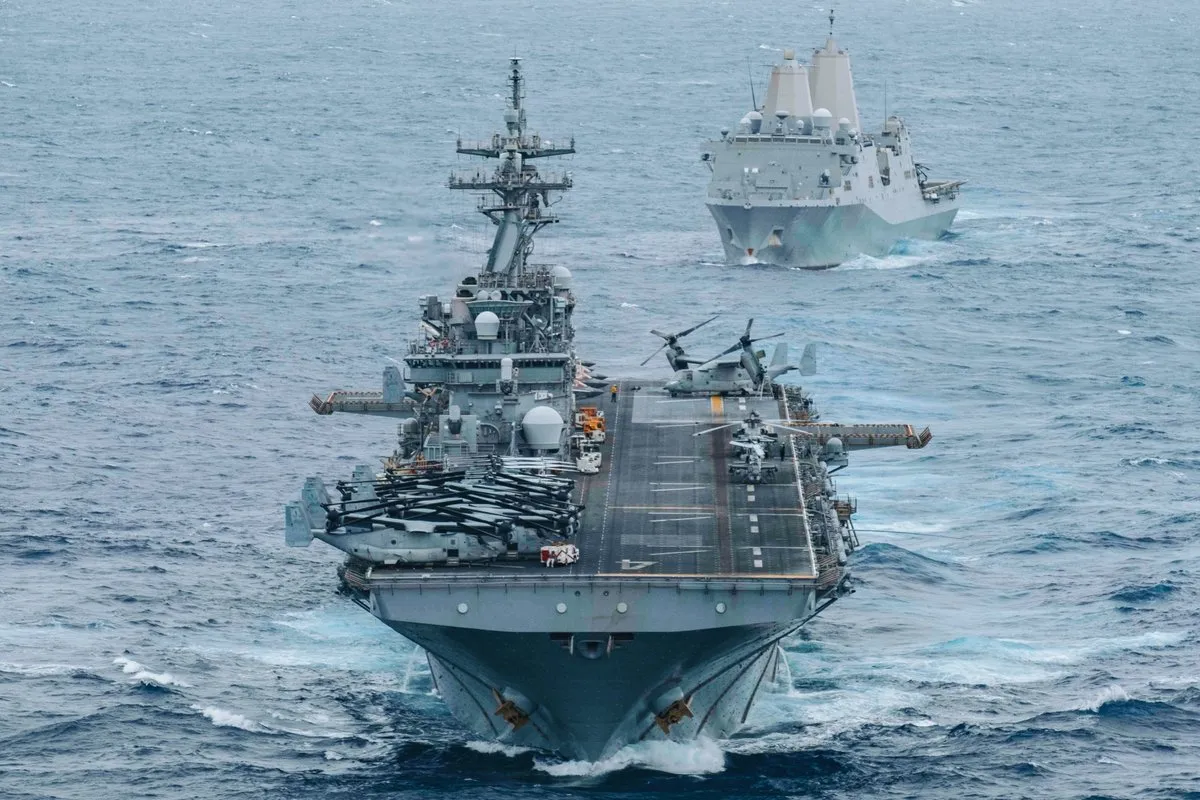
Amphibious assault ship USS Boxer finally arrived in the U.S. Central Command (CENTCOM) area of responsibility (AOR), months after reports of a surge deployment in March to reinforce troops in the Middle East during the war against Iran. Boxer deployed on March 18 and transited the Pacific westbound before entering the Indian Ocean in early May, but never crossed into the CENTCOM AOR. Rather than continue to the Middle East, the ARG disaggregated: Boxer doubled back to Singapore and the South China Sea, where Portland was still operating, while Comstock moved on to CENTCOM. Boxer and Portland transited the Malacca Strait northbound in late June and have re-aggregated with Comstock in the AOR.

USS Boxer (LHD 4) and USS Portland (LPD 27) sail in formation while transiting the Indian Ocean. U.S. Central Command photo

The U.S. now has four big-deck warships on station in the Middle East – two aircraft carriers, USS Abraham Lincoln and USS George H.W. Bush, and two amphibious assault ships, USS Tripoli and USS Boxer – representing a step up in naval force posture while negotiations with Iran develop. In contrast, the U.S. appears to be drawing down its forward-deployed strategic bomber forces, with the last B-52 Stratofortress bombers departing RAF Fairford last week, according to plane spotters.

USS Abraham Lincoln (CVN 72) underway in the Middle East. U.S. Navy photo

USS Nimitz, on her final transit, arrived in New York City on July 3 and anchored off the coast of Stapleton, Staten Island, ahead of the International Naval Review (INR) 250 on July 4. Nimitz sat at anchor in New York Harbor during INR 250, the pinnacle event of the Navy’s celebration of America’s 250th birthday and the largest international maritime event in U.S. history, which featured over 70 U.S. and allied naval vessels and tall ships. Before pulling into New York, Nimitz departed Mayport, Florida, last week and steamed up the east coast while conducting ordnance offload. The Boeing MQ-25 Stingray demonstrator drone, also known as the T-1, was on full display once again.

USS Nimitz (CVN 68) transits the Hudson River. U.S. Marine Corps photo by Cpl. Xavier Alicea

USS Dwight D. Eisenhower moored in Norfolk on July 2 after a two-week work-up supporting Carrier Qualifications (CQ) and East Coast Fleet Replacement Squadrons (FRS). Student naval aviators were aboard and successfully completed CQ from June 27-30, according to a release on DVIDS. “The multi-day training evolution focused on developing the next generation of fleet aviators, specifically highlighting pilots navigating the E-2 Hawkeye pipeline.” Eisenhower is preparing to deploy in early 2027, TWZ previously reported.

U.S. Navy Lt. Miguel Smith launches a T-45C Goshawk jet trainer aircraft off of the flight deck of Nimitz-class aircraft carrier USS Dwight D. Eisenhower (CVN 69), June 27, 2026. Eisenhower is underway in the Atlantic Ocean conducting carrier qualifications for student naval aviators assigned to Naval Air Training Command. (U.S. Navy photo by Mass Communication Specialist 2nd Class Miguel Santiago)
T-45C Goshawk jet trainer aircraft launches off of the flight deck of USS Dwight D. Eisenhower (CVN 69). U.S. Navy photo by Miguel Santiago Petty Officer 2nd Class Miguel Santiago

USS Carl Vinson returned to San Diego after completing flight deck certifications and CQ with Carrier Air Wing (CVW) 2 from June 25 to July 1. The Navy formally announced the completion of her nine-month Planned Incremental Availability (PIA), which TWZ reported last month. “Our Sailors’ efforts were vital in preparing Carl Vinson to return to sea,” Cmdr. Paul Novess, Carl Vinson’s maintenance officer, said. “It was my honor to bring Sailors from all rates into our 13 production teams to safely execute more than 359,000 man hours of maintenance.”

USS Theodore Roosevelt and amphibious assault ship USS Essex just wrapped up the in-port phase of RIMPAC 2026 at Joint Base Pearl Harbor-Hickam, Hawaii. Both ships, along with several other participating units, have been hosting public events and open tours for the local community and visiting service members. The sea phase of the exercise is set to begin this week. Roosevelt was leaving Pearl Harbor, according to public AIS data, at the time of publication.

USS Theodore Roosevelt (CVN 71) docked at Joint Base Pearl Harbor-Hickam, Hawaii. U.S. Navy Photo by Mass Communication Specialist First Class Ryan A. LeCompte

After participating in the live-fire SINKEX of USS Juneau last week, USS George Washington has continued operations in the Western Pacific. The flattop and embarked CVW-5 were recently spotted in the Philippine Sea conducting flight operations, live-fire shooting drills, nighttime fast rope exercises, small boat evolutions, and physical training on the flight deck. Washington is operating alongside guided-missile cruiser USS Robert Smalls, guided-missile destroyers USS Shoup and USS Benfold, and fast-attack submarine USS Minnesota.

A fast-rope exercise on the flight deck of USS George Washington (CVN 73) while underway in the Philippine Sea. U.S. Navy photo by Mass Communication Specialist 3rd Class Nicolas Quezada

Note: Positions are general approximations. Non-deployed LHA/LHD amphibious warships are not shown.

Contact the author: ian.ellis-jones@teamrecurrent.io

Ian executes TWZ’s full-spectrum social media strategy, brings his interpretive graphics skills to our editorial team as an OSINT analyst and researcher, and maintains the weekly carrier tracker and newsletter.


Source link

Will NATO Lift Defence Industry Restrictions Sought by Turkey?

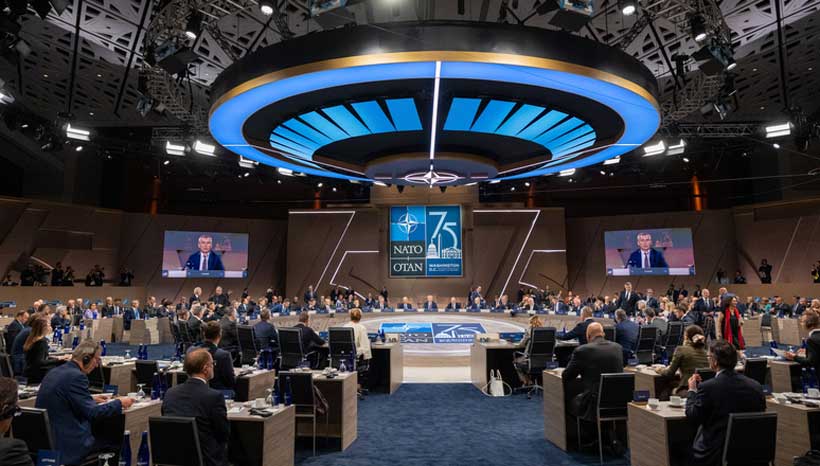
Turkey renewed its push for greater defence cooperation within NATO on Wednesday as President Tayyip Erdogan urged alliance members to remove restrictions that limit defence-industrial collaboration among allies. Ankara has long argued that political disagreements should not prevent NATO members from working together on defence projects, particularly as Europe seeks to strengthen its military capabilities in response to growing security threats.

The appeal comes as NATO leaders gather in Ankara for a summit focused on increasing defence spending, expanding military production and reinforcing the alliance amid continued tensions with Russia and instability in the Middle East.

Erdogan calls for equal defence cooperation

Addressing NATO leaders at the opening of the summit, Erdogan said restrictions on defence cooperation between allies should be removed.

“Restrictions among allies on defence cooperation, especially in the defence industry, must be lifted,” he said.

Stay ahead of the geopolitical week.

MD Briefing delivers expert analysis across five global fronts — the Indo-Pacific, energy, geoeconomics, European security, and the Middle East — every Monday morning. Free.

He warned that excluding NATO members that are outside the European Union from European defence initiatives could create unnecessary divisions.

“At a time when a model of cooperation based on common sense and reason is possible, excluding allies that are not members of the (European) Union would lead to artificial divisions in Europe,” Erdogan said.

Turkey seeks greater role in European defence

Turkey has repeatedly sought participation in European defence initiatives, including the Security Action for Europe (SAFE) funding programme, which aims to strengthen the continent’s defence industry.

Despite possessing NATO’s second-largest military and becoming a major producer and exporter of defence equipment, Ankara has largely remained outside several Europe-led security projects because of political disputes with some EU member states.

Turkish officials argue that NATO allies should cooperate more closely regardless of EU membership.

Trump signals possible policy shift

Erdogan’s appeal came a day after U.S. President Donald Trump indicated Washington could ease some longstanding tensions with Ankara.

During a meeting with Erdogan on Tuesday, Trump said he intended to lift U.S. sanctions imposed on Turkey and would decide whether to allow Ankara back into the F-35 fighter jet programme.

Turkey was removed from the programme after purchasing Russia’s S-400 air defence system in 2019, a move that triggered U.S. sanctions and strained relations between the two NATO allies.

Any decision to reverse those measures is expected to face opposition in the U.S. Congress.

Turkey pledges higher defence spending

Erdogan said Turkey remains on track to meet NATO’s target of spending 5% of gross domestic product on defence by 2030.

He announced that Ankara had allocated an additional $24 billion to its Steel Dome integrated air defence project, which is intended to strengthen both Turkey’s national security and NATO’s collective air and missile defence capabilities.

The Turkish president also called on alliance members to assume greater responsibility for Europe’s security while preserving NATO unity.

Future outlook

Turkey is expected to continue pressing for full participation in European defence initiatives as NATO members expand military spending and industrial cooperation. Whether European governments are prepared to ease political objections remains uncertain, while any U.S. decision on sanctions relief or Turkey’s return to the F-35 programme is likely to face congressional scrutiny. The outcome could shape Ankara’s role in NATO’s evolving defence architecture in the coming years.

With information from Reuters.

Source link

Two girls seriously injured in German school attack.

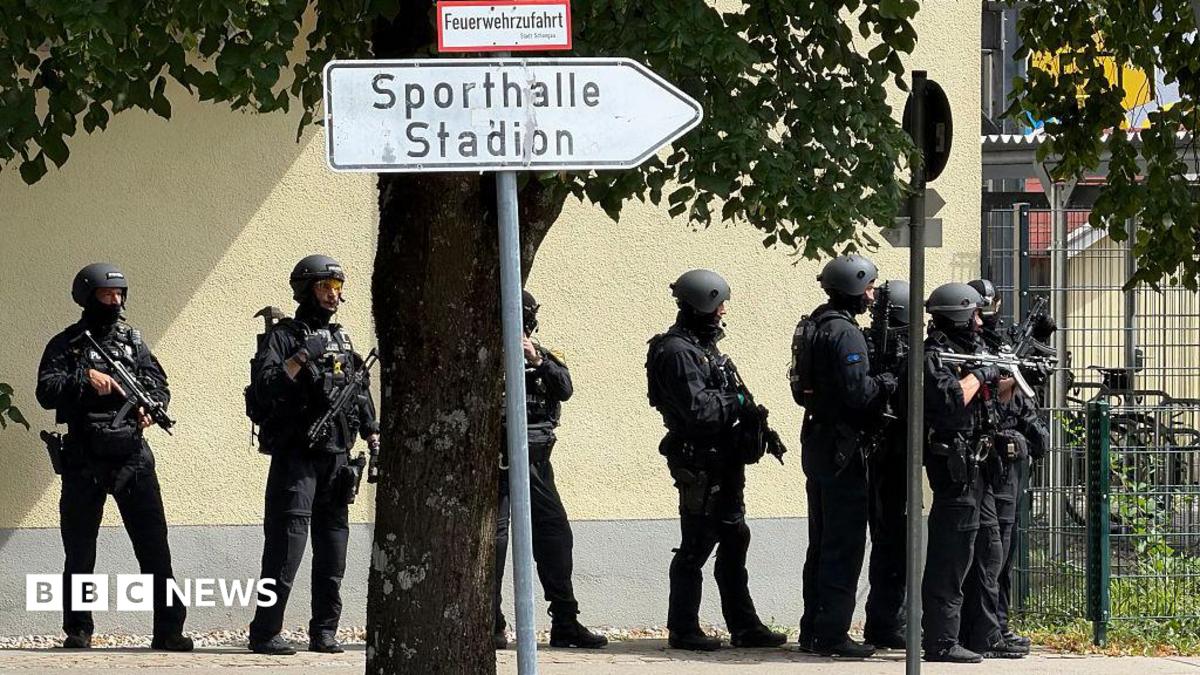
Two 13-year-old girls have been seriously injured and a 16-year-old suspect arrested after an incident at a school in Upper Bavaria, Germany.

Police said a major operation was under way in the area of Welfen-Gymnasium secondary school in the small town of Schongau.

The suspect was carrying a knife as well as a firearm, police said, and they believe they acted alone.

Neither of the girls are in life-threatening condition, but the number of other people involved and the severity of their injuries are currently being clarified, police added.

A police spokeswoman had earlier told AFP news agency it was unclear what weapon had been used in the attack, and declined to confirm reports of a knife attack.

The identity of the suspect is not known and it is unclear if they had links to the school.

The police spokeswoman added the force believe the incident to be a “rampage”.

A contact point for relatives and parents of students has been set up at a fire station in the town.

According to its website, the school was founded in 1887 and had initially been almost exclusively a girls’ school. It has been mixed gender for the last 40 years.

Source link

Poor B-52 Readiness Creating Testing Challenges For New AGM-181A Nuclear Cruise Missile

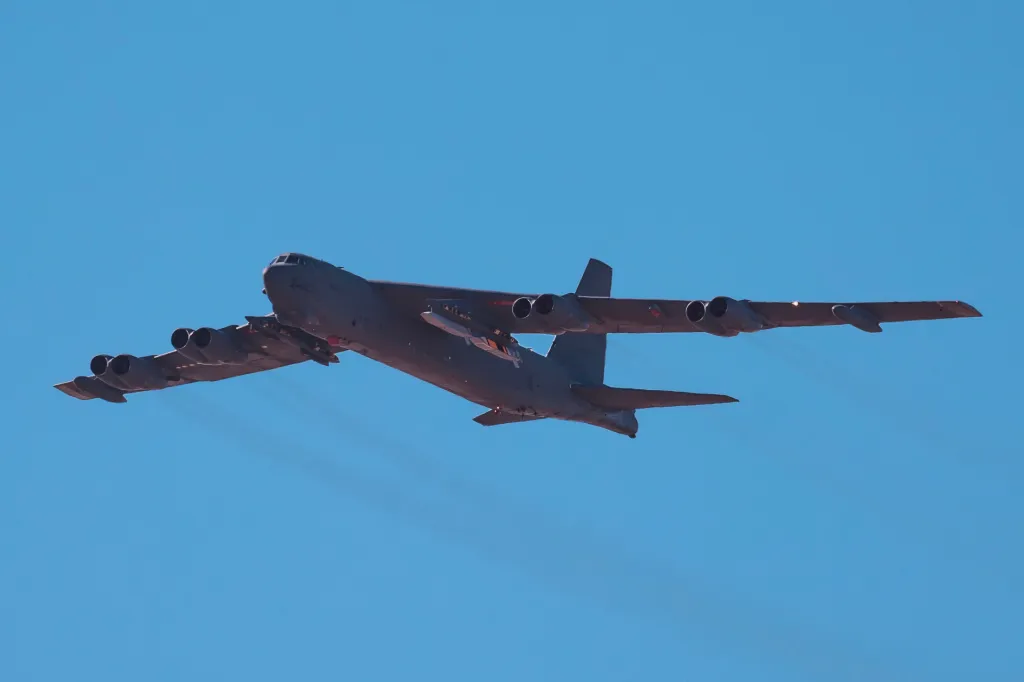
The Government Accountability Office (GAO) says low availability of unnamed “legacy” aircraft has created hurdles for flight testing of the new AGM-181A Long-Range Standoff (LRSO) nuclear-armed cruise missile. The B-52 is the only platform known to be involved in this effort. The fleet of these bombers is highly in demand, underscored by heavy use in strikes on Iran earlier this year, and has also recently suffered a tragic loss. U.S. Air Force officials have previously highlighted how the relatively small number of B-52s in service and the heavy demands placed on them create challenges when it comes to modernizing the aircraft themselves.

GAO, a Congressional watchdog, provided new details about flight testing plans and other aspects of the LRSO program in an annual report published last week. The AGM-181A has been in active development since 2020, when the Air Force chose Raytheon to be the prime contractor.

A B-52 bomber seen carrying LRSO prototypes, or relevant test articles, earlier this year. Jarod Hamilton

“LRSO reported unfavorable cost and schedule changes over the past year,” GAO reported. “For example, flight testing challenges, largely due to the poor readiness rates of legacy aircraft supporting LRSO testing, resulted in a 4-month delay to its initial capability.”

The Air Force is now aiming to reach initial operational capability with the AGM-181 in November 2030.

GAO says that there have been nine LRSO test flights since October 2024. That is when developmental testing of the missile began. Six of those flight tests, along with seven ground test events, occurred last year. In a report dated December 2022, the Pentagon had previously disclosed nine more test flights as part of earlier phases of the program. Whether additional test flights occurred between December 2022 and October 2024 is unclear.

“Since our last assessment, program officials realigned the test schedule, leaving less time to complete the 27 remaining test flights before operational testing starts in September 2027,” the report GAO put out last week also notes. “However, they noted that some re-testing can still be accommodated.”

As noted, the B-52 is the only aircraft known to be involved in LRSO flight testing, and certainly meets the definition of a “legacy” platform. The last of these bombers rolled off Boeing’s production line in 1962, though the remaining examples have been upgraded repeatedly since then. The sighting last year of a B-52 carrying a pair of AGM-181s, or relevant test articles, on a pylon under its right wing offered the first public glimpse of the missile. Spotters have caught these bombers supporting LRSO tests on several other occasions since then.

A close-up look at the LRSO prototypes, or relevant test articles, seen under the wing of a B-52 bomber earlier this year. Jarod Hamilton

The Air Force currently has 75 B-52H bombers in service, in total. The entire fleet is never available at any one time for taskings of any kind, due to routine maintenance and other factors. The mission-capable rate for the bombers has been hovering between 50 and 55 percent in recent years.

In addition, only one of the bombers is explicitly set aside to support test and evaluation efforts. B-52s from operational units are also used to support research and development and test and evaluation work on a more ad hoc basis. This is on top of the heavy operational demands put on the fleet, both for conventional combat operations and as a key component of the air leg of America’s nuclear deterrent triad. As mentioned, B-52s were heavily utilized just earlier this year for conventional strikes on Iran, adding to these strains.

Last month, the Air Force also lost one of its B-52s in a fatal crash at Edwards Air Force Base in California, which tragically killed all eight individuals onboard at the time. The aircraft in question was headed out on a flight test in support of a critical radar modernization program for the bombers when it went down, as you can read more about here.

The radar modernization effort is part of a slew of major upgrades for the B-52 fleet, which also includes all-new engines, improved communication suites, and more. The upgrades are so substantial that the bombers’ designations will change from B-52H to B-52J in the process. They are also in line to see their arsenals grow, including with the addition of the LRSO. The future B-52Js are set to continue serving through at least 2050.

B-52 Future Stratofortress: The Upgrades That Will Transform The B-52H Into The B-52J thumbnail

B-52 Future Stratofortress: The Upgrades That Will Transform The B-52H Into The B-52J


Other aspects of the B-52 modernization plan have also been beset by cost growth and delays. Air Force officials have said this has been compounded by the total size of the fleet and operational demands placed on it.

“The challenge with B-52 that I think everybody forgets, it’s such a small fleet that has such a tremendous requirement in terms of readiness,” Air Force Gen. Dale White, the service’s Direct Reporting Portfolio Manager for Critical Major Weapon Systems, told TWZ and others at the Air & Space Forces Association’s (AFA) annual Warfare Symposium in February. “You’ve got to have a certain number on the ramp. That’s a requirement.”

The question becomes “how do you get these through the depot while at the same time meeting the operational requirements?” Gen. White further explained at that time. “That choreography, I think, is going to be tough.”

It’s worth pointing out here that both the war with Iran and the crash at Edwards came after the cutoff date for GAO’s report, and further impacts on the LRSO flight test schedule would not have been recorded therein. There has also been a broader surge in demand across the U.S. military for flight test assets. This is being driven by the needs of modernization efforts for several aircraft beyond the B-52, including the F-22 Raptor, as well as next-generation developments, like the F-47 sixth-generation fighter.

Going back to LRSO, GAO’s latest assessment also highlights other challenges that the program has been facing that are unrelated to flight testing.

An official rendering of the AGM-181A LRSO. USAF

“Program officials stated that 12 of 14 software releases are delivered, with the final delivery planned for March 2026. According to program officials, nuclear certification of LRSO software continues to be a risk that they expect to fully address by November 2026. As we reported last year, the program risks delays if additional LRSO software development is needed to satisfy this certification requirement,” per the report. “LRSO cybersecurity testing continues with some delays reported during the past year. Program officials stated these delays did not bring about any cost or schedule changes, with the final cybersecurity assessment still planned for September 2027.”

“The missile’s technology maturity has advanced since our last assessment, with only two out of the six critical technologies still approaching maturity. They are both expected to be fully mature in fiscal year 2026, about 5 years after development start. DOE [Department of Energy] also identified critical technologies for the warhead, of which 80 percent are considered mature, more than double the percentage reported last year,” the report adds. “However, DOE may not mature all the remaining warhead technologies until the fourth quarter of fiscal year 2026. As we previously reported, both the missile and warhead started development with immature technologies, requiring parallel technology and design maturity efforts. This method falls short of the best practice to start with mature technologies and would have minimized the risks of future cost increases and schedule delays associated with concurrency during system development.”

There is also cost growth, as well as cost discrepancies.

“Program costs increased by $347 million after Air Force leadership directed a 1-year extension to LRSO production due to near-term budget constraints,” according to GAO.

“As we previously reported, Office of the Secretary of Defense and Air Force officials continue to work together to resolve a $1.9 billion difference between their production cost estimates for future LRSO production,” the report also says. “While a fully updated estimate is not expected until later in 2026, program officials now agree that OSD’s higher cost estimate provides an appropriate basis for the program’s fiscal year 2027 budget request and future year procurement funding needs.”

Buoyed in part by the successful flight testing it has conducted to date, GAO says the Air Force remains confident that it can meet its goal of starting low-rate initial production of the LRSO next year. Hitting that milestone will be key to staying on schedule to start fielding the missiles in 2030.

Contact the author: joe@twz.com

Joseph is TWZ’s Deputy Editor, helping to oversee the site’s highly experienced and dedicated team, while also writing informative and impactful defense and national security content. He lives right in the thick of it in the Washington, D.C. area.


Source link

U.S. Strikes Iran In Retaliation For Multiple Attacks On Shipping In Strait Of Hormuz Over Last 24 Hours (Updated)

U.S. Central Command (CENTCOM) announced that its forces have launched “a series of powerful strikes against Iran to impose heavy costs for targeting and attacking commercial shipping crewed by innocent civilians in an international waterway.” The U.S. strikes “are in response to Iranian attacks on three commercial vessels that were transiting the Strait of Hormuz,” CENTCOM stated on X. “Iran’s demonstrated aggression was unwarranted, dangerous, and a clear violation of the ceasefire.”

The official Iranian state media outlet IRIB reported 13 explosions in southern Iran.

The CENTCOM attacks follow the U.S. Treasury Department revoking a general license authorizing the sale of Iranian oil. That abrogates a key part of the Memorandum of Understanding (MoU) signed by Washington and Tehran on June 18.

While the future of Iran’s nuclear ambitions and its stockpile of enriched uranium are among other key issues addressed in the document, the Strait of Hormuz continues to be a flashpoint.

The latest attacks on shipping all involved tankers.

“A LNG tanker reported being hit by an unknown projectile on the port side engine room causing a fire, whilst travelling southbound through the SOH,” UKMTO reported. That incident took place about eight nautical miles east of Limah, Oman.

Before that, a “VLCC reported being hit by an unknown projectile on the port side upon exiting the SOH” about 16 nautical miles east of Khor Fakkan, UAE, UKMTO added. “Vessel was able to proceed to NPOC [nearest point of call] and no crew injuries were reported.”

The first of the three vessels struck today was a tanker that reported being attacked six nautical miles east of Musandam Peninsula, Oman “by an unknown projectile and has sustained minor structural damage,” UKMTO stated. “No casualties or environmental impact reported and vessel is proceeding to NPOC.”

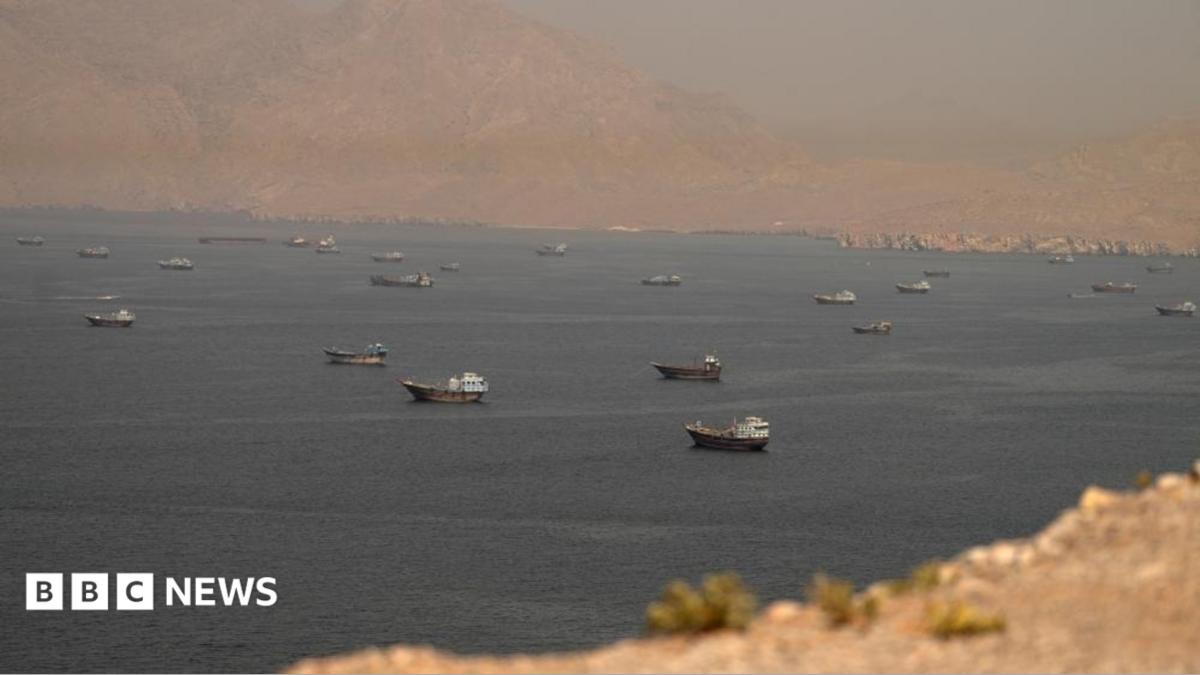
These attacks all took place along the southern-most route in the Strait, which is controlled by the U.S. and Oman. Iran controls the northern route and the mid-section of the body of water is considered too dangerous to transit due to the threat of mines.

Last Thursday, Iran’s military warned that all oil tankers moving through the Strait must use its approved routes. It also said that interference by U.S. forces in the strait “will be met with a rapid and decisive reaction.”

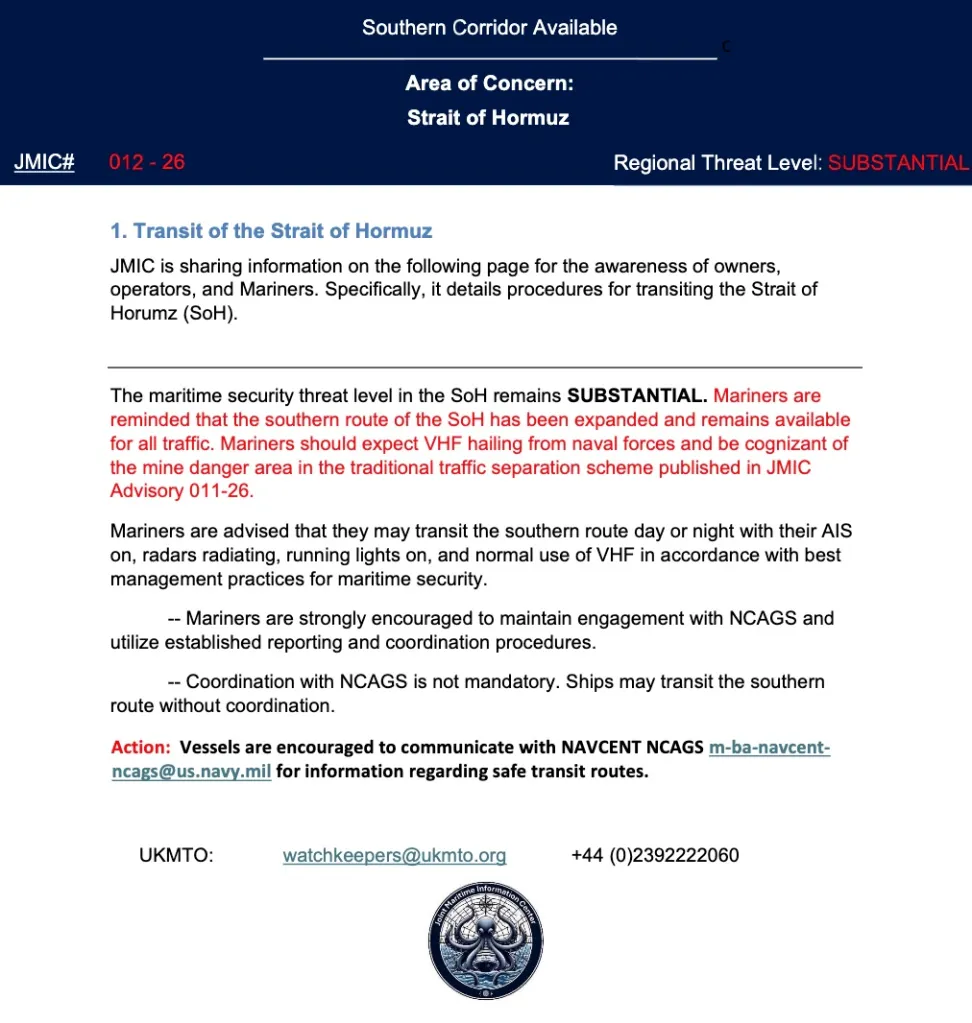
But the Joint Maritime Information Center (JMIC), a multinational body overseen by the U.S. Navy, told shippers Monday that the route around Oman “has been expanded and remains available for all traffic.”

The most recent attacks on shipping came after that JMIC notification and about a week after Iran and the U.S. promised to stop striking each other. 

JMIC

What happens next is unknown. The peace talks were paused while Iran holds a weeklong funeral for former Supreme Leader Ayatollah Ali Khamenei, who was killed on the first day of the war in an airstrike.

In an interview with Iranian media posted on X, Iranian Maj. Gen. Mohsen Rezaei, advisor to Iran’s supreme leader Mojtaba Khamenei, seemed to appeal to Iranian hardliners who want to resume fighting.

“Friends who oppose negotiations, be patient; the Americans themselves will derail these talks,” he posited.

This is a developing story.

UPDATE: 6:22 PM EDT –

Video and still images purporting to show the U.S. attacks on Iran are emerging on social media. Bandar Abbas, site of Iran’s key naval base on the Strait of Hormuz, appears to be one of the targets. Bandar Abbas has come under attack several times during this conflict.

In a post on X, Axios reporter Barak Ravid said the U.S. strikes on Iran today were “four or five times bigger in scope and power than the previous strikes 10 days ago.”

Authorities “have launched a search effort for K2 Airways Cargo 737 AP-BOI after the flight did not land as scheduled in Karachi,” FlightRadar24 reported. “KTA1732 was en route from Sharjah to Karachi when contact was lost with the aircraft. Preliminary ADS-B data indicate a loss of altitude, followed by a climb, and then a second, sudden and dramatic loss of altitude. The final received data point from the aircraft was at 16:21 UTC, placing the aircraft at 1,100 ft AMSL with a reported vertical rate of -22,400 feet per minute.”

According to FlightRadar24’s data, the cargo jet flew east over the Strait of Hormuz and the Gulf of Oman when it disappeared from radar screens at about 12:20 PM EDT.

The Pakistan Airports Authority reported on X that the aircraft was suffering a “navigational system issue” before contact was lost. There were five people onboard at the time.

The exact cause of this incident is unknown at this time. While there are no indications that the aircraft was lost due to hostile activity, the area is extremely tense.

UPDATE: 947 PM EDT –

CENTCOM says it has “completed its strikes against Iran, July 7, hitting over 80 targets with precision munitions as an immediate response to Iran’s latest attacks on commercial vessels transiting the Strait of Hormuz.”

“U.S. forces struck Iranian air defense systems, command and control networks, coastal radar sites, anti-ship missile capabilities, and more than 60 Islamic Revolutionary Guard Corps small boats in and near the strait to degrade Iran’s ability to continue attacking international commerce flowing through the international trade corridor,” the command said in a statement.

“Iran recently attacked three commercial vessels transiting the strait including Marshall Islands-flagged M/T Al Rekayyat, Saudi Arabia-flagged M/T Wedyan, and Liberian-flagged M/T Cyprus Prosperity,” CENTCOM added. “The unwarranted aggression by Iranian forces is a clear and dangerous violation of the ceasefire and undermines freedom of navigation. CENTCOM forces remain postured and prepared to hold Iran accountable when the agreement is not adhered to or obeyed.”

Contact the author: howard@twz.com

Howard is a Senior Staff Writer for TWZ. He writes frequently about conflict, focusing heavily on the Middle East and Ukraine, and interviews with military and intelligence officials and industry leaders from around the globe. He lives near Tampa, Florida, home of U.S. Central Command, U.S. Special Operations Command.


Source link

Errors sink Dodgers in loss to Rockies

Shohei Ohtani hits 300th homer in Dodgers’ loss

From Maddie Lee: In Shohei Ohtani, who on Tuesday became the first Japanese player to hit 300 home runs in MLB, the Dodgers had the first National League All-Star voted in this year.

They still have a chance for a late addition.

Dodgers manager Dave Roberts has been lobbying for two members of his pitching staff to be named replacement players: left-handed starter Justin Wrobleski and left-handed reliever Tanner Scott.

“There’s going to be some changes and some talks here,” Roberts said before the Dodgers’ 4-3 loss against the Colorado Rockies at Dodger Stadium. “There’s continual talks about both guys.”

Earlier Tuesday, MLB announced replacements for three NL pitchers who won’t be eligible to appear in the All-Star Game. Pittsburgh’s Braxton Ashcraft, Philadelphia’s Jesús Luzardo and St. Louis’ Riley O’Brien claimed spots as Pittsburgh’s Paul Skenes, Milwaukee’s Jacob Misiorowski and Miami’s Max Meyer bowed out.

“Obviously it’s disappointing,” Wrobleski said after holding the Rockies to one run through seven innings. “You want to be an All-Star. It’s something that, regardless of the year, whenever, it’s always a big deal. It’s something I wanted to do. It’s frustrating to not get that nod. But like I said before, it’s just more reason to try and keep getting better. Hopefully I can gain the respect of players and everybody else and maybe be in there next year.”

Continue reading here

Dodgers box score

MLB standings

Go beyond the scoreboard

Get the latest on L.A.’s teams in the daily Sports Report newsletter.

World Cup: U.S. team hopes they inspired future success

From Kevin Baxter: Last fall, in an effort to inspire a national soccer team lacking in confidence and belief, coach Mauricio Pochettino came up with a slogan for this summer’s World Cup, one the U.S. would be playing at home.

“Why not us?” he asked.

Why couldn’t the U.S. make a deep run in the tournament? Why couldn’t the U.S. compete with the best teams in the world? Why not us?

Monday he got his answer: Because the U.S. just isn’t good enough.

A couple of rousing performances in group play and a win over a third-place team in the first elimination game had the U.S. believing, had the U.S. hoping. Maybe Pochettino was right. Maybe it was the Americans’ time.

But it all proved to be a mirage.

Continue reading here

Swanson: Trump’s World Cup meddling only made matters worse for rattled U.S. squad

Paraguayan senator demands apology from Kylian Mbappé for his response to her racist posts

Tuesday’s World Cup results

Round of 16
Argentina 3, Egypt 2
Switzerland 0, Colombia 0 (Switzerland wins on PK’s, 4-3)

Today’s World Cup TV schedule

All times Pacific
No matches today

World Cup round of 16 schedule, results

Round of 16 results
Morocco 3, Canada 0
France 1, Paraguay 0
Norway 2, Brazil 1
England 3, Mexico 2
Spain 1, Portugal 0
Belgium 4, U.S. 1
Argentina 3, Egypt 2
Switzerland 0, Colombia 0 (Switzerland wins on PK’s, 4-3)

Quarterfinals schedule

All times Pacific
All games on Fox and Telemundo

Thursday
France vs. Morocco, 1 p.m.

Friday
Belgium vs. Spain, noon

Saturday
Norway vs. England, 2 p.m.
Switzerland vs. Argentina, 6 p.m.

Angels lose seventh in a row

Alejandro Osuna hit a three-run homer during a five-run eighth inning and the Texas Rangers pulled away for an 8-3 win over the Angels on Tuesday night.

Osuna’s first homer of the season followed RBI singles by Ezequiel Duran and Justin Foscue in the six-hit inning off Sam Bachman (1-2). Foscue also hit a pinch-hit home run in the seventh, tying the score 3-3.

Peyton Gray (4-0) pitched a scoreless eighth for the win for the Rangers, who pulled within one-half game of first-place Seattle in the AL West.

Continue reading here

Angels box score

MLB standings

Lakers sign center Kevon Looney

From Broderick Turner: The Lakers got their backup big man when Kevon Looney signed a one-year, $3.9-million deal on Tuesday, people not authorized to speak publicly told The Times.

The 6-foot-9 Looney won three championships with the Golden State Warriors, in 2017, 2018 and 2022. He played last season with the New Orleans Pelicans. Looney, 30, is an 11-year veteran who went to UCLA. He’s a strong rebounder, a very good defender and he sets solid screens for teammates.

Looney will be the backup behind starter Walker Kessler, who was acquired in a trade from the Utah Jazz and agreed to a four-year, $130-million deal. The Lakers traded last season’s starting center, Deandre Ayton, and backup Jaxson Hayes signed with the Jazz.

Continue reading here

This day in sports history

1889 — John L. Sullivan defeats Jake Kilrain in the 75th round in Richburg, Miss., for the U.S. heavyweight championship. It’s the last bare-knuckle boxing match before the Marquis of Queensbury rules are introduced.

1922 — Suzanne Lenglen beats Molla Bjurstedt Mallory, 6-2, 6-0 for her fourth straight singles title at Wimbledon.

1939 — Bobby Riggs beats Elwood Cooke in five sets to win the men’s singles title at Wimbledon.

1955 — Peter Thomson wins his second consecutive British Open finishing two strokes ahead of John Fallon. Thomson shoots a 7-under 281 at the Old Course in St Andrews, Scotland.

1967 — Billie Jean King sweeps three titles at Wimbledon. King beats Ann Hayden Jones 6-3, 6-4, for the singles title; teams with Rosie Casals for the women’s doubles title, and pairs with Owen Davidson for the mixed doubles title.

1978 — Bjorn Borg beats Jimmy Connors, 6-2, 6-2, 6-3 to win his third straight men’s title at Wimbledon.

1984 — John McEnroe whips Jimmy Connors 6-1, 6-1, 6-2 in 100-degree temperatures to take the men’s singles title at Wimbledon.

1990 — West Germany wins the World Cup as Andreas Brehme scores with 6 minutes to go for a 1-0 victory over defending champion Argentina in a foul-marred final.

1991 — Michael Stich upsets three-time champion Boris Becker to win the men’s singles title at Wimbledon, 6-4, 7-6 (4), 6-4.

1995 — Top-ranked Steffi Graf wins her sixth Wimbledon singles title, beating Arantxa Sanchez Vicario 4-6, 6-1, 7-5.

1995 — NHL Draft: Detroit Jr. Red Wings (OHL) defenseman Bryan Berard first pick by Ottawa Senators.

1996 — Switzerland’s Martina Hingis becomes the youngest champion in Wimbledon history at 15 years, 282 days, teaming with Helena Sukova to beat Meredith McGrath and Larisa Neiland 5-7, 7-5, 6-1 in women’s doubles.

2000 — Venus Williams beats Lindsay Davenport 6-3, 7-6 (3) for her first Grand Slam title. Williams is the first Black women’s champion at Wimbledon since Althea Gibson in 1958.

2007 — Roger Federer wins his fifth straight Wimbledon championship, beating Rafael Nadal 7-6 (7), 4-6, 7-6 (3), 2-6, 6-2. I’s also Federer’s 11th Grand Slam title overall.

2010 — Paul Goydos becomes the fourth golfer in PGA Tour history to shoot a 59. Goydos puts together his 12-under, bogey-free round on the opening day of the John Deere Classic. Goydos makes the turn at 4-under, then birdies all but one hole on the back nine at the 7,257-yard TPC Deere Run course.

2012 — Roger Federer equals Pete Sampras’ record of seven men’s singles titles at the All England Club, and wins his 17th Grand Slam title overall, by beating Andy Murray 4-6, 7-5, 6-3, 6-4.

2014 — Germany hands Brazil its heaviest World Cup loss ever with an astounding 7-1 rout in the semifinals that stuns the host nation. Miroslav Klose scores a record-setting 16th career World Cup goal in a five-goal spurt in the first half and Germany goes on to score the most goals in a World Cup semifinal.

2016 — Roger Federer loses in the Wimbledon semifinals for the first time in his career, falling to Milos Raonic 6-3, 6-7 (3), 4-6, 7-5, 6-3 on Centre Court. The 34-year-old Federer had been 10-0 in Wimbledon semifinals, winning seven of his finals.

2018 — South Korean golfer Sei Young Ki breaks the LPGA 72-hole scoring record with a 31-under par 257 in winning the Thornberry Creek Classic.

2022 — Gymnast Simone Biles aged 25, becomes the youngest person to receive the U.S. Presidential Medal of Freedom, from President Joe Biden.

Compiled by the Associated Press

This day in baseball history

1912 — Rube Marquard’s 19-game winning streak was stopped as the New York Giants lost 7-2 to the Chicago Cubs.

1918 — Boston’s Babe Ruth lost a home run at Fenway Park when prevailing rules reduce his shot over the fence to a triple. Amos Strunk scored on Ruth’s hit for a 1-0 win over Cleveland. Ruth, who played 95 games in the season, finished tied for the American League title with 11 homers.

1935 — The AL extended its All-Star winning streak to three with a 4-1 victory at Cleveland’s Municipal Stadium. New York Yankee Lefty Gomez went six innings, which prompted the NL to have the rules changed so that no pitcher could throw more than three innings, unless extra innings.

1941 — Ted Williams of the Boston Red Sox hit a three-run, two-out homer in the ninth to give the AL a dramatic 7-5 victory in the All-Star game at Detroit’s Briggs Stadium. Up to that point Arky Vaughan of the Pittsburgh Pirates was the NL hero with two home runs, the first player to do so in All-Star play. Joe and Dom DiMaggio played for the AL, marking the first time that brothers appeared in the same All-Star game.

1947 — Frank Shea became the first winning rookie pitcher in the first 14 years of All-Star play as the AL nipped the NL 2-1 at Chicago’s Wrigley Field.

1952 — The NL edged the AL 3-2 in the first rain-shortened All-Star game. The five-inning contest, at Philadelphia’s Shibe Park, featured home runs by Jackie Robinson and Hank Sauer of the Nationals.

1957 — Baseball owners re-elected commissioner Ford Frick to another seven-year term when his contract is up in 1958.

1958 — The 25th anniversary All-Star game, at Baltimore’s Memorial Stadium, went to the AL, 4-3 in a game that only produced 13 singles. This was the first All-Star game in which neither team got an extra-base hit.

1970 — Jim Ray Hart of San Francisco hit for the cycle and became the first NL player in 59 years to drive in six runs in one inning as the Giants beat Atlanta, 13-0.

1974 — New York shortstop Jim Mason tied a major-league record when he doubled four times in the Yankees’ 12-5 win over Texas.

1982 — Billy Martin records his 1,000 career win as a manager as the A’s beat the Yankees 6-3.

1994 — Shortstop John Valentin made the 10th unassisted triple play in baseball history in the sixth inning and then led off the bottom of the inning with a homer to lead Boston to a 4-3 victory over the Seattle Mariners.

1997 — Cleveland Indians catcher Sandy Alomar hit a two-run homer to give the American League a 3-1 victory over the National League in the All-Star game. Alomar, the first player to win the All-Star MVP in his own ballpark, broke the tie in the seventh inning off San Francisco’s Shawn Estes.

2000 — Dwight Gooden and Roger Clemens teamed up to shut down the Mets, giving the Yankees identical 4-2 victories in the first double-ballpark doubleheader in the majors since 1903. After the opener, many in the sellout crowd of 54,165 at Shea Stadium immediately headed for Game 2, which drew 55,821 at Yankee Stadium.

2008 — Ryan Braun of Milwaukee hit his 56th home run in his 200th major league game, a 7-3 win over Colorado. Only Mark McGwire and Rudy York (both 59) had hit more in their first 200 games in the majors.

2014 — The Mets record the 4,000th win in franchise history by defeating the Braves 8-3.

2015 — Tampa Bay hits two inside-the park home runs in a 9-7 loss to the Royals. It is the first time the feat has been done since 1997.

2021 — San Diego Padres relief pitcher Daniel Camarena records his first MLB hit, a grand slam, in his second at bat against the Washington Nationals’ Max Scherzer.

Compiled by the Associated Press

Until next time…

That concludes today’s newsletter. If you have any feedback, ideas for improvement or things you’d like to see, email me at houston.mitchell@latimes.com. To get this newsletter in your inbox, click here.


Source link

World Cup Golden Boot: Messi leads Mbappe, Haaland before quarterfinals | World Cup 2026 News

Messi is the top goal scorer after tallying his eighth against Egypt, with Erling Haaland and Kylian Mbappe next best.

Argentina superstar Lionel Messi has, once again, taken the lead in the race for the World Cup’s Golden Boot award after scoring his eighth goal in his country’s thrilling 3-2 win over Egypt in the round of 16 on Tuesday.

Messi’s goal brought Argentina back on level terms after they were 2-0 down in the match in Atlanta, and also helped him break away from the rest of the pack.

Recommended Stories

list of 4 itemsend of list

For three days, French talisman Kylian Mbappe and Argentinian great Lionel Messi rubbed shoulders as the joint leaders – with seven goals apiece – in the race to be the tournament’s top goal scorer, but Haaland’s double in Norway’s round of 16 win against Brazil put him level with both on Sunday.

When the World Cup’s knockout stage began, Messi became the first to reach seven goals when Argentina beat Cape Verde on Friday, and Mbappe matched him a day later as France beat Paraguay.

England’s Harry Kane took his tally to six goals after scoring in England’s thrilling 3-2 win over Mexico late on Sunday.

Spain’s Mikel Oyarzabal and Mbappe’s teammate Ousmane Dembele are hot on their heels with four goals each.

Here’s everything you need to know about FIFA’s Golden Boot award:

Lionel Messi in action.
Messi shoots at goal during the Argentina-Egypt last-16 tie at Atlanta Stadium [Nathan Ray Seebeck/Imagn Images via Reuters]

What’s the FIFA Golden Boot award and how is it decided?

FIFA’s Golden Boot is awarded to the player with the most goals at the end of the tournament.

France’s Mbappe is the current holder after scoring eight goals in Qatar at the 2022 World Cup.

If two players are tied on the same number of goals at the end of the tournament, then the player with the most assists will win the award.

If those tiebreakers cannot split two players, then the Golden Boot is handed to the player who achieved their goals and assists in the least number of minutes.

Haaland celebrates
Erling Haaland celebrates after the match as Norway qualify for the round of 16 [Issei Kato/Reuters]

Which players are the top goal scorers at World Cup 2026?

  1. Lionel Messi (Argentina) – 8 goals, 1 assist
  2. Kylian Mbappe (France) – 7 goals, 2 assists
  3. Erling Haaland (Norway) – 7 goals, 0 assists
  4. Harry Kane (England) – 6 goals, 1 assist
  5. Ousmane Dembele (France) – 4 goals, 2 assists
  6. Mikel Oyarzabal (Spain) – 4 goals, 1 assist

How many Golden Boot awards have current World Cup players won?

Mbappe, Kane and James Rodriguez are all looking to bag the top goal-scorer prize for a second time.

England’s Kane won the award in 2018 in Russia, while Colombia’s Rodriguez was the top scorer in 2014 in Brazil.

No player has ever won the award more than once.

Entering the quarterfinals, Mbappe gets his chance first to increase his goal tally when France plays Morocco on Thursday.

Which player has scored the most goals in a single World Cup?

French forward Just Fontaine holds the record after scoring an incredible 13 goals at the 1958 tournament in Sweden.

Sandor Kocsis scored 11 at the 1954 tournament in Switzerland, while West Germany’s Gerd Muller bagged 10 at the World Cup 1970 in Mexico.

Kylian Mbappe in action.
France’s forward Kylian Mbappe practices ahead of his nation’s quarterfinal tie against Morocco on Thursday in Boston [Franck Fife/AFP]

Who has scored the most goals in FIFA World Cup history?

  1. Lionel Messi (Argentina) – 21
  2. Kylian Mbappe (France) – 19
  3. Miroslav Klose (Germany) – 16
  4. Ronaldo (Brazil) – 15
  5. Harry Kane (England) and Gerd Muller (West Germany) – 14

Source link

Japan’s ispace to launch shared moon cargo service with SpaceX Starship

Japan’s ispace is expanding its role in the commercial lunar economy after two unsuccessful moon landing attempts in 2023 and 2025. The company is developing its next-generation Ultra lunar landers, including a mission under NASA’s Commercial Lunar Payload Services (CLPS) programme, as competition intensifies in the race to build sustainable infrastructure for future lunar exploration.

Ispace partners with SpaceX for shared lunar transport

Japanese lunar transport company ispace said on Wednesday it would launch a new lower-cost lunar cargo business using SpaceX’s Starship rocket and lunar landing system, marking a significant expansion of its commercial Moon ambitions.

Tokyo-based ispace has purchased 500 kilograms (1,102 pounds) of payload capacity aboard a future Starship mission expected to land on the Moon as early as 2030. The agreement, valued at $50 million, will allow the company to transport customer payloads through a shared-ride service while developing a lunar surface vehicle capable of carrying cargo from multiple clients.

The company described the new offering as a “lunar access integrator” service, providing a cost-effective way for governments, research organisations and commercial customers to send equipment to the Moon without requiring dedicated spacecraft.

Stay ahead of the geopolitical week.

MD Briefing delivers expert analysis across five global fronts — the Indo-Pacific, energy, geoeconomics, European security, and the Middle East — every Monday morning. Free.

Shared rides aim to cut lunar mission costs

Hideari Kamiya, ispace’s executive vice president, said the service would complement the company’s ongoing development of dedicated lunar landers described as “taxis” by functioning more like a shared transportation “bus” for lunar cargo.

The partnership expands an existing relationship between the two companies. ispace previously relied on SpaceX’s Falcon 9 rockets for its lunar missions in 2023 and 2025, although both attempts ended unsuccessfully before achieving a soft landing.

Ispace continues long-term Moon ambitions

Despite those setbacks, ispace continues to pursue its long-term lunar programme and plans to land three next-generation Ultra landers by 2030, including one mission under NASA’s Commercial Lunar Payload Services initiative.

Chief Executive Takeshi Hakamada said working with Starship would “exponentially” accelerate the company’s growth in the emerging lunar infrastructure market while allowing it to continue developing its own landing technology.

SpaceX expands commercial lunar partnerships

SpaceX welcomed the expanded partnership, saying Starship’s reusable design could significantly improve access to the Moon for commercial customers.

Stephanie Bednarek, SpaceX’s vice president of commercial sales, said ispace’s integration services would provide an important pathway for smaller payloads seeking affordable lunar transportation.

Although the agreement is not exclusive, NASA plans to use Starship for its first crewed lunar landing under the Artemis programme in 2028, while U.S.-based lunar rover developer Astrolab has also reserved space on future Starship missions.

Hakamada said SpaceX initially approached ispace with the idea of creating a shared lunar cargo integration business, adding that while competitors may eventually enter the market, few companies currently possess both the transportation expertise and the capability to continue supporting payloads after landing on the Moon.

Future outlook

The partnership reflects the rapid commercialisation of lunar exploration, with companies increasingly seeking lower-cost and more flexible ways to reach the Moon. If Starship enters operational lunar service on schedule, ispace could establish itself as a key provider of shared lunar logistics, expanding opportunities for governments, research institutions and private companies. However, the project’s success will depend on Starship meeting its development milestones and sustaining a reliable launch cadence, making the coming years critical for both companies’ ambitions in the emerging lunar economy.

With information from Reuters.

Source link

Egypt coach condemns silence on killing of Palestinian children | World Cup 2026

NewsFeed

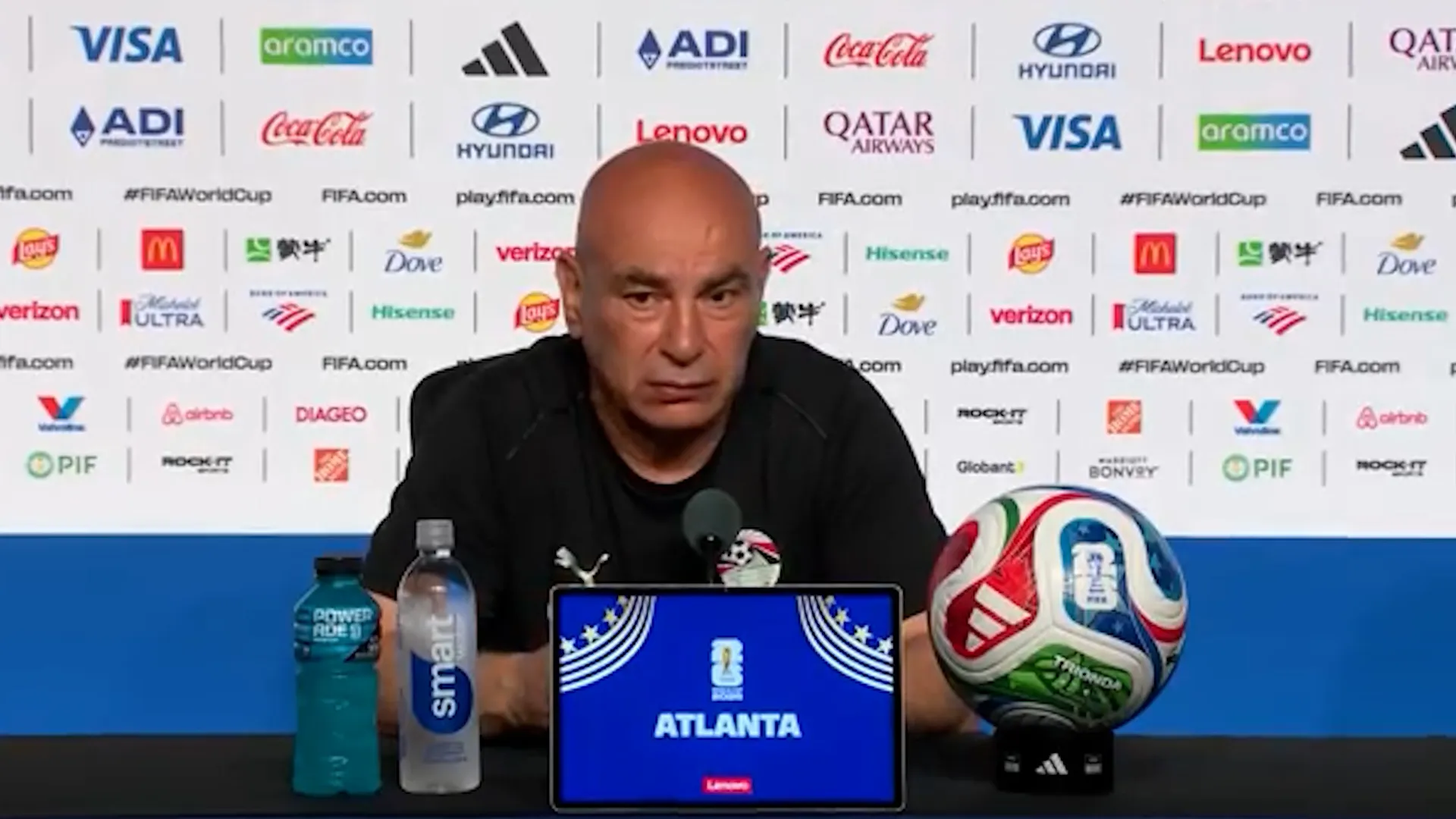
Egypt head coach Hossam Hassan has called for players and reporters at the World Cup to speak out about the killing of children in Gaza and Palestine. Hassan made the comments after his team’s controversial 3-2 defeat to Argentina in the last 16.

Source link

Venezuela: Rodríguez Announces Reconstruction Program, Decorates Foreign Missions

Dozens of brigades have deployed to inspect damaged buildings. (Presidential Press)

Mérida, July 7, 2026 (venezuelanalysis.com) – The Venezuelan government has launched a reconstruction program to recover damaged housing and infrastructure in the wake of the June 24 double earthquake.

Acting President Delcy Rodríguez oversaw the official launch of the Great Mission Venezuela Renace (“Venezuela reborn”) on Monday, with dozens of brigades simultaneously deployed to evaluate the condition of affected structures. Officials have estimated 190 flattened buildings and 856 with some level of damage.

“Venezuela is a seismic country and we have to ensure that, from a technical standpoint, families are protected from risk,” she said during a televised broadcast in Caracas. “This reconstruction is a task for the whole country, and it’s not just about infrastructure.”

Technical brigades will classify buildings using a traffic-light code, with green meaning they are safe to be occupied, yellow meaning that they require work before families can move back in, and red that they must be cleared for significant repairs or demolition.

On Sunday, the acting president appointed Jacqueline Faría to head the new government program. She will be “responsible for coordinating and leading housing and infrastructure recovery efforts to provide timely assistance to families affected by the earthquakes.”

During a meeting with governors from affected states, Faría detailed the mission’s first purpose as generating “a diagnosis for action.” The Venezuelan official underscored the need for an exhaustive structural census for reconstruction work.

Faría, who has held multiple cabinet posts since 1999, will be replaced by Francisco Garcés as minister of transport.

The new mission is going to unify the existing infrastructure-oriented social programs “Barrio Nuevo, Barrio Tricolor,” “Juntos Todo Es Posible,” and “Venezuela Bella” to execute repairs and allow families to reoccupy their homes as soon as possible. 

Rodríguez announced that an initial US $200 million fund, set up with resources frozen by the International Monetary Fund (IMF), will be used for the reconstruction and recovery of the affected areas.

During a Saturday meeting with her economic team, the acting president reported talks with public and private banks “to activate the mortgage portfolio,” adding that loans would be subsidized up to 80 percent. Rodríguez went on to announce the exoneration of fees and taxes related to property transactions and a temporary ban on the export of construction materials.

The June 24 twin earthquakes, with 7.2- and 7.5-magnitude and their epicenter near Morón, Carabobo state, have left an official death toll of 3,685 and more than 16,000 injured. The search for bodies continues to be a priority task for Venezuelan teams and volunteers, especially in the coastal La Guaira State where most of the building collapses are concentrated.

Coordination of these search and rescue operations has been transferred to Venezuela’s Civil Protection agency. Unofficial counts estimate over 40,000 missing people.

The United Nations Office for the Coordination of Humanitarian Affairs (OCHA) has noted a growing displacement of affected families from La Guaira to other regions and has warned of the “many needs” of the population.

The wind-down of the search and rescue operations to find survivors has seen most of the foreign specialized teams leave the country in recent days. Venezuelan authorities have acknowledged the role played by international brigades and decorated them.

On July 4, acting President Delcy Rodríguez decorated US rescue teams with “Hero of Venezuela” and “Canine Heroes of Venezuela” medals. During the ceremony, the acting president thanked the American people for their help, expressing her wish that the rescuers “carry in their hearts part of the Venezuelan people.”

US emergency rescuers included the Los Angeles USAR International Team and Virginia’s Urban Search and Rescue Task Force 1.

In addition to its emergency brigades, Washington also deployed hundreds of military personnel to the Caribbean nation following the natural disaster. US forces have taken control of operations at the Simón Bolívar International Airport and La Guaira port after executing repair works. Helicopters and surveillance drones are likewise flying daily over the capital and surrounding areas.

Venezuela’s earthquake recovery efforts have also seen the controversial arrival of a diplomatic and military delegation from Israel led by Home Front Command Chief of Staff Brigadier General Elad Edri.

The Israeli mission has held multiple meetings with Venezuelan officials and, according to Edri, was asked by the Rodríguez government to evaluate infrastructure conditions and formulate a reconstruction plan.

In a press conference, the acting president expressed her appreciation for the arrival of the “highly trained and professional” Israeli team.

Caracas and Tel Aviv have not held diplomatic relations since former President Chávez severed ties in 2009. Both Chávez and his successor Nicolás Maduro recurrently condemned Israel for genocide and excoriated its war crimes in Gaza and Lebanon.

The Maduro administration publicly endorsed South Africa’s activation of the Genocide Convention against Israel at the International Court of Justice (ICJ) in 2024.

Edited by Ricardo Vaz in Caracas.

Source link

Iran’s economy faces long road to recovery as fragile truce tested | US-Israel war on Iran News

Tehran, Iran – Three weeks after Iran and the United States signed a memorandum of understanding to extend their ceasefire, their truce remains fragile.

Three tankers have been hit in the Strait of Hormuz over the past two days, even as Iran and the US are expected to restart mediated negotiations to end the war next week, after the funeral of Iran’s Supreme Leader Ayatollah Ali Khamenei.

The US military on Wednesday launched large air attacks on Iran’s southern provinces, which prompted the Islamic Revolutionary Guard Corps (IRGC) and Iran’s regular army to fire missiles and drones on US interests in Bahrain and Kuwait. Both sides accused each other of violating the understanding signed last month.

But even if a long-term resolution is eventually reached and Western sanctions on Iran are lifted, analysts say that it will take time for the country’s economy to recover.

The economy has been strained by years of local mismanagement and corruption; stringent Western and United Nations sanctions; and, more recently, damage sustained from two wars in a year with the US and Israel, deadly nationwide protests in January, and internet shutdowns.

When numbers tell a story

A falling purchasing power has pushed millions into poverty. Inflation has recently climbed to levels not seen since World War II, when Allied forces occupied Iran, took over railways and food supplies, and contributed to a deadly famine.

The latest report by the Statistical Center of Iran for Khordad, the third month of the Persian calendar that ended on June 21, showed inflation increasing by 88.6 percent compared to the same month of the year before. Inflation was up by nearly 6 percent compared to the second month of the current year.

Food inflation was skyrocketing at almost 134 percent in Khordad compared to the corresponding month a year earlier, with oils and fats surging by more than 278 percent, red meat and poultry by over 178 percent, and bread and cereals by nearly 139 percent.

Unemployment is at 7.5 percent during the current calendar year, according to the latest report by the statistical centre released at the end of June. But labour participation is at just 40 percent, meaning that most working-age people are operating outside the official labour force – including students, retirees, those engaged in irregular informal work, and those not seeking paid work.
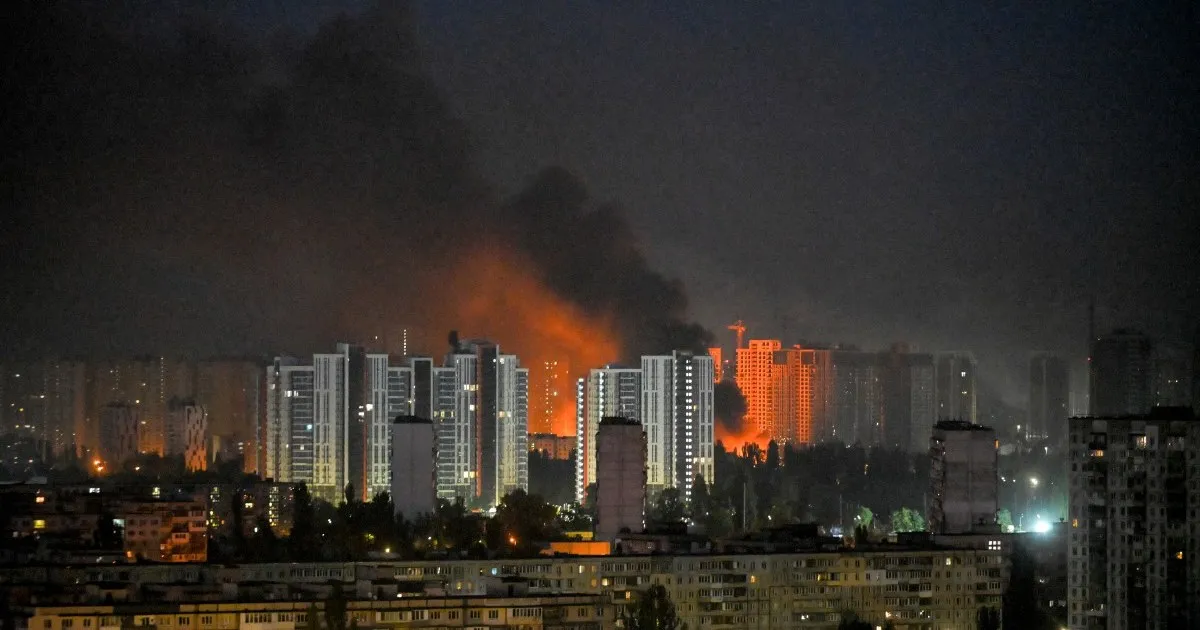
The job-quality picture is also grim, as salaries are perennially falling behind expenses, as over 38 percent of officially employed people work more than 49 hours a week, and as youth unemployment is at over 20 percent, the centre reports.

The base monthly minimum wage equals only about $95 using the current open market exchange rate of the US dollar in Tehran. The rate has climbed to 1.75 million rials per greenback over recent days, not far from its all-time low of 1.9 million in May.

The damage — and the road to recovery

Due to a heavy budget crunch, the only relief the government is able to offer amounts to a few dollars’ worth of monthly cash subsidy and electronic coupons for purchasing essential goods.

A late June report by the Central Bank of Iran for the previous calendar year that ended on March 20 showed that gross domestic product (GDP) growth for the year stood at minus 0.7 percent, and gross fixed capital formation, a primary indicator of productive capacity and economic growth, was at nearly minus 12 percent. Imports were down 16.6 percent, as were exports by close to 5 percent.

The damage from nearly 40 days of heavy bombardment during the war, the longest nationwide state-imposed internet shutdown in any country, and a US naval blockade of Iran’s southern ports — the full extent of which remains undisclosed to the public — has only exacerbated Iran’s economic woes. The International Monetary Fund has projected that Iran’s real GDP will shrink by 6.1 percent in 2026.

Still, Mahdi Ghodsi, a senior economist at the Vienna Institute for International Economic Studies, said that part of the recent job losses could be recoverable if there is a credible halt to military escalation, restoration of transport and logistics links, more predictable access to energy and fuel, and functioning internet and payment systems.

“In that case, some temporary layoffs in services, retail, transport, construction and small businesses could be reversed relatively quickly, because these activities are highly sensitive to uncertainty and disruptions rather than necessarily destroyed productive capacity,” he told Al Jazeera.

Longer-term challenges

But Ghodsi cautioned that part of the damage is likely to be more persistent.

“Where factories have lost machinery, inventories, imported inputs, workers, working capital, or access to energy, reopening is not simply a matter of returning to normal,” he said, adding that in some cases, full recovery may take years and require large investments, including foreign financing.

Last week, leading satellite imaging provider Planet Labs restored access to imagery for nearly 800 sites across Iran impacted during the war, after lifting earlier restrictions it had placed in response to a US government request to delay or suspend access.

Some Iranians on social media highlighted massive damage done to Iran Electronics Industries (SAIran), a state-owned defence industry heavyweight specialising in optics, communications, semiconductors and medical equipment, among other things.

But along with numerous military-linked sites and assets, and nuclear facilities built over decades now reduced to rubble, Iran’s industrial capacity and civilian infrastructure were also extensively targeted by US and Israeli warplanes and vessels during the war.

Oil and gas facilities, petrochemical and steel giants, electricity outposts, as well as maritime ports, airports, roads, bridges and residential units were significantly damaged.

Work on rebuilding facilities and recovering lost capacities has begun during the period of reduced military hostility over recent weeks, with some airports and industrial units restarting operations.

But a full recovery still appears distant and more destruction could still lay ahead. US President Donald Trump has repeatedly threatened extensive attacks against Iran’s electricity grid and infrastructure like bridges if the war resumes.

Economist Ghodsi said the government’s limited fiscal capacity remains one of the central problems, since the state has already faced struggles in financing not only regular expenditures and salaries, but also obligations across public and semi-public sectors. “This fiscal weakness has been one of the drivers of inflation, as budgetary pressures are partly shifted onto the banking system and the central bank through monetary financing,” he said.

Domestic fissures

Speaking at a state-organised event in Tehran last month, Iran’s President Masoud Pezeshkian expressed concerns about another nationwide protest as public discontent remains high.

“Our most important strength is our unity, and the unity of our people. What I fear is that we fail to serve the people right and they are dissatisfied and come to the streets to protest. Then our might collapses,” he said.

Senior officials spearheading the mediated talks with Washington have backed the process as the viable path to delivering a better economy to the suffering Iranian population.

But hardliners within the system, who perceive Iran to have attained a major victory against superior military powers during the war, continue to vociferously reject giving any concessions.

During Khamenei’s funeral procession in Tehran on Monday, Pezeshkian was filmed getting heckled by anti-deal mourners who demanded blood vengeance for the slain supreme leader and shouted “Death to the compromiser” and “Death to the traitorous homeland-seller”.

Source link

Russian fuel shortages bite – but will Putin change tack in Ukraine war?

If you want to get a sense of the fuel crisis gripping Russia, all you need to do is spend a day driving around Moscow. At almost every petrol station we passed there was a queue of cars and lorries. Some lines were long, some short; some static, others moving steadily.

If there was no queue, that meant the garage had run out of fuel entirely and was closed.

Remember: this is Moscow, the wealthy, populated capital that draws in so much of Russia’s vast resources. Even here the authorities cannot ensure there is enough petrol and diesel to keep Muscovites on the road.

Yet, in the queues, the mood was more frustrated than angry. Yekaterina told us she was “not happy” and there was “panic because everybody thinks there will be no oil”. But it would OK, she said, “we just need to reorganise the oil distribution”.

The situation according to Elmar was “very bad” and he complained prices were going up as fuel stocks ran low. “You are wasting hours to fill up,” he said. “At the moment I am planning a trip to Dagestan but I don’t know if I should drive there or not because there are so many problems with petrol.”

I asked him who was to blame. “In our country, you can’t say what is to blame and who is to blame,” he said, with a knowing smile.

In Russia, criticism of the president, or even the Kremlin, is not something most feel they can do in public.

Valery said it was strange having to queue in a country that extracts so much oil. He blamed the lack of Russian preparedness as much as Ukrainian missiles. “I have no desire to get used to queues,” he said. “I hope the situation will change soon and won’t be continued.”

So the war is coming closer to home for many across Russia.

President Vladimir Putin has worked hard to insulate most people from the consequences of what he calls his special military operation, now well into its fifth year. On the streets of Moscow, one can see little sign of the war, just a few posters about heroic soldiers.

Source link

Oil prices surge as US strikes Iran, reversing slide to pre-war levels | Oil and Gas News

Brent crude rises above $76 a barrel for the first time in two weeks amid renewed violence in Strait of Hormuz.

Oil prices have surged as renewed hostilities between the United States and Iran threaten to derail a fragile ceasefire that had brought some relief to global energy markets.

Brent crude, the main international benchmark, rose as much as 3 percent on Wednesday, reversing a slide that had seen prices return to pre-war levels.

Recommended Stories

list of 4 itemsend of list

Brent futures for September stood at $76.07 a barrel as of 04:00 GMT, the highest since June 23.

The jump came after the US launched strikes on Iran and revoked a temporary waiver of sanctions on Iranian oil, following attacks on three commercial vessels in the Strait of Hormuz.

US, Qatari and Saudi officials blamed Iran for the attacks on the vessels.

US Central Command said on X that it had begun “launching a series of powerful strikes against Iran to impose heavy costs for targeting and attacking commercial shipping crewed by innocent civilians in an international waterway”.

Tehran has not directly claimed responsibility for the attacks, but has repeatedly warned vessels against attempting to transit the waterway on routes it has not approved.

Iranian Deputy Foreign Minister Kazem Gharibabadi said earlier that Tehran would take “decisive actions to safeguard its national interests and security” in response to the revocation of the sanctions waiver, describing the move as a “blatant violation” of the memorandum of understanding (MoU) signed by Washington and Tehran on June 17.

Tony Sycamore, a senior market analyst at IG Australia, said the MoU’s language was deliberately vague regarding control of the strait and traffic management.

Disagreement between the US and Iran over whether the strait is an international waterway or partly Iran’s territorial waters was never fully resolved, Sycamore said.

“It remains to be seen whether this morning’s US strikes bring a swift end to the latest escalation or Iran elects to continue flexing its leverage over the Strait with actions that fall short of triggering a broader conflict,” Sycamore said in a note to clients on Wednesday.

“At the very least, it will keep markets on edge and does suggest crude oil prices have based for now.”

The US strikes followed a separate move by the US Treasury Department late on Tuesday to revoke its 60-day waiver on sanctions on Iranian oil.

The Treasury Department last month authorised the sale of Iranian oil until August 21 as part of broader negotiations with Tehran, but transactions will now no longer be allowed after 12:01am EDT (04:01 GMT) on July 17, according to a statement on the department’s website.

The new order also rescinds authorisation for any new transactions, including purchases or loading, after Tuesday.

Saul Kavonic, head of energy research at MST Marquee, said he expects oil prices to remain elevated as hazardous conditions persist in the strait and the release of emergency oil stockpiles wind down.

“Iran fully intends to cement its control over the Strait of Hormuz in the coming weeks, which is unacceptable to the US, many Gulf states and global customers, and could result in passage through the strait remaining below 50 percent of pre-war levels for many months with periodic flare-ups in hostilities,” Kavonic told Al Jazeera.

Source link

VAR call, Argentina win over Egypt raise questions of legitimacy at World Cup | World Cup 2026

The clamour surrounding the World Cup’s controversy involving US President Donald Trump and FIFA chief Gianni Infantino had barely died down when another arose in the aftermath of Argentina’s controversial 3-2 win over Egypt in the round-of-16 match in Atlanta.

As the defending champions staged a stunning comeback against the Pharaohs in the knockout match on Tuesday, questions were raised about an unusually late VAR call that saw Egypt’s second goal rescinded, followed by a chain of events that led to Argentina’s victory.

Recommended Stories

list of 4 itemsend of list

A day earlier, Trump had revealed that he had asked FIFA to review, and overturn, USA striker Folarin Balogun’s one-game suspension for a red card, and the governing body controversially obliged. The matter was dusted off by Belgium as they dumped the hosts out of the tournament with a 4-1 win in the match Balogun was initially suspended from but ended up playing – to no avail.

Trump watch on the World Cup

While the anger surrounding FIFA’s red-card decision was directed at both the football governing body and Trump, Egypt’s outburst was solely aimed at the organisation, which, according to Egypt’s manager, had “wanted to keep the world champions in the competition”.

Head coach Hossam Hassan speculated that match officials had been put under pressure to ensure that one of the biggest names, Argentina’s Lionel Messi, stayed in the tournament.

“Perhaps they wanted Messi to stay in the running,” Hassan told beIN Sports after the match.

“In football, there are sometimes external factors that go beyond the technical aspects. The world champions received support at every level.”

While the tournament has been no stranger to the political spotlight of questionable integrity, experts say the lines between sport and politics have been blurred even further.

“After the Balogun affair, who knows which decisions are legitimate and can be trusted, and which can’t?” Simon Chadwick, professor of Afro-Eurasian sport at the Emlyon Business School in Shanghai, told Al Jazeera.

“If the Trump administration is maintaining a watching brief over the tournament, it’s worth remembering: Argentina’s president, Javier Milei, is a staunch Trump supporter.”

Trump and his Argentinian counterpart share a close relationship. Milei is a regular feature at pro-Trump political gatherings in the United States, and Trump has described Argentina’s far-right populist leader as his “favourite president”.

Chadwick also opined that Hassan’s vociferous support for Palestine at the World Cup could have prompted some officials to “have built-in biases when making decisions”.

Hassan dedicated part of his pre-match news conference on Monday to making an impassioned plea for the people of Palestine, especially those in the besieged Gaza Strip.

Advantage, Argentina

Circling back to the VAR call that sliced Egypt’s lead in half and was followed by decisions that conveniently favoured Argentina, Chadwick said the period of play was “unusual”.

He wondered why the referee had not called a foul in real-time that VAR picked up several moments later and only once Egypt scored their second goal.

“There was something distinctly unusual about the goal and VAR decision, something that was amplified when Argentina scored one of its goals,” Chadwick said, questioning refereeing standards in the match.

“In the build-up, an infringement was perpetrated by an Argentina player, which could have been interpreted as a similar offence to that supposedly committed earlier by the Egyptian player. At the very least, refereeing standards during the game were somewhat inconsistent, although critics are clearly making much more serious claims.”

But while many social media commentators and football experts were outraged at the decisions – Portuguese football icon Jose Mourinho reportedly termed the match “daylight robbery” – some football experts said it was a closer call.

“Robbed might be a strong word,” football analyst Ali El Garni said.

“I’d say decisions made by both the referee and VAR could have gone either way, and Argentina benefitted from all the 50/50 incidents.

“The incident leading to the Egyptian disallowed goal was an indisputable foul. The question is how far VAR should go back to check the legitimacy of a goal,” said El Garni, who has extensively reported on European and North African football.

However, he did wonder if VAR would have been involved had the scoreline been 2-0 in Argentina’s favour instead.

“Would the goal have been disallowed had it been scored by Argentina? It’s unlikely,” he said.

“What’s making it worse for Egypt is the fact that a similar incident involving what appeared to be a foul on [Mohamed] Salah took place before Argentina’s third goal, and VAR didn’t intervene,” he said.

Meanwhile, Chadwick questioned why VAR officials had raised the issue if the on-field officials did not call a foul when Egypt‘s Marwan Attia lightly tugged the shirt and stepped on the foot of Lisandro Martinez.

A logical solution to the VAR issue, Chadwick proposed, would be “for fans and viewers to listen to an assessment of the alleged offence, hear the various arguments, and have a clear insight into the basis for a decision”.

Chadwick admitted that although Egyptian players should not have become overwhelmed with emotion, “a sense of injustice was induced by the VAR decision”.

“This technology was supposed to minimise doubt and bring consistency. Instead, its use during this match had significant cognitive and behavioural effects,” he said.

“Indeed, rather than brandishing cards and inflaming the situation even further, the referee should have used his discretion and judgement to defuse the situation.”

While Chadwick dismissed rumours of match-rigging in favour of Messi and Argentina, he acknowledged the pull of the iconic footballer’s star power.

“There is no doubt that Messi is a box office attraction the tournament really can’t afford to be without.”

Source link

US launches strikes on Iran after tankers hit in Strait of Hormuz

Qatar and Saudi Arabia also denounced the attacks, each saying a tanker from its country had been hit while transiting in or near the strait, and blaming Iran.

Qatar’s foreign ministry spokesperson Majed Al Ansari said it held Iran “fully responsible” for an apparent targeted attack on a vessel called Al-Rekayyat as it transited near the strait.

Qatar demanded that Iran “immediately cease all practices that undermine regional security” and “refrain from endangering global energy supplies & the resources of the countries of the region in pursuit of narrow interests”, he added in a post on X.

In a separate social media post, Saudi Arabia’s foreign ministry said Iran had targeted the Saudi tanker Wadyan as it crossed the strait.

It added that the assaults were “an attack on the security and safety of international navigation, and the security of global energy supplies”.

Iran’s foreign ministry spokesman Esmail Baghaei described Qatar’s accusations as “contrary to the principle of good neighbourliness”.

In a statement, posted to Telegram, he added that commercial vessels using routes not co-ordinated with Iran or tampering with the ship’s tracking face a risk of collision and disrupt Iran’s efforts to “facilitate safe transit” in the strait.

The UKMTO said a tanker travelling through the strait had reported a fire after an unknown projectile hit an engine room on Monday.

In two separate incidents on Tuesday, a tanker reported being hit as it exited the strait but was able to proceed to its next port of call, while another tanker reported sustaining minor structural damage after being struck, the organisation said.

The US-Iran memorandum of understanding, agreed last month, extended a ceasefire between the two countries.

The 14-point agreement would put an end to all conflict “on all fronts”, says that Iran will never have a nuclear weapon, and also commits a $300bn (£220bn) fund for the “reconstruction and economic development” of the country – although the US is not required to contribute.

As part of the agreement Iran and Oman, which both border Hormuz, must hold talks “to define the future administration and maritime services” in the waterway with other Gulf states.

Tehran effectively closed the Strait of Hormuz, through which about a fifth of the world’s oil and gas supplies are usually transported, following US and Israeli strikes on 28 February.

During the conflict Iran sought to assert its sovereignty over the strait, including by establishing the “Persian Gulf Strait Authority” which it said would manage “safe passage permits”.

Iran’s Fars news agency has reported that under the new deal with the US the strait would ultimately be managed by Iran in co-ordination with Oman, including possible “service fees” for ships to transit the waterway.

Source link

Congolese Forces Push to Retake Villages from M23 Rebels 

The armed forces of the Democratic Republic of Congo (DRC) have launched a large-scale drone offensive to reclaim towns and villages seized by M23 rebels in the South Kivu province.

The targeted areas are in the plateau regions of Fizi, Uvira, and Mwenga, where intense fighting is currently underway between the M23 fighters and the DRC forces. Supported by the Wazalendo, a militia group in the country, the Congolese army claimed to have retaken several villages in the areas surrounding Minembwe, particularly Point Zero and Rugezi, both in South Kivu.

On July 7, Reagan-Mbuyi Kalonjo, spokesperson for Operation 2 Sud Sud-Kivu, stated that Congolese forces recaptured the strategic positions of Kimete, Kihene, and Kashamata. “Elements of the M23/AFC-Twirwaneho-RDC-Red Tabara rebel coalition have been constrained to withdraw towards Rugezi and Bigaragara to the south of Minembwe,” Reagan-Mbuyi revealed.

The ongoing conflict happens to be in a region with poor telephone coverage, which delays access to information from independent sources. The Congolese national army has condemned the M23 drone bombardment on the village of Bidjaga, located east of Point Zero, as well as other densely populated villages. This attack resulted in ten deaths, according to an army communiqué.

The ongoing conflict between M23 rebels and the Congolese armed forces has intensified in the South Kivu province of the DRC. M23, a rebel group that claims to represent the interests of the ethnic Congolese Tutsi population, has sought to expand its control over strategic territories in the region, leading to violent confrontations with the Congolese army. The DRC forces, supported by the local militia group Wazalendo, have recently been deploying drone technology to reclaim towns and villages that have fallen under M23’s control. 

The conflict has also drawn international attention due to its humanitarian implications, as civilian populations in the affected areas face severe risks. Despite the complexities of warfare in a region marked by poor communication infrastructure, the clashes have been continuous, exacerbating the already precarious security situation for locals and creating a pressing need for humanitarian assistance.

Source link

Russian missiles strike Ukraine’s capital, Kyiv, for third time in a week | Russia-Ukraine war News

DEVELOPING STORY,

The attacks have triggered fires in two districts of Kyiv, according to the city’s mayor.

Russian missile attacks have struck Kyiv in the third large-scale assault on the Ukrainian capital in less than a week.

Early on Wednesday, Kyiv Mayor Vitali Klitschko said in a statement on Telegram that the Russian strikes had triggered fires in two districts of the city. It is not clear if there have been any casualties or damage.

Recommended Stories

list of 3 itemsend of list

Moscow also launched a large-scale attack on Kyiv on Monday, killing at least 14 people and damaging at least a dozen buildings.

Both Russia and Ukraine have recently expanded their use of long-range weapons, including missiles, marking a new front in Moscow’s four-year war.

Ukraine has focused its attacks on Russian energy facilities to weaken its war efforts.

Ukraine said on Tuesday that its drones attacked a dozen tankers from Russia’s “shadow fleet” over the past two days that were delivering fuel to Moscow-occupied Crimea. Kyiv’s military said they had struck eight vessels subject to sanctions in the Sea of Azov, each with a deadweight of about 7,000 metric tonnes. Two more tankers were hit later in the day.

The Sea of Azov is a key supply route for Russian forces in Crimea and other occupied parts of southern Ukraine.

Russia annexed Crimea in 2014 – in a move that has been unrecognised internationally – eight years before launching its full-scale invasion of Ukraine.

Moscow has not publicly commented on this week’s attacks on Ukraine, which also included strikes on electrical substations, radar systems, and missile installations.

Attacks amid NATO Summit

The latest exchange of fire between Russia and Ukraine also comes amid NATO’s annual summit, which began on Tuesday. The military alliance’s leaders have gathered in Turkey’s capital Ankara for the two-day summit, where defence spending and the Russia-Ukraine war is under discussion.

NATO is expected to pledge further military support for Ukraine, as President Volodymyr Zelenskyy urges the alliance to step up aid for the country’s air defences following a deadly escalation of Russian attacks on Kyiv.

Zelenskyy – who has renewed his call for Ukraine to be allowed to join the alliance – wrote on social media on Tuesday that he had signed new agreements with Estonia, the Netherlands, and Denmark in Ankara.

The deals create “new opportunities for joint production, the development of innovative defense technologies, systematic exchange of expertise, and the export of Ukrainian battlefield-proven solutions”, he said.

Further agreements are expected with Germany, Norway, Finland, and Canada.

US President Donald Trump is also expected to meet Zelenskyy on the summit sidelines on Wednesday, having spoken with Russian President Vladimir Putin ahead of the NATO gathering.

Asked about Russia’s war in Ukraine, Trump said he hoped it would be settled “soon”.

“I think they both want to make a deal,” Trump said.

“It’s too bad it took so long, but I think something’s going to come out.”

Source link

Egypt were ‘cheated’ in World Cup loss to Argentina, coach Hassan says | World Cup 2026 News

‘Perhaps they wanted to keep the world champions in the competition,’ Hassan said after his team was knocked out.

Egypt coach Hossam Hassan claims his side was “cheated” out of a place in the World Cup quarterfinals after Argentina staged a stunning late comeback from 2-0 down to win 3-2 in a gripping last-16 match in Atlanta.

The Pharaohs started as underdogs but took the lead against the world champions within 15 minutes, which was doubled in the second half before Argentina walked away with the win on Tuesday.

“I do not want to put it nicely and talk about hard luck. We have been cheated unfairly today; we have suffered injustice,” Hassan said in an explosive post-match news conference.

Egypt had a Mostafa Zico goal ruled out when they were leading 1-0 as the Video Assistant Referee (VAR) intervened to spot a foul on Lisandro Martinez much earlier in the move.

Zico did then put Egypt on the brink of a place in the last eight for the first time by doubling their lead.

However, the defending champions hit back as Cristian Romero reduced the arrears before Lionel Messi, who had a first-half penalty saved, smashed in the equaliser with his eighth goal of the tournament.

The controversy did not end there, though, as in the buildup to Argentina’s winner scored by Enzo Fernandez, Egypt believe they should have instead been awarded a penalty for a pull by Alexis Mac Allister on Hamdy Fathy.

“We haven’t seen respect or fair play. There has not been respect or fair play,” Hassan said.

“A penalty was ruled out, was not even checked by VAR. A second goal was remarkably disallowed. There has not even been a VAR check when we have all seen the image of the [shirt] being pulled back.”

Hassan said he would not watch any more matches of the tournament, such was the injustice he felt.

“I am not going to continue following the matches of this World Cup,” he added.

“This is my own way of speaking up.”

Egypt's head coach Hossam Hassan speaks with French referee Francois Letexier during the 2026 World Cup round of 16 football match between Argentina and Egypt at Atlanta Stadium in Atlanta on July 7, 2026. (Photo by ROBERTO SCHMIDT / AFP)
Hassan speaks with referee Francois Letexier [Roberto Schmidt/AFP]

‘They wanted Messi to stay’

After Yasser Ibrahim’s header put Egypt in front, Argentina were awarded a penalty for a trip on Nicolas Tagliafico.

Messi’s problems with World Cup penalties continued as his effort was saved by Mostafa Shobeir.

The eight-time Ballon d’Or winner has now failed to score four of his eight non-shootout spot-kicks at the World Cup, including two misses at this tournament.

Hassan speculated that the officials had been put under pressure to keep one of the biggest names in the competition.

“Perhaps they wanted to keep the world champions in the competition. Perhaps they wanted Messi to stay in the running,” he told BeIN Sports.

“In football, there are sometimes external factors that go beyond the technical aspects. The world champions received support at every level.”

Egypt had been surprisingly attacking early on in the game, a departure from Hassan’s usual tactic of playing with a tight defence and looking for counterattack opportunities.

It helped them take an early lead, but it was the heroics of goalkeeper Mostafa Shobeir that ensured they remained in front by half-time.

“I’m very, very satisfied with the effort they put in. Most of our players come from the Egyptian domestic league, while many players in other national teams are based in Europe and live in that professional environment,” Hassan added.

“Yet with predominantly local players – besides Mohamed Salah and Omar Marmoush – we were able to compete with anyone.”

Hassan also complained about the scheduling of the match for a noon kick-off (16:00 GMT), just four days after both sides had won their round of 32 matches.

“Whoever schedules those matches has never played football. You never schedule a game for 12pm. At noon you go for a walk or to eat brunch; you do not go to play football.

“When are the players supposed to eat? At 7:30am?

“There have been a lot of things to be questioned on and off the pitch.”

Source link