Alexander, who signed a two-way deal with the Jazz last week. was injured in game against Chicago Bulls.
Published On 14 Jul 202614 Jul 2026
Utah Jazz guard Trey Alexander was taken from the court on a stretcher after appearing to injure his side on a drive to the basket in an NBA Summer League game against the Chicago Bulls.
Alexander, who signed a two-way deal with Utah last week, made contact with the Bulls’ Caleb Wilson during Monday night’s match while driving towards the basket. After tossing the ball towards the hoop, he went behind the basket, clutching his side or abdomen. He then dropped to the ground, appearing to be in great pain.
Recommended Stories
list of 4 itemsend of list
The 23-year-old was taken from the Thomas & Mack Center court on a stretcher. The incident occurred with just more than two minutes left in the fourth quarter.
There was no immediate word from the Jazz on Alexander’s injury.
Alexander played three seasons at Creighton University and skipped his final year of eligibility to turn pro. The rookie of the year in the G League, the NBA’s minor league, for the 2024-2025 season played 24 games for the Denver Nuggets that same season and nine games for the New Orleans Pelicans last season.
Under his current contract, Alexander is to play for the Jazz and its G League affiliate, the Salt Lake City Stars.
The United States carried out attacks against Iran for a third consecutive night late on Monday.
Iran has continued to hit targets in the Gulf in several waves of retaliatory strikes on Tuesday, including UAE‑flagged oil tankers in the Strait of Hormuz and US military facilities in Bahrain and Kuwait.
Here is a recap of what has happened on Monday night and Tuesday, and what each side has said.
Where did the US attack Iran?
US Central Command, the military’s regional command known as CENTCOM, said its latest strikes began at 4:45pm ET (20:45 GMT) on Monday and were aimed at degrading Iran’s capacity to attack “innocent civilians and commercial shipping” in the strait.
CENTCOM later announced the conclusion of its strikes and said the latest round of attacks on Iran lasted five hours. It added that US forces “successfully struck military targets across Iran including Bushehr, Chah Bahar, Jask, Konarak, Abu Musa, and Bandar Abbas”.
Iranian state television and semi-official news agencies reported explosions throughout the night across the country’s southern coast, including the port city of Bandar Abbas, and on Kish and Qeshm islands, as well as the town of Jam in Bushehr province.
A projectile that struck western Bandar Abbas caused no casualties, the Fars news agency reported, citing the regional governor’s office.
What areas did Iran target?
For its part, Iran’s Islamic Revolutionary Guard Corps (IRGC) said it had launched a wider retaliatory campaign against US allies and interests across the Gulf.
Iran’s Tasnim news agency reported that Iranian forces had struck several “violating” vessels in the strait, and that a US-made drone had been shot down near Bandar Abbas.
The UAE: The UAE said two of its oil tankers had been hit by Iranian cruise missiles in Omani waters in the Strait of Hormuz. The UAE added that one Indian national crew member had been killed on one of the tankers, and eight other people were wounded.
Iran’s Tasnim news agency said the IRGC hit two “offending” oil supertankers, citing an IRGC statement – apparently referring to the two UAE tankers.
Kuwait: The Iranian army said on Monday that it had carried out a drone attack on US military targets in Kuwait. In a statement posted by state broadcaster IRIB, the army said it launched drones at a US Patriot missile system, fuel tanks, a watchtower, an ammunition depot and communication systems.
Bahrain: The IRGC said it targeted “several weapons storage depots, a satellite communications centre, and a building housing US forces” at al-Juffair Base in Bahrain. It also said it had hit the US Fifth Fleet in Bahrain with missiles and drones.
Air sirens have been heard four times in Bahrain on Tuesday so far.
Jordan: Jordan’s army said it shot down four missiles in Jordanian airspace that were fired from Iran, according to the official Petra news agency. After this, the IRGC said it launched ballistic missiles at US forces and key facilities at an airbase in Jordan.
In a message addressed directly to Jordanians, the IRGC insisted that the operation was aimed at the US military presence in the country rather than at Jordan or its citizens. “You know that we hold no animosity toward your country. On the contrary, we deeply love you, the noble people. You understand the pain and suffering of the Palestinian people better than any other nation, and you are aware of the crimes of the Zionist regime in the massacre of 70,000 Palestinians, including 20,000 children in Gaza, carried out with the direct involvement of the United States,” it said.
What have the US and Iran said?
US President Donald Trump formally notified Congress on July 10 that fighting with Iran had resumed on July 7, invoking his authority to keep US forces in combat for another 60 days without lawmakers’ approval.
At a news conference on Monday, Trump said Iran’s offensive capabilities were being dismantled, but he still thinks a “deal is possible” despite the return to open fighting.
Trump also repeated an earlier demand that Gulf nations help cover the cost of protecting shipping, saying Washington was “protecting a very rich portion of the world” and expected to be paid for it.
On Monday, Trump also threatened to “take out” Kuh-e Kolang Gaz La, also known as Pickaxe Mountain, a suspected nuclear site near the Natanz uranium enrichment facility in central Iran.
Meanwhile, the US blockade on Iran, confirmed by the US Navy-led Joint Maritime Information Centre (JMIC), is due to begin at 20:00 GMT on Tuesday.
The US’s blockade covers Iran’s ports and terminals along the entire southern coastline, according to JMIC.
Ebrahim Azizi, the head of the Iranian Parliament’s National Security Committee, has warned that Iran remains steadfast in defending its red lines, following the formal introduction of a bill to manage the Strait of Hormuz.
In an X post on Tuesday, Azizi wrote: “Last night, coinciding with the downing of US drones, the ‘Strategic Action for the Security and Sustainable Progress of the Strait of Hormuz and the Persian Gulf’ bill was formally introduced in Iran’s Parliament. We remain steadfast in defending our red lines, particularly regarding the management of the Strait of Hormuz.”
What is happening to shipping in Hormuz?
Oil prices rose more than 9 percent on Monday, with Brent crude climbing to about $81 a barrel, its highest level since mid-June.
Kpler, the ship-tracking firm, said crossings through the strait fell by about 52 percent between July 10 and July 12, compared with the previous week.
Weekly insights and analysis on the latest developments in military technology, strategy, and foreign policy.
The U.S. Army has announced that its future fleet of ME-11B High Accuracy Detection and Exploitation System (HADES) aircraft will be based at Fort Hood in Texas. The service says it will also establish a first-of-its-kind operational drone battalion at this base as part of a larger consolidation of aerial intelligence, surveillance, and reconnaissance (ISR) assets. This all follows the Army’s retirement of the last of its turboprop ISR planes last year.
The Army shared the ME-11B basing plans in the context of the relocation of the 116th Military Intelligence Brigade, headquartered at Fort Gordon in Georgia, to Fort Hood. That process is now underway. The most recent iteration of the 116th has been serving as the Army’s main aerial ISR formation since 2014. Over the past 12 years, the brigade has also overseen units at several other bases across the country, including ones already at Fort Hood.
The Army is currently expecting to take delivery of the first ME-11B prototype before the end of the year. The service is also in the process of acquiring two additional prototypes. The Army plans to buy at least six production examples, but this number could grow in the future. The HADES jets are being converted from Bombardier Global 6500 business jets.
A look at the first Bombardier Global 6500 business jet set to become an ME-11B High Accuracy Detection and Exploitation System (HADES) aircraft. Bombardier
“The move, authorized on March 3, 2026, by then-Chief of Staff of the Army General Randy George, positions the brigade to lead the deployment of the Army’s High Accuracy Detection and Exploitation System (HADES) marking a pivotal step in the modernization of the nation’s global aerial intelligence, reconnaissance, and surveillance (AISR) capabilities,” according to an Army release today. “This relocation consolidates and redesigns the Army’s only fixed-wing AISR brigade to better support multi-domain and large-scale combat operations globally.”
Fort Hood is one of the largest Army facilities anywhere globally. It has its own airstrip, Robert Gray Army Airfield, which is collocated with Killeen Regional Airport. Signs that the ME-11Bs would be based there had already emerged last month with a contracting notice regarding planned work on hangars at this airfield, specifically to accommodate the new jets.
A satellite image of Robert Gray Army Airfield, situated at the southern end of Fort Hood, and collocated with Killeen Regional Airport. Google Earth
The Army sees HADES as a critical part of a broader paradigm shift in how it will provide aerial ISR support going forward. The ME-11Bs fly higher, faster, and farther, than any of the now-retired turboprop types the Army previously operated. As such, the HADES aircraft will be able to get to and from operating areas faster, and stay on station longer. Compared to their predecessors, the jets’ onboard sensors and datalinks will have better lines of sight from their perches, too. That higher operating ceiling allows the aircraft to use a slant angle to peer deeper into denied areas while still flying in international airspace and further away from potential threats.
The RC-12X Guardrail Common Sensor (GRCS) seen here is one of the turboprop platforms the Army retired last year as part of its larger aerial ISR modernization efforts. US Army An RC-12X Guardrail Common Sensor aircraft. U.S. Army
The concepts of operations for HADES, as the Army has described them publicly so far, also envision the planes launching extremely long-range drones. With ranges of around 620 miles (1,000 kilometers) or more, the idea is that the drones will dramatically extend the sensor reach of their launch platforms, and keep them further away from hostile air defenses. The service says the air-launched drone capability will offer a way to provide a penetrating intelligence-gathering capacity able to support future high-end operations without the need for a very stealthy or otherwise extremely costly platform.
“In 70 or 80 years, there would be 0.1% of the time when you wouldn’t be able to fly ISR [intelligence, surveillance, and reconnaissance missions] because you would be afraid of the threat, potentially, or the threat would be too high to fly,” Andrew Evans, Director of Strategy and Transformation with the Office of the Deputy Chief of Staff of the Army, or G-2, explained to TWZ and other outlets at the Army Aviation Association of America’s (AAAA) 2026 Warfighting Summit in April. “That means that 99.9% of the time of a life of the system, it is a useful system for deterrence, for building pattern of life, target development, and so on and so forth. So we’re building a system that can be used for 99.9% of the useful life of the system.”
“There will be nothing in the world that we can’t touch with a combined range of HADES and what we can launch off of this thing,” Evans added. “I don’t think anybody’s safe in the future from a sensing perspective.”
Evans offered additional details about plans for HADES, and hinted at additional advanced capabilities planned for the jets down the line. Each jet will have two hardpoints under each wing for external stores, which could include pods with additional sensors or other systems. You can read more about all of this here.
A rendering of a HADES jet showing it carrying stores under its wings. US Army
Significant questions about the Army’s HADES plans do still exist, including when it comes to filling capacity gaps left by the retirement of dozens of turboprop ISR aircraft. As noted, the service currently plans to acquire just six production HADES jets on top of the three prototypes. This is down from the original expected fleet size, which was still just a dozen aircraft.
The Army does envision a future aerial ISR ecosystem that includes other assets, including high-altitude balloons. Those lighter-than-air platforms could take on other missions, as well, and even be able to deploy swarms of uncrewed aerial systems. The service has also been at least been experimenting with high-altitude, extreme-endurance drones. Space-based ISR assets are set to play an ever-more-important role across the U.S. military, too.
A graphic the Army previously released showing a notional “operational view” for how a future ISR ecosystem that includes crewed fixed-wing aircraft and other assets might be employed in conjunction with other forces. US Army
The potential for new drone developments brings us back to the Army’s additional plan to stand up what it is currently calling simply the Unmanned Aircraft System (UAS) Battalion at Fort Hood.
“The companies merging to form the UAS Battalion are currently engaged in global operations, and their consolidation will enhance the brigade’s agility, deployability, and lethality,” the Army’s release today says. “The 116th MIB (AI) remains the Army’s sole unit deploying small, tailored forward elements to launch UAS remotely operated from home station, significantly reducing sustainment and mobility costs.”
The 224th Military Intelligence Battalion, currently based at Hunter Army Airfield, which is part of Fort Stewart in Georgia, will at least form the core of the new drone formation.
“Following the divestment of its manned fleet, the 224th Military Intelligence Battalion strategically pivoted to focus entirely on unmanned aerial intelligence. This transition aligns with the U.S. Army’s new force structure, under which the 224th is designated to become the first unmanned aerial system battalion in the Army,” according to the unit’s official website at the time of writing. “This new chapter includes a change of station from Hunter Army Airfield, Georgia, to Fort Hood, Texas, scheduled for completion by 2027. The move will consolidate the entire 116th Military Intelligence Brigade in a single location, enhancing its operational capabilities.”
“The newly formed battalion will consist of a Headquarters and Headquarters Company, two [MQ-1C] Gray Eagle companies, and one processing, exploitation, and dissemination (PED) company,” the 224th’s official page adds. “These strategic initiatives position the 224th at the forefront of the future of Army aerial intelligence.”
A stock image of a US Army MQ-1C Gray Eagle drone. US Army
However, it is unclear from the details in the Army’s release today whether personnel or assets from other existing units might be part of the “merging” that forms the new UAS Battalion. The formation could grow further in the future. The service says the overall consolidation of the 116th Intelligence Brigade is set to bring 1,228 additional personnel to Fort Hood from Fort Gordon, Fort Stewart, and Fort Bliss (also in Texas), between now and Fiscal Year 2028.
The Army’s aerial ISR ecosystem is certainly in the midst of a major watershed moment, with HADES being just one part of the future equation. Fort Hood is also now set to be the focal point for those plans as they continue to evolve.
“The key to the future of Aerial ISR is the consolidation at Fort Hood of the mighty 116th!” Army Maj. Gen. Timothy Brown, head of the service’s Intelligence and Security Command (INSCOM), said in a statement per the release today.
Central to that consolidation effort, and the broader future of Army aerial ISR, will be the arrival of new HADES jets at the base in Texas.
Madrid, Spain – Badr Tmairi, 22, from Morocco, has spent six years living in Spain without legal status. He arrived at 16, alone, without his family. He held legal residency briefly after turning 18, but lost it when he failed to renew it in time.
“What I want is to get my papers back so I can work as a hairdresser and travel to visit my family in Morocco,” he said.
Recommended Stories
list of 4 itemsend of list
Tmairi is one of more than a million people who have now applied for regularisation under a new scheme that contrasts with a growing European trend against irregular immigration.
He has been homeless for the past year. Without documents, finding work and decent housing in Spain is difficult.
“It’s very encouraging to know that so many people submitted an application and are trying to regularise their situation, but that huge number is also proof that the state has failed in its duty to protect the most vulnerable,” Edith Espinola, president of the Active Domestic Workers’ Service Association (SEDOAC) and spokesperson for the Regularizacion Ya (Regularisation Now), told Al Jazeera.
Regularizacion Ya, a collective made up of migrants, has led the push for regularisation since 2020. The measure grew out of a broad social consensus and has been backed by civil society organisations, the Catholic Church, trade unions and business associations.
Living without legal status, Espinola said, condemns people to social exclusion, as it has for Tmairi. Without rights or protection from abuse, they are unaligned with most of the rest of the population.
The new initiative, Spain’s first regularisation process since 2005, began in April and closed on June 30. The government now has three months to resolve the vast majority of the applications submitted.
Of the 1,174,978 applications, according to the Ministry of Inclusion, Social Security and Migration, only 11,000 have received a favourable resolution so far. About 608,000 have been accepted for processing, granting provisional residency and work permits until a final resolution.
‘All I want is to work’
Rocio Neciosupe, 54, is a Peruvian migrant who has spent two years without legal status in Spain. “Regularisation isn’t a handout; all I want is to work. To work without fear and with rights, so that if I fall and I’m sick, I don’t have to go to work that day and can still get paid, like anyone else,” she said.
Neciosupe, a cleaner in private homes, is busy across six different buildings around Madrid. But she is currently recovering from a back injury sustained in a fall at work. Without documents or a contract, she has no right to sick leave.
Unable to afford to lose her income while she recovers, her husband accompanies her to work each day and helps her with tasks she cannot manage alone.
Rocio, her husband and their two daughters, aged 22 and 17, have all had their regularisation applications accepted for processing and are now awaiting a favourable resolution.
“I want to support the country I live in, and if the country grows, we grow too,” Neciosupe added.
It is precisely in the contribution and growth potential of people like her that the Spanish government has framed its case for the measure.
“By 2050, Spain’s GDP would be 19 percent lower, 90,000 bars would close, 50,000 classrooms would shut and 220,000 farms would disappear,” Prime Minister Pedro Sanchez said recently in a public address.
Gonzalo Fanjul, director of ISGlobal’s policy and development team and head of Research at the porCausa Foundation, said: “If you look at what’s happening in the United States, there are already estimates of the impact of the government’s violent, hostile anti-migration policies. Whole economic sectors are struggling to keep functioning.”
One of those sectors is care work. With an ageing population, Spain needs trained workers to fill positions in that sector, among others.
Josselyn Aguirre, originally from Ecuador, works as a carer for a family in Madrid [Courtesy of Josselyn Aguirre]
Josselyn Aguirre, 32, is one of those workers. A nursing assistant, she migrated from Ecuador to Spain in 2024. Her original plan had been to move to the United States, but her visa application was rejected.
“My goal is to stay and help older people. I really enjoy working with them,” she said.
“Here, in my country and in other countries around the world, this sector is collapsing due to a shortage of staff. That’s why I believe that being able to regularise your status and contribute as a professional benefits everyone,” she told Al Jazeera.
Migrants and refugees who applied for regularisation had already been living in Spain, working in the informal economy for years; 57 percent are men, most come from Latin American countries, and six out of 10 are below the age of 34.
So far, 159,097 additional people have registered with the Social Security system as a result of the regularisation process.
With this measure, “Spain has made a bet on growth. We’re going to be a country of 50 million people,” Fanjul said. “But it’s not enough.”
Amid a European political climate in which anti-migration rhetoric appears to be gaining ground, Spain’s approach shows another path is possible, though “regularisation is only the beginning”, Fanjul said.
“The system has been reset, but none of the underlying reasons that brought us to this point have been resolved.
“For the state to open up legal, safe and orderly channels for labour mobility is simply common sense,” he concluded.
Espinola is in no doubt.
Despite criticism from those opposed to the regularisation, she stressed, “We have come out stronger. The migrant community has once again shown its capacity for mutual support in difficult situations.”
The regularisation process is not yet over, she added: “We will remain vigilant to make sure the more than a million applications submitted are processed properly.”
Al Jazeera put nine leading AI models to the test to predict the 2026 FIFA Men’s World Cup champion.
Published On 14 Jul 202614 Jul 2026
As the 2026 FIFA Men’s World Cup enters its final stages, AJLabs asked nine leading AI models to predict the tournament’s final podium based on all available data for each team, including:
Team strength
Squad quality
Coaching
Historical performance
Team’s performance during the current tournament
France emerged as the favourite to lift the trophy, receiving five (Gemini, Grock, DeepSeek, Le Chat and Qwen) of the nine champion votes.
Argentina, the defending world champions, received the remaining four votes (ChatGPT, Claude, Copilot and Meta AI).
France’s forward #10 Kylian Mbappe celebrates scoring his team’s first goal during the 2026 World Cup football tournament quarterfinal match between France and Morocco at Boston Stadium in Foxborough on July 9, 2026 [Odd Andersen/AFP]
Predictions for the runner-up were more divided: France and Argentina each received three votes, followed by England with two and Spain with one.
Spain was the clear favourite to finish third, receiving six of the nine third-place predictions, while England and France each received fewer votes.
Lamine Yamal celebrates after the match as Spain qualify for the semifinal stage of the World Cup [Gary Vasquez/Reuters]
The predictions reflect a broad AI consensus around the four remaining contenders, France, Argentina, Spain and England, but also highlight differences in how leading language models weigh recent performances, squad depth and tournament momentum.
The AI predictions come as the tournament reaches the semifinals. France will face Spain on July 14 at AT&T Stadium in Arlington, Texas, while England will meet Argentina on July 15 at Mercedes-Benz Stadium in Atlanta, Georgia.
The third-place playoff will be played on July 18, before the World Cup final on July 19 at MetLife Stadium in East Rutherford, New Jersey.
Islamabad, Pakistan – A wooden panelled bookshelf behind him, Pakistani Prime Minister Shehbaz Sharif signed the memorandum of understanding (MoU) between the United States and Iran, aimed at extending their ceasefire by creating a pathway towards long-term peace.
Sharif then held up the document for the cameras. That was June 17, the high point of a frenzied diplomatic effort led by Pakistan spanning weeks, which had culminated in the MoU that Sharif signed as a mediator.
Recommended Stories
list of 4 itemsend of list
Yet less than four weeks later, Pakistan’s Ministry of Foreign Affairs has, in just the past few days, issued two statements expressing “deep concern” over renewed US-Iran hostilities, with the MoU Islamabad had helped pull together seemingly in shreds.
On Monday morning, the US launched the latest in a series of attacks on Iran, which responded by firing missiles and drones at multiple Gulf and Arab nations that it blamed for hosting US military bases.
Hours later, Iranian Foreign Ministry spokesman Esmaeil Baghaei told reporters that mediators, including Pakistan, Qatar and Oman, remained engaged and were continuing their efforts, even as he warned that Iran would continue responding to what it viewed as US non-compliance with the MoU.
So far, those efforts have failed to slow down the fighting, even as Pakistan has pressed on with diplomatic outreach.
On Sunday, Deputy Prime Minister and Foreign Minister Ishaq Dar spoke by phone with Iranian Foreign Minister Abbas Araghchi, telling him that dialogue and diplomacy remained “the only viable path” to resolving the crisis.
Prime Minister Shehbaz Sharif also spoke to Iranian President Masoud Pezeshkian on Friday, warning that “hard-earned” peace gains were at risk, while Dar held a separate call on Saturday with Saudi Foreign Minister Prince Faisal bin Farhan Al Saud.
To many analysts, one question, above all, now stares at Pakistan and other mediators like Qatar: With the deep distrust between the US and Iran only further expanding following the new bout of fighting, can Islamabad or any other capital once again bring Washington and Tehran back to the negotiating table?
Repeated breakdowns
The renewed fighting marks at least the third occasion since the US-Iran ceasefire signed on April 8 appeared to have collapsed.
Days after that truce was agreed on, the breakdown of the first round of Islamabad talks led to the US imposing a naval blockade on Iranian ships in the Strait of Hormuz. The US and Iran both attacked ships in the days that followed.
Then, after the MoU was signed on June 17, Iran attacked several ships that it claimed were passing through the Strait of Hormuz without its permission, prompting another escalation with Washington.
But the Iranian tanker strikes last week appear to have raised tensions to new heights.
US attacks on Iran since then have hit at least 10 provinces, killing a soldier, several fishermen in the southern province of Hormozgan, and a firefighter in Sistan and Baluchestan, according to Iranian authorities.
A railway bridge on a trade corridor linking Iran with Central Asia and China was also struck, along with a bridge near Mashhad used by mourners travelling to former Supreme Leader Ayatollah Ali Khamenei’s funeral.
The renewed hostilities have also pulled Qatar, a fellow mediator alongside Pakistan, more directly into the conflict. On Sunday, Iranian missiles and drones hit the Gulf state, with debris from interceptions injuring three people, including a child, according to Qatar’s Ministry of Interior.
Iran’s Ministry of Foreign Affairs has accused Washington of violating “nearly all parts” of the June agreement within 25 days of its signing, citing attacks on transport infrastructure and fishing vessels.
Baghaei said on Monday that Iran had “acted in good faith” throughout, but that “each time the other party has failed to meet its obligations, we did not uphold ours, and we will continue to act in this manner.”
Since the war began on February 28, Islamabad has played the role of mediator.
It hosted talks in April, the first time in four decades that US and Iranian officials sat in a room together.
Its army chief and interior minister have travelled to Tehran several times. In late March, Pakistan also helped secure a Chinese-backed peace framework alongside its own diplomatic efforts.
In June, it helped produce the MoU signed by Pezeshkian and US President Donald Trump, along with Pakistani Prime Minister Shehbaz Sharif, which was then discussed at the Burgenstock summit in Switzerland.
Yet analysts say Pakistan lacks the means to enforce the agreements it helps broker.
Javad Heiran-Nia, director of the Persian Gulf Studies Group at the Center for Scientific Research and Middle East Strategic Studies in Tehran, said the MoU was never intended to resolve the underlying dispute.
“The MoU deferred key and substantive issues to future negotiations and functioned primarily as a tactical instrument to halt hostilities and reopen the Strait of Hormuz to international shipping,” he told Al Jazeera.
Iran, he said, sees control of the waterway as “a strategic asset; not merely a coercive lever, but a deterrent tool”, and appears “prepared to accept the risk of war to preserve this strategic advantage”.
Mediators, he added, lack the instruments to resolve the dispute “unless a shift in the balance of power between Iran and the United States emerges as a result of limited military engagements”, pointing to a potential US naval blockade as one of the few developments that could alter the strategic calculus.
Dania Thafer, executive director of the Gulf International Forum in Doha, said Pakistan’s room for manoeuvre had narrowed as both sides hardened their positions over the strait.
“Pakistan is in a situation where it is highly dependent on both parties, as it always has been, but right now, Iran is bent on establishing its control over the Strait of Hormuz,” she told Al Jazeera.
According to Thafer, there is little Pakistan can do to de-escalate while both Washington and Tehran remain in “an escalatory phase”.
“Once they feel they have reached a point where the balance tips in favour of one side or the other, then perhaps they will return to the negotiating table,” she added.
But Qamar Cheema, head of the Islamabad-based Sanober Institute, pushed back on the idea that Pakistan is operating without real tools.
He pointed to US Vice President JD Vance’s recent remarks, where he credited Pakistani Field Marshal Asim Munir’s role in the process, as evidence that Islamabad’s military-diplomatic channel carries real weight in Washington.
Access itself, he argued, is the instrument.
“Pakistan enjoys trust, and that’s why both sides pick up the phone and call Pakistani leadership any time to remove a stumbling block,” Cheema told Al Jazeera.
Crowded diplomacy, narrowing options
But Pakistan has not been the only diplomatic channel, and according to Heiran-Nia, the dispute over the strait was never really Islamabad’s to mediate.
“Iran had previously removed the Strait of Hormuz issue from Pakistan’s mediation agenda, as the matter was essentially bilateral between Tehran and Muscat,” he said.
Tehran, he explained, did not want the issue to be “defined within a broader negotiation package under Pakistani auspices, which would have afforded Washington room for political manoeuvre”.
Direct Iran-Oman talks followed, but “US military pressure and economic sanctions threats against Oman have placed Muscat under considerable strain, preventing meaningful progress,” according to the Tehran-based analyst.
Meanwhile, he cautioned that Sunday’s attacks on Qatar “could have adverse effects on Qatar’s mediatory role”, although Doha “does not currently appear inclined to withdraw”, adding that “Iran should not assume that Doha’s patience is limitless.”
Mustafa Hyder Sayed, executive director of the Pakistan-China Institute in Islamabad, described the GCC states as caught in an uncomfortable position.
“The GCC countries are caught between the devil and the deep blue sea. They want a functional relationship with Iran while not openly declining the use of their bases and territory by the United States, because they understand they cannot choose their neighbours,” he told Al Jazeera.
Meanwhile, Israel, which is not a party to the MoU, has continued military operations in Lebanon, which Tehran cites as an ongoing violation of the agreement.
Israeli Defence Minister Israel Katz said on Saturday that southern Lebanon “would become Gaza”, raising the prospect of further regional escalation.
Who blinks first?
Despite a week of escalating attacks, the core dispute remains unchanged.
Pakistani army chief Field Marshal Asim Munir meets the president of Iran, Masoud Pezeshkian, in Rawalpindi, Pakistan, June 23, 2026 [Handout/Inter-Services Public Relations via Reuters]
Washington and Tehran remain divided over the same issue that stalled negotiations even before the latest round of fighting: Who controls passage through the Strait of Hormuz, and under what conditions?
Iran insists the MoU gave it authority over transit through the waterway. The US disputes that.
On Monday, Trump announced that the US was reinstating a naval blockade of Iranian ships and would charge a 20 percent tariff on all other ships trying to pass through the strait.
Yet, earlier, a possible compromise had briefly emerged.
Heiran-Nia said the parties explored a formula under which commercial vessels would coordinate passage with both Iran and a designated Arab Gulf state, allowing “both parties [to] claim a degree of victory”.
The talks stalled before reaching a conclusion, however, interrupted by the funeral of Iran’s former Supreme Leader Ayatollah Khamenei, who was killed on the first day of the war in joint US-Israeli air strikes.
The conflict has since moved in the opposite direction, with military action aimed at shifting the balance of power rather than reviving negotiations.
“The prevailing trajectory now is the continuation of military strikes in an effort to shift the balance of power. Yet, there remains a risk that strategic calculations on either side could spiral beyond control,” Heiran-Nia said.
Thafer believes that, despite the violence, neither side has formally abandoned the MoU.
“Iran is framing this current round of escalation as a violation of the MoU rather than a reason to exit it, which means there could still be light at the end of the tunnel,” she said.
In her assessment, both sides bear responsibility for violating the agreement, from Iran’s attacks on shipping to Washington’s revocation of Iran’s oil sale licence and the military attacks. Yet the agreement remains, at least formally, in place.
Its future, she said, depends on which side ultimately gives ground over the strait. Iran retains what Thafer described as a “snapback capability” to disrupt shipping whenever it chooses.
“It is, militarily, very difficult to fully neutralise that Iranian capability. We will have to wait and see where the leverage finally sits,” she said.
Cheema, for his part, argued that Iran’s own conduct, more than any mediator’s diplomacy, is what will decide how this settles.
“Iranian authorities seem ambitious and aggressive, and are looking to take risks to project power, which makes it less likely that any agreement will reach a final conclusion. That means interventions from mediators will keep coming.”
France – the best player and the most frightening attack.
Argentina – the best idea: doing more with less than anyone else.
England – two world-class players on form.
All four semi-finalists have what is needed to win the tournament.
If Spain take the ball off France and stop their counters – plus if they are more efficient than they have been – they have a very good chance of making it to the final.
But they have to play the perfect game, with the perfect (or a very good) Lamine Yamal.
Argentina will try to make the game against England uneventful, and then wait for a moment of brilliance from Lionel Messi or Julian Alvarez. But they have been playing with fire.
England are still trying to find their identity but they have a huge amount of personality and two world-class stars.
A final of Spain v England would be incredible. And in a way a win-win for me, but I would like England to win a World Cup soon. This could be the summer.
Spanish fans in the United States:
Lionel: France will be tough but I think we can beat them and, if we do, we have a strong chance. We are strong in attack and strong in defence. The only downside is Pedri hasn’t played at this top level yet.
Jack: Argentina are looking strong but England can’t be ruled out. They have Harry Kane, who is one of the most difficult strikers in the world.
Michel: Spain will win the tournament, I have no doubt. No one is giving us a chance against France but we will control the match and beat them. The winners of that game will win the tournament.
A US trade expert says the US, Mexico, and Canada need to hold trilateral talks to get a cross-border trade deal signed. Ex-lead US international trade negotiator Harry Broadman says the longer it takes Trump to get a trade deal with his neighbours, the weaker he looks to China.
France will not willingly surrender possession to Spain in their World Cup semifinal, coach Didier Deschamps said while confirming Kylian Mbappe’s full availability for the crucial fixture.
“Spain can apply a lot of pressure, but we are also a team who need the ball,” Deschamps told reporters on Monday. “There will be a battle for control.”
Spain have built their run to the last four around their ability to dominate the ball, press opponents deep into their own half and control the rhythm of matches.
France possess the pace to hurt them on the break, but Deschamps rejected the idea that his side would be content merely to defend and wait for transitions.
Midfielder Warren Zaire-Emery said France’s range of qualities gave them several ways to approach the contest.
“Spain have great quality on the ball,” he said. “We have the qualities to attack quickly on the counter, to keep possession ourselves and to defend well.
“The course of the game will dictate things. I cannot say now exactly how the match will unfold.”
Tchouameni available to play
France’s prospects of competing in the central areas have been strengthened by the return of Aurelien Tchouameni, who last played in the 3-0 round of 32 victory over Sweden on June 30.
Deschamps said the 26-year-old Real Madrid midfielder had not yet fully recovered but was available for selection after being left out of the previous game as a precaution.
“For the last match, the risk was too high,” he said. “He is better today, although we cannot say he is 100% recovered.
“His last game was two weeks ago, but that is not prohibitive. The important thing is that he is available.”
Tchouameni’s presence would give France a natural holding midfielder capable of protecting the defence, competing physically and helping the team play through Spain’s pressure.
Mbappe skips part of France training, set to play against Spain
France captain Kylian Mbappe did not complete Monday’s final training session after suffering a minor ankle injury during Les Bleus’ quarterfinal win over Morocco.
Mbappe, who was substituted late in France’s 2-0 victory last Thursday, was partly rested during Monday’s session.
The injury is not expected to prevent him from playing on Tuesday.
“Kylian is fine,” Deschamps said.
Asked if Mbappe had trained, he added: “Yes, he trained. He is allowed to do 10 minutes in one drill instead of 15.”
France forward Kylian Mbappe takes part in an MD-1 training session at the Southern Methodist University (SMU) in University Park, Texas on July 13, 2026, on the eve of the 2026 World Cup football tournament semifinal match between France and Spain [Franck Fife/AFP]
Midfield configuration
Deschamps could also retain the midfield configuration that carried France past Morocco, with Manu Kone alongside Adrien Rabiot. Zaire-Emery provides another option in an area likely to determine whether Spain can impose their familiar rhythm.
Spain’s possession game is designed not only to create openings but also to exhaust opponents by shifting the ball repeatedly from one side to the other.
Full-back Jules Kounde said on Monday that France would need possession of their own to disrupt that pattern rather than allow Spain to settle into prolonged spells of control.
Deschamps believes France’s experience of recent major tournaments will help them manage those different phases, although he insisted past meetings with Spain offered no guarantee of how Tuesday’s match would develop.
Spain eliminated France in the Euro 2024 semifinals before beating them again in the Nations League last four in 2025.
“There are no particular lessons,” Deschamps said. “There was one truth in those matches, with the players who were present on both sides at that time.
“The players are different now, and they are not necessarily at the same level of form.
“Spain won those two matches, so congratulations to them, but what interests me is tomorrow’s game.”
Adaptation central to France consistency
The France coach said adaptation had been central to his side’s consistency, with Les Bleus now seeking to reach a third successive World Cup final.
“When you are a coach, the key word is adaptation,” explained Deschamps.
“Football is not an exact science, but preparation and planning are always important, right down to the smallest detail.”
France’s attacking threat has been led by Mbappe, the tournament’s top scorer.
However, the semifinal may hinge on whether Deschamps’ midfield can prevent Spain from monopolising the ball and still provide the forwards with enough service.
Weekly insights and analysis on the latest developments in military technology, strategy, and foreign policy.
French President Emmanuel Macron says Ukraine is in line to get a license to produce Aster 30 missiles domestically. Aster 30 is the anti-air interceptor used in the SAMP/T surface-to-air missile system, examples of which are already in Ukrainian service. The Franco-Italian SAMP/T is often described as an analog to the U.S.-made Patriot, and both systems offer Ukraine vital anti-ballistic missile capability.
The French President spoke alongside Ukrainian President Volodymyr Zelensky, British Prime Minister Keir Starmer, and German Chancellor Friedrich Merz at a press conference at the Coalition of the Willing summit today in Paris. A total of 25 world leaders were in attendance. At this event, the governments of Ukraine, Denmark, France, Germany, Italy, the Netherlands, Norway, Spain, Sweden, and the United Kingdom also announced the creation of an Integrated Anti-Ballistic Missile Coalition. The coalition will pool resources to develop new anti-ballistic missile defense capabilities.
‼️Ukraine will receive licenses to produce Aster-30 anti-aircraft missiles for the SAMP/T air defense system, AASM Hammer aerial bombs and SCALP cruise missiles.
— Anton Gerashchenko (@Gerashchenko_en) July 13, 2026
“Earlier this afternoon [Ukrainian] President Zelenskiy and I agreed on a roadmap between our two countries, implementing what had been agreed in principle last November regarding our bilateral defense cooperation,” Macron said at a press conference today, per a translation of his remarks from Reuters.
This is set to include the license production of Aster 30, as well as AASM Hammer-series precision-guided bombs and SCALP cruise missiles. France has already supplied tranches of all three of these munitions to Ukraine. It’s also worth noting that Ukrainian forces have also received Storm Shadow cruise missiles from the United Kingdom, which are nearly identical to SCALP.
Macron also highlighted planned deliveries of SAMP/T and SAMP/T NG surface-to-air missile systems to Ukrainian forces, which are set to start at least later this year. The SAMP/T NG is an upgraded version of the baseline SAMP/T type, and is designed to offer an expanded engagement envelope, both in terms of altitude and maximum range, primarily through the inclusion of new radars. The French and Italian versions of SAMP/T NG differ in the exact radar used (the French Thales GF 300 or the Kronos Grand Mobile HP from Italy’s Leonardo). Improved Aster 30 variants are also in development. Ukraine currently has two baseline SAMP/T systems, one from France and the other from Italy.
Eurosam SAMP/T systems with ASTER missiles
In addition, the French President talked about progress in Ukraine’s planned acquisition of French-made Rafale fighters, with the goal now being to deliver the first 16 of those aircraft in the 2028-2029 timeframe. You can read more about those plans, which were first announced last year, here.
The move by French authorities to allow Ukraine to produce Aster 30s domestically is particularly significant. Russian ballistic missiles, including ground-launched types and the air-launched Kinzhal, have and continue to present a threat that is especially difficult for Ukraine to manage. Ballistic missiles hurtle back to Earth at very high speeds in the terminal phase of flight, making them very challenging to intercept compared to other kinds of missiles, in general.
In recent years, Russia has also begun using ballistic missiles with enhanced maneuvering capabilities to make them even more difficult to knock down, even by more advanced air defense systems like Patriot. French Air Force Gen. Fabien Mandon, the chief of the French defense staff, claimed last year that SAMP/T was actually proving to be more effective than Patriot against Russian ballistic threats.
“We helped Ukraine by deploying missile and drone interception systems called the SAMP/T system,” Mandon said. “The Russians adapted the flight profiles of their most advanced missiles because they realized they were being intercepted by Ukrainian defenses. Today, the Patriot system is struggling to intercept them, but the SAMP/T is intercepting them.”
That being said, Ukraine still has more Patriot systems than SAMP/Ts, but both are in extremely high demand and short supply. The same goes for interceptors.
Patriot systems have become a cornerstone of Ukraine’s air defense since 2023.
Using PAC-3 missiles, they intercept ballistic and hypersonic threats like Iskander and Kinzhal, protecting cities and saving lives.@KpsZSU@DefenceUpic.twitter.com/TTi8PCAEsM
“Our warriors performed well today in intercepting drones and cruise missiles, but unfortunately not Russian ballistic missiles. And the reason is precisely the insufficient supplies of interceptor missiles,” Ukrainian President Zelensky wrote in a Ukrainian language post on X on July 6 after an especially heavy barrage on the capital Kyiv, according to a machine translation. “It is extremely important for the world, first and foremost America and our European partners, to emerge from the NATO summit in Ankara with strong decisions to support our air defense, and thus the protection of ordinary people’s lives. As long as missiles for ‘Patriots’ remain in the warehouses of allies, it only encourages Russia to continue ‘defeating’ residential buildings. The United States and Europe have enough power to stop this terror.”
Цієї ночі Київ був під масованим російським ударом. Росія випустила 68 ракет і ще 351 ударний дрон. Зараз триває ліквідація наслідків. Пошкодження зафіксовані більш ніж на 10 локаціях міста, зокрема в житлових будинках. На місцях працюють усі необхідні служби, які роблять… pic.twitter.com/cf2vZzOZy2
— Volodymyr Zelenskyy / Володимир Зеленський (@ZelenskyyUa) July 6, 2026
So, for Ukraine, having its own domestic pipeline for an interceptor like Aster 30 would offer an immensely valuable hedge against shortages and delays elsewhere. For this particular missile, demand extends beyond SAMP/T operators, which also currently include Singapore. Warships in service with the navies of France, Italy, the United Kingdom (where it is part of the Sea Viper air defense system), and several other countries are also equipped to fire these interceptors.
At the same time, there are still questions about how and when domestic production of Aster 30 or Patriot interceptors in Ukraine might begin, or when the first missiles might start being delivered. Higher-end anti-air missiles typically have production lead times measured in months, if not years. It will take some time for Ukraine just to finalize deals with the relevant defense contractors and establish a domestic production line. Where initial funding might come from is not entirely clear, either, though new financial aid from France and other countries could be a definite possibility. Ukraine might potentially be able to export some of the interceptors it produces, offering a badly needed economic boost for the country.
There is also an operational security question. Russia or other adversaries could gain valuable insights into the capabilities of SAMP/T or Patriot if they were to get their hands on full-up interceptors or even just critical subcomponents. There is already a certain danger taken in delivering more advanced missiles to a country at war. Even wreckage can be an intelligence gold mine for the enemy, depending on what is recoverable. Establishing a full domestic production line will require stockpiling of brand-new subsystems, as well as the sharing of at least some degree of intellectual property and manufacturing know-how. All of which increases the total number of potential risk vectors in a country that is, again, at war with its neighbor, which also happens to be a near-peer threat for the United States and others in the West.
Macron’s announcement about licensing Aster 30 production today does not address Ukraine’s critical immediate needs for more high-end interceptors to respond to incoming Russian ballistic missiles. At the same time, it does open up an important new path to keeping a steady supply of missiles for the Ukrainian military’s growing number of SAMP/T systems down the road. These are also capabilities Ukraine will need in the long-term, well beyond the current conflict, to help deter future aggression.
Hungarian parliament passes amendment that would remove President Sulyok, appointed under ex-Prime Minister Viktor Orban.
Published On 14 Jul 202614 Jul 2026
Hungary’s parliament has approved a constitutional amendment to remove President Tamas Sulyok from his largely ceremonial position, the latest move to dismantle the power of figures associated with former Prime Minister Viktor Orban.
The measure, passed on Monday with 139 votes in favour and only six opposing, would immediately bring an end to Sulyok’s term in office and pave the way for parliament to elect a new president.
Recommended Stories
list of 3 itemsend of list
Hungarians voted out the right-wing nationalist Orban in April, with new Prime Minister Peter Magyar’s Tisza Party winning in a landslide. The election result ended 16 years of power for Orban’s Fidesz party, which had come to dominate many aspects of the country.
Since Magyar’s victory, he has sought to erode that power, including by removing the current president. The constitutional amendment also introduces a series of judicial reforms, creates a body to investigate alleged financial abuses under the previous government, and imposes a 12-year term limit on lawmakers.
Sulyok now has five days to sign the constitutional amendment passed by parliament. Magyar has said that parliament will launch an impeachment procedure against Sulyok if he does not sign it.
The president and other members of Fidesz boycotted Monday’s parliamentary session.
Sweeping away the old order
The parliament elected Sulyok, a former chief of the Constitutional Court of Hungary, in February 2024. He was nominated to replace Katalin Novak, who resigned after pardoning a man convicted of covering up child sexual abuse.
But days after Magyar’s centre-right Tisza Party won a two-thirds parliamentary super-majority in April, the new prime minister declared Sulyok “unworthy to embody the unity of the Hungarian nation” and demanded that he leave office once the new government was formed.
In June, after the deadline to resign had passed, Magyar branded the president a “puppet” of Orban and promised to strip him and other holdovers from office by constitutional means. Weeks later, he unveiled a reform programme, dubbed “Operation Cleansing Fire”, which seeks to install a new constitution, purge state institutions and establish an anticorruption office.
While the presidency is a largely symbolic post, it is empowered to approve laws and can refer them to the Constitutional Court for review, raising fears that Sulyok might use his presidential powers to stymie Tisza’s ambitious reform agenda.
The acting Rodríguez administration has granted increased control and fiscal benefits to energy corporations. (Hydrocarbons Ministry)
Caracas, July 13, 2026 (venezuelanalysis.com) – The Venezuelan government has approved a new set of oil industry regulations that prioritize the “economic and financial viability” of private sector investment.
Acting President Delcy Rodríguez signed the statute on Wednesday, July 8, and it was published in the National Gazette. Rodríguez hailed the directive a “historic step” that will “transform our energy reserves into development.”
“These norms establish clear rules, greater legal certainty, and a favorable environment for the cooperation between the [Venezuelan] state and national and foreign capital,” the acting president said.
Western oil executives and Trump officials have aggressively lobbied to tailor the new rules to their interests after seeing preliminary drafts. White House energy advisor Jarrod Agen stated that he had contact with Rodríguez and her team “multiple times a day” to offer input on the regulations and contract models.
The 122-article text establishes the framework for the implementation of the reformed Hydrocarbon Law approved by the Venezuelan National Assembly in late January. The legislative overhaul replaced the 2001 Hydrocarbon Law approved by former President Hugo Chávez and subsequent decrees that established a leading role for the Venezuelan state in the energy sector.
Under the new law, private sector companies can take over oilfield operations and sales as minority joint venture partners, or via concession-type agreements.
The legislation also slashed royalties and fiscal contributions. The former was capped at 30 percent, and a former extraction tax was replaced by an “integrated hydrocarbon tax” with a 15 percent maximum.
However, the new statute defines a “combined contribution” of royalties and the integrated tax ranging from 20 percent for undeveloped greenfields to 35 percent for currently active brownfields, meaning an effective 10 percent further reduction from the 45 percent maximum defined under the law.
Companies are eligible for additional 5 percent discounts in their combined contribution if they run offshore operations or if their business plans include “building or amplifying crude transformation, upgrading, or refining plants.”
Income tax was lowered from 50 to 34 percent for greenfields under the 2026 legislation. But the regulations establish that companies can request further reductions to their royalty, integrated tax, and income tax contributions if necessary to attain “economic equilibrium.” The decisions will be taken by the Venezuelan executive on a case-by-case basis without any mandatory oversight from the National Assembly.
The reformed energy law allowed legal disputes to be settled by international arbitration bodies, with Venezuelan officials promising “legal certainty” to investors. The new norms permit arbitration re via “alternative mechanisms,” with analysts suggesting that the vague language aims to avoid any clashes with US sanctions.
The directive also set an obligation to capture “associated gas” in oil extraction operations, which can be used for reinjection or transformed into cooking gas. Historically, it has been mostly flared. Oilfield operators are likewise mandated to secure their electricity supply. The Venezuelan National Assembly is presently working on reforms to open electricity generation, transmission, distribution, and commercialization to the private sector.
The enacted framework goes on to establish environmental responsibilities, oversight mechanisms, and penalties for non-compliance. State oil company PDVSA is not mentioned at all in the text.
Venezuelan oil expert Blas Regnault told Venezuelanalysis that the new norms risk turning the oil sector into an “enclave.”
“The regulations organize oil activity but do not guarantee that it will be integrated into the national economy,” he explained. Regnault warned that empowering corporations to negotiate royalties on an individual case-by-case basis “turns a sovereign right into a flexible variable in a contractual regime” in what is an “unusual” practice for oil-producing nations.
“Royalties are not taxes. They represent the sovereign right of the owner of the resource, and thus should be universally established, not negotiated project by project,” he underscored.
The pro-business opening of Venezuela’s most important industry has seen major Western corporations, including Chevron, Shell, and BP, ink agreements or memoranda of understanding with the acting Rodríguez administration to develop new projects or establish more favorable conditions in existing ones.
For its part, the Trump administration has kept in place sanctions against the Venezuelan oil industry, though it has issued a number of licenses allowing US and Western enterprises to enter into agreements with Caracas. However, the waivers mandate that all royalty, tax, and dividend payments be deposited in a US Treasury-run account, while also blocking transactions with firms from China, Cuba, Iran, North Korea, and Russia.
The maintenance of US sanctions has slowed new investment, while the Trump administration has so far returned only a fraction of Venezuelan export revenues to Caracas.
The dire economic situation is indexed in persistent inflation and stagnating oil production. Venezuela’s crude output plateaued after four consecutive months of growth, with June’s 1.070 million barrel-per-day (bpd) output virtually unchanged from May, according to OPEC secondary sources. The figure remains the highest since early 2019.
For its part, PDVSA reported 1.187 million bpd in June, up from 1,179 million bpd in May. Direct and secondary measurements have historically differed over disagreements on the inclusion of condensates and natural gas liquids.
The South American country’s main crude extraction areas, in the eastern and western regions, were largely unaffected by June 24’s double earthquake, with no major disruptions to operations reported.
Edited by Lucas Koerner in Caracas.t issued a number of licenses allowing US and Western enterprises to enter into agreements with Caracas. However, the waivers mandate that all royalty, tax, and dividend payments be deposited in a US Treasury-run account, while also blocking transactions with firms from China, Cuba, Iran, North Korea, and Russia.
Venezuela’s oil production has stagnated after four consecutive months of growth, with June’s 1.070 million barrel-per-day (bpd) output virtually unchanged from May, according to OPEC secondary sources. The figure remains the highest since early 2019.
For its part, PDVSA reported 1.187 million bpd in June, up from 1,179 million bpd in May. Direct and secondary measurements have historically differed over disagreements on the inclusion of condensates and natural gas liquids.
The South American country’s main crude extraction areas, in the eastern and western regions, were largely unaffected by June 24’s double earthquake, with no major disruptions to operations reported.
The jailing of one of Indonesia’s most influential entrepreneurs in a controversial corruption case has raised fears of damage to investor confidence in Southeast Asia’s largest economy.
Nadiem Makarim, the cofounder of the popular super-app Gojek, was last month sentenced to 10 years in prison for allegedly abusing his authority while serving as the country’s education minister.
Recommended Stories
list of 4 itemsend of list
Makarim was found guilty of giving favourable treatment to Google, an early investor in Gojek, when procuring Chromebook laptops for schoolchildren during the COVID-19 pandemic.
Prosecutors argued that Makarim, who served as former Indonesian President Joko Widodo’s education minister from 2019 to 2024, inflicted state losses of $120m, alleging that he should have been aware the laptops would not work in remote areas with poor internet access.
Critics of the prosecution have argued that the case against Makarim lacks evidence and that the startup founder-turned-politician is the latest victim of a campaign of political retribution being waged by the administration of Indonesian President Prabowo Subianto.
Nicky Fahrizal, a researcher of politics and social change at the Centre for Strategic and International Studies (CSIS) in Jakarta, said foreign investors will inevitably think twice before committing capital to Indonesia following the verdict.
“The Nadiem case, along with a string of similar incidents, has served as a warning signal to investors,” Fahrizal told Al Jazeera.
“For them, non-economic factors, such as legal certainty and the quality of the judicial system, are absolute prerequisites.”
Nadiem Makarim gestures after being sentenced in a laptop procurement corruption case at the Indonesian Court for Corruption Crimes in Jakarta, on June 30, 2026 [Tatan Syuflana/AP]
Makarim was found guilty by a panel of five judges on June 30, following charges related to the procurement of more than 1 million laptops intended for use in schools in remote and impoverished areas.
At the trial held at the Indonesian Court for Corruption Crimes in Jakarta, prosecutors alleged that Makarim deliberately tailored the tender specifications to favour Google, which invested in Aplikasi Karya Anak Bangsa (AKAB), Gojek’s then-parent company.
Scrutiny of the tender process first arose among the public after it emerged that the Chromebooks often did not work in remote areas, raising questions about how Google was chosen in the first place.
“Choosing a device that relies on an internet connection amid uneven infrastructure… demonstrates a mismatch with needs…” Judge Sunoto said during the sentencing.
Following the verdict, prosecutor Corneles Geeb Paulus hailed the outcome as a victory for “the schoolchildren whose rights were taken away and who were deprived of equitable access to digital education across Indonesia”.
Google has denied providing or offering authorities any inducements to win the tender.
The California-based tech giant, which has a market value of more than $4 trillion, was not indicted in the case.
“From a legal standpoint, authorities seem to have hit a wall in their efforts to secure sufficient evidence and establish the necessary criminal nexus to prosecute the corporation,” the CSIS’s Fahrizal said.
“From a political perspective, Google is a tech giant with immense business influence.”
Taking action against Google could have jeopardised the government’s ongoing digitalisation efforts, Fahrizal added, describing the company as “too big to fail” within the digital sector.
Trissia Wijaya, an Indonesian-born research fellow at the University of Melbourne’s Asia Institute, said Nadiem’s prosecution, coupled with the uncertainty of the business environment under Prabowo, would inevitably erode market confidence.
“Regardless of whether Nadiem is actually guilty or not, he is a symbol of startups and market optimism in Indonesia, especially in the mid-2010s,” Wijaya told Al Jazeera.
“When Gojek started booming and gaining traction, Indonesia was one of the main target countries for global investors, both from the US and China, to invest in the fintech industry,” Wijaya added, describing Indonesia’s business environment as being at a “critical juncture.”
Indonesian President Prabowo Subianto gestures during a joint news conference with Singapore’s Prime Minister Lawrence Wong at the Merdeka Palace in Jakarta, Indonesia, on July 6, 2026 [Willy Kurniawan/Reuters]
Since taking office in 2024, Prabowo has faced criticism over his handling of the economy, including high levels of spending on public initiatives, such as his signature free lunch programme, which is expected to cost about $15bn this year.
In June, the Indonesian rupiah hit an all-time low against the US dollar, a nadir economic analysts partly attributed to investors’ scepticism about Prabowo’s populist economic policies.
For his part, Prabowo has denied that he is anti-business, while emphasising that Indonesia must uphold the rule of law.
“Some have claimed that I dislike foreign investors and will drive them away, but that is not the case. I have met many investors who are planning to enter the market,” Prabowo told a conference for young entrepreneurs in the city of Lampung last month.
“The government must create a favorable environment for entrepreneurs, including the enforcement of the law. If the law is not enforced, what ensues is the law of the jungle… law based on power, and in the end, that is not good for any of us.”
‘Credibility’ of government policies
Siwage Dharma Negara, a co-coordinator of the Indonesia studies programme at the ISEAS-Yusof Ishak Institute in Singapore, said Indonesia’s reputation as an investment destination had already been in decline before the Makarim verdict.
“Investors are unsure about the credibility of government policies, and they are unsure about the credibility of institutions, whether executive, legislative, or judicial in Indonesia,” Negara told Al Jazeera.
“Nadiem’s case is only one factor that has damaged foreign investor confidence. But there are many other factors that contribute, including government policies that are increasingly less pro-market.”
Teguh Yudo Wicaksono, an economics lecturer at Universitas Islam Indonesia in Yogyakarta, said that although he does not expect the case to have much of an impact on foreign investment, it could deter Indonesian talent based overseas from returning home.
“This could result in a brain drain and Indonesia losing talent,” Wicaksono told Al Jazeera.
Makarim attended Harvard Business School and Brown University in the United States before returning to Indonesia in 2006 and cofounding Gojek four years later.
In 2019, Gojek, which began as a ride-hailing business before evolving into a super-app that also offers food delivery and digital payment services, became the first Indonesian tech company to achieve a valuation of more than $10bn.
Drivers wear Gojek helmets during the Go-Food festival in Jakarta, Indonesia, on October 27, 2018 [Beawiharta/Reuters]
Not all observers see the Makarim case as a negative for investor sentiment.
I Gusti Ngurah Bayu Pradana, an expert in business law at the Bali-based Malekat Hukum International Law Firm, said the enforcement of corruption law should be seen as a “positive signal for legal certainty and governance quality in a country, rather than a negative one”.
“Experienced foreign investors generally understand that the greatest risk in investing is not the existence of law enforcement, but rather, legal uncertainty, or a situation in which the rules of the game are unclear, legal processes lack transparency, or enforcement is selective and unpredictable,” Pradana told Al Jazeera.
While Makarim was found guilty of abusing authority and causing state losses, he was acquitted of an additional charge of directly seeking to enrich himself, and he was handed a lower sentence than the 18 years sought by the prosecution.
While reading the verdict, Judge Andi Saputra also presented a dissenting opinion, saying that he found “no evidence of malicious intent or malicious acts” and scant “causal connection or indication between the conflict of interest and the corporate crime”.
The Malekat Hukum law firm’s Pradana pointed to the judge’s dissenting view as evidence of the Indonesian judiciary’s independence and rigorous fact-finding.
“For foreign investors considering Indonesia as an investment destination, the takeaway from this case should not be alarm, but rather confidence that Indonesia’s legal system functions and can hold anyone accountable equally before the law,” Pradana said.
“So long as investment contracts are clearly drafted, business processes are conducted transparently, and implementation complies fully with applicable laws and regulations, investment in Indonesia remains a safe and promising choice.”
Weekly insights and analysis on the latest developments in military technology, strategy, and foreign policy.
Here’s TWZ’s weekly carrier tracker monitoring America’s flattop fleet, including deployed Carrier Strike Groups (CSG) and Amphibious Ready Groups (ARG), using publicly available open-source information. Check out last week’s report here.
The U.S. blockade is back on beginning tomorrow. “We are reinstating the Iranian blockade,” President Donald Trump wrote on Truth Social today after days of escalatory tit-for-tat exchanges between the U.S. and Iran while negotiations falter. Following the President’s announcement, U.S. Central Command (CENTCOM) released a statement with additional information, stating the blockade would begin on July 14 at 4:00pm eastern time. “CENTCOM forces will enforce the blockade against vessels transiting to or from Iranian ports and coastal areas. The U.S. military continues to support traffic flow through regional waters for all vessels not violating the blockade.” During the first blockade from April 13 to June 18, the Navy redirected more than 140 compliant commercial vessels and kinetically disabled nine that were non-compliant.
CENTCOM recently confirmed that more than 20 U.S. Navy ships are operating in the Middle East. On June 30, the majority of that force, including USS Abraham Lincoln, USS George H.W. Bush, and USS Tripoli, were pictured together in a photo exercise (PHOTOEX) and massive show of force with 16 other ships in the northern Arabian Sea. Two flights of 14 aircraft each from Carrier Air Wings (CVW) 7 and 9 conducted a flyover. Abraham Lincoln passed the 200 consecutive days at sea mark on the same day.
U.S. Navy warships transit the Arabian Sea in close formation as CENTCOM forces continue to promote regional security and stability, June 30, 2026. U.S. Navy photo U.S. Central Command Public Affa
Thousands of miles away, the sea phase of the biennial exercise Rim of the Pacific (RIMPAC) 2026 is underway. USS Theodore Roosevelt, amphibious assault ship USS Essex, and the other U.S. and international ships participating, steamed one by one out of Pearl Harbor last week. “The world’s largest international maritime exercise, RIMPAC provides a unique training opportunity while fostering and sustaining cooperative relationships among participants critical to ensuring the safety of sea lanes and security on the world’s oceans.” In the opening days, Roosevelt conducted flight operations with embarked Super Hornets and Hawkeyes, carried out general quarters drills, small boat operations, a refueling-at-sea evolution with USNS Guadalupe south of Oahu, and embarked partner navies including Philippines, South Korea, New Zealand, Poland, Germany, and more. During the large-scale exercise, which runs through the end of the month, the decommissioned Ticonderoga class cruiser ex-USS Mobile Bay and amphibious warship ex-USS Peleliuwill be sunk by U.S. and partner forces.
USS Theodore Roosevelt (CVN 71) leaves Pearl Harbor, Hawaii, ahead of the sea phase of Exercise Rim of the Pacific 2026, July 7, 2026. Royal Air Force Photo by Cpl. Tomas Barnard OR-4 Tomas Barnard
Notably, medium displacement unmanned surface vehicle (MDUSV) Sea Hunter was spotted leaving Pearl Harbor on July 7 (albeit with a manned crew). Sea Hunter, made by Leidos, is the sister ship of Seahawk, which worked up with the Roosevelt CSG during COMPTUEX training in April. Both are actively training and it’s possible one could deploy with the CSG, which would mark the first hybrid manned-unmanned CSG, but these are older test assets that were not initially built for long deployments. Roosevelt sits at the leading edge of the Navy’s “tailored force pairing” concept, which could include integrating naval drones into CSG operations, but the MDUSV selected to deploy with the group has not been announced.
U.S. Navy medium displacement unmanned surface vessel Sea Hunter departs Joint Base Pearl Harbor-Hickam, Hawaii, to begin the sea phase of Exercise Rim of the Pacific 2026, July 7, 2026. U.S. Navy photo by Mass Communication Specialist 1st Class Kyle Carlstrom
The nearly 3,000 Sailors aboard USS Nimitzarrived at Naval Station Norfolk on July 9, marking the completion of a four-month transit and homeport shift. Nimitz left Naval Base Kitsap-Bremerton, Washington, in March and circumnavigated South America, participated in Southern Seas and embarked officials from multiple countries, sailed in Fleet Exercise (FLEETEX) 250, and pulled into New York Harbor for the International Naval Review 250 and July 4 celebrations. “Nimitz will be permanently homeported in Naval Station Norfolk, training Naval Aviation’s next generation of warfighters, while standing ready to answer the Nation’s call as it has for the past 51 years.” Nimitz, back in Norfolk for the first time in nearly 40 years, was slated to be taken offline this year but her service life was extended before expected decommissioning in 2027.
USS Nimitz (CVN 68) departs New York Harbor following participation in the International Naval Review 250. U.S. Navy photo by Mass Communication Specialist Seaman Alyssa Boling Seaman Apprentice Alyssa Boling
USS Gerald R. Ford, which returned home in May following a historic 11-month deployment, entered Norfolk Naval Shipyard (NNSY) in advance of her Planned Incremental Availability (PIA). This is Ford’s first scheduled availability at a public shipyard and comes after a twice-extended combat deployment. “A PIA is a scheduled period for an aircraft carrier to undergo extensive maintenance, repairs and modernization to meet future operational demands, spanning a wide array of overhauls and inspections. Additionally, a concurrent availability will be conducted to restore spaces damaged during a fire aboard the then-deployed carrier in March 2026.” Ford’s arrival at NNSY follows the early PIA completions for Nimitz-class aircraft carriers USS Dwight D. Eisenhower in April 2026, and USS George H.W. Bush in November 2024, according to a statement by U.S. 2nd Fleet.
Norfolk Naval Shipyard (NNSY) in Portsmouth, Virginia welcomed USS Gerald R. Ford (CVN 78) on July 7 in advance of its Planned Incremental Availability (PIA). U.S. Navy photo Shelby West
USS George Washington, America’s only forward-deployed aircraft carrier, is conducting flight operations in the Philippine Sea. Washington carried out a replenishment-at-sea (RAS) evolution with USNS Earl Warren while underway in the Western Pacific on July 9, and recently participated in exercise Valiant Shield, teaming up with Japan, New Zealand, and Australia to sink a decommissioned amphibious warship. The ex-USS Juneauabsorbed several hits from Washington’s air wing, including F-35Cs and F/A-18s, as well as long-range anti-ship missiles (LRASM) fired by U.S. Air Force B-2 bombers, and air and sea-launched effects shot by allied forces. “George Washington is the U.S. Navy’s premier forward-deployed aircraft carrier, a long-standing symbol of the United States’ commitment to maintaining a free and open Indo-Pacific, while operating alongside allies and partners across the U.S. Navy’s largest numbered fleet.”
An F/A-18 Super Hornet takes off from the flight deck of USS George Washington (CVN 73) while underway in the Philippine Sea, July 11, 2026. U.S. Navy photo by Mass Communication Specialist 2nd Class Ana Souza Young Petty Officer 2nd Class Ana Souza Young
On the amphibious front, the Boxer ARG arrived in the U.S. Central Command area of responsibility (AOR) in early July. “Boxer is deployed to the U.S. 5th Fleet area of operations to support maritime security and stability in the Middle East,” according to U.S. 5th Fleet. USS Tripoli, which has been the sole ARG in CENTCOM since March, participated in the PHOTOEX with the two carriers and has since moved farther east in the Indian Ocean, crossing into the U.S. Pacific Command (PACOM) AOR. Boxer may have relieved Tripoli, which has been there for more than four months, or Tripoli could be heading for a port call, emergent repairs, or, potentially, back home. Tripoli’s latest position via AIS and satellite imagery is unknown. Three additional amphibious assault ships have been operating and training around the United States: USS Kearsarge, USS Makin Island, and USS Essex. Two-thirds of the Iwo Jima ARG (less the flagship USS Iwo Jima), amphibious transport dock ships USS Fort Lauderdale and USS San Antonio, are back in the Caribbean and were recently docked pierside in La Guaira, Venezuela, to support the earthquake relief mission.
San Antonio-class amphibious transport docks USS San Antonio (LPD 17), left, and USS Fort Lauderdale (LPD 28), right, both ported during a cross-decking movement in La Guaira, Venezuela, July 9-10, 2026. U.S. Marine Corps photo Cpl. Daniel Garcia
Overall, three U.S. carriers are deployed, three are training or in port in various states of readiness, four are in maintenance, and one is being used primarily for training. Two amphibious ready groups are deployed, four are working up or in port, and three are getting wrenched on.
Note: Positions are general approximations.Non-deployed LHA/LHD amphibious warships are not shown.
Contact the author: ian.ellis-jones@teamrecurrent.io
South Carolina governor chooses Darline Graham Nordone to serve the rest of the late US senator’s term until early 2027.
Published On 13 Jul 202613 Jul 2026
South Carolina Governor Henry McMaster has picked Darline Graham Nordone to succeed her late brother Lindsey Graham in the United States Senate after President Donald Trump backed her for the role.
The appointment on Monday ensures the seat is quickly filled to maintain the 53-senator Republican majority in the 100-member chamber. Nordone will serve the rest of Graham’s term, until January 3.
Recommended Stories
list of 4 itemsend of list
The interim senator, who leads the South Carolina Commission for the Blind, has no formal political experience. But she has appeared at campaign rallies and in political advertisements alongside her late brother, including when he ran for president in 2016.
On Monday, she suggested that her tenure would be a continuation of her brother’s work. The late senator was a staunch supporter of Israel and a vocal cheerleader of the US-Israel war on Iran.
“I promise to work hard over the next several months to support the president and carry forward the efforts of my brother on behalf of the citizens of South Carolina and the United States,” Nordone said.
She did not indicate whether she will run in the election for the full Senate term.
Republicans will hold primaries next month to replace Graham, who had won the party’s nomination earlier this year as he sought re-election. The Republican candidate will then face off with Democratic paediatrician Annie Andrews.
Earlier on Monday, Trump called on McMaster to appoint Nordone to fill the vacant Senate seat.
“I recommended, to Governor Henry McMaster, Lindsey Graham’s wonderful sister, Darline, to serve as interim Senator from the Great State of South Carolina,” Trump wrote on his Truth Social platform.
“This would be a fabulous tribute to Lindsey, who loved her dearly!”
Graham had no wife or children. While running for president in 2016, he said Nordone would be part of his support network if he won.
“If she took a role on, she would be a great representative of our country,” Graham, who died on Saturday at age 71, said at that time.
“I can’t think of a better person to represent our country in an event than my sister.”
Nordone was a pre-teen when both of her parents died, and Graham, who was in his early 20s, helped raise her.
On Monday, McMaster heaped praise on the late senator as he announced the appointment, calling him “irresistible” and “irreplaceable”.
“Lindsey took care of his little sister in years long departed. It’s my honour to ask his little sister, Darline Graham, to finish his work for him now,” the governor said.
A crowd of more than 100,000, an open-top bus parade and a royal reception welcomed back the Norwegian World Cup squad.
Published On 13 Jul 202613 Jul 2026
More than 100,000 fans flooded the streets of the Norwegian capital, Oslo, to give their football team a heroes’ welcome, turning the heartbreak of their FIFA World Cup exit into a huge national celebration.
A 2-1 extra-time defeat by England on Saturday brought Norway’s historic run to an end in the quarterfinals, shattering the Nordics’ dreams of a semifinal berth. However, it did not stop the country from celebrating its heroes.
Massive crowds under the Norwegian summer sun filled the grounds of the Royal Palace early on Monday afternoon, with an unofficial turnout estimated at more than 100,000 people.
The Norway squad touched down to a traditional water cannon salute before commencing their homecoming parade in the capital.
The line of supporters quickly packed the palace square before stretching far down the main street, Karl Johans gate, as the squad first attended an audience with King Harald.
The team then stepped out to greet the fans, with the Royal Guard standing at attention behind them.
Striker Erling Haaland was noticeably absent from the final stage of the celebrations, having left early.
His departure meant he missed joining his teammates on the palace steps for one last “Viking row” with the tens of thousands of fans gathered below, which was led by Crown Prince Haakon on the drums.
“Erling and Sander [Berge] had to catch their plane as our trip from the US was delayed four hours,” coach Stale Solbakken said, as the squad prepared to continue the celebrations in an open bus parade around Oslo.
Weekly insights and analysis on the latest developments in military technology, strategy, and foreign policy.
France has conducted live-fire tests of laser-guided rockets from its Rafale fighter, adding a low-cost anti-drone capability to the jet. Following the United States and the United Kingdom, this reflects a broader trend in modern air warfare, as air forces increasingly recognize that they need layered, cost-effective intercept options rather than relying exclusively on expensive missiles.
Today, the Directorate General of Armaments (DGA), the French government defense procurement and technology agency, announced the successful integration of the 68mm laser-guided rockets on the Rafale. The tests began in February. The DGA added that the integration work was conducted together with the French Air and Space Force’s Centre d’expertise aérienne militaire (CEAM, the French aerospace research and test center), supported by Dassault Aviation and Thales. The program is known as Lutte antidrone sur avion de combat (LADAC, or anti-drone capability for combat aircraft).
The Defence Procurement Agency has successfully completed integration testing of 68 mm laser-guided rockets on the Rafale fighter jet. The time between the contract being awarded for this new capability and initial operational capability being achieved was less than 8 months. pic.twitter.com/rR2Nij9EzY
— French Aid to Europe 🇨🇵 🇪🇺 (@aidefranceukr) July 13, 2026
While LADAC is initially intended for French Rafales, flown by the air force and navy, it could also be provided to export Rafale customers, and potentially other combat jets.
Last October, the Chief of Staff of the French Air and Space Force, Gen. Jérôme Bellanger, told a parliamentary hearing that there was a need to provide laser-guided rockets for the Rafale and/or the Mirage 2000D RMV, to counter long-range one-way attack drones, such as the Iranian Shahed-136 and the Russian Geran series.
DGA official to me at Paris 2025 – “We absolutely have to start using rockets for the counter-UAS mission, because we cannot keep using our high-value missiles in this role. We don’t want to use our high-value missiles, such as the MICA.” https://t.co/oEWRyOyF3W
“Regarding airborne anti-drone operations, it is not sustainable to use MICA air-to-air missiles costing over a million euros to shoot down a drone worth a few thousand dollars,” Bellanger said. “We must develop our own low-cost firing capabilities or adapt our gun fire-control systems,” he added.
The Chief of Staff of the Air Force suggested that off-the-shelf solutions would most likely be used.
In the event, a primarily French solution has been adopted.
This involves 68mm rockets with laser guidance, loaded in 12-round Thales Telson JF12 rocket pods. These are used in conjunction with the Rafale’s RBE2 radar, which has undergone modifications for the role, as well as the Talios pod, used for target tracking and laser designation.
TELSON : INDUCTION ROCKET SYSTEM
The rocket itself is understood to be the Aculeus-LG, which has a stated range of 3.7 miles.
Head of the DGA, Patrick Pailloux, told the National Assembly yesterday that integrating rockets onto the Rafale for the C-UAS role is now ongoing and will be ready for operational fielding “this summer”. @JanesINTEL story from myself and @JakOSpades to come… https://t.co/V4DTHM2jkd
Development of the LADAC capability was begun last December 31 as a matter of urgency.
By the end of February, French Rafales were protecting the airspace of the United Arab Emirates against Iranian drone attacks during Operation Epic Fury. In the process, they fired several dozen MICA IR/EM missiles in only a few weeks.
French Dassault Rafale fighter jet intercepting an Iranian Shahed/Geran-type long-range strike drone with an air-to-air missile (presumably MICA-EM/IR) over Erbil Governorate in northern Iraq this afternoon. pic.twitter.com/lbM2xJ2TBb
— Status-6 (War & Military News) (@Archer83Able) April 14, 2026
📍 Proche et Moyen-Orient | Retour sur les engagements des moyens 🇫🇷 face aux menaces aériennes
💥 Protection des intérêts français dans la zone et application des accords de défense
🎯 Les armées 🇫🇷 maintiennent une posture défensive active, en coordination étroite avec… pic.twitter.com/jk8OZbLEPm
— Armée française – Opérations militaires (@EtatMajorFR) April 10, 2026
In April, the French parliament was informed that a study was underway to equip the Rafale with rocket pods. The same month, unofficial imagery appeared showing a dedicated test Rafale carrying a pair of JF12 pods while flying from Istres-Le Tubé Air Base, home of the DGA.
As of April, it was suggested that the capability could be ready to be fielded this summer. This target will be achieved, with the LADAC capability rolled out to French Air and Space Force Rafales by the end of the month.
At this point, it’s unclear if the Rafales will also have their onboard 30mm cannons specifically modified for anti-drone work, as Bellanger had previously suggested. This would involve adaptation of the gun fire-control system to mitigate the risk posed by debris from the destroyed drones. As we have discussed many times in the past, firing a fighter’s gun against a small, low, and slow-moving target is inherently dangerous, due to a combination of speed and engagement dynamics, the risk of collision, shrapnel and other debris, plus the increased chances of collateral damage on the ground.
Le canon du #Rafale : le #30M791
The U.S. military took the lead in integrating laser-guided rockets on combat aircraft for anti-drone purposes.
In 2019, TWZwas first to report that the U.S. Air Force had begun to look at using APKWS as an air-to-air weapon against drones and cruise missiles, when it conducted a test of the weapon in that role from an F-16C. The first reports of the capability being used in combat came in 2024, when U.S. Air Force F-16s began using the rockets to shoot down drones launched by Iranian-backed Houthi militants in Iran, as TWZ was again first to report.
F-16C Viper Shoots Down Target Drone With Laser-Guided Rocket
Since then, U.S. Air Force F-15Es and F-16s have repeatedly called upon the rockets to deal with Iranian drone and missile attacks in the Middle East. In particular, the rocket-armed fighters were very actively involved in defending Israel from Iranian drones and missiles. The same encounters saw F-15E crews running out of missiles when faced by large barrages of drones and missiles, a problem that laser-guided rockets can help address.
The Eurofighter Typhoon became the next aircraft to add the air-to-air optimized variant of the laser-guided APKWS rocket to its armament options.
At the Paris Air Show in June 2025, Eurofighter CEO Jorge Tamarit Degenhardt confirmed that the counter-drone mission was of growing importance for Typhoon customers and that he “needs to now have that conversation” with Germany, Italy, Spain, and the United Kingdom — the four Eurofighter partner nations that are responsible for developing, building, and sustaining the aircraft.
The U.K. Royal Air Force announced in May of this year that its Typhoons were now equipped with APKWS, “significantly enhancing their ability to counter emerging threats during operations in the Middle East.”
A U.K. Royal Air Force Typhoon fires an APKWS rocket during trials in the UK in April 2026. Crown Copyright
Laser-guided rockets of all kinds offer some significant benefits for the counter-drone role, compared with traditional air-to-air missiles. Their performance parameters make them especially suitable for bringing down relatively steady flying, non-reactionary, low-performance targets, including drones and subsonic cruise missiles.
They also bring a major increase in ‘magazine depth,’ with each pod carrying several rounds, taking up a weapons pylon that would otherwise normally be loaded with just one air-to-air missile.
Above all, however, the requirement for these weapons has been driven by the huge mismatch in cost between the target and air-to-air missiles that would otherwise be used for the role. In a French context, a single MICA round reportedly costs around $2 million, significantly more than the latest variants of the AIM-120 Advanced Medium-Range Air-to-Air Missile (AMRAAM), which cost around $1 million each.
Meanwhile, a Shahed drone might come with a unit cost of around $50,000, as we have discussed in the past.
A French Rafale fighter is prepared for a training exercise at Al Dhafra, near Abu Dhabi on December 20, 2025. Photo by Ludovic MARIN / AFP
The cost of the Aculeus-LG is unclear, but is likely in the same region as the equivalent APKWS. Here, the laser guidance section costs between $15,000 and $20,000, with only a few thousand dollars more needed to provide the rocket motor and warhead.
It seems all but certain that the French Rafales will not be the only ones to get the new weapon.
There is a large Rafale operating community in the Middle East, with Qatar already flying them and the United Arab Emirates due to receive them soon. Both of these and others could benefit from these capabilities. Since these rockets were also eyed for the Mirage 2000 in the past, Ukrainian Mirages could also be a candidate for integration; the Ukrainian Air Force already uses APKWS on its F-16s.
With future conflicts likely to feature large salvos of one-way attack drones and cruise missiles, this type of capability is likely to become a more regular feature on modern combat aircraft.
North Antrim MP Jim Allister said the deaths had caused great shock in the community.
“Though details remain scant, clearly there are family and friends who have suffered huge loss,” the Traditional Unionist Voice leader said.
Sinn Féin assembly member Philip McGuigan said speculation about what had happened was not helpful.
He said anybody who could help police should come forward.
Ulster Unionist Party leader Jon Burrows said the entire town was devastated and police should be given “patience and time” to complete their investigation.
“The more information the police can get out the better, because there is a community in shock,” he said.
Alliance Party assembly member Sian Mulholland also urged anyone with information to contact the police and said her thoughts were with everyone affected.
Emmerdale’s Serena Sugden’s secret was exposed to her cousin Robert by his ex Kev Townsend on Monday’s episode of the ITV soap, and it might not end well for some characters
20:03, 13 Jul 2026Updated 20:04, 13 Jul 2026
Serena in Emmerdale seems to have finally been exposed(Image: Mark Bruce/ITV/PA Wire. )
Serena in Emmerdale seems to have finally been exposed, as her secret career was revealed.
Kev Townsend finally remembered where he knew Serena from, and he wasted no time in telling her cousin Robert Sugden. Kev shocked Robert as he outed Serena as a copper.
If he’s correct, this explains her shifty behaviour and her constant interrogations. But why is she asking questions about her killer cousin John Sugden and his victims?
Moira Dingle, Vanessa Woodfield and Aaron Dingle had all been suspicious of Serena as she quizzed them about John’s killer actions. While Robert wasn’t concerned, he was warned by Moira on Monday.
Moira told him how she’d been looking into Nate’s death at the hands of John, and she warned him not to tell Serena about how John died. It seems Moira could have been right to be so worried.
Kev then let himself into Robert’s house, leaving Robert stunned. But he was even more shocked when Kev dropped the bombshell that Serena “is police”, branding her a “copper”.
So is Serena a police officer, and is Kev right? He did say he never forgets a face and he’s rarely every wrong so it seems Serena has been sussed.
But what will Robert do with this information, and what is Serena up to? Of course Robert knows his sister Victoria Sugden, Serena’s other cousin, killed John in self-defence.
So Serena being a police officer could be bad news for them as they are covering up a crime. It comes as Aaron is set to make a discovery about his partner Robert’s cousin Serena, after he continues to be concerned about her presence.
When Robert is knocked unconscious by a runaway trailer on the farm, Serena helps him. But after she calls Aaron and tends to Robert’s injuries, Aaron shares his concern about Serena.
He questions the fact that Serena just happened to be at the right place at the right time. But spoilers could explain what really caused the incident with Robert, and it might have nothing to do with Serena.
A spoiler about a scene involving Mackenzie Boyd and Ross Barton, who are at the farm that same week, mentions a trailer. Is it just a coincidence, or is it linked?
So the spoiler reads: “A simmering tension from Mack towards Ross builds as they load bags from a trailer.” It’s at this point that the pair end up fighting, and Mack attacks Ross.
So what happens with the trailer? Is it the same trailer that ends up “running away’ and colliding with poor Robert on the farm?
London debuts new powers targeting state proxies after accusing Iranian military organisation of engineering anti-Semitic attacks.
Published On 13 Jul 202613 Jul 2026
The British government is pressing to use new powers allowing it to criminalise state proxies in order to designate Iran’s Islamic Revolutionary Guard Corps (IRGC) as a threat to national security.
In a statement issued on Monday, the government announced that it was submitting draft regulations to the UK Parliament that would ban support for the IRGC. The move follows a series of anti-Semitic attacks in the United Kingdom.
Recommended Stories
list of 4 itemsend of list
In the statement, the government said the submission of the legislation was part of an attempt to “crack down on foreign state-backed activity in the UK”, noting this would include “espionage, foreign interference in our democracy, sabotage and physical attacks”.
Following the designation, it will be a criminal offence to invite support for or express support for the military organisation, assist them in carrying out UK-related activities, engage in conduct likely to materially assist them, or accept or retain material benefits provided by or on their behalf, according to the report.
Apart from the IRGC, the UK government also listed the Islamic Movement of Companions of the Right (IMCR), an Iran-backed group that claimed seven attacks on Jewish sites in the UK earlier this year, and Russia’s military intelligence agency, the GRU Volunteer Corps, as “the first bodies designated under landmark new state threats powers”.
British police have investigated attacks on Jewish-linked sites in London, including the torching of four ambulances belonging to a community charity in March, as anti-Semitic hate crimes. Three men were charged with arson in April.
Volunteer ambulances run by a Jewish organisation were set on fire overnight in March in London [File: AFP]
“If approved by Parliament later this week, those conducting acts of sabotage including arson on behalf of these groups could face life imprisonment,” the statement added.
Caretaker Prime Minister Keir Starmer said: “These new powers will make it easier to prosecute and lock up anyone carrying out their dirty work here in Britain.”
The new legislation gives the UK government “proscription-like” powers to designate foreign state proxies deemed a threat to the UK’s national security. It will mean that prosecutors do not need to establish a foreign power connection in cases involving designated groups.
“Iran and Russia are using proxies and thugs to do their dirty work on our shores. I have rapidly designated three groups so those working for them will be tracked down and put behind bars,” Home Secretary Shabana Mahmood said.
Reporting from London, Al Jazeera’s Charlie Angela said the designation could come into force “as early as Friday”.
“What that’s going to mean is it will become a criminal offence to support the groups in any way or to help them operate, and that could carry a maximum sentence of life imprisonment,” Angela said.
“Diplomatically, it is going to mark a further deterioration in the relationship between Iran and the UK. Earlier, Foreign Secretary Yvette Cooper summoned the Iranian ambassador to the Foreign Office and questioned him. And that is likely going to get a strong response from Iran.”
The government said the IRGC has “a long history of using proxies and criminal networks to target people overseas – particularly the Jewish community and Iranian dissidents”.
Tehran, which is still at war with the United States and Israel, has previously denied using proxies.
Regarding the GRU military intelligence service, the government said Russia was using the group “for foreign intelligence collection and hostile covert operations and has a long record of targeting the UK and its allies”.


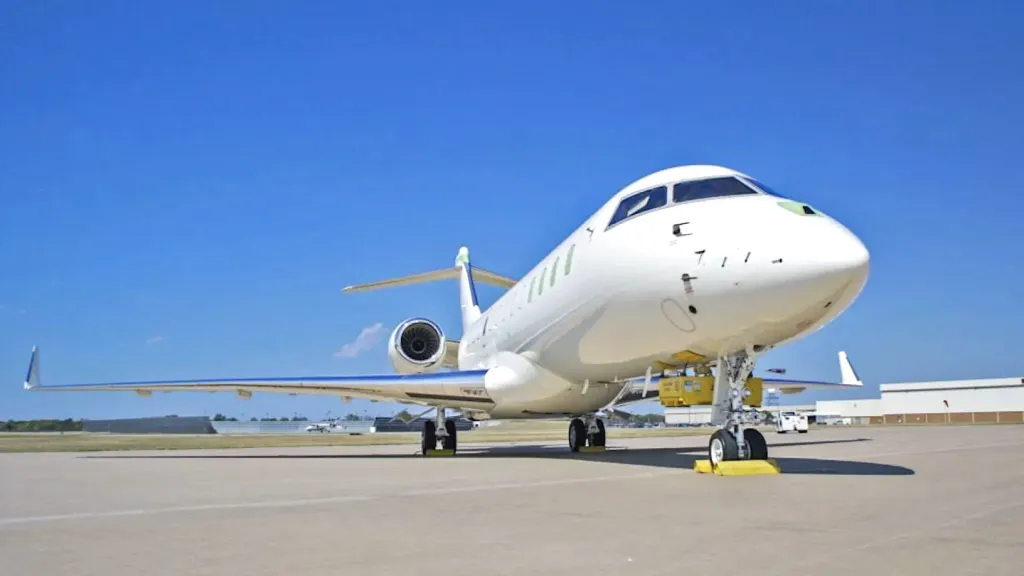



![Josselyn Aguirre, originally from Ecuador, works as a carer for a family in Madrid [Courtesy of Josselyn Aguirre]](https://i0.wp.com/occasionaldigest.com/wp-content/uploads/2026/07/Josselyn-Aguirre-originally-from-Ecuador-works-as-a-carer-for-a-family-in-Madrid-2-1783945381.jpg?w=640&ssl=1)



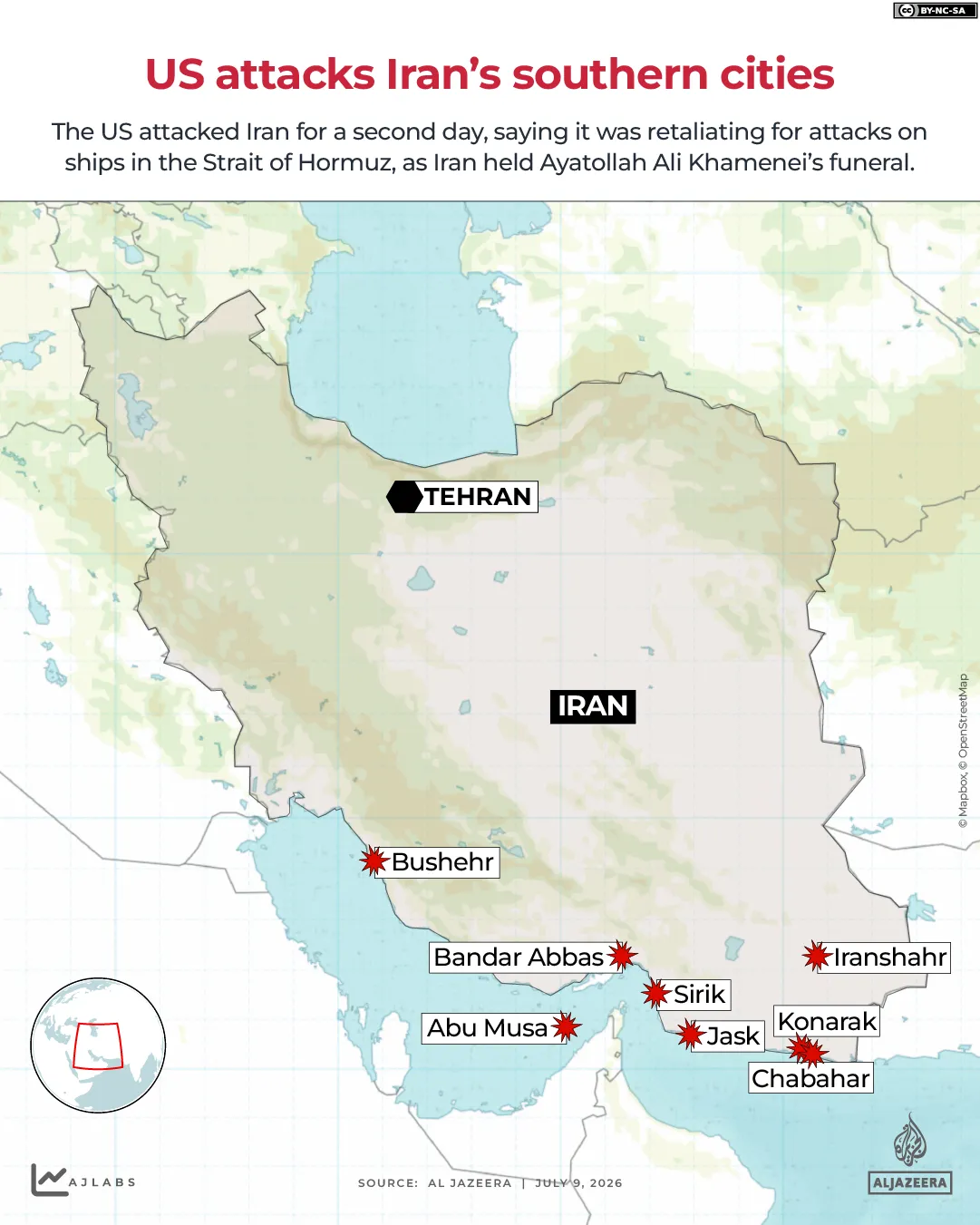





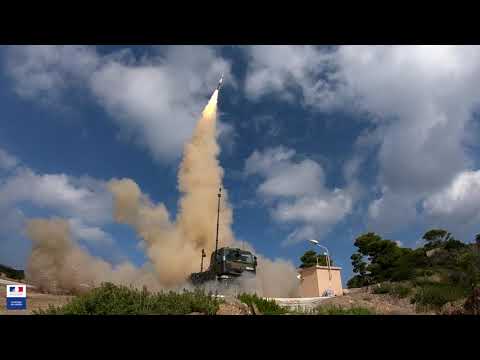



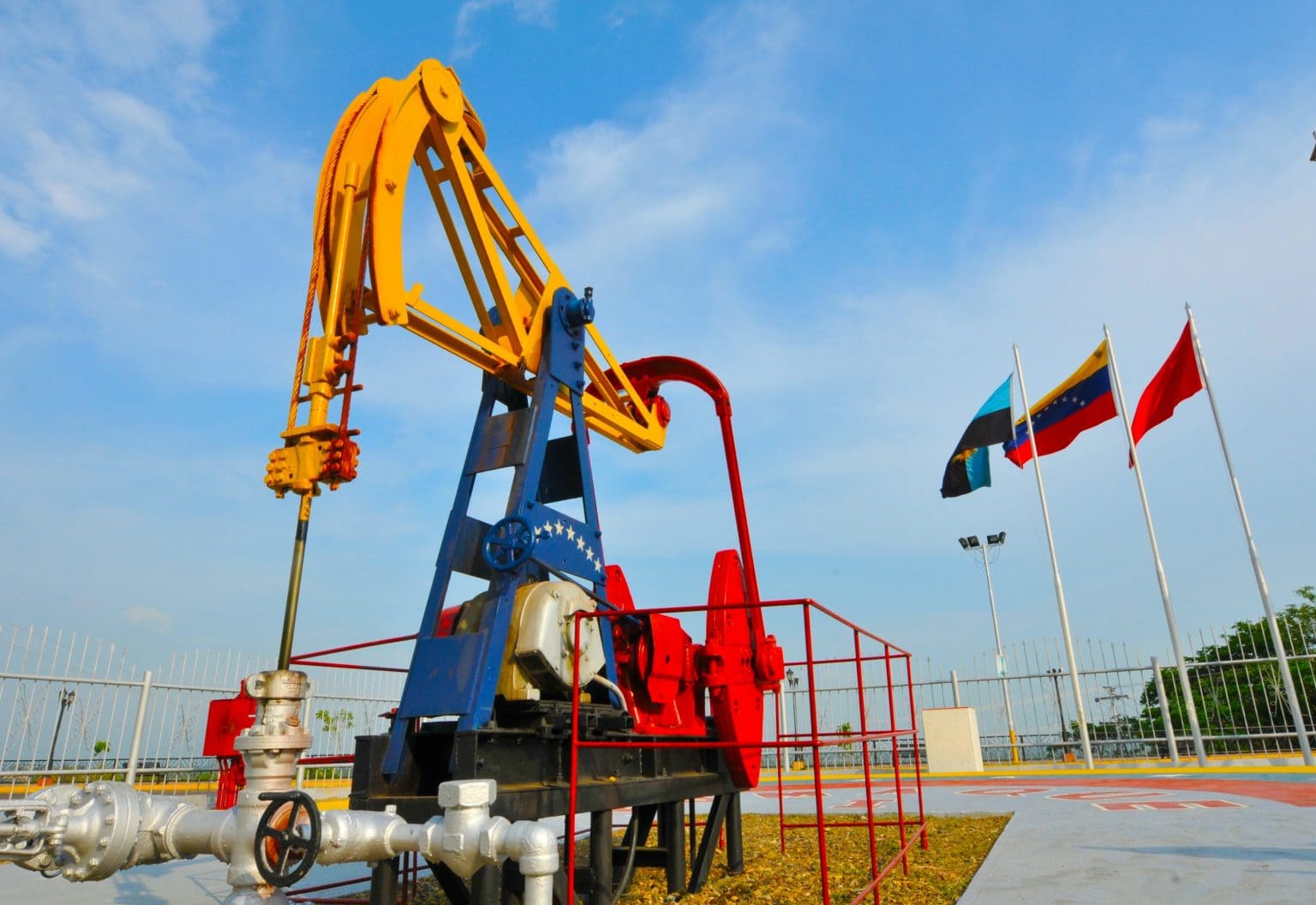
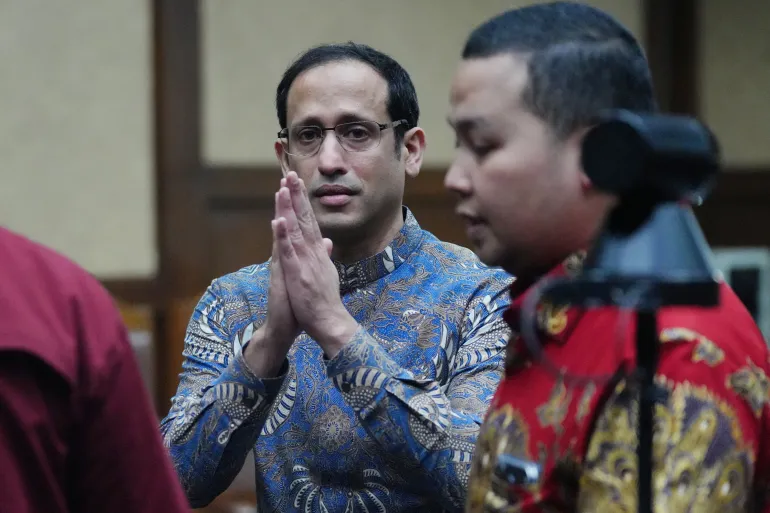


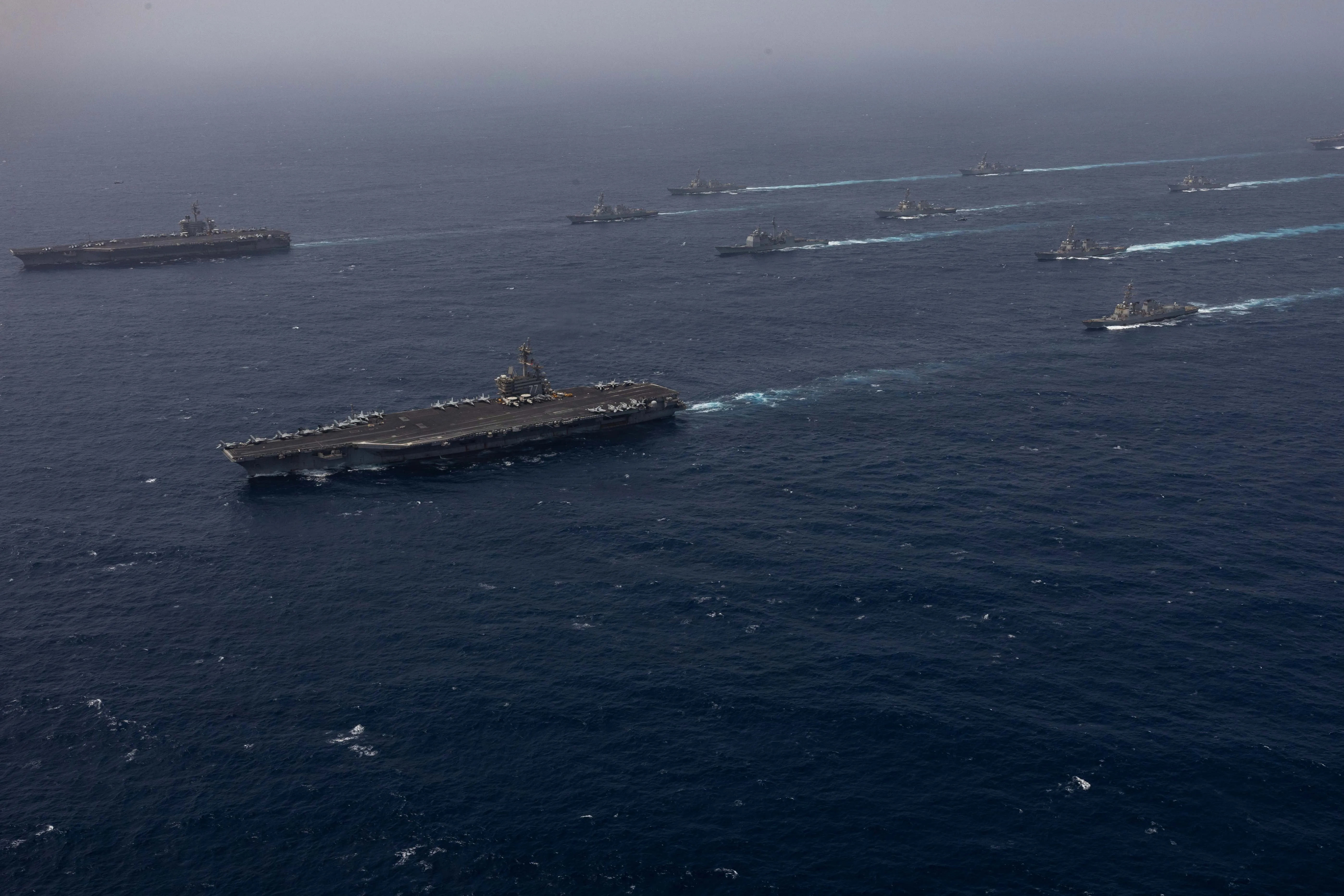


![Sailors spell out “I [Heart] NY” on the flight deck of Nimitz-class aircraft carrier USS Nimitz (CVN 68) after the ship departed New York Harbor following its participation in International Naval Review 250, July 7, 2026. Nimitz is underway in the U.S. 2nd Fleet area of responsibility as part of a scheduled homeport shift to Norfolk, Virginia. (U.S. Navy photo by Mass Communication Specialist Seaman Alyssa Boling)](https://i0.wp.com/www.twz.com/wp-content/uploads/2026/07/9797605.jpg?resize=640%2C427&ssl=1)