news

Netflix cofounder Hastings to step down after it lost Warner Bros deal | Entertainment News

The company’s stock plunged about 8 percent on the news of Hastings’s departure.

Netflix Chairman Reed Hastings is leaving the streaming service he cofounded 29 years ago as the company regains its footing after it lost its $72bn deal for Warner Bros Discovery to Paramount Skydance.

In a letter to investors released on Thursday, Netflix said Hastings will not stand for re-election at its annual meeting in June and plans to focus on philanthropy and other pursuits.

Recommended Stories

list of 4 itemsend of list

The company’s stock plunged about 8 percent on the news of Hastings’s departure. The cofounder is credited with helping to revolutionise how movies and television shows are delivered in homes, upending Hollywood’s business model.

“Netflix is growing revenues double-digits, expanding margins in 2026 and gushing free cash flow,” said LightShed Partners media analyst Richard Greenfield. “While the Q1 was uneventful financially, the departure of Reed Hastings has spooked investors.”

Netflix reaffirmed in a 14-page shareholder letter that its mission remains “ambitious and unchanged” – to entertain the world, providing movies and series for many tastes, cultures and languages. The company’s full-year outlook remained unchanged.

The company did not say how it plans to spend the $2.8bn termination fee it received after losing the Warner Bros movie studio and HBO, and lifted its earnings per share to $1.23 in the first quarter compared with 66 cents per share in the same quarter last year.

Revenue rose to $12.25bn, an increase of 16 percent from the year-ago period, modestly exceeding analyst forecasts of $12.18bn.

Netflix, which long told investors that a Warner Bros acquisition was a “nice to have, not need to have” proposition, highlighted areas of future growth.

The company said its investment in expanding its entertainment offerings, with video podcasts and live entertainment – such as the World Baseball Classic in Japan – is driving engagement.

It plans to use technology to improve the user experience and improve monetisation, as advertising revenue remains on track to reach $3bn in 2026 – a twofold increase from a year ago.

Source link

US State Department restricts visas for those who ‘support adversaries’ | Migration News

The State Department in the United States has announced it is restricting visas for “individuals from countries in our hemisphere who support our adversaries in undermining America’s interests in our region”.

Thursday’s statement underlined that 26 individuals had already seen their visas stripped as part of the policy.

Recommended Stories

list of 3 itemsend of list

The State Department’s stance comes as President Donald Trump seeks to expand US influence across the Western Hemisphere, as part of a platform he calls the “Donroe Doctrine”, a riff on the 19th-century Monroe Doctrine.

Since taking office for a second term, Trump has taken an aggressive stance towards stopping drug trafficking across the Americas, threatening economic penalties and military action for noncompliance.

He has also sought to check China’s growing sway over the region, as an increasing number of Latin American countries tighten their bonds with the Asian superpower.

The State Department explained that the expanded visa restrictions would penalise those who “knowingly direct, authorise, fund, or provide significant support to” US adversaries in the Western Hemisphere.

“Activities include but are not limited to: enabling adversarial powers to acquire or control key assets and strategic resources in our hemisphere; destabilising regional security efforts; undermining American economic interests; and conducting influence operations designed to undermine the sovereignty and stability of nations in our region,” the statement added.

The language was vague, never mentioning China or the campaign against drug-trafficking cartels.

But it continues a trend under the Trump administration to revoke visas from foreign critics and political opponents.

Last year, for instance, the administration sought to revoke visas for pro-Palestine protesters, claiming their presence could have foreign policy consequences for the US.

More recently, the administration has terminated the immigration visas for at least seven individuals with familial ties to the Iranian government or individuals connected to the 1979 Iranian revolution.

Revoking visas

The statement on Thursday did not identify the 26 individuals facing visa restrictions as part of the expanded policy.

But it cited the same authority under the Immigration and Nationality Act that the Trump administration has used to attempt to deport pro-Palestine student protesters last year.

Under the law, the entry of foreign nationals can be restricted when the secretary of state has reason to believe they pose “potentially serious adverse foreign policy consequences for the United States”.

While the administration has abandoned deportation efforts against some of the targeted individuals, at least two, Mahmoud Khalil and Badar Khan Suri, continue to face expulsion.

More recently, the administration has terminated the immigration visas for at least seven individuals with familial ties to the Iranian government or individuals connected to the 1979 Iranian revolution.

Already, some figures in Latin America have seen their visas revoked over political disagreements with the US.

In July, Brazilian officials involved in the prosecution of former right-wing President Jair Bolsonaro saw their US visas withdrawn. They included Brazilian Supreme Court Justice Alexandre de Moraes, a frequent target of right-wing ire.

Then, in September, the Trump administration stripped Colombian President Gustavo Petro of his visa after he made an appearance at the UN General Assembly that was critical of US policy.

The State Department, at the time, denounced Petro for “reckless and incendiary actions”. He was later invited to visit the White House in February, as part of a detente with Trump.

Visa restrictions have been part of Trump’s larger policy to exert pressure on foreign groups and limit immigration into the US.

Earlier this year, the administration enacted immigrant visa bans on dozens of countries, citing both national security and alleged stresses on social services.

Trump has also sought to take a more militaristic approach towards Latin American governments it deems as adversarial, referring to the whole of the Western Hemisphere as the US’s “neighbourhood”.

In January, the US launched an attack on Venezuela that culminated in the abduction and imprisonment of Venezuelan leader Nicolas Maduro, and it has also initiated an ongoing fuel blockade against Cuba.

Some of Trump’s actions in the region have been deadly. The Venezuela attack left dozens of Cubans and Venezuelans killed. And since September, the Trump administration has conducted at least 51 lethal strikes on alleged drug-smuggling boats in the eastern Pacific Ocean and Caribbean Sea.

The death toll in that campaign has reached at least 177 people. Rights groups have decried the attacks as extrajudicial killings.

But the Trump administration has labelled multiple drug cartels as “foreign terrorist organisations” and has argued they are seeking to destabilise the US through the drug trade.

Source link

A ceasefire in Lebanon — will it hold? | News

After rare talks, a ceasefire in Lebanon raises one question: what happens on the ground next?

Israel and Lebanon have held their first direct talks in more than 30 years, and on Thursday, US President Donald Trump announced that they had reached a 10-day ceasefire. But months of fighting have reshaped parts of southern Lebanon. As people begin to return, what will they find? And can diplomacy hold while the reality on the ground remains fragile?

In this episode: 

Justin Salhani (@JustinSalhani), Al Jazeera Journalist

Episode credits:

This episode was produced by Noor Wazwaz and Chloe K. Li with Spencer Cline, Tuleen Barakat, Catherine Nouhan, David Enders, and our host, Malika Bilal. It was edited by Tamara Khandaker and Sarí el-Khalili. 

Our sound designer is Alex Roldan. Rick Rush mixed this episode. Our video editors are Hisham Abu Salah and Mohannad al-Melhem. Alexandra Locke is The Take’s executive producer.

Connect with us:

@AJEPodcasts on XInstagramFacebook, and YouTube


Source link

Cuban president defiant amid US pressure and energy blockade threats | Conflict News

Miguel Diaz-Canel marks anniversary of socialist revolutionary declaration under threat of US attacks.

Cuban President Miguel Diaz-Canel has said that his country does not seek conflict with the United States but is prepared to fight if necessary, as Cuba marks the anniversary of its socialist revolutionary character amid the threat of US attacks.

Diaz-Canel struck a defiant tone on Thursday in remarks before a crowd marking the 65th anniversary of Fidel Castro’s declaration of the socialist nature of the Cuban Revolution and the failed invasion at the Bay of Pigs by forces aligned with the US the day after.

Recommended Stories

list of 3 itemsend of list

“The moment is extremely challenging and calls upon us once again, as on April 16, 1961, to be ready to confront serious threats, including military aggression,” Diaz-Canel said. “We do not want it, but it is our duty to prepare to avoid it and, if it becomes inevitable, to defeat it.”

President Donald Trump has threatened that the US could overthrow the Cuban government, a longtime source of ire for Washington, and has ratcheted up energy restrictions meant to squeeze the island’s economy.

“We may stop by Cuba after we finish with this,” Trump said earlier this week, stating that his attention could turn to Cuba after the end of the US-Israel war on Iran.

A US energy blockade and an end to oil shipments from Venezuela after the US abducted former Venezuelan President Nicolas Maduro in January have caused deteriorating conditions on the island. Fuel shortages and energy blackouts have roiled the island for weeks, heaping strain on workers and businesses.

Even before those increased restrictions, Cuba’s economy had suffered from decades of economic embargo from the US, along with economic mismanagement and political repression that prompted many Cubans to leave the country.

A vote at the United Nations in 2025 demanding an end to the US embargo passed with 165 votes in favour and seven against, including the US, Israel, Argentina, and Hungary. The resolution has been passed annually for more than 30 years.

“Cuba is not a failed state. Cuba is a besieged state,” Diaz-Canel said on Thursday. “Cuba is a state facing multidimensional aggression: economic warfare, an intensified blockade and an energy blockade.”

Source link

Barcelona appeal to UEFA over Laws of Game failure in Champions League exit | Football News

European football’s governing body has already rejected one appeal by Barca about their quarterfinals against Atletico.

Barcelona have lodged another complaint with UEFA, after their protest about a handball incident in the first leg of their Champions League quarterfinal defeat to Atletico Madrid was rejected this week.

The Spanish club said in a statement on Thursday that several refereeing decisions across both legs of the tie, which Atletico won 3-2 on aggregate, “did not comply with the Laws of the Game, resulting from an incorrect application of the regulations and a lack of appropriate intervention by the VAR system in incidents of clear significance”.

Recommended Stories

list of 4 itemsend of list

The Catalan club, which finished both matches with 10 men after the dismissals of Pau Cubarsi and then Eric Garcia, believe they were on the wrong end of several contentious decisions, including two potential penalty situations that did not trigger VAR intervention.

“The accumulation of these errors had a direct impact on the course of the matches and on the final outcome of the tie, causing significant sporting and financial harm to the club,” the reigning Spanish champions added.

Barcelona said the club “reiterates the requests previously made to UEFA” and offer to “collaborate with the organisation with the aim of improving the refereeing system to ensure a more rigorous, fair and transparent application” of the regulations.

On Tuesday, UEFA had rejected as “inadmissible” the five-time Champions League winners’ initial complaint regarding a handball on a goal kick by Atletico defender Marc Pubill in the first leg, which his side won 2-0.

Source link

Ex-Arsenal and Liverpool keeper Manninger killed in car crash with train | Sport News

Alex Manninger played for Arsenal, Liverpool and Juventus at peak of his career while winning 33 Austria caps.

Former Austria goalkeeper Alex Manninger, who played for Arsenal and a string of Italian clubs, has died at ⁠the age of 48 when the car he was driving was hit by a train at a crossing near Salzburg.

The Austrian Football Association (OEFB) and clubs associated with ⁠the player, who retired as a professional in 2017, mourned his passing on Thursday.

Recommended Stories

list of 4 itemsend of list

Manninger made 33 appearances for Austria and played for Arsenal from 1997 to 2001 with the club winning the league title and FA Cup in the 1997-1998 season. He ‌ended his career at Liverpool in 2017.

In Italy, the Austrian played for Fiorentina, Torino, Bologna, Siena, Udinese and Juventus.

“Alexander Manninger was an outstanding ambassador of Austrian football on and off the pitch,” OEFB Sporting Director Peter Schoettel said in a statement.

“With his international career, he has set standards and inspired and shaped many young goalkeepers. His professionalism, his calmness and his reliability made him an ⁠important part of his teams and also of the national ⁠team.”

Salzburg police said in a statement that the accident happened about 8:20am (06:20 GMT). First responders freed the driver from the vehicle, but resuscitation was unsuccessful.

“According to initial investigations, the car was ⁠hit by a railcar of the Salzburger Lokalbahn while crossing the railway crossing and dragged along. The driver was alone ⁠in the vehicle. The train driver was uninjured,” ⁠the police said.

Fiorentina said they will observe a minute’s silence and wear black armbands for Thursday’s home Conference League game with Crystal Palace while league leaders Arsenal conveyed their shock on social media.

Other clubs, including ‌Liverpool, issued statements of condolence.

“Today is a very sad day. We have lost not only a great athlete, but a man of rare values: humility, dedication, and ‌an ‌exceptional sense of professionalism,” Juventus said

“Alex Manninger will be remembered for the example he set, on and off the pitch.”

Source link

‘Endless grief’: Turkiye mourns victims of second school shooting in a week | Gun Violence News

Death toll rises to 10 after shooting by 14-year-old student at the Ayser Calik School in Kahramanmaras.

Mourners have gathered in Turkiye’s southern province of Kahramanmaras for the funerals of victims killed in the second of two school shootings that rocked the nation this week.

Funerals were held on Thursday for eight students and maths teacher Ayla Kara, 55, who were killed in Wednesday’s shooting, The Associated Press news agency reported.

Recommended Stories

list of 3 itemsend of list

A 10th victim died while being treated in hospital on Thursday, authorities said. Six of those wounded in the attack were in critical condition, officials said.

Isa Aras Mersinli, 14, opened fire on two classrooms in the Ayser Calik School in Kahramanmaras city on Wednesday. The attacker was later found dead.

Interior Minister Mustafa Ciftci said the attacker is believed to have used guns that belonged to his father, a former police officer.

Coffin of a victim of a school shooting in Turkiye
People carry the coffin of a victim of a school shooting during the funeral prayers at a mosque in Kahramanmaras, Turkiye, on April 16, 2026 [Ensar Ozdemir/Reuters]

At a funeral for four of the victims held near Kahramanmaras city’s main mosque on Thursday, one father sat motionless beside the coffin of his daughter, 10‑year‑old Zeynep, the AFP news agency reported.

“Our grief is endless. These children were like our own. They were all innocent,” said Vezir Yucel, father of a student named Yusuf, who lost his close friend, 10-year-old Bayram, in the shooting.

Nilgun Ruci, a 55‑year‑old homemaker, told AFP that she rushed to Ayser Calik School after hearing gunshots. When she arrived, she saw the daughter of a neighbour lying gravely wounded.

“She had been shot in the leg and the shoulder,” Ruci said. “At first, I thought she had fainted. Today I learned that she died.”

Second attack in two days

The attack was the country’s second school shooting in two days, coming after Tuesday’s attack at a high school in Sanliurfa province in the southeast, which was carried out by a former student who wounded 16 people.

As of Thursday, 20 people had been detained in connection with Tuesday’s shooting in Sanliurfa.

The interior and education ministries held a joint school security meeting in the capital, Ankara, on Thursday, which was attended by both ministers and all 81 of Turkiye’s provincial governors, as well as police chiefs and provincial education directors.

Until this week, school shootings were rare in Turkiye. But dozens of students were arrested Thursday over alleged social media posts implying they might stage similar attacks.

Justice Minister Akin Gurlek announced that 67 social media users were detained over posts targeting 54 different schools.

Source link

No date set for US-Iran talks, as Pakistan pushes to keep diplomacy alive | US-Israel war on Iran News

Islamabad, Pakistan – Pakistan’s Foreign Ministry on Thursday confirmed that the United States and Iran were in discussions – through Islamabad – to hold a second meeting between their negotiators to end their now nearly seven-week war, with a fragile ceasefire announced on April 8 days away from expiring.

But it added that no date had been set for that next round of negotiations, even as Islamabad stepped up a parallel diplomatic push to keep the process alive.

Recommended Stories

list of 4 itemsend of list

“Who will come, how big the delegation will be, who will stay, and who will go is for the parties to decide,” Foreign Ministry spokesperson Tahir Andrabi told reporters in Islamabad, referring to what upcoming talks might look like. “As a mediator, it’s important for us to keep the talks confidential. We had the details and information of the talks entrusted to us by the negotiating parties.” 

Speaking of the first round of talks on April 12 in Islamabad, which concluded without a deal, Andrabi said: “There was neither a breakthrough nor a breakdown.”

The spokesperson confirmed that nuclear issues remained among the key subjects under discussion, but declined to elaborate.

His comments came as Pakistan’s civil and military leadership is travelling across the region in what some observers have begun calling the “Islamabad Process”, reflecting the government’s attempt to frame negotiations as an ongoing diplomatic effort rather than a one-off engagement.

Parallel diplomatic tracks

Pakistan’s Prime Minister Shehbaz Sharif arrived in Doha on Thursday, the second stop of a four-day regional tour that began with Jeddah on Wednesday, and will see him visiting Antalya next.

Meanwhile, Pakistan’s Chief of Defence Forces (CDF) Asim Munir arrived in Tehran on Wednesday with a delegation that included Interior Minister Mohsin Naqvi.

Munir was received at the airport with a warm hug from Iranian Foreign Minister Abbas Araghchi, who said he was “delighted” to welcome the field marshal and expressed gratitude for Pakistan’s “gracious hosting of dialogue”.

On Thursday, Iranian Parliamentary Speaker Mohammad Bagher Ghalibaf, who led Tehran’s delegation at the Islamabad talks, also met Munir.

Reza Amiri Moghadam, Iran’s ambassador to Pakistan, said at an event in Islamabad that Tehran would not consider any venue other than Pakistan for talks with Washington.

“We will do talks in Pakistan and nowhere else, because we trust Pakistan,” he said.

Muhammad Faisal, a Pakistani security analyst and scholar at the University of Technology Sydney, said the parallel outreach reflected a deliberate division of labour.

“Pakistan’s strategy appears to be dual-tracked: PM Sharif is reassuring Gulf allies and attempting to build a broader support coalition, while CDF Munir is engaged in hard negotiations between the two sides to narrow gaps between Iran and the US, with an eye on extending the ceasefire and reaching a broader understanding,” he told Al Jazeera.

Reports that Munir might travel to Washington, DC after Tehran were denied by security officials, who called them “speculative”. Andrabi said he was not aware of any such development.

This handout photograph taken and released by Pakistan's Prime Minister Office on April 15, 2026 shows Saudi Arabia's Crown Prince Mohammed bin Salman (R) greeting Pakistan's Prime Minister Shehbaz Sharif prior to their meeting in Jeddah.
Saudi Arabia’s Crown Prince Mohammed bin Salman (right) greeting Pakistan’s Prime Minister Shehbaz Sharif prior to their meeting in Jeddah, Saudi Arabia on Wednesday [Handout/Prime Minister’s Office via AFP]

In Jeddah on Wednesday, Sharif met Saudi Crown Prince Mohammed bin Salman and expressed “full solidarity and support” for the kingdom following regional escalation, according to Pakistan’s Foreign Ministry. The crown prince praised what Riyadh described as the “constructive role” played by both Sharif and Munir.

In Doha, Sharif met Qatar’s Emir Sheikh Tamim bin Hamad Al Thani and discussed “the regional situation, particularly in the Gulf region”, underscoring “the importance of de-escalation, dialogue and close international coordination to ensure peace and stability”, the prime minister’s office said.

From Doha, Sharif heads to Antalya with Deputy Prime Minister and Foreign Minister Ishaq Dar. They are expected to meet counterparts from Saudi Arabia, Turkiye and potentially Egypt on the sidelines of the Antalya Diplomacy Forum on April 17.

Regional security push

The Antalya meeting is part of a broader diplomatic effort. Turkiye is preparing to host talks on a regional security platform involving Pakistan, Saudi Arabia and possibly Egypt, according to officials familiar with the discussions.

It would be the third such meeting in a month, following earlier rounds of talks in Riyadh and Islamabad.

The goal is to establish a platform for regular, structured cooperation on regional security issues, the officials said, stressing the discussions are distinct from current efforts to end the Iran war.

Turkish Foreign Minister Hakan Fidan confirmed that discussions were under way, but said no agreement had been finalised.

“This pact is necessary so that countries can be assured of one another,” he told the state-run Anadolu Agency on Monday.

Turkiye also reaffirmed support for the US-Iran peace process on Thursday.

“We will continue to provide the necessary support for the ongoing ceasefire to turn into a permanent truce and eventually lasting peace, without becoming more complex and difficult to manage,” the Defence Ministry said, adding that it expected “the parties will be constructive in the ongoing negotiation process”.

Pakistan’s Foreign Ministry said senior officials from the four countries had also met in Islamabad earlier this week to prepare recommendations for Antalya.

Ceasefire under strain

The two-week ceasefire brokered by Pakistan on April 8, which halted attacks in Iran and the Gulf, is due to expire on April 22. While still holding, it is under increasing strain.

A US naval blockade on Iranian ports remains in place, with the US Central Command saying its forces had turned away nine ships as of Wednesday.

Kamran Yousuf, an Islamabad-based journalist and expert on diplomatic affairs, said he expected the ceasefire to be extended.

“I would be really surprised if the current ceasefire is not extended. There is little appetite on both sides to go back to war. There are enough signs on the ground that if there is no deal before the truce expires, the ceasefire will be extended,” he told Al Jazeera.

Faisal offered a more cautious assessment, warning that failure to secure a second round would shift Pakistan’s role.

“Pakistan’s mediation will not collapse immediately, but Islamabad’s role will change from mediator to crisis manager. If hostilities resume, Pakistan will focus again on brokering a ceasefire,” he said.

Despite uncertainty, signals from both Washington and Tehran have remained cautiously optimistic.

White House press secretary Karoline Leavitt said further talks would “very likely” take place in Islamabad, adding, “We feel good about the prospects of a deal.”

Iran’s Foreign Ministry spokesperson Esmaeil Baghaei said multiple messages had been exchanged with Washington through Pakistan since April 12.

US President Donald Trump said on Tuesday that talks could resume within two days and that Washington was “more inclined to go” to Pakistan.

INTERACTIVE - Alternative route throughthe Strait of Hormuz - APRIL 14, 2026-1776162674

Sticking points remain

The path to a second round remains complicated by unresolved disputes.

Iran has insisted that Lebanon be included in any agreement, arguing that ongoing Israeli strikes there, which have killed more than 2,000 people and displaced 1.2 million, cannot be separated from the wider conflict.

On April 14, the United States convened a trilateral meeting in Washington with the ambassadors of Israel and Lebanon, the first direct engagement between the two sides since 1993.

US Secretary of State Marco Rubio mediated the talks, which both sides described as “productive”, but no ceasefire or follow-up meeting was agreed.

Washington has maintained that any Lebanon deal must remain separate from US-Iran negotiations, rejecting Tehran’s position. On Thursday, Israel said its Prime Minister Benjamin Netanyahu would speak on the phone with Lebanese President Joseph Aoun — but Beirut had not confirmed any plans for a telephone conversation. The two countries do not have formal diplomatic relations.

At Thursday’s briefing, Andrabi aligned Pakistan with Iran on this issue.

“Peace in Lebanon is essential for US-Iran peace talks,” he said, adding that “signs of improvement on the Israel-Lebanon front over the past two days are encouraging.”

Yousuf said a Lebanon ceasefire would send an important signal to Iran.

“Extending the ceasefire to Lebanon will be an important confidence-building measure, a signal from the US that it is serious about a second round. It will also give Tehran good reason to return to the table,” he said.

But he added that the deeper challenge remained Iran’s nuclear programme.

“The nuclear issue is at the heart of the real problem. The flurry of shuttle diplomacy initiated by Pakistan is aimed at bridging the gap between the two sides,” he said.

Grace Wermenbol, a former US national security official and senior visiting fellow at the German Marshall Fund, said Washington’s approach to Lebanon would hinge on Trump’s willingness to pressure Israel.

“A clear pathway to a cessation of hostilities in Lebanon exists,” she told Al Jazeera. “The question is whether Trump will be willing to apply the pressure necessary on Israel to halt its military offensive and allow the Lebanese government to continue its military disarmament efforts. So far, and this is also true for the months preceding the latest escalation between Israel and Hezbollah, we have not seen this pressure materialise.”

The Strait of Hormuz remains another major obstacle.

The waterway, through which roughly a fifth of the world’s oil passes during peacetime, has effectively been blocked by Iran since early in the war, except for ships belonging to countries that have struck individual deals with Tehran.

Starting Monday, the US imposed its own naval blockade on the strait, to prevent any Iran-linked vessel from passing through.

“Iran’s effective closure of the Strait of Hormuz has emerged as the primary issue in US-Iranian negotiations. Opening it is crucial to easing upward pressure on oil prices and instilling confidence in global markets,” Wermenbol said.

She added that Tehran appeared to be betting Washington would eventually back down.

“There is no easy military option here,” she said. “The only way to resolve this issue and remove the threat to maritime traffic will need to involve a diplomatic deal.”

Source link

From Insider to Insurgent, Péter Magyar Topples Orbán’s Illiberal System

The rise of Péter Magyar marks one of the most significant political shifts in Hungary’s modern history. His victory over Viktor Orbán ends a 16 year era defined by centralized power and strained relations with the European Union.

What makes Magyar’s ascent particularly striking is that he did not emerge from outside the system, but from within it.

From insider to challenger

Magyar was once closely associated with Orbán’s ruling Fidesz party and initially echoed many of its political themes, including nationalism and scepticism toward liberal European norms.

His turning point came in 2024, when he publicly broke with the government and sharply criticised corruption and the concentration of power. This positioned him as a credible reformist with insider knowledge of how the system operated.

Dismantling an illiberal model

Orbán’s “illiberal democracy” was built on gradually consolidating control over key state institutions, including the judiciary and media. Over time, checks and balances weakened, allowing the ruling party to dominate political life.

Magyar’s understanding of this structure allowed him to directly challenge its foundations, particularly by focusing on corruption and institutional accountability, issues that resonated with voters.

Building a broad coalition

Over two years of campaigning, Magyar evolved politically. He travelled extensively, engaging with voters across the country and broadening his appeal beyond a narrow ideological base.

According to Zsolt Enyedi, Magyar became a unifying figure for pro democracy forces, offering a platform that different groups could rally around. This ability to bridge divides proved crucial in defeating a deeply entrenched political machine.

A more pragmatic approach to Europe

Magyar is not an uncritical supporter of the European Union, but he is expected to take a more constructive approach than his predecessor. Economic realities, particularly the need to unlock suspended EU funds, will push his government toward cooperation with Brussels.

This creates a pragmatic dynamic where reform is driven not only by political vision but also by financial necessity.

A difficult transition ahead

The transition of power is likely to be complex. Magyar has already expressed concern about actions taken by elements of the outgoing administration, suggesting resistance within the system he now seeks to reform.

Rebuilding institutions, restoring trust, and dismantling entrenched networks will take time and political capital.

Analysis

Péter Magyar’s victory highlights a key dynamic in political change within entrenched systems: transformation often comes from insiders who understand the machinery of power.

However, electoral success is only the first step. The deeper challenge lies in restructuring institutions that have been shaped over more than a decade. This process is inherently slow and politically sensitive.

Magyar must navigate competing pressures. Domestically, he faces a conservative and somewhat eurosceptic electorate. Internationally, he is expected to repair relations with the European Union and align more closely with its standards.

This balancing act will define his leadership. While his victory opens the door to democratic renewal, the outcome will depend on whether he can convert political momentum into lasting institutional change.

With information from Reuters.

Source link

Turkiye’s Roketsan eyes top 10 exporter rank amid Middle East conflict | Business and Economy News

Modern warfare has dramatically changed as we have seen from the Russia-Ukraine war, conflicts involving Gaza, India and Pakistan, and the recent US-Israeli strikes on Iran. At the centre of this shift is a surging global reliance on drone and missile technology as well as advanced air defence systems.

Turkiye, one of the largest military powers in the Middle East, is increasingly positioning itself as a major supplier in the global defence sector. Central to this effort is Roketsan, a company founded in 1988 to supply the Turkish Armed Forces, which has since evolved into the country’s primary manufacturer of missile and rocket systems.

Recommended Stories

list of 3 itemsend of list

Currently exporting to approximately 50 countries, the firm is one of the fastest-growing defence companies globally.

So how did Roketsan secure a large share of the global arms trade?

Bypassing Western embargoes

Turkiye’s defence expansion was largely accelerated by restrictions placed upon it. Western embargoes aimed at halting its military advancement meant Ankara could not acquire the necessary technical systems or components.

In 2020, the United States imposed Countering America’s Adversaries Through Sanctions Act (CAATSA) restrictions on Turkiye – a key member of the transatlantic military alliance NATO. These sanctions targeted Turkiye’s military procurement agency, its chief Ismail Demir, and three other senior officials. Washington also ejected Ankara from the F-35 stealth jet programme in July 2019.

The measures came after Ankara purchased Russia’s S-400 missile defence system, which was seen as a potential threat to NATO security. The European Union also prepared limited sanctions and discussed restricting arms exports following energy exploration disputes in the Eastern Mediterranean.

To circumvent this, the country built an integrated, domestic defence ecosystem. Today, Turkiye relies on a vast supply chain of nearly 4,000 small and medium-sized enterprises (SMEs) scattered across the country. As a result, the Turkish defence industry now operates with a local production rate exceeding 90 percent.

Türkiye's defense industry now operates with a local production rate exceeding 90 percent, bypassing long-standing Western embargoes. [Al Jazeera]
Türkiye’s defence industry now operates with a local production rate exceeding 90 percent, bypassing long-standing Western embargoes [Al Jazeera]

This shift has yielded significant financial returns for Ankara. In 2025, Turkiye’s defence industry reported $10bn in exports. Roketsan’s General Manager Murat Ikinci told Al Jazeera that the company currently ranks 71st among global defence firms, with ambitions to break into the top 50, then the top 20, and ultimately the top 10.

To support this expansion, Turkish President Recep Tayyip Erdogan inaugurated several large-scale facilities last week, including:

  • Europe’s largest warhead facility.
  • new research and development (R&D) centre housing 1,000 engineers.
  • the “Kirikkale” facility dedicated to rocket fuel technology.
  • new infrastructure for the mass production of ballistic and cruise missiles.

These projects represent a $1bn investment, with the company planning to inject an additional $2bn to expand mass production capabilities.

The ‘Tayfun’ and modern warfare

Roketsan’s R&D strategy – which employs 3,200 engineers and makes the company the third-largest R&D institution in Turkiye – is heavily influenced by data gathered from ongoing global conflicts.

According to Ikinci, the war in Ukraine highlighted the impact of cheap, first-person view (FPV) and kamikaze drones supported by artificial intelligence. In response, Roketsan developed air defence systems like “ALKA” and “BURC,” alongside the “CIRIT” laser-guided missile.

The regional landscape was further complicated during the US-Israel war on Iran, as cheap Iranian-designed Shahed drones – recently upgraded by Russia with “Kometa-B” anti-jamming modules – overwhelmed defences and even struck a British base in Cyprus in March 2026. During the same month, NATO air defences were forced to intercept three Iranian ballistic missiles that entered Turkish airspace.

Meanwhile, the recent conflict between Israel and Iran showcased the use of complex attacks combining ballistic missiles with “swarms” of kamikaze drones designed to overwhelm air defences. This environment makes hypersonic technology a critical asset.

This brings the Tayfun (Typhoon) project into focus. Tayfun is a developing family of long-range ballistic missiles. Its most advanced iteration, the Tayfun Block 4, is a hypersonic missile engineered to penetrate advanced air defence systems by travelling at extreme speeds.

When Al Jazeera asked for specific details regarding the Tayfun’s exact operational range, Ikinci was elusive. “We avoid mentioning its range; we just say its range is sufficient,” he noted.

Similarly, historical Western sanctions have pushed Turkiye to form new cooperation initiatives, effectively accelerating an “Eastern shift” away from Western defence dependence. Turkish drones are now being used by a growing number of countries, including by Pakistan during its war against India last May.

Based on these threat assessments, Roketsan has prioritised five key areas of production:

  1. long-range ballistic and cruise missiles.
  2. air defence systems, including the “Steel Dome”, Hisar-A, Hisar-O, and Siper.
  3. submarine-launched cruise missiles, utilising the AKYA system to leverage Turkiye’s large submarine fleet.
  4. smart micro-munitions designed specifically for armed drones.
  5. long-range air-to-air missiles, a need highlighted by the brief India-Pakistan skirmish.

A strategic export model

Unlike traditional arms procurement, Turkiye is marketing its defence industry to international buyers as a strategic partnership.

“Our offer to our partners… is as follows: Let’s produce together, let’s develop technology together,” Ikinci stated.

İkinci emphasizes that Roketsan's international strategy is based on "partnership models" rather than simple sales. [Al Jazeera]
Rokestan’s General Manager Murat İkinci, right, emphasises that Roketsan’s international strategy is based on ‘partnership models’ rather than simple sales [Al Jazeera]


By establishing joint facilities and R&D centres in allied nations across the Middle East, the Far East, and Europe, Turkiye is attempting to secure long-term geopolitical alliances rather than purely transactional sales. Ikinci highlighted Qatar as a prime example of this model, describing it as a benchmark for technological, military, and security cooperation in the region.

Filling the global stockpile gap

This rapid expansion comes at a critical time for the global arms trade. Ongoing wars have severely depleted the stockpiles of advanced weapon systems worldwide.

During the recent US-Israel war on Iran, Washington relied heavily on multimillion-dollar Patriot and Terminal High Altitude Area Defense (THAAD) systems to intercept cheap Iranian drones targeting US assets across Qatar, Kuwait, Bahrain, Saudi Arabia, and the United Arab Emirates. With growing concerns that US interceptor supplies could run low, Gulf states – which have collectively detected over 1,000 drones in their airspace – are actively seeking alternative defence technologies, creating a highly lucrative opening for Turkiye’s missile industry.

Defence analyses indicate that even military superpowers like the US will require significant time to replenish their current air defence inventories due to the complexity and massive infrastructure required to build them.

Turkish defence officials view this shortage as a strategic opening. Having localised its supply chain, Turkiye claims it can manufacture and export these highly sought-after complex systems independently.

As global demand for air defence and ballistic technologies rises, Roketsan is aggressively reinvesting its revenues into production infrastructure to expand its footprint in the international arms market.

Source link

World Athletics: Governing body rejects 11 athlete transfer applications to Turkey

Additionally, it said the applications, “through a wholly-owned and financed government club”, were part of an “aim of facilitating transfers of allegiance and enabling those athletes to represent Turkey at future international competitions, including the Los Angeles 2028 Olympic Games”.

It added: “Given the common features across the applications, the panel assessed them together and determined that such an approach is inconsistent with the core principles of the regulations.

“As a result of the decisions, the athletes are not eligible to represent Turkey in national representative competitions or other relevant international events.”

The other athletes were Catherine Relin Amanang’ole, Brian Kibor, Ronald Kwemoi and Nelvin Jepkemboi from Kenya, Jamaica’s Rajindra Campbell, Jaydon Hibbert and Wayne Pinnock plus Nigeria’s Favour Ofili and Russian Sophia Yakushina.

Source link

Hegseth says US blockade to continue, ready for new attacks on Iran energy | Donald Trump News

United States Pentagon Chief Pete Hegseth has said the military blockade of Iran’s ports will continue “as long as it takes”, saying Washington remained “locked and loaded” to attack Iran’s energy facilities.

The US Pentagon chief spoke on Thursday as a tenuous pause in fighting agreed to last week has continued. On Monday, President Donald Trump announced the military would blockade Iran’s ports in the Strait of Hormuz and the Persian Gulf after US-Iran talks in Pakistan failed to reach a breakthrough.

Recommended Stories

list of 3 itemsend of list

Hegseth struck an aggressive tone as he maintained the US military was monitoring Iran’s military movements during the pause in fighting, which currently is meant to extend through early next week.

“We are reloading with more power than ever before…even more importantly, better intelligence than ever before,” Hegseth said.

“As you expose yourself with your movement to our watchful eye, we are locked and loaded on your critical dual-use infrastructure, on your remaining power generation and on your energy industry,” he said.

Still, the Pentagon chief said the US prefers to resolve the conflict, which began with US-Israeli attacks on Iran on February 28, through diplomacy.

“You, Iran, can choose a prosperous future, a golden bridge, and we hope that you do for the people of Iran,” he said. “In the meantime and for as long as it takes, we will maintain this blockade, successful blockade, but if Iran chooses poorly, then they will have a blockade and bombs dropping on infrastructure, power and energy.”

On Wednesday, a Pakistani delegation arrived in Tehran to coordinate a new round of talks. While both sides have indicated they remained open to further negotiations, Major-General Ali Abdollahi, the commander of the Khatam al-Anbiya Central Headquarters of the Islamic Revolutionary Guard Corps (IRGC), warned that the US blockade could end the current pause in fighting.

White House spokesperson Karoline Leavitt, meanwhile, indicated the US maintained a positive outlook on future talks.

“At this moment, we remain very much engaged in these negotiations, in these talks,” she said.

But reporting from Tehran on Thursday, Al Jazeera’s Ali Hashem says deep-seated distrust remains. The US under Trump twice attacked Iran amid ongoing indirect talks over Iran’s nuclear programme, a fact that has cast a long shadow over the most recent bout of diplomacy.

“Clearly, there have been several messages conveyed to the Iranians. But rather than consolidating a feeling of trust and optimism, it seems that it’s already shaken,” he said.

“We saw a platform closely associated with the foreign ministry tweeting today, quoting a source saying that whatever is being demonstrated or said in the media regarding the optimism is just hype, and this is used for PR and it’s for President Trump to use in the markets,” he said.

Iran’s speaker of parliament, Mohammad Bagher Ghalibaf, who led the Iranian delegation in the talks with Iran, told his Lebanese counterpart on Thursday that a ceasefire in Israel’s invasion and ongoing bombardment of Lebanon is “as important” as the pause in fighting in Iran.

A Lebanon ceasefire has emerged as one of the main sticking points in talks, which also include control of the Strait of Hormuz and the future of Iran’s nuclear programme.

‘We will use force’

Speaking during the news conference on Thursday, General Dan Caine, the chairman of the Joint Chiefs of Staff, said so far, 13 ships leaving Iranian ports have turned around in response to US military warnings.

“If you do not comply with this blockade, we will use force,” Caine said.

Admiral Brad Cooper, the head of US Central Command (CENTCOM), meanwhile, said the US is using the wear to rearm and reposition its forces.

“We’re rearming, we’re retooling, and we’re adjusting our tactics, techniques and procedures. There’s no military in the world that adjusts like we do, and that’s exactly what we’re doing right now during the ceasefire,” said.

During questions with reporters, Hegseth also shot down reports that China was planning to send weapons to Iran amid the pause in fighting. Hegseth said Washington had received assurances from Beijing that this was not the case.

Hegseth also used a large portion of the news conference to attack US press coverage of the war, which the Trump administration is receiving criticism for its shifting objectives and justifications for launching the conflict.

Hegseth called the coverage “incredibly unpatriotic”.

Source link

Hitter Shohei Ohtani gets night off, pitcher Shohei Ohtani leads Dodgers to win

Shohei Ohtani pitches well in Dodgers’ victory

From Maddie Lee: Dodgers right-hander Shohei Ohtani had navigated the Mets lineup without much trouble until the fifth inning. But he’d also been holding back a little something.

“I can’t go full throttle the whole time,” Ohtani said through interpreter Will Ireton after the Dodgers’ 8-2 victory Wednesday. “But considering where the game was at that point, I felt like I just really had to go full throttle and make sure I’m considering the game situation.”

The Mets had just scored their first run of the game — ending Ohtani’s streak of innings without an earned run at 32 ⅔, the longest of his career — and cut the Dodgers’ lead to one.

So he unleashed a 100.2 mph fastball past Tommy Pham, and then 100.3 mph. Pham foul-tipped both and had some choice words with himself on the way back to the dugout.

That strikeout was one of 10 Ohtani had in a performance that was dominant, regardless of the first mark on his previously spotless ERA.

The two-way phenom only had one job to worry about Wednesday.

For the first time since 2021, he was not also in the lineup as a hitter while pitching.

“If it weren’t for the hit by pitch [Monday], he would’ve been DHing and pitching tonight,” Roberts said before the game.

Continue reading here

L.A.’s Blue Era: How popular are the Dodgers? Even the Lakers look up at them. Way up

Dodgers box score

MLB standings

Go beyond the scoreboard

Get the latest on L.A.’s teams in the daily Sports Report newsletter.

Bad play costs Angels

José Caballero laced a two-run double in the bottom of the ninth inning that gave the New York Yankees a 5-4 victory over the Angels, moments after the Angels botched an infield popup in a costly misplay Wednesday night.

Aaron Judge hit his third homer of the series and Trent Grisham had a two-run single for the Yankees, who won for only the second time in eight games after an 8-2 start.

Mike Trout hit his fourth homer in three games, putting the Angels ahead 4-3 with a two-run drive in the fifth.

That was still the score when Jazz Chisholm Jr. popped up to the left side with one out and nobody on in the ninth. But shortstop Zach Neto and ex-Yankees third baseman Oswald Peraza miscommunicated, and the ball dropped between them on the infield dirt for a gift single.

Continue reading here

Angels box score

MLB standings

Clippers season comes to an end

From Steve Galluzzo: It was do or die Wednesday night at Intuit Dome, and the Clippers did not do enough to keep their season alive, blowing a 13-point lead early in the fourth quarter and losing to the Golden State Warriors, 126-121.

Having rebounded from a franchise-worst 6-21 start to earn the next-to-last berth in the NBA play-in tournament, coach Tyronn Lue’s resilient bunch could not extend its historic comeback on its home floor.

Stephen Curry led the Warriors with 35 points, Kristaps Porzingis and and Gui Santos each had 20, and Brandin Podziemski added 17. The Warriors were 19 for 41 from three-point range, with Al Horford hitting four in the fourth quarter.

Bennedict Mathurin scored 23 points off the bench while Kawhi Leonard and Darius Garland each added 21 points for the Clippers, who won three of the teams’ four regular-season meetings, including a 115-110 victory in the same arena four days earlier. Wednesday night, however, Leonard was held scoreless in the fourth quarter until the final seconds as the Warriors rallied.

Continue reading here

Clippers box score

Deandre Ayton can take the spotlight

From Broderick Turner: The last time Deandre Ayton appeared in the playoffs was in 2023, when he was a member of the Phoenix Suns and viewed in NBA circles as having the potential to be a force as a center in the league.

A lot has changed since then.

He’s on his second team since those days in Phoenix, playing two years for the Portland Trail Blazers and now the Lakers. He has been viewed by many as an inconsistent player who hasn’t reached his full potential.

Ayton has a chance to prove his worth, to show his critics he has the ability to be elite in the postseason when the Lakers open the first-round of the Western Conference playoffs Saturday against the Houston Rockets at Crypto.com Arena.

Continue reading here

Lakers playoff schedule

First round
All times Pacific

Saturday: Houston at Lakers, 5:30 p.m, ABC
Tuesday: Houston at Lakers, 7:30 p.m., NBC
Friday, April 24: Lakers at Houston, 5:30 p.m., Amazon Prime Video
Sunday, April 26: Lakers at Houston, 6:30 p.m., NBC
*Wed., April 29: Houston at Lakers, TBD
*Friday, May 1: Lakers at Houston, TBD
*Sunday, May 3: Houston at Lakers, TBD

*-if necessary

L.A. Olympics questions

From Thuc Nhi Nguyen: You ask. We answer. Or at least we’re going to try.

The Times asked readers for their burning questions regarding the Olympics, and it’s the ticketing process that’s bringing the most heat. Locals in Southern California and Oklahoma City endured the presale headaches and sticker shock before the global audience got their shot at securing tickets this week. But with more than two years remaining until the Games open, expect that there will be more questions.

Here is what Times readers wanted to know:

Continue reading here

USOPC ‘quite confident’ of LA28 direction amid ticket sales uproar

Same old Sparks

From Bill Plaschke: One of the WNBA’s founding franchises, the failure-ridden Sparks enter the league’s 30th season attempting to break a five-year playoff drought with an understandable yet unremarkable game plan.

They’re going old. They don’t have a choice. Five years of lottery missteps have produced exactly one current Sparks player, Cameron Brink, a social media star who’s been an injured basketball bust.

While the national champion Bruins spent Monday dancing across the league from Toronto to Chicago, the Sparks didn’t get a chance to acquire any of them, and wound up with three late picks who will raise no eyebrows and play few minutes.

So, yeah, old.

When the Sparks open the season by hosting defending champion Las Vegas May 10, their fans are going to say, “Oh yeah!” followed by a resounding chorus of, “Oh no!”

Continue reading here

This day in sports history

1939 — Stanley Cup Final, Boston Garden, Boston, MA: Boston Bruins beat Toronto Maple Leafs, 3-1 for a 4-1 series win; first best-of-7 SC Final series.

1949 — The Toronto Maple Leafs win 3-1 to sweep the Detroit Red Wings for the second straight year in the Stanley Cup Finals.

1953 — Stanley Cup Final, Montreal Forum, Montreal, Quebec: Montreal Canadiens beat Boston Bruins, 1-0 for a 4-1 series win.

1954 — The Detroit Red Wings edge the Montreal Canadiens 2-1 in the seventh game to win the Stanley Cup.

1957 — The Montreal Canadiens beat the Boston Bruins 5-1 to take the Stanley Cup in five games.

1958 — Arnold Palmer edges Doug Ford by one stroke to capture the Masters.

1961 — The Chicago Blackhawks win the Stanley Cup in six games with a 5-1 triumph over the Detroit Red Wings.

1980 — Arthur Ashe retires from pro tennis.

1987 — Michael Jordan of the Chicago Bulls scores 61 points in a 117-114 loss to the Atlanta Hawks and becomes the second player to surpass the 3,000-point mark in a season.

1990 — Gelindo Bordin becomes the first Olympic men’s champion to win the Boston Marathon. The Italian finishes in 2:08:19. Rosa Mota of Portugal wins the woman’s division in 2:25:24.

1991 — The St. Louis Blues become the eighth team in NHL playoff history to come back from a 3-1 deficit, beating the Detroit Red Wings 3-2 in the seventh game.

1995 — PGA Seniors’ Championship Men’s Golf, PGA National GC: Raymond Floyd wins by 5 strokes.

2000 — PGA Seniors’ Championship Men’s Golf, PGA National GC: Doug Tewell wins first of 2 Champions Tour major titles.

2001 — Lee Bong-ju of South Korea wins the Boston Marathon, ending a 10-year victory streak for Kenyan men. Kenya’s Catherine Ndereba wins the women’s race.

2003 — The Mighty Ducks beat the Detroit Red Wings in a 3-2 overtime victory, making the Red Wings the first defending Stanley Cup winner in 51 years to be swept the following season in a four-game opening series.

2003 — Washington Wizards’ Michael Jordan plays his final NBA game.

2008 — Jason Kidd gets the 100th triple-double of his career with 27 points, 10 assists and 10 rebounds in Dallas’ 111-98 victory over New Orleans.

2013 — Two bombs explode in the crowded streets near the finish line of the Boston Marathon, killing three people and injuring more than 270 in a bloody scene of shattered glass and severed limbs. Earlier in the day, Lelisa Desisa of Ethiopia wins the 117th edition of the marathon and Rita Jeptoo of Kenya takes the women’s race.

2018 — Desiree Linden runs through icy rain and a near-gale headwind to win the Boston Marathon, the first victory for an American woman since 1985.

2019 — Seattle Seahawks quarterback Russell Wilson becomes the highest-paid player in NFL history with a 4-year, $140-million extension.

Compiled by the Associated Press

This day in baseball history

1929 — Cleveland’s Earl Averill became the first American League player to hit a home run in his first major league plate appearance. The Indians won the game 5-4 in 11 innings on Carl Lind’s double.

1935 — Babe Ruth, 40, made a sensational National League debut in Boston. His single and homer off Carl Hubbell led the Braves over the Giants 4-2.

1940 — Bob Feller of Cleveland defeated the Chicago White Sox 1-0 in the only opening day no-hitter in major league history.

1948 — WGN-TV televised a baseball game for the first time. It was an exhibition game at Wrigley Field with Jack Brickhouse doing the play-by-play. The White Sox defeated the Cubs 4-1.

1961 — Beginning his historic chase of Babe Ruth’s 60 home run season-record, Roger Maris connects for his first homer in the twelfth game of the season for the Yankees.

1972 — Burt Hooton of the Cubs no-hit the Philadelphia Phillies 4-0 at Wrigley Field.

1978 — Bob Forsch of the St. Louis Cardinals no-hit the Philadelphia Phillies 5-0. Less than a year later, Bob’s brother Ken of the Houston Astros pitched a no-hitter against Atlanta. They are the only brothers to throw no-hitters.

1983 — Padres first baseman Steve Garvey appears in his 1,118th straight National League game, breaking the mark held by Billy Williams.

1984 — Dave Kingman of the Oakland A’s hit three home runs, including a grand slam, in his first three at-bats. In total, he drove in eight runs in a 9-6 victory over the Seattle Mariners.

1989 — Kelly Gruber becomes the first player in Toronto Blue Jays history to hit for the cycle in a 15-8 victory against the Kansas City Royals.

1997 — The Chicago Cubs set the mark for worst start in National League history, making three more errors as they extended their losing streak to 12 with a 4-0 loss to the Colorado Rockies. Chicago broke the modern NL record of 0-10 set by Atlanta in 1988 and the overall NL record of 0-11 by the 1884 Detroit Wolverines.

2005 — Toronto’s Reed Johnson was hit by a major league record-tying three pitches — two with the bases loaded — in the Blue Jays’ 8-0 victory over Texas.

2006 — Albert Pujols hit three home runs, including a two-run shot in the bottom of the ninth, to give St. Louis an 8-7 win over Cincinnati.

2007 — The Cleveland Indians became the first team in nearly 55 years to win a game with their only hit coming in their first at-bat. Grady Sizemore led off Cleveland’s 2-1 win over the Chicago White Sox with a double.

2009 — Ichiro Suzuki makes history as he collects the 3,086th hit of his pro career, breaking the Japanese record held for decades by Isao Harimoto.

2009 — Grady Sizemore hit a grand slam and Cleveland ruined the first game at the new Yankee Stadium by beating New York 10-2.

2014 — Masahiro Tanaka and Michael Pineda pitched the New York Yankees to a 3-0, 2-0 sweep of the Chicago Cubs in a chilly day-night-doubleheader. The Yankees had not won by shutout twice in one day since April 9, 1987, against Kansas City. No team in the major leagues had done it since Minnesota swept Oakland on June 26, 1988.

2015 — Giancarlo Stanton becomes the Marlins all-time leading home run hitter when he slugs #155 for his career.

Compiled by the Associated Press

Until next time…

That concludes today’s newsletter. If you have any feedback, ideas for improvement or things you’d like to see, email me at houston.mitchell@latimes.com. To get this newsletter in your inbox, click here.

Source link

India plans more seats for women in parliament, links it to ‘delimitation’ | Women News

The Indian government is seeking to expedite the implementation of a 2023 law that reserves 33 percent of seats in parliament and state assemblies for women, but has linked the move to a sweeping redrawing of parliamentary constituencies, sharpening political tensions.

“We’re set to take historic steps to empower women,” Prime Minister Narendra Modi said before a special sitting of parliament on Thursday as his government introduced three bills to be debated in the Lok Sabha, the lower house of parliament.

Recommended Stories

list of 4 itemsend of list

While two of the three bills relate to extending the number of women in parliament and state assemblies, a third bill relates to “delimitation”, as the process to redraw parliamentary boundaries based on population is called in India. The bill aims to increase the overall size of parliament from 543 Lok Sabha seats to 850.

The bills are being taken up during a three-day special session and will require a two-thirds majority in both houses to pass. Modi’s National Democratic Alliance (NDA) holds 293 seats in lower house of parliament while a two-thirds majority would require 360 votes.

Women currently account for 14 percent of the Lok Sabha members. “We are all united to give rightful positions to women in India,” Parliamentary Affairs Minister Kiren Rijiju said on Thursday.

Several Asian countries, including India’s neighbours like Nepal and Bangladesh, have similar quotas for women in national legislatures. India already mandates that one-third of seats be set aside for women in local governing bodies.

Opposition alleges ‘gerrymandering’

While there appears to be broad bipartisan support for putting more women into parliament, opposition parties have raised concerns over changing the voting boundaries, warning it could tilt the political balance in favour of Modi’s Hindu majoritarian Bharatiya Janata Party (BJP).

The BJP draws much of its support from the densely populated north, and critics said expanding seats in parliament would, therefore, benefit it the most. Leaders in southern states, where birth rates have declined more sharply, said a population-based delimitation exercise could increase seats in the north and disadvantage southern regions that have slowed population growth and built stronger economies.

The Indian Constitution mandates that parliamentary seats be allocated by population and revised after each census. However, boundaries have not been redrawn since the 1971 census as successive governments delayed the process.

The government is now proposing that delimitation of new seats be based on the last completed census, in 2011, and come into effect for the next general election in 2029.

But opposition parties want the government to wait for the results of an ongoing census, which was launched this month, a formidable logistical challenge that will take a year to carry out – and even longer for the data to be processed.

The main opposition leader, Rahul Gandhi, said that while his Indian National Congress party supports increasing the number of women in parliament, the government’s approach is aimed at consolidating power.

“The proposal that the government is now bringing has no connection to women’s reservation,” Gandhi said in a statement on social media. “It is merely an attempt to seize power through delimitation and gerrymandering.”

Congress parliamentarian Gaurav Gogoi alleged that the intention of the government was not to implement women’s reservation but to introduce delimitation “through the backdoor”, according to a report in India’s Scroll.in website.

Akhilesh Yadav, member of parliament from the Samajwadi Party, asked whether Muslims will be given some kind of reservation within the quota for women, The Indian Express reported.

The BJP pushed back on the criticism, saying it would implement a uniform 50 percent increase in seats across all states and maintain proportional representation nationwide. However, the draft delimitation bill does not explicitly spell this out.

Speaking in parliament, Modi said the legislation is “not discriminatory” and “will not do injustice to anyone”.

But the opposition was not convinced. Some members from southern states turned up in parliament dressed in black as a mark of protest.

MK Stalin, chief minister of the southern state of Tamil Nadu and a rival to the BJP, burned a copy of the bill and raised a black flag in protest, urging people across the state to do the same.

“Let the flames of resistance spread across Tamil Nadu,” Stalin said, accusing the BJP of trying to marginalise the state through redrawn boundaries. “Let the arrogance of the fascist BJP be brought down.”

Source link

‘Sent to be killed’: How Russia forces migrants to fight in Ukraine | Russia-Ukraine war News

Kharkiv, Ukraine – Hushruzjon Salohidinov, 26, was working as a courier in Saint Petersburg, Russia’s second-largest city and President Vladimir Putin’s hometown.

But last year, the Tajik man and practising Muslim says he was arrested while picking up a parcel which police claimed contained money stolen from elderly women.

Salohidinov says he never interacted with the alleged criminals, but nevertheless spent nine months in the Kresty-2 pre-trial detention centre about 32km (20 miles) from the city, while a judge refused to start his trial because of the “weak evidence” against him.

But instead of releasing him after that, prison wardens threatened to place him in a cell with HIV-infected inmates who, they said, would gang-rape him – unless he “volunteered” to fight in Ukraine.

“They said, ‘Oh, you’ll put on a skirt now, you’ll be raped,’” Salohidinov, who has raven black hair and a messy full beard, told Al Jazeera at a centre for war prisoners in northeastern Ukraine, where he is now being held, having been captured in January this year by Ukrainian forces.

Using a carrot-and-stick tactic, the wardens also promised him a sign-up bonus of 2 million rubles ($26,200), a monthly salary of 200,000 rubles ($2,620) and an amnesty from all convictions.

So, in the autumn of 2025, Salohidinov signed up as he “saw no other way out”.

Officials in Kresty-2, St Petersburg’s prosecutors’ office and Russia’s Ministry of Defence did not respond to any of Al Jazeera’s requests for comment.

Russia migrants
Hushruzjon Salohidinov, 26, a Tajik man forced to fight for Russia, at a prisoner of war facility [Mansur Mirovalev/ Al Jazeera]

‘Catching migrants’

Salohidinov is just one of tens of thousands of labour migrants from Central Asia coerced by Russia to become soldiers as part of the Kremlin’s nationwide campaign, according to human rights groups, media reports and Russian officials.

Hochu Jit, a Ukrainian group that helps Russian soldiers surrender, has published verified lists of thousands of Central Asian soldiers like Salohidinov.

“They are literally sent to be killed, no one considers them soldiers that need to be saved,” the group wrote in a 2025 post on Telegram. These soldiers’ life expectancy on the front line is about four months. “Losses among them are catastrophic,” the group reported.

With its low birthrate and large oil wealth, Russia has for years been a magnet for millions of labour migrants from ex-Soviet Central Asia, especially Tajikistan, Uzbekistan and Kyrgyzstan.

The campaign by the Kremlin to force Central Asians to fight in Ukraine dates back to 2023 – the year after Russia’s invasion of Ukraine – when police began rounding up anyone who didn’t look Slavic and charging them with real or imagined transgressions such as a lack of registration, expired or “fake” permits or blurred stamps on their documents. Sometimes, migrants are simply bused straight to conscription offices.

In 2025, Al Jazeera interviewed another Tajik man who said he had been detained with an expired work permit and was then tortured into “volunteering” while being subjected to countless xenophobic and Islamophobic slurs from his officers.

Migrants say they are abused, tortured and threatened with jail or having their entire families deported.

“The main way of recruiting as many migrants as possible is pressure on them with threats of deportation,” Alisher Ilkhamov, the Uzbekistan-born head of the London-based Central Asia Due Diligence think tank, told Al Jazeera.

Sometimes, migrants are simply duped.

Salohidinov said one serviceman in his squad was an Uzbek who “didn’t speak a word of Russian” and was fooled into “volunteering” while signing papers at a migration centre.

In their reports about “catching” migrants, officials frequently use derogatory terms about them, and also when they describe men who have obtained Russian passports but skipped registration at conscription offices. Since the Soviet era, such registration has been obligatory for all men and, since 2024, a newly naturalised Russian national can lose his citizenship if he fails to do it.

“We’ve caught 80,000 such Russian citizens, who don’t just want to go to the front line, they don’t even want to go to a conscription office,” chief prosecutor Alexander Bastrykin said in May 2025, referring to the migrants’ alleged patriotic sentiments.

He boasted that 20,000 Central Asians with Russian passports were herded to the front line in 2025.

The year before, he said 10,000 Central Asians had been sent to Ukraine.

Such remarks resonate with the Russian public that lives with “a high level of xenophobia in the stage of fear and helplessness,” Sergey Biziyukin, an exiled opposition activist from the western city of Ryazan, told Al Jazeera.

“For them, such phrases from Bastrykin are a form of sedative.”

What makes Central Asians easy targets is that they hail from police states, which depend on Moscow politically and economically, observers say.

“While the migrants are frightened into signing contracts, their motherland doesn’t really pay any attention,” Galiya Ibragimova, an Uzbekistan-born, Moldova-based regional expert, told Al Jazeera.

Despite hefty signup bonuses and relentless propaganda, the number of Russians who want to fight in Ukraine fell by at least one-fifth this year, and Moscow will strive to recruit more Central Asians, she said.

Russia conscripts
Russian conscripts called up for military service attend a ceremony marking their departure for garrisons from a recruitment centre in Saint Petersburg, Russia, on October 15, 2025 [Anton Vaganov/Reuters]

‘We’ll have our fingers broken’

After signing the contract and leaving his debit card with his sign-up bonus with his parents, Salohidinov was sent to the western city of Voronezh for three weeks of training that did little to prepare him for the war.

“We just kept running back and forth with guns,” he said.

Their drill sergeants, he says, told the conscripts that the standard-issue flak jackets, helmets, boots and flashlights were of subpar quality and urged them to pitch in a million rubles ($13,100) each for “better” gear.

The incident corroborates reports on dozens of similar cases in Russian military units.

Salohidinov was ordered to work in a kitchen – and was verbally abused and beaten for the slightest transgression.

Of 28 men in his unit, 21 were Muslims – but their ethnic Russian officers ignored their pleas not to have pork in meals, repeating a decades-old practice of ignoring religion-related dietary restrictions dating back to the Soviet army.

The commanders demonised Ukrainians, telling them “that if we surrender, we’d be tortured, have our fingers broken, maimed, get [construction] foam up our a**, have our teeth yanked out one by one, have our arms broken”, Salohidinov says.

In early January this year, the conscripts were bused to the Russia-occupied Ukrainian region of Luhansk.

Salohidinov says he was tired, frightened and disoriented – Ukrainian drones were “always” above them and a grenade explosion nearby damaged his left eardrum.

Ukraine prisoner swap
A woman waits for news about a missing loved one as some Ukrainian soldiers return during a prisoner of war (POW) swap, amid Russia’s attacks on Ukraine, in an undisclosed location in Ukraine, on April 11, 2026 [Thomas Peter/Reuters]

‘Glad I got captured’

On the fourth day of his service, Salohidinov was ordered to run beyond Ukrainian positions as part of Russia’s new tactic to send two or three servicemen to infiltrate the porous front line.

The mission was suicidal because the terrain was open, dotted with landmines and the bodies of dead Russian soldiers, while Ukrainians were firing machineguns and flew drones above them.

“I ran and ran and saw we were being shot at,” he said. “Me and my commander decided to surrender voluntarily instead of dying for nothing.”

They detached their assault rifles’ magazines, raised their hands and yelled they were surrendering.

What followed was “a calm feeling, beautiful”, he said. “They fed us, let us have a smoke, gave us food and water and even cake.”

Now, Salohidinov hopes to return to Tajikistan and panics at the thought of being made part of a prisoner swap – these have taken place several times each year – and returning to Russia because he would be sent back to the front line.

Tajikistan and other Central Asian nations have never endorsed Russia’s war in Ukraine, but nor have they openly criticised it.

In August 2025, Tajikistan’s Prosecutor General Habibullo Vohidzoda declared that no Tajik national would be charged for fighting in Ukraine.

So, what Salohidinov needs right now is an extradition request.

“I’m even glad that I got captured, because I’m not fighting anyone now, not risking anything,” he said. “I’ll even say thanks to Ukraine for taking me prisoner.”

The Tajik embassy in Kyiv did not respond to Al Jazeera’s request for comment.

Source link

Israeli army says soldiers accused of abusing Palestinian to return to duty | Israel-Palestine conflict News

Some of the reservists accused of sexually assaulting a detainee have already started combat roles, reports Israeli Army Radio.

Israeli military chief Eyal Zamir has authorised five soldiers accused of sexually assaulting a Palestinian inmate in the notorious Sde Teiman detention camp to return to reserve service after charges against them were dropped, according to Israeli media reports.

The soldiers, all from the Force 100 unit assigned to guard military prisons, are being reinstated despite an ongoing, internal military inquiry into their conduct.

Recommended Stories

list of 3 itemsend of list

Israeli Army Radio reported that some of the reservists have already returned to active duty, including deployment to combat roles.

An Israeli army statement, cited by Israel’s Haaretz newspaper, said: “The investigation does not prevent them from continuing to serve … the command-level investigation will be completed as soon as possible.”

The reinstatement comes after Israel’s top military lawyer dropped all charges against the soldiers last month, closing a case that had been among the most divisive in Israel’s recent history.

The soldiers had been charged with aggravated assault and causing severe injury, after footage broadcast by Israeli television showed them abusing a Palestinian man in Sde Teiman. The military’s own indictment described soldiers stabbing the detainee with a sharp object near his rectum, causing cracked ribs, a punctured lung and an internal tear.

A doctor at the facility, Yoel Donchin, told Haaretz he was so shocked by the Palestinian inmate’s condition that he initially assumed it was the work of a rival armed group.

Military Advocate General Itay Offir said the indictments were scrapped partly because of “complexities in the evidentiary structure” and “difficulties” arising from the detainee’s release to the Gaza Strip.

Rights groups condemned the decision as a legal injustice, with Amnesty International calling it “yet another unconscionable chapter in the Israeli legal system’s long-standing history of granting impunity to perpetrators of grave crimes against Palestinians”.

“Since the start of Israel’s genocide against Palestinians in the occupied Gaza Strip, and despite overwhelming evidence of widespread torture and abuse, including sexual violence, against Palestinians in Israeli detention centers, only one Israeli soldier has so far been sentenced over torturing a Palestinian detainee,” said the rights group in a statement.

Palestinians released from Israeli detention have reported suffering widespread abuse while in custody.

A February report by the Committee to Protect Journalists also cited dozens of formerly detained Palestinian journalists describing “routine beatings, starvation and sexual assault” in Israeli custody.

Source link

CH-47 Chinook Air-Launching Swarms Of Drones Touted As Future Feature

With orders for the twin-rotor helicopter still rolling in, Boeing has provided details on its future plans for the venerable H-47 Chinook, including adding launched effects and creating a path toward a crewed version of the aircraft. The latter would offer an unprecedented vertical-lift capability, and one that could be of great interest to the U.S. Army and other operators.

At the Army Aviation Association of America’s Army Aviation Warfighting Summit in Nashville, Tennessee, today, Boeing released a computer-generated promotional video showing launched effects being delivered from the rear ramp of a Chinook.

Launched effects, previously referred to as air-launched effects (ALEs), describe a category of various uncrewed systems that you can read more about here. The new launched effects terminology reflects the fact that they might be launched from land or maritime platforms, as well as crewed and uncrewed aircraft. Launched effects drones include types that operate as scouts, electronic attackers, decoys, and suicide drones. They are typically highly autonomous, operating independently or in more complex networked swarms.

An older but nonetheless interesting graphic showing how various types of air-launched effects delivered from various platforms could be employed on a future battlefield. U.S. Army

When it comes to the Chinook, Boeing confirms that launched effects are yet to be tested from the helicopter, but the company is working toward that goal.

Kathleen Jolivette, the vice president and general manager for Boeing’s Vertical Lift division, said today that the company is investing its own funds in the initiative and is currently looking at how rapidly it might be able to move into the demonstration phase, based on expected U.S. Army and international interest.

It’s worth noting, meanwhile, that Boeing and the Army are already pushing ahead on launched effects demonstrations from the AH-64 Apache attack helicopter, including recently announced trials with Anduril’s ALTIUS-700 Unmanned Aircraft System (UAS) launched from an AH-64E. The Army says that this program progressed from a requirement to a live demonstration in less than six months.

An AH-64E Apache launches an ALTIUS-700 at Yuma Proving Ground. U.S. Army

With its capacious hold, the Chinook would be able to accommodate huge numbers of launched effects, allowing multiple missions to be fulfilled over an extended period, especially when compared with other helicopters that typically launch these drones from externally mounted tubes.

The Chinook would also be much better able to handle larger launched effects. In the past, the Army has issued descriptions of ‘large’ drones in this category. These are envisaged as having a combat range of up to 350 kilometers (217 miles) and a total flight time of 30 minutes. However, there has also been an aspiration to increase those performance specifications to up to 650 kilometers (404 miles) and an hour of total time in the air. These would weigh up to 225 pounds each, compared to around 25 pounds for an ALTIUS-600, for example.

A UH-60M Black Hawk launches an ALTIUS-600 during a test in 2020. U.S. Army

There is a possibility that Chinooks, specifically special operations MH-47Gs, are already using some kind of launched effects. As we discussed at the time, there is strong evidence that the U.S. military may have used kamikaze drones during the operation to capture Venezuelan dictator Nicolas Maduro earlier this year. Whatever the case, launched effects are increasingly key to the survival of rotary-wing aviation going forward.

As well as launched effects, Boeing is pushing ahead with work on what it calls an optimally crewed Chinook, reflecting U.S. Army terminology. As far as we understand it, the terms optimally crewed and optionally crewed appear to be interchangeable, although the former could also include reduced-crew flying with the help of an AI copilot. Boeing also pushed us toward an Army press release for the H-60Mx Black Hawk helicopter, described as an optimally piloted vehicle and extensively modified to fly with or without a pilot at the controls.

Heather McBryan, the vice president and H-47 program manager at Boeing, said the company is now “working very closely” with the Army in terms of what additional capability it wants to add to future Block II production lots.

According to McBryan, the Army “publicly stated their desire for what they’re calling an optimally crewed aircraft, where they can, in some instances, reduce the workload for pilots, but in other instances, eliminate it completely, and we’ve made a lot of great progress in those efforts.”

McBryan says that this work is also responding to demand from international customers.

As part of this effort, after years of development and post-production modifications, Boeing recently added its Active Parallel Actuator Subsystem (APAS) to the Chinook production line. A hardware and software system, McBryan describes APAS as working “like lane-assist in your vehicle.”

Tested on the special-missions MH-47G for some years now, APAS reduces pilot workload, but also provides additional situational awareness and enables safer maneuvering, especially at the edges of the aircraft’s envelope. For now, APAS is mainly for the MH-47G and for the United Kingdom’s new Chinooks, but McBryan confirms that Boeing is looking at how to bring additional elements of autonomy into the CH-47F as well.

A U.S. Army MH-47G from the 160th SOAR lands on the flight deck of the Expeditionary Sea Base USS Hershel “Woody” Williams in the Atlantic Ocean. U.S. Navy

In February, for example, a CH-47F successively completed its first fully automated approach and landing test flight, something that Boeing calls “approach to x.”

This used the company’s upgraded Digital Automatic Flight Control System (DAFCS), the software ensuring the Chinook touched down all four wheels on a runway without any pilot intervention. While DAFCS is currently deployed on the CH-47F fleet, the upgraded version further reduces pilot workload and brings autonomy to tactical approaches, boosting flexibility and operational capability.

A U.S. Army CH-47 during cling-load operations. U.S. Army

Right now, every Chinook coming off the production line has the basic DAFCS, while APAS essentially provides an enhancement, building on the same flight control system with a combination of hardware and software.

As Chris Speights, the chief engineer for Boeing Vertical Lift, explains, with APAS, “the parallel actuation system actually amplifies, provides a higher-bandwidth control mechanism for it that the software can then take advantage of. So we get more precise control and augmentation with APAS when you add it on top.”

Boeing CH-47F Block II Chinook Helicopter: Next-Level Heavy Lift thumbnail

Boeing CH-47F Block II Chinook Helicopter: Next-Level Heavy Lift


Speights added that Boeing is also looking at the future beyond APAS.

“APAS is the foundation, then there would be other capabilities, whether it’s algorithmic or whether it’s sensors or the integration of those that would give further autonomous capability in the future,” he said.

Potentially, this could lead to entirely autonomous Chinook flights, from takeoff to landing, for an optimally uncrewed or even a fully uncrewed Chinook.

Speights described the work on the upgraded DAFCS and APAS as “foundational,” should the company pursue an optimally crewed Chinook.

“That puts us on the path for the flight automation, not necessarily full autonomy, but flight automation, which starts today with pilot workload reduction, and approach to x,” Speights said. “But it enables further capabilities in the future, as the customer desires, based on their concept of how the aircraft would be used.”

It is worth noting that Sikorsky has been working on both optionally crewed and uncrewed versions of its H-60 Black Hawk series. Late last year, the company unveiled its U-Hawk demonstrator, a fully uncrewed version of the Black Hawk helicopter, intended to carry cargo and deliver launched effects. The U-Hawk leverages the company’s past work on a Pilot Optional Vehicle (OPV) version of the Black Hawk, which has been flying for years.

Introducing the S-70UAS™ U-Hawk™ thumbnail

Introducing the S-70UAS™ U-Hawk™


For now, however, Jolivette said that Boeing is “gonna wait and see what happens” with the Army’s uncrewed/optimally crewed vision. “I think there’s more to come on that,” she added.

As well as APAS, Boeing is looking at how it can bring a digital backbone to the CH-47F. A digital backbone essentially provides a shared network of data and tools that connects both production design and sustainment. The result is that everyone who is working on the aircraft gets the same data points and the same information at the same time. In practice, this would mean adding multiple redundant networks and distributed interface units to ensure precise monitoring. With reliably collected data, the Chinook should be easier to upgrade, safer to operate, and quicker to fix.

The Chinook remains very much in demand, meanwhile.

The latest budget request includes funding for additional MH-47G aircraft. In terms of CH-47F Block II, Boeing is ramping up production to meet the Army’s rapid-fielding ambitions. Six Block IIs were delivered last year, and Boeing received a contract award for nine more in September 2025, with another six orders since then, for a total of 24 under contract. McBryan confirmed that, as of today, three aircraft are in production, with two of those in final assembly.

“We expect to deliver one of those aircraft towards the end of this year,” McBryan said. The total U.S. Army Block II requirement is still to be determined.

In terms of international orders, the first deliveries for new orders from Egypt, South Korea, and the United Kingdom are expected this year. Production of the first German CH-47F is also underway, with expected delivery in 2027.

Although it was first flown back in 1961, the Chinook appears to have a bright future ahead of it. With Boeing now focused on new capabilities, we may very well see Chinooks delivering launched effects and operating in uncrewed versions before too long.

Contact the author: thomas@thewarzone.com

Thomas is a defense writer and editor with over 20 years of experience covering military aerospace topics and conflicts. He’s written a number of books, edited many more, and has contributed to many of the world’s leading aviation publications. Before joining The War Zone in 2020, he was the editor of AirForces Monthly.


Source link

South African politician Julius Malema sentenced to prison for firing gun | Courts News

Magistrate hands the opposition figure five-year term, that his lawyers say will be appealed.

South African opposition politician Julius Malema has been sentenced to prison time for firing a rifle in ⁠the air at a party rally.

Malema, the leader of the far-left opposition Economic Freedom Fighters (EFF), was handed a five-year sentence on Thursday by Magistrate Twanet Olivier.

Recommended Stories

list of 3 itemsend of list

Malema, who is one of South Africa’s most prominent politicians, was convicted last year of charges, including unlawful possession of a ⁠firearm and discharging a weapon in a public place over the 2018 incident at a stadium in the Eastern Cape province.

The 45-year-old leader of the fourth-biggest party in parliament had pleaded not guilty, arguing the gun was a toy.

“It wasn’t … an impulsive act,” the magistrate said. “It was the event of the evening.”

Malema’s defence said the shots were only intended to be celebratory.

His lawyers applied for leave to appeal the magistrate’s decision within ⁠minutes of it being ⁠read out in a court in KuGompo City, formerly East London, on Thursday.

Outside the court, hundreds of Malema’s red-clad EFF supporters gathered for the sentencing in the politically charged case.

The EFF – a small but vocal party – says the case is an attempt to silence its outspoken leader, who is known for fiery speeches.

Party supporters have threatened protests should their leader be jailed.

The magistrate stressed it “is not a political party who has been convicted here … it is a person, an individual.”

The maximum time was a 15-year prison sentence. If confirmed after all appeals, the five-year sentence would bar Malema from serving as a lawmaker.

That would be a major setback to the EFF, which has strong support among young South Africans frustrated by the racial inequality that has persisted since the end of white minority rule in 1994.

South African opposition politician Malema expected to be sentenced in firearm case, in KuGompo City
An Economic Freedom Fighters (EFF) supporter holds up a placard as supporters gather outside court ahead of South African opposition politician Julius Malema’s appearance for sentencing after being convicted of charges including unlawful possession of a firearm and discharging a weapon in public, in KuGompo City, South Africa, April 16, 2026. [Esa Alexander/Reuters]

Source link

First Look At What A Night Stalker MV-75 Cheyenne Will Look Like

The U.S. Army has given us our first glimpse at what the new MV-75A Cheyenne II tiltrotor will look like in its special operations configuration. The baseline MV-75A already has features specifically intended to simplify the process of converting it to meet the needs of the Army’s elite 160th Special Operations Aviation Regiment, better known as the Night Stalkers.

Army Col. Roger Waleski, commander of the 160th, shared the rendering of the special operations-specific MV-75 during a presentation today at the Army Aviation Association of America’s (AAAA) 2026 Warfighting Summit, at which TWZ is in attendance. Earlier in the day, the Army had announced that Cheyenne II would be the tiltrotor’s official nickname. Service officials had also provided an update on the program to TWZ and other outlets ahead of the show, as you can read more about in our separate reporting here.

A rendering of a pair of MV-75As in the baseline configuration for the US Army. Bell

The baseline MV-75A is still in development, and it is unclear when it might fly for the first time. The Army has said in the past that it plans to replace roughly half of the 160th’s special operations MH-60M Black Hawk helicopters with MV-75s, but it is not clear if that is still the case.

From what is seen in the rendering that Col. Waleski showed at AAAA, the special operations variant of Cheyenne II will differ from the baseline type most in the configuration of its nose end. Like the 160th’s Black Hawks, its version of the MV-75A will feature a nose-mounted radar and sensor turret underneath, as well as an in-flight refueling probe that extends out from the right side.

A side-by-side comparison of the nose configurations seen in a recent rendering of a baseline version of the MV-75A, at left, and the special operations configuration, at right. Bell/Jamie Hunter

The radar is likely to be the AN/APQ-187 Silent Knight, or SKR, a terrain-following/terrain avoidance (TF/TA) type. SKR is increasingly the default for U.S. special operations aircraft, including Army MH-60M and MH-47G Chinook helicopters, as well as Air Force CV-22 Osprey tiltrotors and MC-130J Commando II special operations tanker/transports.

A past US Special Operations Command briefing slide showing AN/APQ-187 Silent Knight radar installations on the MH-47G and MH-60M. SOCOM A U.S. Special Operations Command (SOCOM) briefing slide showing Silent Knight Radars installed on Army MH-60M Black Hawk and MH-47G Chinook helicopters. SOCOM

The rendering of the special operations MV-75 also shows what looks to be a fixed, forward-facing aperture on the nose to the left of the radar. This most likely reflects the inclusion of a Degraded Visual Environment Pilotage System (DVEPS) or a similar capability, as is found on the 160th’s MH-60s and MH-47s today. DVEPS uses cameras and LIDAR, together with a terrain database, to help crew navigate through ‘degraded’ environments. full of dust, sand, snow, fog, and other obscurants.

Head-on views of 160th MH-60M (left) and MH-47G (right) helicopters with their DVEPSs, as well as other features, prominently visible. US Army/Jamie Hunter

TF/TA radar and DVEPS, together with other sensors and in-flight refueling capability, will enable long-range operations along extremely low altitude nap-of-the-earth flight profiles, even in poor weather and at night. Challenging long-duration flights in unforgiving environments is at the very core of the Night Stalkers’ repertoire.

The rendering shows the special operations version of the Cheyenne II is festooned with an array of other antennas, as well as additional ‘bits and bumps,’ just like the 160th’s helicopters are today. A similarly extensive suite of countermeasures and other defensive systems as is found on MH-60M is not visible in the rendering. It is very possible these features were deliberately omitted for operational security reasons. We can still expect the Night Stalker’s MV-75 to be crammed with special operation-specific self-protection systems, communications gear, and more.

Past Bell renderings have also given hints as to armament, sensors, countermeasures, and communication capabilities that will be found on the baseline variant, as can be seen below. It is possible that some non-special operations versions could be capable of refueling in flight, as well.

Beyond any special operations-specific capabilities, the MV-75 will also offer the 160th a major boost in range and speed compared to the MH-60M.

“I’ve said this before, I’m exceptionally excited about this platform,” Col. Waleski said today. “Yes, I’m excited about the speed. Yes, I’m excited about the payload, and I’m excited about the range.”

“But, really, the things that I find very interesting about this aircraft is [sic] the fact that we’ve gone to a completely modular open system architecture, maintaining the data rights on the aircraft,” he added. “For the warfighters in the room, what that means is your ability to adapt in the warfighting environment, it’s going to be cheaper, it’s going to be quicker.”

Modular open-architecture systems approaches focus heavily on the ability to more rapidly integrate new and improved capabilities and functionality down the line, often with minimal changes to existing hardware. As noted, the Army has taken steps already to ease the process of converting baseline MV-75As into the special operations configuration, which Waleski also highlighted today.

“There is a tremendous amount of growth potential for the warfighter as this aircraft becomes fielded here in the near future,” Waleski said.

Another rendering of baseline MV-75As. Bell

When the Army will begin fielding the baseline version of the MV-75A is now murky. In January, the service told TWZ that it was working to accelerate the program dramatically, with a goal of the first examples reaching operational units next year. The original timeline had expected to reach that milestone in 2031.

However, speaking to TWZ and other outlets last year, Army officials declined to commit to a firm timeline for a first flight for the MV-75A, let alone reaching the start of fielding.

“It’s going to happen when it’s going to happen. So we are moving as fast as we can,” Army Maj. Gen. Clair Gill, the Program Acquisition Executive for Maneuver Air, had said. “If I was king, and I had all the money in the world and all the engineers, and there were no limits, we probably would be able to do it in a matter of months.” 

The Army does remain committed to the MV-75A, which the service sees as offering essential new capabilities, especially in the context of a future high-end fight against China across the sprawling expanses of the Pacific. Waleski’s comments today make clear that the Army special operations aviation community is still very eager to get its version of the Cheyenne II, as well.

In the meantime, we have now finally gotten a look at what is set to be the next major addition, at least publicly, to the Night Stalker’s fleets.

Jamie Hunter contributed to this story.

Contact the author: joe@twz.com

Joseph has been a member of The War Zone team since early 2017. Prior to that, he was an Associate Editor at War Is Boring, and his byline has appeared in other publications, including Small Arms Review, Small Arms Defense Journal, Reuters, We Are the Mighty, and Task & Purpose.


Source link

Iran war: What is happening on day 48 of the US-Iran conflict? | US-Israel war on Iran News

US–Iran talks gain pace as Pakistan mediates, with fresh optimism for a new round of talks in Islamabad.

Efforts to revive US-Iran negotiations are gathering pace, with Pakistan again having an important mediating role as its leaders hold high-level talks in Tehran and the Gulf.

Amid a renewed push to end the war, a Pakistani delegation, led by army chief Field Marshal Asim Munir is in Tehran. He is expected to relay messages from the United States, while Pakistan’s Prime Minister, Shehbaz Sharif, arrived in Saudi Arabia as part of a regional tour that includes Qatar and Turkiye.

Recommended Stories

list of 4 itemsend of list

Iran’s Foreign Ministry spokesman, Esmael Baghaei, said Tehran and Washington have remained in contact since talks in Islamabad ended on Sunday. On Wednesday, Washington signalled optimism about a new round of talks in the Pakistani capital.

But the diplomatic push comes amid increasing tension, as Iran warns it could expand its response to the US naval blockade beyond its own waters.

Divisions in Washington persist, with the US Senate rejecting a measure to limit the war without congressional approval.

Here is what we know:

In Iran

  • Hormuz tensions remain high: Adviser Mohsen Rezaei warned that Iran could target US ships, if Washington continues to enforce its naval blockade in the Strait of Hormuz. The warning comes as the US tightens restrictions on vessels linked to Iranian ports, with ships already being turned back amid the standoff.
  • Nuclear issue shows potential breakthrough: Analyst Abas Aslani says Tehran is open to nuclear transparency if Washington is serious about a deal, but new US sanctions and the blockade of Iranian ports are fuelling distrust.
  • “There is a sense of distrust, and at the moment, Iran is ready for every possible scenario, either progress in the negotiations or returning to the military conflict,” he told Al Jazeera.
  • Iran’s Foreign Minister Abbas Araghchi warned of consequences over US “provocative actions” in the Gulf and the Strait of Hormuz during a call with his Chinese counterpart Wang Yi.

War diplomacy

  • Round two of talks: The US is discussing holding a second round of peace talks with Iran and is optimistic about reaching a deal, the White House said.
  • China supports ‘momentum’ of peace talks: China’s Foreign Minister, Wang Yi, told his Iranian counterpart that Beijing “supports maintaining the momentum of the ceasefire and peace talks”.
  • Saudi crown prince, Pakistan PM meet: Crown Prince Mohammed bin Salman and Shehbaz Sharif met in Jeddah to discuss regional issues, including US-Iran negotiations. Talks hosted by Pakistan were a key focus, said the Saudi Press Agency.
  • US and Qatar: US President Trump discussed regional developments and energy concerns, specifically regarding the oil market and gas prices, with Qatari Emir Sheikh Tamim bin Hamad Al Thani.
Saudi Crown Prince Mohammed bin Salman meets with Pakistan's Prime Minister Shehbaz Sharif in Jeddah
Saudi Crown Prince Mohammed bin Salman and Pakistan’s Prime Minister Shehbaz Sharif in Jeddah, Saudi Arabia [Saudi Press Agency/Reuters]

In the US

  • US President Donald Trump has announced that Israeli and Lebanese leaders will hold direct talks later today – their first such contact in 34 years.
  • New oil sanctions: US officials targeted more than two dozen individuals, along with companies and vessels linked to the oil transport network of Iranian shipping magnate Mohammad Hossein Shamkhani.
  • US says 10 vessels blocked from Iranian ports: The US military’s Middle East command (CENTCOM) said 10 ships were stopped or redirected within the first 48 hours of a naval blockade, with none leaving Iranian ports.
  • US Congress divisions: The Senate rejected efforts to limit US involvement in the war and blocked measures targeting arms sales to Israel, though growing opposition signals shifting political pressure.

In Israel

  • ‘Identical’ goals: Israeli Prime Minister Benjamin Netanyahu said that Israel and the US are fully aligned in their objectives to contain Iran.
  • Ceasefire pressure, no halt in fighting: Despite pressure, Netanyahu said Israel would continue military operations.
  • End of Hezbollah: The Israeli prime minister said the country’s top priority in Lebanon was to secure the “dismantling” of Hezbollah, in its first direct talks with the country in decades.
  • “There are two central objectives: first, the dismantling of Hezbollah; second, a sustainable peace… achieved through strength,” he said.

In Lebanon

  • Relentless strikes continue: Air raids and shelling hit southern and eastern Lebanon, including Kafr Sir and Nabatieh, while a “triple-tap” strike in Mayfadoun killed four paramedics. Israeli vehicles and bulldozers remain active.
  • Lebanon’s Minister for Administrative Reform Fadi Makki said an Israeli attack that killed four paramedics in southern Lebanon was “a new war crime”.
  • Rising toll: Israeli strikes have killed at least 2,167 and injured more than 7,000 people, according to the Lebanese Health Ministry. About 1.2 million people have been displaced since March 2. Israel has been accused of destroying homes in southern Lebanon, as happened in Gaza.
  • ‘Homes that no longer exist’: “Even if a ceasefire is reached, the reality on the ground is devastating.. entire communities along the border have been destroyed,” Al Jazeera’s Malcolm Webb reported from Beirut. He added that Israel has yet to secure its objective of controlling territory up to the Litani River.
  • Balakrishnan Rajagopal, the UN special rapporteur on the right to housing, has joined other UN human rights experts, calling for Israel to immediately stop its bombing of Lebanon. Rajagopal wrote on social media that the Israeli military is using the “same strategy” in southern Lebanon as in Gaza or the occupied West Bank.
  • Diplomatic tensions grow: Hezbollah has condemned US-hosted Israel-Lebanon talks as “shameful,” while a failed Senate vote to block bulldozer sales to Israel highlights increasing concern over civilian harm.
An armoured Israeli military vehicle operates inside Israel, near the Israel-Lebanon border
An armoured Israeli military vehicle near the Lebanon border [Florion Goga/Reuters]

Global economy

  • Growing hunger fears: The war could push millions more towards hunger as its economic fallout reverberates around the globe, the World Bank’s chief economist told AFP.
  • “You have about 300 million people who suffer from acute food insecurity already,” Indermit Gill said.  “That’ll go up by about 20 percent very, very quickly,” as knock-on effects grow.
  • Wall Street records: Major Wall Street stock indices finished at record highs on Wednesday following optimism about an accord in the US-Iran conflict.

Source link

Why many Kashmiris are donating gold, breaking piggy banks for Iran | US-Israel war on Iran News

Srinagar, Indian-administered Kashmir — The gold earrings were a gift from her father on her birthday just months earlier. But on March 21, as South Asia marked Eid‑ul‑Fitr, Masrat Mukhtar handed them over to an aid collection effort to help civilians in Iran trying to survive the US-Israel war on the country.

She was one of many in Indian-administered Kashmir who paused their customary rituals and celebrations on the auspicious day to contribute cash, household items, and personal assets for a people more than 1,000 miles away.

Her cousins followed, each bringing items of personal value. Families offered copper utensils, livestock, bicycles, and portions of savings. Children broke their piggy banks, sharing savings they had carefully collected over several years. Shopkeepers and traders handed over parts of their earnings.

“We give what we love. This brings us closer to them,” said Mukhtar, a 55-year-old woman from Budgam in the central part of Indian-administered Kashmir, before referring to a name by which the region has historically also been known. “This is what Little Iran does for its namesake. The bond persists through time and conflict.”

That bond, rooted in more than six centuries of historical connections, has taken on a much more overt presence during the war – drawing recognition from Iranian authorities, and concerns over some fund collection methods from Indian officials.

Cash donated for Iran at a collection drive in Indian-administered Kashmir [Junaid Bhat/ Al Jazeera]
Cash donated for Iran at a collection drive in Indian-administered Kashmir [Junaid Bhat/Al Jazeera]

One daughter’s wealth, to another daughter

In Zadibal, a Shia-majority area of Srinagar – the biggest city in Indian-administered Kashmir – 73-year-old Tahera Jan watched neighbours contribute copper pots.

“Kashmiris traditionally collect these utensils for their daughters’ weddings. We chose to give them instead to daughters who lost mothers and sisters in the attacks,” Jan said.

Sadakat Ali Mir, a 24-year-old mini-truck driver, contributed one of the two vehicles he drives for his livelihood. Other contributors offered bicycles, scooters, and other essential items. Children, including nine-year-old Zainab Jan, handed over piggy banks.

To be sure, that Shia constitute between 10 to 15 percent of Indian-administered Kashmir’s population is a factor in why the war in Iran resonates so deeply in the region. But donations for Iran have extended well beyond Shia. Several Sunni families observed simpler Eid meals, redirecting household resources towards Iranian relief. Some shopkeepers closed early, while families adjusted daily routines to contribute.

Political and religious figures also participated. Budgam lawmaker Aga Syed Muntazir Mehdi donated a month’s salary to the relief effort. Imran Reza Ansari, a Shia scholar and leader of the People’s Conference party, noted public participation across communities.

Similar donation campaigns in support of Iranians have also been reported from Pakistan, Iraq and other countries.

But at the heart of this outpouring of support for Iran in Indian-administered Kashmir – which also witnessed large rallies after the killing of Iranian Supreme Leader Ayatollah Ali Khamenei on February 28 – are rare cultural ties that Kashmir and what was then Persia have shared for centuries.

Shiite Muslim women arrive carrying kitchenware to donate at a relief drive for Iran in Budgam, Indian-controlled Kashmir, Monday, March 23, 2026. (AP Photo/Mukhtar Khan)
Women arrive carrying kitchenware to donate at a relief drive for Iran in Budgam, Indian-administered Kashmir, Monday, March 23, 2026 [Mukhtar Khan/ AP Photo]

‘Little Iran’

Sufi scholar Mir Sayyid Ali Hamadani arrived in Kashmir from Hamadan in Iran in the 14th century, introducing religious practices, art forms, and Persian literary traditions. Persian architectural influences appear in historical mosques, and the Persian language has shaped local literature.

Irshad Ahmad, a scholar of Central Asian studies, said donation drives drew on this historical reservoir, with prayers, rituals, and art forms reflecting longstanding ties. Kashmir has historically been referred to as Iran-e-Sagheer, or Little Iran.

The donations carry personal and cultural meaning beyond financial value, said experts. “People are not only parting with objects; they are sharing emotional continuity,” Sakina Hassan, a lecturer on humanitarian practices in New Delhi, said.

More than 2,000 people have been killed in Iran during the war, which is on pause at the moment amid a fragile ceasefire brokered by Pakistan. The first round of direct talks between the United States and Iran in Islamabad last week broke down without a deal, and mediators are working on pushing the two sides towards new talks. The ceasefire is set to expire next Wednesday.

A volunteer auctions a donated copper vessel to raise cash for a relief drive for Iran in Budgam, Indian-controlled Kashmir, Monday, March 23, 2026. (AP Photo/Mukhtar Khan)
A volunteer auctions a donated copper vessel to raise cash for a relief drive for Iran in Budgam, Indian-administered Kashmir, Monday, March 23, 2026 [Mukhtar Khan/AP Photo]

Millions in donations

The scope of donations from Kashmir is significant. Estimates from local authorities place the value of contributions at up to six billion rupees ($64m), including cash, gold, jewellery, household items, livestock, and vehicles.

Collection points in Srinagar, Budgam, Baramulla – another major city – and the region’s northern districts were staffed by volunteers documenting donations.

Small contributions, including coins, piggy banks, and utensils, make up a large portion of total aid in terms of volume. Syed Asifi, a volunteer managing central Srinagar collections, said even individuals with limited means brought what they could.

Medical kits were assembled by local doctors, and supply drives were organised by students and educational institutions based on assessed needs in Iran.

The Iranian embassy in New Delhi acknowledged contributions in a post on X: “We sincerely thank the kind people of Kashmir for standing with the people of Iran through their humanitarian support and heartfelt solidarity; this kindness endures.” A video shared by the embassy showed a widow donating gold she had kept as a memento of her husband, who died 28 years ago.

That post was subsequently pulled down by the embassy, though the mission later posted again, thanking the people of India and Kashmir.

The embassy added that Kashmir’s contributions constitute a substantial portion of donations from India, with local sources estimating the Valley’s share at more than 40 percent of the total.

Jewelry donated by women for an Iran aid drive in Indian-administered Kashmir [Junaid Bhat/ Al Jazeera]
Jewellery donated by women for an Iran aid drive in Indian-administered Kashmir [Junaid Bhat/Al Jazeera]

Security concerns

But while the majority of donations are directed towards humanitarian purposes, Indian authorities have raised concerns about potential misuse. Jammu and Kashmir Police and the State Investigative Agency (SIA) have said some funds collected through door-to-door drives by unverified individuals could be diverted to local networks of separatists and armed groups.

“People depositing money directly to the Iranian embassy should not be worried,” said a senior official, speaking on condition of anonymity. “Collections by middlemen without transparent monitoring may not reach the intended recipients.”

Authorities have also asked volunteers to maintain records to ensure compliance with fundraising regulations.

There’s a reason for this concern, say Indian authorities.

They point to the example of 2023, where funds collected in southern Kashmir – ostensibly for humanitarian purposes – were allegedly instead funnelled towards rebel groups. Organisers of the Kashmir drives for Iran maintain that all efforts are humanitarian.
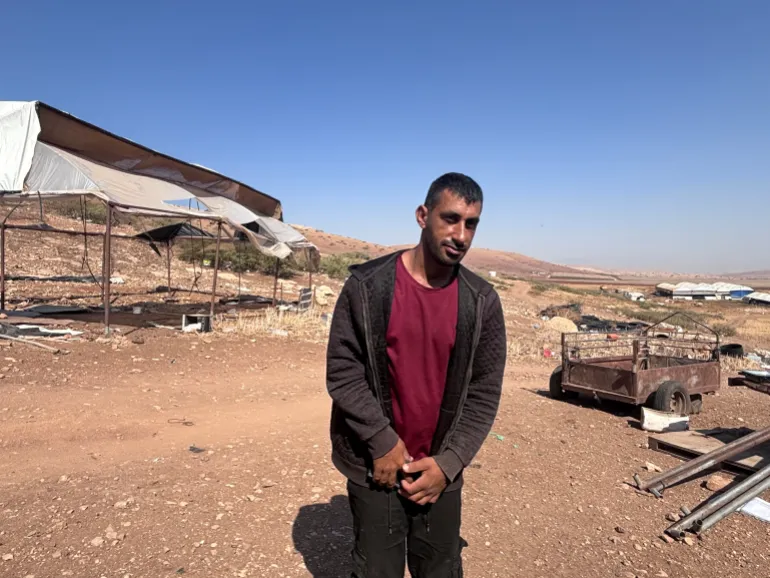
Source link