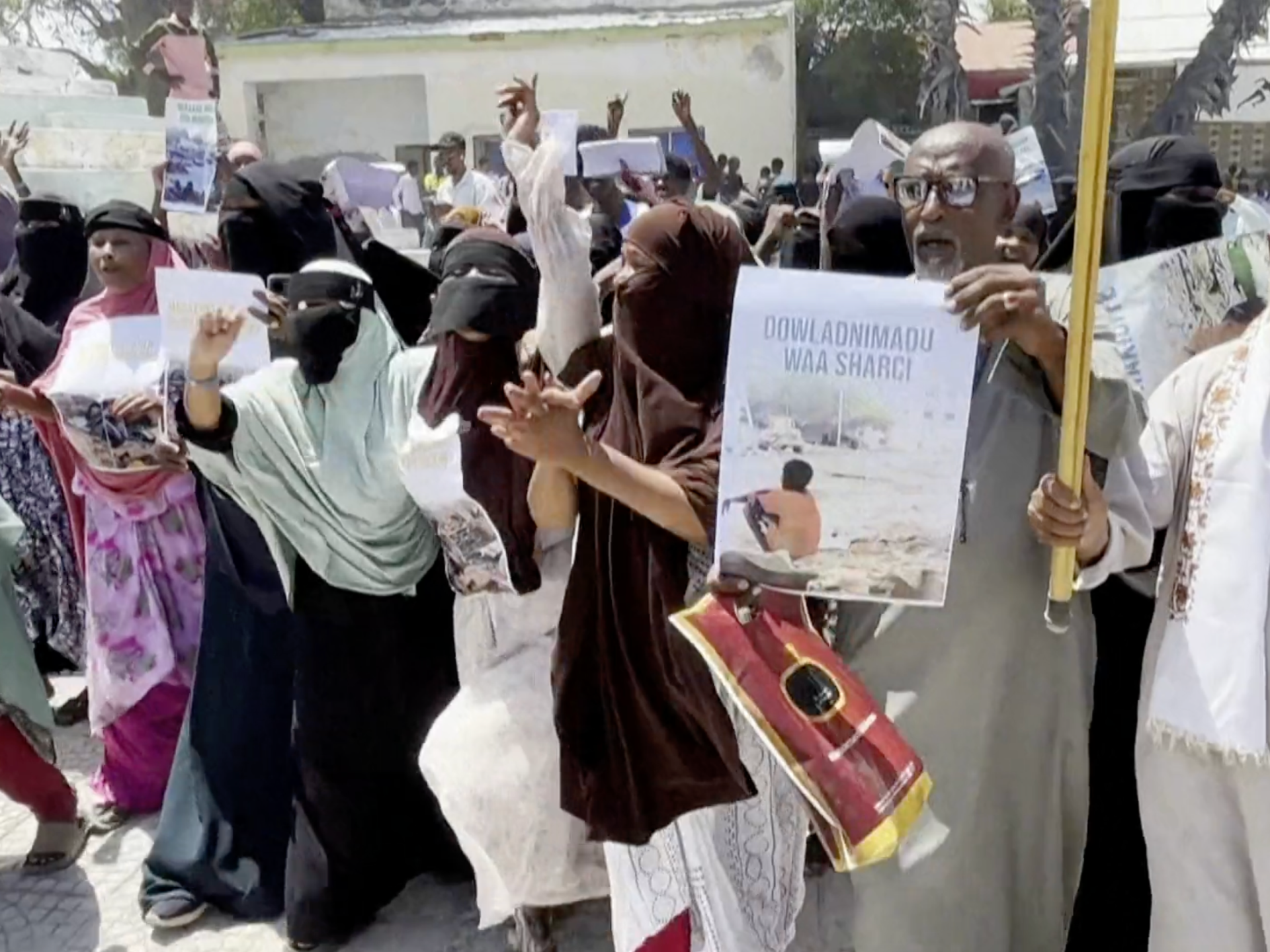
Demonstrators rallied across the Somali capital in support of families displaced by a wave of government-led home demolitions. Opposition figures, who organised the protests, say security forces shot and killed one person while trying to disperse the crowds.
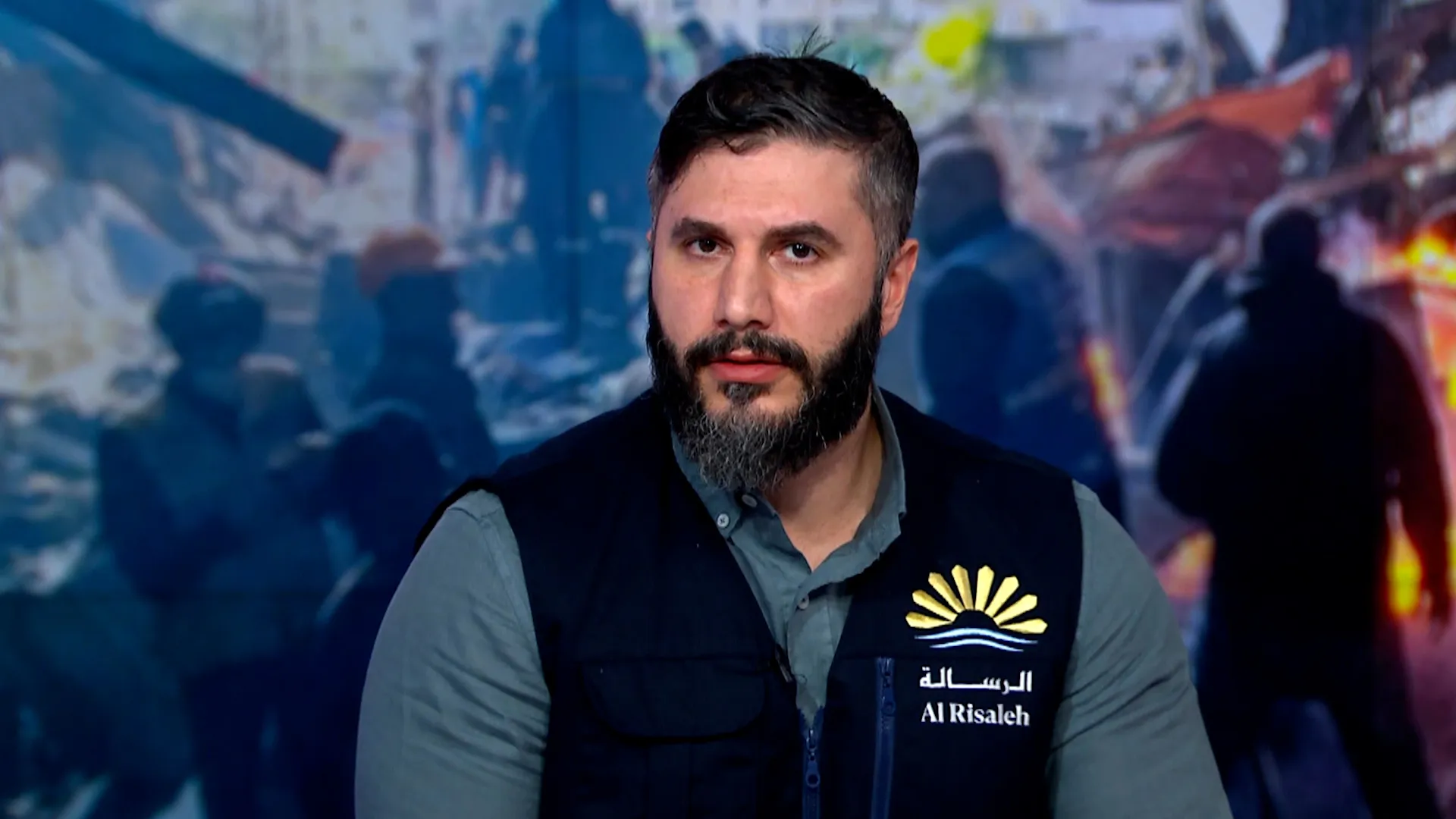
The same tiny tungsten cubes that spray out of Israeli bombs, causing devastating internal injuries to people in Gaza are being found in wounded civilians in Lebanon, war surgeon Dr Tahir Mohammed says. He draws parallels between what Israel is doing in both places and describes the weapons as “indiscriminate”.
Official says US president will likely ‘apply pressure’ on China over Beijing’s purchase of Iranian oil amid war.
Published On 10 May 202610 May 2026
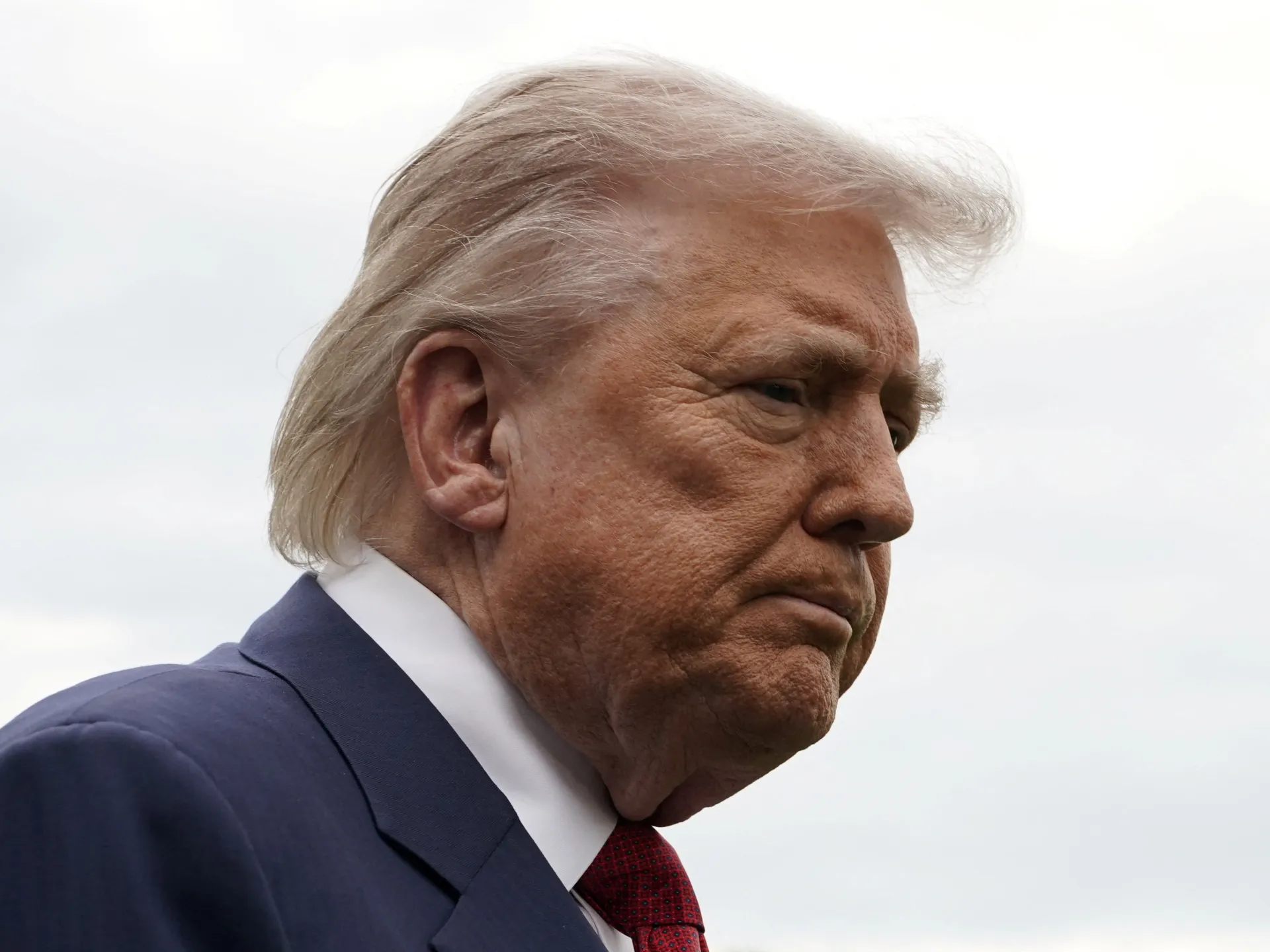
Donald Trump is set to arrive in Beijing on Wednesday evening to discuss the Iran war and other issues with his Chinese counterpart President Xi Jinping.
White House Principal Deputy Press Secretary Anna Kelly said an opening ceremony and meeting will be on Thursday morning, and the trip will conclude on Friday. The US plans to host the Chinese leader during a reciprocal visit later this year.
Recommended Stories
list of 3 itemsend of list
Kelly said that this week’s trip would be of “tremendous symbolic significance” and focus on “rebalancing the relationship with China and prioritising reciprocity and fairness to restore American economic independence”.
Trump’s visit, initially scheduled for earlier this year but postponed in March due to the US-Israel war on Iran, comes as the US president struggles to contain the fallout from the war, both at home and abroad.
A senior administration official told news outlets in an anonymous briefing on Sunday that Trump could “apply pressure” to China on Iran in areas such as oil sales and Tehran’s purchase of potential dual-role military-civilian goods.
US Treasury Secretary Scott Bessent last week accused China of “funding” Iran.
“Iran is the largest state sponsor of terrorism, and China has been buying 90 percent of their energy, so they are funding the largest state sponsor of terrorism,” Bessent told Fox News.
Iran closed the Strait of Hormuz in response to US-Israeli attacks, restricting passage through a key artery of global energy transport.
China has said that it wants to see the war end and hosted Iranian Foreign Minister Abbas Arraghchi last week. At the same time, Beijing has refused to recognise Washington’s “unilateral” sanctions on Iran’s oil sector.
Disruptions stemming from the war have disrupted the global economy, with Asian states that depend on imports from the Middle East especially hard hit.
Trump could also bring up China’s support for Russia during the talks, along with trade and rare earth minerals, a vital resource for the US tech sector. Business executives from aerospace manufacturer Boeing and a handful of agricultural companies are set to travel with the US delegation.
The anonymous administration official said that no change was expected regarding the US stance on Taiwan, a main sticking point in relations between Washington and Beijing. China considers the self-ruling island a part of its territory, but the US has deep security and economic commitments to Taiwan.
Barcelona clinched their 29th La Liga title with a 2-0 El Clasico victory over bitter rivals Real Madrid, opening an unassailable 14-point lead at the top of the table with three games remaining.
Marcus Rashford and Ferran Torres struck in the first half on Sunday to help Hansi Flick’s side clinch La Liga in consecutive years, while consigning Madrid to a trophy-less season.
Recommended Stories
list of 4 itemsend of list
This was only the second time the outcome of La Liga has been decided directly by the result of a Clasico, with record 36-time champions Real Madrid winning their first title in 1932 after a draw with Barca.
Flick’s team were disappointed to be knocked out in the Champions League quarterfinals by Atletico Madrid in April, but still determined to celebrate in style.
“This title is more special for winning it at home against Madrid. Now we have to enjoy it with the fans,” Barca midfielder Frenkie de Jong told Movistar.
“We have been the best team in Spain. Of course, we [also] want to win the Champions League – that’s the objective.
“Next year, we will have another opportunity.”
Madrid arrived at the match embroiled in chaos after midfielder Fede Valverde was ruled out with a head injury following a training ground scuffle with teammate Aurelien Tchouameni, who started.
Barca coach Flick also received bad news before the game, with his father passing away, but he still took his place on the touchline to oversee his side’s comfortable triumph.
The German opted for the energetic Rashford, on loan from Manchester United, on the right wing in place of the injured teenage star Lamine Yamal.
The Catalans, who only needed to avoid defeat, came out with their eyes firmly locked on the prize, racing into a two-goal lead inside 18 minutes.
Rashford opened the scoring with a superb free kick, whipping the ball into the top left corner from 20 yards out, right of centre.
Rashford celebrates scoring his team’s first goal [Lluis Gene/AFP]
Torres doubled the hosts’ advantage at a jubilant Camp Nou, the 62,000-strong crowd enjoying the first Clasico back there since the stadium was reopened.
Dani Olmo produced a clever backheel to allow Torres to burst into the box and ram past Thibaut Courtois.
Gonzalo Garcia, playing in place of injured Madrid superstar Kylian Mbappe, prodded narrowly wide after racing in behind Barca’s high defensive line.
Urged on by coach Alvaro Arbeloa on the touchline, unlikely to be at the helm next season, Madrid battled to stem the bleeding.
Rashford could have added a third before the break but fired wide, with Fermin Lopez unmarked and well placed to finish.
Torres should have struck early in the second half but Courtois saved from the Spain international as he ran through.
Jude Bellingham put the ball in Barcelona’s net but the goal was ruled out for offside, while Joan Garcia thwarted Vinicius Junior as Madrid threatened.
Barca fans batted inflatable beach balls around to taunt the Brazilian over his unfulfilled Ballon d’Or ambitions, and lapped up the party atmosphere.
Courtois saved from substitutes Raphinha, back after injury, and Robert Lewandowski as Madrid saw out the remainder of the match without taking further damage.
Flick’s side remain on course to match the record of 100 points in a league season and can win all their home matches if they defeat Real Betis in the one remaining.
Barcelona’s boss told La Liga TV that he “will never forget this day” following the match.
“It was a tough day for me to start – my father passed away. But my team is fantastic. It is like a family,” Flick said.
“They gave everything today. I am proud of the fans. It is amazing [to win] in this stadium and in an El Clasico against Real Madrid to win La Liga.
“It was not easy. Everyone thought we could win this, but Real is a fantastic team. We played really good and made the goals in the right moment.”
Meanwhile Madrid finish a second consecutive season without a major trophy, staring down the barrel of a summer reshuffle, including former coach Jose Mourinho being linked with a potential return.
Arbeloa congratulated Barcelona and said his side would “learn from what happened this season and work even harder” in comments to the media after the game.
“I feel a greater responsibility now, knowing that our season ended today. The one thing we can’t do is give up, absolutely not,” he said.
“There are three matches left that we must go out and win. Here, we’re defending something much bigger than all of us and much bigger than our personal pride; it’s the Real Madrid crest and millions of fans.”
Adisu Abba wata mata ce mai shekaru 45 kuma uwa ga ‘ya’ya biyar. Ta fito daga Dikwa, Jihar Borno, a arewa maso gabashin Najeriya. Tun kafin rikici ya tarwatsa rayuwarta, ta riga ta fara koyon aikin da zai zama ginshiƙin rawarta a cikin al’ummarta—ta koyi yadda ake taimaka wa mata wajen haihuwa.
An yi garkuwa da Adisu a hannun ‘yan ta’adda na tsawon shekaru uku,a wannan lokacin, ta taimaka wajen haihuwar jarirai biyar. A wannan shirin na #BIRBISHINRIKICI, mun bada labarinta da kuma abin da yake nufi yin aikin ungozoma yayin da take tsare a hannun ƙungiyar ta’addanci ta Boko Haram.
Weekly insights and analysis on the latest developments in military technology, strategy, and foreign policy.
Northrop Grumman’s experimental XRQ-73 Series Hybrid Electric Propulsion AiRcraft Demonstration (SHEPARD) hybrid-electric drone has now taken to the skies. Newly released pictures show that the flying wing-type uncrewed aircraft’s design has also evolved since it first broke cover in 2024. A core goal of SHEPARD is to prove out high-efficiency and very quiet propulsion technology that could pave the way for new operational capabilities.
DARPA announced the XRQ-73 test flight, which was conducted in April from Edwards Air Force Base in California, in a press release today. The Air Force Research Laboratory (AFRL) was also involved in the milestone event.
Two very wide shots of the XRQ-73 in flight that were released today. Northrop Grumman
Scaled Composites, a ‘bleeding edge’ boutique aircraft design house and wholly-owned subsidiary of Northrop Grumman, has been heavily involved in the development of the XRQ-73. The drone evolved directly from the XRQ-72A, another Scaled Composites design developed for the Intelligence Advanced Research Projects Activity (IARPA), which TWZ was first to report on in detail.
“This milestone is not just about a single flight,” Air Force Lt. Col. Clark McGehee, the SHEPARD program manager at DARPA, said in a statement. “The architecture proven by the XRQ-73 paves the way for new types of mission systems and delivered effects. We look forward to advancing this technology through the flight test program and delivering new capabilities for our warfighters.”
“This flight is a step forward in demonstrating the military utility of hybrid-electric propulsion,” DARPA’s press release adds. “Hybrid electric propulsion architectures will drive the development of revolutionary new aircraft designs by offering a combination of fuel efficiency, reduced emissions, and enhanced operational flexibility.”
“Developed to advance propulsion technologies for the Defense Advanced Research Projects Agency (DARPA) Series Hybrid Electric Propulsion AiRcraft Demonstration (SHEPARD) program, the XRQ-73 advances next-generation propulsion for lightweight autonomous aircraft,” Northrop Grumman said in its own brief press release. “The XRQ-73’s innovative hybrid-electric propulsion system combines fuel efficiency, reduced emissions and enhanced operational flexibility – enabling new mission possibilities and supporting the evolution of new aircraft designs.”
The XRQ-73 in its current guise, seen on the ground around the time of the flight test in April. Northrop Grumman
DARPA had originally hoped to see the XRQ-73 make its maiden flight before the end of 2024, and what caused the subsequent delay is unknown. TWZ has reached out to DARPA for more information. What is clear is that the XRQ-73’s design has changed in notable ways since 2024.
Northrop Grumman released this image of the XRQ-73 back in 2024. Northrop Grumman
Most immediately eye-catching is the addition of two vertical stabilizers, one on top of each wing. They are positioned near, but not at the very tips of the wings. It is possible that these might be removed as flight testing expands. The preceding XRQ-72A design also had vertical wingtip stabilizers.
A close-up look at one of the new vertical stabilizers. Northrop Grumman
In addition to the two large air intakes on top of the central section of the fuselage, there is now another, much smaller auxiliary dorsal intake in between. Details about the exact configuration of the drone’s hybrid propulsion system remain limited. There are also at least two new black-colored blade antennas on top of the fuselage.
The new auxiliary intake is seen here on top of the XRQ-73’s fuselage. The two new black-colored blade antennas are also seen here. Northrop Grumman
A fairing with what appears to be a forward-facing camera system is also now present at the front of the center of the fuselage. This is likely intended to at least provide visual inputs for control and additional situational awareness during flight testing. The fairing also sits in between two additional rectangular ‘nostril’ intakes. We have noted in the past that they could help cool the hybrid powerplant and the aircraft’s electronics, or help provide additional clean airflow to the powerplant during takeoff and landing.
A close-up look at the XRQ-73’s nose showing the new fairing that looks to hold a forward-facing camera system. Northrop Grumman
The XRQ-73’s design looks to be otherwise unchanged. A large, faceted fairing, very likely intended as a sensor enclosure, is notably still present below the central section of the fuselage. Test instrumentation and other systems could also be installed in that space to support the drone’s ongoing development.
“No details about the XRQ-73’s expected performance appear to have been released so far, but DARPA says it is a Group 3 uncrewed aerial system (UAS) weighing approximately 1,250 pounds, which will include “operationally representative … mission systems.” By the U.S. military’s definitions, a Group 3 UAS weighs between 55 and 1,320, can fly at altitudes between 3,500 and 18,000 feet, and has a top speed of between 100 and 250 knots.
At 1,250 pounds, the XRQ-73 is set to be substantially larger than the XRQ-72A, the requirements for which called for a drone weighing between 300 and 400 pounds. The XRQ-72A also had a 30-foot wingspan, a length of 11.2 feet measured from the nose to the ends of the wingtips, and a height of four feet when including the vertical wingtip stabilizers, according to schematics The War Zone previously obtained via the Freedom of Information Act.“
What the future might now hold for the XRQ-73 is unclear. DARPA has previously talked about wanting to demonstrate a capability that could be operationalized relatively quickly with SHEPARD. The “RQ” intelligence, surveillance, and reconnaissance (ISR) designation is a clear reflection of that, although the drone could be configured to perform other missions. Hybrid-electric propulsion offers inherent advantages when it comes to reducing infrared and acoustic signatures, and the XRQ-73’s overall design has low-observable characteristics that could help it evade detection by radar.
DARPA
However, a cursory review of DARPA’s proposed Fiscal Year 2027 budget does not appear to show a request for new funding for this effort. It is possible that it has been reorganized and/or rebranded, or has otherwise evolved in scale and/or scope, which is not uncommon for DARPA projects.
Last May, AFRL also awarded General Atomics a contract for a very similar-sounding “hybrid-electric propulsion ducted fan next-generation intelligence, surveillance, reconnaissance/strike unmanned aerial system,” or GHOST. That deal was valued at just over $99 million.
“We’ve been promising something impressive related to hybrid-electric propulsion, and now I can’t talk about it anymore,” C. Mark Brinkley, a spokesperson for General Atomics, told TWZ at that time when asked for more information. “That’s how it goes with these things. Contrary to what you see on the news, the revolution won’t be televised.”
Other relevant hybrid-electric development efforts could be ongoing in the classified realm.
If nothing else, DARPA’s announcement today does show that work has continued on the XRQ-73 since 2024, and that the evolved design has now reached flight test.
Update: 4:46 PM EST –
DARPA has confirmed to TWZ that XRQ-73 flight testing began in April.
“X-plane programs are designed to push the extreme limits of aerospace engineering, integrating entirely unproven concepts and revolutionary designs,” Air Force Lt. Col. Clark McGehee, the SHEPARD program manager, also told TWZ in response to a question about why the first flight timeline was delayed. “As with the XRQ-73, this effort involved resolving complex, unforeseen technical challenges during ground testing and integration.”
“DARPA will continue maturing the hybrid electric propulsion system through a short flight test campaign currently underway,” Lt. Col. McGehee added.
Winger Leandro Trossard scores the only goal of the match as Arsenal survives VAR controversy to win at West Ham.
Published On 10 May 202610 May 2026
Arsenal cleared arguably the most dangerous remaining obstacle in their path to the Premier League title by the skin of their teeth as Leandro Trossard’s late goal secured a dramatic 1-0 win at West Ham United to restore their five-point lead on Sunday.
The visitors were living dangerously at the London Stadium, but Trossard guided home a low shot from Martin Odegaard’s pass in the 83rd minute to spark delirium amongst the Arsenal fans and despair in the home ranks.
Recommended Stories
list of 4 itemsend of list
Arsenal rode their luck and survived a huge scare deep in stoppage time as West Ham substitute Callum Wilson had an equaliser ruled out for a foul after a long video assistant referee (VAR) review.
Victory put Arsenal a step closer to a first Premier League title since 2004, and they will be crowned football champions if they win their last two games at home to Burnley and away to Crystal Palace on the final day.
Arsenal have 79 points from 36 games with Manchester City, who have a game in hand, on 74.
For West Ham, it was a bitter pill to swallow as defeat left them staring at relegation, and they could find themselves four points from the safety zone with two games left if Tottenham Hotspur beat Leeds United on Monday.
If Arsenal do go on to lift the title, the incident in stoppage time described by Sky Sports pundit Gary Neville as the “biggest VAR call in the history of the Premier League” will be just a detail in a season-long slog with Manchester City.
But it could have serious implications for West Ham, who would have deserved a point for a gritty display.
With time almost up and even West Ham keeper Mads Hermansen up for a corner, the ball broke for Wilson, who slammed a shot through a forest of legs and over the line.
West Ham fans went wild, and Manchester City’s probably did, too. Arsenal manager Mikel Arteta looked aghast, but when the VAR instructed referee Chris Kavanagh to look at a possible foul by West Ham substitute Pablo on Arsenal keeper David Raya in the build-up, the stadium fell silent.
He returned to announce that the goal was disallowed and Arsenal could breathe a huge sigh of relief.
Leandro Trossard scores his goal for Arsenal seven minutes from full time [Adrian Dennis/AFP]
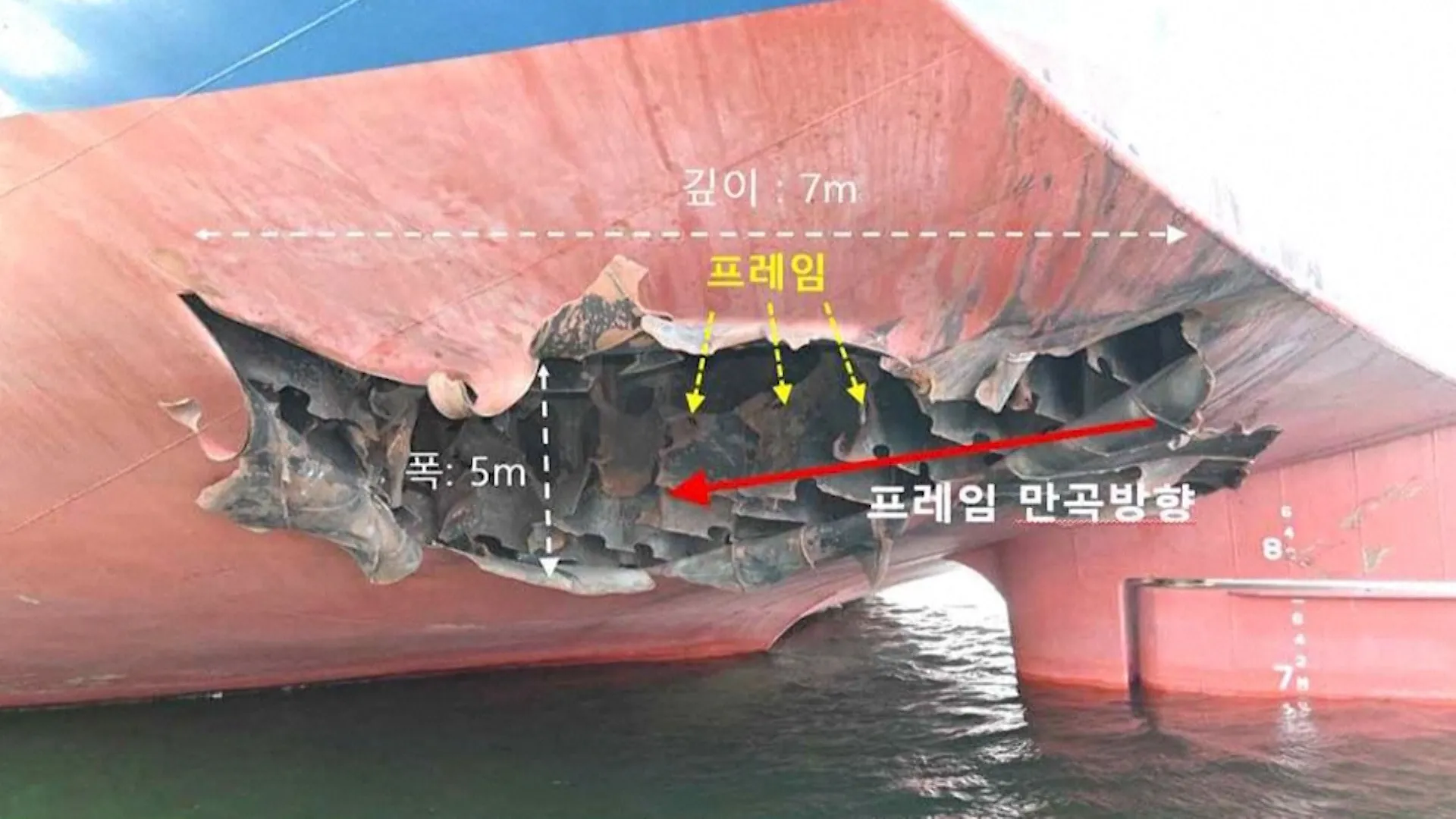
South Korea says it is investigating an incident on May 4 when two unidentified objects struck a Korean-operated cargo ship in the Strait of Hormuz.
The strike caused a fire and damaged the vessel’s stern.
President Donald Trump has warned that the United States will target any Iranian trying to reach the country’s highly enriched uranium, saying that the nuclear material is under constant surveillance by the US military.
In an interview with the syndicated TV show Full Measure that aired on Sunday, Trump appeared to play down the significance of the uranium, which is believed to be buried under the rubble of nuclear facilities, remaining in Iran for now.
Recommended Stories
list of 3 itemsend of list
“We’ll get that at some point, whenever we want. We have it surveilled,” Trump said.
“I did a thing called Space Force, and they are watching. If somebody walked in, they can tell you his name, his address, the number of his badge … If anybody got near the place, we will know about it, and we’ll blow them up.”
Iran’s highly enriched uranium is one of the major sticking points between Washington and Tehran in ceasefire negotiations to end the 10-week US-Israel war on Iran.
The US wants Iran to transfer the uranium outside the country and completely shut down its nuclear programme, but Tehran has stressed that it will not give up its right to a domestic enrichment programme.
Several international media reports have said that the uranium remains under nuclear sites that the US bombed in June 2025, but Tehran has not confirmed the location of the nuclear material.
Last month, Trump announced that Iran had agreed to allow Washington to retrieve the uranium and bring it to the US – claims that Tehran quickly dismissed.
Trump told Reuters on April 17 that the US would work with Iran “at a nice leisurely pace, and go down and start excavating with big machinery” to retrieve the uranium stockpile at the sites.
“We’ll bring it back to the United States,” he added.
Iran’s Foreign Ministry spokesperson Esmaeil Baghaei denied Trump’s claim. “Enriched uranium is as sacred to us as Iranian soil and will not be transferred anywhere under any circumstances,” he said.
Iran is estimated to have more than 400kg (882lb) of uranium enriched at 60 percent purity.
Uranium enrichment is a complex process of isolating and garnering the most radioactive variety – isotope – of the element to produce nuclear fuel.
When enriched to around 90 percent purity, uranium can be used to make nuclear weapons.
In 2015, Iran agreed to a multilateral deal that saw Tehran scale back its nuclear programme and cap its uranium enrichment at 3.67 percent under strict international supervision in exchange for lifting sanctions against its economy.
Trump nixed that agreement – known as the Joint Comprehensive Plan of Action (JCPOA) – and started reimposing sanctions on Iran.
In response, Tehran – which denies seeking a nuclear weapon – began to advance its enrichment programme well beyond the limits set by the JCPOA.
Trump has argued that the ongoing conflict with Iran aims to prevent the country from acquiring a nuclear bomb.
Asked about the rising oil prices due to the war, Trump said: “We cannot let Iran have a nuclear weapon because they’re crazy.”
The average price of one gallon (3.8 litres) of petrol or gasoline in the US has risen to more than $4.50 due to supply issues linked to the Iranian blockade in the Strait of Hormuz, fuelling inflation. It was less than $3 before the war.
Despite the truce that came into effect last month, skirmishes have erupted in the Gulf over the past week as the US continues to enforce a siege on Iranian ports amid Tehran’s Hormuz blockade.
Iranian state-affiliated news outlets reported on Sunday that Iran has delivered its response to the latest US proposal to end the war to Pakistan, which is mediating the talks.
But Trump said the war is not over while reiterating his claim that Iran has been “defeated”.
“They are defeated, but that doesn’t mean they’re done,” the US president said. “We could go in for two more weeks and do every single target. We have certain targets that we wanted, and we’ve done probably 70 percent of them, but we have other targets that we could conceivably hit.”
Iran may negotiate on how it uses nuclear facilities, but it will not destroy uranium or allow it to be moved overseas, senior researcher Sultan Al-Khulaifi says.
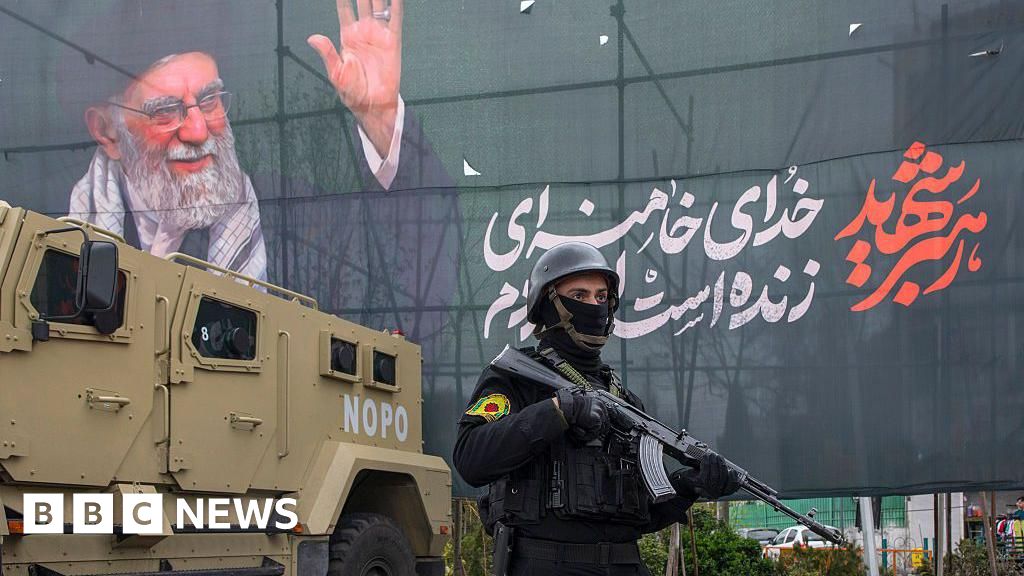
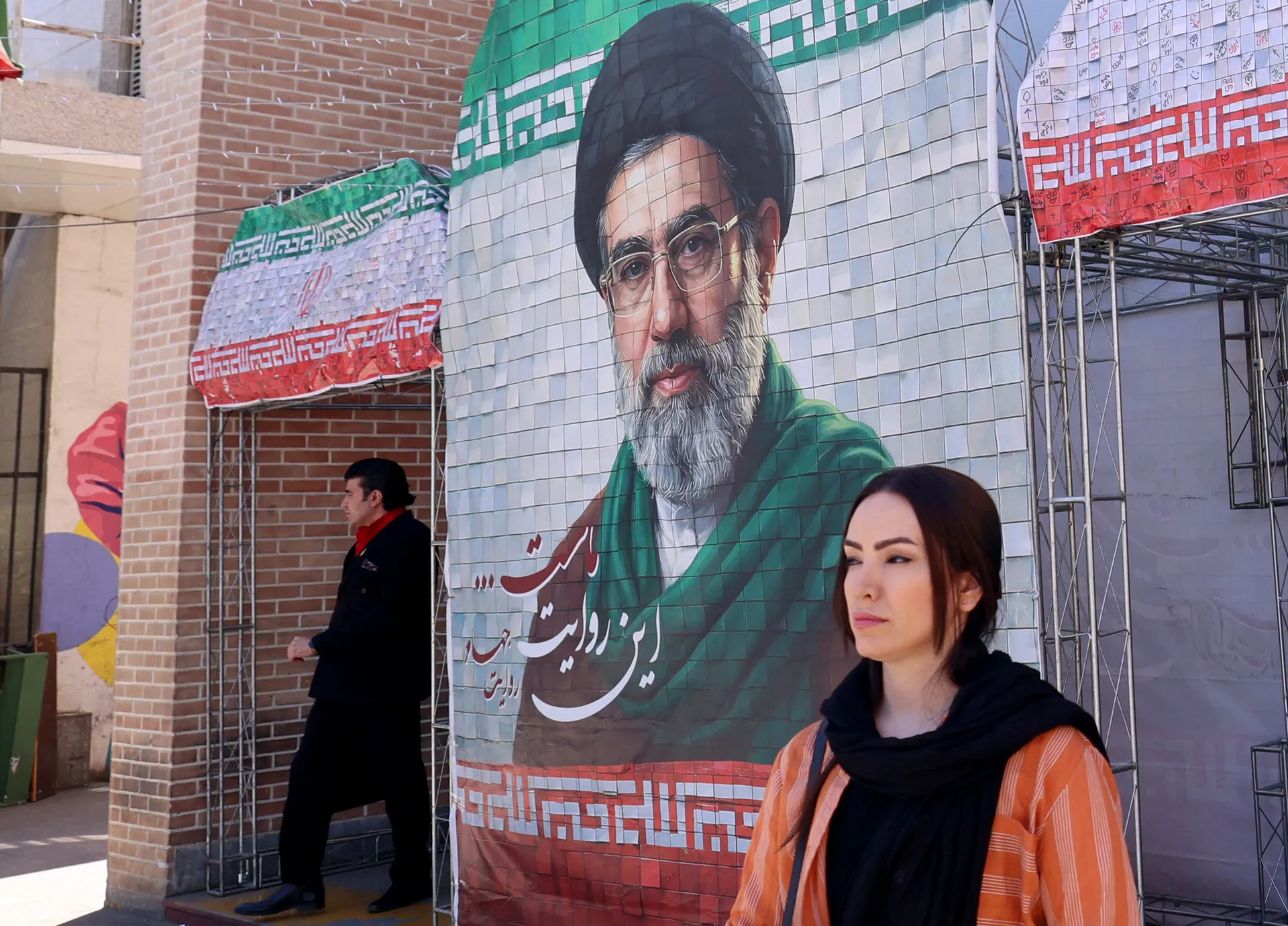
Tehran, Iran – Skyrocketing inflation is jeopardising food security among households in conflict-hit Iran, new figures show, as diplomatic efforts to end the war launched by the United States and Israel intensify.
“The people must realistically understand the conditions and restrictions of the country,” President Masoud Pezeshkian told a group of officials who gathered on Sunday to discuss rebuilding structures damaged or destroyed in US and Israeli attacks.
“It is natural that there are difficulties and problems in this path, but through people’s cooperation and reliance on national cohesion, problems can be solved,” he was quoted as saying by state media.
Pezeshkian’s comments came a day after the Statistical Center of Iran (SCI) said Farvardin, the first month of the Persian calendar year that ended on April 20, had an inflation rate of 73.5 percent compared to the same month of the previous year. The SCI also noted that inflation was five percent higher in Farvardin compared to the previous month.
The Central Bank of Iran, which reports figures based on a different method and with different data sets, reported a slightly lower inflation rate of 67 percent for Farvardin compared to a year earlier, and a seven percent monthly increase.
Although not matched, both figures indicate a considerably accelerating pace for general inflation, which has been among the highest in the world over recent years, and is continuously making Iranians poorer.
A Tehran resident told Al Jazeera she could no longer afford some of the items she could just last month.
“And it’s not just me – I think most people in society right now can’t afford many of the things they want,” she said.
Figures from the institutions also showed that food inflation is much higher than headline inflation, meaning that people are increasingly forced to pay an expanding share of their shrinking salaries on basic items.
The SCI reported a staggering 115 percent food inflation rate for the first month of the year, compared to the same period the year before, with several staple items more than tripling in price.
Solid vegetable oil had the highest increase at 375 percent, followed by liquid cooking oil at 308 percent; imported rice at 209 percent; Iranian rice at 173 percent; and chicken at 191 percent. The lowest price hikes were for butter, at 48 percent, followed by infant formula at 71 percent and pasta at 75 percent.
Majid, a young man who works at a liver kebab shop in the capital, said the eatery has increased prices three times in recent months.
“The price of liver has doubled. When we ask suppliers why, they either say there’s a shortage or that sheep are being exported. Honestly, there’s no real oversight,” he said.
The state-run Consumers and Producers Protection Organization said in a directive sent to 31 governors across Iran on Sunday that new price hikes for cooking oil are “illegal” and “must be returned to previous levels”, without saying how officials expected that to happen amid deteriorating economic conditions.
The country’s embattled currency, the rial, has also been registering new all-time lows over the past two weeks. On Sunday afternoon, it stood at about 1.77 million against the US dollar in Tehran’s open market after marginally recovering. The rate was about 830,000 per US dollar a year ago.
Subsidies and ‘enemy plots’
The response from the government has included offering subsidies and coupons, while trying to crack down on acts such as hoarding that are perceived to be contributing to price hikes.
But this has not been accompanied by a clear macroeconomic stabilisation package as the US presses on with a naval blockade of Iranian ports.
As Iranian media reported on Sunday that Tehran had sent an official response to the text for an agreement earlier proposed by the US through mediator Pakistan, Pezeshkian said, “If there is talk of negotiations, it does not mean surrender.”
People walk through a local market in Tehran [File: Majid Asgaripour/WANA via Reuters]
The government hands out monthly cash subsidies and electronic vouchers to buy essential goods at select stores, which together amount to less than $10 each month per person. Authorities are considering raising the amount, but a hefty budget crunch has made that more difficult.
Pezeshkian and Central Bank chief Abdolnasser Hemmati have said they are aware of the price increases, but have blamed the war that began in late February while coordinating with the judiciary to act against price gauging and hoarding.
A number of lawmakers in Iran’s hardline-dominated parliament, as well as state television hosts and outlets linked to the Islamic Revolutionary Guard Corps (IRGC), have said the price surges are suspicious. They have described the runaway prices as being part of an “economic revenge” campaign by enemies who suffered failures in the military arena.
“I want the people of Iran not to be fooled by the enemy-made price hikes,” a guest on state television’s Ofogh network said on Saturday. “Great things have happened, and great things are ahead. The economic achievements of the war are unrivalled by any other period.”
But some of the economic pain continues to be inflicted as a direct result of a near-total internet shutdown now being imposed by Iranian authorities for a 72nd day.
Numerous officials in the government, internet infrastructure firms, telecommunication companies and other state-linked organisations have emphasised that they are against a tiered internet system that is now being implemented. But they have said they bear no responsibility, since the blackout, which is expected to remain in place until the war ends, is ordered by the Supreme National Security Council.
In the meantime, the combined impact of local mismanagement, Western sanctions, blockade, war and the internet shutdown is squeezing people and businesses hard.
“The startup ecosystem of the country is dead, we are searching for a tombstone for it,” the Guild Association of Internet-based Businesses said in a statement on Saturday.
San Francisco, United States – Greer Dove’s days are packed with studying business and finance, as well as doing administrative work at college, along with caring for her eight-year-old daughter with special needs. But once a week, Dove, a single mother, makes sure to drop in at the food bank in California’s Marin County to pick up vegetables, fruit and other food. Along with the federal government’s food benefits, they keep her housing running.
“We need this so we can keep functioning at a high level,” she says. “She loves fruit, so I make sure to get it,” she says of her daughter.
Recommended Stories
list of 4 itemsend of list
Dove, who is also looking for a full-time job, has worked in restaurants, event management, retail, television shows, office administration and payroll over the years. But she has been on the federal government’s Supplemental Nutritional Assistance Program (SNAP) for six years, and with the food bank, for more than three years. Before she got food benefits, Dove fed her daughter all she had and skipped meals or looked around for snacks in the offices she worked at to get her through the day.
United States President Donald Trump’s One Big Beautiful Bill Act (OBBBA), passed in June, cut SNAP benefits by more than $186bn over the next 10 years to make up for extending cuts to income tax. This could lead to more than 3 million people nationwide, and 665,000 recipients in California, losing such food benefits, according to estimates.
“This will bring a series of cuts that collectively present an existential threat to food benefits,” says Andrew Cheyne, managing director of government relations and public affairs at the County Welfare Directors Association of California.
California’s proposed billionaire tax, which seeks to impose a one-time 5 percent tax on the assets of the state’s more than 200 billionaires to make up for the funding gap created by the OBBBA, got more than 1.5 million signatures in April. It is likely to be on the ballot for the November midterm election.
While most of the nearly $100bn expected to be raised through the tax will go towards filling the gap in health insurance created by the OBBBA, 10 percent will be used to make up for the retrenchment in food benefits.
In California, where more than 5.3 million people, more than any other state, receive food benefits, the impacts of the cuts began to be felt in April when 72,000 immigrants started losing benefits. June onwards, nearly 600,000 recipients will be screened for work eligibility. Recipients, including those who are homeless, seniors, foster youth and veterans, will have to work, study or volunteer to receive food benefits. Failing the screening to meet work requirements for three months will lead to their food benefits being cut.
Brian Galle, professor of law at the University of California at Berkeley and one of the tax measure’s authors, says that in California, the state that introduced gig work, “jobs are increasingly precarious. You may find enough work or not. You may get tips or not. But nutrition needs are steady.”
Making impossible choices
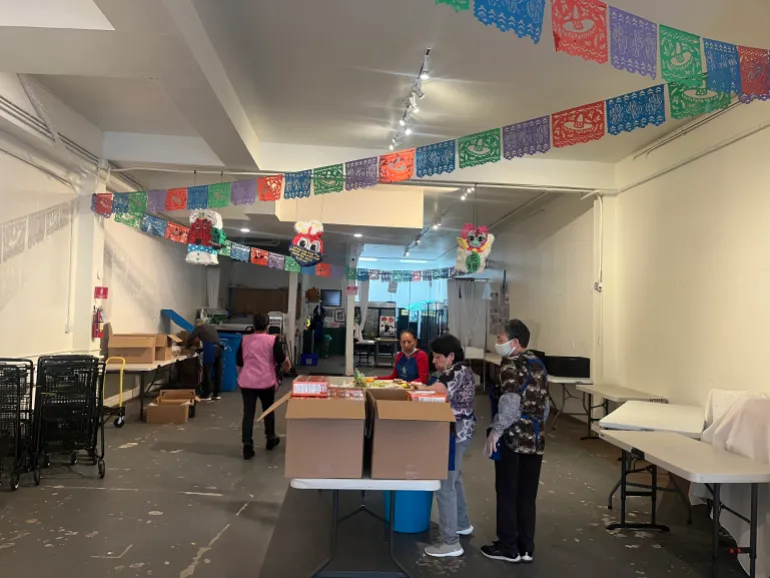
On a recent Friday morning, new members lined up to enrol at a whitewashed, bunting-festooned La Ofrenda food bank in San Francisco’s Mission district. The food bank doles out fresh vegetables, fruit and bread that have been donated by large grocery stores once those products neared expiration date.
Gladys Lee had taken a 45-minute train ride after a friend told her about it. Lee worked at downtown San Francisco’s Hyatt hotel as a room cleaner for three decades until a back injury meant she could not push the heavy cleaning carts any more and had to leave. After seven years of struggling to find work, food was getting scarce, and Lee found her way to La Ofrenda. She packed what she could into a carton and held it in her arms for the train ride back.
Volunteers gathered at the La Ofrenda food bank in San Francisco’s Mission District [Saumya Roy/Al Jazeera]
Food benefit rolls have shrunk by more than 3.3 million nationally in the six months from July 2025, when the OBBBA was enacted, to January 2026.
In California, the rolls of Calfresh, as food benefits are known in the state, shrank by 288,000 or 6 percent from July 2025 to February 2026, according to analysis by the Center for Budget and Policy Priorities, a Washington, DC-based think tank. This reduction in rolls happened even before the OBBBA cuts began.
Brooke Rollins, the agriculture secretary, wrote in a recent essay that the shrinking of SNAP rolls reflected an ebullient economy and buoyant job growth.
“The drop in SNAP recipients affirms that many Americans are moving from welfare to work,” she wrote. “It is no secret that Trump’s massive tax cuts and deregulation efforts are unleashing robust, private sector-led economic growth, which are fueling trillions in investments, booming wage growth”.
But unemployment remained stable at about 4.4 percent since July 2025, according to the Bureau of Labor Statistics data, while SNAP rolls shrank.
“This last time we saw such a steep, quick decline, other than during natural disasters, is three decades ago when welfare reform was enacted,” says Dottie Rosenbaum, senior fellow and director of Federal SNAP Policy at the Center for Budget and Policy Priorities.
Nationally, SNAP rolls shrank by 8 percent, while in California, they shrank by 5.5 percent, in part because the work eligibility requirements were delayed until June, while some other states have already implemented them.
At La Ofrenda, Roberto Alfaro, executive director of the nonprofit Homey, says he started the food bank when food costs went up during the pandemic. They have stayed high, he says. Now he sees people doing day jobs and night jobs and coming for food when they have paid rent.
“People are making impossible choices,” says Keely O’Brien, a policy advocate at the Western Center for Law and Poverty.
While California is the world’s fourth-largest economy, growth has come with a soaring cost-of-living crisis.
“With rising housing and utility costs, few households can dedicate that much of their income towards food,” O’Brien says.
The OBBA has also shifted the administrative cost of meeting work eligibility requirements to states, and beginning next year, part of the cost of SNAP will also fall on states.
“To make requirements more stringent, you are creating more government, more bureaucratic logjam,” says Jaren Sorkow, state director for the Children’s Defence Fund.
This has already led to a 51 percent drop in SNAP rolls in Arizona, which has begun implementing the OBBBA cuts, according to data by the Center for Budget and Policy Priorities.
Food being given out at the La Ofrenda food bank in San Francisco’s Mission District [Saumya Roy/Al Jazeera[
Making something from nothing
Several measures to counter the $100bn gap in funding for health insurance and food benefits created by the OBBBA have been floated in California. The biggest of these is the one-time 5 percent tax on those with assets of more than a billion dollars. The tax will raise $100bn, its authors estimate.
As it seems set to be voted on in the November election, it faces mounting opposition from the state’s tech entrepreneurs who have funded measures to undercut the tax.
Tech entrepreneurs have called it an economic 9/11, saying taxing their assets, including shareholding in startups, will lead to a flight of capital and innovation from the state. Sergey Brin, a cofounder of Google Inc, now spends a week in Nevada and a week in his Bay Area offices and has spent more than $57m on opposing the billionaire tax. He has backed two measures that undercut the billion tax, which have also received 1.4 million and 1.5 million signatures and are also set to be on the ballot for the November election.
One of these measures prohibits future taxes on personal property, including financial assets, savings and retirement accounts, as well as intellectual property. The other would increase audits of taxpayer-funded programmes, and includes language that would essentially invalidate the billionaire tax.
In a recent statement to The New York Times, Brin said, “I fled socialism with my family in 1979 and know the devastating, oppressive society it created in the Soviet Union. I don’t want California to end up in the same place.”
The coalition of unions backing the billionaire tax is bracing for the fight ahead. “We expect to be outspent,” says Kris Cuaresma-Primm, director of partnerships for the coalition that is backing the billionaire tax. “We will keep communicating to people that there is a tidal wave of pain coming from the cuts, and we want to reclaim the losses from the OBBBA.”
Giulia Varaschin, senior tax policy adviser at the International Tax Observatory, who recently coauthored a study on wealth taxes, says there is little academic evidence that such taxes cause the wealthy to leave at a notable scale. “There is only a marginal flight with very little, if any, economic impact,” she says.
The study, coauthored with the economist Gabriel Zucman, who supports the California billionaire tax, did find that wealth taxes had not raised as much revenue as estimated in several European countries and became less popular as a result.
Varaschin says this was because these taxes were levied on a larger set of the wealthy, which included homeowners or small businesses, rather than the ultra-rich or billionaires. The taxpayers could hardly afford to pay it, and the government made exemptions instead. These taxes also did not touch assets, where much of the wealth of the ultra-rich lies, Varaschin says.
The California tax remedies this by taxing only billionaires and taxing assets, including shares in companies.
Daniel Shaviro, Wayne Perry professor of taxation at New York University, says, “Traditionally, these taxes can be hard to enforce because tax administration don’t want to go after these people.”
Even if it passes, “The governor could just say this is not a high priority for him and not enforce it,” Shaviro says, referring to Governor Gavin Newsom, who has opposed the tax.
But Primm says, “The governor is out of touch with Californians on this”.
Newsom is in the last year of his last term as governor. However, nearly all the candidates running for the June 2 primary for governor, except billionaire Tom Steyer, who is running as a progressive Democrat, also oppose this measure. While some have said this will lead to a flight of capital, others say the spending plan does not include expenses for education, which was not cut in the OBBBA.
Greer Dove, who gets food through Calfresh and the San Francisco Marin Food Bank for herself and her daughter, says the looming food benefit cuts are worrying. “The anxiety of it all is adding up. I could be next.”
HumAngle Media, a Pan-African publication covering conflict, humanitarian, and development issues, held an X Spaces on Saturday, May 9, to discuss ethical dilemmas surrounding financial assistance to vulnerable sources, especially for journalists reporting from conflict zones and areas affected by humanitarian crises.
The conversation was inspired by a recent HumAngle analysis examining the issue. Ahmad Salkida, HumAngle’s Editor-in-Chief and a veteran journalist who authored the article, argued that “in theory, [journalism] is expected to observe some emotional distance from its sources and the stories they tell. However, that model is inoperable in conflict-affected regions of northern Nigeria and the Sahel.”
The article sparked widespread debate, particularly among journalists and media educators. While some argued that reporters should remain strictly bound by professional ethics, others contended that it is difficult not to extend a helping hand, especially when the source is struggling with basic needs like food and water.
Hauwa Shaffii Nuhu, HumAngle’s Managing Editor, who moderated the X Spaces, opened the conversation with the story of Kevin Carter, a South African journalist who died by suicide three and a half months after being awarded the Pulitzer Prize for feature photography. The award-winning image showed a visibly malnourished child in Sudan who collapsed to the ground while a vulture lurked in the background.
In his suicide note, Kevin said, “I am haunted by the vivid memories … of starving or wounded children”. Hauwa noted that Kevin’s experience shows that the conversation about offering support to vulnerable sources in conflict-affected or humanitarian crisis-hit regions has serious emotional and ethical real-world consequences.
The conversation was enriched with insights from other speakers, including Lami Sadiq, a data and investigative journalist; Daniel Ojukwu, an investigative journalist with Foundation for Investigative Journalism; and Ibrahim Adeyemi, HumAngle’s Investigations Editor.
The speakers shared instances in which they felt compelled to offer bags of water, food, and sometimes money to people who were evidently struggling. They agreed that being a journalist does not excuse one from basic human decency and empathy.
Design by Akila Jibrin/HumAngle.
Lami stressed that it is important to distinguish between support offered out of humanity and responsibilities carried out in a professional journalistic capacity. She emphasised that when the source outrightly demands payment at the start of an interview, journalists should not only not pay the source but also seek other sources to replace them, to maintain credibility.
“It makes everything transactional, and that affects the credibility of the journalists and the report in question,” she said.
While it is sometimes difficult to deal with sources who are used to getting humanitarian aid in exchange for information, Lami said journalists must stand their ground and use other sources, especially if the issues to be reported are not exclusive.
Hauwa emphasised that helping vulnerable sources to understand that telling their story is in their best interest will help address issues such as financial compensation, especially when dealing with sources who can be very demanding.
While speaking on the risks of financially supporting sources, Daniel urged journalists to be mindful of directly supporting sources, as doing so might incriminate them if the sources are later engaged or are linked to criminal networks.
“If a source you once offered money to is later linked with criminal activity, it could look really bad on you. In Nigeria, you might even be dubbed a terrorist financier when all you are doing is your job as a journalist. We have seen this happen many times in Nigeria,” he said.
Daniel added, “When I interact with sources or with fixers, I have to profile everyone I’m interacting with. Sometimes, I have to withdraw from sources or fixers because of the manner in which they approach matters.”
While paying for information remains unethical in principle, there are distinct instances in which journalists say they must step in to provide financial aid.
Drawing on his field experience, Ibrahim recounted a time when he had to assist a source in taking her child to the hospital due to a medical emergency. He paid for the medical bills, and when the doctor said the child might have died if they had shown up an hour later, Ibrahim said he was glad he had helped.
“Acting first as a human is at the core of humanitarian journalism,” Ibrahim stated.
However, he stressed that moments requiring urgent humanitarian intervention should not blur ethical boundaries in reporting. Ibrahim further called on editors to educate reporters on the challenges they might face when dealing with sources who require monetary compensation for information.
“They [reporters] should always look for ethical alternatives rather than compromising their standards just to get the stories,” he said.
The speakers also urged journalists to be mindful when dealing with displaced persons or vulnerable communities, as they may exaggerate their situation to generate sympathy, believing it might lead to aid. For journalists, this makes verification especially important, even in highly emotional reporting environments.
Get our in-depth, creative coverage of conflict and development delivered to you every weekend.
Subscribe now to our newsletter!
That same need to maintain professional boundaries also came up in discussions about interviewing experts. Daniel, when asked whether experts should be paid for granting interviews, stated: “Never do so.” Instead, he stressed that building rapport with experts before they are needed helps address such issues.
As Russia held its most scaled-back Victory Day parade in years with Vladimir Putin suggesting the war on Ukraine is ‘coming to an end’, Theresa Fallon argues Volodymyr Zelenskyy has played a bad hand of cards very well in order to gain momentum against Moscow.
A fragile ceasefire in the US-Israel war on Iran is coming under growing strain as several Gulf countries have reported drone attacks.
Qatar said on Sunday that a drone struck a cargo ship in Qatari waters, sparking a fire, while Kuwait and the United Arab Emirates said they repelled drone attacks.
Recommended Stories
list of 3 itemsend of list
Though no Gulf country reported casualties in the latest attacks, they have put pressure on the fragile ceasefire, which took effect on April 8.
Qatar’s Ministry of Defence said the freighter had been arriving in the country’s waters from the UAE capital, Abu Dhabi, and was hit by a drone northeast of the port of Mesaieed.
“The vessel continued its journey toward Mesaieed Port after the fire was brought under control,” the ministry said.
The United Kingdom Maritime Trade Operations (UKMTO) said a bulk carrier reported being struck by an “unknown projectile”, and a small fire had been extinguished, but there were no casualties from the incident. “There is no reported environmental impact,” it said.
Kuwait’s Defence Ministry said a “number of hostile drones” were detected in the country’s airspace at dawn. In a post on X, a spokesperson said the drones were dealt with “in accordance with established procedures”, but did not specify where the drones were launched from.
The UAE Defence Ministry said two Iranian drones were intercepted.
“UAE air defence systems successfully engaged two UAVs launched from Iran,” the ministry said in a statement on X.
Ceasefire tested
The Trump administration has said the truce is still in effect, but a naval battle has been taking place in the Gulf region, with Iran restricting traffic through the Strait of Hormuz, a strategic waterway through which a fifth of traded oil transited before the war, and the United States imposing a blockade of Iranian ports.
Several attacks have been reported on ships in the Gulf and the countries in the region over the past week.
On Friday, the US struck two Iranian oil tankers, saying they were trying to breach its blockade of Iran’s ports.
On Tuesday, the UAE said it came under attack from Iranian missiles and drones for the second day in a row. Iran’s Islamic Revolutionary Guard Corps (IRGC), however, denied the claim.
The IRGC Navy on Sunday reiterated its warning that any attack on Iranian oil tankers or commercial vessels would be met with a “heavy assault” on one of the bases in the region used by US forces and enemy ships.
The spokesperson for the Iranian parliament’s foreign policy and security committee, Ebrahim Rezaei, said Tehran’s “restraint is over”.
“Any aggression against our vessels will be met with a heavy and decisive Iranian response against American vessels and bases,” Rezaei wrote on X.
“The clock is ticking against the Americans’ interests; it is to their benefit not to act foolishly and sink themselves deeper into the quagmire they have fallen into. The best course is to surrender and concede concessions. You must get used to the new regional order,” he added.
Talks to end the war
While the truce remains in effect, President Donald Trump has repeatedly threatened to resume the US bombardment if Iran does not accept a deal which includes reopening the Strait of Hormuz and rolling back its nuclear programme.
Iran is still mulling its response to a 14-point proposal by Washington, with Iranian frozen assets and war reparations among other main sticking points.
In a meeting with US Secretary of State Marc Rubio on Saturday, Qatar’s Prime Minister Sheikh Mohammed bin Abdulrahman bin Jassim Al Thani pushed for all parties to respond to the ongoing mediation efforts and to reach an agreement for lasting peace.
Qatar’s prime minister also held a phone call with Iran’s Foreign Minister Abbas Araghchi, the Qatari foreign ministry reported on Sunday.
Sheikh Mohammed told Araghchi that Iran’s use of the Strait of Hormuz as a “pressure card” would only deepen the crisis in the Gulf, and said all parties in the conflict should respond to mediation efforts to end the war.
Reporting from Tehran, Al Jazeera’s Tohid Assadi said when it comes to diplomatic engagement, it seems that the US and Iran want the content of any negotiations to remain private.
Meanwhile, there is a mixture of different sentiments among Iranian citizens, he noted.
“Since the early days of the war, people have gathered to show their sense of nationalism and support for the political establishment,” he said.
“But we also know that there is a sense of frustration, especially when it comes to soaring prices and economic difficulties,” he added.
At a meeting on the reconstruction after damage caused by the war, President Masoud Pezeshkian said negotiations with the US on ending the war do not mean Iran is surrendering.
“The goal is to realise the rights of the Iranian people and defend national interests with authority,” he said.
Central banks hold rates steady as energy shock tests inflation fight.
Caught between rising inflation and slowing growth, the United States Federal Reserve, the European Central Bank and the Bank of England are keeping interest rates and borrowing costs steady.
That’s despite rising energy bills, fuel and food costs squeezing businesses and households worldwide.
The International Monetary Fund is warning of a global slowdown, and no one knows how long the energy shock set off by the US-Israel war on Iran will last.
The impact will be felt hardest in emerging markets and developing nations. Central banks face a tough choice: fight rising prices or support a weakening economy.
Becerra argues that there are economic conditions for a gradual restoration of the minimum wage. (Venezuelanalysis)
Adelmo Becerra is a Venezuelan trade union representative from the National Institute for Training and Socialist Education (INCES) and also a member of David Hernández Oduber Revolutionary Current (CREDAHO). In the past, he worked as an instructor at INCES and as a worker in the steel industry in Ciudad Guayana. In this interview, Becerra discusses the Venezuelan government’s recent labor policies under US sanctions, the growing labor reform prospects, and the present struggles and challenges facing the working class.
On May 1, the Venezuelan government raised non-wage bonuses while maintaining the minimum wage frozen. What was your reaction to these announcements? How do you place them in the context of recent labor policies in Venezuela?
The announcements represent a continuity of the labor policies of recent years. There had been expectations for restoration of the minimum wage in the short term. According to Article 91 of the Constitution, it must be adjusted once a year. Naturally, it would be a partial and limited restoration. But it is important to place the announcements in the context of various processes currently unfolding in the labor sphere.
In Venezuela, the Social Dialogue Forum, a body coordinated by the International Labour Organization (ILO), has been in place since 2021. Several trade union federations participate in this forum, including the Independent Trade Union Alliance of Venezuela (ASI), to which the INCES union belongs, the Venezuelan Workers’ Confederation (CTV), the Bolivarian Socialist Workers’ Federation (CBST), as well as government representatives. The Social Dialogue Forum is not binding, but Venezuela has ratified conventions, including Convention 26, which establishes consultations with trade union organizations for setting the minimum wage. However, a mechanism for establishing it has not yet been agreed upon.
At the same time, the government led by Acting President Delcy Rodríguez has established the National Dialogue for Labor Consensus, which includes the CTV, ASI, and CBST labor federations, along with representatives from business associations FEDECÁMARAS and FEDEINDUSTRIA, and government officials.
Then there is the struggle on the streets that has unfolded in the country in recent years. I would single out the August 2018 Program for Growth, Recovery, and Economic Prosperity as a starting point. This program produced two instruments that have denied wage and labor rights established in collective bargaining agreements, even disregarding the Constitution and labor legislation. I am referring to Memorandum 2792, from October 2018, which sets out the broad guidelines regarding the suspension of collective bargaining rights. And then there is the 2021 ONAPRE Directive, which addresses its specific application. Both instruments remain in force, and their repeal has been a constant demand in the workers’ struggles.
So, back to May 1, there was no restoration of the minimum wage. However, the announcements stem from agreements reached at the National Dialogue for Labor Consensus. And the signed minutes refer to a “wage consultation process” that will begin in May. This indicates that the issue of the minimum wage is far from settled. Similarly, the agreements “urge” the private sector to establish this same US $240 income floor, specifying that it may be through “non-wage bonuses,” although in reality there are no mechanisms to enforce it.
But the minimum wage is not an isolated issue. We have heard spokespersons from both the government and the private sector speak of labor reform. Just in recent days, in a meeting of the Social Dialogue Forum, one of the agreements was to “coordinate consultations of labor-related laws with the National Assembly.”
Adelmo Becerra during a rally in 2023. (Frenpodes)
Let us take a closer look at the issue of bonuses versus wages. What are the consequences of this “bonus-ization” policy?
The main impact is on workers’ entitlements, specifically in the form of social benefits. These benefits accumulate over the course of the employment relationship, and their primary function is to recognize seniority so that it can be taken into account when paying out benefits.
But there is also another concept: retroactivity. This means that benefits are paid based on the final salary. Thus, when an employment relationship ends at a private company, the benefits paid as compensation are calculated based on the final wage and the duration of the employment. The same applies to those retiring from the public sector, or from a private company that offers a retirement plan –which is very rare in Venezuela.
This issue is very important because it has been at the center of the historical Venezuelan working-class struggles following the oil-led industrialization and the 1936 Labor Law. Social benefits allowed Venezuelan families to have assets, purchase homes or other property, and also served as a safety net in contexts of unemployment or economic crisis. This safety net no longer exists today because the minimum wage has been effectively eliminated.
Then there are other important factors, such as social security contributions, which fund the Venezuelan Social Security Institute (IVSS). This is a universal solidarity-based system in which both employers and employees contribute, and it serves as the economic foundation for old-age pensions and other IVSS social support initiatives, such as in healthcare. So, this system is also in crisis because contributions are computed based on wages.
The result is that for the private sector, both social security contributions and severance pay are practically free right now, and that in turn affects job stability.
Speaking specifically about INCES, which is a state-run training institute, what is the current employment situation like? Do the staff work full-time?
According to data recently provided to us by the authorities, there are approximately 11,500 people on the payroll, 6,800 of them active workers, and the rest are retirees. The vast majority receive only the “economic war” and bonuses, now set at $200 and $40 a month, respectively. Through our collective bargaining agreement, retirees also receive the food bonus, which is not the case in general in the public sector.
In recent years, as a union, we have held discussions with INCES authorities and the Ministry of Labor –which oversees the institute –to ease the requirement that people come to work every day while we try to secure better conditions. Simply put, if their income isn’t enough, they should have the option of trying to find a second or third job. With the recent increases in bonuses, the authorities are putting more pressure on workers to return to full-time work, but it’s complicated.
We are still in that struggle to improve conditions, even though we have not even been able to make progress on a memorandum of understanding to improve the socioeconomic clauses of the current collective bargaining agreement. But that’s the priority.
Turning now to the private sector, you have participated in the Observatory for Labor Dignity, which has investigated current working conditions in Venezuela. In general terms, why the focus on the private sector? And what is the reality of that world?
The first reason is that unionization rates in the private sector have historically always been very low in our country. At its peak, in the 1970s, it reached 30%, and today it is likely below 15% –and that is being optimistic. We must take into account the massive migration of recent years. It is a very low unionization rate, and in sectors such as retail or services, there are practically no unions.
Consequently, the level of job insecurity and vulnerability is much higher, especially given the government’s policy of restraining official workplace inspections based on tacit agreements with the private sector under the pretext of “promoting employment.”
One issue that came up repeatedly was the lack of maternity protection which was one of the advances of the 2012 Labor Law. Right now, in the companies we investigated, such as [department store chain] Traki or [textile distributor] El Castillo, no woman wants to get pregnant because that would mean immediately losing their job. Not only that, but it would also make it impossible to get a reference letter or a recommendation for another job.
It is important to stress that the approach to undermine or marginalize collective bargaining agreements was not limited to the public sector. The private sector also adopted it. Under the guise of “protecting jobs”–claiming that companies would go bankrupt otherwise –many employers sent workers home on minimum wage, with some being called back to work at the employer’s discretion.
Given the context of crisis and precariousness, under US economic sanctions, that has persisted for several years now, is the impact on workers’ awareness noticeable?
Indeed, there is a very acute lack of awareness regarding labor rights. The new generation of workers is entering the workforce with virtually no knowledge of the rights they hold by law, in part because they have never had access to them.
So, issues like employment contracts, pay stubs, or even working hours themselves are a problem. It is very common to have 10, 12, or even 14-hour workdays, or for the two days off per week not to be upheld. At Traki, this is usually respected, although the two days are not necessarily consecutive. In El Castillo, the average is one and a half days. In El Castillo, there is also a practice of having workers sign their contract and a resignation letter at the same time, which is obviously illegal.
Another characteristic is high turnover. Fixed-term contracts have become the norm. Although after several contracts the law grants the right to continued employment, this is practically nonexistent. The vast majority of people move around a great deal between jobs. This is, of course, made possible by the fact that benefits are nearly non-existent and it is extremely cheap to dismiss a worker, which in turn keeps people in a much more precarious situation.
But there is an important factor to consider: the shift in subjectivity –and this, of course, is not a phenomenon unique to Venezuela. A few days ago, I watched an interview with a North American researcher who found that for young people in the US a job at Starbucks seems like a good opportunity –better than average. Here, in some of the testimonies we collected, young people expressed satisfaction with working at the Traki department stores. They earn some $250 a month, work 9- or 10-hour shifts –while conditions elsewhere are worse –have two days off a week, and would like to stay there. Therefore, the notion of work with rights has also eroded. Issues like overtime pay, not to mention social security, become irrelevant due to the precariousness of the present. The employment relationship, which includes rights and mechanisms to protect them, is beginning to be viewed simply as a commercial transaction.
Former President Hugo Chávez wrote “social justice” as he enacted the 2012 Labor Law. (Archive)
Labor reform talks are underway. Government spokespeople talk about “updating” the law following the impact of US sanctions, while private sector spokespeople are also voicing their demands. What is currently at stake?
I think there are several aspects to consider. We are clearly witnessing an aggressive campaign being waged by the media, along with well-known economists and influencers, to impose a narrative that any wage increase will cause inflation. As such, the only way to raise wages is to reduce employers’ responsibilities and eliminate the retroactive nature of labor benefits.
The 2012 Labor Law reinstated the calculation of benefits based on the last salary. This had been modified, amid much controversy, during the Caldera administration in the 1990s. Still, unlike proposals we see now, retroactivity was not completely eliminated. There is a proposal to let workers choose between receiving benefits immediately or accumulating them, which completely distorts the concept and takes advantage of current economic difficulties. If wages are insufficient, workers obviously prefer to collect as much as they can right away. Even if the current $240 minimum income was turned into salaries, this would represent less than 50% of the food basket for a family, according to different estimates.
I believe it is essential to reject the narrative promoted by groups like Fedecámaras, to reject the premise that we must give up our rights and historic achievements because there are no conditions to sustain them. For starters, there is a lack of transparency and information. We do not even have reliable information on the size of the economically active population. The last census was in 2011, and following the massive migration over the past decade, we do not know what the current picture looks like.
According to 2021 data from the National Institute of Statistics (INE), there were roughly 4 million workers in the formal private sector, just over 3 million in the public sector, and around 5 million pensioners. Therefore, with that precise data, and with transparent information on revenues, it would be possible to quantify whether or not there are resources. Because GDP was heavily hit by the US blockade but has been growing—according to the Central Bank, for 20 consecutive quarters –but the last adjustment to the minimum wage, to $30 per month, was in March 2022.
Another piece of data we lack is the distribution of surpluses among the workforce, private capital, and the state. According to research by former Minister Víctor Álvarez, the labor share reached 40% by 2010. Currently, according to estimates by researcher Carlos Dürich, that figure may be around 20%, which is what is typically observed in African countries with high levels of poverty and inequality.
We need all that data if we want to discuss what is possible or not, and how the wealth that is generated will be distributed. This is especially true in this context, where, outrageously, the US controls Venezuela’s oil sales. Now the Central Bank will be subject to external auditing, but the public still lacks information. So there is a second layer of opacity there.
In summary, under the present conditions, with an unfavorable correlation of forces and foreign control over the Venezuelan economy, it is not possible to restore the minimum wage and have it cover living costs, as established in Article 91 of the Constitution. Nevertheless, economists and trade union federations have argued that there are conditions for a partial restoration.
In this complex context, both domestically and internationally, what is the path forward for the workers’ struggle in the country?
For me, there is one fundamental factor –one that has been evident in recent years –and that is social pressure. Workers are the only force that has exerted pressure on the government, and to some extent on the private sector as well, particularly since 2022. In 2023, the government placated the protests by introducing the “economic war” bonus. The minimum wage had been devalued to $5 at the beginning of the year, and 15 days later the government set the bonus at $25, and then in May at $70. Even if it happens through non-wage bonuses, it is a struggle with the bourgeoisie over the country’s income.
The May 1 increase, again via bonuses, is also a response to pressure from the streets. We will now see what happens with the wage consultations and labor reform plans. The challenge is to sustain the actions and protests over time. But that sustainability depends on unity.
Labor organizations have demanded an increase of the minimum wage. (Archive)
And what are the challenges to building unity around the labor agenda? A few weeks ago, we witnessed an absurd demonstration by certain union factions asking for support at the US Embassy.
Precisely. On May 1, there was a unified demonstration that likely drew 3,000 to 4,000 people in Caracas, along with smaller marches in other parts of the country. Various labor federations were present, ranging from the more left-wing ones like the CUTV to those social-democratic or Christian-democratic like the CTV or ASI.
On March 12, we also had a united mobilization, but since then the forces have split. And that weakens us because it reduces our impact; the business leaders rub their hands together.
This division has partly to do with issues of leadership and protagonism, and with the fact that not all federations understand that we must play on two chessboards at this moment: on one hand, the negotiating tables, and on the other, applying pressure in the streets.
But the division is also due to a particular factor: a group called the Coalición Sindical, whose main focus is not so much labor or wages, but politics. It serves as the vehicle within the labor movement for María Corina Machado’s political faction, which is obviously trying to capitalize on labor issues for its own agenda. This group has no interest in joint actions to secure better conditions –even if only partial –for the working class; rather, its priority is to stoke conflict.
That is why we see actions such as demonstrations in front of the US Embassy, calling on Trump to intervene. But right now, the priority for the US is stability, so it can advance its energy and mining interests. It views social pressure as something the Venezuelan government must handle on its own.
In short, it is essential at this moment to have a united force with a specific agenda: to fight for the restoration of wages, for the reopening of collective bargaining negotiations, for the release of unjustly imprisoned workers and trade unionists, and to defend labor rights against regressive reform efforts.
More than 30 Global Sumud Flotilla vessels have reached Marmaris on Turkiye’s coast, preparing for the final leg of their mission to break Israel’s siege of Gaza. At the end of April, Israel intercepted 22 boats off Greece and detained activists.
The cruise ship hit by a deadly hantavirus outbreak has arrived near the Port of Granadilla in Tenerife in the Canary Islands.
The Dutch-flagged MV Hondius arrived at the Spanish port early on Sunday, escorted by a Civil Guard vessel, according to data from the maritime tracking service VesselFinder.
Recommended Stories
list of 3 itemsend of list
The ship had left for Tenerife on Wednesday from the coast of Cape Verde after the World Health Organization (WHO) and European Union asked Spain to manage the evacuation of its passengers after the hantavirus outbreak was detected.
The WHO said on Friday that at least eight people on the ship had fallen ill, including three who died – a Dutch couple and a German national. Six of these people are confirmed to have contracted the virus with another two suspected cases, the WHO said.
All passengers on the luxury cruise ship are being considered high-risk contacts as a precautionary measure, Europe’s public health agency said late on Saturday as part of its rapid scientific advice.
In Tenerife, the passengers will be tested by Spanish health authorities to ensure they remain asymptomatic and will then be transported to land in small boats, according to Spanish officials.
Sealed-off buses will take the passengers to the Spanish island’s main airport about 10 minutes away, where they will board planes heading to their respective countries.
The evacuation is expected to begin between 7:30am and 8:30am (06:30 and 07:00 GMT), according to Spanish authorities.
Spanish nationals are set to disembark first with other nationalities to follow in groups, government officials said. Thirty crew members will remain on board and will sail to the Netherlands, where the ship will be disinfected.
‘This is not another Covid’
Hantavirus is usually spread by rodents but can in rare cases be transmitted person to person.
WHO Director General Tedros Adhanom Ghebreyesus arrived on Saturday evening in Tenerife with Spain’s interior and health ministers and its minister for territorial policy to coordinate the arrival of the ship.
He gave people in Tenerife assurances and thanked them for their solidarity.
“I need you to hear me clearly,” Tedros wrote in an open letter to the people of Tenerife on Saturday: “This is not another Covid.”
WHO’s epidemic and pandemic preparedness and prevention director, Maria Van Kerkhove, said that while everybody on board will be classified as “a high-risk contact”, the risk to the general public and the people of the Canaries remained low.
In the city of Granadilla de Abona early on Sunday, life appeared largely normal. Some people were swimming, others shopping at the market or sitting at cafe terraces.
“There are worries there could be a danger, but honestly, I don’t see people being very concerned,” David Parada, a lottery vendor, told the AFP news agency.
Tracking and tracing around the world
The MV Hondius left Ushuaia, Argentina, on April 1 for a cruise across the Atlantic Ocean to Cape Verde.
Argentinian provincial health official Juan Petrina said there was an “almost zero chance” the Dutch man linked to the outbreak contracted the disease in Ushuaia based on the virus’s incubation period, among other factors.
Health authorities in several countries have been tracking passengers who had already disembarked and anyone who may have come into contact with them.
A flight attendant on the Dutch airline KLM, who came into contact with an infected passenger from the cruise ship and later showed mild symptoms, tested negative for the hantavirus, the WHO said on Friday.
The passenger, the wife of the first person to die in the outbreak, had briefly been on a plane bound from Johannesburg to the Netherlands on April 25 but was removed before takeoff. She died the following day in a Johannesburg hospital.
Spanish authorities said a woman on that flight was also being tested for the hantavirus after having developed symptoms at home in eastern Spain. She is in isolation in hospital, Secretary of State for Health Javier Padilla said.
Two Singapore residents who had been on the ship tested negative for the disease but will remain in quarantine, the city-state’s authorities said on Friday.
British health authorities also said on Friday that there was a suspected case on Tristan da Cunha in the South Atlantic, one of the world’s most isolated settlements with about 220 residents. The MV Hondius had stopped there on April15.