News

Super typhoon hits Philippines as nearly a million evacuate

Kathryn Armstrong,

André Rhoden-Paul and

Lulu Luo,Aurora, Philippines

The BBC’s Jonathan Head says the Philippines is braced for an “absolutely massive storm”

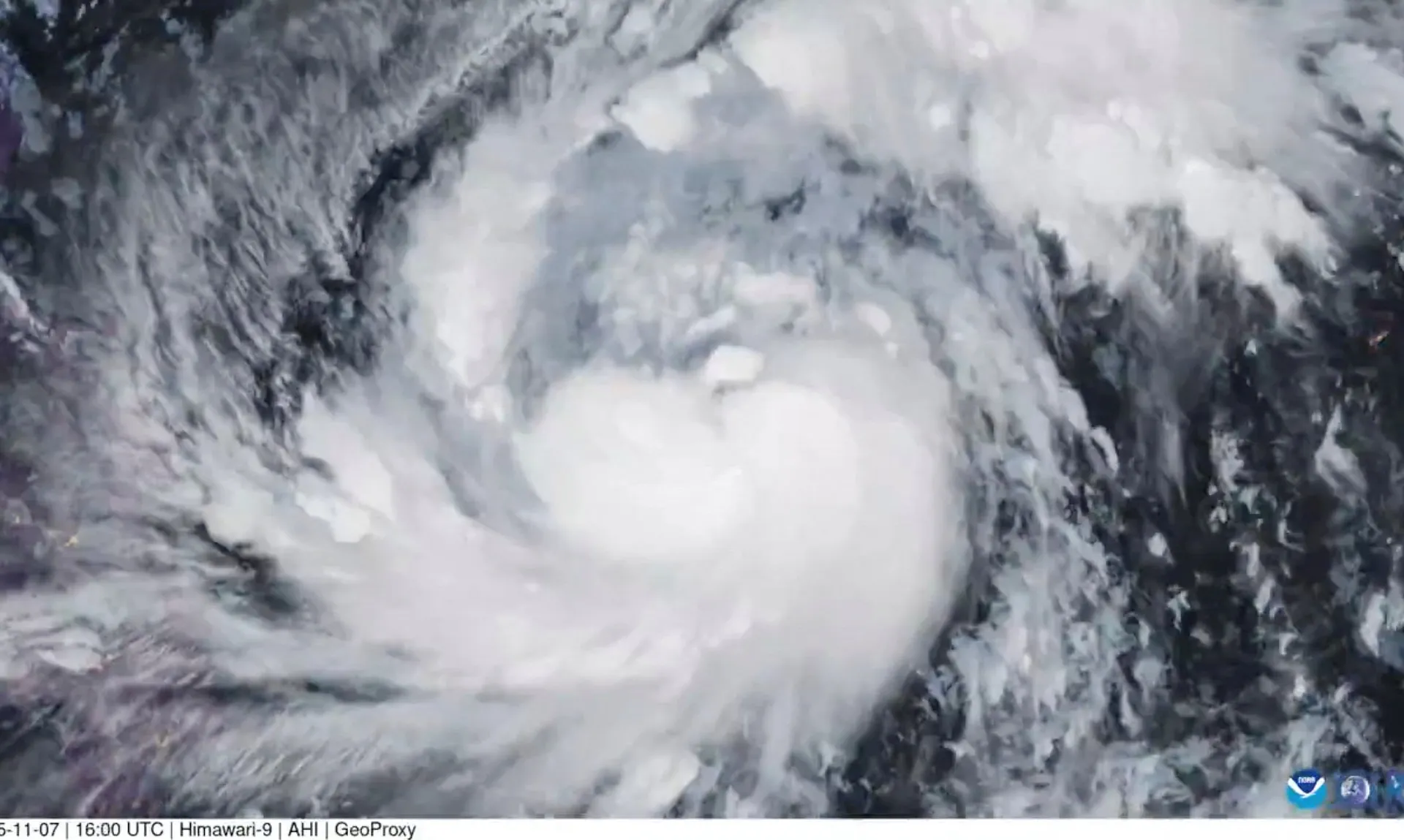
Typhoon Fung-wong has made landfall in the Philippines, where more than 900,000 people have been evacuated and two people have died.

The storm was upgraded to a super typhoon before landfall, with sustained winds of around 185 km/h (115mph) and gusts of 230km/h (143mph).

The eye of the storm hit Aurora province in Luzon – the Philippines’s most populous island – at 21:10 local time (13:10 GMT). The country’s meteorological service warned of destructive winds and “high-risk of life-threatening and damaging storm surge” as the typhoon moves north-westerly across Luzon.

Fung-wong – known locally as Uwan – comes days after an earlier storm, Kalmaegi, left devastation and nearly 200 people dead.

A graphic shows the past and projected path of Typhoon Fung-wong, which made landfall as a super typhoon in the Philippines on Sunday. It is expected to move northwesterly overnight into Monday and then cross Taiwan on Wednesday.

Eastern parts of the Philippines had already begun experiencing heavy rains and winds on Saturday evening, a weather official said.

Residents in Catanduanes, an island in the east of the Bicol region, as well as in other low-lying and coastal areas, had been urged to move to higher ground by Sunday morning.

The storm passed near the eastern Bicol region on Sunday morning, before making its way past the Polillo Islands on Sunday afternoon.

The civil defence office reported that one person drowned and firefighters recovered the body of a woman trapped under debris in Catbalogan City.

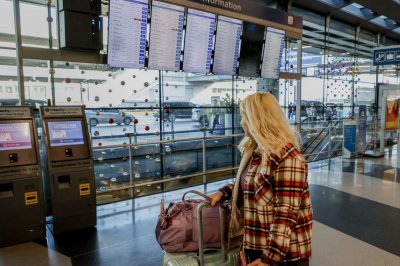
The civil aviation regulator has closed several airports, and almost 300 flights have been cancelled.

Fung-wong was expected to weaken after making landfall, but is likely to remain a typhoon as it travels over Luzon.

More than 200mm of rain is forecast for parts of Luzon, with even 100-200mm in the Metro Manilla area. This is expected to cause severe flooding and landslides.

CHARISM SAYAT/AFP via Getty Image A man in a blue rain poncho looks at a landslide-hit residential area surrounded by greenery and trees in Guinobatan town, Albay province, south of Manila. A small concrete house, with a tin roof collapsed beside it, sits on the edge of a precipice that has been stripped to dirt by a landslide, with water running off it.CHARISM SAYAT/AFP via Getty Image

A landslide-hit residential area in Guinobatan town, Albay province, south of Manila

In the Aurora region, in eastern Luzon, BBC News spoke to Hagunoy, 21, who works at one of the dozen hotels which line the coast in Sabang.

He said police had repeatedly visited in recent days to ensure all guests were evacuated ahead of the storm. The hotels were all deserted on Sunday morning.

While the tide had risen sharply, Hagunoy said he would stay as long as he could to guard the property, before riding his motorbike home to safety.

Staff had secured the gates and tied windows shut with rope to try to stop the glass from shattering in the wind.

EPA/Shutterstock Two men in red shirts and shorts help a person in a raincoat along a bridge. The sky is grey beyond the bridge and palm trees are windswept.EPA/Shutterstock

The Filipino Coast Guard undertook evacuations ahead of the typhoon in Quezon province

In central Aurora, more than 200 people arrived at a shelter in a sports centre. Many parents have brought young children, too young to remember Typhoon Haiyan, which killed more than 6,000 people when it struck the Philippines in 2013.

“We felt very worried because of the strength of the typhoon, and we have young children to think of,” Jessa Zurbano told the BBC.

Another evacuee Patry Azul said: “Our house is made of wood and flimsy materials. We live close to the sea so we didn’t feel safe.”

Fung-wong has also forced the suspension of rescue operations following the passage of Kalmaegi, one of the strongest typhoons this year.

Heavy rainfall sent torrents of mud down hillsides and into residential areas. Some poorer neighbourhoods were obliterated by the fast-moving flash floods.

At least 204 people are now known to have died in the Philippines as a result of the earlier storm, while more than 100 are still missing.

Five people also died in Vietnam, where strong winds uprooted trees, tore off roofs, and smashed large windows.

Two girls walk around at a shelter in central Aurora in eastern Luzon

Families gathered at this shelter in a sports centre in central Aurora in eastern Luzon

The Filipino government declared a state of calamity across the country after Typhoon Kalmaegi and in preparation for the coming storm.

It has given government agencies more power to access emergency funds and fast-track deliveries of essential goods and services.

For some Filipinos, the devastation wrought by Kalmaegi has left them even more anxious about the storm to come.

“We decided to evacuate because the recent typhoon brought floods in our area, and now I just want to keep my family safe,” Norlito Dugan told the AFP news agency.

He is among those who have taken shelter in a church in the city of Sorsogon in Luzon.

Another resident, Maxine Dugan said: “I’m here because the waves near my house are now huge.”

The Philippines – located near the area where Pacific Ocean tropical weather systems form – is one of the most vulnerable countries in the world to cyclones.

About 20 tropical cyclones form in that region every year, half of which affect the country directly.

Climate change is not thought to increase the number of hurricanes, typhoons and cyclones worldwide.

However, warmer oceans coupled with a warmer atmosphere – fuelled by climate change – have the potential to make those that do form even more intense. That can potentially lead to higher wind speeds, heavier rainfall, and a greater risk of coastal flooding.
Source link

China suspends export ban on some rare earth metals to U.S.

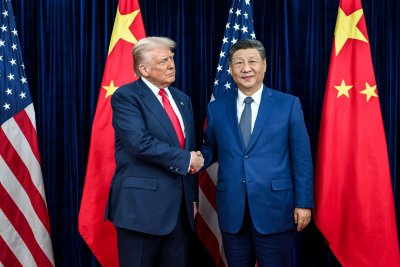
President Donald Trump greets Chinese President Xi Jinping before a bilateral meeting at the Gimhae International Airport terminal, on Thursday, October 30, 2025, in Busan, South Korea. File Photo by Daniel Torok/The White House/UPI | License Photo

Nov. 9 (UPI) — China’s Commerce Ministry announced Sunday that it would suspend a ban on the export of some rare earth metals to the United States as trade tensions ease.

The affected metals include gallium and germanium, which are used to make advanced semiconductors for computing, as well as antimony, which is used to make explosives, and super-hard metals such as tungsten, which is used in armor-piercing ammunition. The fifth metal covered by the suspension of the ban is graphite.

China’s Commerce Ministry had announced the export ban in December 2024 ahead of the second administration of President Donald Trump, “in order to safeguard national security and interests and fulfill international obligations such as non-proliferation.”

It said in a statement Sunday that the ban on the five metals would be suspended until Nov. 27, 2026.

The move comes after Trump met with Chinese President Xi Jinping in South Korea last month ahead of the Asia-Pacific Economic Cooperation summit.

The suspension is part of a broader economic deal struck during that meeting, which both governments described as a step toward stabilizing bilateral trade relations after several years of heightened tensions.

According to a White House fact sheet, China agreed to effectively eliminate its export controls on rare earth elements and other critical minerals, while issuing “general licenses” that allow shipments of gallium, germanium, antimony, tungsten and graphite to continue flowing to U.S. manufacturers and their suppliers.

The White House said the agreement would help ensure American companies have reliable access to essential materials used in advanced technologies, while Beijing would benefit from renewed purchases of agricultural goods and other exports.

The deal also included Chinese commitments to halt the export of fentanyl precursors, ease restrictions on U.S. semiconductor firms, and expand purchases of U.S. farm products.

China’s statement on Sunday did not reference the broader trade framework or the general licenses described by the White House. Instead, it said only that the suspension of the 2024 export ban would last for one year — marking a discrepancy in American and Chinese framing of the deal.

China controls the vast majority of the world’s supply of each of the five rare earth metals, and analysts have warned that prolonged export restrictions could disrupt global manufacturing tied to them.

Source link

Nexperia Wins Exemption from China’s Chip Export Controls

China announced exemptions to export controls on Nexperia chips for civilian applications, aiming to alleviate supply shortages for the automotive industry.

This decision signals Beijing’s intent to ease pressures from export restrictions imposed after the Dutch government took control of Nexperia, a key producer of chips for automotive electrical systems, which is owned by the Chinese company Wingtech.

Although the Chinese commerce ministry did not define “civilian use,” it follows reports from German and Japanese firms indicating a resumption of deliveries of Nexperia’s chips produced in China. However, tensions between China and the Netherlands, and the broader EU, are expected to persist until disputes over Nexperia’s ownership are resolved.

The Dutch government intervened on September 30, citing concerns over Wingtech’s plans to relocate production from Europe to China, which it perceived as a threat to economic security. In retaliation, China halted exports of finished chips but announced an acceptance of exemption applications following a summit between U.S. and Chinese leaders.

The ministry emphasized its commitment to protecting global chip supply chains while urging the EU to assist in persuading the Netherlands to reverse its decision regarding Nexperia.

With information from Reuters

Source link

US government shutdown enters 40th day: How is it affecting Americans? | Politics News

As United States lawmakers fail to agree on a deal to end the government shutdown, around 750,000 federal employees have been furloughed, millions of Americans go without food assistance, and air travel is disrupted across the country.

The shutdown began on October 1, after opposing sides in the US Senate failed to agree on spending priorities, with Republicans rejecting a push by Democrats to protect healthcare and other social programmes.

Recommended Stories

list of 4 itemsend of list

Since then, both sides have failed to agree on 14 separate funding measures, delaying payment to hundreds of thousands of federal staff.

After 40 days, senators from both parties are working this weekend to try to end what has become the longest government shutdown in US history. But talks on Saturday showed little sign of breaking the impasse and securing long-term funding for key programmes.

On Friday, Democratic Senate leader Chuck Schumer offered Republicans a narrower version of an earlier Democratic proposal – a temporary extension of healthcare subsidies. Republicans rejected the offer, prolonging the record-breaking shutdown.

So what do we know about the shutdown, and how it has impacted Americans?

Flights disrupted

The shutdown has created major disruptions for the aviation industry, with staffing shortages among unpaid air traffic controllers.

More than 1,530 flights were cancelled across the US on Saturday, while thousands more were delayed as authorities ordered airports to reduce air traffic.

According to the flight tracking website FlightAware, Saturday’s cancellations marked an increase from 1,025 the previous day. The trend looks set to continue, with at least 1,000 cancellations logged for Sunday.

The Federal Aviation Administration (FAA) said staffing shortages were affecting 42 control towers and other facilities, leading to delays in at least a dozen major cities – including Atlanta, Newark, San Francisco, New York and Chicago.

The travel chaos could prove politically costly for lawmakers if disruptions persist, especially ahead of the holiday season. Reduced air traffic will also hit deliveries and shipping, since many commercial flights carry cargo alongside passengers.

The CEO of Elevate Aviation Group, Greg Raiff, recently warned that the economic impact would ripple outward. “This shutdown is going to affect everything from business travel to tourism,” he told the Associated Press.

“It’s going to hurt local tax revenues and city budgets – there’s a cascading effect from all this.”

Threat to food assistance

In recent weeks, US President Donald Trump has said he will only restore food aid once the government shutdown ends.

“SNAP BENEFITS, which increased by Billions and Billions of Dollars (MANY FOLD!) during Crooked Joe Biden’s disastrous term … will be given only when the Radical Left Democrats open up government,” he wrote earlier this week on Truth Social.

The US Supplemental Nutrition Assistance Program (SNAP), or food stamps, provides low-income Americans with roughly $8bn a month in grocery assistance. The average individual benefit is about $190 per month, while a household receives around $356.

Health insurance standoff

Democrats blame the shutdown on Republicans’ refusal to renew expiring healthcare subsidies under the Affordable Care Act (ACA). Talks stalled again on Saturday after Trump declared he would not compromise on the issue.

Democrats are pushing for a one-year extension of the ACA subsidies, which mainly help people without employer or government health coverage buy insurance. But with a 53–47 majority in the Senate, Republicans can block the proposal.

Trump intervened on Saturday via Truth Social, calling on Republican senators to redirect federal funds used for health insurance subsidies toward direct payments for individuals.

“I am recommending to Senate Republicans that the Hundreds of Billions of Dollars currently being sent to money sucking Insurance Companies … BE SENT DIRECTLY TO THE PEOPLE SO THAT THEY CAN PURCHASE THEIR OWN, MUCH BETTER, HEALTHCARE, and have money left over,” he said.

Roughly 24 million Americans currently benefit from the ACA subsidies. Analysts warn that premiums could double by 2026 if Congress allows them to expire.

Has this happened before?

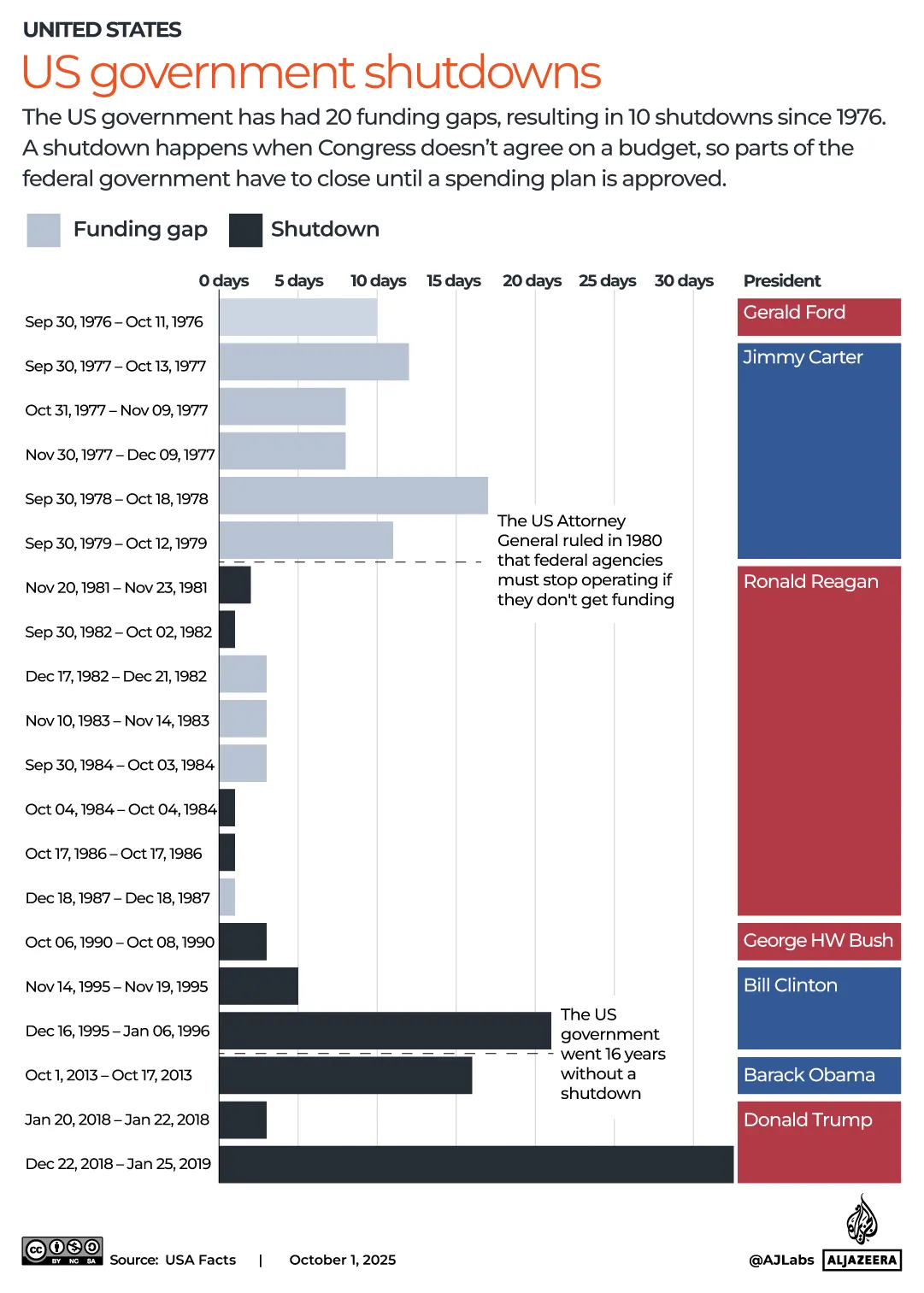
This is not the first time Washington has faced such a standoff. The graphic below shows every US funding gap and government shutdown since 1976, including how long each lasted and under which administration it occurred.

INTERACTIVE - How many times has the US shut down - OCTOBER 1, 2025-1759330811
(Al Jazeera)

The current federal budget process dates back to 1976. Since its creation, the government has experienced 20 funding gaps, leading to 10 shutdowns.

Prior to the 1980s, such funding lapses rarely caused shutdowns. Most federal agencies continued operating, expecting Congress to soon approve new funding.

That changed in 1980, when Attorney General Benjamin Civiletti issued legal opinions clarifying that, under federal law, agencies cannot spend money without congressional authorisation. Only essential functions (like air traffic control) were permitted to continue.

From 1982 onward, this interpretation has meant that funding gaps have more frequently triggered full or partial government shutdowns, lasting until Congress reaches a resolution.

What happens next?

No breakthrough was announced after the US Senate convened for a rare Saturday session. The chamber is now expected to reconvene at 1:30pm local time on Sunday.

Senate Majority Leader John Thune told reporters that the chamber will continue meeting until the government reopens. “There’s still only one path out – it’s a clean funding extension,” he said.

Some 1.3 million service members are now at risk of missing a paycheque, and that might put pressure on both sides to agree on a deal. Earlier this month, staff were paid after $8bn from military research and development funds were made available at the intervention of Trump.

But questions remain about whether the administration will resort to a similar procedure if the shutdown is prolonged. Senator Jeanne Shaheen of New Hampshire told reporters on Friday that Democrats “need another path forward”.

Shaheen and several moderate Democrats are floating a proposal that would temporarily fund certain departments – such as veterans’ services and food aid – while keeping the rest of the government open until December or early next year.

It’s understood that Shaheen’s plan would include a promise of a future vote on healthcare subsidies, but not a guaranteed extension. It remains unclear whether enough Democrats would support that compromise. 

Thune, meanwhile, is reportedly considering a bipartisan version of the proposal. On Friday, he said he thinks the offer is an indication that Democrats are “feeling the heat … I guess you could characterise that as progress”.

Looking ahead, it remains unclear what Republicans might offer regarding healthcare.

For now, Democrats face a stark choice: keep pressing for a firm deal to renew healthcare subsidies and prolong the shutdown – or vote to reopen the government and trust Republicans’ assurances of a future healthcare vote, with no certainty of success.

Source link

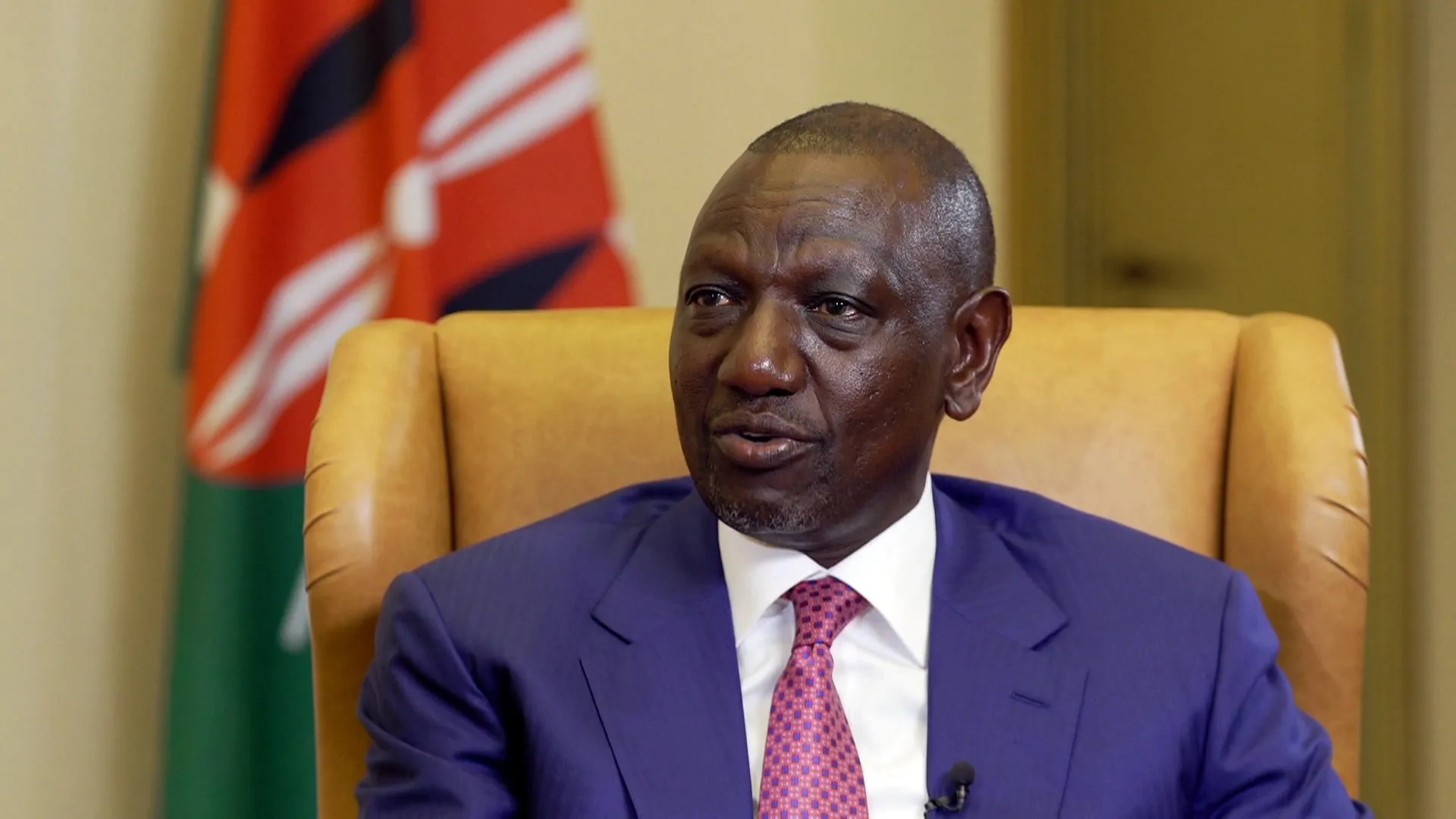
Kenya’s Ruto on protests, power, and the state of democracy | Politics

After deadly protests and a youth uprising, Kenya’s president defends his record on democracy, rights, and reform.

Kenyan President William Ruto talks to Al Jazeera about the nationwide protests that left dozens dead, accusations of police brutality and enforced disappearances, and whether he’s betrayed the “hustler” generation that helped elect him. He also addresses Kenya’s economic challenges, its leadership role in Haiti, and regional accusations of interference in Sudan’s war. As scrutiny grows at home, Ruto insists Kenya’s democracy remains intact, and his promise of transformation, unbroken.

Source link

Israeli settlers attack journalists at olive harvest in occupied West Bank | Occupied West Bank

NewsFeed

Israeli settlers have attacked Palestinian villagers, activists, and journalists, including Reuters reporter Raneen Sawafta, near Nablus. The assault is the latest in a surge of settler violence across the occupied West Bank during the olive harvesting season, with over 760 attacks recorded in October.

Source link

Judge’s ‘permanent injunction’ bars National Guard troops in Portland

Nov. 8 (UPI) — A federal judge issued a permanent injunction that prevents the deployment of the National Guard in Portland, Ore., saying Donald Trump “exceeded the President’s authority.”

U.S. District Judge Karin Immergut, in a 106-page decision Friday, wrote in all caps: “THIS PERMANENT INJUNCTION ORDER IS IN FULL FORCE AND EFFECT.”

She issued a temporary restraining order on Oct. 4 blocking the deployment of the Oregon National Guard to assist Immigration and Customs Enforcement agents. One day later a second order blocked deployment of National Guard troops from other states to Portland streets.

“The evidence demonstrates that these deployments, which were objected to by Oregon’s governor and not requested by the federal officials in charge of protection of the ICE building, exceeded the president’s authority,” the judge, who was appointed by Trump during his first term, wrote.

Immergut, who made the decision after the three-day trial, said the troops were not needed to quell protests against Trump’s immigration policies.

“This Court arrives at the necessary conclusion that there was neither ‘a rebellion or danger of a rebellion’ nor was the President ‘unable with the regular forces to execute the laws of the United States’ in Oregon when he ordered the federalization and deployment of the National Guard,” Immergut wrote.

She said a stay of federalization of Oregon troops will last 14 days that “preserves the status quo in which National Guard members have been federalized but not deployed.”

Starting in early June, there were daily demonstrations outside ICE’s building in Portland. They have been small and peaceful and dispersed when federal agents in riot gear came to the scene, The New York Times reported.

Sometimes federal officers used tear gas, rubber bullets and pepper spray balls.

Immergut said she expects the decision to be appealed with the White House not responding to a request for comment Friday night.

“The ‘precise standard’ to demarcate the line past which conditions would satisfy the statutory standard to deploy the military in the streets of American cities is ultimately a question for a higher court to decide,” she wrote.

During the trial, federal lawyers said they intended to appeal to the U.S. Court of Appeals for the Ninth Circuit in San Francisco.

On Sept. 27, Trump wrote on Truth Social that he planned to use “full force” to protect “war-ravaged Portland.”

The next day, Defense Secretary Pete Hegseth asked Oregon Gov. Tina Kotek to activate 200 members of the Oregon National Guard to protect federal property. Kotek refused and Trump federalized the troops.

Under Title 10 of the U.S. Code, a president may use the National Guard on U.S. soil in only three situations: a foreign invasion; a rebellion or threat of a rebellion; or laws of the nation cannot be enforced with existing resources.

The Trump administration argued the last two conditions were met. The judge disagreed.

“Oregon National Guard members have been away from their jobs and families for 38 days,” Kotek, a Democrat, said after the ruling on the lawsuit by the state and city. ” The California National Guard has been here for just over one month. Based on this ruling, I am renewing my call to the Trump Administration to send all troops home now.”

California Attorney General Rob Bonta called the decision involving his state’s troops “a win for the rule of law, for the constitutional values that govern our democracy, and for the American people.”

Trump has sought to send troops into Democrat-run cities. Another judge has blocked troops from Chicago after a lawsuit and that decision has been appealed to the U.S. Supreme Court.

Troops have been sent to the District of Columbia, Los Angeles and Memphis, Tenn., to assist ICE and/or reduce crime.

Source link

Lisa Nandy apologises for breaking rules on football regulator appointment

Kate WhannelPolitical reporter

Lisa Nandy: ‘We didn’t meet the highest standards – that is on me’

The culture secretary has apologised for breaking rules by failing to declare she had received donations from the man she picked to run England’s new football regulator.

On Thursday, the commissioner for public appointments published a report which found that David Kogan had made two separate donations of £1,450 to Lisa Nandy, when she was running to be Labour leader in 2020.

Speaking to the BBC’s Sunday with Laura Kuenssberg, Nandy said: “We didn’t meet the highest standards – that is on me.”

The Conservatives have said Nandy’s actions were “a serious breach of public trust” and called for a further investigation into Sir Keir Starmer, who also received donations from Mr Kogan.

In a statement, Mr Kogan has said: “As the commissioner states, my suitability for the role has never been in question, and at no point was I aware of any deviation from best practice.”

Mr Kogan, a sports rights executive, was initially longlisted for the football regulator role under the previous Conservative government.

Nandy became involved in the process after Labour won the 2024 general election and she took on the role of culture secretary.

In April, she announced that Mr Kogan would be her preferred pick to fill the £130,000-a-year role.

However, a month later she removed herself from the appointment process after Mr Kogan revealed to a parliamentary committee that he had donated “very small sums” to Nandy in 2020.

In his report, commissioner for public appointments Sir William Shawcross said Nandy had “unknowingly” breached the code and should have checked if Mr Kogan had given her money before choosing him as her preferred candidate.

The contributions were part of total donations worth £33,410 to Labour and the party’s candidates in the five years prior to his appointment, the commissioner said.

Mr Kogan’s donations to Nandy were below declaration thresholds set by the Electoral Commission and by Parliament.

Asked why she had not declared the donation during the appointments process, Lisa Nandy told Sunday with Laura Kuenssberg she had not known about the money at the time it was given.

She said that during her leadership campaign she had been “out on the road” doing hustings and interviews.

“I wasn’t involved in fundraising for the campaign, and as soon as I found out I declared it and recused myself and I complied fully with the process.”

She insisted Labour was different from the Conservatives saying: “When we make mistakes – and we will make mistakes, we are human beings- we put ourselves through independent processes, we respect the outcome and we take the consequences.”

In his report, Sir William said: “It need not be true that the donations actually influenced the secretary of state’s decision-making – only that the risk of this perception should have been mitigated by declaration of this financial interest.”

He found the Department for Culture, Media and Sport had breached the rules by failing to declare Mr Kogan’s previous donations to Labour when he was named as the government’s preferred choice for the job.

The department also breached the rules by not discussing the donations to Nandy when Mr Kogan was interviewed for the job, Sir William found.

After the report was published, Nandy wrote a letter to the prime minister saying: “I deeply regret this error. I appreciate the perception it could create.”

In his reply, Sir Keir Starmer wrote: “I know you to be a person of integrity and on the basis of your letter, it is clear you have acted in good faith.”

In May 2024, Mr Kogan donated £2,500 to the prime minister’s local Labour branch of Holborn and St Pancras.

The Conservatives have asked the government’s ethics adviser Sir Laurie Magnus to investigate whether Sir Keir’s role in Mr Kogan’s appointment broke ministerial rules on transparency.

Downing Street said Sir William Shawcross had already carried out an extensive review and “found no breaches aside from those set out in the report”.

The football regulator role was set up following a fan-led review into the management of football clubs.

The regulator has been tasked with improving the financial sustainability of clubs and safeguarding “the heritage of English football”.

Source link

Taiwan ‘Not Alone,’ Vice President Says After Landmark Europe Visit

Taiwan’s Vice President Hsiao Bi-khim emphasized the island’s growing international support and resolve following her recent diplomatic trip to Europe, addressing the Inter-Parliamentary Alliance on China’s annual summit in Brussels.

This trip is significant due to its rarity for a high-ranking official, as it risks backlash from Beijing. Despite China’s claims of Taiwan as its territory and refusal to engage with President Lai Ching-te, Hsiao asserted Taiwan’s right to participate in global affairs and highlighted the increasing number of allies willing to support Taiwan.

She expressed confidence in Taiwan’s democracy and commitment to maintaining good relations with like-minded nations. Former President Tsai Ing-wen also recognized the importance of Hsiao’s visit, reiterating Taiwan’s role as a reliable partner in the international community and its solidarity with Europe.

With information from Reuters

Source link

On This Day, Nov. 9: Arafat makes 1st visit to Israel in decades, mourns Rabin

Nov. 9 (UPI) — On this date in history:

In 1872, a fire which began in the basement of a warehouse in downtown Boston raged for 12 hours, consuming 65 acres and leaving 776 buildings in ruins. The Great Boston Fire killed at least 30 people.

In 1906, Theodore Roosevelt traveled to Panama to observe the progress being made on the construction of the canal. He was the first sitting president of the United States to embark on an official trip outside the country. The canal opened in 1914 under operation by the U.S. War Department.

In 1918, Germany’s Kaiser Wilhelm II abdicated as World War I drew to a close.

In 1938, mobs of Germans attacked Jewish businesses and homes throughout Germany in what became known as Kristallnacht, or Crystal Night.

In 1953, the U.S. Supreme Court ruled Major League Baseball isn’t within the scope of federal antitrust laws.

File Photo by Brian Kersey/UPI

In 1965, a massive power failure left more than 30 million people in the dark in the northeastern United States and eastern Canada.

In 1985, Gary Kasparov, 22, became the youngest world chess champion, ending the 10-year reign of Anatoly Karpov in Moscow.

In 1989, East Germany announced free passage for its citizens through border checkpoints. The announcement rendered the Berlin Wall, the most reviled symbol of the Cold War, virtually irrelevant 28 years after its construction.

In 1995, Palestinian leader Yasser Arafat visited Israel for the first time to offer personal condolences to the wife of slain Israeli Prime Minister Yitzhak Rabin.

In 2008, three men were executed by firing squad for 2002 bombings in Bali that killed 202 people, mostly tourists.

File Photo by Brian Richards/UPI

In 2011, a burgeoning child sexual-abuse scandal at Penn State University involving former defensive coordinator Jerry Sandusky claimed its legendary football coach when the school’s board of trustees fired Joe Paterno.

In 2012, CIA Director David Petraeus resigned, citing an extramarital affair.

In 2015, the World Anti-Doping Agency recommended that Russia be banned from international sporting events due to systematic doping by athletes. Of the 389 athletes submitted for competition in the 2016 Summer Olympics in Rio de Janeiro, 111 were prohibited in stringent doping tests required of all Russian athletes.

In 2021, Arlington National Cemetery opened the Tomb of the Unknown Soldier Plaza to the public for the first time in nearly 100 years.

In 2023, the Screen Actors Guilt and American Federation of Television and Radio Artists reached a deal with the Alliance of Motion Picture Television Producers, ending a 118-day strike that brought Hollywood to a halt.

In 2024, Beyoncé earned 11 nominations for the 67th annual Grammy Awards, making her the most nominated artist in Grammy history, with a lifetime total of 99 nods. As of 2025, she has won 35 of the awards.

File Photo by Christine Chew/UPI

Source link

Special voting for forces and displaced in Iraq parliamentary polls begins | Elections News

Nearly 1.3 million members of the security forces and more than 26,500 internally displaced people are eligible to vote ahead of Tuesday’s polls.

Members of Iraq’s security forces and its internally displaced population have begun casting their ballots in the parliamentary elections – the sixth since a United States-led invasion toppled longtime ruler Saddam Hussein in 2003.

Polls opened at 7am (04:00 GMT) on Sunday for 1.3 million members of the security forces at 809 polling centres and will close at 6pm (15:00 GMT) before they are deployed for security purposes on the election day on Tuesday.

Recommended Stories

list of 4 itemsend of list

More than 26,500 internally displaced people are also eligible for early voting on Sunday across 97 polling stations at 27 places in Iraq, the Iraqi News Agency (INA) said.

Interior Minister Abdul Amir al-Shammari told INA that the special voting process is advancing “smoothly and in an organised manner”.

Nearly 21 million Iraqis are eligible to vote on Tuesday across 4,501 polling stations nationwide, the INA said.

More than 7,750 candidates, nearly a third of them women, are running for the 329-seat parliament. Under the law, 25 percent of the seats are reserved for women, while nine are allocated for religious minorities.

The current parliament began its term on January 9, 2022, and will last four years, ending on January 8, 2026.

An old electoral law, revived in 2023, will apply to the ongoing elections, with many seeing it as favouring larger parties. While about 70 independents won in the 2021 vote, only 75 independents are contesting this year.

Observers also fear that turnout might dip below the record low of 41 percent in 2021, reflecting voters’ apathy and scepticism in a country marked by entrenched leadership and allegations of mismanagement and endemic corruption.

There were widespread accusations of corruption and vote-buying before the elections, and 848 candidates were disqualified by election officials, sometimes for obscure reasons, including insulting religious rituals or members of the armed forces.

Past elections in Iraq have been marred by violence, including assassinations of candidates, attacks on polling stations, and clashes between the supporters of different blocs. While overall levels of violence have subsided, a candidate was assassinated in the run-up to this year’s election.

Influential Shia leader Moqtada Sadr urged his followers to boycott what he described as a “flawed election”.

Al-Sadr’s bloc won the largest number of seats in 2021, but later withdrew after failed negotiations over forming the government amid a standoff with rival Shia parties. He has since boycotted the political system.

Prime Minister Mohammed Shia al-Sudani, elected in 2022 with the backing of pro-Iran parties, is seeking a second term and is expected to secure a sizeable bloc.

Among the other frontrunners are influential Shia figures, including former Prime Minister Nouri al-Maliki and Muslim scholar Ammar al-Hakim.

By convention in post-invasion Iraq, a Shia Muslim holds the powerful post of the prime minister and a Sunni of the parliament’s speaker, while the largely ceremonial presidency goes to a Kurd.

Source link

One dead, dozens missing after migrant boat sinks off Malaysia coast | Migration News

Authorities say rescue operations are under way to locate survivors on a boat that sunk, with two others missing.

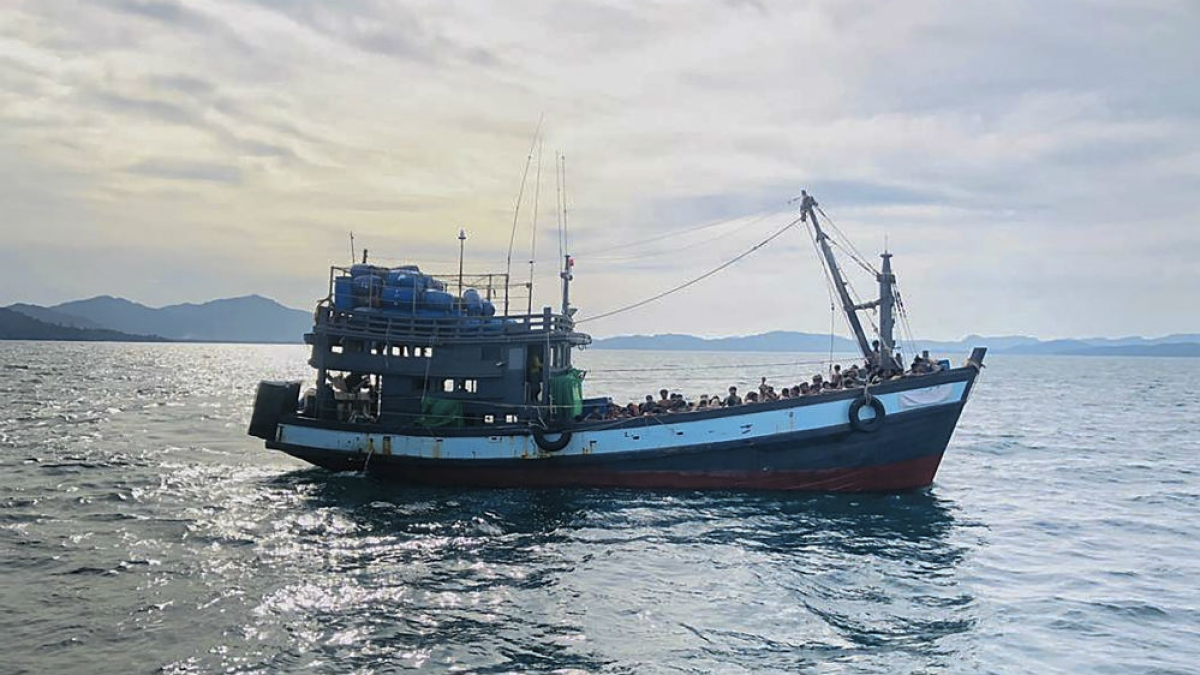
One body has been found and dozens of others are missing after a boat carrying about 90 undocumented migrants sank near the Thailand-Malaysia border, officials said.

The Malaysian maritime authority on Sunday said at least 10 survivors were found, while the status of two other boats carrying a similar number of people remains unknown.

Recommended Stories

list of 4 itemsend of list

The incident is believed to have happened near Tarutao Island, just north of the popular Malaysian resort island of Langkawi.

“A boat carrying 90 people is believed to have capsized” three days ago, local police chief Adzli Abu Shah told reporters, adding that rescue operations were under way to locate the survivors.

Among the survivors found in the waters were three Myanmar nationals, two Rohingya refugees, and a Bangladeshi man, while the body was that of a Rohingya woman, state media agency Bernama reported, quoting Abu Shah.

The Malaysia-bound people initially boarded a large vessel, but, as they neared the border, they were instructed to transfer onto three smaller boats, each carrying about 100 people, to avoid detection by the authorities, the police chief was quoted as saying.

Dangerous crossings

Malaysia is home to millions of migrants and refugees from other parts of Asia – many of them undocumented, working in industries including construction and agriculture.

Members of the mainly Muslim Rohingya minority periodically flee predominantly Buddhist Myanmar, where they are seen as foreign interlopers from South Asia, denied citizenship, and subjected to abuse. Nearly a million Rohingya refugees live in cramped camps across southern Bangladesh.

Many of these refugees attempt maritime crossings to relatively affluent regional countries such as Malaysia and Thailand, facilitated by human trafficking syndicates. But the trips often turn hazardous, leading to frequent capsizing.

In one of the worst incidents in December 2021, more than 20 people drowned in several capsizing incidents off the Malaysian coastline.

Source link

Nearly 1 million Filipinos evacuate as Super Typhoon Fung-wong approaches | Weather News

Nearly a million people have evacuated their homes in the Philippines as the country braced for another powerful storm, days after a typhoon killed at least 224 people.

The storm, named Fung-wong, started battering northeastern Philippines on Sunday before its expected landfall, knocking down power and prompting warnings from the weather bureau of a “high risk of life-threatening conditions” in parts of the country.

Recommended Stories

list of 4 itemsend of list

The Philippine Atmospheric, Geophysical and Astronomical Services Administration (PAGASA) said Fung-wong, locally known as Uwan, is forecast to make landfall in Aurora province as early as Sunday night with maximum sustained winds of up to 185 kilometres per hour (115 miles per hour) and gusts of up to 230km/h (143mph).

It raised the highest alert level, Signal No 5, for southeastern and central areas, including Catanduanes, Camarines Sur, and Aurora province, while Metro Manila and nearby provinces were under Signal No 3.

Fung-wong, which could cover two-thirds of the Southeast Asian archipelago with its 1,600km (994-mile-) wide rain and wind band, was approaching from the Pacific while the Philippines was still dealing with the devastation wrought by Typhoon Kalmaegi, which left at least 224 people dead in central island provinces on Tuesday before pummeling Vietnam, where at least five were killed.

Philippine President Ferdinand Marcos Jr has declared a state of emergency due to the extensive devastation caused by Kalmaegi and the expected calamity from Fung-wong, which is called Uwan in the Philippines.

Tropical cyclones with sustained winds of 185km/h (115mph) or higher are categorised in the Philippines as a super typhoon, a designation adopted years ago to underscore the urgency tied to more extreme weather disturbances.

More than 916,860 people were evacuated from high-risk villages in northeastern provinces, including in Bicol, a coastal region vulnerable to Pacific cyclones and mudflows from Mayon, one of the country’s most active volcanoes.

Defense Secretary Gilbert Teodoro Jr, who oversees the country’s disaster response agencies and the military, warned about the potentially catastrophic effect of Fung-wong in televised remarks on Saturday.

“We ask that people preemptively evacuate so that we don’t end up having to conduct rescues at the last minute, which could put the lives of police, soldiers, firefighters and coastguard personnel at risk,” he said in a public address.

“We need to do this because when it’s already raining or the typhoon has hit and flooding has started, it’s hard to rescue people,” he added.

Teodoro said the storm could affect a vast expanse of the country, including Cebu, the central province hit hardest by Typhoon Kalmaegi, and metropolitan Manila, the densely populated capital region, which is the seat of power and the country’s financial centre.

More than 30 million people could be exposed to hazards posed by Fung-wong, the Office of Civil Defense said.

In Isabela in northern Luzon, dozens of families were sheltering in a basketball court repurposed as an evacuation centre.

“We heard on the news that the typhoon is very strong, so we evacuated early,” said Christopher Sanchez, 50, who fled with his family.

“We left our things on the roofs of our house since every time there’s a storm, we come here because we live right next to the river,” he told the Reuters news agency. “In previous storms, the floodwaters rose above human height.

“We’re scared,” he said. “We’re here with our grandchildren and our kids. The whole family is in the evacuation area.”

Authorities in northern provinces to be hit or sideswiped by Fung-wong have meanwhile preemptively declared the shutdown of schools and most government offices on Monday and Tuesday. At least 325 domestic and 61 international flights have been cancelled over the weekend and into Monday, and more than 6,600 commuters and cargo workers were stranded in at least 109 seaports, where the coastguard prohibited ships from venturing into rough seas.

Authorities warned of a “high risk of life-threatening and damaging storm surge” of more than 3 metres (10 feet) along the coasts of more than 20 provinces and regions, including metropolitan Manila.

The Philippines is battered by about 20 typhoons and storms each year. The country is also often hit by earthquakes and has more than a dozen active volcanoes, making it one of the world’s most disaster-prone countries.

Source link

More than 800 flights canceled Saturday as officials reduce U.S. air traffic

Nov. 8 (UPI) — Federal officials on Saturday canceled more than 800 flights at airports across the United States as the federal government shutdown entered its record-long 39th day on Saturday.

Transportation Secretary Sean Duffy and FAA Administrator Bryan Bedford jointly announced a temporary 10% reduction in flights at 40 high-traffic airports.

They said the reduction in flights is necessary to ensure safety and ease the strain on air traffic controllers, who are working without pay.

“My department has many responsibilities, but our number one job is safety,” Duffy said.

“It’s safe to fly today, and it will continue to be safe to fly next week because of the proactive actions we are taking.”

More than 1,700 flights have been canceled through Sunday — and more than 800 were cancelled on Saturday alone — as commercial airlines reduced their respective flights by 4% at the nation’s busiest airports, according to CNN.

Washington’s Reagan National Airport is affected the most by the flight reductions, with 151 flights canceled among 869 initially scheduled there for a reduction of 17.4%, The New York Times reported.

Louisville, Ky., has an 8% reduction with 12 canceled among 150 flights, followed by Cincinnati, 7.2% and 18 canceled flights among 250 scheduled.

Houston Hobby has 20 of 336 flights canceled for a 6% reduction, followed by Indianapolis, with 17 of 297 flights canceled for a 5.7% reduction, to round out the five most impacted airports.

The flight reductions come after many air traffic controllers and other essential airport staff have called in sick due to increased stress, to work other jobs and to care for their children, among other reasons.

They have missed one paycheck and will again next week if the federal government is not funded and reopened by then, according to CNBC.

The reduced staffing levels are putting more pressure on commercial air operations, especially at the nation’s busiest airports.

“We are seeing signs of stress in the system, so we are proactively reducing the number of flights to make sure the American people continue to fly safely,” Bedford said.

“The FAA will continue to closely monitor operations, and we will not hesitate to take further action to make sure air travel remains safe.”

Source link