United States President Donald Trump claims the US has reached a deal with Denmark granting it “permanent control” over Greenland’s security “and all other needs”.
The announcement comes more than a year after the US president threatened to seize the self-governing Arctic territory, which is part of Denmark. Those threats roiled the NATO security alliance that Washington and Copenhagen are part of.
Recommended Stories
list of 3 itemsend of list
According to Denmark, the deal is expected to be signed during next week’s United Nations General Assembly meeting in New York. Copenhagen has stressed that it retains sovereignty over Greenland, and this deal will still need to be ratified in the Danish and Greenland parliaments.
Here’s what we know about the deal and what it could mean for the US and Greenland:
What’s in the deal?
The official text has yet to be released. But according to Trump, the deal gives the US permanent control over Greenland’s security and “all other needs”, at no cost to the US.
The deal bars US adversaries from establishing a military presence or making “sensitive investments” in Greenland without US approval, said Trump.
A US Department of State official cited by the BBC said the deal will mean non-NATO states won’t be able to set up bases in Greenland and will be barred from “making investments in Greenland that could threaten the United States”.
The official said that means China and Russia won’t be able to build bases or send troops to Greenland, and that those states would be blocked from investing “in sensitive sectors”.
However, Mikkel Olesen, a senior researcher at the Danish Institute for International Studies, told Al Jazeera that it is unlikely to be a major concession because “the Danes and Greenlanders never wished for Russia or China to have bases in Greenland.”
However, it is unclear whether other countries could similarly be labelled “adversaries” to the US in the future, subjecting them to these restrictions.
Trump called the deal an “‘Infinite Life’ Agreement”, meaning “it never ends”.
The State Department official also said the agreement gives the US the right to build more military sites on the island without Greenland or Denmark approving. According to the official, the deal would remain in force even if Greenland were to become an independent state in the future.
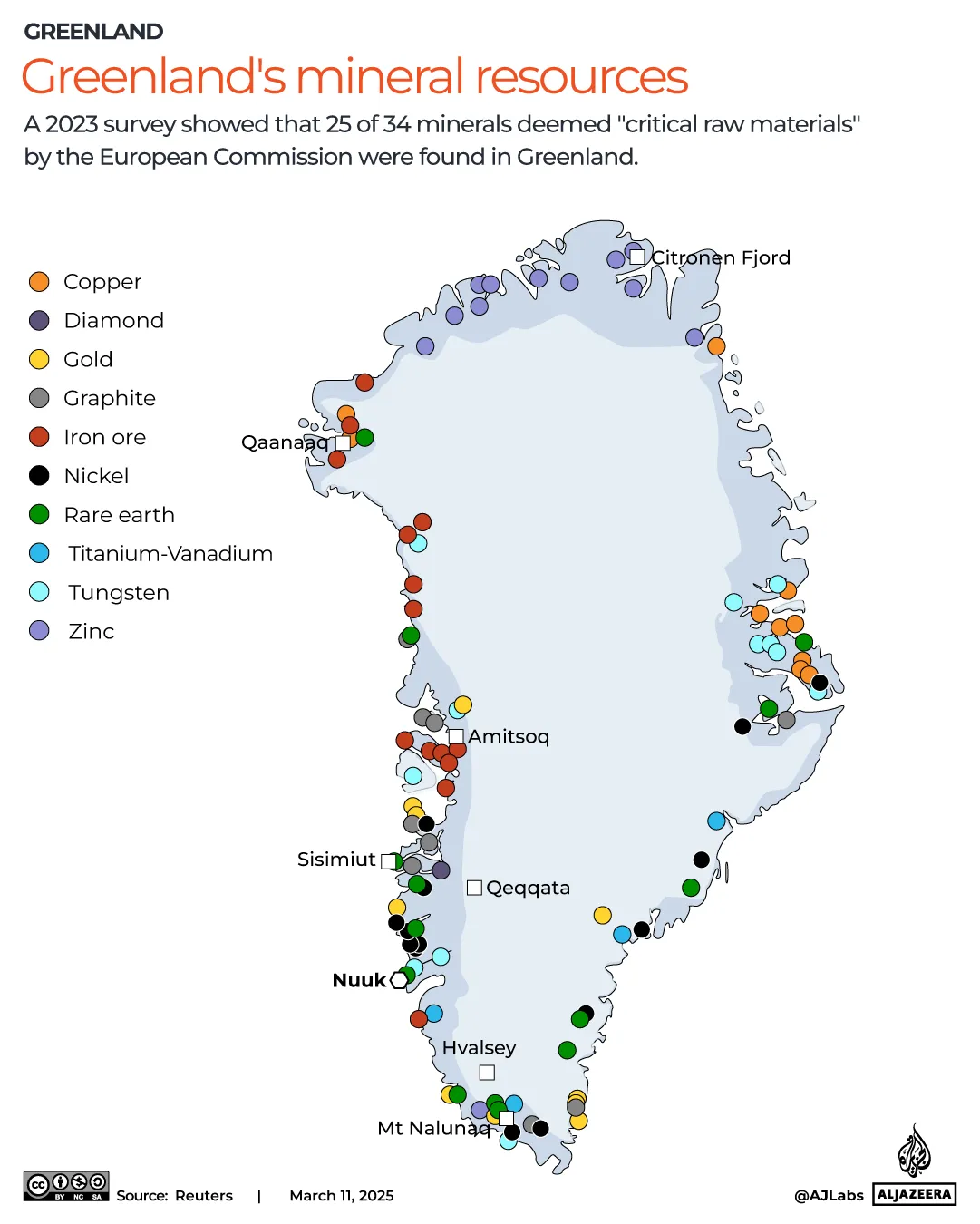
There was no specific mention of potential US mining rights in Greenland, which has a rich deposit of rare-earth minerals, including zinc, iron, uranium and graphite, that are likely to interest Trump. These minerals are highly sought after and are used in the manufacture of hundreds of technological products, from smartphones to fighter jets.
However, some observers think this could be what Trump means by his mention of “sensitive investments”.
The US president has sought to expand the US’s global access to rare-earth metals, especially as China, a global leader in the technology, AI and renewables industries with 60 percent of the world’s known deposits of these minerals in its territory, restricts their exports.
(Al Jazeera)
What have Greenland and Denmark said?
Greenland and Denmark acknowledged the deal on Friday, but neither gave specific details about its terms. They said the agreement would be announced next week.
Greenland’s Prime Minister Jens-Frederik Nielsen said it “recognises Greenland’s interests” and is “to the benefit of us all”.
Denmark’s Prime Minister Mette Frederiksen said it is “great for NATO and Europe”, as it “strengthens our common security in the Arctic and the North Atlantic Area”.
Olesen stressed that details of the deal remain unclear and that available information should be taken “with a grain of salt” as most of it has so far come from the US side.
Denmark’s Frederiksen said the agreement “recognises the sovereignty and territorial integrity of the Kingdom and the Greenlandic people’s right to self-determination”.
Olesen said the deal could be positive for Greenland and Denmark as it “has the potential to end the crisis” caused by Trump’s insistence on acquiring Greenland last year, without sacrificing sovereignty.
Trump’s earlier threats to seize control of Greenland were met with high resistance on the island of 56,000 people. A January 2025 poll found that 85 percent of Greenlanders opposed becoming part of the US.
People protest against Trump’s policy towards Greenland in front of the US Consulate in Nuuk, Greenland, January 17 [Evgeniy Maloletka/AP Photo]
What military rights does the US already have in Greenland?
A substantial number. Under a 1951 treaty, the US has broad overflight and basing rights on the island.
In addition to giving the US the right to build bases and maintain personnel, the treaty also stipulates that the US can “control landings, takeoffs, anchorages, moorings, movements, and operation of ships, aircraft, and waterborne craft”.
As part of the treaty, the US currently operates a Space Force base in a remote part of northwestern Greenland – the Pituffik Space Base. It has more than 100 personnel stationed there.
What would actually change under this new agreement?
That largely remains to be seen. Trump said the US will “immediately” begin building up a large military presence on Greenland. However, the US already had the right to build bases and send personnel there under the 1951 treaty.
Imran Bayoumi, a former Pentagon official, told the Reuters news agency that it would be new if the US could now build bases unilaterally, but “it seems that Washington could have achieved a lot of these objectives through diplomacy and dialogue without straining the broader US-NATO relationship.”
Trump has also said the US will support Greenlanders with “development and construction”, without elaborating.
Richard Weitz, a fellow at the NATO Defense College, told Al Jazeera the deal “defuses perhaps one of the most severe sources of internal tension” within NATO.
While Trump “backed down and settled for less” than he sought with respect to Greenland, he still “got pretty much everything he wanted, except formal annexation”, added Weitz.
The United Nations General Assembly will allow Palestinian President Mahmoud Abbas to address via a prerecorded video.
Published On 19 Sep 202619 Sep 2026
The European Union says it regrets the denial of visas by the United States for the second year running to Palestinian Authority (PA) officials seeking to attend the United Nations General Assembly (UNGA) in New York, urging it to reconsider the decision.
The statement on Saturday comes just days after the UNGA voted to allow Palestinian President Mahmoud Abbas to address the body during the upcoming 81st session via a prerecorded statement.
Recommended Stories
list of 3 itemsend of list
“In light of its existing headquarters agreements with the UN and its obligations as host state, we urge the United States for this decision to be reconsidered,” said Anouar El Anouni, a spokesman for the EU’s diplomatic service.
On Friday, UN Secretary-General Antonio Guterres also expressed regret at Washington’s decision, adding he was concerned about its impact “on the ability of the State of Palestine to participate fully in the work of the United Nations”.
The US Department of State announced on Wednesday that it would prolong visa sanctions on officials of the PA and members of the Palestine Liberation Organization (PLO).
“As a consequence of their failure to reform, contrary to their commitments to the United States, and their ongoing activities that undermine the prospects for peace, the United States will extend sanctions that deny visas to PLO members and PA officials,” the State Department said in a statement.
The department accused the PA of violating US law by bypassing direct negotiations to seek international recognition of Palestinian statehood.
It also cited the PA’s decision to take its dispute with Israel to international courts and its financial support for people the US and Israel label as convicted attackers and their families.
No Israeli officials face equivalent US travel restrictions, despite an International Criminal Court arrest warrant issued against Israeli Prime Minister Benjamin Netanyahu over alleged war crimes in Gaza.
Abbas’s address this year is expected to push for international recognition of Palestinian statehood and revive momentum for a two-state solution, building on a wave of formal recognitions by the United Kingdom, France, Canada and other Western nations last year.
His speech will also highlight the severe humanitarian crisis in Gaza alongside the rapid growth of illegal Israeli settlements and settler pogroms across the occupied West Bank.
Palestine’s Ministry of Foreign Affairs and Expatriates welcomed the UN resolution passed on Thursday allowing Abbas to address the assembly next week, saying it “represents a breaking of the attempt to prevent Palestine’s participation” in the UNGA’s annual session.
Israel’s bitter political divisions are particularly sharp before the country’s October elections. But the furious response to a new documentary about the military’s actions in the genocidal war on Gaza has revealed an issue that much of Israel’s political and media establishment appears united on.
Few of the central allegations in NAZA, made by Israeli filmmakers Yuval Abraham and Rachel Szor, are new. Reports that the Israeli military was relying on artificial intelligence systems to generate targets in Gaza, often killing the inhabitants of entire buildings to kill just one individual identified by the system, were reported in April 2024.
Recommended Stories
list of 4 itemsend of list
Other accusations against Israel, such as committing genocide, deliberately causing a famine, and unlawfully killing children, have also not received much attention in Israel.
In contrast, NAZA has unleashed a litany of abuse from across Israel, and brought the allegations to the centre of Israel’s political debate.
Culture Minister Miki Zohar reacted to the film’s premiere at the Venice Film Festival – where it received a 25-minute standing ovation – by calling for the directors to be stripped of their citizenship and to be investigated by the internal intelligence service for treason.
Army chief Eyal Zamir has dismissed the film as being built on blood libel and ordered a legal probe to hunt down its military and intelligence sources.
Prime Minister Benjamin Netanyahu also cited the film when advancing legislation to revoke citizenship from anyone deemed to be smearing the country’s soldiers, while in the coastal city of Ashdod, graffiti branding the directors “traitors” has appeared on the walls.
“You can’t really understand the extent of the madness from outside of the country,” Orly Noy, an editor at Local Call, which first carried many of the accusations contained in the film, said. “They’re attacking the friends and families of [the filmmakers] Yuval Abraham and Rachel Szor. They’re talking about revoking their citizenship. They’re asking the Shin Bet to investigate them – for making a film, and it isn’t just the politicians. Journalists, who you might expect to show some kind of solidarity with them, are competing to attack them. It’s scary.”
Denial
In late 2025, the Committee to Protect Journalists reported escalating censorship and harassment in Israel, with Israeli journalists telling the organisation that the media’s approach had become “part of the war effort” and, by extension, significantly shaped Israeli view of their war on Gaza.
In October 2025, a study by the Israeli think tank Molad found that only 3 percent of Channel 12’s coverage of the first six months of the war mentioned Gaza’s humanitarian crisis. Of 206 war-related images and video clips broadcast by the network, Israel’s most-watched channel, only two showed Palestinian civilian casualties.
Nevertheless, before the film’s release, polls found that most Israelis believed the coverage they were receiving of the military’s conduct in Gaza was balanced.
Director Yuval Abraham and Director Rachel Szor winners of the Special Jury Prize for “Naza” attend a photocall on the red carpet following the closing ceremony of the 83rd Venice Film Festival at Venice Lido on September 12, 2026 [Tiziana Fabi/AFP]
“I guess it was because the mainstream media outlets in Israel did not investigate the conduct of the army during the war in Gaza, and hardly covered the war from the Palestinian point of view,” Anat Saragusti, the Israeli jurist and journalist responsible for press freedom at the Union of Journalists in Israel, said of the shock that had accompanied the release of the film. “[The Israeli media] hardly reported on the human toll and the scale of the humanitarian crisis in Gaza.”
Compounding the gap, Saragusti said, was a deep-seated national narrative: that the war had been imposed on Israel, that Hamas had carried out a massacre on October 7, 2023, and that Hamas’s use of civilians as human shields made mass casualties in Gaza all but unavoidable.
Palestinian deaths, in this telling, were framed less as the product of Israeli conduct than as collateral damage forced on Israel by its enemy’s tactics, she said.
Lynch mobs
“Even journalists that usually support the anti-Netanyahu bloc have criticised the filmmakers,” Israeli political sociologist Daniel Bar-Tal said.
“Israeli Jews deny the genocide,” he continued, “Even all the opposition parties joined the vicious criticism of the filmmakers.”
The language used against the filmmakers has been echoed by some of Netanyahu’s most prominent political rivals.
On Monday, former military chief and one of Netanyahu’s principal rivals Gadi Eisenkot denounced the film for “moral blindness, a detachment from reality, and harm to the State of Israel in a difficult hour”.
Former Prime Minister Naftali Bennett, who is also running in October’s election, called the film a “horrific blood libel against our sons and daughters”.
“Everything gets heightened the closer to the election we get,” Noy said. “But I think only now, for those of us who live here, is the extent of the fascism becoming clear. Journalists, politicians and the media are forming some kind of incitement machine.”
“I’ve had anxieties over where Israel had been going for a long time,” she said, “but right now I’m genuinely worried for my friends and colleagues.”
The Iranian lender has faced years of Western sanctions over alleged ties to Tehran’s nuclear programme.
Published On 19 Sep 202619 Sep 2026
Turkiye’s banking watchdog has revoked the operating licence of Iranian lender Bank Mellat’s branch in the Turkish city of Istanbul.
“It has been decided to revoke the operating licence of Bank Mellat, Head Office in Tehran, Istanbul Turkey Central Branch,” read the decision by the Banking Regulation and Supervision Agency (BDDK), published in the Official Gazette on Saturday.
Recommended Stories
list of 3 itemsend of list
The regulator said the decision was taken under a clause of Turkiye’s banking law allowing a bank’s licence to be revoked or withdrawn if its continued operation is deemed to pose a risk to depositors’ rights or to the security and stability of the financial system.
Bank Mellat has been subject to Western sanctions for years over accusations that Tehran was pursuing a nuclear weapon under the cover of a civil nuclear programme.
Those sanctions were lifted as part of a landmark 2015 deal between Tehran and world powers to curb Iran’s nuclear ambitions. However, the United States unilaterally pulled out of the agreement in May 2018, reimposing economic sanctions on the country.
Bank Mellat was hit by further US and Gulf sanctions in 2019 after being named as one of 25 entities linked to Iran’s Islamic Revolutionary Guard Corps (IRGC).
The Turkish notice did not cite the US measures or specify operational issues.
Earlier this month, the US Treasury Department imposed sanctions on a small Turkish investment bank and two subsidiaries over alleged ties to Iran.
The Treasury Department accused Golden Global Yatirim Bankasi Anonim Sirketi (Golden Global Bank) of facilitating “tens of millions of dollars’ worth of transactions for the Islamic Revolutionary Guard Corps-Qods Force” and providing the Iranian government with banking access to move its funds internationally.
Ugo Ugochukwu has become the first American driver to win the FIA Formula 3 Championship. The 19-year-old New Yorker talks to Al Jazeera’s Samantha Johnson about his road to the title, his Formula 1 ambitions, Nigerian heritage and meeting Lewis Hamilton.
Russia’s parliamentary elections offer an excellent opportunity for a new round in the information war between the West and Russia. Western politicians, experts and journalists have been given yet another convenient occasion to tell their target audiences that democracy has long ceased to exist in Russia; that the federal parliament, like any other representative body, in practice determines nothing in Russian life; and that all genuinely important decisions for the country are made not even by the government but exclusively in the Kremlin, by an extremely narrow circle of individuals accountable to no one.
Therefore, in the view of many critics of the Russian authorities, elections in Russia need not have been held at all: their outcome was predetermined by Kremlin political strategists and, in any event, will have no significant impact on the country’s future.
And yet even the most biased outside observer could hardly fail to notice the obvious: the Russian authorities made consistent and persistent efforts to ensure that these elections attracted the highest possible participation and were conducted successfully under current electoral law. For at least the past several months, the country had experienced heightened political activity.
Leading politicians and state officials constantly reminded the electorate of the importance of the coming elections. Governors of politically “problematic” regions were urgently allocated additional subsidies. Payments to certain categories of public-sector employees and pensioners were hastily indexed. And inevitable but unpopular or painful decisions for the public – for example, the forthcoming significant nationwide increase in housing and utility tariffs – were postponed until after the elections.
Even possible shifts in Russia’s position on the conflict with Ukraine and future relations with the West were often linked in public and political discussions to the results of the September elections, which were supposedly meant to “untie the hands” of the Russian leadership, although there were very different, sometimes diametrically opposed, views about how exactly the leadership would use these “untied hands”. In any case, it must be acknowledged that the Kremlin did not take the easy path of its opponents in Kyiv, who simply postponed the 2024 Ukrainian presidential election until better, “postwar” times, despite clear discontent and muted grumbling from part of Ukraine’s political class.
What is going on here? Why should the Kremlin invest so much energy and so many resources in what is often interpreted outside Russia as little more than an unconvincing simulation of genuine political competition? Why launch a new full electoral cycle while a large-scale military conflict has yet to end, when the normal boundaries of peacetime political democracy tend, one way or another, to narrow?
It is difficult to suppose that holding elections in Russia is driven solely by Kremlin strategists’ obsessive desire to impress, at all costs, either their external opponents or their partners abroad. As for the former, they would not change their views about the nature of the Russian political system, even in the hypothetical event that the elections ended in a complete triumph for the radical opposition and a crushing defeat for all pro-Kremlin candidates. Such a scenario would most likely lead to endless speculation about yet another “cunning Putin plan”, intended to mislead a credulous Western public and conceal the consistently authoritarian nature of Russia’s political regime.
As for the latter, it is hard to imagine that the leaders of Iran, North Korea, Belarus or China are seriously concerned about the state or future of Russian democracy. The political systems of their countries, like those of many other foreign friends and partners of Russia, to put it mildly, do not entirely conform to the classical standards of Western liberal democracies. It is doubtful that Kim Jong Un, Alexander Lukashenko or, say, Mohammed bin Salman, or even Donald Trump, would suddenly decide to offer Vladimir Putin wise advice on how to organise polling stations properly and count votes.
It is hardly likely that the Kremlin felt an urgent need to erect elaborate and expensive but not especially durable scenery on the Russian political stage when the reaction of the potential audience to the forthcoming theatrical production was known in advance. It seems more logical to assume that the Russian authorities need elections not as cosmetic decoration for the façade of their political system, designed to attract the indifferent gaze of an outside observer, but as a quite effective and, above all, much-needed mechanism for maintaining dialogue between the authorities and society in the difficult geopolitical and socio-economic conditions of autumn 2026.
First and foremost, the Russian authorities are fighting hard for a high turnout, creating the most comfortable possible conditions for their voters to cast their ballots. This is no accident. A high turnout is convincing evidence of the population’s continued political activity and of the fact that Russian society has not descended into political apathy and wholesale cynicism. The idea of active civic participation is far from an empty phrase for the country’s leadership. In this sense, even a vote against the main “party of power”, United Russia, is clearly preferable to the alternative of a significant part of the electorate conspicuously choosing not to participate in the elections.
No less important, the authorities need the election results as a barometer of current public preferences, something even the most accurate opinion polls or in-depth sociological research cannot replace. Contemporary Russia undoubtedly has its own, albeit relatively narrow, political spectrum of “systemic opposition” parties reflecting the differing interests and expectations of various social, economic, age and regional groups. The constantly changing balance of power between these parties must, one way or another, be taken into account by the authorities when determining the future priorities of their strategy.
For example, relative success for the Communist Party, A Just Russia and candidates from other left-wing parties would be a signal that the authorities should pay more attention to social programmes, the fight against economic inequality and social polarisation, and to countering the many remnants of “wild capitalism” left over from the 1990s. Conversely, a large number of votes cast for the New People party and other right-wing candidates would provide grounds for accelerating structural economic reforms and creating additional opportunities for the private sector, including small and medium-sized businesses. Strong electoral results for the Liberal Democratic Party would indicate growing nationalist tendencies in Russian society. The authorities may respond to such political signals in different ways, but they cannot ignore them and must therefore read shifts in public sentiment correctly.
Moreover, it can be assumed with a considerable degree of confidence that the State Duma elections will, one way or another, lead to substantial changes in the composition of not only the lower house of the Russian parliament but also Russia’s federal government. Following the elections, significant personnel changes are likely to take place in the executive branch – both at the federal level and at other levels. Such personnel changes, in turn, will make room for fresh ideas, innovative programmes, unconventional projects and proposals. There is a clear demand for renewal in Russian society today. Parliamentary elections are one way of responding convincingly to this demand without calling into question the stability of the state’s overall strategy or its senior leadership.
The Duma elections are the first parliamentary elections held during the special military operation, during which Russian society has changed considerably. In a sense, they can be called a large-scale political experiment whose outcome remains difficult to predict with precision. For example, it is still difficult to determine with confidence which political force will be supported by the majority of people who have participated in the special military operation or who remain on the line of contact. No less uncertainty remains regarding the likely political preferences of many residents of the new Russian regions, for whom the September elections will be their first State Duma election in their new status.
Such an experiment probably carries a degree of risk for the Russian leadership. Nevertheless, the leadership appears prepared to take that risk, not without reason viewing elections not only as an important but as an indispensable mechanism for public confirmation of its continuing political legitimacy.
The views expressed in this article are the author’s own and do not necessarily reflect Al Jazeera’s editorial stance.
They began their second European campaign in the Norwegian city of Tromso last month, knowing the Conference League offers the chance of that elusive first trophy.
They play in a magnificent stadium, a short train journey from the city centre, with its new corporate areas, and, generally, inclusive family atmosphere. Their recruitment model, buying players in and selling them on for vast profits, is envied. The new Brighton just beat Manchester United at Old Trafford for the fifth time in six visits. Four games into their 10th consecutive Premier League campaign, they sit fifth.
The contemporary Brighton exist the way they do largely because of the vision and investment of Tony Bloom.
Born in Brighton, Bloom is a lifelong fan. His connection to the club is through his grandfather Harry, a former vice-chairman, and uncle Ray, a director.
Bloom, 56, is an entrepreneur. He made his money in finance and gambling, largely through the use of data. He became chairman in 2009, and masterminded the rise from League One and move into the American Express Stadium. Last season, Brighton‘s average attendance was more than 31,000.
In their 125-year history, Brighton have never had it so good.
“Anyone walking into Brighton today compared to even 15 years ago would not think it was the same football club,” sporting director Mike Cave told BBC Sport.
“The club has been on an unbelievable journey. We’ve got staff members and many fans who have done that journey. For those of us who weren’t here 15 years ago, our responsibility is to ensure what’s to come – and I think there’s lots – is better than what’s happened in the recent or long-distance past.”
As for Bloom himself, he has reflected on Brighton‘s 125th birthday in the programme for the Arsenal game.
“Since 1901, this football club has been part of the fabric of our city and the broader county of Sussex,” he said.
“It has connected generations of families and communities. Grandparents have brought their children and grandchildren to matches. Lifelong friendships have been forged on terraces, in stands and on away trips.
“Through good times and bad, Brighton & Hove Albion has provided so many of us with some of the most memorable moments of our lives.
“This club is in my blood. Some of my earliest and most cherished memories are wrapped up in the sights and sounds of the Goldstone.
“When I had the privilege of becoming owner and chairman, it was like being entrusted with something precious to safeguard and help develop for the future.
“Many of you reading these words will remember those difficult years. The loss of the Goldstone. The long journeys to Gillingham. The challenges of the Withdean era.
“What got this football club through was the determination of its fans. The bucket collections. The protests. The refusal to accept the Albion should disappear. This anniversary belongs as much to those supporters as anyone. Quite simply, without them, we would not be here today.”
Whether they beat Arsenal or not, Brighton stands tall, for those who fought to preserve something they felt was special, and a man who had a vision – and finance – to build something better.
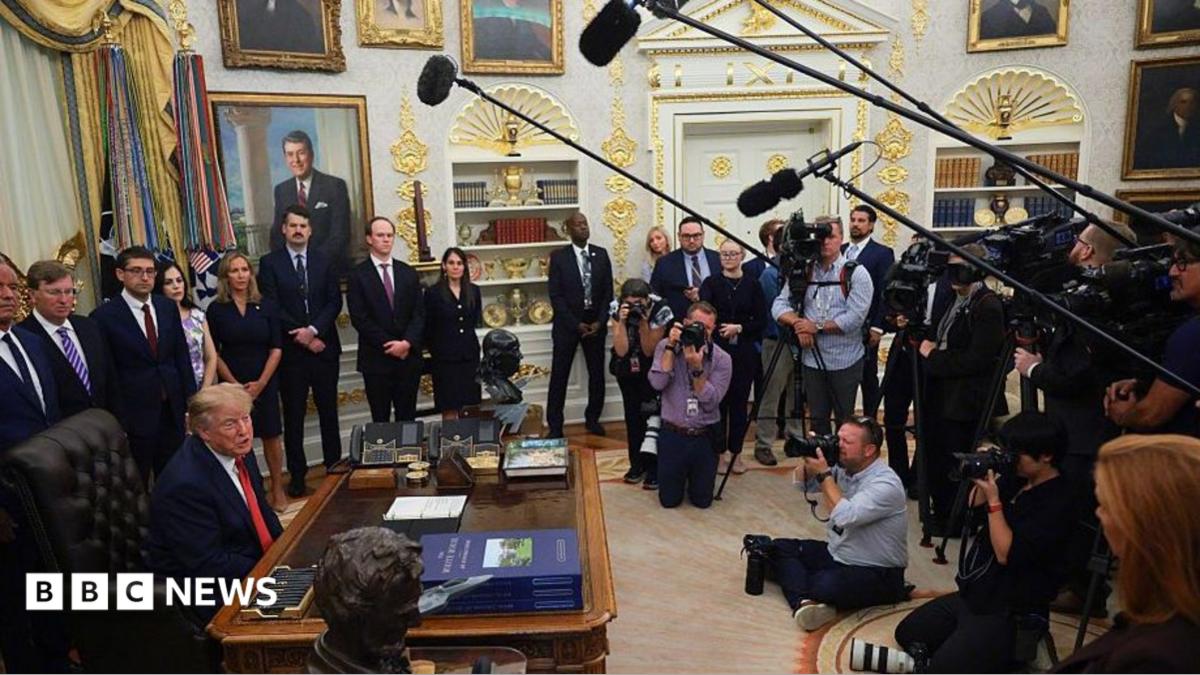
Since returning to office in January 2025, Trump and administration officials have repeatedly clashed with members of the White House press corps. In his second term, Trump has also moved to bring conservative bloggers, influencers and other media into the press room, arguing it is necessary to provide diverse perspectives to the American public.
In February, the White House announced it was taking control of the press pool which has access to Trump and had for more than a century been managed by the White House Correspondents’ Association.
The same month, the administration moved to bar Associated Press (AP) reporters and photographers from spaces where access is limited, such as the Oval Office or Air Force One, because of the outlet’s usage of the term “Gulf of Mexico” instead of “Gulf of America”.
AP swiftly filed a lawsuit and the case remains ongoing.
The president has frequently clashed with reporters in the Oval Office on Air Force One and during White House events, often referring to them as “fake news” and “rude”.
In his first term, Trump also banned CNN correspondent Jim Acosta from the White House, although his credentials were restored after CNN sued.
CNN is one of only five US news outlets that film video for the pool. The pool refers to an outlet or reporter sharing material from a presidential event with other media outlets. The BBC contributes to the White House radio pool.
The announcement was immediately criticised by leading advocacy organisations for freedom of the press.
In a statement on Friday afternoon, the Knight First Amendment Institute at Columbia University said that “with so many courts having ruled against him on exactly this point, you’d think President Trump would have learned this lesson by now”.
“If President Trump means to expel these news organizations from the White House press pool, his action is doubly unconstitutional because the press pool is a ‘public forum’ under the First Amendment, which means the president can’t exclude journalists from it on the basis of their viewpoints,” said the institute’s executive director, Jameel Jaffer.
A major group that provides legal services to the media – the Reporters Committee for Freedom of the Press – said it expected Trump’s ban to be struck down quickly by the courts because it was “flatly unconstitutional”.
“The First Amendment is clear that once the White House invites in some journalists, it can’t ban others because it doesn’t like their reporting,” said the group’s president Bruce Brown, calling the potential ban “textbook viewpoint discrimination”.
The Freedom of the Press Foundation also said it was illegal, adding: “It’s also hard to imagine a dumber move”.
Trump “has been retaliating against the press for years, but it hasn’t helped him,” it said, saying “these outrageous attacks only demonstrate how scared he is of an informed public”.
Trump has pursued legal action against a number of US and international news outlets, including The Wall Street Journal, The New York Times and the BBC.
Some of the lawsuits have resulted in media organisations agreeing to pay multimillion dollar settlements. Trump’s lawsuit against the BBC is ongoing.
New Delhi, India – On the morning of August 26, the Himalayan landscape above Nepal’s Rasuwa district changed in minutes.
A mass of ice and rock broke loose high in the mountains and sent a violent surge of water, mud and debris down the Lhende Khola River. The torrent travelled through valleys, swept away settlements and infrastructure and eventually reached the Nepal-China border.
What followed was not simply a flood.
It was a chain reaction.
By mid-September, more than 1,400 people had been reported dead and at least 6,000 remained missing in Nepal and across the border in Tibet. Twelve hydropower plants were destroyed, while roads, bridges and homes were buried or washed away.
The scale of the destruction has left scientists and disaster managers confronting a difficult question: How do you warn communities about a disaster whose trigger may occur high above them, in terrain that is difficult to monitor and where there may be only minutes to react?
Basanta Raj Adhikari, director of the Centre for Disaster Studies at Tribhuvan University in Kathmandu, described the event to Al Jazeera as unprecedented in size, affected area and mechanism. His estimate suggested that the energy involved was greater than that released by the Hiroshima atomic bomb, a comparison intended to illustrate the scale of the physical forces involved rather than suggest that the event was equivalent to a nuclear explosion.
For scientists who study the Himalayas, the disaster demonstrated how quickly an event originating in a remote, high-altitude environment can become a regional catastrophe.
And Nepal is not alone.
The warning problem
A warming climate is altering glaciers, snow cover, permafrost and high-altitude lakes. At the same time, roads, hydropower projects, tourist facilities and settlements have pushed deeper into mountain valleys.
That combination is creating a new risk landscape in which one hazard can trigger another.
An avalanche can block a river. A blocked river can form a temporary lake. A sudden release can become a debris flow. That debris can destroy a road or bridge, block another river and create another flood downstream.
The August disaster in Nepal showed how quickly such a sequence can unfold. It also exposed a weakness in the way early-warning systems are often designed.
Many systems are built around a particular hazard: rainfall, river level or glacial lake outburst flood. But the Himalayas do not always respect those categories.
In July, the International Centre for Integrated Mountain Development, or ICIMOD, warned that a below-normal monsoon should not be interpreted as a safer one.
“The biggest misunderstanding is that less seasonal rainfall means lower flood risk,” said Saswata Sanyal, a disaster risk reduction specialist at ICIMOD.
“A drier monsoon can still be a dangerous monsoon,” he added, warning that seasonal averages cannot capture the cloudbursts capable of producing catastrophic flooding in mountain valleys.
The Nepal disaster went a step further.
The immediate trigger was not simply heavy rainfall.
Scientists have been examining an ice-rock avalanche and other possible processes that temporarily obstructed the river system before releasing a destructive surge. ICIMOD has described the event as an ice avalanche rather than a conventional glacial lake outburst flood, while other scientists have examined the role of local seismic activity and other high-altitude processes.
That distinction matters.
A warning system waiting for rainfall or a rising river may not provide enough time when the real trigger happens several kilometres upstream and above the line of sight of the communities below.
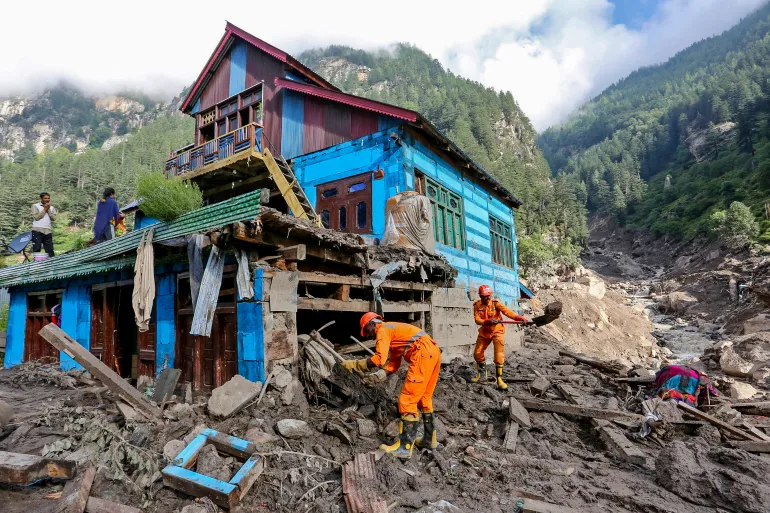
Indian National Disaster Response Force (NDRF) personnel conduct a search and rescue operation at the site of a flash flood at a village in the Kishtwar district of Indian-administered Kashmir on August 16, 2025 [AFP]
Kashmir’s warning signs
Thousands of kilometres away, scientists studying Kashmir’s Himalayas are seeing another part of the same problem.
A study published in the Journal of Glaciology this year mapped 155 glacial lakes above 2,500 metres (8,200ft) across the Himalayas in Indian-administered Kashmir.
The researchers found that the area of ice-contact proglacial lakes – bodies of water that form directly against the margin of a melting glacier, trapped by moraine ridges, bedrock basins, or ice dams – had increased by 26 percent between 1992 and 2024.
Five lakes were classified as having very high susceptibility to glacial lake outburst floods.
An outburst from those lakes, the researchers found, could threaten several thousand buildings, 15 major bridges, roads and a hydropower project.
More significantly, the study warned that hazards could occur in chains, with an upstream lake outburst potentially triggering secondary events downstream.
For Irfan Rashid, a glaciologist and associate professor at the University of Kashmir who co-authored the study, the implications extend beyond individual lakes.
Rashid recently told Al Jazeera that without action, the melting, thinning, and destabilisation of glaciers, seasonal snow cover, and permafrost along the Hindu Kush-Himalayas system would increase, and water shortages could become a major problem across the Upper Indus, Ganga and Brahmaputra basins by the end of the century.
That is why the Nepal disaster resonates in Kashmir.
The landscapes are different, the rivers are different and the individual hazards may differ. But the underlying problem is increasingly similar: Communities living downstream of a rapidly changing high-altitude environment may have little time to respond when something breaks loose above them.
The challenge is particularly acute in places where roads, bridges and hydropower projects occupy narrow valleys.
Once a mountain river begins carrying enormous quantities of rock, ice and mud, infrastructure designed for conventional floods can quickly become irrelevant.
Volunteers rescue flood-affected victims along with their livestock using a boat following heavy rains and overflowing of the Sutlej River, on the outskirts of Multan in Punjab province, Pakistan, on September 4, 2025 [Shahid Saeed Mirza/AFP]
Pakistan has already begun building a warning network
The same concern runs across the western Himalayas and Karakoram ranges.
The Gilgit-Baltistan region in Pakistan-administered Kashmir contains hundreds of glaciers and glacial lakes, while communities and infrastructure sit along valleys exposed to sudden floods and landslides.
Pakistan has responded by expanding early-warning infrastructure.
Under a United Nations-supported programme, early-warning systems, evacuation shelters, disaster-management centres and other protective measures have been established in vulnerable valleys.
But technology alone cannot solve the problem. A sensor can detect a change. Someone still has to receive the message. Someone has to understand what it means. And people downstream have to have a route to safety.
That last part is often the weakest link. A siren is useful only if the people hearing it know where to go. An automatic warning is useful only if it arrives before the flood. A satellite image is useful only if the information can be converted into a decision quickly enough to save lives.
This is why disaster scientists increasingly talk about anticipatory action rather than simply disaster response.
“The era of preparing for a single, predictable hazard is over,” Sanyal said earlier this year. “Anticipatory action and early warning must now be the foundation.”
Nepal army soldiers work during a search and rescue operation outside a tunnel near a hydropower project site, following deadly flash floods and mudslides, in Rasuwa district, Nepal, on September 1, 2026 [Reuters]
The infrastructure trap
The Himalayas are also becoming more heavily engineered.
Hydropower is central to Nepal’s economy. Roads are being expanded. Border crossings are growing in importance. Tourism is pushing deeper into remote valleys.
The benefits are obvious. So are the risks.
The August disaster struck an area where hydropower infrastructure was concentrated along the river corridor. At least 900 workers were believed to have been inside tunnels and other facilities in the aftermath, making rescue operations extraordinarily difficult. Two workers were eventually pulled alive from a hydropower tunnel nine days after the disaster.
The question is no longer simply whether infrastructure can withstand a flood. It is whether planners have adequately considered what happens when a flood is carrying an enormous mass of rock and ice, when a river changes course, or when one mountain hazard triggers another.
For decades, engineering risk assessments have often relied on historical records. But history becomes a less reliable guide when the physical conditions producing disasters are changing.
A river that flooded once every several decades may no longer behave according to the same pattern. A glacier that appeared stable from satellite imagery may sit beneath an increasingly unstable slope. A lake that was considered remote may suddenly become a threat to a road, village or power plant hundreds of metres below.
Relatives of victims and missing people react outside the morgue of the Tribhuvan University Teaching Hospital (TUTH), in Kathmandu, Nepal, August 29, 2026 [Narendra Shreshtha/EPA]
The border problem
There is another complication that no satellite can solve on its own.
Borders.
The Himalayas are divided among countries with different political systems, security concerns and approaches to sharing information. But rivers do not stop at international boundaries. Neither do floods.
The August disaster reached the Nepal-China border and damaged the Gyirong crossing, an important trade and pilgrimage route. The disaster also raised questions about how quickly information about hazards in high mountain areas can move between countries.
This is where regional cooperation becomes more than a diplomatic slogan, experts say. A sensor positioned in one country can provide warning to people in another. A satellite image collected over one mountain range can reveal a developing hazard that threatens a valley downstream. A river gauge can provide critical information before floodwaters reach a settlement.
The technical capability already exists in many cases. The missing piece is often the architecture connecting it.
A 2026 assessment of Himalayan disaster risks has argued for stronger monitoring, early-warning systems and regional coordination because hazards are increasingly interconnected.
The idea is simple: Information about a mountain hazard should not stop at the same line where a political boundary begins.
Buildings are inundated after flash floods triggered by sudden heavy rainfall swamped Rangpo town in Sikkim, India, Friday, October 6, 2023 [Prakash Adhikari/AP Photo]
From Nepal to Sikkim to Kashmir
The August disaster in Nepal isn’t a tragedy belonging to one country, point out experts.
The Kashmir Himalayas study has already identified lakes capable of producing destructive outburst floods and has warned of cascading processes.
Northeast India’s Sikkim provides another example.
Today, 40 high-risk glacial lakes have been identified in Sikkim, including 16 placed in the highest-risk category, with authorities working on drainage, flood-retention and other protective measures.
But the lesson from each disaster is broadly the same: Waiting for a disaster to prove the risk is the most expensive form of preparedness.
The world’s second largest mountain, the 8,611-metre- (28,251ft-) high K2 (seen in the distance), and the 8,051-meter- (26.414ft-) high Broad Peak (R), are illuminated by the moon at Concordia, the confluence of the Baltoro and Godwin-Austen glaciers, in the Karakoram mountain range in Pakistan, September 7, 2014 [Wolfgang Rattay/Reuters]
The Third Pole test
The Himalayas are sometimes called the Third Pole because they contain one of the world’s largest concentrations of snow and ice outside the Arctic and Antarctic.
Major Asian rivers depend on water originating in these mountains. Hundreds of millions of people live downstream.
That makes the changing Himalayas not only an environmental issue but a security, infrastructure and humanitarian one.
The August disaster demonstrated the most frightening version of that future. A mountain can collapse without warning. A river can become a weapon of debris. A hydropower tunnel can become a trap. A border crossing can disappear in minutes. And by the time people downstream understand what is happening, the water may already be there.
It’s a future that a region stretching from northeast India, spanning Tibet, Nepal, Kashmir and Pakistan, can no longer ignore. Yet disaster management remains largely divided by national boundaries. That contradiction is becoming harder to navigate.
The next glacial collapse could begin in Kashmir. It could begin in Pakistan’s high mountains. It could begin in Sikkim, Nepal or Tibet.
Wherever it starts, the same question will follow the mountain downstream: Who knew, how early did they know, and did the warning reach the people in time?
For a region entering an era of increasingly complex mountain hazards, that may be the real measure of whether the Third Pole is prepared.
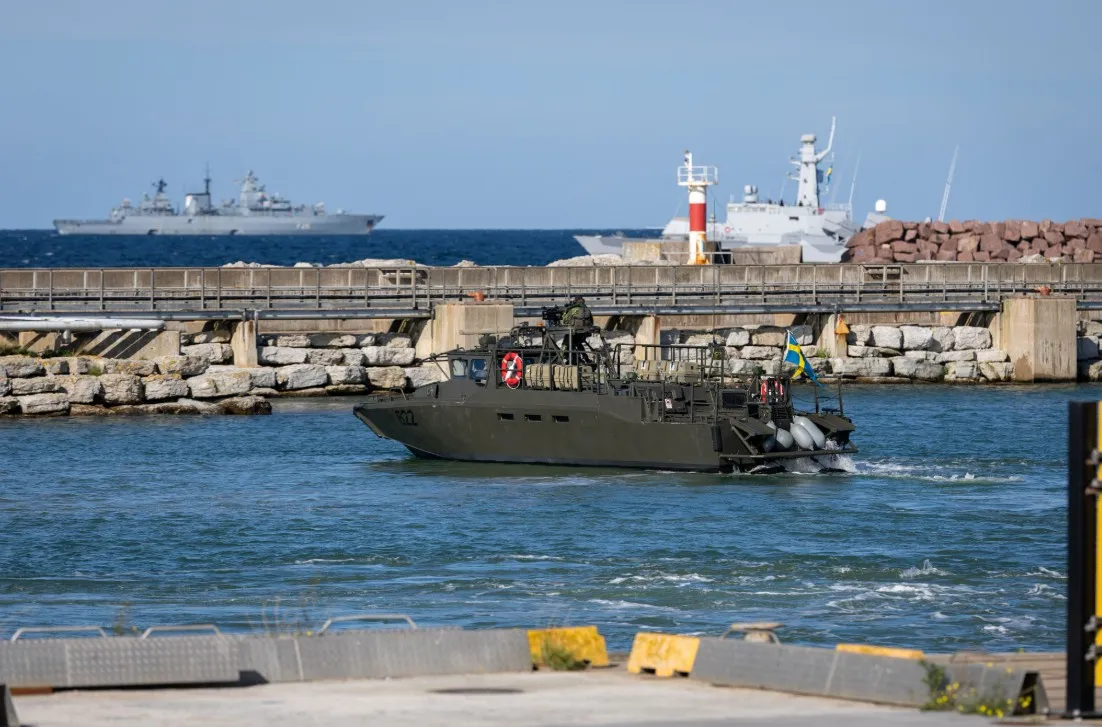
Swedish and German forces are conducting what appears to be the first joint rehearsal of their rapid-reinforcement plans for the Baltic island of Gotland. The exercise is another step in Sweden’s defense planning for an island whose position in the middle of the Baltic gives it an outsized strategic importance for controlling access, protecting the Baltic states, and maintaining NATO’s freedom of movement in a region where Russian military activity remains a persistent concern.
German and Swedish warships stand offshore while a Swedish CB90 fast assault craft operates in the harbor at Visby. Bundeswehr/Marc Tessensohn
The exercise, Silver Wotan 2026, running between September 14-23, brings together Swedish and German forces across the land, maritime, and air domains. The scenario is built around a Swedish request for allied assistance, with German forces moving personnel and equipment across the Baltic before integrating with Swedish units already defending the island. The operation is testing the entire process of getting allied combat power to Gotland, protecting it during the movement to Visby, and rapidly incorporating it into the island’s existing defensive network.
A video shows troops coming ashore on Swedish CB90 fast assault craft, a type that German soldiers are also trained to operate:
A rapid deployment of German and Swedish forces to Gotland island is being carried out today. Units from 🇸🇪 and 🇩🇪 are rehearsing the swift reinforcement of the strategic island in order to ensure the security of the Baltic Sea.#SilverWotan#NATOpic.twitter.com/A0r3LF8XUP
The strategic importance of Gotland has grown considerably following Sweden’s accession to NATO in March 2024, which was a direct response to the full-scale Russian invasion of Ukraine.
Located approximately halfway between mainland Sweden and the Baltic states, the island occupies a central position in the Baltic Sea, close to the maritime approaches to the Gulf of Finland and within reach of the Russian exclave of Kaliningrad. Its location gives forces operating from Gotland a potentially significant position from which to conduct surveillance, air defense, and maritime operations, while also making the island an important part of the wider network connecting NATO’s northern and eastern members.
The location of Gotland within the Baltic region. Google Earth
At the same time, Gotland sits within an extremely complex littoral environment, where shallow waters, islands, narrow maritime approaches, and the proximity of multiple states can make both offensive operations and defensive planning more difficult. The region has also been shaped by longstanding Swedish concerns about Russian clandestine activity, including intelligence gathering and other forms of covert or deniable activity. The complexity of the Baltic operating environment can make such activities harder to detect and attribute, adding another layer of uncertainty alongside the more conventional military challenges facing the region.
The unloading operation in Visby. The vehicles seen here were transported by sea from Karlskrona to the Swedish mainland. Bundeswehr/Marc Tessensohn
Geography has long made Gotland important to Swedish defense planning, but its significance has taken on a broader dimension since Sweden joined the alliance. NATO has described the island as strategically important to its freedom of maneuver in the Baltic, while Swedish officials have highlighted its potential role as a hub for military operations and logistics in the region.
The current exercise is designed around the practical difficulties of reinforcing such a position.
Military equipment is being transported by sea to Visby, Gotland’s principal port, including by commercial ferry. In Visby, Swedish and German personnel are securing the harbor and conducting the reception of the arriving force. Among the equipment being moved are air defense systems, while Swedish forces are also operating coastal defense systems armed with anti-ship missiles.
German Army vehicles roll into Visby during Silver Wotan. Bundeswehr/Marc Tessensohn
Meanwhile, publicly available flight-tracking data showed German Luftwaffe transport aircraft, including at least one Airbus A400M airlifter, apparently involved in the effort. The commercial airport at Visby has long also been used for military activities related to Gotland and the wider Baltic region.
The movement is supported by Swedish and German naval forces and other aircraft, creating a scenario in which the maritime transit, protection of the port, air operations, and subsequent movement of troops and equipment ashore all form part of the same military problem. Once ashore, the arriving forces have to be moved into position and integrated with Swedish units already responsible for defending the island.
The Swedish Gotland Regiment, P 18, provides the core of the island’s permanent military presence. The regiment, Sweden’s youngest and smallest, has been rebuilding its capabilities since Sweden began expanding its military presence on Gotland. Its forces form the basis of the ground-defense structure into which allied reinforcements would be incorporated.
Soldiers of the Gotland Regiment of the Swedish Army camouflage an armoured vehicle during an earlier field exercise near Visby. Photo by Jonathan NACKSTRAND / AFP
Swedish coastal defense capabilities are another important element of the drill. Land-based anti-ship missiles provide the island with a means of threatening hostile surface vessels operating in the surrounding waters, giving the defense of Gotland a direct connection to the wider maritime battle for the Baltic. During Silver Wotan, Swedish and German forces are also conducting anti-surface warfare activities alongside the broader reinforcement operation.
Germany is contributing more than 500 troops to the exercise, part of approximately 2,000 Bundeswehr personnel involved, including elements from the army, navy, and air force. The German Luftwaffe has deployed Panavia Tornado aircraft for surveillance, while German naval forces are participating in the maritime component, and German ground personnel are involved in the reinforcement and security activities on Gotland.
Stock photo of a Luftwaffe Tornado ECR equipped for a reconaissance mission. Bundeswehr
The exercise scenario is particularly relevant against the backdrop of Russia’s continuing military presence in the Baltic region.
Russia maintains major military infrastructure in Kaliningrad, including naval, air, missile, and air defense capabilities, while the Russian Baltic Fleet operates from bases in the region. Kaliningrad’s position between Poland and Lithuania gives Moscow a significant military foothold inside the NATO area, while Russian forces and military infrastructure elsewhere along the Baltic add to the complexity of operating and reinforcing allied territory in the region.
The security environment around the Baltic has also deteriorated considerably since Russia’s full-scale invasion of Ukraine. NATO has increased its surveillance and military activity in the region, including the launch of Baltic Sentry in January 2025 following a series of incidents involving critical undersea infrastructure. The alliance has subsequently expanded efforts to monitor maritime activity and protect infrastructure and sea lines of communication.
A Swedish Navy Helicopter 15 on the flight deck of patrol ship HMS Carlskrona as part of the NATO Baltic Sea patrol mission, Baltic Sentry, aimed to secure critical underwater infrastructure. Photo by Johan NILSSON / TT NEWS AGENCY / AFP
Swedish authorities have stressed that Silver Wotan was planned in advance and is not being conducted in response to a specific imminent Russian threat. The exercise nonetheless reflects the operational environment in which Swedish and NATO planners now have to consider the possibility that maritime and air movements across the Baltic could be monitored, disrupted, or contested.
The exercise also builds on a series of increasingly large Swedish-led activities designed to test the reception of allied forces on Swedish territory. During Aurora 26 earlier this year, more than 18,000 troops from 13 countries participated in operations across Sweden, including the deployment of allied forces to Gotland alongside the Gotland Regiment and Swedish Home Guard. NATO described that activity as an emergency deployment intended to test the reinforcement of the island.
A Dutch AH-64 Apache attack helicopter takes part in Exercise Aurora 26 in southern Sweden on April 29, 2026. Photo by Johan NILSSON / various sources / AFP
Silver Wotan places a more concentrated emphasis on the Swedish-German relationship and on the movement of an allied force into the island’s existing defensive structure.
Germany’s participation is also consistent with its growing military role in the Baltic and along NATO’s northeastern flank. Berlin is already providing forces for NATO’s forward defense in Lithuania and has increasingly emphasized the ability to move German forces rapidly across northern Europe in support of allied operations.
For Sweden, meanwhile, Gotland has become one of the clearest examples of how NATO membership has changed the country’s defense planning. The island remains a Swedish responsibility, but its location means that what happens there has consequences well beyond Sweden’s territorial defense.
German and Swedish troops on a Swedish CB90 fast assault craft. Bundeswehr/Marc Tessensohn
A defended and adequately supplied Gotland provides NATO with a strategically positioned base for surveillance and defensive operations in the Baltic, while the ability to reinforce it demonstrates that the alliance can maintain access to the island even as the surrounding maritime and air environment becomes more contested.
The exercise comes as European allies are being forced to plan for a NATO in which the United States may provide less of the conventional military weight it has supplied for decades. The Pentagon is reviewing the size and posture of U.S. forces in Europe, including the forces and capabilities Washington would make available in a European crisis, while NATO’s top commander has said further U.S. troop withdrawals should be expected as European allies build up their own conventional capabilities.
A German and a Swedish soldier involved in securing Visby during Silver Wotan 2026. Bundeswehr/Marc Tessensohn
At the same time, the alliance now describes Russia as its most significant and direct security threat, citing military activity alongside airspace violations, sabotage, cyber operations, and other forms of hybrid pressure. There are also growing concerns that Russia could try something in the Baltics, while it continues to step up its gray-zone activities regardless. NATO officials have warned that Russia could rebuild enough military capacity to pose a more serious conventional challenge to the alliance before the end of the decade.
There are escalating warnings from Poland that Russia is preparing to widen its war against Ukraine, with “accidental” missile and drone strikes on NATO territory.
Such a move – Russia falsely claiming air strikes that hit NATO allies happened by accident – would be designed to…
For Sweden and Germany, the Silver Wotan exercise is a practical test of how quickly European forces can reinforce and defend one of the Baltic’s most strategically important positions. As the security environment grows more contested and Europe prepares for a future in which U.S. forces may not be as readily available, the ability to move allied combat power across the region and integrate it into existing defenses is becoming an increasingly important part of NATO’s deterrence.
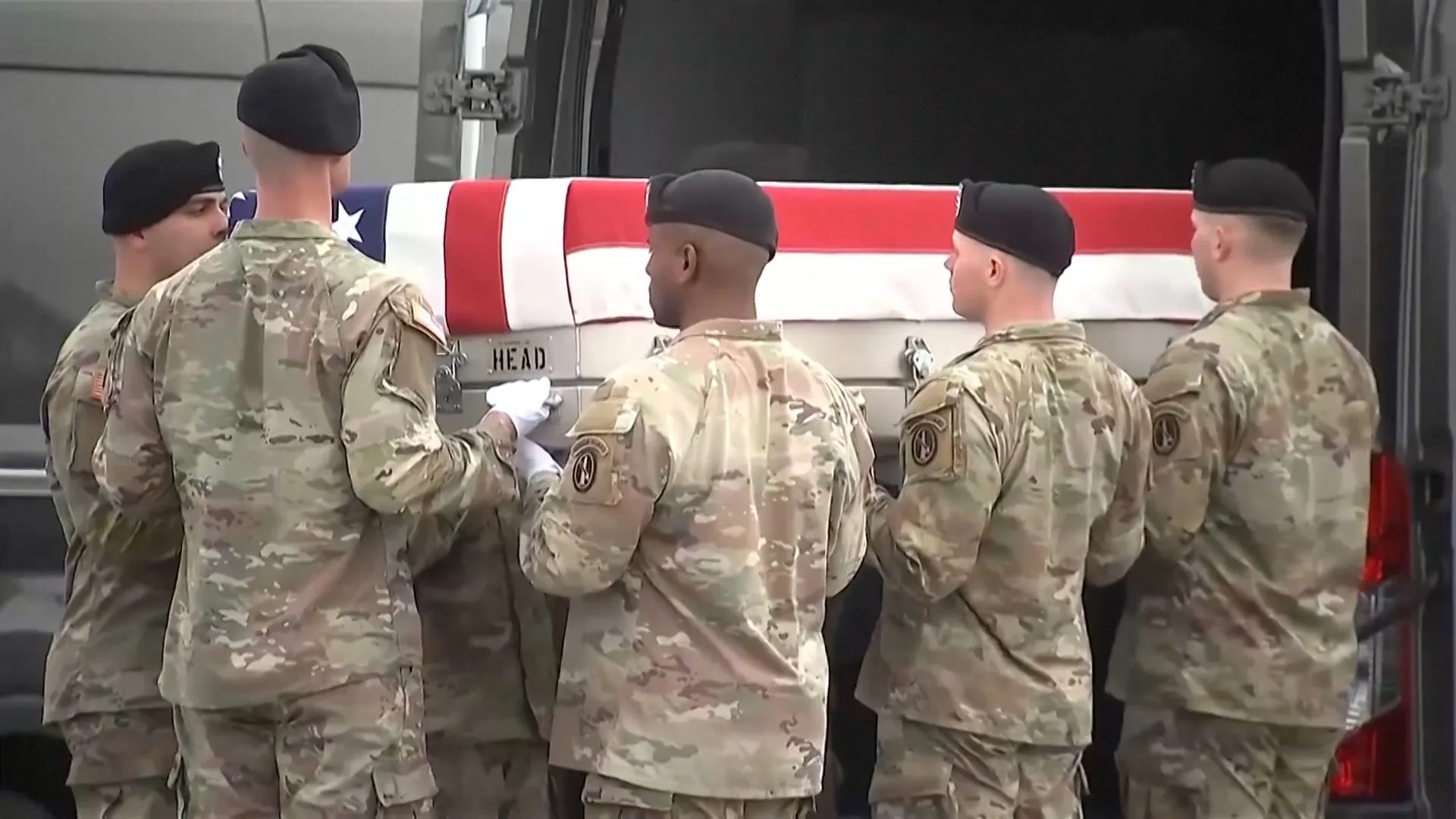
The Pentagon publicly lists 18 US military deaths since the Iran war began. But, The Washington Post has cited six unnamed Pentagon officials who say the toll is at least 22. The Pentagon has declined to explain the discrepancy and Pete Hegseth has called the report ‘a complete lie’.
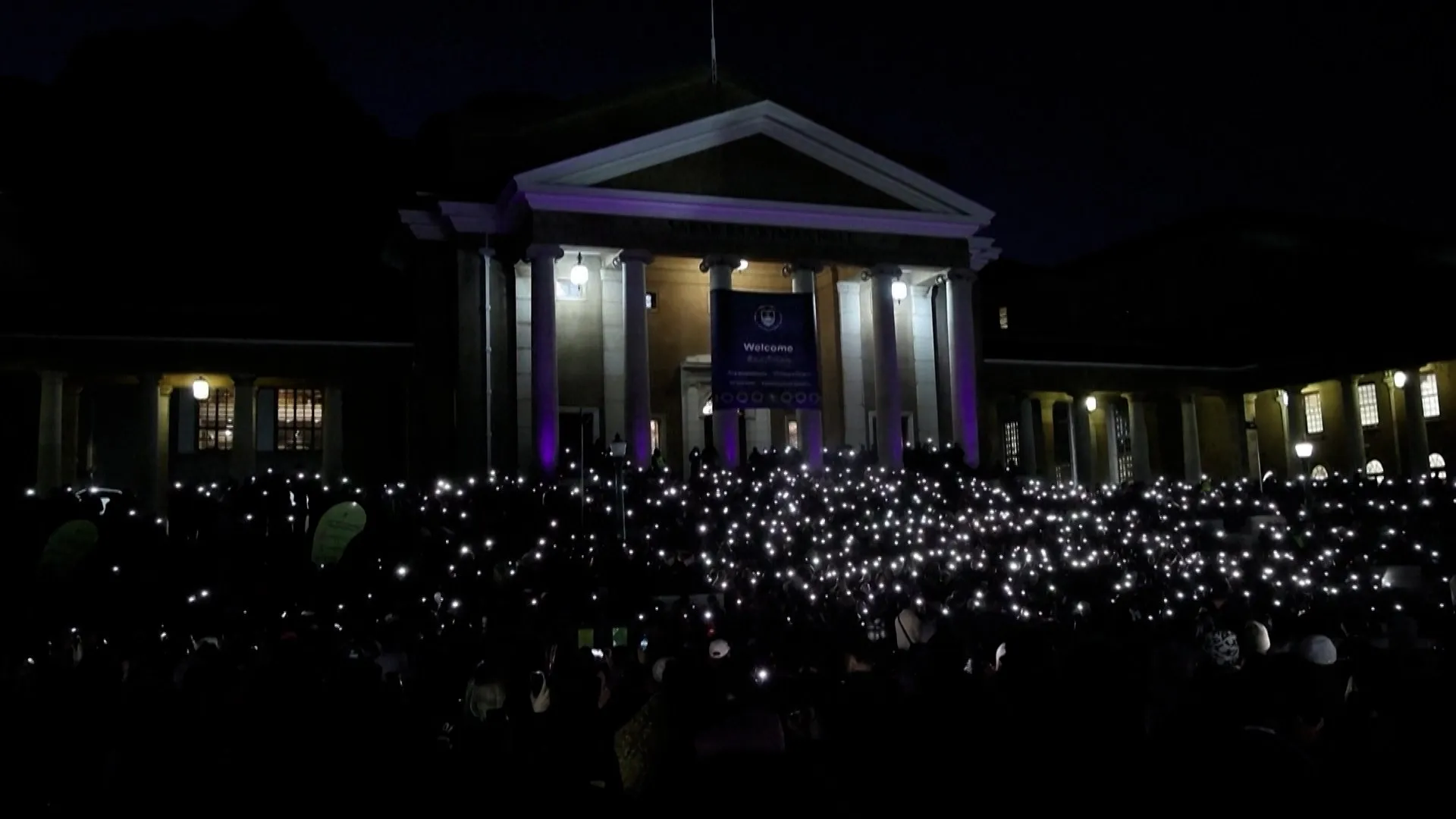
Hundreds of people gathered at the University of Cape Town on Friday at a vigil for victims of femicide in South Africa. Anger is rising across the country as the bodies of nine women have been found near Johannesburg in just two months.
US judges affirm migrants must have opportunities to voice safety concerns before deportation to unfamiliar nations.
Published On 19 Sep 202619 Sep 2026
A US federal appeals court has rejected the Trump administration’s policy of rapidly deporting migrants to countries other than their own – a ruling that could next go before the Supreme Court.
On Friday, a three-judge panel of the 1st US Circuit Court of Appeals in Boston largely upheld a February decision that found the Department of Homeland Security’s so-called third-country removal policy unlawful.
Recommended Stories
list of 3 itemsend of list
The case stems from a class-action lawsuit testing what due process migrants are owed before being sent to nations with which they have no ties.
Writing for the panel, US Circuit Judge Seth Aframe said migrants must be given a “meaningful” chance to raise safety concerns before removal, rejecting the Trump administration’s narrower reading of the law.
The court did overturn part of the ruling on procedural grounds, concerning whether officials must first try deporting migrants to countries they have ties to.
Trina Realmuto, a lawyer for the plaintiffs at the National Immigration Litigation Alliance, said the decision confirmed that “due process and the protections Congress enacted against persecution and torture cannot be circumvented by putting someone on a plane to a country that was never part of their removal proceedings”.
The DHS did not immediately comment. The Trump administration is expected to appeal the ruling.
Under Trump, the US has struck agreements allowing it to send more than 25,000 migrants to at least 29 third countries, most often Mexico, according to Third Country Deportation Watch, a tracker run by the rights groups Refugees International and Human Rights First.
The policy, adopted in March 2025, allowed removals with only minimal notice if officials had diplomatic assurances against persecution.
The controversial programme has reached the Supreme Court twice.
In 2025, the justices cleared the way for eight men, including nationals of Cuba, Myanmar and Vietnam, to be deported to South Sudan, a country the US State Department advises against visiting because of “crime, kidnapping, and armed conflict”.
The DHS called the removals “a win”, while rights groups said they flouted basic protections.
The Trump administration’s immigration agenda has faced a string of setbacks this month.
A federal judge blocked planned caps on student and journalist visas, calling the government’s justification “exceptionally weak”, while a coalition of 22 states and Washington, DC, sued to stop a separate rule that would let officials deny green cards to immigrants who lawfully use public benefits.
Welcome to Bunker Talk. This is a weekend open discussion post for the best commenting crew on the net, in which we can chat about all the stuff that went on this week that we didn’t cover. We can also talk about the stuff we did or whatever else grabs your interest. In other words, it’s an off-topic thread.
This week’s caption reads:
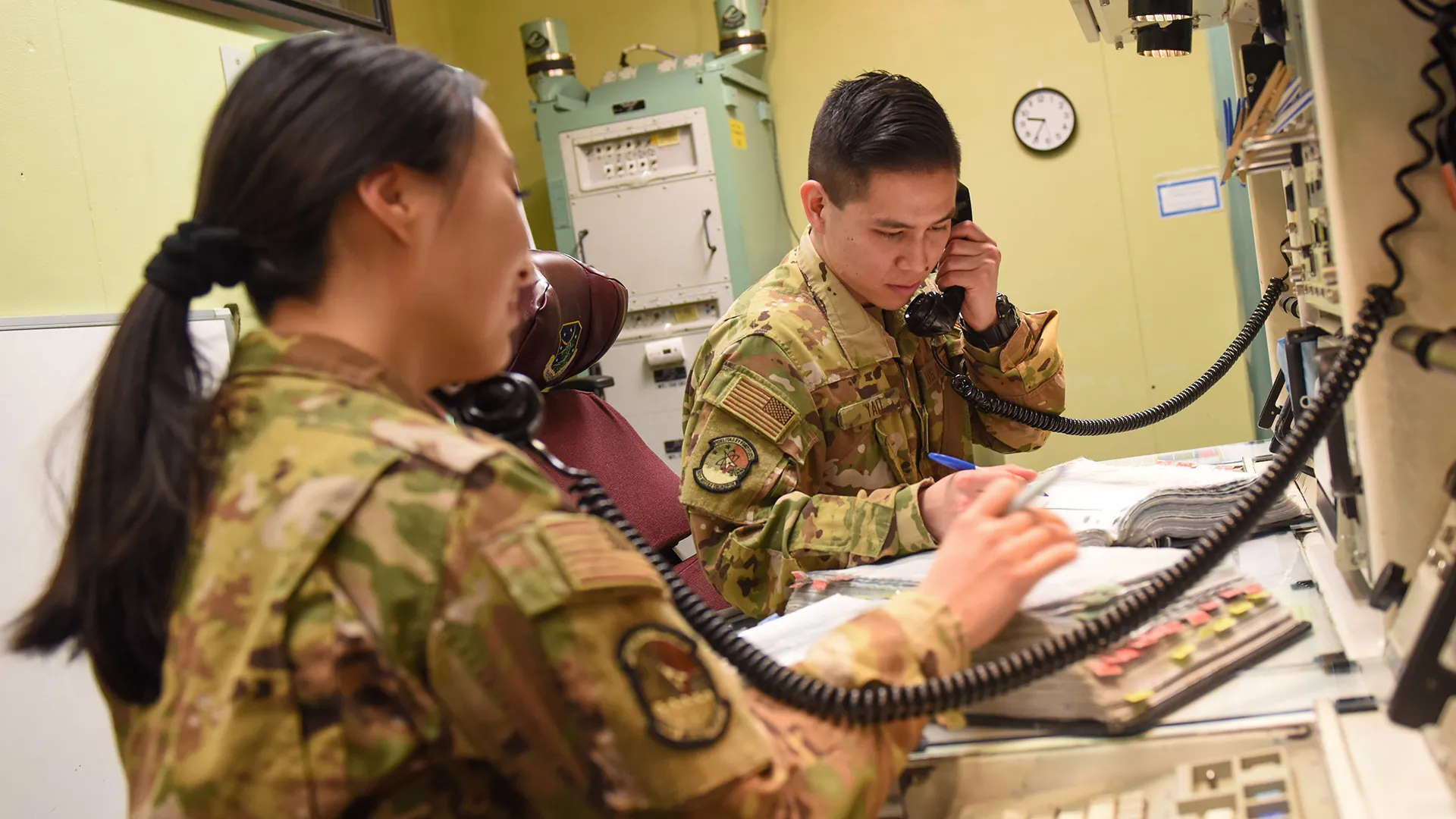
2nd Lt. Michelle Lee and Capt. William Yau conduct pre-operational checks inside of a Launch Control Center used for training purposes at Minot Air Force base, North Dakota, Mar. 7, 2022. The 91st Missile Wing contributes to the nation’s strategic defense by sustaining and operating various Minuteman III intercontinental ballistic missiles and the associated launch facilities.
PRIME DIRECTIVES:
If you want to talk politics, do so respectfully and know that there’s always somebody that isn’t going to agree with you.
If you have political differences, hash it out respectfully, stick to the facts, and no childish name-calling or personal attacks of any kind. If you can’t handle yourself in that manner, then please, discuss virtually anything else.
No drive-by garbage political memes. No conspiracy theory rants. Links to crackpot sites will be axed, too. Trolling and shitposting will not be tolerated. No obsessive behavior about other users. Just don’t interact with folks you don’t like.
Do not be a sucker and feed trolls! That’s as much on you as on them. Use the mute button if you don’t like what you see.
So unless you have something of quality to say, know how to treat people with respect, understand that everyone isn’t going to subscribe to your exact same worldview, and have come to terms with the reality that there is no perfect solution when it comes to moderation of a community like this, it’s probably best to just move on.
Finally, as always, report offenders, please. This doesn’t mean reporting people who don’t share your political views, but we really need your help in this regard.
Separate attacks struck central refugee camps as officials warned Gaza’s health sector faces total collapse.
Published On 19 Sep 202619 Sep 2026
An Israeli strike on a motorcycle has killed one Palestinian and injured others, with one child in critical condition, reports the Palestinian Wafa news agency.
The air strike targeted the vehicle in the Sheikh Radwan neighbourhood, west of Gaza City, on Friday. Ongoing Israeli strikes on the besieged enclave have killed at least 1,381 people since the ceasefire was announced in October 2025.
Recommended Stories
list of 3 itemsend of list
Israel has killed at least 73,795 people and wounded 174,869 others since the start of its genocidal war in October 2023.
On Friday, the Israeli army also opened fire in the Nuseirat and al-Bureij refugee camps in the central Gaza Strip, reports Wafa. The attacks on tents sheltering displaced people have resulted in multiple injuries.
Earlier this week, an Israeli “double-tap” air strike killed a paramedic and a 15-year-old schoolboy in Gaza City. Israeli forces claimed they were targeting Hamas operatives.
Last month, UNICEF found that, on average, one child is killed a day by Israel.
Families are now confined to about a third of the enclave, sheltering among destroyed buildings, rubble and uncleared waste, the agency said.
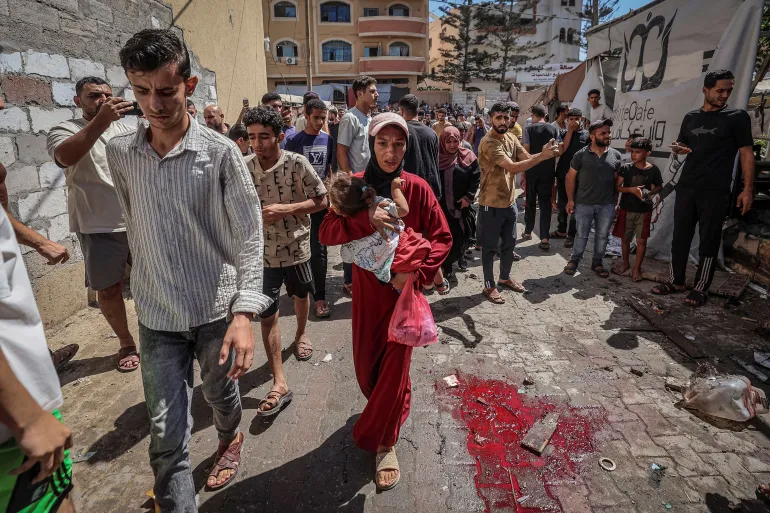
A Palestinian woman carries a girl past a blood stain on the ground after an Israeli drone strike on a cafe in al-Bureij camp, central Gaza Strip, on September 16, 2026 [File: AFP]
On Wednesday, a previously damaged building collapsed in Gaza City, killing at least 21 people, including 12 children. The Palestinian Civil Defence agency in Gaza struggled to recover bodies from under the rubble due to Israel’s severe restrictions on heavy equipment.
The Health Ministry warned on Wednesday that Gaza’s health system was on the verge of “total collapse” as Israel continues to limit the amount of medical aid and fuel permitted to enter the enclave.
The war in Yemen intensifies with mounting clashes and reciprocal attacks between Saudi forces and the Houthis.
Published On 18 Sep 202618 Sep 2026
Yemen’s Houthi rebels have said Saudi Arabia carried out 26 strikes against areas under the group’s control in the past 24 hours, as the two sides continue trading attacks amid an escalating war in Yemen, according to the AFP news agency.
On Friday, the group claimed Saudi strikes on Houthi-held territory had reached 300 over the past week alone, hitting positions across the areas it controls, AFP reported.
Recommended Stories
list of 3 itemsend of list
Yemen’s government, backed by Saudi Arabia, said on Friday its forces had killed 30 Houthi rebels and wounded more than 60 in clashes in the al-Wazi’iyah district of Taiz province, one of several fronts where combat has picked up this week.
The exchange has come on the heels of a widening escalation of fighting in Yemen between the government’s military and the Houthi fighters.
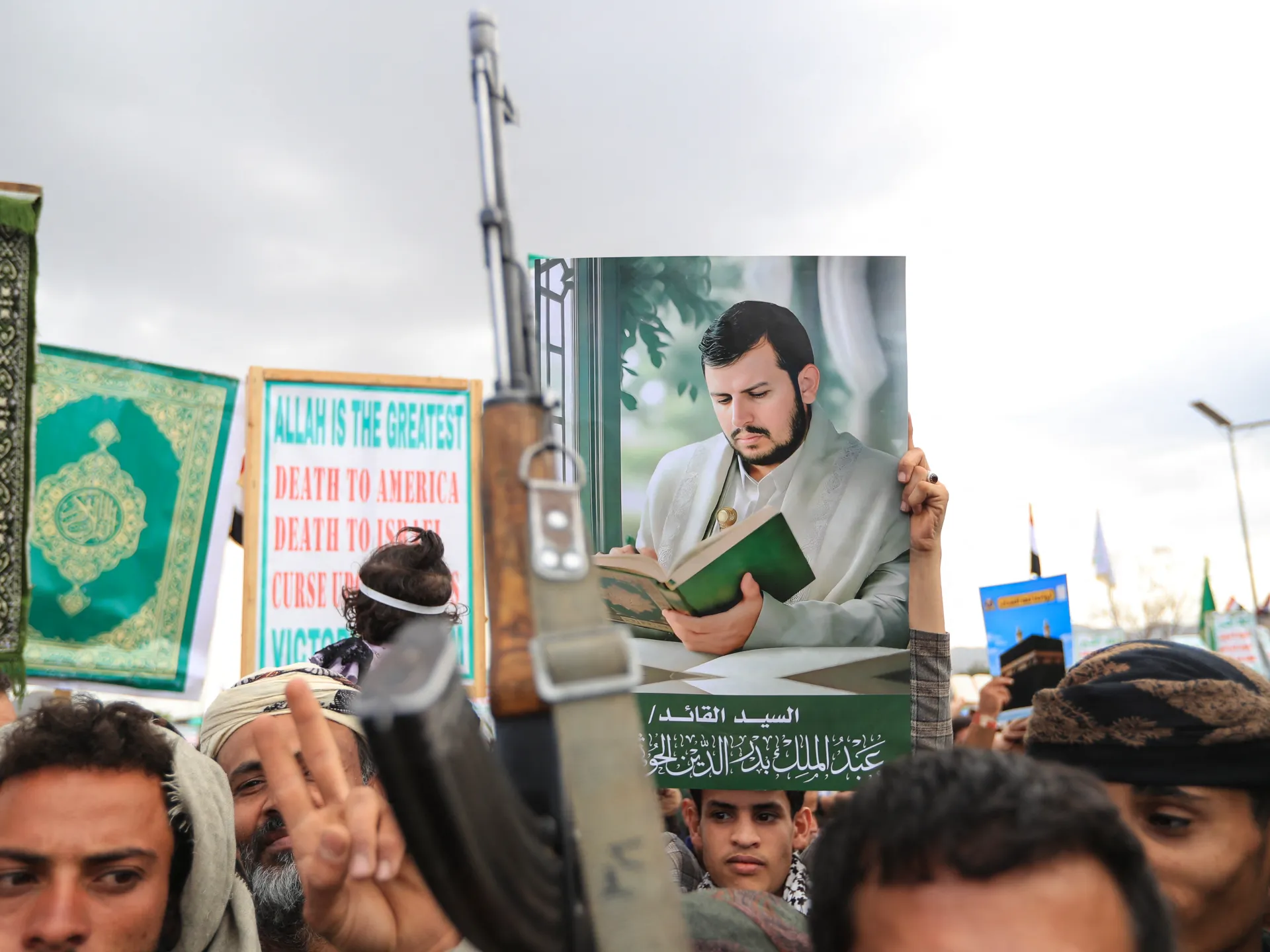
Tens of thousands marched through Sanaa on Friday in a show of support for the Iran-backed Houthis and against Saudi Arabia, as the rebels press gains that have brought large stretches of Yemen’s Red Sea coast, including the strategic Bab al-Mandeb Strait, under their control.
Earlier this week, the intensifying attacks between the Yemeni government and the Houthi rebels killed at least five people, including three children, according to reports from both sides.
Saudi Arabia said one person was killed in the Taif governorate after a Houthi drone was intercepted, while Houthi-linked media reported deaths from Saudi strikes in Taiz and the town of Abs.
The escalation has drawn in Washington, though reluctantly.
US officials met Houthi representatives at the US embassy in the Omani capital, Muscat, over the weekend after the group’s rapid territorial gains raised concern over shipping through Bab al-Mandeb, a vital corridor for global trade.
The Houthis reportedly assured Washington that vessels not linked to Saudi Arabia would not be targeted.
Despite appeals from Riyadh for US President Donald Trump to strike the Houthis directly, Washington has so far held back, wary of opening a new front while still fighting a costly war with Iran.
Meanwhile, European Union foreign policy chief Kaja Kallas said on Friday the bloc’s Red Sea naval mission, Operation Aspides, had raised its alert level as the situation in the region worsened, the Reuters news agency reported.
“Houthi attacks on Saudi Arabia are unacceptable and sabotage the global economy,” Kallas said in a post on X.
She added that she had spoken with Saudi Foreign Minister Prince Faisal bin Farhan Al Saud about diplomatic efforts to end the fighting in Yemen and restore freedom of navigation in the Strait of Hormuz.









![Indian National Disaster Response Force (NDRF) personnel conduct a search and rescue operation at the site of a flash flood at a village in the Kishtwar district of Indian-administered Kashmir on August 16, 2025 [AFP]](https://i0.wp.com/occasionaldigest.com/wp-content/uploads/2026/09/afp_68aac36f5150-1756021615.jpg?w=640&ssl=1)