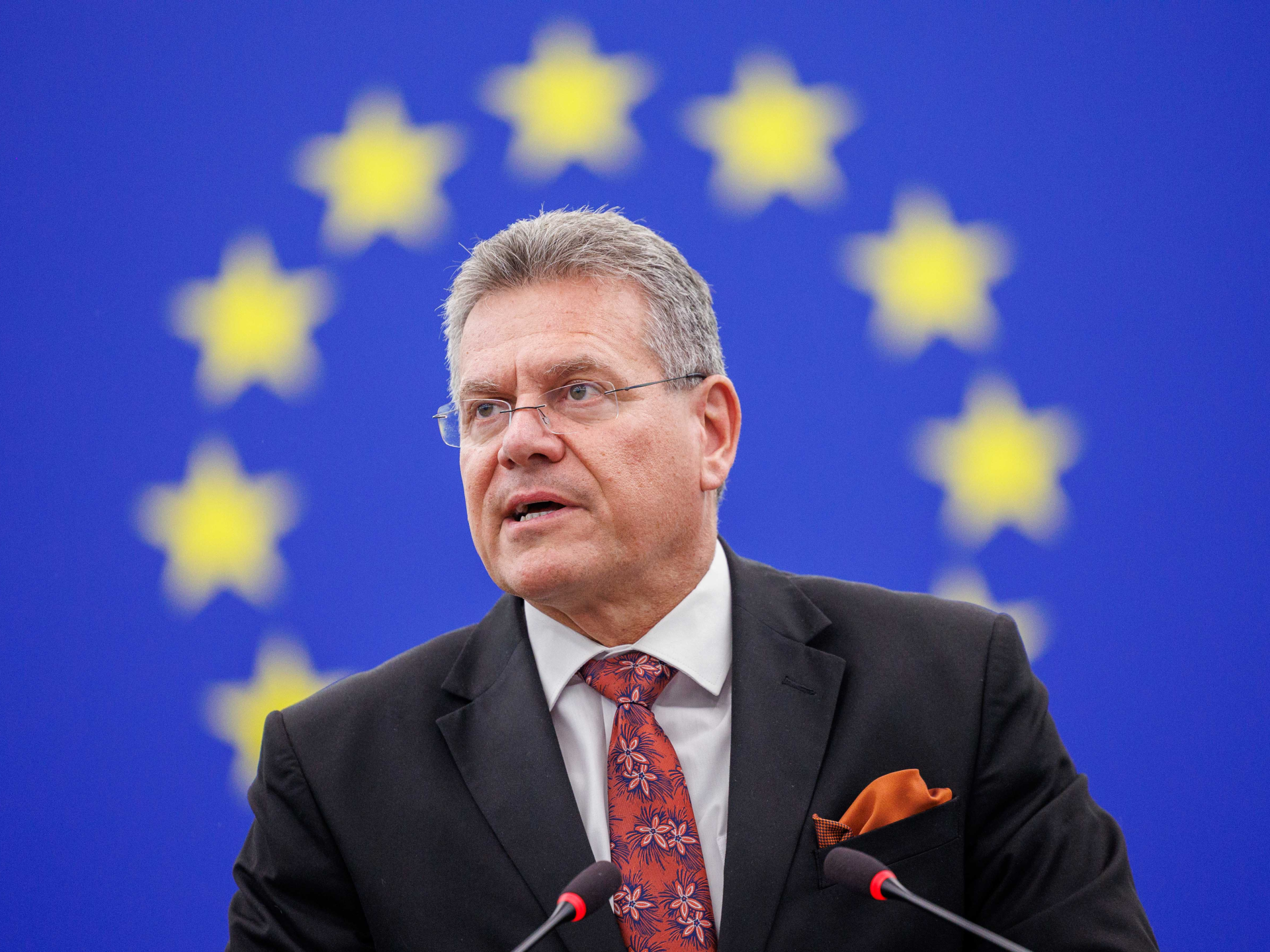
Ukraine says it has received proposals from India, Turkiye, Egypt and the United States to broker talks with Russia. The offers come as the two adversaries escalate attacks on each other’s energy and port infrastructure with their war now in its fifth year.
Ukrainian Foreign Minister Andrii Sybiha revealed the four proposals at a briefing in Kyiv on Friday and singled out New Delhi’s. “The most comprehensive is India’s proposal,” he said, adding that India had signalled a willingness to play a role for the first time.
Recommended Stories
list of 3 itemsend of list
None of the proposals aims to end the war. Each seeks a narrower truce, covering energy facilities, ports or commercial shipping in the Black Sea.
Here’s what we know:
What is India proposing?
India has not made its plan public. Quoting unnamed sources, however, Indian media have reported it has three parts. According to the Hindustan Times, it would aim to protect infrastructure, keep grain and energy supplies moving through Black Sea ports, and ensure the safety of commercial shipping.
The first part – mutually halting strikes on energy facilities and ports – matches what Kyiv has been demanding. Sybiha said any deal must be a complete energy truce that covers port infrastructure as well.
The second part builds on the Black Sea Grain Initiative, which Turkiye and the United Nations mediated in 2022 but Russia abandoned in 2023.
The third part, protecting merchant ships and their crews, is particularly important to India because Indian sailors have been killed or harmed on Black Sea routes.
The sources were quoted as saying India’s plan goes further than the other three proposals because it covers infrastructure and shipping together. A Ukrainian official told the Kyiv Independent that it incorporates elements of the Turkish, Egyptian and US initiatives. The Kyiv Post reported that Sybiha also described the plan as addressing a possible ceasefire along the front lines, although other accounts said he gave no specifics.
The proposal likely took shape during Indian External Affairs Minister Subrahmanyam Jaishankar’s first visit to Ukraine last month and in a later meeting with Sybiha at the UN General Assembly in New York, also in September. Jaishankar said New Delhi was “trying to be helpful, starting with the Black Sea safety of shipping issue”.
What do we know about the Turkish and Egyptian proposals?
Very little. Neither Ankara nor Cairo has published details. Both reportedly focus on keeping Black Sea grain supplies moving by suspending attacks on commercial shipping. Some reports said the two countries proposed a grain truce jointly while others described two separate plans.
Turkiye has done this before. With the UN, it steered the 2022 grain deal, one of the few narrow truces of the war to hold for any length of time. Ankara and the UN are now organising new Black Sea talks with a round planned for October.
Beyond its Black Sea focus, almost nothing is known about Egypt’s proposal. Its interest, however, is clear: Egypt relies on Ukraine for nearly one-third of its grain supplies.
What is the US pitching?
According to Ukrainian President Volodymyr Zelenskyy, Washington has proposed three steps: a mutual halt to energy strikes, a reopening of the grain corridor and a trilateral meeting with Ukraine and Russia, possibly in Abu Dhabi.
The latest effort began in early September when US President Donald Trump’s envoys visited Kyiv and Moscow and secured an agreement in principle for a trilateral meeting. Steve Witkoff and Jared Kushner met Russian President Vladimir Putin in Moscow on September 5 while Kremlin envoy Kirill Dmitriev visited the US twice in September.
The trilateral meeting has since been pushed back. It had been expected to take place in the United Arab Emirates in early October. Washington now wants it in late October, and people close to the talks blamed the delay on Russia.
Washington has also invited Putin to the Group of 20 summit in Miami, Florida, in December. “We hope that’s an invitation he’ll accept,” US Secretary of State Marco Rubio said. The Kremlin said no decision has been made.
At the same time, the US is applying pressure to try to end the war. Trump recently signed a law giving him sweeping powers to sanction buyers of Russian energy.
He has also called on Ukraine to stop targeting Russian diesel facilities amid a diesel prices crisis in the US, where Trump faces tricky midterm elections next month. “Mr Zelenskyy has to do one thing,” he said on September 13. “He has to stop knocking out diesel fuel in Russia.” This drew much criticism that Trump instead should focus his comments on Russia, which began the war with its invasion of Ukraine in February 2022.
He is reportedly sceptical about his own government’s latest diplomatic initiative. People familiar with his thinking have told US media that he doubted Putin would agree to an energy truce before winter.
(Al Jazeera)
How have Russia and Ukraine responded?
Sybiha said Ukraine would agree to a truce but with conditions. It would accept an energy and Black Sea shipping ceasefire, but only as a combined package, he said.
He added that Kyiv is also open to an unconditional ceasefire along the current front lines. Zelenskyy backs the US-proposed meeting but stressed it needs “not only Ukraine but also the Russian side” to support it.
Moscow has been warm in tone but has committed to nothing. Kremlin spokesperson Dmitry Peskov said Russia would welcome India’s peace efforts while Putin said Modi has “very good ideas aimed at finding mutually acceptable solutions”, but he did not elaborate.
In private, Moscow appears to have said no. A Ukrainian official told the Kyiv Independent that Russia has rejected India’s proposal although this has not been confirmed publicly. Ukraine’s agriculture minister said Russia had rejected every Black Sea ceasefire option the mediators have presented.
Why are Global South countries becoming more involved?
Food supplies, the lives of their citizens and fuel prices are all at stake.
“I think it’s clear to many countries that this war is not a localised war, but it’s a war that has these global consequences,” Fredrik Wesslau, a senior policy fellow at the European Council on Foreign Relations, told Al Jazeera.
Russia and Ukraine account for more than a quarter of global wheat shipments, and their attacks on each other’s ports helped push wheat futures to a three-year high in August.
Sailors from countries with no links to the war are being killed. At least five Indian seafarers have died in strikes on Black Sea shipping in recent months along with seven Azerbaijani crew members since June. On Saturday, a Russian strike on a Liberian-flagged ship in a port in the Odesa region killed a crew member. Ukraine, for its part, has targeted tankers it links to Russia’s shadow fleet since July.
The energy war is also being felt in global markets. Ukraine reported more than 194 drone attacks on Russian refineries this year, hitting all 11 of the largest. Bloomberg News estimated that Russia’s fuel output has fallen by more than 30 percent. With Middle East supply already down as a result of the US-Israel war on Iran, global diesel markets are more exposed to the loss of Russian supplies.
Maximilian Hess, a nonresident senior fellow in the Eurasia Program at the Foreign Policy Research Institute, said energy is at least as important as grain in driving the diplomatic efforts. He pointed to a “clear frustration” among many countries over high oil prices, which reflect both the Russia-Ukraine war and the crisis in the Middle East.
“Of course, Ukrainian grain is important for them, but the oil-price factor is important there as well,” he told Al Jazeera. “I think it is those commodity-shock concerns that are pushing them to re-embrace this rhetoric, rather than anything else.”
What are the challenges ahead?
Every previous attempt at diplomacy has failed to end the Russia-Ukraine war. A US-brokered, 30-day energy truce in early 2025 collapsed amid accusations of violations on both sides. At talks in Istanbul in May 2025, Zelenskyy complained that Russia had sent a junior delegation with no authority to sign a ceasefire.
In August 2025, a meeting between Trump and Putin in Alaska yielded no results despite Trump claiming to be close to a deal ahead of it.
Wesslau said Washington’s efforts have faltered partly because Trump – who had boasted he would end the war within 24 hours of taking office in January 2025 – has appeared unwilling to put real pressure on Moscow. “The Russians see this, and they conclude that they can continue this war,” he said.
Deep distrust remains. Oleksandr Merezhko, head of the Ukrainian parliament’s foreign affairs committee, said: “Putin never keeps agreements.”
Moscow’s actions on the ground suggest it is in no hurry, Wesslau said “They’re trying to strangle Ukraine, strangle the economy, and make it unliveable ahead of the winter,” he said. He added that Moscow’s occasionally softer rhetoric was aimed mainly at the Trump administration and “has always proved to be a bluff”.
Russia’s terms are another obstacle. Hess said Moscow’s demands have not softened at any point since it launched the war and at times have grown. Putin has demanded all of Ukraine’s Donetsk, Luhansk, Kherson and Zaporizhia regions, including territory Russian forces have never controlled, as well as a buffer zone in northern Ukraine. Moscow is also seeking sanctions relief and military concessions for any Black Sea deal.
“I don’t think it’s a question of who actually mediates. I think it’s really a question of the calculation in Moscow,” Wesslau said. “Fundamentally, the problem is that Putin doesn’t want a ceasefire or a peace agreement. He wants to continue the war. He believes that he can win.”
Analysts said only greater economic pressure is likely to change that calculation.
Wesslau said if Europe can close down Russia’s shadow fleet of oil tankers, “this would be a massive blow to Russia’s war economy.” Hess said the country best placed to shift things quickly is China, rather than the US, by cutting its purchases of Russian oil. However, he added: “I don’t think Beijing is interested in doing so.”
Hess said that unless there is an outside shock, the war “is much more likely to last another four years than another four months”.
Dozens of people have been injured in the protests, including students, teachers, and police officers.
Published On 8 Oct 20268 Oct 2026
Protests have resumed at schools across France as high school students press on with demands for more education funding and better conditions, the day after the country’s prime minister ordered ministers to provide an action plan.
Reporting from Paris, Al Jazeera’s Natacha Butler said university students and more trade unions have joined the nationwide protests and that a large rally is expected in the capital on Thursday.
Recommended Stories
list of 4 itemsend of list
“They are moving around, trying to block off the streets,” Butler said from outside one school, where university students were barricading a large area.
“They are out, they say, in solidarity with high school students because they say it’s important that as many young people join in the protests as possible,” she added.
The wave of protests began in a high school in a deprived area of Paris on September 21 . Tens of thousands of students across the country have since marched with a range of demands, from renovated school buildings to fewer classroom hours.
Police response under scrutiny
Rights groups have accused security officials of using disproportionate force against protesters.
Several demonstrators have been injured, including one teenager who lost a hand and another whose jaw was shattered by an exploding stun grenade. They have since been banned at marches.
Police officers and teachers have also been injured, authorities say, accusing students of committing violent acts. At least 6,600 arrests – mostly of minors – have been made so far, according to the Interior Ministry.
Authorities said 375 schools were either fully or partially closed on Thursday, and that two dozen had been burned or destroyed.
The demonstrations are increasing pressure on the cash-strapped outgoing government of Emmanuel Macron ahead of April elections.
Prime Minister Sebastien Lecornu condemned the violence in a TV address on Wednesday. He faulted “political leaders who use this anger to conduct their electoral battles”, after opposition leader Jean-Luc Mélenchon called for protesters to keep marching.
Lecornu has ordered ministers to provide an action plan responding to students’ demands by the end of the month, but protesters remain unconvinced.
“As far as they are concerned, the government only talks about solutions but never actually comes up with concrete actions, so they say they are going to keep coming out onto the streets until their demands are met,” Butler said.
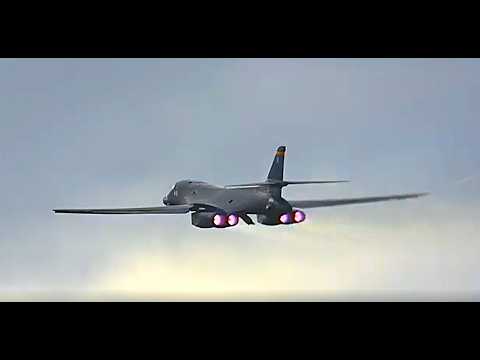
Before the hasty and unexpected departure of the bombers on Sunday, B-1s had been deployed to RAF Fairford continuously since March, initially in support of Operation Epic Fury against Iran. A contingent of B-52s had also conducted strikes on Iran from Fairford, but left back in July. The base is a major operational hub for the U.S. military in the United Kingdom, and regularly hosts strategic aircraft, including bombers and U-2 spy planes.
B-1s first mission to Iran out of RAF Fairford UK
Dan Rivers, U.S. correspondent for ITV News in the United Kingdom, was among the first to report on Monday that the B-1’s quick departure had been prompted by concerns about a potential Spiderweb-like drone attack ordered by Iran, citing an unnamed source. Other outlets have subsequently reported similar details, all sourced to anonymous U.S. and British officials.
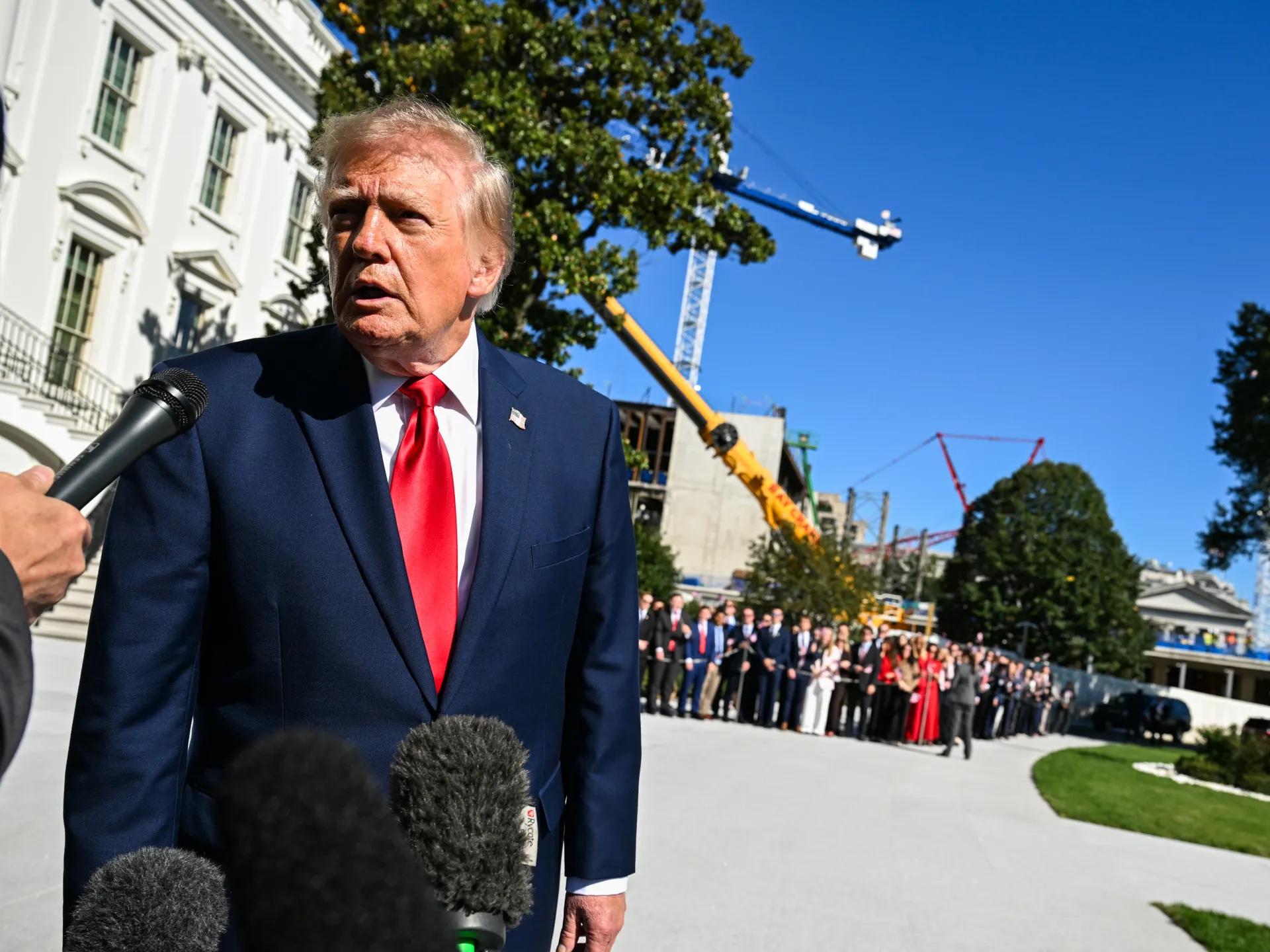
“They didn’t fly out by accident,” U.S. President Donald Trump told reporters during a gaggle at the White House on Monday when asked about why the B-1s had left Fairford. “There were some threats.”
“I can’t tell you that, but if they did, they’ll suffer greatly,” Trump added in response to a separate question about whether Iran might have managed to get weaponized drones into the United Kingdom.
“What you saw there was the Secretary of War [Pete Hegseth], out of an abundance of caution, trying to protect our guys,” U.S. Vice President J.D. Vance said during a separate press engagement on Monday. “We do feel, with some confidence, that the Iranians are – they’re trying to do what the Iranian state has done for 49 years, which is engage in acts of terrorism against the United States, and a lot of other people, as well. So, we are being extremely cautious.”
Another satellite image offering an overall view of RAF Fairford. Google Earth
“We’ve documented what happened [near Fairford] last week. I wouldn’t just directly tie that to the move that was made,” U.S. Secretary of State and National Security Advisor Marco Rubio also told members of the press on Monday. “The only reason why you guys are focused on how many planes are at Fairford is because of the threat that happened last week.”
“We have confidence in the security of all of our bases, because all of our bases are [sic] theoretically could be threatened at any moment,” he added.
LIVE: UK police gives update on explosive-related arrests near air base used by US
Rubio’s comments notwithstanding, the remarks from Trump and Vance make clear that there was some recent threat intelligence that contributed to the decision to pull the bombers from Fairford. There are still many questions about the exact nature of the potential attacks, and how imminent, or not, the danger may have been.
Regardless, as mentioned, the prospect of a near-field drone attack on a base like Fairford carried out by actors in close proximity is extremely plausible, and the barrier to entry to such an operation is relatively low. Spiderweb may have thrust this reality into the public consciousness in dramatic fashion, but the danger well predates that operation, and even the start of Russia’s all-out invasion of Ukraine in 2022.
TWZ has been highlighting exactly these kinds of threats in the course of a decade or so now of regular reporting on drone incursions over U.S. and foreign military facilities and critical infrastructure, as well as American naval vessels operating offshore. Langley Air Force Base in Virginia and Barksdale Air Force Base in Louisiana, some of America’s most strategic airbases domestically, are among the facilities that have had to grapple with this in the past. After the Langley incident, in particular, it had become clear to the larger public what we had been reporting for many years, that the United States does not control the airspace over even its most critical military installations.
New footage of yet another act of Russian terrorism on EU soil, showing the drone loaded with explosives on the tarmac at Leipzig/Halle Airport, just meters from a Ukrainian Antonov An-124 cargo aircraft.
— SPRAVDI — Stratcom Centre (@StratcomCentre) August 5, 2026
A drone attack on Fairford would also not necessarily have had to come from somewhere very close by. Longer-range one-way attack drones are steadily proliferating, and can be launched using a variety of methods from positions on the ground, as well as vessels at sea. TWZ explored the very real threat of sea-based drone attacks, including ones conducted covertly, and Iran’s specific ability to carry them out globally, following the leak of an FBI alert back in March.
The proliferation of lower-end one-way-attack drones has ‘democratized’ precision-guided attacks, even for non-state actors. The fielding of automated targeting capabilities, driven by developments in artificial intelligence and machine learning, is also becoming more and more widespread. That technology will soon enable these weapons to find and strike even moving targets on their own. Even without anyone at the controls and without the drone putting out any detectable radio emissions, very effective precision attacks can still be launched at static targets, like known parking areas for aircraft at airbases, just by using basic map coordinates or Google Earth. It’s also worth pointing out here that the definition of a stand-off attack is becoming increasingly blurry, with even quadcopter-type drones capable of flying miles away to conduct a kamikaze attack on a target based on a set of GPS coordinates.
Ukrainian Saker UAV with AI capabilities. The video shows the process of target recognition. It has reportedly already been put to use several times against Russian targets. pic.twitter.com/NVNJyxUjGP
Overall, it is an indisputable fact that aircraft sitting exposed on a flightline are particularly vulnerable to drone attacks, as well as other threats. This is something U.S. military officials have acknowledged themselves. Fairford, where B-1s and other bombers have no option but to park out in the open in well-established areas that are plainly visible from outside the base’s immediate perimeter, is indicative of how American military aircraft are generally positioned on the ground abroad and at home.
As we wrote all the way back in 2017:
“Similar swarming strikes could be unleashed behind the front lines as well, with hugely expensive and low density/high demand combat aircraft being especially vulnerable to this sort of tactic—something General James Holmes alluded to inadvertently while speaking to the Air Force Association, stating:
‘Imagine a world where somebody flies a couple hundred of those and flies one down the intake of my F-22s with just a small weapon on it.’
Actually, it would be even easier to just strike the jets as they sit idle and vulnerable on the flight line. One swarm could see a whole squadron of tightly packed fighters destroyed without even having a chance to fight back.“
This picture of a B-1 at Fairford on March 7 shows how bombers and other aircraft are typically parked at the base. The line of photographers along the fence line also underscores how close those parking spots are to the base’s immediate perimeter. JUSTIN TALLIS / AFP via Getty Images
“I’m not a big fan of hardening infrastructure,” Gen. Kenneth Wilsbach said at a roundtable at the Air and Space Forces Association’s main annual symposium in 2023, offering a prime example of this viewpoint. “The reason is because of the advent of precision-guided weapons … you saw what we did to the Iraqi Air Force and their hardened aircraft shelters. They’re not so hard when you put a 2,000-pound bomb right through the roof.”
Wilsbach was commander of Pacific Air Forces (PACAF) at the time. He subsequently became head of ACC and is now Chief of Staff of the Air Force, the service’s top officer.
“I think that I don’t want to spend a lot of money on hardening shelters. Unless you’re going to send something 100 feet or more underground, we can blow it up, and so can they,” Wilsbach said in an interview with Breaking Defense in July of this year when asked explicitly if his position changed. “So, the economics of building a shelter that is impervious to a strike doesn’t work.”
U.S. Air Force Chief of Staff Gen. Ken Wilsbach speaks during an all-call with personnel at RAF Mildenhall, another base in the United Kingdom, on July 13, 2026. USAF
“I think the economics favor defending your airspace, defending your ground space with systems that can defeat the incoming rounds, versus building a shelter,” he added. “Some people would argue, well, you should do both. Well, that’s even more expensive. And the other thing is, the shelter doesn’t go anywhere.”
It is fair to point out that typical above-ground hardened aircraft shelters are not invulnerable, especially to attacks involving ballistic, cruise, and certain air-launched threats. There are also substantial cost and other factors to consider when it comes to any major military construction effort.
That being said, having more hardened infrastructure also imposes costs and complexities on opponents, who have to dedicate more advanced and costly munitions and other resources to ensure targets are neutralized. Shelters have the knock-on benefit of complicating the targeting process for an enemy by obscuring where aircraft are or are not positioned, to begin with. An opponent has to treat shelters like they are full even if they are empty.
When thinking about hardened aircraft shelters, stereotypical Cold War-era reinforced concrete structures typically come to mind. However, they do not all have to be built to a one-size-fits-all standard with the same degree of hardening across the board to be useful. Shorter-range drone attacks are typically carried out by platforms carrying small explosive charges or that are designed to drop small bomblets. Even longer-range one-way-attack drones generally have smaller warheads than traditional missiles, they also hit with less kinetic energy.
A US Air Force F-16 fighter sits inside a traditional hardened aircraft shelter. USAF
A structure that shields against smaller blasts and shrapnel, also including from cluster munitions that can be readily scattered across wide areas, is one that then has to be addressed by more capable weapons. This could even include mobile or otherwise temporary shelters that offer sufficient concealment and protection.
This picture shows what the Air Force described as a “prototype portable camouflage, concealment, and deception hangar” in use during Exercise Hoodoo Sea in 2023. Air National Guard The prototype portable hangar intended to support camouflage, concealment, and deception efforts in use during an Air National Guard-led exercise in 2023. Air National Guard
Eliminating, or at least substantially mitigating, the lowest rung of threats creates a dilemma for opponents, who then have to decide whether it is even worthwhile to attempt certain types of attacks. There is clear value in narrowing the available options for the enemy and pushing them toward having to expend higher-end, more expensive munitions, that are available in smaller quantities, and that traditional active defenses may be better optimized to handle. As an example, it may be more viable to shoot down a small barrage of incoming cruise missiles than a swarm of dozens of drones.
There are magazine and stockpile depth issues at play here, too. This is something that has also been brought front and center by the conflict with Iran, which has fueled already long-standing concerns about the sufficiency of stockpiles of air defense interceptors, other critical munitions, and the capacity to replenish them quickly. This is something the British government, among others, is also grappling with, as you can read more about in our separate reporting here.
Furthermore, losses of aircraft on the ground are not without their own costs, which are even more lopsided if an opponent can simply use lower-cost weaponized drones. U.S. bombers are particularly expensive and prized assets that are in short supply compared to the level of demand, as seen during the height of combat operations earlier this year against Iran. When it comes to B-1s, specifically, there are only 45 of them left in service today. A dozen of them being knocked out in one go would have major repercussions strategically. Losing even one would also be a propaganda coup for whoever might be responsible.
How many shelters can we build for the upgrade cost of one Zumwalt class DDG that will probably be parted out in 10 years anyway?
On top of all this, the U.S. military simply will not always have the luxury of being able to rapidly relocate aircraft in response to threats. Moving a dozen bombers on short notice takes massive resources. It is not just aircraft that have to be repositioned, but supporting personnel and assets, as well as weapons and fuel. Having to shift to alternate locations could easily have negative impacts on tempo and other aspects of operations, especially in the midst of actual conflict. RAF Fairford is one of only a few bases globally that can support bomber operations for a prolonged period.
“There is value in some light protection against small, unmanned threats,” Gen. Wilsbach also told Breaking Defense in July. “Some of them — just nets that are up that keep a small, few-$100 drone from getting next to a $2 billion aircraft. That actually works, [and is] really cheap.”
A graphic included a contracting notice put out by authorities at Langley Air Force Base in 2024 showing how sunshade-type shelters at the base might be equipped with anti-drone nets. USAF
“It’s not either or,” Wilsbach said in a separate interview with Air & Space Forces Magazine in July. “The net keeps the small UAS [uncrewed aerial system] from getting close to an aircraft that you’re trying to protect… That’s a very inexpensive way to give you some modicum of protection without killing your checkbook on really exquisite defensive systems.”
In spite of these institutional developments, action to implement such recommendations on a broad basis has continued to lag. There still does not appear to be any major department-wide push to build new hardened aircraft shelters or other fortified structures at facilities globally. The U.S. Air Force does have a certain number of hardened aircraft shelters at bases now, especially in the Pacific and Europe.
This is all despite a very visible trend in the construction of new aircraft shelters and other hardened infrastructure elsewhere around the globe, including in China, Russia, North Korea, and Iran. Even before Operation Spiderweb, Russia had already initiated a large-scale effort to build new hardened shelters at various bases, especially on the occupied Crimean Peninsula, in the face of expanding Ukrainian drone and missile attacks. This effort has now extended to building the huge hardened shelters for the country’s bomber force, something the country has never done before.
“It is inappropriate to discuss matters of intelligence, and we will not discuss specific force protection measures,” a U.S. Air Force spokesperson told TWZ yesterday when asked about the reports that Iranian drone threats prompted the recent removal of the B-1s from Fairford. “The Department will continue to assess the threat environment surrounding our installations and take appropriate actions to protect our people, our platforms and the bases where our forces operate from.”
We still do not know exactly how serious or imminent any recent threat to the B-1s at Fairford was that contributed to their hasty departure. Regardless, the reports of concerns about potential drone attacks remain very plausible. The reality here is that a dozen bombers were yanked from a forward operating location in Europe without an adversary ever having to fire a shot. This is a problem set that is only growing, especially as lessons and expertise on low-end weaponized drones from the war in Ukraine are spreading around the globe.
A B-1 bomber seen parked out in the open at RAF Fairford on March 15, 2026. Matthew Horwood/Getty Images
Erecting new aircraft shelters and other hardened infrastructure would not be a full solution to those threats by themselves. At the same time, they would be a valuable added layer of defense, and a passive one that would have a huge logistical footprint to operate once the initial investment is made. The lack of movement to better fortify American airbases globally is only becoming more and more glaring, and it remains to be seen if real action will not occur until lessons are learned in a most unfortunate way.
Matt Baker and his family will be back on screens very soon and fans are thrilled about it
Matt Baker and Nicola Baker (Image: Channel 4)
Countryfile star Matt Baker has shared some “big news” with his followers.
Matt Baker has thrilled his Instagram followers by sharing that he will be back on screens very soon with a brand new series. The Countryfile star confirmed he will be back next week with a new series called Our Farm In The Dales.
Alongside a picture of his family, Matt wrote, “Hi all, got some big news for all of you who enjoyed ‘Our Farm In The Dales’ (the series based on our family farm). We’re back with a new series, but with quite the twist. We’re calling it ‘Our Barn In The Dales’ as Nicola and I are converting the barn, stable, and granary at the end of the courtyard into a cottage…
“We’re deep in an epic adventure which will be spanned across 2 series, the first starting in a couple of weeks, is all the building and conversion stuff, and another series next year will be the interior bits and bobs. Hopefully full of all the things you loved in previous series with the animals, Mum Dad and of not forgetting his classic car – spoiler we finally finish it!”
Content cannot be displayed without consent
He concluded the post, “A massive thanks to all our friends and new builder mates who are making our dream happen. See you in a couple weeks on More4 starting Tuesday 13 October 9pm!”
Matt’s followers were delighted by the announcement and took to the comment section to share their thoughts. One wrote, “We can’t wait for you to see it!”
“Ahhhh, great. We love seeing you all together,” another said while a third added, “That’s brilliant, I can’t wait to watch it. When will it be on TV?”
Someone else added, “Yay!!! Ah this is great news @mattbakerofficial. Lush family viewing. My son, in particular, loves you and wants to be a farmer. He’s in Butsfield YFC! You inspire him so much.”
“Great news! Looking forward to watching the new series,” one fan commented. This isn’t the only TV role Matt has announced recently, as he is returning to the BBC with his first solo series, Matt Baker: Life With Dogs.
The series, produced by his own company Big Circus Media, will explore the diverse roles dogs play in human lives – from working farm dogs to therapy dogs and assistance dogs for those with disabilities.
Matt told The Mirror: “Dogs have been a lifelong passion of mine, and I’m so excited to be making this series about the bond between humans and dogs. The show comes after the 48-year-old recently lost his beloved border collie Bob, leaving him heartbroken. He described Bob as “the ultimate companion through some of the greatest chapters of my life”.
The series will examine how dogs can be trained for medical detection, warning owners of oncoming seizures, as well as their roles in therapy and police work.
Our Barn in the Dales airs on October 13 on More4.
French high school students have been protesting for more than two weeks over conditions in schools, including overcrowded classrooms and staff shortages, and they show no sign of stopping.
The unrest began on September 21 when pupils blockaded a school in the Paris suburb of Creteil, and within a week, their protest had spread across the country with students and police clashing violently.
On September 29, the demonstrations coincided with a nationwide public sector strike, in which teachers joined other state workers against a proposed pay freeze. More than 6,100 people have since been arrested.
With the government under pressure to rein in spending as its debt rises, Al Jazeera looks at how much France invests in education, how it compares with the rest of Europe and how it measures up against what the country spends on healthcare and defence.
How much does France spend on schooling?
According to the latest data from Eurostat, the European Union’s statistics agency, France’s public spending on education amounts to 5.1 percent of its gross domestic product (GDP). That figure does not include private spending, such as school fees paid by families.
The French Ministry of National Education uses a broader measure, known as domestic expenditure on education, which counts all the money that goes into education, whether from the state, local authorities, businesses or households. As well as teaching, it covers adult and continuing training and related costs such as school meals, boarding and transport.
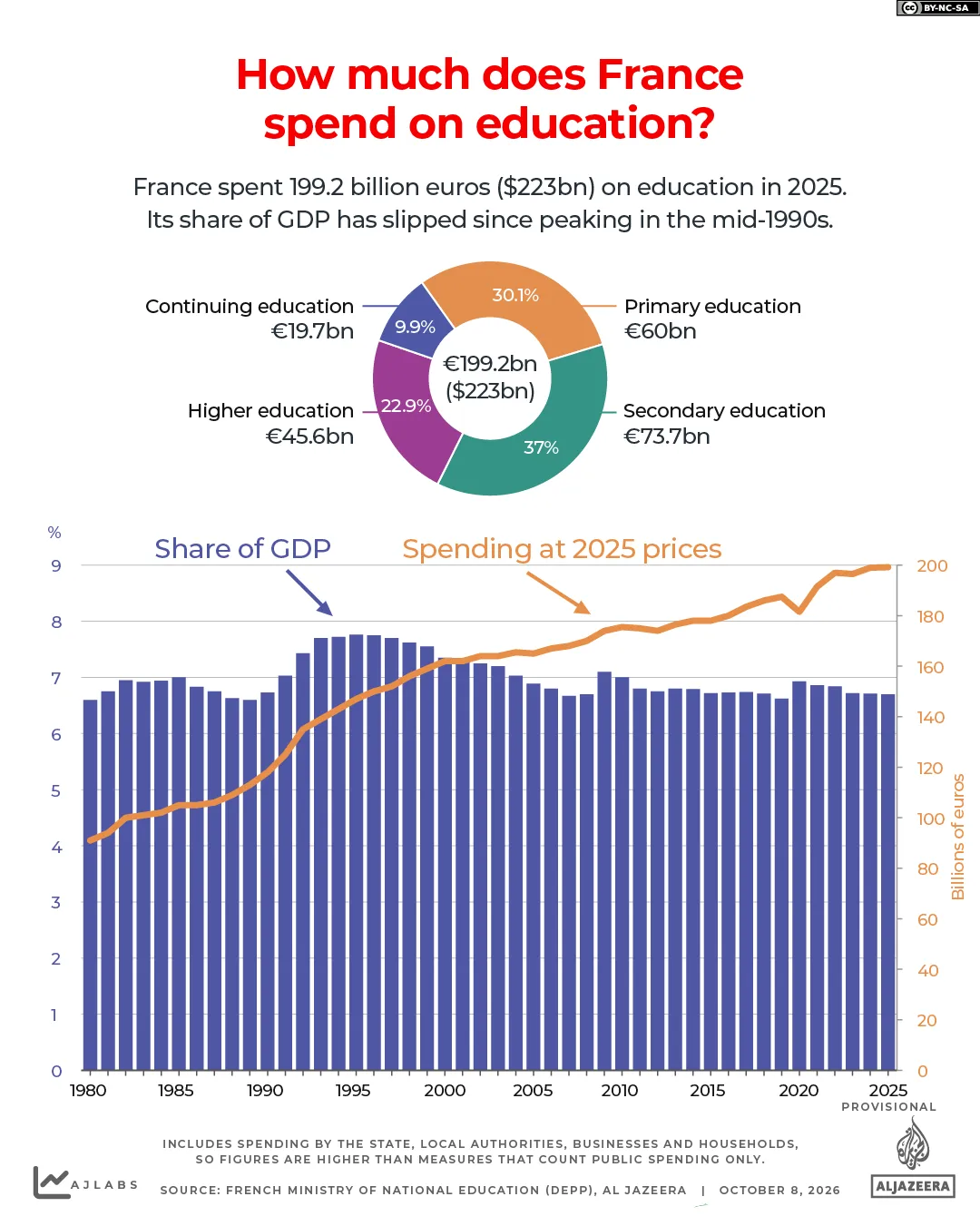
By this measure, France spent 199.2 billion euros ($223bn) on education in 2025, equivalent to 6.7 percent of its GDP and 2.4 billion euros more than in 2024, according to provisional ministry figures.
(Al Jazeera)
Spending has more than doubled since 1980, even after accounting for inflation. But the economy has grown too, so education spending’s share of GDP is lower today than it was in the mid-1990s.
Secondary education accounted for the largest share of spending at 73.7 billion euros (37 percent), followed by primary education at 60 billion euros (30 percent), higher education at 45.6 billion euros (23 percent) and adult and continuing education at 19.7 billion euros (10 percent), according to the National Education Ministry.
How much do other European countries spend on education?
Among European countries, Sweden spends the largest share of its GDP on education at 7.3 percent in 2024, followed by Iceland (7 percent) and Belgium, Estonia and Finland (6.3 percent each), according to Eurostat.
The lowest spenders are Ireland (2.7 percent), Greece (3.9 percent), Romania and Italy (4 percent each), and the United Kingdom and Spain (4.1 percent each).
At 5.1 percent, France is joint 13th, level with the Netherlands and Slovakia, and above the EU average of 4.8 percent.
But above-average spending has not shielded France from a problem affecting much of the developed world. Teacher shortages are growing across countries in the Organisation for Economic Co-operation and Development, according to the OECD’s latest Education at a Glance report.
Rather than leaving posts empty, many countries are filling them with teachers who lack full qualifications. In the 2024-2025 school year, 9 percent of primary and secondary teachers across the OECD were not fully qualified.
In France, the strain is most visible in secondary schools. About 11 percent of secondary teachers are not fully qualified, compared with less than 3 percent in primary schools. Furthermore, lower secondary classes average 26 pupils, compared with 23 across the OECD.
That echoes what pupils have been saying during the latest protests: Classes are large, and absent teachers are not being replaced. Some also described dilapidated buildings, a shortage of tables and chairs and, in some schools, rodent infestations. The intense heatwaves that hit France this year exacerbated existing problems in neglected buildings, many of which have no air conditioning, students said.
Teachers also feel undervalued. Only 4 percent said their profession is valued in society, the lowest share of any country surveyed and far below the OECD average of 22 percent.
How much has spending changed?
Historical UNESCO data showed France’s education spending slipped from 5.5 percent of GDP in 2017 to 5.3 percent in 2022 although it remained the ninth-highest among 29 European countries with data. A brief rise to 5.7 percent in 2020 reflected the pandemic shrinking the economy, not extra spending.
France was one of 14 countries where the share fell. Norway and Denmark saw the steepest drops while Slovakia, Slovenia, Lithuania and the Czech Republic recorded the biggest rises.
What else are these nations spending on?
The protests have coincided with nationwide public sector strikes over the government’s proposed 2027 budget, which seeks 54 billion euros ($61.3bn) in savings as French President Emmanuel Macron’s government tries to rein in a large public deficit.
Unions and public sector workers object in particular to a plan to freeze state employees’ salaries, which is expected to save about 2 billion euros ($2.27bn).
Across Europe, most governments spend more on education than on defence, but healthcare takes the largest share of national income of the three, according to 2022 data from the World Bank and UNESCO.
France spent 11.9 percent of its GDP on healthcare in 2022, one of the highest shares in Europe.
Police say the incident is not connected to ongoing investigations at the RAF Fairford airbase.
Published On 8 Oct 20268 Oct 2026
Police in the United Kingdom say they have arrested and charged a member of the Royal Navy accused of working with an unnamed foreign power after an investigation by counterterrorism police.
Teddy Young, 24, was charged with two offences under the National Security Act for allegedly obtaining protected information and preparing to transfer it for the benefit of a foreign power.
Recommended Stories
list of 4 itemsend of list
In a statement, authorities alleged that between November 2024 and May 2025, Young “obtained, copied, recorded or retained protected information, intending the conduct to benefit a foreign power… contrary to section 1 of the National Security Act 2023″.
Young is due to appear at London’s Westminster Magistrates’ Court later on Thursday.
“These are very serious charges against a serving member of the armed forces,” Commander Helen Flanagan, Head of Counter Terrorism Policing London, said in a statement.
“We have worked extremely closely with relevant operational colleagues within the Ministry of Defence as our investigation has progressed to ensure appropriate measures could be taken to mitigate any potential risks linked to this matter,” she added.
UK media reported that the officer was arrested at his home in Bedfordshire on Tuesday before he was taken into custody in London.
The police clarified that the case is not related to the ongoing investigation into an incident at the RAF Fairford airbase.
Last month, director general Matt Brittin said the BBC’s financial situation and changing audience habits “may well mean” some channels and radio stations have to close so resources can be invested in on-demand services.
Brittin told BBC One’s Sunday With Laura Kuenssberg that “we wouldn’t guarantee any programme or any channel will exist forever”.
In June, the BBC announced 550 job cuts in news, nations and TV and radio content as part of its first stage in its plan to save £500m across the corporation over the next two years.
Staff were told of proposals including ending Radio 4’s The World Tonight, and reducing the number of permanent presenters on Today from five to four, with a single anchor on Saturdays.
It was revealed that BBC One’s Breakfast would no longer be shown on Sunday mornings, and that the production teams making Sunday with Laura Kuenssberg and Newsnight would merge.
It followed April’s announcement that the BBC would cut between 1,800 and 2,000 jobs – or almost one in 10 – in an attempt to tackle “significant financial pressures”.
Last week, an influential group of MPs said the BBC licence fee should be extended to cover services other than TV, and that the corporation’s charter review should be scrapped and made permanent.
In its recommendations, the DCMS committee also said that political appointments to the BBC board should end, to improve public trust.
‘I have the utmost respect for what you’ve accomplished with Argentina,’ Ronaldo writes in response to Messi’s post.
Published On 8 Oct 20268 Oct 2026
Cristiano Ronaldo has hailed his longtime adversary Lionel Messi in a tribute to the Argentinian icon, who bid a grand farewell to international football.
The Portuguese forward wrote the message in response to Messi’s social media post on Wednesday, a day after Argentina’s friendly match against Benin in Buenos Aires, where the local idol and global icon bid an emotional goodbye.
Recommended Stories
list of 4 itemsend of list
“Leo, after so many years of defending your country, you’ve made history that will last forever,” Ronaldo said in his reply to Messi’s Instagram post in which the Argentinian poured out his emotions after hanging up his boots for his country.
“I have the utmost respect for what you’ve accomplished with Argentina,” Ronaldo added, ending the message with: “A hug”.
Ronaldo and Messi in action during a match between Real Madrid and Barcelona in 2017 [File: Sergio Perez/Reuters]
The careers of Messi and Ronaldo followed a similar trajectory and crossed paths for many years in club and international football.
It resulted in a hotly contested rivalry, mostly between the two players’ supporters over the past two decades.
The pair dominated the sport for more than 15 years, winning the prestigious Ballon d’Or award 13 times between them.
Their rivalry grew over the nine years in which they faced off against each other in Spain, with Messi starring for Barcelona and Ronaldo for Real Madrid.
Fans display a banner that reads ‘Ronaldo is Cristiano [Christian], but Messi is God’ during Argentina’s friendly match against Benin at the Monumental Stadium in Buenos Aires [File: Rodrigo Valle/Reuters]
Messi, 39, announced his retirement from international football after leading his country to the World Cup final in July in the United States, where the 2022 champions were runners-up behind Spain.
“Yesterday was my last game, and I already miss wearing the blue and white. I know I’m making the right decision,” Messi said in a lengthy message a day after his final match in the famous number 10 blue and white shirt. “It’s been an incredible journey, full of joy and also some sadness, but I know for sure that every step I took was worth it.”
“I don’t want to forget Diego [Maradona], who put our country where it deserved to be and who, as I always say, I know helped us both by being here with us and also from heaven, with every step we took,” he said.
“Thank you to the clubs where I played, for always respecting my feelings and allowing me to dedicate myself to my country whenever it was time to put on the national team jersey.”
An artist adds final touches to a painting featuring Messi and Ronaldo in Amritsar, India [File: Narinder Nanu/AFP]
Messi scored Argentina’s final goal in a 3-0 win and provided assists for the other two as the Albiceleste played in front of 85,000 fans at the Monumental Stadium.
Messi captained Argentina to the 2022 World Cup title and Copa America triumphs in 2021 and 2024, while also helping them win the 2022 Finalissima.
“I am grateful. I love you all very much; I’m going to miss you, and I will always thank you for having been by our side, by my side,” the Inter Miami playmaker added.
Messi and Ronaldo have vied for recognition as the greatest player of their generation throughout their illustrious careers.
The 41-year-old Portuguese forward was among the hundreds of thousands who responded to Messi’s post.
Messi’s final game came the same day Ronaldo apologised for his controversial departure from the Portuguese national team’s camp after a fallout with coach Jorge Jesus. It remains unclear whether Ronaldo will play for his country again, despite his apology for walking out, which leaves the door open to a return.
Messi and Ronaldo last met on the pitch in an exhibition match in Saudi Arabia in January 2023, when they took fans back in time to the heyday of their storied rivalry, as both forwards got on the scoresheet.
Ronaldo, who plays for Saudi Pro League champions Al Nassr, was part of a Riyadh Season Team that took on Messi’s then-club Paris Saint-Germain (PSG).
Sanaa, Yemen – The Yemeni government’s new military offensive against the Houthis is testing more than the balance of forces in the country – it is also testing whether the government can persuade powerful tribes in Houthi-controlled areas that the balance of power is beginning to shift.
For years, many of the tribes hostile or wary of the Iran-backed Houthis have stopped short of openly confronting the movement, deterred by their military strength and by previous failed uprisings. Those same tribes are now looking to the internationally recognised government’s newly-activated frontlines – on the Red Sea coast, Marib and al-Jawf primarily – to see if the limited advances made since the Dawn of Yemen military operation launch this week can turn into sustained gains.
Recommended Stories
list of 3 itemsend of list
The offensive by the Saudi Arabia-backed government forces follows major Houthi gains in September, when the armed group also known as Ansar Allah (Arabic for Supporters of God) swept across the country’s Red Sea coast. The Houthis captured vital trade corridors, including the port city of Mocha and territory around the Bab al-Mandeb Strait, one of the world’s most important shipping routes.
While airstrikes have inflicted losses on Houthi forces over the past few days, pushing towards Houthi strongholds where the group has been entrenched since the war started in 2014, including Sanaa, Saada, and Amran, remains a formidable challenge.
With the government declaring an all-out war on the Houthis, pledging to recapture Sanaa, tribal distrust of the government may diminish, prompting tribes to shift positions at the right time, experts say. The role of the tribes could therefore prove critical to the government’s ability to advance deeper into Houthi-controlled territories.
On Monday, Marib governorate – the government’s stronghold in the north – saw a large tribal rally attended by tribal sheikhs and local anti-Houthi fighters from tribes such as the Jadan from Marib, Nihm from Sanaa and other allied tribes.
The rally announced a general mobilisation to support the armed forces in the battle to “restore the state and topple the Houthi coup”.
“If this tribal support translates into actual mobilisation and sustained participation in the battle, tribes will help government troops advance toward Houthi-controlled areas and the Houthi heartland, including Sanaa,” said Adel Dashela, a researcher at the Sana’a Center for Strategic Studies.
Over the past decade of war in Yemen, tribes have repeatedly mobilised against the Houthis at a local level, but deep divisions and a lack of sustained outside backing have prevented the emergence of a unified tribal front. Nevertheless, tribes can potentially be a key source of manpower and influence for the government.
“Tribal fighters remain indispensable to any future campaign against the Houthis. But to be effective, their military engagement must occur through formalised state and coalition command structures, rather than as an independent vanguard,” Dashela said.
‘Wait for the right time’
Tribes in Yemen do not want to risk confronting Houthi forces without support, and they “wait for the right time” to act, Abdulsalam Mohammed, chairman of the Yemeni Abaad Studies and Research Center, said.
“The tribes seek a powerful state, and once they find the state reliable, they can side with it,” Mohammed said.
He added that tribes do not want to repeat mistakes made by tribes that had rebelled against the Houthis, and then not received enough support from the government.
“Those tribes revolted against the Houthis, and they were crushed amid the absence of the government’s effective role,” Mohammed said.
In January 2019, fighting broke out between the Houthis and the Hajoor tribe in northwest Yemen’s Hajjah, lasting several weeks. The Houthis eventually captured the Hajoor areas in March of the same year.
At the time, Saudi Arabia dropped food, medical supplies and weapons to besieged Hajoor fighters, but this did not prevent the tribe’s defeat by the Houthis.
Mohammed said that even in areas where the Houthis have local support, some tribes could gradually shift their allegiance towards the government, if they saw it as serving their interest.
“Not all tribes fighting for the Houthis are staunch supporters. Their motivations range from pragmatism to ideological loyalty and material necessity,” Mohammed said.
‘A friend of the tribe’
Over the past decade, the Houthis have weakened traditional tribal power structures in areas under their control, co-opting some leaders and replacing others with loyalists. They have defeated tribal challenges, and have withstood not only conflict with the Yemeni government and Saudi Arabia, but also bombing by the United States, the United Kingdom and Israel. All of that has reinforced a perception among tribes that the Houthi military capability had become “invincible”.
A tribal sheikh in northern Yemen, who asked not to be named for security reasons, told Al Jazeera that the Houthi military “supremacy” in the country over a decade-long war has “dwarfed the political and military role of the tribe”.
“Before the Houthi takeover of power, the government was like a friend of the tribe,” he said. “Today, the tribe is subordinate to the Houthis.”
The Houthis, according to him, used three tactics to tighten their grip on territories under their control: military force, financial incentives and their public identification with the Palestinian cause.
“The Houthis used military force if negotiations or financial incentives failed to win the tribes’ backing. Moreover, the Houthi military support for Palestine has earned the group additional popular and tribal support,” said the tribal figure.
As the Houthis built up enormous military and financial power over the past few years, the tribal sheikh said tribes acting alone could not match the group’s power. He also said that the government’s reported gains on some frontlines could not by themselves be taken as a sign that the Houthis were collapsing.
“A concrete government advance on the battlefields would reassure some Yemeni tribes that the Houthis have lost ground,” the tribal sheikh said. “Once this materialises, anti-Houthi and neutral tribes can feel confident and begin confronting the group.”
In the past three years, following the October 7 attacks and the start of Israel’s genocidal war on Gaza, the wider region has been marked by conflict, economic turmoil, and a shattering of the balance of power.
The network of alliances maintained by Iran, long central to its regional power, has been hit hard and severely weakened. Yemen’s Houthi rebels remain one notable exception.
Recommended Stories
list of 4 itemsend of list
Israel has made gains. Many of the leaders of the Lebanese group Hezbollah and the Palestinian group Hamas have been killed, while Iranian Supreme Leader Ayatollah Ali Khamenei was also assassinated in February. Israel occupies most of Gaza, where it has also killed more than 74,000 Palestinians and reduced much of the enclave to rubble.
Its military aggression has come at a cost, isolating it from its traditional allies and making it globally unpopular, including in the United States. The potential for more normalisation deals with Arab countries seems unlikely, at least in the short term.
Instead, Israel continues to launch attacks across the region, crossing previously held red lines – such as the 2025 attack on Doha, Qatar – and making many governments around the world view it as the primary source of unrest in the Middle East.
US not a protector
“Before October 7, the US’s entire policy in the Middle East rested on normalising Israel’s presence in the region through its so-called Abraham Accords,” HA Hellyer of the Royal United Services Institute said, referring to the normalisation deals with several Arab states, including the United Arab Emirates. “Israel’s response to the October 7 attack ended that.”
Instead, rather than a stable Middle East with Israel at its centre, the US entered into a war with Iran this year, and has since looked on as Tehran targeted US allies across the Gulf, shattering the perceived security of the US security umbrella.
Drones and missiles hit Qatar’s Ras Laffan gas hub and started fires near Dubai airport and at Fujairah’s oil zone. In September, the Houthis surged down Yemen’s Red Sea coast, taking the port of Mocha and nearby islands. Their gains tightened their grip on the Bab al-Mandeb strait, threatening a key route for global trade and energy supplies that had become even more important amid disruption in the Strait of Hormuz.
“There’s been a loss of faith in the US as a singularly sufficient security guarantor,” Hellyer continued.
“This is why you’re seeing many in the region talk to other external actors, in addition to continuing, and in some cases deepening their US ties, as well as initiatives such as the Mecca security pact as states in the region look elsewhere for ways to safeguard their security,” he said, referring to the defence agreement between Saudi Arabia, Turkiye and Pakistan, signed in August, agreeing that an attack on one was to be regarded as an attack on all.
Iranians walk near an anti-Trump billboard in Tehran, Iran, August 19, 2026 [Abedin Taherkenareh/EPA]
Alliances
Alongside the loss of confidence in the US as a security guarantor has come a dramatic reordering of alliances and rivalries. Much of Iran’s network – most notably Hezbollah, whose reputation had long served as a deterrent against Israeli attack – appeared to buckle under Israeli pressure.
“The Middle East has always been multi-aligned. However, now it’s even more so,” Sanam Vakil, the director of the Middle East and North Africa Programme at Chatham House, said of the increased leverage given to external actors, such as Turkiye in Syria and China’s involvement in negotiations over the end to war on Iran, as Beijing finds its own energy supplies under threat.
“It’s ironic, since October 7, it’s Israel that has emerged as the revisionist power and Iran almost as the status quo power,” she said of the apparent reversal in status of the two belligerents, with Tehran seemingly more focused on regaining the ground it has lost in the last three years rather than advancing beyond them.
However, none of this was to overstate Israeli influence, or liken it to a regional superpower, Vakil cautioned. “Israel may currently be the preponderant military power in the Middle East, but real power is typically classed as being able to project stability, which Israel hasn’t shown itself able or willing to do,” she said.
Clogged arteries
While Israel and the US hoped February’s attacks would swiftly topple Iran’s government, they have instead opened a new front. Tehran now wields economic leverage over Israel, the US and their partners through the Strait of Hormuz, which borders Iran and typically carries about a fifth of the world’s oil and gas, and through Bab al-Mandeb, which is now threatened by its Houthi allies.
Whatever Tehran’s intentions, the economic pain has been uneven. The West, cushioned by emergency reserves, record US oil production and supplies from countries such as Norway, has so far avoided the turmoil of the 1970s oil shocks, when US drivers queued for petrol, even though the current disruption is on a greater scale. In April, the International Monetary Fund trimmed its 2026 global growth forecast only slightly, to 3.1 percent from 3.3 percent.
Gulf exporters, in contrast, have fared far worse. The same assessment cut its forecast for Saudi Arabia from 4.5 to 3.1 percent, and turned Qatar’s from growth of 6.1 percent into a contraction of 8.6 percent.
“It’s curious, in many ways the West’s reduced need for Gulf oil has increased the degree to which Israel has become a liability for the US,” Israeli political economist Shir Hever told Al Jazeera, referring to a diplomatic alliance between the two states long underpinned by Israel’s strategic position in an oil-rich region central to US interests.
“There’s a train of thought in Israel that the current crises may push the Gulf states into allying with it,” he said, while noting the irony that Israel had been the main aggressor in the conflicts that followed October 7. “Though that seems fairly unlikely.”
Thursday marks 30 days since Israel’s foreign minister ordered the closure of the UK consulate in occupied East Jerusalem.
Published On 8 Oct 20268 Oct 2026
Workers at the UK consulate in occupied East Jerusalem have removed its signage as the Israeli shutdown deadline arrives, further damaging strained ties between allies.
Journalists from the Reuters news agency saw workers remove a plaque reading “British Consulate General” from the building on Thursday, as well as another sign for its consular section. The UK flag was still flying over the building.
Recommended Stories
list of 3 itemsend of list
Thursday marks 30 days since Israeli Foreign Minister Gideon Saar ordered the closure of the consulate in occupied East Jerusalem. The move was in response to the UK’s wave of sanctions on illegal Israeli settlements, including a ban on importing goods made there.
The United Nations and most countries consider the settlements illegal under international law. Israel disputes this.
The United Kingdom threatened to expel 27 Israeli diplomats if Israel proceeded to close the consulate in occupied East Jerusalem, according to unverified Israeli media reports.
The consulate has not responded to an immediate request for comment.
Israel has been adamant the consulate will close even as the UK has sought to keep it open, including sending the country’s top national security adviser to Israel last week for talks.
The UK’s presence in the city dates back almost 200 years, long before the state of Israel was established in 1948. The closure order does not affect the UK’s embassy in Tel Aviv, which handles diplomatic relations with Israel’s government.
The consulate, in the Sheikh Jarrah neighbourhood of occupied East Jerusalem, handles the UK’s relations with Palestinians in Jerusalem, as well as in the occupied West Bank and Gaza. It also provides consular services to Palestinians.
The UK Foreign Office on Wednesday declined to comment when asked whether the consulate was still operating or if diplomats working there had returned to the UK.
Despite the current strains, the UK and Israel are close economic, security and intelligence partners.
Hundreds took to the streets of Bogota to protest the ongoing genocide in Gaza.
Published On 8 Oct 20268 Oct 2026
Protesters have rallied in Colombia’s capital opposing the new far-right government’s policy towards Israel.
Hundreds took to the streets of Bogota on Wednesday to protest against the ongoing genocide in Gaza and the Colombian government’s decision to restore diplomatic and economic relations with Israel.
Recommended Stories
list of 3 itemsend of list
The protesters, who began their rally in front of the Israeli embassy in Bogota, criticised President Abelardo de la Espriella’s decision to open a new Colombian embassy in Jerusalem.
The rally marked three years since the Hamas-led attacks of October 7, 2023, which were followed by Israel launching a genocidal war on Gaza.
“When diplomatic relations with Israel were broken off, the message was that we would not be a nation complicit in their atrocities,” Nicolas Isaza, who took part in the protest, told Al Jazeera.
“Today our government is no longer drawing a line against the atrocities being committed in Palestine,” he added.
De la Espriella, who was sworn in as president in August, promised close relations with the US and Israel during his election campaign as a way to combat armed groups in his country.
Colombia’s government has since restored relations with Israel after former President Gustavo Petro, who criticised Israel’s genocidal war on Gaza, severed diplomatic relations and halted Israeli arms imports.
The Colombian government also recognised Israel’s claim of sovereignty over the occupied Syrian Golan Heights, just days after the new president took power.
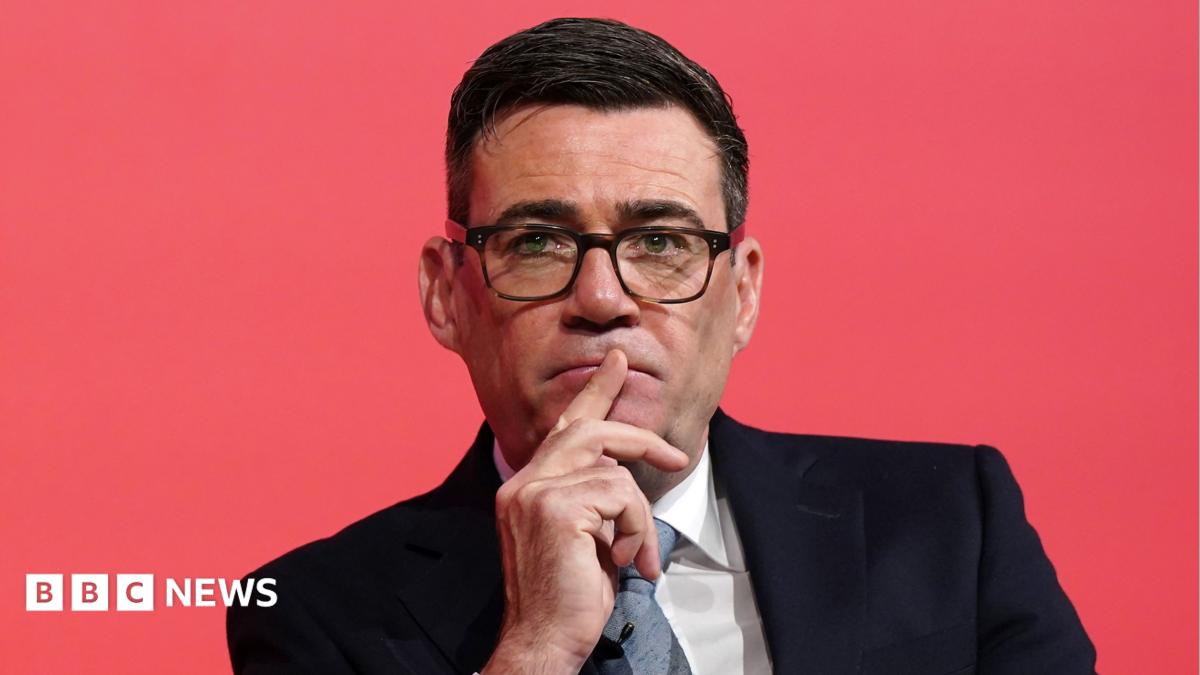
Burnham is set to be greeted with military honours at the German capital’s Chancellery ahead of his first face-to-face meeting with the chancellor.
On Thursday, the two leaders will formally ratify the 2025 Kensington Treaty, a partnership committing both countries to tackle hostile activity through deeper cooperation on science, technology, defence, security and growth.
Speaking ahead of the visit, Burnham said the UK and Germany were “joining forces to find, expose and disrupt” threats.
He continued: “Attacks on our infrastructure, our businesses and our democracies are not a distant threat.
“They reach into people’s homes and workplaces, and they are designed to make us weaker and more divided.”
European leaders have warned the threat of hybrid attacks against Europe by Russia has intensified in recent weeks.
Hybrid warfare or hybrid attacks are loose terms which tend to describe non-military methods designed to exert pressure and destabilise an adversary – for example cyber attacks, sabotage or misinformation.
Last month, a senior Russian diplomat was summoned by the British government over an “egregious and reckless attack” on Leipzig airport.
It is a major international freight hub used for providing support to Ukraine. Moscow has denied any involvement in the incident.
Meanwhile, questions have also been raised this week about Germany’s reliability as an intelligence partner, following the bombshell arrest of a former spy chief on suspicion of espionage.
August Hanning has been accused of espionage, treason and obtaining classified information for a foreign power, the German Federal Prosecutor’s Office says.
He ran the Federal Intelligence Service (BND) from 1998 to 2005 and has since been working as a private consultant.
The talks also come during a period in which Merz’s own political future has come under intense scrutiny.
Burnham replaced Prime Minister Sir Keir Starmer in July after the former leader was forced out by his own MPs just two years after winning a landslide election victory.
Similarly, Merz has faced persistent rumours he could be replaced by his party due to his poor approval ratings and following setbacks in regional elections.
Although the chancellor appears to have overcome an immediate crisis in his leadership, questions remain over his future.
Ukrainian reports of South Korean fuel exports to Russia come amid strained tensions between Seoul and Kyiv.
Published On 8 Oct 20268 Oct 2026
South Korea’s Ministry of Foreign Affairs has said the government will take legal action over illegal fuel shipments to Russia if allegations from an adviser to Ukrainian President Volodymyr Zelenskyy are confirmed.
The Foreign Ministry said on Thursday it had not confirmed whether South Korean fuel, including diesel, had been exported to Russia.
Recommended Stories
list of 3 itemsend of list
It added that exports of some products, such as diesel and jet fuel for commercial purposes, were not included in a South Korean exports control list to Russia.
On Wednesday, the South Korean presidential office dismissed a statement by Vladyslav Vlasiuk, an adviser to the Ukrainian president on sanctions policy, that 176,000 tonnes of fuel were shipped from South Korea to Russia via sanctioned tankers in July and August.
Ukraine’s top sanctions official said the alleged findings run counter to South Korea’s sanctions policy towards Russia.
“Since Russia’s invasion of Ukraine, our government has consistently implemented sanctions and export controls against Russia in close cooperation with the international community,” South Korean presidential spokesperson Kang Yu-jung said on Wednesday, according to the Yonhap news agency.
“We ask that Ukraine also refrain from distorting the relevant policies of the Republic of Korea without sufficient verification of the facts and making public remarks that can damage international trust,” she added.
Relations between South Korea and Ukraine have been strained for the past couple of weeks after Seoul accused Zelenskyy of having “unilaterally disclosed” to the United Nations General Assembly that Kyiv had transferred two North Korean prisoners of war to South Korea.
Seoul Korea demanded an official apology from Kyiv, claiming the Ukrainian president had breached a non-disclosure agreement. Kyiv said no such agreement was in place.
Pyongyang and Moscow, meanwhile, have deep ties, with the two countries having signed a mutual defence treaty in 2024. According to Ukrainian and South Korean estimates, about 14,000 to 15,000 North Korean soldiers were sent to support Russia’s war efforts against Ukraine.
North Korea and South Korea remain technically at war because the 1950–1953 Korean War ended in an armistice rather than a peace treaty.
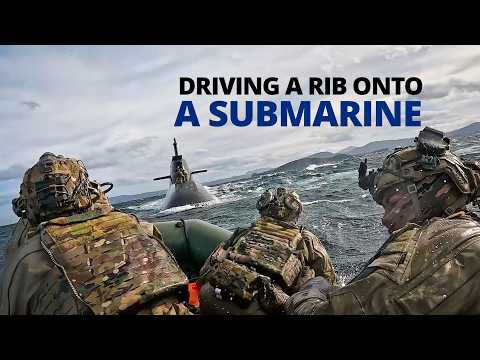
As part of the largest U.K. Commando Force exercise in 15 years, British special operators conducted a submarine insertion off Scotland, making use of a German Navy Type 212A — a boat you can read about in detail here. The maneuvers are the first time since the war in Afghanistan that all of the Commando Force’s specialist elements have operated together. The submarine insertion, conducted at Cape Wrath on September 29, is part of Exercise Strike Warrior, a major NATO drill intended to rehearse allied crisis-response and warfighting operations across the North Atlantic and High North.
The U.K. Royal Navy-led Commando Force specializes in amphibious, littoral, and expeditionary operations. It brings together Royal Marines commandos with specialist elements including reconnaissance, intelligence, targeting, artillery, logistics, and medical capabilities. The force is increasingly focused on smaller, dispersed teams operating across contested littoral environments.
Commandos attempt to drive RIB onto German submarine casing in heavy swell
Including elements of the Commando Force, more than 2,000 personnel from the United Kingdom, United States, Germany, Netherlands, Canada, and Norway are currently participating in Strike Warrior, with eight warships and 19 aircraft involved in activity spanning Scotland, the Western Isles, the North-West Approaches, Galloway, the Borders and the North Sea.
The submarine insertion underscores the type of maritime special operations the British Commando Force is now increasingly training to conduct. Personnel from 148 (Meiktila) Commando Forward Observation Battery, Royal Artillery, boarded the unnamed German attack submarine off Scotland before being infiltrated toward the coast. The sub provided intelligence, surveillance, and reconnaissance (ISR) support as the force approached the target area, after which the commandos conducted a discreet small-boat insertion using inflatable raiding craft.
British Commandos board the German U-boat off the north coast of Scotland during Strike Warrior 26. Crown Copyright
Once ashore, the commandos moved onto the cliffs and established an extemporized observation post. From there, they confirmed the simulated target and coordinated live naval surface fires against a simulated enemy position. Here, firepower was provided by the Portuguese Karel Doorman class frigate Dom Francisco de Almeida, presumably using its Oto Melara 76mm deck gun. Following the engagement, the team was extracted. The complete sequence incorporated submarine infiltration, small-boat insertion, covert reconnaissance and targeting, live naval gunfire, and withdrawal into a single mission profile.
Crown Copyright
The German submarine involved is particularly well suited to this kind of mission. Conventional diesel-electric attack submarines (SSK) lack the nuclear-powered endurance and sustained high speed of an SSN, but those characteristics are not necessarily what a short-range clandestine insertion mission requires. Modern SSKs such as Germany’s Type 212A are designed around extremely low acoustic signatures and can remain submerged for extended periods using air-independent propulsion, making them difficult to detect while operating in relatively shallow and constrained waters.
That combination is hugely valuable for special operations. An SSK can approach a coastline covertly, conduct ISR, release a small team and its boats, and withdraw without exposing a large surface vessel or maintaining the high-speed transit capability associated with a nuclear submarine. Its comparatively small size can also be advantageous when operating closer to shore, where depth, seabed conditions and the presence of coastal sensors can constrain larger submarines. Conventionally powered boats are also far cheaper to procure and operate and have smaller crews.
Crown CopyrightCrown Copyright
An SSN offers major advantages for longer-range deployments: far greater endurance, sustained speed, and the ability to carry and support larger payloads over intercontinental distances. These payloads can include dry deck shelters and swimmer delivery vehicles, allowing divers easy exit and entrance while the boat is submerged and at a standoff distance from the coast.
But for a mission whose essential requirement is to quietly loiter near a coast, put a small team ashore and leave, an SSK remains a highly relevant platform. Conventional submarines are particularly valuable to the kind of distributed littoral operations NATO is rehearsing in northern European waters.
The Upholders were also particularly suited to inshore operations, reconnaissance, and other missions demanding extreme quietness and maneuverability.
The Royal Canadian Navy long-range patrol submarine HMCS Victoria arrives at Naval Base Kitsap-Bangor for a port call and routine maintenance. This boat was formerly HMS Unseen with the U.K. Royal Navy. U.S. Navy photo by Lt. Ed Early/Released
With this in mind, TWZ has, in the past, examined whether the U.S. Navy should complement its all-nuclear submarine fleet with advanced conventional boats. Sweden’s Gotlanddemonstrated the value of these kinds of boats when it was leased to the U.S. Navy for adversary training and proved exceptionally difficult for American ASW forces to detect.
Swedish submarine HMS Gotland, left, HNLMS Tromp, center, and HMS Portland steam in formation with other NATO and partner nation ships during maneuvering drills as a part of exercise Dynamic Mongoose in 2015. U.S. Navy photo by Mass Communication Specialist 2nd Class Amanda S. Kitchner/Released
Returning to the Cape Wrath drill, the 148 Battery operations officer involved explained that “This level of complexity and coordination of live assets has not been achieved by 148 for nearly 30 years.”
“We wanted to demonstrate to our partners across the United Kingdom Commando Force, wider U.K. Defense and NATO SOF community the type of missions we are prepared to execute against future threats,” the officer added.
148 Battery secures a remote beach in Cape Wrath during Exercise Strike Warrior 26. Crown CopyrightCrown Copyright
Multinational integration is central to the exercise. Strike Warrior is testing the ability of the British Commando Force to plug into a much larger allied force in which submarines, surface combatants, aircraft, drones, and small specialist teams can contribute to different parts of the same operation.
Earlier in Strike Warrior, 148 Battery also directed fires from the Dutch Karel Doorman class frigate HNLMS Van Amstel and Royal Canadian Navy Halifax class frigate HMCS St. John’s after establishing observation posts. Those ships were operating as part of Standing NATO Maritime Group One.
HNLMS Van Amstel from the Royal Netherlands Navy during Exercise Strike Warrior. Crown Copyright
The exercise also provides a snapshot of how Britain’s commandos have evolved since their intensive employment in Afghanistan. The Royal Marines’ Future Commando Force concept emphasizes smaller, more dispersed formations capable of operating in contested littoral environments, with greater reliance on maritime mobility, uncrewed systems, long-range fires, and allied capabilities.
Strike Warrior combines those elements, with the exercise including amphibious landings, boarding operations, intelligence and surveillance missions, maritime security, and anti-submarine warfare, alongside drone missions involving strikes and combat resupply. Other elements have practiced establishing protected medical facilities.
The geography of Strike Warrior is equally significant. The exercise extends across Scotland and its surrounding waters, including the Western Isles and out into the North Sea, placing the Commando Force in the maritime environment connecting the highly strategic North Atlantic, Norwegian Sea, and northern European approaches.
That region has become increasingly important to NATO planning because of the difficulty of monitoring and controlling such a large maritime battlespace. Submarines, maritime patrol aircraft, surface combatants, drones, and long-range weapons all have roles to play, while the geography provides numerous opportunities for small forces to operate from the coast and islands.
Crown CopyrightCrown Copyright
The United Kingdom has been repeatedly using the region and the wider High North as a training ground for this type of activity. Earlier this year, British commandos conducted a submarine insertion during Exercise Cold Response in Norway using the German Navy’s Type 212A submarine U-35. That also involved submarine infiltration, small-boat deployment, establishment of an observation post, and the direction of allied naval fires.
Royal Marines on Exercise Cold Response in North Norway training in extreme cold conditions while exercising boat drills within the fjords of Norway. Crown Copyright
Strike Warrior expands that concept considerably and across a much larger battlespace, providing an opportunity to test not simply individual capabilities but the ability to combine them during a sustained NATO exercise.
The exercise began September 28 and concludes October 9.
For the British Commando Force, the significance extends beyond the dramatic imagery of troops emerging from a German submarine at Cape Wrath. After years in which British commandos were heavily committed to land-based counterinsurgency operations, the exercise is intended to put them firmly back in a maritime and high-end warfighting context.
This is the kind of operation that the U.K. Commando Force is now preparing to conduct alongside NATO partners in the increasingly contested waters of the North Atlantic and High North.
The State Department has accused the official of paying bribes to Fijian citizens to advance Chinese interests.
Published On 8 Oct 20268 Oct 2026
The US Department of State has publicly designated a Fiji-based man for his involvement in corruption on behalf of Chinese actors.
Zhao Fugang, the director of the Overseas Chinese Service Center, “abused his public position by paying bribes to Fijian citizens to advance China-based government, business, and criminal interests”, the State Department said in a press release on Wednesday.
Recommended Stories
list of 3 itemsend of list
“His actions constituted significant corruption and adversely affected U.S. interests in Fiji.”
The designation renders Zhao and his immediate family members “generally ineligible for entry into the United States”.
The US embassy in Suva, Fiji’s capital, said Zhao’s actions left the Pacific nation open to “malign foreign influence facilitated by Chinese government, business, and criminal actors”.
The embassy also said, “Public reporting shows an established trend of criminals operating across the Pacific with ties to China.”
Beijing says Overseas Chinese Service Centers help its nationals with administrative issues abroad, such as renewing driving licences. However, rights groups have alleged they are fronts for Beijing to push interests abroad, including the targeting of dissidents.
In February, the Trump administration sanctioned two leaders of Pacific island nations for alleged corruption tied to China. The US Department of State issued a notice alleging that Hokkons Baules, the president of Palau’s Senate, and Anderson Jibas, a former mayor in the Marshall Islands, had created openings for China to increase its influence in the region.
The testing plan for the U.S. Air Force’s sixth-generation F-47 fighter is continuing to take shape ahead of the type’s expected first flight in 2028. The Air Force Test Center (AFTC) aims to blend developmental and operational test elements, and leverage new tools in the virtual realm, to help accelerate that work. All of this is in support of an aggressive program schedule that aims to see the first production F-47s enter operational service in the early 2030s.
Air Force Brig. Gen. Mark Massaro, head of the AFTC, was asked about how the groundwork is being laid for F-47 testing during a virtual talk the Air & Space Forces Association’s Mitchell Institute for Aerospace Studies hosted yesterday. AFTC is located at Edwards Air Force Base in California, which is the Air Force’s main flight testing hub.
“So, I’ll leave timelines to the [F-47] program office and other folks to talk to, but what I will tell you are some of the things that we’re doing to accelerate our test capabilities to get critical capabilities out the door,” Massaro explained. “Integrated test is a key component.”
A rendering of the F-47 fighter. USAF
“So, how we mix together the DT [developmental test] and OT [operational test] elements, how we bring our operational test partners in earlier to define the requirements early on in the test planning process,” he continued. “We understand that the information that we can get early on in a program may have applicability to that final operational test requirement to establish whether it’s effective and suitable to the end user. So that’s a key component to accelerating test capabilities.”
There has always been overlap in development and operational test efforts for new U.S. military aircraft, but the Air Force has been taking steps to more deeply integrate these processes in recent years. The F-15EX Eagle II fighter, which reached initial operational capability in 2024, was the first ever Air Force aircraft to be fully tested and fielded through DT and OT efforts conducted in parallel, as you can read more about here. The service has more recently applied these concepts to the B-21 Raider program with test flights where developmental and operational test pilots have shared the cockpit.
A pair of F-15EX test jets. USAFA B-21 Raider seen from a KC-135 aerial refueling tanker during a flight test. USAF
“Another thing that we’ve learned over time too, if you think back to software testing and you think about agile software development, is having an iterative capability that you constantly iterate on,” Brig. Gen. Massaro also highlighted yesterday. “So, thinking about how we can structure our software, or our software testing, our capabilities testing.”
In this way, “we have those opportunities to inform decision makers on a regular cadence on what type of capability they may have at a certain timeline to be able to issue out to a warfighter on a time that might not be a normal milestone chart,” he continued. “We’re really working to incorporate into our test planning processes.”
“Another thing – and I kind of alluded to it a little bit earlier, too – is on the digital front, using our software tools, that super intelligence, graphic processing units, which have a significantly higher capability to process information, to really refine model iteration,” the AFTC head added. “Those models and flight test data [can be used] to update things like computational fluid dynamics when you’re doing tests like loads and high-alpha maneuvering to get information quicker from a flight test back into the program.”
Those “digital tools” can also be used “to accelerate how that information then goes back into a design choice or change if they need to make it,” he continued. “Coming up with those opportunities to use those tools in a test design and in a program” can then further help “to accelerate that final schedule delivery.”
Brig. Gen. Mark Massaro seen during a ceremony marking his assumption of command of the Air Force Test Center on June 30, 2026. USAF
Even very high-fidelity modeling in the digital realm is still not a substitute for real-world flight tests. However, Brig. Gen. Mark Massaro spoke more generally yesterday about how AFTC has been blending digital and live testing to maximize their respective benefits.
“We use models to develop our capabilities, and we need to anchor those models in truth, in physics, and an understanding of what happens in the real world,” the AFTC head stressed. “Outside of a cyber system, all of our capabilities touch the real world and touch physics, and we need to understand those dynamics. So, the models that we use to do design work, to do iterative type[s] of developmental work, and, in ways, operational work, too, need to be anchored in that real world truth.”
At the same time, “we can’t replicate what we need to go and test, and develop tactics and operationally test, in the real world on some of our ranges,” he also noted. “So, from a geographic perspective, just the width and the depth and the height of the ranges to the laydown of the systems that we have to see on the ranges to be able to execute against a threat, [and] the numbers that we might have to be testing.”
Blending real and virtualized elements can therefore be very valuable.
An “element that we’ve done in the developmental world for quite a while, that are [sic] part of this conversation, are plugging in, even though it’s a virtual environment, plugging in real world hardware into that virtual environment,” Massaro offered as one example. “So, you’re getting real-world software, the OFPs [operational flight program software], or you’re getting real-world sensing information coming into that virtual environment and feeding it there.”
Air Force Test Center’s Mission
Virtualized elements can also be added to real-world flight test events in various ways. The Air Force, among others, is also making use of these so-called live, virtual, constructive (LVC) concepts for training purposes for many of the same general reasons, including limited range capacity.
It is also worth noting here that the F-47 program is already benefiting from years of flight testing in secret using full-scale demonstrator aircraft. A substantial amount of simulation and modeling would also already have been done as a byproduct. A simulator likely already exists, as well, which could be used for risk reduction and fine-tuning of the F-47 design, as well as testing flight dynamics.
An F-22 test jet assigned to the 411th Flight Test Squadron, which now serves as the Air Dominance Combined Test Force (AD-CTF). USAF
Though much about the F-47 program remains highly classified, the Air Force has consistently said that the program continues to be on track. Prime contractor Boeing is now building the first flying example, and construction is already well underway to establish a full production line. As mentioned, the target date for a first flight is currently in 2028, ahead of operational fielding in the early 2030s. As an aside, Boeing has also now won the contract to develop the Navy’s sixth-generation carrier-based fighter, currently referred to as F/A-XX.
AFTC is doing its part now to be ready to support the flight testing that will be needed to keep the F-47 program on track in the coming years.
The Democratic National Committee has filed a lawsuit against United States President Donald Trump over television advertisements that were publicly funded and allegedly used to promote his political policies.
Ken Martin, who heads the Democratic Party’s leadership body, suggested in a statement on Wednesday that the ads were designed to bolster Republican odds in the upcoming November 3 midterm elections.
Recommended Stories
list of 3 itemsend of list
“Donald Trump is misusing millions of taxpayer dollars to fund pure propaganda ads in a last-ditch attempt to save Republicans in November,” Martin said.
Later that day, Common Cause, a democracy watchdog group, filed a second lawsuit over the same set of ads.
It argued that the ads were “overtly political” and therefore ran afoul of laws that bar public funds from being used for political propaganda.
“These ads are not public-service announcements,” Common Cause said in its lawsuit, citing a justification Trump has offered for the television spots. “They are personal publicity and political propaganda through and through.”
Both lawsuits argue that, to create the ad campaign, Trump directed the White House to repurpose $20m in funds that Congress allocated for commemorative activities related to border security, including for those killed in the line of duty.
That manoeuvre, they argue, violates the separation of powers established in the US Constitution.
“The founders made clear more than 200 years ago that the executive can spend money only according to Congress’s direction,” Common Cause’s lawsuit said.
The two lawsuits also point to a provision Congress includes in its appropriations bills barring the use of taxpayer funds for “publicity or propaganda purposes”.
Both complaints seek to have the ads declared illegal, and the expenditures stopped. They also call for steps to be taken to recover any money already spent on the ads.
The Democrats’ lawsuit was filed in Washington, DC, while the Common Cause complaint will be heard in the Southern District of New York.
Trump has faced mounting criticism over the ads, which began airing in September.
So far, the advertising campaign has cost more than $12m to run, according to the media tracking firm AdImpact.
The $20m Trump tapped for the ads comes from a $175m package Congress assigned to the Department of Homeland Security as part of Trump’s immigration enforcement agenda.
Critics have pointed out that one of the ads appears nearly identical to a television spot Trump used in his 2024 re-election campaign.
Three ads have aired so far. In one, a choir sings “love me” over a montage of Trump as he declares the US will “never be a communist country”. Another uses images of Mount Rushmore as Trump heralds a new “golden age of America”.
The third is darker: Trump walks towards the camera in black and white, warning of a “final battle” against the “deep state” and other perceived enemies.
On Wednesday, the news agency Reuters and the research firm Ipsos released a poll showing the ads are highly unpopular. Some 86 percent of the Americans surveyed, including four out of five Republicans, said it was inappropriate for Trump to have used public money for them.
Trump has defended the ads as “promotion for the country”, and he has argued they were similar to public outreach campaigns put out by previous administrations.
But after a bipartisan backlash, Trump said on Monday that taxpayer funds would no longer be used for future ads.
He did not, however, commit to paying back the money already spent on the existing ads.
Members of Trump’s Republican Party have been among those speaking out against the ad campaign.
Senator Thom Tillis, a Republican from North Carolina, said the advertisements resembled something former Hungarian leader Viktor Orban would put out.
Senate Majority Leader John Thune, meanwhile, indicated he agreed with the message in one of the advertisements, but he emphasised that “it shouldn’t be paid for with taxpayer dollars”.
Dolly Parton’s estate is alleging that Bryan Seaver, the country icon’s nephew and former head of security, used a “no trespassing” sign and barbed wire to avoid being served legal documents.
There is an active restraining order and lawsuit against Seaver by Parton’s company, She’s Alive LLC, which is run by Parton’s former manager, Danny Nozell, for allegedly threatening and extorting her estate.
Seaver served as Parton’s head of security for more than 20 years and, on Aug. 25, delivered the news of his aunt’s death via a video on her Instagram account.
Legal troubles for Seaver first came to light on Sept. 22 when a case was filed by She’s Alive in Davidson County Chancery Court in Nashville on the heels of Seaver’s termination as head of security. Both Seaver and his company, Squadron Augmented Protection Services LLC, are the defendants in the lawsuit.
In documents reviewed by the New York Times, Seaver is accused of mounting “an obscene, deliberate and escalating campaign of threats” to acquire money from the Parton estate, including a profane threat made toward at least one Dollywood business partner.
Seaver filed a motion last week to delay a hearing scheduled for Friday, saying he needed time to meet with his preferred legal counsel.
The following day, lawyers for She’s Alive asked the court to deny this motion, arguing that Seaver “attempted to evade service of process” and that the “court should not reward that behavior.”
According to court filings obtained by ABC News, a process server tried to issue court documents to Seaver for the third time but encountered a “no-trespassing sign in the front yard and barbed wire draped across the handrails leading to the front door.”
The new hearing date is set for Oct. 20.
The legal complaint includes text messages in which Seaver wrote that he would become “the hand of retribution for my entire family.” According to the complaint, in other text exchanges between him and a longtime lawyer of Parton, he described himself as a “killer,” a term he would later argue was taken out of context.
There are also claims that Seaver began making financial demands before Parton’s death, including in a text to Nozell where he said he would launch a podcast “dedicated to ruining Dolly’s brand partnerships and telling the violations these people have done on us” if demands were not met, the New York Times reported.
Nozell was Parton’s longtime manager and is credited with reviving the “I Will Always Love You” singer’s international touring career.
The Times reached out to Seaver, Nozelle and She’s Alive LLC but did not hear back.
Yemeni government forces said in a social media post that they carried out 2,103 “precise targeting operations.”
Published On 8 Oct 20268 Oct 2026
Yemeni government forces said they have “neutralised” 1,860 Houthi fighters since launching a large-scale counter-offensive to retake territory under control of the rebel group.
The spokesperson for the internationally recognised government’s army said in a social media post early on Thursday local time that they carried out 2,103 “precise targeting operations” against Houthi military positions across several fronts as part of the ongoing “Dawn of Yemen” operation.
Recommended Stories
list of 3 itemsend of list
Rashad al-Alimi, chairman of Yemen’s Presidential Leadership Council, announced on Sunday the “Dawn of Yemen” operation to retake all Houthi-held territory, including the capital, Sanaa, which the Iran-backed group has controlled since 2014.
Battles in Yemen have focused in recent days on areas around the Bab al-Mandeb Strait, a shipping route that has become more crucial for energy exports since the conflict between the US and Iran restricted trade through the Strait of Hormuz.
Forces aligned with the Yemeni government launched an operation on Tuesday to capture strategic territory near the strait and around the city of Mocha, which the Houthis had captured in September.
Coalition targeting
The Saudi-led coalition fighting in Yemen said on Wednesday it destroyed 82 Houthi military targets in the Yemeni governorates of Saada, Hodeidah, al-Jawf and Marib.
The spokesperson for the coalition said in a statement the targets included ballistic missile sites including “11 mountain-based ballistic missile storages in Saada, command and control centres, communication systems, missile and weapons storages”.
The new operation followed Houthi attacks on Tuesday and Wednesday targeting King Khalid International Airport in Riyadh and Abha International Airport, according to the spokesperson.
Saudi Arabia’s civil aviation authority said the attacks on the two airports killed three people.
One person was killed and eight wounded in an attack on King Khalid International Airport, and two were killed and 28 wounded in an attack on facilities at Abha airport, the General Authority of Civil Aviation said in a statement.
Saudi civil aviation authorities say Houthi attacks on Abha and King Khalid International airports have killed three civilians, including two women, and injured 36 others.
Talks will focus on the €1 billion daily deficit and rare earth export restrictions.
Published On 7 Oct 20267 Oct 2026
European Trade Commissioner Maros Sefcovic has arrived in Beijing for talks on the European Union’s (EU) growing trade deficit with China.
Sefcovic will meet Chinese Commerce Minister Wang Wentao on Thursday and Friday after months of discussions over the EU’s trade deficit of more than €1bn ($1.12bn) daily, as well as Chinese curbs on exports of rare earths and other critical minerals.
Recommended Stories
list of 3 itemsend of list
Meanwhile, Chinese companies are increasingly challenging Europe’s top car brands. China rejected the EU request for voluntary curbs on Chinese hybrid car exports as the two sides enter negotiations, the Financial Times reported on Wednesday. The European Commission now hopes to get Beijing to accept a unilateral EU measure to cap hybrid imports instead, the outlet said, citing two diplomats briefed on the plan.
The two days of discussions come just as a majority of EU lawmakers called for a more assertive trade policy towards Beijing in a non-binding resolution on Wednesday. China vowed a “resolute response” to safeguard its industries if the European Union goes ahead with restrictions against Chinese companies or products, according to its commerce ministry.
Germany and France propose rapid EU measure
French President Emmanuel Macron and German Chancellor Friedrich Merz, leaders of the bloc’s two biggest powers, on Tuesday urged the EU to prepare a “credible instrument” that could be quickly activated to strike back against countries that harm the bloc economically.
The new measure would not target any specific country. German officials said the EU needed a tool as powerful as the Section 301 tariffs imposed by the United States or China’s restrictions on critical-mineral exports.
The proposed weapon – to be discussed at an EU leaders’ summit next week – would give the European Commission the power to respond to a trade aggression within days.
China responded to the letter by urging Paris and Berlin to steer clear of “protectionist” measures.
“We hope that France and Germany, as major economies in the world, will uphold openness, cooperation and free trade,” the commerce ministry said in a statement.
“They should avoid going down the wrong path in the wrong way, only to ultimately suffer the consequences themselves.”
G20 finance leaders, except China’s, agreed in September to act against “non-market” distortions that exacerbate imbalances. Beijing says that hyping up issues such as economic imbalances and overcapacity is a form of protectionism designed to exert pressure on and restrict China.
Ongoing trade talks
EU and Chinese officials have been discussing trade imbalances since June. Sefcovic said he wanted “tangible results by October” as well as some form of commitment that can be put to EU leaders meeting in Brussels.
Trade relations with China top the summit’s agenda next week, as ballooning debt has prompted auditors to warn about the next seven-year EU budget and has spurred protests in France.
European Commission President Ursula von der Leyen told the European Parliament last month that the trade imbalance had reached a tipping point and that Europe would use every tool at its disposal to rebalance the relationship.