Weekly insights and analysis on the latest developments in military technology, strategy, and foreign policy.
Israel has launched an attack on Iran, striking targets in Tehran.
A U.S. official has confirmed to TWZ that the U.S. is attacking Iran. Including strikes from air and sea, the official said. See updates down below.
Details remain extremely limited at this time, but what we know is that Israel struck targets as part of what it is calling a preemptive strike. Images from the capital show smoke plumes rising in urban areas. In addition, we have seen video from Iraq showing what appear to be low flying cruise missiles or possibly fighter aircraft. Iraq has been the primary access point for the Israeli Air Force in past strikes on Iran.
BREAKING: Israel says it launched a preemptive strike against Iran and declares a nationwide state of emergency. Reports of explosions across the Iranian capital, Tehran. pic.twitter.com/mRXNHj3Yy8
Some of the ground are saying the strikes targeted Iranian leadership installations in the city, particularly those used by Supreme Leader Khamenei, although we cannot confirm that at this time. Geolocation info will soon be coming that should shed light on the target set.
The IDF posted the following on X, stating:
The State of Israel has launched a preemptive attack against Iran. Israel’s Minister of Defense, Israel Katz, declares a special and immediate state of emergency throughout the state The State of Israel has initiated a preemptive attack against Iran to remove threats directed against the State of Israel. As a result, missile and drone launches against the State of Israel and its civilian population are expected in the very near term. Therefore, pursuant to his authority under the Civil Defense Law, Minister of Defense Israel Katz has now signed a special order mandating the imposition of a special state of emergency in the Home Front throughout the State of Israel, effective immediately. The instructions of the Home Front Command and the authorities must be followed, and individuals must remain in protected areas.
U.S. Central Command has declined to comment on the strikes in response to our direct inquiry to them.
This is a rapidly developing situation and we are going into rolling coverage on it below. Newest updates will be posted on top.
UPDATE: 2:27AM EST—
Israel’s N12 is reporting that the operation name is “Roar Of The Lion.”
Strikes are occurring at sites throughout Iran. While these could be targeting time sensitive targets, many of these strikes would be used to prepare the battlefield for aircraft operations over Iran. In other words, degrading and destroying what’s left of Iran’s air defenses so strike aircraft can more safely operate over the country. These operations would likely occur tonight under the cover of darkness, where direct attacks on targets can be made.
UPDATE: 2:15AM EST—
A U.S. official has confirmed to TWZ that the U.S. is attacking Iran.
Meanwhile the Mossad is asking Iranians to “return Iran to its glorious days.”
As Israel launches strikes on Iran, the Mossad spy agency on its official Persian-language Telegram channel calls on Iranians to help “return Iran to its glorious days.”
“Our Iranian brothers and sisters, you are not alone! We have launched a highly secure and dedicated Telegram… pic.twitter.com/jnL937YR8e
We are getting unconfirmed reports that Israel has assassinated Iran’s defense minister.
UPDATE: 1:55AM EST—
Israel is preparing for a reprisal strike:
In the last few minutes, sirens were sounded all throughout Israel, with an advance instruction alert directly to cellular devices to stay within proximity to protected spaces. This is a proactive alert to prepare the public for the possibility of missiles being launched toward the State of Israel. The IDF emphasizes that the public is requested to stay in proximity to protected spaces.
In the last few minutes, sirens were sounded all throughout Israel, with an advance instruction alert directly to cellular devices to stay within proximity to protected spaces.
This is a proactive alert to prepare the public for the possibility of missiles being launched toward…
Flights are currently diverting away from the region and Iran has closed its airspace.
It appears the USAF transport aircraft are trying to leave the ground prior to any kind of reprisal strikes. One ACARS message told a C-17 crew to remain on the ground in Jordan for as little time as possible not long before the strikes.
It’s looking like a U.S. strike on Iran could go down at any moment
A U.S. Air Force C-17 Globemaster III strategic airlifter with identification number 06-6166 en route to King Abdullah II Air Base in Jordan has been instructed to keep its ground time to an absolute minimum.… pic.twitter.com/1GIXRN14jt
The daytime nature of the attacks would point to time sensitive targets being hit.
CNN is reporting that the U.S. was at least in coordination with Israel on the strikes, but that is not surprising at all even if Israel acted unilaterally in the kinetic action itself. There has been reports that the Trump administration favors Israel striking first so that it can then jump in once Iran responds with its own strikes.
A shelter in place order has been broadcasted in Qatar, home to the U.S. military’s largest installation in the region and what is presumed (and previously demonstrated) as the top U.S. target of Iran.
Message for U.S. Citizens:
The U.S. Embassy in Qatar is implementing a shelter-in-place for all personnel. We recommend all Americans do the same until further notice.
Actions to Take:
– Find a secure location within your residence or another safe building. Have a supply of… pic.twitter.com/ENogjpfK5r
An Israel KC-707 was seen departing today, likely to support the strike operation. Minister of Defense Gallant posted simply “Good luck” with U.S. and Israeli flags on his X account along with an image of an IAF F-15D and him talking to crews.
Air force plane transporting cash veers off runway and into busy road; crowds scramble for scattered banknotes in the wreckage.
Published On 28 Feb 202628 Feb 2026
Share
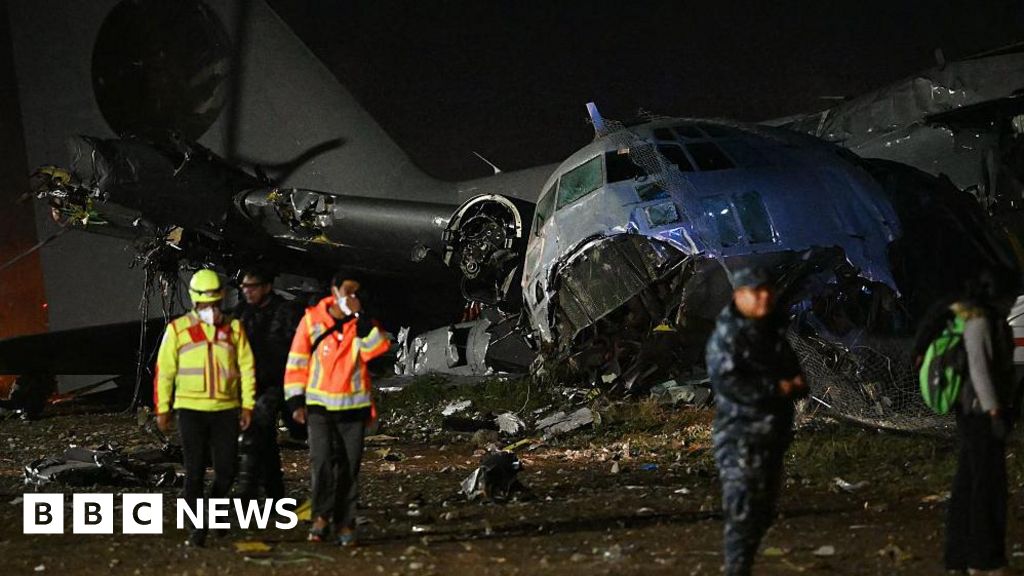
At least 20 people have been killed and more than 30 injured after a Bolivian Air Force Hercules transport plane, carrying a cargo of newly printed banknotes, crashed onto a busy highway while attempting to land in bad weather near the capital, La Paz.
The military plane was attempting to land on Friday evening at El Alto International Airport when it skidded off the runway and ploughed into a nearby road, local authorities said.
Recommended Stories
list of 4 itemsend of list
“There are about 20, maybe a few more,” Police Colonel Rene Tambo, head of the police homicide division in El Alto, said of the number of people killed.
Defence Minister Marcelo Salinas said the Hercules C-130 “landed and veered off the runway” and came to a stop in a field.
Firefighters responding to the crash successfully extinguished a fire that broke out, the minister said, noting that the cause of the crash remains under investigation.
“A heavy hailstorm” was falling and “there was lightning” when the plane went down, Cristina Choque, a 60-year-old vendor whose car was struck by plane wreckage, told the AFP news agency.
Footage shared on social media showed chaotic scenes as crowds gathered at the crash site.
Some people appeared to collect banknotes scattered among debris from the aircraft, the wrecked vehicles and the bodies of victims.
Authorities used water hoses and tear gas to push back onlookers and looters.
The Ministry of Defence, in a statement, said later that “the money transported in the crashed aircraft has no official serial number… therefore it has no legal or purchasing power”.
The ministry also warned that the “collection, possession, or use” of the money “constitutes a crime”.
Bolivian Air Force General Sergio Lora said that two of the six crew members of the aircraft were still unaccounted for.
The central bank was expected to brief reporters later on Friday regarding the stricken plane’s cargo.
Bolivia’s La Paz, situated at an altitude of 3,650 metres (11,975 feet) and surrounded by Andean mountain peaks, is the highest administrative capital in the world.
A military police officer stands next to a plane that crashed in El Alto, Bolivia, on Friday [Juan Karita/AP]
These are the key developments from day 1,465 of Russia’s war on Ukraine.
Published On 28 Feb 202628 Feb 2026
Share
Here is where things stand on Saturday, February 28:
Fighting
Russia struck port infrastructure overnight in Ukraine’s southern Odesa region, igniting fires and damaging equipment, warehouses and food containers, Deputy Prime Minister Oleksii Kuleba said.
A localised truce has been established near the Russian-controlled Zaporizhzhia nuclear power plant to allow repairs to power lines, Russian news agencies report, citing the head of Russia’s state nuclear corporation.
Ukraine shot down a drone near the border with Romania during a Russian attack on port infrastructure on the Danube River, Romania’s Ministry of National Defence said.
Romania said it scrambled fighter jets and that the drone was brought down 100 metres (110 yards) from the Romanian village of Chilia Veche, on the opposite side of the Danube River to Ukraine.
Russian forces have taken control of the village of Biliakivka in the Dnipropetrovsk region of eastern Ukraine, the Russian RIA Novosti state news agency reported, citing the Ministry of Defence.
Ukraine’s military said it struck an oil depot in the Russian-occupied Luhansk region overnight, causing a large fire at the facility.
Firefighters were trying to bring a fire at an oil refinery in Russia’s southern Krasnodar region under control, local officials said early Saturday.
Ukraine is considering forming partnerships with allies to build air defences capable of intercepting ballistic missiles and to address a critical shortage of munitions for United States-made Patriot systems, the country’s defence minister said.
Ghana’s Foreign Minister Samuel Okudzeto Ablakwa said 55 Ghanaians had been killed fighting in Ukraine, and that some 272 citizens of the African country are believed to have been lured to fight for Russia in Ukraine since 2022.
A multistorey residential building was destroyed in the town of Severodonetsk in the Russian-controlled Luhansk region, Ukraine [File: Alexander Ermochenko/Reuters]
Regional security
The Swedish military intercepted a suspected Russian drone off the country’s south coast while a French aircraft carrier was docked in Malmo, officials said.
Kremlin spokesman Dmitry Peskov said it was “absurd” to suggest the drone that was electronically disabled near a French aircraft carrier in Sweden earlier this week was Russian.
The European Commission said Croatia is assessing whether it can legally import seaborne Russian crude to supply Hungary and Slovakia through its Adria pipeline.
The move by Croatia follows after oil supplies via the Ukrainian section of the Druzhba pipeline to Hungary and Slovakia – the only European Union countries still importing Russian oil – were halted last month due to damage Ukraine blamed on a Russian drone strike.
In a video posted on Facebook, Hungarian Prime Minister Viktor Orban urged Ukraine’s President Volodymyr Zelenskyy to grant Hungarian and Slovak inspectors access to repair and restart the Druzhba pipeline.
The receiver station of the Druzhba pipeline of petroleum between Hungary and Russia, with a memorial plate of its construction at the Danube Refinery of the Hungarian MOL gas company [File: Attila Kisbenedek/AFP]
President Zelenskyy said he had not been offered nuclear weapons by the United Kingdom or France, but added he would accept such an offer “with pleasure”, after Russia’s Foreign Intelligence Service accused both countries of working to provide Kyiv with a nuclear bomb.
Poland’s parliament approved a law to implement the EU’s Security Action for Europe (SAFE) defence procurement programme aimed at boosting member states’ military readiness.
Economy
The International Monetary Fund said its executive board had approved an $8.1bn, four-year loan for Ukraine, anchoring a broader $136.5bn international support package. The World Bank estimates Ukraine will need $588bn for post-war reconstruction.
Economists say Russia is grappling with heavy state defence spending alongside deepening structural challenges, including labour shortages and high inflation.
Ukraine’s major steelmaker ArcelorMittal Kryvyi Rih said it is closing another division due to a worsening energy crisis caused by continued Russian attacks on Ukraine’s power system.
Peace talks
Bilateral talks between US and Ukrainian officials in Geneva concluded on Thursday, with Kyiv saying preparations are under way for the next round of negotiations aimed at ending the war.
Ukraine’s chief negotiator, Rustem Umerov, said on X that discussions were held in two formats: separate meetings with the United States and a trilateral session involving the US and Switzerland.
Umerov said participants spoke with President Zelenskyy and were working to ensure the next three-sided meeting with Russia on a settlement is “as substantive as possible”.
Politics and diplomacy
Former British Prime Minister Rishi Sunak has begun advising the Ukrainian government on economic renewal as Kyiv works to rebuild its energy sector before next winter.
Finland, Ukraine and the Czech Republic will skip the opening ceremony of the Milano Cortina Paralympics in protest against the inclusion of Russian athletes competing under their own flag while the war in Ukraine is ongoing.
German Chancellor Friedrich Merz said “diplomacy cannot succeed at the moment” with Russia, and that greater emphasis should be placed on defending Ukraine from Moscow’s aggression.
Aden, Yemen – Abu Amjad was shopping with his two children last week, finally able to take them out and buy them new clothes – a cherished Ramadan tradition in Yemen.
The 35-year-old is a teacher, and he had just received his salary. That payment was a sign things are improving in Aden – the salaries are funded by Saudi Arabia as a way of backing the Yemeni government, which has recently arrived to take control of Aden after the defeat of secessionist forces.
Recommended Stories
list of 3 itemsend of list
But problems and instability are never far away in Yemen.
Just as soon as the children, Amjad, 10, and Mona, 7, began trying on their outfits, the sound of gunfire erupted. Shoppers froze. Amjad and Mona clutched their father, asking to leave.
About 3km (2 miles) away, security forces had opened fire on protesters who attempted to breach the gates of al-Maashiq Palace, where members of the Yemeni government have been based since they arrived from Riyadh a week ago.
The gunfire shattered the family’s moment of joy.
“It ruins your joy when you see a person bleed and robs you of peace when you hear prolonged gunfire,” Abu Amjad told Al Jazeera.
After years of operating from exile, Yemen’s Saudi-backed, UN-recognised cabinet is spending Ramadan in Aden, a move that has coincided with improvements in basic services and a renewed sense of relief. Yet that relief was overshadowed by the deadly confrontation between security forces and antigovernment protesters, in which at least one person was killed.
“That was the first clash after the return of the government to Aden. Our concern is that it may not be the last,” said Abu Amjad.
Government wins
Yemen’s new Prime Minister Shaya al-Zindani has said that stabilising Aden and other areas under government control was among the new government’s main priorities.
The Yemeni government is currently in its strongest position for years. An advance by the separatist Southern Transitional Council (STC) at the end of last year in eastern Yemen ultimately was a step too far for the United Arab Emirates-backed group.
Saudi Arabia considered the STC advance the crossing of a red line, and lent its full military backing to the Yemeni government, allowing it to take territory it had not controlled for years.
Now, the Yemeni government and Saudi Arabia are focused on attempting to improve conditions in the southern and eastern areas of Yemen under government control, to attract more public support. That would in turn weaken support for both the STC and the Houthi rebels, who have controlled northwestern Yemen, including the capital, Sanaa, since the country’s war began in 2014.
Lit city and busy markets
Abdulrahman Mansour, a bus driver and resident of Khormaksar in Aden, said Ramadan this year feels different.
“When I see the lights on and the markets busy on Ramadan nights in Aden, it feels like a different city. The improvement is undeniable,” Mansour, 42, told Al Jazeera.
He noted that one distinct difference this Ramadan is the stable provision of electricity. “This reminds me of the pre-war time. We used to take that service for granted,” said Mansour.
“When the city is dark at night, it appears gloomy, and families prefer to stay home. The movement of people brings life to the city and helps small businesses keep afloat, especially in Ramadan,” Mansour added.
Yemeni Electricity Minister Adnan al-Kaf said last week that efforts to improve electricity services in Aden and other provinces continue, noting that Saudi support had contributed to improved service over the past two months.
Wafiq Saleh, a Yemeni economic researcher, said the improvement in the living standards of citizens in Aden and southern Yemen, in general, was obvious, particularly after Saudi Arabia’s payment of public sector salaries and the supply of basic services such as water and electricity.
Saleh told Al Jazeera, “The recent Saudi financial support has been very generous, and it can help the government during this period by enabling it to work on reactivating dormant resources, resuming oil exports, combating corruption, and improving the efficiency of revenue collection with transparency and good governance.”
But Saleh emphasised that the progress achieved so far is not the result of economic reforms by the Yemeni government, but rather because of Saudi support.
Therefore, according to the economist, the improvement in the living situation and the currency’s value may not be sustainable, even if it is a positive indicator and may be the first step towards promised economic reforms in the country.
“There must be a comprehensive vision for developing revenue collection so that the government can implement sustainable economic reforms,” Saleh said.
Search for cooking gas
While the distribution of electricity has improved in Aden, other essential services remain strained. Cooking gas shortages remain a major concern. The search for it remains a daily struggle for families in the port city, and the crisis has intensified in Ramadan.
Lines of vehicles queue at stations, while residents wait with cylinders for a few litres (quarts) of gas.
“Going from one station to another in search of cooking gas while fasting is exhausting,” said Fawaz Ahmed, a 42-year resident of Khormaksar district.
Fawaz describes the shortage of cooking gas as a cause of hunger in the city. “If I stay in [my home] village, I would resort to firewood. But in the city, that option is not available, and if we find firewood in the market, it is expensive.”
Gas distributors say the quantity of cooking gas supplied to them is not adequate, citing this as the root cause of the crisis. Supplies are transported from Marib province in northern Yemen.
Tensions to continue
The cooking gas shortage is a sign that it will not be plain sailing for the Yemeni government in Aden.
And opponents will likely seize on any ongoing problems to foment more unrest.
Majed al-Daari, editor-in-chief of the independent Yemeni news site Maraqiboun Press, described the situation in Aden as “very worrying”.
“What happened to the demonstrators at the start of Ramadan underscores the fragility of the political and security situation. Tensions are set to continue,” al-Daari said.
“The STC will continue mobilising its supporters against the government. This is its last card that it will use to restore lost political interests,” al-Daari added.
The STC said in a statement last week that raids and arbitrary arrests had targeted people who had participated in the recent protests. These attacks, the statement emphasised, would only increase the determination of the southerner secessionists.
For Abu Amjad, demonstrations in Aden give space to chaos, which he resents.
“At least, Ramadan should pass without protests. Political actors should spare us this month so we can fast and share some joy with our children,” he said.
Oman’s Foreign Minister says most recent indirect talks between US, Iran ‘really advanced, substantially’ and diplomacy must be allowed do its work.
Iran agreed during indirect talks with the United States never to stockpile enriched uranium, said Oman’s top diplomat, who described the development as a major breakthrough.
Oman’s Foreign Minister Badr bin Hamad Al Busaidi also said on Friday that he believed all issues in a deal between Iran and the US could be resolved “amicably and comprehensively” within a few months.
Recommended Stories
list of 4 itemsend of list
“A peace deal is within our reach … if we just allow diplomacy the space it needs to get there,” Al Busaidi said in an interview with CBS News in Washington, DC, after Oman brokered the third round of indirect talks between the US and Iran in Geneva on Thursday.
“If the ultimate objective is to ensure forever that Iran cannot have a nuclear bomb, I think we have cracked that problem through these negotiations by agreeing [on] a very important breakthrough that has never been achieved any time before,” Al Busaidi said.
“The single most important achievement, I believe, is the agreement that Iran will never ever have nuclear material that will create a bomb,” he said.
“Now we are talking about zero stockpiling, and that is very, very important because if you cannot stockpile material that is enriched, then there is no way that you can actually create a bomb,” he added.
There would also be “full and comprehensive verification by the IAEA [International Atomic Energy Agency]”, he said, referring to the UN’s nuclear watchdog.
Oman’s top diplomat also said Iran would degrade its current stockpiles of nuclear material to “the lowest level possible” so that it is “converted into fuel, and that fuel will be irreversible”.
“This is something completely new. It really makes the enrichment argument less relevant, because now we are talking about zero stockpiling,” Al Busaidi said.
Regarding recent US demands regarding Iran’s missile programme, Al Busaidi said: “I believe Iran is open to discuss everything”.
Asked if he thought enough ground was covered in the most recent talks in Geneva to hold off a US attack on Iran, the minister said, “I hope so.”
“We have really advanced substantially, and I think, obviously, there remains various details to be ironed out, and this is why we need a little bit more time to really try and accomplish the ultimate goal of having a comprehensive package of the deal,” he said.
“But the big picture is that a deal is in our hands,” he added.
The foreign minister’s comment followed after he met earlier on Friday with US Vice President JD Vance and as US President Donald Trump continued to sabre-rattle while at the same time declaring he favoured a diplomatic solution with Tehran.
Trump said on Friday that he was not happy with the recent talks that concluded in Geneva.
“We’re not exactly happy with the way they’re negotiating,” Trump told reporters in Washington, adding that Iran “should make a deal”.
“They’d be smart if they made a deal,” he said.
Trump later said that he would prefer it if the US did not have to use military force, “but sometimes you have to do it”.
The US and Iranian sides are expected to meet again on Monday in Vienna, Austria, for more indirect negotiations.
“My sister told me that she was in the car when the plane crashed. The plane’s tire fell on the car, and my sister was injured because the impact of the tire hit her on the head, so we rushed her to the hospital,” one relative told the Reuters news agency.
Alfredo Ruiz (left), Tarek William Saab (center) and Larry Devoe (right). (AFP)
Caracas, February 27, 2026 (venezuelanalysis.com) – Venezuelan National Assembly President Jorge Rodríguez announced on Wednesday that he had received the resignations of Attorney General Tarek William Saab and Ombudsman Alfredo Ruiz.
Both officials had been ratified in their positions in October 2024 for a seven-year term extending through 2031. Rodríguez did not specify the motives expressed by Saab and Ruiz in their resignation letters.
Following the officials’ departure, lawmakers declared a parliamentary urgency and appointed a 13-member committee tasked with selecting candidates and appointing new figures to both posts within 30 days.
In the interim, at Rodríguez’s proposal, the Venezuelan parliament appointed Saab as acting ombudsman, while naming Larry Devoe—formerly executive secretary of the National Human Rights Council—as acting attorney general.
Under normal legal procedure, Saab’s post would be temporarily filled by the deputy attorney general. However, Rodríguez explained that the position is currently vacant, requiring parliament to adopt extraordinary measures.
A lawyer by training, Tarek William Saab was part of the legal defense team for Hugo Chávez following the 1992 civil-military uprising and later represented relatives of leftist militants and guerrillas who were tortured or disappeared during the Fourth Republic period. He served as ombudsman from 2014 to 2017, when the National Constituent Assembly appointed him attorney general after the removal of his controversial predecessor Luisa Ortega Díaz.
As the country’s top prosecutor, Saab took charge of several high-profile cases, including the arrest of former Oil Minister Tareck El Aissami. Saab likewise headed Venezuela’s relations with the International Criminal Court, accusing the tribunal of “lawfare” in its investigation of human rights abuses committed by Venezuelan authorities.
Alfredo Ruiz, a professor and founding member of the social organization Red de Apoyo por la Justicia y la Paz (Support Network for Justice and Peace), had served as ombudsman since 2017.
Larry Devoe is a lawyer specializing in criminal and criminological sciences. He previously held several positions within the Ombudsman’s Office and was appointed executive secretary of the National Human Rights Council in 2014. He is currently a member of the Peace and Coexistence Program established in January by Acting President Delcy Rodríguez.
Following the temporary appointments, opposition lawmaker Henrique Capriles described Saab’s designation as acting ombudsman as “an insult to victims.”
Speaking to reporters after the legislative session, Capriles accused Saab of being “responsible for persecution and criminalization” in Venezuela and criticized his new role.
“It is an insult to victims, to those of us who expect that public powers in this country will change—that there will be institutions serving the interests of Venezuelans and not the government,” he said.
Regarding Devoe, Capriles argued that he is “someone close to the ruling party,” adding that the country “needs a truly independent attorney general and ombudsman.”
The resignations come amid the implementation of an Amnesty Law that has facilitated the release of detainees accused or convicted of political violence dating back to 1999. The legislation covers 13 specific periods between January 1, 1999, and 2026, mostly related to “protests and violent events.”
Jorge Arreaza, head of the National Assembly’s Special Commission for the Development and Implementation of the Amnesty Law for Democratic Coexistence, reported on Friday that 8,110 individuals have filed petitions for amnesty since the law’s approval last week.
According to the Socialist Party deputy, 223 individuals previously in prison have been released, while 4,534 people subject to parole-type measures—such as mandatory court appearances or house arrest—have been fully cleared.
Far-right politicians Freddy Superlano and Juan Pablo Guanipa, both accused by authorities of terrorism and criminal conspiracy, were among those released in recent days.
In total, 4,757 individuals have benefited from the law to date, according to Venezuelan officials. Arreaza added that Venezuela’s justice system remains on permanent alert to expedite procedures for cases that qualify for amnesty.
The administration of United States President Donald Trump has broadened its prosecution of the protesters involved in a church demonstration to 39 people, up from nine.
The demonstration was part of a backlash to Trump’s deadly immigration surge in the midwestern state of Minnesota, but officials have sought to frame the protest as an attack on religious freedom.
Recommended Stories
list of 3 itemsend of list
Attorney General Pam Bondi announced the expanded indictment on Friday in a message posted to social media.
“Today, [the Justice Department] unsealed an indictment charging 30 more people who took part in the attack on Cities Church in Minnesota,” Bondi wrote. “At my direction, federal agents have already arrested 25 of them, with more to come throughout the day.”
She added a warning to other protesters who might seek to disrupt a religious service.
“YOU CANNOT ATTACK A HOUSE OF WORSHIP,” Bondi said. “If you do so, you cannot hide from us — we will find you, arrest you, and prosecute you. This Department of Justice STANDS for Christians and all Americans of faith.”
Appealing to Christian voters
Since taking office for a second term, Trump has sought to appeal to Christian conservatives by launching initiatives, for example, to root out anti-Christian bias and prevent alleged acts of Christian persecution, both domestically and in countries like Nigeria.
But critics have accused his administration of attempting to stifle opposition through its prosecution of the Minnesota protest attendees.
Some of those indicted deny even being a part of the January 18 protest. Defendants like former CNN anchor Don Lemon and reporter Georgia Fort say they attended in their capacity as journalists.
Both have pleaded not guilty to the charges and have publicly questioned whether their prosecution is an attempt to curtail freedom of the press.
The superseding indictment, filed on Thursday, levies two counts against the 39 defendants, accusing them of conspiracy against the right of religious freedom and efforts to injure, intimidate or interfere with the exercise of religious freedom.
“While inside the Church, defendants collectively oppressed, threatened and intimidated the Church’s congregants and pastors by physically occupying the main aisle and rows of chairs near the front of the church,” the indictment reads
It also describes the protesters as “engaging in menacing and threatening behavior” by “chanting and yelling loudly” and obstructing exits.
A magistrate judge on January 22 initially rejected the Justice Department’s attempt to charge nine attendees who were at the protest.
But the department sought a grand jury indictment instead, which was filed on January 29 and made public the next day.
A reaction to Trump’s immigration surge
The protest, dubbed “Operation Pullup”, was conceived as a response to the violent immigration crackdown that had unfolded in Minnesota.
Many of the enforcement efforts centred on the metropolitan area that includes the Twin Cities: St Paul and Minneapolis.
Trump had repeatedly blamed the area’s large Somali American population for a welfare fraud scandal involving government funds for programmes like Medicaid and school lunches.
In December, the Trump administration surged federal immigration agents to the region, nicknaming the effort Operation Metro Surge. At its height, as many as 3,000 agents were in the Minneapolis-St Paul area.
But the effort was plagued by reports of excessive violence towards detainees and protesters alike. Videos circulated of officers breaking the car windows of legal observers, pepper-spraying protesters and beating people.
Officers also engaged in the practice of entering homes forcibly without a judicial warrant, which advocates described as a violation of the Fourth Amendment of the Constitution. Cases of unlawful arrests were also reported.
But a turning point came on January 7, when an agent with Immigration and Customs Enforcement (ICE) was caught on camera shooting into the vehicle of 37-year-old mother Renee Good. She died, and her killing sparked nationwide protests.
Operation Pullup took place at Cities Church in St Paul less than two weeks later.
It was intended as a demonstration against the church’s pastor, David Easterwood, who serves as a local official for ICE.
Several protesters have indicated that they are prepared to fight the government’s charges over the incident, citing their First Amendment rights to free speech.
Some also said that they intended to remain vigilant towards government immigration operations, even after Trump administration officials announced Operation Metro Surge was winding down in mid-February.
“This is not the time to be Minnesota Nice,” one protester, civil rights lawyer Nekima Levy Armstrong, wrote on social media last week. “It’s time for truth, justice, and freedom to prevail.”
Weekly insights and analysis on the latest developments in military technology, strategy, and foreign policy.
The U.S. Air Force now has at least 14 aerial refueling tankers forward-deployed in Israel ahead of potential strikes on Iran. Beyond supporting U.S. aircraft, an equally important role the tankers — and those spread across the region — could play is refueling Israeli fighters joining in the fight. The Israeli Air Force’s (IAF) entire tanker fleet consists of just seven nearly antique KC-707s, which imposes inherent limits on range, loiter time, sortie rates, loadout options, and other aspects of tactical air operations. Giving the IAF the full tanking resources of the U.S. would unlock its full combat potential.
Nine KC-46s and five KC-135s have arrived at Ben Gurion Airport since the start of this week. Ben Gurion is Israel’s main international airport, and is situated just to the southeast of Tel Aviv, roughly in the center of the country.
At least nine American refueling tankers arrived at Israel’s Ben Gurion Airport overnight as part of the United States’s massive buildup of military forces in the Middle East.
At least nine US Air Force refueling tankers have arrived at Israel’s Ben Gurion Airport as part of the US’s massive buildup of military forces in the Middle East. Jack Guez, AFP. pic.twitter.com/qNFy677lnE
At least 11 U.S. Air Force F-22 Raptors are also now forward-deployed to the IAF’s Ovda Air Base in the southern tip of Israel. The F-22s had flown there after making a stop at RAF Lakenheath in the United Kingdom. A 12th Raptor reportedly had to return to Lakenheath due to a technical issue, but whether it may now have made its way to Israel is unclear.
Intersting choice.
USAF F-22 fighter jets redeployed from the UK will be stationed at the Ovda Air Base in southern Israel, per reports.
H/t to @EISNspotter as I believe that he broke the news first.
The tankers at Ben Gurion and the F-22s at Ovda are relatively small parts of the massive buildup of U.S. military forces across the Middle East in recent weeks. The large influx of U.S. airpower has caused crowding at other available bases in the region that sit outside the range of Iran’s short-range ballistic missiles and other standoff weaponry, which clearly played a part in deciding to utilize Israeli facilities for the deployment of additional aircraft. Israel would also be under threat of heavy retaliation in the event of any new U.S. operation targeting Iran. U.S. aircraft in Israel would be well-positioned to help provide more immediate defense against incoming Iranian threats, but those assets could also contribute heavily to strikes on Iran.
At the same time, as TWZ has previously noted, there are very strong signs that Israeli forces will be fully integrated into the defensive and offensive components of any potential new U.S. operation against Iran. The KC-46s and KC-135s now at Ben Gurion are a tanker force twice as big as what the IAF has in its inventory today. Each KC-46 also carries more fuel to offload to receivers than a KC-707 or a KC-135. All of this could offer a major boost in aerial refueling capacity, and the operational benefits that come along with that, to Israeli forces.
One of the IAF’s KC-707s seen refueling an F-15. IAF
From the very start of what became the 12 Day War between Israel and Iran, TWZ pointed out that committing U.S. tankers to the fight could have massive force multiplying impacts for the IAF. In the weeks that followed, there were reports that the United States had done just this, but clandestinely and to a very limited degree, to help sustain the Israeli air campaign. The U.S. Air Force subsequently denied that this had been the case, after which we delved deep into what Israel would have otherwise had to have done to keep up the operational tempo.
“Fitting as much external fuel on the fighters – the IAF’s F-15 fleets and F-16Is are all notably fitted with conformal fuel tanks and have the ability to carry drop tanks – was clearly necessary. Even dropping external tanks once they are empty to maximize range appears to have been part of the plan during the initial high-volume strikes. While drop tanks are expendable, they are not cheap and are usually retained unless performance has to be regained due to enemy threats or an in-flight emergency occurs. Dropping them to maximize an aircraft’s range is also an established tactic, but not a very sustainable one over the long term. It’s also one that is not needed if tanker support is readily available, nor is equipping the jets with maximum external fuel in the first place, in many circumstances.”
“Flying very carefully planned flight profiles to squeeze every bit of efficiency out of the range of IAF tactical jets was also clearly a tactic employed, although it leaves very little margin for error or combat contingencies. In addition, we know that Israel’s F-35Is have been tweaked to provide extra range. We don’t know exactly what this entails, and it could be a cocktail of measures, from software tweaks to internal or external fuel tanks. Regardless, it was reported that many IAF fighters landed on fumes after their initial sorties.”
“Regardless, maximizing Israel’s fighter force of close to 300 aircraft (total inventory, not what is actually available at any given time) in the opening waves of the war with just seven tankers may have been a feat that can be explained by careful planning, drop tanks, and the use of long-range standoff weaponry, at least early on. As the war continued, the magnitude of the sorties may have dropped, but the geographical depth and power of their strikes increased. These operations were sustained for nearly two weeks.”
“During the conflict, TWZ discussed how, at a certain point, Israel would have to drastically reduce its cadence of operations or wrap up the war. If the U.S. had not struck Fordow with B-2s, it’s possible the war would not have ended until the IDF was able to deal with that very hardened target, which would have likely required a ground operation very deep into a highly-defended area of Iran. Strikes would have eventually slowed as the IAF’s sortie rates degraded, and especially those of its overworked and geriatric tankers.”
As an aside, Israeli Ambassador to the United States Yechiel Leiter offered what looks to be the first official confirmation that range-extending fuel tanks for the F-35I are in service in an interview earlier this month. “We developed fuel tanks that extend the aircraft’s range without compromising stealth,” Leiter told the Israel Hayom newspaper.
Questions remain about these tanks, including whether they are internally or externally mounted. To date, no pictures have emerged that definitively show them fitted to an F-35I.
An Israeli F-35I with a so-called ‘beast mode’ loadout, including ordnance on pylons under the wings. IAF
Regardless, truly robust tanker support would fundamentally change the IAF’s planning processes and operational possibilities. Access to the USAF’s tanker ‘bridge’ that will cover large swathes of the Middle East, keeping combat aircraft in the fight, will be an unprecedented operational reality for the IAF. More aerial refueling capacity would enable tactical jets to fly further, loitering over areas of the battlespace longer, and carry heavier ordnance loads. Greater reach and time on station could be extremely valuable when hunting for mobile high-value targets, like Iranian ballistic missile launchers. More range and loiter time could be equally important for responding to large waves of incoming Iranian missiles and drones in retaliation.
Far greater tanker support would also provide much higher safety margins for aircraft returning low on fuel from longer-range and/or long-duration missions. As noted earlier, it was reported that IAF fighters often landed on fumes after their initial sorties during the 12 Day War. It is somewhat shocking that aircraft were not lost to fuel starvation alone considering how closely they were operating to the edge of their endurance. Tankers forward-deployed in Israel could be similarly critical for providing recovery tanking, giving IAF aviators an extra margin of flight time, especially if everything doesn’t go as planned. The same can be said for U.S. fighter aircraft operating out of Israel. The F-22 has a notoriously short combat radius, for instance. Fuel starvation was an issue even in the mission to capture Maduro, for instance.
All around, U.S. tankers refueling Israeli jets during a future operation against Iran could only help greatly magnify the contributions of the latter, which would already be substantial in this scenario. IAF involvement would add hundreds of fighter aircraft, unique munitions, and more to the equation. On top of materiel aspects, Israeli pilots would bring immense experience about operations over Iran gained during the 12 Day War, as well as the benefits of analysis of lessons learned from the conflict. The rest of the Israel Defense Forces (IDF) and the Israeli intelligence apparatus would be able to provide other kinds of critical support.
12 Days of Precise Action
All of this also underscores the importance of Israel’s effort now to acquire a new fleet of six KC-46 tankers to replace its aging KC-707s. At least as of 2022, Boeing was expected to deliver the first KC-46s to the IAF before the end of this year.
It is still to be seen whether the U.S. will launch a new operation against Iran, and what role Israel will play if that decision is ultimately made. Many other questions remain to be answered, as well, as TWZ just recently explored in detail.
“It’d be nice if we could do it without, but sometimes you have to do it with,” U.S. President Donald Trump told reporters as he left the White House earlier today in response to a question about possible strikes on Iran. “We have the greatest military anywhere in the world. There’s nothing close. I’d love not to use it, but sometimes you have to.”
Trump on military force against Iran: “It’d be nice if we could do it without, but sometimes you have to do it with. We have the greatest military anywhere in the world. There’s nothing close. I’d love not to just it but sometimes you have to.” pic.twitter.com/kDh9oOeoPK
“They should make a deal, but they don’t want to quite go far enough. It’s too bad,” Trump also said today. “We’re not happy with the negotiation.”
“They don’t want to say the key words, ‘We’re not going to have a nuclear weapon,’ and they just can’t get there… So I’m not happy with the negotiation,” says @POTUS on Iran. pic.twitter.com/XN0S4ObS2x
“I met Vice President J.D. Vance today and shared details of the ongoing negotiation between the United States and Iran and the progress achieved so far,” Omani Foreign Minister Badr Albusaidi also wrote in a post on X today. “I am grateful for their engagement and look forward to further and decisive progress in the coming days. Peace is within our reach.”
I met Vice President JD Vance today and shared details of the ongoing negotiation between the United States and Iran and the progress achieved so far. I am grateful for their engagement and look forward to further and decisive progress in the coming days. Peace is within our… pic.twitter.com/fMHxWV0jgl
U.S. and Iranian officials met in Oman yesterday for a second round of talks aimed at avoiding a conflict, and focused on Iran’s nuclear ambitions. The results of that engagement were inconclusive, though there are publicly stated plans for another round of talks next week.
If the U.S. government does decide to take action against Iran, the tankers at Ben Gurion are among the forces now in place to swing into action, and could easily find themselves refueling Israeli jets, as well as American ones. U.S. Air Force tanker support would be a massive force multiplier for the IAF that would allow it to have an even greater impact than it had in the 12 Day War.
Weekly insights and analysis on the latest developments in military technology, strategy, and foreign policy.
The U.S. military used a laser to shoot down a Customs and Border Protection (CBP) drone over southwest Texas earlier this week, U.S. officials confirmed to The War Zone. We now know that this drone was small in size and was engaged by AeroVironment’s LOCUST directed energy weapon. The friendly fire incident spurred expanded airspace restrictions over the Fort Hancock area that will last for four months. It also gives credence to the FAA’S concerns about the operational deployment of counter-drone laser weapons along the border. The same system was used to fire at suspected Mexican cartel drones flying across the southern border into Texas two weeks ago, which resulted in a large airspace closure, general confusion and major headlines.
LOCUST Laser Weapon System
Federal officials confirmed last night that some kind of incident occurred on Wednesday, although a joint statement held back from making a definitive conclusion on exactly what happened.
“This reported engagement occurred when the Department of War employed counter-unmanned aircraft system authorities to mitigate a seemingly threatening unmanned aerial system operating within military airspace,” the Defense Department, CBP, and the Federal Aviation Administration (FAA) said in their statement.
“The engagement took place far away from populated areas, and there were no commercial aircraft in the vicinity,” the statement added.
The Temporary Flight Restrictions (TFR) covered an area located roughly 50 miles southeast of El Paso, the scene of a drone incident earlier this month, and the U.S. Army base at Fort Bliss, a facility that has counter-drone operations as part of its training remit. The TFR lasts until June 24 and prevents most pilots from flying over the area. Emergency services, like medevac flights and search and rescue operations, will be allowed to fly in the area if they contact Albuquerque Center, which will coordinate with U.S. Northern Command’s Joint Task Force-Southern Border, which is overseeing military operations in this area.
In an earlier statement, the FAA noted that an incident had led to it expanding a temporary flight restriction that was already in place around Fort Hancock. The restriction was issued for “Special Security Reasons,” the FAA added, and did not impact commercial flights in the region.
The Federal Aviation Administration has issued a new temporary flight restriction near Fort Hancock, TX including all aircraft on the US side of the border following reports that a U.S. military counter unmanned aerial system shot down a drone that belongs to the U.S. Department… pic.twitter.com/0jnzeYTsm3
An unnamed U.S. official previously told CBS News that a laser weapon was used to down the drone in the area of Fort Hancock, a small community located on the U.S.-Mexico border.
Democrat Representatives Rick Larsen, André Carson, and Bennie Thompson, all members of the House Committee on Transportation and Infrastructure, also issued a joint statement. “Our heads are exploding over the news that DoD reportedly shot down a Customs and Border Protection drone using a high-risk counter-unmanned aircraft system,” they said, criticizing an apparent lack of coordination between the agencies involved.
Earlier this month, CBP personnel reportedly used a laser directed-energy weapon to take down an object, which they assumed to be a drone operated by a Mexican drug cartel. Multiple reports said that the object turned out to be a Mylar balloon. A U.S. official told us at the time that the incident was the first time a laser weapon had been fired at drones in the continental U.S.
A U.S. Army Infantry Squad Vehicle (ISV) equipped with a LOCUST laser directed-energy weapon. U.S. Army
It was reported on that occasion that flight restrictions were imposed around El Paso as a result of a breakdown in coordination between the U.S. military and the FAA over the employment of a counter-drone system armed with a laser-directed energy weapon.
Under a federal statute commonly referred to as 130(i), “DoW can mitigate drone threats to protect military installations and missions inside the U.S., but it does not have general domestic airspace policing authority,” Scott Shtofman, Vice President & Counsel, Regulatory Affairs for the Association for Uncrewed Vehicle Systems International (AUVSI), told us in the wake of the El Paso incident.
Safety concerns about using directed energy weapons, and especially kinetic ones, to take down drones in the U.S. have been a major factor in why they haven’t been previously used in this role. A little less than a year and a half ago, officials at U.S. Northern Command (NORTHCOM), which has coordinating authority for counter-drone efforts in the U.S., said the use of such weapons was not yet on the table. The reason is that they can create dangerous or otherwise serious collateral effects that are less of a concern in a war zone.
While the details of this week’s incident are still to be established, it appears almost certain that this is the latest chapter in the ongoing saga of U.S. efforts to counter small drone incursions over the country.
As tensions between Israel and Iran periodically escalate, Israel has developed one of the world’s most sophisticated multi-layered air defence networks to counter ballistic missiles, drones, rockets, and cruise missiles. The system is designed to intercept threats at different ranges and altitudes, creating overlapping layers of protection against attacks from state actors and non-state groups.
The architecture reflects decades of missile threats from regional adversaries and has been refined through repeated real-world use. It combines domestically developed systems with U.S.-supported technology and integrated radar, command, and interception capabilities.
Long-Range Interception: Arrow System
The Arrow-2 and Arrow-3 systems form Israel’s top defensive layer against long-range ballistic missiles. Arrow-2 intercepts incoming missiles in the upper atmosphere, while Arrow-3 is designed to destroy threats in space before re-entry.
Developed primarily by Israel Aerospace Industries with support from Boeing, the Arrow program is tailored to counter high-altitude missile threats and allows for the safe dispersal of potential non-conventional warheads away from populated areas.
Mid-Range Shield: David’s Sling
David’s Sling targets medium-range ballistic missiles and cruise missiles fired from roughly 100 to 200 km away. It also intercepts aircraft and drones.
The system was jointly developed by Rafael Advanced Defense Systems and RTX Corporation and fills the operational gap between long-range Arrow interceptors and the short-range Iron Dome.
Short-Range Defence: Iron Dome
The Iron Dome system is designed to intercept short-range rockets, mortars, and drones. Operational since 2011, it uses radar tracking to determine whether an incoming rocket threatens a populated area. If the projectile is projected to land harmlessly, the system conserves interceptors by not engaging.
Originally designed to counter rockets with ranges of 4–70 km, analysts say its effective coverage has expanded. A naval variant deployed in 2017 protects maritime assets.
Directed Energy Layer: Iron Beam
Declared fully operational in late 2025, Iron Beam is a ground-based high-energy laser system designed to neutralize small aerial threats such as UAVs and mortar rounds. Instead of firing interceptors, the laser superheats targets until they fail mid-air.
Because it uses directed energy rather than missiles, Iron Beam is expected to dramatically reduce interception costs and provide rapid response against swarms of low-cost threats.
U.S. Support: THAAD Deployment
The United States deployed the THAAD (Terminal High Altitude Area Defense) system to Israel in 2024 to strengthen protection against ballistic missiles during heightened regional tensions. THAAD intercepts missiles in their terminal phase of flight and is a key component of U.S. strategic missile defence.
U.S. naval assets and ground-based systems have also assisted in intercepting missiles during previous attacks, highlighting close defence coordination between the two allies.
Air-to-Air Interception Capability
Beyond ground systems, Israeli fighter jets and attack helicopters have used air-to-air missiles to destroy incoming drones before they enter Israeli airspace. This adds flexibility and an additional interception layer, particularly against slow-moving aerial threats.
Analysis: A Layered Shield for a Complex Threat Environment
Israel’s defence network is built on the principle of layered interception, ensuring that if one system fails or is overwhelmed, another layer can engage the threat. This redundancy is crucial given Iran’s missile arsenal and the increasing use of drones and precision-guided munitions by regional actors.
The integration of Arrow, David’s Sling, Iron Dome, Iron Beam, and U.S. systems creates a comprehensive defence umbrella capable of engaging threats from space to low altitude. The addition of directed-energy weapons reflects a shift toward countering mass drone attacks and reducing the financial burden of interceptor missiles.
However, even sophisticated systems face challenges. Large-scale salvos could strain interceptor inventories, while evolving missile technologies and swarm tactics may test response capacity. As regional tensions fluctuate, Israel’s layered defence remains both a technological achievement and a critical strategic necessity.
Economists are cautiously optimistic that advances in artificial intelligence could boost productivity across major economies, potentially helping governments manage soaring debt. Debt levels in most rich nations already exceed 100% of GDP and are projected to rise further due to ageing populations, higher defence spending, climate commitments, and rising interest payments.
U.S. policymakers, in particular, see AI as a potential driver to lift post-2008 productivity and free workers for higher-value tasks. Yet experts warn that even a strong AI-driven growth surge would not fully offset the structural pressures on public finances.
AI’s Potential Impact on Public Debt
The OECD and economists working with Reuters estimate that a productivity boost from AI could lower projected debt in OECD countries by up to 10 percentage points by 2036. That would reduce the expected rise from roughly 150% of GDP to around 140%, still sharply higher than current levels of approximately 110%.
In the U.S., best-case scenarios suggest debt could rise to 120% of GDP over the next decade instead of 100%, with one economist projecting little change. The key variables include whether AI creates more jobs than it displaces, whether firms pass productivity gains to workers via wages, and how governments manage spending.
Demographics and Limits
Demographics remain a central constraint. Ageing populations and entitlements tied to them are the root causes of long-term debt growth. Economists note that even with a productivity surge, labour shortages and slower immigration could offset AI gains. Countries like Italy and Japan may see smaller benefits from AI due to lower adoption rates and smaller sectors that can leverage the technology.
Fiscal Uncertainty
AI could raise government revenues through higher productivity and wages, but the effect is uncertain. If automation primarily benefits profits and capital rather than labour, fiscal gains could be limited. Additionally, public spending may rise alongside growth, dampening potential debt relief. Social security and other entitlement programs, indexed to wages, will continue to pressure budgets regardless of AI-driven efficiency.
Interest rates and debt servicing costs add another layer of uncertainty. Economists warn that recessions or financial shocks could prevent AI-driven productivity gains from providing timely relief.
Analysis
AI offers a potential “breathing room” for overstretched economies, buying time for governments to tackle structural deficits. Even if growth rises to 3% in the U.S. through 2040 above Federal Reserve expectations it will not solve fundamental fiscal challenges.
Economists stress that AI is a supplement, not a replacement, for fiscal reform. Rising productivity may help governments manage debt growth more sustainably, but without structural policy adjustments addressing demographics, entitlement programs, and spending priorities, the debt trajectory remains precarious.
Ultimately, while AI could improve efficiency and output, it is unlikely to carry the heavy lifting required to stabilize public finances on its own.
US President Donald Trump said the US is in talks with the government of Cuba and that “we could very well end up having a friendly takeover of Cuba.” The country is facing a severe energy shortage after the US imposed a fuel blockade.
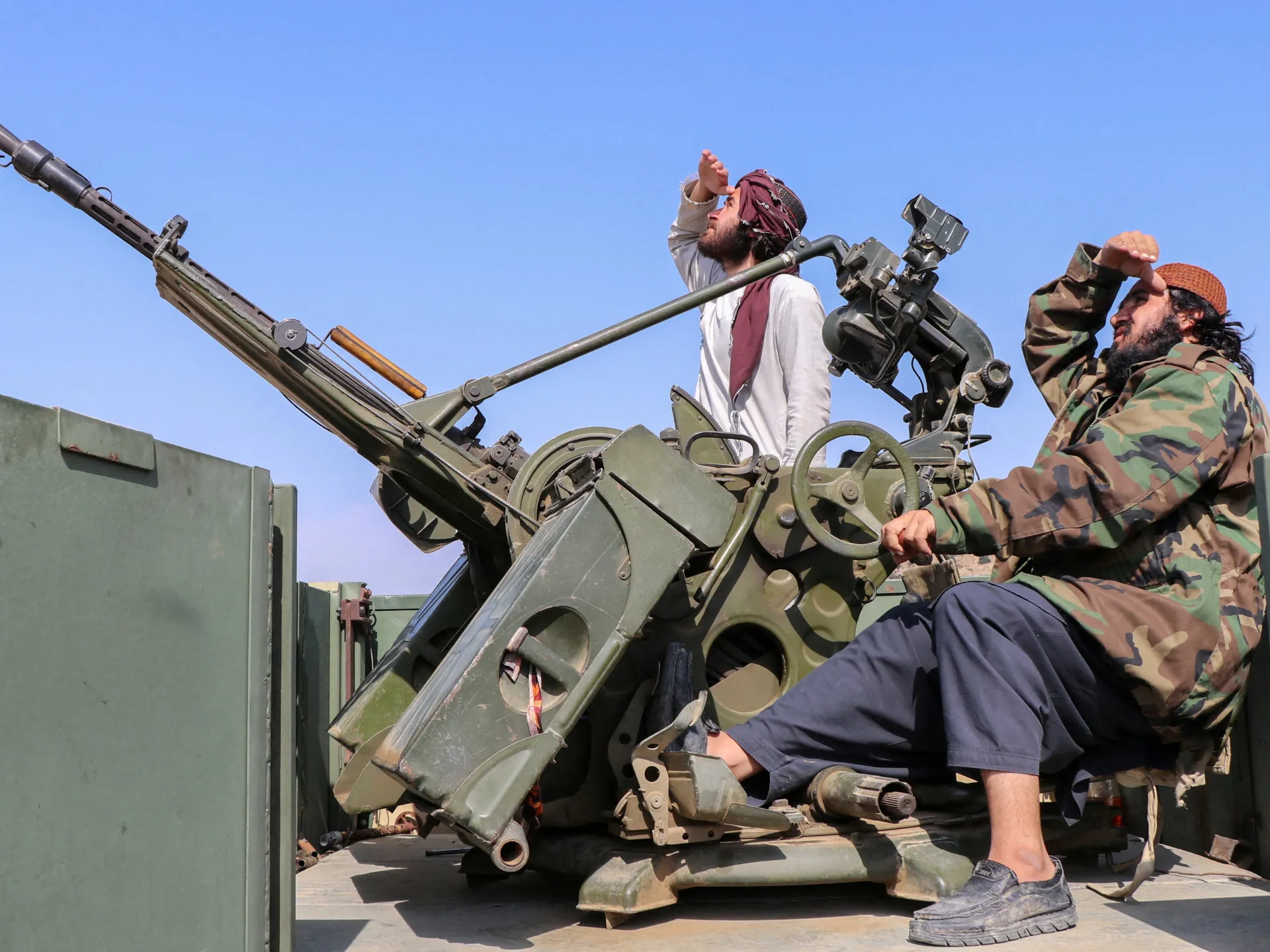
For decades, Pakistan was the Afghan Taliban’s closest supporter. Islamabad helped the Taliban rise in the early 1990s, seeking “strategic depth” in its rivalry with India. Pakistan welcomed the Taliban’s return to power in 2021, with then-Prime Minister Imran Khan describing it as Afghans “breaking the shackles of slavery.”
However, the alliance soon frayed. Islamabad found the Taliban less cooperative than anticipated, particularly regarding insurgent groups that targeted Pakistani territory. Border clashes, insurgent attacks, and fragile ceasefires have repeatedly disrupted trade, security, and civilian life along the rugged frontier.
Escalating Tensions: From Ceasefires to “Open War”
Tensions have been mounting since late 2025, following deadly cross-border clashes in October that killed dozens of soldiers. Ceasefires mediated by Turkey, Qatar, and Saudi Arabia temporarily eased the situation, but attacks persisted.
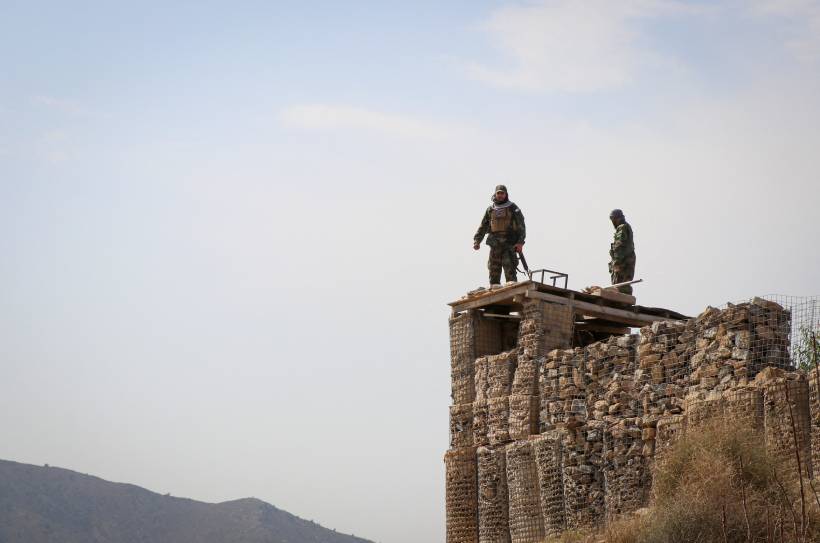
The latest escalation came after Pakistan cited “irrefutable evidence” that Afghan-based militants were behind recent attacks and suicide bombings targeting Pakistani forces. Air and ground strikes targeted Taliban posts, headquarters, and ammunition depots in multiple sectors, with both sides reporting heavy losses. Pakistan’s defence minister labeled the situation an “open war.”
The Trigger: Attacks by Afghan-Based Militants
Pakistani security sources linked several recent attacks to militants operating from Afghan territory. These include seven incidents since late 2024, the most deadly being the Bajaur district attack that killed 11 security personnel and two civilians, claimed by the Tehreek-e-Taliban Pakistan (TTP). Islamabad argues that Taliban inaction allowed the TTP and Baloch insurgents to operate freely, while Kabul denies the allegations.
Who Are the Pakistani Taliban?
The TTP, formed in 2007, is a coalition of militant groups mainly active in northwest Pakistan. It has carried out attacks on markets, mosques, airports, military bases, and police stations, occasionally gaining territory along the Afghan border and deep inside Pakistan. Its most notorious act was the 2012 attack on schoolgirl Malala Yousafzai, who later received the Nobel Peace Prize.
The TTP has historically fought alongside the Afghan Taliban against U.S.-led forces in Afghanistan and used Pakistani territory as a base for operations. Pakistan’s previous military offensives against the group, including the 2016 operation, temporarily reduced attacks but did not eliminate the threat.
Diverging Interests: Pakistan vs. Afghan Taliban
Historically, Pakistan’s support for the Taliban was based on shared strategic interests. Today, those interests are diverging:
Pakistan’s Perspective: Taliban inaction against TTP and Baloch insurgents threatens Pakistan’s internal security. The continued use of Afghan territory as a safe haven fuels Islamabad’s justification for strikes.
Afghan Taliban Perspective: Pakistan allegedly harbors fighters from Islamic State
Analysis
Pakistan’s sudden escalation against the Afghan Taliban is a striking example of how strategic calculations can shift dramatically when security threats directly affect domestic stability. Historically, Islamabad viewed the Taliban as a partner a way to secure influence in Afghanistan and counterbalance India. Today, that calculation has reversed: the Taliban are now seen as enabling militants who attack Pakistani territory, undermining the very national security Pakistan sought to protect.
From my perspective, this is as much about perception as capability. Pakistan’s frustration reflects not just the TTP threat, but the Taliban’s unwillingness or inability to control insurgent groups. Even if the Taliban are technically powerless to fully rein in these groups, Islamabad interprets every attack as a breach of trust, eroding decades of strategic alignment.
Another important dimension is geography and asymmetric warfare. Despite Pakistan’s overwhelming conventional advantage its larger military, air force, and nuclear arsenal the border region’s terrain favors smaller, agile forces like the Taliban. History shows that superior firepower does not always translate into quick resolutions in insurgency-heavy zones, and repeated airstrikes may inflame, rather than contain, cross-border tensions.
This conflict also signals that Pakistan’s security calculus is increasingly domestic-focused. While in the past its Afghan strategy prioritized influence over immediate risk management, the TTP’s growing attacks within Pakistan have shifted the priority toward internal stability. From this angle, the strikes are a defensive measure designed to project strength and send a warning to the Taliban that safe havens for insurgents will no longer be tolerated.
Finally, the regional implications are worrying. Repeated clashes threaten civilian populations, disrupt trade, and could destabilize Afghanistan’s already fragile governance structures. Mediation by third parties may temporarily ease hostilities, but without long-term mechanisms to hold both sides accountable, the cycle of violence is likely to continue.
In short, Pakistan’s attack reflects the intersection of historical strategy, modern security threats, and the practical limits of alliances. It highlights that even long-standing partnerships are fragile when domestic security imperatives collide with regional politics—and that conventional power advantages may not guarantee quick solutions in border conflicts dominated by asymmetric warfare.
Residents of Kabul, Afghanistan are cleaning up broken glass and describing how they tried to run to safety when Pakistan attacked in the middle of the night. Meanwhile in Karachi, Pakistan, people are celebrating the offensive as a “positive development”.
Users expect apps to be easy to use and operate smoothly without odd crashes or bugs. However, to reach success and, of course, revenue, having a functional app is not enough. The app, for one, needs to embrace the latest innovations, and the app type must also be in demand. Let’s explore some of the app trends that will persist in 2026, from their functionality to their very purpose.
AI influence on app development and functionality
AI has left almost no industry untouched, and general app development and final functionalities are no exceptions. For one, developers can craft apps in weeks or months with assistance from Claude AI or similar products. However, besides assisting in the actual building of the apps, AI is sure to leave its mark in the following ways:
AI-powered features that let users use AI through the app to achieve their intended results faster. For example, that could include an online shopping app that lets you upload your photo and see how certain outfits would look on your body.
AI will make apps more personalized to users than ever before.
Apps will start to adapt to your behavior and habits even more.
More productivity and online earning apps are appearing
People do achieve things and perform tasks faster, but they do have more temptations to slack off or procrastinate. So, it is evident that productivity-boosting apps will see an even bigger boom than before. After all, we already see developers experimenting with what we expect a productivity app to do. For example, programmers introduce game-like experiences to ensure that you stay on the right, effective path.
Besides boosting productivity, various apps also build work discipline and empower users to earn more on the side. One option is picking up micro jobs online; a variety of apps offer them. Essentially, people use a service like JumpTask to find tasks, such as answering surveys, testing other apps, or browsing promoted social media channels. In exchange for your work, you get paid, and you can pick up tasks as flexibly as you like. Such options are highly useful for students who need to build up their responsibility and ownership of their work slowly.
One-can-do-it-all apps
A regular consumer has dozens of apps installed on their smartphone. However, if they start achieving more goals with a single app, that number will drop naturally. So, developers are going after that: building tools that serve more than one purpose.
For example, an app could have started as an instant messaging app, but now you might even use it as a digital wallet, note-taking software, and a general scheduling tool. Such apps, also called super apps, are only meant to become more popular, and many of the apps you use will integrate additional features to match the market demand.
Online shopping stores should also introduce more personalized and immersive experiences. One innovation that we have already noticed is the use of AI to make highly personal outfit recommendations.
Furthermore, we already see lots of livestream shopping, where sellers directly communicate with their clients and sell their products. Additionally, people can now engage in social commerce, meaning they can purchase items directly on social media platforms (without leaving them).
Lastly, social media apps in general are much more relevant for the consumers’ journeys. After all, millions of people purchase items after watching a TikTok or YouTube video. Furthermore, such promotional content has proven much more effective than any ad because it comes across as more realistic and less polished. For example, brands might believe that using celebrities in their product commercials will increase sales. However, people prefer imagining themselves as the person, and knowing the privileges celebrities have, it is no wonder they have beautiful hair, and this product is likely irrelevant.
Conclusion
Staying up to date with the latest industry news and trends can help you achieve greater success with your app. However, don’t be afraid to experiment with tech, and challenging consumer expectations can also lead to positive results. Yet, if you’re more comfortable with safer approaches, be sure to embrace the latest innovations rather than fight them. After all, refusing to do so could lead to falling behind in the market and to your users dropping your product in favor of a more polished, innovative one.
Thousands of worshippers attend prayers at Al-Aqsa Mosque, with others turned away despite carrying required permits.
Published On 27 Feb 202627 Feb 2026
Share
About 100,000 Palestinian worshippers have prayed at the Al-Aqsa Mosque compound in occupied East Jerusalem for the second Friday of the Muslim holy month of Ramadan, despite Israel imposing severe restrictions on access to the holy site.
Worshippers were subjected to thorough security screening on Friday as they made their way through the Qalandiya checkpoint in the occupied West Bank north of Jerusalem to pray, an Al Jazeera team reported, amid a heavy deployment of Israeli forces around the city.
Recommended Stories
list of 4 itemsend of list
Israeli authorities imposed rules at the start of Ramadan to limit entry for Friday prayers to just 10,000 Palestinian worshippers with daily permits – a small fraction of the hundreds of thousands who would attend in normal years.
Under the Israeli rules, only men over 55, women 50 years or older, and children under 12, accompanied by a relative, are permitted to enter.
Visitors are also required to complete digital verification procedures at crossings when returning to the West Bank.
Muslim worshippers make their way to the Al-Aqsa Mosque to attend the second Friday noon prayers of the holy month of Ramadan [Hazem Bader/AFP]
Bans on individuals
As well as the restrictions, Israeli authorities recently announced bans on 280 Jerusalem residents, including religious figures, journalists, and released prisoners, from attending prayers at Al-Aqsa Mosque.
The push to limit Palestinians’ access to the holy site during Ramadan is widely seen as part of an effort to pressure Palestinian communities and erase the Palestinian cultural identity of occupied East Jerusalem, which Palestinians view as the capital of their future state.
The restrictions have further increased since the genocidal war on Gaza began in October 2023.
Muslims perform Friday noon prayers at the Al-Aqsa Mosque compound [Ahmad Gharabli/AFP]
Turned away despite permits
Despite the restrictions, attendance at the mosque was considerably higher than the supposed cap of 10,000 visitors, as it was the previous week, when Jerusalem’s Islamic Waqf, the religious authority that administers the compound, said 80,000 people attended the first Friday prayers of Ramadan.
Yet many Palestinians who attempted to attend, including some who said they had the necessary permits, found themselves turned away by Israeli authorities.
Najati Oweida, who travelled from Hebron, told Anadolu that Israeli soldiers turned him back despite presenting a permit.
“The occupation claims it has provided facilitation, but the procedures are strict,” he said. “I only want to pray at Al-Aqsa. Why am I being prevented?”
Another man, Ali Nawas, 58, told the news agency that he and his wife had travelled for more than an hour from Nablus in the occupied West Bank, only for his wife to be turned back at the Qalandiya checkpoint, despite her having a permit.
“I was forced to return with her. How could she go back to Nablus alone?” he said.
Kyiv, Ukraine – Posters advertising “The Azov school of landscape design” can be seen inside subway cars and on billboards in Kyiv.
But instead of a smiling gardener surrounded by blossoming trees and flowers, the poster depicts a bearded, smiling soldier with the Azov Corps walking away from a howitzer that spews out a shell to “design” the landscape on the Russian side.
Recommended Stories
list of 4 itemsend of list
As Ukrainian soldiers keep getting killed and wounded along the crescent-shaped, 1,250-kilometre (777-mile) long front line, Kyiv faces a dire shortage of servicemen.
Individual military units compete for potential recruits and lure them with catchy slogans, witty campaigns, text messages and social media posts that promise thorough training that reduces the risk of getting killed or jobs behind the front line.
Many Ukrainian men of fighting age – 25 to 60 – who cannot refuse the draft choose to join them. Otherwise, they could be rounded up by “conscription patrols” and undergo perfunctory training to end up as storm-troopers – a role which comes with a high risk of death.
“There’s zero training. They don’t care that I won’t survive the very first attack,” Tymofey, a 36-year-old office worker who was forcibly conscripted last year but broke out of two training centres, told Al Jazeera.
Hundreds of thousands of men dodge the draft, pay bribes to flee abroad or illegally cross into European nations amid corruption and coercion on the part of conscription officers, as documented by government officials, media and rights groups.
In the first year after Russia’s 2022 full-scale invasion, men of all ages volunteered in droves, standing for hours outside conscription offices and even travelling to other parts of Ukraine to find a less crowded conscription office that would enlist them.
“The first wave very massive, they were motivated,” a senior serviceman told Al Jazeera on condition of anonymity.
But volunteers are rare these days. The average age of conscripts has risen to above 40, and their fitness levels have dropped.
“We get what is left of what is left,” he said of the new recruits in his military unit – adding that infantrymen are “hardest to recruit”.
“They can and will be trained, but there’s a matter of condition. A man in his 50s with a white-collar job and several chronic diseases is not exactly fit,” he said.
Azov’s hiring spree
While recruitment campaigns are very visible, the hiring process is largely non-transparent.
Most of the applications should be filled online, and only prospective candidates are invited to recruitment offices whose locations are not disclosed because Russia targets them with drones, missiles or attacks by people recruited via messaging apps or the dark web.
And when it comes to picking the cream of the crop, Azov, now known as the First National Guard Corps, and its offshoot, The Third Storm Brigade, reign supreme.
Apart from the “school of landscape design,” Azov has billboards and online advertisements offering sarcastically named “courses” in “content making,” “event management” and “cross-fit”.
A billboard with the slogan ‘Forged In Combat’ advertises the 225 Special Brigade in central Kyiv [Mansur Mirovalev/Al Jazeera]
Azov has, for years, been one of Ukraine’s most outspoken military units, and its servicemen were dubbed “300 Spartans” for their months-long defence of the southern Ukrainian city of Mariupol in early 2022 that ended only when top brass ordered them to surrender.
Some 700 of Azov fighters are still behind bars in Russia, facing torture and starvation, according to swapped servicemen and Ukrainian officials.
They have become the bogeymen of the Kremlin propaganda machine that calls them “neo-Nazis” and claims they “terrorise” civilians and stage their killings to blame Russian “liberators”.
Azov had far-right origins, but the current leadership claims to have cleaned up the brigade, denying any links with “extremist” groups. Al Jazeera is unable to independently verify these claims.
The publicity and halo of martyrdom have raised Azov’s domestic profile.
And what its recruiters offer is a “soldier-centred” approach that takes into account each potential serviceman’s background, shape, medical history and military experience – or lack thereof.
“We are building a system centred around a soldier, because a soldier is not a resource, it’s the basis of the whole system,” a senior Azov recruiter who identified himself by his call sign, Tara, told Al Jazeera in one of Azov’s open spaces in central Kyiv.
The open space is a far cry from average Ukrainian conscription centres usually located in gloom, claustrophobic Soviet-era buildings with drafty corridors and creaky floors.
It has a cafeteria with a menu most hipsters would find palatable, and a shop with trendy T-shirts, hoodies and souvenirs.
“A nation that doesn’t stand up for its heroes kneels before the enemy,” a handwritten sign on a wall reads.
Tara said that aspiring Azov servicemen undergo tests and interviews – and choose a job “with the highest efficiency
“We, for our part, guarantee that [the recruits] will serve in the exact position for which they have been approved.”
All of Azov’s recruiters are battle-tested servicemen, said Tara, who volunteered to join nascent Azov in 2014.
With a tidy moustache and at the towering height of six feet, five inches (1.95 metres) tall, he took part in Azov’s transformation from ragtag volunteer crews of football fans and nationalists who were instrumental in repelling the onslaught of Russia-backed separatists in southeastern Ukraine, into a primary military unit.
Meanwhile, smaller, less outspoken units can barely find enough recruits to replenish their losses.
“We ask around, we tell friends, we say that we can make sure they get trained properly, but it’s never enough,” Oleh, a senior officer with a military unit stationed in eastern Ukraine, told Al Jazeera.
And some are adamant that Ukraine should introduce a system of compulsory and universal military service.
“All privileges must be cancelled, all men of fighting age should undergo training and be ready for service. Otherwise, we’ll keep on losing ground,” retired Lieutenant-General Ihor Romanenko, former deputy head of Ukraine’s general staff of armed forces, told Al Jazeera.
President Donald Trump has repeatedly touted the U.S. economy as “roaring” and declared inflation “defeated” since returning to office in January 2025. In his recent State of the Union address, he called it “the golden age of America,” claiming unprecedented economic prosperity.
However, a new Reuters/Ipsos poll suggests that most Americans across party lines do not share that view. The poll, conducted online with 4,638 adults and a two-point margin of error, finds that 68% of respondents disagree with the statement that “the U.S. economy is booming.” Even among Republicans, who form Trump’s political base, opinion is sharply divided: 56% agree the economy is booming, while 43% disagree.
Cost of Living Remains Top Concern
Americans interviewed cited rising costs as their primary worry. In Tennessee, manufacturing worker Marcus Tripp said: “Even as a two-income household, we are struggling… I am worried more about how much my rent and everything is going up than I am about whether the guy down the street has citizenship documents or not.”
Poll respondents overwhelmingly rejected Trump’s claim that inflation has been defeated. Only 16% agreed with the statement that “there is hardly any inflation in the U.S.,” while 82% of independents and 72% of Republicans disagreed. Democrats were even more skeptical, with a strong majority rejecting the notion of a booming economy.
Awareness of Trump’s Economic Policies
The poll also revealed limited public knowledge of Trump’s specific proposals:
44% had never heard of the plan to restrict large investors from buying single-family homes.
48% were unaware of the proposed cap on credit card interest rates at 10%.
By contrast, 78% were aware of tariff increases on imported goods, with many expecting the tariffs to raise the cost of living 54% overall, including 69% of Democrats and 42% of Republicans.
Some voters expressed frustration that policies emphasizing tariffs may not address the issues they feel most acutely. Independent voter Tiffany Ritchie of Corpus Christi said, “We’re not going to tariff our way out of this.”
Political Implications Ahead of Midterms
The poll’s results are a warning for Trump and the Republican Party as they head into the November 3 midterms, defending majorities in both the House and Senate. Cost-of-living concerns are emerging as a decisive factor for voters, potentially outweighing immigration and other campaign issues that Trump has emphasized.
Primaries are already underway in states such as Texas, North Carolina, and Arkansas, with both parties beginning to select candidates for the midterms. Economists predict modest growth this year, but few expect the kind of “booming” economy Trump describes.
Analysis
From my perspective, the poll highlights a growing disconnect between Trump’s rhetoric and the lived experience of many Americans. While the administration touts economic successes, households are still struggling with rising rents, groceries, and energy costs.
The division among Republicans is also notable. While Trump’s base remains partially supportive of his economic claims, nearly half of the party’s voters see little evidence of a boom. This split could weaken the Republican message in key battleground districts, especially where cost-of-living pressures are most acute.
Moreover, the limited public awareness of some Trump policies suggests that policy communication is lagging. Tariffs are well-known, but policies targeting housing and credit remain obscure, potentially limiting their political impact.
In short, while Trump frames the U.S. economy as a “golden age,” the reality for many voters is very different. Rising living costs, skepticism among independents, and division within his own party suggest that economic messaging alone may not be enough to secure midterm victories.
From Broderick Turner: The losses are mounting for the Lakers in the most excruciating of ways. They’ve lost their last two games in the final second, and it’s eating at them because they used to be so good in late, critical moments.
The Lakers fell to the Phoenix Suns 113-110 on Thursday after Austin Reaves missed a three-point shot as time expired. The injury-depleted Suns earned the win on a three-pointer by Royce O’Neale with ninth-tenths of a second left.
The Lakers have lost three consecutive games for the third time this season. They were blown out by the Boston Celtics on Sunday before losing by one at home to the Orlando Magic on Tuesday when Luka Doncic passed up a three and threw the ball to LeBron James, who missed a hurried, last-second three.
Against the Suns, the Lakers rallied from 12 points down in the fourth quarter after Doncic went to work. He hit back-to-back threes during the comeback and finished with 41 points, eight rebounds and eight assists.
The Lakers made it a clutch game, the kind in which they’ve been an NBA-best 16-5. Still, they lost.
“Our losses are louder than other teams’ because we’re the Lakers and because of the way we lose,” coach JJ Redick said. “Tonight was a one-possession clutch game, which, now we’ve lost a few of those. But we’ve been great for the most part in the clutch all year.”
The Lakers (34-24) tied the score twice in the final minute, first on a three by Reaves and then on a tip-in by James, who had 15 points, six rebounds and five assists, with 22.7 seconds left.
Dodgers pitcher Tyler Glasnow made his first start of spring training a good one, pitching two perfect innings and striking out four against the Chicago White Sox on Thursday at Camelback Ranch.
(Norm Hall / Getty Images)
From Jack Vita:Dodgers right-hander Tyler Glasnow is an admitted overthinker. But you wouldn’t know it based on his efficient first spring training start Thursday against the Chicago White Sox at Camelback Ranch.
Glasnow pitched two-plus innings, retiring the first six batters before coming out after giving up a single to start the third inning. Using a pitch mix that included a fastball that sat at 97 mph, Glasnow struck out the side in the first inning before recording another strikeout to close out the second. Having thrown just 28 pitches, Glasnow started the third inning and threw three more pitches before coming out of the Dodgers’ 7-6 win.
“Very in rhythm,” manager Dave Roberts said after the game. “Very efficient, used his entire pitch mix, it was really good. Good to see him get into the third inning. Positive day.”
The 32-year-old entering his third season with the Dodgers credits his coaches for keeping his mechanics on point.
“It allows me to just go out and pitch and be athletic,” Glasnow said after his outing. “I’m able to just go out and play baseball as opposed to trying to tinker and fix certain stuff.”
UCLA gymnast Sydney Barros performs her floor exercise routine at Pauley Pavilion on Jan. 17.
(Gina Ferazzi / Los Angeles Times)
From Anthony Solorzano: With the Big Ten title on the line during the Big Four Meet on Friday at Pauley Pavilion, the UCLA gymnastics team is focused on what it can control.
“Our goal is to go out there and just do what we’ve been doing all season long,” coach Janelle McDonald said. “Hitting great gymnastics and continuing to just build the confidence on the competition floor before we head into [the] postseason.”
Entering the season, the Bruins had a few elite veterans and an otherwise young team. The steady growth of underclassmen has helped UCLA earn its No. 5 national ranking and move a victory away from claiming its second consecutive Big Ten title.
“Last year, when we came into the Big Ten, we really wanted to make a statement and I think we did just that,” McDonald said. “Coming in this year with a younger team, hungry to just continue that, has just been really special.”
Artist Gustavo Zermeño Jr. paints a mural dedicated to Olympic gold medalist skater Alysa Liu on Wednesday at the corner of W. 156th and Crenshaw Boulevard in Gardena. “I like that it’s a little rough around the edges, but beautiful at the same time,” he said of the portrait.
(Ronaldo Bolanos / Los Angeles Times)
From Chuck Schilken: U.S. figure skater Alysa Liu made quite an impression at the Milan-Cortina Olympics with her unique style, her compelling backstory and, of course, her gold medals in the women’s singles competition — the first for an American woman since 2002 — and in the team event.
Her feats captured the attention of local artist Gustavo Zermeño Jr. He wanted to be sure to capture all of it in his new mural paying tribute to the 20-year-old athlete in Gardena.
“Obviously her winning gold was the main factor” in his choosing to paint Liu, Zermeño said.
But once the Mexican American artist learned more about the Chinese American skater, he found inspiration in other aspects of her life as well. That includes the Oakland native’s two-year retirement from the sport starting at age 16, her enrollment at UCLA and her decision to express herself in her own way.
United States’ Hilary Knight (21) celebrates after scoring during the women’s ice hockey gold medal game between the United States and Canada at the Milan-Cortina Winter Olympics on Feb. 19.
“I thought it was sort of a distasteful joke, and unfortunately, that is overshadowing a lot of the success of just women at the Olympics carrying for Team USA and having amazing gold medal feats,” Knight said Wednesday during an appearance on ESPN’s “SportsCenter.”
On Feb. 19, the U.S. defeated Canada 2-1 in overtime for a third gold medal in women’s hockey; the team won gold in 1998 and 2018. Three days later, the U.S. men’s hockey team also won gold by defeating Canada 2-1 in overtime.
Edmonton Oiles captain Connor McDavid, center, battles Kings forward Trevor Moore, left, and defenseman Mikey Anderson for the puck during the first period of the Kings’ 8-1 loss Thursday at Crypto.com Arena.
McDavid scored his 35th goal and Draisaitl got his 30th during his fourth four-point game of the season as the Oilers again routed the opponent they’ve knocked out of the first round of the Stanley Cup playoffs in each of the past four seasons.
The game marked the biggest margin of defeat against the Kings this season.
Clippers guard Kris Dunn drives to the basket in front of Minnesota’s Donte DiVincenzo during the Clippers’ 94-88 loss Thursday at Intuit Dome.
(Kyusung Gong / Associated Press)
From the Associated Press: Anthony Edwards scored 31 points, Donte DiVincenzo added 18 and the surging Minnesota Timberwolves beat the Clippers 94-88 on Thursday night.
Jaden McDaniels and Ayo Dosunmu each scored 12 points and Rudy Gobert had 13 rebounds to help the Timberwolves improve to 5-1 since Feb. 9 and 3-1 since the All-Star break.
Edwards, returning to the site of the All-Star Game, where he was the MVP, was 12 for 24 from the floor and sealed the victory with a step-back three-pointer over two defenders for a 92-88 lead with 42.9 seconds left.
After all, the “Fight of the Century” at the MGM Grand Garden Arena in Las Vegas — won by Mayweather — set records with 4.6 million pay-per-view buys and $72 million in ticket sales.
So it’s no surprise that long after both boxers slipped comfortably into (temporary) retirement, legal fights endured over even slim slices of that cash-stuffed pie.
For 10 years — and counting — lawyers and judges have attempted to determine what claimants are due and whether Pacquiao in particular suffered reputational damage along the way.
From John Cherwa: The hopes of Northern California racing and breeding interests were once again dashed when the California Horse Racing Board refused to license short racing dates to the Tehama District Fair and the Humboldt County Fair on Thursday.
Rather than a discussion about how to grow the sport, the 2-hour 45-minute meeting was mostly about how bad the state of racing is in the state and a determination that the future of Southern California racing is in jeopardy if it isn’t given every advantage available.
That advantage is the amount of money that goes to the host track from advance deposit wagering (ADW) and computer assisted wagering (CAW). If Tehama and Humboldt were racing, then money bet by any means in Northern California would stay there, the way it was since the start of ADW until shortly after the closing of Golden Gate Fields in Berkeley.
1918 — The first neutral site game in NHL history is held in Quebec City. Frank Nighbor scores twice in the first period to lead the Ottawa Senators to a 3-1 win over the Montreal Canadiens.
1955 — Boston beats Milwaukee 62-57 at Providence, R.I. in a game which set records for fewest points scored by one team, and by both teams, since the introduction of the 24-second clock.
1959 — The Boston Celtics beat the Minneapolis Lakers 173-139 as seven NBA records fall. The Celtics set records for most points (179), most points in a half (90), most points in a quarter (52) and most field goals (72). Boston’s Tom Heinsohn leads all scorers with 43 points and Bob Cousy adds 31 while setting an NBA record with 28 assists.
1966 — Richard Petty wins the rain-shortened Daytona 500 by more than a lap at a speed of 160.927 mph. Petty holds the lead for the last 212 miles of the scheduled 500-mile event, which is called five miles from the finish. Cale Yarborough finishes second.
1977 — Stan Mikita of the Chicago Black Hawks scores his 500th goal in a 4-3 loss to the Vancouver Canucks.
1982 — Florida apprentice Mary Russ becomes the first female jockey to win a Grade I stakes in North America when she captures the Widener Handicap aboard Lord Darnley at Hialeah (Fla.) Park.
1992 — Prairie View sets an NCAA Division I record for most defeats in a season with a 112-79 loss to Mississippi Valley State in the first round of the Southwestern Athletic Conference tournament. Prairie View’s 0-28 mark breaks the record of 27 losses shared by four teams.
1994 — Sweden wins its first hockey gold medal, defeating Canada 3-2 in the first shootout for a championship at the Winter Olympics in Lillehammer, Norway. Canada is 1:49 away from its first championship in 42 years when Magnus Svensson’s power-play goal ties it at 2. Paul Kariya’s shot is stopped by Sweden’s Tommy Salo after Peter Forsberg puts Sweden ahead on his team’s seventh shot.
1998 — Indiana’s 124-59 victory over Portland marks the first time in the NBA’s 51-year history that one team scores more than twice as many points as the other.
2005 — David Toms delivers the most dominant performance in the seven-year history of the Match Play Championship, winning eight out of nine holes to put away Chris DiMarco with the largest margin of victory in the 36-hole final. The score 6 and 5, could have been much worse as Toms was 9 up at one point.
2006 — Effa Manley is the first woman elected to the baseball Hall of Fame. The former Newark Eagles co-owner is among 17 people from the Negro Leagues and pre-Negro Leagues chosen by a special committee.
2010 — Steven Holcomb drives USA-1 to the Olympic gold medal in four-man bobsledding, ending a 62-year drought for the Americans in the event. Holcomb’s four-run time was 3:24.46, with Justin Olsen, Steve Mesler and Curt Tomasevicz pushing for him.
2015 — Travis Kvapil’s NASCAR Sprint Cup car is stolen early in the day from a hotel parking lot, forcing him to withdraw from a race at Atlanta Motor Speedway. The team didn’t have a backup car in Atlanta, so it’s forced to drop out when the stolen machine couldn’t be located in time for NASCAR’s mandatory inspection.
Compiled by the Associated Press
Until next time…
That concludes today’s newsletter. If you have any feedback, ideas for improvement or things you’d like to see, email me at houston.mitchell@latimes.com. To get this newsletter in your inbox, click here.