news

Video Captures Rafale Fighter’s Drone Kill Over Baltic

Footage has emerged showing the destruction of a drone by a French Rafale fighter over Latvia earlier today. The engagement underscores how the drone war unleashed by the Russian invasion of Ukraine is increasingly spilling over borders, as well as the growing reality of the drone threat to NATO.

The French Air and Space Force confirmed that its Rafales, currently deployed in neighboring Lithuania, were scrambled in response to the drone incursion. The drone was identified before one of the fighters shot it down over an uninhabited area. The incident was a “demonstration of the French Armed Forces’ commitment to contributing to the security of Europe’s eastern flank,” the service said in a statement on X.

A detachment of French Air and Space Force Rafale jets is currently engaged in the NATO Baltic Air Policing mission from Šiauliai Air Base, Lithuania.

This is not the first time that a NATO fighter has shot down a drone in the Baltic region as part of the Baltic Air Policing mission. On May 19 of this year, a Romanian F-16 shot down a Ukrainian drone over Estonia after it strayed into NATO airspace, reportedly due to Russian electronic warfare interference. Last September, NATO fighters shot down at least three, and likely four, Russian drones, after 19 reported violations of Polish airspace. Polish authorities assessed that the drones “did not veer off course but were deliberately targeted.”

However, this is the first time that an incident of this kind has been captured on camera.

At least two videos are now circulating on social media showing the engagement playing out.

One shows the moment that a Rafale launches an air-to-air missile, leaving a prominent trail of smoke, before detonating seconds later.

Another video, from a different angle, shows the immediate aftermath of the shootdown. Another trail is seen in the background of both videos, but it’s unclear if this is evidence of a previous missile launch, or a contrail from another aircraft that previously transited the airspace at a different altitude.

In a typical Baltic Air Policing configuration, the Rafale is armed with MICA air-to-air missiles. These beyond-visual-range weapons can be fitted with either an active radar seeker or an infrared seeker head, with a mix normally being loaded. The MICA uses a thrust-vectoring motor for improved agility and has a reported maximum range of around 37 miles.

The Latvian Armed Forces provided more details of the shootdown, noting that a yellow alert was originally issued for the Ludza, Balvi, and Aluksne districts this morning at 9:20 a.m. local time. This led to NATO fighters being launched.

At 9:40 a.m., this alert level was increased to orange for the Ludza and Rēzekne districts. At this point, it was confirmed that some kind of drone was entering Latvian airspace. A military spokesperson told the Reuters news agency that the drone entered Latvian airspace from Russia.

The Latvian Armed Forces warned residents in these areas to “Seek shelter indoors, close windows and doors — follow the two-wall principle.” It added: “If you notice a low-flying, suspicious, or dangerous object, do not approach it and call 112.”

At 10:05 a.m., the Latvian Armed Forces confirmed that NATO fighters were over the Rēzekne district, and a “foreign” drone was shot down over the Berzgale parish.

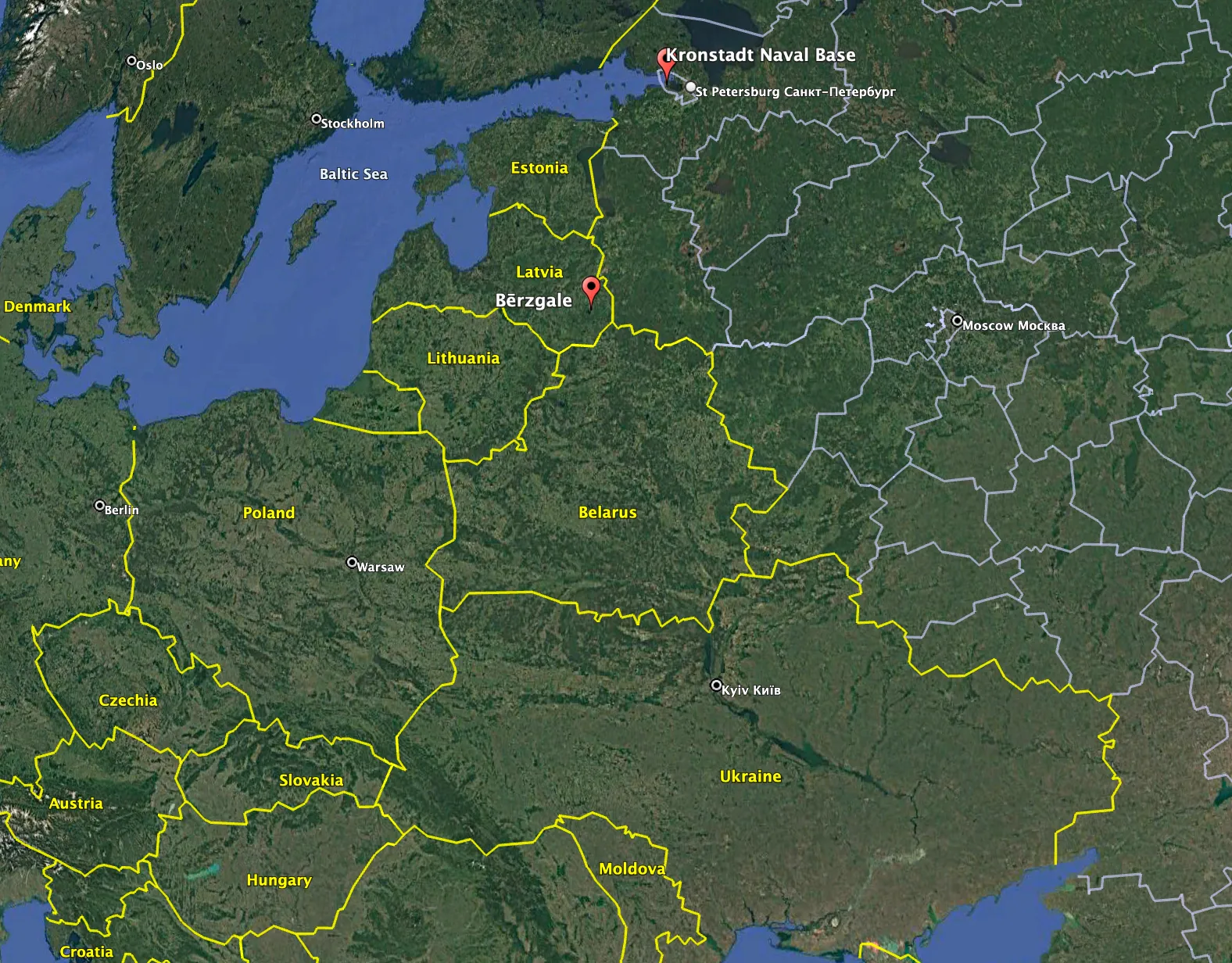
Berzgale is less than 20 miles from the nearest Russian border, and around 340 miles from the closest Ukrainian border, with Belarus, a close Moscow ally, separating Latvia and Ukraine.

A map showing the approximate location of the drone shootdown in Berzgale, Latvia. Also marked is the Russian naval base at Kronstadt that came under Ukrainian drone attack last week. Google Earth

NATO’s Baltic Air Policing mission has safeguarded the airspace of Estonia, Latvia and Lithuania since the three countries joined the alliance in 2004. Because the Baltic states do not maintain fighter fleets capable of continuous air-defense duties, allied nations rotate detachments of combat aircraft to bases in Lithuania and Estonia, where they remain on quick-reaction alert around the clock.

The mission routinely scrambles fighters to identify and intercept Russian military aircraft operating near NATO airspace, particularly flights to and from Russia’s heavily militarized Kaliningrad exclave that often occur without flight plans, radio contact, or active transponders.

French Rafales recently encountered this Russian Navy Su-24M carrying free-fall bombs during a flight over the Baltic. French Armed Forces
One of two Russian Navy Su-30SMs intercepted over the Baltic by French Rafales during the current Baltic Air Policing detachment. This example carries a Kh-31 series anti-ship or anti-radiation missile. French Armed Forces

Following Russia’s annexation of Crimea in 2014, NATO expanded the mission with additional aircraft and operating locations, making Baltic Air Policing one of the alliance’s most visible peacetime deterrence operations on its eastern flank.

Since Russia’s full-scale invasion of Ukraine, the expanding drone war between the two countries has provided another layer of responsibility to the Baltic Air Policing mission.

A Rafale B standard F4 fighter jet of France's air force is ready for take-off as part of NATO's Enhanced Air Policing (eAP) mission in the Baltic States, on Dezember 17, 2024 at Siauliai airbase in Lithuania. (Photo by PETRAS MALUKAS / AFP) (Photo by PETRAS MALUKAS/AFP via Getty Images)
A Rafale B is ready for takeoff as part of an earlier Baltic Air Policing mission in Lithuania, in the Baltic States, December 2024. Photo by PETRAS MALUKAS / AFP PETRAS MALUKAS

For most of its history, Baltic Air Policing centered on scrambling fighters to identify Russian bombers, fighters, reconnaissance aircraft, and transports flying near NATO airspace. The war in Ukraine has seen the increasing proliferation of drones that can travel hundreds or even thousands of miles, creating a new challenge for NATO air defenses.

Since 2022, there have been several incidents, including drones and missile debris entering or crashing in NATO territory, including in Poland and Romania. Late last month, a Russian kamikaze drone strayed into Romanian airspace before striking a residential building, injuring civilians, in what appears to have been the first incident of its kind.

We asked NATO for more details of today’s incident, including whether it could confirm reports citing the Latvian military that the drone had entered its airspace as a result of Russian electronic warfare. This is a threat that is by now commonplace in the Baltic region.

“While the circumstances surrounding this incident are still under review, jamming is known to occur in this region, and can pose serious safety risks, including to civil aviation,” a spokesperson for the alliance told us.

In recent days, Ukraine has carried out a number of high-profile drone attacks against Russian targets in and around the Baltic region.

In the last week, Ukrainian drones appear to have hit the St. Petersburg oil terminal, the Baltic Fleet base at Kronstadt, and a weapons factory in the Tambov region.

As we observed in our previous reporting, there have been very few confirmed Ukrainian attacks of any kind against the Baltic Fleet. However, satellite and other imagery that emerged in the wake of the recent drone strike reveals extensive damage inflicted on the  Steregushchiy class corvette Boikiy.

Today’s incident provides visual evidence of advanced NATO fighters used to shoot down drones over alliance territory. While effective on this occasion, this kind of interception can be inefficient due to the mismatch in cost between the drone and missile. It is notable that the French Ministry of Defense has plans to introduce a lower-cost counter-drone capability on the Rafale by the summer. Trials of a pod loaded with 68mm laser-guided rockets have already begun.

As a result, NATO has accelerated work on layered defenses that include short-range ground-based air defenses, electronic warfare, and other counter-drone technologies.

Fighters, however, will always remain a critical last-resort option, especially when a drone poses an immediate threat or when a visual identification is required.

Today’s video not only illustrates the changing face of the Baltic Air Policing mission due to the Russian war in Ukraine, but highlights the growing threat posed by drones and cruise missiles that can cross borders with little warning, whether deliberately or not.

Contact the author: thomas@thewarzone.com

Thomas is a defense writer and editor with over 20 years of experience covering military aerospace topics and conflicts. He’s written a number of books, edited many more, and has contributed to many of the world’s leading aviation publications. Before joining The War Zone in 2020, he was the editor of AirForces Monthly.


Source link

Prep Rally: Meet our baseball and softball players of the year

Hi, and welcome to another edition of Prep Rally. I’m Eric Sondheimer. It’s awards time for baseball and softball as school ends and summer workouts begin.

Get our high school sports newsletter

Prep Rally is devoted to the SoCal high school sports experience, bringing you scores, stories and a behind-the-scenes look at what makes prep sports so popular.

And the winner is . . .

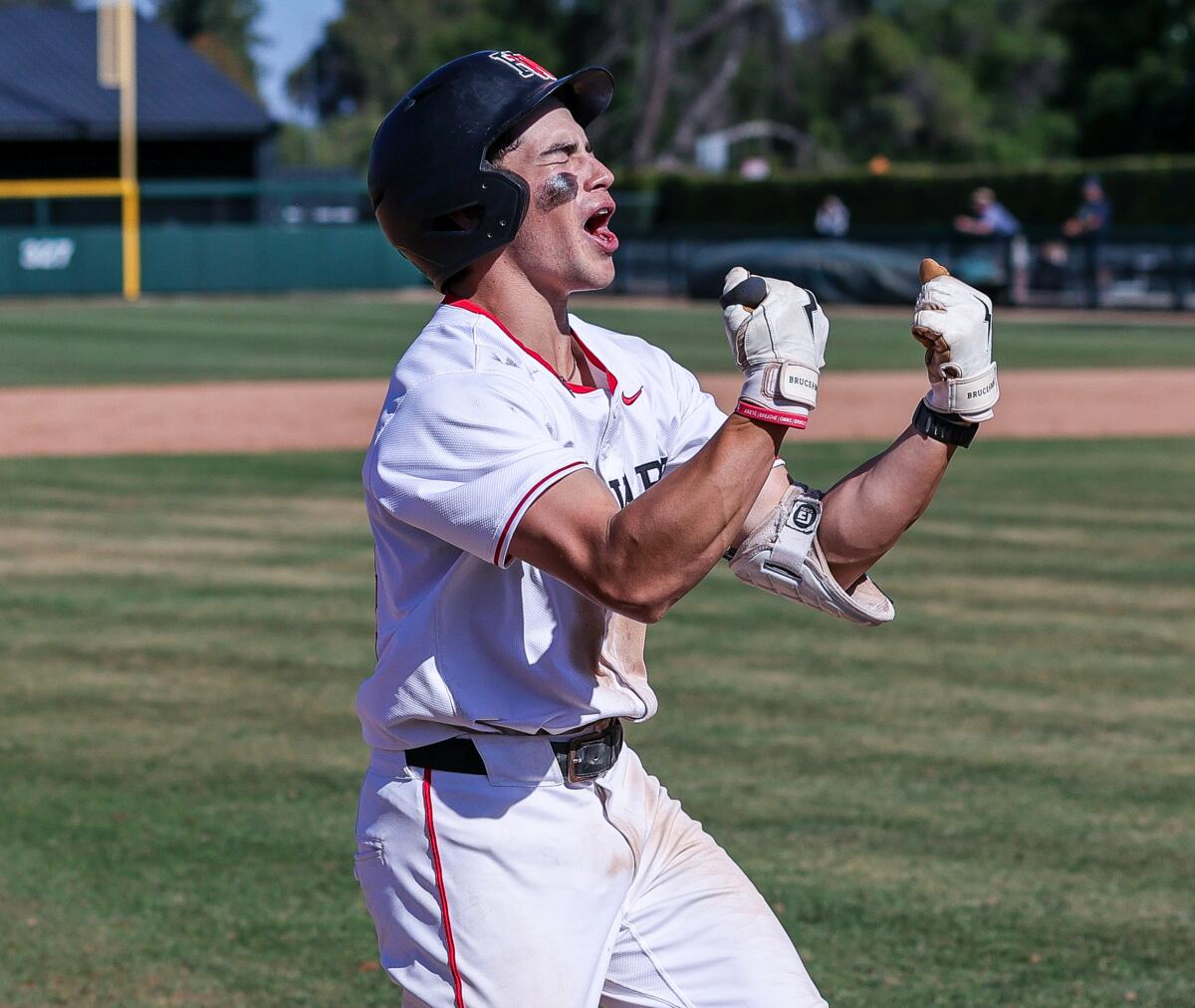
Shortstop James Tronstein went four for four on Tuesday in Harvard-Westlake's 8-0 win over Sherman Oaks Notre Dame.

Shortstop James Tronstein went four for four on Tuesday in Harvard-Westlake’s 8-0 win over Sherman Oaks Notre Dame.

(Craig Weston)

When the high school baseball season began, James Tronstein of Harvard-Westlake was focused and eager to show what he learned after not being selected for the U18 national baseball team in the fall. He proceeded to bat .531 with 52 hits and 10 home runs. Here’s his story as The Times’ player of the year.

St. John Boscoo pitcher Julian Garcia (right) celebrates with shortstop James Clark.

St. John Boscoo pitcher Julian Garcia (right) celebrates with shortstop James Clark after throwing a one-hit shutout to beat Norco 2-0 in the Division 1 final.

(Craig Weston / For The Times)

The baseball all-star team is loaded with major league prospects and future top college players. Here’s a look at Southern California’s best this season.

The Birmingham co-coaching duo of Gus Rico (left) and Matt Mowry guided the Patriots to league and City titles.

The Birmingham co-coaching duo of Gus Rico (left) and Matt Mowry guided the Patriots to league and City titles for the first time in Mowry’s 20 seasons of coaching.

(Birmingham HS)

This season, Birmingham coach Matt Mowry added co-coach duties to pitching coach Gus Rico. The two guided the Patriots to their first West Valley League title in 20 years, followed by a sixth City Open Division title. Here’s a look at why they are the coaches of the year.

St. John Bosco is No. 1 in The Times’ final top 25 rankings. Here’s a look.

Liliana Escobar is The Times' softball player of the year.

Liliana Escobar is The Times’ softball player of the year.

(Dylan Stewart)

Liliana Escobar was the pitcher to watch all season, and she helped JSerra win their first Southern Section Division 1 softball championship. She is The Times’ player of the year. Here’s a look at what she accomplished.

Softball coach Katie Stith of JSerra is The Times' coach of the year for 2026.

Softball coach Katie Stith of JSerra is The Times’ coach of the year for 2026.

(JSerra)

When it comes to future college softball players, The Times’ all-star team is filled to capacity. Here’s a look at the All-Star team.

The coach of the year is JSerra’s Katie Stith. Here’s a look how she built the Lions into a champion.

Here are the final rankings for The Times produced by CalHiSports.com.

Regional champs

Jared Grindlinger, center, stands with his older brothers Trent, left, and Bradley.

Jared Grindlinger, center, stands with his older brothers Trent, left, and Bradley after Huntington Beach’s 5-3 win over San Diego Cathedral in the Southern California Regional Division I final on June 6, 2026.

(Steve Galluzzo / For The Times)

It’s the end of an era at Huntington Beach, where three Grindlingers made an impact on and off the baseball diamond and the final one, Jared, saved the best for last, delivering a two-run home run and getting the final out so the Oilers could win the Southern California Division I regional title over Cathedral Catholic 5-3. Here’s the report.

The example Jared set, ignoring that he’s going to be a first-round draft pick next month and deciding to play with his best friends to the very last game, will be long remembered by Oiler faithful.

Another Sunset League team, Newport Harbor, won the Division II regional title with UC Santa Barbara-bound Gavin Guy leading the way on the mound.

Then there was Glendora rallying to win the Division III championship over Kaiser. North Torrance won Division IV with Sei Nagashima going four for four in the final.

Verdugo Hills appeared headed to the Division V final with a 5-1 lead over Roosevelt in the bottom of the sixth. That’s when a rundown play happened, and both benches emptied. Both schools were disqualified from playing in the final. Under CIF rules, players are not allowed to leave the bench. They faced a one-game suspension. Coast Academy in Oceanside was awarded the title.

In softball, San Bernardino won Division V over Arroyo Valley. Riverside Prep took Division II.

Steve Baik is back

Steve Baik coaching Chino Hills in 2015.

Steve Baik coaching Chino Hills in 2015.

(Los Angeles Times)

Steve Baik, who guided Chino Hills to an unbeaten basketball season in 2015-16 when the Ball brothers were playing, is returning to high school basketball as the new head coach at Calabasas.

Here’s the report.

Quarterback Ford Green of Westlake.

Quarterback Ford Green of Westlake.

(Eric Sondheimer / Los Angeles Times)

Let the summer football action begin, and one player to watch is sophomore quarterback Ford Green of Westlake. Here’s a profile of a rising inquarterback who earned an Ohio State scholarship offer this spring.

There will be extensive passing tournaments in June and July. Saugus is hosting its annual tournament at Central Park on June 20 beginning at 4 p.m.. Simi Valley has its tournament on June 27. The Edison Battle at the Beach is July 11. Ocean View has its own tournament on that day. The Mission Viejo tournament is July 18.

Gardena Serra is hosting weekly seven-on-seven competitions on Wednesdays beginning June 17 with some great teams dropping by.

Chaminade won the Western tournament last weekend.

Nike has relaunched The Opening, which will be held June 24-26 in Oregon.

Basketball

The Section 7 boys and girls tournaments will be in Mesa, Ariz. The boys tournament is June 20-22 and the girls June 13-14.

The Boys Cal Live tournament is June 26-28 in Rocklin. The Girls Cal Live tournament is June 18-20 in Ladera.

The annual Fairfax tournament will be June 15-20 at Fairfax High.

Prep talk

The final week of the 2025-26 sports season offers a look at people making a difference.

City Section hurdles champion Jayden Rendon with his mother, Denise.

City Section hurdles champion Jayden Rendon with his mother, Denise.

(Eric Sondheimer / Los Angeles Times)

Here’s Carson hurdler Jayden Rendon leaving for USC as a hometown hero.

The Rams donated equipment and other football materials to LAUSD, which sent them to 69 high schools in the district.

The Rams donated equipment and other football materials to LAUSD, which sent them to 69 high schools in the district.

(Angelo HS)

Here’s a look at the Rams donating football equipment to 69 Los Angeles Unified School District teams.

Here’s a look at the Clausen brothers creating youth flag football league for boys and girs.

Notes . . .

The Bonita and Murrieta Mesa softball teams are facing sanctions from the CIF after pulling out of the regional softball playoffs and having to forfeit their opening games. Each had the option of opting out but didn’t and are especially in trouble for not pulling out before seedings were made. Doubtful either will be invited to next year’s state playoffs when the first state championship in softball will be held…

David Armendariz is the new baseball coach at Sierra Canyon. He’s been an assistant the last three years and was a standout player at Sherman Oaks Notre Dame and played briefly in MLB with Cleveland….

Warren Snyder is the new boys water polo coach at Agoura…

John Gabriel is the new girls lacrosse coach at St. Margaret’s….

James Tronstein of Harvard-Westlake has been named the Gatorade state player of the year in baseball….

Offensive lineman Amaziah Siale of Mission Viejo has committed to Cal….

Point guard Earl Bryson is leaving JSerra for Crean Lutheran, which returns two top guards….

Mater Dei’s basketball team has added two large transfers, 6-9 Ryan Doane from JSerra and 6-11 Ender Berg from Legacy Christian….

The Southern Section has decided not to move from its office in Los Alamitos and will remodel to handle its additional employees approved by membership….

Corona Santiago pitcher Striker Pence announced he has reclassified to become part of the class of 2027….

Justin Torres is out as baseball coach at West Covina….

Joe Wyatt, who coached El Camino Real and Sun Valley Poly to City Section basketball championships, has resigned at Poly to become head coach at rival North Hollywood….

Bob Hart, Burbank’s longtime baseball coach, is no longer head coach….

Girls point guard Madison McDonald from Westlake has committed to Arizona Western….

Sierra Canyon has hired Camarillo coach Michaeltore Smith to be its first flag football coach. He had great success coaching quarterbacks, and he’ll have the best this season in Orange Lutheran transfer Makena Cook….

The high school football transfer portal is about to gain more steam with school out and players switching before the fall semester. Here’s the list that keeps growing

Nick Hernandez is the new baseball coach at Glendale….

Infielder Justin Lopez from Villa Park has committed to Cal State Fullerton.

From the archives: Nate Castellon

Nate Castellon, a former Calabasas shortstop, helped Cal Poly reach the Super Regionals. He entered this week as the team’s second-leading hitter with a .328 batting average, including 14 doubles.

The sophomore has been as consistent as he was at Calabasas, where he hit .500 his senior year. He was a freshman All-American for the Mustangs.

Here’s a story from 2023 when he hit a grand slam.

Recommendations

From The562.org, a story on Anthony Razo, the new Lakewood baseball coach who’s agreed to replace the legendary Spud O’Neil.

From Yahoo, a story on New Mexico nearing a final decision to allow one free transfer for high school athletes.

From Ouresquina.com, a story on former Cypress and current USC shortstop Abbrie Covarrubias and his Latino background.

From Texashsfootball, a story on a school district spending $6 million to cover a sports facility to help with hot weather.

Summer vacation

Prep Rally will be taking the next couple of weeks off. Everyone enjoy your break — if you get one. And if you don’t, please find a way for a day off or two to refresh, regroup and prepare for 2026-27.

Tweets you might have missed

Until next time….

Have a question, comment or something you’d like to see in a future Prep Rally newsletter? Email me at eric.sondheimer@latimes.com, and follow me on Twitter at @latsondheimer.

Did you get this newsletter forwarded to you? To sign up and get it in your inbox, click here.


Source link

Meta to take legal action against Israeli spyware company NSO | Cybersecurity News

WhatsApp disrupted phishing attempts linked to NSO, blacklisted by the US for security concerns.

Meta has said it is ⁠filing a federal US ⁠court contempt order against Israeli spyware firm NSO Group for violating a permanent injunction that barred it from ever ⁠targeting WhatsApp and its users.

The company said on Monday that its WhatsApp messaging service disrupted new spear phishing attempts linked to NSO, an ⁠entity blacklisted by the United States government for engaging in activities that are contrary to national security or foreign policy interests.

Recommended Stories

list of 3 itemsend of list

These attempts were similar to previous “1-click phishing campaigns”, aimed to trick users into clicking ‌malicious links and direct them to external websites, Meta said in a blogpost.

A “1-click” is a type of cyberattack where a single click on a malicious link or attachment is sufficient to compromise a victim’s device or account, without requiring them to enter their credentials.

Meta said WhatsApp took down test accounts ⁠and groups created by NSO on its platform. ⁠NSO did not immediately respond to a Reuters request for comment.

Last year, a US court ordered NSO to stop targeting Meta’s WhatsApp, a development the spyware ⁠company warned could put it out of business.

While the ruling significantly reduced the punitive damages NSO ⁠owed Meta to $4m from an ⁠initial $167m, the injunction itself was seen as a substantial challenge for the company, which faces ongoing accusations of enabling human rights abuses through its Pegasus hacking tool.

Meta ‌said on Monday that last month it was joined by 12 prominent civil rights organisations, a coalition of security researchers, privacy advocates ‌and ‌digital rights experts, who filed their amicus briefs to fight NSO’s appeal against the permanent injunction.

Source link

Floods Hit Cameroon’s Capital After Heavy Rains

Several communities in Cameroon’s national capital, Yaounde, have been submerged after days of torrential rain, making life difficult for residents. The Central Post Office Roundabout was particularly affected, causing traffic disruptions on Monday morning, June 8. Locals reported that this area often floods during the rainy season. 

“When the heart of the city is blocked, it goes without saying that many other parts of the city cease to function normally,” a local dweller told HumAngle. “That is exactly what has been happening in Yaounde since late last week.”

Following the downpour on Thursday, June 4, the door to the Central Post Office was inundated, completely blocking access to the facility. The flooding has also interfered with commercial activities in the area.

Eyewitnesses told HumAngle that 20th May Boulevard,  a ceremonial avenue in the heart of Yaounde, was also submerged, with vehicles stuck in floodwaters and some trapped in mud washed into the city. “Towing facilities would have to be brought in to drag some of the cars and trucks stuck in the mud,” one eyewitness revealed.

“I feel fortunate that my vehicle is still here, but I’ve hardly slept since it got stuck, for fear of theft. It’s disheartening to see this situation repeat every year while the City Council allows conditions to worsen without taking action,” another witness said.

Flooding, especially around the Central Post Office, has become an annual crisis in Yaoundé. Atangana Davis, a civil society activist, said some Chinese contractors had dug drainage facilities around the post office, promising improvements. “Yet, the floods persist, worsening each year, demonstrating the failure of the council’s supposed infrastructure upgrades,” Atangana said.

The current floods highlight the urgent need to rehabilitate the city’s sanitation infrastructure, locals said. The rainwater evacuation network is often criticised for its insufficient capacity during heavy rain, compounded by frequent debris blockages in residential gutters that impede rainwater flow.

Town planner Isidore Djeunkeu said that the causes of this ongoing issue are known to everyone, including the City Council authorities. “It begs the question: why is it so challenging to find a solution to this recurring problem?” Isidore asked.

Several communities in Yaoundé, Cameroon, including the Central Post Office Roundabout, have experienced severe flooding due to continuous torrential rains, leading to significant disruptions in daily life and traffic.

The flooding not only blocked critical city infrastructure like the Central Post Office but also affected commercial activities and trapped vehicles in mud.

Despite previous efforts by Chinese contractors to improve drainage, the problem has persisted, indicating a failure in the city’s infrastructure upgrades. Locals and experts, including town planner Isidore Djeunkeu, have called for urgent rehabilitation of the city’s sanitation infrastructure, highlighting known inadequacies like insufficient rainwater evacuation systems and debris-blocked gutters, which exacerbate the flooding issues.

Source link

At least 11 killed in Pakistan-administered Kashmir clashes before rally | News

Police crack down down on supporters of the Joint Awami Action Committee, which plans to hold a rally Tuesday.

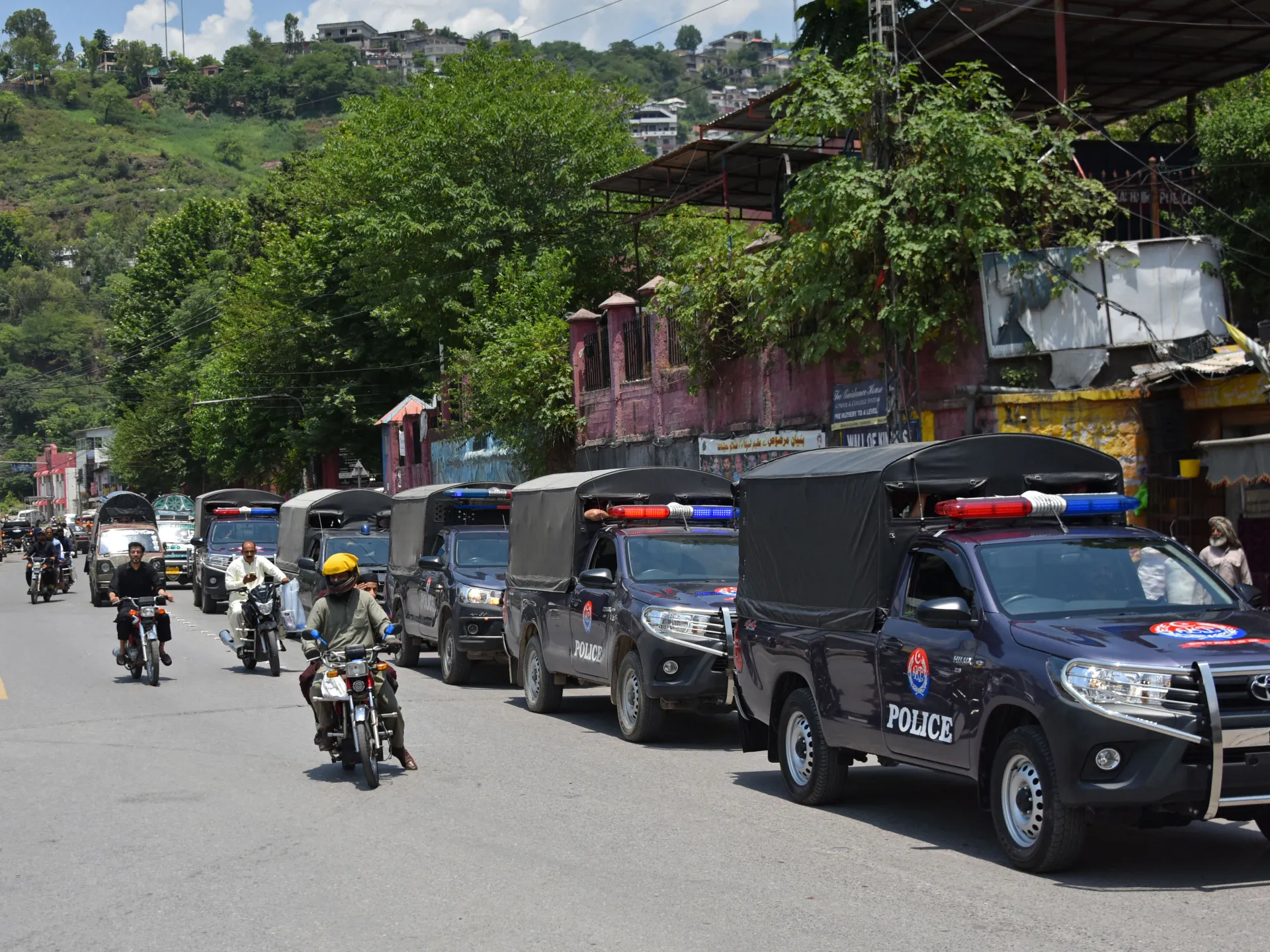
At least 11 people have been killed as police clashed with supporters of an outlawed group in Pakistan-administered Kashmir, officials said on Monday, a day before a planned protest over political rights and legislative representation.

Dozens of others, including police officers and civilians, were wounded in the violence that erupted Sunday after the Supreme Court of Pakistan-administered Kashmir ruled that 12 legislative seats reserved for Kashmiri refugees living in Pakistan are constitutionally protected and cannot be abolished without a constitutional amendment.

Recommended Stories

list of 3 itemsend of list

The landmark ruling came before a rally planned for Tuesday by the outlawed Joint Awami Action Committee, or JAAC, which has long demanded greater political rights for people in the region and the abolition of the refugee seats, on the grounds that the refugees have disproportionate influence.

The group has organised large protests in recent years, a number of which have turned violent.

“Four police officers and a passer-by died after miscreants shot at them,” Sardar Waheed Khan, commissioner of the Poonch sector in the region, told the Reuters news agency. “As the result of the law enforcers’ response, six protesters were killed,” he said.

Police Chief Liaqat Malik said ‌23 security officials and 50 protesters were among the injured in Sunday’s incident, with 30 offenders arrested in the Himalayan region that is a flashpoint with neighbouring India.

According to the regional police, armed supporters of the JAAC opened fire on security forces in Rawalakot, a city in Pakistan-administered Kashmir, and later surrounded the Combined Military Hospital, disrupting medical services.

Authorities said security forces eventually dispersed the crowd and restored order.

Police accused protesters of setting fires and damaging government and private property.

“The state has begun a massacre of our people in Rawalakot,” Shaukat Nawaz Mir, a JAAC leader, said in a video message on X, referring to the district where the incident happened. He pledged that the group would stay united to take part in the ⁠June 9 rally.

On Friday, the regional government ‌designated the JAAC as a proscribed group under an anti-terror law, and advised domestic and foreign tourists to leave the region before June 9.

Mass demonstrations in the last two years ‌by the JAAC against the rising costs of flour and electricity have turned deadly after violent crackdowns on protesters by security forces.

Khan, the police commissioner of the Poonch sector, said, “The JAAC leadership is misleading the ⁠masses by terming it a massacre. The state’s action was meant to restore law and order.”

When security forces tried to disperse the protesters, activists used automatic rifles, petrol bombs, and other weapons to target ⁠them, he said.

Source link

USC’s College World Series hopes come to an end

USC loses in heartbreaking fashion

From Alan Cole: USC’s 2026 baseball season will be defined by two words — progress and pain.

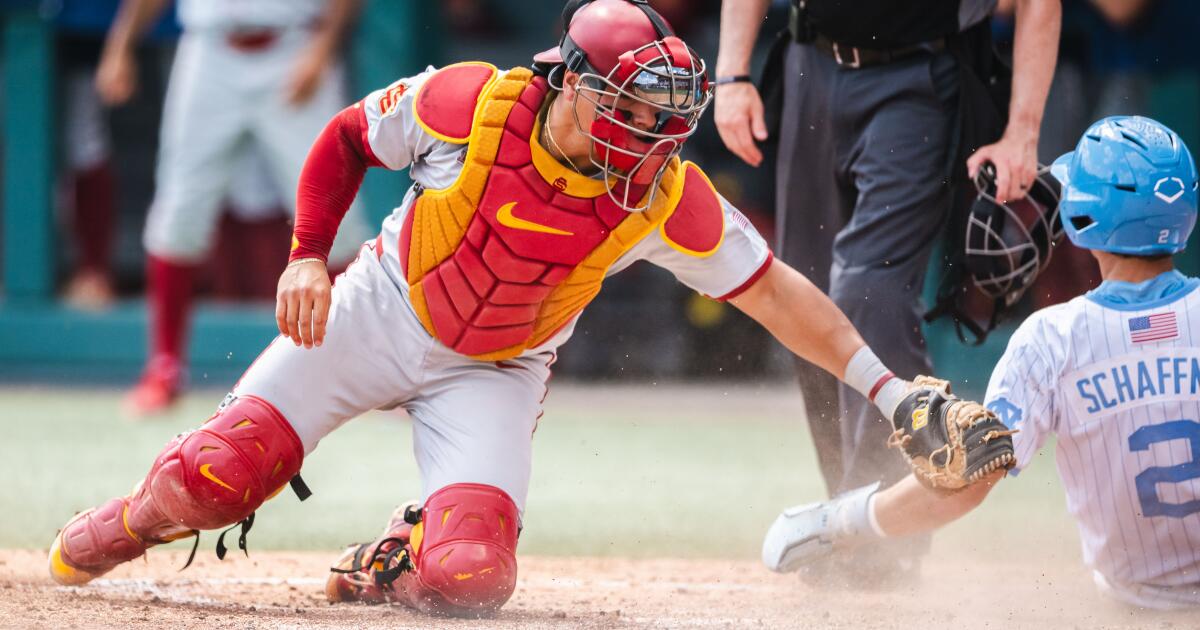
Just two outs away from reaching the College World Series for the first time since 2001, USC suffered a devastating 4-3 loss in game three of the Chapel Hill Super Regional, as North Carolina rallied for two runs in the bottom of the ninth and snatched the trip to Omaha away from the Trojans on Owen Hull’s walk-off RBI double into the left-center gap.

“I’m proud of our boys,” USC coach Andy Stankiewicz said. “I’m disappointed in the results, but I’m never disappointed in our guys. They did something pretty special this year.”

Andrew Johnson did everything possible and then some to get USC (48-18) across the finish line. After already throwing 3 ⅔ innings of shutout baseball to close Game 1, Johnson went a season-high 7 ⅔ innings with two earned runs surrendered to get the Trojans to the doorstep of victory. He glided through North Carolina’s lineup for most of the day, at one point retiring 15 out of 17 batters.

He ended the super regional with 133 pitches thrown in a little over 48 hours, on top of the 145 pitches he threw across two appearances in the College Station Regional for a total of 278 tosses in 22 ⅓ innings with five earned runs given up in a heroic postseason stretch.

“The goal from the beginning of the season is Omaha,” Johnson said. “We’re definitely not just happy that we made it to supers and moved past the regional, but for it was a great season and we can be proud of what we accomplished.”

Continue reading here

Go beyond the scoreboard

Get the latest on L.A.’s teams in the daily Sports Report newsletter.

Big win for Nelly Korda

From Sam Farmer: Nelly Korda watched someone else lift the trophy at last year’s U.S. Women’s Open.

This time, it was Korda — the 2025 runner-up — who did the heavy lifting.

The world’s No. 1 women’s golfer won for the fourth time in 2026 on Sunday and checked off the biggest item on her to-do list.

“To be hoisting this trophy, to hold it high and at such an iconic venue, is just a dream come true,” said Korda, the first American to win back-to-back majors since Juli Inkster in 1999.

Korda claimed her first U.S. Open title, pulling ahead on the back nine at Riviera Country Club, which was playing host to the major championship for the first time.

It was anything but a wire-to-wire win for Korda, who struggled on the tee and limped through the opening round at two over par. But she shot a pair of 67s on Friday and Saturday, then closed out the victory Sunday with a 69 on a postcard afternoon.

Continue reading here

U.S. Women’s Open leaderboard

Angels rout the Dodgers

From Liana Handler: The Angels flipped the script on the Dodgers, preventing a Freeway Series season sweep with a 13-5 win Sunday afternoon at Dodger Stadium.

Emmet Sheehan’s start only lasted 1 ⅓ innings, as he struggled to keep his pitch count low. He threw 35 of his 49 pitches in the second inning alone. Many of those went to Nick Madrigal, who battled Sheehan in a 14-pitch at-bat in which Madrigal won two ABS challenges.

“I thought the stuff was good coming in,” said manager Dave Roberts about Sheehan. “After the first inning, I just didn’t feel comfortable getting him past the 40-pitch mark in one inning. I’m not going to put this guy in harm’s way.”

The Angels third baseman drew a walk, marking the beginning of the end for Sheehan, who already allowed a single. The 26-year-old pitcher loaded the bases with another walk. Angels catcher Sebastián Rivero drove in two runs with a center-field single.

“Frustrating,” Sheehan called his outing. “Couldn’t put guys away, not efficient.”

Continue reading here

Swanson: Dodgers show courage by permanently honoring LGBTQ+ pioneers Glenn Burke and Billy Bean

Dodgers-Angels box score

MLB standings

Caitlin Clark complains too much

From Bill Plaschke: As a diehard WNBA fan and season ticket-holder, it is with great reluctance that I have come to the following painful conclusion.

I’m sick of Caitlin Clark.

As the purchaser of an Iowa jersey and consumer of all things Indiana Fever — covered their games, witnessed them as a fan, caught them on television — it is with great angst that I make the following brutal admission.

I wish Caitlin Clark would just stop whining and play.

The logo-shooting, circus-passing, shape-shifting revelation who was once arguably the most famous basketball player in the world has become rude, entitled and, frankly, not all that fun.

In her third season in the WNBA, the once-shining superstar is acting like a spoiled brat. The league’s most popular player has become its biggest lout. Her stats are decent, but her attitude stinks.

I once openly cheered as Clark raced down the court, dribbled behind her back, skated past a helpless defender, and drained a three-pointer.

Now I cringe as she bricks the trey and immediately complains to the officials, spreading her arms, shaking her head, screaming in their face.

Continue reading here

Christian Pulisic carries U.S. World Cup hopes

From Kevin Baxter: Christian Pulisic looked exhausted as he stepped from a yellow cab on the edge of Manhattan’s financial district for a promotional event arranged by his shoe sponsor.

A day earlier, he had been booed off the field after going scoreless in his final 17 games with AC Milan. And as Pulisic’s private jet made its way from Italy to New York, the club’s coach, sporting director and two other top executives were sacked.

A day later Pulisic walked across a stage overlooking the East River to cheers during a sparsely attended rally in which the U.S. roster for this summer’s World Cup was announced.

The 24 hours between those two events — some of which were spent signing autographs for hundreds of school children as a dog in a red-and-white No. 10 Pulisic jersey looked on — would be the only respite from a hugely disappointing club season and the heavy expectations of the second World Cup played on U.S. soil.

Continue reading here

Iran’s soccer team arrives in Mexico for training ahead of World Cup matches in L.A.

World Cup poses an unprecedented security challenge at a fraught moment

Memo Ochoa is driven to play his best for Mexico win during his sixth World Cup

‘Enjoy the moment.’ Americans who played in 1994 World Cup on home soil offer advice

World Cup roundtable: Who will win, who will surprise and how far will U.S. advance?

Sparks get much-needed win

From Marisa Ingemi: The quarter mark of a season isn’t necessarily a make-or-break point, but for the Sparks, it was starting to feel like it was close to it.

An 89-72 win over the expansion Portland Fire on Sunday to close a 1-2 homestand felt more necessary than the Sparks might have wanted to admit. But after struggling on the road before losing consecutive games at home against Las Vegas and Dallas amid a three-game losing streak, the Sparks needed something to go right.

Especially defensively, where the Sparks had seemingly been getting worse. They had their best defensive game of the season Sunday, holding Portland to 36% shooting — the second-lowest mark against them this season.

Continue reading here

More fouls, less flow: Sparks struggling to adjust to WNBA crackdown on physical play

Sparks box score

WNBA standings

This day in sports history

1935 — Omaha, ridden by Willis Saunders, becomes the third horse to win the Triple Crown by capturing the Belmont Stakes with a 1½-length victory over Firethron.

1958 — Mickey Wright beats Fay Crocker by six strokes to win the LPGA Championship.

1980 — Sally Little wins the LPGA Championship by three strokes over Jane Blalock.

1982 — 36th NBA Championship: Lakers beat Philadelphia 76ers, 4 games to 2.

1985 — Creme Fraiche, ridden by Eddie Maple, becomes the first gelding to win the Belmont Stakes, beating Stephan’s Odyssey by a half-length.

1986 — Larry Bird scores 29 points to lead the Boston Celtics to a 114-97 victory over the Houston Rockets and their 16th NBA title.

1990 — The “Indomitable Lions” of Cameroon pull off one of the greatest upsets in soccer history, 1-0 over defending champion Argentina in the first game of the World Cup.

1991 — Warren Schutte, a UNLV sophomore from South Africa, shoots a 5-under 67 to become the first foreign-born player to win the NCAA Division I golf championship.

2000 — Mike Modano deflects Brett Hull’s shot at 6:21 of the third overtime, ending the longest scoreless overtime game in Stanley Cup finals history and helping the Dallas Stars beat the New Jersey Devils 1-0 in Game 5.

2002 — British-Canadian Lennox Lewis retains boxing’s WBC Heavyweight title with eighth-round knockout of American Mike Tyson.

2005 — Freshman Samantha Findlay hits a three-run homer in the 10th inning to lead Michigan to a 4-1 win over UCLA for its first NCAA softball title. Michigan is the first team from east of the Mississippi River to win the national championship.

2008 — Rafael Nadal wins his fourth consecutive French Open title in a rout, again spoiling Roger Federer’s bid to complete a career Grand Slam. Dominating the world’s No. 1 player with astounding ease, Nadal wins in three sets, 6-1, 6-3, 6-0.

2008 — Yani Tseng of Taiwan becomes the first rookie in 10 years to win a major, beating Maria Hjorth on the fourth hole of a playoff with a 5-foot birdie on the 18th hole to win the LPGA Championship.

2012 — I’ll Have Another’s bid for the first Triple Crown in 34 years ends shockingly in the barn and not on the racetrack when the colt is scratched the day before the Belmont Stakes and retires from racing with a swollen tendon.

2013 — Serena Williams wins her 16th Grand Slam title and her first French Open championship since 2002, beating Maria Sharapova 6-4, 6-4.

2014 — Rafael Nadal wins the French Open title for the ninth time, and the fifth time in a row, by beating Novak Djokovic 3-6, 7-5, 6-2, 6-4. Nadal improves his record at Roland Garros to 66-1.

2015 — The NCAA approves multiple rule changes to men’s basketball for the 2015-16 season, including a 30-second shot clock and fewer timeouts for each team. The shot clock was last reduced, from 45 to 35 seconds, in 1993-94.

2018 — Golden State romps to its second straight NBA championship, beating Cleveland 108-85 to finish a four-game sweep. Stephen Curry scores 37 points and Kevin Durant, who is named MVP for the second straight finals, has 20 for the Warriors. It’s the first sweep in the NBA Finals since 2007.

2019 — Ashleigh Barty, Australia, wins the French Open by defeating Marketa Vondrousoca. The win is Barty’s first Grand Slam singles title.

Compiled by the Associated Press

This day in baseball history

1914 — New York’s Iron Joe McGinnity posted his 14th straight win beating Pittsburgh 2-0. With the win moved the Giants into first place over Chicago.

1933 — Philadelphia’s Jimmie Foxx homered in his first three at bats all off Lefty Gomez as the A’s beat the New York Yankees 14-10. Foxx had homered his last time up the previous day to tie a major league record of hitting four consecutive home runs. Bobby Lowe did it in 1894.

1940 — Harry Craft of Cincinnati connected for a home run, a triple, a double and two singles in seven at-bats to lead a 27-hit attack as the Reds pounded the Dodgers 23-2 at Brooklyn.

1950 — The Boston Red Sox beat the St. Louis Browns 29-4 at Fenway Park and set major league records for runs scored; most long hits, 17 (nine doubles, one triple and seven homers); most total bases, 60; most extra bases on long hits, 32; most runs over two games, 49; most hits in two games, 51, including 28 this game. Bobby Doerr had three homers and 8 RBIs, Walt Dropo hit two homers and drove in seven runs and Ted Williams added two homers and five RBIs.

1968 — Howie Bedell’s sacrifice fly in the fifth inning ended Don Drysdale’s record streak of 58 2/3 consecutive scoreless innings. The Dodgers beat the Philadelphia Phillies 5-3.

1969 — The New York Yankees’ No. 7 was retired on Mickey Mantle Day. A crowd of 60,096 came to Yankee Stadium to honor Mantle and watched the Yankees sweep the Chicago White Sox 3-1 and 11-2.

1975 — Detroit’s Tom Veryzer doubled with two out in the ninth to end Oakland’s Ken Holtzman’s no-hitter. Outfielder Bill North misjudged Veryzer’s hit but was not charged with an error. Holtzman retired the last hitter for a 4-0 victory.

1986 — In the longest 9-inning game by time in AL history Baltimore’s Lee Lacy went 4-for-6 with three home runs and six RBIs as the Orioles beat the New York Yankees 18-9. The game took 4:16 to complete.

1996 — Warren Morris hit a two-run homer with two out in the bottom of the ninth inning to give Louisiana State a 9-8 victory over Miami in the championship game of the College World Series.

2001 — Damion Easley became the ninth Detroit player to hit for the cycle as the Tigers beat Milwaukee 9-4.

2010 — Stephen Strasburg exceeded expectations in his much-hyped major league debut, striking out 14 in seven innings to lead the Washington Nationals to a 5-2 win over the Pittsburgh Pirates. Last year’s No. 1 overall draft pick gave up four hits, two earned runs and didn’t walk a batter, piling up the most strikeouts in a debut since J.R. Richard fanned 15 for Houston in 1971.

2012 — Kevin Millwood and five Seattle relievers combined on a no-hitter, the third in franchise history, and the Mariners beat the Dodgers 1-0. Millwood was cruising through six innings, giving up just one walk. But while warming up for the seventh he felt a twinge in his groin and was pulled from the game. Five relievers combined to finish the no-hitter, capped by Tom Wilhelmsen retiring Andre Ethier on a routine grounder to end it.

2013 — In the longest major league game in more than three years, Adeiny Hechavarria hit an RBI single in the 20th inning and the Miami Marlins outlasted the New York Mets 2-1.

2020 — MLB owners present their counter-proposal to get the season started. They propose playing 76 games, with a postseason involving 16 teams, drop the proposed sliding scale for reducing salaries — although they still seek further cuts — and also propose dropping all forms of compensation for signing free agents. The ball is now back in the MLBPA’s court.

2021 — Pirates rookie 3B Ke’Bryan Hayes, swinging a red hot bat after coming back from a two-month stay on the injured list, makes a very embarrassing mistake when he has a home run taken away for missing first base. His apparent solo shot off Walker Buehler is nullified when the Dodgers successfully appeal that he did not touch the bag while rounding the bases.

Compiled by the Associated Press

Until next time…

That concludes today’s newsletter. If you have any feedback, ideas for improvement or things you’d like to see, email me at houston.mitchell@latimes.com. To get this newsletter in your inbox, click here.

Source link

F-47’s Exotic Shape Was Hiding In Plain Sight On A Unit Patch

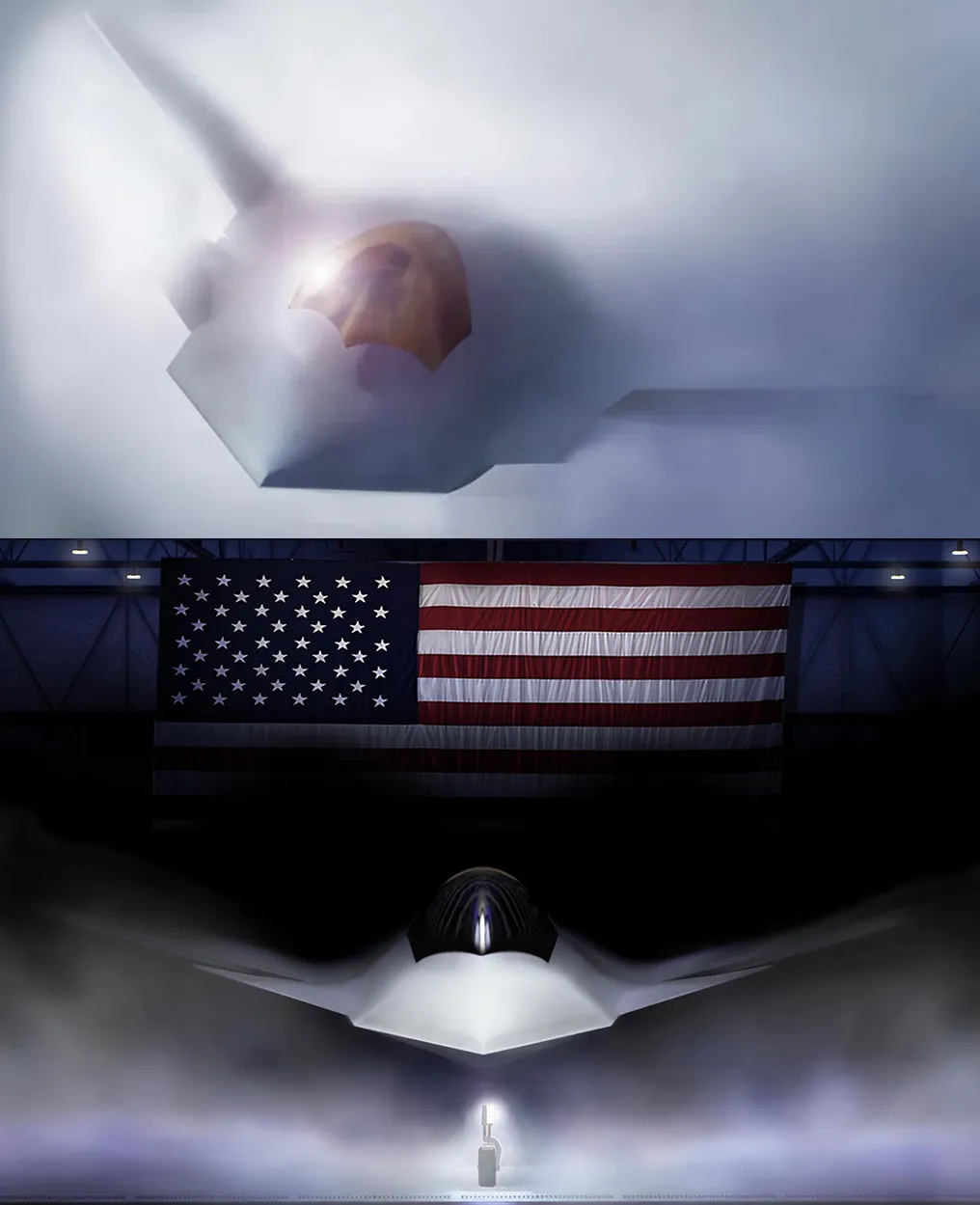
The exotic planform configuration concept of Boeing’s Next Generation Air Dominance (NGAD) classified demonstrator aircraft that led to the F-47 looks indeed to have been hiding in plain sight on an F-47 Systems Management Office patch. The first actual imagery of this aircraft appears to have leaked this week. Interestingly enough, another exotic stealth demonstrator aircraft that was once also highly classified and directly related to the design of the F-47, Boeing’s Bird of Prey, also featured its planform cryptically on a patch in a very similar manner.

Inside the firebird motif of the F-47 patch, there is an exaggerated planform of what we see in Project Fear’s video of what is very likely Boeing’s NGAD demonstrator shot outside of Area 51. It also aligns with what we can extrapolate from the concept renderings of the F-47 that have been released.

F-47 renderings. (USAF)

Mainly, the design includes forward canard foreplanes with a tapered central fuselage, rear-set and highly-swept wings, and no traditional tails. The wings have a high dihedral before drooping toward their tips, creating an appearance akin to the Klingon Bird of Prey from the world of Star Trek. That reference isn’t just my own. Boeing’s Bird of Prey from the 1990s clearly shares design similarities, especially in the wing area, as we originally stated after the first official concept art’s release. The Bird of Prey’s patch also cryptically shared its basic planform.

On the Bird of Prey patch, we see a traditional Klingon knife, made famous by Star Trek, with the blade’s hilt making up the Bird of Prey’s planform. In fact, the only detail to throw it off is the t-guard at the bottom of the handle, which appears like canards. Even the cockpit is there. Of course, it isn’t clear at this time when this patch began to circulate in the public domain or if it was after the Bird of Prey was declassified in late 2002. Regardless, in the F-47’s case, the demonstrator’s exact features remain closely guarded secrets, at least officially.

(Screenshot)
Boeing Bird of Prey Technology Demonstrator thumbnail

Boeing Bird of Prey Technology Demonstrator


Attempting to decode or draw insights into the military’s notoriously cryptic classified program patches is hardly a new practice. Books like Trevor Paglen’s I Could Tell You but Then You Would Have to Be Destroyed by Me is an excellent example of this and the fascination around this unique blending of art, technology, and national security.

In years of reporting on these topics, I have been told multiple times that there is more in patches than many realize, including hints at designs of classified aircraft. This runs pretty counterintuitive considering the government’s extreme protocol for classification, but vague representations of general design concepts are far from giving up an actual blueprint of a classified aircraft. Nonetheless, it is fascinating to see the practice occur for two highly classified aircraft that are directly related, and it’s something we keep an eye on regularly, as well.

Still, with all this in mind, it may be time to take a look back at some of the most interesting patches floating around to see if an exotic planform of an aircraft could be hiding amongst their stitches.

Contact the author: Tyler@twz.com

Tyler’s passion is the study of military technology, strategy, and foreign policy and he has fostered a dominant voice on those topics in the defense media space. He was the creator of the hugely popular defense site Foxtrot Alpha before developing The War Zone.


Source link

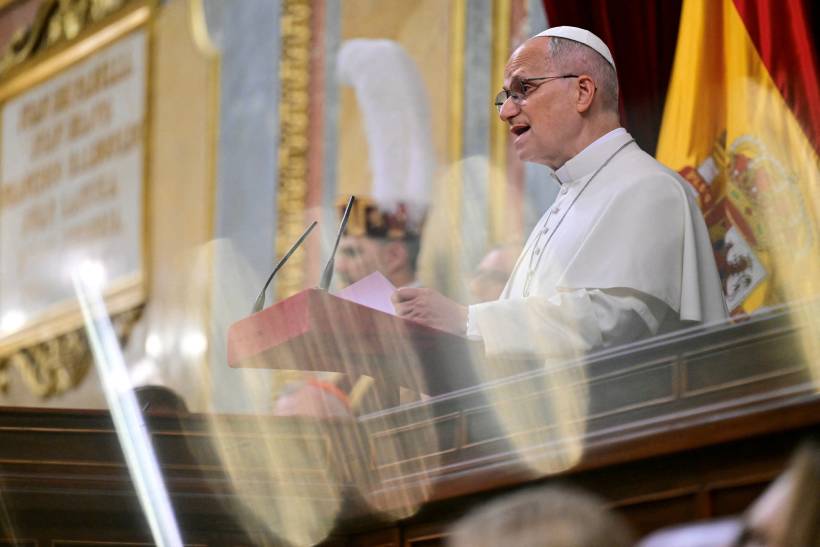
Pope Leo Warns of Global Crisis, Urges Peace and Migrant Protection in Spain Address

Pope Leo delivered a landmark address to Spain’s parliament, warning that the world is facing a profound spiritual, cultural, and political crisis marked by escalating conflicts, deepening polarization, and growing disregard for human rights.

The speech, the first by a pope before the Spanish legislature, formed a central part of his week long visit to Spain. Coming amid renewed hostilities between Israel and Iran and ongoing debates over migration and European security, the address reflected the Vatican’s increasing engagement with major geopolitical and humanitarian issues.

Leo used the occasion to reiterate long standing Catholic concerns regarding war, social fragmentation, migration, and the ethical implications of technological development. He also addressed the relationship between religion and public life, defending religious freedom and the confidentiality of confession.

Key Themes

Peace Over Militarisation

A central theme of the pope’s address was opposition to the growing militarisation of international politics. He argued that military force may suppress conflict temporarily but cannot create lasting peace.

His remarks came as European governments continue increasing defence expenditures in response to heightened security concerns following Russia’s invasion of Ukraine and broader geopolitical instability. The pope warned that excessive reliance on military solutions risks deepening rather than resolving global tensions.

Migration and Human Dignity

Leo devoted significant attention to migration, describing inadequate responses to displaced populations as a challenge to the ethical foundations of the international order.

He urged governments to move beyond border management policies and address the underlying drivers of migration, including conflict, poverty, and climate change. His comments coincided with plans to meet migrants in Spain’s Canary Islands, a major entry point for migrants attempting to reach Europe from Africa.

The pontiff framed migration as both a humanitarian and moral issue, arguing that the treatment of vulnerable populations serves as a measure of a nation’s moral character.

Artificial Intelligence and Ethics

The pope also expanded on concerns he has raised previously regarding artificial intelligence. He called for stronger ethical oversight of emerging technologies, particularly their application in military contexts.

As governments and defence industries increasingly integrate AI into weapons systems and military planning, Leo argued that technological progress must remain subject to moral and humanitarian considerations.

Religion in Public Life

Another notable aspect of the speech was the pope’s defence of religious participation in public affairs. He argued that faith should not be excluded from public discourse and stressed the importance of protecting religious freedoms.

Leo also defended the confidentiality of confession, a topic that has generated debate in several countries considering legal requirements for clergy to report abuse disclosed during confessions.

Why It Matters

The speech signals a more assertive Vatican engagement with global political debates at a time of mounting international instability.

Unlike purely theological addresses, Leo’s remarks directly addressed issues shaping contemporary international relations, including war, migration, technological governance, and democratic cohesion. His intervention places the Catholic Church within broader discussions regarding the future direction of global governance and international cooperation.

The address also highlights the Vatican’s growing concern that rising geopolitical competition, nationalism, and social polarization are weakening international institutions and undermining collective approaches to global challenges.

Stakeholders

The Vatican

  • Seeking to shape global debates on peace, migration, ethics, and human rights.

European Governments

  • Balancing security concerns with humanitarian responsibilities and social cohesion.

Migrants and Refugees

  • Directly affected by immigration policies and international responses to displacement.

Technology Sector

  • Facing increasing scrutiny over the ethical implications of artificial intelligence.

Religious Communities

  • Monitoring debates surrounding religious freedom and the role of faith in public life.

Human Rights Organisations

  • Engaged in discussions regarding migration, conflict resolution, and protections for vulnerable populations.

Strategic Implications

The address reflects the Vatican’s effort to position itself as a moral counterweight to rising geopolitical competition and militarisation. By linking war, migration, technology, and social division within a single framework, the pope presented these issues as interconnected symptoms of a broader crisis affecting the international order.

His criticism of increased military spending places the Vatican at odds with many Western governments currently prioritising defence expansion. At the same time, his focus on migration challenges increasingly restrictive immigration policies adopted across Europe.

The pope’s intervention on artificial intelligence also signals that ethical governance of emerging technologies may become a more prominent area of Vatican diplomacy in the coming years.

Analysis

Pope Leo’s address represents one of the clearest articulations yet of his vision for the Church’s role in contemporary global affairs. Rather than limiting his remarks to spiritual concerns, he framed international conflict, migration pressures, technological change, and democratic fragmentation as interconnected challenges requiring moral as well as political responses.

The speech suggests a papacy willing to engage directly with policy debates at a time when many governments are prioritising security, strategic competition, and economic interests. While the Vatican lacks conventional political power, its ability to shape public discourse and influence ethical debates remains significant.

By positioning peace, human dignity, and ethical governance at the centre of his message, Leo is seeking to reassert the relevance of moral leadership in an increasingly fragmented international environment. Whether governments embrace those arguments remains uncertain, but the address signals that the Vatican intends to remain an active participant in debates over the future of the global order.

With information from Reuters.

Source link

New York stabbing, Kansas City shooting raise World Cup security concerns | World Cup 2026 News

Two separate incidents of violence have left nine people injured in World Cup host cities in the United States, raising concerns over the safety and security of fans attending the tournament that starts in three days.

Six people were wounded in a stabbing on Sunday at New York’s Penn Station, the city’s mayor said, as the metropolitan area geared up to host two major sporting events, the NBA Finals and the FIFA World Cup.

Recommended Stories

list of 4 itemsend of list

Meanwhile, nine people sustained non-life-threatening injuries in a shooting near England’s World Cup base camp in Kansas City, Missouri, on Saturday.

The New York City Fire Department said a suspect was detained and the victims, including one with serious injuries, were taken to hospital.

Fire Department officials initially reported five wounded, but Mayor Zohran Mamdani said on X that “based on the information available right now, six people were stabbed and the alleged perpetrator is in custody.”

Circumstances of the attack were not immediately clear, but city Comptroller Mark Levine said on X that the suspect is “said to be an emotionally disturbed homeless person”.

All victims are expected to survive, he added.

State Governor Kathy Hochul described the attack as “an act of horrific violence”.

“New Yorkers deserve to feel safe wherever they go, and we will never stop working to make that a reality,” she said in a statement.

The incident occurred at one of the nation’s busiest rail and subway transport centres as the city prepares for two huge sporting spectacles.

Madison Square Garden, located directly above Penn Station in downtown Manhattan, will host games three and four of the NBA Finals on Monday and Wednesday between the New York Knicks and the San Antonio Spurs.

MetLife Stadium, outside the city in neighbouring New Jersey state, will host its first match of the World Cup on Saturday.

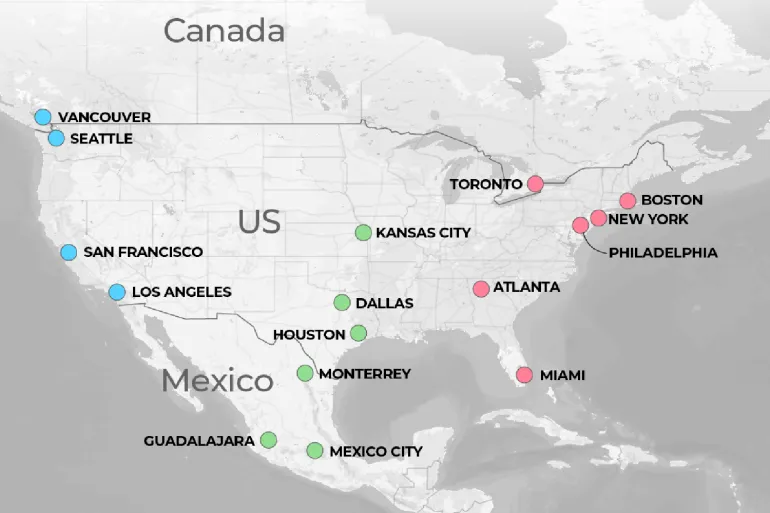
INTERACTIVE - venue world cup poster image-1780896044
[Al Jazeera]

US President Donald Trump is scheduled to attend Monday’s NBA game at Madison Square Garden, saying recently that he accepted an invitation from Knicks owner James Dolan.

Security has been enhanced in the city before the two events.

New York’s official emergency notification system did not describe the incident but said people should avoid the area and “expect traffic delays, road closures, mass transit disruptions & emergency personnel near Penn Station”.

Before the stabbing, New York officials had already cancelled an outdoor watch party set for Monday outside the Garden.

Thousands of spectators descended onto the streets outside the venue on Friday for a game two watch party. New York authorities said a police officer was assaulted and 26 people were arrested as a number of fans turned rowdy.

Meanwhile, Kansas City police said there were no suspects in custody and that at least three of the shooting victims were taken to local hospitals.

The incident occurred about 6.5km (4 miles) from where England are set to train at the Swope Soccer Village. England have not arrived in Kansas City and are due to play a friendly against Costa Rica in Orlando, Florida, on Wednesday.

A general view of Arrowhead Stadium as it is rebranded as Kansas City Stadium, Monday, May 11, 2026, ahead of the 2026 FIFA World Cup soccer matches in Kansas City, Mo. (AP Photo/Charlie Riedel)
The Arrowhead Stadium, rebranded as Kansas City Stadium, will host World Cup games [Charlie Riedel/AP]

What security measures has the US put in place for the World Cup?

The 48-team, 104-match World Cup comes with an unprecedented security challenge for the host nations, particularly the US, which is hosting 78 matches across 11 cities.

Overseeing the sprawling security apparatus is a legion of federal agencies, state and local police departments and private entities. Their responsibilities range from securing stadiums and fan zones to escorting teams and protecting dignitaries.

Their tools include hunter drones that can shoot nets over objects in restricted airspace, bag-inspecting robot dogs, giant X-ray trucks and thousands of AI-powered cameras trained on public spaces soon to be thronged by fans.

Drones are prohibited over stadiums and fan zones, and the FBI has a “full suite of options” to thwart incursions, according to FBI Special Agent in Charge Amit Kachhia-Patel.

On match days, the FBI will activate joint operations centres in each host city, bringing together local, state and federal law enforcement agencies to monitor and investigate threats.

The tournament has the same high-level federal security designation as the Super Bowl, just below a presidential inauguration or a national political convention, ensuring federal, state and local coordination. It coincides with other major events linked to the 250th anniversary of the US’s founding.

So far, there are no credible threats, according to Andrew Giuliani, executive director of Trump’s World Cup task force, which is overseeing the multiagency effort.

The Department of Homeland Security, focused on Trump’s immigration enforcement crackdown and hit by a funding lapse only recently resolved, estimates that up to seven million people will visit the US for the World Cup.

The US Secret Service, under scrutiny after security breaches and attempts on Trump’s life, is in charge of protecting world leaders who show up to cheer on their countries. Trump has expressed interest in attending a match.

Gun violence is common in the US, where there were more than 400 mass shootings in 2025, according to the Gun Violence Archive.

Source link

Iran war day 101: Tensions escalate as Iran and Israel trade air attacks | US-Israel war on Iran News

Tensions have escalated between Iran and Israel while ongoing diplomatic efforts have failed to yield a lasting peace deal.

Iran and Israel were on Monday locked in tit-for-tat missile attacks, as the fragile ceasefire that has held in place since April 8 appeared closer to collapse than at any point in the past seven weeks.

These escalating hostilities between Iran and Israel come as the United States-Israel war on Iran enters its 101st day on Monday.

Here is what is happening:

In Iran

  • Explosions heard in Iran: Iran’s IRNA news agency reported that at least “two powerful explosions” were heard in Tehran and at least three in the city of Isfahan. The broadcaster also reported that explosions were heard in Tabriz. The Israeli military had said it “attacked military targets” in western and central Iran.
  • Power plant in Mahshahr attacked: A security officer in the southwestern Khuzestan governorate told the Fars news agency that Israeli forces have attacked the Karun Petrochemical Company in the city of Mahshahr. The Israeli army confirmed striking the petrochemical plant. The Mahshahr Petrochemical Special Economic Zone announced that its workers have evacuated the site following the Israeli strike.
  • Iran denies attacking base in Saudi Arabia: Responding to reports of an explosion at the Al-Kharj airbase in Saudi Arabia, Iran’s IRIB broadcaster cited a military official as saying that “Iran has not fired any shots.”
  • Red Crescent on standby: The Iranian Red Crescent says it is standing by to respond to any fallout from Israel’s attacks across the country this morning.

In Israel

  • Security cabinet meeting: Israeli Prime Minister Benjamin Netanyahu will convene a security cabinet meeting at 11am local time (08:00 GMT) amid escalating hostilities with Iran, according to multiple Israeli media reports.
  • The Israeli military issued a series of alerts starting Sunday over waves of missiles launched from Iran towards Israeli territory.
  • Iran’s Islamic Revolutionary Guard Corps (IRGC) said on Monday that they launched attacks against Israel’s Nevatim and Tel Nof airbases as a response to attacks on radar sites within Iran, the Fars news agency reported.
  • Israel’s Channel 12 broadcaster and Ynet News said a missile fired from Yemen was intercepted.

In the US

  • The US State Department issued a security alert for citizens in Jordan over reports of projectiles in the country’s airspace – presumably missiles fired by Israel towards Iran, or by Iran towards Israel.
  • Democratic Senator Chris Murphy said Israel’s latest attack on Iran “compounds” the “humiliation” for US President Donald Trump, as it comes after the US president reportedly told Netanyahu not to retaliate to Iran’s missiles fired at northern Israel.

In Lebanon

  • Explosions were heard in the Lebanese capital Beirut early on Monday, but these were likely rocket interceptions, Al Jazeera’s Zeina Khodr reported from Beirut.
  • On Sunday, Israel had hit the suburbs of Beirut, in attacks that Iran described as crossing a red line in terms of violating a ceasefire between Lebanon and Israel. Iran then said its decision to hit northern Israel was in response to these attacks near Beirut.

War diplomacy

  • Israel defends attacks on Iran: The Israeli ambassador to the US, Yechiel Leiter, defended the attacks on Iran, saying “no self-respecting country” would tolerate Iran’s missile launches against Israel.
  • Canada expresses concern: Canada’s Foreign Ministry has expressed concern about the resumption of conflict between Iran and Israel, saying it jeopardises the ongoing negotiations and “the prospects for peace”.
  • Saudi-Qatari foreign ministers speak: Saudi Foreign Minister Prince Faisal bin Farhan Al Saud spoke by phone with his Qatari counterpart, Sheikh Mohammed bin Abdulrahman bin Jassim Al Thani, the Saudi Foreign Ministry said.
  • Qatari-Iranian foreign ministers speak: The Qatari foreign minister, who is also the country’s prime minister, spoke by phone with Iranian Foreign Minister Abbas Araghchi about mediation efforts between Iran and the US, as well as the latest developments in Lebanon, according to a Qatari statement.

Source link

How Lebanon and Iran’s war of words became backdrop for latest Israel war | US-Israel war on Iran

Tehran, Iran – An ongoing war of words between Beirut and Tehran has highlighted the central role Lebanon has played in a ceasefire between Iran and the United States.

Iran on Sunday responded to an Israeli strike on an alleged Hezbollah site in southern Beirut – an unofficial red line for Tehran – by launching a barrage of missiles at Israel. Israel then hit Tehran and other cities on Monday, threatening to end a two-month ceasefire between Iran and the US.

Tensions had already heightened after Israeli forces crossed the Litani River last month – a point Israel had unilaterally set as a buffer zone to be cleared of Hezbollah elements – leading the Lebanese government to appeal for an end to foreign interference in the country.

Last week, it was reported that US President Donald Trump had convinced Israeli Prime Minister Benjamin Netanyahu not to target Beirut, understanding that such an escalation could end a regional ceasefire in place since April.

The Israeli invasion has deepened tensions between Iran, which backs Hezbollah, and the Lebanese government, which is seeking exclusive control over weapons in the country. Iran’s Islamic Revolutionary Guard Corps (IRGC) on Thursday warned “there will be no calm in the region” if Israel continued its occupation of southern Lebanon.

Lebanese President Joseph Aoun stressed that there is no way to end the war in the country “except through negotiation and diplomacy” and slammed Tehran for “using Lebanon as a bargaining chip in their negotiations” with the US.

He said “Hezbollah must understand that [there is] no other way but to sit and talk”, something Beirut is trying to achieve via direct talks between Israeli and Lebanese officials in Washington, DC.

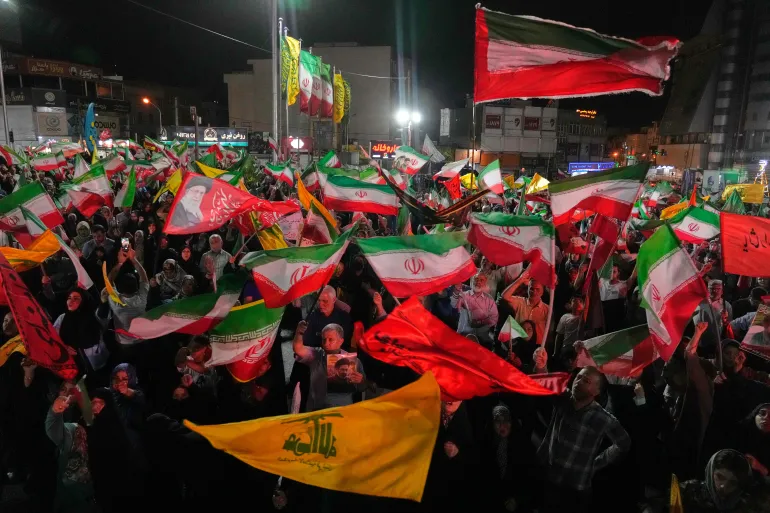
Pro-government Iranian demonstrators wave flags from Iran and Lebanon's Hezbollah in Tehran, Iran, Sunday, June 7, 2026. (AP Photo/Vahid Salemi)
Pro-government Iranian demonstrators wave flags of Iran and Hezbollah in Tehran, June 7, 2026 [Vahid Salemi/AP Photo]

Iranian Foreign Minister Abbas Araghchi responded by saying Aoun appeared to believe Iran, not Israel, was occupying Lebanese territory.

“Had Lebanon been a bargaining chip for Iran, we’d have a deal long ago. Save Lebanon from your real foe, Mr. President,” he posted on X on Saturday, likely referring to Israel and Aoun.

Hezbollah opposes direct talks with Israel and wants Iran to play a greater role in mediated talks to end the crisis, and the situation has led to an increasingly voracious back-and-forth between Beirut and Tehran.

A conditional “ceasefire” currently in effect between the Lebanese government and Israel, negotiated by Washington and excluding Hezbollah representation, set conditions that included the removal of armed groups south of the Litani River.

It also sought the establishment of “pilot zones” in southern Lebanon, where the Lebanese army would have sole authority, allowing the region to come under direct state control.

Negar Mortazavi, a senior fellow at the Washington, DC-based Center for International Policy, noted that while Israel had demonstrated patience regarding its continued offensive in the south, the targeting of Beirut’s southern suburbs, known as Dahiyeh, would be a serious escalation.

“Where exactly is the red line? So far, it seems that Tehran has tolerated attacks in southern Lebanon to some extent as part of a messy ceasefire, and instead allowed Hezbollah to engage with Israel,” she told Al Jazeera before Israel bombed Beirut suburbs on Sunday.

“I think the stalemate cannot continue for too long, so it will be going back to an escalated conflict, or heading for an actual peace deal.”

Iran has stressed that any long-term peace agreement with the US hinges on Israel’s war on Lebanon also ending.

“Hezbollah entered the war with them and helped them, so they want to help them by making them an extension of the peace deal,” Mortazavi said.

Israel’s largely unchallenged advances in southern Lebanon had angered and frustrated hardliners in Iran, who had called for the government to take action.

“Now that I’m speaking with you, it’s correct that [Israel] has stopped attacking Dahiyeh, but except for that, it is hitting wherever it wills,” Abbas Abdi, a state television analyst, told a gathering of state supporters near Enghelab (Revolution) Square in downtown Tehran on Friday night.

Hezbollah flags are regularly waved by supporters of the government during such rallies. On Friday, the iconic Azadi (Freedom) Tower was draped with a Hezbollah flag in a show of support for the Lebanese movement, amid Israel’s offensive in southern Lebanon.

Abdi said such facile shows of solidarity with Hezbollah were not a deterrence and that Iran might have to “show the enemy that negotiations are not important for us”.

“We are still releasing statements and saying we will do such if they do such, but we are not doing anything. Our dear people have gone to the [missile] launchers numerous times to respond, but they have been stopped,” he said.

There have been direct tensions between the two sides in recent weeks, with the US military attacking Iranian islands and the IRGC launching missiles and drones at its Central Command (CENTCOM) bases in Kuwait and Bahrain.

Lebanon
Mourners attend the funeral of four people, including a woman and a medic, who were killed in an Israeli attack on Friday in Zebdine, in Haret Sidon, Lebanon, June 7, 2026 [Aziz Taher/Reuters]

Mostafa Najafi, a state television political analyst, earlier this week characterised the Israeli attacks on Lebanon as intended to go hand-in-hand with the US blockade of Iran’s southern waters to force the government to capitulate.

“The aim of the ring of pressure created in Lebanon is not just Hezbollah, it is against our levers and to weaken our regional activities,” he said, pointing out that this elevates the issue to strategic significance.

“You cannot separate the file of Hezbollah and Lebanon from the file of Iran, because they have a meaningful ideological and geopolitical link together, they are in a geopolitical cluster together,” Najafi said.

Amirhossein Sabeti, a lawmaker representing Tehran in the hardline-dominated parliament, told state television that Trump was only “playing” with Iranian authorities to keep the peace until the World Cup in the US, Canada and Mexico is over.

“The US will start a more intense war with the US once the World Cup is over. They will turn the country into a second Gaza, where everything is destroyed,” he said.

“We must be prepared to deal stronger blows than before, and we can do this. We must not wait for them to hit before hitting back; we must strike even when they talk of striking, that’s deterrence.”

Source link

Taiwan Condemns China Coast Guard Patrols Near East

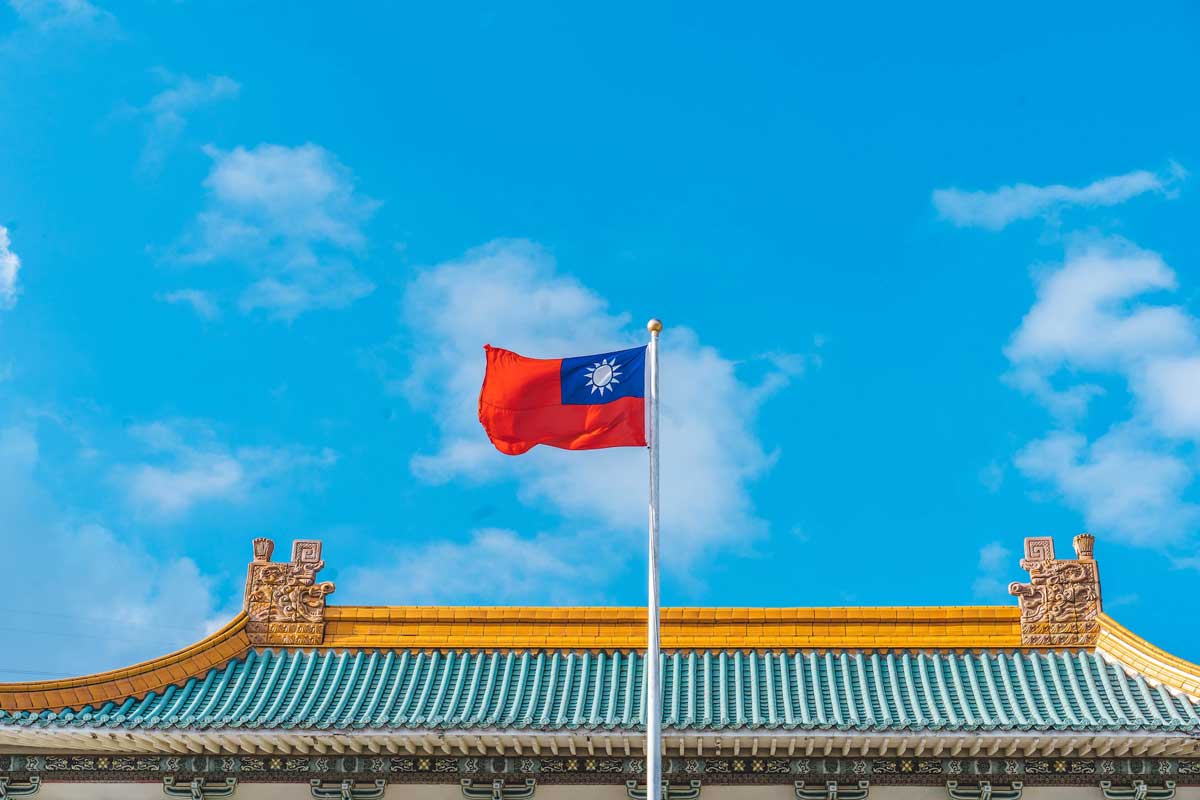
Taiwan has accused China of carrying out a “provocative act” after Chinese Coast Guard vessels conducted patrols in waters east of the island. The operation followed announcements by Japan and the Philippines that they would begin formal talks on maritime boundary delimitation, a move Beijing views as involving waters linked to Taiwan.

Chinese state media described the deployment as a special maritime law-enforcement operation. Taiwan responded by dispatching Coast Guard vessels, which reportedly warned the Chinese ships away from restricted waters. Defence Minister Wellington Koo characterized the patrols as both a challenge to Taiwan’s sovereignty and an example of “cognitive warfare” aimed at reshaping perceptions of territorial control.

The incident comes amid sustained Chinese military activity around Taiwan, including frequent air and naval operations. Taiwan is also monitoring the movements of the Chinese aircraft carrier Liaoning, which is operating in the Western Pacific near waters east of the Philippines.

Why It Matters

The patrols represent more than a routine maritime operation. They signal China’s growing willingness to extend its presence beyond the Taiwan Strait and into areas east of Taiwan that have traditionally been viewed as strategically important for the island’s defence.

The move also demonstrates Beijing’s opposition to emerging regional cooperation among U.S. partners and allies. The maritime boundary discussions between Japan and the Philippines reflect increasing efforts among regional states to clarify maritime rights and strengthen coordination in contested waters.

For Taiwan, Chinese Coast Guard activities present a complex challenge. Unlike military operations, law-enforcement patrols operate within a legal grey zone that allows Beijing to advance territorial claims without triggering a conventional military confrontation. Such actions can gradually normalize China’s presence in disputed areas while increasing pressure on Taiwan’s security apparatus.

The incident further highlights the growing integration of maritime, legal, and information-based strategies in China’s approach to territorial disputes across the Indo-Pacific.

Stakeholders

Taiwan

  • Protecting maritime sovereignty and territorial claims.
  • Maintaining freedom of navigation and security in eastern waters.

China

  • Expanding operational presence around Taiwan.
  • Reinforcing sovereignty claims through maritime law-enforcement activities.

Japan

  • Engaged in maritime boundary discussions with the Philippines.
  • Monitoring Chinese activities that could affect regional security.

Philippines

  • Seeking greater legal clarity over maritime boundaries.
  • Increasing security cooperation with regional partners.

United States

  • Maintaining stability in the Taiwan Strait and broader Indo-Pacific region.
  • Supporting freedom of navigation and regional deterrence efforts.

Regional Security Partners

  • Including Australia and other Indo-Pacific states concerned about changing maritime dynamics.

Strategic Implications

The patrols illustrate China’s increasing reliance on so-called “grey-zone” tactics, which fall below the threshold of open military conflict while steadily advancing strategic objectives. By deploying Coast Guard vessels rather than naval forces, Beijing can challenge Taiwan’s authority while reducing the risk of immediate military escalation.

The incident also reflects the expanding geographical scope of cross-strait competition. Traditionally concentrated in the Taiwan Strait, tensions are increasingly extending into the Western Pacific, where control of maritime approaches carries significant strategic value for both China and Taiwan.

Furthermore, the timing of the operation suggests that Beijing is seeking to influence regional maritime diplomacy. By responding directly to Japan-Philippines boundary discussions, China is signaling its opposition to initiatives that could strengthen legal and political frameworks contrary to its territorial claims.

The episode reinforces concerns among regional governments that maritime disputes are becoming increasingly interconnected, linking Taiwan, the East China Sea, and the South China Sea into a broader strategic contest.

What’s Next?

Several developments warrant close attention in the coming weeks:

  • Taiwan is likely to increase coordination between its military and Coast Guard to strengthen maritime surveillance and response capabilities.
  • China may continue deploying Coast Guard vessels east of Taiwan as part of a sustained effort to normalize its operational presence in the area.
  • Japan and the Philippines are expected to proceed with maritime boundary discussions despite Beijing’s objections, potentially drawing further diplomatic responses from China.
  • Increased activity by the Liaoning carrier group could provide additional indications of China’s broader military objectives in the Western Pacific.
  • The United States and regional partners may intensify maritime monitoring and security cooperation to deter unilateral attempts to alter the status quo.

Future outcomes

The incident reflects a broader shift in regional security dynamics, where maritime law-enforcement operations are increasingly being used as instruments of strategic competition. Rather than relying solely on military pressure, China is employing a combination of legal, political, and operational tools to reinforce its territorial claims and shape the regional security environment.

For Taiwan, the challenge extends beyond the immediate presence of Chinese vessels. The longer-term concern lies in preventing the gradual normalization of Chinese activities in areas that Taipei considers vital to its sovereignty and security. As regional actors deepen cooperation on maritime governance and security, incidents of this nature are likely to become an increasingly important indicator of the evolving balance of power in the Indo-Pacific.

With information from Reuters.

Source link

Iran Launches Ballistic Missile Attacks On Israel (Updated)

Iran has launched a new barrage of missiles at Israel, according to the Israeli Defense Forces. Iranian officials say the attack, the first such strike since the April 8 ceasefire, was in response to Israel bombing Beirut a few hours ago. With Israel under direct attack from Iran, how much longer the ceasefire will hold is an open question.

“A short while ago, the IDF identified missiles launched from Iran toward the territory of the State of Israel,” the IDF stated on Telegram.  “Defensive systems are operating to intercept the threat.”

Iran acknowledged launching missiles at Israel.

Videos emerged on social media showing Israeli air defenses working to intercept the missiles.

Additional video purported to show the Iranian missile launches.

Earlier on Sunday, Israel attacked what it said was a Hezbollah command center in the Dahieh section of Beirut. Israel claimed it was in response to Hezbollah rocket attacks on northern Israel.

There were no initial reports of injuries or damage. The IDF claims that all the missiles were intercepted.

Regardless, Israel will almost certainly launch a retaliatory strike. Israel is considering the Iranian attack a “declaration of war.”

Iran launched many ballistic missiles attacks on Israel after Washington and Jerusalem launched strikes across Iran starting on Feb. 28.

UPDATE: 4:34 PM EDT –

President Donald Trump spoke with several media outlets in the wake of the Iranian attack. He is urging restraint between the Israel and Iran.

He told Fox News that the attack wasn’t helping negotiations and said he would suggest to Iran that “you shot your missiles, that’s enough, get back to the table and make a deal.”

On Israel striking Beirut earlier today: “I’m not happy about it,” President Trump said.

The president told Axios reporter Barak Ravid that he was going to call Israeli Prime Minister Benjamin Netanyahu and tell him to hold his fire.

“I’m about to call Bibi right now and tell him not to respond,” Trump told the outlet. “Both of them have already done their part. Israel had its strike and Iran had its strike. We don’t need another one.”

“The Iranian missile fire didn’t hit anyone. I hope Israel doesn’t respond. If Bibi attacks them back, it’ll just drag on like it has for the past 47 years, or the past 3,000 years,” Trump told Ravid. “We’re very close to a final deal with Iran. It’ll be a good deal. I don’t want it to blow up because of what’s happening now.”

Trump told Israel’s Channel 13 News that he thinks “Israel has responded enough, no need for more. We can achieve peace after 3,000 years.”

Iran has issued a notice that it has closed airspace.

The IDF said Iran made “a grave mistake” by attacking, said its operations against Hezbollah will continue and warned Israelis that more attacks could be launched.

Iranian media released an image it claims shows a message inscribed on the missiles fired at Israel.

UPDATE: 6:51 PM EDT –

Iran fired 11 missiles at Israel, according to Israel’s C14 News outlet.

Trump told Financial Times that Netanyahu will have no choice but to accept any deal the US negotiates with Iran, because he “calls the shots.”

“He won’t have any choice,” Trump told the outlet in a telephone interview. “I call the shots. I call all the shots. He [Netanyahu] doesn’t call the shots.”

Trump added that Iran’s strikes had not changed his desire to conclude US-Iran negotiations. “It’s not going to have any impact on the deal,” he told the FT.

“We’ll see how it ends up,” Trump continued. “But they [the missile strikes on Israel] were attacks that did not kick at all. It’s one of those things that’s been going for 3,000 years, or 47 years, depending on how you count.”

UPDATE: 9:50 PM EDT-

As we suggested would likely happen, Israel has retaliated against Iran.

“A short while ago, the Israeli Air Force struck military targets belonging to the Iranian terror regime in western and central Iran,” the IDF stated on Telegram.

UPDATE: 9:56 PM EDT –

Iranian media reported that “explosion sounds were heard in areas of Tehran, Isfahan, and Tabriz.”

Video and images have emerged on social media claiming to show the aftermath of the Israeli attacks.

UPDATE: 10:58 PM EDT –

In a post on X, the Israeli Air Force (IAF) says it has “identified the launch of a missile from Yemen toward Israeli territory, aerial defense systems are operating to intercept the threat.”
“The public is requested to follow the Home Front Command’s defensive guidelines,” the IAF added.

This is a developing story.

Contact the author: howard@twz.com

Howard is a Senior Staff Writer for The War Zone, and a former Senior Managing Editor for Military Times. Prior to this, he covered military affairs for the Tampa Bay Times as a Senior Writer. Howard’s work has appeared in various publications including Yahoo News, RealClearDefense, and Air Force Times.


Source link

How Mexican cartels turned South African farms into meth production hubs | News

Johannesburg, South Africa – In the quiet mining town of Swartruggens, a small courthouse is preparing to decide whether five Mexicans accused of a major illegal drug operation will be granted bail or remain in custody.

Their arrests followed a raid on a remote farm in North West province, where police said they uncovered a large methamphetamine laboratory worth about one billion rand ($60m).

The case is one of several pointing to a pattern taking shape in South Africa’s rural interior.

The Swartruggens laboratory was not an isolated discovery.

It was one of four major meth sites linked to Mexican criminals uncovered in South Africa in just two years, a pattern that has unsettled investigators and organised crime experts.

In 2024, police dismantled a large meth facility worth about $105–110 million on a farm near Groblersdal in Limpopo. Later that year, another laboratory worth roughly $5–6 million was discovered near Tshwane, followed by arrests last year in Mpumalanga.

Then came Swartruggens.

When police moved in on the North West farm in May, they found 481 kilos of methamphetamine, containers of chemicals and firearms. Among those arrested were Mexican nationals Fabian Astorga, Jesus Alonso Medina Astorga, Luis Alberto Ramirez Rios, Jose Andres Medina and Jacquelin Lopez Madrid, alongside co-accused South Africans.

All the sites followed the same pattern: remote farmland, long distances from towns and enough isolation for criminal activity to go undetected.

For investigators, the pattern is becoming harder to ignore.

Mexicans are increasingly being found working alongside local collaborators in rural production sites, suggesting a shift from trafficking meth into Africa to producing it there.

Organised crime researcher Julian Rademeyer told Al Jazeera the model reflects a deliberate strategy.

“It’s quite a unique development where you have members of Mexican drug cartels franchising, moving chemists into remote rural areas and farms,” he said.

The approach has been building for more than a decade, he added.

The logic is straightforward: produce closer to consumers, cut transport costs and reduce exposure to border and maritime enforcement.

How it spread

Mexican-linked networks in Africa did not begin in South Africa.

Researchers trace early activity back to Nigeria, where local groups were producing meth with Mexican involvement by around 2016.

From there, the networks spread through East Africa, then south through Mozambique and Botswana, before reaching South Africa more recently.

For years, users on the streets spoke of “Mexican meth”, often assumed to be imported. That supply chain has now shifted inward.

“Now, basically, the cartel chemists are being sent here,” Rademeyer told Al Jazeera.

Analysts say multiple supply routes now feed the South African market, but the most significant change is the rise of local production.

Who looks the other way

Methamphetamine dominates parts of South Africa’s illicit drug market because cheaper drugs such as cocaine and heroin remain out of reach for many users, creating steady demand for a cheaper, highly addictive stimulant.

Crime expert Willem Els says demand is only part of the story.

“The main reason why manufacturing locally is lucrative to cartels is the local conditions that exist, where there is protection from corrupt police and politicians,” he told Al Jazeera.

“It is very lucrative. The cartels can make a lot of money because South African conditions result in undetected and protected operations.”

A separate commission of inquiry into law enforcement has heard testimony alleging deep corruption within policing structures, including missing drug consignments and suspected inside involvement in major cases.

One case under scrutiny involves 541 kilos of cocaine seized in 2021 and later stolen from a police facility, in what investigators believe was an inside job.

Former Interpol ambassador Andy Mashiale told Al Jazeera the problem is visible on the ground.

“There is no way in which police don’t know those labs,” he said. “So corruption plays a role.”

He said officers deployed to rural areas were often aware of suspicious activity but failed to act.

“What inspires the drug manufacturers or the drug cartels is the willingness of the police to enable the drug trade from happening,” he said.

South Africa’s elite Hawks unit says recent raids show progress in disrupting networks, while international partners, including the US Drug Enforcement Administration, have provided intelligence linking some suspects to the Sinaloa Cartel.

But investigators warn that the system behind the labs is resilient.

A frontier that keeps moving

US Africa Command officials have warned that Mexican cartels are now not only moving drugs through Africa, but also producing them on the continent.

For South Africa, the challenge is no longer just border control, it is institutional capacity, intelligence and corruption within the system meant to contain it.

Without deeper reform, analysts warn, the pattern is likely to continue: new farms, new labs, new chemists arriving quietly in rural provinces.

For the five men in Swartruggens, the question is immediate, whether they will be released.

For South Africa, the question is larger and more difficult: how to contain a trade that is no longer arriving at its borders, but taking root in the country.

Rademeyer says the structure is built to absorb disruption.

“It’s a game of whack-a-mole,” he told Al Jazeera. “You seize a meth lab here, you seize a meth lab there. They’ll spring up elsewhere.”

Source link

Oppenheimer: Trump holds the reins on Netanyahu’s escalation options | Israel attacks Lebanon

NewsFeed

Yariv Oppenheimer told Al Jazeera that Israeli PM Benjamin Netanyahu has incentives to escalate tensions with Iran and Hezbollah but is constrained by US President Donald Trump and US interests. He said Iran’s June 7 response was a warning, not a push for war, and doubts Trump would allow major Israeli retaliation.

Source link

Iran and Israel trade threats after Tehran launches missiles | US-Israel war on Iran News

NewsFeed

Iran and Israel exchanged threats after Tehran launched missiles towards Israel in response to Israeli strikes on Beirut’s southern suburbs. Israel vowed to deepen attacks on Lebanon, while Iran warned of further action if the strikes continue.

Source link