
Man who murdered partner and blew up home jailed
Clifton George stabbed Annabel Rook 31 times before starting a fire at their house in north London.
Source link
Clifton George stabbed Annabel Rook 31 times before starting a fire at their house in north London.
Source link

From Gary Klein: Aaron Donald has made no public pronouncements that he will remain retired or return to play for the Rams.
But the three-time NFL defensive player of the year and future Hall of Famer remains a hot topic, and Rams players are aware of the buzz.
“When you have a guy that’s that serious about even considering coming out, it’s like, ‘OK, we might have a chance,’” safety Quentin Lake said Monday after the Rams completed an organized-team activity workout.
Chatter about Donald, 35, has been rampant since last week, when the Rams made another gigantic offseason move by trading for defensive end Myles Garrett.
The possibility of pairing Donald with Garrett — a two-time defensive player of the year — continues to intrigue both in and out of the Rams’ facility.
Like Lake, defensive lineman Kobie Turner insistently cautioned that whatever Donald decides to do or not do was his former teammate’s prerogative.
But the possibilities…
“To just have two historic, if you will, defensive players on that line together,” Turner said of pairing Donald and Garrett, “and to have the rest of us who are trying to build up our reputations, and to build to that level of greatness that they’ve been able to garner, I think that would be cool for L.A.”
Get the latest on L.A.’s teams in the daily Sports Report newsletter.
By continuing, you agree to our Terms of Service, which include arbitration and a class action waiver. You agree that we and our third-party vendors may collect and use your information, including through cookies, pixels and similar technologies, for the purposes set forth in our Privacy Policy such as personalizing your experience and ads.
From Kevin Baxter: With its World Cup opener just four days away, the U.S. team moved into its temporary home in Irvine on Monday, where the players found thousands of new Southern California neighbors waiting in line to watch them kick a ball.
After the U.S. announced that Orange County Great Park would be its base for at least the group stage of the tournament, the City of Irvine held a raffle for passes to see the team train in its only public workout.
Thirty-two thousand people applied and 5,500 received access on a warm Monday morning to watch the team rush through a light 45-minute practice that was notable primarily because it was the first in which injured center back Chris Richards was fully involved. Richards tore two ligaments in his left ankle playing for Crystal Palace, his English club team, on May 17 and hadn’t played or fully trained since. The team is rushing to get him ready in the hopes he can play at some point in the three-game group stage.
But the practice was also notable because it was the first at Championship Soccer Stadium, about 50 miles southeast of SoFi Stadium in Inglewood, where the U.S. will open its World Cup on Friday against Paraguay.
“[The] environment and facilities are crazy. It’s more than we expect,” U.S. coach Mauricio Pochettino said of the venue. “We are so grateful.”
Championship Soccer Stadium is owned and managed by the city, which has leased it to the Orange County Soccer Club of the second-tier USL Championship. But the club was temporarily evicted in late April to make space for the national team — which is just fine with them.
2026 World Cup guide: Full TV schedule, players to watch and team breakdowns
Angels first baseman Trey Mancini, a cancer survivor and former Baltimore slugger, had three hits in his first major league game since 2023 on Monday night in a 5-4 loss to the Houston Astros in 10 innings.
Mancini delivered a run-scoring single in the second inning in his first at-bat. He singled again leading off the fourth before adding a third single in the eighth.
The Angels selected the contract of Mancini and put him in the lineup at first base against the Astros after putting infielders Vaughn Grissom (left oblique strain) and Adam Frazier (right elbow inflammation) on the 10-day injured list.
Mancini, 34, agreed to a minor league contract with the Angels in February, a deal that included an invitation to major league spring training. Mancini hit .273 with six homers, 29 RBIs and three steals for triple-A Salt Lake this year.
From Mirjam Swanson: There’s no crying in baseball, but Kim Ng works in softball now. And as commissioner of the Athletes Unlimited Softball League, the former Dodgers assistant general manager has been fielding lots of tearful feedback from fans overcome by the fact that softball players finally, finally have a big league of their own.
“I can’t even tell you the number of people that have approached me, just openly sobbing with happiness,” she said. “It’s been incredible, experiencing all of that and understanding how long people have been waiting for something like this.”
It really is like that. Ask Lisa Fernandez, softball pioneer and total boss: “I’ll be watching and get emotional, just looking at how far this game has come.”
With MLB backing the Athletes Unlimited Softball League, or AUSL, for a second season and Ng back to steer it, sustainable professional softball is starting to feel real.
Fernandez remembers when it was a huge deal to get one softball game on TV, and now ESPN will broadcast 50 AUSL games and ABC will carry the championship. And after last year’s four-team 10-city barnstorming tour, the league will add two teams and anchor itself to locations in North Carolina, Illinois, Oklahoma, Oregon, Texas and Utah.
Peter Laviolette will be the next head coach of the Kings, a person with knowledge of the negotiations told the Associated Press on Monday.
The person spoke on condition of anonymity because the Kings hadn’t yet announced the results of their lengthy search for a permanent replacement for interim coach D.J. Smith, who replaced Jim Hiller in March.
The 61-year-old Laviolette is expected to get a three-year contract to take over his seventh NHL team. The Kings have made the playoffs in five consecutive seasons, but they’ve also endured five straight first-round exits under three head coaches and two general managers.
Laviolette is returning to the NHL after being fired by the New York Rangers in April 2025. He has also led the New York Islanders, Carolina, Philadelphia, Nashville and Washington during a 23-year head coaching career highlighted by a Stanley Cup championship with the Hurricanes in 2006.
Victor Wembanyama had 32 points, eight rebounds and six assists in his first NBA Finals win, carrying the San Antonio Spurs to a 115-111 victory on Monday night that cut the New York Knicks’ lead to 2-1.
The Spurs handed the Knicks their first loss in 46 days and potentially salvaged their season in front of a Madison Square Garden crowd that included President Trump.
The Knicks had their 13-game winning streak, the second-longest in NBA postseason history, snapped and missed a chance to move to the brink of their first championship since 1973.
1888 — James McLaughlin sets the record for wins by a jockey in the Belmont Stakes, six, when he rides Sir Dixon to a 12-length victory. McLaughlin’s record is matched by Eddie Arcaro in 1955.
1899 — Jim Jeffries knocks out Bob Fitzsimmons in the 11th round in New York to win the world heavyweight title.
1930 — Paavo Nurmi runs world record 6 mile (29:36.4).
1934 — Olin Dutra edges Gene Sarazen by one stroke to win the U.S. Open.
1940 — Lawson Little beats Gene Sarazen by three strokes in a playoff to win the U.S. Open golf title.
1945 — Hoop Jr. wins the Kentucky Derby, which is run one month after a national wartime government ban on racing is lifted.
1946 — Joe Louis KOs Billy Conn in 8 for heavyweight boxing title.
1973 — Secretariat, ridden by Ron Turcotte, wins the Belmont Stakes in record time to capture the Triple Crown. Secretariat sets a world record on the 1½-mile course with 2:24, and a record for largest margin of victory in the Belmont, 31 lengths.
1978 — Larry Holmes scores a 15-round split decision over Ken Norton for the WBC heavyweight title in New York.
1979 — Coastal, ridden by Ruben Hernandez, spoils Spectacular Bid’s attempt at the Triple Crown with a 3¼-length victory over Golden Act. Spectacular Bid finishes third.
1984 — Swale, ridden by Laffit Pincay, wins the Belmont Stakes by four lengths over Pine Circle. Swale dies eight days later.
1984 — French Open Women’s Tennis: Martina Navratilova beats Chris Evert 6-3, 6-1; 2nd women in Open Era to hold all 4 Grand Slam titles at once.
1985 — Kareem Abdul-Jabbar scores 29 points to lead the Lakers to a 111-100 victory over the Boston Celtics and the NBA title in six games.
1990 — Monica Seles holds off four set points in the first set tiebreaker and goes on to become the youngest winner of the French Open, beating two-time champion Steffi Graf 7-6 (8-6), 6-4. Seles is 16 years, six months.
1991 — In the first all-American men’s final at the French Open since 1954, Jim Courier rallies to beat Andre Agassi 3-6, 6-4, 2-6, 6-1, 6-4 for his first Grand Slam title.
1993 — Patrick Roy makes 18 saves and the Montreal Canadiens capture their 24th Stanley Cup, beating the Kings 4-1 in Game 5.
2001 — Stanley Cup Final, Pepsi Center, Denver, CO: Colorado Avalanche beat defending champion New Jersey Devils, 3-1 for 4-3 series win; Avalanche 2nd title.
2001 — Jennifer Capriati beats Kim Clijsters 1-6, 6-4, 12-10 to win the French Open, her second consecutive Grand Slam title.
2003 — The New Jersey Devils end the Mighty Ducks’ surreal season, winning the Stanley Cup with a 3-0 victory. Mike Rupp, who had never appeared in a playoff until Game 4, scores the first goal and sets up Jeff Friesen for the other two.
2007 — Rags to Riches, a filly ridden by John Velazquez, outduels Curlin in a breathtaking stretch run and won the Belmont Stakes, becoming the first of her sex to take the final leg of the Triple Crown in more than a century.
2010 — Chicago’s Patrick Kane sneaks the puck past Michael Leighton 4:10 into overtime, stunning Philadelphia and lifting the Blackhawks to a 4-3 overtime win in Game 6 for their first Stanley Cup championship since 1961.
2013 — Rafael Nadal becomes the first man to win eight titles at the same Grand Slam tournament after beating fellow Spaniard David Ferrer in the French Open final, 6-3, 6-2, 6-3.
2018 — Justify becomes the 13th Triple Crown winner by winning the Belmont Stakes with Mike Smith aboard.
2019 — French Open Men’s Tennis: Rafael Nadal beats Austrian Dominic Thiem 6-3, 5-7, 6-1, 6-1; 3rd straight French singles title; 12th overall; first to win 12 singles titles at same Grand Slam; 18th major.
2022 — The controversial Saudi-backed LIV Golf Invitational Series gets underway at the Centurion Club, Hertfordshire; PGA suspends 17 participating players.
2024 — French Open Men’s Tennis: Carlos Alcaraz becomes the youngest man to win grand slams on all three surfaces, coming back to beat Alexander Zverev 6-3, 2-6, 5-7, 6-1, 6-2 in a final lasting 4 hours 15 minutes
Compiled by the Associated Press
1901 — The New York Giants set a major league record with 31 hits in beating Cincinnati 25-13. Al Selbach of the Giants went 6-for-7 with two doubles and four singles and scored four runs.
1906 — Boston snapped a 19-game losing streak by beating the St. Louis Cardinals 6-3.
1914 — Honus Wagner of the Pittsburgh Pirates got the 3,000th hit of his career off Philadelphia’s Erskine Mayer in a 3-1 loss to the Phillies at the Baker Bowl. Wagner’s hit, a double, came in the ninth. Wagner joined Cap Anson as the only members of the 3000-hit club.
1935 — The St. Louis Cardinals became the 10th team in major league history to score a run in every inning in a 13-2 win over the Chicago Cubs.
1946 — Commissioner Happy Chandler imposed five-year suspensions on players who jumped to the Mexican League and three-year suspensions for those who broke the reserve clause.
1946 — The New York Giants’ Mel Ott became the first manager to be ejected in both ends of a doubleheader. The Pittsburgh Pirates won both games, 2-1 and 5-1.
1963 — Playing the first Sunday night game in major league history because of excessive heat during the day, the Houston Colt .45s handed the San Francisco Giants their seventh straight loss in Houston, 3-0. Turk Farrell and Skinny Brown pitched the shutout.
1966 — Rich Rollins, Zoilo Versalles, Tony Oliva, Don Mincher and Harmon Killebrew homered in the seventh inning for the Minnesota Twins in a 9-4 victory over the Kansas City Athletics.
1979 — Nolan Ryan struck out 16 batters as the Angels beat the Detroit Tigers 9-1. It was the 21st time in his career he struck out 15 or more batters in one game.
1986 — Chicago White Sox pitcher Tom Seaver (306) and Angels hurler Don Sutton (298) had the highest composite win total (604) for opposing pitchers since 1926, when Walter Johnson (406) faced Red Faber (197). Sutton pitched a two-hit shutout to beat the White Sox 3-0.
1990 — Eddie Murray of the Dodgers tied Mickey Mantle’s record by homering from each side of the plate in the same game for the 10th time in his career. The Dodgers beat the Padres 5-4 in 11 innings.
1998 — Cecil Fielder of the Angels and Yamil Benitez of the Diamondbacks each hit grand slams in the same inning in Anaheim’s 10-8 win over Arizona. It was the first time both teams hit grand slams in the same inning since 1992.
2008 — Ken Griffey Jr. became the sixth player in baseball history to reach 600 homers with a drive off Mark Hendrickson in the first inning of the Cincinnati Reds’ 9-4 victory over the Florida Marlins.
2014 — Lonnie Chisenhall had nine RBIs and three home runs in a five-hit game, Michael Brantley scored five times and the Cleveland Indians beat the Texas Rangers 17-7.
2015 — Chris Heston pitched the first no-hitter in his 13th career start, leading the San Francisco Giants over the New York Mets 5-0. The rookie allowed three baserunners — all on hit batters. He also had a two-run single for his first big league RBIs and finished with two more hits than the Mets.
2019 — The Nationals accomplish a very rare feat as four consecutive batters hit solo homers in the 8th inning in Petco Park in San Diego to break a 1-1 tie. Pinch-hitter Howie Kendrick starts things off against Craig Stammen, and is followed in order by Trea Turner, Adam Eaton and Anthony Rendon, who all go yard. This is only the ninth time in major league history this has happened, and the Nats were the last to do so, on July 27, 2017.
2019 — Former Boston Red Sox star David Ortiz shot in the back while visiting in his native Dominican Republic.
2022 — The Twins open the bottom of the first against the Yankees with three consecutive homers off Gerrit Cole at Target Field, by Luis Arraez, Byron Buxton and Carlos Correa. This is the first time in franchise history this has happened.
Compiled by the Associated Press
That concludes today’s newsletter. If you have any feedback, ideas for improvement or things you’d like to see, email me at houston.mitchell@latimes.com. To get this newsletter in your inbox, click here.

Stefania Glowka denied murder but pleaded guilty to manslaughter based on diminished responsibility.
Source link

The second ballot we sent out for the L.A. Times Sports Report Hall of Fame was the NBA ballot, with 24 names appearing. People were able to vote for up to 10 candidates.
Reminder: Whoever is named on at least 75% of the ballots will be elected. The five people receiving the fewest votes will be dropped from future ballots for at least the next two years. A person must be retired to appear on the ballot.
There were 12,725 ballots cast in the NBA voting, and six candidates received at least 75% of the vote, and a worthy six they are.
Get the latest on L.A.’s teams in the daily Sports Report newsletter.
By continuing, you agree to our Terms of Service, which include arbitration and a class action waiver. You agree that we and our third-party vendors may collect and use your information, including through cookies, pixels and similar technologies, for the purposes set forth in our Privacy Policy such as personalizing your experience and ads.
Kareem Abdul-Jabbar, appeared on 99.3% of ballots
Magic Johnson, 96.2%
Jerry West, 94.7%
Kobe Bryant, 90.1%
Elgin Baylor, 76.2%
Chick Hearn, 75.8%
Shaquille O’Neal, 72.8%
Wilt Chamberlain, 59.9%
Pat Riley, 58.4%
Jerry Buss, 53.3%
James Worthy, 49.5%
Phil Jackson, 41.6%
Gail Goodrich, 24.4%
Jamaal Wilkes, 12%
Michael Cooper, 10%
Pau Gasol, 8.1%
Jack Kent Cooke, 7%
Blake Griffin, 5.2%
Ralph Lawler, 4.4%
Chris Paul, 4.1%
Derek Fisher, 3.8%
Byron Scott, 3%
Elton Brand, 2.5%
Stu Lantz, 1.9%
Thanks to everyone who voted! There is still time to vote in our other active categories. The next ballot will be released Thursday morning.
To vote in the Rams/Chargers/Raiders ballot, click here.
To vote in the UCLA ballot, click here.
To vote in the USC ballot, click here.
That concludes today’s newsletter. If you have any feedback, ideas for improvement or things you’d like to see, email me at houston.mitchell@latimes.com. To get this newsletter in your inbox, click here.

Published On 9 Jun 20269 Jun 2026
Donald Trump’s appearance courtside at Madison Square Garden was supposed to be a historic moment, as, for the first time, a sitting president of the United States was attending an NBA Finals game.
Instead, his arrival became part of the story, drawing boos from sections of the crowd and triggering a massive security operation that reshaped the atmosphere around the storied New York arena on Monday night.
Trump watched from an executive suite as the New York Knicks hosted the San Antonio Spurs in a series that gripped the city and revived memories of the Knicks’ glory years.
When his image flashed up on the big screen during the national anthem, many fans jeered, underlining how sharply divided the country remains even in a space usually reserved for shared celebration.
Outside, Manhattan’s streets were locked down. Metal fencing, airport-style screening and a heavy Secret Service and police presence kept ticketless fans blocks away.
Long queues formed as supporters queued early, while others gathered at public viewing areas across the city.
Inside, however, the spectacle went on. Hollywood actors, musicians, former players and New York fixtures filled the front rows, turning the event into a star-studded night out.
Between the celebrity sightings, the political undertones and a tense 115-111 Spurs win, this was a New York basketball night unlike any other – on and off the court.

“Already what I did last year was amazing and to be a champion here, I thought I deserved a wildcard and to get a little bit of respect.”
In further comments to reporters, Maria added: “I did it last year. It was not five years ago.
“I was surprised when I got the message of [tournament director] Laura Robson saying all the wildcards would go to the British players, which I understand. But as a champion, it’s tough for me.
“It is something that should be normal. If you are champion of an event and you don’t get in the year after, I think automatically this should be considered.”
Maria, watched by her two daughters, beat four top-20 players en route to the title, becoming the oldest winner of a WTA 500 tournament.
She is ranked 52nd in the world – too low to earn direct entry for the 28-strong main draw but higher than each of the four British players awarded wildcards.
This year’s recipients were Katie Boulter (world number 73), Fran Jones (98), Harriet Dart (160), and Mika Stojsavljevic (261).
A spokesperson for the Lawn Tennis Association (LTA) said: “The LTA owns and invests in staging these events for the benefit of the British game as a whole – so fans can see world class international players from around the world, and support our British players, but also so British players are afforded the playing opportunities to progress their careers and climb the rankings.
“We have seen British success at these events, and breakthrough wins, so there is clear value in giving British players these development opportunities.”
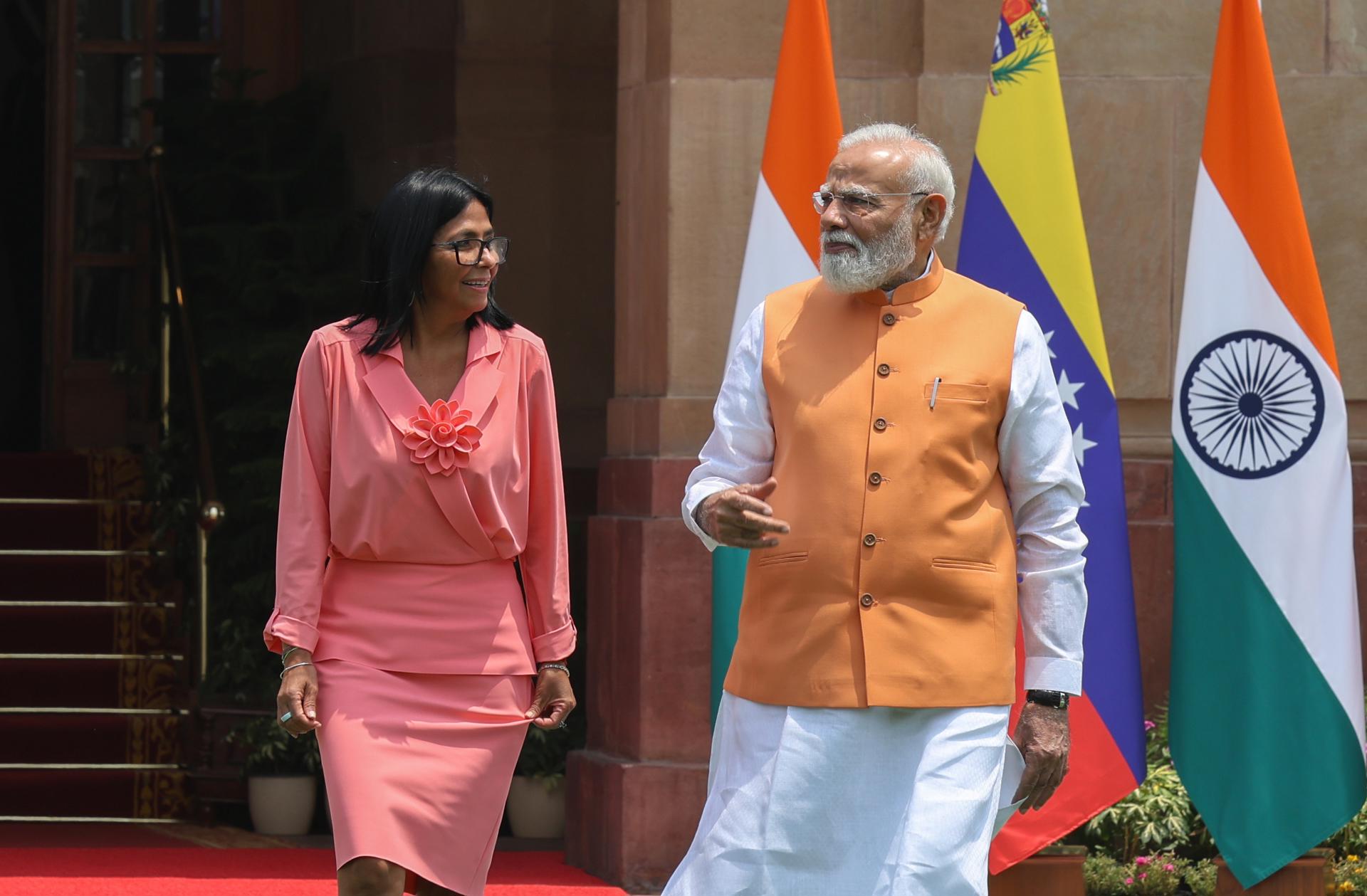
Delcy Rodríguez was hosted by Narendra Modi in New Delhi. (EFE)
Mérida, June 8, 2026 (venezuelanalysis.com) – Venezuelan Acting President Delcy Rodríguez concluded a four-day high-profile diplomatic tour of India on Sunday, having held meetings with Prime Minister Narendra Modi, Indian cabinet members, and major business conglomerates.
Rodríguez, who assumed the acting presidency after the kidnapping of President Nicolás Maduro in a US military operation on January 3, led a large ministerial delegation including the foreign affairs, science, and transport ministers. The visit was Rodríguez’s sixth trip to India.
Caracas’ main stated goal was to deepen long-term energy ties with the Asian giant and expand crude exports. The Trump administration has publicly backed India to increase purchases of Venezuelan crude as part of efforts to move its Asian partner away from Russian energy imports.
One of Rodríguez’s first meetings was with Petroleum and Natural Gas Minister Hardeep Singh Puri, who stated that Indian companies are looking to “build upon” existing investments in the Caribbean nation.
“Indian companies are additionally looking for newer opportunities for fruitful collaborations which will provide momentum to our quest towards energy security,” Singh Puri wrote on social media.
For her part, Venezuela’s acting president described India as a “reliable partner” and invited Indian corporations to explore new investment opportunities in the country’s energy sector. Rodríguez highlighted the “energy complementarities” between the two nations.
Venezuela’s oil exports reached 1.25 million barrels per day (bpd) in May, with India reportedly receiving 427,000 bpd, making it the second-largest destination after the US. In recent years, under wide-reaching US sanctions, Venezuela had repeatedly sought to increase exports to India, only to see efforts blocked by US threats of secondary sanctions.
The meeting with Singh Puri likewise featured executives from several Indian public energy companies, including ONGC, Indian Oil Corporation (IOLC), Oil India, and ONGC Videsh (OVL). The companies own multiple minority stakes in the San Cristóbal and Petrocarabobo heavy crude projects in the Orinoco Oil Belt.
Indian authorities stressed addressing an outstanding US $500 million debt in unpaid dividends to ONGC Videsh as a priority before new investments are to be considered.
Rodríguez went on to tour the Jamnagar refinery complex, owned by Reliance Industries, in Gujarat state. The refinery is the world’s largest, with a daily capacity to process 1.4 million bpd. In recent months, Reliance has emerged as a top buyer of Venezuelan crude, purchasing cargoes directly from state-owned PDVSA as well as from traders Vitol and Trafigura.
The Venezuelan delegation held further meetings with top Indian business conglomerates. On June 6, it toured Tata Group facilities in Mumbai. According to Venezuela’s embassy in India, the discussions centered on renewable energy, ecological projects, and urban transport. Venezuelan Transport Minister Jacqueline Faría highlighted Tata’s cutting-edge electric public transportation vehicles.
Rodríguez’s agenda also included talks with Indian dairy giant Amul. Venezuelan state media emphasized interest in Amul’s massive production of buffalo milk. Venezuela currently holds the largest buffalo herd in South America and officials have touted buffalo dairy as a priority export venture.
Likewise in Mumbai, the Venezuelan officials visited multinational conglomerate Essar, with discussions reportedly focusing on infrastructure and electricity. Venezuela’s National Assembly is presently advancing legislation to open electricity, from generation to distribution, to private sector investment and participation.
Rodríguez’s visit featured a meeting with Indian Prime Minister Narendra Modi in New Delhi. In a social media message, Modi praised Venezuela as a “valued partner” and disclosed that discussions had centered on “expanding cooperation in energy, critical minerals, technology, agriculture, health, and people-to-people ties.”
The Venezuelan delegation was also hosted by External Affairs Minister Subrahmanyam Jaishankar, who praised Rodríguez’s “longstanding commitment” to deepening Venezuela-India ties.
In a press briefing, Rudrendran Tandon, Secretary (East) in the Ministry of External Affairs, emphasized discussions on pharmaceutical cooperation and increasing supplies of low-cost generic drugs for Venezuela’s public healthcare system. Tandon also brought up a $700-800 million debt to Indian pharmaceutical manufacturers but said the Venezuelan side was “very sensitive” to the issue.
While no formal agreements were announced, Venezuela’s acting president offered a positive balance of a visit that “consolidated the friendship and cooperation between the two nations.” She went on to thank Modi for the hospitality.
Rodríguez’s last day in India included a visit to the Prasanthi Nilayam ashram in Andhra Pradesh, a spiritual center founded by Indian religious guru Sathya Sai Baba (1926-2011). In a social media message, Rodríguez expressed her “deep belief” in Sai Baba’s “love all, serve all” motto.
The Venezuelan leader’s tour featured a stop in Istanbul on Tuesday before the return to Caracas. Rodríguez met with Turkish President Recep Tayyip Erdoğan to discuss bilateral trade and diplomacy between Venezuela and Türkiye.
Edited by Ricardo Vaz in Caracas.

India’s fertility rate has for the first time fallen below the level needed to stop the population from shrinking, raising concerns about future labour shortages and an ageing society.
For decades, India has seen rapid population growth. According to government statistics, including the Sample Registration System (SRS) Statistical Report — the country’s largest demographic survey — India has had a falling fertility rate for some years, but the reproduction rate remained high enough to keep the population growing.
list of 3 itemsend of list
The latest SRS report, released last month by India’s Office of the Registrar General and Census Commissioner, said that India’s Total Fertility Rate (TFR) had dropped to 1.9 children per woman – lower than the benchmark level of 2.1 needed to keep the population stable in the long run. TFR is the average number of children that a woman is expected to have in her lifetime. In the 2000s, India’s TFR was around 3.3 births per woman.
So, what is behind reduced fertility? Why does it matter and what are the consequences?
Here’s what we know:
For decades starting in the 1970s, Indian governments and policymakers have tried to battle what they argued was overpopulation — too many people, and too few resources to manage for what was then a relatively poor nation.
Many top-down government initiatives — including a brief controversial effort to forcibly sterilise people in the 1970s — aimed to control India’s population.
Despite that, by 2019, India’s Prime Minister Narendra Modi was still warning of a “population explosion”.
But by 2022, the first signs that India was about to tip over into uncharted territory: The National Family Health Survey released data suggesting that India’s TFR was falling fast, across communities. Yet a year later, India surpassed China to become the world’s most populous nation — and the trend of a declining fertility rate was swamped by the headlines of a 1.5 billion population.
Now, latest survey suggests that the prospect of a shrinking population might be more imminent than policymakers had planned for.
Experts say better access to education and contraceptives are among key factors behind the falling fertility rate — along with the increased costs of bringing up children.
“Total fertility rate often drops when more women in society have access to education, contraceptives and more agency in decision-making in households,” Dipa Sinha, a development economist who works on social policy in India, told Al Jazeera. “It also drops when the economy becomes expensive so raising children also becomes expensive.”
She said there’s another reason too.
As infant mortality reduces, the desire to have more children also decreases. According to the latest SRS report, India has recorded a significant decline in infant deaths from 30 per 1,000 live births in 2019 to 24 deaths per 1,000 live births in 2024.
These factors also correlate almost perfectly with the differential levels of fertility rates across the country.
According to the May demographic survey report, India’s poorest states, such as Bihar in northern India with the lowest levels of education and high infant mortality rates, also recorded the highest fertility rate in the country at 2.9, followed by 2.6 in Uttar Pradesh.
By contrast, India’s capital New Delhi — with among the highest levels of education and lowest infant mortality rates — registered the lowest fertility rate, with an average of 1.2 births per woman. Southern states such as Tamil Nadu and Kerala, with among the best health and education systems in India, recorded a rate of 1.3.
“A lot of studies on regional development in India from the early 80s have revealed that states in the South have developed faster with respect to both the economy and women’s status in society. So these reasons have contributed to the lower fertility rate,” Sinha said.
In 2005, India’s population entered a stage called ‘demographic dividend’, a phase when the proportion of a country’s working age population (15-64 years) is higher than the number of old people and children who are not in the labour force. According to the UNFPA, India’s demographic dividend is expected to last until 2055.
Japan, Singapore and Hong Kong entered this phase in the 1960s and rapidly became developed economies. China entered this phase in the 1980s and — coupled with economic reforms — rapidly rose as an economy. Today it’s the world’s second-largest economy.
In India too, the demographic dividend has helped propel the economy. But millions remain unemployed and — as with China — India is far from a developed economy.
Now, with a declining fertility rate, India might not be able to reap the benefits of a demographic dividend, experts are cautioning, because of a shrinking workforce and a rapidly ageing population.
“If there are fewer children born, then in about 30 to 40 years, India will have more older people who cannot participate in the labour force as much, posing a challenge to the country’s workforce,” Sinha said.
The widely varying fertility rates in different parts of the country mean that northern states — which already have higher populations — will in coming years be home to an ever-increasing share of India’s population.
Southern states have already in recent years been complaining that the Indian federal government — especially under Modi — are being “punished” with fewer funds, Sinha said. Modi’s Bharatiya Janata Party (BJP) has historically struggled to make major political inroads in southern India, though it has made gains in recent years.
Now, “the distribution of financial resources by the country’s government to state governments” could become an even bigger political flashpoint, she suggested. Later this year, India’s government will introduce a policy in parliament called “delimitation”, which will assign seats to each state according to population figures based on the subcontinent’s new census that began earlier this year and conclude in 2027.
“When delimitation comes into effect, there is a fear that the share of southern seats in the Parliament will reduce,” Sinha added.
Moreover, India’s ruling BJP has long stirred the stereotype that Muslims in India are producing more children than Hindus — fanning fears among Hindus that Muslims might some day overtake them as the majority faith in India. The Hindu far-right has been urging Hindus to have more kids. In February, Rashtriya Swayamsevak Sangh (RSS) chief, Mohan Bhagwat, urged Hindu couples to have at least three to four children to prevent the community’s long-term societal decline.
In reality, the Muslim population of India was 13 percent in the last census in 2011. Government data shows that the Muslim fertility rate has been falling faster than in any other religious group, India, including Hindus. The fertility rate among Muslims fell from 4.41 to 2.36 between 1992 and 2021, while it dropped from 3.3 to 1.94 for Hindus.
The latest survey further suggests that India’s fertility rate is falling sharply across faiths.
While the Indian government has not yet announced a nationwide policy to tackle its falling fertility rate, individual states have been trying to encourage people to have more children.
Last month, the southern Indian state of Andhra Pradesh said families will receive 30,000 rupees ($314) for the birth of a third child and 40,000 for a fourth child ($418). According to the SRS data, Andhra Pradesh’s total fertility rate is 1.4.
States such as Goa in the west and Karnataka and Telangana in the south have introduced state-funded IVF centres for first-time parents, encouraging people to have more children.
Sinha said the Indian government should respect people’s individual reproductive choices and support them.
“It is important for countries like India to develop a public policy based on its demographic structure and future needs. So if we are going to be an ageing population, then we have to be ready to help a lot of old people,” she said. The country needs “a policy now which guarantees that they have better healthcare, pensions and social security in old age”.
Other Asian countries such as China, Taiwan and South Korea are also experiencing fast-falling fertility rates.
According to the World Bank, China’s 1.0 fertility rate is well below the 2.1 replacement level.
Taiwan’s interior ministry said earlier this year that its total fertility rate is around 0.86 and likely to fall below that.
The United Nations says South Korea’s rate is approximately 0.75 children per woman – the lowest worldwide.

Award-winning Somali referee, Omar Abdulkadir Artan, has been removed from the World Cup roster after being denied entry to the United States despite holding a valid visa.
Published On 9 Jun 20269 Jun 2026
Share
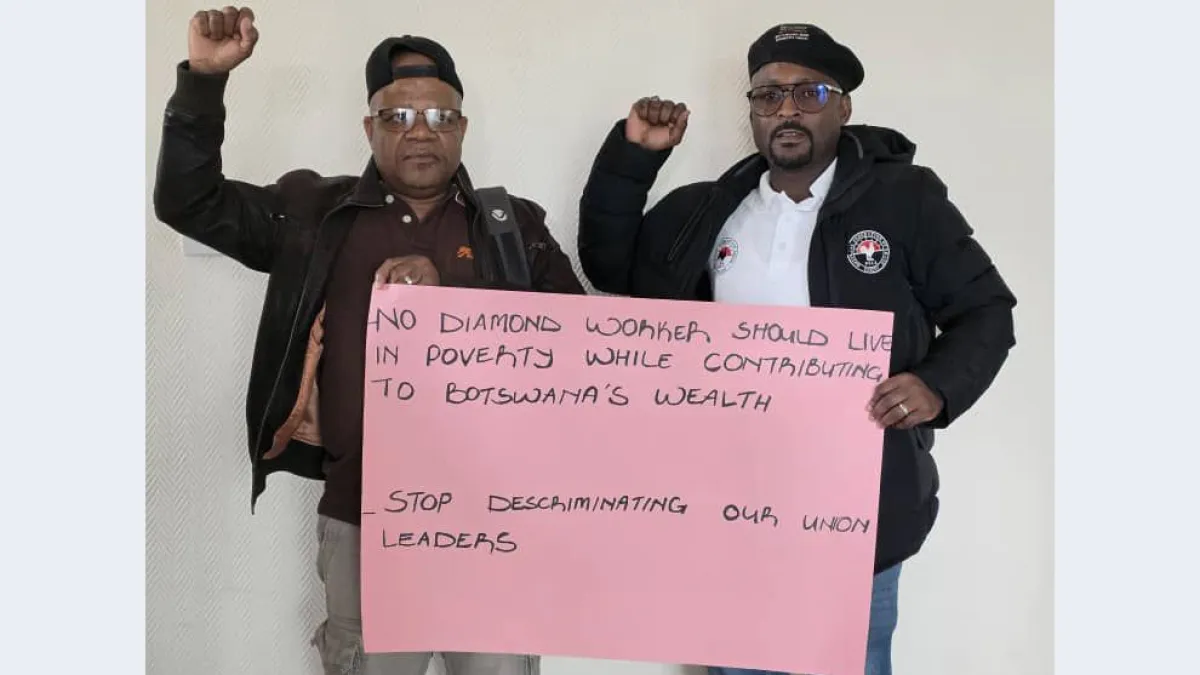
Orapa, Botswana – It is a year since Motshwegwa Rakhudu lost his job after 14 years working as an installer at Debswana diamond mining operations in northern Botswana. He says he had been on rolling three-year renewable contracts with Enabler Hires (Pty) Ltd, and expected the arrangement would continue through to 2027.
Instead, he was retrenched and made redundant without warning.
“The shock was too much,” Rakhudu, (not his real name), told Al Jazeera.
“In early 2025, I took a loan of 26,000 pula (about $1,900) to buy a car because I believed my job was secure. By mid-May, I was out of work.” He said the sudden retrenchment left him struggling with debt and household responsibilities, including school fees, with no compensation received.
“Being caught unprepared has been very difficult. Jobs are scarce, and even when work is available outside mining, the pay is much lower. I am still looking for work,” he said.
Rakhudu said he has considered farming or starting a small business, but lacks the capital. Selling his car, he added, would only cover the outstanding loan.
“I would want to go into farming, but if I sell the car, the money will only clear the loan,” he said.
Al Jazeera contacted Gaotlhobogwe Radikwata, a senior management official at Enabler Hires (Pty) Ltd, for comment on the retrenchments.
“I am not going to answer your questions even if you convince me you are from Al Jazeera. Who gave you my number? I never shared my contacts with journalists. I am not at liberty to share information,” she said.
The retrenchments come as Botswana’s diamond sector, the backbone of its economy, slows sharply.
Debswana Diamond Company, a joint venture between the government and De Beers, cut production by about 27% in 2024 to 17.9 million carats amid weak global demand, and plans further reductions to around 15 million carats in 2025. The company accounts for roughly 90% of Botswana’s diamond sales.
That slowdown has rippled through the wider economy. Botswana’s output contracted by about 5.3% in the second quarter of 2025, the sharpest fall since the pandemic, driven largely by declining diamond production, according to Reuters.
Diamonds account for around 70% of export earnings and roughly a third of government revenue, according to Reuters and S&P Global Ratings, which in 2025 downgraded Botswana’s sovereign credit rating to BBB-, citing sustained pressure from the global diamond downturn and weakening fiscal revenues.
For workers, the impact is no longer abstract.
“The diamond downturn is no longer just a business issue. It is a human issue affecting workers, families, contractors and entire mining communities,” said Mbiganyi Gaekgotswe, General Secretary of the Botswana Mineworkers Union.
He said uncertainty now defines everyday life.
“The first question on everyone’s mind is whether they will still have a job next year,” he said. “Will contracts be renewed? Will overtime be reduced? These are not abstract concerns. They affect school fees, loans, medical bills and family responsibilities.”
Even where jobs remain, pressure is rising as wages stagnate while food and transport costs increase.
Restructuring has already filtered through contractors and service providers, with more workers shifted onto short-term agreements, said Dominic Obusitse Mapoka, Chairperson of the Botswana Diamond Workers Union.
“Workers who remain employed are increasingly on short-term or temporary contracts,” he told Al Jazeera. “This makes it difficult for families to plan because they do not know whether contracts will be renewed.”
He said many earn between $190-250 a month, while the cost of living continues to increase, with knock-on effects for small businesses tied to mining activity.
Since independence in 1966, Botswana’s diamond wealth has transformed what was once among the world’s poorest countries into a middle-income economy, financing infrastructure, public services and sustained growth.
But that success has also left it heavily exposed to global shocks. The sector is now under pressure from weak demand, competition from lab-grown diamonds and reduced luxury spending in key markets, according to S&P Global Ratings.
The downturn exposes the risks of economic concentration, said Levy Ndou, a political scientist at Tshwane University of Technology.
“When citizens depend heavily on one sector, a fall in global demand becomes very damaging.”
He called for faster diversification into agriculture and beef production, alongside stronger regional trade links.
Botswana’s Minister of Labour and Home Affairs, Pius Mokgware, said the government is responding by trying to absorb job losses, including expanding copper mining and opening new projects. He added that diversification efforts are also targeting agriculture, tourism and Information and Communication Technology.
Minister of Minerals and Energy, Bogolo Joy Kenewendo, did not respond to repeated requests for comment.
Tshepo Modibedi, President of the Small Scale Miners Association of Botswana, said smaller operators remain largely excluded from the diamond value chain, which is dominated by large firms.
While not directly involved in diamonds, the downturn still spreads through households nationwide, he said.
“Lab-grown diamonds and strict regulations are challenges,” he told Al Jazeera. “But they could also be opportunities, if policy becomes more inclusive.”
For Rakhudu, however, structural shifts in the global diamond market remain distant from daily survival.
“I am still looking,” he said. “I just want another chance to work.”
Chinese embassy in Washington, DC, condemns designation, calling it ‘discriminatory’.

Published On 9 Jun 20269 Jun 2026
The United States has designated Chinese corporate giants Alibaba, BYD and Baidu as companies that support China’s military, expanding its blacklist to some of the country’s best-known commercial brands.
The Pentagon included the firms in an update on Monday that is likely to complicate the fragile detente under way between Washington and Beijing after years of rocky relations.
list of 4 itemsend of list
China’s embassy in Washington, DC, condemned the listing as “discriminatory” and an example of the US government “overstretching” the concept of national security.
“Chinese companies that do business overseas have been strictly observing laws and regulations of their host countries,” an embassy spokesperson said.
“The US should stop its wrong practice and create a fair, just and non-discriminatory environment for Chinese companies.”
Alibaba, BYD and Baidu did not immediately respond to requests for comment.
The Pentagon’s list of “Chinese military companies,” which is updated annually, now includes 188 firms, up from 134 in 2025.
Firms included on the list, which was created in 2021, will be barred from consideration for US defence contracts from later this month.
The Pentagon defines “Chinese military companies” as entities owned or controlled by the Chinese military, or that contribute to China’s “military civil fusion”, referring to Beijing’s strategy of melding civilian and defence-related research and innovation.
Companies must also carry out some of their operations in the US to be designated.
The expansion of the blacklist comes less than a month after US President Donald Trump met Chinese leader Xi Jinping in Beijing for a two-day summit aimed at lowering the temperature in their countries’ years-long trade war and tech rivalry.
Alibaba, Baidu, and BYD are among China’s most prominent brands, claiming the top spots in the e-commerce, internet search and electric vehicle markets, respectively.
The addition of several household brands not normally associated with the defence sector mirrors last year’s designation of tech firm Tencent, the owner of the ubiquitous messaging app WeChat.
Other additions to the list include RoboSense Technology, an AI and robotics company with headquarters in Shenzhen, and Hangzhou-based Unitree Robotics.
RoboSense Technology and Unitree Robotics did not immediately respond to requests for comment.
Dennis Wilder, a national security expert who worked on China at the CIA and the White House’s National Security Council, expressed scepticism about the feasibility of implementing such a “broad-brush” blacklist.
“Although it may make some US firms wary of engaging with the labelled entities, in fact, many US firms already have deep relationships with these entities, that they are not going to give up unless there are real penalties attached to working commercial deals with them,” Wilder told Al Jazeera.
“Sanctions that range this widely are sanctions that don’t work. Unless the US is willing to decouple from the Chinese economy altogether, these sanctions are simply performative,” Wilder said.

United States President Donald Trump has warned Israeli Prime Minister Benjamin Netanyahu that he might find himself fighting on his own if Israel returns to war with Iran.
The warning on Monday came as Israel and Iran said they would pause attacks following their most serious escalation since a ceasefire took effect in April.
list of 3 itemsend of list
Trump, who has reportedly grown increasingly exasperated with Netanyahu, demanded that both sides stop “shooting” in a post on his Truth Social platform and said that “final negotiations” towards peace would proceed “subject to ignorance or stupidity getting in its way”.
He also called Netanyahu and told him to stop the strikes, according to media reports.
In an interview with Axios, Trump said he had warned Netanyahu about the consequences of continuing the war.
“I said, ‘Bibi, you better be careful, or you will be on your own very soon’,” Trump said.
The flare-up began on Sunday, triggered by Israel’s deadly bombardment of Lebanon’s capital, Beirut. Iran – which has long said any peace deal with the US depends in part on an end to the fighting in Lebanon – responded with a wave of missiles at northern Israel.
Trump reportedly called Netanyahu on Sunday evening and asked him not to retaliate, but Israel launched attacks on Iran early on Monday.
Israeli forces struck Iranian air defence systems and a petrochemical plant, while Iran retaliated by hitting a similar facility in Haifa and targeting two Israeli airbases. Many of the missiles were intercepted over the occupied West Bank.
No deaths were reported on either side.
The exchanges complicated Trump’s push to end a war that the US and Israel launched on February 28. A ceasefire announced on April 8 paused all-out warfare. But flare-ups in the Gulf have continued.
For his part, Netanyahu said in a televised statement that he had told Trump that “Israel has a full right to self-defence, and we are exercising it as required”.
“Right now, the fire at the front is contained, because after we hit the terrorist regime in Tehran, it stopped attacking us,” he said.
Netanyahu also warned that should Iran “make the mistake of resuming attacks against us, we will respond with full force”.
Israel’s ambassador to Washington, Yechiel Leiter, downplayed reports of tension between the US and Israeli leaders, telling Fox News that “sometimes, lovers have a spat”.
He said that while Netanyahu had “decided” to “lower the temperature” at Trump’s request, the US president understands “full well” that Israel cannot “absorb ballistic missiles into our country without responding.”
Iran’s Ministry of Foreign Affairs spokesperson, Esmaeil Baghaei, blamed Washington for the escalation.
“The US is directly responsible,” he said. “They are party to the ceasefire negotiations. Therefore, any act in violation of the ceasefire, be it through the interception of vessels [in the Strait of Hormuz], the targeting of southern Lebanon by Israel, or any other event, will cause the United States to be directly responsible for the escalation in the region.”
Iran’s First Vice President Mohammad Reza Aref said the operation against Israel, dubbed “Nasr” or victory, showcased “a new level of deterrence from mighty Iran” and that Israel had been “forced to beg once again” for a ceasefire.
Behind the scenes, diplomatic efforts continue.
Iranian President Masoud Pezeshkian posted on X that Tehran was still “at the negotiating table”, while Iran’s ambassador to the United Nations, Amir Saeid Iravani, said that Washington and Tehran, through Pakistan as an intermediary, are “presenting and exchanging views” towards an agreement.
Iravani told The Associated Press news agency he was hopeful that “very soon” the two sides would reach “a conclusion”.
Pakistan’s Prime Minister Shehbaz Sharif said efforts for a peaceful diplomatic solution was ongoing “earnestly and painstakingly” and called for restraint, “especially when the final objective is just about to be achieved”.
He also said Israel and Iran’s exchange of fire was a “reminder of the dangers associated with a tenuous ceasefire and the unbearable consequences it may lead to”.
The escalation on Monday also drew in Yemen’s Houthi rebels.
The group fired missiles at Israel early in the morning and declared a complete ban on Israeli maritime navigation in the Red Sea, warning that all Israeli movements would be considered “legitimate military targets”.
Later on Monday, air raid sirens sounded in the Israeli port city of Eilat, with the military saying a suspected aerial target was launched from Yemen.
Violence has also continued in southern Lebanon.
An Israeli strike killed five people in the city of Tyre, while another, in the Nabatieh district, left seven dead. A third strike in Marwanieh killed two people, the Lebanese Ministry of Health said.
Phyllis Bennis, a fellow at the Institute for Policy Studies, said Trump was trying to give an impression that he was tougher on Israel than he actually is.
“The words could be significant if they were matched by actions,” she told Al Jazeera.
“As long as they’re sending billions of dollars directly to the Israeli military, and as long as they’re protecting Israel from being held accountable in the International Court of Justice or the International Criminal Court, as long as those actions don’t change, the words just don’t mean very much,” she added.
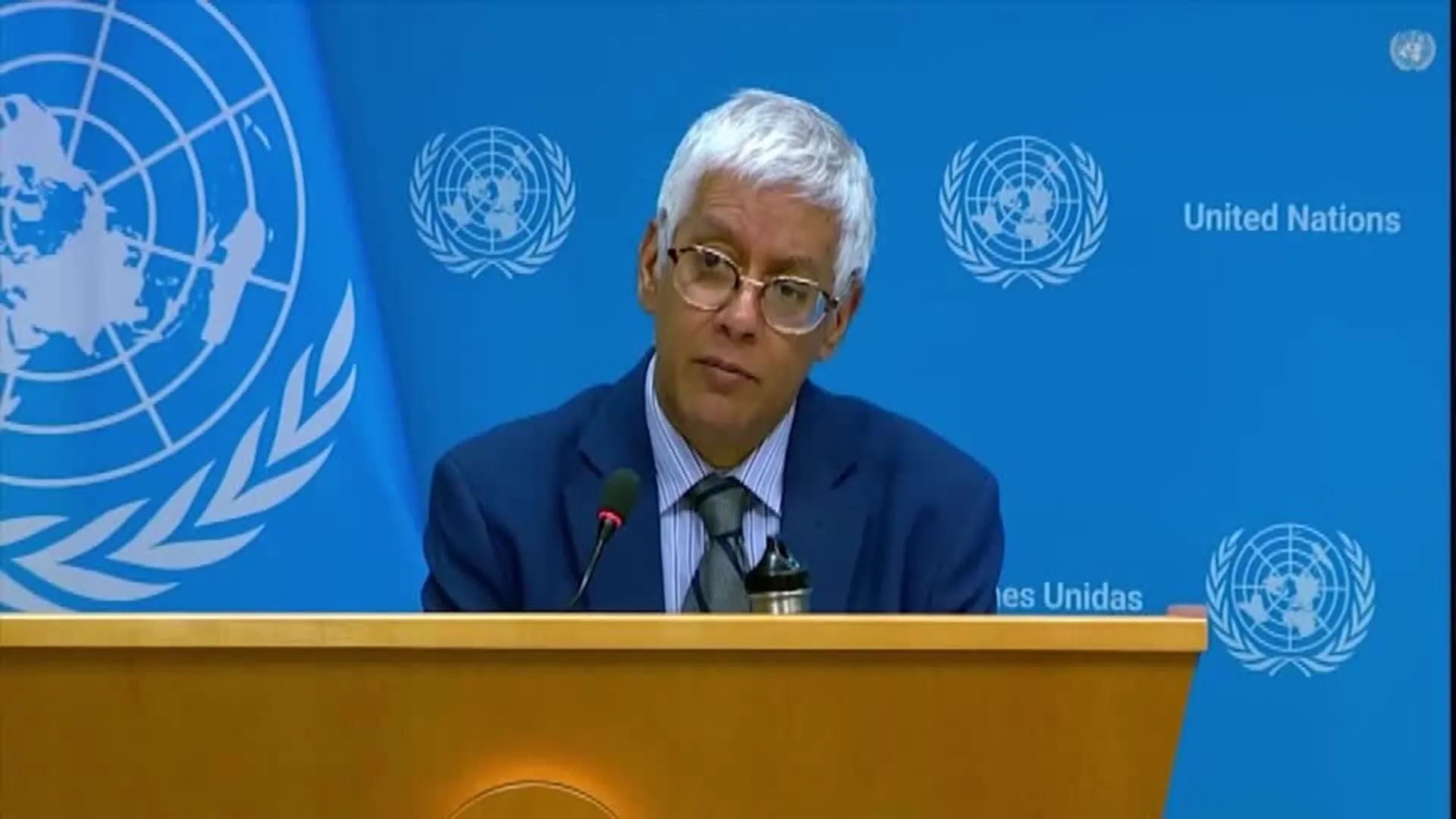
A UN spokesman says forced evacuation orders issued across southern and eastern Lebanon are nearly impossible to follow safely, and calls into question whether Israel is complying with international humanitarian law.
Published On 9 Jun 20269 Jun 2026
Share
Karim Khan rejects suspension as ICC governing body refers him to disciplinary proceedings before member states.
Published On 9 Jun 20269 Jun 2026
The International Criminal Court’s chief prosecutor, Karim Khan, has been suspended from his duties, the tribunal’s governing body said, following a probe into sexual misconduct allegations.
In a statement on Monday, the Bureau of the Assembly of States Parties said it will refer Khan to disciplinary proceedings before all 125 ICC member states, which will vote on his fate in a special session.
list of 4 itemsend of list
“This suspension is not an indication of the final outcome,” it said.
The bureau, which is the executive committee of the court’s oversight body, said it referred Khan after making its own decision on the disciplinary proceedings involving the prosecutor.
It said the decision was based on a report of a United Nations investigation, the advice of an ad hoc panel of judicial experts, and written submissions, but did not give details about what it had decided.
“The decision of the Bureau and the related documentation will remain confidential,” the statement said.
Khan’s lawyers said in a statement that he rejected the decision in the strongest terms, and repeated his denial of any wrongdoing.
“The decision is unlawful, procedurally unfair and unsupported by evidence,” the statement said.
Khan, 56, drew international attention when he applied for warrants against Israeli Prime Minister Benjamin Netanyahu and then-Minister of Defence Yoav Gallant for war crimes and crimes against humanity committed in Gaza.
He also sought warrants for Hamas leaders, including Yahya Sinwar, for the October 7, 2023, attack on southern Israel.
Khan was among the first to be sanctioned by Israel’s ally, the United States, which expressed outrage over the arrest warrants.
He has maintained that the misconduct probe is a politically motivated smear campaign.
According to Reuters and the Associated Press news agencies, the UN probe found a “factual basis” for the allegations of sexual misconduct made by a female aide. However, a three-judge panel selected by the executive committee for a legal assessment of the findings found that the investigation was not conclusive enough.
Khan’s lawyers had previously told Reuters that the judges had unanimously concluded that the “factual findings do not establish misconduct or breach of duty”.
Khan has not led the ICC’s Office of the Prosecutor since last May, when he took a voluntary leave of absence pending the outcome of the inquiry.
He is the first ICC prosecutor to be formally suspended from his role by the court’s oversight body.
Only the Assembly of States Parties has the authority to remove Khan from office, a move that would require a majority in a secret ballot of its 125 member states.
Sixty-three countries would need to support a measure to remove him.
No date was immediately set for the session.
Khan’s suspension will have little practical impact on the functioning of the court, given his existing leave of absence.
He has already been removed from pleading in the ICC’s most high-profile current case, against former Philippine President Rodrigo Duterte.
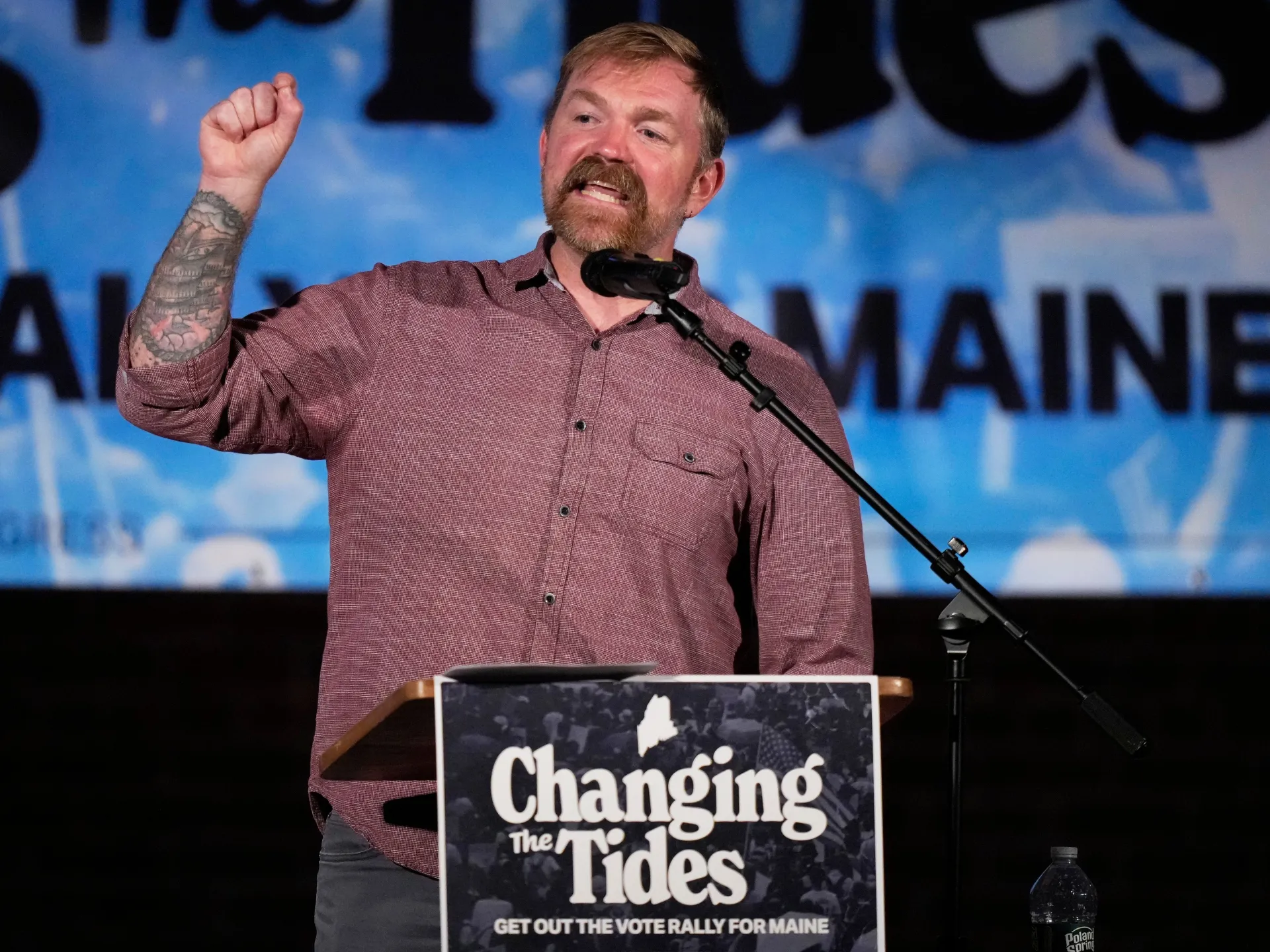
Four states are set to hold their primary votes, further solidifying the battle lines for the United States midterm elections in November.
On Tuesday, citizens in Maine, South Carolina, North Dakota and Nevada are set to cast their ballots in party primaries, designed to select which Democratic and Republican candidates advance to the final round of voting.
list of 3 itemsend of list
But Maine has emerged as one of the most heated primary battlegrounds. With Democrats desperate to flip four seats in the US Senate, all eyes are on Republican Senator Susan Collins’s re-election campaign.
Democrats are hoping to defeat her in November, but the party has fractured over controversies related to its leading candidate, Graham Platner. The race has become one of the most closely watched of the primary season.
At stake in November is control of Congress, and each party is angling to put forward the strongest contender.
Currently, the Republican Party holds slender majorities in both the Senate and the House of Representatives, but Democrats hope to wrest back control, in what would represent a major rebuke to President Donald Trump.
State-level races are also in play during Tuesday’s primaries. Several in key swing states like Nevada could have outsized influence over election administration in the years ahead.
Here are some of the key races to watch.
The Democratic Party’s long-shot hope of retaking the Senate hinges on Maine, a lushly forested northeastern state largely bordered by Canada and the Atlantic Ocean.
The primary vote on Tuesday is widely expected to result in Platner advancing as the Democratic champion for November’s midterms. If so, he will take on the longtime incumbent, Republican Senator Collins, who is considered vulnerable to defeat.
Polls have consistently shown the 41-year-old progressive narrowly defeating Collins in the midterm in November.
Platner has appealed to left-wing voters with his positions in favour of universal healthcare and ending US support for Israel. But a slate of recent reports about his past relationships has threatened to chill the enthusiasm for his campaign.
An oyster farmer and former US Marine, Platner has faced accusations of “unsettling” behaviour towards women, including an alleged incident where he twisted one romantic partner’s arm. Platner has denied that allegation.
He has also permanently removed a skull-and-bones tattoo that critics likened to a Nazi symbol, saying he did not know its source.
Still, in Tuesday’s primary, Platner is expected to handily beat his closest Democratic rivals: environmental consultant David Costello and Governor Janet Mills, who will remain on the ballot despite announcing her withdrawal from the race.
But Maine boasts other nationally significant races, too. That includes the contest for the House seat left open after Democratic Representative Jared Golden announced he would not run for re-election.
Golden has represented Maine’s 2nd congressional district since 2019, and he has proven adept at retaining support, even though his coastal district leans conservative.
If Republicans pick up his seat, it would be a boon to the party’s effort to maintain control of the House. Former Republican Governor Paul LePage is running uncontested in his party’s primary to replace Golden.
Four Democrats, meanwhile, are competing in their party primary to take him on.
They include state Senator Joe Baldacci, state auditor Matthew Dunlap, social worker Paige Loud, and congressional staffer Jordan Wood. All four have charted a more leftward course than the outgoing lawmaker.
Maine’s governor’s race is also open, with Mills, a Democrat, leaving her post at the end of the year due to term limits.
The chance to win the governor’s mansion in November has attracted a crowded field to both party primaries. Each race features notable political scions.
On the left, there is Angus King III, whose father currently represents the state in the US Senate, as well as Hannah Pingree, the daughter of a current member of Congress. Running on the right is healthcare executive Jonathan Bush, a cousin of former President George W Bush.
Nevada has remained a deeply purple state in recent years, leaning neither left nor right.
Democratic presidential contenders have narrowly won the state from 2008 to 2020, but President Donald Trump broke the streak in 2024, carrying just over 50 percent of the vote.
A staggering 45 percent of Nevada’s voters are registered as independents. That means they hold outsized sway in November’s midterm vote, but they will not be able to cast a ballot in Tuesday’s closed primaries, which are limited to party members only.
The sprawling western state is home to about 3.2 million residents. In the middle of its desert landscape sits Las Vegas, a global gambling and entertainment destination.
But the state has become a political football, in part because of its narrow partisan divide.
Trump and his allies have targeted the state by spreading false claims of election fraud in the wake of the Republican leader’s 2020 election defeat. Those assertions led him to clash with state Attorney General Aaron Ford, who pledged to defend his state’s election integrity.
Now, Ford is currently leading a crowded Democratic field to take on Republican incumbent Joe Lambardo for the governor’s mansion. Polls have shown Washoe County Commissioner Alexis Hill as his top challenger in the Democratic primary.
Lombardo — who has broken state records for his use of vetoes — also faces a deep bench of Republican challengers, but he is expected to skate to an easy victory on Tuesday.
Another key state position is up for grabs this November: Nevada’s secretary of state.
Like Ford, the role’s current occupant, Francisco Aguilar, is a vocal critic of Trump’s efforts to assert more federal control over election administration.
He is running unopposed on the Democratic side, so he automatically advances to November’s general election.
Four Republicans are running to challenge Aguilar, including Jim Marchant, a former state assemblyman who supported Trump’s unfounded claims that the 2020 election was stolen.
Another top primary contender is lawyer Shirley Folkins-Roberts, who has been endorsed by the state’s Republican governor.
On the national level, Nevada has four total seats in the House of Representatives. Three are currently held by Democrats, and one by a Republican.
On Tuesday, Republicans will select their challengers in a bid to unseat the Democratic incumbents, all of whom are running for re-election.
Meanwhile, the retirement of Republican Representative Mark Amodei has sparked hope that Democrats might, for the first time ever, win the state’s 2nd congressional district.
Eight Democrats are vying to be their party’s champion, while 13 candidates are running on the Republican side.
Since last year, the Trump administration has led a controversial redistricting drive, pushing Republican-led states to redraw their congressional districts to better favour the party.
But last month, lawmakers in South Carolina chose not to pursue a redistricting plan — at least, not yet. Part of the reason came down to Tuesday’s primaries.
Thousands of voters cast their ballots last month as part of an early-voting campaign encouraged by Democrats. Any last-minute redistricting would have required throwing out those votes.
That has, for now, protected the majority Black district of longtime Representative Jim Clyburn, the only Democrat representing South Carolina in the House.
South Carolina, a southern, coastal state home to 5.5 million people, is considered rightward-leaning. But Democrats are seeking to defend their House seat in November’s midterms — and maybe pick up a second.
In Tuesday’s primaries, the 85-year-old Clyburn is expected to sail to victory against a long-shot Democratic challenger. He is all but assured to win in November as well, given his district’s reputation as a Democratic stronghold.
Democrats have also set their sights on flipping South Carolina’s 1st district, with Republican Nancy Mace vacating her seat to run for governor. Seven candidates are running in the Democratic primary race for the coastal district, while 10 Republicans will compete in their party primary.
One Senate seat will also be on Tuesday’s primary ballot: the one held by Republican Lindsey Graham. Despite several challengers, polls show the incumbent with a commanding lead.
Graham, a close Trump ally and a notable war hawk, has been one of Congress’s most vocal supporters of the US-Israel war on Iran.
This year, due to term limits, Governor Henry McMaster is unable to run for re-election. Given that South Carolina is a solidly red state overall, whoever wins Tuesday’s Republican primary is expected to coast to victory in November.
Recent polls have shown a tight race. Trump has endorsed Lieutenant Governor Pamela Evette, but surveys show her neck and neck with state Attorney General Alan Wilson and Congresswoman Mace, who has at times broken with Trump over issues like the Iran war.
Primary day in the Great Plains state of North Dakota is expected to make few waves nationally.
Neither the governor nor the state’s two senators are up for re-election.
Political observers are expecting few surprises. North Dakota has been a Republican stronghold since the late 1960s.
The 435 seats in the US House are distributed among states based on their population size. But since North Dakota has only about 800,000 people, it has just one congressional district.
During Tuesday’s Republican primary, incumbent Representative Julie Fedorchak will seek to ward off a challenge from former State Department project manager Alex Balazs.
Democrat Trygve Hammer, meanwhile, is running unopposed in his party’s primary.

The TWZ Newsletter
Weekly insights and analysis on the latest developments in military technology, strategy, and foreign policy.
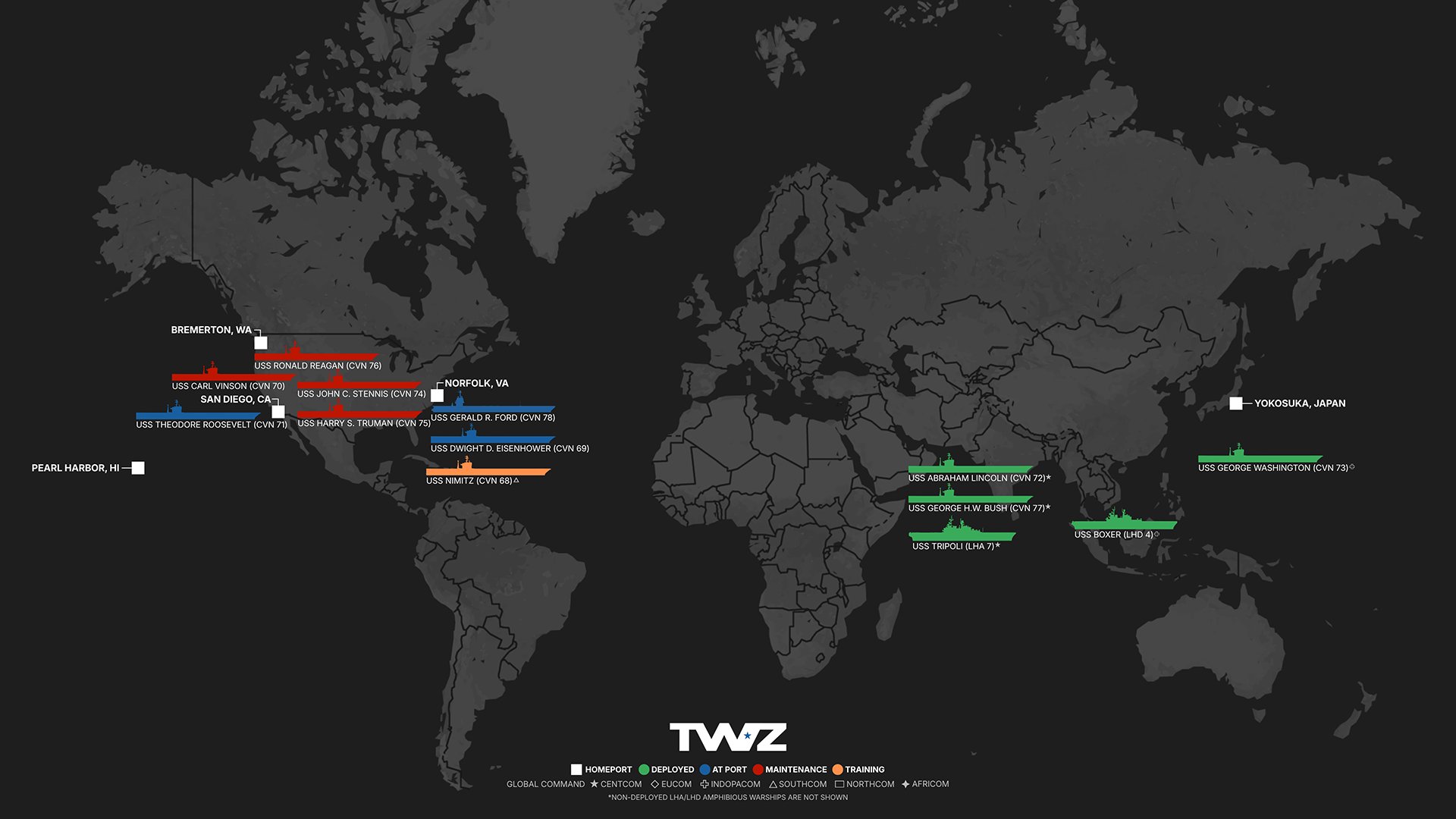
Here’s TWZ’s weekly carrier tracker monitoring America’s flattop fleet, including deployed Carrier Strike Groups (CSG) and Amphibious Ready Groups (ARG), using publicly available open-source information. Check out last week’s report here.
Amphibious assault ship USS Iwo Jima returned to Naval Station Norfolk on Saturday, wrapping a nearly 10-month deployment to the U.S. Southern Command-4th Fleet area of responsibility (AOR). During the 296-day deployment, the Iwo Jima ARG launched over 6,000 sorties, flew 1,850 flight hours, and transited more than 130,000 combined nautical miles. The ARG was the first group of expeditionary naval assets deployed to support Operation Southern Spear, which involved enhanced counter narcotics operations, and played a key role in Operation Absolute Resolve to exfiltrate ex-President Nicolas Maduro from Venezuela.
Aircraft carrier USS Nimitz departed Kingston, Jamaica, after a 4-day port call. Nimitz is now reportedly en route to the United States, according to the U.S. Embassy in Jamaica, “as it finished its 2026 Southern Seas goodwill tour.” The two ships supporting Nimitz, destroyer USS Gridley and oiler USNS Patuxent, also got underway after a brief stop in Ponce, Puerto Rico. Over the weekend, Nimitz embarked officials from the Dominican Republic for a distinguished visitor tour and Gridley fired the Mk 45 Mod 4 5-inch gun during a live fire demonstration.
The USS Nimitz (CVN 68) departed Kingston Harbor at 12pm on June 5 enroute to the United States as it finished its 2026 Southern Seas goodwill tour. Thank you for stopping in Kingston and strengthening the U.S.-Jamaica bilateral partnership as well as enhancing our… pic.twitter.com/RKimaXy6ia
— US Embassy Jamaica (@USEmbassyJA) June 6, 2026
The U.S. maintains dual-carrier coverage in the Middle East enforcing the naval blockade of Iranian ports. USS Abraham Lincoln conducted a replenishment-at-sea with USNS Arctic in the Arabian Sea on June 3, and USS George H.W. Bush is operating at an undisclosed location in the AOR. U.S. Central Command forces have redirected 134 commercial vessels and disabled seven ships attempting to run the blockade, according to a press release.
The officer of the deck aboard USS Michael Murphy (DDG 112) observes a merchant vessel while the guided-missile destroyer enforces the U.S. blockade against Iran in the Arabian Sea. As of June 7, CENTCOM forces have redirected 132 commercial vessels and disabled 6 to ensure… pic.twitter.com/mZtfSMTIRG
— U.S. Central Command (@CENTCOM) June 7, 2026
The George Washington CSG is operating in the U.S. Indo-Pacific Command-7th Fleet AOR. Washington was spotted alongside oiler USNS Earl Warren during a fueling-at-sea evolution on June 8 in the Philippine Sea and, during the last week of May, embarked Carrier Air Wing (CVW) 5 and completed carrier qualifications (CQ). CVW-5 includes a squadron of F-35C fighter aircraft.
Coming in loud and clear! ✈️
An F/A-18E roars in for a landing on the flight deck of USS George Washington while underway in the Philippine Sea. Forward-deployed strike capabilities maintain regional stability and guarantee a free and open Indo-Pacific.#FlyNavy | #US7thFleet pic.twitter.com/lAlxexD4hs
— 7th Fleet (@US7thFleet) June 8, 2026
Note: Positions are general approximations.
Contact the author: ian.ellis-jones@teamrecurrent.io
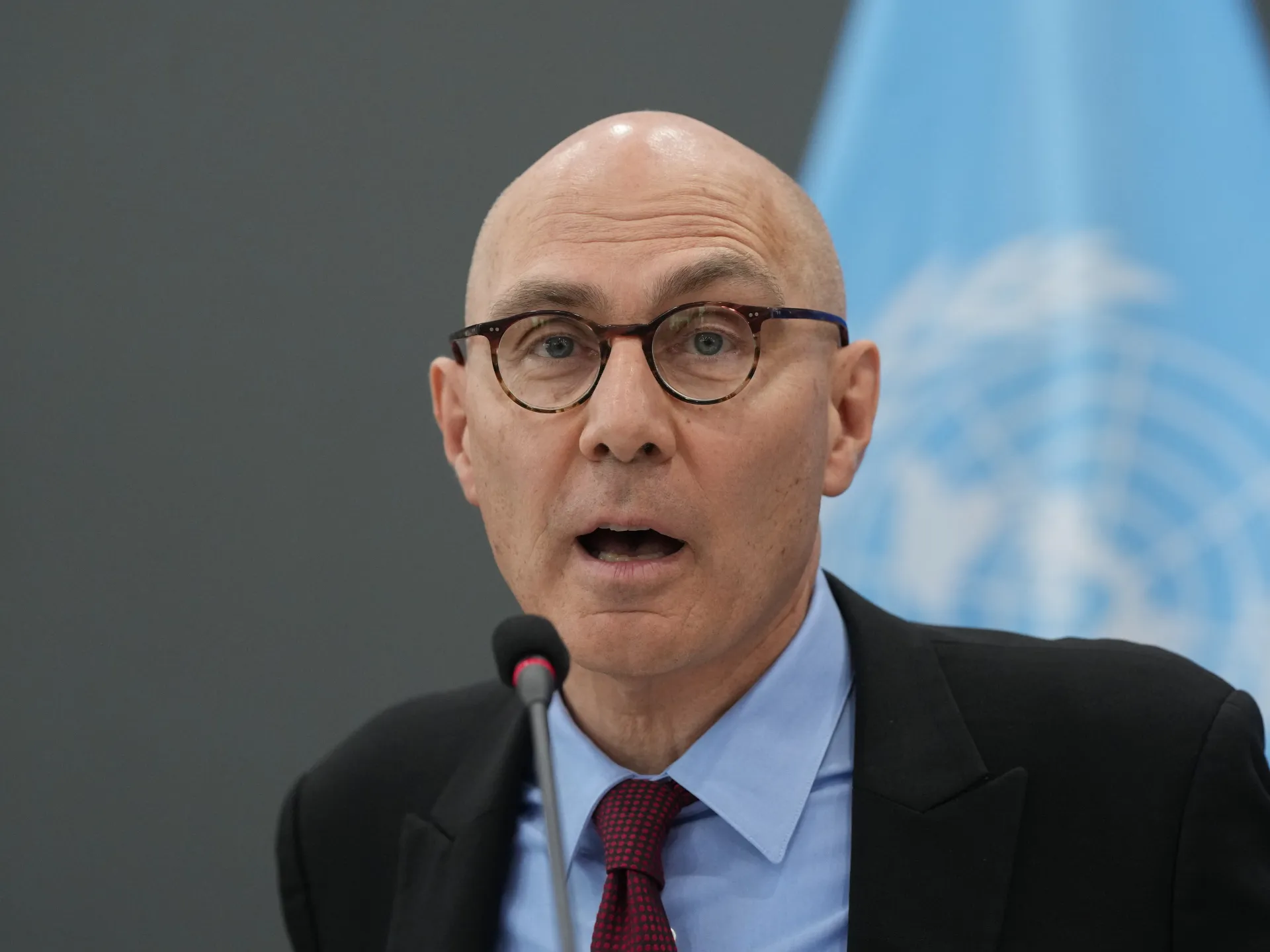
Volker Turk, the high commissioner for human rights at the United Nations, has issued some of his harshest criticism yet of the recent sanctions the United States has imposed on Cuba.
On Monday, Turk drew a line between the increasing restrictions on the Cuban economy and reports of heightened death rates, particularly among children.
list of 3 itemsend of list
“The fuel restrictions imposed since early 2026 and recent tightening of extraterritorial sanctions, taken together, are directly harming Cubans, especially the most vulnerable,” Turk said in a statement.
“Children are dying because doctors lack access to essential medical supplies and medicines. This is unacceptable.”
Such “severe sanctions”, he added, run contrary to the “basic principles of international human rights law”. He called for them to be “lifted immediately”.
Turk’s comments are a direct response to the suite of actions taken under US President Donald Trump to tighten pressure on Cuba, a Caribbean island that has already weathered a decades-long US trade embargo.
Starting in January, the Trump administration moved to cut off Cuba’s foreign oil supply, a linchpin for its ageing energy grid.
First, it severed supplies of oil and funds from Venezuela. Then, on January 29, Trump issued an executive order declaring Cuba to be an “unusual and extraordinary threat” to US national security. As such, he said, any country that supplied it with oil would be subject to steep tariffs.
In the months since, the Trump administration has continued to layer sanctions on Cuba. In May, for instance, penalties were announced against Cuba’s Interior Ministry, its National Police and its Directorate of Intelligence.
Those were followed this month by sanctions targeting Cuba’s president, Miguel Diaz-Canel, as well as members of his family.
The sanctions are designed to penalise those “responsible for repression” in Cuba, an island whose communist government has been accused of stifling dissent, as well as imprisoning and torturing activists.
Turk on Monday acknowledged Cuba’s human rights record and called on the country to “release all those arbitrarily detained”.
But he also pointed to the mounting death toll associated with the US sanctions, which have isolated the island country from much of the world.
The sanctions freeze any US-based assets the target may have, but they also prohibit entities from conducting business with the sanctioned parties. That can result in difficulties accessing global financial systems and other international platforms.
The de facto oil blockade has also resulted in the increasing frequency of power outages, and essential services like public transportation and medical care have faced reductions. Turk pointed to those downstream effects in his remarks.
“Cuba faces increasing isolation,” he said. “Companies are leaving. Fewer airlines fly to the country. It is almost disconnected from international payment systems.”
Turk’s office has also highlighted the human costs of the sanctions. According to the statistics it cited, infant death rates have doubled, reaching 9.9 for every 1,000 births. The survival rate for childhood cancer, meanwhile, has declined from 85 to 65 percent.
In March, the Cuban government also warned of medical needs going unanswered as a result of the energy shortage. It estimated that there was a backlog of 96,387 people awaiting surgery, 11,193 of whom were minors.
It also underscored that 16,000 patients needed radiotherapy, and another 2,888 required dialysis, two treatments that depend on steady electrical supplies.
Turk’s remarks also pointed to the risks posed by the Atlantic hurricane season and other natural disasters. Within hours of his remarks, western Cuba was rattled by a powerful 6.1-magnitude earthquake. Summer heat alone could cost lives, he explained.
“Rising summer temperatures risk increasing the spread of vector borne and waterborne diseases,” Turk said.
“The hurricane season further increases exposure. This creates a perfect storm for social and economic deterioration and suffering for the Cuban people.”
Trump has repeatedly suggested that he is considering military action in Cuba to remove its leadership after the US-Israel war on Iran reaches an end.
Since January, only one Russian oil tanker has been allowed to reach the island, leaving its foreign fuel supplies largely depleted.

Residents in Tel Aviv voiced mixed reactions after Israel and Iran said they would halt strikes following a day of missile exchanges. While some wanted a stronger response against Iran, others said Israelis were ‘losing’, citing disruptions to daily life, schools and tourism.
Published On 8 Jun 20268 Jun 2026
Share

The TWZ Newsletter
Weekly insights and analysis on the latest developments in military technology, strategy, and foreign policy.
The troubled pan-European Future Combat Air System (FCAS) appears to have lurched to an undignified — but predictable — end, at least in its current form. A flurry of media reports today indicate that France and Germany, the two major partners in the program, have abandoned their program to develop a crewed New Generation Fighter (NGF) aircraft together, a conclusion supported by a French diplomat who spoke to TWZ today.
According to sources including the Frankfurter Allgemeine Zeitung, German Chancellor Friedrich Merz has urged French President Emmanuel Macron to pull the plug on the NGF. The German newspaper cited unnamed government sources in Berlin. Reportedly, the French and German leaders concluded that the companies involved — Dassault and Airbus — have been unable to reach agreement on key aspects of the project, specifically relating to the jointly developed fighter jet.

At this stage, it is reported that Merz and Macron cannot see a future for the NGF, although it is apparently still unclear whether the French government fully shares this assessment and is prepared to accept its consequences.
At this point, it should be recalled that there are at least three separate FCAS initiatives in Europe.
As well as the pan-European version headed up by France and Germany, with Spain and Belgium as junior partners, there is a rival British-led FCAS. This has the Tempest crewed fighter as its centerpiece, involves Italy and Japan, and is now more commonly referred to as the Global Combat Air Program (GCAP). Finally, the Swedish next-generation combat aircraft program, led by Saab, is also known as FCAS.
Returning to today’s developments, French officials are reportedly surprised by what they viewed as uncoordinated messaging from Berlin. From Paris’s perspective, it is the responsibility of political leaders to provide industry with clear direction.

The French government is also said to be frustrated over what it sees as Germany’s increasing preference for national solutions, which threatens to sideline its own industrial input.
A French diplomat told TWZ: “The President of the Republic and the Federal Chancellor have held extensive and frequent discussions on ways to move forward with this important project for European defense. Both leaders expressed regret that the industrial partners have been unable to reach an agreement on the continuation of the project. The German authorities considered that it was not possible to exert further pressure on the companies involved. France remains convinced that Franco-German cooperation is essential both for our two countries and for our European partners in the fields of defence and security.”
The diplomat added: “The French authorities will continue to encourage our industries and armed forces to explore avenues for ambitious European projects that are consistent with our national security interests.”
According to reports, Macron and Merz discussed the future of FCAS last week, in the latest of several recent efforts to keep the program on track. At the same time, however, Merz had become increasingly vocal about his skepticism regarding the project’s prospects.
The FCAS program was launched back in 2017, with the primary aim of replacing France’s Rafale fleet and Germany’s Eurofighters.

FCAS was envisioned as a next-generation European combat air system entering service around 2040, spearheaded by the NGF crewed fighter. As of 2022, it was envisaged that “in-flight demonstrations” would be achieved by 2028 or 2029.
Before long, however, the project was overshadowed by arguments over workshare agreements, and it is unclear how far the partners had got in terms of agreeing on NGF requirements and starting its design.
For a while now, there have been reports that Germany is exploring alternative paths, including the possibility of separating itself from France within the program entirely.
By February of this year, Merz was publicly raising doubts about the program’s viability, arguing that key issues had never been fully resolved during the planning phase. According to the German leader, Germany and France have fundamentally different operational requirements for a future combat aircraft.
Merz pointed to the specific French requirements that call for aircraft to be capable of carrying nuclear weapons and operating from aircraft carriers. Merz argued that Paris is seeking to shape the aircraft around French military requirements, which do not necessarily align with Germany’s needs.

“This is not primarily a political disagreement,” Merz said. “The real issue lies in the requirements profile. If we cannot reconcile those differences, the project cannot continue.”
Within France, Dassault CEO Éric Trappier recently declared the FCAS project dead if Airbus refuses to cooperate, while Macron continued to make efforts to resuscitate the program.
There are indications that Paris will still try to do its best to keep the program alive, and it remains possible that the broader FCAS architecture, or parts of it, could continue even without the NGF. FCAS has always intended to field families of drones, air-launched weapons, and potentially other aerial platforms, within an overarching ‘combat cloud.’

The German government considers that the “true essence of FCAS” should be continued as a European system of systems, according to the Frankfurter Allgemeine Zeitung.

FCAS System of Systems
Whatever happens next, the program appears to be at a crossroads, and facing its biggest existential challenge yet.
It is highly questionable whether either France or Germany (even with Spanish industrial support and finance) could develop a fighter without the other major partner.
This could open the door to a radical reshaping of European combat air programs.
There have already been suggestions at the highest military levels that the British-led and Franco-German FCAS efforts could be fused in some way. However, it seems highly unlikely that all these partners could come together with agreement. Just as questionable is whether the GCAP effort would be able to admit new major partners at this late stage.
Then there is the issue of Sweden.
Last month, we reported on Airbus having raised the possibility of teaming with Saab on the manned tactical component of FCAS. That was one of the clearest indications yet that Airbus is actively exploring post-FCAS alternatives, or, at the least, a major overhaul of the program’s structure.

Potentially, Airbus and Saab could now team up to develop a joint next-generation fighter, with their requirements likely to be more closely aligned than those of France. Germany and France also have a less urgent need for a sixth-generation combat jet, with Sweden only now introducing the Gripen E, and with Germany looking forward to receiving F-35s as well as more Eurofighters.

For France, losing its partners for NGF could be more critical, although it continues to work on advanced versions of the Rafale. In 2024, France also unveiled plans to develop a new uncrewed combat air vehicle (UCAV) that will complement the forthcoming Rafale F5 crewed fighter. The industrial side of the drone program will be headed up by Dassault, drawing upon its previous nEUROn UCAV demonstrator, which has already been used in trials with crewed combat aircraft.

The F5 standard of the Rafale is planned to keep the multirole combat aircraft in frontline service until around 2060. That will at least give France some time to consider what to do about a future crewed fighter.

Drones are also increasingly part of the combat-air picture in Germany, too. Delays in fielding a sixth-generation fighter could be mitigated, to a degree, by Airbus developing combat drones. Airbus and Kratos are already pitching the stealthy XQ-58A Valkyrie drone to Germany, and Airbus has also been working on a stealthy CCA-like concept of its own, known as Wingman.

In the background, the U.S.-made F-35 continues to expand its customer base in Europe. There is also the prospect that, in the future, the sixth-generation F-47 might also be offered for export in the region, although this might only be in a watered-down form.
Overall, though, the latest development is a poor reflection on Franco-German cooperation, which has singularly failed to come to agreement about what should be a flagship program, providing a cornerstone of efforts to strengthen Europe’s defense capabilities.
With the ILA Berlin airshow starting on Wednesday, this news could hardly be worse-timed. On the other hand, we may well learn more about Germany’s vision for its future combat aircraft program before the week is out.
Contact the author: thomas@thewarzone.com

The drone entered Latvian airspace due to ‘Russian electronic warfare’, the military says.
Published On 8 Jun 20268 Jun 2026
NATO fighters have scrambled to shoot down a drone that entered Latvian airspace from Russia.
The Latvian military said on Monday that French aircraft had destroyed “a foreign unmanned aerial vehicle that had entered Latvian airspace as a result of Russian electronic warfare”, without saying where the drone originated.
list of 4 itemsend of list
The incident adds a growing list of incursions from the Russia-Ukraine war into neighbouring countries that are part of the NATO alliance, sparking fears of escalating spillover effects as Moscow’s siege on Ukraine continues apace.
“Thank you to our French allies for shooting down the drone that penetrated Latvian airspace!” Riga’s Foreign Minister Baiba Braze wrote on social media.
Latvian Prime Minister Andris Kulbergs heralded the “swift decision-making and professional action”.
Defence Minister Raivis Melnis told reporters the drone was shot down just after 9am local time (07:00 GMT) near the village of Berzgale, located about 30km (18 miles) from the Russian border. No one was hurt, and no property was damaged, Melnis said.
The French military said in a statement that the jets took off from Siauliai airbase in northern Lithuania and destroyed the drone “over an uninhabited area”.
It added that the incident demonstrated France’s “commitment to contributing to the security of Europe’s eastern flank”.
Authorities had previously warned residents in some parts of eastern Latvia to shelter in place because of the threat.
Countries in the region have reported repeated drone incursions from air and sea in recent months, spawning concerns over the widening impact of Russia’s war on Ukraine.
The issue has raised the political pressure in Latvia, leading to the resignation of Prime Minister Evika Silina last month.
The increased frequency of the reports comes as Ukraine has increased its attacks on Russia, with Moscow deflecting drones using electronic jamming. The statement from the Latvian military regarding “Russian electronic warfare” appears to suggest the drone shot down likely came from Ukraine.
Fragments of a Ukrainian drone were also found in a field in Moldova on Monday after it entered from Ukraine, an incident that officials also blamed on Moscow.
Last week, a maritime drone exploded in Romania’s Constanta port. Kyiv later confirmed it involved a Ukrainian drone that was knocked off course by Russian electronic interference.
However, it was a Russian drone that hit an apartment building in eastern Romania in late May, injuring two people and prompting Bucharest to call for NATO to speed up the transfer of anti-drone capabilities.
European Commission President Ursula von der Leyen warned after that crash that Russia’s war on Ukraine is “increasingly becoming a direct threat to countries on our Eastern border” and said solidarity with them was “absolute”.
The French military jet that shot down Monday’s drone is part of the NATO Baltic Air Policing mission, which has patrolled the skies of Latvia, Lithuania and Estonia since they became part of NATO in 2004.

Published On 8 Jun 20268 Jun 2026
An offshore earthquake with a magnitude of 7.8 has struck the southern Philippines, killing at least 35 people and injuring more than 200.
The quake on Monday is the strongest to hit the country this year, according to Teresito Bacolcol, director of the Philippine Institute of Volcanology and Seismology.
Several low-rise buildings collapsed or sustained heavy damage in the hard-hit city of General Santos.
Tsunami damage was reported in at least one southern coastal village, while smaller waves were recorded in Indonesia, Palau and as far away as southern Japan.
The quake also triggered a landslide in Glan, a municipality in the province of Sarangani, that killed 13 villagers, provincial disaster-mitigation official Rene Punzalan told the DZBB radio network. Four other villagers died in Sarangani, he added.
The United States, an ally of the Philippines, said it was coordinating with Manila and was ready to support Philippine response efforts. France, Japan and New Zealand also expressed support.
The epicentre was offshore near Mindanao, the second most populous island in the Philippine archipelago. Bacolcol said the quake struck at a depth of 33km (20 miles), about 32km (20 miles) southwest of Maasim town in Sarangani province.
President Ferdinand Marcos Jr ordered the cancellation of classes and directed disaster-response agencies to immediately get to work in quake-hit provinces, saying “the national government is moving and we will not leave Mindanao behind”.
The Pacific Tsunami Warning Center said the threat of a tsunami had largely passed about five hours after the quake. Philippine officials also lifted a tsunami warning by mid-afternoon. Six shanties on stilts were damaged in a coastal village in Zamboanga del Sur province due to the quake and higher waves, officials said.
Aside from the Sarangani landslide, most of the other deaths were caused by collapsing buildings and falling debris, including in a damaged mosque, in the southern provinces of South Cotabato and Davao Occidental and on Balut Island, according to disaster-mitigation official Ednar Dayanghirang.
The Philippines frequently experiences earthquakes and volcanic eruptions because it lies on the Pacific “Ring of Fire,” an arc of seismic faults encircling the ocean.

Organisers said a counter-protest in Scarva, County Down, was “racist, xenophobic, sectarian”.
Source link