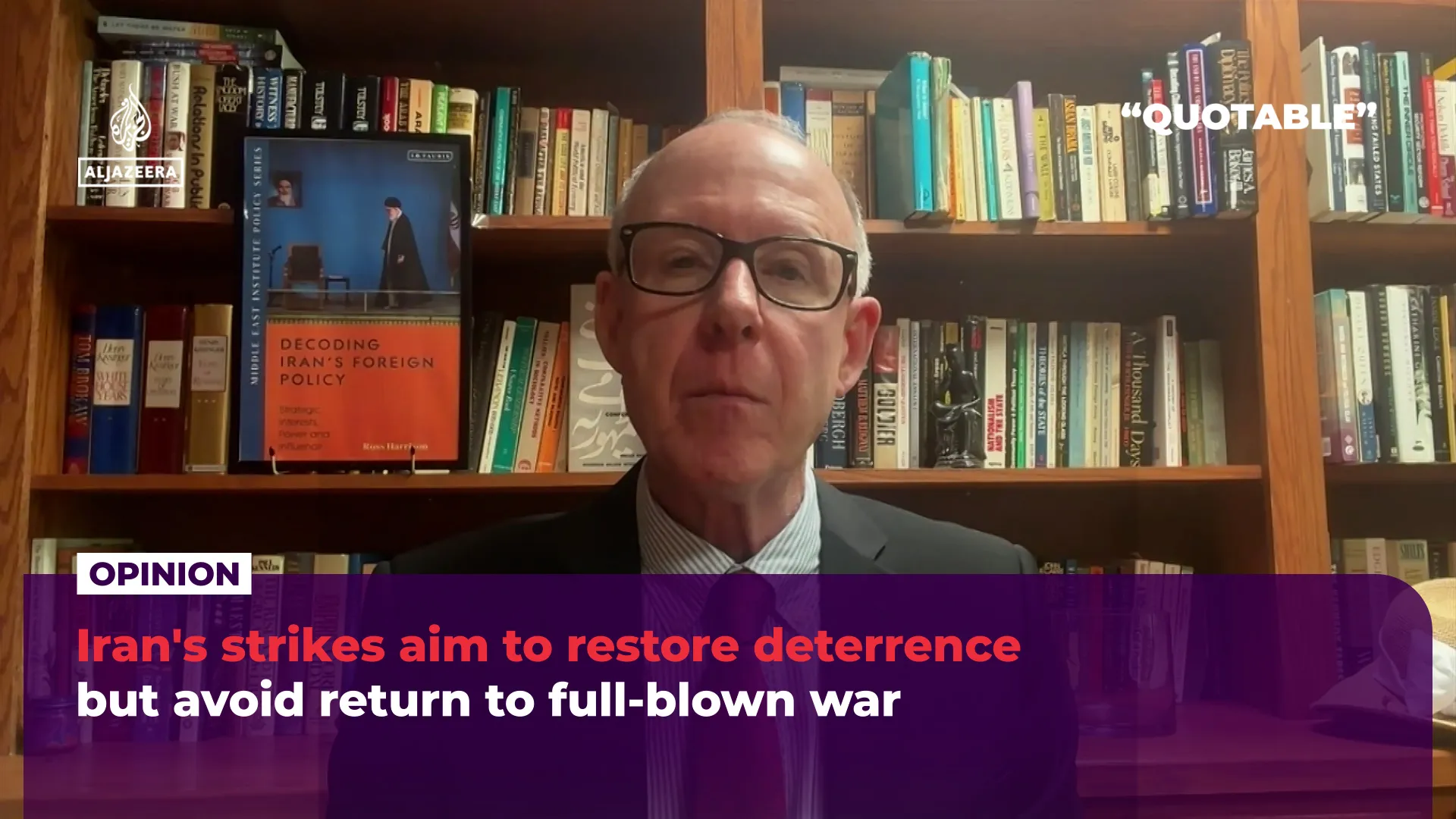
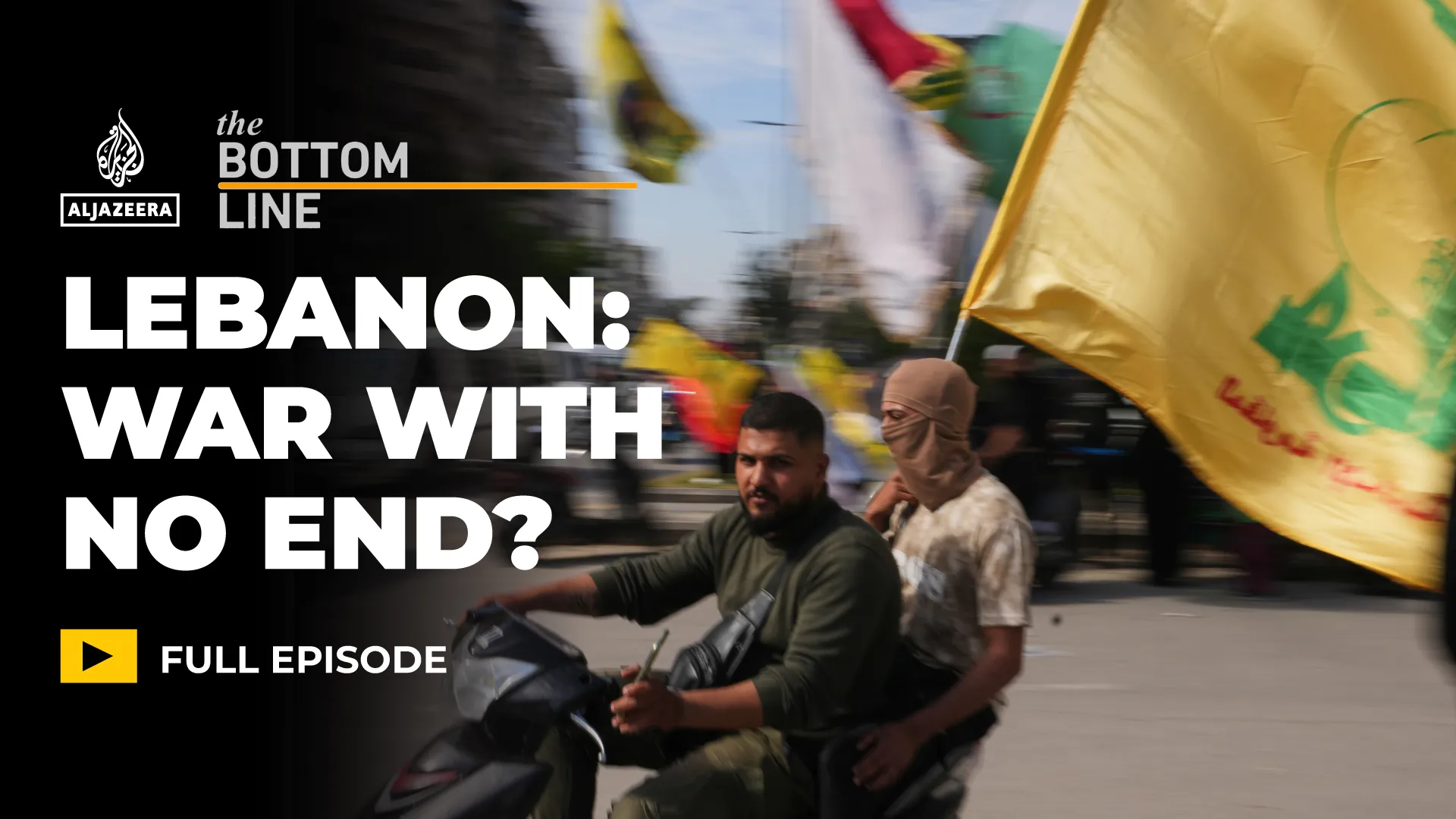
Ross Harrison, a senior fellow at the Middle East Institute, says that Iran’s renewed missile strikes on Israel aim to restore deterrence without reigniting full scale war.
Nigerian troops say they have rescued 360 people abducted during a deadly terrorist attack on Ngoshe, a resettled community in Gwoza Local Government Area of Borno State, northeastern Nigeria, more than three months after terrorists overran the town, killing residents and forcing thousands to flee.
Solomon Ali Talake, a primary school teacher and survivor of the March 3 attack, said community members had received information about the rescue.
“I was told they have been rescued,” Solomon told HumAngle on Sunday. “Families have been informed, but they have not allowed us to see them yet. They said they are assessing them and will release them to their families afterwards.”
The March 3 attack on Ngoshe was one of the deadliest assaults on a resettled community in southern Borno in recent months. Residents said the attackers first struck a military formation in the town before moving into the community. Homes were set ablaze, civilians were killed, and hundreds of residents were reportedly abducted.
Solomon survived by hiding in a tree throughout the night while the attack unfolded beneath him. From his hiding place, he watched as gunmen moved through the community, burning houses and pursuing fleeing residents.
The attack displaced thousands of people, many of whom fled to Pulka, a neighbouring community about 12 kilometres away. Others sought refuge in Maiduguri, Cameroon, and other locations. The exact number of people killed or abducted remains disputed. While some media reports estimated that about 100 people were killed and more than 300 abducted, residents told HumAngle that the scale of the attack made precise figures difficult to establish. Victims were later buried in a mass grave, according to survivors.
Among those abducted were two of Solomon’s nephews, aged 14 and 11. On Sunday, he said he had not yet been able to confirm whether they were among those rescued.
Asabe Ali Talake, Solomon’s sister and the children’s mother, also said she had received reports of the rescue but remained uncertain about the fate of her children.
Asabe said she was still waiting for confirmation from authorities. Relatives of the freed victims say communication with them remains restricted while security agencies conduct assessments.
Military authorities typically screen and profile people freed from insurgent-controlled territories before reuniting them with their families. The process is intended to establish identities, assess physical and psychological conditions, and determine whether further investigation or rehabilitation may be required.
This comes amid a broader wave of insecurity affecting communities across Borno State. In recent months, terrorists have launched repeated attacks on military formations, reconstruction projects, and resettled communities, raising concerns about the sustainability of government resettlement efforts in conflict-affected areas.
Part of a broader rescue effort
A politician from Gwoza, who spoke to HumAngle on the condition of anonymity because he was not authorised to discuss the matter publicly and who was involved in advocacy efforts for the victims’ release, claimed a ransom was demanded for the release of the victims. HumAngle could not independently verify the claim, and the military has not publicly indicated that any negotiations took place.
This development is the latest in a series of operations by troops of Operation Hadin Kai targeting terrorist enclaves in the Mandara Mountains and surrounding areas.
Three days earlier, troops rescued a woman and her infant child after killing several terrorists. On May 1, troops rescued six abductees during an operation around the Mandara Mountains. Six more victims were rescued on May 14. In April, 12 victims, including men, women, and children, escaped during a military operation targeting a terrorist camp.
The latest operation, however, represents the largest reported release linked to the March 3 attack on Ngoshe, offering renewed hope to families who have spent months waiting for news of their relatives.
While military authorities described the operation as a rescue, questions remain about how the victims regained their freedom.
Nigerian troops have rescued 360 people abducted during a terrorist attack on the resettled community of Ngoshe in Gwoza, Borno State, over three months after the attack.
The March 3 assault was one of the deadliest, with homes destroyed, civilians killed, and hundreds taken hostage, displacing thousands to nearby areas.
Survivors like Solomon Ali Talake reported receiving news of the rescue, though they have yet to reunite with the freed individuals, including his nephews. Authorities are evaluating the rescued individuals before reuniting them with their families to ensure proper identification and assess any need for rehabilitation.
The rescue is part of broader operations by Operation Hadin Kai aimed at dismantling terrorist strongholds in the region.
Get our in-depth, creative coverage of conflict and development delivered to you every weekend.
Subscribe now to our newsletter!
A local politician suggested a ransom was involved, though this remains unverified. This largest reported rescue related to the Ngoshe attack provides hope to families anxiously awaiting news of their loved ones.
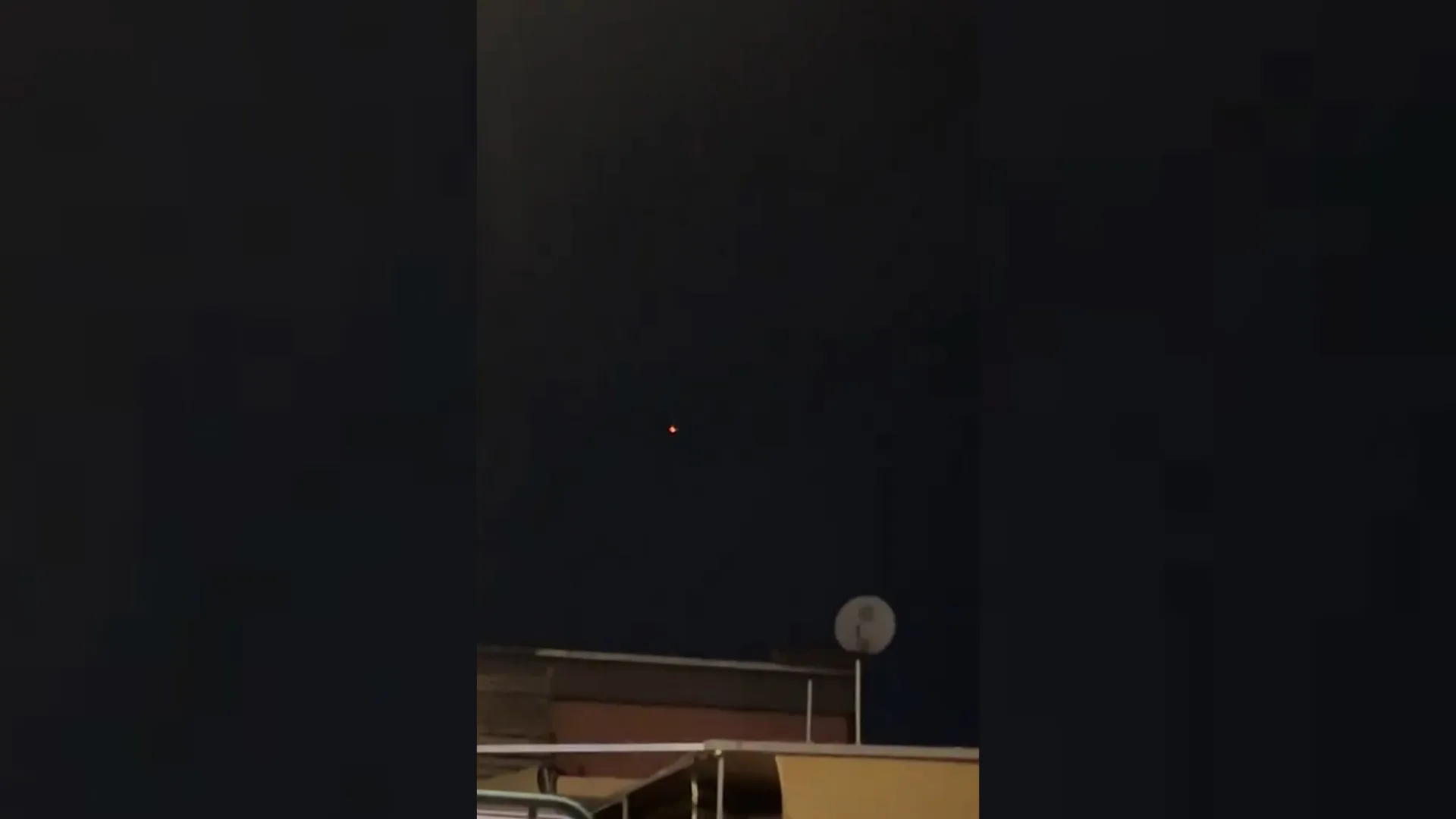
Videos show missiles over Israel as the Israeli military says Iran launched a new wave of attacks. The escalation follows a deadly Israeli strike on Beirut, with Iran warning it would abandon negotiations and return to ‘direct confrontation’.
Legal challenge claims US president did not seek proper approval for fighting event to be held on his 80th birthday.
Published On 7 Jun 20267 Jun 2026
A lawsuit is seeking to stop United States President Donald Trump from hosting an Ultimate Fighting Championship (UFC) match at the White House.
The lawsuit, lodged on behalf of two Virginia residents, is the first known legal challenge to the mixed martial arts event, which is set to be hosted on June 14.
Recommended Stories
list of 3 itemsend of list
The event will take place on Trump’s 80th birthday. It is also pegged to the 250th anniversary of the signing of the Declaration of Independence, which the US will commemorate on July 4 of this year.
The legal challenge filed on Saturday maintained that Trump did not receive proper authorisation to host the fight.
It argued that the event violated US National Park Service regulations prohibiting sporting events on federal parklands, that Congress did not consent to the construction of a towering arch overlooking the event space, and that no environmental review was conducted before the construction.
“This is fundamentally a private, commercial, corrupt use of our most sacred national monuments for private gain,” said Brendan Ballou, a lawyer for the plaintiffs. “And that is what is motivating this lawsuit.”
In a statement to the Associated Press, the White House dismissed the lawsuit as “obstructionist, baseless, and dilatory”.
The White House maintained the UFC fight was “no different than the various other White House-hosted events on the South Lawn and properly permitted events on the Ellipse and National Mall throughout the year”.
Crews have been erecting an octagon-shaped fighting cage on the South Lawn of the White House, with Trump saying the project will include a “5,000-seat arena right outside the front door of the White House”.
Attendance at the fight will be invite-only and closely monitored. The Military Times news site reported earlier this week that 1,200 service members given tickets to the event must meet certain waist-to-height ratio standards.
Public viewing areas will also be set up at the nearby Ellipse.
Trump has long been closely involved with both professional wrestling and UFC, with his casinos and event spaces hosting past events.
He regularly appeared as a version of himself in World Wrestling Entertainment (WWE) events throughout the 1990s and early 2000s. His current secretary of education, Linda McMahon, is a co-founder of the WWE.
Trump has more recently embraced UFC, which is currently owned by the same company, TKO Group Holdings, as the WWE.
UFC president Dana White has been a close ally of Trump’s.
Political analysts have credited Trump’s embrace of the sport with reaching disaffected male voters in the US, particularly during his 2024 election campaign.
New law grants president power to use military to clear roadblocks set up amid weeks of anti-government demonstrations.
Published On 7 Jun 20267 Jun 2026
Bolivia’s legislature has passed a law granting President Rodrigo Paz the authority to use the military to clear roadblocks set up by antigovernment protesters.
The legislation passed in Bolivia’s Chamber of Deputies on Sunday following an overnight debate. It had previously been approved by the Senate and was expected to be signed into law by Paz.
Recommended Stories
list of 3 itemsend of list
“This law is hereby passed,” announced Roberto Castro, President of the Chamber of Deputies.
The military has so far only been used in support roles for anti-riot police during weeks of demonstrations calling for Paz, the centre-right leader backed by the US, to step down.
About 100 roadblocks have been set up across the country in recent weeks. Authorities have said the road blockades have led to food and medicine shortages.
On Saturday, dozens of riot police backed by military vehicles fired tear gas as they attempted to clear a road in the town of San Julian.
Protesters threw stones and burned tyres to try to halt the police advance, said an AFP reporter at the scene.
The new law would allow soldiers to use force against protesters, and also grants them a “presumption of legality” in conflict situations. That means their actions will be deemed lawful unless proven otherwise.
It comes after Bolivia’s legislature voted last month to repeal a 2020 law that restricts the use of the military to crack down on protests.
Farmers, miners and transportation unions have been among those leading the protests. The demonstrations come amid widespread unrest over rising inflation, low wages and Paz’s move to abolish fuel subsidies.
Paz, who was elected last year, has charted a course as a pro-business leader, vowing to guide the country through an ongoing economic crisis.
He has received the backing of the US, with the administration of the US President Donald Trump’s so-called “Shield of the Americas” regional coalition vowing support during protests..
“We stand with Paz’s democratic government as it fights back against attempts to drag Bolivia backwards through cynical efforts to prevent the delivery of food, medicine and other vital supplies to the Bolivian people through fake road blockades,” said the alliance members, who have vowed to take a militaristic response to crime in Latin America
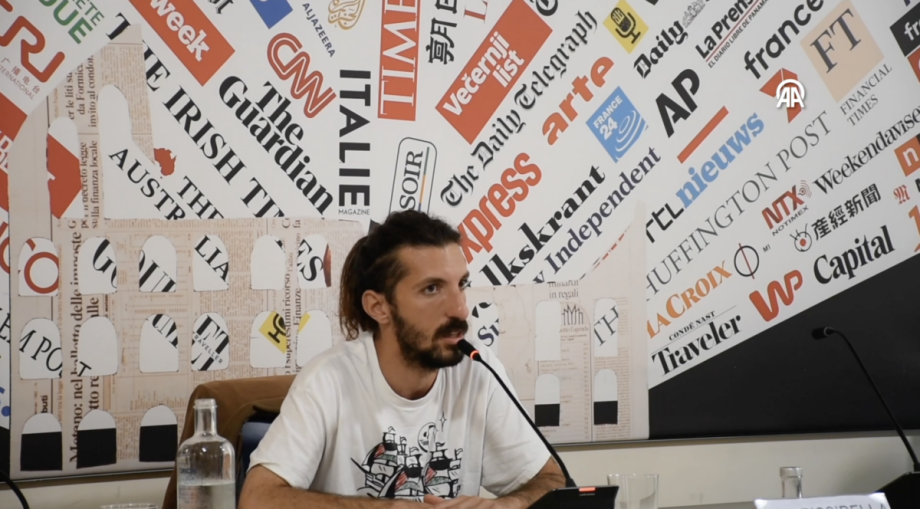
Italians who took part in a humanitarian aid flotilla for Gaza said Wednesday that when the Israeli army attacked them last month in the Mediterranean in violation of international law, they abducted some activists, and subjected them to ill-treatment amounting to torture, Anadolu reports.
“This time, the Israeli army responded to the flotilla much more violently” than in past humanitarian efforts, Antonio La Piccirella, who took part in the Global Sumud Flotilla’s 2026 Spring Mission, told a press conference in Rome.
“There were two attacks, one of them off the coast of Europe. In the attack between Italy and Greece, they abducted two of our members, further violating international law. The other intervention was carried out in broad daylight and lasted for one-and-a-half days.”
La Piccirella said Israel last year allocated $180 million to anti-flotilla propaganda in order to fight them and build up a sense of “impunity,” and that this year they spent far more, some $760 million.
This propaganda was carried out through disinformation and aimed to create communities sympathetic to Israel in Europe and the US, he said.
Emphasizing that they would continue to take action in the future, La Piccirella said: “We are concerned with actions against the naval blockade of Palestine (and promoting) humanitarian aid, and international law.
“The international situation is constantly changing, and so is our strategy. So we repeat that we will definitely continue to do something,” he said.
– Forced to kneel and be humiliated
Italian journalist Alessandro Mantovani, who also took part in the spring mission, stressed that after being detained he was not even allowed to say that he was a journalist.
“From the very beginning, we were beaten and forced into humiliating positions. When we were taken to their military ships, we were pushed down face-first onto the deck, tied up, then forced to kneel and kept in the same extremely uncomfortable position for hours. When we were brought to the ship that we all called the prison ship, we were systematically beaten,” he said.
The face-down positions he described fit video footage posted online by Israeli National Security Minister Itamar Ben-Gvir, in which the activists were forced to kneel and were subjected to abusive language, mistreatment which drew fierce criticism from numerous countries.
Mantovani said he still has problems with his jaw because of the blows he received and that his jaw may have been dislocated.
The Italian journalist said the Israeli army treated Turkish activists especially badly.
“I think I can say that the Turks were treated even worse than the others; torture also has a geopolitical dimension,” he said.
Turkish leaders have been at the international forefront of condemning Israel’s genocide in Gaza as well as the famine and near-starvation of its populace due to a long-standing blockade of food, medicine, and other humanitarian supplies. The blockade was due to be relaxed in recent months, but many rights groups and international observers say the situation has improved little if at all.
Mantovani pointed out that the Global Sumud Flotilla was detained at night during its first voyage last year, while during this latest voyage it was detained in broad daylight.
He stressed that the Israeli army was not ashamed to show that it attacked unarmed people with weapons.
Antonelli takes his fifth Grand Prix win in a row in race interrupted by crashes after asphalt breaks apart.
Published On 7 Jun 20267 Jun 2026
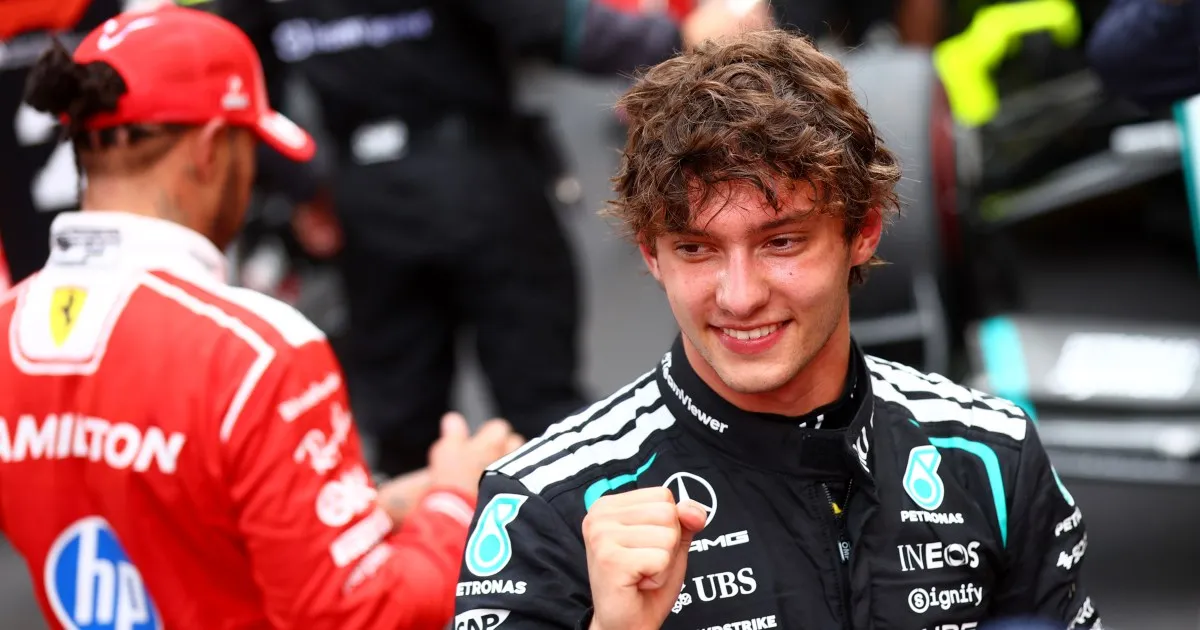
Formula One championship leader Kimi Antonelli stayed ice-cool to win a chaotic Monaco Grand Prix and extend his run of victories this season to five.
The 19-year-old Italian built a commanding lead on Sunday after starting from pole in his Mercedes but that evaporated after a late red flag to inspect a crumbling surface at the final corner following a crash that took out Ferrari’s Charles Leclerc.
Recommended Stories
list of 4 itemsend of list
After a delay of about 40 minutes while repairs were carried out, the race resumed with a standing start but Antonelli remained unfazed as he became the youngest-ever winner of the iconic race.
Ferrari’s Lewis Hamilton was runner-up for the second successive Grand Prix with Red Bull’s Isack Hadjar provisionally third, although he was one of a number of drivers under investigation for a variety of infringements.
Hamilton, who equalled the late Ayrton Senna’s eight Monaco podiums, moved above Antonelli’s teammate George Russell into second place in the standings, 66 points behind Antonelli.
“It’s been an incredible weekend and an incredible race,” said Antonelli, who was not even born the last time an Italian won the Monaco Grand Prix – Jarno Trulli in 2004.
“We had incredible pace and it all came so natural and that gave me the confidence to push.”
A year after finishing last on his F1 debut at Monaco, Antonelli showed incredible poise to shrug off the red flag drama that meant he effectively had to win two races.
“I wasn’t super keen on re-starting but once the notification came out I just gathered my emotions and re-focused again. Once I got away and was P1 into the first corner I could enjoy the last few laps.”
Venezuelan communities have wrested several festivities away from the Church. (Venezuelanalysis)
Black amber, all painted, white foam… The rain sings, summer is over. White foam… May flower.
“Flor de Mayo”, Otilio Galíndez
The Chakana path, It is up and down, inside and out…
Water is synonymous with life, and rain is perhaps the metaphor through which Mother Earth conveys the importance of preserving, nurturing, and multiplying life on this planet. For the peoples of the South, May is a turning point. It brings the rainfall, and thus abundance is renewed. The wet season begins in these torrid regions of exuberant contrasts and excessive beauty. Everything sprouts, blooms, and matures.
In May, the night sky in the South allows us to behold the zenith of a constellation that holds immense value in the ancestral worldview of our peoples: the Southern Cross. This fixed constellation consists of Alpha Crucis, Gamma Crucis, Beta Crucis, Delta Crucis, and a fifth star, Epsilon Crucis, which, although not part of the main points, serves to distinguish it from the “False Cross.”
Our Andean ancestry, which exerts a deep influence on all the Indigenous peoples of Abya Yala, identifies this constellation by the name Chakana, which can be translated as a ladder or bridge between the earthly and spiritual worlds. It means complementarity, harmony, and purpose, as well as a path for returning to the core. The Chakana is the organizational center of the Andean world and its entire sphere of influence, which is why it is the focus of numerous and diverse rituals, ceremonies, offerings, and festivals throughout these territories.
From the moment of their arrival, the Spanish conquistadors were struck by the symbolic power, veneration, and cultural identity of the peoples of Abya Yala with the Chakana. This is why they suppressed all traditional knowledge and ritual symbols, imposing their Eurocentric worldview in the clearest demonstration of colonial epistemicide. Temples, codices, and sages were demolished, burned, tortured, and martyred in the name of Christianity, which came to replace the Southern Cross, a symbol of knowledge and life, with the Catholic Cross, as a condensed symbol of pain, domination, sacrifice, death, and the promise of resurrection.
In Venezuela, a series of daytime and nighttime ritual activities persist, drawing young people and adults alike, in cities and rural areas alike. Afro-Venezuelan peoples especially cherish these traditions. The celebrations of the Cruz de Mayo, San Isidro, San Pascual Bailón, Corpus Christi, San Antonio, San Juan, and San Pedro, among others, escape the Catholic liturgical calendar that continues to try to assimilate them. They are celebrations framed within those exuberant contrasts of excessive beauty that cause everything to sprout, bloom, and mature. These are the days in which the Venezuelan people celebrate the cycle of life and for which they have created music, dances, drinks, foods, costumes, and poetry that have transcended both the Catholic Church and its Inquisition as well as civil and military power, in a testament to the most committed re-existence.
Lighting the altar candles
Wakes (“velorios”) are community gatherings organized to honor the deceased, a saint, the Virgin Mary, the Baby Jesus, or the Cross. These gatherings are held to fulfill a vow or out of devotion, and they feature prayers, drinks, food, poetry, singing, and dancing.
The velorio is a popular tradition that goes beyond the institutional framework of the Catholic Church. In fact, as early as the Synodal Constitutions of the Bishopric of Venezuela and Santiago de León de Caracas of 1687, published by Bishop Diego de Baños y Sotomayor, these activities, which “attract large crowds” and in which “many indecencies and offenses against God are committed,” were prohibited under penalty of “Major Excommunication.” Certainly, the Church seized on these practices of profane worship of the madero (the wood) to imbue them with Christian meaning.
At the center of the velorio dedicated to the Cruz de Mayo (“May Cross”) stands an altar with a main cross and two smaller ones. These are crosses without the image of Christ, “dressed” with cloth, paper, and multicolored flowers. The altar and its surroundings are also decorated in harmony with the crosses, and the offerings of candles, fruits, food, and drinks are arranged in such a way as to celebrate the abundance of a countryside that turns green again at this time of year.
The church’s calendar states that May 3 marks the celebration of “The Finding of the Cross.” Therefore, on the night of May 2, vigils begin in all the eastern states, as well as in Guárico, Lara, Cojedes, Aragua, Yaracuy, Carabobo, Barinas, Apure, Portuguesa, Miranda, Falcón, and in the city of Caracas. People give thanks for health and the fertility of the land. In the central coastal region, where Afro-Venezuelan communities are present, sirenas and fulías are sung. In the llanos, three-voice tonos are performed. In the east, the rhythms include galerones, malagueñas, fulías, jotas, and punto y llanto. The decimistas (poets) make offerings in a circular formation and vie for the spotlight as the musicians and singers perform.
Cantos a la Cruz de Mayo | Live session | Venezuela Un Solo Pueblo
Dancing up and down in a cross
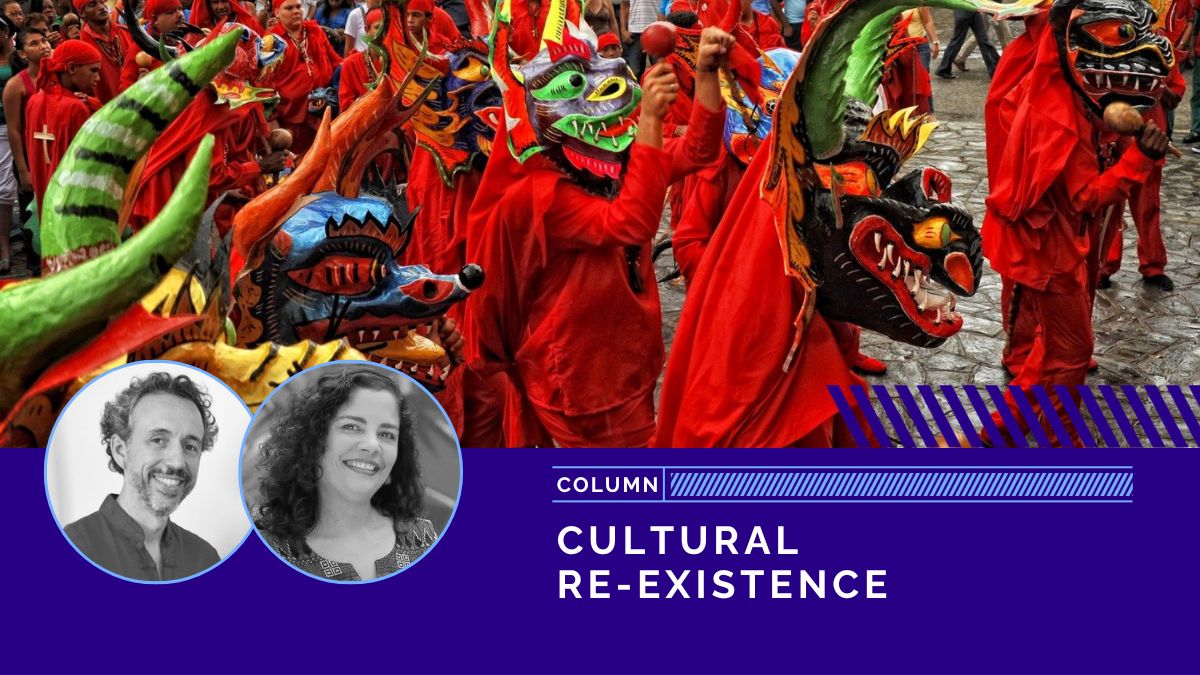
The Dancing Devils of Corpus Christi dance by forming a cross on the ground, to which they add new crosses with every turn, spiral, backward step, and leap. Each movement has a specific meaning and timing because the goal is to maintain order between the upper and lower realms, between complementary forces that must harmonize. Or, put more simply, to ensure that good prevails over evil.
The Incarnation of Christ in the Eucharist is a movable feast that occurs nine Thursdays after Holy Thursday. There are references to its celebration dating back to the third century in the Roman Empire. In 1350, it began to be celebrated in Barcelona with processions that reenacted the Devil’s defeat by the power of the Cross. In Venezuela –specifically in Ocumare de La Costa –there is evidence of Dancing Devils dating back to 1621, and although masked devils were present in many places, this practice survived only in the central region as a magical-religious ritual in the states of Aragua, Carabobo, Cojedes, Guárico, Miranda, and La Guaira.
The people, embodying the Devil, do not view the Evil One as a figure but as a concept. He is simply a force opposed to God. A revelrous, playful, and imperfect being. However, the promesero, dressed in colorful pants and a shirt, wearing masks of different sizes, shapes, and shades, which bear no resemblance to the European portrayal of the devil, protects himself with prayers, scapulars, bells, whips, and crosses that he carries as part of his attire. But his greatest protection is the insistent sign of the Cross he traces with the movements of his foot and the hand holding a maraca.
The cuatro or the caja (snare drum) are the instruments that accompany this celebration, depending on the community. Only in the town of Chuao are both used, though at different times. There is no singing, and the rhythms are performed with different beats that vary in intensity and speed. There are eleven Afro-Venezuelan lay brotherhoods or cofradías recognized as Intangible Cultural Heritage of Humanity by UNESCO, and each has a distinct musical identity linked to its spiritual environment.
Diablos danzantes de Corpus Christi
Beating the drums
Pipas, quitiplás, culos ‘e puya, minas, curbatas, cumacos, and maracas are the essential instruments with which the Venezuelan people celebrate the arrival of San Juan (John the Baptist), the most popular Catholic festival in seventeenth-century Spain that was brought over to preserve the identity of the conquistadors while simultaneously subjugating the Indigenous peoples and later the kidnapped and enslaved African peoples. Coinciding with the second cocoa harvest in these territories, the birth of John the Baptist, exactly six months after Jesus, became the figure of greatest devotion on the major slave-owning plantations along our country’s northern coast.
San Juan is regarded by the people as a saint who charges for his miracles. He’s drinker of aguardiente, a dancer, and a reveler, which is why there is both a popular celebration and an institutional, Catholic one. It must be remembered that Black people were barred from entering the church until well into the nineteenth century. Today, depending on the town and the priest, drums may or may not be allowed inside the church. In any case, the popular celebration of San Juan involves dancing, singing, drumming, drinks, and food –all meant to reclaim a freedom that was historically limited to an extreme. For this reason, it was a celebration that was persecuted and punished with excommunication during the colonial period, as we saw in the above mentioned Synodal Constitutions.
The San Juan festival cycle begins on June 1 with the “Repique de San Juan.” Families, communities, and various organizations meet in advance to plan and assign responsibilities. It is a colorful celebration reflected in the participants’ attire, flags, and scarves. Women’s participation is essential, particularly in the singing that takes place during the sirenas, the sangueo, and the golpes. These songs accompany the individual dancing of those carrying the flags and the saint in the sangueo, which is part of a group dance, but also the dancing of individual couples and, to a lesser extent, of linked couples.
The songs to San Juan are, above all, responsorial, alternating between soloist and choir, often improvised. Each drum has its own “tonada” or way of singing it, and in each locality, even if the same drum is used, the way of playing it and the style of singing this or that beat may vary. They follow the African tradition of three-drum ensembles –interdependent and complementary –where polyrhythm is enhanced by the timbral qualities of each drum, with the lowest-pitched one taking the “lead,” providing the beats and embellishments. “The Saint is in the drum,” it is said, affirming the enduring relevance of the worldview of the Indigenous peoples of West Africa.
Fiestas en Honor a San Juan Bautista, Choroni Venezuela
¡Arriba negro!
With this call, a singer signals to his partner that it is their turn to sing, because in the bella, the galerón, and the seis figureao, consecutive duets of singers in two different voices (a third apart) take turns. Meanwhile, in the yiyivamos, the juruminga, the perrendenga, and the poco a poco, one singer improvises verses and a chorus responds. The so-called Sones de Negros are made up of seven songs. However, it all begins with La Salve, a solemn song in which permission and a blessing are sought from the saint to begin the dance; once this is finished, the battle ensues, sung in two-part harmony and “danced” by two men with traditional stick-fighting.
The dance in the bella and galerón consists of male-female couples who participate one after another in a free-form manner. The seis figureao features a choreographed dance by three couples performing intricate, intertwined movements and turns. In the yiyivamos, juruminga, perrendenga, and poco a poco, independent couples dance, executing figures and movements as directed by the singer. San Antonio presides over an altar beautifully adorned with flowers, fruits, candles, clubs, crosses, bread, and other foods. Musicians and singers stand facing the altar, and each time the dancers enter the circle, they bow to the saint as a sign of respect and gratitude.
The Baile de Negros or Sones de Negros may have originated in the vicinity of El Tocuyo, in the fertile valley irrigated by the Tocuyo river, where the sugarcane-producing slave plantations were located. Its characteristic sound comes from an ensemble of stringed instruments related to the Baroque and Renaissance guitar, known as the cinco, medio cinco, requinto, and cuatro. The master or most experienced player plays the cinco. The timbral variety of the instruments and the ornamentation of the requinto give this instrumental ensemble an unmistakable texture.
In front of the saint stands the Tamunango or Tambor de Negro, a fundamental instrument constructed from a long, hollowed-out log, sized so that one musician can sit on it and play with their hands on its single head, while another strikes the wooden body with the drumsticks. The rest of the musicians are arranged around this instrument. A double-headed drum, a tambourine, and maracas complete this celebration, which is most popular in the states of Lara, Falcón, Yaracuy, and Portuguesa. Throughout June, with a focus on the 13th, these communities organize this traditional dance in homes, squares, streets, and fields -a celebration that cannot end without a sancocho (wood fire, community-prepared stew) soup) and a glass of cocuy de penca (agave-derived drink).
Siete Sones – Sones de Negros (Tamunangue)
Stomp on the boss!
The San Pedro festival is perhaps one of the most complex. Certainly, it is part of the cycle of life celebrations, featuring music, dance, food, and drink specially prepared as an offering to the saint. But as a kind of narrative that highlights Peter’s benevolence, there is the story of the enslaved María Ignacia, who, desperate over her daughter Rosa Ignacia’s illness, offered the deity an annual celebration. Once the miracle was fulfilled, María Ignacia danced until the last day of her life, and on her deathbed asked her husband to keep the promise. That is why a man in drag, carrying a rag doll in his arms, reenacts today the promise that María Ignacia’s husband made to his wife.
The cuatro and maracas are the accompanying instruments, and there may be many of them providing harmonic and rhythmic support to a soloist, which are answered by a chorus from the audience. The latter either joins in or simply watches this parranda as it winds its way through the streets of Guatire and Guarenas (outskirts of Caracas), starting from the church and making strategic stops at the homes of the revelers, the headquarters of the cofradías, and other points of interest.
Although there is no dramatized performance, during the procession there are characters in costume with carefully assigned roles, performing specific actions to convey the story of the miracle that was granted.
It is a distinctly joyful celebration. In the lyrics, music, and dance, there is a feeling of gratitude for favors received. This festive nature does not mean a loss of conscience. The Parranda de San Pedro carries a very powerful symbolic weight that recalls the use of irony and theatrics as a tool of clandestine insurgency, allowing people to denounce oppression and express their own identity as human dignity. When they sing: “With the cotiza [sandal], stomp the earth / turn it to dust without mercy…” and suddenly switch earth (“terrón”) for “boss” (“patrón”), it becomes perfectly clear what they are talking about.
La parranda de San Pedro de Guarenas y Guatire
The candles remain lit in the collective memory altar and the music continues to sound. After following the path of the Southern Cross and the beats of existence, the Chakana route has another stop. In the upcoming delivery of this column, we will go deep into the heart of these festivities in their wonderful displays of cyclicity, complementarity, and interconnectedness.
Fabiola José is a Venezuelan singer. She has performed in countries across South America, Africa, Europe, and Asia. Her singles and albums are available on all digital platforms. She hosted and produced “Cantante y Sonante” for Radio Nacional de Venezuela. In 2018–2019, she created a series of videos for social media, published on her YouTube channel #HechoEnCasa. She holds a bachelor’s degree in Music from IUDEM, Caracas (2005); specialized under Maestro Tom Krause in Spain (2007); and an M.A. in Arts and Cultures of the South from UNEARTE, Venezuela (2020).
Fidel Barbarito is a Venezuelan musician and researcher, with a bachelor’s and master’s degrees in music and history, respectively. He teaches in the undergraduate and graduate programs at the National Experimental University of the Arts (UNEARTE). Together with Fabiola José, he promotes several musical projects aimed at disseminating traditional folk repertoires, integrating them with contemporary compositions inspired by these sounds. Joropo llanero. Parranda de reexistencia is one of his published essays.
The views expressed in this article are the authors’ own and do not necessarily reflect those of the Venezuelanalysis editorial staff.
Iran’s World Cup squad has landed in Tijuana, Mexico ahead of the World Cup – amid a diplomatic row with cohosts United States, which is at war with Tehran and has refused visas for several members of the Iranian delegation.
The squad touched down shortly after 5am (1200 GMT) in the Mexican city, across the border from San Diego in California, after an overnight flight from Turkiye, where they have been training for the past three weeks.
The Iranian football federation negotiated at the last minute to move the team’s base camp from Arizona to Mexico, due in part to uncertainty over whether they would be granted visas to enter the US.
The US awarded visas to all the players on Friday, just 10 days before their first match, but several members of the support squad were not given visas, including “key managerial and administrative members,” according to the federation.
The dispute comes days before the tournament kicks off on Thursday, when Mexico play South Africa in Mexico City.
Iran will be based in the city throughout the tournament, despite playing their entire group stage on the US West Coast.
When they do play in the US, it will be the first World Cup to see a host nation receive the team of a country it is at war with.
‘Hold the US accountable’
Iran’s team spent nearly three weeks at a training camp in Antalya, using their time in Turkiye to apply for visas for the three host nations.
On the eve of their departure for Mexico, the players received their US visas, Washington’s envoy to Turkiye, Tom Barrack, said on X late on Friday.
But Iran’s embassy to Turkiye said 15 administrative and management staff had been denied visas.
“You have now escalated the deliberate and discriminatory treatment against Iran’s national football team to its highest level,” the embassy posted on X on Saturday, calling for world football’s governing body FIFA “to hold the US accountable for violations of its rules”.
Adding to the tensions, Iran’s ambassador to Mexico said on Saturday that the squad had been notified that under their visa conditions the team must enter and leave US soil on the same day as their matches.
“We can enter in the morning and we must leave the same day,” Iran’s envoy Abolfazl Pasandideh told reporters.
That appeared to contradict what the team’s spokesman Amir Mahdi Alavi told state TV earlier.
“The visas issued for the national team are multiple-entry visas, and the national team will arrive at the match venue one day before the first game and, for the following games, two days prior to each match,” Alavi said.
FIFA rules for World Cups stipulate that a team’s coach must give a news conference on the eve of the match at the venue where the game will be played.
(Al Jazeera)
‘Political interference’
Iran’s Football Federation – whose chief Mehdi Taj was reportedly among those denied a visa – has described the decision as “political interference in sport in its worst form”.
In response, a US administration official confirmed that “the visas necessary for Iran to compete in the World Cup, including for athletes and necessary support staff, have been issued.”
Without directly addressing the matter of those whose visas were refused, the official added: “We will not allow the Iranian team to abuse this system to sneak terrorists into the United States under false pretences.”
In April, US Secretary of State Marco Rubio said any problem would not be with the Iranian players but “some of the other people (they) would want to bring with them,” suggesting some had ties to the Islamic Revolutionary Guard Corps, which is on the US blacklist of “terrorist” groups.
Iran are in Group G and will play New Zealand and Belgium in Los Angeles on June 15 and 21, followed by Egypt in Seattle on June 26.
It’s hard to assume that ‘anything positive’ for Lebanon can come from its talks with Israel, argues analyst Imad Harb.
Despite brokering a ceasefire on paper, the United States is not standing in the way of Israel’s war on Lebanon, argues Imad Harb, senior fellow at the Arab Center Washington DC.
Harb tells host Steve Clemons that Hezbollah is an excuse for Israel to conduct a land grab in Lebanon, similar to what it’s doing in Gaza, the West Bank and Syria.
Pushing the Lebanese government to disarm Hezbollah “means civil war in Lebanon”, especially if Israel is allowed to occupy large swaths of Lebanese territory, says Harb.
The US defence department has reportedly raised its assessment of the espionage threat posed by Israel to the highest category of “critical”, according to media reports citing American intelligence and defence officials.
The assessment, first published by NBC News on Friday and followed by The New York Times, comes at a time when Washington is pursuing diplomatic engagement with Iran, while its ally Israel is opposed to the talks aimed at ending the conflict now 100 days long on Sunday.
Recommended Stories
list of 3 itemsend of list
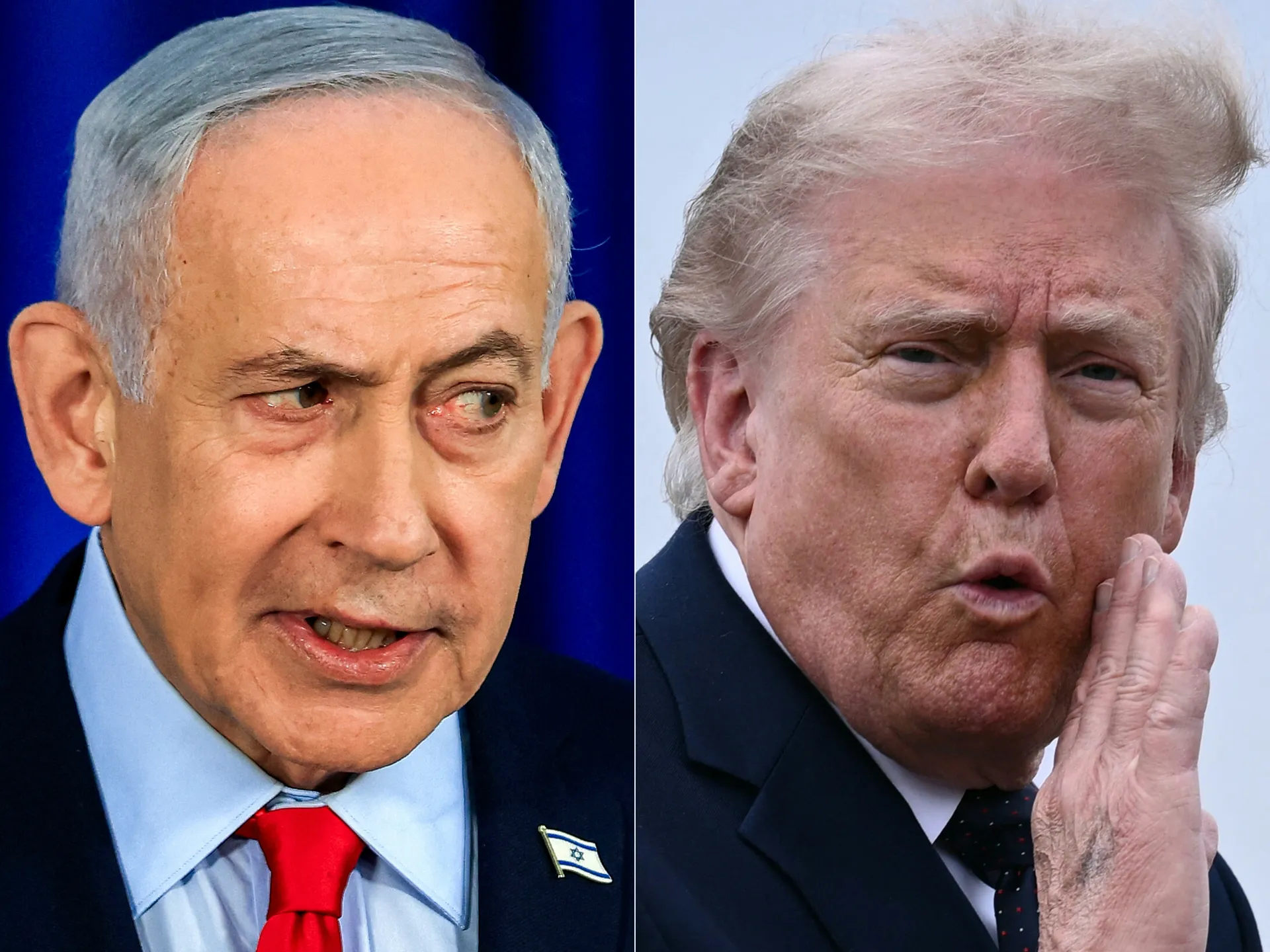
US President Donald Trump and Israeli Prime Minister Benjamin Netanyahu have publicly diverged in their approach to the war – Washington wants to extricate itself amid political pressure, while Israel is still pushing to topple the Iranian government.
This is not the first time Israel has been accused of espionage against the US – its closest ally and benefactor – with which it maintains extensive security and intelligence cooperation.
Here is what you need to know:
What did the Pentagon say?
According to NBC News and The New York Times (NYT), citing anonymous current and former US officials, the Pentagon’s Defense Intelligence Agency (DIA) arm recently upgraded Israel’s counterintelligence threat level from “high” to “critical”, the most serious designation in its internal assessment system.
The warning was based on Israeli intelligence agencies intensifying efforts to collect information on US military personnel, government officials and policy discussions.
The news reports said the concern was focused on American officials involved in shaping Washington’s approach towards Iran, as the two foes continue to negotiate an end to the war that has sent global energy prices soaring.
“An intensified Israeli effort to learn about US positions in talks with Iran has crossed a line, according to some American officials,” the NYT said.
According to the news outlet, intelligence assessments pointed to increased Israeli surveillance efforts in recent weeks targeting US military and government figures.
They include Trump envoy and key negotiator Steve Witkoff; the Pentagon’s top policy official, Elbridge A Colby; and one of his deputies, Michael P DiMino IV, the NYT reported.
Witkoff was chief negotiator in the nuclear talks before Israel and the US launched the attack on Iran on 28 February.
The reports also referenced incidents in which US defence personnel working in Israel allegedly discovered software on their phones “to tap their communications had been surreptitiously installed on their phones”, the NYT added.
The newspaper said the DIA reports found Israeli spying on the US, which has occurred before, surged from late 2024 onwards, coinciding with US President Joe Biden’s administration stepping up pressure on Israel over its genocide in Gaza.
The reported increase in spying continued after Trump was elected to a second term in November 2024 and began shaping his administration’s policy towards Iran.
Tensions between Trump and Netanyahu have come to the surface in the past week, amid reports the US president called the Israeli prime minister “f****ing crazy”, due to Israel’s escalation in Lebanon. At least 3,500 people have been killed in Israeli attacks in Lebanon.
Trump has been pressing Israel to halt its attacks on Lebanon, but the bombardment in the south has continued, undermining a potential deal with Iran which insists both issues are inseparable.
While intelligence gathering between friendly nations is not unusual, some US officials reportedly believe recent Israeli activities have gone beyond what Washington traditionally considers acceptable among allies.
According to officials cited in the reports, US intelligence agencies have become increasingly concerned that Israel is seeking greater insight into US policy discussions and negotiating positions, specifically with Iran.
What has been the response from the Israeli and US governments?
Israel has denied the allegations.
According to NBC, the Israeli embassy in Washington said it was “completely false” that the country spies on US government officials or American institutions.
“Israel does not gather intelligence on American entities, let alone US government officials,” NBC quoted the spokesperson as saying.
A White House official also reportedly dismissed the NBC report, saying the “entire story is false and sourced to someone who doesn’t have any knowledge of what’s going on”.
Al Jazeera could not independently verify the media reports and the US and Israeli responses.
Has Israel previously spied on the US?
Yes. Israel has previously been involved in espionage cases targeting the US, although such incidents have not been spoken about much given their close ties.
The most famous example is the Jonathan Pollard affair. The civilian intelligence analyst working for the US Navy was arrested in 1985 after passing large quantities of classified information to Israel. He later pleaded guilty to espionage and served 30 years in prison before being released on parole in 2015.
The Pollard case remains one of the most significant espionage scandals in the history of US-Israeli relations and continues to shape perceptions within parts of the American intelligence community.
However, espionage between close allies is not uncommon, says academic Andreas Kreig.
“Israel has a particularly long track record of conducting intelligence operations inside the United States,” the professor at the Department of Security at King’s College London told Al Jazeera.
“Over decades, Israel has sought to penetrate US policymaking circles through both formal and informal networks, including intelligence and lobbying channels, in order to gain insight into American strategic thinking and decision-making,” he added.
Nevertheless, Washington has for years provided billions in military aid and weapons sales to Israel, including throughout the ongoing Israeli genocide in Gaza.
The US Congress is also currently debating a section of a new defence bill, which would integrate the two countries’ research and development for weaponry to an unprecedented degree. The US has also provided diplomatic cover to Israel at the UN and other international bodies.
Why has Israel allegedly ramped up its espionage activities in the US?
According to academic Kreig, Israel is “deeply concerned” about the trajectory of US negotiations with Iran.
“From the Israeli perspective, the recent conflict with Iran was effectively a joint US-Israeli war, yet the United States is now in a position to shape the diplomatic endgame,” he told Al Jazeera.
“The principal Israeli concern is that Washington could agree to a deal that establishes an enduring diplomatic framework, potentially lasting years or even decades, which would constrain Israeli freedom of military manoeuvre against Iran in the future. Israeli policymakers therefore have a strong incentive to stay ahead of US deliberations and understand negotiations in real time.”
Moreover, Kreig said Israeli intelligence gathering also serves a “strategic purpose”, which is to identify “opportunities to influence, derail, or undermine negotiations if Israeli leaders judge the process to be contrary to their security interests”.
“While Israel sees the United States as its indispensable patron and closest strategic partner, it has simultaneously treated the US as a legitimate intelligence target whenever interests diverge,” he added.
“What surprises many observers is the extent to which Israel, despite being heavily dependent on American military, diplomatic and financial support, has developed the capacity to penetrate multiple layers of US policymaking and cultivate influence across key institutions involved in American statecraft.”
According to analyst and Iran expert Negar Mortazavi, Israel’s reported espionage in the current context is not new and has past precedent. Israel’s opposition to US-Iran negotiations goes back to the time of US President Barack Obama when he signed a nuclear deal with Iran in 2015, which the US under Trump withdrew from in 2018.
“The Israeli Prime Minister Netanyahu did not want any deals or serious negotiations or normalisation between Tehran and Washington, and he tried to stop it publicly and privately in any way he could,” she told Al Jazeera.
Moreover, Mortazavi said the ongoing war on Iran was “not going as planned or as promised”, and that Trump wants “to exit the war and he has to do it through diplomacy”.
“At this point it is very clear that US interests and Israeli interests are no longer overlapping, they’re divergent,” she added.
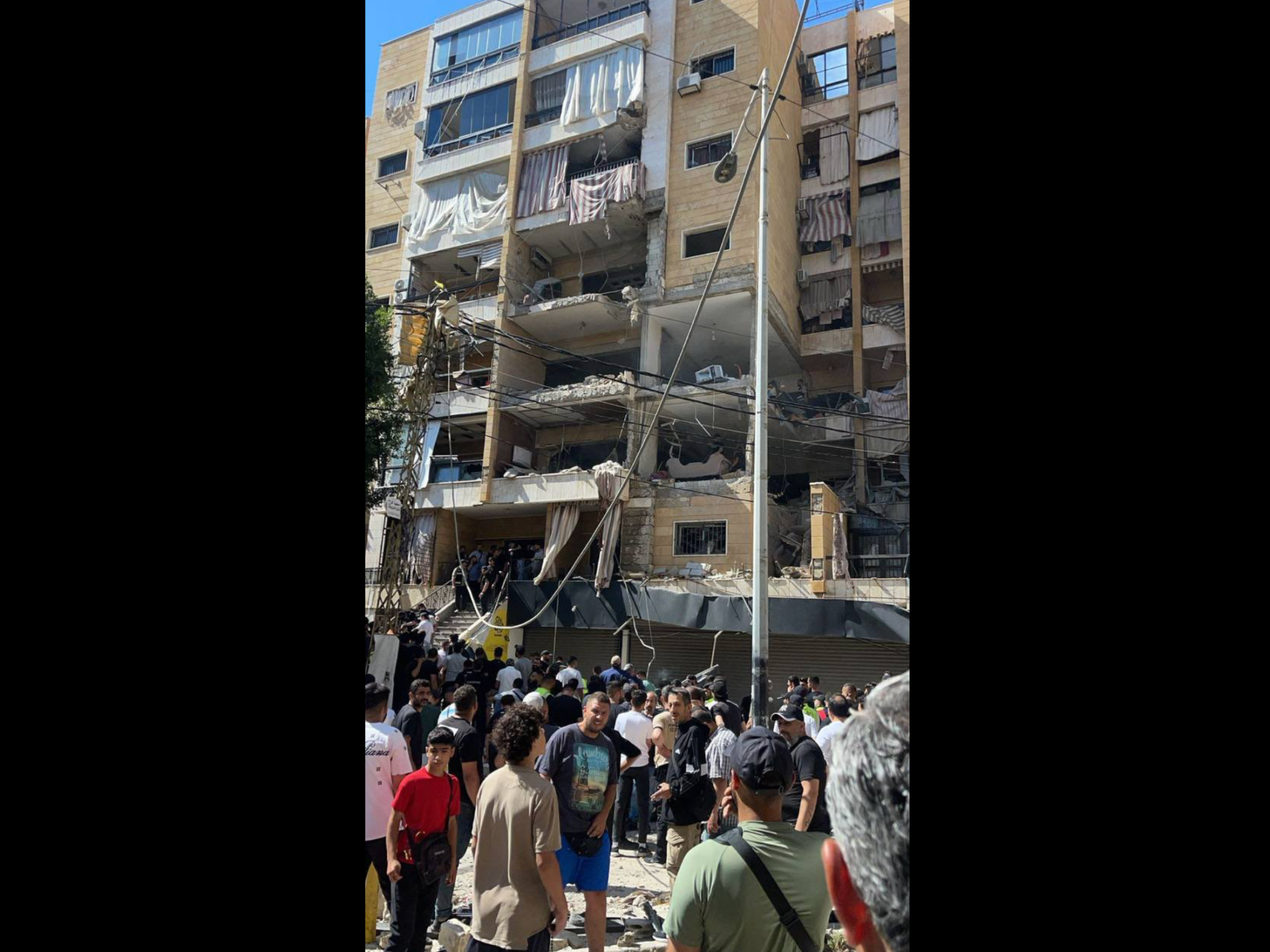
Videos show the aftermath of an Israeli attack on Beirut’s southern suburbs, with multiple explosions reported. Israel says it targeted Hezbollah headquarters, while Lebanese media says residential apartments were hit. The attack comes just days after US President Donald Trump told Benjamin Netanyahu that Beirut was off limits as Washington pursues a deal with Iran.
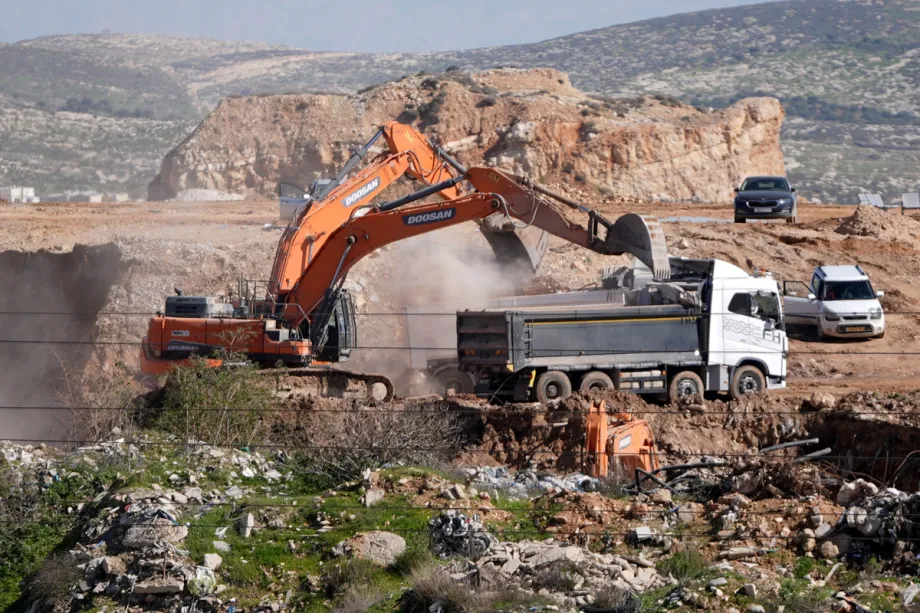
The Palestinian Authority condemned Israel’s decision to build 2,162 illegal settlement units in the occupied West Bank, calling for US intervention to halt the Israeli “madness.”
“All settlement activity is illegal under international law and does not confer legitimacy to anyone,” the authority said in a statement carried by the official news agency Wafa.
It said the Israeli decision constitutes a “blatant challenge to international law and UN resolutions,” particularly UN Security Council Resolution 2334, which affirms the illegality of the Israeli settlements in all occupied Palestinian territories, including East Jerusalem.
It held the Israeli authorities responsible for the “serious consequences” of the settlement policies, warning that they would push the region toward “further cycles of violence and escalation.”
The authority called on the US administration to intervene immediately “to stop the Israeli madness if it genuinely seeks to promote security and stability in the region and globally.”
It stressed that the Palestinian people would remain “steadfast on their land and committed to their legitimate national rights,” saying the illegal settlement plans would not deter them from continuing their struggle to establish an independent Palestinian state on the June 4, 1967 borders with East Jerusalem as its capital.
The statement came after Israel’s Higher Planning Council approved the construction of 2,162 new settlement units across several illegal settlements in the occupied West Bank.
The plans include 1,006 units in the Gevaot settlement within the Gush Etzion bloc south of Bethlehem, 922 units in the Har Brakha settlement south of Nablus, and 234 units in Kiryat Arba settlement built on land belonging to the city of Hebron.
Palestinians view the new plans as part of an accelerated Israeli policy aimed at expanding illegal settlements, confiscating Palestinian land and creating new facts on the ground.
The pontiff praises Madrid as a beacon of inclusion as about 1.2 million people gather for Sunday mass.
Published On 7 Jun 20267 Jun 2026
An oceanic crowd has filled the streets of the Spanish capital Madrid with chants, cheers and applause to greet Pope Leo XIV on the second day of a weeklong apostolic journey to mainland Spain and the Canary Islands.
The Vatican and local organisers said about 1.2 million people braved the heat to be present in the landmark Cibeles Square on Sunday in what is expected to be the largest event during his visit to the country.
Recommended Stories
list of 3 itemsend of list
Throngs of people pressed along barriers near the square – best known as the rallying point for Real Madrid football fans celebrating the club’s titles – waving flags and shouting “Long live the pope”, as Leo arrived in his white popemobile for the event. Some tossed flower petals marking his arrival.
“May Madrid continue to be a welcoming and inclusive city, where social life is inspired by true human values,” the pontiff wrote in the guestbook as he was handed the key to the city by its mayor.
Faithful attend a mass held by Pope Leo XIV at Plaza de Cibeles, during his apostolic journey in Madrid, Spain [Mohammed Salem/Reuters]
Leo began his trip on Saturday, meeting migrants and the homeless and attending a vigil with about 600,000 young people in Madrid. His June 6-12 visit also includes stops in Barcelona and the Canary Islands, where he will meet migrants and refugees who risked their lives crossing there from West Africa.
He said he hoped the visit, his first to a European Union country outside Italy, would set an example to the world about respecting “every human being” and urged leaders to stop dividing electorates.
“I am delighted that he is praying for us migrants and for our safety,” said Andrea Margarita, a 72-year-old Peruvian who arrived in Spain six months ago, as she waited in the crowd in a wheelchair with her daughter.
After mass, Leo was scheduled to hold a private meeting with fellow members of his Augustinian religious order in the afternoon before meeting figures from the world of entertainment, sport and culture at a concert venue in central Madrid.
Pope Leo XIV leads the mass in the Plaza de Cibeles in Madrid [AFP]
New York Mayor Mamdani was among those critical of FIFA’s decision to ban water bottles at World Cup stadiums.
Published On 7 Jun 20267 Jun 2026
FIFA has made changes to its stadium policy, allowing fans to bring disposable water bottles into match stadiums after a ban earlier this week drew backlash from supporters and tournament host city officials.
FIFA’s initial policy permitted fans to carry empty, transparent, reusable plastic bottles up to 1 litre (34oz). However, the governing body made a U-turn on that policy on Thursday and banned fans from carrying reusable water bottles into venues due to safety concerns.
Recommended Stories
list of 4 itemsend of list
The move essentially meant fans would have to buy water or soft drinks from concession stands in the stadium, where prices would “remain consistent with other events held at each stadium”, according to FIFA.
The backlash prompted FIFA to issue what it called a “clarification” on its stadium policy, saying: “All fans will be permitted to bring in one soft, plastic, 20-ounce (590ml), factory-sealed disposable water bottle into any FIFA World Cup 2026 match in the USA and Canada.
“Fans will not be permitted to bring in hard-sided, reusable water bottles due to safety and security reasons.”
The updated policy made no mention of the policy for stadiums in Mexico.
New York City Mayor Zohran Mamdani was pleased with FIFA’s decision to reverse the water bottle ban.
“No one should have to fear being priced out of being hydrated, especially fans who are often waiting for hours before a game in extreme heat,” said football fanatic Mamdani, who has championed equitable prices for this World Cup in his home city. Last month, he made 1,000 tickets costing $50 available to city residents as match tickets reached well into four figures.
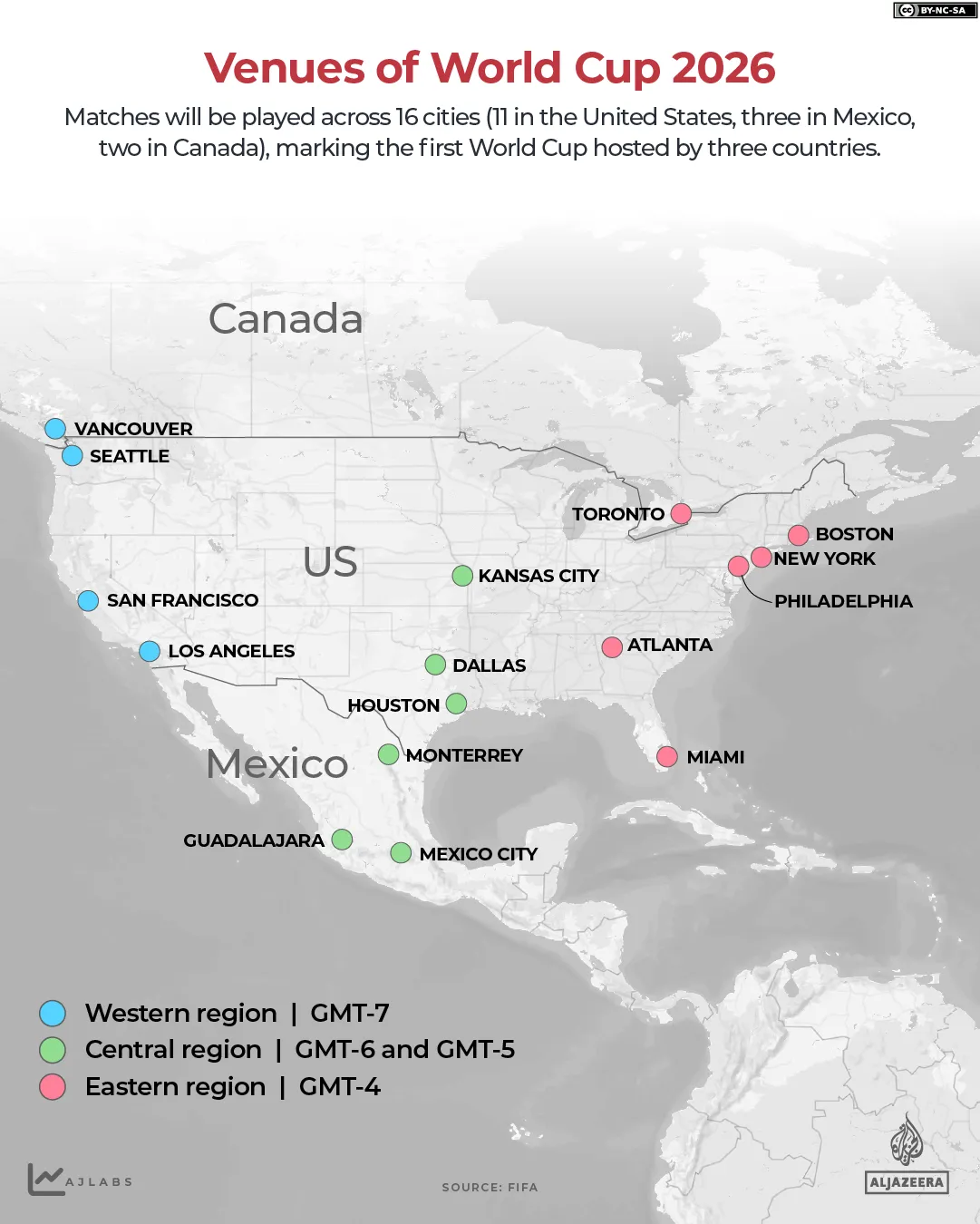
Forecasters have warned that fans could face health risks from extreme heat at open-air venues during the World Cup, which is being cohosted by the United States, Canada and Mexico from June 11 to July 19.
A report published by the World Weather Attribution research group last month estimated that 26 of 104 games at the World Cup are likely to be played in conditions where the Wet Bulb Global Temperature (WBGT) exceeds 26 degrees Celsius (78.8 degrees Fahrenheit).
WBGT is a measure of heat stress on the human body, which combines temperature, humidity, wind and sunlight.
At last year’s FIFA Club World Cup in the US, where fans complained of searing temperatures, supporters were also barred from bringing water bottles into venues.
FIFA has noted that misting stations, fans, hydration stations and cooling tents would be available in “the stadium footprint”.
Fans at the 2022 Qatar World Cup were also not permitted to bring reusable water bottles into stadiums.
Israeli police said they killed two suspects allegedly involved in the shooting.
Published On 7 Jun 20267 Jun 2026
At least one man has been killed and five wounded in central Israel, Israeli medics have said, in what police called a suspected “terror attack”.
Israeli rescue service Magen David Adom said a 35-year-old man died of gunshot wounds in the attack on Sunday, while the other casualties have been transferred to two hospitals. Two of those injured are in serious condition, it added.
Recommended Stories
list of 3 itemsend of list
Israeli police said they killed a suspect allegedly involved in the shooting following a manhunt. The suspected gunman was a Palestinian with Israeli citizenship from the nearby Israeli city Tayibe, they said, adding that police forces, border guard soldiers and special units were conducting searches for additional suspects. The weapon used by the attacker has been located, the police said.
“The public is asked to be vigilant, obey the instructions of the police and report any suspicious incident or person to the police,” it added.
In an earlier statement, the police said Israeli forces intervened after a report of shooting towards passersby at a gas station at the entrance to the Kochav Yair area, close to the occupied West Bank city of Qalqilya. The Israeli Broadcasting Authority said the attacker began a shooting spree at Kochav Yair and continued at the entrance to the nearby towns of Tzur Yitzhak and Tzur Natan.
A source told the Army Radio that the Israeli internal security agency and police have launched a raid campaign in Tayibe. A security cordoning has also been imposed on several neighbouring Arab villages.
Hamas commended the attack, calling it a “heroic” operation, but did not claim responsibility.
Israeli Prime Minister Benjamin Netanyahu’s office said it was holding a situational assessment on the shooting attack.
Lior Zilberberg, from the Israeli ambulance service Magen David Adom, has described the response after the shooting began in central Israel.
“We were in a large training exercise in a nearby community when we received reports … about gunshot casualties at several scenes close to us. We immediately stopped the exercise and set out with intensive care units and ambulances to the gas station in Kochav Yair, Tzur Yitzhak, and Tzur Natan,” said Zilberberg in a statement.
“During the drive, civilians signalled me to stop and called me to provide medical treatment to an unconscious casualty inside a vehicle. He was pulseless and not breathing, with gunshot wounds to his body, and after medical assessments we were forced to pronounce him dead.
“Near the vehicle, another injured person was lying conscious, suffering gunshot wounds to the upper body. After initial medical treatment at the scene, he was evacuated.”
A mushroom farm in Jericho, an heirloom seed library, a project to introduce Kale to the Palestinian market and a local farmers’ cooperative – these small agricultural projects are the latest weapon in the fight against the Israeli occupation. They aim to tackle the policies that make Palestine dependent on the Israeli market and offer alternatives for Palestinians who find themselves forced to buy Israeli products.
After returning to Palestine for the first time in five years, Vivien Sansour noticed changes in her homeland. “All the things I had missed, like the delicious tomatoes and cheese, the things old ladies would come and sell at the front of our house, they were gone,” says Sansour. “I thought I was coming home and I found myself coming back to a place that was foreign to me where I was buying Israeli broccoli in the supermarket and that was what was available.”
In June, she officially launched Palestine’s first heirloom seed library as a way to preserve the knowledge of generations of farmers who have cultivated varieties of organic vegetables, fruits and herbs adapted for the region’s climate and soil. Due to Israeli policies and neo-liberal farming techniques, these varieties, and traditional Palestinian farming as a whole, are facing extinction. These tiny seeds, she says, have the power to stop this from happening. Anyone can borrow a packet of the library’s seeds and grow the local varieties of produce, returning seeds from the next harvest.
“The heirloom seed gives us power to resist our dominance, though our heirlooms seeds we can truly eat what we grow and stop having to be slaves to our master,” she says.
Under the Oslo Accords, around 63 per cent of agricultural land in the West Bank was designated as “Area C”, which means it fell under the control of the Israeli military. As a result, farmers whose land fell in that 63 per cent were unable to farm their land freely, as is still the case. Meanwhile, Israeli settlements in the West Bank have mushroomed, and settlement farms are able to produce a large quantity of crops at low cost using pesticides, leaving traditional farmers unable to compete. Unequal water resources allocated to Palestinians and Jewish settlers living in the same territory makes keeping up almost impossible.
According to the Israeli occupation authorities, the value of goods produced in settlements and exported to Europe amounts to approximately $300 million a year. Israel is flooding the Palestinian market with cheap Israeli products whilst simultaneously controlling the Palestinian exports and imports. Restrictions on the importation of fertilizers has cut agricultural output in the OPT by an estimated 20-33 per cent. This pressure is forcing Palestinian farmers to leave their land, with many having to work on the settlement farms that displaced them on as little as half the Israeli minimum wage, in unsafe working conditions, and without holiday or sick pay.
“Oslo has been a disaster for agriculture in Palestine,” says Sansour. Aside from the restrictions placed on farmers as a result of the agreement, it also brought foreign donations to the agricultural section, she explains. “The aid was designed in a very neo-liberal way on the production of certain items and the elimination of people – that’s the idea of agribusiness.” This sort of funding pushed farmers away from sustainable agriculture to mono-cropping (the production of one type of crop) designed for consumer export or selling to the Israeli market, using methods relying on chemicals, she says.
Sansour highlights the Paris Protocol, an annex of the Oslo Accords, which tied the Palestinian economy with the Israeli economy. This has led to a situation, she says, where the tobacco industry is renting Palestinian land for prices small-scale producers cannot compete with. “We went from producing food to producing poison,” she poignantly adds.
The same factors motivated Lamya Hussain to implement The Kale Project – Palestine, a joint venture by organisations MAAN Development Center and Refutrees to introduce kale to the Palestinian market. Two years on and two solid harvests of three types of kale and the project is looking to expand. “There are many ways Israel controls what is produced and why and how, and we want to challenge this,” says Hussain. “We are challenging the occupation through cross diversity because one of the things the Israeli occupation has done to the agricultural sector is that it’s reduced it to a few basic crops.”
“One key issue facing small-scale Palestinian producers is the challenge to work around previously negotiated economic agreements via which Israeli goods are dumped in the local market,” she explains. “To this end, there is always the risk that Israeli producers can take advantage of the rising demand for kale and flood the market with larger quantities and cheaper prices.” Hussain continues, “It’s very difficult for people like myself or for the project, and even more difficult for smaller scale farmers who are competing against not only consumer market prices and local competition, they’re actually competing with an occupied-led system in the market.”
Fareed Taamallah was one of these small scale farmers struggling to sell his produce in this system. Tired of selling his olives and olive oil in bulk to a trader who then sells it to the consumer while taking most of the profit, he co-founded Sharaka. The organisation links Palestinian farmers and consumers directly, promoting Baladi food, a word for local, seasonal and Palestinian produce.
“In Occupied Palestine, the matter of keeping the farmer in his land cultivating and producing is more important than any other place because it is not only a matter of producing, but also a matter of food sovereignty,” says Taamallah. “Sharaka is trying to tackle part of these problems and help small-scale farmers to stay in their land by helping them to market their product at good prices, and in this way support them to remain steadfast in their groves. On the other hand, we try to help the consumer to have access to the good, healthy food and not depend on the Israeli products that are found in the local market.”
For the Palestinian farming industry, the Israeli occupation has been deadly. But these agricultural efforts are seeking to change the status quo by offering Palestinians alternatives to the Israeli products that fill up their local supermarkets. As Sansour puts it, buying the produce of the occupation is like smoking; “you pay for your own poisoning”.
Images courtesy of The Kale Project – Palestine.
The views expressed in this article belong to the author and do not necessarily reflect the editorial policy of Middle East Monitor.
Ever since leading pro-Israel lobby financier Sheldon Adelson intervened in the 2016 election heavily in favour of Donald Trump, the now-president’s Middle East policies (if you can even call them that) have become more and more openly in favour of the Zionist state.
To call casino tycoon Adelson an “Israel first” financier is misleading, as it implies that he has second, third and fourth priorities. With a net worth of almost $34 billion at his disposal, though, his one and only cause is Israel, so “Israel only” financier would be a more accurate description.
Adelson has ploughed hundreds of millions of dollars into funding anti-Palestinian groups. He has, for example, donated a reported $410 million to Birthright Israel, a pro-Israel propaganda organisation which takes young Jews on brainwashing tours to occupied Palestine, inculcating in them the idea that the country forms part of their “birthright”.
Although nobody should delude themselves that such a huge amount of money does not have the intended effect on many impressionable young people, money isn’t everything and, thankfully, largely left-wing and liberal Jews are increasingly rejecting Israel. Last year, media outlets reported a number of walk-outs from Birthright tours, with participants reacting against the heavy-handed propaganda that always forms the basis of such trips.
Left-wing and anti-Zionist Jews have for many years now been organising against Birthright, even putting on a “Birthwrong” tour celebrating diasporic Jewish life in ancestral Jewish homelands, such as Spain, France, Brazil, Germany, the USA and Britain.
Such efforts are now paying off. Birthright walk-outs are part of a broader trend in which Israel is haemorrhaging support from the base of the Democratic Party in the US. Once upon a time, Sheldon Adelson funded the Democrats. However, in a 2012 op-ed for the Wall Street Journal (the in-house organ of America’s billionaire business class), Adelson explained: “I didn’t leave the Democrats. They left me.” In that article it emerged that the main, if not the only, reason he switched his substantial financial support from the Democrats to the Republicans was that the Democrats’ base is now largely hostile to Israeli war crimes and apartheid.
Since then, Adelson has apparently made it his mission in life to fund the worst of the worst right-wing Republicans. As the late, lamented website Gawkerreported, “In 2012 he spent $20 million supporting Newt Gingrich, nearly derailing [Mitt] Romney’s primary run.”
President Donald Trump answers questions during a meeting with military leaders in the Cabinet Room on 23 October, 2018 in Washington [Win McNamee/Getty Images]
During the course of the race for the 2016 White House, every Republican candidate did their best to net Adelson’s support and, of course, his money. Marco Rubio was reportedly calling Adelson every other week at one stage, and “when Jeb Bush hired a foreign policy advisor who was critical of Israel’s diplomatic actions, Adelson forced Bush to issue an apology.”
With President Donald Trump now leading the most anti-Palestinian White House of all time, it’s easy to forget that at one stage, his non-interventionist instincts in matters of foreign policy seemed, for a brief moment, to extend even to Palestine. That’s when Adelson started to plough cash onto the Trump bandwagon and ended up being Trump’s number-one backer. The White House is now more pro-Israel than ever, with each new advisor seemingly more fanatically Zionist than the last.
The Trump-appointed US Ambassador to Israel not only tolerates illegal Israeli settlements in the West Bank, for example, but also actively funds them out of his own money. Trump has also followed through on a promise to Adelson to move the US Embassy from Tel Aviv to Jerusalem in the face of international law, which still considers the latter to be an occupied city, the annexation of which by Israel is illegal.
While the pro-Israel lobby seems to have the White House sewn up for now, its propagandists look at the new crop of progressive and left-wing Democrats in Congress with some trepidation, for Israel no longer has the universal, bipartisan support in the House and Senate that it once had. This week, news emerged that its lobby has even had to establish a new group, aiming to shore up its floundering support among Democrats.
“Democratic Majority for Israel” is supposedly set to make the “progressive case for Israel”. The fact that such a move has had to be made now is a serious indication of how much US support for Israel has slipped. Indeed, in the secretly filmed words of Eric Gallagher, a leading “liberal” pro-Israel lobbyist when he referred to the lobby’s flagship organisation, the American Israel Public Affairs Committee: “The foundation that AIPAC sat on is rotting… There used to be actual widespread public support for Israel in the United States. So I don’t think that AIPAC is going to remain as influential as it is.”
One establishment policy wonk conceded this week that the passage of a bill through the Senate targeting the Boycott, Divestment and Sanctions (BDS) campaign, while seemingly a victory for Israel, was “actually a pretty significant loss. Because only one serious presidential candidate voted for it.”
Kamala Harris and Cory Booker, two corporate Democrats who have thrown their hats into the presidential ring for 2020, both failed to show up for the vote, despite speaking at previous AIPAC policy conferences. Even they don’t want to enrage their support base, much of which is likely to opt for Bernie Sanders should he decide to run again.
With the situation in Congress changing rapidly, the pro-Israel lobby is going for broke to take advantage of its position in the White House while it lasts.
The views expressed in this article belong to the author and do not necessarily reflect the editorial policy of Middle East Monitor.