As the United States-Israeli war with Iran sends tremors through the global economy, the poorest members of the Global South are the most exposed to the fallout.
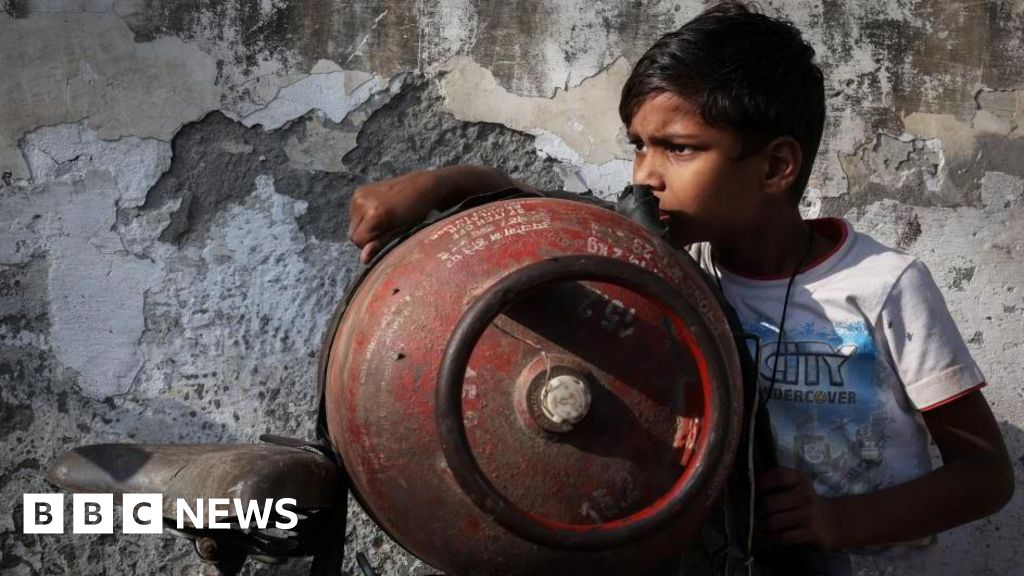
In Asia, Africa and the Middle East, developing economies are bearing the brunt of surging energy costs prompted by the closure of the Strait of Hormuz and attacks on oil and gas facilities across the Gulf.
Recommended Stories
list of 4 itemsend of list
From Pakistan to Bangladesh and Sri Lanka, through to Jordan, Egypt and Ethiopia, policymakers are facing the double whammy of being both heavily dependent on imported energy and having limited financial firepower to absorb the shock of spiking prices.
In Pakistan, which imports about 80 percent of its energy from the Gulf and has lurched between economic crises for years, authorities have scrambled to roll out measures to conserve fuel.
Facing the depletion of the country’s petrol and diesel reserves within weeks, officials have closed schools, introduced a four-day working week for government offices, ordered half of the country’s public sector employees to work from home, and slashed fuel allowances for official business.
Pakistani Prime Minister Shehbaz Sharif said last week that he had decided against a proposed hike in petrol and diesel prices before the Eid Al-Fitr celebration, saying the government would “bear the burden” of rising costs.
Sharif’s announcement came after the government had earlier this month approved a 55 rupee ($0.20) rise in the price of a litre (0.26 gallons) of petrol or diesel.
While government subsidies have helped cushion the blow for the public, there are fears that petroleum prices will surge and bring economic activity to a halt if the war drags on, said S Akbar Zaidi, the executive director of the Institute of Business Administration in Karachi.
“The overall shock is quite severe, although it has not been fully passed on to consumers and to industry,” Zaidi said.
“I expect the next few weeks to make things far worse once the disruption and price factors pass through.”
A man gets his motorcycle refuelled at a petrol station in Dhaka, Bangladesh, on March 9, 2026 [Munir Uz Zaman/AFP]
In Bangladesh, which imports about 95 percent of its oil and is expected to run through its fuel reserves within days, petrol pumps in some districts have run dry despite the introduction of fuel rationing.
Sri Lanka, which imports about 60 percent of its energy needs and is still reeling from an economic meltdown that began in 2019, has declared every Wednesday a public holiday and introduced a mandatory fuel pass for vehicle owners to conserve petrol and diesel, stockpiles of which are projected to run dry within weeks.
In Egypt, one of the biggest energy importers and among the most indebted economies in the Middle East, the government has ordered malls, shops and cafes to close by 9pm on weekdays and 10pm during weekends, and cut back on public lighting.
Facing growing pressure on public finances due to the government’s heavy subsidisation of fuel prices, Egyptian officials on March 10 announced price hikes of between 15 and 22 percent for petrol, diesel and cooking gas.
While acknowledging the burden on the public, Egyptian President Abdel Fattah el-Sisi said the move was necessary to avoid “harsher and more dangerous outcomes”.
“For a majority of developing economies, especially those already grappling with debt and high import dependence, they are facing a potent mix of inflation, currency pressures and fiscal strains,” said Yeah Kim Leng, a professor of economics at the Jeffrey Cheah Institute on Southeast Asia at Sunway University in Kuala Lumpur, Malaysia.
“The hardest hit are net energy and food importers, especially those with fragile macroeconomic foundations and pre-existing vulnerabilities that typified countries with low per capita income and high poverty rates,” Yeah added.
Pakistan, Bangladesh, Sri Lanka, Jordan, Senegal, Egypt, Angola, Ethiopia and Zambia are among the most at risk, according to a recent analysis by the Washington-based Centre for Global Development, which looked at factors including dependence on fuel imports, public debt levels and foreign exchange reserve/import ratios.
Currency depreciation
The weakening of many developing countries’ currencies against the US dollar – the result of investors buying the greenback amid heightened geopolitical uncertainty – has compounded the situation by further driving up costs.
“Countries such as Indonesia and the Philippines have already seen their currencies at near record lows even before the start of the conflict, making imports, including oil, much more expensive,” said Azizul Amiludin, a non-resident senior fellow at the Malaysia Institute of Economic Research in Kuala Lumpur.
Much as the fallout of the war poses particular challenges for governments in developing countries, the effect on citizens is disproportionate, too.
In less advanced economies, citizens spend much more of their pay cheques on fuel and food, leaving them more exposed to rising living costs.
At the same time, governments in developing countries have less capacity to provide a safety net for those at risk of falling through the cracks.
“In vulnerable economies, governments often attempt to shield their populations from price hikes by subsidising fuel and food,” said Yeah, the Jeffrey Cheah Institute professor.
“However, with depleted fiscal buffers and shrinking revenues, this becomes unsustainable. The ensuing austerity, combined with hyperinflation, can trigger widespread social unrest and a full-blown fiscal crisis.”
Motorcyclists crowd a filling station and wait their turn to get fuel, in Lahore, Pakistan, on March 6, 2026 [K M Chaudary/AP]
With the US and Israel barely a month into their war and no clear timetable for its end in sight, many analysts expect things to get worse before they get better.
Khalid Waleed, a research fellow at the Sustainable Development Policy Institute in Islamabad, said rising transport costs would soon be felt at supermarket checkouts.
“Diesel is the backbone of Pakistan’s freight and agricultural economy,” Waleed said.
“Trucking costs have started climbing, and that will feed into everything from flour to fertiliser in the weeks ahead.”
Once Pakistan’s wheat harvest gets under way in April, food prices could spike well beyond their current levels, Waleed said.
“Combine harvesters, threshers, tractors for haulage from field to market, and the trucks that move grain from fields to flour mills and storage facilities all run on high-speed diesel,” he said.
“For a country where wheat flour is the single largest item in the food basket of the bottom two income quintiles, this is not a marginal concern,” Waleed added.
“If diesel prices stay elevated through April and May, Pakistan will harvest its wheat at the most expensive input cost in years, and that cost will transmit directly into food inflation at a time when households have almost no capacity left to absorb further price shocks.”
The oil reform and the stance regarding the war against Iran are key elements scrutinized. (EFE)
The early morning of January 3, 2026, marked a turning point in Venezuela’s recent history. An operation carried out by US forces combined airstrikes on Caracas and strategic military areas with a ground incursion that culminated in the abduction of President Nicolás Maduro and his wife, Cilia Flores, and their subsequent rendition to New York. The operation left more than 90 dead, including 32 members of the Cuban special forces who fought to protect Maduro, inflicting some damage on the imperialist forces before being killed.
While it is certainly strange that the United States could carry out the operation to kidnap Maduro and his wife without encountering significant resistance—beyond that offered by the innermost security ring, most of whom were of Cuban origin, like the aforementioned 32 martyrs—perhaps even more surprising are the statements made by Defense Minister Vladimir Padrino López. Weeks after Maduro’s kidnapping, Padrino asserted that it was impossible to deploy fighter jets at the time of the attack given the United States’ air superiority, with 150 aircraft. He thus acknowledged that, with the exception of the president’s personal guard and a few soldiers stationed near the residence, the Venezuelan Armed Forces did not respond to the imperialist aggression.
We cannot speculate on military matters, since we are not experts and do not have all the necessary information on the issue. That falls outside our purview. In any case, Padrino López’s own words and the events that unfolded during the attack indicate that, for some reason or another, the decision was made not to respond militarily to the Delta Force attack in the early hours of January 3 in Caracas.
To the surprise of many, Maduro’s abduction did not lead to an immediate or complete institutional collapse. Vice President Delcy Rodríguez assumed the interim presidency, backed by the Supreme Court and the National Assembly, headed by Jorge Rodríguez. This “two-pronged approach” allowed for a certain degree of formal stability to be maintained while the administration of the country’s strategic resources was reorganized and the implementation of policies to adapt to the new context was accelerated.
Coordination with Washington was immediate. On January 15, CIA Director John Ratcliffe – who just days earlier had overseen the aggressive operation alongside Donald Trump in Florida – visited Caracas and met with Delcy Rodríguez. A few days later, the reform of the Organic Law on Hydrocarbons was presented and approved. This timeline reveals an almost symbiotic alignment between Venezuelan authorities and the US administration aimed at ensuring that oil wealth flows under the empire’s supervision, while simultaneously safeguarding the interests of large corporations and international creditors. Whether this link is the result of betrayal or capitulation is, for now, irrelevant. However, what is becoming clearer every day is that, if this were a tactical retreat, it seems unlikely that it could be corrected without strategic direction. And the latter appears to be beyond the reach of the country’s new authorities.
The liquidation of oil sovereignty: from Chávez to Delcy Rodríguez
The recent reform of the Organic Law on Hydrocarbons (LOH) is not a minor amendment to the previous law, but rather the culmination of a process of gradual neoliberal regression that finally took shape in the substantial repeal of the 2001 law – a cornerstone of the Chavista social project and a historic achievement in the assertion of Venezuelan sovereignty.
The original 2001 law, enacted by Hugo Chávez as an Enabling Law, alongside subsequent reforms in 2006 and 2007, marked the peak of Venezuela’s oil nationalization. It established exclusive state ownership of hydrocarbons in the subsoil, PDVSA’s monopoly on international marketing, majority state control in all joint ventures, state planning of investment, and the priority allocation of revenue to social development.
Throughout the various phases of Maduro’s administration, and in the face of the economic crisis caused by brutal US-led sanctions, revenue-seeking policies were implemented in an effort to secure liquidity and foreign currency, which gradually eroded the Chavista socioeconomic structure. This laid the groundwork for the gradual privatization of national resources, even though commercial control and ownership of the oil remained formally in the hands of the state.
Furthermore, during the 2019–2024 period, Maduro granted operating licenses to Chevron and other foreign corporations that allowed for direct exploitation and marketing in certain areas, setting precedents for private control over production. These agreements, presented as “temporary exceptions” to revive output and alleviate the social burden of sanctions, established the framework of dependency that the 2026 reform ultimately consolidated legally.
The January 2026 reform promoted by the Delcy Rodríguez administration, designed in accordance with the requirements of January 9 Trump administration Executive Order 14373, completes this process of erosion and represents a substantial rollback of the economic foundations of Chavista social transformation. Many of the changes introduced reflect mechanisms imposed under the Anti-Blockade Law (2020) and the Special Economic Zones Law (2022), which loosened restrictions on the private sector’s role, primarily through broad tax exemptions and trade incentives, while the 2026 LOH eliminates any remaining obstacles to private operational control of that sector. Or, in other words: what under Maduro were exceptions designed to circumvent sanctions – particularly pressing in the context of the pandemic and post-pandemic period – are formalized in Rodríguez’s reform to institute open subordination.
First, the exclusive state ownership of hydrocarbons in the subsoil – which the 1999 Constitution reaffirmed as an inalienable principle and which even Maduro formally upheld – has been rendered meaningless. While Article 5 of the 2001 law stated that “hydrocarbons in the subsoil are the property of the Republic,” the 2026 reform establishes that foreign private operators can acquire property rights over production from the moment of extraction, allowing them to market it directly without the state involvement that characterized the original Chavista model. The qualitative difference from the Maduro era is that this direct commercialization is now generalized across the entire sector, and the geographical and temporal restrictions that maintained a prospect of state control have been eliminated.
Second, the reform permanently eliminates the state monopoly on international commercialization. The 2001 law and subsequent reforms stipulated that PDVSA was the only entity authorized to export. The 2026 reform allows Western conglomerates such as Chevron, ExxonMobil, Shell, and Repsol to directly market all or portions of production, thereby undermining the state’s sovereign authority to decide to whom to sell, under what conditions, and at what price. Private companies now determine the destination of shipments, negotiating directly with refiners and distributors, while the Venezuelan state receives only royalties and dividends subject to external control mechanisms.
This commercial subordination is further reinforced by a restrictive framework imposed by Washington: General Licenses 46, 50A, and 52 issued by the US Office of Foreign Assets Control (OFAC) strictly prohibit Venezuelan crude oil from reaching entities based in Russia, China, Iran, North Korea, or Cuba, extending the ban to any company that maintains ties of ownership or control with individuals from those countries. Far from restoring commercial autonomy, the 2026 reform institutionalizes these barriers: while transnational corporations are given carte blanche to negotiate directly with Western refiners, all transactions with Chavismo’s historical partners remain prohibited. The Venezuelan state is reduced to collecting royalties under foreign supervision, with no capacity to direct oil flows toward those markets that for years guaranteed the sustainability of the Bolivarian project. This leads to a situation as deplorable as it is surreal, where the Zionist entity has been able to receive Venezuelan crude without hindrance, while Cuba is left helpless against Washington’s strangulation.
Third, the reform abolishes state control over investment and exploitation. The 2001 law reserved for the state the right to plan investment. The 2026 reform allows private operators to unilaterally determine investment levels, the technology to be used, and reserve policy, eliminating any need for approval from Venezuelan authorities beforehand. Foreign companies acquire the right to import equipment and personnel without restrictions, operating under a regime of fiscal and legal extraterritoriality.
Fourth, the reform dismantles the framework for protecting social investments. The 2001 law stipulated that oil revenues must be allocated primarily to economic and social development. The 2026 reform includes provisions allowing for international arbitration to resolve disputes, prioritizing the protection of private investments over any social claims. Funds derived from oil production are subject to foreign control mechanisms.
Lastly, the aforementioned OFAC licenses effectively establish an architecture of fiscal subordination that privileges foreign interests, with Venezuelan oil proceeds deposited in US Treasury-run accounts. By accepting these licenses – and with the additional stipulations of the reform – the Delcy Rodríguez administration is effectively subject to mechanisms for external validation of its budgets.
Oil reform and foreign oversight are not isolated processes: they constitute a neocolonial arrangement disguised as economic normalization, which maintains formal sovereignty while relinquishing operational control. In strategic terms, Venezuela has gone from being an actor with a relative capacity to define its energy policy— despite sanctions and threats — to a subordinate whose critical decisions are dictated by the United States.
Condemning Iran: geopolitical alignment as submission
Structural subordination is also evident in foreign policy. In the face of the recent imperialist aggression against Iran, launched jointly by the United States and the Zionist entity on February 28, 2026, which left more than 200 dead in the first few hours (including 148 girls killed in the bombing of an elementary school in Minab), the Delcy Rodríguez government rushed to abandon its traditional alliance with Tehran.
In an initial statement, it took a stance condemning both the imperialist aggression and the response of the attacked country, falling into a shameful and ridiculous position of neutrality. This official statement, issued on February 28 stated that the Venezuelan government “condemns and deeply regrets that the military option was taken against Iran” and expressed dismay over the civilian casualties. However, the text then went on to refer to “Iran’s inappropriate and reprehensible military reprisals against targets in various countries in the region.” In doing so, the Delcy Rodríguez administration denied the bombed country the right to self-defense, placing the aggressor and the victim on the same level.
This statement, which Foreign Minister Yván Gil ended up deleting from his social media accounts hours later, marks a definitive break with the anti-imperialist stance that Venezuela had been building for two decades. The condemnation of the response by Tehran – a historic ally of Chavismo and high-level strategic partner since 2022 – shows that alignment with imperialism is now a fait accompli.
The Venezuelan communiqué cannot be understood without considering the context: the complete opening of the oil sector to foreign capital, the aforementioned reception in Caracas of the CIA director, and the subsequent arrival of US Chargé d’Affaires Laura Dogu as a diplomatic representative, along with visits by US Secretary of Energy Chris Wright, US Interior Secretary Doug Bergum, and the head of US Southern Command, General Francis Donovan; all within a few weeks, prior to Trump’s own recognition of Delcy Rodríguez as Venezuela’s president.
The Rodríguez administration not only hands over the oil and refuses to stand up to the empire, but also politically legitimizes US hegemony, breaking with the internationalist and popular legacy that Chavismo had always fostered, defended, and pushed forward. The condemnation of the Iranian resistance – which undoubtedly amounts to a condemnation of the entire anti-Zionist Axis of Resistance and all peoples oppressed by the colonial entity – is presented as “international responsibility” and a “commitment to peace.” The new Venezuelan administration thus disguises its surrender of diplomatic sovereignty and buries the solidarity-driven, internationalist Venezuela that Chavismo led, both during Chávez’s and Maduro’s tenures.
Cabral’s Dilemma: betrayal of the Chavista project or class suicide
To fully understand what has happened in Venezuela, it is quite helpful to examine it in light of the political theory of Amílcar Cabral, the independence leader of Guinea-Bissau and Cabo Verde and one of the most incisive thinkers of African and Third World liberation. Cabral first formulated the concept of “class suicide” in his 1964 message to Guinean militiamen, later developing it in numerous speeches throughout the 1960s and 1970s, particularly in his address, “The Weapon of Theory,” delivered at the First Tricontinental Conference of the Peoples of Asia, Africa, and Latin America, held in Havana in January 1966.
In the context of Guinea-Bissau’s liberation struggle, Cabral further developed this theory by applying it to that specific reality in his work Guinea-Bissau: An African Nation Forged in Struggle, posthumously published in 1974. The Guinean petty bourgeoisie, formed under the Portuguese colonial administration, had to choose between joining the African Party for the Independence of Guinea and Cabo Verde (PAIGC) and its peasant base, renouncing their privileges as colonial officials, or remaining on the sidelines and eventually collaborating with Portugal. Cabral had no illusions about the difficulties of this choice. The historical dilemma of this petty bourgeoisie, according to Cabral, is strictly binary: “either it betrays the Revolution or it commits suicide as a class.” There is no third way, no middle ground, and no possible compromise. Any attempt to maintain a neutral stance ends, sooner or later, in subordination to imperialism and the betrayal of national interests.
Class suicide did not mean the physical disappearance of individuals, but rather the destruction of their particular class status. It entailed a radical and conscious transformation. As Cabral explained, the petty bourgeoisie had to “renounce the class position it occupies in social life” and “integrate itself with the popular forces – that is, with the workers and the peasants.” In other words: voluntarily abandon their privileges as an intermediate class, cease to be a class separate and distinct from the people, and fully identify with the popular forces as part of a project of national and social liberation.
The betrayal of the revolution – the other option in this dilemma – occurs when the bourgeoisie preserves its class existence and its intermediary privileges through subordination to imperialism. It does not renounce its position, does not identify with the people, and does not dismantle its networks of privilege. On the contrary, it negotiates its corporate survival with the enemy, becoming a comprador bourgeoisie. This betrayal is not always explicit or conscious. It often presents itself as “realism,” “pragmatism,” or “tacticism.” But its result is always the same: the consolidation of structural dependence and the blocking of any emancipatory project aimed at true sovereign independence, an indispensable requirement for delinking from the imperialist system.
The theory of class suicide has profound methodological implications for political analysis. First, it establishes that national liberation cannot be led by the national bourgeoisie or by the petty bourgeoisie unless they have committed class suicide. Second, it demonstrates that formal independence does not equate to real liberation if the political leadership retains its character as a subordinate intermediary class. Third, it points out that the class struggle continues during the revolutionary process and that the principal contradiction is not always between the people and external colonialism, but also between the people and their own leadership that resists class suicide.
What sets the Venezuelan case apart is that the petty bourgeoisie – whether treacherous or capitulationist – is not the traditional colonial class that Cabral analyzed, but rather a bureaucratic bourgeoisie forged in the very process of revolutionary change. Over two decades of Chavismo, this class has accumulated experience in state administration, built autonomous power networks, developed a distinct corporate identity, and created a social base of support. Class suicide would mean renouncing all this historical accumulation, dissolving into the popular masses, and reconfiguring the project from the ground up by aligning with the proletariat and the communal project. Betrayal, on the other hand, allows for the preservation of bureaucratic and clientelist power structures by adapting them to the new framework of subordination. A bureaucratic bourgeoisie that controls the state and oil revenues has its own material interests that may conflict with a direct confrontation against imperialism.
In the wake of the rapid and radical changes implemented by the Delcy Rodríguez administration that we have described, we can observe with bitterness how the national bourgeoisie has ceased to administer independence – the original purpose of the Chavista project – and has instead come to manage dependence.
All of this is being presented, as one would expect, under the guise of Bolivarian continuity, the preservation of symbols, and rhetoric about historical responsibility, all of which serve to obscure the surrender of oil revenues to imperialist control, demolishing what was once the cornerstone of the Chavista social project. This is accompanied by a rupture or abandonment of historic alliances such as with Iran and Cuba, with national resources destined for the Zionist entity without question, in a shameful capitulation to US interests.
The 2026 oil reform is the key element of this submission: state ownership of oil – a pillar of the sovereign development project – is being dismantled in favor of corporate control and placed at the mercy of the US Treasury. This constitutes a sophisticated form of neocolonial domination because it hinders resistance to the brutal imperial agenda. Indeed, the masses are not facing an enemy in the form of a foreign occupation, but rather an elite that speaks their language, appropriates their symbols and folklore, and maintains a patriotic rhetoric, all while systematically dismantling the core foundations that Chavismo built over decades in its quest for a historic break with dependency.
Conclusion
The history of liberation struggles teaches us that if the revolutionary project is the lighthouse, the revolutionary class must be its operator. As such, its cause must be anchored in a historical strategy capable of guiding even the most difficult tactical retreats. But there can be no tactical retreat without strategy, nor strategy without the material foundations on which to sustain it. Economic independence is not a mere ideological ornament of the revolutionary process: it is its condition of possibility. When a nation’s sources of wealth are handed over to the empire’s management, when the revenue that fueled the social project is subjected to external control, and when the state voluntarily relinquishes the instruments that allowed it to decide on its own development, there is no room left for future strategic maneuvering. What is presented as prudence or realism is nothing more than, at best, the institutionalization of capitulation; at worst, of betrayal.
Those same processes of national liberation have also shown that no revolution has survived without cadres willing to take on the risks demanded by the confrontation with imperial power. Revolutionary leaders are not called upon merely to manage structures, but to embody a historic will capable of sustaining the conflict to its final consequences. In the early hours of January 3, as the Venezuelan state apparatus sealed its commitment to servile negotiation, those willing to give their lives for that cause were the Venezuelan soldiers and 32 Cuban internationalists who fell defending the presidential residence. And in that event, both brutal and symbolic, lies the essence of the dilemma Cabral articulated decades ago: in the face of imperialism, there is no lasting middle ground between class suicide and betrayal. Everything else – the rhetoric, the symbols, the appeals to tactics – are merely transient ways of naming a decision that, sooner or later, history ultimately reveals.
Joan López and Alejandro Pedregal are members of the Anti-Imperialist Network (AIN), anti-imperialist.net.
The views expressed in this article are the authors’ own and do not necessarily reflect those of the Venezuelanalysis editorial staff.
This is first big step by the ChatGPT maker to focus its business on potentially more lucrative areas, such as coding tools.
Published On 25 Mar 202625 Mar 2026
OpenAI is shutting down its social media app Sora, which went viral towards the end of last year as a place to share short-form videos generated by artificial intelligence but also raised alarms in Hollywood and elsewhere.
OpenAI said in a brief social media message on Tuesday that it was “saying goodbye to the Sora app” and that it would share more soon about how to preserve what users had already created on the app.
Recommended Stories
list of 4 itemsend of list
“What you made with Sora mattered, and we know this news is disappointing,” it said.
The company behind ChatGPT released Sora in September as an attempt to capture the attention, and potentially advertising dollars, that follow short-form videos on TikTok, YouTube or Meta-owned Instagram and Facebook.
But a growing chorus of advocacy groups, academics and experts expressed concerns about the dangers of letting people create AI videos on just about anything they can type into a prompt, leading to the proliferation of nonconsensual images and realistic deepfakes in a sea of less harmful “AI slop”.
OpenAI was forced to crack down on AI creations of public figures – among them, Michael Jackson, Martin Luther King Jr and Mister Rogers – doing outlandish things, but only after an outcry from family estates and an actors’ union.
Disney, which made a deal with OpenAI last year to bring its characters to Sora, said in a statement on Tuesday that it respects “OpenAI’s decision to exit the video generation business and to shift its priorities elsewhere”.
But Disney did not see the move coming, the Reuters news agency reported.
On Monday evening, Walt Disney and OpenAI teams were working together on a project linked to Sora. Just 30 minutes after the meeting, the Disney team was blindsided with word that OpenAI was dropping the tool altogether, a person familiar with the matter said.
OpenAI announced the move publicly on Tuesday.
“It was a big rug-pull,” according to the person, who requested anonymity to discuss the matter.
Messy process
The move is the first big step by the ChatGPT maker to focus its business on potentially more lucrative areas, such as coding tools and corporate customers.
But the abrupt cancellation of Sora illustrates how messy the streamlining process may become as OpenAI prepares for a stock market debut that could come as early as later this year.
The Sora decision means the end of a blockbuster $1bn deal between Disney and the ChatGPT maker that was announced a little more than three months ago. As part of the three-year deal, Disney said it would invest $1bn in OpenAI and lend more than 200 of its iconic characters to be used in short, AI-generated videos.
But the transaction between the companies never closed, two other people familiar with the matter said, and no money changed hands.
US media is reporting the Trump administration has proposed a temporary ceasefire and a 15-point plan to end the war on Iran. The reports emerge as Trump claims the US is already talking to Iranian officials – a claim Iran has vehemently denied.
HumAngle’s Investigations Editor, Ibrahim Adeyemi, has been announced one of the 14 journalists selected from all over the world to participate in the 2025 Journalism programme at the Fellowships at Auschwitz for the Study of Professional Ethics (FASPE), a prestigious programme that trains professionals to navigate ethical dilemmas in the course of their careers.
The fellowship offers training to young professionals working in disciplines like journalism, business, religion, law, technology, and medicine. Each year, 13 to 16 fellows are chosen from each discipline through a rigorous selection process.
In June and July, Ibrahim will be joining other fellows in a two-week study across several cities in Germany and Poland to examine the historical events surrounding the Holocaust, how professionals acted during that time, and what journalists working now can learn from that conduct.
Ibrahim has done extensive work covering conflict and human rights violations in Nigeria and has received wide recognition for his work. An enterprise journalist covering humanitarian crises, defence, and security, he heads investigations and knowledge management at HumAngle. Although he studied English Language at the Usmanu Danfodiyo University, Sokoto, Ibrahim deploys accountability journalism to interrogate humanitarian crises, illuminating the grey areas in local and international conflicts. His work has produced remarkable impact, including justice for disadvantaged communities, a voice for the less privileged, punishment for exposed officials, and a contribution to global peace and security.
While his works have tackled criminality and injustice, they have also earned him both local and international journalism accolades, including the One World Media Award, the Kurt Schork Award in International Journalism, the Thomson Foundation Young Journalist Award, the Wole Soyinka Awards for Investigative Reporting, and the Kwame Karikari Fact-checking Award for African journalists.
Commenting on being selected for the fellowship, he said he was honoured.
“I feel quite excited about the FASPE programme because it’s about journalism ethics,” he added. “As a humanitarian journalist, I face ethical dilemmas that require specialised training to tackle. I feel seen as a reporter and an editor covering delicate matters such as conflict, armed violence, terrorism, insurgency, and humanitarian crises. I strongly believe that this fellowship will not only equip me to tackle these ethical conundrums but also empower me to be a better journalist overall. Being accepted into the fellowship makes me even prouder of the work we do at HumAngle and of the unique techniques we deploy to tell human-centred stories.”
Ibrahim is the second HumAngle journalist to be selected for the fellowship. Last year, Managing Editor, Hauwa Shaffii Nuhu, was also selected.
“I must thank my super boss and Editor-in-Chief, Mr Ahmad Salkida, for providing an enabling environment for us to thrive. My sincere appreciation also goes to HumAngle’s Managing Editor, Ms Hauwa Shaffi Nuhu, for recommending that I apply for this great fellowship, having seen the ethical dilemmas I often face in the course of my duties. I also thank the FASPE jury for considering me for this year’s programme. This means a lot to me, and I am most grateful to God Almighty,” Ibrahim said.
Ibrahim Adeyemi, HumAngle’s Investigations Editor, has been selected as one of the 14 global journalists for the 2025 Journalism programme at FASPE, a renowned fellowship to help professionals address ethical dilemmas in their careers. This two-week training program in Germany and Poland will focus on historical events like the Holocaust and the role of professionals, offering insights relevant to journalism today.
With an extensive background in covering conflict and human rights in Nigeria, Ibrahim has garnered local and international accolades, including the One World Media Award and the Wole Soyinka Award for Investigative Reporting. He is committed to using this fellowship to enhance his understanding of journalism ethics, particularly in areas related to conflict and humanitarian issues. Ibrahim expressed gratitude to his colleagues and the FASPE jury for this significant opportunity. He is the second journalist from HumAngle to be selected, following Managing Editor Hauwa Shaffii Nuhu from the previous year.
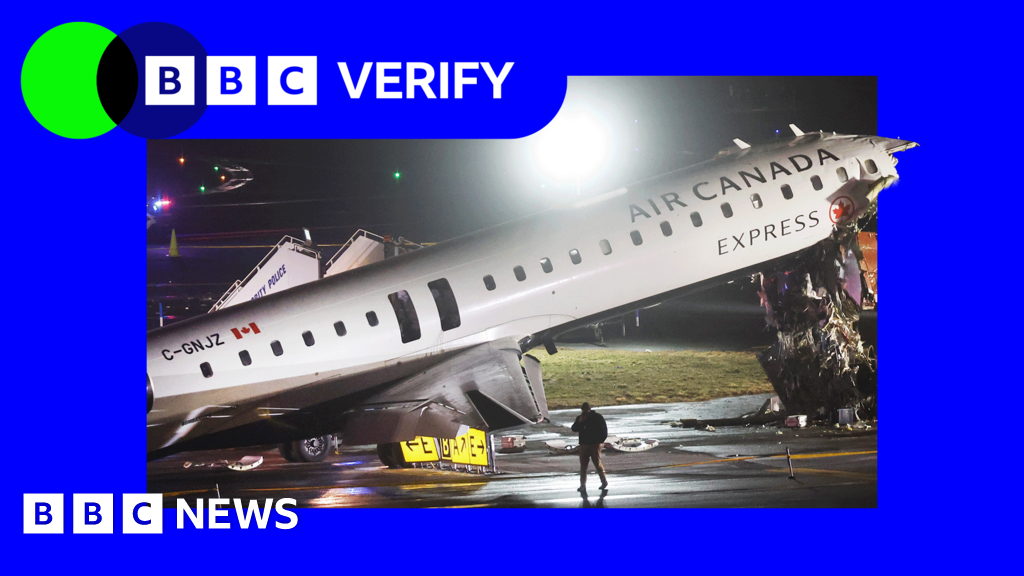
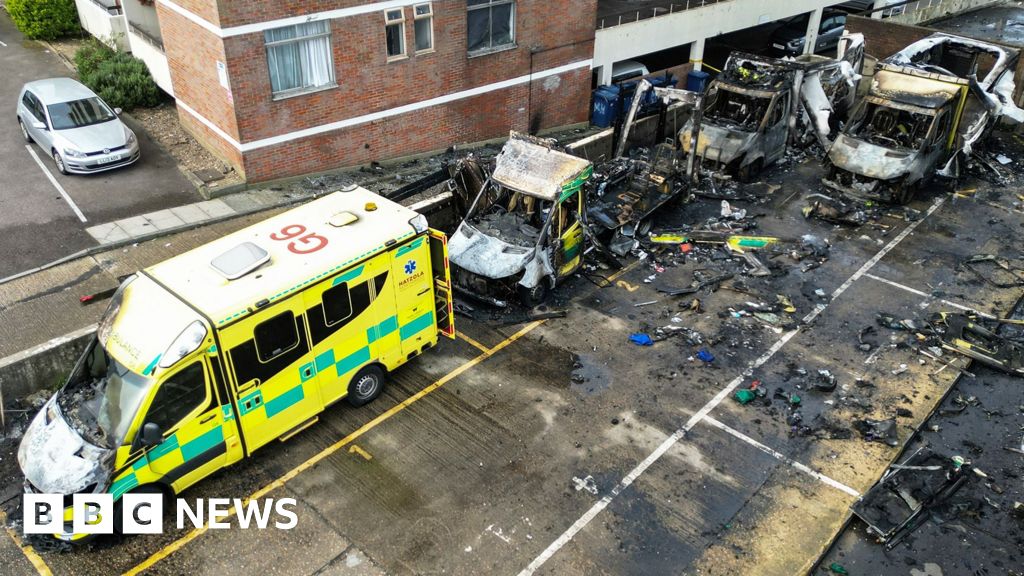
Two pilots were killed and several passengers and crew were injured when an Air Canada plane collided with a fire truck at New York’s LaGuardia airport.
BBC Verify has been using air-traffic-control audio and flight-tracking data to piece together what happened on the runway on 22 March – as Jake Horton explains.
Produced by Aisha Sembhi. Graphics by Mesut Ersoz. Verification by Daniele Palumbo.
The agency will increase robotic missions to the moon and launch a spacecraft called Space Reactor 1 Freedom.
Published On 24 Mar 202624 Mar 2026
NASA has unveiled a major overhaul of its moon and Mars strategy, scrapping plans for a lunar-orbit space station and instead committing $20bn over the next seven years to build a base on the moon’s surface, while also advancing plans to send a nuclear-powered spacecraft to Mars.
NASA Administrator Jared Isaacman outlined the changes on Tuesday during a meeting in Washington, DC, with partners, contractors and government officials involved in the Artemis programme, saying the agency will increase robotic missions to the moon and lay the groundwork for nuclear power on the lunar surface.
Isaacman, appointed by US President Donald Trump and who took charge in December, said the changes form part of a broader overhaul of NASA’s long-term Moon-to-Mars strategy.
The planned moon base is intended to support long-term human presence on the lunar surface, with robotic missions expected to help prepare the site, test technologies and begin building infrastructure before astronauts return later this decade.
The agency also disclosed plans to launch a spacecraft called Space Reactor 1 Freedom before the end of 2028, a mission designed to demonstrate nuclear electric propulsion in deep space on the way to Mars.
The spacecraft will deliver helicopters on the Red Planet, similar to the Ingenuity robotic test helicopter that flew with NASA’s Perseverance rover, a step the agency said would help move nuclear propulsion technology from laboratory testing to operational space missions.
The Ingenuity helicopter was the first aircraft to achieve powered, controlled flight on another planet. It travelled to Mars attached to NASA’s Perseverance rover and landed in February 2021.
Pausing the Lunar Gateway station
The Lunar Gateway station, a planned space station in lunar orbit being developed with contractors including Northrop Grumman and international partners, was meant to serve as a base where astronauts could live and work before heading to the Moon’s surface.
But NASA now plans to repurpose some Gateway components for use on the surface instead.
Repurposing Lunar Gateway to create a base on the moon’s surface leaves uncertain the future roles of Japan, Canada and the European Space Agency in the Artemis programme, three key NASA partners that had agreed to provide components for the orbital station.
“It should not really surprise anyone that we are pausing Gateway in its current form and focusing on infrastructure that supports sustained operations on the lunar surface,” Isaacman said.
The changes to NASA’s flagship Artemis programme are reshaping billions of dollars’ worth of contracts and come as the United States faces growing competition from China, which is aiming to land astronauts on the moon by 2030.
The Artemis programme, begun in 2017 during Trump’s first term as president, envisions regular lunar missions as NASA’s long-awaited follow-up to its first moon missions in the Apollo programme that ended in 1972.
Salah has played a key role in reviving Liverpool‘s fortunes on the pitch during the past nine years.
He helped the club to two Premier League titles, the Champions League, Fifa Club World Cup, Uefa Super Cup, FA Cup and two EFL Cups, as well as the Community Shield.
Salah’s tally of 255 goals in 435 appearances for the Reds has him third in the pantheon of all-time leading goalscorers for the club, behind Ian Rush (346) and Roger Hunt (285).
He has won the Premier League golden boot on four occasions and been named the Professional Footballers’ Association player of the year three times – in 2018, 2022 and 2025.
Salah also hailed the support he has received from Liverpool fans who “showed me through the best time of my career” and also “stood by me in the toughest times”.
“It’s something I will never forget and something I will take with me always. Leaving is never easy,” he added.
“You gave me the best time of my life, I will be always one of you. The club will always be my home, to me and to my family. Thank you for everything. Because of all of you I will never walk alone.”
Liverpool said that Salah’s time at Anfield had been a “remarkable nine-year chapter” and plans to show their appreciation will come at a later date.
“With plenty still left to play for this season, Salah is firmly focused on trying to achieve the best possible finish to the campaign for Liverpool,” the club added.
“Therefore, the time to fully celebrate his legacy and achievements will follow later in the year when he bids farewell to Anfield.”
United States President Donald Trump is insistent that “productive” negotiations have taken place with Iran to end the war he launched with Israel’s Prime Minister Benjamin Netanyahu almost a month ago. The major problem with that narrative is that Iran’s top officials have repeatedly denied it.
Amid the fog of war and the propaganda being pushed by all sides, it is hard to know who to believe. But an analysis of what each side has to gain from any negotiations – and a potential end to the conflict – could bring more clarity.
Recommended Stories
list of 3 itemsend of list
Trump’s comments that there were “major points of agreement” after “very good” talks with an unnamed “top” Iranian figure came as stock markets opened in the US for the start of the trading week. The five-day deadline he gave for a positive response from Iran also happens to coincide with the end of the trading week.
Many have cynically noted that timing, especially as it comes after a two-week period in which oil prices have fluctuated in line with events in the Middle East, leading to a high of about $120 a barrel last week.
Trump’s talk of negotiations may also give time for more US troops to arrive in the Middle East, if Washington decides to conduct some form of ground invasion of Iranian territory.
Among those questioning Trump’s motives was the man believed by some to be the senior Iranian official Trump was referencing: the Iranian parliamentary speaker, Mohammad Bagher Ghalibaf.
“No negotiations have been held with the US, and fakenews is used to manipulate the financial and oil markets and escape the quagmire in which the US and Israel are trapped,” Ghalibaf wrote on social media.
The impact on stock markets and oil prices is not just relevant to the US and Trump, but also to Iran. However, for Tehran, the benefit comes in the damage the war is doing to the US and global economies.
The Iranian state wants the US to feel economic pain from the war, as a means of deterrence for any future Israeli or US attack on Iran.
Therefore, as much as it is in the US interest to play up talk of negotiations in order to calm the markets, it is also in Iran’s interest to downplay any talk to do the exact opposite, and not give the Trump administration any breathing space.
US benefits?
Consequently, both sides have their own narratives on negotiations, and public comments will do little to inform us as to whether those negotiations are really taking place, or in what form they may be.
That instead leads us into what each side has to gain from negotiations, and an actual end to the war at the current stage.
Trump appears to have underestimated the consequences of the conflict that he launched with Netanyahu on February 28, and the ability of the Iranian state to withstand the attacks against it without collapsing.
“They weren’t supposed to go after all these other countries in the Middle East … Nobody expected that,” he said last week, adding that even “the greatest experts” didn’t believe that.
Leaving aside that experts – including US intelligence officials – had repeatedly made those warnings, reality has now made Trump aware of the consequences he had previously ignored.
While some allies and supporters may continue to push him to plough on with the conflict, Trump has previously shown himself amenable to cutting deals to extricate himself from difficult situations, and it is not far-fetched to see the benefits of doing so in this instance.
The US president has already ordered his government to issue temporary sanctions waivers on some Iranian oil, in an effort to calm oil prices. This is the first time Iran has lifted sanctions on any Iranian oil since 2019, and it will not be lost on Iran that the waivers have come as a result of their policy to expand the conflict to the wider Gulf and the Strait of Hormuz, a key waterway through which a fifth of the world’s oil and liquified natural gas transits.
The war was already unpopular in the US – and now even more so, as consumers see the impact on petrol prices and potentially other areas of the economy, all in the run-up to congressional elections later this year, in which Trump’s Republicans are likely to do poorly.
Trump, therefore, has the options of extending this war – and suffering the economic and political cost, or ending it – and facing the criticism that he was unable to finish what he termed as a “short-term excursion”.
The Iranian perspective
But whatever Trump wants to do, the decision is not totally in his hands. Iran, attacked for the second time in less than a year, now appears to have less of an incentive to end the war without the establishment of an effective deterrent to another in the future.
Gone are the days of the telegraphed attacks on US assets and the slow climb up the escalation ladder. From the outset of the current war, it was clear that Iran had changed its tactics and was not as interested in restraint.
It is now arguably in the Iranian state’s benefit to drag out the conflict and inflict more suffering on the region, if it wants to ensure its survival.
There may also be a belief that interceptor stocks in Israel are running low, allowing Iran to strike targets more effectively. The thinking – particularly among the hardliners who now appear to be in the ascendancy in Iran – will be that now is not the time to stop, and allow those interceptor stocks to replenish.
And yet, Iran is suffering. More than 1,500 people have been killed across the country, according to the government. Infrastructure has been heavily damaged, and the power grid could be next. Relations with Gulf neighbours have nosedived, and, after repeated Iranian attacks, are unlikely to return to their previous levels after the conflict.
More moderate voices in Iran will look at that and think that things could easily get worse. They can argue that some form of deterrence has been achieved, and that the time is now ripe to talk. And if they can get some concessions – such as a promise of no future attacks, or greater authority in the Strait of Hormuz – they may decide that the time is right to make a deal.
Weekly insights and analysis on the latest developments in military technology, strategy, and foreign policy.
Lockheed Martin has developed a launcher called Grizzly that fires AGM-114 Hellfire missiles from within an otherwise unassuming 10-foot shipping container. Employed alone or in groups networked together, Grizzly presents a flexible and relatively low-cost means of bolstering point defenses against aerial threats, including drones, and targets on the surface. The launchers can also hide in plain sight, intermixed with regular containers, creating targeting dilemmas and uncertainty for opponents.
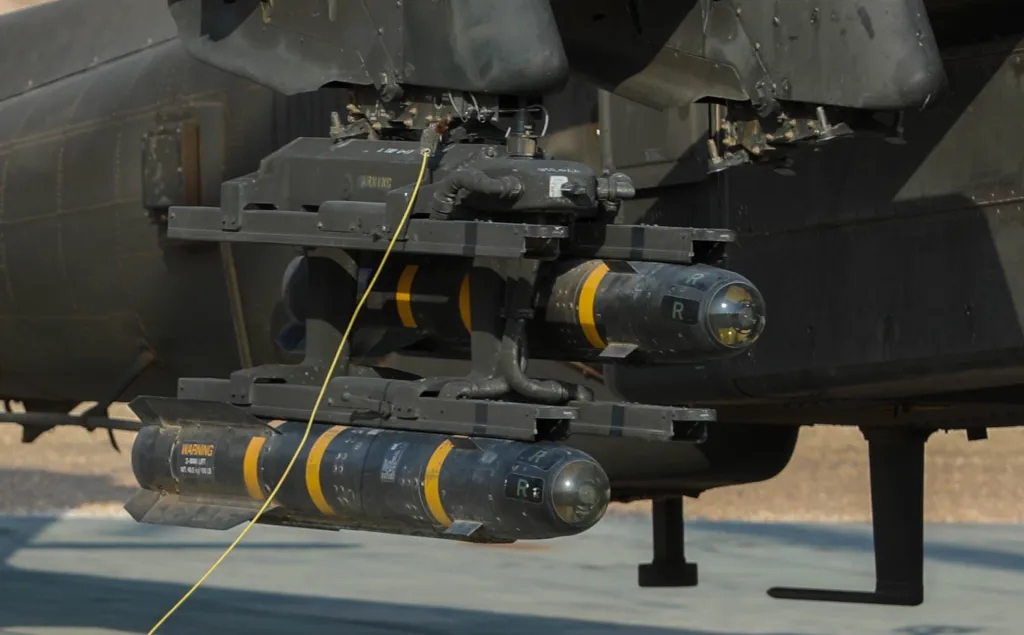
Grizzly has already successfully completed two live-fire tests, according to a press release Lockheed Martin put out today. The launcher took just six months to build, and makes heavy use of existing and often commercial off-the-shelf components. This includes leveraging the proven M299 four-rail launcher, which is in widespread use globally today, most commonly as a means for launching Hellfires from various types of helicopters.
An M299 launcher seen on the stub wing of a US Army AH-64 Apache attack helicopter. US Army
In “one test we launched missiles vertically,” Chris Murphy, senior manager of Business Development for Integrated Air and Missile Defense Advanced Programs, told TWZ and other outlets during a call yesterday. “In another test, we launched them at an angle to prove out some of the flexibility of the system.”
The container itself has a roof that hinges open for firing. Lockheed Martin says the containerized launcher can be configured to be self-powered or make use of a tertiary power source.
A Hellfire missile is fired vertically from a Grizzly launcher during a test. Lockheed Martin
Broadly speaking, “you might think of a depth of magazine as being a really large magazine,” Murphy explained. “Another way to achieve depth of magazine is to have several launchers. What we’ve tried to do is take a lot of the cost out of those launchers and use containers where possible.”
“The idea is that you can leave these somewhat unattended,” he continued. “Obviously, they would be in proximity to some support, but as opposed to having a full-on launcher sitting out someplace or moving around someplace, you’ll just have some ideas to have some containers available. And they protect the system from weather, but they also then allow rapid access and also rapid reload when the time comes. “
“The idea is to provide these [Grizzly container launchers] in multiple places and to… make the enemy uncertain of what is where,” Murphy added. “By using commercial materials and commercial launchers, it’s not obvious where you have protection capability, and it allows you to spread the protection out geographically. It allows it to be remotely operated.”
In general, containerized launchers are also inherently mobile and readily deployable via truck, as well as by cargo aircraft and ships. They also offer opportunities to be employed from any vessel with sufficient deck space, which we will come back to later on.
A US Army Palletized Load System (PLS) truck seen offloading a standard 20-foot shipping container. US Army
Lockheed Martin’s press release today otherwise says that Grizzly is “command and control and sensor agnostic” and can be utilized to “support any service or mission, anywhere.”
That being said, the fact that the Integrated Air and Missile Defense Advanced Programs division led the development of Grizzly points to a clear surface-to-air application for the launcher. The millimeter-wave radar-guided AGM-114L variant of the Hellfire has a demonstrated anti-air capability against various types of drones, which is a particular pressing threat. Loaded with AGM-114Ls and linked to air search radars and other sensors, the containerized launch system could offer a way to rapidly boost air defenses, especially at forward locations.
The current conflict with Iran provides a number of real-world instances where this could be valuable. In particular, Iranian-backed militias have launched repeated drone attacks on the U.S. Embassy complex in Baghdad, Iraq. In line with the remote operation concept Lockheed Martin’s Murphy outlined, Grizzly launchers could be placed around the outer edge of the larger Green Zone in Baghdad, creating an outer layer of close-in defense.
Footage captures a massive blaze following a kamikaze drone strike by Iran-backed militias on the U.S. State Department’s support facility at Victory Camp within Baghdad International Airport.
A Saab Giraffe 1X SHORAD radar can be seen at the targeted site, indicating that a… pic.twitter.com/SNsnFYriQZ
Grizzly could be used to fire AGM-114Ls, along with laser-guided Hellfire variants, at targets on land or at sea. The picture Lockheed Martin included in its press release today notably shows the launcher firing a laser-guided Hellfire vertically during a test. As an aside, several countries already have or are developing ground-based launch systems for Hellfire that are designed to be employed in the coastal defense role against landing craft and amphibious vehicles. With assistance from the United Kingdom, Ukraine’s armed forces have also fielded a launch system for the Hellfire-derived Brimstone missiles concealed inside civilian-style trucks that has been used for more general surface-to-surface attacks.
The video below includes clips of a Hellfire launcher concealed inside a typical civilian truck now in development in Taiwan for coastal defense applications.
《國防線上-國防自主軍備研製》打造更堅韌有力的防衛力量
As noted, Grizzly has the potential to be employed from ships and locations on land in any role. Purpose-built launchers for the AGM-114L are already integrated onto some of the U.S. Navy’s Freedom and Independence class Littoral Combat Ships (LCS) to provide extra protection against drones and swarms of small boats.
USS Detroit (LCS 7) Successful Missile Test Firing
“The idea behind Grizzly was for it to be a low-cost approach, and we believe that it’s appropriate for multiple customers,” Lockheed Martin’s Murphy said yesterday in response to a question about using the launcher in this domain. “The maritime environment may pose some challenges that you might have to rethink a couple of things, but the general concept is valid.”
Hellfire might not be the only missile Grizzly can fire, either. Murphy said that the launcher was designed to allow for the ready integration of additional functionality, including other missiles, down the line “without having to change much of anything.” One obvious candidate would be the AGM-179A Joint Air-to-Ground Missile (JAGM), which is derived from the AGM-114R and can already be fired from many of the same launchers, including the M299. Conceivably, the overall concept could be expanded to a launch system in a larger container with more total missiles.
An AGM-179A JAGM seen loaded on an M299 launcher during testing. US Army
Containerized systems, in general, present particular benefits for expeditionary or distributed operations. Launchers like Grizzly could be particularly relevant for supporting operations in forward areas across the broad expanses of the Pacific during a future major conflict with China. As mentioned, having the additional benefit of being able to deploy them discreetly presents challenges for opponents.
“I think, again, it aligns to our ability to operate in multiple domains,” U.S. Army Gen. Ronald Clark, head of U.S. Army Pacific (USARPAC), said in response to a general question about containerized launch capabilities at an event last year that the Center for Strategic & International Studies (CSIS) think tank in Washington, D.C. “Our ability to target our adversaries at scale and our ability to be able to be literally ubiquitous with boxes of rockets at different places, that look like boxes of something else, really gives our adversary pause, because it’s in real time providing deterrence.”
Lockheed Martin has also touted Grizzly simply as an example of its ability to rapidly produce a working prototype system, which could then be produced and fielded on at least a limited level without necessarily having to commit to large-scale production.
“There are many instances where you can develop a prototype, such as this Grizzly launcher, and maybe you only need a few of them, but maybe you need a couple 100. Those are still not numbers that you come up with – that you would come up with for a large-scale production line,” Lockheed Martin’s Murphy said. “We’ve got a couple other programs that we’re working through the same approach and are proving to ourselves and proving to our customers that this is a very good intermediate step between one or two prototypes versus dozens, or maybe even hundreds of early capability products, until you get to the point where you think that you’re ready for let’s go ahead and have a full-scale, full-rate production.”
Grizzly, in its current form, certainly offers potential anti-air and other capabilities that could be of interest across the U.S. military, as well as to foreign customers, especially armed forces that already have Hellfire variants in inventory.
Mohammad Bagher Zolghadr, ex-IRGC commander, to replace late Ali Larijani as chief of Iran’s Supreme National Security Council.
Published On 24 Mar 202624 Mar 2026
Iran has named Mohammad Bagher Zolghadr, a former commander of Iran’s Islamic Revolutionary Guard Corps (IRGC), as the successor to Ali Larijani, head of the country’s Supreme National Security Council (SNSC), who was killed in a US-Israeli air strike earlier this month.
President Masoud Pezeshkian’s deputy of communications announced the appointment on X on Tuesday.
Recommended Stories
list of 3 itemsend of list
The SNSC, formally chaired by Pezeshkian, coordinates security and foreign policy and includes top military, intelligence and government officials, in addition to representatives of Supreme Leader Mojtaba Khamenei.
Zolghadr, who served in the 1980s war against Saddam Hussein’s Iraq, went on to become head of the IRGC’s joint staff for eight years and then deputy commander-in-chief of the elite force for another eight years.
In 2005, he was named deputy interior minister for security and police in the government of then-President Mahmoud Ahmadinejad, a move that was seen at the time as bolstering the IRGC’s influence in politics.
Since 2023, he has been the secretary of the Expediency Council, a powerful body that plays both an advisory and mediating role between Iran’s various power structures and the supreme leader.
Zolghadr’s new position consolidates the IRGC’s growing clout in Iran amid growing uncertainty regarding decision-making at the top of the system. Mojtaba Khamenei has not been seen in public since he succeeded his assassinated father, Ayatollah Ali Khamenei, in early March.
Larijani, one of the most prominent non-clerical figures in Iranian politics, was killed last Tuesday in a week that saw the war spiralling throughout the region, upending global energy markets and roiling the world economy.
On Tuesday, the war showed no sign of de-escalation after US President Donald Trump’s claim that he was speaking to an unidentified “top person”, as he extended by five days a deadline to hit Iran’s power plants.
Iran’s Parliament Speaker Mohammad Bagher Ghalibaf said “no negotiations” were under way, accusing Trump of seeking “to manipulate the financial and oil markets”.
Weekly insights and analysis on the latest developments in military technology, strategy, and foreign policy.
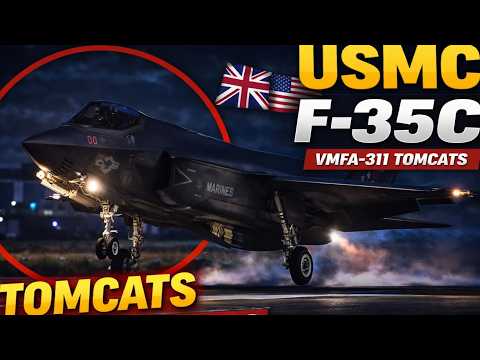
F-35Cs from the U.S. Marine Corps are the latest fighters poised to deploy to the Middle East region for Operation Epic Fury. The movement of these aircraft to RAF Lakenheath in England signals what is set to be the first land-based combat deployment for the F-35C, the carrier variant of the Joint Strike Fighter flown by both the Navy and Marine Corps.
Having left MCAS Miramar on March 10, the first 5 of 10 jets from VMFA-311 ‘Tomcats’ finally landed at RAF Lakenheath last night as they head for the F-35C’s first land-based combat deployment. 5 more due today before heading east (USMC stock photo) pic.twitter.com/FAhX8HXFNB
According to open sources, the first five of a planned 10 F-35Cs from Marine Fighter Attack Squadron 311 (VMFA-311), the “Tomcats,” touched down at Lakenheath yesterday. They had been noted departing their home base of Marine Corps Air Station Miramar, California, on March 10.
USMC VMFA-311 F-35C Land in UK FIRST EVER Arrival at RAF Lakenheath
Their final destination, in the U.S. Central Command (CENTCOM) area of responsibility, is unknown, but they will join a significant force of combat aircraft already flying missions in the region. These include land-based U.S. Air Force F-35As and Marine Corps F-35Cs flying from the carrier USS Abraham Lincoln. Marine Corps F-35Bs are also now reported to be headed to the region aboard two amphibious assault ships, the USS Boxer and the USS Tripoli.
Three weeks of Operation Epic Fury.
The Joint Force owns the skies, but Tehran holds the Strait. Additional U.S. fighter aircraft and naval assets arrived in both theaters, and Marine expeditionary forces are en route.
Open-source satellite imagery captured over the Indian Ocean yesterday indicates that the USS Tripoli is now docked at Diego Garcia in the Indian Ocean. Previously, tracking sources had indicated that the Japan-based USS Tripoli was sailing through the South China Sea, moving fast to join U.S. forces amassed in the CENTCOM area of responsibility. You can read more about what capabilities the Tripoli and its Amphibious Ready Group (ARG) could bring to the campaign here.
According to a report from The Wall Street Journal, the USS Tripoli, the amphibious landing dock USS New Orleans, and roughly 2,200 Marines from the 31st Marine Expeditionary Unit are expected to cross into the U.S. Central Command area on Friday — the day President Trump has set as the deadline for Iran to reopen the Strait of Hormuz. It would take another few days to get the ships in closer proximity to the Persian Gulf, where it’s speculated their island objectives are located, if indeed they are commanded to execute a landing operation at all. The F-35Cs now heading to the region would be a critical close air support capability for augmenting the MEU.
The further buildup of U.S. combat in the CENTCOM comes as Iran continues to launch waves of missiles at Israel. At the same time, U.S. President Donald Trump says that Iran wants to make a deal to end the conflict.
The Israel Defense Forces (IDF) confirmed today that Iran launched a barrage of missiles toward its territory, triggering an air raid alert in Tel Aviv.
Israel’s biggest city seems to have been especially heavily hit, with extensive damage seen on at least one multi-story apartment building. The local fire and rescue service said they were searching for civilians trapped in a building in the city.
A 100-kg warhead was used on the Iranian missile that slammed into Tel Aviv early this morning. Significant damage was caused to a residential area. pic.twitter.com/ujkuJpxUVO
🚨Midday into the 25th day of war: Iran fired ~460 missiles towards Israel: of those that made it to Israel, some landed in open areas, and at least 42 penetrated and hit urban areas: 8 unitary warheads + 34 cluster warheads which released hundreds of bomblets that hit 180 locals https://t.co/QFGTNlbxmk
Official Iranian media channels published this video showing the launch of a Sejil ballistic missile, reportedly toward Israel. The Sejil is an advanced two-stage, solid-fuel missile, and one that has apparently been used only rarely in the conflict so far.
IRGC fighter sending off a Sejil missile.
Iran’s Sejil missile is a domestically built, solid-fuel, two-stage ballistic missile with a ~2,000 km range.
As well as bombarding Israel, Iranian officials were on the offensive today, pushing back on Trump’s claim that Washington and Tehran have had “very good and productive conversations regarding a complete and total resolution of our hostilities.”
The Speaker of the Parliament of Iran, Mohammad Baqer Qalibaf, refuted the suggestion that any talks had taken place.
“No negotiations have been held with the U.S., and fake news is used to manipulate the financial and oil markets and escape the quagmire in which the U.S. and Israel are trapped,” he wrote on X.
Iran’s parliament speaker Mohammad Bagher Qalibaf says no talks have taken place with the United States, according to a post on X. pic.twitter.com/TAkA4OCPpx
Meanwhile, the Iranian embassy in South Africa posted an image on X showing a child’s pink steering wheel placed on a car dashboard in front of the passenger seat, mocking Trump’s idea that he could control the Strait of Hormuz alongside Iran’s supreme leader.
Three senior Israeli officials, speaking to the Reuters news agency on condition of anonymity, reportedly consider it highly unlikely that Iran will agree to U.S. demands in any new round of negotiations.
Senior Israeli officials also told Reuters that they expected Israeli Prime Minister Benjamin Netanyahu to convene a meeting of security officials for talks on Trump’s proposal for a deal with Iran.
A Pakistani official has said that direct talks on ending the conflict may be held in Islamabad this week. The official said that the negotiations were likely to involve U.S. Vice President JD Vance, and Trump’s Middle East envoys Jared Kushner and Steve Witkoff.
According to a report from Al Arabiya, citing Israeli newspaper Yedioth Ahronoth, Iranian Foreign Minister Abbas Araghchi has secretly informed U.S. envoy Witkoff that Iranian Supreme Leader Mojtaba Khamenei has approved talks and a potential deal.
#Iran’s Foreign Minister Abbas Araghchi has secretly informed US envoy Steve Witkoff that Supreme Leader Mojtaba Khamenei approved talks and a potential deal, Al Arabiya reports citing Israeli newspaper Yedioth Ahronoth.https://t.co/k0wJ2XpXuU
Pakistan has emerged as a key facilitator in brokering talks between Tehran and Washington.
Pakistan is making a push to mediate talks to end the US-Israeli war against Iran, with its powerful army chief holding calls with Trump to find a resolution to the fighting, people familiar with the matter said https://t.co/xLr5r7OzNC
The White House confirmed that Trump spoke with Asim Munir, the chief of the Pakistan Armed Forces.
An unnamed European official also told Reuters that, while there had been no direct negotiations between the United States and Iran, Egypt, Pakistan, and various Gulf states were all relaying messages.
The Iranian Fars news agency reports that the foreign ministers of Iran and Egypt had a phone conversation, in which Iran’s Araghchi presented an update on the latest talks with regional and international actors aimed at reducing tensions in the region.
The Israeli military has continued to hit targets in Iran, with objectives in Tehran being struck for a second day in a row. Iranian news agency Nournewsreported that air defense systems were activated across the capital and that multiple explosions were heard.
The IDF today said that Israeli Air Force fighters had carried out extensive strikes in central Tehran. Targets in the Iranian capital included key command centers, including facilities associated with the Islamic Revolutionary Guard Corps’ intelligence arm and the Intelligence Ministry, the IDF said.
Overall, the IDF reports that it struck more than 50 other targets overnight, including ballistic missile storage facilities and launch sites.
⭕️ 3,000+ strikes across Iran since the start of Operation Roaring Lion
Yesterday, the IDF targeted IRGC command centers, weapons storage facilities, and aerial defense systems.
Overnight, an additional 50+ targets were struck, including ballistic missile storage and launch…
CBS News reports that U.S. officials have told them there are at least a dozen underwater mines in the vital Strait of Hormuz, according to current American intelligence assessments. The U.S. officials, speaking to CBS News under condition of anonymity, said the mines currently employed by Iran in the strait are the Iranian-manufactured Maham 3 and Maham 7 types.
Another U.S. official said the count was less than a dozen.
A useful primer on the main Iranian sea mines can be found below:
Another new arrival at RAF Lakenheath today was this U.S. Air Force AC-130J Ghostrider gunship. The aircraft arrived at the English base from Keflavik in Iceland.
Air Force Special Operations Command has 31 AC-130Js in inventory, which are the only AC-130 variants now in service. The Ghostrider’s armament package includes a 105mm howitzer, as well as a single-barreled 30mm GAU-23/A Bushmaster II automatic cannon. The gunships can also employ an array of precision-guided missiles and bombs via Common Launch Tubes (CLT) and underwing racks. You can learn more about how the Air Force AC-130s have evolved since the introduction of the original AC-130A version in the 1960s here and in The War Zone video below.
Can The AC-130 Gunship Stay Relevant?
2:20PM EST—
An interesting Iranian missile seems to have appeared in a recent targeting video released by the Israel Defense Forces (IDF). The video is described as showing a recent airstrike on an Iranian ballistic missile launcher in western Iran, apparently primed for an attack on Israel. Based on the imagery, this has been identified as a likely Kheibar Shekan two-stage, solid-propellant, truck-launched medium-range ballistic missile (MRBM) that Iran first unveiled in 2022. A third generation of the Fateh family of ballistic missiles, Iran claims it has a maximum range of 1,450 kilometers (900 miles).
2:10PM EST—
Former U.S. Defense Secretary James Mattis has provided words of warning on what happens next in the conflict.
“Iran right now, if we declared victory, they would now say they own the strait,” Mattis said. “We’re in a tough spot, ladies and gentlemen. I can’t identify a lot of options.”
“Iran right now, if we declared victory, they would now say they own the strait. We’re in a tough spot, ladies and gentlemen, I can’t identify a lot of options.”
-General Mattis, retired four star Marine general and former SecDef for President Trump pic.twitter.com/kyPnqPCRKK
Among the warnings from Mattis was “a tax for every ship that goes through” the Strait of Hormuz, a prospect that now appears to be creeping closer.
According to a report from Bloomberg, Iran has started charging ships up to $2,000,000 for safe passage through the strait. The report describes:
Payments of as much as $2 million per voyage are being sought on an ad hoc basis, effectively creating an informal toll on the waterway, according to people familiar with the matter, who requested anonymity to discuss sensitive dealings. Some vessels have made the payment, though the mechanism wasn’t immediately clear — including the currency used — and it doesn’t appear to be systematic, the people said.
1:30PM EST—
In its latest update on the conflict in the Middle East, the U.K. Ministry of Defense confirms that it has deployed the British Army Stormer air defense system, which joins a growing counter-drone force in Cyprus in the eastern Mediterranean. Armed with the Starstreak High-Velocity Missile (HVM), the Stormer has been in use with the British Army since 1997, combining a tracked armored vehicle with eight ready-to-fire rounds, 12 reloads, and a roof-mounted targeting package including an infrared sensor.
1:20PM EST—
On his Truth Social platform, President Trump has reposted the offer of mediation from the Pakistani Prime Minister Shehbaz Sharif.
A large explosion north of Beirut today was caused by the interception of Iranian ballistic missiles, the official National News Agency in Lebanon reports. The explosion resulted in minor injuries, and there are reports, unconfirmed for now, that the target may have been a U.S. asset in the country. The incident in the Keserwan district appears to be the first time that Iranian projectiles have been intercepted over Lebanon since the conflict began.
Why Iran ballistic missile incident in #Lebanon is dangerous • A first • Target may have been US embassy • Drags Lebanon deeper into war • Deepens divide, anger at Hezbollah, discrimination against displaced • Helps Israel prolong war in South https://t.co/ENjE8zhOzE
More information is emerging about the apparent deployment of elements of the 82nd Airborne Division to the CENTCOM region. Fox News now reports that the commander of the 82nd Airborne, Maj. Gen. Brandon Tegtmeier and his command element have been ordered to deploy to the Middle East. There has already been plenty of speculation that the 82nd Airborne might be used in a possible offensive against Kharg Island.
Fox News has learned that the Commander of the 82nd Airborne Division Maj Gen Brandon Tegtmeier and his “command element,” members of his headquarters staff, have been ordered to deploy to the Middle East as the Pentagon and White House weigh whether to send the 82nd Airborne…
Reports state that British troops downed 14 drones in Iraq overnight, the highest total since the conflict began. These are often fired nearby by Iranian-backed militias, but Iraq has also come under long-range strikes from Iran itself.
🚨 UK troops downed 14 drones in Iraq last night, the busiest night since Iran war started – UK defence officials.
The drones were shot down by laser-guided Martlet missiles from Rapid Sentry launchers (originally procured in secret) and operated by RAF Regiment.
The drones were shot down by laser-guided Martlet missiles fired from Rapid Sentry launchers, which are operated by the Royal Air Force Regiment. You can see a video of the system here, in a non-operational context:
After multiple interceptions in skies of Iraq, Royal Air Force gives us 1st ever video detailing RAPID SENTRY. Born in 2022, it restored some ground to air missile capability to RAF Regiment for 1st time since the early 2000s but previous gov didn’t seek to advertise it at all. pic.twitter.com/yI92VSVMqc
Satellite imagery has emerged showing the aftermath of an Iranian drone strike on Ali Al Salem Air Base in Kuwait, earlier in the conflict. Reportedly, the strike destroyed an Italian Air Force MQ-9 in its hangar, and potentially also part of its ground control system. There have also been unverified claims of damage to one or more Italian Air Force Typhoon fighters that were stationed there. In his analysis, missile and drone expert Fabian Hinz argues that it seems likely that the facility was hit by a stray projectile, although deliberate targeting of the Italian contingent remains a possibility.
Satellite imagery released by Iran shows the strike on an Italian installation at Ali Al Salem Air Base in Kuwait that destroyed an MQ-9 Reaper in its hangar and, potentially, the satellite antenna associated with the system. (29.336° 47.5334°) 1/6 pic.twitter.com/UT52W7A7cr
For the first time in the current conflict, Israel’s defense minister has said that the IDF will occupy southern Lebanon up to the Litani River, marking the first clear statement of intent to seize the territory, according to a report from Reuters.
At a meeting with the military chief of staff, Israeli Defense Minister Israel Katz reportedly said that Israeli forces would “control the remaining bridges and the security zone up to the Litani,” a river that meets the Mediterranean.
Israel will occupy southern Lebanon up to the Litani River to create a “defensive buffer,” Israel Katz said, spelling out for the first time Israel’s intent to seize territory amounting to nearly a tenth of Lebanon. https://t.co/aRVupjf1O6
The Wall Street Journal and Jerusalem Post are both reporting this morning that Saudi Arabia has decided to open up additional military bases for the use of the U.S. military in its operations against Iran. Reportedly, the facilities include King Fahd Air Base in Taif, in western Saudi Arabia.
WSJ and Jerusalem Post this morning confirms @SeanPmathews exclusive that Saudi Arabia had unprecedentedly opened some of its military bases for the use of US military in attacks on Iran.
MEE reported that Saudi Arabia agreed to open King Fahd Air Base in Taif, in Western Saudi…
In other Saudi news, there are growing signs that the Kingdom might enter the conflict, according to a report from the Wall Street Journal.
WSJ: Crown Prince Mohammed bin Salman is now eager to re-establish deterrence and is close to a decision to join the attacks, the people said. It is only a matter of time before the kingdom enters the war, one of the people said.
Seoul is eyeing a gap in the market for lower-cost air defense systems, it has been reported. South Korea has already made significant efforts to expand its customer base, with several significant arms deals secured in Europe. Now, Middle Eastern nations are reportedly showing interest in its homegrown surface-to-air missile, Cheongung, also known as M-SAM, as an alternative to the U.S.-made Patriot system. Such a need is being driven by stocks of Patriot interceptors running low, a huge backlog of orders, and a dire need for additional air defenses.
The conflict in Iran is pushing Middle Eastern countries toward South Korea’s lower-cost air defense systems, opening a new opportunity to expand its arms export footprint beyond Europe. https://t.co/tsGh7g8OeJ
The unverified video below is said to have been filmed in Kuwait and appears to show a U.S. Army M142 High Mobility Artillery Rocket System (HIMARS) launcher firing around a dozen missiles toward Iran. The HIMARS has been used to fire ATACMS, as well as Precision Strike Missile (PrSM) short-range ballistic missiles, during Operation Epic Fury. The conflict has seen the first combat use of PrSM, which brings a major boost in range over ATACMS.
Open-source intelligence sources indicate at least 35 C-17 transport flights to the Middle East since March 12, with more flights on the way. Interestingly, the starting point for six of these flights to Al Udeid in Qatar was Powdiz in Poland, which could indicate that the aircraft were transporting Ukrainian counter-drone specialists and associated equipment.
Bloombergreports that a Chinese-owned fuel tanker passed through the Strait of Hormuz in coordination with Iran recently, demonstrating that there are ways around the Tehran-imposed blockade on the channel. Bloomberg says the Bright Gold left the Gulf on Monday morning via a channel between the Iranian islands of Qeshm and Larak, signaling that it had Chinese ownership.
Two India-flagged gas carriers also used the route this week after New Delhi said it had discussed the safe passage of the ships with Tehran.
Indian Navy personnel with crew of one of the vessels that transited Hormuz & is headed to India. The Indian Navy is escorting the vessel in the Arabian sea. pic.twitter.com/YO2XzmJLg2
A video published by Iran’s Fars agency claims to show a damaged U.S. Army LUCAS one-way attack drone, a type that was heavily inspired by Iran’s own Shahed-136 drone. Iran says the interception brings the total number of drones downed to 131. You can read more about the value of the Low-Cost Uncrewed Combat Attack System (LUCAS) kamikaze drone, which made its combat debut in Epic Fury, here.
A video published by Iran’s Fars News Agency purports to show a damaged US army ‘LUCAS’ one-way attack system, a model similar to Iran’s Shahed drones.
The U.S. Air Force A-10C attack jet has been surviving in operational service somewhat against the odds, but these aircraft continue to target pro-Iranian militias in Iraq, as the footage below confirms. The video was reportedly taken in Mosul, northern Iraq.
US A-10 continues targeting the Iraqi Shia militias positions. Footage shows the fighters attacking a PMF base in Mosul, northern Iraq. pic.twitter.com/PDTaSjLBpo
The final qualification spots for the FIFA World Cup 2026 are about to be sealed via UEFA and intercontinental playoffs.
Published On 24 Mar 202624 Mar 2026
With the FIFA World Cup 2026 kicking off on June 11, the final spots that are still up for grabs are being fiercely fought by nations in qualifiers around the globe.
The last governing body to complete their continental playoff route is UEFA, with four European spots still up for grabs at the showpiece event.
Recommended Stories
list of 4 itemsend of list
Thereafter, FIFA’s Play-Off Tournament – an intercontinental competition – will provide the last-chance saloon for two more of the best non-qualified finishers from the other continental processes around the globe.
Al Jazeera Sport takes a look at UEFA’s final continental playoff path as that draws to a close.
Which UEFA teams are still in with a chance of World Cup qualification?
There will be more European teams than from any other continent at the World Cup: 16.
There are still 16 European teams, meanwhile, vying for the final four of the UEFA qualifying positions for the World Cup:
Italy, Northern Ireland, Wales, Bosnia and Herzegovina, Ukraine, Sweden, Poland, Albania, Slovakia, Kosovo, Turkiye, Romania, Denmark, North Macedonia, Czechia and the Republic of Ireland
Which UEFA teams have already qualified for the World Cup?
The 12 European teams that have already qualified for the World Cup are:
Germany, Switzerland, Scotland, France, Spain, Portugal, the Netherlands, Austria, Norway, Belgium, England, and Croatia
What is the pathway to the World Cup for the remaining UEFA teams?
The remaining teams are divided into four paths. Only the winner of each path will qualify:
Path A:
Italy vs Northern Ireland and Wales vs Bosnia and Herzegovina The winner of this path joins World Cup Group B (with Canada, Qatar, and Switzerland).
Path B:
Ukraine vs Sweden and Poland vs Albania The winner of this path joins World Cup Group F (with the Netherlands, Japan, and Tunisia).
Path C:
Slovakia vs Kosovo and Turkiye vs Romania The winner of this path joins World Cup Group D (with USA, Paraguay, and Australia).
Path D:
Denmark vs North Macedonia and Czechia vs Republic of Ireland The winner of this path joins World Cup Group A (with Mexico, South Africa, and South Korea).
When are the first set of UEFA playoffs for World Cup qualification?
The first round of pathway matches will be played by the 16 remaining teams on March 27, and are single-leg semifinals.
When are the second set of UEFA playoffs for World Cup qualification?
The second round of pathway matches will be played on March 31, with the four winners of each pathway final progressing to the FIFA World Cup 2026. These matches will also be played over a single leg.
How have the UEFA qualifiers reached this stage?
The four final UEFA qualifying places are being decided by the teams that were the 12 runners-up from the group qualifying stage and four based on performances in the UEFA Nations League.
How were the home teams decided for the UEFA playoffs?
The highest-ranked teams are hosting the semifinals. The hosts of the finals were determined by a draw.
Pressure on Italy as playoff hopefuls eye 2026 World Cup
There is no doubt that Italy are the biggest name not amongst those nations that have already qualified.
The four-time champions are seeking to avoid the ignominy of missing out on a World Cup for a third consecutive time.
The spotlight has been on the Italian domestic league, Serie A, for falling behind the other leagues on the continent with their clubs struggling to compete in European competitions.
There will be no greater evidence of Italian football’s fall from grace, however, than the failure to reach the finals.
“It’s undeniable that there’s nervousness,” coach Gennaro Gattuso said. “Only someone without blood running through their veins wouldn’t feel it.”
Will there be any more qualifiers for the World Cup after UEFA’s?
Yes. There is a different format for the intercontinental playoffs, which FIFA simply calls the Play-Off Tournament.
Two teams will advance from a field of six.
The lineup of teams was comprised of two nations from CONCACAF (Jamaica, Suriname) and one each from Asia (Iraq), Africa (DR Congo), South America (Bolivia) and Oceania (New Caledonia).
Beirut, Lebanon – The accusation from Lebanon’s prime minister that Iran’s Islamic Revolutionary Guard Corps (IRGC) is in charge of Hezbollah’s operations against Israel comes as relations between the Shia group and the Lebanese government are at their lowest in years.
But, according to analysts, that animosity does not mean that Prime Minister Nawaf Salam was incorrect in his analysis of the situation.
Recommended Stories
list of 3 itemsend of list
In comments made on Sunday to the Saudi Arabian television station al-Hadath, Salam said that the IRGC – a branch of Iran’s military that answers directly to that country’s supreme leader – was directing Hezbollah in its fight against Israel, and in launching drones at Cyprus from Lebanon.
Israel’s latest attacks on Lebanon have, since they started in early March, killed more than 1,000 people and displaced at least 1.2 million, more than 20 percent of the country’s population. Human Rights Watch researchers say the mass displacement alone could amount to a war crime.
While Salam’s claims might be hard to definitively prove, analysis from experts and reporting suggest that the IRGC has played a crucial role in Hezbollah’s preparations for reentering the war waged against Lebanon since 2023.
IRGC calling the shots
In his interview with al-Hadath, Salam accused the IRGC of “managing the military operation in Lebanon” and of firing a drone at a British Air Force base in Cyprus, earlier this month. He accused IRGC officials of entering Lebanon with false passports.
On March 2, Hezbollah fired six rockets across the border. The group said that it was in response to the assassination of Iran’s Supreme Leader Ali Khamenei on February 28, and a response to more than a year of unanswered Israeli aggression on Lebanon, which had killed hundreds.
The move shocked much of Lebanon’s population and political establishment, after Hezbollah had reportedly given assurances to its allies in government, including Parliament Speaker Nabih Berri, that it would not enter the war in support of Iran, its close ideological ally.
The Lebanese government – which had already been moving to disarm Hezbollah – responded by banning the powerful group’s military activities and asking some Iranians believed to have links to the IRGC to leave. But the action has had little impact on the ground, where Hezbollah continues its war efforts against Israel, including battling the Israeli military on the ground in southern Lebanon – the fight that Salam believes is managed by the IRGC.
Ties between the IRGC and Hezbollah are longstanding.
Hezbollah was founded in 1982, three years after the Islamic revolution in Iran. The group was created in coordination with the IRGC and has since counted Iran as its benefactor and spiritual guide.
Immediately after a November 2024 ceasefire between Hezbollah and Israel, Iran sent IRGC officers to Lebanon to conduct a post-war audit and restructure, according to reporting by the Reuters news agency.
Hezbollah’s chain of command was reportedly restructured from a hierarchical one to smaller cells with greater decisional autonomy, something also practised by the IRGC and known as the “mosaic” defence.
Nicholas Blanford, a nonresident senior fellow with the Atlantic Council, said that sources in Hezbollah and the Lebanese government had told him that the original Hezbollah rocket attack on March 2 was conducted by the Islamic Resistance, Hezbollah’s military wing, possibly in direct coordination with the Quds Force, the IRGC’s foreign unit. Hezbollah’s senior leadership may not have been aware of the plans for the attack.
“I think the IRGC is calling the shots,” Blanford told Al Jazeera. “They are working together.”
Lebanese government out of options
On Tuesday, Lebanon’s Foreign Minister Youssef Rajji declared the Iranian ambassador to Lebanon a persona non grata and gave him until Sunday to leave the country.
The move indicates that Lebanon is trying to counter Iranian influence in Lebanon and came just hours after Israel’s Defence Minister, Israel Katz, announced that his country’s military would create a “security zone” in southern Lebanon stretching to the Litani River, roughly 30km (20 miles) north of the Israeli border – essentially an illegal occupation of the area.
But analysts and experts said there is little Lebanon can do before the war with Israel ends.
The Lebanese government had worked under heavy international pressure to disarm Hezbollah during the ceasefire period from November 2024 until earlier this month. But Israel violated the ceasefire more than 10,000 times, according to UN peacekeepers in Lebanon. For any progress to be made on disarmament, analysts said, Israel cannot continue attacking Lebanon.
“What the Lebanese government was supposed to do was a gradual disarmament of the party, which is also something that many Lebanese would like to happen,” Ziad Majed, a Lebanese political scientist, told Al Jazeera. “However, it cannot happen while Israel is bombing.”
However, the attacks don’t seem likely to cease in the short term. US President Donald Trump said that his envoys, Steve Witkoff and Jared Kushner, had engaged in talks with Iran on Monday over a possible end to the war. Iran subsequently denied that talks took place.
Many in Lebanon believe that Israel’s campaign in Lebanon won’t be included in any potential agreement between Iran, the US, and Israel to end the war. Katz’s statement on Tuesday seems to suggest Israel plans to carry on its invasion of southern Lebanon until its forces reach the Litani River.
Hezbollah’s threats
The government’s efforts to retake control of southern Lebanon may be even more difficult now that it is dealing with a reemboldened Hezbollah.
Mahmoud Qamati, deputy head of Hezbollah’s political council, compared the Lebanese government to France’s World War II Vichy government, which collaborated with the Nazis. Qamati was criticised for his comments, but later said they were misinterpreted.
More ominous comments came from Wafiq Safa, who was until recently the head of Hezbollah’s Liaison and Coordination Unit. He sent a message to the Lebanese government during a recent press interview.
“We will force the government to backtrack on the decision to ban the party’s military activities after the war, regardless of the method,” he said.
In March 2003, a million people took to the streets of London to oppose the illegal invasion of Iraq. Seeing straight through the lie that Iraq possessed weapons of mass destruction, protesters warned the British government in no uncertain terms: This action would trigger a spiral of misery, hatred and death.
More than 20 years on, most people now recognise the Iraq war for what it was: a catastrophic mistake that fuelled a string of subsequent conflicts and instability. The United Kingdom had followed the United States into an illegal war – and more than a million Iraqi men, women and children paid the price.
Unfortunately, not everybody has learned the lessons from the past. It has been almost a month since the US and Israel launched their attacks on Iran. More than 1,400 Iranians and more than 1,000 Lebanese people have been killed.
In seeking to justify the bombing, US President Donald Trump spoke of the need to eliminate “imminent threats from the Iranian regime”, whose “menacing activities directly endanger the United States, our troops, our bases overseas and our allies throughout the world”. He said the goal was to make sure Iran “will never have a nuclear weapon”. Sound familiar?
The first casualty of war is the truth, so let us get the facts straight: These are lies that have been peddled to justify an illegal and unprovoked war. As the National Counterterrorism Center Director, Joe Kent, said in his resignation letter last week, Iran “posed no imminent threat to our nation” and that it was “clear that [the US] started this war due to pressure from Israel and its powerful American lobby”.
There is only one nuclear-armed state in the Middle East: Israel. Next month’s UN Conference of the Parties to the Treaty on the Non-Proliferation of Nuclear Weapons would have been the perfect place to call for an end to the nuclear arms race. A diplomatic solution was possible, but the US and Israel chose war instead. In doing so, they have jeopardised the safety of humankind around the world. So, too, have those nations that have decided to lend support to their war of aggression.
Shortly after the attacks on Iran began, British Prime Minister Keir Starmer gave the US permission to use British military bases for strikes on Iranian missile sites. Last week, his government agreed to let the US use British bases to strike Iranian sites targeting the Strait of Hormuz.
The UK could have followed in the footsteps of Spain and said, “No way, absolutely not. We will not be involved in this illegal war in any way whatsoever.” Instead, it has dragged itself into another catastrophic conflict.
Astonishingly, the prime minister still maintains that the British government is not involved – a line that has been regurgitated by many across our media. He says the UK is allowing its sites to be used only for “defensive” strikes. What nonsense.
The reality is, if a bomber takes off from Royal Air Force base Fairford and bombs targets in Iran, we are involved in that act of aggression. If civilians die, will their families stop mourning when they are told that they were bombed for “defensive purposes”? No matter how Starmer dresses it up, he cannot change the truth: The UK is directly involved in this war.
Mark my words: This is a historic mistake that jeopardises the safety of us all. That’s why, earlier this month, I tabled a bill in the House of Commons that would require parliamentary approval for any British involvement in military action. That includes the use of British bases by other nations.
So far, the prime minister has refused to pass this legislation. With no debate, no discussion and no vote, he is dragging Britain into another disastrous illegal war.
Just like with the invasion of Iraq in 2003, today, those of us who oppose the war on Iran are accused of giving succour to authoritarian regimes and leaders. Whatever one thinks of the governments of various places, there is no basis in law for an attack to bring about regime change. There is no basis in history that bombing from the sky would bring about human rights either.
Trump couldn’t care less about people’s human rights. Whether it’s in Iran, Venezuela or Cuba, he is interested in one thing and one thing only: seizing resources and political control around the world.
If the UK cares about international law, it would be standing up to Trump, not bending over backwards to appease him.
The story of US-led foreign interventions is a story of chaos, instability and misery. How many more of these catastrophic failures do we need before we learn the lesson? And what will it take for the UK to finally defend a consistent, ethical foreign policy based on international law, sovereignty and peace?
The views expressed in this article are the author’s own and do not necessarily reflect Al Jazeera’s editorial stance.
Weekly insights and analysis on the latest developments in military technology, strategy, and foreign policy.
When it comes to understanding air and missile defense, especially in the Middle East, David Shank has few peers. The retired Army colonel served as Commandant of the Air Defense Artillery School at Fort Sill, Oklahoma and as the 10th Army Air Missile Defense Commander in Europe, back when Israel was defended by U.S. European Command. He also commanded a Patriot battery that deployed to Qatar, Bahrain and Jordan.
In an exclusive, hour-long, wide-ranging interview on Sunday, Shank offered some unique insights into the challenges faced by the U.S. and its partners in the region after four weeks of defending against Iranian missile and drone barrages. He is now a consultant for Orion 360 Consulting, his family-owned company which works with prime contractors on counter missile and drone capabilities.
Some of these questions and answers have been edited for clarity.
Now retired Col. David Shank, then Commander of 10th Army Air and Missile Defense Command, answered questions from international and Romanian media after a successful multinational surface to air missile live fire demonstration as part of Saber Strike 19. (Michigan Army National Guard photo by Lt. Col. Savannah Halleaux)
Q: Are you surprised with how many drones and ballistic missiles are getting through U.S. and allied defenses in the region?
A: I am not surprised based on Iranian overmatch with regards to the vast numbers of ballistic missiles, cruise missiles, long range rockets and unmanned aerial vehicles (UAVs). The only surprise to me were the attacks on Gulf nations’ population centers and the reported 1,500-plus [missiles and drones fired at] the UAE.
🇦🇪🇮🇷 Iran strikes UAE with drones once more
Since the conflict began, the UAE has faced approximately 1,138 drone attacks.
There’s no system that’s 100% guaranteed. As a former U.S. Army air defender, we’ve planned, we’ve studied, we’ve exercised against an Iranian threat, where we clearly understood that they possessed thousands of long range ballistic missiles, long range rockets, cruise missiles. And then, of course, in the last 10-plus years, the use of unmanned aerial systems. It’s not just the Iranians, but their proxies also, which are across the region from Iraq to Hezbollah and Lebanon to Hamas that we’ve seen recently, down to Yemen and the Houthis.
A: Yes, they’ve targeted some U.S. footprints in Iraq and across the region. And on that note, across the Middle East, we’ve had U.S. and coalition forces forward deployed for decades. They didn’t just show up there last week or two months ago. We’ve been occupying some of the same terrain for decades. And so this goes back to one of your initial questions of, why do we think Iran is able to penetrate the U.S. and Israeli and other coalition defenses. It is because 1.) they’re known targets for the Iranians, and 2.) because of the vast number of missiles and now drones and long range rockets they possess along with their proxies.
On Friday night, the Iraqi resistance and Iran launched fresh attacks on the Victoria military base in Baghdad and a number of Kurdish militia positions in Erbil, northern Iraq. 🇮🇶🇮🇷 🇺🇸 pic.twitter.com/FLVtbO20f2
Q: What is your observation of how these systems and personnel are performing?
A: Well, you know, the American soldiers are the very best. And as a former air defender, yeah, I’m a little biased. I think they’re performing extremely well. From an Israeli perspective – and I’ve spent many, many days and weeks on the ground in Israel during my time as the 10th Army Air Missile Defense Commander from 2017 to 2019 while stationed in Europe. U.S. European Command at that time had the responsibility for the defense of Israel, and so I’ve made a number of trips in and out of Israel during that two-plus-year period. I’ve walked the ground. We exercised. We deployed Patriot capabilities. We deployed [Terminal High Altitude Area Defense] THAAD capabilities during that time frame, primarily as an exercise, but it was a rehearsal for what’s taking place today.
So while some of the war plans have changed and been adjusted, as we do over time, the outcome remains the same. That’s U.S. forces standing shoulder to shoulder with the Israelis in the State of Israel on ground. As for the rest of the region, we’ve had Patriot battalions and THAAD batteries rotating in and out for probably going back to the mid-to-late 2000s. I was a Patriot battalion commander in 2013. I deployed with my battalion to Qatar, Bahrain, and then was tasked to put Patriot capability in Jordan at the time, because of what the Assad regime was doing to the civilian population – those chlorine gas bombs. That was under the Obama administration. So this has been ongoing for decades.
Pfc. James Weaver, 1-62 Delta Battery Air Defense Artillery Regiment Patriot station launcher operator and maintainer from Steelville, Mo., unlocks torque tubes behind a PAC-2 missile interceptor during an operational readiness exercise at Al Udeid Air Base, Qatar, March 4, 2014. (U.S. Air Force photo by Tech. Sgt. James Hodgman/Released) Tech. Sgt. James Hodgman
Q: What makes you say these systems and personnel are performing well?
A: The Army has rehearsed this. We’ve exercised these requirements for decades. The Israelis fight every day against proxies who consistently lob or launch long-range rockets or some type of device, either from the north or from the south, or even by the Houthis. It’s been a constant. So it’s easily, if not every day, at least once a week. And Israel has been enduring this for decades.
And so we are a trained force. We’re a capable force. The forensics continues, battle-tracking continues, the number of interceptors launched, the number of hits to kill, what that battle damage looks like. And then, of course, when, when a ballistic missile or cruise missile or even a drone is able to penetrate the defenses, at least from an American perspective, we roll up our sleeves and we determine, ‘Okay, why did that happen’?
When a ballistic missile or cruise missile or even a drone is able to penetrate the defenses, we conduct these very detailed and sometimes challenging after-action reviews to do our very best to ensure that that doesn’t happen again.
Q: Speaking of which, Israeli media outlets are reporting that a THAAD system failed to intercept ballistic missiles that attacked the southern Israeli cities of Arad and Dimona, the site of Israel’s unacknowledged nuclear weapons program. These claims are unverified, with suggestions that it could have been an Israeli David’s Sling system that missed, but what would the U.S. after-action investigation into a potential THAAD failure look like?
A: The investigators will try to determine whether it was a system malfunction. It starts with the network. It starts with the communications piece, both voice and data. All part of this integrated network. It starts with sensing. There are sensing radars for long range specifically, and how they’re interconnected on this network. And then, of course, passing those tracks to an effector. And then there’s the human in the loop, the decision maker. There’s a decision maker that ultimately directs a subordinate echelon to engage a specific target. So the investigation will look into all these aspects. It could be human error, or it could be a technical glitch. And they’ll determine that.
An emergency responder stands near destroyed buildings after an Iranian missile strike on March 22, 2026 in Arad, Israel. (Photo by Amir Levy/Getty Images) Amir Levy
Q: What makes drones like the Shahed-136 so hard to target and successfully engage?
A: Radar cross section. Let’s look at one radar versus one Shahed-136. If you’re not looking for that size and that speed of a target, you’re not going to see it. And so you’ve heard the cliche, there’s no silver bullet, right? And this drives the importance of a layered defense, and that layered defense includes radars. So very elementary nonetheless, but it’s radar cross section.
Iranian-made Shahed-136 ‘Kamikaze’ drone. (Photo by Anonymous / Middle East Images / Middle East Images via AFP) ANONYMOUS
Q: What’s being done to calibrate sensors to be able to pick up these Shaheds? And is it working?
A: I think we’ve had a great deal of success against some of these Group-3 drones, specifically the Shahed-136s. From a technical standpoint, the industry is continuing to work and make adjustments to their sensors, especially those that are programs of record, but also sensing capabilities that are non-programs of record to the Department of War and U.S. forces. So yes is the answer. And again, it goes back to layering.
And one other point worth mentioning – you can probably tie this into some of the other comments I made. From a U.S. air defense perspective, and really, probably any coalition or friendly force, we’re not defending dirt. If a ballistic missile is going to land somewhere in the desert – if it’s uninhabited – it’s not an area that we need to be concerned with defending. We’re going to let it impact. And so sometimes people get lost in those types of impacts.
Now turn around, and we talked a little bit earlier about Dimona, right? Whether the Israelis have nuclear capability or not, when you know if a ballistic missile is targeting a population center – or, let’s say, an air base, a logistics center, or maybe even oil or naturl gas fields – those are deemed critical assets and would have some type of defensive capability to prevent any type of strike against those assets. Hope that helps.
Visuals of a missile strike in Israel’s Dimona city, an area key to country’s nuclear initiatives. Comes on a day with Iran’s Natanz site came under attack.
Q: What Iranian ballistic missile technology have you seen during this conflict that is concerning in terms of Iran’s ability to penetrate even the best defense?
A: Well, I think that [attempted] strike against Diego Garcia got everyone’s attention because of the range. Reports were that there were two ballistic missiles, one broke up in flight. I think [the other missile reached a distance of] 3,800 kilometers [about 2,400 miles], and our expectation was that they had a ballistic missile they could travel 2,000 kilometers [about 1,240 miles]. Maybe they decreased the size of the warhead in order to travel further. I’m not an engineer. I own a set of post hole diggers, and that’s my PhD, by the way.
We’ve known for decades that Iranians have possessed thousands of ballistic missiles, long-range rockets and cruise missiles. And in the last 10 to 15 years, the evolution of drones has changed the character of war. It’s clearly evident that Russians are assisting the Iranians, not just with missile technology, but now with drone technology. And so the Russians have a lot of lessons learned. Ukrainians have a lot of lessons learned unless you’ve had your head in the sand. The Ukrainians are also assisting in the region to provide not just awareness but expertise in both offensive and defensive actions, using drones and defeating drones.
Russia is providing Iran with missile and drone technology, says retired Army Col. David Shank. (Via Russian media/RT)
Q: The U.S. and allies are expending a large amount of interceptors, batting down a variety of missiles and drones. How concerned are you about America’s magazine depth of these critical defensive weapons?
A: Very, very concerned. Clearly, I recognize the efforts, at least in the last several months, of increasing production, for example, of the Patriot interceptor. And we haven’t talked about the cost curve, but Patriot PAC-3 interceptors are not cheap. You know, $3 million, $4 million, $5 million each. That THAAD interceptor, I’ve heard numbers anywhere between $8 million and $12 million per and that’s just from a U.S. perspective. So not cheap at all, especially when you’re engaging potentially a $200,000 target. So you can recognize the cost curve very quickly.
And these munitions are limited, hence, the aggressive movement towards effectors that have an unlimited magazine, or a very deep magazine, such as directed energy. Are we moving fast enough to get to directed energy? Maybe, maybe not. There are some use cases and the one in El Paso was not so well coordinated. In fact, it wasn’t coordinated at all, in my opinion. And it showed a very concerning disconnect between departments here in the U.S. But, the US Navy possesses some directed energy capability.
An infrared picture of USS Preble firing its High-Energy Laser with Integrated Optical Dazzler and Surveillance (HELIOS) system during a test prior to January 2025. US military
Q: From what you’re seeing on this conflict, do you think the proper planning was in place in terms of magazine depth of defensive weapons?
A: My experience is the number of interceptors were always factored into the war plans, and so recognizing that based on the number of whether it’s Patriot or THAAD or both interceptors on hand, clearly, we would war game. We would rehearse. We would recognize, okay, through modeling and simulation, certain Patriot locations would go what we call Winchester (out of ammo in military parlance). You’re out of ammunition by a specific day in a conflict. That drives the importance of air power and nowadays, cyber strikes, and even the potential for ground warfare. All of that is factored in. I’m sure additional munitions, potentially from other combatant commands around the globe, were moved to the region to prepare for what’s transpiring now.
A U.S. Army Soldier, assigned to 1-43 Air Defense Artillery Regiment (ADAR), operates a forklift bearing MIM-104 Patriot Surface-to-Air Missile (SAM) canisters in the CENTCOM Area of Operations. (U.S. Army Photo by Capt. Nick Beavers) Capt. Nick Beavers
Q: In addition to interceptors, the U.S. has shipped a lot of air defense systems from Europe and the Pacific to the Middle East. How concerning is that for other regions, specifically Pacific? If a fight broke out in the Pacific tonight, do we have enough systems and munitions there to defend us assets?
A: It’s a really good question. And so hence the importance of our allies and partners possessing their own capability, because it alleviates some of the stresses on the U.S. force and other nations for that matter. And so to answer your question, if a second conflict were to take place today in another part of the world, there’d be some challenges, but there’d also be some reliance on our allies and partners. They provide their capability and become part of whether it’s a coalition or multilateral bilateral agreement, but it would definitely require additional capability from other nations.
Patriot missile systems belonging to 2nd Battalion, 1st Air Defense Artillery Regiment, 35th Air Defense Artillery Brigade positioned in a standby mode during the Freedom Shield training exercise in South Korea on Mar. 19, 2023. (U.S. Army photo by Sgt. Josephus Tudtud / 35th Air Defense Artillery Brigade) 8th Army
Q: Pacific allies have expressed concerns about U.S. air defense assets heading to the CENTCOM region. How much does that concern you?
A: The State Department is heavily engaged when it comes to having those difficult conversations with some of our allies and partners and explaining why, for example, we need to move a Patriot from the Pacific to the Middle East. I’m sure they’re receiving push back. Because there is a concern, whether it’s PRC, or whether it’s the DPRK, there’s always that concern [about being properly equipped].
Q: You mentioned moving air defense assets. What does it take to move a Patriot battery, which can have up to eight trailer-mounted launchers, as well as an AN/MPQ-65 multifunction phased array radar and other fire control, communications, and support equipment, operators and maintenance personnel?
U.S. Army Soldiers from the 1st Battalion, 7th Air Defense Artillery Regiment, 108th Air Defense Artillery Brigade, load equipment and trucks onto a C-17 Globemaster III with U.S. Air Force Airmen assigned to the 21st Expeditionary Airlift Squadron at an undisclosed location in the CENTCOM Area of Operations. (U.S. Army photo by Sgt. Christopher Neu) Staff Sgt. Christopher Neu
A: It’s very taxing on the airlift, the C-17s and C-5s. One Patriot battery would take eight to 10 C-17s, it’s a lot. And that was just for an initial deployment. So potentially not the full complement of launching stations. These are very large trucks, very large pieces of equipment. You ship the interceptors in a different airframe, because of the munitions aspect. So there’s some synchronization involved as you think through this. If you put a Patriot battery on the ground, and the radar comes in last, it’s no good. You’ve got to synchronize the flow.
Q: How many flights would it take for a whole battalion, which includes a headquarters element, along with between three and five firing batteries?
A: I’d say about 70 to 75 aircraft. This is why the Army Prepositioned Stocks (APS) stored at a number of locations around the world are so important.
Q: Based on the information at hand, it appears that Iran has been able to destroy one U.S. AN/TPY-2 radar in Jordan and damage the massive American-made AN/FPS-132 phased array radar in Qatar. Reportedly, Iran has hit 12 US and allied radar and SATCOM terminals since the start of the war. How difficult are they to replace and how do their losses affect the overall situational awareness, command and control, reaction time and the overall ability to identify and destroy threats?
NEW: The radar for a THAAD system was struck and apparently destroyed in Jordan while two other THAAD radar systems may have been hit in the UAE, satellite images show – w/ @ThomasBordeaux7https://t.co/qiuWVQgyda
— Gianluca Mezzofiore (@GianlucaMezzo) March 5, 2026
A: It’s no different than what we do to an adversary. We conduct some type of air campaign. First thing we want to do is we want to blind, right? We want to take out their communications. We want to take out their air defenses radars so our aircraft can get deep into a country, and strike strategic-level targets initially. The Iranians are doing the same.
If they can take out our sensing capability, or how we see air threats thousands of kilometers away, that’s one of their targets. A high payoff target for the Iranians is to destroy a THAAD radar like the AN/TPY-2 you mentioned. The AN/FPS-132 that you mentioned. If they can destroy these types of long range sensors, that benefits the adversary.
Patriot radars are a target. They emit a signal, and so it drives the importance that they’re not easy to move. It drives the importance of emissions control. When you turn on a radar, when you turn it off, how long is it operating for? Again, you’re not just going to pick up a Patriot, but this is very difficult for some – even American leaders – to understand. You don’t just move a Patriot battery on a dime. I mean, it’s not a tank. And so I know during my career, it was challenging to explain that to senior leaders who were not air defenders.
Elements of a US Army Patriot surface-to-air missile battery deployed to Slovakia as part of efforts to bolster the alliance’s force posture in light of the conflict in Ukraine. (US Army / 2nd Lt. Emily Park)
Q: How difficult are these radars to replace how are these losses affecting the overall situational awareness, command and control, reaction time and ability to identify and destroy threats?
A: Well, you only have so many radars. There are no radars just sitting around in a motor pool, not being used, except at Fort Sill, Oklahoma, where they do the training. That’s the first point. So they’re limited in number. If and when a radar is destroyed, it goes back to that integrated network where there’s potential, depending on proximity and range, that one Patriot battery could actually sense for another Patriot battery. For example, if a radar is destroyed or non-mission capable, say, a technical issue, depending on range, one radar could sense for another battery.
Same at the battalion level. If you have loss of capability there’s capability where one battalion could provide sensing for another battalion’s launchers. And again, it’s all about being on the network as well – an integrated network of sensors. Coupled with what you’ve probably written and talked to people about – launch-on-remote, engage-on-remote – we have done a lot of that testing and experimentation within the last 10 years. So that is supporting the loss of sensors.
A battery assigned to 1st Battalion, 1st Air Defense Artillery Regiment, displays their Patriot radar and antenna mast group during table gunnery training exercise on Kadena Air Base in Japan, Oct. 19, 2017. (U.S. Army Photo by Capt. Adan Cazarez) A battery assigned to 1st Battalion, 1st Air Defense Artillery Regiment, display their patriot radar and antenna mast group during table gunnery training exercise on Kadena Air Base in Japan, Oct. 19, 2017. (U.S. Army Photo by Capt. Adan Cazarez)
Q: Is there anything we can do to improve defending these systems?
A: Get more systems. We’ve learned so many lessons with what’s going on in Ukraine when it comes to a drone war. There’s persistent surveillance, 24/7. Now you can expect to have eyes on your location if you’re a Ukrainian soldier. Now bring that to the Middle East. You know Ukrainians are producing thousands of drones and counter system capabilities a month and now we’re seeing how that’s impacting the Middle East and the requirements for us and partner nations.
So that’s what we need. We need more capability. There’s always someone that says we need more Patriot. We need more THAAD, we need more Aegis, we need more SM-6s. We need more defensive counter air airframes. I do work in and out of the Middle East. And when you talk to those service members and their leadership, their greatest concerns are Group 3 drones, and we’re seeing it play out in real time.
Q: Do you see higher headquarters pushing to get more defenses for the air defense systems?
A: Yes. Just last week, was the activation of the first divisional counter UAS battery in the First Armored division. That’s been a long time coming of having U.S. Army divisions possessing a counter UAS battery. Doesn’t sound like a lot, but that’s in addition to the ongoing activations of short-range air defense battalions across U.S. Army divisions.
Activation are taking place with capability, with trained soldiers, and you don’t have to look very far back in 2004-2005 timeframe, when decisions were made by senior leaders at the time based on the [Counter Insurgency] fight to inactivate short-range air defense battalions. Well, now we’re bringing them back. So the challenge is that generational gap. It’s a crash course on short-range air defense operations. How do you integrate with maneuver forces? How you defend maneuver forces, both in the offense and in the defense? And again, I’m just speaking from an Army perspective.