HSBC’s ‘sharia-compliant’ fund invested over $100 million in companies linked to Israel’s military, raising questions about where the savings and investment of Muslims might end up going. Al Jazeera’s Lina-Serene explains.
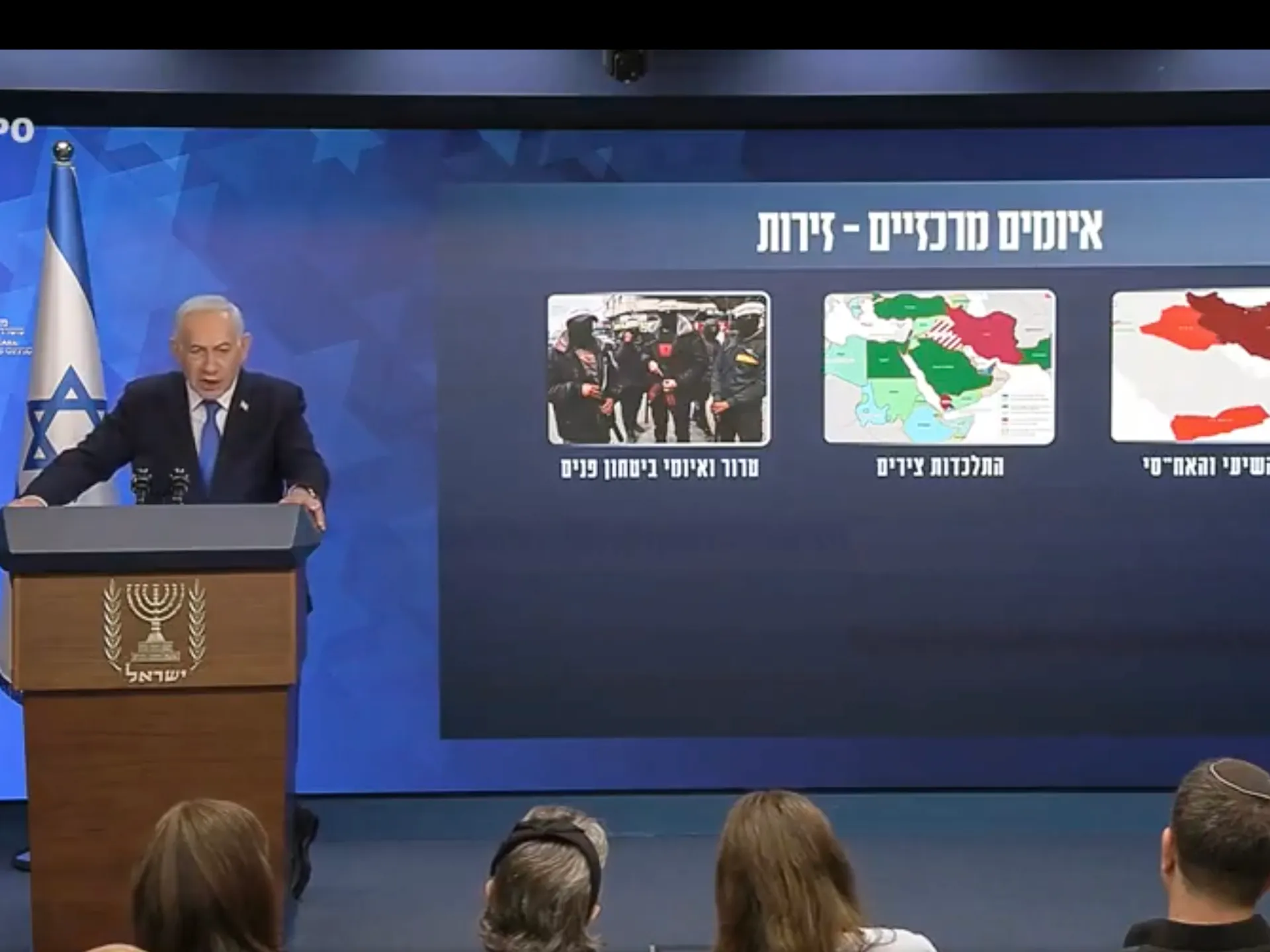
Israeli Prime Minister Benjamin Netanyahu has unveiled an updated national security doctrine and displayed a map of rival regional alignments, signalling a security approach that prioritises preemptive military action, the expansion of buffer zones, and the pursuit of new regional partnerships.
The document was developed with the assistance of Israel’s National Security Council and published by the Prime Minister’s Office on Sunday, just nine days before Israel’s parliamentary elections that could spell the end of Netanyahu’s time in office. It outlines a formal policy of preventing perceived threats through military action rather than containment – a policy that has already been seen in action over the past few years, as Israel pursues multiple wars and attacks on its neighbours.
Electoral survival strategy
The timing of the map’s release carries particular political significance, with Netanyahu fighting to retain power amid criticism of his conduct in power, the ongoing corruption trial he faces and his handling of the October 7, 2023, attacks, as well as the wars that followed.
Recommended Stories
list of 3 itemsend of list
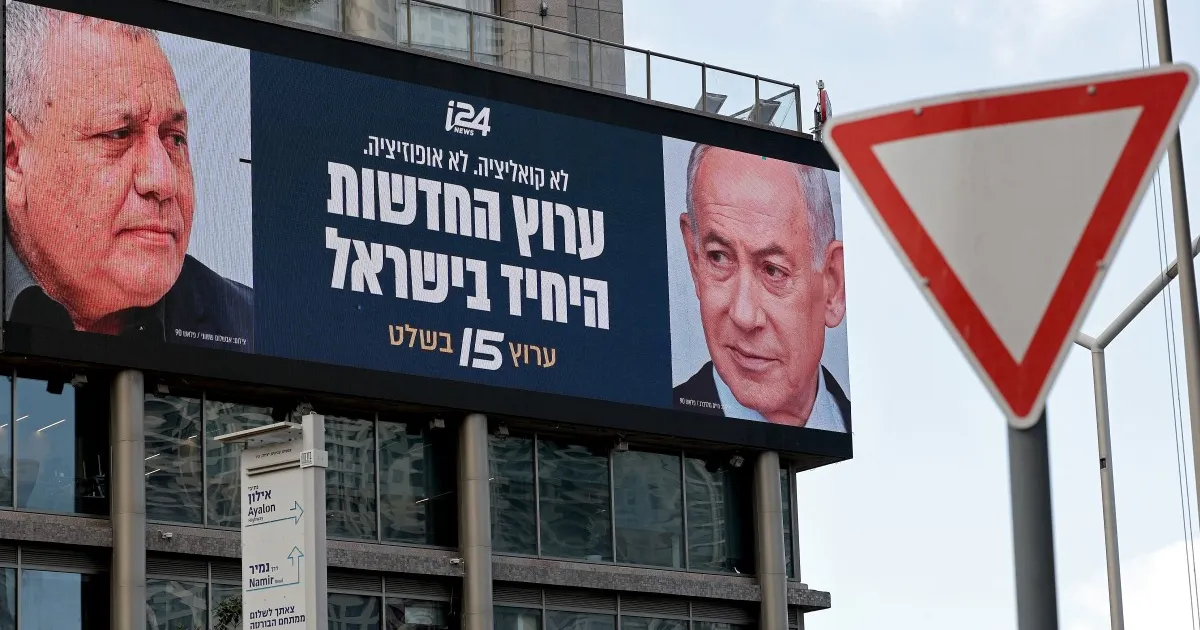
As the October 27 election day draws closer, Netanyahu is attempting to bolster his credentials as Israel’s ‘Mr Security’, hoping to get the votes of Israelis who may not like some of his other policies or behaviour, but still view him as the most likely leader to defend the country.
Netanyahu, who did get the endorsement of US President Donald Trump on Sunday, said during the briefing that Israel could face the possibility of a far less supportive administration in Washington in two years, after the end of the Trump presidency.
“In two years, a president… who is extremely hostile to Israel could come to power [in the United States],” Netanyahu warned.
He therefore argued that Israel must “expand our network of alliances and develop capabilities that make us a valuable asset” to other countries as a way of protecting itself if US policy towards it changed.
The comments, according to analysts, suggest that Netanyahu is seeking to portray his leadership as essential to navigating both Israel’s regional military challenges and its diplomatic isolation, all while keeping a fearful electorate reassured.
Mohanad Hage Ali, deputy director for research at the Malcolm H Kerr Carnegie Middle East Center, explained that the strategic presentation centred on competing regional blocs and buffer zones.
That framework “incubates and nurtures existential fears, which would lead Israeli voters to feel the need for a decisive leader”, Hage Ali noted.
In his assessment, Netanyahu stands to benefit from the Israeli public’s fear of regional threats by presenting himself as a familiar leader capable of managing them, making him “the devil you know”, as the analyst put it, to voters reluctant to embrace political change at a sensitive time.
Netanyahu’s political opponents have been quick to push back against that narrative.
Gadi Eisenkot, one of the prime minister’s main challengers in the upcoming election, said that the published doctrine was “two hollow pages, full of slogans that have nothing to do with a security concept”.
Another, former Prime Minister Yair Lapid, described the document as “superficial”.
Expanding security zones
The map displayed during Netanyahu’s briefing was originally published in May by Friedrich-Ebert-Stiftung, a German political foundation. It divides the Middle East and parts of Africa into competing blocs, highlighting the region’s complex network of alliances and rivalries.
Those networks include states, unrecognised entities and non-state actors.
The map identifies an Israel-United Arab Emirates alignment, described as the “Hexagon Alliance”, alongside a separate grouping of Egypt, Turkiye, Pakistan and Saudi Arabia – the latter three of which signed the Mecca mutual defence pact in August – labelled the “Sunni Diamond Alliance”. It also depicts Iran and its regional allies as a separate axis.
The map serves to illustrate the issues outlined in the published security doctrine, presenting a region where Israel faces multiple threats, the alliance that Israel is seeking to cultivate across the wider region, and the perceived need for “buffer zones” – the occupation of territory in other countries.
Israel’s existing illegal occupation of territory in Gaza and southern Lebanon illustrates the potential consequences of expanding the buffer zone approach.
Hage Ali warned that continuing to pursue an approach built around expanding military control could lead to “more conflict and more ethnic cleansing” under the guise of security buffers.
Embracing regional factions
A striking element of the map displayed by Netanyahu is its explicit designation of non-state actors as friendly entities.
The map highlights territories controlled by the paramilitary Rapid Support Forces in Sudan and Khalifa Haftar’s self-styled Libyan National Army within an alignment deemed cooperative to Israel and the United Arab Emirates.
Israel views these actors as pragmatic partners or at least cooperative entities in a broader strategic grid, Hage Ali explained. However, the public association of these groups with Israel threatens to damage their domestic standing across the Arab world.
That reflects Netanyahu’s immediate priorities, where “what Israelis think matters more than the reputation of your allies and the viability of these alliances”, Hage Ali added.
The portrayal of the Middle East as a region divided into competing alliances also carries risks for Netanyahu’s broader diplomatic ambitions.
Earlier this year, Netanyahu proposed a “hexagon of alliances”, envisaging cooperation between Israel, India, Greece, Cyprus and unnamed Arab, African and Asian partners, against what he described as “radical” regional alliances.
The proposed grouping has not been established as a formal alliance, and commentators in Israel and the international press have described the project as a branding exercise rather than a binding military pact, noting that countries like India prioritise non-alignment and pragmatic trade over ideologically rigid blocs.
For Tehran and its regional partners, the map also offers potent political leverage.
Hage Ali emphasised that the visual layout “will certainly help their propaganda machine”, providing Hezbollah and other Iranian allies with evidence to reinforce the narrative that Israel seeks to expand and dominate the region.
Tehran, Iran – Russia’s Foreign Minister Sergey Lavrov is due to meet with senior Iranian officials in Tehran to discuss the war with the United States and efforts to end it.
Lavrov landed in the Iranian capital on Monday afternoon on his first visit to Iran since February 2025. Moscow said the trip was part of efforts to ease months of tension, since the US and Israel launched their war on Iran on February 28. The Russian minister is scheduled to hold talks with President Masoud Pezeshkian and Foreign Minister Abbas Araghchi later on Monday.
Recommended Stories
list of 3 itemsend of list
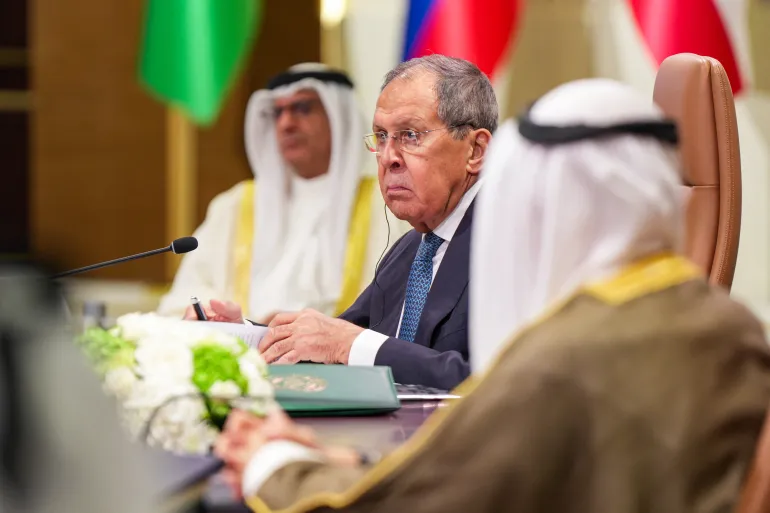
On Sunday, Lavrov was in Bahrain, which was heavily targeted by Iran during the war, to participate in a strategic dialogue session between Russia and the Gulf Cooperation Council (GCC).
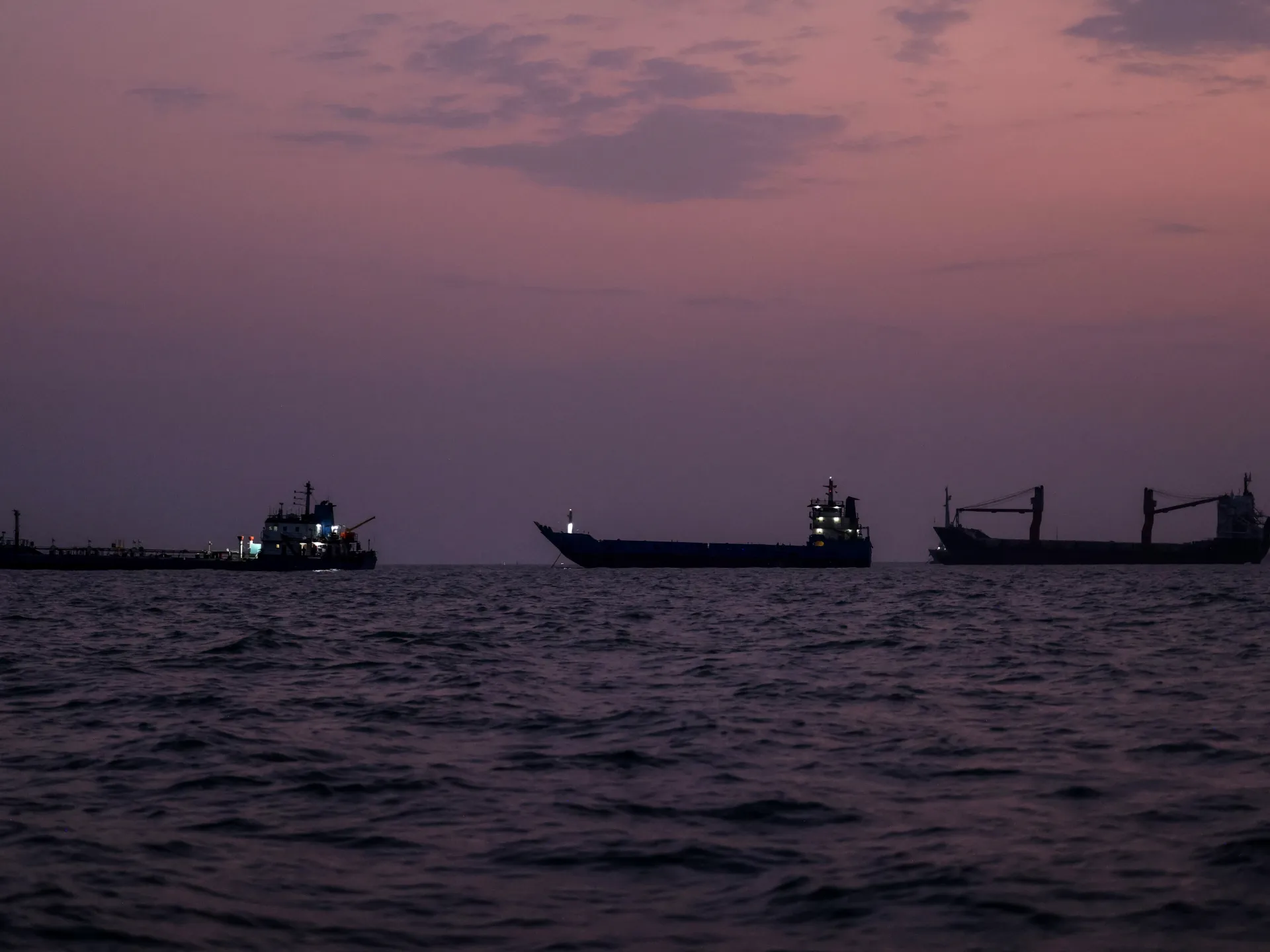
He was urged by GCC members to use Moscow’s influence with Tehran to press for “serious dialogue” and restore shipping through the Strait of Hormuz, which has been severely disrupted by attacks on commercial vessels.
GCC chief Jasem Al-Budaiwi said member states had faced more than 7,000 Iranian missiles and drones since the start of the war.
In the council’s closing statement, the six Arab countries said they wanted Iran’s nuclear and missile programmes, as well as its support for regional armed groups, to be included in future talks to end the war.
Nikita Smagin, an analyst and researcher on Iran and Russia’s role in the Middle East, said Lavrov’s trip reflects Moscow’s efforts to maintain working relations with all countries in the region.
He said Lavrov also wants to maintain Russia’s status as a mediator, despite the impact of the Ukraine war on its global reputation.
“The timing of visits to the Gulf monarchies and Iran, taking place almost simultaneously, is a deliberate signal: Moscow wants to show that it approaches relations with all these countries on broadly equal terms and is equally interested in cooperation with each of them,” Smagin said.
How does Russia fit in?
Lavrov told GCC ministers in Manama that the region was once again teetering on the brink of a full-scale war and Russia wanted to establish a regional architecture for “collective security”.
He said this could include combining initiatives from countries in the region, along with those put forward by Russia and China, with the aim of restoring maritime traffic and achieving lasting peace. The Russian foreign minister urged other regional states such as Iraq and Jordan, which have also been hit by Iranian strikes, to participate.
Lavrov expressed support for the Memorandum of Understanding (MoU) signed between Iran and the US in June, which later collapsed, as a framework for reducing tension.
Iran has said it wants a return to that agreement, and for Washington to honour a finalised bilateral deal between Iran and Oman to manage territorial waters in the Strait of Hormuz. This has been opposed by the US, which has established its own route in the waterway for shipping.
Intelligence reports cited by US media said that Russia and China are providing military support to Iran in the form of satellite imagery for targeting purposes and components for weapons.
But US President Donald Trump contradicted those reports last week, saying Moscow and Beijing would have “too much to lose” if they helped Iran.
Russia’s Foreign Minister Sergei Lavrov (C) attends the 9th Joint Ministerial Meeting of the Strategic Dialogue between the Gulf Cooperation Council (GCC) and the Russian Federation in Manama on October 18, 2026. [Fadhel Madan/AFP]
Mixed intentions
Russia’s position on the Iran war is somewhat unusual, said Smagin. It has a partial interest in the conflict continuing, as higher oil prices and the severe restrictions on Iranian oil reaching China all benefit Moscow.
“Russia and Iran have been competing primarily for the Chinese market, so China is now effectively forced to buy Russian oil at higher prices because Iranian supplies are largely unavailable,” he said.
Smagin added that Russia does not want the conflict to escalate further, as the consequences could be unpredictable, but its leverage over either Iran or the US to influence the course of the conflict remains limited.
Russia will continue to expand relations with Tehran, Smagin said, including through Caspian Sea trade, and limited military cooperation with Iran.
“These efforts appear to be aimed less at generating economic returns than at expanding Russia’s political influence over Iran and the course of events,” he said.
Military strikes by Iran and the US to wrest control of the waterway have continued, with the US midterm elections approaching on November 3 .
In comments to the media, Trump threatened to “soon finish the job” with Iran, to which Iranian Foreign Minister Araghchi replied: “We have unfinished jobs too.”
Protests are sweeping France as anger over conditions in schools meets frustration with high living costs and a government accused of doing little to address problems facing people.
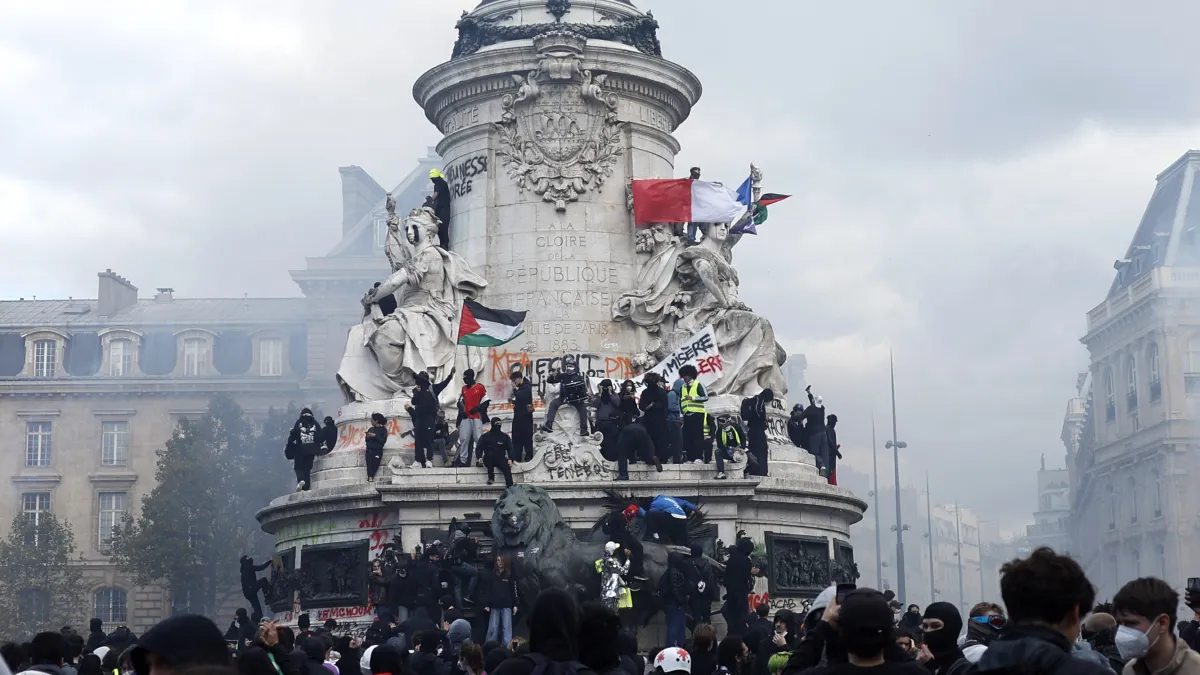
About 550,000 people demonstrated nationwide on Saturday, according to the Interior Ministry. Most marched peacefully, while a small minority attacked buildings, looted shops and clashed with police, who fired tear gas and charged protesters.
Recommended Stories
list of 4 itemsend of list
Prime Minister Sebastien Lecornu said 1,200 people were arrested and 150 police officers were injured. Behind the confrontations lies a political crisis, fuelled by anger at deteriorating services and overstretched household budgets, and compounded by a sense that France’s political institutions offer little hope of change.
Here is how school blockades became a nationwide movement – and what that means for President Emmanuel Macron.
How have the protests spread, what are protesters demanding?
The movement began last month in high schools in Paris’ working-class northern suburbs, where students protested against teacher shortages and poor facilities. School blockades and demonstrations later spread to cities including Bordeaux, Rennes, Nantes, Lyon, Lille and Marseille.
Saturday brought together students and trade unions, alongside supporters of the “yellow vest” movement that emerged in 2018 to challenge rising living costs and economic inequality.
Emile Chabal, a professor of contemporary history at the University of Edinburgh, told Al Jazeera the demonstrations were “the logical outcome of a series of protests” stretching back to the yellow vests.
That movement was driven by financial pressures and resentment at “the French presidential system”, he told Al Jazeera, alluding to a structure which often leads to the election of a centrist candidate, such as President Emmanuel Macron.
Saturday combined those longstanding grievances with students’ anger at deteriorating state schools. The yellow vests had demanded better public services.
Bringing students’ grievances together with wider social demands, therefore, represented “the worst possible outcome for the French government”, Chabal said.
Students’ immediate demands concern conditions in France’s lycees (public high schools), which generally educate pupils aged 15 to 18. They want smaller classes, enough teachers, better buildings and less exhausting timetables. Their complaints also reflect broader concerns about whether the state can provide the education and opportunities young people need.
But for workers, including school staff, the dispute also concerns wages and the resources available to deliver public services.
The school protests coincided with a nationwide public sector strike against the government’s budget plans. Bringing all these concerns together under one umbrella represented “the worst possible outcome for the French government”, Chabal said.
It comes as the proposed 2027 budget includes a 54 billion euro ($60.8bn) package of cost-cutting and tax measures, which the government says is necessary to reduce France’s deficit. The proposals include freezing the pay scale used to calculate civil servants’ basic salaries, which unions say would be the fourth consecutive annual freeze.
Donatella della Porta, a sociologist and political scientist, said students were inspiring wider mobilisation around inequality, cuts to public investment and democratic rights, with demands for social welfare spending rather than militarisation.
“They do not want to fight wars; they want a different future,” she told Al Jazeera.
She also linked the movement to young people’s mobilisation over Gaza, with Palestinian flags appearing at demonstrations across several European countries.
How has the government responded?
The government has focused its immediate response on public order, with President Macron saying those responsible for violence would be “prosecuted and punished”.
His comments came as a fire largely destroyed the historic town hall in the city of Limoges, while public buildings and shops were attacked elsewhere.
But those involved in violence represent only a small minority of the much larger mobilisation. Jean-Luc Melenchon, leader of the left-wing France Unbowed party, has accused the government of repressing school students and allowing the confrontation to intensify.
His argument reflects a wider political dispute about whether the government treats the protests chiefly as a security problem or addresses the grievances that have brought different groups together.
Experts say France’s problems extend beyond disagreement over individual budget measures and reflect deeper discontent. Emile Chabal, from the University of Edinburgh, said political paralysis since the 2024 parliamentary elections, which left no bloc with an outright majority, had created “an environment in which no political party or movement is able to channel social discontent”.
That fragmentation makes it difficult to build a durable agreement on spending, taxation or public services. It also leaves protesters questioning whether changing governments produces meaningful changes in policy.
The protests are also “a tough blow for Macron”, Chabal said, whose promises of youthful energy and a reformed, dynamic France have been undermined by “his inability to articulate his political project and his deeply unempathetic persona”.
Chabal added that the unrest included violence sometimes seen on the fringes of French demonstrations, with direct-action tactics associated with the yellow vests. Targets included shops and, more unusually, public buildings. He described the destruction of Limoges’ town hall as particularly significant because of its place in France’s civic history.
Other researchers emphasise the role of policing. Guya Accornero, a specialist in social movements at Lisbon’s University Institute, said previous confrontations had created lasting tensions between protesters and police.
During the current protests, a 15-year-old lost a hand to a police stun grenade, while a 14-year-old suffered a shattered jaw after being struck by a tear gas canister fired at close range, according to Human Rights Watch. The organisation condemned excessive force against children, saying the demonstrations had been overwhelmingly peaceful.
“Young people have been violently repressed also when using non-disruptive tactics,” she told Al Jazeera.
Who could benefit politically?
There is no clear answer from the experts who spoke to Al Jazeera. Paul Smith, an associate professor in French history and politics at the University of Nottingham, believes far-right leader Marine Le Pen stands to gain.
“I see only one beneficiary and that’s Le Pen,” he told Al Jazeera, suggesting the unrest could also damage Melenchon’s presidential prospects.
Chabal cautioned against assuming a far-right gain, but he said fear of disorder had historically benefited conservative or centrist parties in France, including after the 1968 protests.
Le Pen has not entirely dismissed the protesters’ grievances, describing them on X on Saturday as “legitimate social demands”, while claiming they had been “held hostage by the far left”.
The far-right may seek to reap the rewards of public discontent, but experts say it is more likely to channel that anger towards immigration and the scapegoating of migrants, rather than blaming the structures of neoliberalism and capitalism for the protesters’ woes, as Melenchon has suggested.
With a presidential election due in April 2027, candidates face competing pressures, demonstrating that they can restore order while convincing voters they will address the conditions behind the mobilisation.
The challenge, Chabal said, is how to create change in “an environment in which no political party or movement is able to channel social discontent”.
Tehran, Iran – Mehrdad Akhlaghi Ketabchi has been appointed Iran’s defence minister at a time when the war with the United States is expected to escalate.
The 68-year-old was approved on Sunday by parliament, which has convened online since the start of the US-Israel war on Iran on February 28, to assume leadership of the Ministry of Defence and Armed Forces Logistics. In total, 237 lawmakers voted in favour of Akhlaghi’s appointment and 15 against.
Recommended Stories
list of 3 itemsend of list
Former Defence Minister Aziz Nasirzadeh was killed along with a large number of other senior figures, including Supreme Leader Ali Khamenei, on the opening day of the war.
The position was filled temporarily by Majid Ebn-e Reza, who will now become Akhlaghi’s deputy.
Akhlaghi will be responsible for rebuilding and expanding Iran’s military-industrial infrastructure, which has been heavily targeted by the US and Israel.
The new minister’s defence plans were approved earlier by senior military authorities, President Masoud Pezeshkian and parliament’s Commission on National Security and Foreign Policy.
“The Islamic Republic of Iran will not be the instigator of aggression against any country but will defend the territorial integrity of the country strongly and to the death against any aggression,” Pezeshkian said.
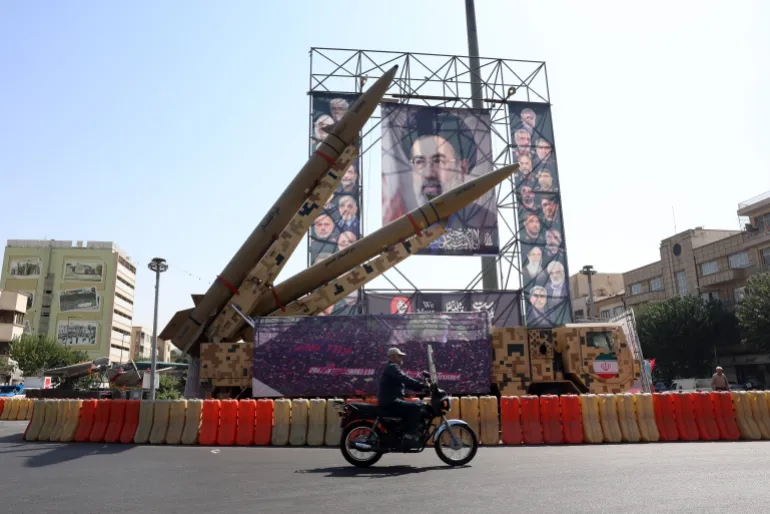
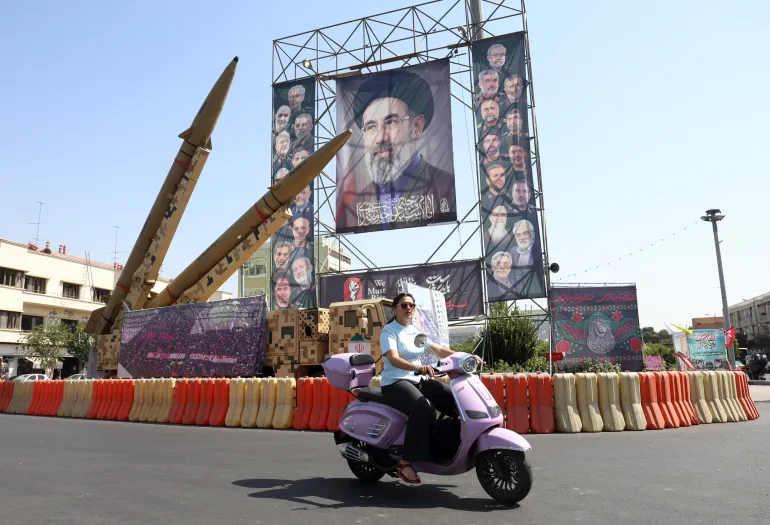
Iranian Zolfaghar missiles are placed in front of a billboard picturing Supreme Leader Mojtaba Khamenei at Baharestan Square in downtown Tehran, Iran [File: EPA]
The president said Akhlaghi has more than 42 years of experience in the Defence Ministry and related organisations.
His principal expertise is in ballistic missiles, solid-fuel propulsion, aerospace technology and military-industrial production, according to state media.
Previously, he served as the head of the Shahid Bagheri Industrial Group, the Aerospace Industries Organization and the Defence Industries Organization. Akhlaghi and these entities are all subject to sanctions by the US. He is also under United Nations sanctions.
He has been associated with developing several missile types and related weapons-development projects over the past decades, according to Tasnim, a newspaper linked with the Islamic Revolutionary Guard Corps (IRGC),
Akhlaghi reportedly played a role in expanding the major Sejjil and Zolfaghar family of Iranian ballistic missiles as well as precision-guided weapons, such as the Almas missiles and Yasin guided bombs.
He is also said to have expertise in space launchers, research rockets and infrastructure associated with the Imam Khomeini Space Center in Semnan. These have all been critical elements in Iran’s wars against Israel and the US.
This month, Iran’s Defence Ministry spokesman, Brigadier General Reza Talaei-Nik, told reporters that Akhlaghi’s nomination reflected Iran’s need to increase the quantity and quality of strategic weapons, particularly missiles and drones.
“Offensive arms are being actively improved,” the spokesman said.
The US has repeatedly claimed that it has destroyed most of Iran’s military-industrial capacities, but Tehran has maintained it continues to have considerable offensive and defensive capabilities outside the reach of US and Israeli bombs. These weapons have been upgraded based on Iran’s new war experience, it has insisted.
Akhlaghi told members of parliament this month that he had met with senior military commanders, including the commander-in-chief of the IRGC, Brigadier General Ahmad Vahidi, to develop a better understanding of their requirements during and after the war.
His priorities as defence minister would be faster military-industrial development, air defences, incorporation of emerging technologies using government and private sector firms, improvements in armed-forces welfare and development of international military cooperation, according to reports.
In his first comments as defence minister on Sunday, Akhlaghi taunted the administration of US President Donald Trump, which this month threatened to use the “mother of all bombs” on Iran’s nuclear and energy infrastructure.
“We have made preparations and continue our work with ease of mind,” he told reporters. “The US president must think of getting his forces out of our region in one piece. If he drops one bomb, he must see how many of his troops he will have to evacuate horizontally.”
Amman, Jordan – Jordanians fear the country’s border with Israel is turning into a major drug-smuggling route amid a surge in high-tech operations by gangs using drones and helium-filled balloons.
Organised networks active in southern Israel’s Negev Desert have links to groups in Jordan and the Sinai Peninsula in Egypt, operating along one of the most heavily surveilled borders in the world, with Jordanian authorities increasingly concerned about the implications this could have for the kingdom.
Recommended Stories
list of 3 itemsend of list
This escalation coincides with changes in the regional drug trade, particularly after the fall of Syrian President Bashar al-Assad in late 2024.
Elements in his regime were linked to the manufacturing and distribution of Captagon, an illegal amphetamine stimulant.
Syria became a hub for the distribution of Captagon to the Gulf, with Jordan a transit point and market for the drug. The Royal Jordanian Air Force carried out periodic strikes on drug manufacturing and smuggling points inside Syria, highlighting the huge security concerns Jordan had about the trade.
Since the collapse of the Assad government and the establishment of a new authority that views the Captagon trade as a national security issue, there has been a decrease in the drug trade from Syria into Jordan.
Although Druze militias in the Syrian province of Suwayda allegedly linked to Israel have been accused of continuing the drug trade, Jordanian security forces are increasingly focused on the Jordan-Israel border.
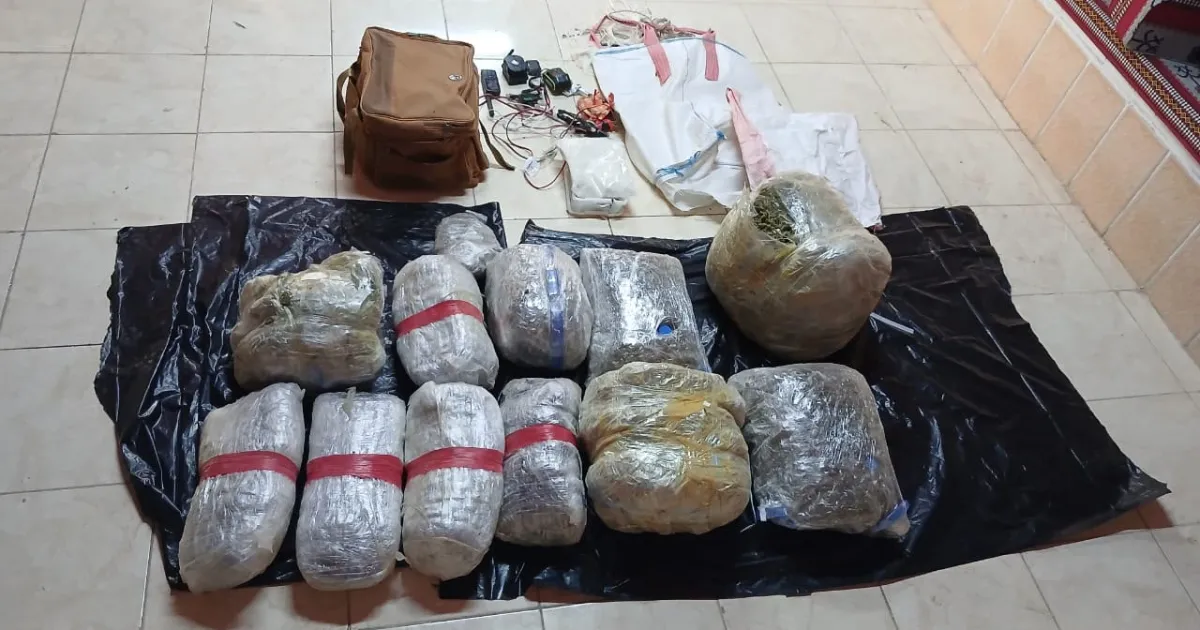
The use of quadcopter drones and balloons is reportedly among the new tactics used by gangs in Israel to smuggle hashish, crystal meth, and amphetamines into Jordan.
Jordanian security forces are said to be increasingly unhappy with the scale of the drug smuggling operations and have accused the Israeli army of not taking the issue seriously.
Initial data from Jordanian forces recorded 17 interception operations linked to drones during the first half of 2026 in Jordan’s southwestern border area with Israel.
They also recorded 231 smuggling and infiltration attempts and downed 56 drones across various borders during the same period.
Interior Minister Mazen al-Faraya told Al Jazeera that Jordanian forces were continuing efforts to prevent drugs from being smuggled into the kingdom. But they are evidently facing more complex activities by drug dealers.
“There is an increase in drug smuggling operations from Israel to Jordan using drones,” he said. “The number of seized drug cases during the current year reached 15,342 cases. Trafficking cases constituted about 28 percent of them, compared with 72 percent for usage cases.”
Israeli media reports indicate that gangs active in the Negev Desert are behind some of the smuggling operations into Jordan, where drugs can fetch higher profits.
There are estimates that 1kg of hashish can sell for approximately 7,500 pounds sterling (almost $10,000), according to the British newspaper The Telegraph, which recently uncovered the drug smugglers’ latest operations. Israeli security services believe that the price of hashish in Jordan is about 15 times higher than in Israel.
Due to widespread disenfranchisement and poverty, elements within Palestinian communities in Israel have been linked to the drug trade, according to reports. Multiple sources have accused Israel of allowing Palestinian towns and cities to become hotbeds of crime to create divisions and prevent calls for greater rights.
Ammar al-Qudah, a member of the Jordanian Senate and retired major-general in the Public Security Directorate, claimed that organised gangs in the Negev had obtained more than 1,000 drones that were originally used for agricultural and security purposes.
“The smuggling networks are linked to other gangs in Jordan, Sinai and the Negev, and rely on a route starting from Sinai, passing through the Negev, and reaching Wadi Araba, in addition to other routes including the Lebanese border with Israel and the Galilee region towards Syria,” he told Al Jazeera.
They are also using a range of sophisticated technology to bypass security on both sides of the border. This includes the use of helium-filled balloons equipped with GPS devices, drones capable of carrying about 50kg of narcotics, including black hashish and crystal meth, al-Qudah said.
He warned that a portion of the black hashish and crystal meth being smuggled into the kingdom is being sold domestically, with the rest going to other markets in the region.
With such high-tech operations, there are accusations that members of Israeli forces know about drug gang activities, based on past experiences in Egypt.
One West Point report said current and former trackers in the Israeli military in the Negev are being recruited by traffickers to provide intelligence to facilitate their operations in Egypt. In 2012, a number of Israeli service personnel were arrested on suspicion of collaborating with drug smugglers across the Egyptian border.
While there is no proof that the same situation is being repeated in Jordan, many have questioned how drones and balloons carrying drugs could cross a heavily surveilled and guarded Israeli border into Jordan.
Jordan’s counternarcotics department, in cooperation with the armed forces, has tracked such cases and made arrests.
Retired Brigadier-General Daifallah al-Daboubi, a strategic and military expert, said Jordan is witnessing a “reverse drug migration”, starting from the Sinai Peninsula, passing through the Negev region, and reaching the kingdom.
“Groups active in Beersheba and the Negev possess great financial capabilities and use advanced smuggling methods, most notably drones,” he said.
The Israeli army’s preoccupation with wars in Gaza, Lebanon and the occupied Golan Heights has provided smugglers with room to manoeuvre on the Jordan border, he added. But he ruled out the direct involvement of the Israeli political or military leadership in any drug smuggling.
Steps taken by Israel to boost security on its eastern border include the establishment of the 96th Division, which began operating in the Jordan Valley in 2025, and the construction of a controversial security barrier with Jordan.
But none of these measures appears to be designed to prevent drugs from leaving Israel; instead, they appear to be designed to prevent weapons and other illicit merchandise from entering the country from Jordan.
United States President Donald Trump has signed an executive order waiving newly-passed Russia sanctions, claiming the move is in the US’s “national interest”.
Earlier this month, Trump also announced a deal to bring stocks of Russian diesel into global markets, in a bid to drive down energy prices that have spiked during the US-Israel war on Iran. The US Treasury waived sanctions on Russian diesel sales until April 2027.
Trump’s embrace of Russian energy has angered Ukraine, European partners and many US officials, who say the move rewards Moscow while it continues its four-and-a-half-year war against its neighbour.
Ukraine’s President Volodmyr Zelenskyy slammed Trump’s diesel deal as “a gift” to Russia’s President Vladimir Putin that will help fund his war effort.
While European countries have also criticised Trump’s embrace of Russian energy, the US president has accused them of “hypocrisy”, as figures show that European Union countries continue to import Russian gas.
Here’s what we know:
Which sanctions has Trump waived?
In his executive order on Friday, Trump called off numerous planned Russia-related sanctions days before they were due to take effect, including duties on Russian goods and penalties for buying the country’s oil and gas.
The now-blocked measures were part of legislation passed in Congress with bipartisan support last month, named after the late US Senator Lindsay Graham, an outspoken critic of Russia.
They would have included up to 100 percent tariffs on all goods brought into the US from the five top importers of Russian crude oil or gas, including China and India. They could also have imposed equal penalties on countries deemed to have knowingly bought oil or gas from Russia 30 days after the law’s implementation, or to be among the top five countries helping Moscow circumvent sanctions on sales of its oil.
The waiver will hold until the Trump administration believes “further action is appropriate”, according to the executive order.
US Congressman Don Beyer, a Democrat from Virginia, said the sanctions waiver amounts to a “surrender to Putin” that “betrays our Ukrainian partners and defies clear congressional intent”.
Who will benefit from this?
Vasily Astrov, an economist at the Vienna Institute for International Economic Studies, told Al Jazeera that the Russian government will likely be the greatest beneficiary because the easing of sanctions means Russian oil will not have to be further discounted.
He estimated that about 60 cents of every extra dollar in the price of a barrel of Russian oil would “end up in state coffers”.
Russian official Kirill Dmitriev, an envoy for Putin, hailed the US decision to waive the sanctions as “an important and truly historic moment”.
Other beneficiaries include major importers of Russian oil and gas, such as China and India, who are now less exposed to the risk of secondary US penalties.
While Trump hopes the measures will also help bring down oil prices for US consumers before November mid-term elections, experts say that is less certain.
Addressing the US’s recent diesel deal with Russia, EU economy chief Valdis Dombrovskis said it is unlikely to have a significant impact on global prices.
According to Trump, that deal would bring 300,000 tonnes of diesel fuel into US and global markets “immediately”, followed by 500,000 tonnes in November, and 1 million tonnes afterwards.
“If we look at the volumes, they are not of any macroeconomic significance, and frankly, there are strong doubts whether Russia is even able to supply those volumes, and according also to US quality standards, those are big question marks,” Dombrovskis told the AFP news agency.
Which countries still buy oil from Russia?
China and India are the largest buyers of Russian crude oil, purchasing 6 billion euros ($6.74bn) and 3.6 billion euros ($4.04bn) worth respectively in September, according to the Centre for Research on Energy and Clean Air (CREA), a nonprofit think tank.
Hungary and Slovakia, the landlocked EU members that have exemptions to the bloc’s ban on Russian crude, also remain big customers, buying a combined 290 million euros ($326m) worth of the commodity in September, said CREA. Turkiye imported 172 million euros ($193m) worth of Russian crude oil the same month, the think tank added.
Since the end of 2022, the largest importers of Russian oil products, which include diesel, have been Turkiye, China, Saudi Arabia, Brazil and Singapore.
Saudi Arabia imported the most Russian oil products in September at 534 million euros ($600m), followed by Turkiye with 321 million euros ($361m), China with 304 million euros ($342m) and India with 161 million euros ($181m).
Is Europe buying increasing amounts of gas from Russia?
“The European Council regrets the United States’ decision to temporarily lift sanctions on Russian diesel,” European leaders said in a joint statement adopted following a two-day European Council meeting in Brussels this week.
But despite its own near-blanket ban on Russian oil, the EU has continued to import large quantities of Russian gas, though it plans to phase out those imports next year.
Urgewald, a Germany-based group that researches coal companies, reported this week that more than 12 million tonnes of Russian Arctic LNG was transported into EU ports from January to September this year, a 9.5 percent jump from the same period last year.
In September, EU countries imported 817 million euros ($918m) of pipeline gas, and 615 million euros ($691m) of liquefied natural gas (LNG), according to CREA.
EU members France and the Netherlands were the largest LNG importers, bringing in 446 million euros ($501m) and 116 million euros ($130m) respectively, according to the think tank. France’s LNG imports represented a 103 percent increase from the previous month, it added.
France’s President Emmanuel Macron has been among the most outspoken about Trump’s diesel deal with Russia, saying on Friday that it “sends a negative message” and would have no impact on global prices.
Hungary imported the most Russian pipeline gas of any EU member by far during the month, with 414 million euros ($465m) worth. Slovakia and Bulgaria brought in 161 million euros ($181m) and 132 million euros ($148m), respectively, according to CREA data.
Sanaa, Yemen – A missile fired by Yemen’s Houthi group, also known as Ansar Allah, streaks across the sky over Sanaa at midday, leaving a trail of smoke behind it.
Its intended target is unclear. It could have been a site in Saudi Arabia or territory to the south and east held by Yemen’s internationally recognised government. For people in northern Yemen, missile launches have become a familiar sight.
Recommended Stories
list of 3 itemsend of list
On Thursday, at least five people were killed near the al-Maashiq presidential palace in Aden after Houthi missile strikes. Yemeni Prime Minister Shaya al-Zindani was present at the palace at the time of the attack, but was unharmed.
Houthi military spokesman Yahya Saree said the attack targeted an operational headquarters, part of its campaign against Saudi-backed fighters and equipment supporting the internationally recognised government in Aden.
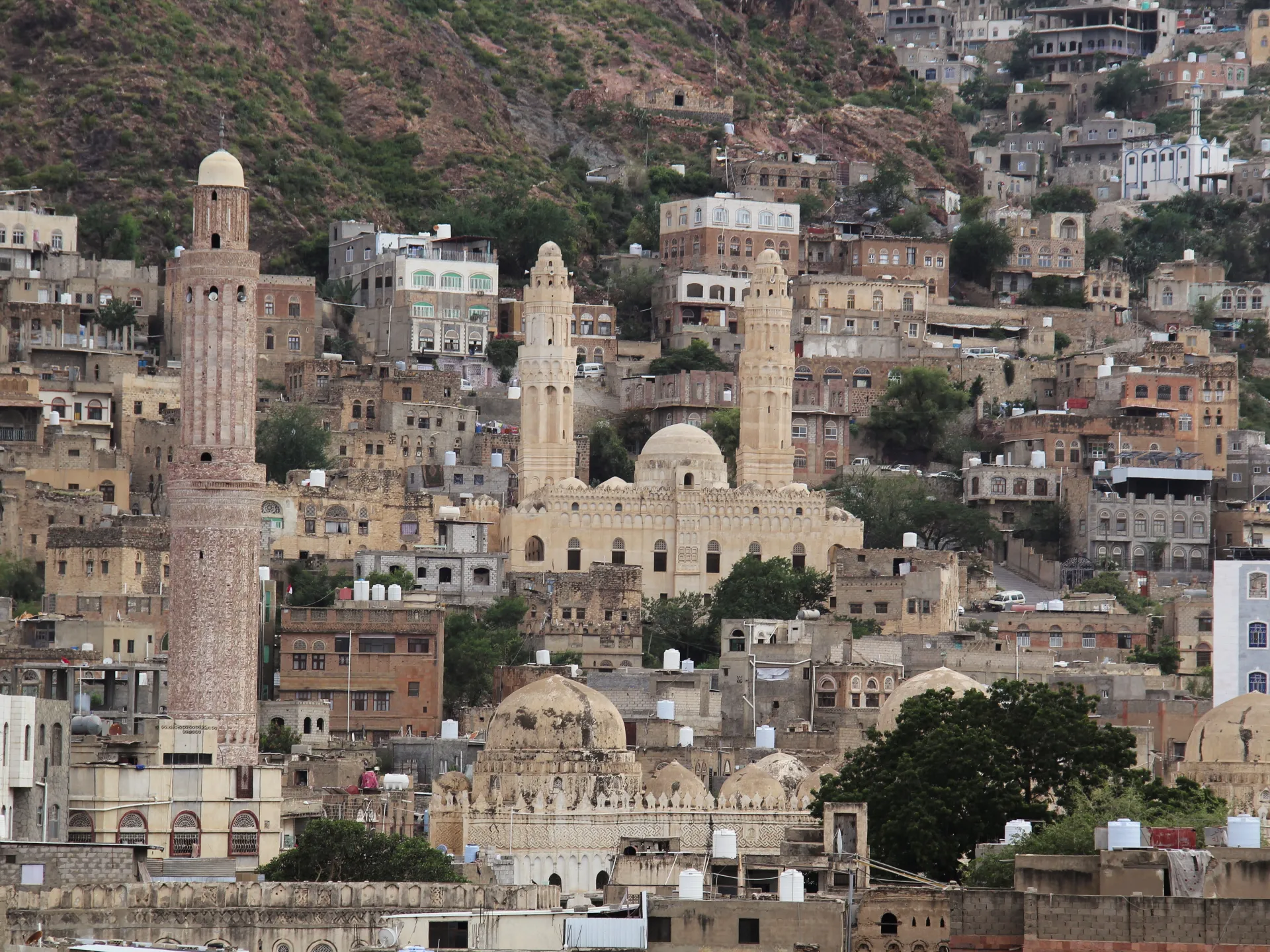
Frequent Houthi missile attacks – combined with the Iranian-backed group’s territorial gains around the city of Taiz in southwestern Yemen – have severed key supply routes and threatened other roads, ports, and airports that government forces rely on for supplies.
The disruptions could undermine the government’s Dawn of Yemen operation, which aims to recapture territory held by the Houthi group. This includes the capital, Sanaa, which the Houthis seized at the start of the war in 2014.
Government officials, however, say supply issues will not halt the offensive, emphasising that their forces can overcome logistical challenges.
“The Houthi group consistently attempts to sever supply lines to government forces, but they have been unable to halt these supplies. So, military operations against the Houthis will continue,” Colonel Wadah al-Dubaish, spokesperson for the government-aligned Joint Forces on Yemen’s West Coast, told Al Jazeera.
But losses to the Houthis over the past few months have been damaging to the government.
A rapid Houthi advance south along the Red Sea coast in early September captured Mocha, a port on the Red Sea coast and a key supply hub for pro-government forces in western Taiz governorate.
A government counter-offensive reclaimed some of the territory lost in the southern Red Sea coast region, but not Mocha itself, which continues to be in Houthi hands.
Houthi attacks and ground advances, al-Dubaish said, may delay the delivery of supplies to government military forces or increase the cost of delivering supplies to certain fronts.
“However, they cannot stop the flow of supplies because the air, land and sea routes are still available, allowing supplies to continue reaching the front lines,” he said.
But the situation in the city of Taiz illustrates the limits of that logistical flexibility. Houthi forces have cut the main road connecting the city to Aden, the seat of the internationally recognised government. Alternative routes through the surrounding mountains have also been disrupted, leaving Taiz effectively besieged.
The consequences are already being felt. Fuel shortages and soaring prices have affected Taiz since the latest Houthi advances, with the cost of petrol tripling last week.
The loss of vital supply routes also threatens the government’s ability to deliver ammunition, reinforcements and other essential supplies to its troops, even as they face heavy and sustained Houthi attacks.
Al-Dubaish argued, however, that there are always advances and retreats in war, and that losing one battle does not mean losing the conflict as a whole.
“The war is still ongoing and will not cease until the Houthis are defeated,” he said.
‘Logistical flexibility’
Yemeni government forces are currently fighting the Houthis on several fronts in Yemen, including the southern Red Sea coast, around Taiz city, and in Marib and al-Jawf east of Sanaa.
Faisal al-Majidi, Yemen’s deputy minister of justice, told Al Jazeera that government forces rely on “logistical flexibility and decentralisation” to secure supply lines across the country.
“This approach involves dividing supply routes into semi-autonomous sectors, supported by nearby access points and key supply hubs – such as Shabwa, Marib, Houthi-free areas in Taiz, the Red Sea coast, and the southern governorates,” al-Majidi said.
Such an approach, he noted, mitigates the difficulties of moving between widely separated front lines.
“Furthermore, government forces have been fighting for the control of high points overlooking major roads to help protect vital supply arteries from bombardment,” al-Majidi added.
Among the areas pro-government forces have focused on is the strategic mountainous district of al-Waziiya in Taiz governorate, which overlooks the Red Sea coast and could also be a launching pad to relieve the siege on Taiz city from its western approaches. Fighting with the Houthis in al-Waziiya continues.
The Saudi role
Saudi Arabia has stepped up its support for the Yemeni government and allied forces since the launch of Dawn of Yemen, acknowledging airstrikes against Houthi forces in the country for the first time since a 2022 truce. Riyadh first intervened in the conflict in Yemen in 2015 in an effort to restore the Yemeni government to Sanaa.
Al-Dubaish said the Saudi military role is a pivotal and indispensable source of support for Yemeni government forces.
“Saudi support is a decisive factor in the conflict. Without Saudi Arabia, it would be a huge challenge for the Yemeni government to confront the Houthis, who possess advanced military capabilities – such as ballistic and cruise missiles supplied by Iran – along with a large pool of fighters,” said al-Dubaish.
The Saudi-led coalition has said airstrikes have destroyed hundreds of high-value targets since early October.
Al-Majidi described the Saudi air support as a “strategic balancer” and a vital pillar of the Dawn of Yemen operation.
“The Saudi role centres on providing direct cover for ground forces and, more importantly, neutralising the reinforcements of the [Houthis], as well as targeting missile and drone launch platforms – thereby mitigating their destructive impact,” he said.
The Saudi-led coalition has previously airdropped weapons and ammunition to pro-government fighters in Taiz when it was besieged in the early years of the war, but there have been no reports of similar operations since the latest siege began this month.
Coordination: The litmus test
Saudi Arabia is also vital for what may be an even more important task: uniting an anti-Houthi side that remains divided with disjointed command structures.
Al-Dubaish said that poor coordination among military units remains a significant challenge.
“The coordination problem stems from the presence of multiple military units operating under different command structures,” he added. “This fragmentation is not in the best interest of the forces fighting the Houthis.”
The government’s loss of the Red Sea coast in September was partly the result of faulty coordination among anti-Houthi forces, who appeared unable to respond quickly to the Houthi advance.
That was despite messaging from the Yemeni government since the start of the year that anti-Houthi forces were operating under a unified command structure, after the defeat of separatist Southern Transitional Council forces – who had been backed by the United Arab Emirates – at the start of the year.
“The coordination among various field forces … remains the true litmus test for the success of the Dawn of Yemen operation,” said al-Majidi.
Adnan al-Jabarni, a Yemeni researcher specialising in military affairs, told Al Jazeera that the level of coordination among government forces is improving.
“These forces are currently testing their coordination, given that they only began to operate under a unified structure – following the withdrawal of the UAE from Yemen and the formation of the Supreme Military Committee (SMC), which incorporated all the various branches and units,” al-Jabarni said.
In January, the Presidential Leadership Council, Yemen’s United Nations-recognised authority led by President Rashad al-Alimi, established the SMC, with the goal of overseeing all anti-Houthi military units and integrating them into the official Yemeni military under one command.
However, establishing the committee has not eliminated longstanding divisions between the different forces. Their command structures and sources of funding have historically differed, and the losses on the Red Sea coast have highlighted the continuing difficulties of coordinating their battlefield operations.
That coordination is vital for Taiz, where holding off the Houthis will depend on recapturing roads for use as supply routes.
Al-Jabarni argued that friction among pro-government forces is diminishing and the supply lines for government forces remain intact despite the Houthi attacks.
“The Houthis are attempting to exert pressure on Saudi Arabia and the Yemeni government by targeting civilian facilities and supply lines – specifically focusing on vital infrastructure – but I believe this is likely to intensify the pace of anti-Houthi operations rather than slowing them down,” al-Jabarni said.
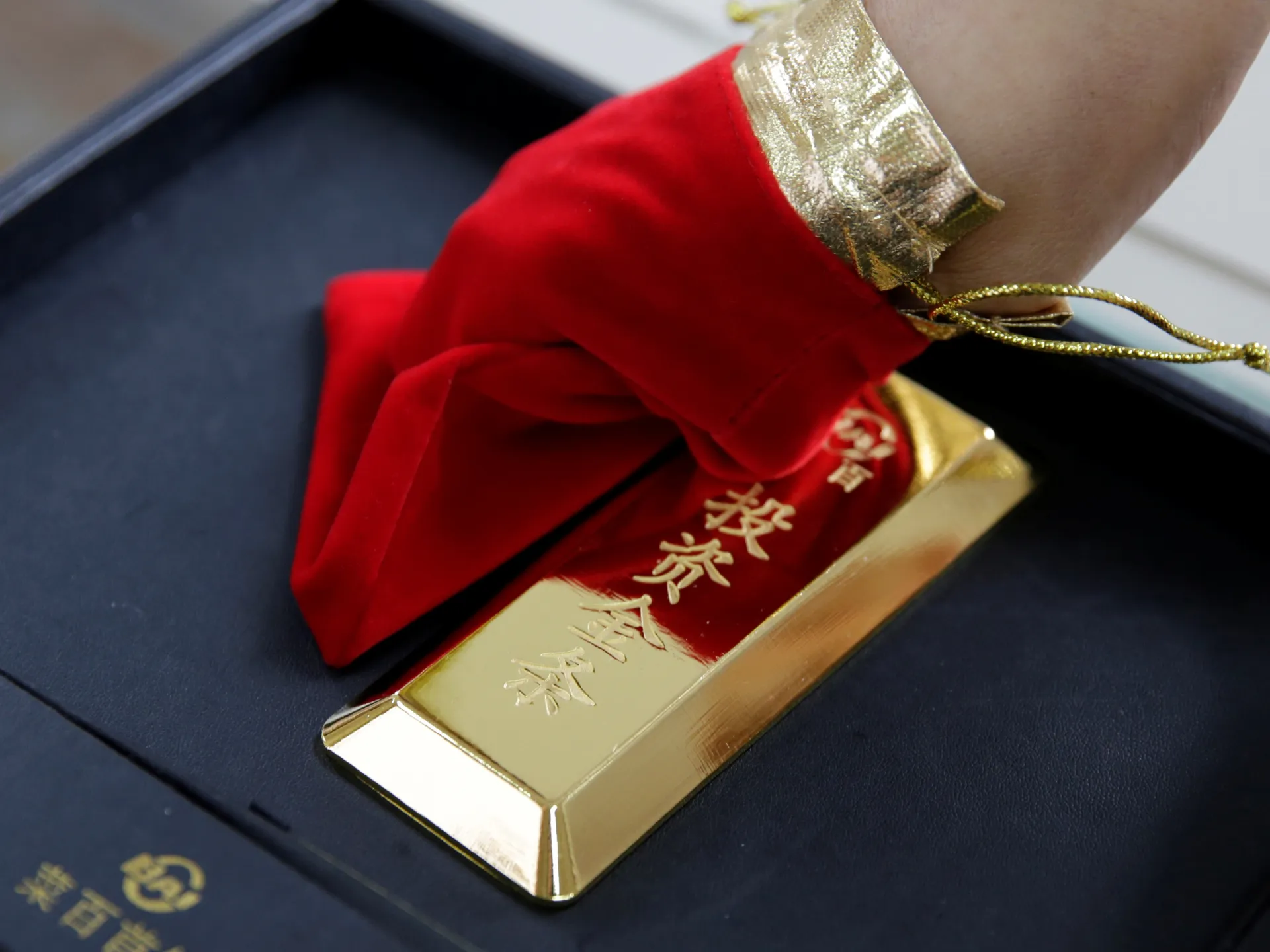
China is increasing its gold reserves in a bid to reduce its dependence on US dollar assets and protect against financial and geopolitical risks, analysts say, while households are turning to the precious metal amid uncertainty over the domestic economy.
The People’s Bank of China reported buying gold for a 23rd consecutive month in September, when the country’s central bank also made its largest monthly purchase in nearly three years. The sustained buying points to a longer-term effort to spread risk associated with its vast reserves, experts say.
Among concerns is high US debt and Western governments’ freezing of assets, which has highlighted the inherent risk in holding money overseas, particularly for emerging market and Global South economies. Gold bought and stored domestically offers protection against that risk because access does not depend on the will of another government.
But central bank buying and household demand for gold in China have different drivers. While Beijing is managing its financial exposure, private investors are seeking somewhere to preserve their savings. Here is what we know.
How much gold has China bought?
China’s central bank added approximately 23 tonnes of gold in September, bringing its reported holdings to about 2,410 tonnes, according to the World Gold Council. That was its largest monthly purchase since October 2023. Gold accounted for 8.5 percent of China’s total official reserves at the end of September, compared with 5.5 percent at the end of 2024.
Reserves are assets central banks hold to ensure they can meet international payments and respond to financial disruption. They usually include foreign currencies, foreign government debt and gold.
Private demand for gold within China has also risen, with purchases of gold bars and coins 28.4 percent higher in the first half of 2026 than during the same period last year, according to the China Gold Association. The buying of gold has continued amid falling prices, with gold down around 8.5 percent over the month.
The World Gold Council attributed the decline in gold prices partly to a stronger dollar and higher returns on US government debt. With interest rates going up in an attempt to curb inflation, these investments are attractive for buyers as they pay interest, making them more attractive to private investors than gold, which does not.
Why is China buying more gold?
A key objective is to reduce dependence on US government debt, known as Treasuries, according to Thu Lan Nguyen, head of commodity research at Commerzbank in Frankfurt.
China holds substantial reserves in dollar-based assets and, therefore, buying gold reduces its exposure to decisions taken in Washington. “China’s gold purchases are part of a broader effort to make its reserves more resilient,” Nguyen told Al Jazeera.
The freezing by Western countries of roughly $300bn in Russian Central Bank overseas assets following Moscow’s invasion of Ukraine in 2022 demonstrated how reserves held abroad can quickly become inaccessible.
The concern for China may be that a future confrontation with Washington could expose some of its overseas assets to similar restrictions. “Gold held domestically has a crucial advantage in this respect: it does not represent a claim on another country and is therefore much less exposed to sanctions or asset freezes,” Nguyen said.
“I would interpret it primarily as risk management,” she added, pointing to increased geopolitical tensions and economic and fiscal risks.
America’s rising debt, which hit $40 trillion for the first time in history earlier this year, adds another source of uncertainty. In February, the US Congressional Budget Office projected that federal debt held by the public would rise from 101 percent of the size of the US economy in 2026 to 120 percent in 2036. That provides context for concerns about Washington’s ability to repay that debt going forward should an economic crash occur. Much of this debt is held by China. Gold, therefore, offers a less volatile and risky asset to hold.
Chinese households have different motivations for buying gold. When confidence in other investments weakens, gold can become more attractive as a way to hold savings. “Strong demand for gold can partly reflect a search for alternative stores of value,” Nguyen said.
The World Gold Council has identified weak Chinese share markets as one factor supporting domestic demand for gold, while its property market is burdened by heavy borrowing and overbuilding, contributing to a fall in housing prices, making it a poorer investment.
What this means for the US dollar
Analysts warned that China’s increased buying of gold does not signal an imminent end to the dollar’s global dominance. “I would be cautious about describing this as a major shift away from the dollar,” Nguyen said. “The dollar remains by far the dominant global reserve currency.”
But a gradual shift could still matter if China and other central banks put more of their new reserves into gold, buying fewer US assets than they normally would. That could weaken one source of demand for US government debt. But the effect would depend on how widely and quickly the shift developed.
“The key point is, therefore, that this is likely to be a slow diversification process rather than a sudden abandonment of the dollar,” Nguyen said. She added that the consequences for the US economy would remain limited unless the trend broadened and accelerated substantially.
Central banks also need readily available foreign currency to support international payments and the dollar remains central to those transactions. So gold can provide financial protection, but it cannot directly replace all the functions of dollar reserves.
Who else is buying gold?
China is part of a wider trend, particularly among central banks in emerging economies, Nguyen said.
“The trend is particularly visible among emerging market central banks,” Nguyen said. “But sanctions are only part of the story.”
Poland has also become a more prominent buyer. Its central bank purchased 31 tonnes in the first quarter of 2026 and another eight tonnes in July, according to the World Gold Council.
Large holdings do not necessarily indicate recent purchases. India, for example, confirmed in June that its physical gold stock remained unchanged at about 880.5 tonnes. India’s gold reserves have changed little since mid-2025, according to the World Gold Council. It bought about four tonnes in 2025, down from 73 tonnes in 2024.
Despite China’s sustained buying, its reserves remain far smaller than those of the United States. Its holdings of about 2,300 tonnes at the end of 2025 amounted to less than one-third of the US stockpile of approximately 8,133 tonnes.
Baghdad, Iraq – Sitting anxiously in his small office in Jameela market, one of Baghdad’s main wholesale markets, food trader Hamza al-Rudayni is waiting to see what the coming days will bring.
A decision by the Iraqi government to devalue the country’s currency, the dinar, against the US dollar has left traders like him facing sudden losses and uncertainty over the prices they should charge for their goods.
Recommended Stories
list of 3 itemsend of list
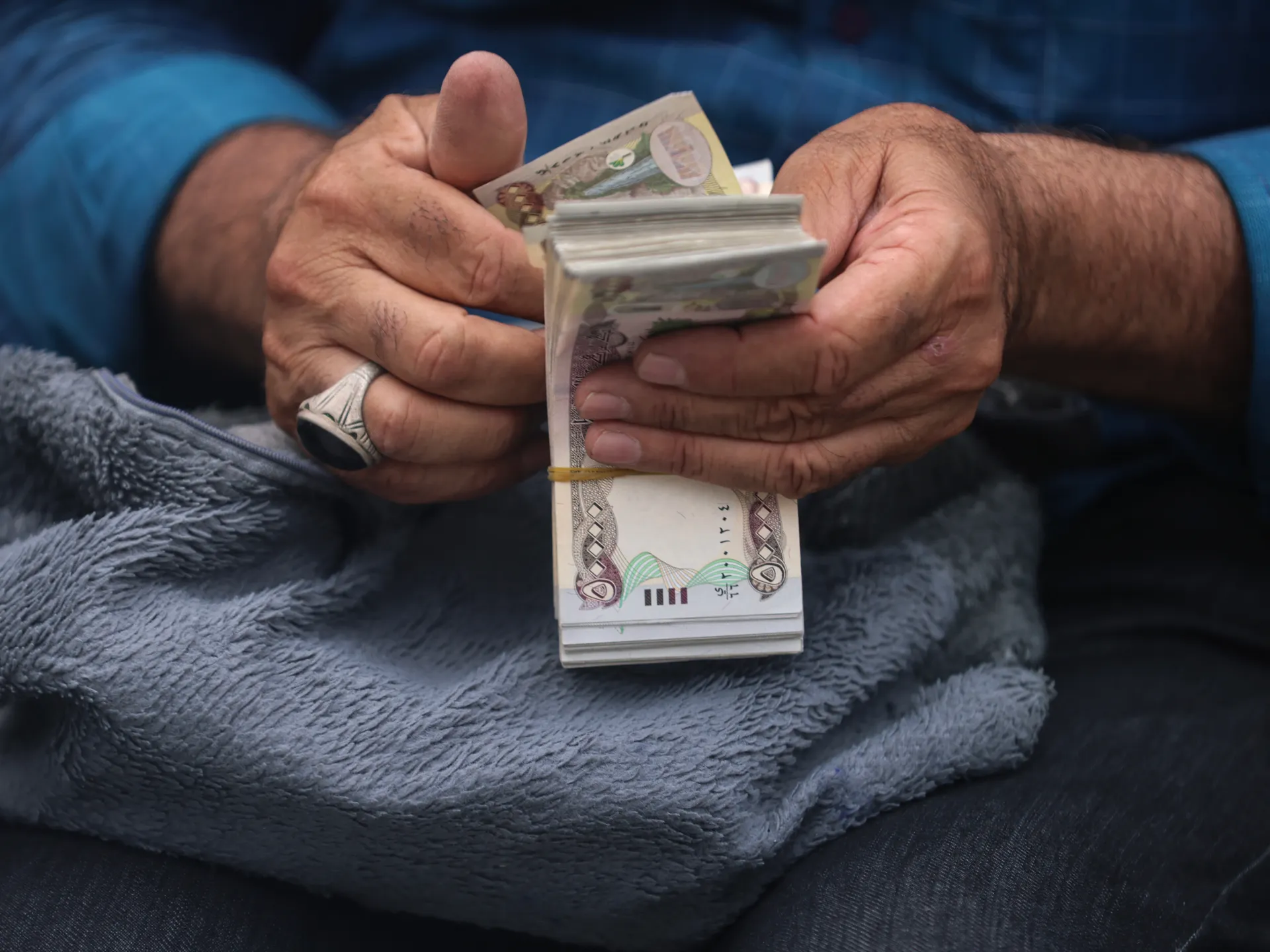
“I don’t know what to do,” al-Rudayni told Al Jazeera after the devaluation reduced the dollar value of his dinar holdings, leaving him with less money to purchase imported goods.
“All I know is I woke up a few days ago to discover that I had lost 25 million Iraqi dinars (roughly $16,500 at the new exchange rate) because of this decision, while larger merchants lost billions,” he said.
Al-Rudayni entered the wholesale trade market last year after losing his previous job at a private Iraqi bank that he says was sanctioned by the United States Treasury. He sold his car and used his savings to start trading with a larger merchant before recently launching his own business.
With exchange-rate fluctuations making prices unpredictable, al-Rudayni said he and many other traders have chosen to suspend buying and selling until the situation stabilises.
“Market activity has ground to a halt,” al-Rudayni said. “Traders buy goods in dollars but sell them in dinars, as regulations prohibit them from selling in dollars.”
That is the root of the problem for traders: A weaker dinar means they have to pay more in local currency for goods imported in dollars, while making it harder to determine the right price they should charge customers for goods they already have in stock.
Why devalue?
On October 7, the Iraqi government introduced a new official exchange rate against the US dollar, in an attempt to ease a financial crisis triggered by the US-Israeli war on Iran and the disruption of oil exports through the Strait of Hormuz.
Before the war, Iraq exported around 3.5 million barrels of oil per day through the Strait of Hormuz, accounting for 90 percent of Iraq’s government revenue.
The Central Bank of Iraq decision set the rate at 1,520 dinars per US dollar for cash sales to the public. It was previously set at 1,320 dinars per dollar.
Devaluing the Iraqi dinar by almost 15 percent against the dollar allows the government to receive more local currency for every dollar of oil revenue it converts, helping it cover public spending, including government employee salaries.
“It is my decision and I am responsible for it,” Iraqi Prime Minister Ali al-Zaidi said during a meeting with parliamentary leaders on Thursday.
“I was facing three challenging options to cover salaries and other mandatory expenditures,” al-Zaidi added. “The first is to cut salaries by 35 percent … the second is to pay the salaries every 45 days … while the third is to resort to foreign loans.”
Al-Zaidi, a former banker, also said that his government had inherited public debt exceeding 208 trillion Iraqi dinars ($139bn at the new rate) when it took office in May. He said the government needed approximately 10 trillion dinars ($6.7bn) each month to cover salaries and other essential expenditure.
A shortage of liquidity
The crisis in the Strait of Hormuz had caused a severe financial squeeze for the Iraqi government.
Although the situation has eased somewhat in recent weeks after Iraq’s oil exports partially recovered, they have yet to return to their pre-war levels.
Mudher Mohammed Salih, the Iraqi prime minister’s financial adviser, said in August that the Central Bank of Iraq’s foreign currency reserves had declined from $106bn to approximately $80bn.
To make up for the loss of revenue, the Iraqi government has also turned to borrowing from domestic banks to cover salaries and other expenses.
A Finance Ministry official told Al Jazeera that ensuring salaries were paid on time remained the government’s main priority, describing this issue as a matter of domestic economic stability.
“Our hands are tied regarding the revenue and how to maintain enough money to ensure that we can pay the salaries,” the official, who asked to remain anonymous because he was not authorised to speak publicly, said.
Economists have warned that while adjusting the exchange rate could ease some immediate fiscal pressures, it would not address the deeper weaknesses in Iraq’s economy.
“Nothing in economics is sacred, including the exchange rate,” said Nabil al-Marsoumi, professor of economics at Al Maaqal University in Basra. “It can be adjusted, but only after all other options have been exhausted.”
“In any case, the exchange rate shouldn’t be used as a cover-up for failures in the state’s economic and fiscal policies,” he added.
Lagos, Nigeria – As Israelis prepare to vote on October 27, African governments from Pretoria to Rabat are weighing what the result could mean for their own foreign and domestic policies.
The war on Gaza has exposed sharp differences across the continent, with some governments pursuing diplomatic measures against Israel while others maintain commercial and security ties.
Recent polling has shown a closely contested race between Prime Minister Benjamin Netanyahu’s Likud party and the far-right coalition it leads and a bloc of Jewish-led opposition parties.
Neither is projected to win the 61 seats needed for a majority in the 120-seat Knesset, with a protracted period of coalition talks expected to follow the vote.
The next government’s approach to Gaza and the Palestinian question could influence Israel’s efforts to preserve and expand its partnerships across the continent.
Israel’s relationships across Africa are shaped by competing priorities. While the Gaza war has intensified diplomatic pressure and public opposition in many countries, security needs, commercial interests and longstanding bilateral partnerships continue to influence government decisions.
Diplomatic strain vs closer ties
Since the war began in October 2023, South Africa has emerged as one of Israel’s most vocal critics in Africa. Its government brought a case against Israel at the International Court of Justice (ICJ), alleging violations of the 1948 Genocide Convention. Israel rejects the allegations. The court’s so-called provisional measures in 2024, including an order for Israel to take action to prevent acts of genocide, are not a final ruling on whether genocide has occurred.
In November 2023, South Africa’s National Assembly adopted a motion calling on the government to close the Israeli embassy and suspend diplomatic relations. The motion did not itself implement those measures, but it underscored the strength of political opposition to Israel’s military campaign.
Other African governments have taken different approaches that reflect national political priorities and foreign policy calculations rather than a single continental position.
Chad recalled its ambassador to Israel in November 2023, while some countries have maintained relations despite criticism of Israel’s military campaign in Gaza.
Morocco offers a contrasting example. It restored relations with Israel in 2020 under a US-backed arrangement linked to Washington’s recognition of Moroccan sovereignty over Western Sahara. Despite public demonstrations opposing normalisation, Rabat has continued to pursue closer ties.
On September 16, Israeli Foreign Minister Gideon Sa’ar and Moroccan Foreign Minister Nasser Bourita met in New York at a trilateral summit hosted by US Ambassador to the United Nations Mike Waltz. The three countries reaffirmed plans to upgrade diplomatic relations, elevate their respective missions to embassies and appoint ambassadors.
They also agreed to conclude investment protection and double taxation agreements by the end of this year, expand flights to include Moroccan airlines and arrange reciprocal high-level visits in the coming months. These were announced commitments, rather than confirmation that the changes had already been implemented.
For Idowu Johnson, associate professor of international relations at the University of Ibadan, the diversity of African states makes it difficult to predict a uniform response to Israel’s election.
“Africa’s heterogeneity means individual states have handled relations with Israel separately. Since the October 7, 2023 attacks, African criticism has focused on Israel’s denial of Palestinian statehood.
“The October 27 election will therefore be pivotal, as a new government’s stance on the Palestinian cause will shape how far Africa cooperates on agriculture, trade, security and technology, guided by self-determination and international law as well as bilateral interests,” Johnson said.
Israel’s relationship with the African Union (AU) also reflects these divisions. In 2021, the AU Commission chairperson accredited Israel’s representative to the organisation, prompting objections from member states.
In February 2022, the AU Assembly established a committee of heads of state and government to consult on Israel’s observer status. The dispute continued into 2023, when the AU moved to suspend Israel’s accreditation pending further consideration.
The disagreement has reflected wider divisions over Israel’s treatment of Palestinians and the organisation’s approach to the conflict.
A new Israeli government could seek to ease those tensions, but any change would depend on its policies as well as the positions of AU member states.
Security ties may outlast diplomatic tensions
Security cooperation has been a significant part of Israel’s relationships with some African governments. Israeli companies have pursued defence and security contracts involving equipment, surveillance technology and training.
But the nature and scale of those relationships vary by country and claims about particular agreements or technologies should be tied to documented cases rather than treated as evidence of a uniform Israeli security presence across the continent.
The Democratic Republic of the Congo offers a recent example of efforts to deepen cooperation. Congolese President Felix Tshisekedi visited Israel on August 31 and September 1, meeting Prime Minister Benjamin Netanyahu and President Isaac Herzog. Discussions covered security, defence, agriculture, infrastructure, energy and high technology. Both sides expressed a desire to strengthen their strategic partnership and expand cooperation across several sectors.
The visit followed memorandums of understanding signed on July 27. Congolese officials said the visit would review those agreements and explore further Israeli investment, including opportunities linked to the Lobito Corridor. The meetings demonstrate the potential scope of bilateral cooperation, but do not establish that a specific new security contract has been concluded.
For governments confronting armed groups, insecurity can create incentives to seek equipment, intelligence and training from foreign partners. Yet the importance of Israeli cooperation differs between countries and diplomatic tensions will not necessarily have the same effect on every security relationship.
The limits of Israel’s diplomatic outreach were also evident after it recognised Somaliland as an independent state on December 26, last year, the first country to do so. Somalia and other critics rejected the move, arguing that it undermined Somalia’s territorial integrity. The decision triggered demonstrations in Somalia and Somaliland.
Speaking to Al Jazeera this month, President Hassan Sheikh Mohamud said Somalia will not accept Israeli presence in the country “under any circumstances”. He added that Israel was planning to establish a naval base in Berbera and use the city’s airport, adding that its real aim was to get closer to the Gulf states and Iran.
According to the Armed Conflict Location & Event Data project (ACLED), 110 demonstrations directly linked to Israel’s Somaliland recognition had been recorded by the time of its February 2026 Africa overview. Only seven supported the move, all in Somaliland; the others opposed it. The figures cover demonstrations linked to that particular decision, not all African views of Israel, and should not be treated as a continent-wide measure of public opinion.
Hossamaldeen Ibrahim, an Africa analyst at the Bloomsbury Intelligence and Security Institute, argues that public opposition can constrain governments even when they see strategic value in maintaining ties.
“The strongest constraint, however, may come from African publics rather than governments: the Somaliland recognition drew widespread opposition, the African Union and many governments reaffirmed Somalia’s territorial integrity, and ACLED logged 110 related demonstrations, only seven in support.
“Depending on its approach, the next Israeli government could therefore either deepen strategic cooperation in Morocco, Sudan and the Red Sea, or face a legitimacy problem if it continues policies seen as tied to the Gaza war, widening the gap between state-level cooperation and public sentiment,” Ibrahim told Al Jazeera.
The Somaliland episode shows how a diplomatic move can provoke opposition when it is perceived to challenge a core principle of sovereignty.
It does not, by itself, establish that African governments will abandon security agreements with Israel. The consequences will depend on the countries involved, the terms of their cooperation and the domestic political costs of maintaining them.
Trade, agritech and the contest for influence
Trade and development cooperation offer Israel another route to maintaining relationships in Africa. Israeli firms and officials have pursued partnerships in areas including agriculture, irrigation, water management, health and technology.
Such cooperation can offer practical benefits to governments seeking investment and technical expertise, but commercial ties do not necessarily translate into public support for Israel’s policies.
Zambia illustrates Israel’s efforts to deepen bilateral engagement. Israel opened a resident embassy in Lusaka in August last year, after a 52-year absence. Agriculture, water management, health, education and technology have been identified as potential areas for closer cooperation. The move formed part of Israel’s broader effort to strengthen its engagement with African countries.
Some analysts have interpreted Israel’s renewed engagement with Zambia as an attempt to cultivate partners who could counterbalance South Africa’s influence in the region. That remains an interpretation, not an established explanation for the relationship.
Zambia has its own reasons for seeking investment and cooperation, particularly in agriculture, water management and technology; closer bilateral ties alone do not prove that countering South Africa is Israel’s objective.
Professor Iwebunor Okwechime, of Obafemi Awolowo University, points to the historical roots of South Africa’s position towards Israel.
“If we trace the stance South Africa took, it goes back to the apartheid era, when Israel backed the apartheid regime and refused to support the struggle against the minority government. This historical context is important for understanding South Africa-Israel relations today,” Okwechime told Al Jazeera.
For African governments, the challenge will be to balance security and commercial interests against public opposition, commitments to Palestinian rights and positions on international law. For Israel, the upcoming election will test whether a new government can ease diplomatic tensions across Africa without fundamentally changing the policies that have fuelled them.
As Okwechime told Al Jazeera, “There won’t be a radical change in sentiments regardless of the government in power”.
Tehran municipality has launched a series of welfare initiatives to help residents cope with soaring living costs, but the measures have raised questions about their financing and effectiveness, as well as whether the local authority is taking on responsibilities better handled by Iran’s national government.
The local authority has launched four projects it says are aimed at protecting citizens, including a housing project, freezes on the prices of 12 basic goods, and a maternity package.
Recommended Stories
list of 3 itemsend of list
Questions have been raised about how they will be funded and whether the municipality is overstepping its traditional functions.
In Iran, municipalities are responsible for local services and urban management, while the national government oversees broader economic policy, including efforts to control inflation.
Iranian law does give municipalities some responsibilites beyond conventional urban services, but Article 55 of Iran’s Municipal Law does call for municipalities to provide for public food markets, make certain essential goods more affordable, and provide social welfare facilities and low-cost housing.
The dispute is therefore less about whether Tehran municipality can provide the services, and more about their scale and financing.
The municipality’s price-freezing initiative, dubbed the “Zero Inflation” project, has been the most controversial. It comes as year-on-year inflation reached nearly 90 percent last month, while annual food inflation hit 108.8 percent.
Doubts have been raised about how the project will be funded and its effectiveness. Others believe that the measures could fuel inequality between the capital and other cities.
They are viewed as steps to address the huge economic challenges faced by Tehran residents, worsened since the United States and Israel launched a war on Iran on February 28.
Tehran Mayor Alireza Zakani said the municipality had recently guaranteed prices ranging between 5 percent and 50 percent below market rates for the next six months.
Yousef Akandeh, a political activist, told Al Jazeera that freezing the prices of some goods or providing free services will not reduce inflation to zero alone.
“Even if we assume that the Tehran municipality succeeded in stabilising the prices of 12 basic goods, what about the rise in rents, medicines, transportation prices, and the rest of living expenses,” Akandeh asked.
Real steps to tackle inflation, Akandeh said, would have to begin with controlling liquidity growth and monetary discipline, which he said are nearly impossible amid the ongoing war.
The municipality has also introduced a maternity support programme offering mothers of children born this year monthly credits worth up to 40 million rials ($15) for two years for each newborn.
Akandeh raised the issue of institutional overlap, noting that a similar national scheme already exists.
“The government implements a similar package and provides monthly financial amounts for all newborns across the country and not just in Tehran, and if the municipality’s package is independent of it, the Tehrani family may benefit from the national and municipal programme simultaneously,” Akandeh said.
Receiving support from both programmes would not, in itself, indicate wrongdoing. But critics are instead raising the question of whether it is an appropriate use of Tehran’s municipal resources, particularly when the city faces competing spending demands.
Amir Dabiri Mehr, a former adviser in the Tehran municipality, told Al Jazeera that although supporting the homeless falls under the municipality’s social responsibilities, the problem lies in a lack of transparency. The municipality is funded by taxes and building density licences.
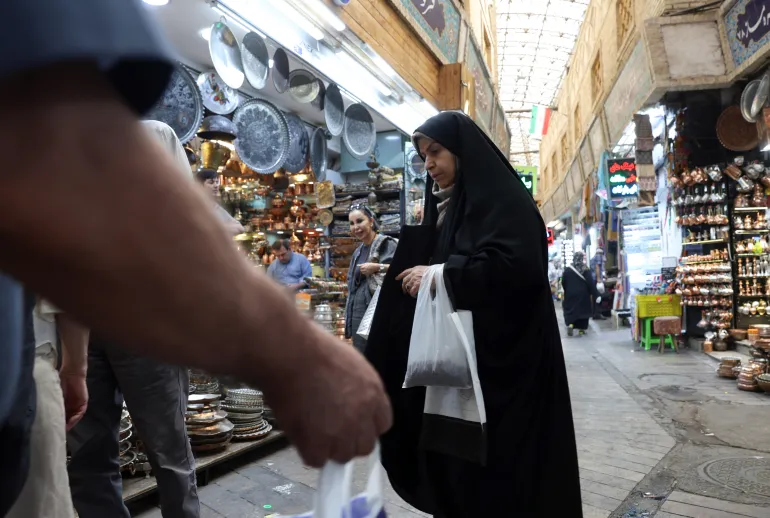
People shop at Tajrish Bazaar in northern Tehran, Iran, September 30, 2026 [Abedin Taherkenareh/EPA]
“The people have the right to know what the municipality spends within the framework of its original tasks, and in tasks it has chosen for itself, and where it gets its resources from?” Dabiri Mehr said.
The municipality-affiliated Hamshahri newspaper said that the “Zero Inflation” project is not funded by municipal budget subsidies, but through direct purchases from producers and reducing commercial profit margins in council-run stores.
The biggest crisis facing Tehran’s residents is housing, which is the national government’s responsibility, Mehr said. Food and living expenses are the national government’s responsibility.
“If the goal is to solve the people’s problems, it seems that the biggest problem facing the residents of Tehran today is the housing crisis, and this dilemma cannot be solved by building an apartment building consisting of a few residential units,” he said.
Al Jazeera attempted to contact the Tehran municipality for comment but received no response.
Tehran Mayor Zakani has, however, defended the financing arrangements, telling a local newspaper, Hamshahri, that the Zero Inflation initiative would not rely on direct subsidies from the municipal budget, but instead on purchasing goods directly from producers and reducing commercial profit margins in city-run stores.
Zakani also said that the programme would draw on municipal resources, bank financing, and partnerships.
Hundreds of French supermarkets have suffered unprecedented cyberattacks resulting in tonnes of food perishing and raising fears about the vulnerabilities of food systems to advanced technology.
The attacks, which appeared to target internet-linked refrigeration systems manufactured by a Danish company, raised the temperature of fridges and freezers to as high as 50 degrees Celsius (122F) at more than 500 shops and supermarkets across the country. Supermarkets confirmed the attacks on Monday.
Recommended Stories
list of 4 itemsend of list
France’s cybersecurity agency has advised companies operating affected freezer models to immediately disconnect them from the internet – or restrict access to them – and to perform software updates.
It is unclear who may have been behind the attacks, but authorities say they have now launched an investigation.
Here’s what we know:
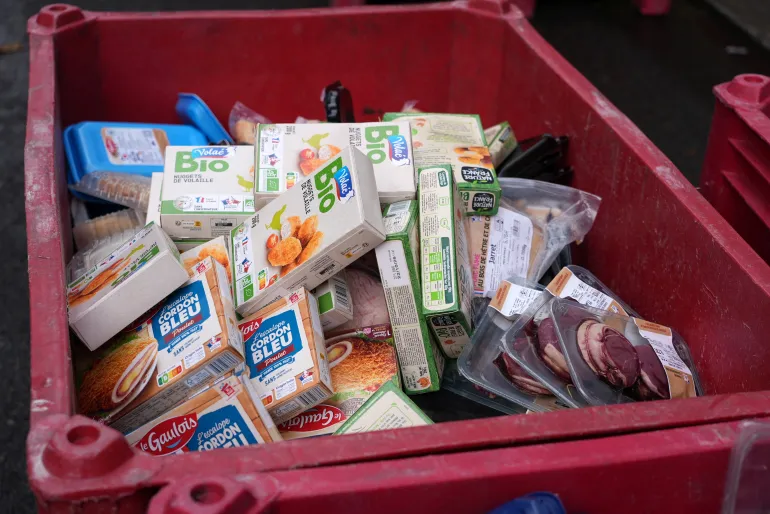
Perished goods outside a supermarket in Paris the day after a cyberattack targeted refrigeration systems in France, October 13, 2026 [Lucien Libert/Reuters]
What happened?
Hackers gained internet access to the refrigeration systems and remotely cranked up temperatures in freezers and fridges to 50C during the night when shops were closed. Millions of euros worth of food was spoiled, according to retailers. In some cases, the raised temperatures sparked fires or melted equipment.
French supermarket groups E-Leclerc, Intermarche, Carrefour, Monoprix and Cooperative U were all hit.
At least 300 of Intermarche’s stores and its Netto brand were affected. Cooperative U said more than 100 of its supermarkets were targeted, while Carrefour said 80 supermarkets were affected and Monoprix reported that about 5 percent of its roughly 490 stores were hit.
Officials are still investigating who launched the attack and how it was carried out. French TV channel BFM reported that the attackers appeared to have remotely triggered a forced defrosting option in the refrigeration systems.
The systems targeted are built by Danish manufacturer Danfoss, according to France’s government cybersecurity agency. The refrigeration models attacked included the AK-SM800 and AK-SC355.
Danfoss told the AFP news agency that most of the affected control systems were “legacy” products that had “outdated firmware”. The company said it had previously advised supermarkets to update them.
AFP also reported that officials are liaising with other European countries which may have been affected.
It is unclear exactly how much food has been lost. The attacks come after President Emmanuel Macron ordered last month that the country’s critical infrastructure be protected from Russian “hybrid attacks”.
Have supermarkets been hit by cyberattacks before?
Yes. Attacks like these have been reported in other parts of Europe and in the United States.
In April 2025, British retailer and supermarket chain Marks and Spencer suffered a sophisticated ransomware attack that the company said cost it approximately 300 million pounds ($397m) after it was forced to suspend online and app orders. The attack was orchestrated by a hacker group called Scattered Spider, using ransomware from DragonForce, another criminal group. Ransomware attacks involve using malicious software to hide essential data unless a ransom is paid.
According to UK media, the same hackers also tried to attack Co-op and the iconic Knightsbridge store, Harrods.
Similar reports have also emerged from the US. In June 2025, United Natural Foods, a frozen food company which supplies big supermarket brands such as Whole Foods, said it had discovered a cyberattack that forced it to take its systems offline. The company did not reveal the nature of the attack.
In November last year, Ahold Delhaize USA said it was the victim of a cyberattack that disrupted operations at more than 2,000 stores, including Hannaford, Food Lion and Stop and Shop.
Why target supermarkets?
They are an easy target and the consequences can be widespread.
As food and agricultural systems increasingly digitise, analysts say supermarkets selling perishable foods are increasingly vulnerable to attacks due to the nature of their stocks.
The rising sophistication of cyberattacks now means that common people and local, third-party companies relying on big chains for business are also falling victim as attacks disrupt supply chains, experts say.
Speaking to Al Jazeera, tech and cybersecurity analyst Steven Lachance said smart appliances connected to the internet will always be vulnerable as hackers seize on security lapses to log in to the systems remotely and trigger malicious features.
“It’s the new reality of having these connected equipment,” Lachance said, pointing out that attacks could evolve to target medical or energy systems.
“This should come as a global wake-up call … Throughout society, we have connected infrastructure that is live on the internet, and that can be hacked. It’s a new reality, and we absolutely need national and international measures to prevent those attacks; otherwise, it’s just going to keep happening,” he warned.
As the United States maintains a naval blockade of Iran’s ports and imposes more sanctions on its oil exports, Tehran is confronting another problem: billions of dollars in revenue from previous oil sales that it says have gone missing.
A spokesperson for Iran’s judiciary said in September that a network of oil intermediaries known as “trustees” owed the Iranian government between 10 billion euros ($11bn) and 11 billion euros ($12bn). That figure was equivalent to half of the total oil revenue projected in Iran’s government budget for the current fiscal year.
Recommended Stories
list of 3 itemsend of list
US officials, including Treasury Secretary Scott Bessent, have tied Iran’s struggles to access oil revenues as evidence that its economic pressure campaign is having an effect. In August, Bessent said that “Iran’s shadow banking system was buckling” under pressure from the US campaign against the country, which has been ramped up as Washington seeks a way to force Tehran to capitulate in the war between the two countries, launched by the US and Israel in late February.
So who are the oil intermediaries, why does Iran depend on them, and what has happened to the billions of dollars they owe? Let’s take a closer look.
The debt, and the crisis it has created for the Iranian government, both stem from an oil-sales arrangement Tehran adopted in 2012 in response to US sanctions targeting Iranian oil exports.
American and European sanctions targeting Iranian oil sales and revenue collection began in 2012. The stated rationale behind both sets of measures was that revenue from oil sales helped finance Iran’s nuclear programme and that restricting Iranian oil exports could prevent the programme from advancing.
In response, the Iranian government devised a way to circumvent international sanctions on its oil sales. Unable to sell oil through the Oil Ministry and receive the proceeds through the Central Bank, it began selling oil to domestic buyers or using it to settle outstanding obligations to institutions and organisations owed money by the state.
This arrangement gave rise to a network of oil intermediaries often referred to in Iran as the “trustee network”. Rather than selling all its oil through official government channels, the state entrusted crude oil to institutions, individuals and companies to sell on its behalf. The proceeds were supposed to be transferred to the government’s treasury, with the sellers or recipient institutions subsequently recovering their agreed costs and outstanding claims. Some institutions sold the oil themselves, while others contracted private trading companies to handle the sales.
The Oil Industry Pension Fund, established for retired Oil Ministry employees familiar with the oil-sales process, was among the first institutions to receive crude oil for sale. Other recipients included Khatam al-Anbiya Construction Base, a major hub for large-scale infrastructure projects. Even the municipal police received payments owed to them by the government in the form of crude oil.
Effect of the nuclear deal
Even in those early experiments, discrepancies emerged between the revenue expected from oil sales and the amounts sellers actually deposited into the government’s treasury. These discrepancies eventually gave rise to some of Iran’s largest economic corruption cases.
The accounting discrepancies and the government’s inability to recover money from private sellers entrusted with Iranian oil persisted until 2016, when the Joint Comprehensive Plan of Action (JCPOA) nuclear deal was signed and when sanctions on Iranian oil sales were lifted. The government was subsequently able to regain control over oil sales.
Individuals who had sold Iranian oil but failed to return the proceeds were imprisoned. With the ability to sell oil again through legal and transparent channels, the government was able, for a time, to manage its oil revenues and spending with greater control.
How did money from oil sales go unreturned?
After US President Donald Trump withdrew the United States from the JCPOA in 2018 during his first presidential term, the Iranian government once again had to rely on private oil traders to sell its oil. But the problems associated with selling oil through intermediaries rather than official state channels, including delays in returning revenues, accounting discrepancies, debts owed by oil sellers to the government, and the occasional seizure of Iranian oil shipments at sea, once again constrained the government’s ability to manage its oil revenues.
Moreover, the US expanded its sanctions beyond Iranian government institutions and interests, adding bank accounts involved in transactions with the Iranian government, currency-exchange offices, companies, and individuals to its sanctions lists. As a result, the time between individuals participating in Iran’s oil-trading network and being sanctioned themselves, along with their assets and companies, and having their accounts blocked or frozen grew progressively shorter.
This contributed to an accumulation of debts owed by sanctioned oil traders – no longer able to access their accounts – to the government. It also left Iran with little choice but to expand its private oil-sales network. That meant increasing the number of people involved in trading Iranian oil, reducing the volume of oil allocated to each individual or company and, ultimately, increasing the risk that the proceeds would not be returned.
Iranian officials have also accused trustees of exploiting the sanctions workarounds to enrich themselves.
The billions of dollars owed by private oil sellers to the Iranian government are a combination of outstanding payments, disputed financial obligations and allegations of corruption. Iran’s judiciary chief recently addressed the issue, warning that oil sellers who refuse to return the proceeds from oil sales will face legal action. But such warnings do not change the sanctions environment or remove the obstacles that prevent some oil sellers from returning the money.
Tehran, Iran – Iranian authorities have signalled they intend to disrupt an Arab-operated and United States-assisted shuttle system that has enabled more energy exports through the Strait of Hormuz during the US-Israel war on Iran.
With the US naval blockade of Iran’s southern ports in place and sanctions tightening, Tehran has said it will pursue military and diplomatic efforts to put pressure on Washington to submit to its demands regarding reopening the Strait of Hormuz.
Recommended Stories
list of 3 itemsend of list
This strategic waterway, through which roughly a fifth of global oil and gas flowed before the war, has been largely closed to shipping following Iranian attacks since the US and Israel launched strikes on Iran on February 28.
But the US Navy has reportedly opened up a route so Gulf states can export oil and other commodities amid an energy crisis.
Iran’s security chief Mohsen Rezaei responded on Sunday night, saying the shuttle system is now an explicit target for Tehran.
Rezaei claimed that the US Central Command, with the assistance of the United Arab Emirates military, was using smaller vessels to transfer oil to larger tankers. He claimed Iran had been striking five or six participating vessels nightly for weeks.
“You are smuggling, but the strait is under Iran’s control, and we manage it,” he asserted.
This appeared to be a taunt aimed at US President Donald Trump, who has hailed energy exports at times reaching pre-war levels over recent weeks.
Rezaei appeared to give the impression that Iran wants to have lasting authority over Hormuz, and promised a harsh response if Iran’s energy and civilian infrastructure were attacked again.
His threats appeared aimed at Arab regional states, with a warning that digital infrastructure could be targeted. Rezaei threatened US-linked cables, data centres and artificial intelligence facilities in the UAE and around the Strait of Hormuz.
A woman rides her scooter past Iranian Zolfaghar missiles placed in front of a billboard of Iranian Supreme Leader Ayatollah Mojtaba Khamenei at Baharestan Square in downtown Tehran, Iran, September 28, 2026 [Abedin Taherkenareh/EPA]
Rezaei also accused Saudi Arabia of helping the US move oil around Iran’s restrictions. But he did not threaten a direct attack against Riyadh – which is currently being targeted by Yemen’s Tehran-aligned Houthis.
In early September, Iran’s Islamic Revolutionary Guard Corps (IRGC) threatened tankers at ports and anchorages in Kuwait and Bahrain, citing US attacks on Iranian tankers. It accused both countries of complicity through hosting US armed forces.
Iran has claimed the US accepted some of Tehran’s seven conditions for the full reopening of the Strait of Hormuz and ending the war. But Tehran insists that a deal will only materialise when all its demands are met.
Hamidreza Azizi, a senior Iran analyst at the Crisis Group, said this reflects Tehran’s apparent assessment that it is under no immediate pressure to reach an agreement with the US since its pressure in the Hormuz has a global impact.
“The question, however, is whether Tehran is overestimating its ability to sustain this pressure, given the growing economic costs of the confrontation for Iran itself,” Azizi wrote on X.
Transfer system
The system involves very large crude carriers (VLCCs) and smaller vessels coordinating with the US military to load crude oil at Arab ports and use southern corridors near the coast of Oman to exit the strait.
Vessels often switch off their transponders and travel at night to minimise the risk of being targeted by the Iranians. After ship-to-ship transfers in the Gulf of Oman, some of the shuttles come back to load more.
Multiple vessels were targeted overnight Sunday to Monday, including two outbound tankers and one in anchorage near Oman’s port city of Sohar, where ship-to-ship transfers are allegedly being conducted.
The IRGC has also increasingly driven a narrative that naval mines, believed to have been planted across the Strait of Hormuz since the start of the war, pose a serious threat to vessels attempting to navigate the waterway without coordinating with Iran’s Persian Gulf Strait Authority.
The IRGC said three tankers suffered major damage over the weekend after being struck by mines. It also released footage of one ship ablaze that is said to have been struck by a mine, although the footage did not appear to show a mine going off.
‘Cascading impact’
The shuttle system has provided Arab national oil companies with a way out of Hormuz via the southern corridor near Oman.
Michelle Wiese Bockmann, a London-based senior maritime intelligence analyst at Windward, said this system has proven highly effective.
“Under international maritime law, which underpins 11 billion tonnes of seaborne trade annually, vessels have what’s called the right of transit passage,” Bockmann told Al Jazeera. “So, what Oman has done is allow vessels to go through under international maritime law, but they have had US military assistance.”
Tehran says shipping will be disrupted so long as the US continues its choking naval blockade against Iran, which has also stepped up its efforts to counter efforts by Arab states to export oil. At least 15 ships are believed to have been targeted in October so far, according to Winward.
“The more effective the route has become in facilitating the transport of oil and gas, the less leverage Iran has over Hormuz, and more attacks we are seeing on vessels that are using that southern corridor,” Bockmann said.
Windward’s data shows 31 ships transited the Strait of Hormuz daily in the final week of September. This was considerably lower than the 138 before the war.
Eighty-seven percent of the 45 ships targeted by Iran during the third quarter of 2026 were tankers.
Around 47 percent belonged to Gulf Arab energy companies’ national shipping fleets, Windward noted, and 93 percent of the strikes took place in the Strait of Hormuz. Most attacks targeted vessels transiting the southern corridor with their transponders turned off.
These attacks have contributed to a massive increase in freight costs. Freight represented 25-30 percent of Gulf crude’s cost, versus just 1 to 3 percent before the war, according to Windward. National oil companies have resorted to offering discounts of up to $35 per barrel below official selling prices.
The main reason for the rise is a shortage of tankers willing to make the dangerous crossing. Between 15 and 20 percent of very large crude carriers (VLCCs) are tied up with an inefficient logistics system that relies on shuttle transfers, complicated by escalating attacks and exposure at loading ports and anchorages.
“This is having cascading impacts for all vessel classes on freight and values across the world,” Bockmann said.
As Israel entered the final month before its October 27 election, Prime Minister Benjamin Netanyahu had a chilling warning to share.
Israel’s enemies, he said on September 29, were plotting an attack on the country before the vote. Without providing any evidence, he then quickly referred to continuing attacks by Israeli troops in the Gaza Strip, where he said they had killed more than 100 “terrorists” in recent weeks.
That link drawn by Netanyahu – between the genocidal war on Gaza that began after the Hamas-led October 7, 2023 attacks, the upcoming elections, and Israel’s national security – was not coincidental, say analysts.
Netanyahu’s insistence that he alone can secure Israelis from a range of threats they face from across the country’s borders, they say, lies at the heart of his re-election campaign, even as his alleged failures during the attack three years ago and in securing the quick release of captives have offered his opponents ammunition.
When a Flydubai flight packed with Israeli passengers on their way from Dubai to Tel Aviv a day after his recent warning nearly crashed after a co-pilot attacked his pilot with an axe in the cockpit, Netanyahu was quick to seize on the incident to argue that he is still man for the country’s top job.
Polls suggest that he faces a stiff test in what is the first general vote since the 2023 attacks, which led to the killing of 1,139 people in Israel and triggered the genocidal war on the Gaza Strip, where Israeli have attacks have since killed more than 74,000 Palestinians.
Three years later, the war has become inseparable from the domestic debate over Israel’s direction while also accelerating a political shift to the right – with once-fringe positions on Palestinians now very much the mainstream view.
Few embody this transformation more than Israel’s far-right financial Minister Bezalel Smotrich, sanctioned by a number of Western countries and known for his incendiary and racist language and policies towards Palestinians.
In one of his characteristically inflammatory statements, Smotrich told Israeli outlet Ynet late last month that the Israeli army should “go to war” in the occupied West Bank and “do there what we did in Gaza”.
Less than two weeks later, Smotrich’s electoral ally Moshe Feiglin added fuel to the fire.
“The enemy is Gaza, not Hamas”, he told the Jerusalem Post, calling for the annexation of the besieged territory after the election. “The baby that will be born tomorrow in Gaza will do exactly the same,” he said, in reference to the 2023 attacks.
Palestinian political analyst Ahmed Najar said these are not “stray comments” from marginal figures but an electoral message from power-seeking politicians aimed at portraying Palestinians as “not a people with rights, but a demographic and security problem to be expelled, conquered or destroyed”.
He added: “The frightening reality is that the coming election risks becoming a competition not over whether Palestinian life should be protected, but over who can promise to erase it most aggressively.”
‘This is madness’
Following October 7, the younger generation in particular slid rightwards, said Ahron Bregman, an Israeli security analyst and senior teaching fellow at King’s College London.
He said the forces driving Israel to the right had been gathering for decades.
“The trend toward the right began after the Yom Kippur War in 1973, but it has intensified dramatically since October 7,” Bregman told Al Jazeera, referring to the bloody 19-day October War, or the 1973 Arab-Israeli War – a conflict between Israel and a coalition of Arab states led by Egypt and Syria.
More recently, the far right has been emboldened through electoral politics as part of Netanyahu’s government since 2022 – the most right-wing government in Israeli history.
Another outspoken cabinet member alongside Smotrich is Minister of National Security Itamar Ben-Gvir, a far-right provocateur who has previously been convicted of inciting racism and of supporting a terrorist organisation.
“Netanyahu’s greatest mistake – among many – was bringing figures like Ben-Gvir and Smotrich into his coalition,” said Bergman. “By doing so, he legitimised them as influential forces in Israeli politics.”
Ben-Gvir has been so cemented into Israel’s political system, he has hopes pinned on becoming the next Israeli defence minister, the analyst pointed out.
“This is madness. But that’s contemporary Israel,” said Bergman.
Attendees listen and applaud during an election campaign meeting on October 5, 2026 in Tel Aviv, Israel [Erik Marmor/Getty Images]
Analysts also pointed out that several parties running, including ones that are currently in power and a number that are challenging the current coalition, all advocate for the expulsion of Palestinians from Gaza, as one of the examples of the shift to the right.
Omar Baddar, director of Palthink for Strategic Studies, said the messaging from across the Israeli political and military spectrum in the lead-up to the election shows that there is “a consensus” to continue the attacks on Gaza, where nearly 1,500 have been killed since a “ceasefire” last year.
“They’re using the threats to get more votes,” he said, pointing out to what he described as the radicalisation of the society.
With the election approaching, added Baddar, Israeli leaders are seeking to undo one another: “Who[ever]’s more radical is more likely to get more votes.”
As Ehab Jabareen, a Palestinian political analyst and researcher from inside Israel, writes, “what it means to be ‘right-wing’ in Israel today is above all to take a harder line on Palestinian national claims, security and territorial control.”
He adds: “On security and the Palestinians, a large part of Jewish Israeli politics already works from assumptions that would have been treated as right-wing a generation ago: Deep suspicion of a sovereign Palestinian state, a high tolerance for prolonged military control, and a stronger insistence on Jewish sovereignty as the starting point rather than one value among others.”
Observers and rights groups say the disparity is even evident in the electoral process. A prominent politician and Palestinian citizen of Israel, Sami Abu Shehadeh, has been forced to withdraw from the election over his remarks about the Gaza war, while Israeli far-right leaders have remained untouched despite their violent rhetoric against Palestinians.
Netanyahu’s security credentials endure
Recent polling indicates that the events of October 7 are top of mind for Israelis, who also have questions about who was responsible for the security failures of that day.
Just last month, reports surfaced indicating that Netanyahu had received two separate warnings about an imminent Hamas attack in 2023, from Egypt’s intelligence chief, Abbas Kamel, and United Arab Emirates President Sheikh Mohamed bin Zayed Al Nahyan.
Netanyahu’s two main rivals in the race for prime minister have cited the alleged warnings to call the prime minister “unfit” to remain at the helm of the country.
But Netanyahu has denied suggestions that he had been forewarned about the attack, and the reports do not appear to have had a significant effect on opinion polls.
While October 7 represents a profound rupture in Israelis’ sense of security, public trust in the Netanyahu government had already been badly shaken by its controversial judicial overhaul, introduced when the prime minister’s current coalition first came to power, said Mairav Zonszein, an Israel-Palestine analyst at the International Crisis Group based in Tel Aviv.
Despite these breaches of trust, the Israeli leader retains support.
“Israelis in general still see Netanyahu as kind of the guy on security. And more to the point, they don’t really see an alternative,” Zonszein told Al Jazeera.
A June survey by Mitvim – the Israeli Institute for Regional Foreign Policies found that the Israeli public supports its government’s military and security solutions, and rejects resolving the Palestinian issue and ending the Israeli occupation of Palestinian territory. This is the case even while it has been concerned about international isolation and the decline of Israel’s international standing since the beginning of the genocidal war on Gaza, the survey reported.
Yet Israelis are also increasingly war-weary, even as they back the use of more force. Its troops – stretched between six fronts of war in the last few years – are bearing the brunt of this fatigue in Israeli society.
Israel’s Ministry of Defence said on Tuesday that nearly 30,000 soldiers and security personnel are facing psychological trauma since the war.
The ministry said its rehabilitation department’s budget has increased by 88 percent over the past three years to 10 billion shekels ($3.3m), with the majority supporting treatment for mental health conditions and post-traumatic stress disorder.
As Israel expands, the two-state solution fades
Still, Israel in recent months has been more and more vocal about its expansionist vision, with officials brazenly stating the goal of “Greater Israel”. The claim for the conquest is based on a biblical verse (Genesis 15:18-21).
For decades, Israel has ignored international law in its continuous occupation of Palestinian and Syrian land, and has shown little respect for its neighbours’ sovereignty, occupying more land in Syria, as well as in Lebanon in more recent years.
According to Najar, the political economist, the “complete dehumanisation” of Palestinians as evidenced during the campaign reveal that Gaza “is being presented to Israeli voters not as a catastrophe or a crime for which there must be accountability, but as a blueprint to be repeated elsewhere”.
In southern Lebanon, where Israel has been carrying out near daily attacks and and has occupied large swathes of land, residents have told Al Jazeera they expect little to change even if Netanyahu is defeated in the election.
Netanyahu’s main political challenger, Gadi Eisenkot – head of the Yashar party and former army chief of staff – is the father of the so-called Dahiyeh Doctrine, and is just as hawkish about expansion. That doctrine, since Israel’s war with the Lebanese group Hezbollah in 2006, calls for the use of huge force, even against civilian infrastructure, as a deterrent against enemies and was deployed in Israel’s recent wars, particularly in Beirut’s southern suburbs.
If it were up to Eisenkot, the Lebanon front of war would have never scaled down: He has accused Netanyahu of bowing to US pressure to halt operations in Beirut, and has insisted that the military should be able to attack Hezbollah anywhere in Lebanon.
For Israelis still reeling from the events of October 7, Eisenkot could fill the security void many are feeling, said Zonszein.
“They really … see the world as kind of very hostile towards them, the world not understanding what they went through on October 7, and [therefore why] the need to have these security buffer zones in Lebanon, in Syria, and Gaza,” she said.
A two-state solution to the Israel-Palestine conflict is therefore out of the question, said the analysts – and has not even made a blip of an appearance in campaigning before the election.
The idea first emerged during the Oslo Accords more than 30 years ago, which set out a negotiating process aimed at resolving the Israeli-Palestinian conflict, predicated on the belief that the creation of a Palestinian state alongside Israel was imperative to forge peace.
But since the Oslo process began in 1993, the number of Israeli settlers in the West Bank has ballooned from about 260,000 to more than 700,000, embedded deep inside West Bank areas that would be needed for a contiguous Palestinian state.
“The concept of a two-state solution is currently irrelevant and likely will remain so for another decade or two, if not longer,” said Bergman. “It is unlikely to become a reality in the foreseeable future, as no Israeli leader can propose it to the Israeli public after the events of October 7.”
The only way it could regain prominence is if there is substantial international pressure, including severe sanctions on Israel, and a non-violent intifada, or an uprising by Palestinians, he said.
The outright rejection of Palestinian statehood has simply become much more “acceptable”, said Zonszein.
“There’s several parties who advocate these views, whereas there isn’t a single Jewish Zionist Party that puts the need for a two-state solution or a Palestinian political process at the forefront,” she said.
Taken all together, Israel’s election appears less a demand for change than a further entrenchment of the jingoism that surged after October 7, 2023.
“[There’s] more and more movement towards more military force, more need for pushing the borders … out of a lot of fear that another October 7 could happen,” said Zonszein.
President Lai emphasises peace and freedom, vows not to tolerate aggression in Taiwan Strait.
Published On 10 Oct 202610 Oct 2026
Taiwan’s President Lai Ching-te has said the island “cherishes peace” and will “not give up our freedom” in a National Day speech outside the Presidential Office in Taipei.
Lai made the remarks on Saturday before thousands of people, including foreign diplomats.
Recommended Stories
list of 3 itemsend of list
“We are open to exchanges, but will not accept subordination,” he said. “Our aim by increasing investment in national defence is not to provoke; rather, it is to deter war.”
Taiwanese fighter jets and two Chinook helicopters carrying giant Taiwan flags flew over the capital ahead of the speech.
The holiday marks the 115th anniversary of a 1911 uprising that toppled China’s last imperial dynasty and led to the founding of the Republic of China.
Pressure from China
Taiwan’s 23 million people live under the constant threat of an attack by China, which insists the island is part of its territory, has never renounced the use of force to take it, and calls Lai a “separatist”.
Beijing has rebuffed his offers of talks.
Lai said China continued to “apply pressure through military and grey-zone activities in an attempt to alter the status quo across the Taiwan Strait”.
Grey-zone tactics are actions that stop short of open war. “Peace cannot rely solely on wishes, and tolerance cannot become a pretext for aggressors to encroach ever further,” he added.
Lai’s government has set aside a record 1.1 trillion New Taiwan dollars ($34.5bn) for defence in 2027, more than 3 percent of gross domestic product.
China held war games around the island shortly after Lai’s first National Day speech in 2024, but not last year. Its last drills near Taiwan were in late December, after news of an $11bn arms deal with Washington, the largest ever US weapons package for the island.
Lai said he welcomed talks between the United States and China, but insisted “there must be respect for the right of the people of Taiwan to exist”.
He urged democracies in the Indo-Pacific to join forces to preserve peace and stability in the region.
The US switched official diplomatic relations from Taipei to Beijing nearly 50 years ago but remains Taiwan’s most important security backer.
Officials in Washington and Taipei have repeatedly said US policy on Taiwan has not changed under President Donald Trump.
In May, after meeting Chinese President Xi Jinping in Beijing, Trump suggested arms sales to Taiwan could be a bargaining chip with China, which set off alarm across the world.
Taiwan is now waiting for Trump to sign off on $14bn worth of weapons, including the US-made Patriot air defence system.
The dispute dates back to China’s civil war, when the nationalist forces of Chiang Kai-shek retreated to Taiwan in 1949 after defeat by Mao Zedong’s communists.
The Republic of China remains the island’s formal name.
Sanaa, Aden and Marib, Yemen – As fighting intensifies across Yemen between the government and the Houthis, millions of people are confronting another battle far from the front lines: the deteriorating living and economic conditions in the country.
With salaries for large segments of the workforce either unpaid or irregularly disbursed – and the prices of goods and services rising – Yemen’s economic struggles have been compounded by a divided banking system that has made moving money between different parts of the country increasingly complicated.
Recommended Stories
list of 3 itemsend of list
From Aden’s struggling shoppers to displaced families in Marib and unpaid public-sector workers in Sanaa, Yemenis are being forced to make difficult choices about what they can afford, and what they must go without.
Aden: Food costs swallow salaries
In Aden, the internationally recognised Yemeni government’s interim capital in the south, the problem is not so much a shortage of goods in markets as people’s inability to afford them.
Salaries have failed to keep pace with the rising costs of food, rent, healthcare and transport, leaving workers with little money left over at the end of the month.
The consequences are evident in the smaller quantities and cheaper products that now make up shoppers’ baskets, and the decisions they are forced to make about what to cut back on.
Bushra Abdullah Abdulwarith is a government employee in Aden. She earns 78,000 Yemeni riyals ($50) a month at the black market exchange rate while typical household food costs in government-held areas run about 130,366 riyals ($83), according to estimates by the Yemen Economic Tracking Initiative. And that’s before she factors in the cost of rent, transport, healthcare and other household expenses.
The economic difficulties facing Yemenis like Bushra illustrate how more than a decade of war has devastated the economy. According to the World Bank, real GDP per capita has fallen by approximately 58 percent since 2015.
The fragmentation of Yemen’s monetary institutions between the government and the Houthis – who have operated their own institutions since seizing the capital, Sanaa, in 2014 – along with the disruption of oil exports, and declining international assistance have all contributed to the economic decline.
Bushra told Al Jazeera that rising prices have forced many households to give up almost all non-essential purchases and cut back on some expensive basics, particularly meat. Other families, she said, have resorted to buying food in smaller quantities, sometimes on credit or loans.
Reduced demand
The impact of rising prices is reflected not only in economic figures but also in the way people shop.
Ayman al-Maqtari, who works at a shopping centre in Aden’s Mansoura district, said that his customers now rarely buy non-essential items.
When it comes to the essentials such as rice, sugar, flour, and cooking oil, he has noticed that customers size up the price of each item before putting it in their baskets. They are also buying smaller quantities, for example, opting for a 5kg (11 pound) over a 40kg (90 pound) bag of rice.
“Many people have come to live day by day, or week by week,” Ayman told Al Jazeera, adding that more families are buying on credit when they run out of money before the end of the month.
The decline in purchasing power is also affecting commercial activity.
Across several streets and shopping centres in Aden, advertisements for discounts and special offers have become increasingly visible in shop windows and on retailers’ social media pages, as businesses attempt to attract customers and boost sales.
Weak demand, retailers say, is particularly evident for items that households can put off buying, such as clothing and household goods. A growing share of family income is spent on food, rent, healthcare and transport.
Limited pay increase
The Yemeni government approved a 20 percent cost-of-living allowance in May for public-sector employees in an attempt to ease the pressure of rising prices. But the amount is calculated based on each employee’s base salary, rather than their total pay, meaning the actual increase is relatively small for many workers.
Bushra, the government employee in Aden, said the increase has done little to improve her family’s financial circumstances. She described the allowance as “a temporary painkiller that does not reflect the scale of the actual pressure on people’s living standards”.
Her experience is far from isolated. In early October, the World Food Programme said its latest monitoring in accessible government-controlled areas showed that 74 percent of households were unable to meet their basic food needs.
One of the places where the crisis is evident is Marib, a government-controlled city east of Sanaa that is home to hundreds of thousands of displaced people. The sharp increase in the population over the war years, in what was previously a provincial backwater, has led to pressure on the city’s housing, employment and public services.
Government employees in Marib see their salaries disappear within the first few days after being paid, labourers struggle to find more than a few days of work and displaced families are forced to choose between buying water and milk.
Salah al-Zuhaifi works for a government institution in Marib. He said the war has separated him from his parents, who live in Houthi-controlled territory.
Alone in Marib, al-Zuhaifi said that inflation had eroded much of his salary’s purchasing power.
“No matter how much you earn, it will not be enough to meet your needs,” he said.
Abu Mohammed Nasser al-Asbahi, another government employee, described a similar struggle.
He told Al Jazeera that he earns 400,000 riyals ($250) a month, but more than half of that goes towards his rent, leaving little for his other expenses.
“We don’t even get to the first one-third of the month before the salary is gone,” he said, explaining that his family spends the rest of the month relying on loans and credit from local shops.
The healthcare sector in Marib has also been affected by widespread household spending cuts.
Pharmacist Khaled Mohsen told Al Jazeera that the rising price of medicines has prompted many patients to decline parts of their prescribed treatment and purchase only what they consider most essential.
People with chronic illnesses, meanwhile, have increasingly begun reducing their medication doses to make their supplies last longer before having to buy more, which creates serious health risks.
Houthi areas
Residents of Sanaa and other areas of Yemen’s populous northwest, controlled by the Houthis – an armed group also known as Ansar Allah (Arabic for Supporters of God) – since 2014, are also facing a worsening economic and cost-of-living crisis similar to that affecting Yemenis elsewhere in the country.
Several factors are driving the crisis, particularly unpaid public-sector salaries, declining purchasing power, rising prices for goods and services, and the continuing consequences of the division of Yemen’s currency and banking systems in the early years of the war.
Many public-sector employees in Houthi-controlled areas have gone years without receiving regular salaries, with some sectors only receiving limited payments or half-salaries at irregular intervals.
Even when payments are made, they cannot cover families’ basic needs amid the rising cost of living.
Meanwhile, private-sector workers and business owners face growing pressures as a result of declining economic activity, multiple fees and levies, and a shortage of employment opportunities. The conditions have undermined incomes and job security.
The Yemeni riyal’s exchange rate in Houthi-controlled Sanaa is more stable than in areas controlled by the government. The Houthis have imposed strict monetary controls, banning the circulation of newer banknotes printed by the Yemeni government, and have also enforced a largely fixed exchange rate.
However, that does not necessarily translate into stronger purchasing power. Markets face difficulties caused by cash shortages and the division between monetary and banking systems operating in different parts of the country, including increased costs for moving funds.
That directly affects the many households relying on domestic and international remittances.
For residents in Houthi-controlled areas, the result is an economy in which the currency may be relatively stable, but livelihoods are precarious. Years of unpaid salaries and limited employment opportunities have left many families struggling to afford basic necessities, with few options beyond borrowing, cutting spending or relying on support from relatives.
Italy’s parliament is voting on Thursday on a new electoral law that would make it easier for election winners to form a majority government.
The law, proposed by Prime Minister Giorgia Meloni, would award extra seats to any party or coalition that obtains more than 42 percent of seats in both parliamentary chambers, ensuring it holds a majority.
Recommended Stories
list of 3 itemsend of list
Meloni has framed the legislation as a route to greater stability in Italy’s political system, which has often been run by fragile coalition governments. Her critics, however, say the move is actually aimed at boosting her own chances in elections next year.
Here’s what we know about the electoral law and what it means for Italian politics:
What is Italy’s current electoral system?
Italy currently has a mixed electoral system for its 600-seat parliament, with about 36 percent of members of parliament elected directly in constituencies where the candidate with the most votes wins, and the rest decided through proportional representation.
The system, called “Rosatellum”, has been in place since 2017. It encourages coalition-building but can produce fractured results that make a governing majority hard to forge.
What would the new law change?
The new legislation would replace the mixed electoral system with a fully proportional one, as well as awarding extra seats to the party or coalition that wins the most seats if it secures at least 42 percent in both chambers.
The bonus would be as many as 70 seats in the 400-member Chamber of Deputies, the lower house, and up to 35 seats in the Senate, which has 200 elected members.
That means if a party or coalition meets the 42 percent share threshold in both chambers, it would have stronger power to govern. If no party or coalition meets the threshold, representation would be decided proportionally.
The new law would also force coalitions to announce their candidates for prime minister before the elections. Rado Fonda, head of research at Italian pollster SWG, told the Reuters news agency this provision could “prove problematic for the centre-left, potentially forcing an early leadership contest and exposing divisions that could weaken the bloc”.
Meloni, who currently leads the country’s longest-serving government since World War II, has said the reform will help stabilise the country rather than serve any one political group. “Whoever wins the elections will have the numbers to govern,” she said.
What stage is the legislation at?
The proposed law has already been approved by the Senate and must now undergo a final secret-ballot vote in the Chamber of Deputies.
Giovanni Orsina, a political scientist at Rome’s Luiss Guido Carli University, predicted that the law is “extremely likely” to pass.
If it fails, Meloni has said she will resign.
Italian Prime Minister Giorgia Meloni speaks during the MED9 Summit, in Split, Croatia, October 7 [Antonio Bronic/Reuters]
Why is the legislation controversial?
Opponents say the law is undemocratic because it could potentially grant a winning coalition a disproportionate level of power in parliament.
They also say that the legislation is intended to favour Meloni, whose Brothers of Italy party (Fdl) is bracing for a tough election battle next year.
Riccardo Magi, head of the liberal More Europe party, who is on a hunger strike to protest the proposed reform, has called it an “anti-democratic law” that risks giving a minority bloc a huge majority in parliament.
Senator Matteo Renzi, who leads the Italia Viva party, has accused Italy’s governing coalition of pushing the electoral reform due to a fear of losing power.
Other critics have pointed out that the law would do little to stabilise the political system if no party or coalition reaches the 42 percent threshold in both chambers – a relatively high bar.
“This could produce a hung parliament, making post-electoral negotiations necessary to form a government,” Vincenzo Emanuele, a political science professor at Luiss Guido Carli University in Rome and a member of the Italian Center for Electoral Studies (CISE), told Al Jazeera. “Even relatively small changes in coalition composition could make the difference between a clear parliamentary majority and a situation of political deadlock.”
When are Italy’s next elections, and what do the polls show?
Italy’s next general election must be held by December 22, 2027, although the government can call elections earlier if it wishes.
Currently, Meloni’s Fdl is polling ahead of all other parties, with 27 percent support, according to Politico’s polling aggregator. Her coalition partners, Lega and Forza Italia, have a combined 12 percent support, according to Politico, bringing the coalition share to 39 percent.
Fdl’s polling has been dented by support for a new far-right group, Futuro Nazionale (National Future), Reuters reported. It currently has 7.8 percent support, according to Italian polling institute SWG.
In opposition, the Democratic Party (PD) has 21 percent support, the Five Star Movement (M5S) has 12 percent and the Alliance of Greens and Left (AVS) has 6 percent, according to Politico. The Italy Viva (IV) and More Europe parties have 2 percent support each.
Emanuele said the current landscape means the proposed electoral law would not necessarily favour Meloni and could even benefit the opposition.
He said recent simulations by the CISE have shown that a centre-left coalition including the PD and M5S could potentially reach 44 percent of the vote, securing a “comfortable parliamentary majority”, though that could change if Meloni allies with National Future.
“The reform does not inherently favour the incumbent government: Its effects will depend crucially on how the competing coalitions are formed,” said Emanuele.
Sanaa, Yemen – The Yemeni government’s new military offensive against the Houthis is testing more than the balance of forces in the country – it is also testing whether the government can persuade powerful tribes in Houthi-controlled areas that the balance of power is beginning to shift.
For years, many of the tribes hostile or wary of the Iran-backed Houthis have stopped short of openly confronting the movement, deterred by their military strength and by previous failed uprisings. Those same tribes are now looking to the internationally recognised government’s newly-activated frontlines – on the Red Sea coast, Marib and al-Jawf primarily – to see if the limited advances made since the Dawn of Yemen military operation launch this week can turn into sustained gains.
Recommended Stories
list of 3 itemsend of list
The offensive by the Saudi Arabia-backed government forces follows major Houthi gains in September, when the armed group also known as Ansar Allah (Arabic for Supporters of God) swept across the country’s Red Sea coast. The Houthis captured vital trade corridors, including the port city of Mocha and territory around the Bab al-Mandeb Strait, one of the world’s most important shipping routes.
While airstrikes have inflicted losses on Houthi forces over the past few days, pushing towards Houthi strongholds where the group has been entrenched since the war started in 2014, including Sanaa, Saada, and Amran, remains a formidable challenge.
With the government declaring an all-out war on the Houthis, pledging to recapture Sanaa, tribal distrust of the government may diminish, prompting tribes to shift positions at the right time, experts say. The role of the tribes could therefore prove critical to the government’s ability to advance deeper into Houthi-controlled territories.
On Monday, Marib governorate – the government’s stronghold in the north – saw a large tribal rally attended by tribal sheikhs and local anti-Houthi fighters from tribes such as the Jadan from Marib, Nihm from Sanaa and other allied tribes.
The rally announced a general mobilisation to support the armed forces in the battle to “restore the state and topple the Houthi coup”.
“If this tribal support translates into actual mobilisation and sustained participation in the battle, tribes will help government troops advance toward Houthi-controlled areas and the Houthi heartland, including Sanaa,” said Adel Dashela, a researcher at the Sana’a Center for Strategic Studies.
Over the past decade of war in Yemen, tribes have repeatedly mobilised against the Houthis at a local level, but deep divisions and a lack of sustained outside backing have prevented the emergence of a unified tribal front. Nevertheless, tribes can potentially be a key source of manpower and influence for the government.
“Tribal fighters remain indispensable to any future campaign against the Houthis. But to be effective, their military engagement must occur through formalised state and coalition command structures, rather than as an independent vanguard,” Dashela said.
‘Wait for the right time’
Tribes in Yemen do not want to risk confronting Houthi forces without support, and they “wait for the right time” to act, Abdulsalam Mohammed, chairman of the Yemeni Abaad Studies and Research Center, said.
“The tribes seek a powerful state, and once they find the state reliable, they can side with it,” Mohammed said.
He added that tribes do not want to repeat mistakes made by tribes that had rebelled against the Houthis, and then not received enough support from the government.
“Those tribes revolted against the Houthis, and they were crushed amid the absence of the government’s effective role,” Mohammed said.
In January 2019, fighting broke out between the Houthis and the Hajoor tribe in northwest Yemen’s Hajjah, lasting several weeks. The Houthis eventually captured the Hajoor areas in March of the same year.
At the time, Saudi Arabia dropped food, medical supplies and weapons to besieged Hajoor fighters, but this did not prevent the tribe’s defeat by the Houthis.
Mohammed said that even in areas where the Houthis have local support, some tribes could gradually shift their allegiance towards the government, if they saw it as serving their interest.
“Not all tribes fighting for the Houthis are staunch supporters. Their motivations range from pragmatism to ideological loyalty and material necessity,” Mohammed said.
‘A friend of the tribe’
Over the past decade, the Houthis have weakened traditional tribal power structures in areas under their control, co-opting some leaders and replacing others with loyalists. They have defeated tribal challenges, and have withstood not only conflict with the Yemeni government and Saudi Arabia, but also bombing by the United States, the United Kingdom and Israel. All of that has reinforced a perception among tribes that the Houthi military capability had become “invincible”.
A tribal sheikh in northern Yemen, who asked not to be named for security reasons, told Al Jazeera that the Houthi military “supremacy” in the country over a decade-long war has “dwarfed the political and military role of the tribe”.
“Before the Houthi takeover of power, the government was like a friend of the tribe,” he said. “Today, the tribe is subordinate to the Houthis.”
The Houthis, according to him, used three tactics to tighten their grip on territories under their control: military force, financial incentives and their public identification with the Palestinian cause.
“The Houthis used military force if negotiations or financial incentives failed to win the tribes’ backing. Moreover, the Houthi military support for Palestine has earned the group additional popular and tribal support,” said the tribal figure.
As the Houthis built up enormous military and financial power over the past few years, the tribal sheikh said tribes acting alone could not match the group’s power. He also said that the government’s reported gains on some frontlines could not by themselves be taken as a sign that the Houthis were collapsing.
“A concrete government advance on the battlefields would reassure some Yemeni tribes that the Houthis have lost ground,” the tribal sheikh said. “Once this materialises, anti-Houthi and neutral tribes can feel confident and begin confronting the group.”
Comments by one of Israel’s most senior ultra-Orthodox rabbis postulating that Jews may have been better off without a state have prompted controversy in the country.
In footage broadcast by Channel 12 on Monday, the 96-year-old Rabbi Dov Lando, the spiritual leader of the Degel HaTorah party, also said that soldiers adhering to “Religious Zionism” killed in Israel’s wars were dying because of what their rabbis had taught them. The remarks, made at a closed meeting at his home in Bnei Brak, have set off a political storm three weeks before Israel’s October 27 parliamentary election.
Recommended Stories
list of 3 itemsend of list
“They are killed because their rabbis teach them a distorted Torah,” Lando said, adding that many military operations are carried out “not for saving lives, but for the honour of the state”.
Lando’s comment came in response to a question about admiration among some ultra-Orthodox Jewish men – who have traditionally refused the military draft – for religious Zionists who combine Torah study with military service.
His comments aren’t new – they were first published in February 2025. However, their reemergence this week comes amid an election campaign in which ultra-Orthodox military service has become one of the sharpest fault lines in Israeli politics.
The Israeli Supreme Court ruled in 2024 that there was no legal basis for ultra-Orthodox seminary students to have exemptions from military service, and the government has since not been able to pass legislation restoring the exemptions. The issue has led to large protests on both sides of the divide.
“The question is not what he said, but why this discourse has been placed at the heart of the Israeli debate three weeks before the election,” Ehab Jabareen, a researcher on Israeli affairs, told Al Jazeera.
Better ‘without a state’
Lando’s party is one of the two factions of the United Torah Judaism (UTJ) alliance, which won seven seats during the last election in 2022, and had been part of Israeli Prime Minister Benjamin Netanyahu’s government before its ministers resigned last year.
The bloc did continue to intermittently support the coalition government, however, and Netanyahu has been wary of removing the military exemption – despite widespread opposition to it from many in Israel – out of fear that the UTJ and similar parties would remove their support completely.
Along with his role within Degel HaTorah, Lando is also one of the spiritual leaders of Israel’s Lithuanian ultra-Orthodox community, which makes up roughly a third of the country’s estimated 1.45 million ultra-Orthodox Jews, also known as Haredim.
In the footage, he goes further. “It is possible to live well with the Arabs without a state,” he says, adding that international or Palestinian rule would have been “the best situation”.
Zionism, he argues, “caused the Arabs to hate us” and brought physical as well as spiritual disaster on the Jewish people. He describes secular Israelis as having built “a state of apostasy and heresy”.
The comments reflect non-Zionist and anti-Zionist positions that used to be dominant within ultra-Orthodox Judaism, but take on an overt reference to the possibility of living within a non-Zionist state, something that is even more controversial in Israel.
Ibrahim Khatib, a conflict studies scholar at the Doha Institute for Graduate Studies, said Lando’s remarks drew a line between Zionism and Judaism “from inside the Jewish community itself”, at a time when the official Israeli establishment “tries to bind them together”.
They also put to the test the narrative that Jewish communities in Arab societies were in danger and threatened, and that the Zionist movement came to “save them” at the formation of the state of Israel in 1948, he told Al Jazeera. However, Khatib cautioned that the ultra-Orthodox polity in Israel “is right-wing, its leaders hold right-wing positions, and some of them have made clearly offensive statements about Arabs and Palestinians”.
Political ammunition
Israeli opposition leaders moved quickly after the footage of Lando emerged this week, taking it as an opportunity to attack a figure from a party within Netanyahu’s electoral bloc.
Former Prime Minister Naftali Bennett – one of Netanyahu’s main challengers in the upcoming elections – called the remarks “anti-Semitic, anti-Zionist and anti-[Israeli military]”, but aimed his fire at Netanyahu and Finance Minister Bezalel Smotrich, who he said “back [Lando] and funnel tens of billions of shekels to him and his friends”.
Gadi Eisenkot, another opposition leader whose Yashar party has campaigned on enforcing the military draft, urged every Zionist party to pledge not to sit with Lando’s party.
Netanyahu, who publicly rejected Lando’s remarks in July when the rabbi accused the Religious Zionism movement of “incitement to murder” for its support of the drafting of religious seminary students to the military, has not yet commented.
Yair Golan, leader of the Democrats, put it bluntly: “Netanyahu is silent because without Rabbi Lando and his emissaries, he has no government.”
Jabareen sees Netanyahu’s silence as “calculated”.
“If Netanyahu attacks Lando forcefully, he pays a price with the Haredim he needs to form a government,” he said. “If he stays silent, he hands his rivals material to tell right-wing voters that the man who speaks of Zionism and security depends on a religious leadership that doubts Zionism itself.”
Who fights and who dies
The military draft of the ultra-Orthodox, Jabareen added, has turned “from an old dispute over religion and state into a question about the Israeli [social] contract itself: Who fights? Who dies? And who gets the exemptions, the budgets and the political influence in return?”
Mohammad Abu Rumman, an academic adviser at the Politics and Society Institute in Amman, said the significance of Lando’s remarks lay in the question that prompted them. The example of a young religious man who combines Torah study with military service, he said, “raises a question inside the ultra-Orthodox world itself: Why don’t we do the same?”
“When Lando describes their teaching as a distorted Torah, he is trying to close the door on emulating them,” Abu Rumman told Al Jazeera. “His words are aimed at his own audience as much as at his opponents.”
But Jabareen argued that the row exposes a rift more dangerous for Netanyahu than the familiar clash between secular and religious Israelis, because it runs through the right itself. Religious Zionists have paid a heavy human price in the war, while the ultra-Orthodox leadership still rejects conscription. Caught between those who pay the price of war and those who refuse to, Netanyahu needs both, and cannot satisfy them at once.
Whether the outrage over Lando’s comments translates into votes is less clear. Abu Rumman expects the remarks to “reinforce existing positions more than change voters’ choices”. The space where they could matter, he said, lies among right-wing voters who serve in the army and resent Netanyahu’s protection of ultra-Orthodox demands.
“If Netanyahu needs these parties to build a majority, that need will not disappear because of a rabbi’s remarks, however shocking,” Abu Rumman said. Netanyahu is also not the UTJ’s only suitor: Channel 12 reported that, frustrated by his failure to secure a law exempting ultra-Orthodox men from military service, the party would not rule out or oppose a government led by Eisenkot.
“The Israeli right has managed to bring under one political roof two currents with almost contradictory visions of the Jewish state,” Jabareen said. “One sanctifies the state and the expansion of its sovereignty. In the other, one of its most important rabbis can say it might have been better had the state never been founded.”
Days later, the United States speedily sent B-1 bombers stationed there, which were used to strike Iran in its ongoing war, back home. About a dozen had been stationed at the air base.
The foiled incident resulted in no charges and the release of five suspects, and subsequently a separate British-Iranian suspect. But the US cited concerns about more potential attacks for its decision to withdraw its fleet. Tehran has denied any link to the alleged plot to target the base.
RAF Fairford was a pit stop for US bombers during the war – but more importantly, it allowed Washington to rapidly unleash intensive strikes on Iran, say analysts.
They added that their withdrawal reduces Washington’s ability to rapidly generate and sustain bombing missions, but it will not prevent the US from continuing to strike Iran.
“The United States has lost a convenient launchpad, not its underlying strike capability,” Dania Thafer, executive director of the Gulf International Forum and a lecturer at Georgetown University, told Al Jazeera.
Long bombing campaigns made more demanding
The analysts were in agreement that the British base gave the US a faster and more efficient way to sustain strikes on Iran.
The bombers at the Fairford base were officially stationed there for defensive strikes – at the behest of the UK government – and likely had a modest targeting list, said Christoph Bergs, an analyst at the world’s oldest defence and security thinktank, the Royal United Services Institute.
“Their withdrawal reduces the capacity to quickly surge sorties against Iran, reducing the threat level somewhat,” Bergs told Al Jazeera.
Thafer explained that while the loss of the bombers does not remove the US’s ability to strike or escalate, “depending on where other assets are positioned, it could make a prolonged bombing campaign more demanding”.
The removal of B-1 bombers imposes a number of tactical costs, says Arun Dawson. He is a PhD candidate at King’s College London’s Freeman Air and Space Institute and a researcher with the UK Nuclear Deterrence Network.
Unlike the more modern B-2 stealth bomber designed to make enemy tracking difficult – which has also previously been stationed at RAF Fairford – “the B-1’s principal advantage is its conventional weapons payload – the largest of any aircraft in the US military”, Dawson told Al Jazeera. The B-1 carries at least 34 tonnes of ordnance, he said.
“This makes the B-1 particularly effective at delivering large volumes of precision-guided weapons against multiple targets during a prolonged air campaign,” said Dawson.
“In the Iran war, those targets may include air-defence infrastructure, ballistic missile sites and IRGC facilities,” he added, referring to the Islamic Revolutionary Guards Corps.
With the B-1s withdrawing, the US may now have to rely more heavily on longer-range missions from the US or other distant bases, increasing flight times, crew fatigue and the need for aerial refuelling, he explained.
Still, the US may have made the withdrawal decision based on an examination of risks, said Dawson.
“Their abrupt departure suggests that specific threats may have been directed at the aircraft, their crews or the base itself,” he said.
Washington may have also calculated that temporarily withdrawing the bombers could protect it for future operations, especially if the US does not expect the Iran war to intensify any time soon, said Dawson.
For David Des Roches, a professor at the Thayer Marshall Institute and a former Pentagon official, the B-1 withdrawal suggests that the risks outweighed the benefits of keeping the jets at the UK airbase.
The security incident last week “exposed a vulnerability” as the aircraft were “out in the open” and only about 300 yards (275 metres) from where the public could see them.
“So they were very vulnerable to, say, drone attacks or other kind[s] of mortar attacks,” he told Al Jazeera.
“Just a small drone or any kind of a drone with explosives on board could conceivably cause significant damage,” said Des Roches.
The former Pentagon official acknowledged that the deployment of the US bombers means “you lose a little bit of operational ability,” but said that given the threat seen at Fairford, “we should have had overhead cover for all of our aircraft, globally, years ago”.
Can the bombers go elsewhere?
The US has two potential options if the bombers are to be redeployed: to Diego Garcia, the remote coral atoll in the central Indian Ocean hosting both a US and UK military base; or to its many US bases in the Gulf.
Thafer pointed out that Diego Garcia offers greater protection from potential Iranian attacks, but requires longer flight distances.
Rerouting the bombers to Diego Garcia will also depend on how quickly additional aircraft can be folded into the local basing infrastructure, pointed out Bergs.
Stationing them in the Gulf closer to Iran would give them the advantage of shortened transit times, reduced tanker requirements and the ability to generate sorties more rapidly, said Dawson.
But basing in the Gulf region, the analysts agreed, will require more deliberate negotiations around risk mitigation, given that these countries have taken the brunt of Iranian counterstrikes throughout the war. They also want to avoid being seen as direct participants in a US campaign against Iran.
Fairford had therefore offered a “useful” middle ground between the two options, said Thafer.
But with Fairford no longer an option, Diego Garcia would be the more obvious choice, Dawson said, offering not only greater distance from Iran but also a more secure operating environment. It has infrastructure designed to support large-scale US air operations, he said.
US capabilities in the war ahead
For now, the withdrawal appears to blunt rather than eliminate US bombing capacity against Iran.
However, the practical impact on US military options will depend largely on whether the administration sees a need for such strikes now, or whether the threat posed by similar aircraft stationed at Diego Garcia is sufficient for the time being, said Bergs.
The expected arrival of the Theodore Roosevelt carrier strike group and the Makin Island Marine Expeditionary Force to the Middle East by November, meanwhile, will add significant US carrier-based air power in the region, said Dawson.
“Aircraft for aircraft, carrier fighters cannot substitute for the B-1’s enormous payload, but there are many more of them, giving commanders additional options for shorter-range strikes,” he said.
What this episode highlights, said the researcher, is the importance – and the vulnerability – of the US’ alliances and overseas basing.
Washington has long enjoyed access to a global network of military facilities – which has been key for its ability to project power rapidly and at scale, he said.
But if those bases face attacks or political restrictions – the implications would extend beyond the Iran war, warned Dawson.
They would affect “how the US military structures its forces, distributes its assets, generates combat power and sustains operations overseas”.