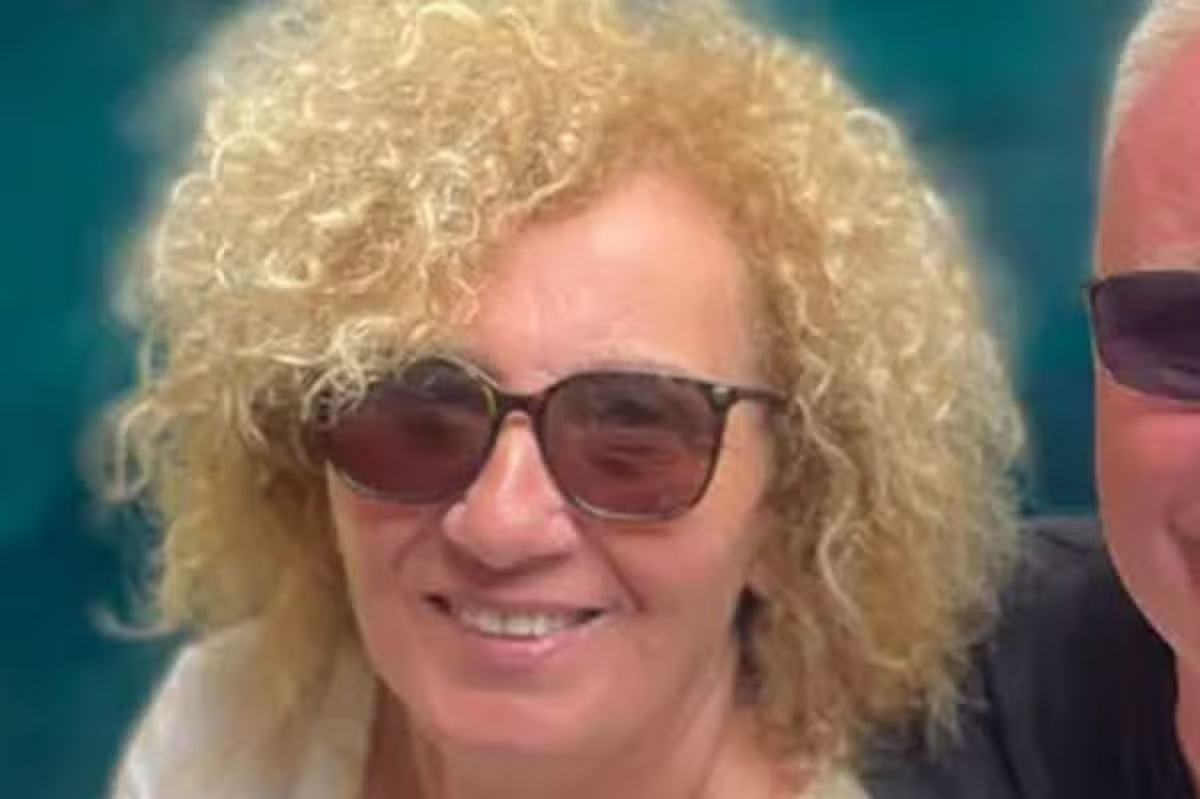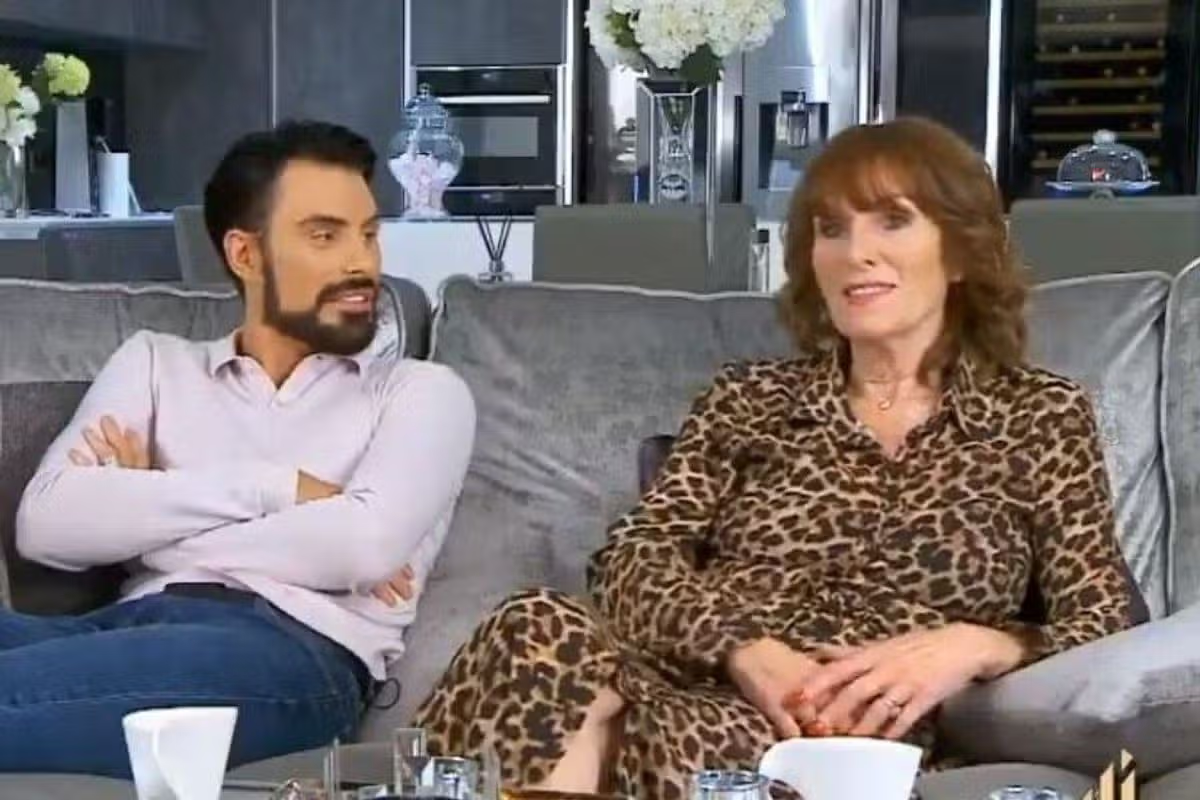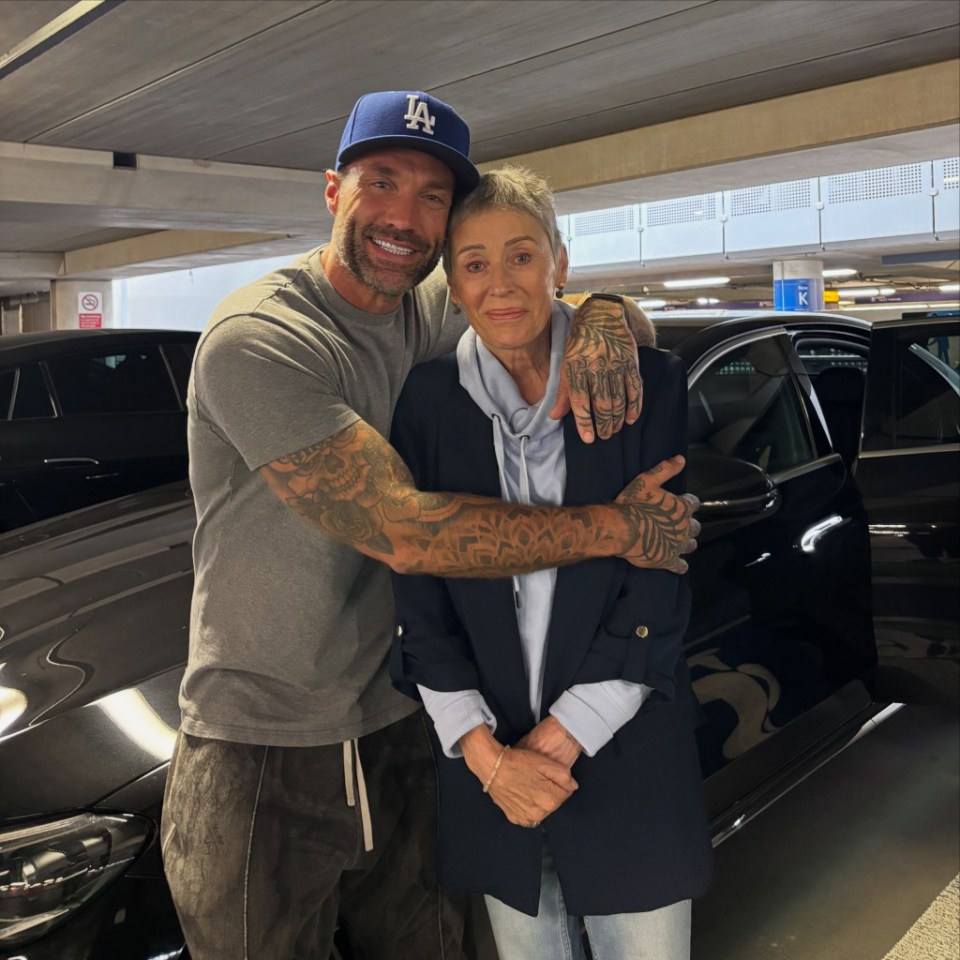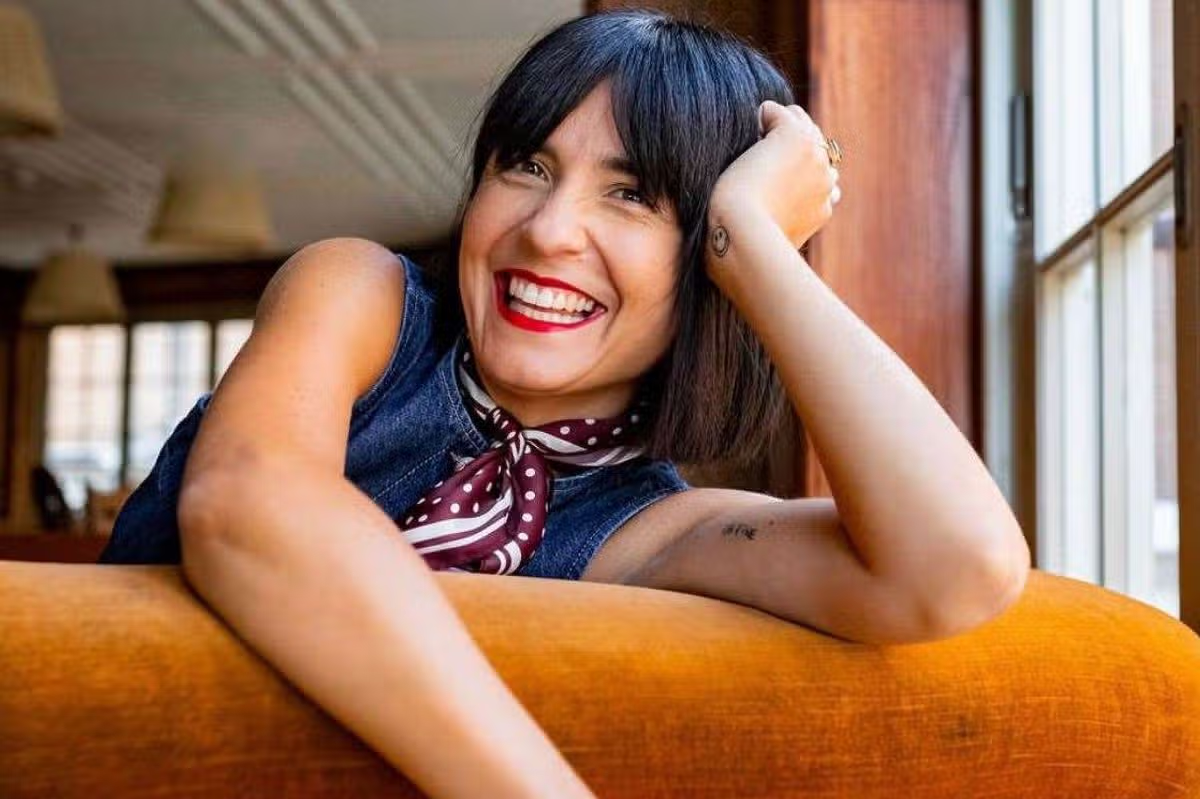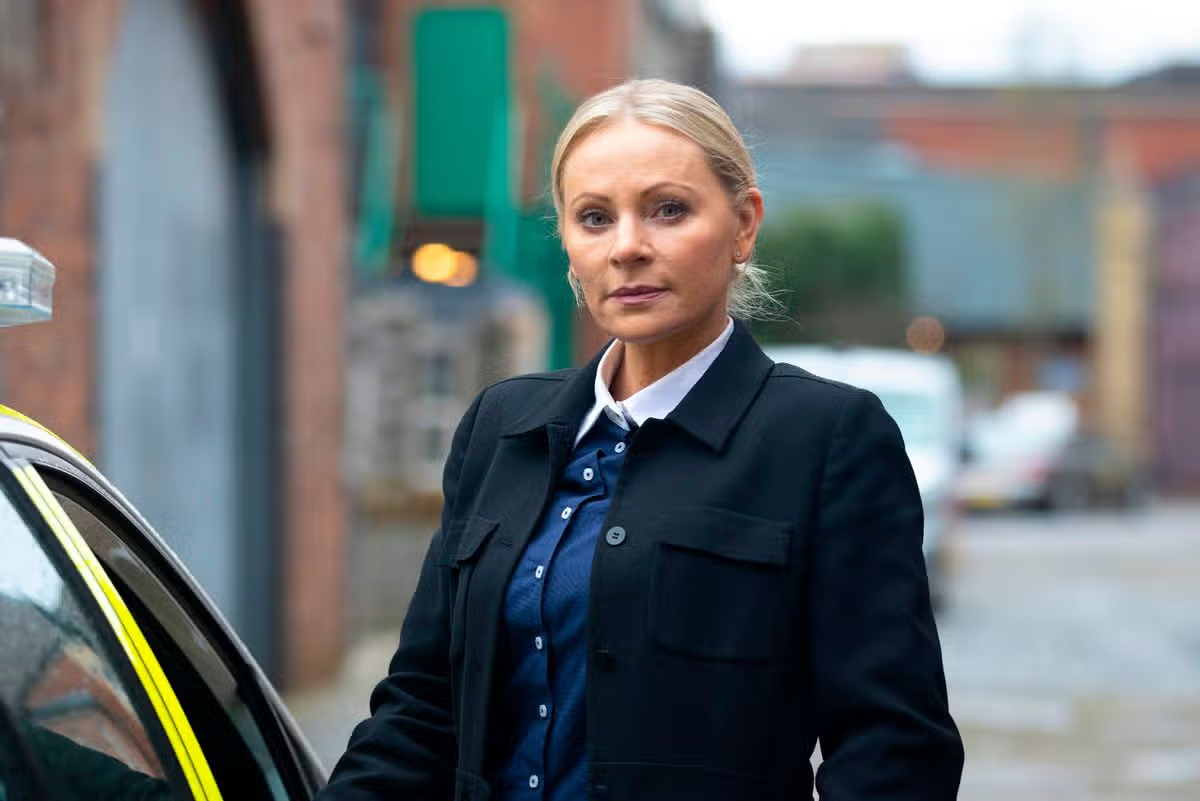
EXCLUSIVE Coronation Street’s Lisa Connor-Swain actress Vicky Myers speaks to me about Swarla, Lisa’s backstory and how Betsy’s storyline saw her reflect on her childhood

It’s been five years since Vicky Myers took on the guest role of Coronation Street detective Lisa Connor-Swain(Image: ITV)
It’s been five years since Vicky Myers took on the guest role of Coronation Street detective Lisa Connor-Swain.
But a planned four-episode stint turned into the job of a lifetime for the actress, who has no plans to leave the famous Cobbles anytime soon. As long as she challenges me, then I’ll stay forever,” Vicky, 50, tells us.
“It’s unfamiliar territory for me because of the previous roles that I’ve played. She wasn’t a character that needed to be written for, and so as time has progressed, so has she.” Very little was planned for the character before she moved to Weatherfield full-time in 2024.
Since then, fans have seen Lisa at the centre of huge storylines, including her ex-wife Becky Swain faking her death, and Lisa’s teenaged daughter Betsy suffering a stroke, as a result of non-fatal strangulation.
Happier times have seen Lisa’s wedding to factory boss Carla Connor [Alison King], with Swarla, as they are known by adoring soap fans, being the first lesbian couple to marry on the soap. Vicky is thrilled to represent so many people with her character.
“There are so many women who can relate to what Lisa’s been through,” she says. “Also women that are in what used to be a male-dominated profession. For fans to be so loyal and to support Lisa and Carla, I think that’s a testament to how much these two have been needed by viewers. As is with all representation and visibility, it’s very much needed.”
Vicky hopes her latest storyline, which sees Lisa caring for her daughter Betsy [Sydney Martin] who is recovering from a stroke, will shine a light on accessibility issues. As Betsy faces challenges in her rehabilitation, Vicky says she’s reminded of her own experiences, growing up with her brother, Fran, who has cerebral palsy.
“I can relate to my mum,” she tells us. “She was a working mum, but in particular, when my brother was young and with his disability, she had to fight for everything. I watched her, and only as an adult now, and as a mother myself, I realise just how hard she had to fight.
“I’m in awe of her. She still continues, and she’s in her early 70s, but she has this drive and determination that seems endless. And even through exhaustion, she still pushes on, because she has to.”
Reflecting on the challenges faced by her brother Fran, who was born at 28 weeks, Vicky adds: “Looking back, I was a young child, but I remember seeing how she was relentless in her pursuit for accessibility, for understanding, for support, and also so determined that he was going to live as mainstream a life as she could possibly provide for him, her and my dad.
“It was a different generation, my dad worked all hours, we grew up in a pub, and they grafted really hard. I watched my mum, fight to get my brother into a mainstream primary school, they didn’t have accessibility like they have now, it was extremely poor.
“She’s a wonderful woman who I respect massively, and I admire. Lisa moving Betsy’s wheelchair around on set and things, I really wanted to make a point of how cumbersome it can be, but these are necessities, these are how people can navigate life.”
Vicky is grateful for the huge support she and her character have had during her time on the cobbles. Something else she’s grateful for is turning 50 earlier this year, with her sure it will be her “best decade yet”.
“I think as I’ve got older, a lot of my views have changed and I’m a lot calmer. 50 is the best! A lot of things happened in my 40s which were brilliant, but I have this thought process of don’t trip over something that you left behind.
“Take each day as it comes and embrace it, because you never know what’s around the corner. Treat every day as if it’s your last, and just go for it! I’m glad I’m not living my 20s and 30s now. I really wouldn’t like it.
“When I was growing up, we had the 80s, the music, the era, the times, there was freedom. There wasn’t always the thought process of getting my phone out. We were living in the moment, and there’s a real beauty in that.”
As for Lisa’s past, Vicky hopes it’s something the soap will explore. She shares: “I think it will be interesting to explore her family backstory, and why she’s not in touch with any of them. What happened to her as a child, what’s her story, and what was her journey with her sexuality?
“When did she realise that she was queer? All of these things intrigue me with her. I’ve got my ideas. I’ve sort of built things up, but they all need to align together with the storylines. Lisa’s a bit of an enigma. We don’t know everything about her.
“There are things that I know. She’s had a past, we’ve all had a past. Not everybody gets her, not everybody likes her. I’m not sure if I’d want to play somebody that everybody likes, and Lisa’s a challenge for me to play.”
Coronation Street airs weeknights at 8:30pm on ITV1 and ITV X. * Follow Mirror Celebs and TV on TikTok, Snapchat , Instagram , Twitter , Facebook , YouTube and Threads.