Motorsports

The CFOs of Summer | Global Finance Magazine

For these CFOs, summer is where the year is won or lost.

This article appears in the July/August issue of Global Finance Magazine.

Every spring, airlines, cruise lines, travel booking platforms, golf tour operators, race promoters and other seasonal businesses begin trying to answer the question that will define much of their year: How is summer shaping up? For their CFOs, a few months of peak demand often determine whether the entire year meets expectations.

This year, the early signals have been broadly encouraging. Despite conflict in the Middle East that rattled European and Asian bookings, travel advisories in Mexico, and lingering concerns about consumer sentiment, many travel companies reported strong demand. Europe’s TUI Group reported its best-ever first half, with 7.9 million summer bookings already in place, while Expedia posted its highest first-quarter EBITDA margin in 15 years.

But the stakes remain unusually high because many of these businesses generate a disproportionate share of their annual revenue in a relatively short window. Whether they operate airlines, racetracks, or golf tours, their finance chiefs spend months forecasting demand, managing labor and capital, and preparing for risks—from weather disruptions to geopolitical shocks—that could derail the season.

The Aviation CFO: Gauging Bad Weather

Max Mertz,
Alaska Seaplanes

Today, by contrast, consumers want to travel, and the booking window is holding steady. That signal is especially important to the CFOs at companies whose fortunes depend on summer travel. 

Max Mertz is CFO and co-owner of Alaska Seaplanes, which operates a fleet of 20 aircraft based in Juneau and serves communities throughout southeast Alaska. Summer brings millions of visitors to the state, many seeking flights over glaciers, bear safaris, and trips to remote fishing lodges. 

“June, July, August, and then, if you add the shoulder season, which starts around mid-May and lasts until about a week after Labor Day, account for two-thirds of our revenue. It’s critical, honestly,” Mertz says.

Bookings at his company’s tourism subsidiary arrive months in advance, enabling year-over-year comparisons. Fishing lodges commit capacity based on their own guest projections. Strong retail sales and corporate bonus cycles in the Lower 48 states translate into lodge demand. Construction projects and gold and silver mines in remote communities create predictable demand for cargo and charters.

The seasonal concentration is all about costs. 

“Aviation is a high fixed-cost industry,” Mertz says. “On a per-flight, per-unit basis, obviously the higher your volume, the more you cover fixed costs, so you’re making a good chunk of your bottom line as well.”

What makes Alaska Seaplanes unusual — even among seasonal businesses — is the extent to which weather inserts an uncontrollable financial variable. Anyone who has flown in Alaska knows how its dense cloud layer and mist can quickly form, grounding aircraft for days. Mertz has invested in reliability. Alaska Seaplanes has spent multiple seven-figure sums on specialized navigation systems that increase aircraft safety and reliability.

No Do-Overs: Running Racetracks

Weather also matters to Mike Morrisey. As CFO of Green Savoree Racing Promotions for the past 31 seasons, he oversees four motorsports race properties: Mid-Ohio; a newly built circuit in Markham, Ontario; St. Petersburg, Florida; and Portland, Oregon. “The summer is where you make your revenue,” he says.

Often, a big race weekend is a single 72-hour window when gate revenue, hospitality, suites, sponsorships, and concessions converge. There is no making it up later. 

“When the checkered flag drops, we have crews out there tearing it all down” at the temporary street racing circuits, Morrisey says. 

The leading indicators he watches for signs of summer success are ticket renewals and suite sales. The next forecasting cycle begins almost immediately after the prior season ends. 

“We typically launch ticket renewals in the fall for the following year,” Morrisey says. “St. Pete tickets go on sale in mid-September, and Mid-Ohio in mid- to late October.” Suite customers are approached for renewal while the race is still being torn down. 

The logistics of motorsports racing would likely surprise CFOs in other industries. Green Savoree owns roughly $4 million in portable grandstands and suite infrastructure. These aluminum structures sit in a St. Petersburg warehouse between events, are loaded onto about 40 trucks after the Florida race, and are shipped to Canada for use in Markham. The company operates with fewer than 50 full-time employees year-round, a number that swells to about 270 during the peak summer season. 

Golf’s Stark Scheduling Problem

Gordon Dalgleish co-founded Perry Golf in 1984 and remains president of the luxury golf travel company he and his brother built around the British Isles. The company is now majority-owned by private equity investors. His seasonal challenge is stark: He sells access to some of the world’s most coveted golf inventory in a region that is closed for business for roughly half the year.

“It is very seasonal, and it doesn’t matter what you do,” says Dalgleish. “You cannot sell golf trips for November. It gets dark and rainy.”

The business operates at near-full capacity during the peak season and near-zero outside it; the peak season runs from late April to early October. St. Andrews, which Dalgleish calls the engine that “drives the bus” for the entire Scottish golf hospitality industry, closes for three weeks in September and early October for the Royal and Ancient Golf Club’s autumn meeting and the Dunhill Links Championship. When St. Andrews closes, the broader market goes quiet. 

Booking lead time has changed dramatically, reshaping Perry Golf’s forecasting model. 

Pre-Covid, Dalgleish saw a fairly predictable 12-month booking cycle. Inquiries would begin in July for the following summer, slow through the holidays, and ramp back up in January and February, giving him a clear picture of the season by late February. Today, he sees inquiries for July 2028 arriving in spring 2026. By this Christmas, he expects to have 40% to 50% of next summer’s bookings in hand. 

One possible driver of this shift is affluent Americans, a key customer segment, who have reoriented their spending toward experiences rather than assets and who plan farther in advance to secure exactly what they want. However, the supply of premium Scottish golf inventory has barely grown. 

“There are 25 courses that are on everyone’s must-play list in Scotland,” Dalgleish notes. Demand is running ahead of last year’s pace, and father-son trips are booking at high volumes. “There’s an affluence slushing around in golf just now.”

The Franchise Model Meets the Heat Wave

Josh Greear,
Authority Brands

Josh Greear models a different kind of seasonal pressure. As CFO of Maryland-based Authority Brands, which derives over 90% of its revenue and more than $2 billion in annual system sales from 15 home services franchise brands, he manages seasonal concentration across a portfolio of businesses, each facing different summer inflection points.

“Summer’s always been important to Authority Brands,” Greear says. Its America’s Swimming Pools franchise business faces heavy warm-weather demand. Consumers tend to seek the services of its Mosquito Squad brand as critters emerge in warm weather. One Hour Heating & Air is driven by heat waves, not the calendar. Figuring out when to hire is tricky.

“The hardest time to manage labor is on the shoulder of the seasons, when you’re seeing the largest change,” Greear observes. In a business like One Hour Heating and Air, if temperatures spike sharply and you’re not prepared, you miss the demand and usually have no easy way to make it up. Conversely, if you’ve overstaffed in anticipation of early summer, profitability erodes.

To better manage risk, Greear says Authority Brands has invested in large-language-model-driven forecasting that integrates local weather trends, historical demand patterns, and brand-specific variables at the ZIP code level. The business now uses multivariate models that ingest large datasets and distill them into actionable insights for specific locations. For summer 2026, Greear flagged a milder-than-typical start to the season in many parts of the US, which will affect the timing of demand for weather-sensitive brands.

Greear measures success by revenue, share gains, and franchisee health: “If we’re taking share, our customers are happy, and, most importantly, our franchise owners are healthy, then our business is in a very stable, long-term strong position.”

Another way to manage seasonal risk, however, is to diversify: in this case, by owning businesses that operate year-round, collectively if not individually.

California-based Youth Enrichment Brands traces its roots to summer camp and has spread that model across 12 months; its portfolio now includes US Sports Camps, i9 Sports, and School of Rock, which together smooth the seasonal curve. 

“As of 2025, less than 20% of our systemwide sales are derived from summer-based activities alone,” says Dustin Bertram, CFO. Winter programs, year-round leagues, and music instruction have broadened the revenue base. “The platforms that win will be those that remain focused on the customer experience, maintain diversified offerings, exercise disciplined cost control, and invest in evolving their programs.”

3 CFOs’ Offseason Work

As October arrives in Juneau, Alaska, rain socks in, cold air takes hold, and days grow short, but hibernation is the last thing on Max Mertz’s mind.

The CFO of Alaska Seaplanes leads a post-mortem of the mid-May to early September season: what worked and what didn’t. He dissects the summer’s financial results and builds budgets for the year ahead. He maps out fleet and capital needs and evaluates staffing levels against forecasts from fishing lodges and gold and silver mines, which are major users of Alaska Seaplanes in the summer.

The planning runs from October until it’s set by March or April. In between planning for the next summer, it’s party season — one for each major unit, always well attended, according to Mertz.

In the fall, Chris Scheer, CFO of KOA, which operates a network of 500 campgrounds across North America, evaluates the compressed summer window, during which he must execute flawlessly on pricing, operations, and the guest experience, because the period accounts for about half of KOA’s total annual revenues. That means during the off-season, he focuses on strategic planning for cash flow, rate setting, staffing, and capital expenditures.

In Indianapolis, Green Savoree Racing Promotions CFO Mike Morrisey spends his autumns calculating costs and securing funding for capital upgrades—such as replacing grandstands and revamping hospitality suites. Ticket renewals go out before Thanksgiving, and Morrisey watches how quickly they come in because the fans who’ll fill those grandstands are also the ones driving his financial projections.

Weld Royal is a contributing writer based in the U.S.

Source link

Lando Norris wins Hungarian Grand Prix for first F1 triumph in 2026 | Motorsports News

Defending champion Norris wins his first race of the year as Verstappen finishes second and leader Antonelli is third.

Lando Norris has ended an eight-month wait for a Formula One victory with strong pace and a dose of good fortune to win the Hungarian Grand Prix on Sunday.

McLaren’s defending champion finished ahead of Max Verstappen in Red Bull and teenage sensation Kimi Antonelli at the Hungaroring circuit in Budapest on Sunday.

Norris was on pole but lost the lead to his McLaren teammate Oscar Piastri when he ran wide at the second corner, before reclaiming the lead after Piastri was delayed by a collision with Carlos Sainz Jr during a lap.

This allowed Norris to come out of the pits ahead of his teammate and cruise to a win.

“The car was unbelievable today, well done guys, incredible. We were flying,” Norris said. “Nice to finally be able to do it all for you. Feels like it’s been a while.”

Piastri then stopped with a broken gearbox, paving the way for Verstappen to take second, with Antonelli third.

Antonelli increased his standings lead, with title rival Lewis Hamilton finishing fifth after a penalty for speeding in the pits and George Russell seventh after a near-stall at the start.

Norris hadn’t won a full Grand Prix race since Sao Paulo in November, though he did win a sprint in Miami in May.

Hungary was the last race before the mid-season break. The next race is the Dutch Grand Prix on August 23.

Formula One F1 - Hungarian Grand Prix - Hungaroring, Budapest, Hungary - July 26, 2026 McLaren's Oscar Piastri, McLaren's Lando Norris, Red Bull's Isack Hadjar, Red Bull's Max Verstappen and Ferrari's Lewis Hamilton in action during the race REUTERS/Bernadett Szabo
McLaren’s Oscar Piastri, McLaren’s Lando Norris, Red Bull’s Isack Hadjar, Red Bull’s Max Verstappen and Ferrari’s Lewis Hamilton in action during the race [Bernadett Szabo/Reuters]

Source link

F1 needs better balance between business and sport, says Norris | Motorsports News

Lando Norris speaks up ahead of Hungarian Grand Prix with drivers feeling new regulations have cramped their speed.

Formula One has been driven too much by business decisions and needs to remember it is a sport, according to McLaren’s world champion Lando Norris.

With drivers chafing ⁠at new regulations that have cramped their speed, particularly at last weekend’s Belgian Grand Prix, the Briton told reporters ahead of Sunday’s Hungarian round that Formula One could do better.

Recommended Stories

list of 4 itemsend of list

“It’s a business,” said the Briton. “Everyone wants to make money, so in order for Audi ⁠and other teams to come in we had to change these things. It’s a shame. It should never have been like that. But that’s how businesses work.”

Audi have entered the sport this season after taking over Swiss-based Sauber, with the German carmaker encouraged by new rules that have increased the electrical element of the power unit to near-parity with the internal combustion engine. The rules have been ‌tweaked for 2027 to reduce the electrical contribution.

“Formula One will always be great,” said Norris, whose car has a Mercedes engine. “It can just be better.

“Us as drivers just know it better than everyone else. The thing that’s a shame is that Formula One is too heavily led by the fact it’s a business nowadays and not how can you make the sport the best possible. It’s ‘how can you just make the most money as a business?’

“And that’s just not what it should simply be. That’s not how a sport should be run. The fact we have hybrids, 50-50 and all that, that’s just because ⁠more teams wanted to come in it and because you make more money.”

Norris said the ⁠Liberty Media-owned sport was also divided between fans who followed Formula One before the arrival of the popular Netflix docu-series “Drive to Survive” and those who have been drawn to it since.

“I think the fans you have nowadays, because they’re a lot more personality-based … and not simply of Formula One as a whole ⁠sport, I think there’s less interest in basically how the actual race goes, and more just ‘has the driver done well or not?’” he added.

“I think that’s just how the fans have changed over ⁠time, and that’s completely fine. But the biggest voice should always be ours ⁠as drivers … We have the best idea of how racing should be, how it can be, what’s possible, what’s not.

“We would just want the best for everything, the best for the fans, the best viewing, the best racing for us, the most fun to drive. And at the minute, we don’t … we have very, very ‌little say, and a lot more of it’s done because if you can have Audi and other teams in it, it’s a bigger win than the drivers being happy.”

A Formula One spokesman responded to Norris’s comments by saying drivers were listened to more ‌than ‌ever.

“The sport on track is, and always will be, the priority,” he said. “Everyone has benefitted from the commercial success of Formula One, the drivers included. Decisions are made for the best strategic outcome for everyone: the fans, teams and partners.”

Norris was ⁠fastest in final ⁠practice for the Hungarian Grand Prix on Saturday.

Last year’s race winner lapped the Hungaroring circuit with ⁠a best time of 1:17.939, 0.117 seconds quicker than Ferrari’s Lewis Hamilton.

Formula One championship leader Kimi ⁠Antonelli was third fastest, 0.129 seconds off the pace and ahead of Ferrari’s Charles Leclerc, McLaren’s Oscar Piastri and Mercedes teammate George Russell.

Red Bull’s Max Verstappen was seventh on the timesheets, ‌with teammate Isack Hadjar eighth but 1.004 off the pace.

Source link

Kimi Antonelli wins Belgian Grand Prix to extend F1 championship lead | Motorsports News

Mercedes driver won his sixth GP of 2026 as championship rival and teammate George Russell crashes out on first lap.

Kimi Antonelli won the Belgian Grand Prix for Mercedes on Sunday to stretch his Formula One lead to 45 points over Ferrari’s Lewis Hamilton on a bleak day for teammate George Russell, his closest title rival heading into the race.

Russell had been the 19-year-old Italian’s closest rival before the start at Spa-Francorchamps, but the Briton spun off into the gravel on the opening lap after a collision with Hamilton while trying to make up places lost at lights out.

Recommended Stories

list of 4 itemsend of list

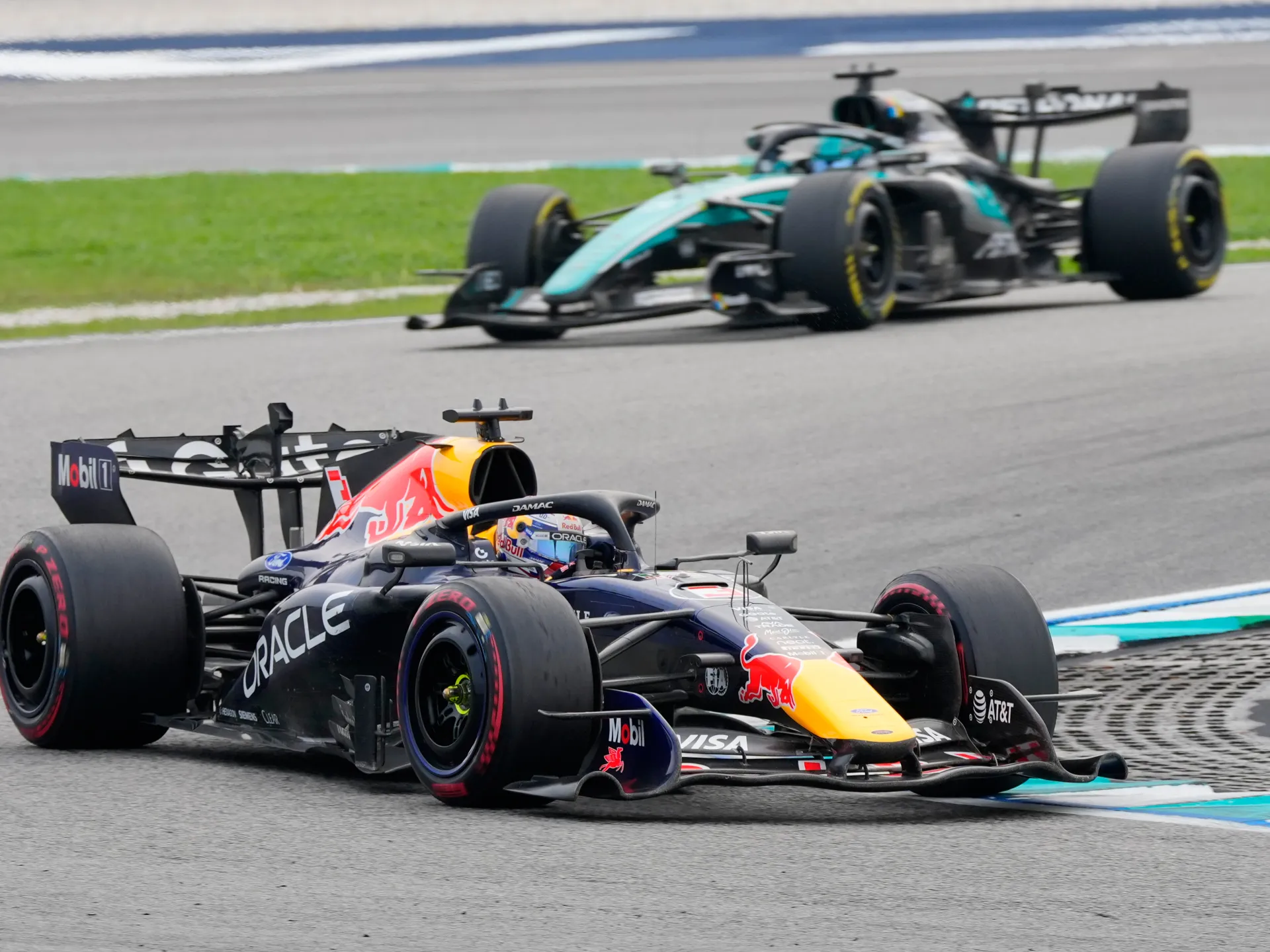
Ferrari’s Charles Leclerc was second in the 44-lap race, 1.952 seconds behind after leading, thanks to a pit stop while a virtual safety car was deployed, with Max Verstappen third to give Red Bull their 300th Formula One podium.

Hamilton finished fourth, despite serving a five-second penalty for the collision with Russell, but remained under investigation for an unsafe release from a pit stop that could drop him to fifth and further stretch Antonelli’s lead.

Mercedes’ Kimi Antonelli leads Red Bull Racing’s Max Verstappen at the beginning of the Belgian Grand Prix
Mercedes’ Kimi Antonelli leads Red Bull Racing’s Max Verstappen at the beginning of the Belgian Grand Prix [Sarah Meyssonnier/POOL via AFP]

It was Antonelli’s sixth win in 10 rounds this season, leaving him 50 points clear of Russell. Antonelli was first in qualifying, continuing Mercedes’ clean sweep of pole positions this season.

“It’s great to be back on the top step after a few difficult rounds,” said Antonelli, who had drawn a blank in two of the past three rounds.

“It was a hard-fought race. We lost first place with the VSC but then we managed to make our way back.

“The momentum was always there. It was just about getting the results,” he added. “Today we were a bit lucky with what happened in terms of the championship but you have to take every opportunity because we saw how much it can swing.”

McLaren’s Oscar Piastri finished fifth, with Isack Hadjar sixth for Red Bull from last on the grid. Reigning champion Lando Norris was seventh for McLaren after starting 13th due to a 10-place grid drop.

Gabriel Bortoleto brought more points for Audi in eighth place, with Arvid Lindblad ninth for Racing Bulls and Argentine Franco Colapinto completing the scoring in 10th place for Renault-owned Alpine.

Source link

Russell beats Verstappen at Austrian Grand Prix to boost F1 title hopes | Motorsports News

George Russell’s victory over Max Verstappen further reduces teammate Kimi Antonelli’s lead in the drivers’ title race.

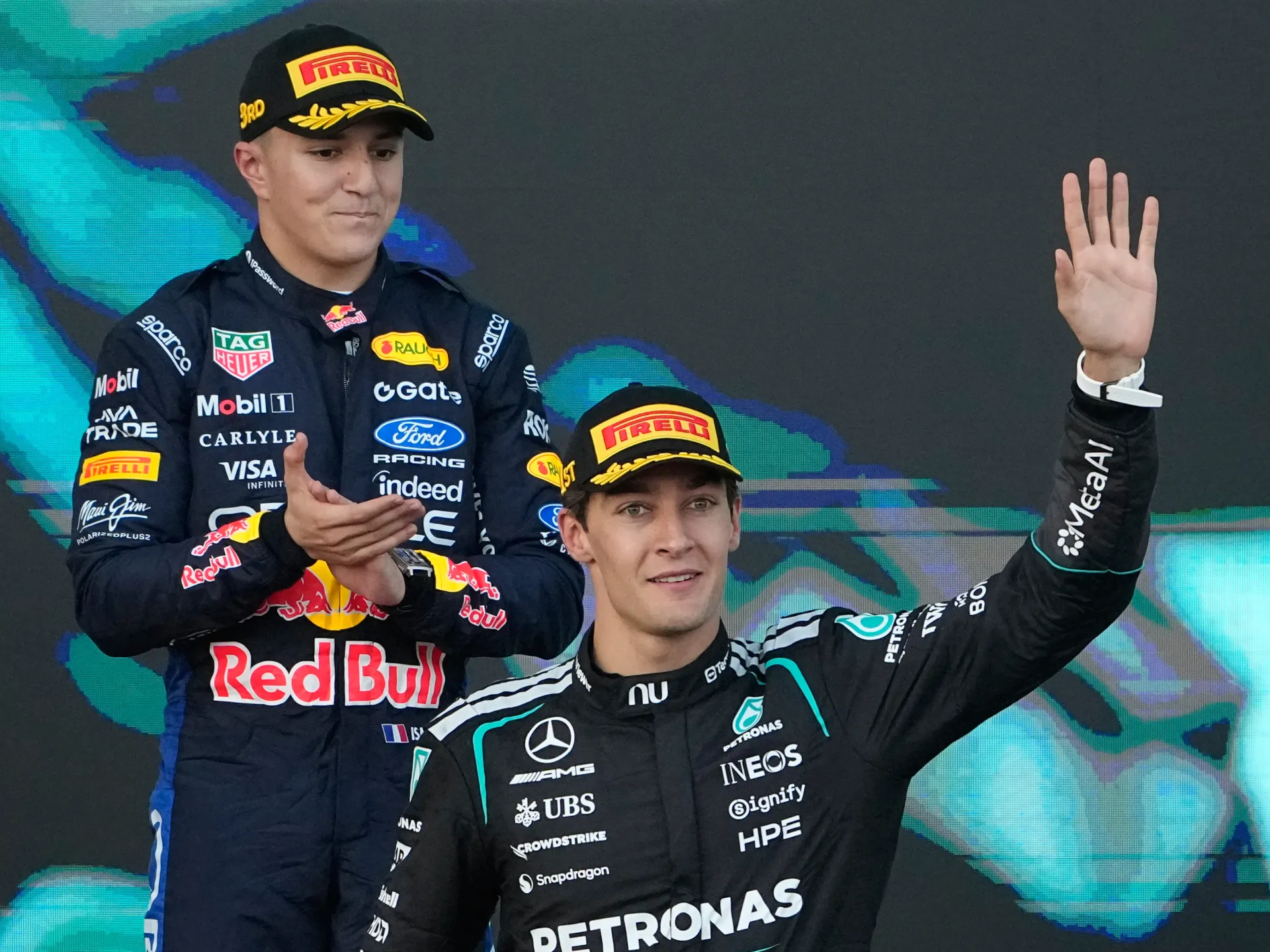
A thirsty George Russell won the Austrian Grand Prix from pole position on Sunday to trim Mercedes teammate Kimi Antonelli’s Formula One championship lead to 40 points.

Max Verstappen finished 1.6 seconds adrift, after crashing in qualifying and starting fifth, at his Red Bull team’s home circuit with Antonelli third and 0.3 behind after a thrilling chase to the line at scenic Spielberg.

Recommended Stories

list of 4 itemsend of list

The win was Russell’s second of the season, after he took the opener in Australia, his career seventh and Mercedes’ seventh in eight rounds so far.

Antonelli has 171 points to Russell’s 131 with Ferrari’s Lewis Hamilton, fifth on Sunday after running second and battling Verstappen wheel-to-wheel, dropping to third on 125.

In the constructors’ standings, Mercedes have 302 points to Ferrari’s 204.

“Incredible to be back on the top step. It’s been a little while, so I am definitely going to enjoy this one this evening,” said Russell, who can now head to his home British GP at Silverstone next weekend on a high.

He revealed over the radio after taking the chequered flag that his drinks system had failed during the race, the first of the season to be declared a “heat hazard”. “Nice race for it to do so, I’m a little bit thirsty,” he said.

Oscar Piastri was fourth for McLaren, ahead of Hamilton, with Isack Hadjar sixth for Red Bull.

Reigning champion Lando Norris, last year’s winner in Austria, was seventh with Ferrari’s Charles Leclerc eighth and Racing Bulls pair Liam Lawson and rookie Arvid Lindblad completing the top 10.

“I was having to push every single lap and when you push those boundaries there’s bound to be a small mistake or two,” said Russell.

“I knew how quick the guys were behind. Kimi has been extraordinarily quick this whole season, so every lap I was looking at the timing board.”

George Russell in action.
Russell wins the Austrian Grand Prix at the Red Bull Ring in Spielberg, June 28 [Darko Bandic/Pool via AFP]

Source link

Kimi Antonelli wins delayed Monaco Grand Prix to extend F1 lead | Motorsports News

Antonelli takes his fifth Grand Prix win in a row in race interrupted by crashes after asphalt breaks apart.

Formula One championship leader Kimi Antonelli stayed ice-cool to ⁠win a ⁠chaotic Monaco Grand Prix and extend his run of victories this season to five.

The 19-year-old Italian built a ⁠commanding lead on Sunday after starting from pole in his Mercedes but that evaporated after a late red flag to inspect a crumbling ⁠surface at the final corner following a crash that took out Ferrari’s Charles Leclerc.

Recommended Stories

list of 4 itemsend of list

After a delay of about 40 minutes while repairs were carried out, the race resumed with a standing start but Antonelli remained unfazed ‌as he became the youngest-ever winner of the iconic race.

Ferrari’s Lewis Hamilton was runner-up for the second successive Grand Prix with Red Bull’s Isack Hadjar provisionally third, although he was one of a number of drivers under investigation for a variety of infringements.

Hamilton, who equalled the late Ayrton Senna’s eight Monaco podiums, ⁠moved above Antonelli’s teammate George Russell into ⁠second place in the standings, 66 points behind Antonelli.

“It’s been an incredible weekend and an incredible race,” said Antonelli, who was not even born the last time an ⁠Italian won the Monaco Grand Prix – Jarno Trulli in 2004.

“We had incredible pace and it all ⁠came so natural and that gave me ⁠the confidence to push.”

A year after finishing last on his F1 debut at Monaco, Antonelli showed incredible poise to shrug off the red flag drama that meant he effectively ‌had to win two races.

“I wasn’t super keen on re-starting but once the notification came out I just gathered my emotions and ‌re-focused ‌again. Once I got away and was P1 into the first corner I could enjoy the last few laps.”

Source link

Teenager Antonelli snatches Monaco pole with ‘magic lap’ for Mercedes | Motorsports

Formula One racing sensation Kimi Antonelli made a mockery of suggestions that the Monaco Grand ⁠⁠Prix would stall his incredible start ⁠⁠to the season by producing a stunning qualifying lap to stick his Mercedes on pole position.

The qualifying battle lived up to expectations, with provisional pole changing hands several times before the 19-year-old championship leader snatched it with his ⁠⁠final lap on Saturday.

Recommended Stories

list of 4 itemsend of list

He edged out Red Bull’s Max Verstappen by 0.043 seconds to become the first Italian since Jarno Trulli in 2004 to take pole position in the principality.

“It was one of those laps that we call a magic lap. I was able to put it all together. It was such a close ⁠⁠qualifying with Max,” Antonelli, who clocked 1:12.051 (1 minute and 12.051 seconds) to claim his fourth pole in six races this season, said.

“I knew the last lap was good; I was just hoping that it would be enough, but it was very close.”

Antonelli is the youngest driver to lead the championship, having won the last four races, but the unique nature of Monaco’s twisting circuit, full of slow corners, was supposed to take away the Mercedes power advantage.

Ferrari pair on second row

Ferrari have been strongly tipped as ‌‌race favourites but had to be content with the second row on Sunday’s grid, with Lewis Hamilton third quickest, 0.228 seconds slower, and local favourite Charles Leclerc, winner of the race in 2024, fourth.

Leclerc had been on provisional pole with time running out in Q3 – the third and final session of qualifying – but clipped the wall on his final lap as he tried to wrestle it back, stopping his car at Rascasse.

Ferrari dominated Friday’s two practice sessions, with Hamilton and Leclerc first and second in both, although Antonelli was quickest in Saturday’s final practice.

“Congrats to Kimi. Mega, mega job. Having your first pole here is so special,” three-time Monaco champion Hamilton, who is yet to win a race for Ferrari, said.

“It was tough for us. We were looking so strong in practice, and ⁠⁠we barely changed anything, but the car was drastically different once we got to qualifying for some reason.”

Isack Hadjar, in ⁠⁠the second Oracle Red Bull, bounced back from a nasty crash in Friday practice to qualify fifth, with Antonelli’s teammate George Russell, who trails him by 43 points in the standings, a disappointing sixth.

Reigning world champion and last year’s Monaco winner Lando Norris will be on the fourth row alongside fellow McLaren driver Oscar Piastri, with the team’s hopes of victory in ⁠⁠their 1,000th Grand Prix now looking slender.

MONTE-CARLO, MONACO - JUNE 06: Pole position qualifier Andrea Kimi Antonelli of Italy and Mercedes AMG Petronas F1 Team Second placed qualifier Max Verstappen of the Netherlands and Oracle Red Bull Racing and Third placed qualifier Lewis Hamilton of Great Britain and Scuderia Ferrari look on during qualifying ahead of the F1 Grand Prix of Monaco at Circuit de Monaco on June 06, 2026 in Monte-Carlo, Monaco. (Photo by Rudy Carezzevoli/Getty Images)
Antonelli, Verstappen and Hamilton after the qualifying round for Monaco GP [Rudy Carezzevoli/Getty Images]

‘The walls start coming closer’

Antonelli finished 18th and last at the Monaco Grand Prix 12 months ago, and he was expected to feel the pressure of leading the standings on his return.

But he ⁠⁠now has a golden chance to continue his dream start to the season by emulating Trulli, ⁠⁠who converted his pole into a victory in his Renault in 2004.

“I think this is one of the most intensive, if not the most intense, qualifying sessions of the year, and it takes a massive effort,” he said. “When it is about finding the last two tenths, it is not easy because the walls start coming closer.

“But I felt great this morning, and I am happy that we ‌‌could finish the job today.”

Of the last 22 Monaco Grands Prix, only six have been won by a driver who did not start on pole, such is the extreme difficulty of overtaking on the narrow, twisty circuit that snakes round the stunning Mediterranean playground.

The last three editions have all been won by the ‌‌top ‌‌driver in qualifying, but Hamilton did win from third on the grid in 2016, and with Verstappen showing great speed here this year, Antonelli will be taking nothing for granted.

“If you would have told me yesterday I would be on the front row, I would have taken it,” Verstappen said.

Source link