Article content
The company’s annual disclosure unveils its Value Plan 2030+

Article content
The company’s annual disclosure unveils its Value Plan 2030+

THIS CONTENT IS RESERVED FOR SUBSCRIBERS ONLY
Subscribe now to read the latest news in your city and across Canada.
SUBSCRIBE TO UNLOCK MORE ARTICLES
Subscribe now to read the latest news in your city and across Canada.
REGISTER / SIGN IN TO UNLOCK MORE ARTICLES
Create an account or sign in to continue with your reading experience.
THIS ARTICLE IS FREE TO READ REGISTER TO UNLOCK.
Create an account or sign in to continue with your reading experience.
or
Article content
STAMFORD, CT — Philip Morris International (NYSE: PM) today released its Value Report 2025, offering a holistic perspective on the company’s approach to sustainable value creation. The report marks the completion of PMI’s 2025 Roadmap, communicating achievements for each aspiration introduced by the company in 2020, and introduces its Value Plan 2030+, set to guide the company’s continued path to sustainable growth.
Article content
Article content
Article content
“
Article content

Top Stories
Get the latest headlines, breaking news and columns.
By signing up you consent to receive the above newsletter from Postmedia Network Inc.
Thanks for signing up!
A welcome email is on its way. If you don’t see it, please check your junk folder.
The next issue of Top Stories will soon be in your inbox.
We encountered an issue signing you up. Please try again
Article content
For more than a decade, PMI has pursued an industry-leading shift away from cigarettes—a transformation that goes far beyond product innovation to encompass how we allocate capital, engage stakeholders, and measure success
Article content
,” said Jacek Olczak, Group Chief Executive Officer.
Article content
“‘change in motion’ captures the reality that transformation is not a project with a defined end date, it is the continuous work of improvement, innovation, and adaptation that keeps us relevant and resilient. We transform continuously because markets evolve, science advances, stakeholder expectations rise, and new opportunities emerge. This is who we are: a company perpetually in motion toward a better future, refusing to stand still even as we celebrate how far we have come
Article content
Article content
Built on the progress that PMI has made over the past decade, the report explains how the company is securing the resources, capabilities, and stakeholder trust that will sustain its business for decades to come. The sustainability of the business is PMI’s strategy; it is how it secures resources, manages risk, meets stakeholder expectations, and future-proofs a business built to deliver results today, while securing the ability to deliver tomorrow.
Article content
“
Article content
Our approach to value creation is anchored in a simple conviction: long-term financial success depends on the health of the resources and relationships that make it possible.
Article content
By investing in natural, human, social, intellectual, and manufactured capital—what we define as non-financial capitals—we strengthen the very foundations on which long-term financial success depends,
Article content
” said Emmanuel Babeau, Group Chief Financial Officer. “
Article content
This is fundamental to our growth, resilience, and identity as a forward-thinking organization.
Article content
Article content
PMI achieved meaningful progress across both product and operational impact in 2025, as it closed its 2025 Roadmap.
Article content
PMI’s Business Transformation Metrics (BTMs) have provided stakeholders with clear, comparable indicators of our progress toward a smoke-free future. These metrics go beyond traditional reporting frameworks to capture aspects unique to PMI’s change of motion. They include the following:
Article content
Article content
Article content
In addition, PMI celebrated progress on:
Article content
Article content
“We have identified six strategic priorities that reflect what matters most to our stakeholders and our business: consumers and product health impact, circularity, climate change, nature and biodiversity, our own workforce, and workers throughout our value chain, which are consolidated in our Value Plan 2030+. This plan identifies where our actions intersect most significantly with business imperatives, ensuring our initiatives drive tangible outcomes across various forms of capital, creating a strategy that is comprehensive yet focused, ambitious yet pragmatic, and deeply integrated into how we operate and grow,”
Article content
said Jennifer Motles, Chief Sustainability Officer.
Article content
“Our plan is explicit about what we control directly and what requires the action of, and partnership with others, setting a strong foundation for effective action. That is the spirit with which we present our Value Plan 2030+, as an invitation to dialogue, a platform for collaboration, and a roadmap for the next chapter: turning sustainability into lasting business value.”
Article content
PMI’s Value Plan 2030+ sets the course for the company’s next chapter—a continuation of the change in motion that has defined PMI’s evolution over the past decade. It focuses on accelerating the growth of its smoke-free product portfolio, working to make cigarettes obsolete, and exploring adjacent avenues of growth in wellness, while maintaining responsible sales and marketing practices, investing in human and natural capital, and strengthening the operational resilience that underpins long-term, sustainable value creation.

Investors remain wary, as the Wall Street Journal report came on the same day the US president threatened to destroy Iran’s key oil export hub and desalination plants unless it accepts a deal, while also suggesting that diplomacy was making progress.

The news comes as governments around the world scramble to implement measures to ease the burden of surging fuel prices while also seeking to conserve energy, with around one-fifth of global crude oil and gas passing through the waterway.
The Wall Street Journal, citing administration officials, said Trump and his aides had concluded that a mission to reopen the waterway would extend beyond his four- to six-week timeline. It added that he had decided to focus on targeting Iran’s missiles and navy, before seeking to pressure the country diplomatically to reopen the Strait.
Further fuelling concerns, a drone struck a Kuwaiti oil tanker in Dubai waters, causing a fire on Tuesday morning. Dubai authorities said the blaze had already been extinguished, but concerns about a potential oil spill remain.
Maritime traffic disruptions in the Strait of Hormuz, through which roughly a fifth of the world’s oil normally passes, remain a key pressure point for global energy supplies. US Secretary of State Marco Rubio said Trump has “options available” in response to Tehran’s threats to control the strait, after Iran was reported to have effectively created a “toll booth” there.
Both major oil benchmarks fell on Tuesday, though West Texas Intermediate and Brent crude remained well above $100 a barrel. At 7 a.m. CET, the international benchmark Brent was trading at nearly $113, while WTI crude was above $102 a barrel.
Most equity markets in Asia rose briefly, but by this point Tokyo’s Nikkei 225 was down 1.3%, South Korea’s Kospi had fallen 3.3%, Hong Kong’s Hang Seng had shed 0.5%, and the Shanghai Composite index was down 0.4%.
US futures were up between 0.6% and 0.8%.
In other early Tuesday trading, gold and silver prices rose. Gold was up 0.7% at $4,587.80 an ounce, while silver climbed 2.4% to $72.25 per ounce.
The US dollar stood at 159.61 Japanese yen, down from 159.71 yen. The euro was trading at $1.1472, up from $1.1465.


Mixed signals for Japan: Jobless rate eases to 2.6% despite retail and industrial contraction
Source link


Im Yeongsik/iStock via Getty Images
A broker for U.S. Defense Secretary Pete Hegseth sought to make a large investment in major defense firms in the lead-up to the Iran war, according to the Financial Times. The Pentagon has dismissed the report.
The FT reported Tuesday that
Earnings Call Insights: Innventure, Inc. (INV) Q4 2025
Newsletters for Every Investor
Get daily, sector-specific newsletters packed with expert insights, fresh ideas, and new opportunities.
Subscribe to Newsletters
Seeking Alpha’s Disclaimer: This article was automatically generated by an AI tool based on content available on the Seeking Alpha website, and has not been curated or reviewed by humans. Due to inherent limitations in using AI-based tools, the accuracy, completeness, or timeliness of such articles cannot be guaranteed. This article is intended for informational purposes only. Seeking Alpha does not take account of your objectives or your financial situation and does not offer any personalized investment advice. Seeking Alpha is not a licensed securities dealer, broker or US investment adviser or investment bank.

Article content
NOT FOR DISTRIBUTION TO UNITED STATES NEWSWIRE
THIS CONTENT IS RESERVED FOR SUBSCRIBERS ONLY
Subscribe now to read the latest news in your city and across Canada.
SUBSCRIBE TO UNLOCK MORE ARTICLES
Subscribe now to read the latest news in your city and across Canada.
REGISTER / SIGN IN TO UNLOCK MORE ARTICLES
Create an account or sign in to continue with your reading experience.
THIS ARTICLE IS FREE TO READ REGISTER TO UNLOCK.
Create an account or sign in to continue with your reading experience.
or
Article content
SERVICES OR FOR DISSEMINATION IN THE UNITED STATES
Article content
Article content
TORONTO — Sherritt International Corporation (“Sherritt” or the “Corporation”) (TSX:S) today announced that it has agreed with certain new and existing shareholders of the Corporation to complete a non‑brokered private placement of common shares of Sherritt (“Common Shares”) for aggregate gross proceeds of up to $50 million (collectively, the “Private Placement“). As part of the Private Placement, Seymour Schulich, through a corporation controlled by him, has agreed to subscribe for up to 68,600,000 Common Shares for aggregate gross proceeds of up to $14,406,000.
Article content
Article content
Pursuant to the Private Placement, the Corporation will issue up to 238,095,238 Common Shares from treasury at a price of $0.21 per Common Share. The Private Placement is expected to close on or about April 7, 2026, subject to customary closing conditions and the receipt of required regulatory approvals, including approval of the Toronto Stock Exchange.
Article content
Top Stories
Get the latest headlines, breaking news and columns.
By signing up you consent to receive the above newsletter from Postmedia Network Inc.
Thanks for signing up!
A welcome email is on its way. If you don’t see it, please check your junk folder.
The next issue of Top Stories will soon be in your inbox.
We encountered an issue signing you up. Please try again
Article content
The net proceeds from the Private Placement are expected to be used for general corporate purposes and to support the Corporation’s operations and strategic initiatives.
Article content
An existing shareholder of the Corporation holding approximately 13.5% of the outstanding Common Shares is expected to participate in the Private Placement. Such participation constitutes a “related party transaction” within the meaning of Multilateral Instrument 61‑101 – Protection of Minority Security Holders in Special Transactions (“MI 61‑101”). The Corporation expects to rely on exemptions from the formal valuation and minority shareholder approval requirements of MI 61‑101 on the basis that the fair market value of the securities issued to the related party does not exceed 25% of the Corporation’s market capitalization. The Private Placement will not result in a change of control of the Corporation.
Article content
The securities offered have not been, and will not be, registered under the United States Securities Act of 1933, as amended, or any U.S. state securities laws, and may not be offered or sold in the United States absent registration or an applicable exemption from the registration requirements. This news release shall not constitute an offer to sell or the solicitation of an offer to buy nor shall there be any sale of the securities in any jurisdiction in which such offer, solicitation or sale would be unlawful.
Article content
Commenting on the Private Placement, Brian Imrie, Chair of Sherritt’s board of directors (the “Board”) said, “This private placement marks a significant development for Sherritt as we continue to navigate through a challenging operating environment. We appreciate the strong support shown by both new and existing shareholders, which reflects their confidence in Sherritt’s future prospects.”
Article content
Board of Directors Update
Article content
In addition, Sherritt announces that Louise Blais has stepped down from its Board effective today, to focus on her commitments at her strategic advisory firm Blais Global.
Article content
“On behalf of the Board, I would like to thank Louise for her invaluable contributions and dedication during her tenure,” said Mr. Imrie. “Her insights and leadership have helped guide Sherritt through an important period, and we wish her continued success in her future endeavors.”
Article content
Article content
About Sherritt
Article content
Sherritt is a world leader in using hydrometallurgical processes to mine and refine nickel and cobalt – metals deemed critical for the energy transition. Leveraging its technical expertise and decades of experience in critical minerals processing, Sherritt is committed to expanding domestic refining capacity and reducing reliance on foreign sources. The Corporation operates a strategically important refinery in Alberta, Canada, recognized as the only significant cobalt refinery and one of just three nickel refineries in North America. Sherritt’s Moa Joint Venture produces cost competitive critical minerals while maintaining high sustainability standards and has an estimated mine life of approximately 25 years.
Article content
The Corporation’s Power division, through its ownership in Energas, is the largest independent energy producer in Cuba, processing domestically sourced raw natural gas to generate electricity for sale to the Cuban national electrical grid. Sherritt’s common shares are listed on the Toronto Stock Exchange under the symbol “S”.
Article content
Forward-Looking Statements
Article content
This press release contains certain forward-looking statements. Forward-looking statements can generally be identified by the use of statements that include such words as “believe”, “expect”, “anticipate”, “intend”, “plan”, “forecast”, “likely”, “may”, “will”, “could”, “should”, “suspect”, “outlook”, “potential”, “projected”, “continue” or other similar words or phrases. Specifically, forward-looking statements in this press release include, but are not limited to, statements regarding the Private Placement, including the intended use of proceeds therefrom.
Article content
Forward-looking statements are not based on historical facts, but rather on current expectations, assumptions and projections about future events, including commodity and product prices and demand; the level of liquidity and access to funding; share price volatility; production results; realized prices for production; earnings and revenues; global demand for electric vehicles and the anticipated corresponding demand for cobalt and nickel; the commercialization of certain proprietary technologies and services; advancements in environmental and greenhouse gas (GHG) reduction technology; GHG emissions reduction goals and the anticipated timing of achieving such goals, if at all; statistics and metrics relating to Environmental, Social and Governance (ESG) matters which are based on assumptions or developing standards; environmental rehabilitation provisions; environmental risks and liabilities; compliance with applicable environmental laws and regulations; risks related to the U.S. government policy toward Cuba; and certain corporate objectives, goals and plans for 2026. By their nature, forward-looking statements require the Corporation to make assumptions and are subject to inherent risks and uncertainties. There is significant risk that predictions, forecasts, conclusions or projections will not prove to be accurate, that the assumptions may not be correct and that actual results may differ materially from such predictions, forecasts, conclusions or projections.
Peabody Energy plunges after slashing Centurion mine Q1 sales outlook
Source link
Stocks to watch on Monday after market: VRDN, BSX, MTB, AL
Source link

Krispy Kreme expects big returns from its refranchising efforts
Source link

marog-pixcells
Digital asset investment products saw outflows for the first time in five weeks, recording ~$414M, with total AuM falling to ~$129B. This flip from inflows to outflows reflected growing caution among investors due to the ongoing Iran conflict, as it could lead to higher inflation, reported by
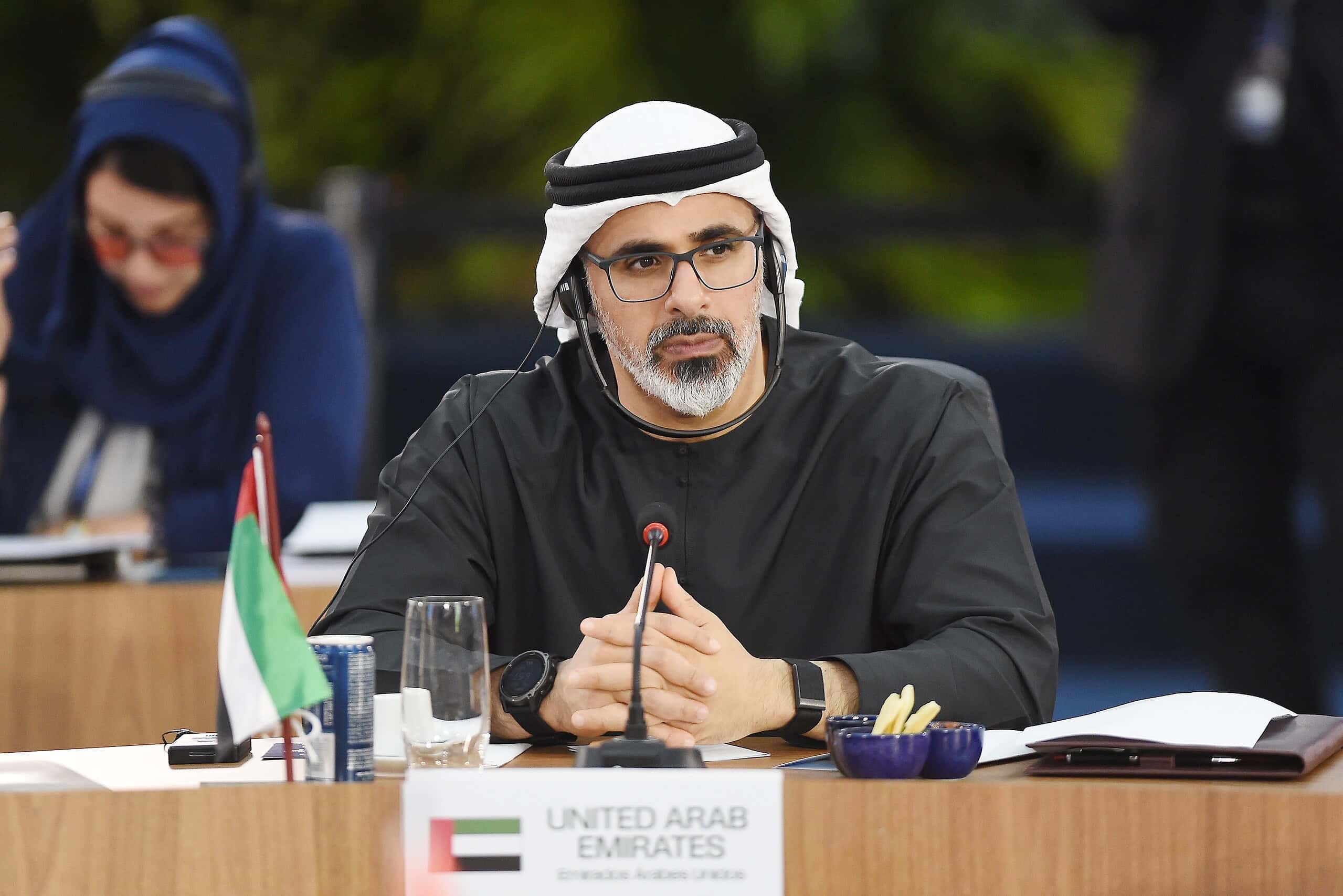
Abu Dhabi consolidates ADQ into L’Imad, creating $300 billion sovereign powerhouse under crown prince as emirate centralizes control over strategic investments.
L’Imad, Abu Dhabi’s newest sovereign wealth fund, took over the assets of rival state-owned fund ADQ, a development that sees a greater role in the emirate’s investment strategy by the emirate’s crown prince Sheikh Khaled bin Mohammed bin Zayed, son of the UAE president Mohammed bin Zayed.
The consolidation signals Abu Dhabi’s intentions to leverage capital for adaptability and power projection. And placing L’Imad under the direct supervision of the Crown Prince is significant. According to Dubai brokerage firm Century Financial, “Abu Dhabi is treating its investment platform as a long-term project managed by top government leaders.”
Prior to the merger, ADQ held assets of $263 billion with major investments spanning airlines, energy, infrastructure, and healthcare. Following the transfer of ADQ’s assets, L’Imad will have around $300 billion in assets under management, according to data from Global SWF, a platform focusing on central banks, sovereign wealth funds and public pension funds.
ADQ was previously chaired by Sheikh Tahnoon bin Zayed, the UAE’s influential national security adviser. He chairs the emirate’s principal wealth fund Adia (Abu Dhabi Investment Authority) that oversees $1.18 trillion in assets under management.
L’Imad’s rapid ascendancy—formed last year—looks set to become an important investment vehicle under the chairmanship of the 44-year-old crown prince. In January, the Abu Dhabi media office said the emirate’s Supreme Council for Financial and Economic Affairs had passed a resolution consolidating the assets of L’Imad and ADQ “to create a sovereign investment powerhouse with a diversified asset base.”
The new entity includes 25 investment companies and platforms and over 250 group subsidiaries. Jassem Al-Zaabi—who is also chairman the emirate’s department of finance and vice chairman of the UAE central bank—was appointed managing director and chief executive. Meanwhile Mohamed al Suwaidi, ADQ’s first chief executive, has left to become executive chair of Abu Dhabi investment manager, Lunate.
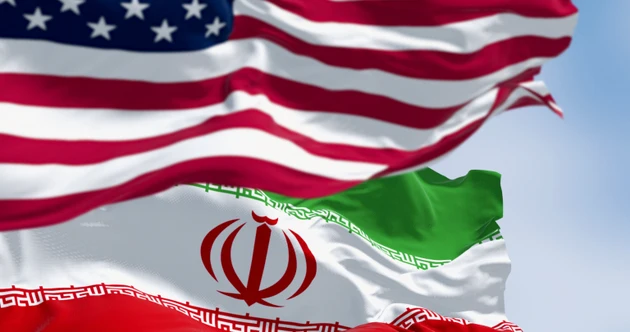
Trump says U.S. in talks with 'new, responsible regime' in Iran to end military operations
Source link
Published on
It is an old market saying, but it has never felt more apt: when people are worried about the future, they buy gold — when they are worried about the present, they sell it.
While the Iran war has raised longer-term concerns over energy security and global stability, the immediate fallout, in the form of surging oil prices and renewed inflation fears, has forced investors to prioritise liquidity and higher-yielding assets over metals.
Gold hit an all-time high of $5,602 (€4,873) at the end of January and looked to be heading higher still in early March, but has since dropped nearly 25% to a low of $4,100 (€3,567), trading around $4,500 (€3,915) at the time of writing.
The decline marks a dramatic pullback from gold’s extraordinary performance last year.
In 2025, the metal delivered one of its best annual gains in decades, rising more than 60% to record levels as central banks accumulated reserves and investors sought protection amid economic uncertainty.
The drop in 2026 has triggered a swift unwinding of leveraged positions in futures and exchange-traded funds which were riding last year’s tremendous rise.
This sharp reversal defies the traditional role of the metal as a refuge during geopolitical turmoil, with a stronger US dollar and rising bond yields proving far more influential.
Rising US Treasury yields and a firmer US dollar have been the dominant headwinds for precious metals.
Higher oil prices stemming from the Iran war have lifted inflation expectations, prompting markets to price in fewer Federal Reserve rate cuts or even the possibility of tighter policy for longer, including potential hikes that were previously unexpected.
This has increased the opportunity cost of holding non-yielding gold, while the US dollar’s strength has made it more expensive for international buyers.
The result has been a classic “flight to liquidity” rather than the expected flight to quality risk assets, as leveraged traders facing margin calls accelerated the sell-off.
The correction for metals has been one of the sharpest in recent memory.
Silver, which often amplifies gold’s moves, followed with an even bigger drop.
The white metal reached an all time high of $121 just one day after gold, on 29 January, but it has since dropped roughly 50% to as low as $61.
At the time of writing, it is trading at around $70.
Silver enjoyed an even more spectacular rally than gold in 2025, surging roughly 145% thanks to robust industrial demand from solar panels, electronics and electric vehicles, combined with investment buying.
In 2026, however, it has also declined sharply amid the same pressures of US dollar strength and higher yields, although its industrial fundamentals continue to offer longer-term support.
Published on •Updated
European markets are set to open lower on Monday, with futures pointing to declines across major indices as investor sentiment remains cautious amid rising oil prices and geopolitical tensions in the Middle East.
As of early morning trading, Germany’s DAX was down around 0.5%, the FTSE 100 fell roughly 0.3%, and France’s CAC 40 was also in negative territory, according to IG data.
The weaker outlook follows losses in Asia, where shares mostly dipped overnight as concerns persisted around soaring oil prices and the potential for further escalation in the US war with Iran.
The declines follow steep losses on Wall Street on Friday, marking a fifth consecutive losing week — the longest such streak in nearly four years.
“US equity markets remained under sustained pressure, with the S&P 500 falling 2.1% for the week and the Nasdaq 100 sliding 3.2%. The Dow Jones held up comparatively better, declining 0.9%, owing to its lower technology weighting. Both the Nasdaq 100 and the Dow Jones have now officially entered correction territory after recording drawdowns of more than 10% below their respective peaks,” IG market analyst Fabien Yip said in a commentary note.
Japan’s benchmark Nikkei 225 fell 4.5% in early trading, Australia’s S&P/ASX 200 dropped 1.2%, and South Korea’s Kospi slid 3.2%. Hong Kong’s Hang Seng declined 1.7%, while the Shanghai Composite edged 0.7% lower.
Investor worries have been particularly acute due to the risk of disrupted access to the Strait of Hormuz, a critical route for global oil shipments.
Benchmark Brent crude rose above $116 a barrel in early trading, marking an increase of more than 50% since the Iran conflict began on 28 February. Prices were just over $70 a barrel when the war started. US benchmark crude was also up, at around $101 a barrel, reflecting continued volatility in global energy markets.
The surge comes as US President Donald Trump raised the possibility of American forces seizing Iran’s Kharg Island, the country’s main oil terminal in the Persian Gulf. He made the comment in an interview published early Monday by the Financial Times.
“Maybe we take Kharg Island, maybe we don’t. We have a lot of options,” Trump told the newspaper. “It would also mean we had to be there (on Kharg Island) for a while.”
Asked about Iranian defences there, he said: “I don’t think they have any defence. We could take it very easily.”
The US has already launched airstrikes it said targeted military positions on the island. Iran has threatened to launch its own ground invasion of Gulf Arab countries and new attacks if US troops land on its territory.
Meanwhile, G7 finance ministers, energy ministers and central bank governors are set to hold an emergency meeting today to discuss the conflict and its consequences. It will mark the fourth time since the start of the war in Iran the G7 has convened at a ministerial level.
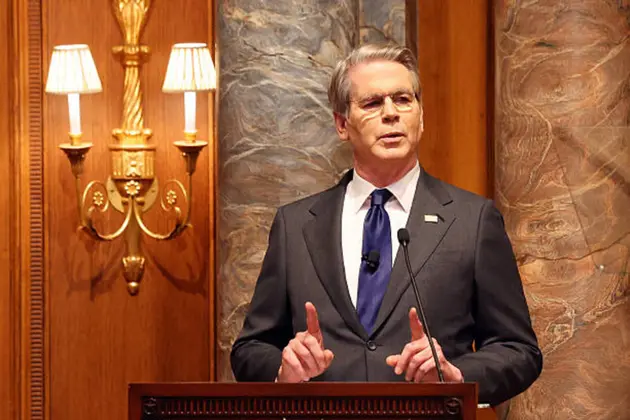
U.S. Treasury to consult insurance regulators on rising private credit risks: report
Source link
Northrop Grumman wins $885M Army ammunition contract
Source link

SA Asks: What happens if the Medicare Hospital Insurance fund runs dry?
Source link

Target-date funds promise simplicity but may leave retirement risks unchecked
Source link


2d illustrations and photos
As emerging markets head toward their weakest month in years, some asset managers are moving in the opposite direction and adding to positions.
Firms including TT International and AllianceBernstein are buying beaten-down bonds and currencies, betting that central banks will shift
Eli Lilly expands AI drug push with multibillion-dollar Insilico deal
Source link
