monday

Disability rights advocates protest proposed cuts to in-home support services

Disability rights advocates on Monday gathered outside the state Capitol to push back on Gov. Gavin Newsom’s proposed cuts to in-home supportive services.

“These aren’t just numbers in a budget; these are real people,” said Assemblymember Jeff Gonzalez (R-Indio). “These are children, seniors, veterans and individuals with disabilities whose independence and quality of life depend on these services every single day.”

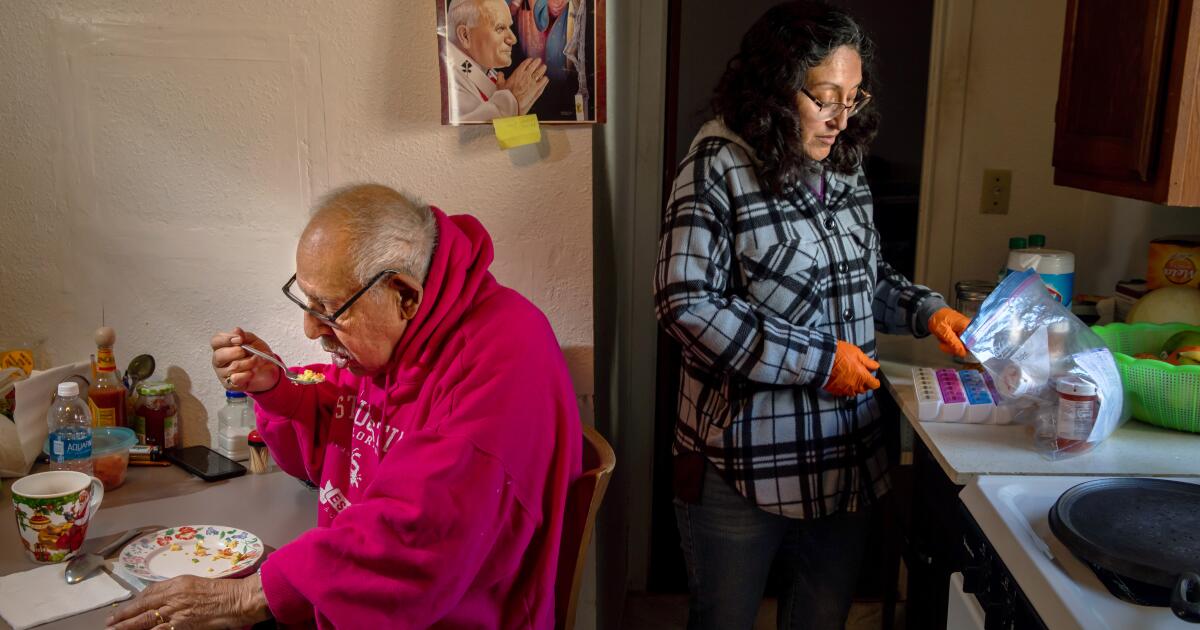
The In-Home Supportive Services program helps disabled and elderly people remain in their houses by providing in-home care. It pays assistants to help with tasks such as showering, cooking or attending doctor appointments. Newsom’s revised budget proposal, which was unveiled last month, would cut $367.7 million from the program and shift some of that financial burden onto counties.

Gonzalez explained that the issue hits close to home for his family. He said his son has cerebral palsy and a seizure disorder, and relies on assistance to live with dignity.

“Families should not have to wonder every budget season whether the support they rely on will be taken away,” Gonzalez said. “These services should not be treated as bargaining chips in budget negotiations.”

Assemblymember Laurie Davies (R-Laguna Niguel) questioned why a successful state like California would need to enact such cuts.

“It’s hard to go a day without hearing the governor or the administration brag about how we are the fourth-largest economy in the world and yet we can’t fully fund [this program for] the most vulnerable?” Davies said.

The governor has previously explained that difficult decisions must be made as the state could soon face an economic downturn. The budget proposal relies on a tax windfall, largely attributed to the stock market success of artificial intelligence companies, to erase California’s deficit — but some analysts have warned that the AI bubble could burst.

H.D. Palmer, deputy director for external affairs for the California Department of Finance, on Monday said some of the proposed cuts are a byproduct of the federal government’s changes in funding and eligibility for health and human services programs.

The so-called “Big, Beautiful Bill” signed by President Trump last year shifted federal funding away from safety-net programs, he said.

Palmer stressed that state budget negotiations are ongoing.

“Until we land on an agreement, speculation regarding the resolution of any specific differences between the Governor’s budget plan or the Legislature’s respective budget proposals would be premature,” he stated by email.

Monday’s event drew some bipartisan support. Brody Fernandez, communications director for Assemblymember Esmeralda Z. Soria (D-Fresno), said the legislator had been fighting for In-Home Supportive Services funding since she was elected.

Fernandez said his daughter has special needs and her mother had to give up her career to become a full-time caregiver. “This is personal for us and for many of the incredible individuals standing behind me,” he said.

Graham Knaus, chief executive of the California State Assn. of Counties, told The Times that he appreciated efforts to raise awareness about the burden these changes would place on counties.

“We applaud the Senate and Assembly for recognizing counties’ concerns and rejecting this proposal,” he said. “We ask them to hold the line in final negotiations.”

Elizabette Guecamburu, a bookkeeper who has a rare neuromuscular disorder, spoke at Monday’s rally and implored the governor to remember the teachings of their shared alma mater Santa Clara University, a Jesuit-led private school.

“I want him to remember where he came from,” she said, adding that students were taught to value compassion and community. “Don’t forget your Jesuit roots.”

Source link

Texas Tech QB Brendan Sorsby is granted injunction to play in 2026

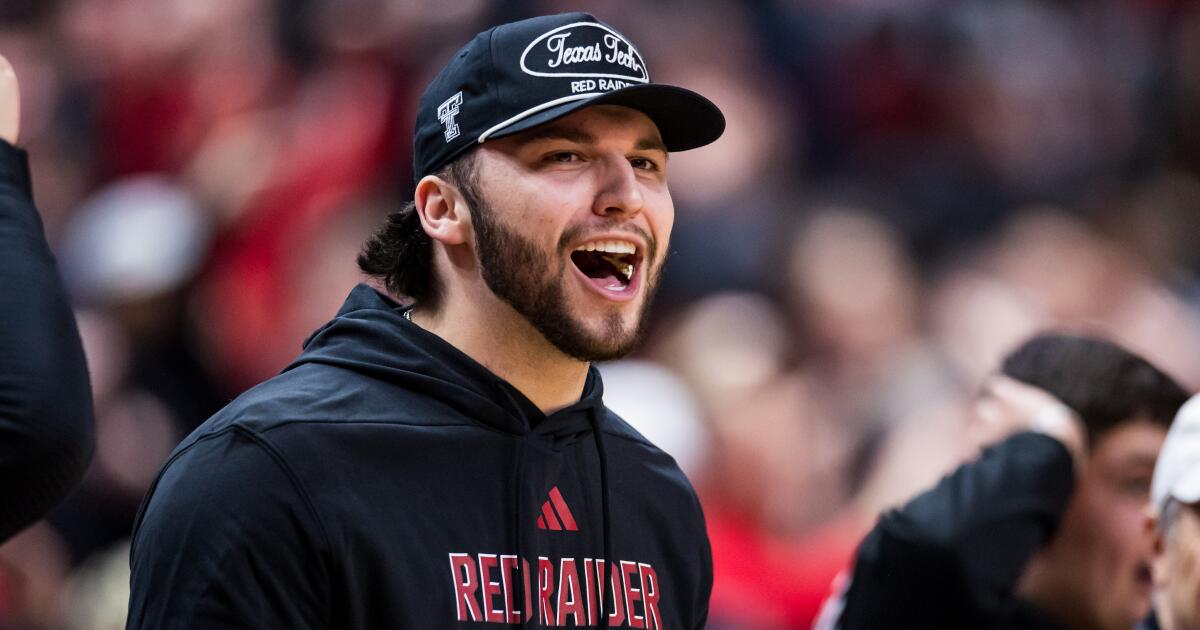
Texas Tech quarterback Brendan Sorsby has been granted a temporary injunction that allows him to practice and play with the Red Raiders in 2026 despite having been permanently banned by the NCAA for wagering on college sports.

Texas judge Ken Curry ruled Monday that the NCAA cannot block Sorsby’s final year of eligibililty. The Cincinnati transfer will have to miss the first two games of the season as one of the conditions of the ruling.

In his ruling, Curry stated that Sorsby would “suffer a probable, imminent and irreparable injury” without the injunction by missing out on the “elite coaching, training resources, camaraderie, and regimen that only being a member of a Division I college football team can provide.”

“I’m very grateful for the endless support I have received throughout this entire process. I am also grateful for the chance to rejoin my teammates,” Sorsby wrote in a statement posted Monday on Instagram. “This opportunity comes with the responsibility to remain focused on my personal growth, the ability to learn from this experience, and to be able to use my situation to help others going forward.”

The NCAA can appeal the injunction but did not immediately indicate its next steps in the matter. It is unclear how long such a process would take. Texas Tech’s season starts Sept. 5, with Sorsby first eligible to play when the Red Raiders host Houston on Sept. 18.

“The NCAA strongly disagrees with the court’s ruling in Sorsby’s case and is deeply concerned about the damaging, far-reaching and broadly destabilizing ramifications of this outcome — which undermines and corrupts the integrity of sports,” the association said in a statement.

“The NCAA is committed to supporting student-athlete mental health but must continue to aggressively defend against actions that defraud college athletics and threaten competitive integrity, such as betting on one’s own sport.”

Last month, Sorsby’s attorneys filed a lawsuit in Lubbock County District Court requesting that he be declared eligible for all team activities because the NCAA “failed to comply with its contractual commitments” to him as a student athlete and therefore “is precluded from enforcing its gambling bylaws against Mr. Sorsby to deny or withhold his reinstatement.”

Sorsby spent two years at Indiana and two at Cincinnati before transferring to Texas Tech this offseason for a reported multimillion-dollar deal. In late April, he and Texas Tech jointly announced that he had entered a residential treatment program for gambling addiction and would be away from the team for an indefinite period of time.

According to court records, Sorsby has admitted to betting at least $90,000 during his time as an NCAA student athlete, including 40 bets on Indiana football games he was not participating in as a freshman backup with the Hoosiers in 2022.

NCAA guidelines state that student athletes who bet on their own games or on other sports at their school could “potentially face permanent loss of collegiate eligibility.” Texas Tech was informed of an NCAA investigation into Sorsby’s gambling activity in March, according to court records, and declared him ineligible according to the association’s bylaws.

The NCAA has since denied two petitions from Texas Tech to have Sorsby’s eligibility reinstated.

“As we have said before, we do not believe that the circumstances of Brendan’s case warranted permanent ineligibility,” Texas Tech athletic director Kirby Hocutt said Monday in a statement. “As he returns to our football program, we remain committed to supporting Brendan’s recovery and ensuring his compliance with the court’s order. A comprehensive support structure, including clinical care, monitoring, and compliance checks, will remain fully in place for the duration of Brendan’s time as a student at Texas Tech.”

Georgia athletic director Josh Brooks, a member of the NCAA Football Oversight Committee, told Yahoo Sports that there should “be serious conversations about not playing Texas Tech in any sports” as a result of Monday’s decision.

“This is not about Texas Tech. It’s about protecting our own locker room,” Brooks said. “We cannot in good conscience put our student-athletes on a field where the competitive integrity of the contest is compromised and overridden by the courts.

“All [Football Bowl Subdivision] schools should only take the field against programs operating under a uniform, trustworthy standard of fairness. We’ve officially reached the point of no return.”

The Associated Press contributed to this report.


Source link

New Iran and Israel strikes threaten ceasefire; Trump tells both sides to stop ‘shooting’

Israel and Iran traded fire on Monday, all but derailing a brittle two-month ceasefire that had largely stopped the fighting in the U.S and Israel’s assault on Iran.

The tit-for-tat attacks between the two sides threaten to widen the scope of a conflict that has already killed and wounded thousands, displaced more than a million people and rattled economies across the globe — even while embroiling the U.S. in a war with no clear off-ramp.

“Israel and Iran must immediately stop ‘shooting.’ ” wrote President Trump early Monday on his social media platform, Truth Social.

Later, he wrote, “Both sides, Israel and Iran, are looking to do an immediate CEASEFIRE!”

“Final negotiations on ‘Peace’ are proceeding, subject to ignorance or stupidity getting in its way. The Blockade will remain in place, and in full force and effect, until a ‘Final Deal’ is reached. Things should move quickly.”

The latest escalation came after Israel attacked the suburbs of Lebanon’s capital Beirut on Sunday in what it said was a targeted strike against Hezbollah, an Iran-supported paramilitary faction and political party.

In recent days, Iran conditioned a ceasefire agreement with Israel and the U.S. on a cessation of hostilities across all fronts, including Lebanon, threatening it would respond to any Israeli action on the Lebanese capital. Israel rejects linking both battlefields, and insists on having a free hand to attack Hezbollah.

A number of U.S.-brokered ceasefires between the Lebanese and Israeli governments — but without Hezbollah involvement — failed to stop most of the fighting, with Israeli warplanes pounding wide swaths of Lebanon’s south while Hezbollah launched drones and missiles on northern Israel. Nevertheless, the Lebanese government has rejected being included in Iran’s negotiations with the U.S.

By Sunday night, Iran’s threats came to pass with several waves of Iranian ballistic missiles, which caused no injuries and were the first Tehran had fired at Israel since a ceasefire took hold in April. Iran’s military said the fusillade was a warning. But Israel said it would retaliate.

President Trump initially downplayed the Iranian attack on Sunday, saying in an interview with the Financial Times Iran’s barrage was “not going to have any impact on the deal.”

“We’ll see how it ends up. But they [the Iranian strikes on Israel] were attacks that did not kick at all,” he said.

“The deal may make it on its own merit, or not, but this will not have any effect on it.”

Trump also told the Axios news site he would talk to Israeli Prime Minister Benjamin Netanyahu to stop him retaliating against Iran’s barrage.

He also told the Financial Times that Netanyahu “won’t have any choice” but to accept the deal Trump negotiates with Iran.

“I call the shots. I call all the shots. He [Netanyahu] doesn’t call the shots,” Trump said.

Yet by the early morning on Monday, dozens of Israeli warplanes were striking western and central Iran. They hit a petrochemical complex in Mahshahr in southwestern Iran, and waged extensive strikes on “strategic defense systems,” according to Israeli military statements, in what observers said was a prelude to a wider offensive. Residents in Tehran, Isfahan, Tabriz and Shiraz reported powerful explosions.

The Israeli military said in a statement it expected several days of fighting with Iran but was prepared for a prolonged campaign. It said the strikes on Iran were conducted by Israel on its own, but that they had been done in “full coordination” with U.S. Central Command, which also helped in intercepting Iranian missiles launched at Israel.

But that distinction appeared to matter little to Iran’s foreign ministry spokesperson, Esmail Baghaei, who said in a press conference on Monday that the U.S held direct responsibility for recent ceasefire violations and Israel’s action “cannot be looked at in isolation from the U.S.”

“No one believes the Israeli regime would take any action without coordination with the United States,” he said.

“The U.S. bears responsibility for the Israeli regime’s aggression, and it will also be responsible for the consequences of any escalation in tensions.”

Iran launched additional barrages throughout Monday, targeting Israeli airbases in Nevatim and Tel Nof and a petrochemical plant in Haifa, according to a statement from Iran’s Revolutionary Guard Corps. It added Israel was engaging in “a dangerous game by targeting civilian and oil infrastructure — a game that will now encompass all regional energy targets, with global economic consequences resting on America.”

The renewed hostilities also saw Yemen’s Houthis — who receive support from Iran and Hezbollah, and are part of a regional network of Iran-backed factions — enter the fray with a pair of ballistic missiles lobbed at Israel. The Israeli military said one of the missiles was intercepted; the second fell short of Israel.

Houthi spokesman Brig. Gen. Yahya Sarea confirmed the attack in a televised statement on Monday, and said Israeli maritime navigation in the Red Sea would be targeted.

During the Gaza war, the Houthis attacked commercial shipping in the Red Sea — including ships with no link to Israel — to pressure Israel into lifting its blockade on the enclave.

But, unlike Hezbollah, which attacked Israel on March 2, three days after the U.S. and Israeli campaign on Iran, the Houthis had refrained from helping their ally, until Monday.

Their involvement now raises the specter of another squeeze on energy markets already beleaguered by closures on the Strait of Hormuz. Since the U.S.-Israeli assault, the Red Sea has acted as the main alternative conduit for energy supplies, especially for those from Saudi Arabia. If the Houthis closed the Bab Al-Mandab Strait, it would all but paralyze commercial flows.

Oil prices spiked in the wake of the exchanges, with Brent Crude rising 5% to hit $98 a barrel.

Source link

Wizz Air Monday statement confirms major 2027 change

The changes will kick in from 2027

Wizz Air has made an announcement that will affect passengers planning to fly with the budget carrier from 2027 onwards. It has confirmed that travellers will soon be able to enjoy high-speed internet access on board.

The airline, which is based in Hungary, revealed it is fitting Elon Musk’s Starlink internet system across all its “new generation” aircraft. Wizz Air claims it will be the first European ultra-low-cost carrier to adopt the technology.

The airline has yet to confirm whether passengers will be charged for using the service. Starlink — owned by billionaire Mr Musk’s SpaceX aerospace firm — operates via thousands of satellites in orbit around Earth. A growing number of airlines have already begun offering the service or have announced plans to introduce it, including British Airways and Virgin Atlantic.

Ian Malin, chief commercial officer of Wizz Air, said: “Ultra low-cost travel has always been about making opportunities accessible to more people. In 2027, we’re taking that philosophy into the space era.

“Our customers shouldn’t have to choose between affordable fares and reliable internet onboard to stay connected to the people, work and moments that matter most. We’re proud to lead that change by collaborating with Starlink to bring maximum benefit to Wizz Air.”

In January, a row broke out between Mr Musk and Ryanair boss Michael O’Leary over whether Starlink could be used on the airline’s flights. After Mr O’Leary dismissed the idea as unfeasible, Mr Musk branded Mr O’Leary an “idiot” and a “chimp”, and speculated on X about potentially buying the airline.

Mr O’Leary claimed the “PR spat” had driven a 2-3% increase in sales.

Source link

North Carolina’s Jason DeCaro shuts out USC baseball in Game 2

Grant Govel was good, but Jason DeCaro was almost perfect.

USC baseball lost 4-0 in Game 2 of the NCAA Chapel Hill Super Regional, meaning its season and quest to break a 25-year College World Series drought will come down to a single game on Sunday.

North Carolina (49-12-1) turned to DeCaro with its season on the line, the seventh career NCAA tournament start for the veteran right-hander. DeCaro delivered a complete-game masterpiece, allowing just two hits — singles in the first and fifth innings — with eight strikeouts and one walk on a career-high 117 pitches.

Outside of giving up a solo home run to Colin Hynek in the second inning, Govel had a strong performance. After throwing 153 pitches across two appearances in the NCAA regionals, including 64 pitches in Monday’s clinching win over Texas A&M, he gave up just five hits and struck out three over five innings and 83 pitches to keep the Trojans in the game. His final pitch was a crucial one, inducing an inning-ending double play with runners on the corners to hold the game at 1-0.

But for all of his great work, the day was all about DeCaro’s dominance.

North Carolina found success against the Trojans’ bullpen in the sixth. Erik Paulsen hit a 339-foot home run over the left-field corner wall to double the Tar Heels’ lead, just the second home run given up by USC’s Sax Matson all season. The Tar Heels added two more on sacrifice flies in the sixth and seventh innings, but failed to drive in more with the bases loaded in the seventh and ninth innings.

Game 3 will be Sunday, with time and broadcast information still to be determined.

Source link

Caitlin Clark, Stephanie White address ‘tense’ bench moment

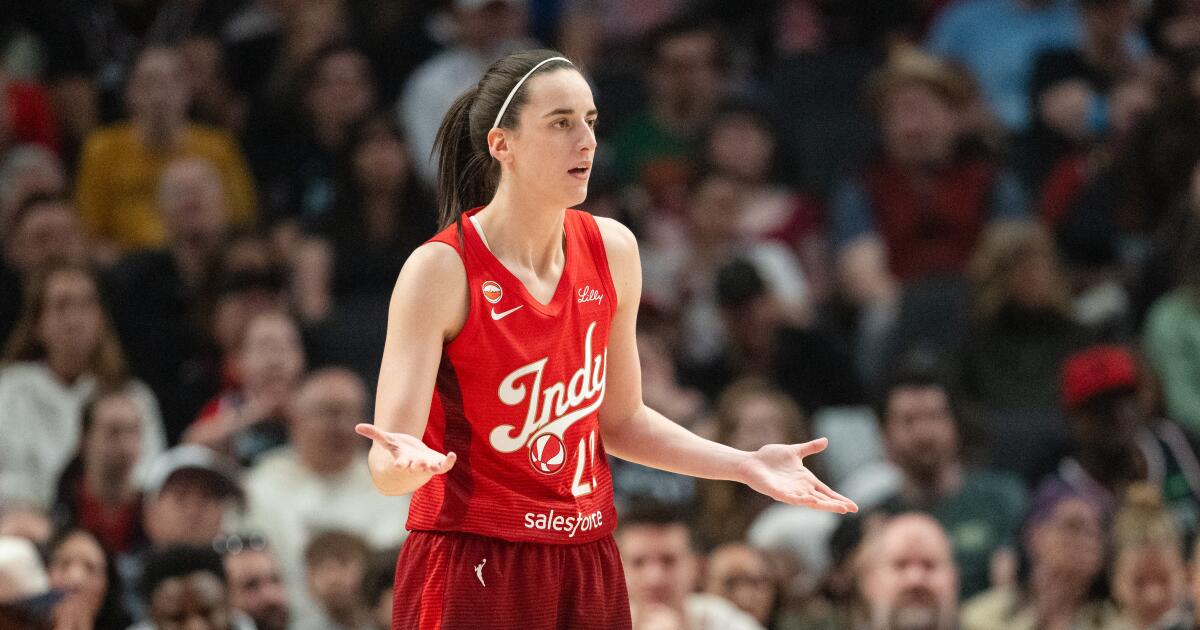
Caitlin Clark says everybody making a big deal about a heated moment on the bench between her and Indiana Fever head coach Stephanie White has gotten it “blatantly wrong.”

“I know there’s a camera on me … but there’s a lot of people out there in the media or on TV that think they know a lot of things, and they’re just blatantly wrong,” the star point guard said on Monday. “It’s just another example of what everybody … want[s] to blow up and make something that is just … not in reality.”

Clark was addressing a moment that occurred during the Fever’s 100-84 loss to the Portland Fire on Saturday. The viral footage appears to show Clark and White having a heated exchange while the team is huddled on the bench. White then subs Clark out for Raven Johnson, having her take Clark’s seat, as they presumably continue to discuss their next play. Kelsey Mitchell and Makayla Timpson appear to try to calm Clark, who can be seen shaking her head while standing behind her coach.

As with many moments involving the 2024 WNBA Rookie of the Year, video capturing the exchange was widely circulated and discussed among fans and pundits online and on TV.

Clark dismissed the moment as just “two people being competitive, two people that really want to win” and pushed back against it being described as “a blow up.”

“I ride for Steph, I ride for these girls. Steph has my back more than anybody,” the two-time All Star said. “Nobody in … our locker room, or Steph, or our coaching staff, thought twice about it.”

Clark’s teammate Lexie Hull was also asked about the moment on Monday during an appearance on Yahoo Sports Daily, and the Fever guard indicated it wasn’t even a blip on the team’s radar.

“That’s part of the game,” Hull said after mentioning the team had been in some foul trouble. “There’s frustrations that rise, and decisions have to be made, and ultimately, this wasn’t something that carried on. This is, in the moment, something that happened, and not something that is talked about now in our locker room or talked about even later on in the game.”

White echoed her players’ sentiments Monday, saying the footage just captured her coaching.

“I was challenging a player,” White said. “It’s coaching. … My relationship with Caitlin is great. … She wants to be coached. I want her to help me be a better coach. We’re both competitive, we’re both stubborn, we’re more alike than different. Hopefully we continue to bring the best out of each other.”

White attributed the attention to Clark’s popularity and how “everything that she does gets clicks.” She also pushed back against attempts to frame these moments as “tense.”

“It’s not a new thing,” White said. “It happens in every sport … and it’s not a story.”

Clark, the 2024 No. 1 draft pick, first gained buzz for her three-point shooting during her college years at Iowa. While her popularity has carried over into her WNBA career, she has more recently been increasingly scrutinized for her demeanor and perceived disrespect toward coaches and officials rather than for her play. Her injury-plagued 2025 campaign and the Fever’s less-than-stellar start to the 2026 season haven’t helped. The Fever are currently 4-4 and ninth in the WNBA standings. The team went 20-20 in the regular season during Clark’s rookie campaign and 24-20 in 2025 (Clark played just 13 games).

“There’s immense amount of pressure, and sometimes that pressure can get you and frustrate you in different ways,” said Clark. “I want to win. This team wants to win, and I’m the point guard, so it’s on me to help this team and this franchise win.”


Source link

Blanche says Trump administration is scrapping $1.8B fund meant to compensate president’s allies

Acting Atty. Gen. Todd Blanche said Tuesday that the Trump administration was scrapping plans to create a $1.8 billion fund meant to compensate allies of the Republican president after widespread political backlash and setbacks in the courts.

“We are not moving forward with the fund, period,” Blanche said in response to questions at a House hearing on the Justice Department budget.

““Not moving forward, ever?” asked Rep. Grace Meng, a New York Democrat.

The blunt declaration marked an extraordinary turnabout for a Trump Justice Department that just two weeks ago had pronounced the fund as essential to make up for what officials insist was weaponized law enforcement during President Biden’s Democratic administration. Since then, though, the idea has faced mounting pressure from Republicans who demanded reassurances that plans for the fund were off the table before they would move forward with legislation funding President Trump’s immigration enforcement agencies.

Blanche said the Justice Department was not abandoning an element of a settlement with the IRS that gave Trump and his family immunity from tax audits.

The hearing before a House Appropriations subcommittee was scheduled for discussion of the Justice Department’s budget, but lawmakers quickly focused their questioning on the creation of a fund that has provoked outrage over the mere possibility that violent pro-Trump rioters who stormed the U.S. Capitol on Jan. 6, 2021, could be eligible for payouts.

Signs for the retreat surfaced Monday when a person familiar with the matter said the Republican president was now reconsidering whether to move forward with the fund established to resolve his lawsuit against the Internal Revenue Service over the leak of his tax returns. The Justice Department also said Monday it would comply with a Virginia court temporarily blocking the administration’s “Anti-Weaponization Fund,” effectively agreeing to pause the plan for at least two weeks.

Another judge in Florida raised the prospect of reopening the IRS lawsuit because of “grievous allegations” of improper dealing made against the administration by settlement critics.

The Trump administration has defended the fund as an appropriate measure to make up for what officials insist was a weaponized Justice Department during President Joe Biden’s Democratic administration, a claim the Biden administration strongly denied. Though some Trump supporters, including participants in the Capitol riot, have celebrated the announcement, the reaction among Republicans in Congress has been decidedly more hostile, forcing Blanche to try to assuage a GOP constituency that generally operates in close alignment with the administration.

The furor has especially complicated matters in the Senate, where Republicans defiantly left town 10 days ago without passing legislation to fund Trump’s immigration enforcement agencies. Republicans who returned to Washington on Monday said they won’t have the votes to pass the Homeland Security spending bill until the White House works with them to place parameters on the fund. Many have pushed the administration to impose limits or scrap the idea altogether.

At a Senate budget hearing last month, Blanche refused to rule out the possibility that those who carried out violence on Jan. 6 could be eligible for payouts and has repeatedly said in interviews that anyone who feels persecuted by the criminal justice system is free to apply. Payouts will be decided by a five-member commission appointed by Blanche.

But he has apparently struck a more conciliatory tone in private when confronted by Republican anger.

Blanche encountered a groundswell of opposition last month at a tense private meeting with GOP senators, with more than half raising concerns, including by shouting at the Justice Department’s top official, Republican Sen. Ted Cruz of Texas said in a recent episode of his podcast.

“There were fireworks at an epic level — and I’ve got to say, it’s one of the roughest meetings I’ve seen in my entire time in the Senate,” Cruz said.

Behind closed doors, Blanche was “adamant” that no one who assaulted police at the Capitol would receive compensation, according to Cruz.

“He said not just ‘no,’ but ‘hell no,’” the senator recalled.

Tucker and Richer write for the Associated Press.

Source link

Emmet Sheehan’s strong start goes to waste in Dodgers’ loss

The “Beat L.A.” chants at Chase Field rose and fell for the final four innings, sometimes spurred organically, at other times prompted by the immense videoboard looming above center field.

And as the Dodgers’ offense continued to sputter, the Diamondbacks surged with a trio of home runs, giving the fans exactly what they asked for Monday night.

“Overall, I thought we had some good at-bats and barreled up some balls,” Dodgers right fielder Kyle Tucker said after the 4-1 loss. “But they made some nice plays and we just weren’t able to get the runs across, so just kind of how it goes sometimes.”

Tucker was one of five Dodgers in the starting lineup who went hitless. Designated hitter Shohei Ohtani was the only Dodger with multiple hits (three). And a quiet offensive night for the Dodgers wasted a quality start from starter Emmett Sheehan.

Sheehan held the Diamondbacks (32-27) to two runs and three hits in 6⅓ innings, carrying forward a recent trend for the Dodgers’ rotation, which entered Monday with a National League-best 3.05 ERA.

“I think it’s probably the back half of the rotation,” manager Dave Roberts said before the game. “To see what [Justin Wrobleski’s] done, to see what Roki [Sasaki] has done, to see what Emmet’s done — I think for me we’ve raised the floor of the starting rotation. The top end guys are kind of who they are, which is great. But every night we have a really good chance to win because of the starting pitcher.”

Monday was another one of those nights. But the Dodgers’ offense didn’t hold up its half of the bargain.

Sheehan — like Wrobleski and Sasaki this week — benefited from an uptick in velocity. His fastball averaged 95.9 mph on Monday, a season high and 1.7 mph above his average.

“I think it’s honestly just trying to relax early, and throw harder later in my delivery,” Sheehan said. “Before I was getting a little too tense, and that’s something the coaches mentioned to me. And it’s a bunch of other things too, but we’ve been working hard on it.”

Sheehan’s velocity has fluctuated all season, which he and the team attributed to inconsistent mechanics.

Dodgers starting pitcher Emmet Sheehan delivers during the first inning against the Arizona Diamondbacks on Monday.

Dodgers starting pitcher Emmet Sheehan delivers during the first inning against the Arizona Diamondbacks on Monday.

(Rick Scuteri / Associated Press)

“It’s definitely been a process,” pitching coach Mark Prior said last month about syncing Sheehan’s delivery. “And it’s been a grind for him. Because he feels like some days he has it, some innings he has it; and other innings he doesn’t. It’s been kind of a roller coaster for him. It’s just part of the game.”

At times, his lower half was opening too quickly, throwing off the way his legs worked with his upper half. But on the days his timing was in sync, his velocity would often tick up, and everything would fall into place.

On Monday he was nearly perfect through the first 5⅓ innings, with the exception of Corbin Carroll’s first-inning double. He’d induced plenty of soft contact, plus three strikeouts, all in the first two innings. All three were put away with sliders.

“I thought he was really good — certainly deserved better,” Roberts said. “The fastball was good, slider was good, used the curveball, minimized hits.”

Then with one out in the sixth, Sheehan tried to work back from a first-pitch ball with a fastball up to Diamondbacks rookie Tommy Troy. The No. 9 hitter roped it beyond left field for his first major league home run.

After the Arizona lineup turned over and Sheehan retired Ketel Marte and Carroll to get out of the inning, Roberts stuck with the right-hander against switch-hitting Geraldo Perdomo and right-handed Nolan Arenado in the seventh.

With one out, Sheehan hung a slider to Arenado, who put the Diamondbacks up with a solo blast. And that would spell the end of Sheehan’s strong outing.

Reliever Jack Dreyer, making his first appearance since being activated off the 15-day injured list (left shoulder discomfort), gave up a two-run homer to Marte in the eighth inning to round out the Diamondbacks’ scoring.

The Dodgers’ offense managed just five hits against Diamondbacks starter Eduardo Rodriguez, and were robbed of two by center fielder Jorge Barrosa, who made diving catches on line drives hit by Will Smith and Andy Pages.

“He made some nice plays out there for them,” Tucker said. “We did all we could really do. Once the ball leaves the bat, it’s out of our hands. So we had some good swings, good at-bats, it just didn’t go our way sometimes.”

The Dodgers eked across a run in the third on a Freddie Freeman groundout with runners on second and third. And the Arizona bullpen faced the minimum over the final three innings.

Source link

NBC News will put the Kornacki Cam on L.A. mayoral and California gubernatorial races

After the polls close in California on Tuesday, NBC News data analyst Steve Kornacki will just be getting started.

Since December, the khacki-clad vote-counting guru has been going live and uninterrupted on streaming platforms to provide results and analysis of every special election and even some state Senate contests.

The stream — called the Kornacki Cam — provides unadulterated number-crunching without any pundits weighing in. Rather than getting updates that last a few minutes, Kornacki provides continuous real time results until the last available total is counted.

“This all happens in full view,” Kornacki said Monday in a phone interview. “The audience gets to see the whole thing. They get to see the buildup, the anticipation, the payoff.”

In the 10 Kornacki Cam sessions streamed by NBC News so far, 20 million viewers have sampled on YouTube alone. The coverage — consisting of Kornacki, his Big Board, his producer and a Stedicam operator — is also available on NBCNews.com, the NBC News app and the division’s social media accounts on Instagram, Facebook and TikTok.

The Kornacki Cam will focus on the primaries for Los Angeles mayor, California and several Congressional districts, shortly after the state’s polls close at 8 p.m. Pacific.

In a Monday chat with The Times, here are the trends Kornacki says he’ll be looking for on the night.

Polling in mayoral races is typically pretty unreliable. What do you make of the contest based on what you’ve seen?

You don’t always have super-competitive mayoral elections and they’re not all created equal. It’s not quite like a presidential election so you just don’t have a wealth of data to draw on for expectations either.

I’ve seen the polling you’ve seen. It suggests that of the three candidates, (Mayor Karen Bass, reality TV star Spencer Pratt and City Council member Nithya Raman) Bass is in the best position to get into the runoff. It also suggests that Spencer Pratt has had the most positive movement in the last month or so of the campaign. But we go in knowing there will be volatility and I’m open to any and all possibilities.

Spencer Pratt is an unusual candidate who has been able to take up a lot of oxygen in the race. Is there a hidden vote for him that people might not be eager to admit to pollsters?

You can look at the city and know where to look for whether Pratt is having a big night. The San Fernando Valley is gonna be more than a third of the vote, probably close to 40%. If he gets in the general election, he wants to be winning there by a big margin. 
If it’s not happening there for Pratt, I don’t think it’s happening anywhere else. Karen Bass is going to rely on central and south L.A., with probably a third of the vote coming out of those two places. Those should be her bulwarks. The Westside, I think could be more of a toss-up. There’s a fair chunk of the vote there.

We don’t do a ton of mayoral races around the country. So we’re still trying to figure out exactly how detailed we’re going to be able to zoom in, at the neighborhood level and the precinct level.

Turnouts usually are low for Los Angeles mayoral races. Will this year be different?

This mayoral race has received a lot more national attention than 2022. 
So my thought is that the turnout would be higher, just based on that. But this is something that is resonating nationally because Pratt has that celebrity factor. The number was 646,000 (total votes) for 2022. So that’s something we’ll be following — are we trending over or under that?

And what will be the best indicators for the gubernatorial race?

The place that I kind of got circled here is Orange County. In the last two sort of major statewide elections, it was the first to report out vote. 
At 8:06 p.m local time in California, in 2024, Orange County reported out half of its vote, right? So you’re getting, you know, you’re getting hundreds of thousands of votes, potentially, from this enormous county within, potentially within 10 minutes of polls closing. 
There were a couple others — the Central Valley, and we got a we got a good chunk of Merced and Fresno quickly.

So how long are we going to have to wait for a result on Tuesday night?

One of the other things that just surrounds everything in California, whether it’s the mayor’s race, or governor’s race, or anything else, is nothing is definitive in the first hour or so after the polls close. We’re probably realistically looking at a days or even weeks-long process of getting all the vote counted.

I know it drives many people nuts. Without editorializing on that, it’s just a fact that they can get out of about two-thirds of their vote on election night, and if the races aren’t clear and definitive, then you’re generally in for a pretty long haul.

We do know in California that they’re not going (to count) nonstop until they get a result. They’re going to then start doing updates as they process and count the remaining vote by mail, which is usually a considerable pile in a lot of these places. The vote by mail in California can continue coming in for seven days after the election.

So do you think your coverage reflects a shift in what the consumer wants? We already know how fragmented the audience is. Are there now enough political junkies who want the pure uncut stuff?

I’ve been doing this about 20 years, and when I would tell people that I reported on politics for a living, they either moved away from me or changed the subject. And now, you know, I found the last, you know, 10 years or something, has just totally changed. People come up to me, even if they don’t know I work in politics, and they want to talk politics. Everybody seems into it whatever side they’re on.

Source link

Tennis legend Serena Williams to compete for first time in years

Serena Williams is returning to competitive tennis after all.

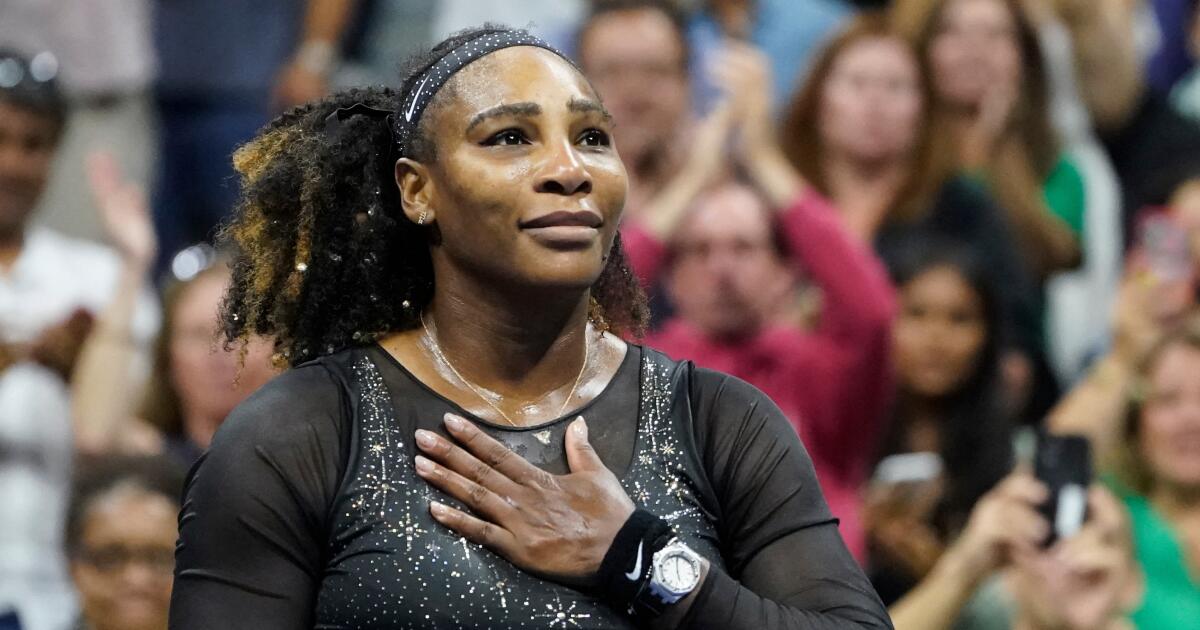
Months after insisting on social media, “Omg yall I’m NOT coming back,” the 23-time Grand Slam singles champion announced Monday that she’ll play professionally for the first time in almost four years at the HSBC Championships at the Queen’s Club in London.

Williams, 44, has been given a wild-card entry into the doubles draw of the WTA 500 event, which begins June 8.

“Queen’s Club feels like the perfect place to begin this next chapter,” Williams said in a statement released by the tournament. “Grass has given me some of the most meaningful moments of my career, and I’m excited to be back competing on one of the sport’s most iconic stages.”

Williams teased the announcement earlier Monday by posting a video on social media that featured her phone‘s notifications going off constantly while she seemingly was practicing on the court.

“Good news travels fast,” Williams wrote on the post.

Tournament director Laura Robson said during TNT Sports UK’s coverage of the French Open on Monday that Williams’ playing partner will be Canadian teenager Victoria Mboko, who is ranked No. 9 in WTA singles. Williams has won 14 Grand Slam titles and three Olympic gold medals in doubles with her sister Venus Williams as her partner.

It is not clear whether Williams will participate in any other events. Wimbledon, a Grand Slam event Williams won seven times in singles, begins June 29 in London.

Williams’ last professional match was a loss to Australian Ajla Tomljanovic in the third round of the U.S. Open on Sept. 2, 2002. She registered as retired with the International Tennis Integrity Agency the next day.

Last December, however, Williams reentered the agency’s drug-testing pool. According to the ITIA website, retired players “may not return to sanctioned events unless they have made themselves available for out-of-competition testing for at least six months prior to the event in question.”

The move led to much speculation about a possible Williams return, leading to her social media post denying any such intentions.

Martina Navratilova, the 18-time Grand Slam champion who is the oldest woman to win a tour-level singles match — she was 47 when she won a Wimbledon match in 2004 — expressed excitement for Williams’ return.

“Serena brought the game to another level and it is incredible for the sport that she’s pushing the boundaries and coming back,” Navratilova said in a statement released by the WTA. “To many of the younger players, they never had the opportunity to play her; some may have never watched her on television, so this will be a new and exciting experience.”

Source link