South Korea has accused North Korea of planting mines that caused an explosion in the Demilitarized Zone last week, injuring two South Korean personnel and violating the armistice agreement that ended the Korean War.
South Korean Defence Minister Kang Shin-chul told a parliamentary committee on Tuesday that the mines were North Korean and appeared to have been planted as part of Pyongyang’s efforts to strengthen its border defenses near the Military Demarcation Line that divides the DMZ.
Kang said the incident warranted a response from Seoul, although he declined to specify what measures the South Korean military might take.
Seoul Blames North Korea for the DMZ Explosion
“The responsibility lies with North Korea, so we will take corresponding measures,” Kang said, adding that the military had several response options and would implement them in stages.
Stay ahead of the geopolitical week.
MD Briefing delivers expert analysis across five global fronts — the Indo-Pacific, energy, geoeconomics, European security, and the Middle East — every Monday morning. Free.
He said a key question was whether North Korea had planted the mines knowing that South Korean troops could enter the area and potentially be injured.
The South Korean Joint Chiefs of Staff said an investigation conducted jointly with the United Nations Command had also uncovered another North Korean resin anti personnel mine close to the site of the September 21 explosion.
The newly discovered mine was different from those believed to have caused last week’s blast.
Another Mine Found South of the Military Line
JCS Vice Chairman Kwon Dae-won said the mines did not appear to have drifted into the area where they were discovered.
The United Nations Command assessed that the additional mines were clearly located south of the Military Demarcation Line, according to South Korean officials.
The findings have heightened concerns about the dangers created by North Korea’s ongoing efforts to fortify its side of one of the world’s most heavily militarized borders.
The DMZ has remained a highly sensitive area since the 1953 armistice, with even limited incidents carrying the potential to trigger a broader military confrontation.
A New Mine Incident Revives Memories of 2015
The latest blast has echoes of a 2015 confrontation, when North Korean mines seriously injured South Korean soldiers inside the DMZ.
South Korea responded by restarting loudspeaker broadcasts aimed at North Korea across the border. Pyongyang condemned the broadcasts, and tensions escalated into a military standoff before the two sides reached a high level agreement.
The current incident is unfolding under different political circumstances, however, as Seoul is simultaneously attempting to reopen dialogue with Pyongyang.
South Korea’s Dialogue Push Faces a Fresh Challenge
South Korean President Lee Jae Myung has sought to encourage North Korea to return to dialogue after years of worsening relations.
Pyongyang has instead moved in the opposite direction, declaring South Korea an enemy state and abandoning its previous policy goal of peaceful reunification.
That shift has made military incidents along the border increasingly sensitive.
For Seoul, the challenge is to respond to the alleged mine deployment while avoiding measures that could further damage its efforts to restore communication with Pyongyang.
North Korea Remains Silent as Seoul Warns of a Response
North Korean state media has not publicly commented on the explosion or South Korea’s accusations.
North Korea’s mission to the United Nations and its embassies in Beijing and Singapore also did not immediately respond to requests for comment.
With the South Korean military warning that it will take corresponding measures, the incident could become another source of confrontation between the two Koreas.
The immediate priority is preventing further injuries and dealing with the mines around the Military Demarcation Line. But the larger concern is whether the latest explosion will trigger another cycle of military responses at a time when relations between Seoul and Pyongyang are already deeply strained.
The blast therefore carries significance beyond the two injured personnel. It has placed South Korea’s attempt to pursue dialogue with North Korea alongside the more immediate question of how Seoul responds to what it considers a violation of the armistice.
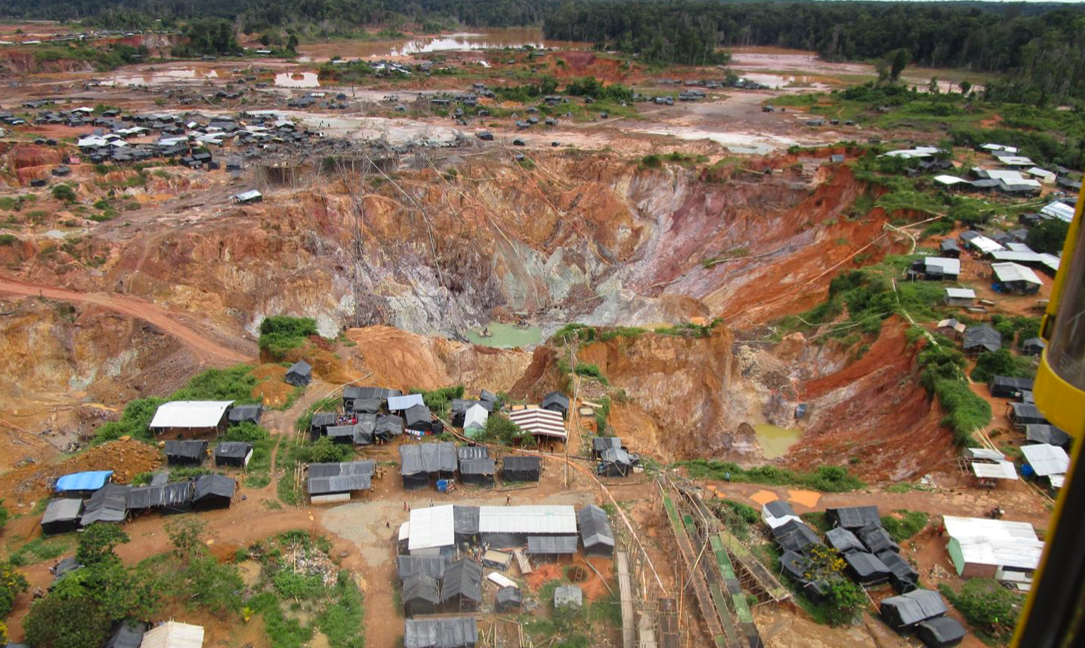
The picture above—courtesy of Gold Reserve—shows the ground of the Siembra Minera project, which the Canadian mining company recently retook.
Delcy Rodríguez has made her moves in the barracks, where she had no major influence before January 3. Several of the appointments are linked to the mining area. She gave Rafael Prieto Martínez, who had been military chief in Bolívar, the direction of the Strategic Operational Command (CEOFANB), the highest body for planning, direction and operational strategic control of the Venezuelan forces. There were also changes in Guayana’s Strategic Comprehensive Defense Region (the REDI or military region where the Orinoco Mining Arc is located) and in Bolívar’s Comprehensive Defense Operational Zone (ZODI). Rodríguez also put in charge people she completely trusted in civilian gold-related positions. For instance, the current president of the Central Bank of Venezuela, Luis Pérez, is also head of the newly created Vice Ministry of Gold.
Gold mixes with the government and now also with the United States. On June 8, troops flooded Guasipati and Tumeremo, when a group of American investors arrived to tour several gold mines and processing plants of the Venezuelan Mining Corporation (CVM).
They weren’t doing some pleasurable sightseeing. The roads’ craters have not been repaired for years. Tin shacks and shops occupy the sidewalks. At night, some lamp posts illuminate the streets only in case there is electricity. The region was not always this chaotic. Decades ago, the hotels there were not for miners but for tourists going to or coming from La Gran Sabana, the eastern sector of the Canaima National Park. During the nineties, there were two large international mining companies that had concessions to exploit the Las Brisas-Las Cristinas axis, where the country’s most important gold reserves are located. In Las Brisas del Cuyuní, an extensive gold and copper deposit near Kilómetro 88, Canadian company Gold Reserve established a mining project to extract minerals. The deposit has estimated reserves of more than 10 million ounces of gold and 1.4 million pounds of copper.
Canadian mining company Crystallex International Corporation operated at Las Cristinas, a site bordering Las Brisas and located near the town of Las Claritas. Its reserves are estimated at over 17 million ounces of gold.
During the nationalization process undertaken by Hugo Chávez between 2008 and 2010, both mines were expropriated. The president declared their concessions void, prompting the companies to demand multi-million dollar compensation from Venezuela through international arbitration proceedings.
Whether for theft, robbery, gunshot wounds, homicide, or acts challenging The System, punishments could range from mutilation to murder.
In their place, the chavista government allowed armed criminal “syndicates” (sindicatos) to establish themselves there and in all the mining towns of the south. These groups exercise power through violence and extortion, keeping miners in conditions of modern-day slavery.
Since at least 2012, control of the area was held by the Las Claritas Syndicate, led by AKA Juancho. He received support from the then-Governor of Bolívar, Francisco Rangel Gómez, and his Secretary of Citizen Security, Julio César Fuentes Manzulli—an Army brigadier general who also served as director of the Bolívar Police. Both men purchased gold and diamonds from Juancho to sell abroad. This relationship was exposed by Army First Lieutenant Jesús Leonardo Curvelo in a report presented to the National Assembly in 2016.
In 2015, AKA Johan Petrica, a leader of the Tren de Aragua, arrived in the area, formed an alliance with Juancho and established the local criminal organization known as The System. Petrica’s presence in Las Claritas led to speculation that AKA Niño Guerrero had taken refuge there after the Venezuelan government dismantled the Aragua Penitentiary Center (known as Tocorón prison, famous for being the original headquarters of the Tren de Aragua) in 2023.
The entire town had witnessed the actions of The System and agreed that any transgression came at a price. Whether for theft, robbery, gunshot wounds, homicide, or acts challenging The System, punishments could range from mutilation to murder. In 2020, organizations like Human Rights Watch documented an incident where a female miner who stole 10 grams of gold from a colleague was tied to a tree and beheaded with a chainsaw; in another case, a 17-year-old who was also accused of stealing gold was made to clasp his hands as if in prayer before being shot seven times and ordered to flee for his life.
Both Trump and Delcy Rodríguez reported only the killing of Niño Guerrero, offering no word on the whereabouts of Juancho, Petrica, and their lieutenants.
Surveillance throughout the town was constant. Lookouts (known as gariteros) kept a close watch on every movement from street corners, while checkpoints were deployed along the roads leading to the mines to monitor access to the deposits. The crimes The System committed to enforce its control were often followed by actions designed to portray it as a benefactor to the town. The local health clinic was always well-stocked with medicines and supplies, boasting high-quality equipment that nearby public clinics lacked. Miners enjoyed a form of “health insurance” provided by The System, which covered the treatment of any wounds or injuries sustained during gold extraction. The System organized toy giveaways for all the children at Christmas and during the Children’s Day celebrations held every July. Mother’s Day and Father’s Day were celebrated at the Las Claritas sports court, where gifts were distributed to those being honored. “In 2025, Juancho and El Viejo handed out about 200 motorcycles on Father’s Day. Everyone who went there left with a motorcycle,” Julio remarked.
Both Trump and Rodríguez reported only the killing of Niño Guerrero, offering no word on the whereabouts of Juancho, Petrica, and their lieutenants. Everyone in the town who was asked agreed that the armed group’s leaders had fled before the military arrived, knowing a “change of government” was imminent. Witnesses in Santa Elena de Uairén—located more than 230 kilometers south of Las Claritas—stated on Monday, June 8 (the day before the incursion), that they had spotted several members of The System, including Juancho, at the Escamoto checkpoint. That post is near the military fort of the same name, less than nine kilometers from the Venezuela-Brazil border. Those who saw them could not be certain that Niño Guerrero was among the group.
In early July, Wesley Costa de Oliveira—a commissioner with the Civil Police of Roraima state, Brazil, specifically the Unit for the Repression of Criminal Organizations (DRACO)—told this investigation that he was not surprised members of The System might be taking refuge in his country, given the weak border controls. Another official from Brazil’s Federal Police confirmed to this project that their government suspected the leaders of this organization were within its territory.
A week after the raid in Las Claritas—on June 16—police in Roraima state revealed that initial progress in “Operation Northern Route” had struck a portion of the Venezuelan criminal gang’s structure in Brazil, resulting in the arrest of 25 people across Roraima, Amazonas, São Paulo, Rio de Janeiro, Minas Gerais, and Paraná.
While uniformed personnel exploit their power in Las Claritas, there is still no news regarding which companies will arrive to take over the deposits. Criminal leaders continue their operations quietly in other cities.
The most prominent figure arrested was businessman Gustavo Vieira Rufino, identified as the financial manager for the TDA. He allegedly moved over 300 million reais (nearly 60 million dollars) in crypto-assets to launder capital derived from illicit activities.
Ana, a local hairdresser, recalled that El Callao was under military control during the Las Claritas-Kilometer 88 operation due to the presence of US investors visiting government recovery plants—such as El Chocó, El Perú, and the headquarters of the now-defunct Minerven. This state of affairs lasted for a week, until the foreigners departed.
In Las Claritas, while uniformed personnel exploit their power, there is still no news regarding which companies will arrive to take over the deposits. Meanwhile, in El Callao, Tumeremo, and El Dorado, criminal leaders continue their operations quietly.
Although El Callao breathes easier following the operation, for Ana, the ousting of The System offers hope that the town might return to what it was in the 1990s: a tourist stop where downtown shops sold gold jewelry at prices far lower than those found in the country’s major cities.
The interviewees’ identities have been changed for their safety.This report was supported by the Pulitzer Center.
Text and photos: Lorena Meléndez | Coordination and editing: Ronna Rísquez | General direction: Milagros Salazar | Design and infographics: ET
This is an abridged version of the original story in Spanish, the second part of award-winning investigative journalism project Dorada Opacidad. We will publish the second (and last) part of this investigation tomorrow.
When they pass through the streets of the Las Claritas–Kilómetro 88 mining corridor in Bolívar state, southern Venezuela, a thick, yellowish cloud of dust blankets them like a veil. The sound is unmistakable: a convoy of 15, 20, or 25 motorcycles riding together. Aboard are soldiers from the Orinoco Mining Arc Protection Group (GPAMO)—a unit conceived and activated in 2022 under the command of the Strategic Operational Command of the Bolivarian National Armed Forces (CEOFANB) to safeguard the deposits. They had never been there before June 9, 2026, when three rockets, shot by a US aircraft, shook the area’s flimsy houses. Now, GPAMO is the law.
Although some cover their faces, Rafael knows them well. He owns one of the gold mills operating at the El Mecatico mine—one of many in an area that holds the world’s fourth-largest gold deposit, according to a 2018 certification by Canadian mining company Gold Reserve. Standing beneath the tin roof that shelters his business, he explained that he would soon have to pay the GPAMO 20 grams of gold (roughly 2,000 US dollars) in exchange for a registration form that in theory is free. He is also required to make monthly payments to remain on the site.
For Rafael and the residents of Las Claritas, everything changed on the morning of June 9, when they woke up to find the area occupied by the military. In the early hours, dozens of vehicles transported hundreds of troops from various branches of the Bolivarian National Armed Forces (FANB)—such as the Special Affairs Directorate (DAE) of the General Directorate of Military Counterintelligence (DGCIM)—who patrolled the streets alongside unidentified men dressed in black and carrying long guns. Meanwhile, a pair of military aviation Cougar helicopters flew just above the rooftops of the houses.
The objective of that mobilization was to dismantle “The System.” That was the name given to the criminal alliance between Juan Gabriel Rivas Núñez—known as “Negro Juancho”—and Yohan José Romero (nicknamed “Johan Petrica” or “El Viejo”), one of the leaders of the “mega-gang” born in the Tocorón prison: the Tren de Aragua. For over a decade, this criminal alliance had dominated the territory containing one of the world’s largest gold mining complexes—Las Brisas-Las Cristinas—and had subjugated the local population through torture, mutilation, and murder.
All signs pointed to a “change of government”—a term used in the Venezuelan criminal underworld to describe one criminal group replacing another in a territory.
The residents were so terrified that they remained locked themselves in their homes for days. Rafael did not hear the explosions that rang out mid-morning in Brisas de Cuyuní, near the Kilómetro 88 mining area, because he had gone to his ore mill in the early hours of the morning without noticing the military deployment. Hours later, the military arrived in El Mecatico to destroy the warehouses and properties belonging to The System. This operation was repeated at other mines, as well as at hotels, homes, and businesses in the town.
To determine who truly holds power along the Las Claritas-Kilómetro 88 corridor and in the southern mining towns extending as far as Guasipati, a team of reporters from the Alianza Rebelde Investiga (ARI) and Convoca toured the region as part of the investigative series Dorada Opacidad (Golden Opacity). Interviews with more than twenty sources—ranging from merchants, mill operators, police officers, and local residents to religious figures and local government officials—made it possible to map out the new criminal landscape of the Orinoco Mining Arc.
For days, information about the events was available only through social media or details gathered by journalists working remotely. The first official explanation did not come from any Venezuelan authority, but from Donald Trump. Three days after the bombings, the president stated that his country’s Southern Command had launched a “kinetic attack” to “take out” AKA Niño Guerrero—the nickname of Héctor Rusthenford Guerrero Flores, the most prominent leader of the Tren de Aragua—with the collaboration of the Delcy Rodríguez government.
A new criminal governance
From then on, a military-imposed order took hold in Las Claritas. Rafael recounted that shortly after the town was seized, all mine workers were summoned to a meeting where a FANB captain urged them to keep working without pause, as they had to “produce as Commander Delcy Rodríguez ordered.”
All signs pointed to a “change of government”—a term used in the Venezuelan criminal underworld to describe one criminal group replacing another in a territory, without necessarily putting an end to criminal activities.
That call for productivity came with no guarantees. The mill operator, his shoulders slumped in despair, recalled the sense of security The System had once provided: he could leave his tools outside and stay at his mill until midnight. After the military incursion, however, he had to finish his work and leave before 6:00 pm for fear of being robbed, as happened to others in the mine.
The military has displaced the armed group in the Las Claritas-Kilómetro 88 area, but shares control with criminal mafias in El Dorado and Guasipati.
Since the military took control to oust The System, extortion of merchants, gold buyers, and even random passersby had become commonplace, according to several sources on the ground consulted for this investigation. Soldiers seized sacks of gold-bearing sand left behind by members of The System in order to process them and extract the gold, recounted Óscar, speaking from a shop on the town’s main road. “A captain who extracts gold every day exchanges 5,000 or 6,000 dollars in cash, and asks a friend to convert it to USDT [a cryptocurrency] and send it to Puerto Ordaz,” he said.
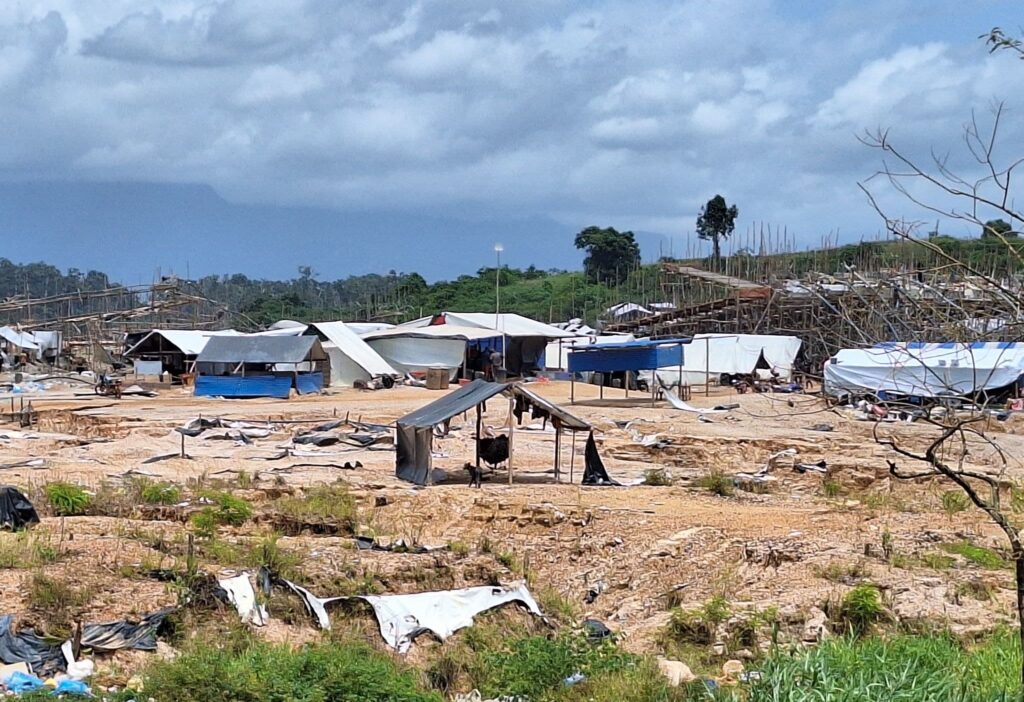
Military personnel capitalized on the gold-bearing sands that The System had not processed. Photo: Lorena Meléndez G.
According to witnesses, soldiers confiscated motorcycles and vehicles belonging to people with no ties to The System and spread fear across all the mining towns in southern Bolívar, about whether FANB would bomb all territories within the Mining Arc where armed groups operate, or the joint operation with the Americans would end in another massacre of workers by military forces.
However, local residents confirmed that the intervention was limited to Las Claritas-Kilómetro 88. Meanwhile, in towns like El Dorado, Tumeremo, and El Callao, criminal gangs continue to reign, albeit more discreetly and without the brazen displays of the past.
Former Bolívar lawmaker Américo De Grazia claimed on social media that The System’s ringleaders had returned to their old territory, though locals dispute this. Yet De Grazia’s account is not far-fetched: locals told the ARI and Convoca team that some of The System’s bosses—including the men known as Juancho and Johan Petrica—had left Las Claritas a few days before the military incursion. Apparently, they had been tipped off and fled. They were spotted trying to lay low near the Brazilian border.
What does seem clear is that in the Las Claritas-Kilómetro 88, the military displaced the armed group, but in El Dorado and Guasipati, they share control with criminal mafias—albeit maintaining a lower profile to preserve appearances before the Venezuelan government’s new partners: American businesspeople.
The American footprint
Five days after Maduro was taken away, Delcy Rodríguez announced a package of legislative amendments designed to appease Washington—such as a reformed mining law, whose latest version offers low taxes and numerous concessions to foreign capital that was previously unwelcome.
The new legislation, enacted in April, repealed the decree that had reserved the exploration and exploitation of gold and other strategic minerals for the State, paving the way for private and international companies to engage in these activities through concessions lasting up to 50 years.
Furthermore, it established special payments (up to 1% of gross production under the concession contract for the National Mining Fund and a royalty of up to 13% for the State), a tax of up to 6% regulated by the government, and incentives such as exemptions from the Large Assets Tax, as well as special contributions mandated by four other laws—including the Law on the Protection of Social Security Pensions—all aimed at benefiting the new companies operating in Venezuela’s mining sector.
Alongside the law’s approval, the United States also took action: in March, it issued licenses allowing American companies to purchase, transport, and resell Venezuelan gold. On September 2, the Treasury Department’s Office of Foreign Assets Control (OFAC) expanded the scope of these licenses, authorizing US companies to participate in the export, sale, purchase, storage, transport, processing, and refining of minerals of Venezuelan origin, including gold. It also permitted the supply of specific goods and services for mineral operations, as well as the negotiation and execution of contracts within the mining sector.
This entire framework has enabled Rodríguez to consolidate her economic team within the government through the appointment of key officials—both civilian and military—to positions within the Mining Arc. Their key figures are positioned not only within the executive branch but also across the State-owned enterprises involved in the business, and among military personnel capable of guaranteeing gasoline supplies and mine operations.
The interviewees’ identities have been changed for their safety.This report was supported by the Pulitzer Center.
Text and photos: Lorena Meléndez | Coordination and editing: Ronna Rísquez | General direction: Milagros Salazar | Design and infographics: ET
Weekly insights and analysis on the latest developments in military technology, strategy, and foreign policy.
For about a month, the United States had refrained from attacking Iranian targets as the Trump administration turned toward economic warfare against the Islamic Republic. However, that changed last night when U.S. Central Command (CENTCOM) struck what it said were Iranian rocket launchers preparing to fire naval mines into the Strait of Hormuz. The problem is that mine-deploying rockets are not a common capability, so much so that the statement seemed bizarre at first glance. But it just turns out that Iran does claim to have such a system and that system would have a glaring application in the current state of play of the conflict. In fact, it would be absolutely critical to do exactly what CENTCOM did, blowing them up prior to launching, because if they didn’t, the final and very fragile energy lifeline between the Persian Gulf and the world could be severed at the worst possible time.
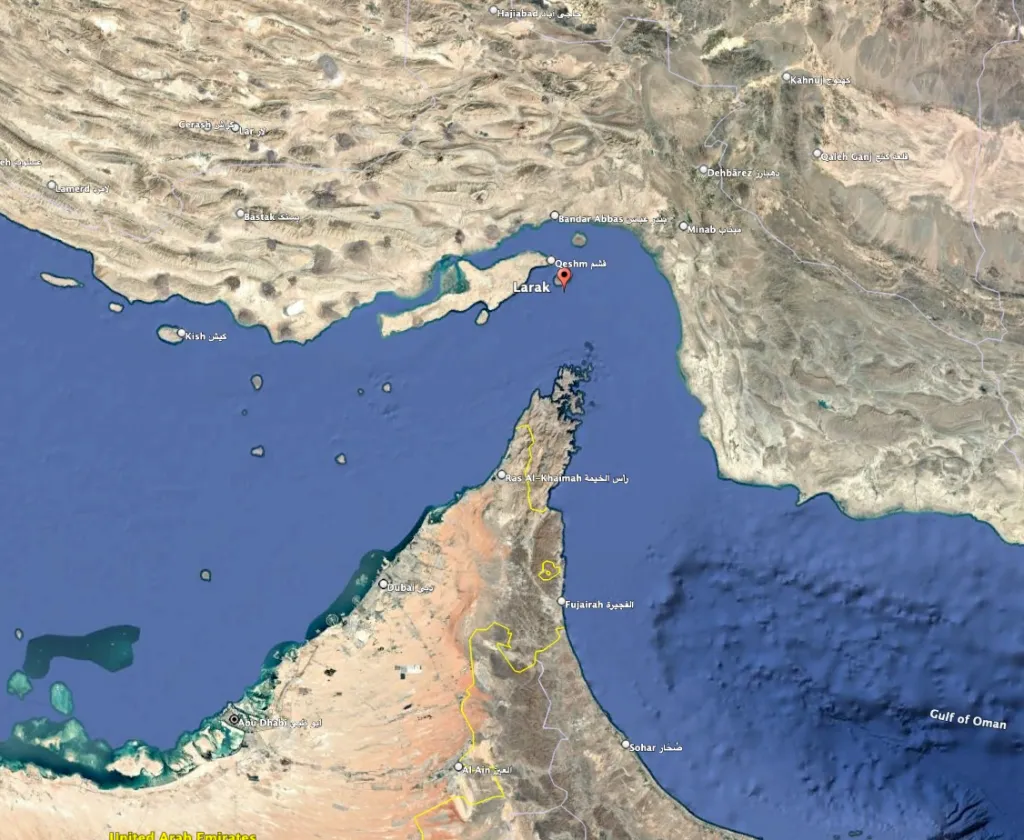
“I can confirm that earlier today U.S. forces struck two Iranian launchers on Larak Island,” Navy Capt. Tim Hawkins, CENTCOM’s spokesman, told us Sunday evening. “Islamic Revolutionary Guard Corps forces were observed preparing to launch rockets with sea mines into the Strait of Hormuz.”
Larak Island. (Google Earth)
The U.S. strikes against the launchers on Sunday spurred Iran to respond with ballistic missile attacks on a Jordanian air base housing U.S. troops. Jordanian officials said all eight missiles were intercepted, and no casualties or damage was inflicted.
Jordan’s @ArmedForcesJO say air defense systems intercepted eight missiles that entered the Kingdom’s airspace early Monday.
The military said the missiles were destroyed before posing a threat to civilians or property.
📍 Details:
🔹 A…
— Dana Zureikat Daoud دانا زريقات (@DanaZkat) August 31, 2026
Hawkins did not specify what exact type of rocket launcher was struck or whether this was the first time CENTCOM had seen Iran use this type of system to launch sea mines.
Though CENTCOM won’t comment on what kind of system was attacked, Iran did tout just this kind of a system last year with exactly the kind of range needed to be a huge problem for the U.S. and its allies. This system uses a variant of the Fajr-5 rocket that is converted with a sea mine warhead.
You can see a video of that system below.
Video of the Iranian rocket deployed naval mine system which is claimed to be able to deploy hundreds of mines in the sea from the coast in an hour. pic.twitter.com/ba897On0nV
The clip shows the rockets being fired from a truck-mounted multiple launch rocket system (MLRS). The video later cuts to nose cone-shaped mines that appear to float on the surface above the spent missile body, however, little is known about the Fajr-5 sea mine warhead conversion process that allows them to be delivered by rocket.
We also don’t know the full extent to which Iran has developed and/or fielded this particular capability, or whether it has other options for similarly deploying naval mines by rocket. Neither Behnam Ben Taleblu, a senior fellow at the Foundation for Defense of Democracies (FDD) think tank, nor the Ambrey maritime security firm has seen any indication that Tehran has used an MLRS to launch sea mines in the past.
At the same time, “the Fajr-5 is an Iranian calling card, a 333mm caliber rocket that can reportedly travel 75 km carrying between an estimated 90 to 170 kg warhead, depending on the payload,” Taleblu, an expert on Iranian weapons systems, told TWZ.
The Fajr-5 is an established design that traces its roots back to the 1990s and has been evolving since then. “The Fajr class was initially designed as unguided artillery rockets, though Iran claims to have developed a guided version,” Taleblu added.
A Fajr-5 rocket and launcher. (U.S. Army)
In general terms, being able to seed naval mines via artillery rockets would offer several advantages for Iran, most immediately by offering an alternative to traditional maritime mine-laying platforms. The destruction of Iran’s naval forces was a top stated objective for the U.S. military during the opening phases of the conflict earlier this year. Iranian vessels, including ones capable of laying mines, were heavily targeted. Still, Iran has retained a large number of its smaller boats that can be used for seeding minefields.
Regardless of what boats they have left, mining the area that actually matters most would be impossible to do as any vessel approaching the southern coast of the Strait of Hormuz would be destroyed. It’s through these tight and complex littorals that a reduced flow of commercial vessels are still traveling, under the kinetic umbrella of the U.S. and its Gulf state allies. The Fajr-5, fired from Iranian controlled islands in the strait, has the range to land in these waterways, seeding mines without risking any boat crews or other platforms. If the rocket-delivered mines splash down, the de-mining process would have to begin, which can be arduous and last weeks, potentially shutting down all shipping.
With that in mind, Iran’s weapon is remarkably relevant to the situation, assuming it works. But even if it doesn’t, it could still pose a risk to mariners even if its efficacy is questionable.
Furthermore, being able to turn any launcher for Fajr-5s (and/or potentially ones for other types of artillery rockets) into a naval mine layer rather than having to rely on specialized systems would be a boon unto itself. Artillery rockets and launchers are something Iran had deep stockpiles of before the war with the United States and Israel started earlier this year. How many naval mine rockets Iran might have, and whether it might be possible to convert existing types to that configuration, are open questions.
Using a road-mobile launcher would also give Iranians a ‘shoot-and-scoot’ option for deploying naval mines where the launch could be exposed only for a short period of time. This, in turn, would create additional targeting challenges for U.S. forces. It is possible that, as it does elsewhere, Iran has constructed tunnels under Larak Island to hide these systems, as well.
A Fajr-5 launcher. (U.S. Army)
Overall, the “deployment of naval mines by missile significantly speeds up the deployment process, improves the ability to penetrate airspace, and increases the standoff distance between the minelayer and the field, making it the least risky minelaying method,” a piece published by the Center for International Maritime Security (CIMSEC) think tank last year, which also highlighted Iran’s apparent demonstration of the Fajr-5-based capability, noted.
While the Fajr-5’s estimated payload capacity is “light compared to U.S. or Chinese naval mines,” the mines the rockets could deliver “are still heavier than diver-delivered limpet mines and could conceivably disable a ship if struck by enough mines from the field,” the piece added. “Most importantly, this field could be delivered rapidly and with little warning. Even though the explosive capacity of this mine individually is small, the psychological impact from inflicting minor damage on a small number of merchants could still be enough to force shipping companies to avoid the area.”
“Though it’s a bit unconventional, using a rocket launcher again signals that the regime is sensitive to cost and risk, and is trying to deploy mines in a way that doesn’t put as much personnel at risk as by dropping them overboard,” Taleblu posited. “It was reported in the military exercise over a year ago that the regime had used an MLRS system like the Fajr to deploy these, but I haven’t seen significant video confirmation of this most recent round.”
With all this in mind, the point about “psychological impact” mentioned in the CIMSEC piece could be particularly relevant in this case. By launching the attacks on Larak Island, CENTCOM has in a way given credence to Iran having a real capability to launch mines via rocket into the Strait of Hormuz. That threat by itself could be enough to cause commercial ship crews, their corporate operators, and insurance companies to think twice about attempted transits.
This is exactly the issue that President Trump, among others, has repeatedly sought to downplay, including multiple times just within the past week.
“We’re taking them in,” Trump told Glenn Beck last week. “The mines are gone. You probably saw that, we put it out yesterday, all the mines. We got rid of the mines. But the strait, it’s functioning, it’s a functioning strait. Uh, yes, every once in a while, there’ll be a drone or a rocket or something shot, but it is a very functioning strait.”
President Trump Exclusive: Dolly Parton, Canada, Iran and Rise of Sharia Law | Hour 1 | 8/26/26
“Last week, CENTCOM completed clearing sea mines from the strait’s international shipping routes,” Hawkins, the CENTCOM spokesman, told us yesterday. “U.S. forces are monitoring the area closely and remain prepared to protect the free flow of commerce through this essential waterway.”
“The U.S. military has achieved a major milestone in the Strait of Hormuz,” Adm. Brad Cooper, CENTCOM’s commander, stated last week. “We have successfully cleared sea mines in the strait’s international shipping lanes that were laid months ago by Iran’s Islamic Revolutionary Guard Corps. Internationally recognized transit routes in the strait are free of Iranian sea mines, thanks to the incredible work of the U.S. military.”
CENTCOM pushed back Monday on Iranian claims that an oil tanker was hit by mines in the command’s preferred transit route.
“CLAIM: Iran’s Islamic Revolutionary Guard Corps (IRGC) claims that a supertanker passing through the southern route of the Strait of Hormuz struck two mines and was brought to a complete stop. This is FALSE,” the command stated on X. “FACT: No ships have hit mines in the Strait of Hormuz. This is yet another IRGC attempt to intimidate regional commercial shipping through disinformation.”
🚫 CLAIM: Iran’s Islamic Revolutionary Guard Corps (IRGC) claims that a supertanker passing through the southern route of the Strait of Hormuz struck two mines and was brought to a complete stop. This is FALSE.
Still, the Joint Maritime Information Center (JMIC) — a group of international navies which provides timely information to the shipping industry — sees mines as an ongoing risk in the strait.
“Commercial traffic through the Strait of Hormuz remained at reduced levels, with a modest uptick from recent lows, still far below baseline,” JMIC stated on Sunday. “Independent tracking data indicated suppression with single-digit numbers transiting in both directions. There remained a continued risk of drifting or uncharted mines in and near the TSS, with mine danger areas still active.”
The combination of ongoing dangers in the strait continues to result in reduced traffic, the global trade intelligence firm Kpler noted on X.
“Vessel traffic through the Strait of Hormuz and Bab el-Mandeb declined on 25 August, while the IMO [International Maritime Organization] verified no additional attacks,” Kpler added. “Five vessels crossed the Strait of Hormuz, down 28.6% day on day from seven. All five used the Iranian Unilateral Scheme, with two entering the Middle East Gulf and three exiting. Four were classified as shadow vessels and one as sanctioned.”
Strait crossings remain subdued
Vessel traffic through the Strait of Hormuz and Bab el-Mandeb declined on 25 August, while the IMO verified no additional attacks. Five vessels crossed the Strait of Hormuz, down 28.6% day on day from seven. All five used the Iranian Unilateral… pic.twitter.com/BI9cFAaJRy
The latest flare-up in fighting came after the Trump administration last week unleashed the threat of harsh new sanctions to further isolate Iran. However, that failed to move Tehran to change its position on maintaining control over the Strait of Hormuz, its nuclear ambitions or support for proxies like the Houthis in Yemen and Hezbollah in Lebanon.
Monday morning, Trump told Fox News reporter Trey Yingst that he was going to retaliate for Iran launching ballistic missiles last night after the U.S. strike on Larak Island.
“We’re going to hit them hard,” Trump told the network. “There will be a response.”
President Trump says the United States will respond to the Iranian missile attack on U.S. forces overnight.
“We’re going to hit them hard,” President Trump told Fox News. “There will be a response.” pic.twitter.com/sjLOLSxm4g
Trump and his senior aides “have been consideringwaging limited strikes in the Strait of Hormuzto prevent Iran from reconstituting its radar and missile capabilitiesto attack ships,” Axios reported, according to three U.S. officials.
“One U.S. official said the idea behind the plan is to reduce the risk of Iranian attacks on oil tankers, U.S. Navy ships and Air Force aircraft — to ‘mow the lawn,’ as this person put it.”
It is unclear if Iran has used rockets to mine the strait or how well this system works if it did. However, the fact the U.S. resumed hostilities just to attack sea-mine-launching rocket systems shows the level of concern they engendered and the options Iran may still have to threaten the strait.
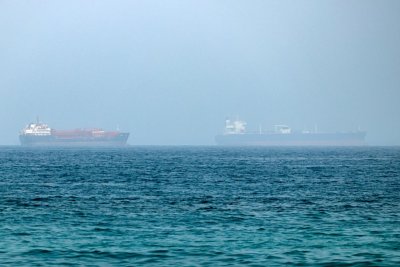
Iran on Monday said a supertanker attempting to transit the Strait of Hormuz struck two sea mines. File Photo by EPA
Aug. 31 (UPI) — A supertanker transiting the Strait of Hormuz struck two sea mines, Iran’s Islamic Revolutionary Guard Corps said Monday, days after the Trump administration said it had cleared the vital transit route of the explosive devices.
According to a statement from the IRGC Navy carried by semi-official Tasnim News Agency, the unidentified tanker struck the mines, caught fire and came to a stop.
The IRGC Navy said the vessel had attempted to pass through an “illegal route south of the Strait of Hormuz” when it came into contact with the mines.
The IRGC Navy once again warns that the fate of ships that violate the security regulations of the Strait of Hormuz will be no different from this,” it said.
“Compliance with the regulations issued by the IRGC Navy for passage through the strait is mandatory.”
The U.S.-Iran war has for months been focused on the Strait of Hormuz, which Iran has restricted commercial passage through with the use of mines, drones and artillery since the start of the conflict.
The U.S. military has been fighting to regain freedom of navigation through this chokepoint, and President Donald Trump has repeatedly stated that vessels are freely able to transit it despite only 8.3% of the normal daily volume passing in the last 24 hours with hundreds of vessels waiting, according to the independent Hormuz Strait Monitor.
Last week, Trump claimed all mines planted by the IRGC in the strait had been cleared and Iran had been warned that any ship planting new mines would be “destroyed.”
U.S. Central Command Commander Adm. Brad Cooper later in the week echoed Trump, saying, “We have successfully cleared sea mines in the strait’s international shipping lanes.”
Neither claim could be independently verified.
The announcement came hours after U.S. forces said it struck a pair of rocket launchers on an island in the Strait of Hormuz on Sunday, the first U.S. military action taken against Iran in weeks.