Military

Top ministers quit after Peru’s president postpones F-16 fighter jet deal | Government News

Two cabinet-level ministers in Peru have resigned after interim President Jose Maria Balcazar announced he would defer a decision to buy F-16 fighter jets from the United States company Lockheed Martin.

Defence Minister Carlos Diaz and Foreign Minister Hugo de Zela cited their opposition to the move in their resignation letters on Wednesday.

Recommended Stories

list of 3 itemsend of list

“A strategic decision has been taken in the area of national security with which I have a fundamental disagreement,” Diaz wrote.

The fighter jets have long been a source of controversy in Peru, where critics have questioned whether the purchase is a sign of deference to US President Donald Trump.

Last week, the left-wing Balcazar — Peru’s ninth president in a decade — announced he would leave the decision about whether to invest $3.5bn in the purchase to the country’s next elected leader.

Balcazar himself had only been in office since February, selected by Congress to replace the latest in a string of impeached presidents.

Last week, he abruptly cancelled a signing ceremony for the F-16 deal, which would have seen an initial batch of 12 new planes added to Peru’s ageing air force. The country aims to acquire 24 jets overall.

Balcazar explained he was not pulling out of the deal, but that he felt the next presidential administration should be involved in making such a hefty financial commitment.

“For us to commit such a large sum of money to the incoming government would be a poor practice for a transitional government,” Balcazar said at the time.

“We remain firm in respecting all agreements that may have been reached at the level of the armed forces, or in this case, with the relevant ministry of the air force, to carry out the corresponding negotiations.”

His decision, however, was met with pushback, both domestically and from the US. The US ambassador to Peru, Bernie Navarro, responded on April 17 with a warning posted on social media.

“If you deal with the U.S. in bad faith and undermine U.S. interests, rest assured, I, on behalf of
[President] Trump and his administration, will use every available tool to protect and promote the prosperity and security of the United States and our region,” Navarro wrote.

Critics of the deal, however, have argued that Peru has received more competitive offers from French and Swedish aircraft makers like Dassault Aviation and Saab AB, respectively.

But Navarro on Wednesday denied that the US had been outcompeted. In a statement, he wrote that the “bid was made at a high level of competitiveness” and called the plane fleet “the most technically advanced fighter jets ever built”.

He also denounced the delay as an unreasonable stoppage on a deal he characterised as already signed.

“In planning the delivery of a product of this calibre, there is no such thing as an inconsequential delay,” he wrote.

“Every delay results in significant costs. The same package cannot be available in a couple of months, or even weeks.”

The decision to spend the $3.5bn on 24 fighter jets was made in 2024 under former President Dina Boluarte. The purchase was to be financed by $2bn in domestic borrowing in 2025 and $1.5bn in 2026.

In September, the US Department of Defense approved a potential sale of F-16s to Peru.

But Boluarte was removed from office in October, and her successor, Jose Jeri, lasted just four months in office before he too was impeached.

The instability in Peru’s presidency comes at a time when the Trump administration is seeking greater influence over Latin America, as part of what the US president has called his “Donroe Doctrine”.

Already, the Trump administration has pushed Peru to distance itself from Chinese investment. In February, for instance, it publicly protested against Chinese ownership in the Pacific port of Chancay.

“Peru could be powerless to oversee Chancay, one of its largest ports, which is under the jurisdiction of predatory Chinese owners,” the Trump administration wrote in a social media post.

“We support Peru’s sovereign right to oversee critical infrastructure in its own territory. Let this be a cautionary tale for the region and the world: cheap Chinese money costs sovereignty.”

Just this week, one of Trump’s allies, Representative Maria Elvira Salazar, warned that the Chinese-owned port was a danger to the US.

“That’s a direct threat in our hemisphere, right in the country of Peru,” she told a congressional committee. “For that reason, the new Peruvian government, which will be elected next June, must take it back.”

She added that, if the Peruvian government responded accordingly, “the United States will help them under the Trump administration”.

The country, however, is enmeshed in a messy presidential race replete with vote-counting delays and accusations of malpractice.

Election experts have said there is no evidence of voter fraud. But the slow vote count has left the race’s outcome undetermined, more than a week after the ballots were cast on April 12.

Right-wing leader and former First Lady Keiko Fujimori is all but assured of progressing to a run-off in June. But who will join her is uncertain.

Left-wing Congress member Roberto Sanchez is currently in the lead in the race for second place, with 12 percent of the votes tallied, but far-right candidate Rafael Lopez Aliaga, a former mayor, is close behind with 11.9 percent. Lopez Aliaga has been a vocal supporter of the Trump administration.

The final vote count for the first round of the election is expected to be delivered in May.

Traditionally, Peru’s new president should be sworn in on July 28, the country’s independence day.

Source link

U.S. troops may sue military contractors for their injuries, Supreme Court rules

The Supreme Court ruled Wednesday that U.S. troops may sue military contractors for their injuries, siding with a soldier who was badly injured when a Taliban operative working at the Bagram Airfield detonated a suicide bomb.

Five soldiers were killed and 17 were wounded, including 20-year-old Winston Henceley, who suffered a fractured skull and brain injuries and is permanently disabled.

In a 6-3 decision, the court ruled that neither federal law nor the Constitution shields military contractors if their mistakes or negligence result in solders being injured in a combat zone.

Justice Clarence Thomas wrote the court’s opinion for an unusual majority that included Justices Sonia Sotomayor, Elena Kagan, Neil M. Gorsuch, Amy Coney Barrett and Ketanji Brown Jackson.

In the past, Thomas has objected to court precedents that prevented troops from suing the U.S. government for their injuries, including from medical practice.

And he said that rule should not be expanded to shield military contractors.

Justice Samuel A. Alito Jr. dissented, along with Chief Justice John G. Roberts and Justice Brett M. Kavanaugh.

“Because the Constitution gives the federal government exclusive authority over foreign affairs and the conduct of wars, federal law preempts all state law that substantially interferes with the Government’s exercise of those powers,” Alito wrote.

Hencely had tried to stop and question Ahmad Nayeb, an Afghan employee, as he walked toward soldiers who had gathered for a Veteran’s Day 5K race in 2016.

The Army concluded that Hencely’s intervention “likely prevented a far greater tragedy,” and its investigation concluded that the Fluor Corporation that had a contract to run operations at the base was primarily responsible for the attack.

The report said Fluor was negligent in hiring an Afghan who had been a Taliban operative, and it failed to closely supervise him.

But Henceley sued Fluor for his injuries; a federal judge in South Carolina and the 4th Circuit threw out his suit.

“During wartime, where a private service contractor is integrated into combatant activities over which the military retains command authority, a tort claim arising out of the contractor’s engagement in such activities shall be preempted,” the 4th Circuit said.

The court agreed to hear his appeal and overturn the 4th Circuit, clearing his suit to proceed.

Source link

Iran’s gunboat fires on container ship off Oman coast | US-Israel war on Iran News

The IRGC says the aggression came in response to what it described as the US seizure of an Iranian commercial vessel.

An Iranian gunboat has fired on a container vessel near the coast of Oman, according to a British maritime monitoring agency, in an incident that occurred hours after United States President Donald Trump said he would extend a ceasefire with Iran.

The United Kingdom Maritime Trade Operations (UKMTO) centre said on Wednesday that the ship’s captain reported that the vessel had been approached by a vessel of Iran’s Islamic Revolutionary Guard Corps (IRGC) before shots were fired.

Recommended Stories

list of 4 itemsend of list

It “has caused heavy damage to the bridge. No fires or environmental impact reported,” the agency added. No casualties were reported, and all crew members were said to be safe.

British maritime security firm Vanguard Tech said the ship was sailing under a Liberian flag and had been informed it had permission to pass through the Strait of Hormuz, one of the world’s most strategically important waterways.

Iranian news agency Tasnim, however, said the vessel had ignored warnings issued by Iran’s armed forces.

The incident followed a warning from the IRGC’s Khatam al-Anbiya Central Headquarters after what it described as the US seizure of an Iranian commercial ship in the Sea of Oman, the IRNA news agency reported.

It accused Washington of violating the ceasefire and carrying out “armed piracy” after allegedly firing on the Iranian vessel and disabling its navigation systems.

Trump extends ceasefire

Trump earlier announced he would delay a planned military attack on Iran after requests from Pakistan’s army chief Asim Munir and Prime Minister Shehbaz Sharif.

Writing on Truth Social, Trump said the decision was made because Iran’s government was “seriously fractured” and needed time to present a unified position.

“We have been asked to hold our Attack on the Country of Iran until such time as their leaders and representatives can come up with a unified proposal,” he wrote.

He added, however, that the US naval blockade of the Strait of Hormuz would remain in place and said the military had been ordered to stay “ready and able”.

The announcement marked a shift from comments made a day earlier, when Trump said it was “highly unlikely” he would extend the truce beyond Tuesday.

‘Positive and negative signals’ from Tehran

Al Jazeera’s Tohid Asadi, reporting from Tehran, said Iranian officials were sending mixed messages over the ceasefire and the prospects for negotiations.

“Tehran is saying they won’t negotiate under imposed terms and conditions … when we compare the initial 10-point and 15-point proposals by the Iranians and Americans, we can understand that the two sides are poles apart,” he said.

“The atmosphere is also clouded by this mistrust in Tehran towards the United States, as well as the simultaneous military rhetoric related to a potential failed negotiation … It is a warning that another round of confrontation may be ahead.”

He said Iran still viewed the Strait of Hormuz as a key source of leverage in any talks.

“It’s trying to exercise authority over the ships and vessels transiting this strategically significant chokepoint,” he said.

Asadi added that Iranian officials framed their regional position as based on mutual security. “Iranians are saying that the basis of their foreign policy behaviour, particularly when it comes to Israel, is security for all versus security for none,” he said.

Source link

Iran war: What’s happening on day 54 as Trump extends ceasefire? | US-Israel war on Iran News

President Trump said the US would extend the ceasefire until Iran presents a proposal and talks are concluded, but a naval blockade of its ports continues.

President Donald Trump said the United States is extending the ceasefire until Tehran submits its latest proposal with conditions for ending the war, and until negotiations conclude, keeping diplomacy open while maintaining pressure on Iran.

However, Trump said the US naval blockade on Iran would remain. Iran has insisted that the blockade represents a violation of the ceasefire, and has said it will not negotiate under the “shadow of threats” or while the blockade remains in place, underscoring the fragile and uncertain path to talks.

Meanwhile, violence continues across the region, with Israeli settlers killing two people, including a child, in the occupied West Bank, and Israeli strikes in southern Lebanon wounding civilians and damaging homes despite a 10-day ceasefire.

In Iran

  • The Islamic Revolutionary Guard Corps (IRGC) said oil production across the Middle East could be targeted if attacks were launched from Gulf neighbours’ territory.
  • The US is continuing its naval blockade of Iranian ports despite the truce, a move Iran says undermines the ceasefire.
  • An adviser to Iran’s parliamentary speaker said the ceasefire extension could be a “ploy to buy time” for potential military escalation.
  • Foreign Minister Abbas Araghchi described the US naval blockade as an “act of war” and a violation of the truce.

War diplomacy

  • Tehran open to diplomacy: Reporting from Tehran, Al Jazeera’s Almigdad Alruhaid said there was no official response to Trump’s ceasefire extension, but officials signalled openness to talks. The US blockade of the Strait of Hormuz is seen as a violation of the truce, with commanders saying forces are fully prepared to respond to any escalation.
  • US sanctions widened: The US imposed new sanctions linked to Iran’s weapons programmes, while the European Union is moving to expand its own measures.
  • Talks planned in Washington, DC: The US is set to host ambassador-level negotiations between Israel and Lebanon, as Lebanese Prime Minister Nawaf Salam pushes for a full Israeli withdrawal from the country’s territory as Beirut’s main objective.

INTERACTIVE_LIVETRACKER_IRAN_US_ISRAEL_MIDDLEEAST_ATTACKS_April 21_2026_GMT0830

In the Gulf

  • Trump said a potential currency swap with the United Arab Emirates is “under consideration”, adding Washington would support the Gulf ally if needed, after reports the idea was raised with US officials amid concerns the war could strain the UAE’s economy.

In the US

  • The US president said he was extending a ceasefire with Iran to give more time for negotiations, but would maintain the naval blockade of Iranian ports.
  • Reporting from the White House, Al Jazeera’s Alan Fisher said Trump has shifted between conciliatory and hardline rhetoric, linking the blockade of the Strait of Hormuz to forcing Iran to negotiate, while warning of military action if negotiations fail.
  • The mixed messaging has unsettled markets, but some analysts argue the strategy shows calculated pressure and a willingness to wait for Iran’s response.

In Israel

  • Israeli Prime Minister Benjamin Netanyahu said the country has been strengthened by its campaigns against Iran and its allies, claiming joint efforts with the US weakened Tehran’s capabilities and boosted Israel’s regional position, opening the door to new alliances.

In Lebanon

  • Prime Minister Salam said on Tuesday that Lebanon needed $587m to address the conflict’s ongoing humanitarian fallout amid a fragile ceasefire between Israel and Hezbollah.
  • Tensions remain high as Israel and Hezbollah accuse each other of breaching the truce. Israel said rockets were fired at its troops in southern Lebanon and that it responded with strikes, while Hezbollah said its attacks were retaliation for Israeli shelling and ongoing strikes on Lebanese areas.

Oil and global economy

  • Shipping through the Strait of Hormuz remains severely limited, raising concerns over global oil flows.

Source link

Flu vaccine no longer mandatory for soldiers, says US military chief | Military News

Pete Hegseth says the decision is based on the principle of ‘medical autonomy’ and criticises the mandate as ‘overreaching’.

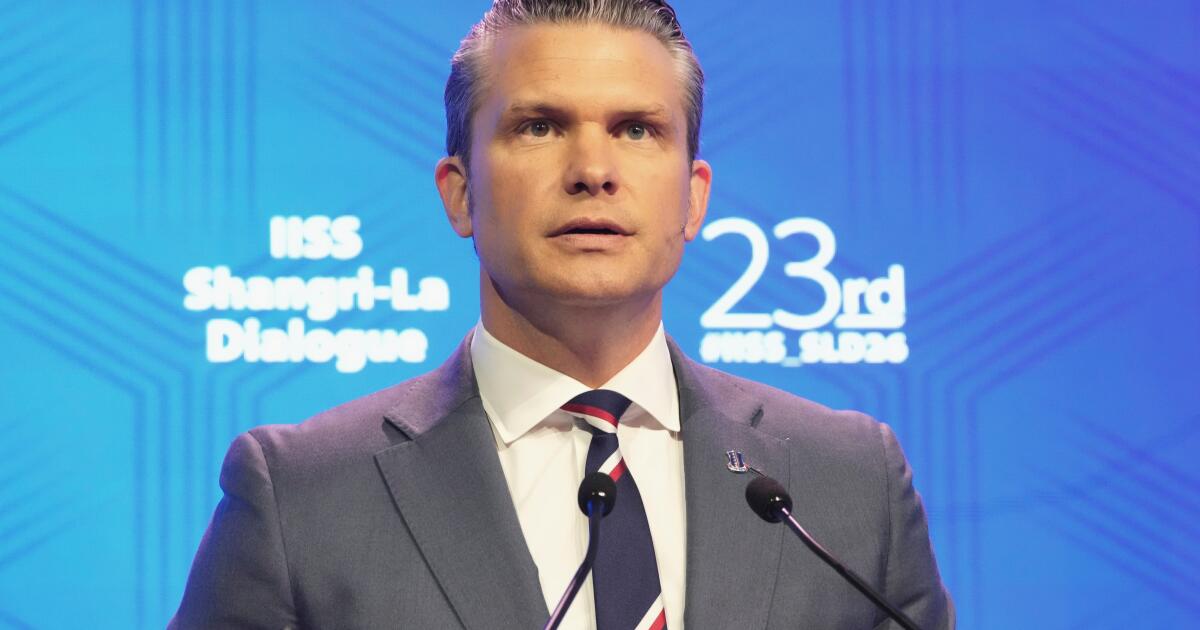
United States Defense Secretary Pete Hegseth has said that the flu vaccine will no longer be obligatory for members of the country’s military, the latest step under President Donald Trump to shift vaccine policy in the federal government.

Hegseth said in a video shared on social media on Tuesday that the decision was based on principles of “medical autonomy” and religious freedom.

Recommended Stories

list of 3 itemsend of list

“We’re seizing this moment to discard any absurd, overreaching mandates that only weaken our warfighting capabilities. In this case, this includes the universal flu vaccine and the mandate behind it,” said Hegseth.

“The notion that a flu vaccine must be mandatory for every service member, everywhere, in every circumstance at all times is just overly broad and not rational.”

The Trump administration has framed vaccine refusal as a matter of personal moral and religious principle, rolling back some policies meant to safeguard against preventable diseases.

Hegseth’s directive allows various military services to request that the mandate be kept in place, giving them a window of 15 days to do so.

The announcement comes after what health officials described as a particularly severe flu season when infections surged in the US. Public health experts have recommended that everyone aged six months or older get an annual flu vaccine.

The second Trump administration has reflected some of the backlash to public health guidelines and mandates that were implemented during the COVID-19 pandemic.

Hegseth himself has called that period an “era of betrayal” for the country’s armed forces. More than 8,400 members of the military were ejected for failure to abide by a 2021 mandate to take the COVID-19 vaccine.

The Trump administration has also rolled back vaccine recommendations in other areas, announcing earlier this year that it would not recommend flu shots and other forms of vaccines for all children. A lawsuit was filed challenging that effort, and the policy was temporarily blocked by a federal judge as the legal challenge plays out.

Source link

What was the Iran nuclear deal Trump dumped in search of ‘better’ terms? | US-Israel war on Iran News

United States President Donald Trump has said a nuclear agreement currently being negotiated with Iran will be “far better” than the 2015 Joint Comprehensive Plan of Action (JCPOA), which he withdrew from in 2018 during his first term in office.

The original 2015 accord took roughly two years of negotiations to reach and involved hundreds of specialists across technical and legal fields, including multiple US experts. Under it, Iran agreed to restrict the enrichment of uranium and to subject itself to inspections in exchange for the relaxation of sanctions.

Recommended Stories

list of 3 itemsend of list

But Trump took the US out of that pact, calling it the “worst deal ever”. Before the initial US-Israeli strikes on Iran at the end of February, the US had made new demands – including additional restrictions on Tehran’s nuclear programme, the restriction of its ballistic missiles programme and an end to its support for regional armed groups, primarily in Lebanon, Yemen and Iraq.

Trump’s latest remarks come amid growing uncertainty about whether a second round of talks will proceed in the Pakistani capital Islamabad, as a two-week ceasefire between the US-Israel and Iran approaches the end in just a day.

So, what was the JCPOA, and how did it compare to Trump’s new demands?

What was the JCPOA?

On July 14, 2015, Iran reached an agreement with the European Union and six major powers – China, France, Russia, the United Kingdom, the US, and Germany – under which these states would roll back international economic sanctions and allow Iran greater participation in the global economy.

In return, Tehran committed to limiting activities that could be used to produce a nuclear weapon.

These included reducing its stockpile of enriched uranium by about 98 percent, to less than 300kg (660lb), and capping uranium enrichment at 3.67 percent – far below weapons-grade of 90 percent, but high enough for civilian purposes such as power generation.

Before the JCPOA, Iran operated roughly 20,000 uranium-enriching centrifuges. Under the deal, that number was cut to a maximum of 6,104, and only older-generation machines confined to two facilities, which were subject to international monitoring.

Centrifuges are machines which spin to increase the concentration of the uranium-235 isotope – enrichment – in uranium, a key step towards potential bomb-making.

The deal also redesigned Iran’s Arak heavy water reactor to prevent plutonium production and introduced one of the most intrusive inspection regimes ever implemented by the global nuclear watchdog, the International Atomic Energy Agency (IAEA).

In exchange, Iran received relief from international sanctions which had severely damaged its economy. Billions of dollars in frozen assets were released, and restrictions on oil exports and banking were eased.

The deal came to halt when Trump formally withdrew Washington from the nuclear deal in 2018, a move widely criticised domestically and by foreign allies, and despite the IAEA saying Iran had complied with the agreement up to that point.

“The Iranian regime supports terrorism and exports violence, bloodshed and chaos across the Middle East. That is why we must put an end to Iran’s continued aggression and nuclear ambitions. They have not lived up to the spirit of their agreement,” he said in October 2017.

He reimposed crippling economic sanctions on Tehran as part of his “maximum pressure” tactic. These targeted Iran’s oil exports, as well as its shipping sector, banking system and other key industries.

The goal was to force Iran back to the negotiating table to agree to a new deal, which also included a discussion about Tehran’s missile capabilities, further curbs on enrichment and more scrutiny of its nuclear programme.

What has happened to Iran’s nuclear programme since the JCPOA?

During the JCPOA period, Iran’s nuclear programme was tightly constrained and heavily monitored. The IAEA repeatedly verified that Iran was complying with the deal’s terms, including one year after Trump announced the US’s withdrawal from the agreement.

Starting in mid-2019, however, Iran began incrementally breaching the deal’s limits, exceeding caps on uranium stockpiles and enrichment levels.

In November 2024, Iran said it would activate “new and advanced” centrifuges. The IAEA confirmed that Tehran had informed the nuclear watchdog that it planned to install more than 6,000 new centrifuges to enrich uranium.

In December 2024, the IAEA said Iran was rapidly enriching uranium to 60 percent purity, moving closer to the 90 percent threshold needed for weapons-grade material. Most recently, in 2025, the IAEA estimated that Iran had 440kg (970lb) of 60-percent enriched uranium.

What are Trump’s latest demands for Iran’s nuclear programme?

The US and its ally, Israel, are pushing Iran to agree to zero uranium enrichment and have accused Iran of working towards building a nuclear weapon, while providing no evidence for their claims.

They also want Iran’s estimated 440kg stock of 60pc enriched uranium to be removed from Iran. While that is below weapons-grade, it is the point at which it becomes much faster to achieve the 90 percent enrichment needed for atomic weapons production.

Iran has insisted its enrichment effort is for civilian purposes only. It is a signatory to the 1970 Treaty on the Non-Proliferation of Nuclear Weapons (NPT).

In March 2025, Tulsi Gabbard, the US director of national intelligence, testified to Congress that the US “continues to assess that Iran is not building a nuclear weapon”.

On Sunday, Iranian President Masoud Pezeshkian, in a strongly worded statement, said Trump had no right to ⁠⁠”deprive” Iran of its nuclear ⁠⁠rights.

INTERACTIVE- NPT
(Al Jazeera)

What else is Trump asking for?

Restrictions on ballistic missiles

Before the US-Israel war on Iran began, Tehran had always insisted negotiations should be exclusively focused on Iran’s nuclear programme.

US and Israeli demands, however, extended beyond that. Just before the war began, Washington and Israel demanded severe restrictions on Iran’s ballistic missile programme.

Analysts say this demand was at least partly triggered by the fact that several Iranian missiles had breached Israel’s much-vaunted “Iron Dome” defence system during the 12-day war between the two countries in June last year. While Israel suffered only a handful of casualties, it is understood to have been alarmed.

For his part, Trump has repeatedly warned, without evidence, about the dangers of Iran’s long-range missiles, claiming Iran is producing them “in very high numbers” and they could “overwhelm the Iron Dome”.

Iran has said its right to maintain missile capabilities is non-negotiable. The JCPOA did not put any limits on the development of ballistic missiles.

However, a United Nations resolution made when adopting the nuclear agreement in July 2015 did stipulate that Iran could not “undertake any activity related to ballistic missiles designed to be capable of delivering nuclear weapons”.

Ending support for proxy groups

The US and Israel have also demanded that Iran stop supporting its non-state allies across the Middle East, including Hezbollah in Lebanon, the Houthis in Yemen and a number of groups in Iraq. Together, these groups are referred to as Iran’s “axis of resistance”.

In May last year, Trump said Tehran “must stop sponsoring terror, halt its bloody proxy wars, and permanently and verifiably cease pursuit of nuclear weapons”, during a GCC meeting in Riyadh.

Three days before the war on Iran began in February, during his State of the Union address to Congress, Trump accused Iran and “its murderous proxies” of spreading “nothing but terrorism and death and hate”.

Iran has refused to enter a dialogue about limiting its support for these armed groups.

Can Trump really get a new deal that is ‘much better’ than the JCPOA?

According to Andreas Kreig, associate professor of Security Studies at King’s College, London, Trump is more likely to secure a new deal that closely resembles the JCPOA, with “some form of restrictions on enrichment, possibly with a sunset clause, and international supervision”.

“Iran might get access to frozen assets and lifted sanctions much quicker than under the JCPOA, as it will not agree to a long drawn-out, gradual lifting of sanctions,” Krieg pointed out.

However, he warned that the political landscape in Tehran has hardened. “Iran now is a far more hardline and less pragmatic player that will play hardball at every junction. Trump cannot count on any goodwill in Tehran,” he said.

“The IRGC is now firmly in charge… with likely new powerful and tested levers such as the Strait of Hormuz,” he said, referring to the Islamic Revolutionary Guard Corps, which operates as a parallel elite military force to the army and has a great deal of political and economic power in Iran. It is a constitutionally recognised part of the Iranian military and answers directly to the supreme leader.

Overall, Krieg stressed, the US-Israel war on Iran “leaves the world worse off than had Trump stuck to the JCPOA”, even if a new compromise is eventually reached.

Moreover, since the revocation of the JCPOA, the US and Israel have waged two wars on Iran, including the current one. The 12-day war in June last year included attacks on Iran’s nuclear sites and killed more than 1,000 people.

Attacks on Iran’s nuclear infrastructure have continued since the latest war began on February 28, including on the Natanz enrichment facility, Isfahan nuclear complex, Arak heavy water reactor, and the Bushehr nuclear power plant.

Iran nuclear facilities

Nevertheless, King’s College’s Krieg said there is still room for a negotiated outcome if Tehran and Washington scale back their demands.

“Both sides can compromise on enrichment thresholds, and on temporary moratoriums on enrichments. But Iran will not surrender its sovereignty to enrich altogether, and the Trump administration will have to meet them halfway,” he said.

“While the Iranians will commit on paper not to develop a nuclear weapon, they will want to keep R&D [research and development] in this space alive.”

Economic incentives will be central, he added. “Equally, Iran would want to get immediate access to capital and liquidity. Here, the Trump administration is already willing to compromise.”

Source link

Japan lifts ban on lethal weapons exports in major shift of pacifist policy | Weapons News

Japan could soon sell weapons overseas, including fighter jets, in major shift from pacifist policies introduced after World War II.

The cabinet of Japanese Prime Minister Sanae Takaichi has lifted a ban on exporting lethal weapons, including fighter jets, in a major shift to Japan’s pacifist post-World War II constitution.

In a post on X announcing the changes on Tuesday, Takaichi did not specify which weapons Japan would now sell overseas. However, Japanese newspapers said the changes would encompass fighter jets, missiles and warships, which Japan has recently agreed to build for Australia.

Recommended Stories

list of 4 itemsend of list

“With this amendment, transfers of all defence equipment will in principle become possible,” Takaichi said, adding that “recipients will be limited to countries that commit to use in accordance with the UN Charter”.

“In an increasingly severe security environment, no single country can now protect its own peace and security alone.”

At least 17 countries will be eligible to buy weapons manufactured in Japan under the changes, Japan’s Chunichi newspaper reported, adding that this list may be expanded if more countries enter into bilateral agreements with Japan.


Previous rules, introduced in 1967 and enacted in 1976, had limited Japanese military exports to non-lethal arms, such as those used for surveillance and mine sweeping, Japan’s Asahi newspaper reported.

Asahi also reported that Japan will still restrict exporting weapons to countries where fighting is currently taking place, but exemptions are allowed under “special circumstances” where Japan’s national security needs are taken into account.

Countries interested in buying Japanese-made weapons include Australia, New Zealand, the Philippines and Indonesia, which recently signed a major defence pact with the United States, Chunichi reported, citing Japan’s Ministry of Defence.

Tokyo’s change in policy comes soon after Japan and Australia signed a $7bn deal that will see Japan’s Mitsubishi Heavy Industries build the first three of 11 warships for the Australian navy.

Takaichi sends offering to controversial war shrine

The changes announced by Takaichi on Tuesday come amid reports that the Japanese prime minister had sent a ritual offering to the notorious Yasukuni Shrine in Tokyo on the occasion of its spring festival.

Built in the 1800s to honour Japan’s war dead, the shrine includes the names of more than 1,000 convicted Japanese war criminals from World War II, including 14 who were found guilty of “Class A” crimes.

Visits by Japanese officials to the shrine have long been considered insensitive to the people of China, South Korea, and other countries that Japanese soldiers brutalised during the war.

After the defeat of Axis countries, including the bombing of Japan’s Hiroshima and Nagasaki at the end of World War II, Japan introduced a new constitution renouncing participation in war.

However, Takaichi, considered a China “hawk” and sometimes referred to as Japan’s “Iron Lady”, is among a number of recent Japanese leaders to have pushed back against the country’s pacifist stance.

TOKYO, JAPAN - AUGUST 15: People visit the Yasukuni Shrine on August 15, 2025 in Tokyo, Japan. Japan marked the 80th anniversary of its surrender in World War II today. (Photo by Tomohiro Ohsumi/Getty Images)
Nationalists visit the Yasukuni Shrine in 2025 in Tokyo, Japan [Tomohiro Ohsumi/Getty Images]

Source link

US military releases video of marines seizing Iranian ship | US-Israel war on Iran

NewsFeed

New video from the US military is said to show an operation by its forces to seize an Iranian-flagged ship which attempted to bypass the US blockade of Iranian ports. The US says the cargo ship Touska was linked to a sanctioned company, while Iran condemned the move as ‘piracy’ and a violation of the ceasefire.

Source link

U.S. kills three in latest military strike on a suspected drug boat

April 20 (UPI) — The U.S. military announced late Sunday that it has killed three men in its latest strike targeting a suspected drug-smuggling boat in the Caribbean.

Seventeen people have been killed in six strikes the U.S. Southern Command has carried out in little over a week, marking one of the deadliest publicly announced stretches of the Trump administration’s monthslong anti-drug smuggling operation.

As in previous strike announcements, SOUTHCOM released little information.

The attack occurred Sunday, targeting a boat operated by a designated terrorist organization in the Caribbean, SOUTHCOM said in a statement, without naming the organization or providing evidence.

“Intelligence confirmed the vessel was transiting along known narco-trafficking routes in the Caribbean and was engaged in narco-trafficking operations,” it said.

A 12-second, black-and-white clip of the strike posted to SOUTHCOM’s social media shows a boat moving across the ocean before disappearing in a large fiery explosion.

Since the first strike on Sept. 2, the U.S. military has killed at least 180 people, according to UPI’s tally of publicly released data. Fifty-five boats have been destroyed in the more than 50 strikes.

President Donald Trump argues that the use of deadly military force is warranted as the United States is in “armed conflict” with the 10 drug cartels and gangs he has designated as terrorist organizations since returning to the White House in January 2025.

The operation comes as the Trump administration seeks to expand its influence in the Western Hemisphere, including by using its military to dismantle what Trump has called “narco-terrorist networks.”

The strikes have been repeatedly condemned and their legality questioned by Democrats, rights groups, critics and United Nations experts, who accuse the Trump administration of violating international and maritime law over the use of the military to conduct law enforcement drug operations.

Last month, Ben Saul, the United Nations’ special rapporteur on counter-terrorism and human rights, lambasted the Trump administration over “its phony war on so-called narco-terrorism.”

“These serial extrajudicial killings gravely violate the right to life, which applies extraterritorially,” he said on March 13.

“The attacks were not in national self-defense, since the vessels were not engaged in any armed attack on the U.S. Drug trafficking is crime, not war.”

On Wednesday, the same day the U.S. military killed three people in a strike in the eastern Pacific, a group of Democrats, led by Rep. John Larson of Connecticut, filed six articles of impeachment against Defense Secretary Pete Hegseth, with one of the articles accusing him of violating the law of armed conflict over the strikes.

Larson accused Hegseth of abusing his position by ordering “our armed forces to strike boats in the Caribbean,” he said in a statement.


Source link

What’s behind the US army’s decision to raise enlistment age to 42? | Military News

The United States army announced last month that it would raise the maximum age at which Americans can enlist from 35 to 42 years to expand its pool of eligible candidates amid recruiting challenges in recent years.

An updated version of US Army Regulation 601–210, dated March 20, outlined the changes, including the elimination of rules requiring anyone with a single conviction for marijuana possession or drug paraphernalia to obtain a waiver to enlist.

Recommended Stories

list of 3 itemsend of list

Government data shows that while the US army has met its recruitment goals over the last two years, it fell short in 2022 and 2023 and has consistently failed to meet targets for the Army Reserve, shortcomings that analysts have attributed to several possible factors.

The new age limit was announced during the US-Israel war on Iran, towards which young people have expressed widespread opposition.

Here’s what you need to know about the changes.

soldiers exrcise in black shirts reading 'ARMY'
New recruits participate in the Army’s future soldier prep course that gives lower-performing recruits up to 90 days of academic or fitness instruction to help them meet military standards, at Fort Jackson, a US Army Training Center, in Columbia, South Carolina, on September 25, 2024 [File: Chris Carlson/AP Photo]

When does the regulation go into effect?

The updated version of Army Regulation 601–210 officially takes effect on Monday, April 20.

What has the military said about the changes?

The US army announced updated enlistment regulations on March 20, with the changes scheduled to take effect one month later on April 20 and applying to the Regular Army, Army Reserve, and Army National Guard.

The maximum enlistment age is raised from 35 to 42, and previous restrictions requiring anyone with a single conviction for possession of marijuana or drug paraphernalia to obtain a waiver to enlist are done away with.

Do these changes apply to the whole US military?

The changes announced in March are specific to the US army.

The military news outlet Stars and Stripes reported that those changes bring the army into greater alignment with the maximum enlistment age of other branches of the military, such as the Air Force, Navy, Coast Guard, and Space Force, which accept enlistees in their early 40s.

The maximum enlistment age for the US Marines is 28.

What factors explain the change?

While the US army did not comment on the reasons for the increase, data from the US Army Recruiting Command show that the army has struggled with recruitment challenges.

While the army met 100 percent of its recruitment goals in 2025 and 2024, it missed its target by about 23 percent in 2023 and 25 percent in 2022.

That data also shows that the army has fallen short of recruitment targets for the Army Reserve for the last six years in a row.

The average age of army recruits has risen in recent years to 22.7, up from 21.7 in the 2000s and 21.1 in the 2010s, according to the military news outlet Army Times, citing data from a US army spokesperson.

The US Army Recruiting Command has attributed such challenges to issues such as changes in the labour market, limited awareness about military service, and a lack of qualified young people due to issues such as obesity, drug use, and mental health issues.

A 2018 poll listed concerns over possible injury and death, post-traumatic stress disorder (PTSD), separation from family and friends, and other career interests as top reasons offered by young people for not joining the military.

Does the change have to do with the war in Iran?

Analysts have been discussing the possibility of raising the enlistment age for years as a means of addressing recruiting challenges, with a 2023 research report from the RAND Corporation, a US think tank, calling “older youth” a “crucial, largely untapped, yet high-quality pool of potential recruits”.

While the military has not suggested that the change is linked to the US-Israel war on Iran, where US President Donald Trump has previously said he could deploy ground troops, some social media users were quick to note the timing of the announcement.

Some in the online community joked that older supporters of the war would now be available to enlist.

“They raised the enlistment age to 42,” one X user said in response to a video of the conservative commentator Ben Shapiro praising Trump’s decision to attack Iran. “Why are you still here?”

Surveys have found that younger people are more likely to oppose the US war on Iran than those aged 65 and up, and polls in recent years have found that young people are more generally sceptical of US intervention abroad than older generations.

A 2024 Pew Research Center poll found that people between the ages of 18 and 29 were the only age bracket in the US who viewed the military more negatively than positively, with 53 percent saying the military had a negative effect versus 43 percent who said it had a positive effect.

How many people are currently in the US military?

According to the Pew Research Center, the US military has about 1.32 million active members. The US army accounts for the largest share, with nearly 450,000, while the US Navy is second with more than 334,000.

The Air Force has more than 317,000, the Marines more than 168,000, the Coast Guard nearly 42,000, and the Space Force nearly 9,700.

Data from the US Army Recruiting Command shows that about 80 percent of recruits in the Regular Army were men in 2025.

Black and Latino recruits also make up a larger share of army recruits than their percentage of the population, each making up about 27 percent of recruits while comprising 14 percent and 20 percent of the general population, according to data from the 2024 census.

White people made up about 40 percent of US army recruits, while about 57 percent of the general population.

Source link

Australia and Japan sign contracts for $7bn warships deal | Military News

Defence deal is latest example of deepening ties between Canberra and Tokyo amid shared concerns over China’s rise.

Australia and Japan have signed contracts for the first three of 11 warships set to be delivered to the Australian navy under a landmark $7bn defence deal, as the two close US allies in the Asia Pacific region deepen defence cooperation.

Australia’s Defence Minister Richard Marles and Japanese Defence Minister Koizumi Shinjiro made the announcement in Melbourne on Saturday at the signing ceremony for the Mogami-class warships.

Recommended Stories

list of 4 itemsend of list

The “Mogami Memorandum” pledges to deepen military ties, including through “closer industrial cooperation” in defence.

Japan’s Mitsubishi Heavy Industries will build three of the stealth frigates in southern Nagasaki Prefecture, while Australia’s Austal will build eight in Western Australia.

The first of the Japanese-built warships is scheduled to be delivered in 2029 and enter service in 2030.

“Our surface fleet is more important than at any time in decades,” Marles said in a statement.

“These general-purpose frigates will help secure our maritime trade routes and northern approaches as part of a larger and more lethal surface combatant fleet.”

Shinjiro said closer defence coordination was becoming more important as Australia and Japan faced an “increasingly severe security environment”.

Australia’s government last year announced that it had chosen Mitsubishi Heavy Industries to build its fleet of next-generation warships, following a bidding war between the Tokyo-based firm and Germany’s Thyssenkrupp.

Australia has committed to a record $305bn in military spending over the next decade, as part of a widespread defence overhaul aimed at boosting the country’s naval power to levels not seen since World War II.

Under the plans, Canberra’s defence spending is set to rise to 3 percent of gross domestic product (GDP) by 3033, from about 2 percent now.

Australia and Japan, two of the United States’ closest allies, have ramped up military cooperation in recent years amid shared concerns about shifts in the regional security environment, particularly China’s rising influence. Tokyo and Canberra are also members of the Quad security bloc led by the US.

Source link

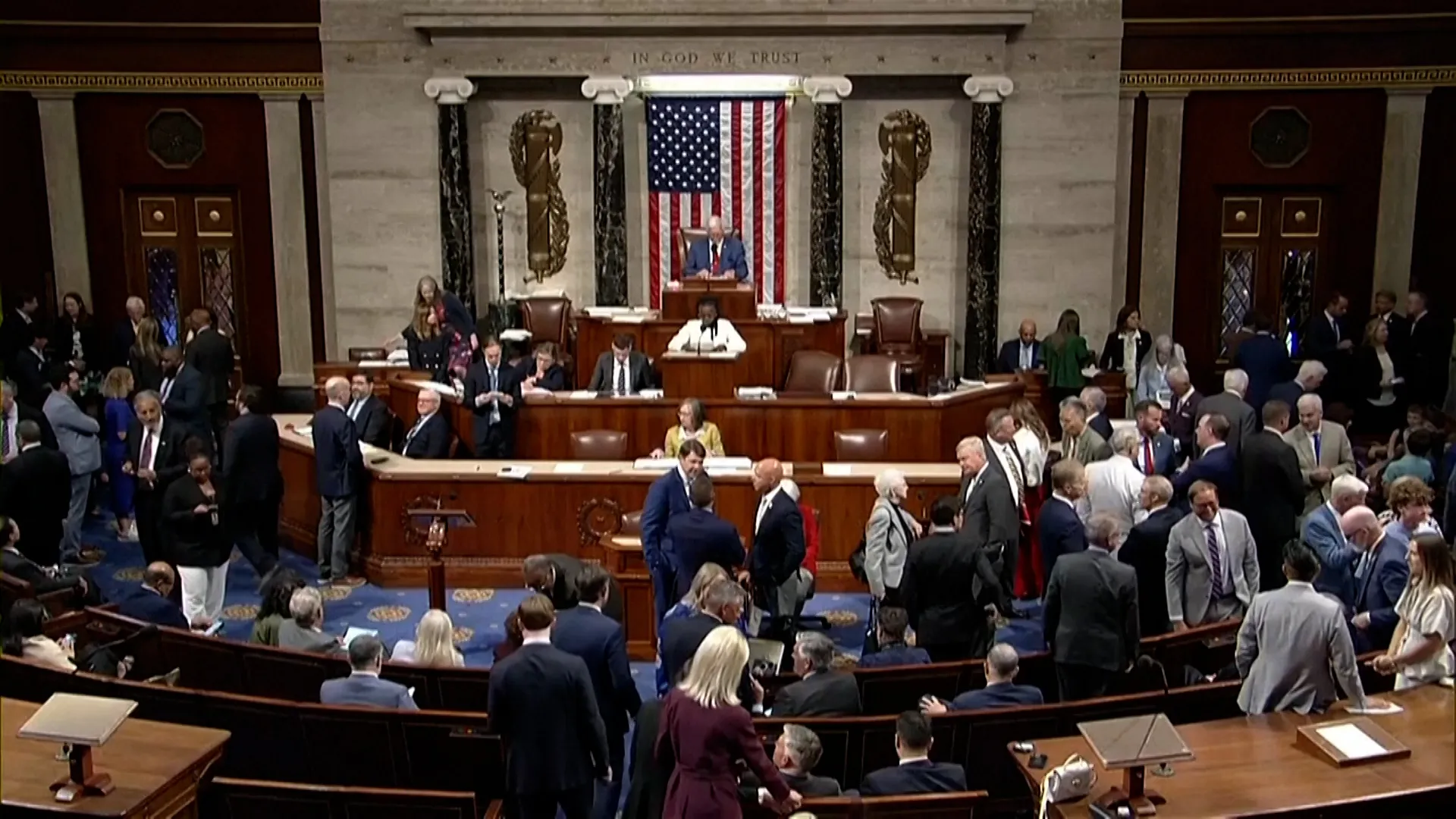
House Passes Transportation, Military Bills

The House voted Friday to spend more than $41 billion on dams, highways, airports and various military and university projects.

In a rush to finish its work next week and avoid having to return after the November elections, House members voted overwhelmingly in favor of a transportation spending bill and another energy and water spending bill, together amounting to $33 billion.

Also passed by voice vote was an $8.4-billion appropriations bill for military construction projects, including $3.3 billion to build new housing for families of military personnel and nearly $1 billion as the second installment in closing more than 80 military bases over the next few years.

The bills were produced by House-Senate conference committees that reconciled versions passed earlier by each chamber.

Rep. Robert S. Walker (R-Pa.), a member of the House Science and Technology Committee, complained that members of Senate and House appropriations committees had included about $90 million in projects paid for by the Energy Department for home-state universities.

“Eight of those 10 projects happen to be in states or districts of people who happen to be on the conference committee,” he said. “We’re allocating money not based on anything other than who’s in the room divvying up the money.”

But his motion to eliminate the projects was defeated, 308 to 108, as the chairman and top Republican on the House Appropriations Committee’s energy and water subcommittee said all the projects are justified.

“There’s nothing unusual about this,” Rep. Tom Bevill (D-Ala.), the panel’s chairman, said. “We need more labs; we need more scientists; we need more emphasis put on these programs.”

Among the 10 recipients of the funds are research centers at the University of Alabama and the University of Indiana.

Among the projects hurt in the deficit-cutting effort was one of President Bush’s favorites–the proposed $8-billion super collider atom smasher in Texas.

Bush’s request of $318 million to begin construction of the giant particle accelerator had been approved earlier by both the House and the Senate. But it was slashed to $243 billion by their negotiators last week.

Source link

Iran war’s big winners: Wall Street, weapons firms, AI and green energy | Business and Economy News

The International Monetary Fund has downgraded its global growth forecast for 2026 from 3.3 to 3.1 percent, citing the impact of the United States-Israeli war on Iran and the shutdown of the Strait of Hormuz on the world economy.

The war has damaged energy infrastructure across the Gulf, while critical exports like oil, gas, chemicals and fertiliser remain largely stranded by Iran’s shutdown of the strait and the subsequent US naval blockade of Iranian ports.

Recommended Stories

list of 4 itemsend of list

In the worst-case scenario of a prolonged war, the IMF said global growth could fall to 2.5 percent in 2026, with low-income and developing economies hit the hardest by soaring commodity and energy prices. The global shipping and logistics industry is facing a separate crisis.

But every economic crisis also has beneficiaries: despite the dire macroeconomic outlook, some corners of the global economy are thriving on the uncertainty.

Here’s a look at five industries that are doing well either despite – or because of – the darkening economic outlook.

Wall Street investment banks

Global investors have been on a rollercoaster since the start of US President Donald Trump’s second term last year. The president’s erratic decision-making, where he often issues an ultimatum one day and then changes it the next, has led traders to coin the term “TACO trade”, where TACO stands for “Trump Always Chickens Out”.

The recent volatility has made some investors anxious, but it’s been a boon to investment banks, which make millions in commissions and revenue from the surging volume of trade, according to Sean Dunlap, a director of equity research at Morningstar Research Services.

“Clients want to reposition, so they trade frequently,” he told Al Jazeera. “Spreads tend to increase, which increases the profitability for trade intermediaries like banks.”

First-quarter results for 2026 – released this week – showed that Morgan Stanley reported a profit of $5.57bn, up 29 percent year on year, while Goldman Sachs reported a profit of $5.63bn, up 19 percent year on year.

JP Morgan Chase also reported major gains, with first-quarter earnings of $16.49bn, up 13 percent year on year. The banks all cited high levels of trading, deal-making, and “robust client engagement” as the reasons behind surging profits.

The boomtime for banks could reverse course, however, if volatility persists for too long, Dunlap warned, because investors may become increasingly cautious and less willing to borrow money to make trades.

Prediction markets

As mainstream Wall Street banks reap profits, the crypto-based prediction platform Polymarket has been earning upwards of $1m a day since the start of the month by letting users make peer-to-peer bets on everything from sports tournaments to elections.

Polymarket has been doing well since the start of the war, but it revised its fee structure on March 30 to cash in even more on its popularity.

Rival platforms like Kalshi, Novig and Robinhood also follow the same business model, but Polymarket has been the standout winner of 2026 because it controversially allows users to bet on the outcome of conflicts like the Iran war.

Polymarket revised its fee structure on March 30 to cash in on its popularity. The change has already netted the platform more than $21m in fees since April 1, up from $11.6m for all of March and $6.23m for all of February, according to DefiLlama, a website that provides data analysis for decentralised finance platforms.

If the current trend continues, Polymarket could make $342m in fees this year alone, according to DefiLlama’s analysis.

Anonymous users have also made millions correctly predicting the dates of major events like the US-Iran ceasefire, but the outcomes for rank-and-file users are typically less impressive.

Researchers found that the top 1 percent of Polymarket users captured 84 percent of all trading gains, according to a new report released this month analysing 70 million trades from 2022 to 2025. The returns are so high that US federal regulators have pledged to crack down on insider trading in prediction markets following suspiciously well-timed bets on Iran war outcomes.

Aerospace and defence

Unsurprisingly, the aerospace and defence industries are booming this year due to major conflicts in Ukraine, Iran, Sudan, Gaza and Lebanon and a surge in global defence spending.

About half of the world’s countries have increased their military budgets over the past five years, according to an April report from the IMF, which means they are also buying everything from drones to missiles — more than ever before. Demand is growing particularly fast in Europe, where NATO countries have committed to raising defence spending to 5 percent of gross domestic product (GDP) by 2035.

The defence industry has, in turn, seen major gains on the stock market. The MSCI World Aerospace and Defence Index – which tracks aerospace and defence stocks across 23 global markets – reported net returns of 32 percent year on year at the end of March.

The defence index outpaced the MSCI World Index, which tracks 1,300 large and mid-cap companies across the same 23 markets. The index, which gives a broader overview of global stock markets, reported net returns of 18.9 percent over the same period.

Artificial intelligence

Last year, the United Nations Trade and Development (UNCTAD) office predicted that the AI industry would grow from $189bn in 2023 to $4.8 trillion by 2033, and the Iran war does not seem to have dented the outlook.

“Despite the shocks from the Iran war, we’re still seeing resilience in a lot of sectors like artificial intelligence and renewable energy,” said Nick Marro, lead analyst for global trade at the Economist Intelligence Unit.

One metric for the AI boom has been the high volume of semiconductor chips still being exported out of East Asia, he said. At the top of the chart is chipmaking powerhouse Taiwan, which reported record-breaking merchandise exports of $80.2bn in March, up 61.8 percent year on year, according to EIU analysis.

The surge was led by exports to the US, which grew by 124 percent year on year, the EIU said.

Taiwan Semiconductor Manufacturing Company, the world’s top chipmaker better known by its acronym “TSMC,” on Thursday posted a net income of 572.8 billion New Taiwan Dollars (NTD) ($18.1bn) for the first three months of 2026 – up 58 percent year on year in NTD.

Another metric, initial public offerings or “IPOs,” also shows that the industry is confident for the moment, with industry leaders Anthropic and OpenAI both planning to go public this year.

Renewable energy

The Iran war has highlighted the need to transition from fossil fuels not only for environmental reasons, but also for reasons of energy security. The war marks the third major energy shock this decade, following the COVID-19 pandemic and the 2022 Russian invasion of Ukraine.

The Iran war has “boosted” renewable energy “given the urgency to switch away from fossil fuels and diversify towards renewable sources,” Marro of the EIU said.

Even before the Iran war began, the International Energy Agency reported that global governments were already taking active measures to invest in renewable energy for geopolitical reasons.

According to an IEA report released this month, “150 countries have active policies to advance renewable and nuclear deployment, 130 have energy efficiency and electrification policies, and 32 have policies to incentivise supply chain resilience and diversification across critical minerals and clean energy technologies.”

The Iran war has triggered another flurry of policymaking in Asia, which typically buys 80 to 90 percent of the oil and gas that transits through the Strait of Hormuz. Since the shutdown, the region has been struggling to find alternative sources of energy, forcing governments to deploy emergency measures like fuel rationing and price caps.

South Korea, Thailand, India, Cambodia, Indonesia, Vietnam and the Philippines have all announced a variety of measures from tax breaks for at-home solar panels to commissioning new renewable energy projects – and even restarting nuclear reactors.

The surge in policymaking has been good for the renewable industry. The S&P Global Clean Energy Transition Index, which tracks 100 companies that produce solar, wind, hydro, biomass and other renewable energy across emerging and developed markets, is up 70.92 percent year on year.

Source link

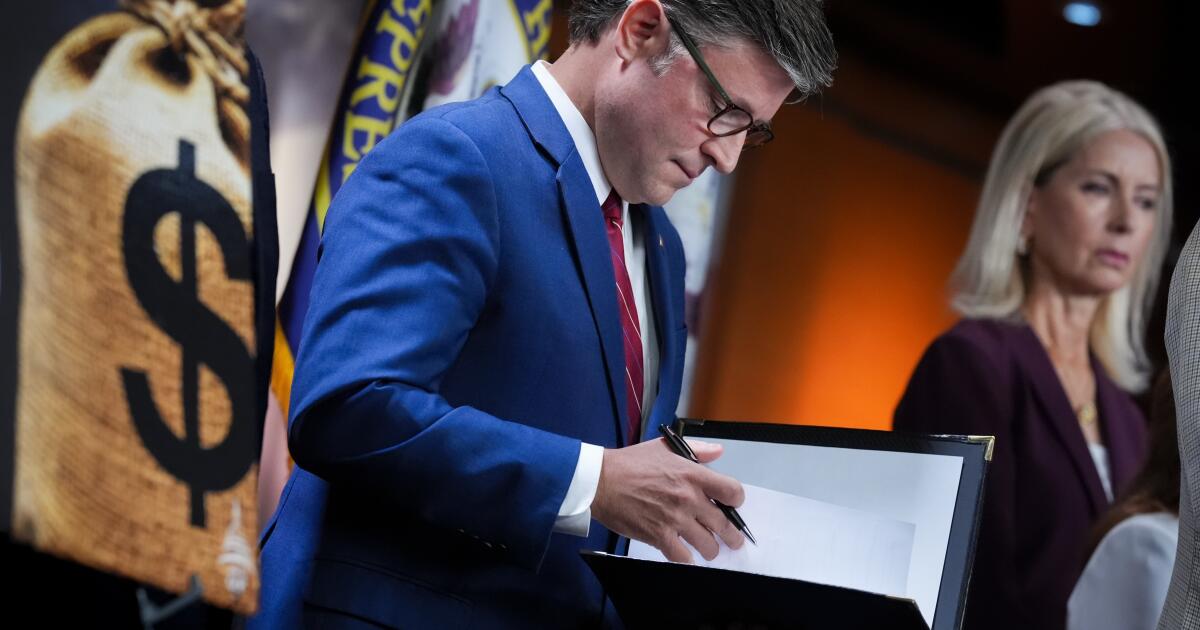
Trump’s budget director defends White House plan for massive boost in military spending

An effort to ramp up U.S. weapons production and build more ships, planes and drones will require a massive upfront investment, President Trump’s budget director told a House committee Wednesday.

The testimony from Russell Vought jump-starts the White House’s push to increase defense spending to nearly $1.5 trillion in the next budget year, up from nearly $1 trillion this year, while cutting health research, heating assistance and scores of other domestic programs by about 10% overall. Such cuts do not cover mandatory spending, which includes such programs as Social Security and Medicare.

The debate over Trump’s proposal underscored the sharp divide that will shape some of the most significant policy debates going into a midterm election that will give voters the ultimate say on the direction of the country.

“For the industrial base to double or triple and build more facilities, not just add shifts, it requires multiyear agreements to purchase into the future,” Vought told lawmakers. “That cost has to be booked in this first year.”

The White House is calling for about $1.1 trillion for defense through the regular appropriations process, which typically requires support from both parties for approval. An additional $350 billion would come through a separate bill that Republicans can accomplish on their own, through party-line majority votes.

Rep. Brendan Boyle of Pennsylvania, the ranking Democratic member of the committee, said he believes in a strong national defense. But he said the idea of increasing defense by more than 40% while cutting programs that people need shows that the Republican administration’s priorities are “out of whack.”

The committee chairman, Rep. Jodey Arrington (R-Texas), predicted the hearing would be more “amped up” than usual, and that proved to be true, beginning with his opening statement focused on criticizing Democrat Joe Biden’s presidency. Arrington said he did not know of any president in his lifetime who “inherited such a complete and utter mess as President Trump did in January of last year.”

Since then, Arrington said, Trump has secured the border, cut taxes and constrained nondefense spending.

It was the beginning of several back-and-forths at the hearing.

“You know how bad this economy is when we hear Joe Biden being invoked, we hear trans people being invoked. I was waiting for Jimmy Carter to be blamed next,” Boyle said in response to Arrington’s opening remarks.

Boyle said consumer confidence is plummeting under Trump and noted a gas station he passed in Philadelphia recently was selling gas at $4.11 a gallon versus less than $3 a gallon some six weeks ago because of Trump’s “war of choice in Iran.”

Rep. Becca Balint (D-Vt.) called the proposed defense spending increase shocking.

“We’ve never in the history of this country seen spending like this, paid for by slashing healthcare, education and housing,” Balint said. “Mr. Vought, yes or no, is $350 billion for the war in Iran lowering costs for Americans?”

“It is certainly not defunding child care. We fully fund child care in this budget,” Vought said, not directly answering the question.

Balint went on to incorporate Trump’s “America first” mantra in her questioning.

She said that $350 billion could pay for an enhanced health insurance tax credit for 10 years and that her constituents are asking how the country can continue to spend money on wars and not find a solution to helping people afford healthcare.

Vought said the president has made clear he was not going to let Iran have nuclear weapons, missiles and a navy that affect U.S. national security.

“He is doing what is necessary to keep us safe, while at the same time trying to pursue diplomacy so that we can get out of wars and lower those costs over time,” Vought said.

Vought said it was unclear how much the administration would seek to fund the war during the current budget year, which ends Sept. 30. That money would be part of an emergency supplemental spending bill and would be on top of the funds the White House is seeking to boost defense spending next year.

“Would it be more than $50 billion?” asked Rep. Veronica Escobar (D-Texas).

“We’re still working on it,” Vought said. “I don’t have a ballpark for you.”

Freking writes for the Associated Press.

Source link