Some of the 20 ships hoisting the Palestinian flag dock in the port in Barcelona, Spain, on Sept. 1, 2025. The Global Sumud Flotilla was intercepted by Israeli forces on Thursday near the Greek island of Crete. File Photo by Quique Garcia/EPA
April 30 (UPI) — Israeli forces intercepted and boarded the Global Sumud Flotilla in international waters off Greece on Thursday, preventing it from delivering aid to Gaza and drawing international condemnation.
The Israeli military, using drones and armed personnel, blocked the fleet of ships in the Mediterranean Sea off the coast of the Greek island of Crete. Twenty-two of 58 vessels were seized, with passengers held at gunpoint.
“Our boats were approached by military speedboats, self-identified as ‘Israel’, pointing lasers and semi-automatic assault weapons, ordering participants to the front of the boats and to get on their hands and knees,” the Global Sumud Flotilla aid mission said in a statement.
The Israeli Foreign Ministry said in a social media statement on Thursday that it detained about 175 activists from the more than 20 boats of the flotilla.
“Well done to our Navy!” Prime Minister Benjamin Netanyahu said in a statement following the operation, stating he had directed the military to intercept the boats before they reached Gaza.
“No ship and no Hamas supporter reached our territory, and not even our territorial waters. They were turned back and will return to their countries of origin.”
The flotilla was sailing from Barcelona, Spain, to Gaza when its ships were intercepted. Crete is more than 700 miles from the Palestinian enclave.
The Global Sumud Flotilla social media page posted that Israeli forces smashed engines and destroyed navigation arrays on its ships before retreating.
“Intentionally leaving hundreds of civilians stranded on powerless, broken vessels directly in the path of a massive approaching storm,” the social media post reads. “Furthermore, communications with multiple vessels have been jammed, severing their ability to coordinate or signal for help.”
Israel has maintained a maritime blockade of Gaza since 2009. It has said the blockade is meant to block weapons smuggling to Gaza.
The Israeli Foreign Ministry called the aid flotilla a “PR stunt.”
“As international media have exposed, these are professional provocateurs on pleasure cruises, addicted to self-promotion,” the Israeli Foreign Ministry wrote on social media.
Numerous countries, politicians and human rights organizations voiced condemnation of the Israeli operation, with a dozen-country bloc, including Brazil, Pakistan, Spain, Malaysia and South Africa, describing the interception as an “Israeli assault” on a peaceful civilian humanitarian initiative.
“The Israeli attacks against the vessels and the unlawful detention of humanitarian activists in international waters constitute flagrant violations of international humanitarian law,” the bloc said in a statement.
Italian President Giorgia Meloni separately condemned the seizure, while Turkey’s Foreign Ministry called upon the international community “to adopt a unified stance against this unlawful act by Israel.”
The U.S. State Department, meanwhile, issued a statement condemning the flotilla.
Wreathes are seen amongst the statues at the Korean War Veterans Memorial during Memorial Day weekend in Washington on May 27, 2023. Memorial Day, which honors U.S. military personnel who died while in service, is held on the last Monday of May. Photo by Bonnie Cash/UPI | License Photo
The move comes as part of a larger prisoner pardon tied to a Buddhist religious holiday.
By Reuters and The Associated Press
Published On 30 Apr 202630 Apr 2026
Myanmar’s former leader Aung San Suu Kyi has been moved to house arrest, state media report, more than five years after the military toppled the civilian government that the Nobel laureate had led and jailed her.
President Min Aung Hlaing, who ordered the coup in 2021, said in a statement on Thursday that he “commuted the remaining sentence to be served at the designated residence”.
Recommended Stories
list of 3 itemsend of list
State media broadcast a photograph of Suu Kyi seated on a wooden bench and flanked by two uniformed personnel – the first public image of the democracy campaigner in years.
Translation: Change the location where Daw Aung San Suu Kyi is serving her sentence (change her remaining sentences to continue serving at her designated residence).
Earlier on Thursday, authorities had announced her prison sentence was being reduced as part of a larger prisoner pardon tied to a Buddhist religious holiday. State media said in addition to the amnesty granted to 1,519 prisoners, including 11 foreigners, the sentences of remaining convicted prisoners were cut by a sixth.
Suu Kyi was originally sentenced to 33 years in prison in late 2022 for several offences that her supporters and rights groups described as attempts to discredit her and legitimise the army takeover that removed her from office and to prevent her return to politics.
Thursday’s amnesty, the second applied to her in recent weeks, would bring her sentence down to 18 years with more than 13 years left to serve, according to the calculation.
The decision to move the 1991 Nobel Peace Prize winner to house arrest was welcomed as a “meaningful step” towards a “credible political process”, a spokesman for United Nations Secretary-General Antonio Guterres said.
“We appreciate the commutation of Aung San Suu Kyi to a so-called house arrest in a designated residence. It is a meaningful step towards conditions conducive to a credible political process,” Stephane Dujarric told reporters.
He reiterated the UN’s call for the “swift release” of all political prisoners in Myanmar.
“It is good to hear that the house arrest has been confirmed, but we haven’t received any direct notification,” a member of Suu Kyi’s legal team told the Reuters news agency.
“We only found out about it from the news announcement.”
The amnesties come after Min Aung Hlaing was sworn into office as president on April 10 after an election that critics said was neither free nor fair and was orchestrated to maintain the military’s tight grip on power.
In his inauguration speech, he said his government would grant amnesties aimed at promoting social reconciliation, justice and peace.
Suu Kyi, who is now 80 years old, has been serving her prison term at an undisclosed location in the capital, Naypyitaw.
Information about her condition has remained tightly controlled. Reports in 2024 and 2025 indicated declining health, including low blood pressure, dizziness and heart problems, but these claims could not be independently verified. Her legal team has not been allowed to meet her in person since December 2022.
The 2021 army takeover triggered enormous public resistance that was brutally suppressed, triggering a bloody civil war that has killed thousands of people.
According to the Assistance Association for Political Prisoners, a rights monitoring organisation, 22,047 people have been in detention in Myanmar since the army takeover.
Suu Kyi spent almost 15 years as a political prisoner under house arrest between 1989 and 2010. Her tough stand against military rule in Myanmar turned her into a symbol of nonviolent struggle for democracy.
A gas station in Berlin, Germany, displays the latest per liter prices for petrol, diesel and LPG on Thursday after oil prices on global markets surged to their highest level since 2022. Photo by Filip Singer/EPA
April 30 (UPI) — Oil prices briefly topped $126 a barrel in Asian trade overnight as markets reacted to news the United States might resume its military offensive against Iran and fears the Hormuz Strait might remain closed for much longer than anticipated.
Brent crude, the global benchmark, surged to $126.31, its highest level since Russia invaded Ukraine in 2022, after a report that U.S. military commanders were pitching a campaign of “short and powerful” strikes to U.S. President Donald Trump, to force Iran back to the negotiating table.
The price retreated to around $120 by the time markets in Europe opened on Thursday and continued to fall through the morning. The Brent contract for June delivery was trading at $113.91 a barrel in mid-afternoon trade in London, while American crude for June delivery was changing hands at $104.82.
Oil prices have already elevated since the war began on Feb. 28 and began climbing further on Wednesday after Trump met with executives of U.S. oil companies the previous day about how to deal with supply disruption from the closure of the Strait of Hormuz by Iran, which has vowed it will continue until the United States’ blockade of its ports is lifted.
The group discussed “steps we could take to continue the current blockade for months if needed and minimize impact on American consumers,” a White House official said.
Around 25% of the world’s oil supply passes through the strait and the prospect of it remaining effectively closed for months has set alarm bells ringing in markets as traders’ faith in an early resolution fades and “the reality of the supply situation” sets in.
“The breakdown of talks between the U.S. and Iran, along with President Trump reportedly rejecting Iran’s proposal for a reopening of the Strait of Hormuz, has the market losing hope for any quick resumption in oil flows,” said William Patterson, ING’s Singapore-based head of commodities strategy.
Trump has said he believes the regime in Tehran will blink first, saying they were less afraid of the bombing than the blockade, with U.S. officials banking it will force Iran to shutter oil production because the oil has nowhere to go and the country lacks sufficient storage facilities.
Artemis II pilot Victor Glover (L) and mission specialist Christina Koch meet with President Trump in the Oval Office of the White House on Wednesday. Photo by Graeme Sloan/UPI | License Photo
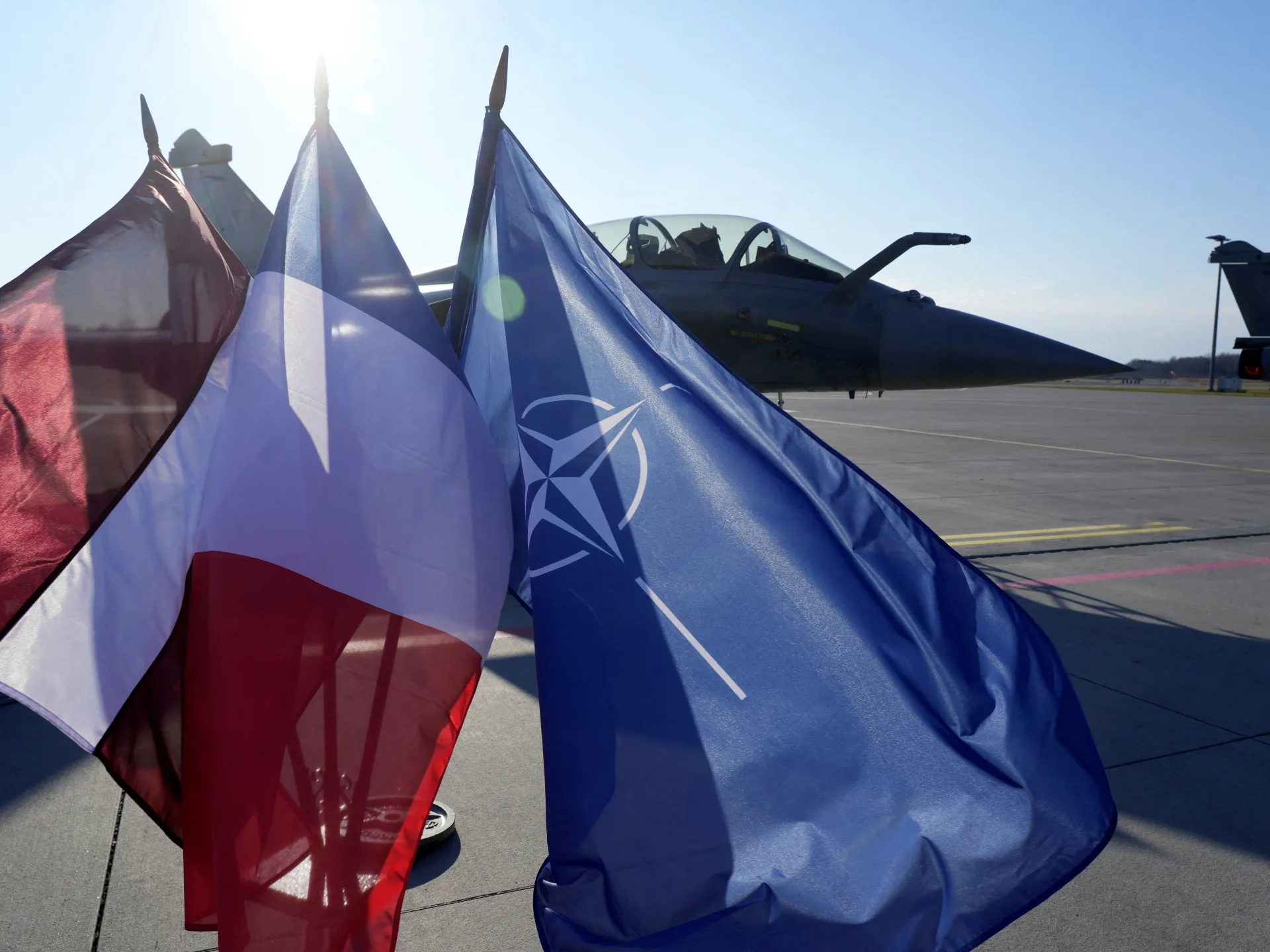
European leaders are seeking to clarify a little-used mutual defence clause in the European Union treaty as questions grow over Washington’s long-term commitment to NATO during a deepening rift with the United States.
NATO, founded in 1949, is a military alliance of North American and European countries built on the principle that an attack on one member is an attack on all. But years of tension between Washington under President Donald Trump and its European allies have pushed European governments to place greater emphasis on their own defence capabilities.
Recommended Stories
list of 4 itemsend of list
The shift has come as Trump has repeatedly criticised NATO members over their defence spending. He has also questioned the value of the alliance and clashed with European leaders over Ukraine and Iran while threatening to seize Greenland from NATO ally Denmark. The latest tensions escalated after the US and Israel began their war on Iran when Trump accused allies of failing to support Washington and dismissed NATO as a “paper tiger”.
Media reports have said that the Pentagon has also prepared a memo examining options to punish allies viewed as insufficiently supportive during the Iran war. Those options reportedly include exploring the suspension of Spain, which has been particularly critical of the war, from NATO and reviewing the US position on Britain’s claim to the Falkland Islands. NATO has no formal mechanism to expel a member, but the episode has cast doubt over the alliance’s unity and revived questions about Europe defending itself without Washington.
At the heart of Europe’s bid to look for alternative security arrangements beyond NATO is Article 42.7 of the European Union’s founding treaty.
What is Article 42.7?
Article 42.7 of the Treaty on European Union is the bloc’s mutual defence clause. It says that if an EU member state is the victim of armed aggression on its territory, the other member states are obliged to provide aid and assistance by all means in their power in line with the United Nations Charter.
By comparison, Article 5 in NATO’s North Atlantic Treaty states that an attack on one member is considered an attack on all. It is supported by common planning and joint exercises and is underpinned by the military weight of the US.
Unlike NATO’s Article 5, however, the EU clause is not backed by an integrated military command structure, standing defence plans or a permanent force able to respond automatically and the US has no obligation to intervene.
That means it is often seen as less credible as a military guarantee in practice although it remains an important political commitment.
Who is calling for Europe to turn to Article 42.7?
Cyprus, which is an EU member but not a NATO member, has been especially eager to strengthen the clause after a drone struck a British airbase on the island during the Iran war last month. While such an incident may not have been enough to invoke NATO’s Article 5, it could raise questions about Article 42.7, particularly at a time of growing strain between the US and Europe.
Cypriot President Nikos Christodoulides said leaders had agreed it was time to define how the provision would work in practice if it were triggered.
“We agreed last night that the [European] Commission will prepare a blueprint on how we respond in case a member state triggers Article 42.7,” he said on Friday at an EU summit.
French President Emmanuel Macron has also stressed that the clause should be treated as a binding commitment rather than a symbolic gesture. “On Article 42, paragraph 7, it’s not just words,” he said during a weekend visit to Greece. “For us, it is clear, and there is no room for interpretation or ambiguity.”
Antonio Costa, president of the European Council, said the bloc was drawing up a “handbook” for the use of the clause.
And EU foreign policy chief Kaja Kallas said Europe must step up its defence efforts after Trump has “shaken the transatlantic relationship to its foundation”.
“Let me be clear: We want strong transatlantic ties. The US will remain Europe’s partner and ally. But Europe needs to adapt to the new realities. Europe is no longer Washington’s primary centre of gravity,” she said at a defence conference in Brussels.
“This shift has been ongoing for a while. It is structural, not temporary. It means that Europe must step up. No great power in history has outsourced its survival and survived.”
Has the article ever been invoked?
The clause has been used only once before when France invoked it after the 2015 Paris attacks claimed by ISIL (ISIS), in which 130 people were killed and hundreds wounded.
The attacks were the deadliest in France since World War II. After Article 47.2 was invoked, other EU states shared intelligence aimed at helping French authorities unravel the conspiracy that led to the attacks.
NATO’s Article 5 has also been invoked just once – after the September 11, 2001, attacks in the US.
But NATO’s help to the US wasn’t limited to intelligence sharing. Allies contributed tens of thousands of soldiers to the US-led war in Afghanistan. The operations lasted two decades, and more than 46,000 Afghan civilians were killed alongside 2,461 US personnel and about 1,160 non-US coalition soldiers, according to Brown University’s Cost of War project.
Can countries be kicked out or leave NATO?
Europe’s debate over its defence comes amid a string of disputes inside NATO. The reports that US officials have considered punitive measures against allies have revived questions over the alliance’s future cohesion.
Pablo Calderon Martinez, head of politics and international relations at Northeastern University London and a specialist in European affairs, told Al Jazeera that Spain cannot legally be removed from NATO.
“There is no legal mechanism to remove a member. There is, however, a mechanism through which a member can withdraw itself from the organisation,” he said.
He added that some countries have long fallen short of NATO commitments but that does not provide grounds for expulsion. A more likely scenario, he said, would be the US choosing to leave.
Carne Ross, a former British diplomat and founder of Independent Diplomat, a nonprofit diplomatic advisory group, said the deeper issue is whether Europe and Washington still share common values.
“It is abundantly clear that we do not. Trump is anti-democratic. He tried to subvert democracy, challenged the 2020 election result and whipped up a violent crowd to storm the Capitol,” Ross said.
“What more evidence do we need that the values of Europe are not shared in Washington?”
Is Europe preparing for a future without the US?
European countries have pledged to sharply increase their defence budgets with many aiming to spend 5 percent of their gross domestic products each year on their militaries.
Trump cannot withdraw the US from NATO without congressional approval, but doubts over Washington’s commitment have already unsettled many European capitals.
That has created new urgency around strengthening Europe’s own defence capabilities and building a more credible European pillar inside, or alongside, NATO.
Ross said Europe’s major powers should begin planning seriously for greater self-reliance.
“The Europeans themselves, particularly the most powerful countries – Britain, France, Germany and Italy – need to be talking about how to defend themselves without the US,” he said.
Weekly insights and analysis on the latest developments in military technology, strategy, and foreign policy.
The general in charge of keeping the United States Marine Corps sustained in a fight dismisses the notion that China poses a near-peer threat to the U.S. It’s far more serious and will make the currently paused conflict with Iran pale by comparison should the two superpowers come to blows, said Lt. Gen. Stephen Sklenka, the USMC Deputy Commandant for Installations and Logistics.
“There is no threat that looms larger than the People’s Republic of China,” Sklenka said during the 2026 Modern Day Marine Expo in Washington, D.C.. “Don’t listen to this garbage about them being a near peer. They’re a peer because they rival us in nearly every single measure of national influence.”
The People’s Liberation Army PLA Rocket Force formation attends a military parade in Beijing, capital of China, Sept. 3, 2025. (Photo by Guo Yu/Xinhua via Getty Images) Xinhua News Agency
As the “lead strategist” and former Deputy Commander of U.S. IndoPacom, Sklenka said he “got to be pretty familiar with how General Secretary Xi was thinking and what his intentions are.”
The Chinese leader’s “vision is to upend the international structure [and] supplant us as the global leaders. And in many ways, it’s been Xi’s thinking, his vision, that has helped my own thinking about the demands of modern warfare, particularly when waged in the Pacific and particularly waged against a peer adversary, something that’s new to all of us.”
China’s President Xi Jinping wants to supplant the U.S. as a global leader, a U.S. Marine Corps general warns. (Photo by Lintao Zhang/Getty Images) Lintao Zhang
Epic Fury offers some sobering lessons, Sklenka noted. While the U.S. is able to pour forces into theater via uncontested skies and largely uncontested seas, Iran was still able to inflict a great deal of pain on America and its allies during the fighting. It still is economically through an ongoing closure of the Strait of Hormuz. A fight with China would be far worse, Sklenka cautioned.
“We’re about two months into combat operations with Epic Fury. We’ve got service members who have tragically been wounded and killed by Iran. They’ve launched hundreds of drones and ballistic missiles at our bases and our allies throughout the region – Israel, Saudi Arabia, Qatar, Kuwait, Jordan – reinforcing the point that the bases that we have, they’re no longer administrative garrison sanctuaries. We really need to start looking at our bases as war fighting formations, just as critical of a war fighting formation as our divisions, wings and [Marine Expeditionary Units] MEUs.”
We’ll talk more about that later in this story.
You can see damage to U.S. bases in the Middle East in the following satellite images.
JUST IN 🇮🇷🇺🇸: New Satellite Photos from Iran Show Damage on U.S. Bases from Iran’s Strikes
Iran has “illustrated how a mid-tier power can hold a significantly superior force at risk” Sklenka suggested. “As a learning organization, we ask ourselves, ‘how do we carry every lesson from this fight forward, and how do we ensure that we’re equally prepared to dominate the conflict with China?’”
“Think about the complexities and complications that we’re [facing] with Iran, and then ask yourself, ‘how are we going to respond and act when we’re going up against a nation that’s number two in national GDP?’” he added. “The fact is that Iran doesn’t have anywhere near China’s economic might. They don’t have their industrial base. They certainly don’t have their military modernization trajectory.”
A KC-135 Stratotanker aerial refueling jet seen over RAF Mildenhall after being peppered with shrapnel during an Iranian attack on Prince Sultan Air Base in Saudi Arabia last month. (Andrew McKelvey)
“Over the last 10 to 15 years, the Chinese manufacturing base has been out-producing us” Sklenka posited. “Xi is on a wartime footing. There’s no doubt about that. It’s underpinned by an industrial base that’s out producing the world in ships and steel, precious minerals and satellites, munitions.”
China’s “shipbuilding capacity is reported to be 230 times the capacity that the United States has,” the general continued. “They more than doubled their nuclear powered submarine construction, their arsenal of ballistic and cruise missiles is undergoing a rapid expansion.”
First made-in-China aircraft carrier, the Shandong, enters service
“Their nuclear stockpile is the fastest growing in the world. They’re pursuing innovative, intelligentized warfare tactics,” Sklenka pointed out. “They’re using artificial intelligence, drone swarms, exploring the cognitive and innovative domains to achieve their dominance. They’re building a military design to dominate the Pacific, and I believe ultimately beyond the Pacific.”
The nuclear missile formation passes through Tian’anmen Square during a military parade in Beijing, capital of China, Sept. 3, 2025. China on Wednesday held a grand gathering to commemorate the 80th anniversary of the victory in the Chinese People’s War of Resistance against Japanese Aggression and the World Anti-Fascist War. (Photo by Yan Linyun/Xinhua via Getty Images) Xinhua News Agency
China’s intent, Sklenka added, “is clear. They want to regain that self-identified moniker of the Middle Kingdom, and they want to resume what they believe is their rightful place in the world. They’re not interested in sharing that position with us or with anybody else. General Secretary Xi’s view is that it’s their time, and this is the context. I bring that all up for our transformation.”
“None of us in uniform today have ever had to operate in a world where a legitimate peer simultaneously contests us in every single domain,” said Sklenka. “We are talking terrestrially and non-terrestrially, kinetically and non-kinetically. We’re going to have to fight to get to that fight, and we’re going to have to embrace these challenges and not operate under the auspices of how we did in the 80s and 90s. History is proven, and our current operations are confirmed, that the society that can project and sustain power and sustain their forces most effectively, ultimately, they prevail.”
China has now formally commissioned its first catapult-equipped aircraft carrier, the Fujian, into service. (Chinese Ministry of National Defense)
Looking to the future, Sklenka echoed warnings that TWZ has made for years about the vulnerability of U.S. military installations, both home and abroad. No increases in magazine depth, additional weapons systems or advancements with AI and other new technologies will ultimately matter “if you can’t get off the installation in the first place,” he stated. “The ability to mobilize and deploy is underpinned by the readiness of our installations. It’s a concept that we’re just now really starting to wrestle with.”
“Our bases, posts and stations…are the front lines of decisive terrain. And I’m not just talking about those in the first island chain. This isn’t just [Marine Corps Installations Pacific] MCIPAC. Our CONUS installations are subject to non-kinetic attacks. Non kinetic-attacks, they’re going to be just as debilitating and just as strategically consequential as any kinetic attack that’s going to be out there. And they’re going to carry an air of non-attrition that’s designed to both confuse decision makers and sow chaos during the most critical phases of the fight, the beginning, the first shots of that next war.”
Mysterious drones flew over Langley Air Force Base in Virginia for weeks in December 2023. (A satellite image of Langley Air Force Base. Google Earth)
That first salvo, Sklenka said, is most likely not going to be delivered by a missile or bomber.
“They’re likely not going to be fired in the South China Sea or in the Taiwan Strait,” he explained. “They’re going to be a cyber attack against a power grid on our base, a disinformation campaign targeting military families or a drone swarm coming off one of our installations.”
The localized drone attack concern is exactly what TWZ has long predicted and became a reality last year in Russia and Iran. Last June, Ukraine launched Operation Spider Web, an audacious near-field attack on Russian air bases, destroying a large number of strategic bombers with remotely operated drones set up in trucks placed near those installations.
Spider Web was followed about two weeks later by an operation Israel carried out, using drones pre-positioned inside Iran to attack the Islamic Republic’s air defenses.
You can see video of one attack during Operation Spider Web below.
“I think our installations have to start being treated as warfighting platforms,” Sklenka proclaimed. “We need the best solutions for counter UAS. We got to quit talking about it, start delivering that. We need resilient power. You have to be able to absorb when our communications are cut and continue those communications actions. We need hardened infrastructure and a hard network.”
His plea for hardening infrastructure runs counter to thinking by some U.S. military leaders, particularly in the Pacific, who have downplayed the need to do more to physically harden existing bases. You can read more about that in our story here.
Sklenka had other suggestions for protecting installations.
“We need integrated base defense, and we need industry’s help to do all this,” he urged. “We’re not going to be just fighting from our bases. In many cases, we’re going to be fighting for those bases. That’s a concept that’s new to us. We got to start embracing that.”
Global military spending is up again, according to SIPRI’s latest report showing the 11th consecutive year of growth. But it’s based on open data and not everything makes the list.
Al Jazeera’s Marah Rayan breaks it down.
The United States is considering a new proposal from Iran to end the ongoing war amid a fragile ceasefire between the longtime adversaries.
The offer focuses on reopening the strategic Strait of Hormuz while postponing a deal on Iran’s nuclear programme, arguably the most contentious issue between Tehran and Washington.
Recommended Stories
list of 3 itemsend of list
According to US media outlets, the proposal has drawn scrutiny in Washington, and officials there have expressed scepticism.
Early indications from the Trump administration suggest the plan is unlikely to be accepted in its current form, potentially further delaying any prospect of permanently ending the currently paused US-Israel war on Iran, which has killed thousands and sent global energy prices soaring.
Here is what we know so far:
What’s in Iran’s latest proposal?
Iran’s latest proposal aims for de-escalation in the Gulf without immediately placing restraints on its nuclear programme, as the US has demanded. Tehran has offered to reopen the Strait of Hormuz on the condition that the US lifts its naval blockade on Iranian ports and agrees to end the war.
Iran has effectively closed the strait to shipping, creating global economic pressure by driving up energy prices and disrupting supply chains. In peacetime, one-fifth of the world’s oil and liquefied natural gas (LNG) supplies are shipped through the narrow passage, which links Gulf oil producers to the open ocean.
Days after the ceasefire began on April 8, Trump announced a blockade on Iranian ports and ships, restricting Tehran’s ability to export oil and cutting off a crucial source of its revenue.
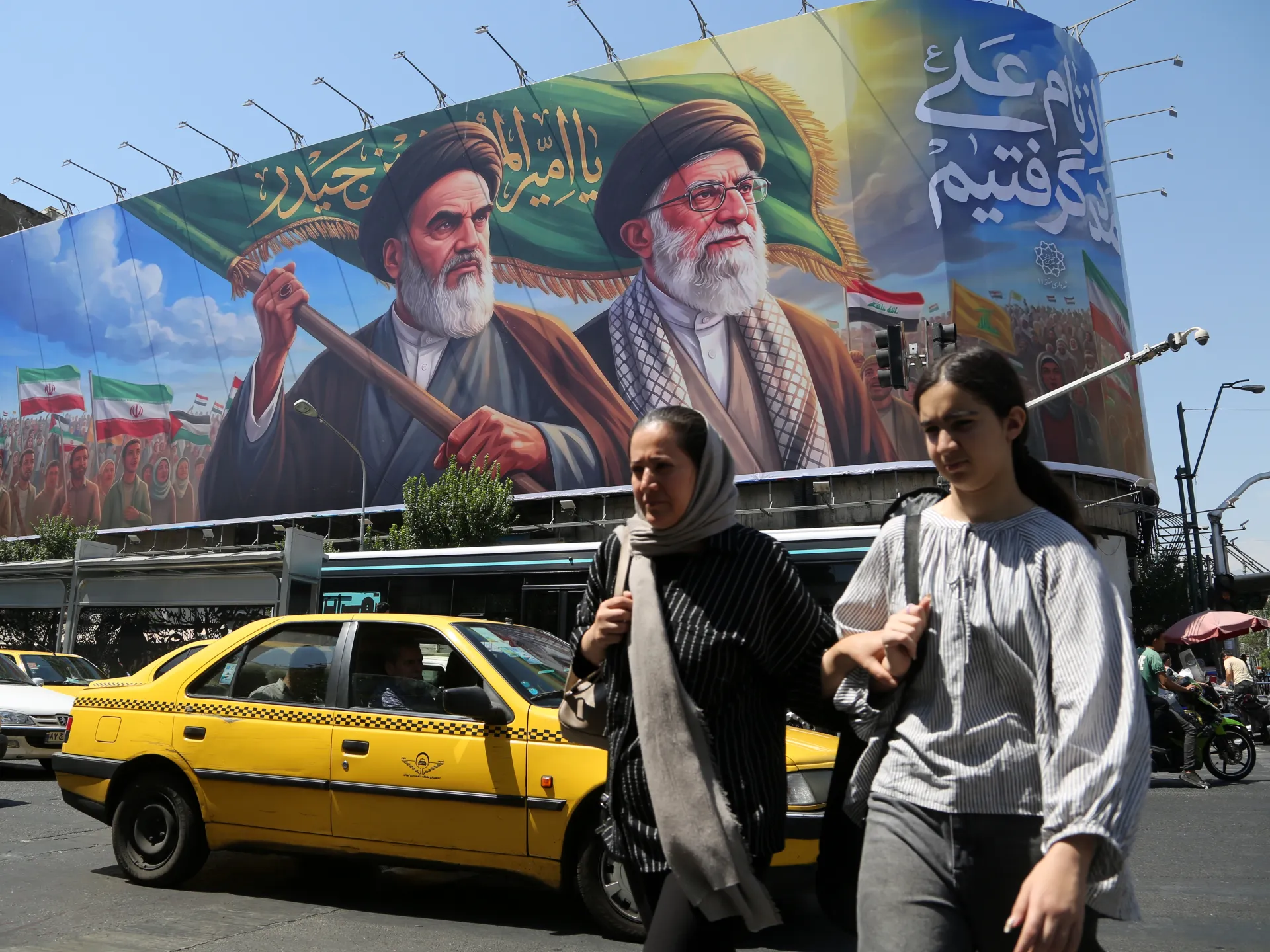
Iranians walk past a huge billboard carrying a sentence reading in Persian ‘The Strait of Hormuz remains closed’ at Enghelab Square in Tehran, Iran, 28 April 2026 [Abedin Taherkenareh/EPA]
However, a central feature of Iran’s offer to reopen the Strait to all traffic is that discussions over Iran’s nuclear activities would be postponed until after the war ends.
The proposal was conveyed to Washington through Pakistan, which has been acting as a mediator.
“These messages concern some of the Islamic Republic of Iran’s red lines, including nuclear issues and the Strait of Hormuz,” Iranian state media Fars News Agency reported.
“Informed sources emphasise Mr Araghchi is acting entirely within the framework of the specified red lines and the diplomatic duties of the Ministry of Foreign Affairs.”
The news agency said the messages relayed were “unrelated to negotiations” and are “considered an initiative by Iran to clarify the regional situation”.
Iranian analyst Abas Aslani said Iran’s latest proposal is based on an “altered” approach.
Aslani, a senior research fellow at the Centre for Middle East Strategic Studies, told Al Jazeera that Tehran believes its previous model – which was based on making compromises on its nuclear programme in exchange for economic sanctions relief – is no longer a “viable path towards a potential accord”.
“Iran believes this can also function as a trust-building measure to compensate for the trust-deficit issue,” he added.
On Monday, Tehran’s envoy to the United Nations, Amir Saeid Iravani, said “lasting stability and security” in the Gulf and the wider region can only be achieved through a durable and permanent cessation of aggression against Iran.
How has the US responded so far?
US President Donald Trump met with top security advisers on Monday to discuss the Iranian proposal, the White House confirmed.
However, according to media reports, the US response has been largely dismissive. According to Reuters, an unnamed US official said President Trump was unhappy with the proposal because it did not include provisions for Iran’s nuclear programme. The official noted that “he doesn’t love the proposal”.
Citing two people familiar with the matter, US media outlet CNN reported that Trump was unlikely to accept the proposal. It said Washington lifting its blockade of Iranian ports without resolving questions over Tehran’s nuclear programme “could remove a key piece of American leverage in the talks”.
Secretary of State Marco Rubio told Fox News on Monday that the proposal was “better than what we thought they were going to submit”, but questioned Tehran’s intentions.
“They’re very good negotiators,” he said. “We have to ensure that any deal that is made, any agreement that is made, is one that definitively prevents them from sprinting towards a nuclear weapon at any point.”
Al Jazeera’s Mike Hanna, reporting from Washington, said, “There’s been a complete lid over what was discussed” during the meeting between Trump and his national security team.
“It was so tight that we do not know exactly who in his national security team was present at that meeting,” Hanna added.
“Normally, there is some form of readout or some form of more information giving, fleshing out the details of a meeting like this.”
What has been the response from other countries?
While the “US and Iran feel that time is on their side, the longer this goes on, the more difficult it’s going to be,” Mohamed Elmasry, an analyst for the Doha Institute of Graduate Studies, said.
“I really don’t think time is on anyone’s side. I really do think the Europeans are losing patience,” he told Al Jazeera.
On Monday, German Chancellor Merz stated that the “Iranians are negotiating very skilfully”, Elmasry noted. He said this shows that Trump is coming under increasing pressure from his allies, “who believe he [Trump] got them into this big mess and isn’t able to clean it up”.
“Trump isn’t going to be happy hearing that and the chancellor is hitting Trump where it hurts.”
ISIL (ISIS) has claimed responsibility for the attack on Guyaku village, which lasted several hours.
By Reuters and The Associated Press
Published On 28 Apr 202628 Apr 2026
Armed attackers killed at least 29 people in Guyaku village in Nigeria’s Adamawa State, an attack that lasted several hours and left property destroyed, officials said.
“My heart breaks for the people of Guyaku,” state Governor Ahmadu Umaru Fintiri said in a post on social media as he visited the bereaved community on Monday.
Recommended Stories
list of 4 itemsend of list
“Today, I stood on the ground where our brothers and sisters were cruelly taken from us. This act of cowardice is an affront to our humanity and will not go unpunished,” he said.
Fintiri also said his administration would continue to support “military and vigilante groups” as it intensified security operations in response to the attack.
The ISIL (ISIS) group claimed responsibility for the attack in a post on the Telegram messaging app, according to the Reuters and Associate Press (AP) news agencies.
There are two major ISIL-backed armed groups in Nigeria, but it was not immediately clear which one was behind the attack, according to the AP.
The Guyaku attack occurred on the same day that armed attackers raided an orphanage in north-central Nigeria and abducted 23 children.
Fifteen were later rescued, and the government said “intensive operations” were under way to “secure the safe return of the remaining eight victims and apprehend the perpetrators”.
No group immediately claimed responsibility for the abductions in a region of the country that has seen an increase in kidnappings for ransom.
The statement did not say how old the abducted children are, but the term “pupil”, which the statement had used, in Nigeria usually refers to someone in kindergarten or primary school, covering ages up to 12.
US President Donald Trump and other US conservative voices have accused Nigerian authorities of failing to protect the nation’s Christians from a “Christian genocide“, amid violence from armed groups, including Boko Haram.
The Nigerian government has said that while it wants to do more to protect civilians from ISIL and al-Qaeda affiliated groups, people of all faiths have been killed in attacks, including Muslims and traditional worshippers.
Data from ACLED, a US crisis-monitoring group, found that, out of 1,923 attacks on civilians in Nigeria between January and November 2025, the number of those targeting Christians because of their religion stood at just 50.
US forces launched air strikes on ISIL-affiliated fighters in December, and then deployed 100 soldiers to northern Nigeria in February to train and advise local forces.
The Mexican military released footage of an operation resulting in the capture of Audias Flores, a high-ranking commander in the Jalisco New Generation Cartel (CJNG). Flores was considered a potential successor to former cartel leader El Mencho, who was killed in February.
German chancellor warns the US risks becoming bogged down in another quagmire similar to Iraq and Afghanistan.
Published On 27 Apr 202627 Apr 2026
German Chancellor Friedrich Merz says the United States is being “humiliated” in its war with Iran, warning that Washington lacks a clear path out of the conflict as Tehran gains the upper hand.
Speaking to students in the German town of Marsberg on Monday, Merz said the situation has exposed a deeper strategic problem for the US as he drew comparisons with past military debacles.
Recommended Stories
list of 3 itemsend of list
“The problem with conflicts like this is always you don’t just have to get in – you have to get out again. We saw that very painfully in Afghanistan for 20 years. We saw it in Iraq,” he said.
Merz said Iranian officials were “obviously negotiating very skilfully” and appeared “clearly stronger than one thought”, adding that “an entire nation is being humiliated by the Iranian leadership”, particularly by the Islamic Revolutionary Guard Corps.
Merz urged a rapid end to the war, warning that the fallout was already hitting Germany’s economy.
“It is, at the moment, a pretty tangled situation,” he said. “And it is costing us a great deal of money. This conflict, this war against Iran, has a direct impact on our economic output.”
The German leader said Berlin remains ready to deploy minesweepers to help secure shipping routes through the Strait of Hormuz, a vital artery for global petroleum supplies, but stressed that such steps depend on a cessation of hostilities.
Merz made the comments as concerns are growing across Europe over the wider impact of the conflict, including energy disruptions and economic instability.
Earlier, German Foreign Minister Johann Wadephul warned that nuclear threats continue to shape the security environment, even as Berlin reaffirmed its commitment to nonproliferation.
“As long as nuclear threats against us and our partners continue, we will need a credible deterrent,” he said before meetings at the United Nations on the Treaty on the Non-Proliferation of Nuclear Weapons.
France and Germany have recently moved to deepen cooperation on nuclear deterrence, reflecting mounting anxiety in Europe over both the Iran war and broader regional instability.
A Ukrainian attack on the captured Zaporizhzhia nuclear plant kills a worker, according to the site’s Russia-installed authorities.
Published On 27 Apr 202627 Apr 2026
Ukrainian officials say Russian drones have again attacked the southern port city of Odesa, injuring at least 11 people, including two children, and damaging homes and important infrastructure.
Odesa Governor Oleh Kiper said the attack affected three districts, hitting residential buildings, vehicles and civilian facilities, including a hotel, warehouses and funicular railway. Windows shattered in many buildings and the port area sustained damage.
Recommended Stories
list of 3 itemsend of list
“All specialised and municipal services are working to mitigate the consequences. Law enforcement agencies are documenting the latest war crimes committed by Russia against the peaceful population of [the] Odesa region,” Kiper said.
Russian attacks killed one person in the southeastern Zaporizhzhia region, according to Governor Ivan Fedorov.
“A 59-year-old man died as a result of an enemy attack on the Zaporizhzhia region,” Fedorov wrote on Telegram.
A Ukrainian drone attack killed an employee at the Zaporizhzhia nuclear power plant, which was captured by Russian forces and is shut down.
“A driver was killed today when a Ukrainian Armed Forces drone struck the transport department at the Zaporizhzhia Nuclear Power Plant,” said a statement from plant managers who were installed by Russia.
Regional governor Fedorov said Russian forces launched 629 strikes across 45 settlements in the region in a single day, with at least 50 reports of damage to homes and infrastructure.
Russian officials reported Ukrainian drone attacks in the Belgorod border region, where at least one person was killed and four women injured, alongside damage to buildings and vehicles.
Stalled diplomatic efforts
The attacks come as diplomatic efforts to end the war remain stalled. Donald Trump said on Sunday that he has had “good conversations” with Presidents Vladimir Putin and Volodymyr Zelenskyy.
“We’re working on the Russia situation, Russia and Ukraine, and hopefully we’re going to get it,” Trump said on Fox News.
“I do have conversations with him, and I do have conversations with President Zelenskyy, and good conversations,” he said.
“The hatred between President Putin and President Zelenskyy is ridiculous. It’s crazy. And hate is a bad thing. Hate is a bad thing when you’re trying to settle something, but it’ll happen.”
Zelenskyy said he signed agreements on security and energy cooperation with Azerbaijan during a visit to Baku, adding that Kyiv had discussed the possibility of future talks with Russia there.
North Korea has opened a memorial museum in Pyongyang for its soldiers killed while fighting alongside Russian forces in the war in Ukraine, in the clearest sign yet of how central the conflict has become to the growing alliance.
The inaugural ceremony at the Memorial Museum of Combat Feats at the Overseas Military Operations was held on Sunday. It also marked the first anniversary of what the two countries describe as the end of an operation to “liberate” Russia’s Kursk border region from a Ukrainian incursion, the state-run Korean Central News Agency (KCNA) reported on Monday.
KCNA said North Korea’s leader Kim Jong Un attended the event along with senior Russian officials, including State Duma Chairman Vyacheslav Volodin and Defence Minister Andrei Belousov.
South Korea’s intelligence agency has estimated that North Korea deployed about 15,000 soldiers to fight for Russia in the Kursk region, and that about 2,000 of them were killed. Moscow and Pyongyang have not disclosed any figures.
During the ceremony, Kim sprinkled earth over the remains of one soldier and laid flowers for others whose bodies had been placed in a mortuary, according to KCNA. Kim and the Russian officials then signed a guestbook at the newly opened museum.
In his speech, Kim said the fallen North Korean troops would remain “a symbol of the Korean people’s heroism” and would support “a victorious march by the Korean and Russian people”.
He accused the United States and its allies of pursuing a “hegemonic plot and military adventurism” on the Russia-Ukraine front, praising Russian and North Korean forces for thwarting those efforts.
Meeting Belousov separately, Kim pledged full support for Russia’s policy of defending its sovereignty and security interests, KCNA said.
Russia’s TASS news agency quoted Belousov as saying that Moscow is ready to sign a military cooperation plan with Pyongyang covering 2027-31.
In a letter read by Volodin, Russian President Vladimir Putin said the new museum would be “a clear symbol of the friendship and solidarity” between the two countries and pledged to further strengthen their “comprehensive strategic partnership”.
Since Russia’s full-scale invasion of Ukraine in 2022, Kim has tilted his foreign policy decisively towards Moscow, supplying troops and conventional weapons in exchange, analysts say, for economic support and possibly sensitive technologies.
Officials in South Korea, the US and allied countries fear Russia could transfer advanced know-how to Pyongyang that would boost its nuclear and missile programmes.
Military experts say North Korean troops initially suffered heavy losses in Kursk due to their lack of combat experience and unfamiliarity with the terrain, making them vulnerable to Ukrainian drone and artillery fire.
But Ukrainian military and intelligence officials have assessed that the North Koreans later gained crucial battlefield experience and became central to Russia’s efforts to overwhelm Ukrainian forces by deploying large numbers of soldiers in the region.
Mali has been rattled by coordinated attacks carried out by several unidentified armed groups beginning on Saturday, escalating the political and security crisis in the country, which has been under military rule for most of the past 14 years.
On Sunday, a military source told Al Jazeera that Mali’s Defence Minister Sadio Camara had been killed amid coordinated attacks on military sites across the country, including the capital, Bamako. His residence in Kati was attacked on Saturday.
Recommended Stories
list of 3 itemsend of list
“The General Staff of the Armed Forces informs the public that unidentified armed terrorist groups targeted certain locations and barracks in the capital and the interior early this morning, April 25, 2026. Fighting is ongoing,” Mali’s military said in a statement on Saturday.
Al-Qaeda-linked group Jama’at Nusrat al-Islam wal-Muslimin (JNIM) has claimed responsibility for attacks in Kati, near the capital, as well as the Bamako airport and other locations further north, including Mopti, Sevare and Gao. Tuareg rebels also claimed participation in the latest assaults.
The current military ruler, Assimi Goita, came to power in the 2021 coup on the promise to boost security amid the growing influence of armed groups in one of the most impoverished nations in the world. Goita has yet to make a public statement.
So, what is the latest situation in the country and have the armed attacks been contained?
Here’s what we know:
What happened?
On Saturday morning, Mali’s army said unidentified “terrorist” groups had attacked several military positions in Bamako and the country’s interior.
Two loud explosions and sustained gunfire were heard shortly before 6am (06:00 GMT) near Mali’s main military base, Kati, just north of the capital. Soldiers were deployed to block roads, witnesses said.
There was similar unrest at around the same time in the central town of Sevare, and Kidal and Gao in the north.
Gunfire could be heard near a military camp close to the Bamako airport, where Russian mercenary forces are based, a resident told the Reuters news agency.
Heavy gunfire was also reported in Kati, where Goita also has his residence, witnesses told the AFP news agency.
AFP reported that Kati residents uploaded images on social media showing their homes destroyed. “We are holed up in Kati,” one resident said.
The military said in a statement it had killed “several hundred” assailants and repelled the assault, which hit multiple sites in or near Bamako. It is unclear how many assailants were killed.
It said the situation was under control, adding that a large-scale sweep operation was also under way in Bamako, the nearby barracks town of Kati and elsewhere in the gold-producing country.
Reporting from Dakar, Senegal, on Saturday, Al Jazeera’s Nicolas Haque said the scale and coordination of the attack appeared to be unprecedented.
He said, despite the situation having come under control, “there’s an unprecedented level of panic in the military ranks”.
The African Union, the secretary-general of the Organisation of Islamic Cooperation and the United States Bureau of African Affairs have condemned the attacks.
Indications that different armed groups launched a coordinated attack in Mali signal a “very dangerous development”, according to Ulf Laessing, Sahel analyst at the German think tank Konrad Adenauer Stiftung.
He told Al Jazeera on Saturday that since the crisis began in 2012, security has been “degrading” every year, and the government has little control over large areas of the country.
Mali’s democratically elected President Amadou Toumani Toure was deposed in a coup led by soldiers in May 2012. His government was accused of failing to handle a Tuareg-led rebellion in the north.
Since then, the country has been experiencing a severe security and political crisis, armed rebellions and two military coups.
Mali is “a vast territory, twice the size of France. Most people live in the south, the north is desert and mountains … it’s impossible to control it, not even the French could do it, let alone the Russians”, Laessing said.
“There’s no military solution”, and armed groups are “entrenched” in the countryside.
“The only good news is, so far, they [armed groups] haven’t been able to control … larger cities,” he added.
Who is behind Saturday’s attack?
The JNIM and Tuareg rebels have claimed responsibility for the attacks.
In a statement published by SITE Intelligence Group, JNIM claimed attacks in Kati, Bamako and in localities further north, including Mopti, Sevare and Gao.
JNIM is the Sahel affiliate of al-Qaeda and the most active armed group in the region, according to conflict monitor ACLED. Since September, JNIM fighters have been attacking fuel tankers, bringing Bamako to a standstill in October 2025.
It also imposed an economic and fuel blockade by sealing off major highways used by tankers transporting fuel from neighbouring Senegal and the Ivory Coast to the landlocked Sahel country.
For weeks, most of Bamako’s residents were unable to buy any fuel for cars or motorcycles as supplies dried up, bringing the normally bustling capital to a standstill.
Despite several months of calm, Bamako residents faced a diesel shortage in March, with fuel prioritised for use in the energy sector.
On Saturday, the JNIM said the city of Kidal was “captured” in an operation coordinated with the Azawad Liberation Front (FLA), a Tuareg-dominated rebel group.
Mohamed Elmaouloud Ramadane, a spokesperson for FLA, said on social media that the group had taken control of multiple positions in Kidal and Gao. Al Jazeera could not independently verify the claim.
Videos posted online and verified by Al Jazeera showed armed men entering the National Youth Camp of Kidal on Saturday.
Al Jazeera’s Haque noted that it seems the FLA is gaining ground in the north of the country.
“There’s video footage circulating on social media showing some of these fighters entering the residence of the governor of Kidal,” he said.
“Kidal is not the biggest town in the north, but it’s high in symbolism because whoever holds the town of Kidal controls the north,” he added.
Ibrahim Yahaya Ibrahim, deputy director for the Sahel at the International Crisis Group, says Malian authorities appear to have been caught off-guard by the latest wave of attacks.
Speaking to Al Jazeera from Dakar on Saturday, Ibrahim said the offensive fits into a broader pattern of escalating violence.
“Even though it is hard to say that it is totally a surprise, I think it is just another dramatic episode in a series of spectacular attacks that we have witnessed in recent years by JNIM attacking the government,” he said.
What role did Russian mercenaries play during the attacks?
Witnesses told Al Jazeera’s Haque that Russian mercenaries were involved in fighting in Bamako, around the airport, where they have one of their headquarters.
“But because there’s been so much pressure on the Russia-Ukraine front, some of these Russian mercenaries are being pulled out from Mali, which is affecting the security situation in Mali now,” Haque said.
Al Jazeera’s Haque said that “the Russian mercenaries seem to have surrendered the town of Kidal or at least the military camp where they were with the Malian forces”.
“The Tuareg fighters had asked them to surrender weapons. It is unclear whether they did that or not but what’s clear is that the Russians are stepping out of the town of Kidal,” he said, adding that “Russian mercenaries not fighting against armed fighters “is something significant”.
In June last year, Russia’s Wagner group said it would withdraw from Mali after more than three and a half years on the ground. The paramilitary force said it had completed its mission against armed groups in the country.
But Wagner’s withdrawal from Mali did not mean the departure of Russian fighters. Russian mercenaries have remained under the banner of the Africa Corps, a separate Kremlin-backed paramilitary group created after Wagner founder Yevgeny Prigozhin led a failed mutiny against the Russian military in June 2023.
Besides Mali, Africa Corps is also active in other African countries, including Equatorial Guinea and the Central African Republic.
What does all this mean for Mali’s and the Sahel’s security?
Since gaining independence in 1960, the West African country has experienced alternating cycles of political stability and instability, punctuated by rebellions, financial woes and military coups.
In 2012, ethnic Tuareg separatists, allied with fighters from an al-Qaeda offshoot, launched a rebellion that took control of the country’s north.
But fighters from the armed group Ansar Dine swiftly pushed out the Tuareg rebels and seized key northern cities, triggering French military intervention in early 2013 at the request of the government. Ansar Dine and several other groups later merged to form the JNIM.
In September 2013, Ibrahim Boubacar Keita was elected as president. His fragile democratic rule ended in 2020. Under his government, the United Nations brokered a peace deal between the government and northern Tuareg groups fighting for an independent Azawad in 2015.
President Keita was deposed in a military coup in August 2020 following months of mass protests over severe economic woes in the country and the advance of armed groups in the north. In September that year, Bah Ndaw, a retired colonel, was sworn in as interim president, with Goita as vice president, to lead a transitional government.
In May 2021, Goita, the leader of the previous year’s power grab and vice president of the interim government, seized power in a second coup. Mali is currently being run by Goita’s military government. Initially, the military government pledged to return to civilian rule in March 2024, but it has not kept the promise.
Goita invited Russian mercenaries to support the military administration in its fight against armed groups in December 2021 after asking the French troops to leave the country. This created a security vacuum. In January 2024, Mali’s rulers also terminated the 2015 peace deal with Tuareg rebels, accusing them of not complying with the agreement. This led to a breakdown in the country’s security situation once again.
In September 2025, the JNIM began a fuel import blockade, crippling life in Bamako.
Mali, along with Niger and Burkina Faso, formally split last year from the West African regional bloc ECOWAS to form the Alliance of Sahel States (AES).
However, earlier this week, Malian Foreign Minister Abdoulaye Diop attended a security forum in Senegal where he said the withdrawal was “final”, but added that the AES could maintain a constructive dialogue with ECOWAS on freedom of movement and preserving a common market.
“Even for the Malian minister to come to this conference signals that they are afraid for themselves and they need to open up,” Adama Gaye, political commentator on the Sahel and West Africa, told Al Jazeera. “It is also an indication that they want to reach out to ECOWAS.”
Gaye added that the Goita-led military government “cannot have legitimacy in their own country”.
“They have been terrible in economic progress, peace and stability,” he added, describing the ongoing situation in Mali as “very dire”.
“These attacks will be another negative aspect to their claims that they can control Mali,” he said.
Camara’s house in the garrison town of Kati came under attack amid simultaneous attacks across the West African country.
Published On 26 Apr 202626 Apr 2026
Mali’s Defence Minister General Sadio Camara has been killed amid coordinated attacks on military sites across the country, sources told Al Jazeera.
The news on Sunday came a day after his residence in the garrison town of Kati came under attack during the simultaneous attacks launched by al-Qaeda affiliate and Tuareg rebels on Saturday.
Recommended Stories
list of 4 itemsend of list
Camara was a central figure in the military government that seized power after back-to-back coups in 2020 and 2021.
“He was one of the most influential figures within the ruling military leadership and had been seen by some as a possible future leader of Mali,” said Al Jazeera’s Nicolas Haque, who has reported extensively from Mali.
“His death is a major blow to the country’s armed forces.”
Haque said attackers carried out a suicide car bomb assault on Camara’s residence in Kati, a heavily fortified military town about 15km (9 miles) northwest of the capital, Bamako.
“Kati is considered one of the most secure locations in the country, yet fighters from the al-Qaeda-linked Jama’at Nusrat al-Islam wal-Muslimin, along with Tuareg fighters from the Liberation Front of Azawad, were able to launch the attack,” he said.
Gunmen also attacked several locations across Mali, including Bamako, as well as Gao and Kidal in the north, and the central city of Sevare.
“As we speak, people in the garrison town of Kidal can still hear heavy gunfire and loud explosions,” Haque added. “This remains an ongoing operation more than 24 hours after it began.”
Interim President Assimi Goita has come under pressure since the offensive, with analysts saying the authorities appeared to have been caught off guard by the latest wave of violence.
Haque said Goita was “alive and well in a secure location”.
“When the attack took place, he was moved to safety, so he remains in command of the military,” he said.
The African Union, the secretary-general of the Organisation of Islamic Cooperation and the US Bureau of African Affairs condemned the attacks across Mali.
Hamas says the Israeli escalation represents the failure of the international community to uphold the truce in Gaza.
Israeli forces have killed 12 Palestinians in attacks throughout Gaza, medical sources in the enclave tell Al Jazeera, as Israel continues its daily violations of the ceasefire struck last year.
An Israeli attack on a police vehicle on Friday killed at least eight people, including three civilian bystanders, in Khan Younis. A separate attack in Gaza City also killed two police officers.
Recommended Stories
list of 3 itemsend of list
Two other people were killed in the bombing of a house in Beit Lahiya in northern Gaza.
Gaza’s Ministry of Interior called on the international community on Friday to intervene and end the Israeli targeting of local police forces working to restore security in civilian areas.
It said the attack in Khan Younis came after security forces intervened to break up a fight in the area.
“The continued silence of international organisations … regarding the targeting of civilian police officers constitutes complicity with the Israeli occupation, encouraging it to commit further crimes against a civilian institution protected under international law,” the ministry said.
“We emphasise that the police force provides services to citizens in the Gaza Strip across various aspects of daily life. There is absolutely no justification for targeting it or killing its personnel.”
Israel has been systemically killing police officers in Gaza, as it allies itself with criminal gangs in the occupied territory.
During its genocidal war on Gaza, which started in October 2023, the Israeli military regularly targeted officers securing aid convoys, which led to intensified looting. That, in turn, deepened the hunger crisis that Israel imposed on the territory.
A ceasefire, brokered by United States President Donald Trump, came into effect in October of last year. That decreased the intensity of the Israeli bombardment.
But Israel has nevertheless continued its attacks on the territory, killing at least 984 people and injuring 2,235 others since the truce was announced, according to health authorities.
Just this week, Israeli strikes killed five people, including three children, on Wednesday.
The overall death toll in the war has surpassed 72,500, with more than 172,000 others injured. Thousands of missing people are believed to be dead and buried under the destroyed buildings.
The number of confirmed casualties represents more than 7 percent of the enclave’s population of two million people. The Israeli assault also turned most of Gaza’s structures into piles of rubble.
Leading rights groups and United Nations investigators have concluded that the Israeli military campaign amounts to genocide: an effort to destroy the Palestinian people.
Under the far-right government of Prime Minister Benjamin Netanyahu, Israel has continued to bomb Gaza as it simultaneously attacks south Lebanon, in violation of a separate truce with Hezbollah.
Hamas on Friday called the deadly attacks in Gaza part of the Israeli government’s “unprecedented bloody, fascist approach”.
“This escalation … by the government of the war criminal Netanyahu represents a clear failure of the role of the mediators and guarantors [of the ceasefire] and the international community to quell the barbaric Zionist killing machine,” it said.
More than six months into the ceasefire, Trump has struggled to implement the 12-point plan on which the truce was based.
Israel continues to occupy most of Gaza. Reconstruction in the territory has not begun. An international security force envisioned by the agreement has not been formed.
In February, Trump convened his so-called Board of Peace that is supposed to govern Gaza through a council of Palestinian technocrats, but it is not clear when or how these forces will take over government agencies in the territory.
As tensions ramp up amid fragile truce, US military says it ‘redirected’ 34 vessels as part of blockade on Iran’s ports.
Published On 24 Apr 202624 Apr 2026
The United States has three aircraft carriers in the Middle East for the first time in 23 years with the arrival of the USS George HW Bush, the US military has said, amid a fragile ceasefire with Iran.
The Middle East-based Central Command (CENTCOM) of the US military said on Friday that the carriers include 12 accompanying ships, more than 200 aircraft, and 15,000 soldiers.
Recommended Stories
list of 3 itemsend of list
“For the first time in decades, three aircraft carriers are operating in the Middle East at the same time,” CENTCOM said.
The last time the US amassed that amount of military assets in the region’s waters was in the lead up to the US-led invasion of Iraq in 2003.
The other two US aircraft carriers in the region are USS Abraham Lincoln and USS Gerald R Ford, which is the largest in the world.
The show of force signals that the US is preparing to return to fighting should the fragile ceasefire between the US, Israel and Iran unravel.
Diplomacy between the two countries has been in limbo, with Iran setting the lifting of the US naval blockade against its ports as a condition for resuming the talks.
US President Donald Trump announced extending the truce on Wednesday, but he said the naval siege would persist.
For its part, Iran has reblocked the Strait of Hormuz in response to the US blockade after declaring the waterway completely open last week when the regional ceasefire was extended to Lebanon.
Trump has not set a deadline for the extended ceasefire and suggested that he is comfortable with the status quo, which he argues is depleting the Iranian economy at a low cost for the US.
“I have all the time in the World, but Iran doesn’t,” he wrote in a social media post on Thursday.
The US president was later asked how long he would be willing to wait before receiving a proposed deal from Iran. He said: “Don’t rush me.”
Iran has described the blockade – which has seen US forces seize at least two Iranian oil ships – as an “act of war”.
Iranian forces have also captured foreign commercial ships in the Hormuz Strait, accusing them of violating maritime regulations.
With negotiations on hold, Trump has shown no signs of willingness to lift the siege in order to facilitate talks.
On Friday, the US military said it has “redirected” 34 vessels in the region. “The blockade against ships entering or exiting Iranian ports continues,” CENTCOM said.
Trump has previously threatened to destroy Iran’s civilian infrastructure, including bridges, power and water stations.
Israeli Defense Minister Israel Katz said on Thursday that his country is awaiting the green light from Trump to return Iran to the “age of darkness”.
“Israel is prepared to renew the war against Iran. The [Israeli military] is ready in defence and offence, and the targets are marked,” Katz said, according to The Times of Israel newspaper.
United States President Donald Trump has claimed Iran is “collapsing financially” and said the country is losing millions of dollars a day due to Washington’s naval blockade of Iranian ports.
In a post on his Truth Social platform on Tuesday night, Trump wrote: “Iran is collapsing financially! They want the Strait of Hormuz opened immediately – Starving for cash! Losing 500 Million Dollars a day. Military and Police complaining that they are not getting paid. SOS!!!”
Recommended Stories
list of 3 itemsend of list
The US blockade of Iranian ports began at 14:00 GMT on April 13. Since then, the US has fired on and seized an Iranian-flagged tanker near the Strait of Hormuz, and redirected ships in the open seas carrying cargo to or from Iran. Iran’s armed forces have called this “an illegal act” that “amounts to piracy”.
In response to the US naval blockade, Iran has closed the Strait of Hormuz to all foreign shipping and has captured several foreign-flagged ships. Previously, it had allowed some ships deemed “friendly” to Iran to pass.
On April 19, Iran’s First Vice President Mohammad Reza Aref said the “security of the Strait of Hormuz is not free”.
“One cannot restrict Iran’s oil exports while expecting free security for others,” he wrote in a post on X.
“The choice is clear: either a free oil market for all, or the risk of significant costs for everyone,” he added. “Stability in global fuel prices depends on a guaranteed and lasting end to the economic and military pressure against Iran and its allies.”
In a statement on social media on Thursday, Iran’s parliamentary speaker and lead negotiator in the ceasefire talks, Mohammad Bagher Ghalibaf, said a full ceasefire could only work if the US naval blockade is lifted.
Analysts say the blockade is hurting Iran but believe the country has the economic and political will to sustain it.
How long can Iran survive the naval blockade?
Here’s what we know:
How is the naval blockade hurting Iran?
Iran exports oil, gas and other goods including petrochemicals, plastics and agricultural products by sea. Analysts say the US naval blockade of its ports, including in the Strait of Hormuz, could therefore affect this trade.
Soon after the start of the US-Israel war on Iran on February 28, authorities in Tehran implemented the effective closure of the Strait of Hormuz, the only waterway out of the Gulf, through which 20 percent of the world’s oil and liquefied natural gas (LNG) supplies were shipped from Gulf producers in peacetime.
The near-shutdown of the vital chokepoint sent global oil and gas prices soaring, and since then, Iran has controlled the strait. However, it has continued to export its own energy products through the waterway.
Iran’s oil exports through the Strait of Hormuz account for about 80 percent of its total oil exports. According to Kpler, a trade intelligence firm, Iran exported 1.84 million barrels per day (bpd) of crude oil in March and has shipped 1.71 million bpd so far in April, compared with an average of 1.68 million bpd in 2025.
From March 15 to April 14, it exported 55.22 million barrels of oil. The price per barrel of Iranian oil – across its three major variants, known as Iranian light, Iranian heavy and Forozan blend – has not fallen below $90 per barrel over the past month. On many days, the price has surpassed $100 a barrel.
Even at the conservative estimate of $90 a barrel, Iran has earned at least $4.97bn over the past month from its ongoing oil exports.
By contrast, in early February before the war started, Iran was earning about $115m a day from its crude oil exports, or $3.45bn in a month.
Simply put, Iran has earned 40 percent more from oil exports in the past month than it did before the war.
Stopping this is a key motivation behind the US naval blockade of Iranian ports.
In an interview with Al Jazeera on April 14, Frederic Schneider, a nonresident senior fellow at the Middle East Council on Global Affairs, told Al Jazeera that the previous six weeks had been a boon for Iran in terms of oil revenues, but with the US blockade, that will change.
“Iran has some buffer in the form of crude oil reserves in floating tanks – basically parked tankers – which was estimated at about 127 million barrels in February. But that doesn’t mean that the blockade wouldn’t hurt Iran,” he said.
On Friday, Schneider told Al Jazeera that Iran, however, seems to be “playing the longer game” and has anticipated and prepared for this sort of conflict to some degree.
“The naval blockade has added economic strain, as several civilian ships have been captured in international waters. But it remains unclear how tight the blockade is, how many ships manage to pass given the considerable amount of floating Iranian oil, and how long Trump can maintain the blockade,” he said.
(Al Jazeera)
Can the US keep the blockade going for long?
Schneider noted that Trump will face a legislative challenge by May 1, when the 60 days he can maintain a foreign offensive without congressional approval come to an end.
Dire conditions have been reported on the ships that are upholding the blockade, he said, and it remains to be seen how China will react to the continuing seizure of ships that carry any of its cargo.
“China has already said it sees the blockade of Chinese trade with Iran as unacceptable. Further, the closure of Hormuz by Iran in retaliation is hurting, if not the US itself that much, American allies in the region and globally, raising the pressure on Trump,” he said.
“If we can glean anything from the behaviour of the two sides, it is Iran that is signalling patience and Trump showing impatience,” he added.
Adam Ereli, a former US ambassador to Bahrain, told Al Jazeera’s This is America programme that while the US blockade of Iranian ports and seizure of vessels transporting Iranian oil “makes sense” as a policy, it may not work as intended due to domestic political considerations in the US.
“The Iranians have prepared for this, for this eventuality. They have their own plans. They’ve got alternative means of storing their oil or selling their oil,” Ereli told Al Jazeera.
“Even if they ran out of oil, they have ways to survive a very tough blockade and sanctions regime that, frankly, I think will outlast Trump’s patience and the patience of the American people,” he said.
“Remember, this isn’t just about moving soldiers and ships and planes around on a map. There’s politics involved here in the United States,” he added.
“Trump is nothing if not attuned to the political winds. And for that reason, I think that you’ve got this Iran strategy on the one hand that runs up against an electoral strategy on another hand, and therefore, the question is, which one is going to give?”
Can Iran store the oil the US is blockading in the meantime?
Iran’s domestic refineries have a capacity of 2.6 million bpd, according to consultancy FGE Energy. Its oil and gas production facilities are concentrated in southwestern provinces: Khuzestan for oil and Bushehr for gas and condensate from the South Pars gasfield.
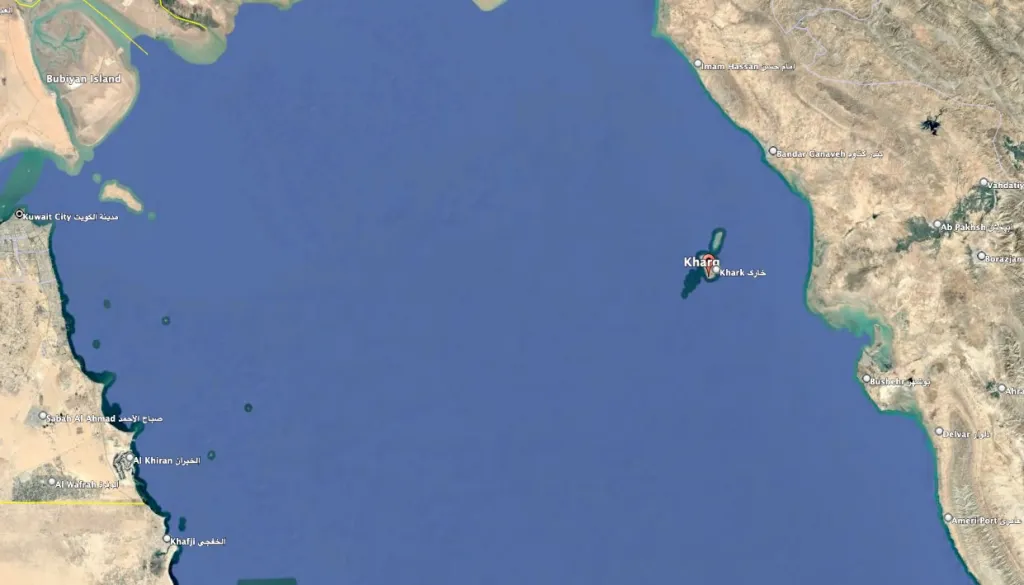
Iran is also the third-largest oil producer in the Organization of the Petroleum Exporting Countries (OPEC) and exports 90 percent of its crude oil via Kharg Island for shipping through the Strait of Hormuz.
The US naval blockade has begun affecting the country’s storage capacity, according to TankerTrackers, the maritime intelligence agency. The blockade means Iran has to store more oil, and space could become tight.
TankerTrackers said that on Kharg Island, to prepare for the possibility of running out of oil storage space, Iran has brought an old tanker named NASHA (9079107) out of retirement.
“She’s a 30yo [year old] VLCC [Very Large Crude Carrier] that’s been anchored empty for the past few years; currently spending 4 days on a trip that should take 1.5-2 days,” TankerTrackers said in a post on X, suggesting that the tanker is being used to store oil. It is unclear if the ship has a heading or course.
Can Iran continue to earn revenues from oil?
Yes, analysts say that for a few months, Iran can continue to earn revenue from oil which is already in transit at sea.
Kenneth Katzman, former Iran analyst at the Congressional Research Service in Washington, DC, said Iran is not exporting new oil amid the US blockade of Iranian ports, but Tehran has between 160 million and 170 million barrels of oil “afloat” on ships around the world currently.
Those supplies, which transited the Strait of Hormuz before the US blockade was imposed, are on board hundreds of tankers and “waiting to be delivered”, Katzman told Al Jazeera.
Katzman said he had been informed by an Iranian professor that, based on those supplies, Tehran could have revenue flows that can last until August despite the US naval blockade.
“Which is a long time. Does President Trump have until August? Probably not,” he said.
“He’s probably going to have to look at kinetic escalation if he wants to bring this to the conclusion that he wants, or he’s going to have to accept less than the deal he ideally wants,” he said.
Iranian ships will still have to avoid US naval ships on the open ocean, as the US Navy has also recently intercepted ships carrying Iranian cargoes.
On Wednesday this week, for example, the US military intercepted at least three Iranian-flagged tankers in Asian waters, Reuters reported, and was said to be redirecting them away from their positions near India, Malaysia and Sri Lanka.
How else can Iran earn revenue?
Besides oil revenue, Iran is also currently receiving revenue from a “toll booth” system that the country imposed on the Strait of Hormuz in March.
On Thursday, Iran’s deputy parliament speaker Hamidreza Haji-Babaei said Tehran’s central bank had received the first revenues from tolls imposed since the start of the war, according to the semiofficial Tasnim news agency. It is unclear how much that toll revenue is.
Iranian politician Alaeddin Boroujerdi told the United Kingdom-based, Farsi-language satellite TV channel Iran International in March that the country has been charging some vessels as much as $2m each to pass through the strait.
According to Lloyd’s List, the shipping news outlet, at least two vessels that have transited the strait so far have paid fees in yuan, China’s currency. Lloyd’s List reported that one “transit was brokered by a Chinese maritime services company acting as an intermediary, which also handled the payment to Iranian authorities”. It is, however, not clear how much the vessels paid.
How resilient is Iran’s leadership?
In recent days, while pressuring Iran to negotiate a ceasefire deal, US President Donald Trump has claimed that Iranians are “having a very hard time figuring out who their leader is”, alleging that there is “crazy” infighting between “moderates” and “hardliners” in Tehran.
But the country’s officials have insisted that Iran’s government is united.
Mohammad Reza Aref, Iran’s first vice president, said on Thursday: “Our political diversity is our democracy, yet in times of peril, we are a ‘Single Hand’ under one flag. To protect our soil and dignity, we transcend all labels. We are one soul, one nation.”
Foreign Minister Abbas Araghchi also dismissed allegations that the Iranian military may be at odds with the political leadership.
“The failure of Israel’s terrorist killings is reflected in how Iran’s state institutions continue to act with unity, purpose, and discipline,” he wrote on X, referring to the assassinations of Iranian political and military figures Israel has carried out in recent weeks.
“The battlefield and diplomacy are fully coordinated fronts in the same war. Iranians are all united, more than ever before.”
One of the strongest messages of unity came from Iran’s President Masoud Pezeshkian.
“In Iran, there are no radicals or moderates,” he said on X.
“We are all Iranians and revolutionaries. With ironclad unity of nation and state and obedience to the Supreme Leader, we will make the aggressor regret.”
How strong is Iran militarily?
Iran has demonstrated considerable military resilience in the face of weeks of US-Israeli strikes through its use of asymmetric warfare.
This includes the use of guerrilla tactics, cyberattacks, arming and supporting proxy armed groups and other indirect tools.
During its war with the US and Israel, Iran has targeted energy infrastructure in Israel and across the Gulf, threatened to target banking institutions and targeted US data centres of technology companies such as Amazon in the United Arab Emirates and Bahrain.
Iran has also blocked the Strait of Hormuz and reportedly placed mines in the strait to disrupt shipping, sending global oil prices soaring.
Since the US began its naval blockade of Iranian ports in mid-April, Iranian officials have repeatedly promised that their country will defend itself and respond to any US attack.
Earlier this week, after the US military said it had seized an Iranian vessel and ordered dozens of others to turn around, Iran also retaliated by capturing foreign commercial vessels around the Hormuz Strait, which it said violated naval regulations.
Ereli, the former US ambassador, told Al Jazeera that Iran and the IRGC have “revolutionary fervour”, which means they can “survive”. “They can tolerate pain for a lot longer than I think most American decision makers and planners calculate,” Ereli said.
Ereli said it was unknown how long Tehran could last under “siege conditions” imposed by the US, but probably a lot longer than the US anticipates.
“I think they can go a lot longer, especially than most people imagine, and especially when it comes to kneeling to the Americans,” Ereli said.
“There’s a level of pride and survival. They’re at war with us, and for them it’s a war of necessity. They’ve got to survive,” he added.
The United States Department of Justice has filed criminal charges against an active-duty soldier for placing a bet on the abduction of Venezuelan President Nicolas Maduro, using classified military information for personal profit.
On Thursday, prosecutors accused Gannon Ken Van Dyke, 38, of cashing in on the operation against Maduro, to the tune of more than $400,000.
Recommended Stories
list of 3 itemsend of list
They say he used the prediction market platform Polymarket 13 times to bet on topics including whether US forces would “invade” Venezuela and when Maduro would be removed from office. Officials framed his actions as a dire breach of public trust.
“Gannon Ken Van Dyke allegedly betrayed his fellow soldiers by utilizing classified information for his own financial gain,” said James C Barnacle Jr, an assistant director at the Federal Bureau of Investigation (FBI).
Van Dyke has been charged with three counts of violating the Commodity Exchange Act, one count of wire fraud and one count of carrying out an unlawful monetary transaction.
Each commodities fraud and unlawful transaction charge carries a maximum sentence of 10 years in prison. The wire fraud charge could result in up to 20 years.
The availability of prediction markets — online betting platforms where users can gamble on real-world events — has expanded under the second presidency of Republican leader Donald Trump.
Administration officials and close advisers to Trump, including his son Donald Trump Jr, maintain ties to the prediction market industry.
Trump Jr, for example, was named a “strategic adviser” to the prediction market Kalshi in January 2025, shortly before his father was sworn in.
In May 2025, less than five months into Trump’s second term, the Commodity Futures Trading Commission dropped its legal fight against Kalshi, paving the way for bets to be placed on political events like elections.
Since then, prediction markets have proliferated in the US, with some bets raising questions about the prospect of insider trading.
Critics fear government officials and other politicians could use the platforms to bet on actions they themselves control.
The sizeable bets made ahead of the US attack on Venezuela on January 3, 2026, were among the instances that raised red flags, with media outlets reporting on the “mystery trader” who scored big.
Thursday’s unsealed indictment (PDF) makes the Justice Department’s case for why Van Dyke was the trader in question.
According to the criminal complaint, the soldier — who was based at Fort Bragg in Fayetteville, North Carolina — created a Polymarket account around December 26, 2025, using a virtual private network (VPN) to place his location abroad.
Within days, he was making bets related to Venezuela that prosecutors say leveraged the classified intelligence he was privy to.
Around December 27, he bought $96 worth of bets on the prospect that US forces would be in Venezuela by January 31. A few days later, on December 30, he placed roughly $1,323 in bets on Maduro being out of office before the end of January.
His gambling continued as the military operation ticked closer. On January 1, he gambled $6,100 on a range of different scenarios, including Maduro being ousted, the US invading Venezuela, and Trump invoking war powers against Venezuela.
The following day, he placed even more bets, worth $6,150, $6,000, $7,050 and $7,215 a piece.
Then, in the early hours of January 3, the US launched its military operation against Venezuela, culminating in the abduction and imprisonment of Maduro and his wife, Cilia Flores.
Dozens of Venezuelans and Cubans died in the attack, which was confirmed to the public at 4:21am US Eastern Time (08:21 GMT).
The indictment explains that Van Dyke “was involved in the planning and execution of Operation Absolute Resolve”, as the military attack was called.
“He possessed material nonpublic information about that operation at the time of each and every trade he placed in Maduro and Venezuela-related markets,” the indictment alleges.
Shortly after his $400,000 windfall, prosecutors say Van Dyke transferred much of his proceeds to a foreign cryptocurrency vault. By January 6, he contacted Polymarket to delete his account.
Thursday’s indictment comes one day after Kalshi revealed it had fined and suspended three users who were allegedly candidates in the 2026 midterm elections. All three had placed bets on the outcomes of their own races.
From protests to quiet resistance, dissent is rising inside the United States military over the US-Israel war on Iran.
As the US expands its war with Iran, opposition is growing – not just among the public, but inside the military itself. Some service members are questioning orders, exploring conscientious objection, and speaking out. What’s driving this shift, and how far could it go?
In this episode:
Mike Prysner (@MikePrysner), Executive Director of the Center on Conscience & War
Episode credits:
This episode was produced by Marcos Bartolomé, Tamara Khandaker, and Sarí El-Khalili with Spencer Cline, Tuleen Barakat, and our host, Malika Bilal. It was edited by Tamara Khandaker and Noor Wazwaz.
Our sound designer is Alex Roldan. Our video editors are Hisham Abu Salah and Mohannad al-Melhem. Alexandra Locke is The Take’s executive producer.
WASHINGTON — The Pentagon announced Wednesday that the Navy’s top civilian official, Secretary of the Navy John Phelan, is leaving his job.
In a statement posted to social media, Pentagon spokesman Sean Parnell said Phelan was “departing the administration, effective immediately.”
Navy Undersecretary Hung Cao will become acting secretary of the Navy, Parnell said.
The sudden departure comes just a day after Phelan addressed a large crowd of sailors and industry professionals at the Navy’s annual conference in Washington, and spoke with reporters about his agenda.
Phelan’s departure also comes just weeks after Defense Secretary Pete Hegseth fired the Army’s top officer, Gen. Randy George, as well as two other top generals in the Army.
Phelan had not served in the military or had a civilian leadership role in the service before President Trump nominated him for secretary in late 2024.
Phelan was a major donor to Trump’s campaign and founded the private investment firm Rugger Management LLC. According to his biography, Phelan’s primary exposure to the military came from an advisory position he held on the Spirit of America, a nonprofit that supported the defense of Ukraine and the defense of Taiwan.
Toropin and Finley write for the Associated Press.