Military

The war in Iran: Key takeaways from Al Jazeera’s interview with Marco Rubio | US-Israel war on Iran News

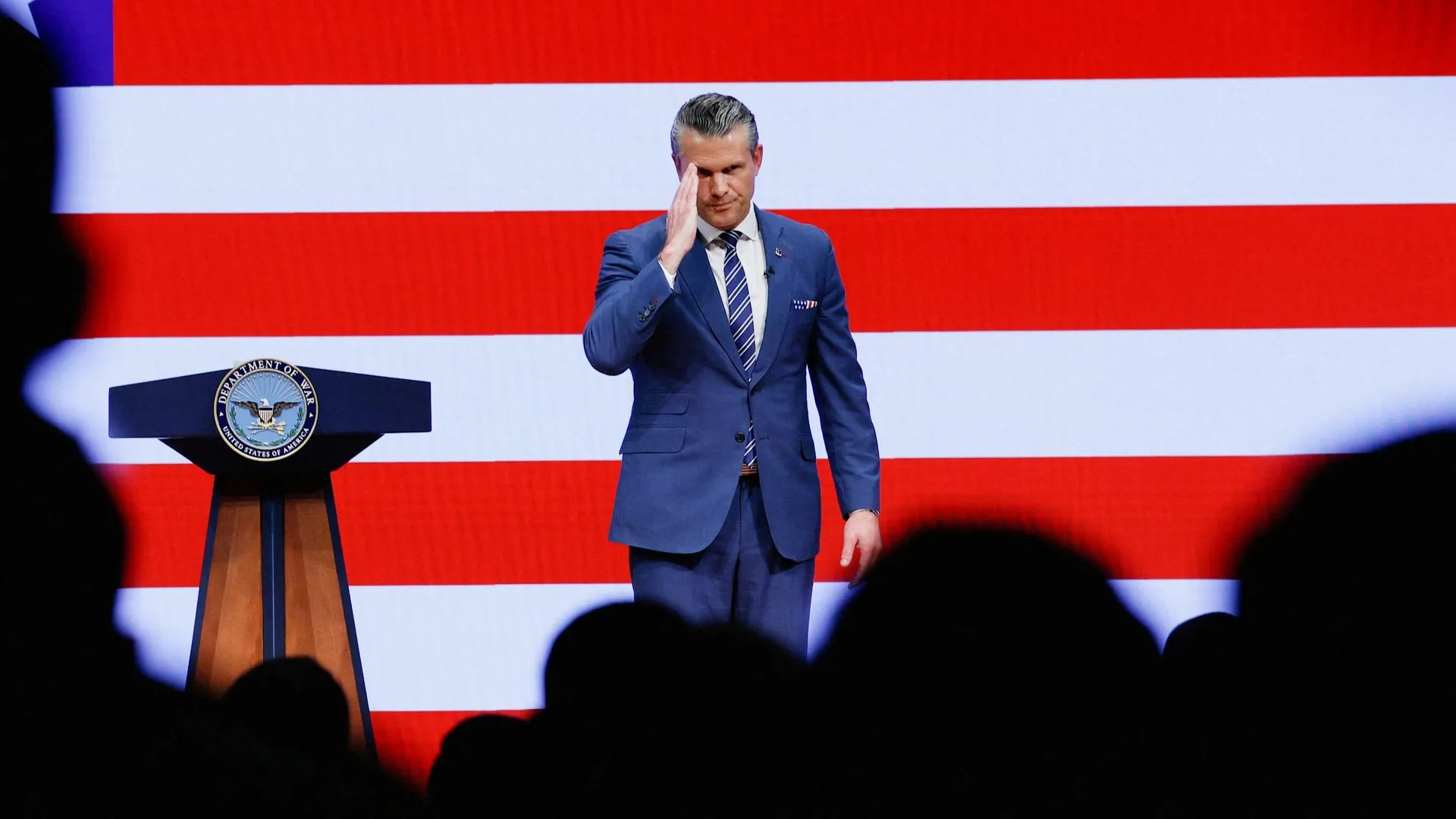
US Secretary of State Marco Rubio has said that talks with Iran are under way through intermediaries and that Washington will continue its military campaign until Tehran abandons its nuclear and missile programmes.

He warned on Monday that the Strait of Hormuz will be kept open “one way or another” and that US war objectives could be achieved “in weeks, not months”.

Recommended Stories

list of 2 itemsend of list

He also said the United States would welcome political change in Iran if the opportunity arose, but said it was not an official objective. Rubio criticised some NATO allies for refusing US access to bases during the war, and said Washington is closely watching developments in Cuba and Venezuela.

Here are the key takeaways from Rubio’s exclusive interview with Al Jazeera’s Hashem Ahelbarra:

Marco Rubio says talks with Iran are happening

Much of the communication between Tehran and Washington is indirect and through intermediaries, but Rubio insisted that it is ongoing.

He said there are “messages and some direct talks going on between some inside of Iran and the United States, primarily through intermediaries”, adding that the US president “always prefers diplomacy, always prefers an outcome”.

His comments come as US President Donald Trump escalated his rhetoric on social media, threatening to “obliterate” Iran’s energy infrastructure if a ceasefire is not reached soon, Al Jazeera’s Kimberly Halkett reported from Washington.

“Taken together, Rubio’s statements and Trump’s posts suggest the US is pursuing a dual-track approach: keeping diplomatic channels open through intermediaries while simultaneously increasing military and economic pressure on Iran,” she said.

US demands Iran abandon nuclear and missile programmes

Rubio said Iran must abandon its nuclear weapons ambitions and stop producing missiles and drones that can threaten countries across the Gulf region, and insisted “The Iranian regime can never have nuclear weapons.”

He said Iran’s missile programme poses a direct threat to countries across the Gulf, and claimed “These short-range missiles that they’re launching, they only have one purpose, and that is to attack Saudi Arabia and the UAE and Qatar and Kuwait and Bahrain.”

Rubio said Iran could pursue civilian nuclear energy, but not in a way that would allow it to quickly develop a nuclear weapon.

“What they cannot have is a system that allows them to quickly weaponise it,” he said. “They have to abandon all these weapon programmes and all their nuclear ambitions.”

However, Hassan Ahmadian, an assistant professor at the University of Tehran, questioned the narrative that Iran poses an offensive threat in the region.

“When was the last time Iran attacked its neighbours over three centuries?” Ahmadian asked, arguing that Iran’s military strategy is shaped by deterrence in an asymmetric conflict.

“Why is it doing this now? Because it’s the underdog in an asymmetric war that it wants to shield itself by expanding.”

Ahmadian added that Iran has been a central focus of US policy for years.

“With the break of two wars in less than a year, we have experienced, Iran has been on the table in different US administrations – all options are on the table,” he said.

Strait of Hormuz will be kept open ‘one way or another’

Rubio said the US would not accept Iran claiming sovereignty over the Strait of Hormuz and warned that the waterway would remain open regardless of Iran’s actions.

“Not only is the sovereignty over the Strait of Hormuz not acceptable to us, it won’t be acceptable to the world.”

“It sets an incredible precedent … nations can now take over international waterways and claim them as their own.”

“The Strait of Hormuz will be open … It will be open one way or another,” he said, adding that otherwise, Iran would “face real consequences” from the US and other countries.

Iranian analysts suggested the closure of the strait is a temporary wartime measure and could be reversed once the conflict ends.

“It’s opened partially,” Ahmadian said, adding “I think there is no Iranian interest to not open it beyond the war.”

“It’s an asymmetric way of putting pressure on Americans, just as they are bombing Iran, and so after the war there would be no need,” Ahmadian explained. “There will be an arrangement, according to the Iranians, with the GCC [Gulf Cooperation Council] countries to reopen it and see how things are managed.”

War objectives will be achieved ‘in weeks, not months’

Rubio said the US military campaign is progressing quickly and outlined the military objectives Washington is trying to achieve.

“Those objectives are the destruction of their air force, which has been achieved, the destruction of their navy, which has largely been achieved.”

“A significant reduction in the number of missile launchers… and we are going to destroy the factories that make those missiles and those drones.”

“We are well on our way or ahead of schedule.”

“We will achieve them in weeks, not months.”

“That’s a matter of weeks. I’m not going to tell you exactly how many weeks, but a matter of weeks, not months.”

Rubio says status of Iran’s new supreme leader is uncertain

Asked by Al Jazeera about his thoughts on Iran’s new Supreme Leader, Mojtaba Khamenei, Rubio said his status remains unclear.

“We don’t even know he’s in power. I know they say he’s in power. No one has seen him. No one has heard from him,” Rubio said.

“It’s very opaque right now. It’s not quite clear how decisions are being made inside of Iran.”

Iran’s leadership change is not an objective of the military operation

The US secretary of state suggested the US would welcome political change in Iran, though he said it was not the official objective of the military operation.

“We would always welcome a scenario in which Iran was led by people that had a different view of the future,” Rubio said. “If that opportunity presents itself, we’re going to take it.”

He said the Iranian people “deserve better leadership” and indicated Washington would not oppose a change in government if it occurred.

“Do we think the people of Iran deserve better leadership than what they’ve gotten from the clerical regime? One hundred percent,” Rubio said. “Would we be heartbroken if there was a change in leadership? Absolutely not.”

He also suggested the US would be willing to play a role if political change became possible.

“If there’s something we could do to facilitate that, would we be interested in participating? Of course.”

However, analysts said Washington’s position on regime change appears to have shifted over time.

“Originally bringing down the government was the goal; there has been a constant drawdown from that,” Paul Musgrave, a professor of government at Georgetown University in Qatar, told Al Jazeera.

“And now we have President Donald Trump on Truth Social saying he is negotiating with elements of what could become a new regime, so there is a lot of confusion here, but it is no longer the number one goal. It’s not something they are laying out,” he noted.

Rubio criticises NATO allies and warns alliance may be reviewed

Rubio said some NATO countries denied the US use of airspace and bases during the conflict and suggested Washington may need to reassess the alliance after the war.

“We have countries like Spain, a NATO member that we are pledged to defend, denying us the use of their airspace and bragging about it, denying us the use of their bases.”

“And so you ask yourself, well, what is in it for the United States?”

“If NATO is just about us defending Europe from attack, but them denying us basing rights when we need them, that’s not a very good arrangement.”

“All of that is going to have to be re-examined.”

Source link

Trump wants to ‘take Iran’s oil’: Can he, and what would that mean? | US-Israel war on Iran News

United States President Donald Trump said on Sunday that he wishes to “take the oil” in Iran, as the US-Israel war against Iran enters its second month.

On Monday, President Trump threatened to target Iran’s energy infrastructure, including oil wells, if Tehran does not reopen the Strait of Hormuz, which has been under a de facto Iranian blockade for weeks, triggering a global energy crisis.

The Trump administration has unveiled no clear goal behind its military campaign against Iran, one of the world’s biggest oil producers and under US sanctions for decades.

Here is more about what Trump says, how much oil Iran has, and whether Trump could take it.

What has Trump said about Iran’s oil?

Trump told the Financial Times that his “preference would be to take the oil” in Iran and that US forces could seize Iran’s export hub at Kharg Island.

Kharg is a 22-square-kilometre (8.5-square-mile) coral outcrop in Iran’s Bushehr province. Closely guarded by the Islamic Revolutionary Guard Corps (IRGC), entry to the island is restricted to those with official security clearance.

Kharg processes 90 percent of Iran’s total oil exports, handling approximately 1.5 million barrels every day.

On March 14, Trump announced that the US Air Force had bombed Iranian military facilities on the island.

“For reasons of decency, I have chosen NOT to wipe out the Oil Infrastructure on the Island. However, should Iran, or anyone else, do anything to interfere with the Free and Safe Passage of Ships through the Strait of Hormuz, I will immediately reconsider this decision,” Trump wrote on Truth Social.

Critics say the Trump administration was emboldened by the success of its brazen military operation in January to abduct Venezuelan President Nicolas Maduro from Caracas. Washington says it is now in control of Venezuela’s oil exports.

Earlier this month, Trump claimed that 100 ⁠million barrels of Venezuelan oil had been brought to refineries in Houston, Texas in the US. He added that ⁠an additional 100 ⁠million barrels of Venezuelan ⁠oil were on the way.

Ties between Venezuela, which has the world’s largest proven reserves of crude oil, and Washington had deteriorated under former President Hugo Chavez, who decided to nationalise the oil sector. Relations collapsed further under Maduro, who succeeded Chavez in 2013. Venezuela’s current interim president, Delcy Rodriguez, has since opened the sector for private investment.

How much oil does Iran have?

Iran is one of the world’s biggest oil producers.

The country holds the world’s second-largest proven natural gas reserves and the third-largest crude oil reserves, according to the United States Energy Information Administration.

Iran holds around 24 percent of the Middle East’s and 12 percent of the world’s proven oil reserves, with about 157 billion barrels of proven crude oil.

It is the ninth-largest oil producer globally, and the fourth-largest within the Organization of the Petroleum Exporting Countries (OPEC), producing about 3.3 million barrels of crude oil per day.

Before the war, Iran was exporting around two million barrels of crude and refined fuel each day, though its exports dropped dramatically after Trump slapped sanctions on Iran in 2018 during his first term in power. The Iran nuclear deal signed under US President Barack Obama in 2015 – the Joint Comprehensive Plan of Action (JCPOA) – placed limits on Iran’s nuclear programme in exchange for sanctions relief in place for decades.

The US cut diplomatic ties with Iran after pro-Washington ruler Shah Mohammad Reza Pahlavi was toppled in the 1979 Islamic Revolution and the subsequent hostage crisis involving US citizens.

Can the US seize Iranian oil?

The Pentagon is preparing for limited ground operations in Iran, potentially including raids on Kharg Island and coastal sites near the Strait of Hormuz, according to US officials quoted by the Washington Post newspaper.

The plans, which fall short of a full invasion, could involve raids in special operations and by conventional infantry troops, the newspaper reported on Saturday.

However, even if the US invades or occupies Kharg Island, this would not give the US access to Iranian oil.

In order to access Iranian oil, the US would have to occupy Iran’s oil production sites and refineries. In essence, the US would need to occupy mainland Iran.

INTERACTIVE-IRAN-OIL-MAP-JUNE 17, 2025-1772104794
(Al Jazeera)

What would it mean if the US were to take Iranian oil?

In 2023, Iran’s gross domestic product (GDP) was around $457.5bn, according to World Bank data.

In the same year, Iran’s net oil export revenues were estimated at $53bn.

That export figure is equivalent to roughly 12 percent of Iran’s GDP, although export revenues and GDP are not directly comparable.

At the same time, if the US were to lift sanctions on Iranian oil after seizing it, it could lead to a flow of more Iranian oil into global markets, bringing down oil prices.

Iran is one of the most heavily sanctioned countries in the world. The US first imposed sanctions on Iran in November 1979, after Iranian students stormed its embassy in Tehran and took Americans hostage. The hostage crisis ended when dozens of US citizens were released after more than a year.

The US-Israeli war on Iran has sent global oil prices soaring. Benchmark Brent crude rose to more than 3 percent on Monday to $116 a barrel – the highest level in nearly two weeks. The oil price was about $65 per barrel before the war.

Has the US tried to interfere in Iranian oil before?

Yes; this is not the first time the US has shown an interest in Iranian oil.

In 1953, the government of Mohammad Mossadegh, Iran’s first democratically elected prime minister, was toppled in a CIA-orchestrated coup after he nationalised the British-controlled firm Anglo‑Iranian Oil Company (AIOC), the predecessor of modern-day BP.

Washington framed the operation – codenamed “Operation Ajax” – as a Cold War necessity to keep Iran and its energy reserves out of Soviet hands.

The coup restored and entrenched the shah’s rule, a turning point that still haunts Iran’s relationship with the West.

Neighbouring Iraq’s oil revenue is still effectively under US control more than two decades after the US invaded the Middle East nation. Iraq’s oil revenues are deposited into an account at the Federal Reserve Bank in the US before making it to Baghdad.

Source link

Why have the US and Israel bombed more than 75 Iranian police facilities? | Armed Groups News

In the densely populated neighbourhoods of southern Tehran, the 11th Criminal Investigation Base once stood as a mundane symbol of local law enforcement. Its detectives investigated economic crimes, fraud and petty thefts.

The building housed no ballistic missiles, no uranium centrifuges and no military command centres. Today, it is a crater. In the opening wave of the United States-Israel war on Iran, warplanes wiped the local police station off the map.

Satellite imagery provided by Planet Labs shows the complete destruction of the 11th Criminal Investigation Base in southern Tehran between February 26 and March 6, 2026.
Satellite imagery provided by Planet Labs shows the destruction of the 11th Criminal Investigation Base in southern Tehran on February 26 and March 6, 2026. [Al Jazeera/Planet]

It was not an isolated incident. An investigation by Al Jazeera’s Digital Investigations unit has verified that at least 75 internal security sites were destroyed or damaged in bombardments by Israel and the US from February 28 to March 10. The targeted facilities included local police stations, criminal investigation headquarters, public security offices and checkpoints operated by the Basij paramilitary force.

Al Jazeera mapped the strikes using open-source data, cross-referencing field reports with satellite imagery to confirm the destruction. However, conducting independent verification has grown increasingly difficult. On March 6, commercial satellite providers Planet Labs and Vantor restricted imagery over the Middle East, later expanding the blackout to impose a 14-day delay on all images of Iran.

While the companies said the blackout prevents hostile actors from endangering civilians, independent journalist Ken Klippenstein recently revealed a leaked US Space Force directive dictating how commercial satellite firms describe damage. The leak exposed a deliberate US effort to control the flow of information and obscure the reality of the battlefield.

Targeting population centres

The spatial distribution of the 75 verified strikes revealed a clear and deliberate strategy. Warplanes bypassed isolated military installations to hit the infrastructure Tehran uses to police its citizens.

An Al Jazeera map detailing the geographic distribution of the 75 internal security sites targeted by US and Israeli strikes, showing a heavy concentration in Tehran and the western provinces.
An Al Jazeera map details the geographic distribution of the 75 internal security sites targeted by US-Israeli strikes, showing a heavy concentration in Tehran and western provinces. [Al Jazeera]

The capital alone absorbed 31 strikes, more than 40 percent of the total targets. Sanandaj, the capital of Kurdistan province, suffered eight strikes. The remaining targets were clustered tightly in major western and central cities, including Isfahan, Kermanshah and Hamedan. Meanwhile, Iran’s sprawling eastern and southeastern provinces remained largely untouched by this campaign.

By overlaying the strike coordinates with demographic maps, the investigation shows a near-perfect alignment with urban density. More than 70 percent of Iran’s population lives in these targeted western urban areas.

INTERACTIVE - Iran population density - FEB26, 2026-1772104770
A population density map of Iran demonstrates how the strike locations closely align with the country’s most heavily populated urban centres. [Al Jazeera]

The strikes systematically targeted the Law Enforcement Command, known as FARAJA, and the Basij network. FARAJA, elevated in 2021 by late Supreme Leader Ali Khamenei to operate alongside the military, is currently led by Ahmad-Reza Radan. It manages daily urban law enforcement and riot control. The Basij, an immense volunteer paramilitary force deeply embedded in Iranian neighbourhoods, acts as the state’s ultimate tool for social control.

Engineering state collapse

The pattern of the US-Israeli air strikes points to an objective far removed from dismantling nuclear facilities or degrading military infrastructure. It reveals a calculated attempt to engineer the collapse of the Iranian state.

On February 28, US President Donald Trump launched the war and in a video address urged Iranians to take over their government once the bombs stopped falling. Israeli Prime Minister Benjamin Netanyahu echoed this sentiment in Farsi, calling on millions of Iranians to take to the streets and describing the military strategy as breaking the Iranian government’s bones.

The military planning, however, preceded events on the ground that Trump and Netanyahu pointed to for justification for their war. Israeli Defence Minister Israel Katz revealed in early March that Israel had been planning to strike Iran in mid-2026, long before January’s deadly government crackdown across Iran against economic protests.

Satellite imagery captures the extensive damage inflicted on the Beheshti Basij headquarters in Tehran's District 8 following the initial wave of strikes. (Al Jazeera/Planet).
Satellite imagery captures extensive damage to the Beheshti Basij headquarters in Tehran’s District 8 after the initial wave of strikes. [Al Jazeera/Planet]

This approach aligns with a broader Israeli doctrine. Daniel Levy, a former Israeli government adviser, previously told Al Jazeera that Israel has no interest in a smooth political transition in Tehran. What Israel wants is the collapse of the government and the state, Levy said, adding that if the repercussions spread to Iraq, the Gulf and the entire region, that is better from Israel’s point of view.

A failing strategy

Still, a month into the war, the US-Israeli strategy to spark an internal revolution through the systematic destruction of Iran’s internal security apparatus appears to be failing.

Iranians are living under daily bombardments. As missiles destroy civilian infrastructure and oil refineries burn, daily survival has eclipsed any coordinated political uprising. The United Nations special rapporteur on human rights in Iran has warned that civilians are facing a simultaneous military and human rights crisis.

Rather than collapsing, Iran’s internal security apparatus has adapted. During Ramadan, FARAJA deployed 24-hour patrols across Tehran, and riot police shut down public gatherings before the Persian New Year holiday. After the March 17 assassination of Basij commander Gholamreza Soleimani, Israeli forces released footage of strikes on mobile Basij checkpoints, indicating that Iranian security forces are still controlling the streets.

The US attempt to dismantle state security from the air mirrors its disastrous 2003 de-Baathification policy in neighbouring Iraq, which barred members of the former ruling Baath Party from holding government jobs, dismantled local policing and birthed a devastating sectarian war. Unlike in Iraq, Washington today has no troops on the ground in Iran to fill a security void it is trying to create.

Beneath the rubble of the 11th Criminal Investigation Base and dozens of stations like it, the US and Israel are aiming to bury the Iranian state and spark a popular revolt. Instead, they have trapped millions of civilians in a burning country.

Source link

How will the Houthis’ involvement shape the war? | US-Israel war on Iran News

The Yemeni group has launched missiles towards Israel in support of Iran.

They have threatened to join the war ever since it started a month ago.

Now, Yemen’s Ansar Allah, also known as the Houthis, have followed up on their threat and launched missiles towards Israel.

This move marks a significant escalation in the US-Israel war on Iran.

There are fears that the Iran-aligned group could attack shipping in the Red Sea, as it has done before.

This would further disrupt global trade, already affected by Iran’s blockade of the Strait of Hormuz.

Will Israel and the US retaliate? And if so, how?

Presenter: James Bays

Guests:

Hisham Al-Omeisy – senior Yemen adviser at the European Institute of Peace

H A Hellyer – senior associate fellow in defence and security studies at the Royal United Services Institute

Michael Mulroy – former US deputy assistant secretary of defence for the Middle East

Source link

Iran accuses US of plotting ground attack, as Israel steps up bombardment | US-Israel war on Iran News

Iran’s parliament speaker has accused the United States of plotting a ground attack despite publicly pushing for a negotiated deal, as the US deploys thousands of military personnel to the Middle East.

“Our men are waiting for the arrival of the American soldiers on the ground to set them on fire and punish their regional allies once and for all,” Mohammad Bagher Ghalibaf said in a statement on Sunday, carried by the official IRNA news agency, as Iran struggled with power cuts amid escalating Israeli attacks on central and western areas of the country.

Recommended Stories

list of 3 itemsend of list

Iran’s Ministry of Energy reported power outages in the capital, Tehran, its surrounding region and neighbouring Alborz province on Sunday, “following attacks on electricity industry facilities”. The Fars news agency reported later that the outages were being resolved.

It was unclear whether the attacks were related to US President Donald Trump’s threats to strike Iranian power stations and other energy infrastructure if Tehran did not agree to a deal to end the war. Trump extended his deadline by 10 days through April 6 as Washington presented a 15-point plan for peace that critics described as “maximalist”.

Al Jazeera’s Ali Hashem, reporting from Tehran, said that authorities had activated substations to restore power. “This gives an indication of how much they’ve been also preparing for such situations,” he said.

Ghalibaf’s comments on Iran’s readiness for a ground assault came as The Washington Post reported that the Pentagon was preparing for weeks of limited ground operations in Iran, potentially including raids on Kharg Island, a crude export hub, and coastal sites near the Strait of Hormuz shipping chokepoint.

As the US-Israel war on Iran stretches into its fifth week, the Trump administration is also planning to send thousands of soldiers from the army’s 82nd Airborne to the region, following a US Central Command (CENTCOM) announcement Saturday that about 3,500 military personnel had arrived in the Middle East on board the USS Tripoli.

IRGC threatens retaliation after university attacks

The Israeli military said it dropped more than 120 munitions on sites used for research, development, and production of weaponry in Tehran on Sunday.

Iran’s Ministry of Health reported that 2,076 people had been killed since the start of the war, including 216 children.

Among the deaths, six people were killed in a US-Israeli attack on a residential area in the Iranian village of Osmavandan, according to the Mehr news agency, which added that five houses were destroyed and 22 were severely damaged.

A university in Iran’s central city of Isfahan said it was hit by US-Israeli air strikes on Sunday for the second time since the war erupted, leaving four university staff members wounded.

The strike followed an attack the previous day on Iran’s University of Science and Technology. After that attack, Iran’s Revolutionary Guard Corps (IRGC) said it would target two Israeli or US universities in the region in retaliation, according to Iranian state television.

Hossein Sadeghi, head of the Information and Public Relations Center at Iran’s Ministry of Education, told the IRNA news agency that at least 250 students and teachers have been killed amid strikes on 600 educational facilities across Iran since the war began.

Also on Sunday, a commercial building housing Qatar’s Al-Araby TV in Tehran was hit, with video footage showing walls and windows blown out of the multistorey block. “It was a real miracle we survived,” said Al Araby camera operator Mohammadreza Shademan. “There was no military target here”.

As the civilian cost of the war mounts, Iran is demanding compensation in a five-point plan presented to the US.

That plan also includes a halt to killings of Iranian officials, an end to hostilities, safeguards against the outbreak of more war, and Iran’s “exercise of sovereignty over the Strait of Hormuz”.

Iran, Hezbollah launch attacks

Israel’s military said on Sunday evening that it had detected seven new incoming missile salvoes fired from Iran during the day. These coincided with Hezbollah rocket attacks on northern Israel, with sirens triggered in more than 100 towns.

Israel’s ADAMA, a pesticide maker in the Neot Hovav industrial zone, located 9km (6 miles) south of the city of Beersheba, said its Makhteshim plant was hit either by an Iranian missile or debris ⁠from a missile. No casualties were reported, and no leak of hazardous materials was found.

Reporting from Ramallah in the occupied West Bank, Al Jazeera’s Nour Odeh said it was “an incident that raises a lot of alarms”.

“This industrial zone has about 19 different factories, including a bromide factory and some pharmaceutical factories. But it’s also home to the main hazardous disposal sites in Israel. So a lot is at stake here,” she said.

Another missile hit open ground near homes in Beersheba, injuring 11 people.

Israeli media reported that missile fragments fell on the northern port city of Haifa after missiles launched by Iran and Hezbollah were intercepted.

Houthis enter fray amid talks

As the war raged on, foreign ministers from Pakistan, Turkiye, Egypt and Saudi Arabia met in Islamabad, looking to de-escalate the conflict, which has also ensnarled Gulf nations hosting US military assets.

Across the Gulf, the United Arab Emirates said it had intercepted 16 ballistic missiles and 42 drones launched from Iran, while Saudi Arabia reported downing 10 drones. Sirens sounded in Kuwait and Bahrain.

The Iranian army said it had targeted US forces based in Jordan, launching drones on the living quarters and military equipment sites at the Muwaffaq Salti airbase in Azraq, the ISNA news agency reported.

Meanwhile, readying itself for attacks amid the US military build-up, an Iranian naval commander, cited by state media, said Iran had complete control of waters near the Strait of Hormuz, a vital chokepoint for a fifth of the world’s oil.

He said Iran was waiting for US forces to come within range, warning they could be targeted with coastal missile systems.

As oil prices shoot up and the world’s economy slides, the arrival of Yemen’s Houthis into the conflict, with Saturday’s strikes on Israel, further complicates matters, raising fears that the Yemeni group could block the Bab al-Mandeb Strait.

Houthi attacks on shipping vessels in the Red Sea during Israel’s genocidal war on Gaza upended commercial traffic worth about $1 trillion a year.

Source link

Pentagon readies for weeks of US ground operations in Iran: Report | US-Israel war on Iran News

The plans, which fall short of a full invasion, could involve raids by special operations and conventional infantry troops, The Washington Post reported.

The Pentagon is preparing for weeks of limited ground operations in Iran, potentially including raids on Kharg Island and coastal sites near the Strait of Hormuz, according to United States officials quoted by The Washington Post newspaper.

The plans, which fall short of a full invasion, could involve raids by special operations and conventional infantry troops, the Post reported on Saturday, exposing US personnel to Iranian drones and missiles, ground fire, and improvised explosives.

Recommended Stories

list of 3 itemsend of list

Whether President Donald Trump would approve any of those plans remains uncertain, according to the report.

“It’s the job of the Pentagon to make preparations in order to give the Commander in Chief maximum optionality. It does not mean the president has made a decision,” White House press secretary Karoline Leavitt said in a statement, responding to questions over the Post report.

The Trump administration has deployed US Marines to the Middle East as the war in Iran stretches into its fifth week, and has also been planning to send thousands of soldiers from the army’s 82nd Airborne to the region.

On Saturday, the US Central Command (CENTCOM) said about 3,500 additional soldiers arrived in the Middle East on board the USS Tripoli.

The sailors and marines are with the 31st Marine Expeditionary Unit and arrived in the region on March 27, along with “transport and strike fighter aircraft, as well as amphibious assault and tactical assets”, according to CENTCOM.

Officials speaking to The Washington Post said discussions within the administration over the past month have touched upon the possible seizure of Kharg Island, a key Iranian oil export hub in the Gulf, and raids into other coastal areas near the Strait of Hormuz to find and destroy weapons that can target commercial and military shipping.

According to the report, one person said the objectives under consideration would probably take “weeks, not months” to complete, while another put the potential timeline at “a couple of months”.

The Pentagon had not responded on Saturday to the Post’s requests for comment. Iran has yet to respond to the report.

The report comes as Pakistan, which shares a 900km-long (559-mile) border with Iran, mediates between Washington ‌and Tehran, hosting two days of talks starting on Sunday with the foreign ministers of Saudi Arabia, Turkiye and Egypt.

Iranian threats

The Iranian parliament speaker, Mohammad Bagher Ghalibaf, said on Sunday the “enemy openly sends messages of negotiation and dialogue and secretly plans a ground attack”.

“Unaware that our men are waiting for the arrival of American soldiers on the ground to set fire to them and punish their regional partners forever. Our firing continues. Our missiles are in place,” the Tasnim news agency reported, quoting Ghalibaf.

“Our determination and faith have increased. We are aware of the enemy’s weaknesses, and we clearly see the effects of fear and terror in the enemy’s army.”

It was not clear whether Ghalibaf was responding to the Post report.

On Wednesday, Ghalibaf had warned that intelligence reports suggested that “Iran’s enemies” ⁠were planning to occupy an Iranian island with support ‌from an unnamed country in the region.

He said any such attempt would be met with targeted attacks on the “vital infrastructure” of the regional country – which he did not name – that assists in the operation.

Tasnim quoted an unnamed military source as saying on Wednesday that Iran could open a new front at the mouth of the Red Sea if military action takes place on “Iranian islands or anywhere else in our lands”.

The source told Tasnim that Iran can pose a “credible threat” in the Bab al-Mandeb Strait, ⁠which lies between Yemen and Djibouti.

Tasnim later quoted an “informed source” claiming that Yemen’s Houthi rebels, backed by Iran, are prepared to play a role “if there is a need to control the Bab al-Mandeb Strait to further punish the enemy”.

Source link

Kuwait airport hit by Iranian drone strikes | Conflict

NewsFeed

Thick, black smoke rose from Kuwait International Airport Saturday after suspected Iranian drone strikes damaged radar systems and fuel storage facilities, state media said. No fatalities were reported. The airport has been repeatedly targeted since the US-Israeli war on Iran erupted.

Source link

As war on Iran enters second month, Yemen’s Houthis open new front | US-Israel war on Iran News

Yemen’s Houthis have attacked Israel for the first time, a month after US and Israeli forces began striking Iran, opening up a new front in a rapidly escalating conflict that has killed thousands of people, displaced millions and rattled the global economy.

The Houthis, who control much of northern Yemen, entered the fray on Saturday with two missile and drone attacks on Israel in the space of fewer than 24 hours. The Israeli army said the attacks were intercepted, but the Iran-aligned group pledged to continue fighting in support of “resistance fronts in Palestine, Lebanon, Iraq, and Iran”.

Recommended Stories

list of 3 itemsend of list

The Houthis had sat out of the hostilities until now, in contrast with their stance during Israel’s genocidal war on Gaza, when their attacks on shipping vessels in the Red Sea upended commercial traffic worth about $1 trillion a year.

Their widely anticipated involvement in the latest conflict comes just as Iran has throttled traffic through the Strait of Hormuz, a vital chokepoint for about a fifth of the world’s oil, raising fears that the Yemeni group will again disrupt Red Sea traffic by blocking the Bab al-Mandeb Strait.

Reporting from Yemen’s capital, Sanaa, Al Jazeera’s Yousef Mawry described Bab al-Mandeb as the group’s “ace”.

“They want to make Israel pay economically. They want to disrupt their trade routes. They want to disrupt the imports and exports in and out of Israel,” he said.

‘Civilians bearing brunt of war’

The Houthi attacks came after US Secretary of State Marco Rubio said that Washington expected to conclude its military operations against Iran within weeks, even as a new deployment of US Marines has begun to arrive in the region, so US President Donald Trump would have “maximum” flexibility to adjust the strategy as needed.

With no immediate diplomatic breakthrough in sight as both the US and Iran harden their positions, many fear that the US-Israel war on Iran, which started on February 28 and has since engulfed the region, will spiral out of control.

The US and Israel continued their bombardment over the past 24 hours, with the Israeli military claiming it had struck an Iranian research facility for naval weapons, while a series of loud explosions rattled Tehran as night fell on Saturday.

Iranian media said at least five people were killed in a US-Israeli attack on a residential unit in the northwestern city of Zanjan. In Tehran, authorities said the University of Science and Technology was the latest educational facility to be struck, prompting Iran’s Revolutionary Guard Corps (IRGC) to issue a threat against Israeli and US universities in the region.

Separately, Iran’s Fars news agency said a water reservoir in the city of Haftgel, located in western Khuzestan province, had also been attacked.

The Iranian Ministry of Health announced that 1,937 people have been killed since the start of the conflict, including 230 children. Iran’s Red Crescent Society said US-Israeli strikes had damaged more than 93,000 civilian properties.

“Civilians are bearing the brunt of this war,” Al Jazeera’s Mohamed Vall, reporting from Tehran, said.

Devastation in Lebanon

Meanwhile, Israel’s devastation of Lebanon continued apace, as the Lebanese Ministry of Health reported that 1,189 people had been killed in Israeli attacks since March 2.

The death toll has been mounting as Israeli troops have pushed further into the south, advancing towards the Litani River in their stated bid to wipe out Hezbollah and carve out a buffer zone along the lines of the “Gaza model”.

Among Saturday’s killings, an Israeli strike killed three journalists in southern Lebanon. In parallel, the Health Ministry announced that Israel had also killed nine paramedics, bringing the death toll among healthcare workers in the latest war to 51.

Lebanon’s Public Health Emergency Operations Centre said an Israeli attack on the town of al-Haniyah, in the Tyre district of southern Lebanon, killed at least seven people, including one child.

An Israeli air raid on the southern Lebanese town of Deir al-Zahrani killed a Lebanese soldier, Lebanon’s National News Agency reported.

Hezbollah, which attacked Israel amid a ceasefire that Israel kept violating in retaliation for the assassination of Iranian Supreme Leader Ali Khamenei, claimed dozens of operations against Israeli forces in the past 24 hours.

Mixed messages

Trump has threatened to hit Iranian power stations and other energy infrastructure if Tehran does not fully open the Strait of Hormuz. But he has extended the deadline he had imposed for this week, giving Iran another 10 days to respond.

With the US midterm elections coming up in November, the increasingly unpopular war is weighing heavily on the president’s Republican Party.

Trump’s envoy, Steve Witkoff, said on Friday that he believed Tehran would hold talks with Washington in the coming days. “We have a 15-point plan on the table. We expect the Iranians to respond. It could solve it all,” Witkoff said.

Pakistan, which has been a go-between between US and Iranian officials, will host foreign ministers from regional powers Saudi Arabia, Turkiye and Egypt in Islamabad for talks on the crisis.

Pakistan’s Minister of Foreign Affairs Ishaq Dar spoke with his Iranian counterpart, Abbas Araghchi, late on Saturday, urging “an end to all attacks and hostilities” in the region.

In a statement, the Ministry of Foreign Affairs said Dar had told Araghchi that Pakistan remains committed to supporting efforts aimed at restoring regional peace and stability.

Dar also announced that Iran had agreed to allow 20 Pakistani-flagged vessels to transit the Strait of Hormuz, calling it a meaningful step towards easing one of the worst energy crises in modern history.

Source link

US-Israel war on Iran: What’s happening on day 29 of attacks? | US-Israel war on Iran News

Tensions continue to rise with Iran warning a ‘heavy price’ will be paid after Israeli attacks on nuclear and industrial sites.

President Donald Trump said he is “very disappointed” with NATO’s response to the United States-Israeli war on Iran, accusing the alliance of failing to support Washington despite years of US military spending on its allies.

Meanwhile, Iran warned a “heavy price” will be paid after Israeli attacks on nuclear and industrial sites, with Tehran accusing the US and Israel of “playing with fire” by targeting energy infrastructure. Iran also said there was no radioactive leak following attacks on two nuclear facilities.

The warnings come as fighting and tensions continue to escalate across the Middle East, with growing fears of a wider conflict.

Here is what we know:

In Iran

  • Israel hits Tehran: Israel’s military said it launched attacks on Iranian “regime targets” early Saturday.
  • Hopes for Iran talks this week: US envoy Steve Witkoff said he expects meetings with Iran “this week” and is waiting for Tehran’s response to a 15-point peace plan.
  • Iran pledges “heavy price” for plant strikes: Iran’s Foreign Minister Abbas Araghchi said Tehran would exact a “heavy price for Israeli crimes” after attacks on nuclear sites and two of the country’s largest steel factories.
  • Iran feels “forced” into talks: Al Jazeera’s Mohamed Vall, reporting from Tehran, said many Iranians believe they are being pushed into negotiations that are not in their favour, with the sense that “the Americans are bombing their way towards a negotiation table.” Rather than relying on US or Israeli promises, he said Iran is relying on “its missiles, its drones, and the resolve of its soldiers”.
  • Russia likely aiding Iran with satellite intelligence: Al Jazeera’s Mansur Mirovalev reported Iran is likely receiving data on US military assets from Russia’s Liana spy satellite system, according to a space programme expert.

War diplomacy

  • Trump criticises NATO over Hormuz: Trump said NATO allies “weren’t there” when asked to help secure the Strait of Hormuz, despite the US spending “hundreds of billions” protecting them. “I’ve always said NATO is a paper tiger. And I always said we help NATO, but they’ll never help us.”
  • Possible Pakistan meeting: Turkiye said talks with Pakistan, Saudi Arabia, and Egypt could take place in Pakistan this weekend as Islamabad mediates between Iran and the US.
  • UN nuclear watchdog urges “restraint”: The International Atomic Energy Agency repeated its call for “restraint” in the Middle East war after Israel struck two Iranian nuclear facilities, including a uranium processing plant.
  • “Regime change” unlikely: The war is unlikely to lead to “regime change” in Iran, said German Chancellor Friedrich Merz. “If that’s the goal, I don’t think you’ll achieve it. It’s mostly gone wrong” in past conflicts, he said, pointing to the Afghanistan war.

In the Gulf

  • Saudi Arabia intercepts missile: Saudi Arabia said it “intercepted and destroyed” a missile targeting the capital Riyadh. Meanwhile, at least 12 US military personnel were wounded, including two seriously, in an Iranian attack on an airbase in the kingdom, The Associated Press and Reuters news agencies reported on Friday.
  • United Arab Emirates: The UAE’s Ministry of Defence reported that air defence systems and fighter jets intercepted and shot down incoming missiles and drones from Iran.
  • Kuwait: Though experiencing some slower nights recently, residents in Kuwait say they have grown accustomed to the disruption of alarms sounding throughout the night.

In the US

  • US aims to finish war in “weeks”: Secretary of State Marco Rubio said Washington expects to complete its Iran war objectives in the “next couple weeks”, leaving Iran “weaker”.
  • US soldiers wounded: More than 300 American soldiers have been wounded since the start of the war on February 28, US Central Command said.

In Israel

  • Direct attacks: Israel continues to face significant incoming fire on multiple fronts. Iran launched a missile salvo that struck a busy commercial street in Tel Aviv.
  • Man killed: Israeli emergency responders said a man was killed in Tel Aviv on Friday, and several others were wounded across the country after the military reported missiles fired from Iran.

In Lebanon, Yemen, occupied West Bank

  • Houthis warn they’ll join the fight: Yemen’s Houthi rebels warned they would enter the war if attacks on Iran continue or if more countries join the conflict. The Houthis have in the past attacked shipping in the Red Sea in response to regional conflicts, but have so far not intervened in this war.
  • Israel expands ground war in Lebanon: Israeli troops entered Khiam and clashed with Hezbollah near Tyre as Israel pushes to create a “security zone” up to the Litani River. Hezbollah said it attacked Israeli tanks and fired at a warplane over Beirut.
  • Israel cites Hezbollah threat: Al Jazeera’s Rob McBride, reporting from Amman, said Israel is using the threat from Hezbollah in the north to justify expanding its ground incursion into southern Lebanon to push Hezbollah back and create a “buffer zone”.
  • Hezbollah escalation: Hezbollah forces have fiercely resisted the Israeli advance, claiming to have carried out 82 operations against Israeli troops within 24 hours.
  • West Bank violence continues: Israeli forces killed three Palestinians in the occupied West Bank, including a 15-year-old boy in Dheisheh refugee camp and two men in Qalandiya.

Oil, food, and gas crises

  • Strait of Hormuz: To prevent a “massive humanitarian crisis”, the United Nations has established a new task force led by Jorge Moreira da Silva. It aims to ensure ships carrying fertiliser and raw materials can safely cross the strait, warning that maritime trade disruptions could severely affect global agricultural production and humanitarian needs.
  • Egypt imposes business curfew: Egypt has ordered shops, restaurants, and shopping malls to close at 9pm (19:00 GMT) from Saturday, hoping to curb energy bills that have more than doubled because of the Iran war.
  • Overnight queues in Ethiopia: Many Ethiopians slept in their cars in hours-long queues for petrol as shortages caused by the war began to take their toll. The Horn of Africa country is particularly vulnerable as it imports all its petrol, primarily from the Gulf.
  • Tea stuck in Kenya: Between 6,000 and 8,000 tonnes of tea worth $24m is stuck at Kenya’s port of Mombasa because of the war, trade officials said. About 65 percent of the East African tea market has been affected by the war that began on February 28. This is happening because the war is disrupting shipping routes through the Red Sea and the Strait of Hormuz, which are key routes for trade between Asia, the Middle East and Europe.

Source link

‘Raising 10 red flags’: Is Israel’s army exhausted? | US-Israel war on Iran News

Israel’s Chief of Staff Lieutenant General Eyal Zamir issued a stark warning to the country’s cabinet this week: unless urgent measures are taken, the Israeli army is on the brink of collapse.

According to a report by Israel’s Channel 13 on Thursday, Zamir told ministers that he was “raising 10 red flags”, urging the government to move quickly on long-delayed legislation to alleviate the strain on its “exhausted” military.

The army has been overseeing what rights groups and the United Nations have determined is a genocide in Gaza, the de facto annexation of the occupied West Bank and numerous incursions into Lebanon and Syria.

Addressing ministers, Zamir stressed the need for a “conscription law, a reserve duty law, and a law to extend mandatory service”, adding that without these measures, “before long, the [Israeli military] will not be ready for its routine missions and the reserve system will not last”.

Israeli Prime Minister Benjamin Netanyahu has since said that plans will be made to extend mandatory military service. However, this is not the first time the alarm has been raised that the military is straining under the pressure of repeated operations, which have seen it involved in the killings of tens of thousands of civilians across the Middle East.

The first came as early as June 2024, just eight months into the genocidal war on Gaza, when France24 reported on shortfalls in troop numbers, exhaustion and a lack of supplies.

That situation has only worsened since.

So, how large was the army before October 2023, how active has it been and how has the current era of unprecedented regional aggression sapped the military’s reserves? Here is what we know.

Israeli soldiers
Israeli Prime Minister Benjamin Netanyahu visits Israeli soldiers in Rafah, in the southern Gaza Strip, in this handout picture from July 18, 2024 [File: Avi Ohayon/GPO/Handout via Reuters]

How suited is the Israeli army to its country’s forever wars?

Not very.

Launched in 1948, the idea of an Israeli military made up of a relatively small standing army backed by a large reserve corps of mobilised citizenry was the plan from the outset in order to instil a narrative of social cohesion, national identity and shared responsibility within the new country’s populace. Reservists would move between civilian life and military service to achieve this.

Before the war on Gaza began on October 7, 2023, Israel’s standing army numbered just 100,000. This was immediately bolstered by calling up 300,000 reservists, pulling Israel’s “citizen soldiers” from their jobs and families to take part in the bombardment and ground invasion of Gaza in response to the Hamas-led assault on southern Israel.

Ultimately, this means that the majority of troops serving are reservists rather than career soldiers.

Where are Israeli troops now?

On March 1, the day after US-Israeli strikes on Iran began, Israel announced the mobilisation of another 100,000 reserve soldiers.

That was in addition to 50,000 reservists currently on duty as a result of the Gaza war.

At the time, military sources said the additional troops would bolster existing positions along the border with Lebanon, its frontier and occupied positions within Syria, as well as in the Gaza Strip and the occupied West Bank.

Additionally, Israel’s Home Front Command called up 20,000 reservists, primarily for search and rescue operations, with reinforcements also deployed to the Israeli Air Force, Navy and Intelligence Directorate.

Israel has since deployed “thousands” of those troops to take part in its invasion of southern Lebanon, which it resumed in response to rocket fire from Iranian ally Hezbollah on March 3.

Addressing the same security cabinet meeting as Zamir, Central Command chief Major General Avi Bluth told ministers that government policies in the occupied West Bank were also placing increasing pressure on the military’s already stretched manpower.

According to the report, Bluth told ministers that over the past year, the government has approved the construction of multiple illegal settlements in the Jordan Valley and elsewhere in the West Bank as part of a wider operation characterised by rights groups and more than 20 countries as Israel’s “effective annexation” of the occupied Palestinian territory.

Bluth added: “This is your policy, but it requires security and a full protection package, because the reality on the ground has completely changed – and that requires manpower.”

Are Israeli troops exhausted?

According to many of the army’s own members, particularly reservists, they are.

Speaking to the Ynet News outlet, which is typically supportive of Netanyahu and his ruling Likud party, one reservist told the newspaper in December of his decision not to report for duty.

“We have battles to fight at home,” he said, explaining his decision. “There are guys on the team who were fired from their jobs, others whose families are barely staying afloat, or who have been dragging out their studies for a very long time. This is a problem, a complexity that is hard to describe.”

Resentment of the apparent exemption offered to members of Israel’s ultra-religious Haredim community, whose refusal to enlist for service is often overlooked by politicians, is also growing, Israeli media reports.

Responding to Zamir’s comments to the security cabinet, Israel’s opposition leader, Yair Lapid, took to Twitter to address the government directly.

“The government must stop the cowardice, immediately halt all budgets to the Haredi draft dodgers,” he said of the extensive social benefits many in Israel’s ultra religious community rely upon. “Send the military police after the deserters, draft the Haredim without hesitation,” he said.

“The warning has been given. It’s on your heads. It’s in your hands. You cannot continue to abandon Israel’s security, in wartime, for petty politics.”

Source link

How extensive is Russia’s military aid to Iran? | US-Israel war on Iran News

“A bit” is what United States President Donald Trump thinks about the scale of Russia’s military aid to Iran.

Moscow “might be helping them a bit”, he told Fox News on March 13.

A day later, Iran’s Foreign Minister Abbas Araghchi stated laconically that Moscow’s military cooperation with Tehran was “good”.

His words seemed to confirm earlier media reports that Russia is providing Iran with satellite and intelligence data on the locations of US warships and aircraft.

It may not sound like much, given the superiority of Western military satellites and Russia’s battlefield losses and communication problems after Elon Musk’s SpaceX company switched off smuggled Starlink satellite Internet terminals.

But data on US military assets Iran is receiving most likely comes from Liana, Moscow’s only fully functional system of spy satellites, according to an expert on Russia’s space programme and military.

“The [Liana] system has been created to spy on US carrier strike groups and other navy forces and for identifying them as targets,” Pavel Luzin, a senior fellow at the Jamestown Foundation, a US think tank, told Al Jazeera.

Eyes in the sky

Russia also played a key role in the development of Iran’s space programme and its key satellite, the Khayyam.

Launched in 2022 from Russia’s Baikonur cosmodrome, the 650kg (1,430 pound) satellite orbits the Earth at 500 kilometres (310 miles) and has a resolution of one metre (3.3 feet).

Moscow “can, in theory, receive and process data from Iran’s optical imaging satellite and share data from its own several satellites”, Luzin said.

On Wednesday, Tehran claimed to have struck the Abraham Lincoln carrier with multiple cruise and ballistic missiles, but the Pentagon called the claim “pure fiction”.

On Sunday, Iranian media claimed that a “massive blaze” was caused by a strike on a US destroyer refuelling in the Indian Ocean.

Washington did not comment on that strike.

Russia has, for decades, supplied weaponry to Iran, including advanced air defence systems, trainer and fighter jets, helicopters, armoured vehicles and sniper rifles, worth billions of dollars.

Since Washington and Tel Aviv began their strikes on February 28, Russia has continued aiding Iran with “intelligence, data, experts and components” for weaponry, Lieutenant General Ihor Romanenko, former deputy chief of Ukraine’s general staff of armed forces, told Al Jazeera.

While Moscow and Tehran loudly proclaim their strategic partnership, they do not have a mutual defence clause, and Moscow has not intervened in the conflict directly.

But the arms supplies have been mutual. Since Russia’s 2022 invasion of Ukraine, Tehran has provided Moscow with ammunition and artillery shells, firearms and short-range ballistic missiles, helmets and flak jackets.

Cyprus
Flashes appear in the sky over RAF Akrotiri, as seen from Pissouri, Limassol District, Cyprus, in this screengrab taken from a handout video obtained on March 2, 2026 [KitasWeather/Handout via Reuters]

Drones with ‘comets’

And then there are the Shahed kamikaze drones – slow, noisy, yet cheap to manufacture – which have been launched on Ukrainian cities in swarms of dozens and then hundreds. Ukraine became so adept at bringing these down – now mass-producing cheap interceptor systems specifically to target Shaheds – that it is now providing its own know-how to Gulf states where US military assets have come under fire from Iran in recent weeks.

In the course of its war with Ukraine, Moscow has manufactured and modernised Shaheds, making them faster and deadlier, and equipping them with cameras, navigators and, occasionally, artificial intelligence modules.

And now, some of the upgrades have made their way back to Iran.

A Shahed drone with a pivotal Russian component launched by Iran-backed Hezbollah from southern Lebanon was able to hit a British airbase on Cyprus on March 1, the UK’s Times newspaper reported on March 7.

It reportedly contained Kometa-B (Comet B), a Russian-made satellite navigation module that also acts as an anti-jamming shield, making drones more resistant to interference.

Russia has also perfected the tactic of sending waves of real and decoy drones to exhaust and overwhelm Western-supplied air defence systems in Ukraine.

These days, the scheme helps Iran hit targets in the Gulf, Western officials say.

“I think no one will be surprised to believe that Putin’s hidden hand is behind some of the Iranian tactics and potentially some of their capabilities as well,” British Defence Secretary John Healey said on March 12 after Iranian drones struck a base used by Western forces in Erbil, northern Iraq.

However, if Iran is suffering a shortage of drones – as some analysts believe it is – that would render the use of Russian tactics, as well as Russia-supplied satellite data useless, experts say.

“Russia does supply data, it’s obvious, the data helps Iran, but not much,” Nikita Smagin, a Russian expert who has written extensively on ties between Moscow and Tehran, told Al Jazeera.

After four days of intensive strikes using up to 250 drones a day in early March, Iran has been launching only up to 50 drones a day, according to Nikolay Mitrokhin, a researcher with Germany’s Bremen University.

“Iran ran out of steam really fast,” he told Al Jazeera.

Interactive_Shahed_Lucas_Drone_March26_2026
[Al Jazeera]

‘A goodwill gesture’

Moreover, Moscow is not necessarily particularly interested in an Iranian military victory, as the war is benefitting Russian President Vladimir Putin’s own conflict in Ukraine.

Skyrocketing oil prices make “Putin financially capable of further hostilities,” Lieutenant General Romanenko said.

As Iran strangles shipping through the Strait of Hormuz, the price of Brent crude – the international benchmark – has soared past $100 a barrel in the past three weeks. US President Donald Trump was forced to temporarily suspend sanctions on shipped Russian oil to ease the economic backlash. The result has been tankers laden with Russian oil bound for China making U-turns in the open ocean to divert to India, as countries scramble to grab Russian oil cargoes out at sea. The price of Urals crude has bounced.

Putin “hasn’t achieved his goals in Ukraine and will therefore use anything, including the war [in Iran] and lies to achieve his vision, press with his ultimatums,” Romanenko said.

The Kremlin “doesn’t pursue a breakthrough in this war, doesn’t help Iran break the United States and Israel,” Ruslan Suleymanov, an associate fellow at the New Eurasian Strategies Center, a US-British think tank, told Al Jazeera.

The current intelligence and military aid is “more of a goodwill gesture, an attempt to create an illusion of help, to show Tehran that despite the lack of formal commitments, Russia doesn’t leave its friend in need”, he said.

And Tehran fully understands how insufficient Moscow’s aid is – and therefore relies on its own stratagem of expanding hostilities to the entire region through strikes on neighbouring states and of crippling the global economy with soaring oil prices.

“Iranians understand that the forces are not equal and it’s impossible to defeat the United States and Israel on the battlefield, and no Russian aid is going to help,” he said.

It seems that Trump’s assessment that Moscow “might be helping them a bit” may not be too far wide of the mark.

Source link

US-Israel war on Iran: What’s happening on day 27 of attacks? | US-Israel war on Iran News

The US and Israel’s war on Iran is intensifying, as Trump again claims Iranian leaders want to ‘make a deal’.

The United States and Israel’s war on Iran continues, with an Al Jazeera correspondent in Tehran reporting strikes are “increasing in number and in intensity” amid conflicting claims about whether negotiations are taking place.

US President Donald Trump says talks are happening, but Iran rejects the talks, saying it will continue to “resist” US aggression.

On Thursday, Iran carried out retaliatory strikes against Israel and several Gulf countries, as the Middle East conflict sees no signs of ending, and global energy and food prices continue to rise.

In Iran

  • Intensifying attacks: US-Israeli attacks on Iran are “increasing in number and in intensity”, according to Al Jazeera correspondent, with Israel announcing extensive strikes on central Isfahan. Alongside US forces, Israel has launched a “wave of extensive strikes” across Iran.
  • Civilian casualties reported: Iranian media reported that two teenage boys were killed in a recent US-Israeli strike on a residential area in a village in the county of Shiraz.
  • Iran talks: US President Donald Trump insisted that Iran was taking part in peace talks.
  • Iran chooses ‘resistance’: Foreign Minister Abbas Araghchi said Tehran will continue its “resistance” and does not intend to negotiate.
  • US targets missile capacities: The US has hit two-thirds of Iran’s production facilities for missiles and drones, a top officer said.
  • Threat to Iranian island: Tehran warned enemies may try to occupy one of its islands with support from an unnamed regional country.
  • Iran’s leverage: Jane Foley, an analyst from Rabobank, noted that Tehran’s position on negotiations leaves the ball firmly in their court. Because the critical Strait of Hormuz remains effectively closed, she suggests Iran could have the power to dictate the terms of any resolution.
  • New toll legislation: The Iranian parliament is preparing a draft law that would mandate the collection of tolls and duties from ships and tankers transiting the Strait of Hormuz, treating the waterway like a standard transit corridor.

In the Gulf

  • Hezbollah plot uncovered in Kuwait: Authorities arrested six people allegedly linked to Hezbollah, accused of planning assassinations in the Gulf state, the Interior Ministry said.
  • Saudi Arabia: Saudi Arabia’s Defence Ministry on Thursday morning announced the interception and destruction of a drone in the Eastern Province. Its air defence systems intercepted and destroyed at least two dozen drones targeting the Eastern Province, home to the majority of the kingdom’s oil facilities, on Wednesday.
  • Bahrain: A fire broke out at a facility in the Muharraq Governorate due to what the Interior Ministry described as “Iranian aggression”.
  • United Arab Emirates: The UAE’s Defence Ministry said on Thursday that its air defence systems have been actively responding to and intercepting incoming missiles and drones from Iran.

In the US

  • Trump says Iran wants a deal: Trump again claims Iranian leaders want to “make a deal so badly” but are afraid to say so “because they figure they’ll be killed by their own people”.
  • Trump threatens ‘hell’ if no deal: Trump is ready to “unleash hell” on Iran if Tehran does not accept a deal to end the war, the White House warned on Wednesday.
  • Strategic posturing: Jason Campbell, a former Pentagon official, said US threats to “hit Iran harder” are more about signalling than intensifying attacks.
  • Intentional vagueness: Campbell told Al Jazeera that Trump is deliberately omitting specific details because he wants the Iranian regime to believe the US is fully capable and willing to execute these harsher attacks.

In Israel

  • Missile salvoes: Israel’s army on Thursday morning said it had detected a wave of missiles from Iran heading towards the country, the second salvo in less than 30 minutes.
  • Rockets and missiles targeting Israel: Iranian missiles continue to target central and northern Israel. Additionally, Hezbollah has fired volleys of rockets into the Western Galilee region.

In Iraq, Lebanon

  • Gulf issues Iraq demand: Gulf states and Jordan have urged Iraq to stop attacks by pro-Iran armed groups from its territory.
  • Ground clashes with Hezbollah: Israeli troops have crossed the border into Lebanese territory and are actively engaging in ground combat. Hezbollah says its fighters are continuing to clash with invading Israeli troops in south Lebanon.
  • Defending Lebanese soil: Hezbollah’s Secretary-General Naim Qassem stated that the group is now in a war against both the US and Israel and will do everything it can to defend Lebanese territory.

Oil markets and food

  • Oil prices climb: Oil prices have climbed higher amid fading hopes of de-escalation in the Iran war following Tehran’s rejection that talks with the US are under way.
  • Food supply shocks: Antony Currie, a columnist for Breakingviews, warned that the Iran war will likely have a more severe impact on global food security than Russia’s 2022 invasion of Ukraine.

Source link

PM: British military authorized to board shadow-fleet tankers

March 26 (UPI) — Britain’s armed forces and law enforcement have been authorized to board sanctioned vessels of Russia’s so-called shadow fleet, Prime Minister Keir Starmer announced Wednesday, as London targets a key revenue source funding the Kremlin’s war against Ukraine.

In an effort to hinder Russian President Vladimir Putin’s ability to wage war, Britain, along with other European nations, has focused on his fleet of semi-clandestine tankers used to evade sanctions to ship and sell oil.

London has sanctioned at least 544 of these ships and the EU has blacklisted nearly 600.

Russia’s shadow fleet is estimated to consist of anywhere from several hundred to more than 1,000 vessels, according to the Center for Strategic and International Studies. In September, this fleet transported a seasonal high of 3.7 million barrels of oil a day, real-time intelligence, analytics and data-tracking firm Kpler said.

Britain’s armed forces will be able to interdict vessels London has sanctioned and found transiting its waters, Starmer said a day before he is to arrive at the Joint Expeditionary Force Summit in Helsinki, Finland, where leaders will discuss regional security amid the U.S.-Israel war with Iran and how they can combat Russia’s escalating aggression.

“Putin is rubbing his hands at the war in the Middle East because he thinks higher oil prices will let him line his pockets,” Starmer said in a statement.

“That’s why we’re going after his shadow fleet even harder, not just keeping Britain safe but starving Putin’s war machine of the dirty profits that fund his barbaric campaign in Ukraine.”

According to 10 Downing Street, a suspect vessel will first be reviewed by law enforcement, military and energy specialists, who will then make a recommendation to ministers before an operation is carried out.

After the ship is detained, criminal proceedings may be brought against the vessel’s owners, operators and crew on allegations of breaching British sanctions, it said.

Starmer said that Putin and those in his inner circle “should be in no doubt: We will always defend our sovereignty and stand with Ukraine for as long as it takes.”

The announcement comes months after Britain aided the United States in seizing Bella 1 on Jan. 7. Following the operation, British ministers ordered the development of plans for London to carry out future, similar operations targeting Russia’s shadow fleet, resulting in Wednesday’s announcement, according to 10 Downing Street.

Source link

Deaths and debts: Missiles in Gulf shake millions of South Asian families | US-Israel war on Iran

A week into the United States-Israeli war on Iran, and Iran’s attacks on its Gulf neighbours, Jaya Khuntia spoke – as he often did – to his Doha-based son Kuna on the phone.

It was March 6, about 10pm, and Khuntia and the family were worried. “He told me, ‘I am safe here, don’t worry,’” the father recalled from the conversation with Kuna.

It was the last time they spoke.

The next day, the family in Naikanipalli village of India’s eastern Odisha state received a phone call from Kuna’s roommate telling them that the son had suffered a heart attack after hearing the sound of missiles and debris from interceptions falling near their residence. He collapsed and was later declared dead. Kuna’s body reached home days later.

Al Jazeera cannot independently confirm the cause of Kuna’s death, but the family of the 25-year-old, who worked as a pipe fitter in Qatar’s capital, is among millions across South Asia directly affected by the war in the Middle East.

Of the eight people killed in the United Arab Emirates in Iranian attacks, two were Emirati military personnel, a third a Palestinian civilian, and the remaining five were from South Asia: Three from Pakistan, and one each from Bangladesh and Nepal. All three people killed in Oman were from India. An Indian national and a Bangladeshi national are the only deaths in Saudi Arabia.

Migrant workers from South Asia total nearly 21 million people in the Gulf nations, a third of the total population of the region. At stake, for their families back home, is the safety of their loved ones and the future of their dreams.

The Khuntia family had taken on a 300,000-rupee ($3200) debt in 2025 for the marriages of their two daughters. Kuna’s income in Doha – where he had moved only in late 2025 – of 35,000 rupees ($372) was helping them collect what they needed to pay back the loan. Kuna had been sending back about 15,000 rupees ($164) every month.

“We thought our suffering was finally ending,” Jaya said, his voice trembling. “My only son would say, ‘Baba, don’t worry, I am here.’ He was our only hope… our everything.”

That hope is now extinguished. “That one call finished us,” Jaya cried. “He promised to return after clearing our debts … but he came back in a coffin. We have nothing left now. Losing our only son is the biggest debt we have to live with.”

Kuna Khuntia, a 25-year-old pipe fitter from India's Odisha, who died of a heart attack in Doha Qatar [Photo courtesy the Khuntia family]
Kuna Khuntia, a 25-year-old pipe fitter from India’s Odisha, who died of a heart attack in Doha, Qatar [Photo courtesy the Khuntia family]

‘I thought we would be next’

In all, Bahrain, Kuwait, Oman, Qatar, Saudi Arabia and the UAE – the six Arab countries in the Gulf – host 35 million foreign nationals, who form a majority of their total population, 62 million.

They include 9 million people from India, 5 million each from Pakistan and Bangladesh, 1.2 million from Nepal, and 650,000 from Sri Lanka. Most of them are engaged in blue-collar work, building or supporting the industries and services that are at the heart of the Gulf’s success and prosperity.

But since the US and Israel launched their war on Iran, these migrant workers have often been among the most vulnerable. That vulnerability extends beyond deaths and injuries to the very nature of their work: Oil refineries, construction areas, airports and docks, where many work, have been targeted in Iranian attacks.

The suspension of work at many of these facilities, coupled with fears of a major economic downturn in the region, has also left many workers and their families worried about the future of their jobs.

Hamza*, a Pakistani migrant labourer working at an oil storage facility in the UAE, recalled a recent attack that he witnessed. “A drone struck a storage unit right in front of us. We were completely shaken. Most of us there are from India, Pakistan and Bangladesh.

“We couldn’t sleep for nights after that. The drone was so close that it could have killed us, too,” Hamza added. “For a moment, I thought we would be next.”

Despite these dangers, he said, leaving is not an option.

“We want to go back, but we can’t,” Hamza said. “Our families depend on us. It’s dangerous here, but if we stop working, they will have nothing to eat. We have no choice.”

Experts say Hamza’s sentiment is common across South Asian blue-collar workers in the Gulf, because of poverty and limited employment opportunities back home.

Imran Khan, a faculty member at the New Delhi Institute of Management working on migration economics, said migrant labourers from South Asia are often driven by desperation to take up jobs in the Middle East. He said Western countries have, in recent years, dramatically raised entry barriers for less-educated blue-collar foreign workers.

“These workers are the worst affected during crises – whether war or natural disasters,” he says. “I have been speaking to several migrant labourers, particularly Indians in the Middle East, and many are living in distress since the conflict began.”

But, like Hamza, most cannot afford to leave, Khan said.

“They cannot simply quit. Their income would stop immediately, and there are very limited opportunities back home,” he explained. “They have families to support, and without these jobs, survival becomes difficult.”

Indian labourers work at the construction site of a building in Riyadh November 16, 2014. India is pressing rich countries in the Gulf to raise the wages of millions of Indians working there, in a drive that could secure it billions of dollars in fresh income but risks pricing some of its citizens out of the market. Picture taken November 16. To match story INDIA-MIDEAST/WORKERS REUTERS/Faisal Al Nasser (SAUDI ARABIA - Tags: BUSINESS CONSTRUCTION EMPLOYMENT)
Indian labourers work at the construction site of a building in Riyadh, November 16, 2014 [Faisal Al Nasser/Reuters]

Families – and societies – that depend on remittances

Middle Eastern countries remain a key source of remittances for South Asian nations such as India, Pakistan, Bangladesh, Sri Lanka and Nepal. The remittances these five countries receive from the region, $103bn, are comparable to Oman’s total gross domestic product (GDP).

Just the remittances that India receives from the Gulf, $50bn, are more than Bahrain’s entire GDP. Pakistan receives $38.3bn in remittances, Bangladesh $13.5bn, Sri Lanka $8bn, and Nepal $5bn.

With the recent escalation of conflict in the Middle East, experts warn these flows could be significantly affected, especially if Gulf economies contract and layoffs follow.

Faisal Abbas, an expert in international economics and director at the Centre of Excellence on Population and Wellbeing Studies, a Pakistan-based research institute, said remittances from the Middle East form a crucial economic backbone for South Asian nations, not just families.

“Remittances are a critical pillar for Pakistan and other South Asian economies, and a large share comes from Middle Eastern countries,” he explained. “If the situation worsens, it will not be a positive development for the region.”

Pakistan’s remittances from the Gulf constitute nearly 10 percent of its GDP, about $400bn.

Abbas added that the effect may extend beyond remittance flows. “Migration patterns could also be disrupted. Many workers may return home, while those planning to migrate might reconsider,” he said. “This could further increase unemployment in a region already facing job shortages.”

Unlike Hamza, a number of South Asian workers are planning to return home.

Noor*, a migrant worker from Bangladesh employed at an oil facility in Saudi Arabia, said he no longer feels safe and plans to return home once his contract ends.

“I will never come back here again,” he said. “It’s too dangerous. We can’t even sleep at night. The fear never leaves us.”

Noor said drone attacks had occurred close to his workplace. “We saw it happen in front of us,” he said. “That fear stays with you… It doesn’t go away.”

His family, too, is deeply affected. “My children cry every time they call me. They are scared for my life,” he added.

He said he knows that returning to Bangladesh would mean more economic hardship for his family. But Noor said he had made up his mind.

“I would rather go back and struggle to survive with my family than live here in constant fear,” he said. “At least there, I will be with them.”

*Some names have been changed at the request of workers who fear retribution from contractors for speaking to the media.

Source link

Harrison: ‘There is going to be some kind of a military escalation.’ | Donald Trump

.

‘Despite all of the talk of diplomacy, there is going to be some kind of a military escalation.’

NewsFeed

Ross Harrison, Senior Fellow at the Middle East Institute, says public talk of diplomacy between the US and Iran is hiding hardline positions, warning that despite the messaging, the situation is still likely heading toward military escalation.

Source link