Military

How Iran defied Trump threats to emerge as Strait of Hormuz gatekeeper | US-Israel war on Iran News

As United States President Donald Trump tries to build a coalition of navies willing to open the Strait of Hormuz, some countries are negotiating safe passage directly with Iran, underscoring a new de facto reality, analysts say: Regardless of military results, Tehran is calling the shots on who gets to use the world’s most important energy waterway.

After US-Israeli strikes on Iran began on February 28 and killed Supreme Leader Ali Khamenei, the Iranian military leadership responded by focusing on its most potent form of leverage – Iran’s geography. The country controls the northern shore of the Strait of Hormuz, through which 20 percent of global crude oil and natural gas supplies pass. It is 33km (20 miles) wide at its narrowest point, so any naval force that wants to cross it becomes easy prey for Iranian attacks coming from the mainland.

Recommended Stories

list of 3 itemsend of list

Considering insurance companies’ low appetite for risk, it took relatively few attacks on vessels in the strait – or just the threat of them – to undermine market confidence and send insurance premiums shooting up, causing a near paralysis in maritime traffic. About 20 vessels have been attacked since the start of the war.

“Iran has effectively proven that it dictates the terms of passage through the strait. They have now shown they are the gatekeeper of this important chokepoint. This will elevate the status of Iran in the geography of the Gulf,” said Andreas Krieg, an associate professor in Security Studies at King’s College London and a fellow at King’s Institute of Middle Eastern Studies. This will be the new reality for the foreseeable future, he added.

Meanwhile, crude prices have risen above $100 a barrel, more than 20 percent higher than pre-war prices, forcing countries to make the biggest releases of emergency reserves in history. Gas prices have risen by more than 40 percent since the war began.

Trump initially floated the idea of ordering the US Navy to escort vessels through the waterway. He then appealed to some countries to send warships and warned NATO members they would face “a very bad” future if these allies failed to help in opening the strait. But the appeal was either turned down or received noncommittal responses. Japan said it had no plans to deploy naval vessels. Australia ruled out sending ships. The United Kingdom said it would not be drawn into the wider war. Germany sent a clear message: “This is not our war”.

Others decided to take action – but not of the kind that Trump asked for. On Saturday, two India-flagged gas tankers passed through the strait after days of negotiations between New Delhi and Tehran, including a phone call between Indian Prime Minister Narendra Modi and Iranian President Masoud Pezeshkian. Ships from Pakistan, Turkiye and China also have transited through the Strait of Hormuz. The Financial Times has reported that Italy and France have also reached out to Iran for deals although Italian authorities have rejected making such an overture.

Meanwhile, Windward, a maritime intelligence tracking group, said that while traffic in the strait on Tuesday remained 97 percent below average, a growing number of ships have been passing through Iran’s territorial waters, suggesting that Tehran is allowing “permission-based transit”.

‘It is up to us to decide’

There is a precedent for US naval forces to escort convoys through the strait dating back to the Iran-Iraq War in the 1980s. But today’s scenario is different, experts said. Back then, the US, while it was backing Iraqi leader Saddam Hussein, was not a direct party to the conflict. Iran was still in a post-revolutionary process of consolidating power, and its Islamic Revolutionary Guard Corps was nowhere near as organised as it is today.

Today, Iran has drones that its factories are capable of producing on a large scale and has been using them. Iranian forces could also use small boats to assault tankers, deploy mines and engage in other guerrilla-style tactics. While there are conflicting reports on whether Iran has placed mines in the strait, experts said it would be a counterproductive move for Tehran because it would disrupt the passage for any ships – Iranian vessels included – and it would take away from Tehran the power to choose who may pass.

Iranian officials are aware of their geographic advantage. “This is up to our military to decide,” Iranian Foreign Minister Abbas Araghchi said on Sunday, referring to who will be allowed to use the strait.

Pro-government figures increasingly frame the Strait of Hormuz as a strategic bargaining tool beyond the war itself, suggesting the waterway could be used to extract compensation, sanctions relief or broader economic concessions after the war, Hamidreza Azizi, an expert on Iran and visiting fellow with the German Institute for International and Security Affairs, commented on X.

Recent attacks seem to suggest that Iran wants to increase its pressure on the energy market.

On Tuesday, a drone attack caused a fire at the port of Fujairah, the United Arab Emirates’s only crude export terminal. It is located outside the eastern entrance of the Strait of Hormuz, allowing its exports to circumvent it. The Iran-backed Houthis in Yemen could also further squeeze oil prices by disrupting the Bab al-Mandeb strait. That would force the US to operate across multiple maritime theatres. So far, the Houthis have not carried out such attacks, but this month, they said they were ready to strike at any ‌moment.

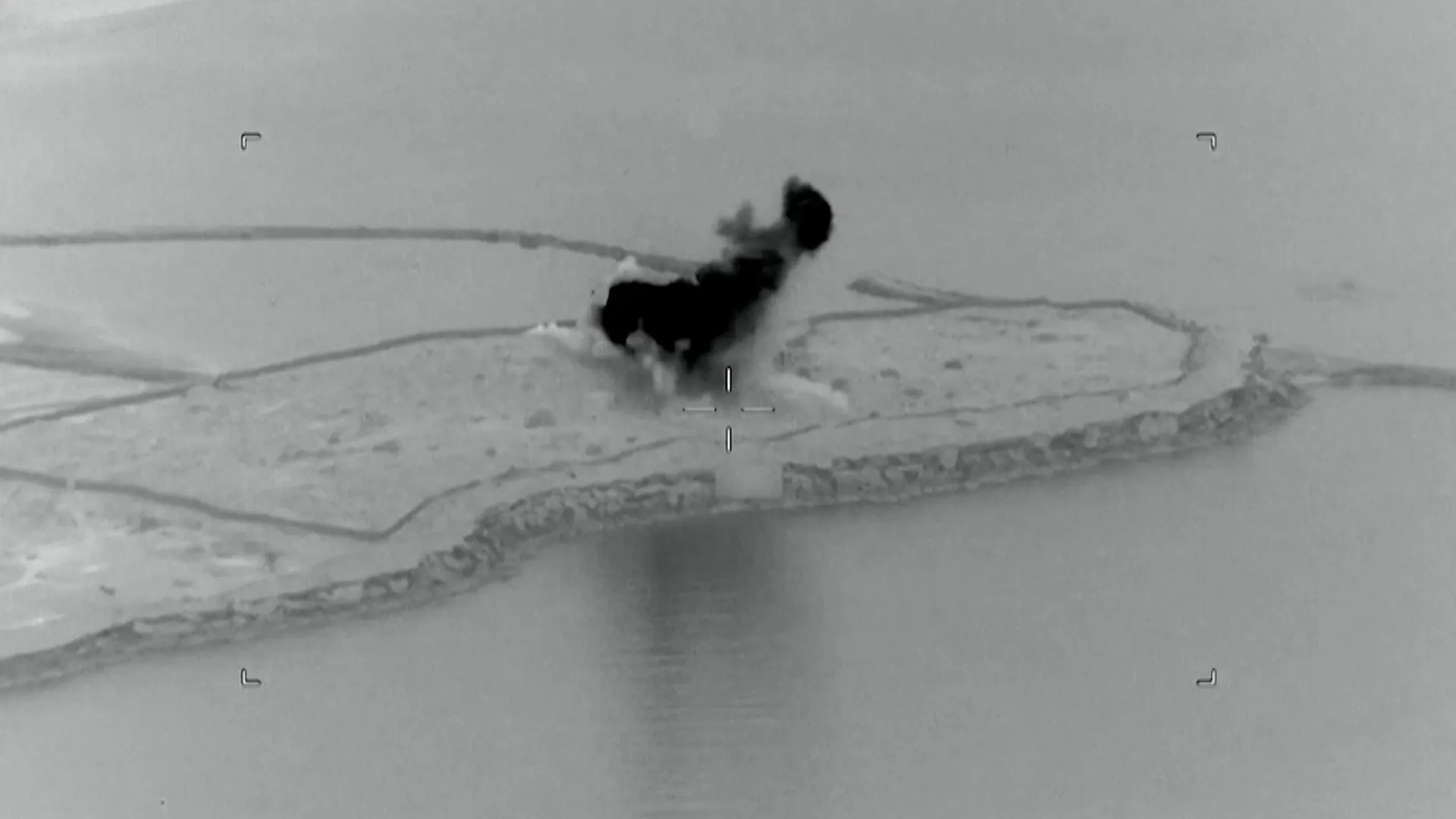
Still, the US is focused on applying maximum pressure on Tehran and forcing it to open the Strait of Hormuz. The US Central Command, the US military’s combat command responsible for operations in the Middle East, said early on Wednesday that its forces had used 2,270kg (5,000lb) bunker-busting munitions against antiship missile sites along Iran’s coastline near the Strait of Hormuz.

Trump has also ordered amphibious ships carrying thousands of US Marines to move to the Middle East, and some experts believe the US might try to seize Kharg Island, a tiny piece of land in the northern Gulf where 90 percent of Iranian crude oil is exported from. The US has already bombed what it said were military sites on the island.

Such an operation, however, might do little to force Iran into opening the Strait of Hormuz, Krieg said. The island is 500km 310 miles) from the strait, and should the US take control of it, it would expose US Marines to Iranian fire. Should Iran see its key terminal being seized, it could also opt to mine the strait outright, having fewer reasons to allow some vessels to pass through.

“The issue with the Strait of Hormuz is really not a military one. … It’s a market issue, and confidence cannot be restored by the military. Confidence can be restored through diplomacy only,” Krieg said.

Source link

In blow to Tehran, Iran’s top security official killed in Israeli airstrike

Iran’s top security official, Ali Larijani, has been killed in an Israeli airstrike, a move that represents a palpable hit to an Iranian leadership that has shown little interest in compromise after almost three weeks of war with the U.S. and Israel.

Killing Larijani, who led Iran as de facto wartime leader after Supreme Leader Ayatollah Ali Khamenei died on the first day of the war, eliminates a veteran official seen as the consummate insider despite not having the religious credentials for the Islamic Republic’s highest offices. Israel, in an announcement Tuesday, said the attack occurred the night before.

For all his bellicose comments since the war began, Larijani was also seen as a pragmatist, and observers say his death might strengthen the resolve of what’s left of Iran’s leadership, rather than induce a willingness to compromise.

His post as secretary of Iran’s Supreme National Security Council gave Larijani control of the country’s top security body, where he tasked government forces with subduing anti-regime protests in January. Thousands of Iranians were killed.

Also killed in the Israeli strikes was Gen. Gholamreza Soleimani, the head of the Basij, the volunteer auxiliary wing of the Islamic Revolutionary Guard Corps and an integral part of the state’s ability to keep order.

“Larijani and the Basij commander were eliminated overnight and joined the head of the annihilation program, Khamenei, and all the eliminated members of the axis of evil, in the depths of hell,” Israeli Defense Minister Israel Katz said in a statement Tuesday.

Israeli officials have employed “axis of evil” to refer to Iran and its allies, including the militant groups Hamas and Hezbollah.

Larijani had served as parliamentary speaker for 12 years and became the point man on nuclear negotiations as well as relations with allies such as China and Russia. He often acted as the government’s representative in the media.

Iranian officials confirmed that Larijani and Soleimani had been killed. They said Larijani’s son, the head of his office and several guards were also killed in the strikes.

Soon after Katz’s announcement, Iranian authorities released an undated note said to have been written by Larijani in which he honored Iranian sailors killed in a U.S. attack. The image of the note was also posted to Larijani’s account on X.

There was no explanation why the note was released and whether it is signified Larijani was still alive.

“We are undermining this regime in the hope of giving the Iranian people an opportunity to remove it,” said Israeli Prime Minister Benjamin Netanyahu.

Netanyahu and President Trump have repeatedly called on ordinary Iranians to topple the government.

Though assassinating Larijani counts as yet another intelligence coup for Israel and the U.S., both may come to regret the loss of a figure who, despite his defiant rhetoric since the war began Feb. 28, was considered by some analysts as a realist.

His killing adds to the evisceration of Iran’s upper echelons, raising the question of who is left to negotiate an end to the war, or have enough influence to make Iran’s deep state accept compromise.

Some observers say that’s the point.

“Why did the Israelis take out Larijani in this moment? Because Netanyahu is focused on blocking Trump’s pathways for a ceasefire and follow-up negotiations with Iran,” said Ellie Geranmayeh, a senior policy fellow at the European Council for Foreign Relations, adding that “Larijani would have been the man to get that job done.”

Khamenei’s assassination, Geranmayeh said, had already empowered more hard-line figures in government, and Larijani’s death “could act as an accelerator to that path.”

“Israel seems to be turning its attention to targeting those that could push for a political solution to the current crisis,” she said.

Larijani’s death would add to the murkiness surrounding Iran’s leadership. After Khamenei was killed and it remained unclear who would replace him, Trump added to the uncertainty by saying that the country’s new leader would need his approval, but also that the U.S. had killed many of the leaders whom he would have deemed acceptable.

After Khamenei’s son, Mojtaba Khamenei, was named the new supreme leader, Trump expressed his displeasure but repeatedly dodged questions about what the transition under the younger Khamenei would mean for the U.S. war effort.

After the elder Khamenei’s death, Larijani emerged as a high-profile voice for Iran, saying that Trump must “pay the price” for the U.S. strikes on the country.

In response, Trump acted as if he didn’t know who Larijani was.

“I have no idea what he’s talking about, who he is. I couldn’t care less,” Trump told CBS News.

Benjamin Radd, a political scientist and senior fellow at the UCLA Burkle Center for International Relations, said Larijani was perceived to be “the last of the competent bunch” within the Iranian leadership — an intellectual who had a complex understanding of the geopolitical reality on the ground, who had negotiated with the U.S. in the past, and who was “adept at maneuvering” all the various parts of the Iranian power structure.

Radd said Larijani “lost that mantle of being the pragmatist” when he strongly backed the deadly January crackdown on protesters, for which he was “more responsible than anyone else.”

He “absolutely was responsible for a tremendous amount of carnage and death and destruction,” Radd said.

And yet, with his death, “all of that diplomatic, institutional experience” that he did have “is gone” from the Iranian leadership, Radd said.

Those left in power, he said, are “generally not the sharpest people, they’re not the people who understand the subtleties of diplomacy, of what negotiating with the U.S. is like.”

Bulos reported from Beirut and Rector from Colorado.

Source link

Over 200 Ukrainian military experts in Gulf region to counter Iran’s drones | US-Israel war on Iran News

Ukrainian President Zelenskyy says Moscow and Tehran are ‘brothers in hatred’; claims Iran’s drones ‘contain Russian components’.

More than 200 Ukrainian military experts are in the Gulf region and wider Middle East helping governments in their defence against Iran’s drone attacks, Ukraine’s President Volodymyr Zelenskyy has said.

In an address to dozens of members of the United Kingdom Parliament in London on Tuesday, the Ukrainian leader said 201 Ukrainian anti-drone experts are in the region and another 34 “are ready to deploy”.

Recommended Stories

list of 4 itemsend of list

“These are military experts, experts who know how to help, how to defend against Shahed drones,” Zelenskyy said in his speech, referring to the Iranian-designed “kamikaze” drones that Russia has been using in its war against Ukraine since 2022.

“Our teams are already in the Emirates, Qatar, Saudi Arabia, and on the way to Kuwait,” the Ukrainian leader said.

“We are working with several other countries – agreements are already in place. We do not want this terror of the Iranian regime against its neighbours to succeed,” he said.

Last week, the Ukrainian leader said military teams had been sent to several Gulf states and Jordan.

Zelenskyy, who met with UK Prime Minister Keir Starmer and NATO chief Mark Rutte earlier on Tuesday, said Russia had received the Shahed-136 drones from the Iranians, who had “taught Russia how to launch them and gave it the technology to produce them”.

INTERACTIVE - SHAHED 136 drone


“Russia then upgraded them. And now we have clear evidence that Iranian Shaheds used in the region contain Russian components,” Zelenskyy said, describing the drones as designed for “low-cost destruction of expensive critical infrastructure”.

“So what is happening around Iran today is not a faraway war for us, because of the cooperation between Russia and Iran,” he said.

“The regimes in Russia and Iran are brothers in hatred, and that is why they are brothers in weapons. And we want regimes built on hatred to never win – in anything,” he added.

The Ukrainian leader then addressed his country’s newly developed prowess in drone warfare and manufacturing, claiming that 90 percent of Russian losses on the front lines in Ukraine are being “caused by our drones”.

Ukraine has moved on from making sea and aerial drones to producing interceptors that target drones, he said, adding that Ukraine is capable of producing at least 2,000 interceptors per day – half of which are required for its own defence and the remainder available for use by Kyiv’s allies.

“If a Shahed needs to be stopped in the Emirates – we can do it. If it needs to be stopped in Europe or the United Kingdom – we can do it. It is a matter of technology, investment, and cooperation,” he said.

While Ukraine has become one of the world’s leading producers of sophisticated, battlefield-proven drone interceptors, US President Donald Trump has said he does not need Ukraine’s help with countering Tehran’s drones targeting military targets in the Middle East.

After meeting with Zelenskyy at 10 Downing Street, Starmer said Russian President Vladimir Putin “can’t be the one who benefits from the conflict in Iran, whether that’s oil prices or the dropping of sanctions”.

During Zelenskyy’s visit on Tuesday, London and Kyiv signed a deal on a “defence partnership”, which is said to combine “Ukraine’s expertise and the UK’s industrial base to manufacture and supply drones and innovative capabilities”.

Source link

US confirms 157 killed in maritime strikes experts call ‘extrajudicial’ | Military News

Defence official tells Congress that 47 alleged drug-trafficking vessels have been struck since campaign began.

The United States military has confirmed that at least 157 people have been killed in lethal strikes against alleged drug-trafficking boats off Latin America, described as a campaign of extrajudicial killings by legal experts.

Senior defence official Joseph Humire said that 47 “narco-trafficking vessels” have been struck in the Caribbean and Eastern Pacific since the campaign began in September, in a written statement to members of the US Congress.

Recommended Stories

list of 3 itemsend of list

Asked by lawmakers on Tuesday whether the quantity of drugs entering the US has gone down, Humire stated that the movement of drug-trafficking vessels had decreased by 20 percent in the Caribbean.

“We’ve measured the decrease in the movement of the vessels,” said Humire.

“But that’s a no in terms of the drugs actually getting into the US,” Representative Adam Smith responded.

Experts have expressed scepticism that the strikes are having any significant impact on the drug trade, and legal scholars have said that the campaign is a clear violation of international law and is blurring the distinction between armed conflict and criminal activity. Under international law, military force is permitted for the former, but not the latter.

The Inter-American Commission on Human Rights (IACHR) is holding hearings on the strikes, and advocates hope that the hearings could open the door to possible legal accountability for those responsible.

The Pentagon has shared videos on social media showing strikes on the vessels, but has provided few details about those killed or evidence of their status as drug vessels.

The administration of US President Donald Trump has embraced a militarised approach to combatting drug trafficking that has allowed the US to expand its military footprint across the region.

The US has stepped up collaboration with friendly governments such as Ecuador and threatened military strikes against countries like Mexico and Colombia if they do not do more to accommodate US demands.

Source link

Recent Terror Attacks in Borno Have Targeted Military Bases and Weapons

“If they rebuild and you return, we will kill you.” 

That was the threat Abubakar Dalwa received before fleeing to Maiduguri, Borno State’s capital in northeastern Nigeria, on the night of March 8. Abubakar was sitting in the compound of his home in Dalwa, a recently resettled community in Konduga, a few kilometres from Maiduguri, with his children and wife. The children slept curled together on a plastic mat while his wife tended a pot over the fire. It was during Ramadan, the Islamic month of fasting, and she was preparing the meal they would eat before dawn.

Then the gunfire came in rapid succession around 10:20 p.m. The children woke up as Abubakar and his wife rushed them inside the room. Moments later, someone began knocking impatiently on the door.

“Open this door,” the person shouted. Abubakar’s wife clung tightly to him. He stepped outside and opened the door. About ten armed men stood in the darkness. Most wore military camouflage. Others were dressed in black uniforms. Belts of ammunition hung across their shoulders, some trailing toward the ground.

“They told me, ‘Get out and leave for Yerwa [Maiduguri],’” Abubakar recalled. The terrorists said they had come to burn the buildings. “They told me the buildings belonged to the government,” he added. “They said their fight was with the government, not us.”

Abubakar did not argue. By then, it was nearly midnight. He gathered his wife and children and fled into the darkness. “We left without taking anything,” he said.

Behind them, the town burned, and three people were killed: a man, a woman, and her baby. The man’s daughter survived but was shot in the leg. She was later taken to the Maimalari Cantonment Hospital in Maiduguri.

By 2 a.m., Abubakar and his family had reached the city. Soldiers received them at a military checkpoint. They were displaced again. 

The assault on Dalwa was not an isolated raid. On the same night, another attack was unfolding hundreds of kilometres away in Kukawa. A member of the Civilian Joint Task Force (CJTF) stationed there said the terrorists attacked around midnight.

“They killed our men, including our Commanding Officer, carted away weapons and vehicles, burnt one building,” he said.

The seizure of weapons and vehicles during these attacks has become a recurring feature of recent raids across Borno, weakening security formations in rural areas and forcing some forces to consolidate around larger bases closer to Maiduguri.

How the attacks unfolded

In Dalwa, the attack lasted about an hour. A frontline member of the NFSS said the terrorists entered the town after overpowering the security units stationed there. “We knew they would overpower us from the first sounds of their gunfire,” he said.

Many of the terrorists carried heavy weapons, including PKT machine guns capable of sustaining rapid fire; others carried rocket-propelled grenades (RPGs).

The terrorists strategically positioned themselves in Dalwa. “They went from house to house,” the NFSS member said. “They ordered residents to leave the town.” Then they began setting buildings on fire.

Security officers attempted to resist the attack. They sought reinforcements from Maiduguri, but the vehicles sent to support them ran into buried landmines. Two soldiers were killed in the explosions. “And so we retreated,” the NFSS member said.

According to the volunteer security operative, the attackers approached Dalwa in coordinated groups. One group blocked the road leading to Damboa. Another positioned itself at the entrance of the town near a cemetery on the outskirts. A third group advanced directly into the town to engage the security forces.

“They came through the eastern side,” he said. “That used to be the original Dalwa before the first displacement.”

The security volunteers estimated the number of attackers to be between 80 and 100. Most of them arrived on foot, while others rode on motorcycles, they said.

People gather under trees with jerry cans in a sandy area, possibly a water distribution point, surrounded by greenery and sparse structures.
File: Young girls queued up, with their plastic containers at a water point in an Internally Displaced Persons camp in Borno. Photo: Hauwa Shaffii Nuhu/HumAngle.

During the March 8 attack, only about 20 soldiers were stationed in the town. Volunteer forces, including members of the NFSS, CJTF, and repentant terrorists known locally as “the hybrid”, numbered fewer than 100. Five days before the raid, surveillance drones had spotted terrorists gathering in nearby areas. “We anticipated the attack,” the NFSS member said.

But anticipation did not stop it. “The attacks keep increasing,” he added. “More than the previous year.”

In Kukawa, the insurgents used similar tactics. A CJTF member stationed there said the attackers arrived in three coordinated groups. One advanced toward the military base. Another waited on the outskirts of the town. A third group positioned itself along the road leading to Cross Kauwa to ambush reinforcements. He claimed that more than 200 fighters participated in the assault.

“They came mostly on foot,” he said. “They were all wearing military camouflage.”

The fighting lasted about three hours. After the terrorists withdrew, the commanding officer of the base, Umar Farouq, pursued them with a convoy, which was later ambushed, and most of his men were killed.

A pattern of attacks on rural security

The recent attacks on Dalwa and Kukawa are part of a broader pattern. Across Borno State, terrorists have increasingly targeted military bases, convoys, and resettled communities, often ambushing reinforcements and seizing weapons and vehicles during the attacks. Security volunteers say these raids are gradually weakening smaller rural security formations and concentrating forces around larger garrison towns closer to Maiduguri, leaving many outlying communities increasingly exposed.

The incidents suggest a deliberate campaign by terrorist groups, particularly the Islamic State West Africa Province (ISWAP). Their strategy appears to involve weakening security forces, isolating rural communities, and driving civilians out of resettled towns. These attacks are occurring against the backdrop of a significant government policy.

Over the past years, the Borno State government has implemented a resettlement programme to close camps for internally displaced persons and return families to their hometowns.

Illustration of armed men in masks and tactical gear near a camouflaged vehicle with a mounted weapon.
An illustration of armed terrorists in uniforms and a military vehicle. Illustration: Akila Jibrin/HumAngle.

The resettlement schemes started in 2020 when the state government began rebuilding homes, schools, clinics, and public facilities in previously abandoned communities as part of what was described as a transition toward a “post-conflict recovery phase”. Thousands of displaced residents have been moved out of camps in Maiduguri and returned either to their original communities or to nearby host settlements considered relatively secure.

But the recovery effort depends heavily on movement. Contractors, labourers, and materials must travel from Maiduguri into rural areas. That movement has increasingly become a point of vulnerability. Roads leading to resettled communities have suffered damage or been mined, isolating towns and delaying military reinforcements. When security forces attempt to respond, they often encounter roadside bombs or ambushes along the routes connecting rural communities to larger bases. Military installations themselves have also become targets. Such attacks on bases allow terrorists to seize weapons, vehicles, and ammunition that can be used in subsequent operations while weakening already thinly stretched security formations in rural areas.

On March 5, terrorists attacked a military base in Konduga, burning several buildings. A member of the Nigerian Forest Security Service (NFSS) told HumAngle that several soldiers were killed, and vehicles and weapons were stolen. Two days earlier, on March 3, the insurgents attacked Ngoshe, a town under the Gwoza Local Government Area (LGA) that had been resettled since 2020. The attackers first targeted a military base before spreading through the town and setting houses ablaze. Local sources and survivors said the attack lasted several hours and forced thousands to flee. Nigeria’s President, Bola Tinubu, condemned the attack on March 6, describing it as a “heartless assault on helpless citizens” and directing security agencies to rescue those abducted.

Corrugated metal structures burned and collapsed against a mountainous backdrop under a clear blue sky.
File: An image of a burnt residence in Ngoshe during the March 3 attack. Credit: Survivors of the incident.

Earlier attacks followed a similar pattern.

On Feb. 14, terrorists attacked a military base in Pulka, about ten kilometres from Ngoshe. On Feb. 5, another attack targeted a base in Auno along the Maiduguri-Damaturu road, according to a military source who asked not to be named. Several soldiers were killed, and vehicles were taken.

On Jan. 28, about 30 construction workers were killed in Sabon Gari in Damboa. The same day, terrorists attacked an army base in the town, killing nine soldiers and two members of the CJTF. A military base in Damasak was also overrun by terrorists, who killed seven soldiers, captured 13 others, including their commanding officer. 

Earlier incidents also targeted reconstruction efforts and security infrastructure. On Dec. 25, 2025, a suicide bomber detonated at a mosque in the Gamboru Market area of Maiduguri. Five people were killed, and 35 others were injured. On Nov. 17 of the same year, workers fled after terrorists stormed a construction site in the Mayanti area of Bama. In the same town, terrorists attacked the Darajamal community in September last year, killing at least 63 people, including five soldiers, and burning about 24 houses.

On Nov. 20, the attackers invaded a CJTF base in Warabe, killing eight people and leaving three others missing. On Nov. 14, terrorists ambushed a military convoy along the Damboa-Biu road. Two soldiers and two CJTF members were killed. Brigadier General M. Uba, the Brigade Commander of the 25 Task Force Brigade, was abducted and later killed.

HumAngle has previously reported that terror groups have undergone several technological shifts that have expanded their attacks and operations, including the use of drones. Despite the violence, the resettlement programme continues. On Jan. 28, the Borno State government received about 300 Nigerian refugees from Cameroon and resettled them in Pulka. The government later received 680 more refugees on Feb. 8.

Why are the attacks happening?

Umara Ibrahim, a professor of International Relations and Strategic Studies at the University of Maiduguri, said the attacks may be aimed at constraining the government’s resettlement efforts.

“Because their movements are observed and monitored, and perhaps challenged, it is not in their interest for resettlement to proliferate,” he told HumAngle during a February interview.

The attacks also serve a logistical purpose.

“Some of their tactics include ambushing and carting away weapons and supplies from peripheral bases in unfortified areas,” the professor said. “It also includes attacks on bases, especially in places where backup might take time to arrive.”

As attacks on rural bases continue, residents and volunteer security operatives say the shrinking presence of security forces in some outlying communities is raising fears that large parts of rural Borno may again become vulnerable.

Many of these families, now fleeing towns like Dalwa, had already experienced displacement. Some years ago, insurgent violence forced them to abandon their homes and seek refuge in camps around Maiduguri. When the government announced resettlement plans, they returned. They rebuilt their lives slowly. Children went back to school. Farmers returned to their fields.

Now they are running again, and the promise of returning home is once again slipping out of reach.

Source link

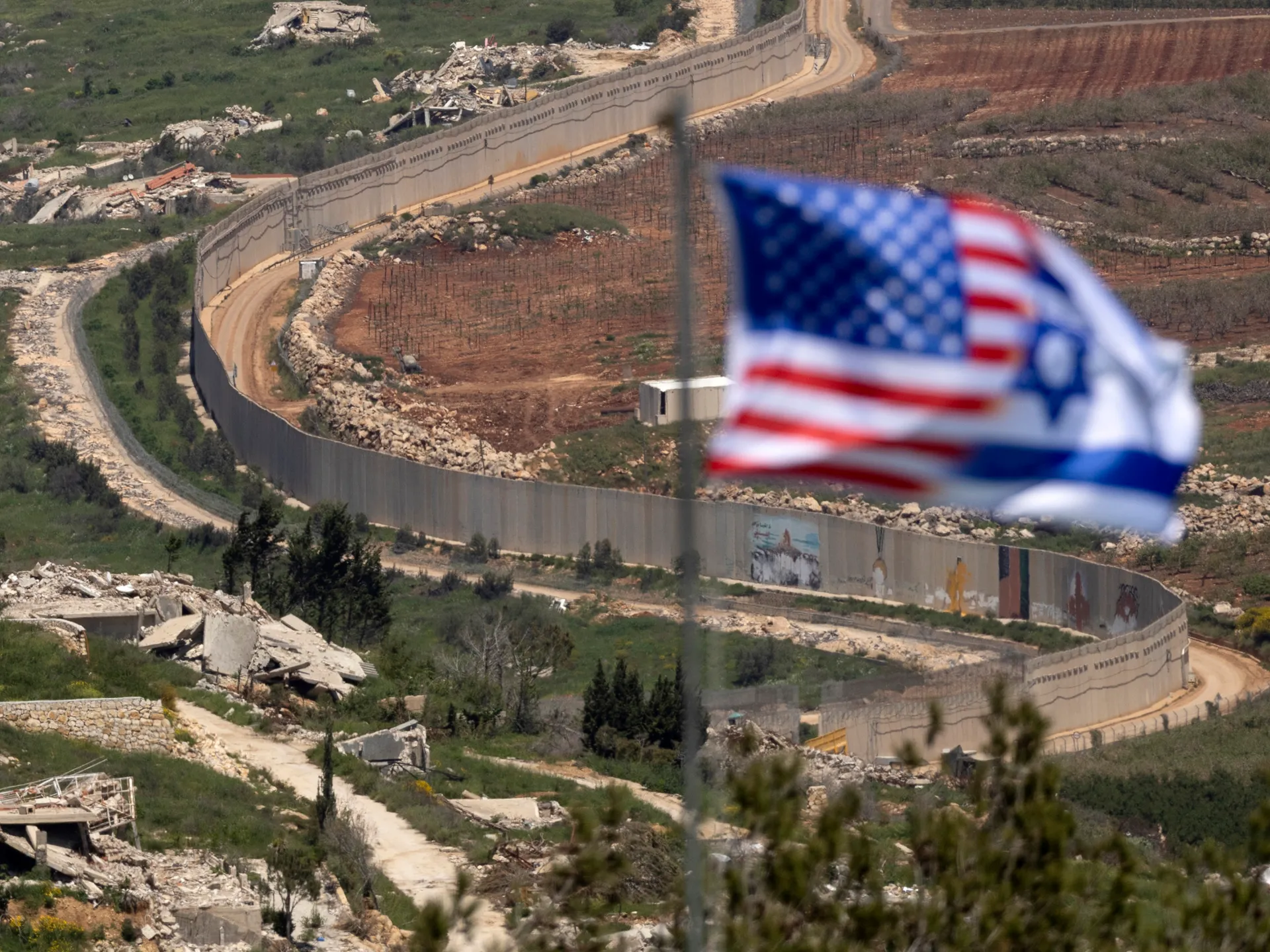
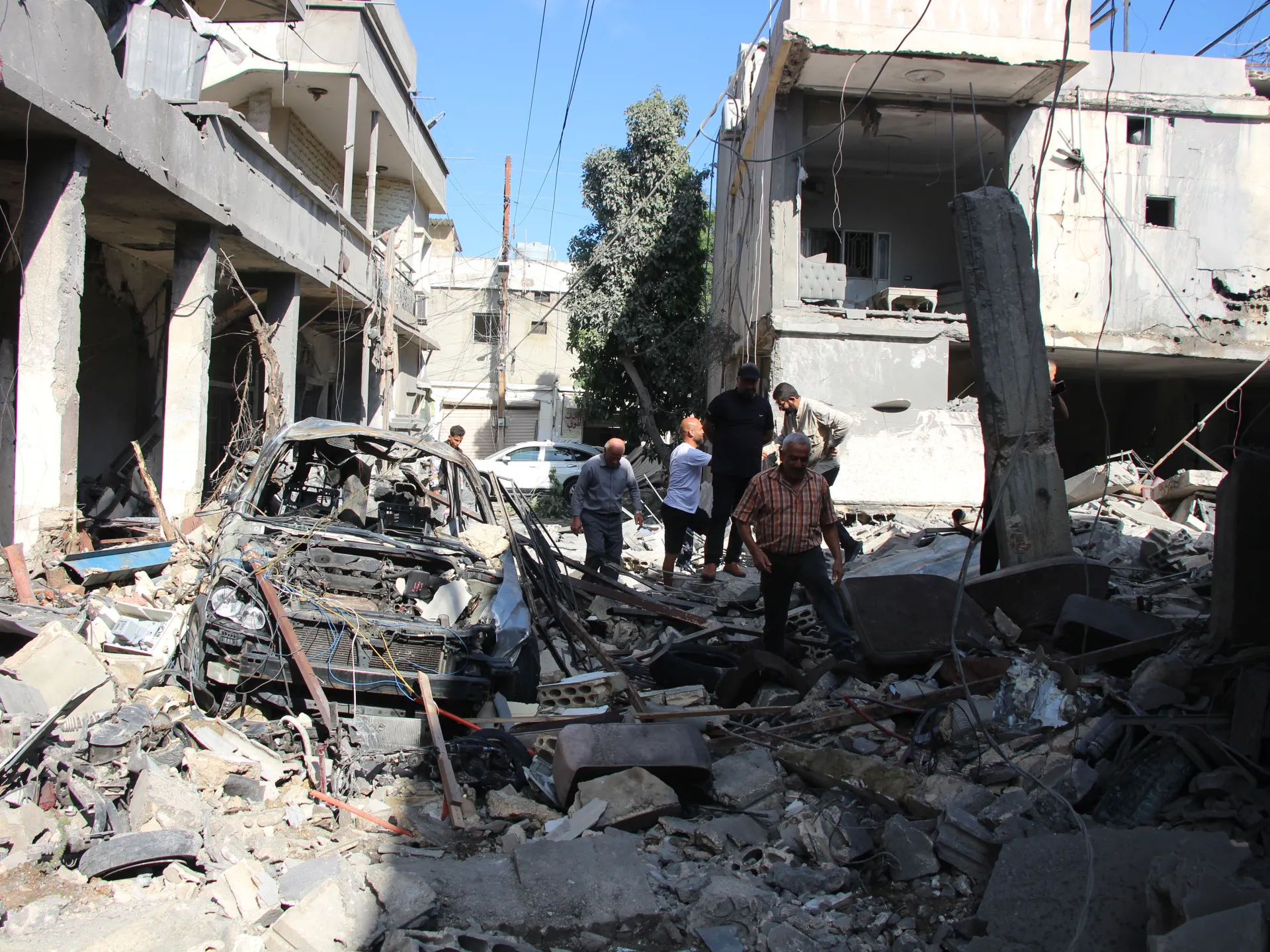
Israeli military launches ground operations in southern Lebanon | News

The Israeli army says its forces are striking key sites in southern Lebanon, as fierce clashes with Hezbollah continue near the town of Khiam.

The Israeli military says its troops have begun ground operations in southern Lebanon as fighting against Hezbollah intensifies around the strategic southern town of Khiam.

At least three air strikes struck the city of Khiam, Al Jazeera Arabic reported on Monday.

Recommended Stories

list of 4 itemsend of list

Khiam, a stronghold of Hezbollah, is strategically located and is seen as a gateway to southern Lebanon. The latest war started after Hezbollah fired rockets in response to the killing of Iran’s Supreme Leader Ayatollah Ali Khamenei. Hezbollah had not attacked Israel since the 2024 ceasefire despite repeated Israeli violations of the United States-brokered deal.

On Monday morning, two Israeli air raids targeted the town of Yater, Al Jazeera Arabic reported. There were no immediate reports of casualties or damage.

Israel also launched raids on Burj Qalawiya, Sultaniya and Chaqra, also in southern Lebanon, according to Al Jazeera Arabic. Two raids were also conducted on the towns of Qantara and as-Sawana.

The Israeli army, in a post on X, said on Monday that its troops in recent days were “focused on ground operations on key targets in southern Lebanon to expand the forward defence area”.

“This operation is part of the effort to establish the forward defence, which includes destroying terrorist infrastructure and eliminating terrorists,” it added.

Importance of Khiam

Khiam sits on high ground just a few kilometres from the Israeli border and the Litani River, giving it a commanding view over northern Israel and nearby Lebanese plains.

Al Jazeera’s Zeina Khodr said a “major battle was under way” in and around Khiam. “The elevation of Khiam for both sides gives them a strategic advantage,” she said.

Moreover, Khodr noted the town lies on a “long and important junction … a road that leads to the eastern and western sectors of southern Lebanon”.

“One of the roads leads to the Bekaa Valley too in eastern Lebanon, another area where Hezbollah has influence,” she said.

“What Israel has been trying to do is really cut the supply lines and the difficult capabilities of Hezbollah, so it’s unable to bring in more weapons and fighters to areas south of the Litani River.”

More than 800,000 people, including women and children, have been forced to flee from their homes as the Israeli army issued evacuation orders for many neighbourhoods in southern Lebanon, as well as the capital, Beirut.

Israeli attacks in Lebanon have so far killed at least 850 people, among them 107 children and 66 women.

Source link

China restarts military flights near Taiwan

Taiwan on Sunday reported a sudden surge in Chinese military aircraft flying near the island and crossing its air defense alert zones after a two week period of relatively few of the flights. The Taiwanese Defense Ministry noted, however, the China’s Navy — its Shandong aircraft carrier can be seen during a Chinese military exercise in 2025 — continued to circle the island daily. File Photo by Taiwan Military News Agency/EPA-EFE

March 15 (UPI) — Taiwan’s defense ministry on Sunday said that more than two dozen Chinese military aircraft and several naval vessels were detected near the island, which comes after a period with relatively few such incursions.

After decreased presence of Chinese incursions into the island’s air defense identification zone (ADIZ) during the last two weeks, China sent 26 aircraft that were spotted around the island – 16 of which violated the ADIZ – and seven naval vessels sailed toward it, The Independent and The Wall Street Journal reported.

China considers Taiwan to be its territory. On a regular basis, it sends military aircraft and naval vessels toward the island, but during 10 of the last 16 days — from Feb. 27 to March 5 and March 7 to 10 — no flights near the island were reported.

On the other days, there were as few as two flights detected.

Taiwan regards the incursions into its airspace and waters as routine harassment, for the most part, but China also has held military exercises close to what Taiwan considers its territory and has threatened to take the island by force if it deems it necessary.

Wellington Koo, Taiwan’s defense minister has said that although there has been a noticeable decrease in aircraft nearing or crossing the ADIZ, the island nation’s military planned to stay on guard.

“We cannot rely on a single indicator like the absence of aircraft,” Koo told The Journal, because naval vessels still circle the island daily.

Analysts have suggested that the decrease in incursions is timed to a meeting of the Chinese legislature, which has happened previously, or be part of a diplomatic or strategic play before U.S. President Donald Trump and Chinese President Xi Jinping meet in Beijing at the end of the month.

An Iranian man raises a portrait of new supreme leader Mojtaba Khamenei during a rally on Revolution Street in Tehran on March 9, 2026. Photo by Hossein Esmaeili/UPI | License Photo

Source link

Displaced families in Lebanon turn vehicles into rain-soaked shelters | Hezbollah

NewsFeed

Displaced families in Sidon are turning their vehicles into makeshift shelters, covering them with tarp to shield themselves from the rain after failing to find space in local schools. Hundreds of thousands have been forced from their homes as Israel’s offensive in Lebanon intensifies.

Source link

Two brothers survive after Israeli troops kill family in occupied West Bank | Occupied West Bank

NewsFeed

Two Palestinian brothers are the only survivors after Israeli troops killed their parents and two siblings in Tammun in the occupied West Bank, according to Palestinian health authorities. The boys say soldiers opened fire on their family car and beat them after the shooting.

Source link

Trump calls for naval coalition to open Strait of Hormuz: Can it work? | Explainer News

United States President Donald Trump has called for a naval coalition to deploy warships to secure the Strait of Hormuz, through which one-fifth of world oil shipments transit, as oil markets reel from supply disruptions caused by the US-Israeli war with Iran.

What is essentially the closure of the Strait of Hormuz by Iran in response to the attacks by the US and Israel has sent oil prices soaring to more than $100 per barrel.

Iran’s new supreme leader, Mojtaba Khamenei, has promised to keep the maritime artery closed while another top official in Tehran warned that oil prices could shoot up beyond $200 per barrel.

Trump said he hoped a naval coalition could secure the vital waterway, which connects the Gulf to the Gulf of Oman and the Arabian Sea. Iran has struck more than a dozen ships trying to sail through the narrow waterway since the hostilities started two weeks ago.

But will Trump’s solution work?

hormuz
A tanker sits at anchor in Port Sultan Qaboos in Muscat, Oman, as oil shipments through the Strait of Hormuz have plummeted [File: Benoit Tessier/Reuters]

What has Trump said?

The US president has been facing domestic pressure over starting the war alongside Israel with no endgame or off-ramps in sight.

“On the strait of Hormuz, they had NO PLAN,” US Democratic Senator Chris Murphy wrote in a post on X. “I can’t go into more detail about how Iran gums up the Strait, but suffice it [to] say, right now, they don’t know how to get it safely back open.”

After threatening to bomb Iran more, Trump called on China, France, Japan, South Korea and the United Kingdom to send warships to secure the strait.

Trump claimed “100% of Iran’s military capability” had already been destroyed but added that Tehran could still “send a drone or two, drop a mine, or deliver a close-range missile somewhere along, or in, this waterway”.

“Hopefully China, France, Japan, South Korea, the UK, and others, that are affected by this artificial constraint will send ships to the area so that the Hormuz Strait will no longer be a threat by a nation that has been totally decapitated,” Trump wrote in a post on his Truth Social platform.

“In the meantime, the United States will be bombing the hell out of the shoreline, and continually shooting Iranian Boats and Ships out of the water. One way or the other, we will soon get the Hormuz Strait OPEN, SAFE, and FREE!”

Not long after, Trump returned to the keyboard, extending the invitation to all “the Countries of the World that receive Oil through the Hormuz Strait” to send warships, adding that the US would provide “a lot” of support to those who participated.

trump
Israeli soldiers walk by a billboard commissioned by the evangelical Christian group Friends of Zion during the US-Israel war on Iran in Tel Aviv, Israel [File: Nir Elias/Reuters]

What has Iran said?

Alireza Tangsiri, commander of the Islamic Revolutionary Guard Corps Navy, said in a statement that claims by the US about destroying Iran’s navy or providing safe escort for oil tankers were false.

“The Strait of Hormuz has not been militarily blocked and is merely under control,” he said in a statement.

Iranian Foreign Minister Abbas Araghchi later doubled down on this, saying the strait remained open to international shipping except for vessels belonging to the US and its allies.

“The Strait of Hormuz is open. It is only closed to the tankers and ships belonging to our enemies, to those who are attacking us and their allies. Others are free to pass,” Araghchi said.

Khamenei – son of the late Supreme Leader Ali Khamenei, who was killed on the first day of the US-Israeli strikes – suggested in his first statement since taking power that the Strait of Hormuz would remain closed to provide leverage for Iran during the conflict.

iran
F-18 combat aircraft are parked on the deck of the USS Abraham Lincoln aircraft carrier in the Gulf of Oman near the Strait of Hormuz during a 2019 deployment [File: Ahmed Jadallah/Reuters]

What are the challenges in the Strait of Hormuz?

The strait, which is just 21 nautical miles (39km) wide at its narrowest point, is the only maritime passage into the Arabian Gulf (known as the Persian Gulf in Iran). Shipping lanes in the waterway are even narrower and more vulnerable to attacks.

It separates Iran on one side from Oman and the United Arab Emirates on the other.

In brief, there is no way in or out by sea when the Strait of Hormuz is closed.

Alexandru Hudisteanu, a maritime security expert who served 13 years in the Romanian navy, told Al Jazeera that in the type of coalition that Trump is hinting at, “interoperability is the biggest hurdle.”

“That’s the ability of cruises to work together or with different units and different doctrine when basic communication would be an issue,” he said.

Then, there is the geography of the Strait of Hormuz: “a very unforgiving environment to sail with this type of wartime threats”, Hudisteanu said. “Especially difficult under missile threats and these asymmetric potential mines or unmanned systems that could damage or destroy ships.”

Providing escorts to ships would be a costly option, and it would pose risks to participating foreign warships from possible Iranian attacks, which would likely further drag more countries into the ongoing war.

From Iran’s point of view, “the fact that the shoreline is so close and the actual maritime passage is highly congested and confined is an advantage by default,” Hudisteanu added. Geographically, Iran keeps it as a gauntlet, with no way out for the ships unless Tehran allows it.

Another major challenge for any naval coalition trying to secure the passage would be the timeline of any operation.
”The security of the strait could be achieved. It’s just a matter of how much time you need and how many assets you need,” the analyst said. Rushing through it “could have negative implications for the security of the mission and the region”.

Smoke rising from a ship after an attack.
Smoke rises from the Thai bulk carrier Mayuree Naree near the Strait of Hormuz after an attack on March 11, 2026 [Handout/Royal Thai Navy via AFP]

How have countries responded?

No country has so far publicly agreed to Trump’s call to send warships to secure the Strait of Hormuz.

London said it is “intensively looking” at what it can do to help reopen the maritime passage. British Energy Secretary Ed Miliband said: “We are intensively looking with our allies at what can be done because it’s so important that we get the strait reopened.”

Chinese Ministry of Foreign Affairs officials said Beijing is calling for hostilities to stop and “all parties have the responsibility to ensure stable and unimpeded energy supply.”

Japan said the threshold is “extremely high” to send its warships on such a mission. “Legally speaking, we do not rule out the possibility, but given the current situation in which this conflict is ongoing, I believe this is something that must be considered with great caution,” said Takayuki Kobayashi, policy chief of Japan’s ruling Liberal Democratic Party.

France also confirmed that it will not send ships. The Ministry for Europe and Foreign Affairs said in a statement on Saturday: “Posture has not changed: defensive it is,” in reference to President Emanuel Macron’s assertion that France will not join the war against Iran.

South Korea, which imports 70 percent of its oil from the Gulf, said it was “closely monitoring” Trump’s statements and “comprehensively considering and exploring various measures … to ensure the safety of energy transport routes”.

INTERACTIVE - Strait of Hormuz - March 2, 2026-1772714221
(Al Jazeera)

Are countries negotiating with Iran?

Some countries have been negotiating with Iran to secure passage for their petroleum shipments.

Two Indian-flagged tankers carrying liquefied petroleum gas (LPG) have sailed through the Strait of Hormuz. New Delhi depends on this passage for 80 percent of its LPG imports.

The war on Iran has caused a critical shortage of cooking gas for India’s 333 million households. New Delhi has long had ties with Iran, but the government of Prime Minister Narendra Modi has not condemned the killing of Ali Khamenei. It has condemned Iran’s retaliatory attacks on Gulf countries, where millions of Indian citizens work and send $51bn in remittances home every year.

Iran’s ambassador to India, Mohammad ⁠Fathali, said Tehran had allowed some Indian vessels to pass through the Strait of Hormuz in a rare exception to the blockade but did not confirm the number of vessels.

A Turkish-owned vessel was similarly granted permission last week after Ankara negotiated passage directly with Tehran. Fourteen more Turkish vessels are awaiting clearance.

France and Italy also reportedly opened talks with Iranian officials to negotiate a deal to allow their vessels through the strait, but there has been no official confirmation yet.

“Iran is affecting maritime supply,” Hudisteanu said. “It’s affecting the maritime security of the region and the entire ecosystem and bringing the entire world to the table as the global price for oil and gas increases.”

Source link

Iran claims US and Israel using copycat ‘Lucas’ drones to frame it | Military

NewsFeed

Ebrahim Zolfaghari, spokesperson for Iran’s Khatam al-Anbiya Central Headquarters, accused the US and Israel of orchestrating a ‘diabolical plot’, claiming they copied Iran’s Shahed-136 drone design and repurposed it as a modified ‘Lucas’ drone to falsely blame Tehran for drone attacks across the region.

Source link

Pakistan strikes Afghan base after its president warns ‘red line’ crossed | Conflict News

Islamabad hits Kandahar facility after Taliban drones strike civilian areas and military sites as conflict intensifies.

Pakistan has carried out strikes on an Afghan military facility in Kandahar after Taliban drones targeted civilian areas and military installations across the country.

The strikes on Saturday came after Pakistani President Asif Ali Zardari condemned the overnight drone attacks, warning Kabul it had “crossed a red line by attempting to target our civilians”.

Recommended Stories

list of 3 itemsend of list

Pakistan’s military said the drones, described as locally produced and rudimentary, were intercepted before reaching their targets, though falling debris wounded two children in Quetta and civilians in Kohat and Rawalpindi.

A security source told the AFP news agency that airspace around the capital, Islamabad, had been temporarily closed when the drones were detected.

Islamabad said the Kandahar facility had been used both to launch the drone attacks and as a base for cross-border rebel activity.

The exchange marks the sharpest single escalation yet in a conflict that has been building since late February, when Pakistan launched military operations against what it said were Pakistan Taliban fighters sheltering on Afghan soil.

Islamabad also accuses Kabul of harbouring fighters from the ISIL (ISIS) group’s Khorasan province affiliate.

The Taliban government has denied both charges.

The drone attacks followed Pakistani strikes on Kabul and eastern border provinces in Afghanistan overnight on Thursday into Friday. The Pakistani attacks killed four people in the capital, women and children among them, and two more in the east.

In the Pul-e-Charkhi neighbourhood of Kabul, one resident described being buried under rubble after his home was hit, saying he lay there believing it was his “last breath” before neighbours pulled him free.

A local representative told AFP that those killed were “ordinary people, poor people” with no involvement in the conflict.

Pakistani aircraft also struck a fuel depot belonging to the private airline Kam Air near Kandahar airport, which an airport official said supplied aid organisations, including the United Nations and the International Committee of the Red Cross.

The official added that there were “no military installations” at the site.

Afghanistan’s Ministry of Defence claimed that its forces had captured a Pakistani border post and killed 14 soldiers.

Islamabad dismissed the assertion as baseless, with the prime minister’s spokesman accusing the Taliban of “weaving fantasies” rather than dismantling rebel networks on Afghan territory.

The UN mission in Afghanistan says at least 75 civilians have been killed and 193 injured since hostilities intensified on February 26, a toll that includes 24 children.

According to the UN refugee agency, about 115,000 people have been forced from their homes.

The crisis is unfolding as the wider region remains engulfed by the US-Israeli war with Iran, which began just two days after the Pakistan-Afghanistan clashes escalated.

Chinese Minister of Foreign Affairs Wang Yi has urged both sides to pursue dialogue, warning that further force would only deepen the crisis, though his appeal came as Pakistani jets were already in the air over Kandahar.

Source link

President Donald Trump says U.S. ‘totally obliterated’ military targets on Kharg Island

March 14 (UPI) — President Donald Trump announced that U.S. forces “totally obliterated” every military target on Iran’s Kharg Island, a key port that exports the vast majority of Iran’s oil.

In a post on Truth Social on Friday evening, Trump described the attack as “one of the most powerful bombing raids in the History of the Middle East.”

He said he directed U.S. Central Command to carry out the bombings after Iran halted ships’ passage through the Straight of Hormuz. About 20% of the world’s crude oil passes through the strait.

“For reasons of decency, I have chosen NOT to wipe out the Oil Infrastructure on the island,” Trump wrote.

“However, should Iran, or anyone else, do anything to interfere with the Free and Safe Passage of Ships through the Strait of Hormuz, I will immediately reconsider this decision.”

Kharg Island is about 15 miles south of the Iranian mainland through which about 90% of the country’s oil exports pass, The Washington Post reported. It’s a critical piece of Iran’s economy and a full attack on the oil infrastructure there could hinder Iran’s ability to pay its military.

Iranian officials said the site was “proceeding normally” after the U.S. attack.

In response to Friday’s bombings on Kharg Island, Iran threatened its own attack on key oil infrastructure in the United Arab Emirates, CNN reported.

Oil has been a key factor in the war in Iran, which began Feb. 28 with surprise U.S. and Israeli airstrikes on dozens of Iranian sites. AAA reported Saturday that the average price of a gallon of gasoline was $3.68 in the United States, up 23% since the start of the war.

This could, in turn, have a dramatic impact on other aspects of the U.S. economy, including food prices, jet fuel and fertilizer.

An Iranian man raises a portrait of new supreme leader Mojtaba Khamenei during a rally on Revolution Street in Tehran on March 9, 2026. Photo by Hossein Esmaeili/UPI | License Photo

Source link

US attacks military sites on Iran’s Kharg island, home to vast oil facility | US-Israel war on Iran News

United States President Donald Trump has said the country’s military bombed military installations on Iran’s Kharg island, warning the area’s critical oil facilities could be next if Iran continues to block the Strait of Hormuz.

Iran, in turn, threatened on Saturday to reduce US-linked oil facilities to “a pile of ashes” if oil structures on the island were attacked, as the US-Israel war on Iran, now in its punishing third week, spilled over into a global oil price crisis already in the making.

Recommended Stories

list of 3 itemsend of list

Kharg island is where more than 90 percent of Iran’s oil is exported. Crude oil prices have surged more than 40 percent since the war began.

Trump said on Friday that US forces had “totally obliterated” all military targets on Iran’s Kharg island oil export hub, describing it in a social media post as “one of the most powerful bombing raids in the History of the Middle East”. He provided no evidence of that.

The US president said he had chosen not to “wipe out” oil infrastructure on the Iranian island, for now.

“However, should Iran, or anyone else, do anything to interfere with the Free and Safe Passage of Ships through the Strait of Hormuz, I will immediately reconsider this decision,” he added.

Iran’s semi-official Fars news agency reported, quoting sources, that more than 15 explosions were heard on Kharg island during the US attacks.

The sources said the attacks targeted air defences, a naval base, and airport facilities, but caused no damage to oil infrastructure. Iran’s Fars news agency reported thick smoke was seen rising from the island.

Al Jazeera’s Mohamed Vall, reporting from Tehran, said Iran’s potential retaliatory attacks on Gulf oil facilities would be a “catastrophic scenario” for the region, and for the “entire industry of oil and gas”.

“The Iranians are keeping this, apparently, as a card to use,” he said. “They’ve been talking about restraint and the possibility of that restraint ending if the Iranian oil facilities are attacked, as the Americans are hinting and threatening.”

US ground operation in the works?

Meanwhile, 2,500 more Marines and an amphibious assault ship are being sent to the Middle East, a US official told the AP news agency.

Elements from the 31st Marine Expeditionary Unit and the amphibious assault ship USS Tripoli have been ordered to the region, according to the source, who spoke on condition of anonymity to discuss sensitive military plans.

INTERACTIVE - Strait of Hormuz - March 2, 2026-1772714221
(Al Jazeera)

Marine Expeditionary Units are able to conduct amphibious landings, but they also specialise in bolstering security at embassies, evacuating civilians, and providing disaster relief.

“What we’re to make of this is that the US is very slowly increasing its military posture in terms of prosecuting the war, and that it is not intending to wrap things up any time soon,” Al Jazeera’s Rosiland Jordan reported from Washington.

The deployment does not necessarily indicate that a ground operation is imminent or will take place.

Trump dismisses prospect of deal

Following the attack on Kharg island, Iran would be “wise to lay down their arms, and save what’s left of their country”, Trump wrote on his Truth Social platform.

“The Fake News Media hates to report how well the United States Military has done against Iran, which is totally defeated and wants a deal – but not a deal that I would accept!” he posted separately, providing no evidence Tehran was seeking any sort of deal.

At least 1,444 people have been killed and 18,551 injured by US-Israeli attacks on Iran since February 28, Iran’s Ministry of Health says.

Al Jazeera’s Tohid Asadi, reporting from Tehran, said US-Israeli air attacks hit targets across the country, including in Tehran, Karaj, Isfahan and Tabriz. He said this was a sign that “we are not close to de-escalation.

“Iranian officials are talking about retaliatory strikes, with the Islamic Revolutionary Guard Corps talking about using what they call their most advanced weaponry, including Heidar missiles, to target Israeli territories and US bases in the region,” he said.

Source link

Experts doubt Hegseth claim no need to ‘worry about’ Hormuz | US-Israel war on Iran

NewsFeed

“The US Navy at this point can’t even get anywhere close to the Strait of Hormuz without being attacked.” Experts are pouring cold water on Pete Hegseth’s claims that the US is working effectively to reopen the world’s most crucial shipping lane.

Source link

Advocates push for major probe as US boat strikes in Latin America kill 157 | Donald Trump News

Washington, DC – In September, the United States began launching dozens of deadly military strikes against alleged drug-smuggling boats in the Caribbean Sea and eastern Pacific.

Nearly half a year later, remarkably little is known about the strikes. The identities of the nearly 157 people killed have not been released. Any purported evidence against them has not been made public.

Recommended Stories

list of 3 itemsend of list

But a group of United Nations and international law experts are hoping to change that on Friday, when they testify at the Inter-American Commission on Human Rights (IACHR).

The international hearing will be the first of its kind since the strikes began on September 2, and rights advocates hope it can help lead to accountability as individual legal cases related to the strikes proceed.

Steven Watt, a senior staff lawyer with the American Civil Liberties Union’s human rights programme, said the goal of the hearing will be threefold.

“Our ask will be to conduct a fact-finding investigation into what’s going on,” Watt said.

The second aim, he continued, would be “to assert or to arrive at a conclusion that there is no armed conflict here”, in what would be a rebuke to US President Donald Trump’s previous claims.

Finally, Watt said, he hopes the proceedings will yield long-sought transparency from the Trump administration on “whether or not they have a legal justification for these boat strikes”.

“We don’t think there are any,” Watt added.

‘We don’t know the names’

The experts set to testify at Friday’s hearing said the IACHR has a unique mandate to uncover the truth behind the US strikes.

The commission, based in Guatemala City, Guatemala, is an independent investigative body within the Organization of American States, of which the US was a founding member in 1948.

While the Trump administration has claimed it has a right to carry out the deadly attacks as part of a wider military offensive against so-called “narco-terrorists”, rights groups have decried the campaign as a series of extrajudicial killings.

They argue that Trump’s deadly tactics deny those targeted of anything that approaches due process.

Legal experts have also dismissed Trump’s claims that suspects in drug-related crimes are equivalent to “unlawful combatants” in an “armed conflict”.

Few details have emerged from the air strikes. Several families have come forward, however, to informally identify the dead as their loved ones.

Victims are said to include 26-year-old Chad Joseph and 41-year-old Rishi Samaroo, who were sailing home to Trinidad and Tobago when they were killed in October, according to relatives.

A complaint filed against the US government said both men travelled often between the islands and Venezuela, where Joseph found work as a farmer and fisherman, and Samaroo laboured on a farm.

The family of Colombian national Alejandro Carranza, 42, have also said he was killed in September when the US military attacked his fishing boat off the country’s coast.

The US has yet to confirm the victims’ identities, and only two survivors have ever been rescued in the 45 reported strikes.

A clearer picture of what happened will be a significant step towards accountability, according to experts like Watt.

“[The IACHR] is uniquely positioned to identify who all these persons are,” Watt said. “We just know the numbers from the United States. We don’t know the names or the backgrounds of these people.”

The IACHR has launched a range of human rights investigations in recent decades, including probes into the 2014 mass kidnapping of 43 students in Iguala, Mexico, and a series of murders in Colombia from 1988 to 1991 dubbed the Massacre of Trujillo.

The commission has also examined US policies, including extrajudicial detentions at Guantanamo Bay, Cuba, during its so-called “global war on terror”.

The IACHR has the power to seek resolutions to human rights complaints or refer them for litigation before the Inter-American Court of Human Rights.

Just last week, the court ordered Peru to pay reparations to the family of a woman who died during a government-led forced sterilisation campaign in the 1990s.

The Carranza family has filed its own complaint to the IACHR, and the families of Joseph and Samaroo have also lodged a lawsuit against the US in a federal court in Massachusetts.

Angelo Guisado, a senior staff lawyer at the Center for Constitutional Rights (CCR), said a fuller accounting of the US actions is needed to prevent future abuses. He is among the experts testifying on Friday.

“You can’t normalise assassinating fishermen off the coast of South America,” Guisado told Al Jazeera. “That’s just sadistic and an abomination to the rules-based order that we’ve created.”

“So we hope that the commission can do some investigation.”

A war against ‘narco-terrorists’?

One of Guisado’s goals for Friday’s hearing will be to unpack the Trump administration’s argument that the attacks are necessary from a national security standpoint.

Even before the US strikes began, the Trump administration began framing the Latin American drug trade as an existential threat to the US.

As part of that re-framing, the administration borrowed messaging from its “global war on terror”, taking the unorthodox approach of labelling several cartels “foreign terrorist organisations”.

Speaking last week at a meeting of Latin American leaders, White House security adviser Stephen Miller maintained there is no “criminal justice solution” to drug cartels.

Instead, he affirmed that the US would use “hard power, military power, lethal force, to protect and defend the American homeland”, even if that meant carrying out deadly operations throughout the Western Hemisphere.

Guisado, however, noted that the administration has admitted that the targeted boats were largely carrying cocaine, not the highly addictive fentanyl responsible for the majority of US drug overdoses.

He explained that the administration has done little to prove its claims that drug traffickers are part of a coordinated effort to destabilise the US.

Such hyperbolic language, Guisado added, could be used as a smokescreen to conceal illegal actions.

“When you invoke national security interest, it seems as if scrutiny and any legitimate analysis or condemnation gets pushed to one side in favour of an ersatz martial law,” Guisado said.

“The idea that you could just proclaim anyone a narcoterrorist and do whatever you want with them is just so repugnant to our system of fairness, justice and law.”

Watt, meanwhile, said he hopes the IACHR will draw a clear “line in the sand”, separating drug crimes from what is conventionally considered an armed conflict.

He also would like to see the IACHR clearly outline the US’s human rights obligations.

“But even if there was an armed conflict — of which there isn’t — the laws of war would prohibit the type of conduct that the United States is engaging in here,” Watt explained.

“It would be an extrajudicial killing. It would be a war crime.”

Transparency or accountability

Friday’s hearing will only be an initial step towards accountability, and critics question how effective the IACHR will ultimately be.

The US has regularly shrugged off human rights probes at international forums, and it is not party to entities like the International Criminal Court in The Hague, raising barriers to the pursuit of justice.

Despite being a member of the OAS, the US has also not ratified the American Convention on Human Rights, one of the organisation’s founding documents.

It is, therefore, unclear how binding any IACHR decisions could be, although Watt argued that it is “longstanding jurisprudence of the commission that the declaration imposes obligations on non-ratifying member states”.

Still, legal experts said Friday’s hearing may yield clarity on the Trump administration’s legal argument for the boat strikes.

The IACHR has said US government representatives are set to appear at the hearing.

To date, the US Department of Justice has not released the Office of Legal Counsel’s official reasoning for the boat strikes, considered the foundational legal document for the military actions.

A separate memorandum from that office addressed the US abduction of Venezuelan President Nicolas Maduro on January 3, which it framed as a drug enforcement action.

That memo touched on the boat strikes, but it only served to raise further questions about Trump’s rationale.

“This will be an opportunity for the United States to put its case before the commission,” Watt said.

“But of course, it depends on US cooperation,” he continued. “They’re going down there, but it’ll be interesting to see what they actually say”.

Source link

US military ‘not ready’ to escort oil ships through Hormuz, official says | US-Israel war on Iran News

The United States military is “not ready” to accompany oil ships through the Strait of Hormuz, a top official in President Donald Trump’s administration says as Iran continues to block the strategic waterway.

US Energy Secretary Chris Wright told the CNBC business news channel on Thursday that the markets are experiencing a “short-term disruption”, predicting that the war would go on for “weeks, not months”.

Recommended Stories

list of 3 itemsend of list

Despite Trump’s repeated threats, Iran has largely succeeded in shutting down the strait, which links the Gulf to the Indian Ocean. The closure has sent oil prices soaring.

Wright described the effects of the crisis as “short-term pain for long-term gain”, arguing that the US is “destroying” Iran’s ability to threaten the energy market.

Last week, Trump suggested that the US Navy would escort ships through the Gulf, but Wright said on Thursday that the move “can’t happen now”.

“We’re simply not ready. All of our military assets right now are focused on destroying Iran’s offensive capabilities and the manufacturing industry that supplies their offensive capabilities,” the energy secretary said.

“We don’t want this to be a brush-off for a year or two. We want to permanently destroy their ability to build missiles, to build roads, to have a nuclear programme.”

His comments came as Iran’s new supreme leader, Mojtaba Khamenei, affirmed in his first public comment since being selected to succeed his assassinated father, Ali Khamenei, that the Strait of Hormuz should remain closed during the war.

“The will of the people is to continue effective and deterrent defence,” Khamenei said in a written statement. “The tactic of closing the Strait of Hormuz must also continue to be used.”

The Iranian military has said it would “welcome” the US Navy escorting oil ships, suggesting it is prepared to strike US forces in the narrow waterway.

On Wednesday, three commercial vessels were attacked near the strait.

Wright announced earlier this week on social media that the US Navy had escorted an oil ship through the strait, then quickly deleted the post. The White House subsequently confirmed that the claim was not true.

It is not clear why the statement was released and then retracted.

Assurances by US officials that Washington would open the strait have temporarily calmed markets, only for prices to spike again.

The price of a barrel of oil peaked at about $120 on Sunday, up from about $70 before the US and Israel launched the war on February 28. It has been yo-yoing between $80 and $100 for the past few days.

In addition to the marine blockade, Iran has targeted oil installations across the Gulf.

As one of the world’s largest oil producers, the US is largely self-sufficient. But possible shortages in Asia and Europe have put a strain on prices globally.

According to data from the American Automobile Association, the average price of one gallon (3.78 litres) of petrol in the US is now $3.60, up from $2.94 last month.

Rising energy prices could fuel inflation and affect the cost of basic goods, including food.

But Trump suggested on Thursday that the US is benefitting from skyrocketing oil prices.

“The United States is the largest Oil Producer in the World, by far, so when oil prices go up, we make a lot of money,” the US president wrote in a social media post.

“BUT, of far greater interest and importance to me, as President, is stopping an evil Empire, Iran, from having Nuclear Weapons, and destroying the Middle East and, indeed, the World.”

Iran denies seeking a nuclear weapon, and Trump reiterated for months before the current conflict that US strikes against Iranian facilities in June had “obliterated” the country’s nuclear programme.

Source link

Can Iran’s asymmetric warfare hold US-Israeli military power at bay? | US-Israel war on Iran News

Despite United States President Donald Trump’s repeated declarations of victory in the US-Israeli war on Iran, Tehran’s retaliatory strikes on Israel and US military assets in the region have continued, upending global financial and energy markets.

“We’ve had two decades to study defeats of the US military to our immediate east and west. We’ve incorporated lessons accordingly,” Iranian Foreign Minister Seyed Abbas Araghchi wrote in a post on X on March 1, the day after US and Israeli strikes on Tehran killed Iran’s Supreme Leader Ayatollah Ali Khamenei and other senior Iranian officials.

Recommended Stories

list of 3 itemsend of list

“Bombings in our capital have no impact on our ability to conduct war,” he wrote.

According to analysts, Iran has made use of “asymmetric” warfare tactics while striking the US and Israel. So, are Tehran’s war tactics working?

Here’s what we know:

What is ‘asymmetric’ warfare?

When the balance of capabilities is unequal in a conflict – as it is in relation to weapons in this one – the weaker party can turn to unconventional methods of warfare, John Phillips, a British safety, security and risk adviser and a former military chief instructor, told Al Jazeera.

This is known as “asymmetric” warfare.

This can include the use of guerrilla tactics, terrorism, cyberattacks, use of proxies and other indirect tools, Phillips said, in order “to offset conventional inferiority, avoid the enemy’s strengths, and exploit vulnerabilities in political will, logistics, and legal or ethical constraints”.

“Iran is conventionally weaker than the US and Israel, but relatively strong compared to many neighbours,” he said.

“What makes Iran distinctive is not that it uses these methods at all, but that they sit at the centre of its grand strategy rather than at its margins.”

Why is Iran using asymmetric warfare?

In the ongoing war between Iran and the US-Israel, Washington and Tel Aviv have been using expensive missiles and drones to attack Iran and to intercept missiles Iran has fired back. The Patriot and THAAD defence systems, for example, which launch interceptors to take out incoming drones and missiles, can cost millions of dollars for each missile they fire. This compares with the $20,000-$35,000 cost of each Iranian Shahed drone.

As a result, the US has reportedly spent $2bn a day in its war on Iran and there are fears it could run out of interceptor missiles altogether if the war goes on for more than a few weeks.

It is therefore in Iran’s interests to focus on holding out against strikes and protecting its own weapons supplies while it does so, military experts say.

However, Phillips explained that precision strikes and sabotage by Israel and the US have demonstrated that Iran is not able to fully shield its missile, drone and nuclear‑related assets, while sanctions and domestic pressures have limited its capacity to sustain a very high‑tempo confrontation.

“As a result, Iran’s asymmetric approach is best understood as an effective ‘survival and leverage’ mechanism that produces a chronic, costly ‘shadow war’, rather than a path to decisive regional hegemony or victory,” he said.

Iran began using asymmetric warfare techniques following the 1979 Iranian revolution, which overthrew Shah Mohammad Reza Pahlavi.

“Instead of trying to match high‑end aircraft, precision munitions, or blue‑water fleets, [Iran] has built a ‘forward deterrence’ posture that operates in the grey zone between war and peace,” Phillips said.

“This is backed by large inventories of ballistic and cruise missiles, mass‑produced drones [often handed to proxies], cyber-operations, and a posture of underground, dispersed and hardened facilities that make preemption difficult and preserve some retaliatory capability.”

What asymmetric tactics has Iran been using?

Enemy depletion tactics

Since US-Israeli strikes on Iran began on February 28, Tehran has launched a wave of ballistic missiles targeting Israel and US military bases across the Gulf region.

Using a mix of short and medium-range ballistic missiles, as well as drone swarms through this defence system, Iran aims to deplete Israeli and US interceptor stockpiles.

Economic warfare

Iran has shut down the Strait of Hormuz through which about 20 percent of global oil and gas supplies are shipped. Linking the Gulf to the Gulf of Oman, the strait is the only waterway to the open ocean available to Gulf oil producers.

On Thursday, Iran attacked fuel tankers in Iraqi waters. Instability in and around the Strait of Hormuz drove Brent crude oil prices past $100 a barrel last week, with wild swings ongoing, prompting fears of a global energy crisis.

Iran has also targeted civilian infrastructure like airports and desalination plants which are crucial for water supply in the region, and it has launched drones targeting oil depots.

INTERACTIVE - Strait of Hormuz - March 2, 2026-1772714221
(Al Jazeera)

War on global finance

Meanwhile, on Wednesday this week, Iran’s Islamic Revolutionary Guard Corps (IRGC) threatened to attack “economic centres and banks” with links to United States and Israeli entities in the Gulf region after what it claimed was an attack on an Iranian bank, with the war in its 12th day.

Since then, many banks like Citibank and HSBC in Qatar, have begun shutting, further threatening global financial stability.

Top technology companies such as Google, Microsoft, Palantir, IBM, Nvidia and Oracle, as well as the listed offices and infrastructure for cloud-based services, are also located in several Israeli cities and in some Gulf countries, which Iran has also threatened to attack.

Use of proxies

Iran has aimed to keep the much more powerful US military and its allies off balance through proxies in Iraq, Lebanon and Yemen. Hezbollah in Lebanon, for example, has fired missiles and drones into northern Israel since March 2 as part of Iran’s retaliatory strikes.

“At the core of this [asymmetric] approach is a network of proxies and partners – Hezbollah in Lebanon, Shia militias in Iraq, groups in Syria, Hamas and Palestinian Islamic Jihad in Gaza and the Houthis in Yemen – which receive weapons, training, funding and ideological guidance from Iran,” Phillips said.

These actors allow Tehran to threaten Israeli and US forces, as well as regional shipping lanes, on multiple fronts, “often with a degree of deniability and at a fraction of the cost of deploying its own regular forces”, Phillips noted.

‘Mosaic’ defence system

Iran has organised its defensive structure into multiple regional and semi-independent layers instead of concentrating power in a single command chain that could be paralysed by a decapitation strike. This concept is most closely associated with the formation of the parallel military force, the Islamic Revolutionary Guard Corps (IRGC), particularly under former commander Mohammad Ali Jafari, who led the force from 2007 to 2019.

The doctrine has two central aims: to make Iran’s command system difficult to dismantle by force, and to make the battlefield itself harder to resolve quickly by turning Iran into a layered arena of regular defence, irregular warfare, local mobilisation and long-term attrition.

What damage have these tactics done to the US and Israel?

Iran’s asymmetrical playbook has made the war more expensive for the US. It has been forced to spend money on replacing stockpiles of expensive missiles like Tomahawks and defensive systems such as Patriot and THAAD interceptors.

According to the Center for Strategic and International Studies (CSIS), the first 100 hours alone of Operation Epic Fury – the codename for the US-Israeli assault on Iran – cost the US approximately $3.7bn, mostly unbudgeted. Israel, already reeling from the economic strain of its prolonged wars in Gaza and Lebanon, faces mounting domestic pressure as daily sirens force millions into bunkers.

While the Pentagon has not yet announced an official estimate for the cost of the war, late last week, two congressional sources told US broadcaster MS NOW that the war is costing the United States an estimated $1bn a day.

A day later, Politico reported that US Republicans on Capitol Hill privately fear the Pentagon is spending close to $2bn a day on the war.

Meanwhile, officials from President Donald Trump’s administration estimated during a congressional briefing this week that the first six days of the war on Iran had cost the US at least $11.3bn, a source familiar with the matter told the Reuters news agency.

Reporting from Washington, DC, following the publication of the CSIS analysis last week, Al Jazeera’s Rosiland Jordan said the Pentagon had put together a $50bn supplemental budget request in order to replace Tomahawk and Patriot missiles and THAAD interceptors already used in the first week of the war, along with other equipment that had been damaged or worn out so far.

Are Iran’s tactics working?

To a certain extent, they are.

According to a report by The Soufan Center, the “pattern of Iranian counterattacks suggests a layered operational approach designed to generate pressure on Gulf states, create regional disruption on land, sea, and air, while simultaneously attempting to exhaust US and allied defensive resources”.

“Tehran appears to be fighting a war of endurance: prolong the conflict, expand the economic battlefield, make the costs increasingly prohibitive, ration advanced capabilities, and impose steady human and financial costs on its adversaries. All with the hope that political tolerance erodes faster in Jerusalem and Washington than in Tehran,” the report noted.

This may be working. Questions about the cost of the war are already causing a political headache for the Trump administration in Washington.

Congress’s House Minority Leader Hakeem Jeffries told reporters at a Capitol Hill news conference last week that President Donald Trump is “plunging America into another endless conflict in the Middle East” and “spending billions of dollars to bomb Iran”.

“But they can’t find a dime to make it more affordable for the American people to go see a doctor when they need one,” he said. “Can’t find a dime to make it easier for Americans who are working hard to purchase their first home. And they can’t find a dime to lower the grocery bills of the American people.”

Trump won the presidency in 2024 largely on the back of a promise to handle the rising cost of living and he faces mid-term elections this year. It is likely that the cost of the war will not play well with voters, analysts say.

In Israel, opposition politician Yair Golan has also criticised his government’s economic management of the war.

In a post on X on Sunday, he wrote: “The war with Iran has been planned for months. The fact that the Israeli government has not prepared an orderly economic plan to support citizens during the war period is a disgrace.

“The serving and working public should not be the one footing the bill for the war out of its own pocket while billions of shekels go to the evading and non-working sector,” he said, adding that the opposition will soon replace the government.

Ali Vaez, director of the Iran Project at the International Crisis Group, told Al Jazeera that at a fraction of the cost – and despite a significant technological gap – Iran has demonstrated an ability to hold the global economy at risk, to pressure Washington into “blinking first”.

“A steady stream of inexpensive drones and limited missile strikes can disrupt the thriving economies of Israel and the Gulf, sending shockwaves through energy markets and ultimately translating into higher prices at American gas stations,” he said.

Phillips, the British safety, security and risk adviser, said the strategy has worked in important but limited ways.

“It has helped the Islamic republic survive intense sanctions, clandestine campaigns and periodic strikes while maintaining a credible ability to hit US bases, Israeli territory and Gulf infrastructure, which in turn raises the political and military cost of any attempt at regime-change war,” he said.

“Iran’s reach – stretching from Lebanon and Syria to Iraq and Yemen – allows it to shape crises, quickly raise the stakes of local conflicts, and force adversaries to devote substantial resources to missile defence, counter‑UAV systems, naval protection and regional coalition management,” he noted.

“However, there are clear constraints and growing problems. Key proxies such as Hezbollah and various militias have suffered leadership and infrastructure losses; the network has become more fragmented and sometimes less controllable, increasing the risk of unwanted escalation even as its coherence as an instrument of policy erodes,” he added.

Source link