military

Voters in Ecuador reject return of foreign military bases | News

Voters in Ecuador have rejected a proposal to allow the return of foreign military bases, according to early referendum results, with a count of close to 90 percent of ballots showing nearly two-thirds voting “no” on the proposal.

The loss on Sunday was a blow to President Daniel Noboa, who has said foreign cooperation, including shared or foreign bases within the country, is central to fighting organised crime.

Recommended Stories

list of 4 itemsend of list

A separate measure to convene an assembly to rewrite the constitution also had more than 61 percent rejection, with nearly 88 percent of votes counted.

Noboa acknowledged the defeat in a post on X.

“We respect the will of the Ecuadorian people,” he wrote.

“Our commitment does not change; it strengthens. We will continue to fight tirelessly for the country that you deserve, with the tools that we have.”

The rejection blocks the United States military from returning to an airbase at Manta on the Pacific coast – once a hub for Washington’s anti-drug operations.

Ecuador banned foreign military bases on its soil in 2008.

In Sunday’s referendum, voters were also asked if Ecuador should cut public funding for political parties, and if the number of legislators in the nation’s congress – the National Assembly – should be reduced from 151 representatives to 73.

The early count showed those proposals failing by a large margin, too.

Unprecedented violence

The referendum is taking place amid unprecedented violence in Ecuador, which has become a key transit point for cocaine produced in neighbouring Colombia and Peru. Drug trafficking gangs have attacked presidential candidates, mayors and journalists, as they fight for control over ports and coastal cities.

The vote also comes as the US military conducts a series of air strikes against alleged drug smuggling boats, a divisive policy from President Donald Trump that Noboa has backed.

Alessandro Rampietti, reporting from the Ecuadorian capital, Quito, said many voters had expressed concerns over sovereignty if foreign militaries return.

“The main issue here is the sovereignty and the fact that this country has had experience of having military bases in the past. And there have been allegations of many abuses committed by the US soldiers when they were in the country, including the sinking of fishermen’s boats, and also an increase in prostitution in the towns near the bases, as well as mistreatment of locals by these soldiers, who had immunity,” Rampietti said.

“So, it seems like a majority of people say no. They are saying we can do it with our police and our army. And that the problem is the corruption, the problem is that the laws in the country are not implemented.”

The US has previously praised Noboa as an “excellent partner” in efforts to curb illegal immigration and drug trafficking, and Ecuadorean authorities said prior to the referendum that a “no” vote on the military bases question would not derail security plans.

Noboa ratified two agreements for joint military operations with the US last year. The countries also maintain an aerial interception agreement, enabling drug and weapons seizures at sea.

US Homeland Security Secretary Kristi Noem also recently toured military facilities in Manta and an airbase in Salinas alongside Noboa.

‘Mistrustful of the US’

Michael Shifter, a senior fellow at the Inter-American Dialogue and an adjunct professor of Latin American Studies at Georgetown University, said the outcome on Sunday marked a “big setback” for Noboa.

“The Trump administration saw Naboa as a key ally and assumed the Ecuadorian people would go along with restoring the military base that existed before on the coast,” he told Al Jazeera from Washington, DC.

“And this is clearly the Ecuadorans rejecting that. They prize their sovereignty, their independence… They are very suspicious, very mistrustful of the US administration, especially as they are watching what’s going on with blowing up of boats and killing people in the Caribbean and in the Pacific as well.”

In office since November 2023, Noboa has deployed soldiers on the streets and in prisons, launched dramatic raids on drug strongholds, and declared frequent states of emergency.

Still, in the first half of this year, there were 4,619 murders – the “highest in recent history”, according to Ecuador’s Organized Crime Observatory.

Just as voting began, Noboa announced that the leader of the country’s most notorious gang, Los Lobos, had been captured.

The most-wanted drug kingpin known as “Pipo” had “faked his death, changed his identity and hid in Europe”, Noboa said on X.

Interior Minister John Reimberg later said Pipo had been detained in Spain in a joint operation between Ecuadoran and Spanish police.

Source link

Ecuador votes on return of US military bases to tackle drug violence | Drugs News

Ecuadoreans are voting on whether to lift a constitutional ban on foreign military bases as right-wing President Daniel Noboa pushes for help from the United States in confronting spiralling drug-fuelled violence.

Nearly 14 million people cast ballots on Sunday in a referendum that also asks whether to reduce the number of lawmakers.

Recommended Stories

list of 2 itemsend of list

The vote comes as Ecuador grapples with unprecedented bloodshed, with the country’s homicide rate projected to hit 50 per 100,000 people this year, the highest in Latin America.

Polls suggest more than 61 percent of voters back allowing foreign bases, which would likely see the US return to the Manta airbase on the Pacific coast.

US forces operated from Manta between 1999 and 2009 as part of anti-narcotics efforts, until leftist President Rafael Correa held a referendum on foreign troops, resulting in their constitutional ban.

Ecuador, once considered one of the more stable countries in the region, has in recent years faced a sharp rise in violence, with drug cartels, including powerful ones from Mexico, exploiting porous borders and weak institutions to expand their influence.

Noboa, a 37-year-old heir to a prominent banana-exporting fortune, who took office in November 2023, has responded with militarised crackdowns, deployed soldiers to the streets and prisons, launched raids on gang strongholds, declared states of emergency and tightened security at key infrastructure hubs.

The first half of this year saw 4,619 murders, the highest on record, according to Ecuador’s Organized Crime Observatory.

As voting opened, Noboa announced the capture in Spain of Wilmer Geovanny Chavarria Barre, known as Pipo, leader of the notorious Los Lobos gang, who had faked his death and fled to Europe.

He was arrested in the Spanish city of Malaga after Ecuadorean authorities worked with their Spanish counterparts to track him down.

Interior Minister John Reimberg linked Chavarria to more than 400 killings and said he had run criminal networks from behind bars for eight years until 2019.

Noboa said the Los Lobos chief had overseen illicit mining schemes and maintained trafficking connections with Mexico’s Jalisco New Generation Cartel, all whilst hiding in Europe under a false identity.

The US designated Los Lobos and Los Choneros, another Ecuadorian crime syndicate, as “terrorist” organisations in September.

Critics question whether military force alone can address the crisis.

Former President Correa has described the return of foreign forces as “an insult to our public forces and an assault to our sovereignty”, adding: “We do not need foreign soldiers. We need government.”

The referendum also includes questions on a constituent assembly that opposition groups fear could allow Noboa to consolidate power.

In August, Noboa led a demonstration against Constitutional Court justices, with officials calling them “enemies of the people” after they limited expansive security laws.

Critics of the president also argue that a constitutional rewrite will not solve problems like insecurity and poor access to health and education services.

Ecuador became a major cocaine transit hub after the 2016 peace deal in Colombia demobilised guerrillas from the Revolutionary Armed Forces of Colombia (FARC), with international trafficking organisations quickly filling the void.

The country’s Pacific ports, proximity to coca-producing Peru and Colombia, and weak institutions have made it central to the global cocaine supply chain.

Noboa, who survived an attack in October when his car was surrounded by protesters and struck by bullets, has compared his security approach to that of El Salvador’s President Nayib Bukele, posting images of shaven-headed inmates in orange uniforms at a new mega-prison.

Source link

Russia-Ukraine war: List of key events, day 1,361 | Russia-Ukraine war News

Here are the key events from day 1,361 of Russia’s war on Ukraine.

Here is how things stand on Sunday, November 16:

Fighting

  • The Ukrainian military said it struck Russia’s Ryazan oil refinery, located about 200km (125 miles) southeast of Moscow, as “part of efforts to reduce the enemy’s ability to launch missile and bomb strikes”.
  • The Ukrainian military said the strike caused multiple explosions and a large fire at the site.
  • The Russian Ministry of Defence said its forces have taken control of the village of Yablukove in Ukraine’s Zaporizhia region.
  • The Ukrainian military confirmed withdrawing from the village of Novovasylivske in Zaporizhia, saying the retreat was necessary in order to relocate to “more favourable defensive positions”.
  • Ukrainian President Volodymyr Zelenskyy said the widow of the first victim of the 1986 disaster at the Chornobyl power plant was among several people killed in a barrage of Russian strikes on the capital of Kyiv in recent days. He said Nataliia Khodemchuk’s death was the result of “a new tragedy caused once again by the Kremlin”.
  • Russia’s RIA Novosti news agency reported that conditions are stable at the Moscow-occupied Zaporizhzhia nuclear power plant in Ukraine after an external power line was switched off as a precautionary measure on Friday.
  • The Russian state-run TASS news agency reported that Ukrainian forces have launched a drone attack on residential buildings in the Russian city of Volgograd, damaging “the facades and glazing of apartment buildings and the surrounding area”.
  • The Russian Defence Ministry said it shot down eight Ukrainian drones in the course of four hours over the regions of Belgorod, Bryansk and Kursk, as well as Russian-occupied Crimea, according to TASS.

Politics and diplomacy

  • Russia and Ukraine have agreed to move forward with a prisoner exchange that will see the release of about 1,200 Ukrainians, according to a Ukrainian official. The announcement came after several days of talks overseen by Turkiye and the United Arab Emirates, rejuvenating an exchange process laid out during previous negotiations in Istanbul.
  • President Zelenskyy promised a “reboot” of state-owned energy companies, including reforms to root out corruption, as his government continues to grapple with a major scandal in which investigators said $100m was embezzled from power firms.
  • Polish President Karol Nawrocki signed a bill providing social assistance for Ukrainian refugees, but stated it was the “last time” he would do so until new solutions to the issue were found. The Polish leader has argued that the provision of assistance to Ukrainian refugees, about one million of whom are living in Poland, is “unfair to Poles”. The legal status of Ukrainian refugees in Poland is set to expire in March.
  • Serbian officials said that the United States will not ease sanctions on the Serbian oil firm NIS unless it changes the company’s majority-Russian ownership share, despite pleas for leniency from Belgrade. Energy Minister Dubravka Djedovic Handanovic said that the US “clearly and unequivocally” demanded changes to Russian ownership, giving Serbia until February 13 to find a solution.

Military aid

  • Zelenskyy called for additional air defence resources, following a wave of Russian strikes on Kyiv that killed at least seven people and injured dozens more. The Ukrainian leader said that the attacks underscore the need for more assistance and “greater resolve” from allies following the strikes, which struck apartment buildings across the capital city on Friday.


Source link

ISWAP Ambushes Military Convoy On Damboa–Biu Road

An attack from members of the Islamic State West Africa Province (ISWAP) occurred around 5 p.m. yesterday near Sabon Gari in Damboa Local Government Area, Borno State, northeastern Nigeria. The terrorists, concealed along the route, opened fire on a mixed convoy of soldiers and members of the Civilian Joint Task Force (CJTF), killing two soldiers and two CJTF personnel.

A CJTF member stationed in Nzula, close to the attack site, told HumAngle that the convoy was moving in the direction of Bongry when it was intercepted. “It was on the Biu Road,” he said, requesting anonymity for safety reasons. “The convoy consisted of the military and members of the CJTF.”

A resident of Damboa, familiar with the movement of the convoy, said it departed the town around 2 p.m. with two Hilux vehicles, two armoured personnel carriers, and several motorcycles. “The terrorists killed two soldiers and two CJTF,” he said. “They also took away some motorcycles. Reinforcement later left Damboa – two Hilux and two armoured vehicles – when the incident happened.”

However, the most alarming development is the disappearance of a Brigade Commander who was part of the operation. A senior CJTF member in Damboa, who witnessed the convoy’s departure, confirmed the situation. “We don’t know where he is at the moment. But he responds to WhatsApp messages.” 

The Commander was able to return on foot after missing for several hours in what is being described as an escape from the attackers. 

This is the first time since the start of Nigeria’s counterinsurgency campaign that a serving General directly engaged on the frontline went missing for a while in an ambush. The development raises concerns about the sophistication of recent ISWAP attacks and the increasing risks faced by senior officers deployed to volatile areas.

Damboa and surrounding communities have seen repeated insurgent attacks in recent months, including assaults on patrol teams, ambushes along rural roads, and raids on farming settlements. Residents say the attack underscores the persistent insecurity along major roads despite years of military presence.

We were unable to obtain responses from the Nigerian military at the time of press. They had also not issued an official statement.

Havent detected content to summarize.

Source link

Malian media authorities suspend two French broadcasters | Media News

Officials said the suspension related to broadcasts about an ongoing blockade that has caused major fuel shortages.

Mali’s media regulator has suspended French broadcasters LCI and TF1 over allegedly broadcasting false information on a fuel blockade imposed by an al-Qaeda linked armed group.

TF1 is a French commercial television station that broadcasts in several countries, and LCI, La Chaine Info, is a French free-to-air news channel that is also part of the TF1 group.

Recommended Stories

list of 4 itemsend of list

Mali’s High Authority for Communication (HAC) said in a letter to image distributors in Mali, dated November 13 and made public on Friday, that it had suspended TF1 and LCI, claiming the two private TV channels had made “unverified claims and falsehoods” in a broadcast on November 9.

“LCI and TF1 television services have been removed from your packages until further notice,” the document read.

The letter said the authority disputed three passages in broadcasts by the two channels, specifically that “the junta has banned the sale of fuel,” “[the regions of] Kayes and Nioro are completely under blockade,” and “the terrorists are now close to bringing down the capital [Bamako].”

The channels have not been accessible in Mali since Thursday evening, a journalist for the AFP news agency reported.

Since September, the Jama’at Nusrat al-Islam wal-Muslimin (JNIM) group, linked to al-Qaeda and primarily operating in Mali, has imposed a blockade on fuel entering the landlocked country, by sealing off major highways used by tankers to transport fuel from neighbouring Senegal and the Ivory Coast.

In recent weeks, fuel shortages caused by the blockade have created long lines at gas stations and further deteriorated the security situation in the country.

FILE PHOTO: People gather at a petrol station in Bamako, Mali, November 1, 2025, amid ongoing fuel shortages caused by a blockade imposed by al Qaeda-linked insurgents in early September. REUTERS/Stringer/File Photo
People gather at a petrol station in Bamako, Mali, on November 1, 2025, amid ongoing fuel shortages caused by a blockade imposed by armed fighters in early September [Reuters]

Several Western embassies, notably those of the United States and France, have asked their citizens to leave Mali.

Mali, alongside its neighbours Niger and Burkina Faso, is governed by military leaders who took power by force in recent years, pledging to provide more security to citizens.

But the security situation in the Sahel has worsened since the militaries took power, analysts say, with a record number of attacks and civilians killed both by armed groups and government forces.

All three countries have withdrawn from regional and international organisations in recent months, while forming their own bloc known as the Alliance of Sahel States.

The three West African countries have also wound back defence cooperation with Western powers, most notably their former colonial ruler, France, in favour of closer ties with Russia, including Niger nationalising a uranium mine previously operated by French nuclear firm Orano.

Within the three countries, the military governments are fighting armed groups that control swaths of territory and have staged attacks on army posts.

Human Rights Watch and other advocacy groups have accused the fighters, the military and partner forces of Burkina Faso and Mali of possible atrocities.

Source link

Colombia’s Petro inks $4.3bn deal for 17 fighter jets amid regional tension | Military News

President Gustavo Petro says purchase of warplanes is a ‘deterrent weapon to achieve peace’ amid ‘messy’ geopolitics.

Colombian President Gustavo Petro has announced a $4.3bn deal to buy Swedish warplanes at a time when his country is locked in tension with the United States.

Speaking on Friday, Petro confirmed an agreement was reached with Sweden’s Saab aircraft manufacturer to buy 17 Gripen fighter jets, giving the first confirmation of the size and cost of the military acquisition that was initially announced in April.

Recommended Stories

list of 4 itemsend of list

“This is a deterrent weapon to achieve peace,” Petro said in a post on social media.

The purchase of warplanes comes as Colombia and much of remaining Latin America are on edge due to a US military build-up in the region, and as US forces carry out a campaign of deadly attacks on vessels in the Caribbean and eastern Pacific.

Washington claims – but has provided no evidence – that it has targeted drug smuggling vessels in its 20 confirmed attacks that have killed about 80 people so far in international waters.

Latin American leaders, legal scholars and rights groups have accused the US of carrying out extrajudicial killings of people who should face the courts if suspected of breaking laws related to drug smuggling.

US President Donald Trump has also accused both Petro and his Venezuelan counterpart, Nicolas Maduro, of being involved in the regional drug trade, a claim that both leaders have strenuously denied.

Petro said the new warplanes will be used to dissuade “aggression against Colombia, wherever it may come from”.

“In a world that is geopolitically messy,” he said, such aggression “can come from anywhere”.

The Colombian leader has for weeks traded insults with Donald Trump and said the ultimate goal of the US deployment in the region is to seize Venezuela’s oil wealth and destabilise Latin America.

Trump has long accused Venezuela’s Maduro of trafficking drugs and more recently branded Petro “an illegal drug leader” because of Colombia’s high level of cocaine production. Trump has also withdrawn US financial aid from Colombia and taken it off its list of countries seen as allies in fighting drug trafficking internationally.

Amid the war of words rumbling on between Washington and Bogota, Petro said last week that Colombia would suspend intelligence sharing with the US on combating drug trafficking, but officials in his government quickly rolled back that threat.

The AFP news agency reports that US and French firms had also tried to sell warplanes to Colombia, but, in the end, Bogota went with Sweden’s Saab.

Swedish Defence Minister Pal Jonson said Colombia was joining Sweden, Brazil and Thailand in choosing the Gripen fighter jet, and defence relations between Bogota and Stockholm would “deepen significantly” as a result.


Source link

Seven killed in blast at police station in Indian-administered Kashmir | Border Disputes News

Explosives reportedly detonate during forensic investigation as part of probe into earlier blast in India’s capital New Delhi.

At least seven people have been killed and 27 more injured after a cache of confiscated explosives detonated in a police station in Srinagar, Indian-administered Kashmir’s main city.

The stockpile exploded late on Friday night at a police station in the Nowgam area in the south of Srinagar.

Recommended Stories

list of 3 itemsend of list

Most of those killed were policemen and forensic team officials who were examining the explosives at the time of the detonation, unnamed sources told Indian broadcaster NDTV. Two officials from the Srinagar administration also died in the blast.

With five people still in critical condition, the death toll could continue to climb, according to the media outlet.

“Not a terror attack. Police say it’s a very unfortunate incident,” NDTV’s senior executive editor Aditya Raj Kaul said in a post on social media.

“The blast happened when a forensics team and the police were checking the explosive material stored at the police station,” he said.

The huge blast comes days after Monday’s deadly car explosion in New Delhi, which killed at least 12 people near the city’s historic Red Fort and which officials have called a “terror” incident.

The explosion in the Indian capital occurred just hours after police arrested several people and seized explosive materials as well as assault rifles.

Police said the suspects were linked to Jaish-e-Muhammad (JeM), a Pakistan-based group that is seeking to end Indian rule in Kashmir, and Ansar Ghazwat-ul-Hind, a Kashmir offshoot linked to JeM.

Police in Indian-administered Kashmir also detained more than 650 people as part of their investigation following the New Delhi car blast.

According to reports, the Nowgam police station, where the blast took place on Friday, had led an investigation into posters that were displayed around the area by JeM, warning it would carry out attacks on security forces and “outsiders”.

Police said their investigation into the posters exposed a “white-collar terror ecosystem, involving radicalised professionals and students in contact with foreign handlers, operating from Pakistan and other countries”.

Police also recovered nearly 3,000kg (3 tonnes) of ammonium nitrate, a commonly used material in bomb making, saying the armed group was stockpiling enough explosives to carry out a major attack in India.

Kashmir has been divided between India and Pakistan since their independence from British rule in 1947, and both claim the Himalayan territory.

The two countries have fought three wars over Kashmir since the nations were partitioned in 1947, and tensions remain high between New Delhi and Islamabad over the status of the territory.


Source link

Russia Creates New Military Branch Dedicated To Drone Warfare

Russia has created a new branch of its military to oversee the production, operation, and testing of uncrewed systems and the tactics and techniques for using them. Called the Unmanned Systems Forces (USF), the new branch mirrors a similar one Ukraine created last year, even using the same name. Its work will encompass aerial, land and surface drones.

Ukrainian officials have acknowledged the creation of this new branch, with one calling it a “threat.”

1780/ The Russian Ministry of Defense showcased the emblem of the unmanned systems troops.

“The emblem features a crossed arrow and sword, with a microchip bearing a star and wings in the center.”

/t.me/warhistoryalconafter/248544 pic.twitter.com/l5WFY2nFK7

— Huligan (@Ghost132607472) November 12, 2025

In history’s most drone-saturated battlefield, both sides are seeking to streamline operations to better use the resources they have and stay ahead of the never-ending technology development cycle. The objective of the Russian USF is to do just that, according to its deputy chief.

“We have already formed established regiments, battalions, and other units,” Lt. Col. Sergei Ishtuganov told the Russian KP.Ru media outlet. “Their combat operations are conducted according to a unified plan and in coordination with other units of the troop groups. At the same time, the expansion of existing and the creation of new units… continues. We are assigning operators, engineers, technicians, and other support specialists to these units.”

The USF is already showing signs of success, Ishtuganov claimed, citing the situation in the embattled city of Pokrovsk, where both sides acknowledge that Russian drones have helped give Moscow the upper hand.

“Have you noticed what the enemy complains about most when surrounded in the Pokrovsk-Myrnohrad agglomeration? That’s right – drones,” exclaimed Ishtuganov. “Just a year ago, our troops weren’t so saturated with drones of all types. But gradually, Russian units managed to turn the tide in the skies and effectively ‘squeeze’ them from the Ukrainian Armed Forces.”

Beyond the battlefield, the USF is “conducting combat testing of both drones and electronic warfare systems, working closely with manufacturers,” the USF deputy chief noted.

As we pointed out earlier in this story, both sides are rapidly developing new technologies and methods to defeat them. A big focus of the Russian USF is on electronic warfare (EW), where countermeasures often last just weeks or less before they no longer work. 

“If necessary, we modify these or other products, taking into account the rapidly changing situation,” Ishtuganov explained. “The enemy plays with frequencies; we reconfigure our electronic warfare systems. The enemy begins to suppress us with electronic warfare; we switch to other frequencies. And this is an ongoing process, requiring, among other things, technical expertise.”

A Ukrainian serviceman tests an anti-drone backpack during a presentation of radio-electronic warfare (WB) and radio-electronic intelligence (PER) systems of the Ukrainian company Kvertus in Lviv region on May 28, 2024, amid the Russian invasion of Ukraine. The event was organized by the charity foundation 'Zavzhdy UA' (Forever Ukraine) with the Ukrainian company Kvertus. (Photo by YURIY DYACHYSHYN / AFP) (Photo by YURIY DYACHYSHYN/AFP via Getty Images)
A Ukrainian serviceman tests an anti-drone backpack. (Photo by YURIY DYACHYSHYN / AFP) YURIY DYACHYSHYN

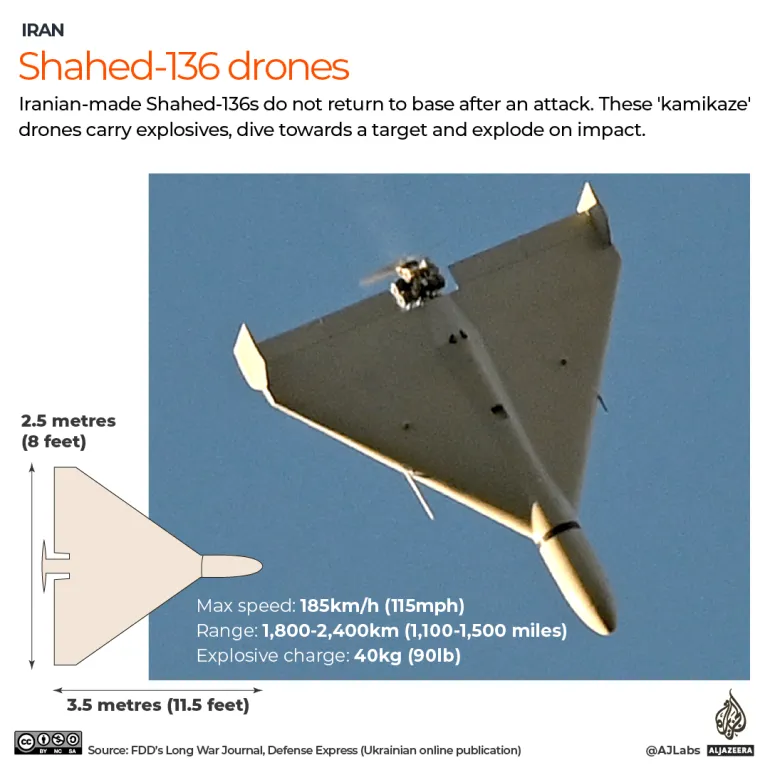
While procurement is a major effort of the new military branch, Ishtuganov offered no details about the process. It is important to note that Russia is now receiving a good deal of assistance from Beijing, now producing drones completely made up of Chinese components. Overall, Moscow has announced lofty intentions for producing new drones. It has a factory where the goal is to build 6,000 Shahed-type drones per month. Russia also has plans to make a total of 2 million first-person-view (FPV) drones this year.

Equipment is just part of the equation. The USF is also recruiting top military talent, Ishtuganov said.

“The effectiveness of this new branch of the armed forces, which is still in its infancy, is demonstrated by its personnel approach,” he suggested. “The best service members are selected, taking into account their combat achievements, among other things.”

The USF was created at the behest of Russian President Vladimir Putin, who in December 2024 ordered the Defense Ministry to establish a dedicated branch for drone warfare. While Putin shrugged off concerns about the capabilities of his drone operations, one Russian military observer said a combination of issues had impeded operations. One is how troops are deployed, explained the Forces Group “ZAPAD” | News Telegram channel. The other is how they have been equipped.

“Drone operators should not be sent as assault troops, as some commanders do,” the Telegram channel pointed out. “Otherwise, the whole process loses its meaning. Patching holes is a consequence of problems. And the existence of such problems is a result of careless command actions. There is hope that the (USF) troops will become a kind of ‘shield’ for all successful drone operators.”

Resources have been another big issue.

“In combat conditions, losing a drone is very easy, and if you have a strict limit on the number of drones — you are limited in your capabilities,” Forces Group posited. “It is no secret that drones are currently in short supply almost everywhere. Especially night drones. Especially our equivalents of Baba Yaga.” Baba Yagas, as we have explained in the past, are large industrial quadcopter drones armed with guided munitions.

DONETSK OBLAST, UKRAINE - APRIL 20: Engineers of the Ukrainian drone battalion ‘Achilles’ test the night bomber drone ‘Vampire’ (Russian military also call it ‘Baba Yaga’) before the night mission on the Chasiv Yar direction on April 20, 2024 in Donetsk Oblast, Ukraine. After the occupation of Avdiivka, Russian troops focused on the offensive on Chasiv Yar, a town located west of Bakhmut. (Photo by Serhii Korovayny/Global Images Ukraine via Getty Images)
Engineers of the Achilles drone battalion testing night bomber drone Vampire (Russians also call it Baba Yaga) before the night mission on the Chasiv Yar direction in Donetsk region. (Global Images Ukraine via Getty Images Serhii Korovayny) Serhii Korovayny

The only Russian unit immune to this concern is Rubicon, a secretive force of drone operators that helped Russia push back Ukraine’s Kursk invasion.

“There is hope that the UAV Forces are being created, among other things, to solve the supply problem so that each unit can eventually call itself at least a mini-Rubicon,” Forces Group “Zapad” postulated.

Samuel Bendett, a drone expert and researcher with the Center for Naval Analyses think tank concurred with much of the Telegram channel’s hypothesis.

There are no official standards today for many tactical drone R&D and uses in the Russian military,” he told us. “There are uneven supplies, there are issues with UAV pilots treated as typical infantry used for assaults, uneven supplies of qualified pilots and drones, etc. There is hope from many in the Russian military that USF will solve many of these issues.”

The USF is not Russia’s first attempt to wrangle its drone operations. As we reported earlier this year, the Russian Navy dedicated regiments to operate uncrewed surface, undersea, air and land systems.

Ukraine, as we noted at the top of this story, created its own USF to address many of the same issues. The reaction in Kyiv toward the Russian version is one of concern.

“Heard a detailed intelligence report on the development of the enemy’s unmanned forces,” Oleksandr Syrskyi, commander-in-chief of the Ukrainian Armed Forces, noted on his Telegram channel. “The occupiers are following our experience, particularly in creating regiments of unmanned systems and interceptor drones, and are directing significant resources towards this. We must constantly improve to maintain technological superiority.”

“Special attention,” he added, “is given to scaling the [Ukrainian] Unmanned Systems Forces units: increasing the number of trained crews, involving personnel, and creating infrastructure for their effective operation.”

One Ukrainian official posited that Russia’s following Kyiv’s lead presents a real danger.

“They copied our successful solutions,” Andrii Kovalenko, the head of Ukraine’s Center for Countering Disinformation, stated on Telegram. “It was we who created strike UAV companies, which in 2023 allowed us to have an advantage over the enemy. And now the SBS operates very effectively. But the Russians copy and try to scale our innovations by quantity. This is a threat, of course.”

Contact the author: [email protected]

Howard is a Senior Staff Writer for The War Zone, and a former Senior Managing Editor for Military Times. Prior to this, he covered military affairs for the Tampa Bay Times as a Senior Writer. Howard’s work has appeared in various publications including Yahoo News, RealClearDefense, and Air Force Times.


Source link

Will Pakistan’s defence overhaul strengthen or upset its military balance? | Military News

Islamabad, Pakistan – Pakistan has codified the most ambitious restructure of its military and judiciary in decades after President Asif Ali Zardari signed his assent to ratify the country’s 27th Constitutional Amendment on Thursday.

The amendment, which passed in both houses of parliament earlier in the week amid opposition protests and criticism from a range of civil society activists and sitting judges, makes major changes to Pakistan’s higher judiciary.

Recommended Stories

list of 4 itemsend of list

But many analysts believe that its most consequential feature is a sweeping overhaul of Article 243, the constitutional clause defining the relationship between Pakistan’s civilian government and the military.

The changes grant lifetime immunity from criminal prosecution to the country’s top military leaders, significantly reshape the military’s command structure, and further tilt the balance of the tri-services – the army, navy and air force – heavily in the army’s favour.

Analysts warn that this contentious reform risks colliding with entrenched institutional cultures and could rock the country’s fragile civilian–military equilibrium.

Al Jazeera has sought comment from the military’s media wing on the changes and the debate over them, but has received no response.

A new command structure

The revised Article 243 establishes a new post, the Chief of Defence Forces (CDF), to be held concurrently by the Chief of Army Staff (COAS). This effectively gives the army chief command authority over the Pakistan Air Force (PAF) and Pakistan Navy (PN).

The incumbent COAS is Field Marshal Asim Munir, who assumed command in November 2022 and was elevated to a five-star rank on May 20 this year, just 10 days after Pakistan ended its four-day conflict with India.

Munir became only the second Pakistani military officer – after Field Marshal Ayub Khan in the 1960s – to receive the five-star designation. The air force and navy have never had a five-star official so far.

The amendment also abolishes the office of Chairman Joint Chiefs of Staff Committee (CJCSC) at the end of this month. The role is currently held by four-star General Sahir Shamshad Mirza, who retires on November 27. Another major change is the creation of the Commander of the National Strategic Command (CNSC), a post overseeing Pakistan’s nuclear command. The position will be limited to only an army officer, appointed in consultation with the CDF, with a three-year term extendable by another three years.

The amendment effectively transforms five-star titles from what were honorary recognitions into constitutionally recognised offices with expansive privileges.

Under the new arrangement, five-star officers will enjoy lifetime immunity from criminal prosecution and will “retain rank, privileges and remain in uniform for life.”

Removing a five-star officer will require a two-thirds parliamentary majority, whereas an elected government can be dismissed by a simple majority.

“While government spokespersons refer to these titles as ‘honorary’, given to ‘national heroes’ to celebrate their services,” Reema Omer, a constitutional law expert, said, the amendment “implies actual power, not just honorary significance”.

Omer told Al Jazeera that lifelong immunity from criminal proceedings was “concerning from a rule of law perspective”.

A former three-star general, speaking on condition of anonymity, acknowledged that the changes appeared to be “meant to consolidate” the army chief’s power.

Hours after the president’s ratification on Thursday evening, Pakistan’s government brought amendments to the laws governing the three services.

Under the revised Army Act, the clock on the tenure of the army chief will now restart from the date of his notification as CDF.

Last year, parliament had increased the tenure of the service chiefs from three to five years, which meant Munir’s term would run until 2027. Following the new changes, it will now extend even further. Once the revised rules take effect at the end of this month, Munir will hold both posts – COAS and CDF – at least until November 2030.

President Asif Ali Zardari and Prime Minister Muhammad Shehbaz Sharif jointly conferred the baton of Field Marshal upon Chief of Army Staff (COAS) Field Marshal Syed Asim Munir during a special investiture ceremony at Aiwan-e-Sadr in Islamabad. [Handout/Government of Pakistan]
President Asif Ali Zardari, centre, and Prime Minister Muhammad Shehbaz Sharif, right, jointly conferred the baton of Field Marshal upon Chief of Army Staff (COAS) Field Marshal Syed Asim Munir, left, during a special investiture ceremony at the Presidency in Islamabad in May this year [Handout/Government of Pakistan]

Military dominance – and the role of the India conflict

Since independence in 1947, Pakistan’s military, especially the army, has been the most powerful institution in national life.

Four coups and decades of direct rule have been accompanied by significant influence, even when civilian governments have been in power. The army chief has long been widely viewed as the country’s most powerful figure.

No prime minister has ever completed a full five-year term, while three of four military rulers have governed for more than nine years each.

General Qamar Javed Bajwa, Munir’s predecessor, acknowledged this history in his farewell address in November 2022, conceding that the military had interfered in politics for decades, and promising to break with that legacy.

But three years later, rights groups and opposition parties allege that little has changed, and some claim that the military has further strengthened its grip over state institutions.

The military restructure under the 27th Amendment also comes six months after Pakistan’s brief conflict with India in May, raising questions over whether the reforms were linked to that fight.

Aqil Shah, professor of international affairs at Georgetown University in Washington, DC, argued that the confrontation with India created the opening for this “unprecedented role expansion” for the army chief.

The changes “formalise the army’s de facto hegemony over the other two wings of armed forces in the guise of the ‘unity of command’ as a necessity for war fighting,” Shah told Al Jazeera.

But supporters of the amendment disagree. Aqeel Malik, state minister for law and justice, said that the amendment aims to “plug holes” in Pakistan’s national security architecture.

“The amendment granted constitutional cover to defence integration and improved coordination. We have also provided a constitutional cover to the honour bestowed upon our national heroes and have addressed a long overdue cohesive and better coordination within the forces for a swift response,” Malik said.

Ahmed Saeed, a former vice admiral, similarly described the reform as a “forward-looking institutional change”.

He said the conflict with India exposed that Pakistan’s command model was rooted in a 1970s framework, unsuitable for “multi-domain, hybrid warfare of the 21st century”.

“The amendment is not about ‘fixing what is broken’ but about modernising what is functioning to ensure sustained effectiveness in future contingencies,” Saeed told Al Jazeera.

Fears of imbalance

Other critics, including former senior officials and security analysts, believe the amendment is less about modernisation and more about institutional consolidation.

They argue that creating the CDF post cements the army’s dominance over the other branches.

Many question why the command structure should be overhauled when, by the government’s own narrative, the existing system delivered what Pakistan claims was an “outright victory” against India.

A retired three-star general who served in senior roles before retiring in 2019 said the abolished CJCSC role, despite being largely symbolic, provided a mechanism for balancing perspectives across the army, navy and air force.

“The PAF and PN may lose autonomy in strategic planning and most probably senior promotions, which has the potential to breed resentment,” he said.

“These risks institutional imbalance, undermining the very cohesion the amendment claims to enhance,” the former general added.

The CJCSC – a four-star post and the principal military adviser to the prime minister – can theoretically be filled by any service, but the last non-army officer to hold the position was Air Chief Marshal Feroz Khan in 1997.

Security analyst Majid Nizami said that while the amendment aims to codify five-star ranks, it may create challenges for “cohesion and synergy” among the services.

If the goal was to modernise warfare strategy, he argued, there should have been a dedicated officer focused solely on integration, not the army chief assuming dual authority.

“There is a lack of clarity on rules and terms of reference for the CDF,” Nizami said.

Shah, the Georgetown academic and author of The Army and Democracy, said the amendment “formalises the de facto power” of the COAS over the other branches.

Saeed, the former navy official who retired in 2022, however, disagreed with critics, arguing that the amendment simply clarifies the CDF’s strategic coordination role.

“The amendment retains the PAF and PN’s distinct command structures within their domains of responsibility, and the CDF’s function is limited to integration at the strategic level, not administrative control or operational interference,” he said.

He added that claims of “army dominance” stem from “legacy perceptions, not from constitutional reality.”

Control of nuclear command

The amendment also codifies the army’s control of Pakistan’s nuclear programme, including research, development and deployment, responsibilities that fall under the strategic command structure.

The former three-star general who spoke to Al Jazeera said the new system’s operational details remain unclear. Under the current model, the Strategic Plans Division (SPD) manages Pakistan’s ballistic and cruise missile programmes and nuclear assets.

Nizami said that although the CJCSC nominally oversaw the SPD, operational authority has long rested with the army. The amendment now formalises this reality.

Saeed, however, countered by arguing that in effect, even with the changes, “the entire nuclear enterprise operates under civilian-led oversight with constitutional clarity”.

Political fallout

Critics have described the amendment as a “constitutional surrender” by political parties to the military, and an attempt to institutionalise the “supremacy of the uniform over the ballot”.

Asim Munir and Shehbaz Sharif meet Donald Trump
US President Donald Trump, left, met with Pakistani Prime Minister Shehbaz Sharif, second from left, and Field Marshal Asim Munir, second right, in Washington, DC, in September [Handout/The White House]

It also comes at a time when Field Marshal Munir’s public profile has risen significantly. He has undertaken multiple foreign trips, including several to the United States, and has been described by President Donald Trump as his “favourite field marshal”.

Meanwhile, former Prime Minister Imran Khan, jailed for the past two years, accuses Munir of orchestrating the crackdown on him and his party, Pakistan Tehreek-e-Insaf (PTI), since their ouster in 2022 through a no-confidence vote – a charge that the military has rejected outright.

In Pakistan’s February 2024 election, the PTI was barred from contesting as a party. But its candidates, contesting independently, secured the most seats even though they failed to secure a majority. Instead, the Pakistan Muslim League-Nawaz (PML-N) of Prime Minister Shehbaz Sharif formed the government with allies. The government and military rejected widespread accusations of election rigging.

Shah argued that the political class supported the amendment out of necessity.

“Lacking democratic legitimacy and faced with the political challenge posed by the PTI and Khan, the ruling PML-N government sees Munir as the key guarantor of their power and political interests,” he said.

Nizami, the Lahore-based analyst, meanwhile, said that separate appointments to the posts of the CDF and the army chief would have made more sense if the intent was to strengthen the military structure and balance. The amendment, he warned, could lead to “institutional imbalance instead of institutional synergy”.

Source link

West Bank mosque torched amid surge in Israeli settler violence | Gaza

NewsFeed

Israeli settler violence targeting Palestinians in the occupied West Bank is at its highest level on record, according to the UN. Settlers are destroying mosques, dairy facilities, and attacking olive farmers in hundreds of attacks that are terrifying families and disrupting everyday life.

Source link

Maduro raises Venezuela’s military alert amid U.S. maneuvers

A group of Venezuelans hold signs against U.S. military intervention during a protest outside the U.S. Embassy in Caracas, Venezuela, on October 27. The embassy has been closed since 2019, when Nicolas Maduro announced the break of diplomatic relations with the United States. File Photo by Ronald Rena/EPA

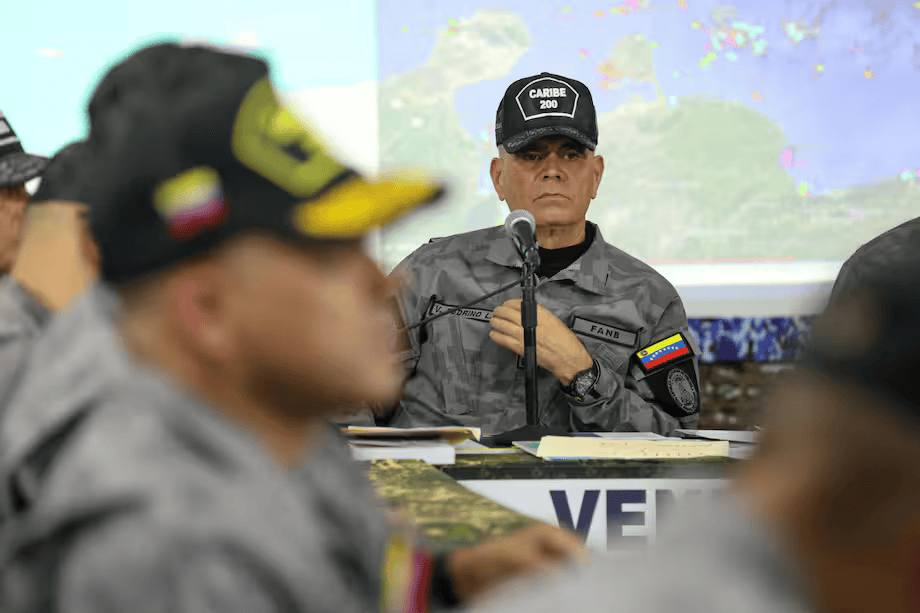
Nov. 12 (UPI) — President Nicolás Maduro announced activation of a “higher phase” of the Independence Plan 200, a program of joint civilian-military exercises designed to test Venezuela’s ability to respond to external threats.

The deployment includes the Bolivarian National Armed Forces, or FANB, the Bolivarian Militia and police units across all states, with a focus on Apure, Cojedes, Carabobo and the capital region, TeleSURTV reported.

The measure, announced Tuesday by Defense Minister Vladimir Padrino, aims to “strengthen territorial defense and enhance operational readiness” amid rising geopolitical tensions in the Caribbean.

Activation of this “higher phase” coincides with the arrival of the aircraft carrier USS Gerald R. Ford in the region under the U.S. Southern Command.

The U.S. Department of Defense said the deployment is part of an operation aimed at “disrupting narcotics trafficking and dismantling transnational criminal organizations” operating in the region. However, the Venezuelan government has interpreted the move as a “provocation.”

According to Venezuela’s Defense Ministry, the new stage of the Independence Plan 200 includes command, control and communications exercises, along with simultaneous air, land, naval and river operations, the newspaper Ámbito reported.

The government described it as an “advanced phase” of the plan launched in September, aimed at ensuring “active resistance and permanent defense” against what it calls pressure and maneuvers by the United States.

Alongside the heightened military alert, the government enacted the Law of the Command for the Comprehensive Defense of the Nation, approved days earlier by the National Assembly.

The law establishes a network of comprehensive defense commands at the national, regional and municipal levels to coordinate the armed forces, civilian institutions and citizens in the “protection of sovereignty and peace.”

Maduro signed the law at the Miraflores Palace on Wednesday, invoking Article 326 of the Constitution, which defines the people’s shared responsibility in national defense. The president said he was prepared to confront any threat and ordered the immediate creation of the new commands.

“The order must be activated so that the comprehensive defense commands are established, structured and begin their work, to be prepared, if we as a republic and as a people are called to take up armed struggle to defend this sacred legacy of the liberators, to be ready to win, to triumph through patriotism and courage,” Maduro said, according to a report by NTN24.

These groups will be led by the Strategic Operational Command of the Armed Forces, which will oversee the integration, planning, coordination, supervision and control of the country’s defense organizations in support of military operations nationwide.

The government sees the legislation as a step toward strengthening its civilian-military defense doctrine, while analysts and opposition figures warn it could expand the militarization of the country and the political role of the armed forces.

Source link

Venezuela prepares ‘massive deployment’ of forces in case of US attack | Nicolas Maduro News

Arrival of US aircraft carrier off Latin America fuels speculation that US could try to overthrow Venezuelan government.

The Venezuelan government has said it is preparing its armed forces in the event of an invasion or military attack by the United States.

A statement shared by Minister of People’s Power for Defence Vladimir Padrino on Tuesday said that the preparations include the “massive deployment of ground, aerial, naval, riverine and missile forces”, as well as the participation of police, militias and citizens’ units.

Recommended Stories

list of 3 itemsend of list

The announcement comes as the arrival of a US aircraft carrier in the region fuels speculation of possible military action aimed at collapsing the government of Venezuelan President Nicolas Maduro, a longtime US rival.

Tensions between the two countries have escalated since the return of US President Donald Trump for a second term in January.

On Tuesday, the Pentagon confirmed that the Gerald R Ford Carrier Strike Group — which includes the world’s largest aircraft carrier — had arrived in the Caribbean Sea, bearing at least 4,000 sailors as well as “tactical aircraft”.

In recent weeks, the US government has also surged troops to areas near the Caribbean, including Puerto Rico, El Salvador, Panama and Trinidad and Tobago, for training exercises and other operations.

The Trump administration has framed such deployments as necessary “to disrupt illicit drug trafficking and protect the homeland”. Trump officials have also accused Maduro of masterminding the activities of Tren de Aragua, a Venezuelan gang with a relatively modest presence in the US.

But Maduro and his allies have accused the US of “imperialistic” aims.


Questions remain, however, about whether Venezuela is equipped to fend off any US military advances.

Experts say the Maduro government has sought to project an image of military preparedness in the face of a large buildup of US forces in the Caribbean, but it could face difficulties from a lack of personnel and up-to-date equipment.

While the government has used possible US intervention to rally support, Maduro is also struggling with widespread discontent at home and growing diplomatic isolation following a contested election in 2024, marred by allegations of widespread fraud and a crackdown on protesters.

The military buildup in the Caribbean region began after the start of a series of US military strikes on September 2.

The US has carried out at least 19 air strikes against alleged drug-trafficking vessels in the Caribbean and eastern Pacific Ocean, killing approximately 75 people.

Trump has suggested that land strikes “are going to be next”. But when asked in late October whether he was considering attacks within Venezuela, Trump replied, “No”.

Legal experts say that a military attack on Venezuela would likely violate international law, and recent polling from the research firm YouGov suggests that about 47 percent of people in the US would oppose land attacks on Venezuelan territory. About 19 percent, meanwhile, say they would support such attacks.

While Venezuela’s armed forces have expressed support for Maduro and said they would resist a US attack, the Reuters news agency has reported that the government has struggled to provide members of the armed forces with adequate food and supplies.

The use of additional paramilitary and police forces could represent an effort to plug the holes in Venezuela’s lacklustre military capacity. Reuters reported that a government memo includes plans for small units at about 280 locations, where they could use sabotage and guerrilla tactics for “prolonged resistance” against any potential US incursion.

Source link

UK military to help Belgium after drone sightings near airports | Aviation News

The military has not gone into details about the sort of equipment or number of personnel that will be sent.

The United Kingdom is sending military equipment and personnel to Belgium after a spate of disruptive drone sightings forced the temporary closures of two major airports.

Air Chief Marshal Richard Knighton told the BBC network on Sunday that the military had agreed to “deploy our people, our equipment to Belgium to help them” after a request from Belgian authorities.

Recommended Stories

list of 4 itemsend of list

“We don’t know – and the Belgians don’t yet know – the source of those drones, but we will help them by providing our kit and capability, which has already started to deploy to help Belgium,” said Knighton, who did not give details about what sort of equipment would be sent or how many personnel.

In the past week, both Belgium’s main international airport at Brussels and one of Europe’s biggest cargo airports at Liege were forced to close temporarily because of drone incursions. That came after a series of unidentified drone flights near a United States military base in Belgium where nuclear weapons are stored.

Drone sightings also forced the temporary closures of airports in other countries, including Sweden, on Thursday. The Belgian government held an emergency meeting to address the drone sightings.

Knighton said it was not known yet who was behind the drone sightings but noted Russia has been involved in a pattern of “hybrid warfare” in recent years.

Russia has been blamed in some cases, but Belgium has not said who has been operating the drones. Russia has denied any connection with the incidents, and there has been no evidence to directly link the drones to Russia.

Belgian Defence Minister Theo Francken said he believed some incidents were part of “a spying operation” that could not have been done by amateurs.

Drone incidents have also caused major disruptions across Europe in recent months amid deepening concerns that Russia’s war in Ukraine might spill across Europe’s borders. Since September, drones have been spotted near civilian airports and military facilities in countries including Denmark, Germany and Norway.

European Commission President Ursula von der Leyen has called the incursions “hybrid warfare”. While she did not hold Russia responsible for the incidents, she said it was clear Russia’s aim was to “sow division” in Europe.

In September, Polish and NATO forces shot down drones violating the country’s airspace during a Russian aerial attack on neighbouring Ukraine.

Belgium is home to the headquarters of NATO and the European Union as well as Europe’s biggest financial clearinghouse, holding tens of billions of euros in frozen Russian assets. Many EU countries want to use those assets as collateral to provide loans to Ukraine, but Belgium has so far resisted.

Source link

Israel receives remains of soldier killed in Gaza in 2014 | Israel-Palestine conflict News

Body identified as Israeli soldier Hadar Goldin with the remains of four other deceased captives still in Gaza.

Israel has received the body of a soldier held in Gaza for more than a decade after he was killed in an ambush by Hamas fighters in 2014 during the last major ground assault on the Palestinian enclave.

Prime Minister Benjamin Netanyahu’s office said on Sunday the remains were handed over to Israeli forces in Gaza by the International Committee of the Red Cross (ICRC) after Hamas transferred the body to the aid organisation.

Recommended Stories

list of 4 itemsend of list

Formal identification of Lieutenant Hadar Goldin, 23, was confirmed by Israeli forensics teams.

At the start of a weekly cabinet meeting, Netanyahu said holding the body for so long has caused “great agony for his family, which will now be able to give him a Jewish burial”.

“Lieutenant Hadar Goldin fell in heroic combat during Operation Protective Edge,” Israel’s leader said.

The Qassam Brigades, Hamas’s military wing, said the body was retrieved on Saturday from a tunnel in the Yebna refugee camp in Rafah in southern Gaza.

Goldin was killed on August 1, 2014, two hours after a ceasefire took effect and ended that year’s war between Israel and Hamas. He was part of an Israeli unit tasked with locating and destroying Hamas tunnels.

Another Israeli soldier, Oron Shaul, was also killed in the six-week war, and his body was returned earlier this year.

There are now four deceased abductees remaining in Gaza to be returned under the terms of a ceasefire that began last month. Hamas has so far released 20 living captives and 24 bodies.

For each body returned, Israel has been releasing the remains of 15 Palestinians. Ahmed Dheir, director of forensic medicine at the Nasser Medical Complex in the southern Gaza city of Khan Younis, said 300 bodies have now been returned and 89 identified.

Israeli attacks continue

Israel has also released nearly 2,000 living Palestinian prisoners since the October 10 truce began. Palestinian authorities said more than 10,000 people still remain in Israeli detention.

Gaza’s Ministry of Health said 241 Palestinians have been killed and 619 wounded since the ceasefire began and 528 bodies have been recovered from under rubble and at attack sites.

Despite the truce, Israel’s military continues to carry out attacks across the Gaza Strip. On Sunday, one man was killed in the Bureij refugee camp in central Gaza, and two died in separate assaults in the north and south, the Health Ministry said.

In the occupied West Bank, Israeli forces killed a Palestinian man in the Far’a refugee camp near Tubas while Israeli settlers attacked Palestinian farmers in several areas, according to local reports.

According to Israeli authorities, Palestinian armed groups captured 251 people during Hamas’s attacks on southern Israel on October 7, 2023, and killed at least 1,139 people.

Israel began its war in Gaza on the same day. It has killed at least 68,875 Palestinians and wounded 170,679, according to the Health Ministry.

INTERACTIVE - Gaza Israel kills more than 200 Palestinians since ceasefire map-1761734414

Source link

N Korea threatens ‘offensive action’ as US aircraft carrier visits S Korea | Kim Jong Un News

North Korea issues warning as Washington and Seoul agree on strengthening military ties.

North Korea’s defence minister, No Kwang Chol, has condemned the arrival of a United States aircraft carrier at a port in South Korea and warned that Pyongyang will take “more offensive action” against its enemies.

The minister’s warning comes a day after North Korea launched what appeared to be a short-range ballistic missile into the sea off its east coast.

Recommended Stories

list of 4 itemsend of list

“We will show more offensive action against the enemies’ threat on the principle of ensuring security and defending peace by dint of powerful strength,” the defence minister said, according to a report on Saturday by the North’s state-run Korean Central News Agency (KCNA).

“All threats encroaching upon the sphere of the North’s security” will become “direct targets” and be “managed in a necessary way”, South Korea’s Yonhap news agency also reported the defence minister as saying.

The missile launch on Friday followed after Washington announced new sanctions targeting eight North Korean nationals and two entities accused of laundering money tied to cybercrimes, and a visit to South Korea by US Defense Secretary Pete Hegseth.

Commenting on the visit by US and South Korean defence chiefs to the border between North and South Korea, as well as their subsequent security talks in Seoul, the North Korean defence minister accused the allies of conspiring to integrate their nuclear and conventional weapons forces.

“We have correctly understood the hostility of the US to stand in confrontation with the DPRK to the last and will never avoid the response to it,” No said, using the initials of the North’s official name, the Democratic People’s Republic of Korea.

A TV screen shows footage of missiles.
A TV screen shows a North Korean missile launch at the Seoul Railway Station in Seoul, South Korea, on Friday [Lee Jin-man/AP Photo]

According to KCNA, the defence minister made his comments on Friday in response to the annual South Korea-US Security Consultative Meeting (SCM) and the recent arrival of the USS George Washington aircraft carrier and the Fifth Carrier Strike Group at a port in Busan.

The arrival of the US strike group also coincides with large-scale joint military drills, known as Freedom Flag, between US and South Korean forces.

While in South Korea for the SCM talks this week, Hegseth posted several photos on social media of his visit to the Demilitarized Zone (DMZ) between the North and the South.

Hegseth said that the core of Washington’s alliance with Seoul would remain focused on deterring North Korea, although the Trump administration will also look at flexibility for US troops stationed in South Korea to operate against regional threats.

Pyongyang described the DMZ visit by Hegseth and his South Korean counterparts as “a stark revelation and an unveiled intentional expression of their hostile nature to stand against the DPRK”.

Pyongyang’s latest missile launch, which Japan said landed outside its exclusive economic zone, came just over a week after US President Donald Trump was in the region and expressed interest in a meeting with North Korean leader Kim Jong Un.

On Friday, the US said it was “consulting closely” with allies and partners over the ballistic missile launch.

“While we have assessed that this event does not pose an immediate threat to US personnel or territory, or to our allies, the missile launch highlights the destabilising impact” of North Korea’s actions, the US Indo-Pacific Command said in a statement.


Source link

US judge rules Trump illegally ordered National Guard troops to Portland | Donald Trump News

US district judge blocks Donald Trump’s use of military force to tackle protests against immigration officers.

United States President Donald Trump unlawfully ordered National Guard troops to Portland, Oregon, a federal judge has ruled, marking a legal setback for the president’s use of the military for policing duties in US cities.

The ruling on Friday by US District Judge Karin Immergut is the first to permanently block Trump’s use of military forces to quell protests against immigration authorities.

Recommended Stories

list of 4 itemsend of list

Immergut, a Trump appointee, rejected the administration’s claim that protesters at an immigration detention facility were waging a rebellion that legally justified sending troops to Portland.

Democrats have said Trump is abusing military powers meant for genuine emergencies such as an invasion or an armed rebellion.

Oregon Attorney General Dan Rayfield described the ruling as a “huge victory” and the “decision confirms that the President cannot send the Guard into Oregon without a legal basis for doing so”.

“The courts are holding this administration accountable to the truth and the rule of law,” Rayfield said in a post on social media.

Portland’s Mayor Keith Wilson also applauded the decision, saying it “vindicates Portland’s position while reaffirming the rule of law that protects our community”.

“As I have said from the beginning, the number of federal troops needed in our city is zero,” Wilson said, according to local media reports.

The City of Portland and the Oregon Attorney General’s Office sued in September, alleging that the Trump administration was exaggerating occasional violence to justify sending in troops under a law permitting presidents to do so in cases of rebellion.

Echoing Trump’s description of Portland as “war-ravaged”, lawyers from the Department of Justice had described a violent siege overwhelming federal agents in the city.

But lawyers for Oregon and Portland said violence has been rare, isolated and contained by local police.

“This case is about whether we are a nation of constitutional law or martial law,” Portland’s lawyer Caroline Turco had said.

The Trump administration is likely to appeal Friday’s ruling, and the case could ultimately reach the US Supreme Court.

A review by the Reuters news agency of court records found that at least 32 people were charged with federal crimes stemming from the Portland protests since they began in June. Of the 32 charged, 11 pleaded guilty to misdemeanours, and those who have been sentenced received probation.

About half the defendants were charged with assaulting federal officers, including 14 felonies and seven misdemeanours.

Prosecutors dismissed two cases.

Charging documents describe protesters kicking and shoving officers, usually while resisting arrest.

Three judges, including Immergut, have now issued preliminary rulings that Trump’s National Guard deployments are not allowed under the emergency legal authority cited by his administration.


Source link